EVIL Says, Victor Crowley Who? “Freak” reviewed! (Wild Eye Releasing / DVD)

Get Freaky with “Freak” on DVD at Amazon.com

Arthur Crenshaw – the name of a terrifying urban legend.  The story has it that the religious small town-born Arthur was malformed unlike anything anyone has ever seen and that the God-fearing townsfolk didn’t take kindly to his existed as Arthur was looked down upon as an abominable creation of Satan.  His parents, giving into constant community pressure, casted him out into the nearby woods to die alone.  Years later, campers would record that their food and supplies would go missing.  Some campers even went into the woods and never came out.  Present day, a group of campers reserve a campsite, seeking the thrill of the woods’ notorious backstory and for a little R&R on a quick weekend getaway, but the stories of the misshapen, monstrous Arthur Crenshaw are not just tarradiddles to give people the willies and for the youthful campers, a night under the stars has become a night of survival.

Looking for something different, unusual, and still carnage drunk in a disfigured, backwoods killer of a campy slasher?  Look no further!  Lucky Cerruti’s very own misunderstood reject Arthur Crenshaw is the type of “Freak” we’ve all been craving.  The 2020 American indie feature is the sophomore production from writer-director Cerruti who oversaw all the pre-, principle, and post- in the height of pandemic time.  The “Kindness of Strangers” filmmaker films “Freak” in New York’s picturesque Adirondack mountains surrounding the community of Ochiota and Cerruti’s able to capture a slither of the landscape beauty with the majority of shots constrained to closeups due to puppetry.  Yes!  Arthur Crenshaw is but a mere puppet with more than frightening features that makes him appear more alien than human.  “Freak’s” indie crew consists of James Bell on special effects with producers Matthew Sorensen, Kegan Rice, Jessica Fisher, Leslie Dame, and Robin Cerruti serving under multiple hats with cinematography, puppetry control, and creature design under directors Dead Vision Productions.

Consisting of mostly Adirondack local artists and actors, “Freak’s” casts yips with little bite to make Arthur Crenshaw’s wretched, hillbilly kill-monger. Unimpressive and uninspiring character buildups coupled with so-so first-time acting doesn’t exactly put one on edge for these unlucky campers’ survival. I realize that Cerruti attempts to parallel Crenshaw with the awkward tag-a-long little sister Jenna, played by independent painting artist Sasha Van Cott, by focusing on both of them being an outcast and misunderstood. Cott’s meek performance aligns with that element but the character, like the others, is terribly bland. Her brother Ryan, performed by independent musician Dorran Boucher, is portrayed as seemingly have little to do with Jenna in a big brother role that can be described as neither sympathetic or apathetic to his sibling and treats her more like just one of the friends, but encouraged by their parents to bring Jenna to socialize her into having…I don’t know what. Jenna does manage to have a spark with or soft spot for Ryan’s best friend Henry as she constantly sides with his oddball interest in the legend of Arthur Crenshaw. Her fascination keeps Henry interesting in a subconscious kind of way but the two are a mismatch from the start as he appears to be the cool kid or the jock trope of the group. “Freak” sacrifices up a platter of kill-fodder with throwaway roles by more feature film first timers in Annachristi Cordes, Hunter Wilson, Leslie Dame, Hope Stamper, and Lucky Currati in an intense introductory opener and Kent Streed as Arthur’s old man who gave a damn and one of the only principals to receive a proper personal history that provides depth and understanding.

“Freak” might have low marks in acting, but the self-labeled C-movie has straight up, grade-A kills. We’re not talking about a simple knife to the gut or a slice across the throat here. Arthur Crenshaw doesn’t quite know when to stop as that single slice turns into two slices, three slices, four slices, and on and on until the who head hangs barely on the sinew attaching the head to the rest of the body. You know when you’re dicing up chicken breast and that white tendon streaking through the raw white meat is so damn hard to cut through, it’s like that. There’s blood everywhere and then some. “Freak” is surprisingly and pleasantly gore-laden and that goes hand-in-hand with the antagonist’s physical existence as a rod puppet worked from behind under the guise of a green screen by creature designer and executive producer Matthew Sorenson. Sorenson’s visualization is quite the abstract concept in reality with reverse knee flamingo legs, essentially no torso, and a head with one big blue eyeball and snaggle teeth. Arthur reminds me a little of the aliens from the 1996 David Twohy alien conspiracy film “The Arrival.” Hell, he could have very well been a stand in. The puppet and the puppetry are quite crude but are profoundly effective, welcomely campy, and an ingenious way to make a horror film during pandemic pandemonium.

Wild Eye Releasing, along with distributor MVD Visual, get in bed with the “Freak” on region free DVD home video. The big question is is “Freak” considered a feature film since the runtime is only 52 minutes? Some would argue the not rated Lucky Cerruti production doesn’t make the cut. I would say so what? But I did find the short runtime does hurt the storyline that’s unable to beef up portions that severely lack substance, such as the campers. The DVD is presented in a widescreen format that doesn’t list the ratio on the cover but if I was a betting man, 1.78:1 aspect ratio. The digitally recorded video’s data decompresses are varying levels between from a high 4 to a low 7 Mbps as banding and digital noise inference sneak into on the low-lit scenes negligibly. The DVD lists the audio as stereo, but the release actually has an English Dolby Digital 5.1. In fact, for some reason, there are two of the same Dolby Digital 5.1 tracks without any metric differences available. Despite some crackling during the more intense audio moments, the audio tracks are pretty well balanced and keep most of the blights at bay. The bonus features include a nifty behind the scenes featurette that dives deep into creating “Freak” in a wholistic view, a directory’s commentary, and Wild Eye trailers. We want more of the “Freak,” more of Arthur Crenshaw, as the Lucky Cerruti and Matthew Sorenson have a goldmine of a cult slasher right at their fingertips as the potential next big backwoods franchise that’ll breathe new life into horror and provide the genre what it sorely needs and deserves. Now…where’s Part II: The Return of Arthur Crenshaw?!?

Get Freaky with “Freak” on DVD at Amazon.com

A 10-Year-Old Girl Pieces Together an EVIL Tragedy. “Martyrs Lane” reviewed! (DVD / Acorn Media International)

Purchase ACORN Release of “Martyrs Lane” on DVD

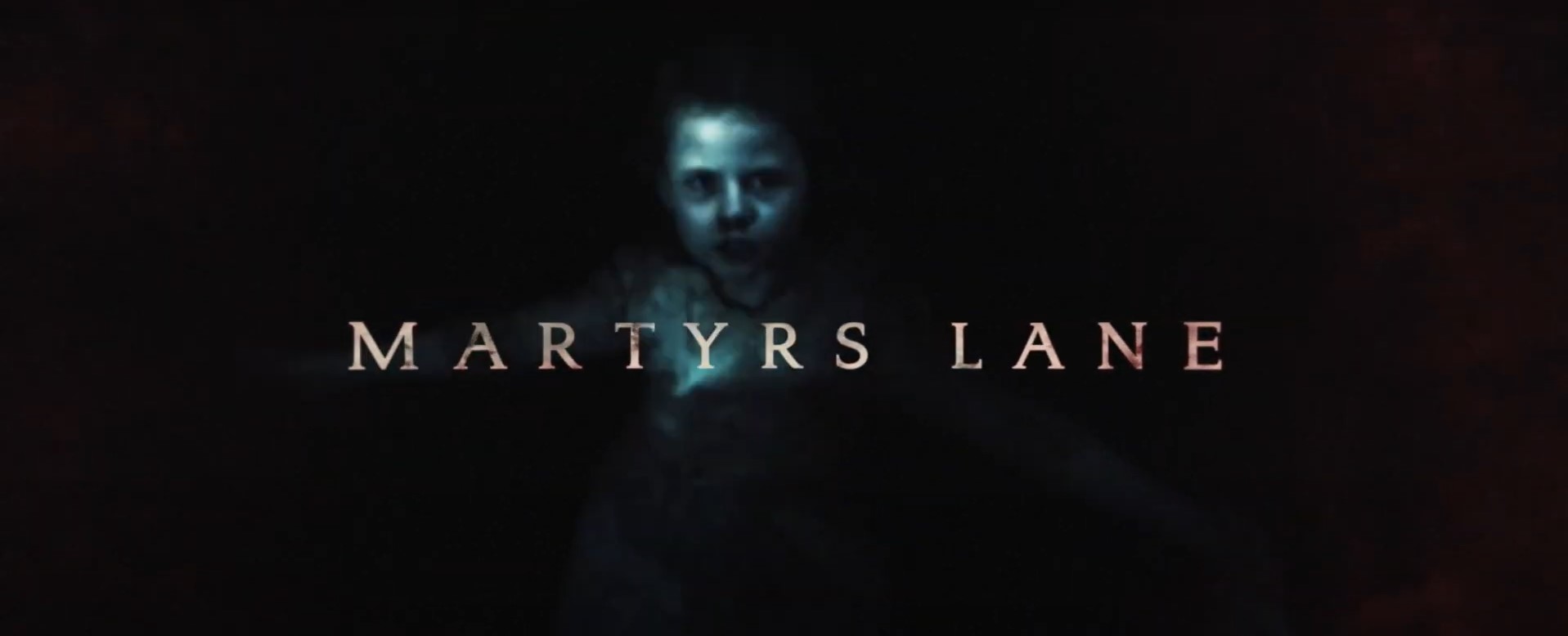
10-year-old Leah is a curious, quiet child, living in a vicarage household.  Her nightly nightmares surrounding her mother’s necklace locket and her mother’s stern conduct along with her constant obsession with her necklace locket leads Leah into an interest in the ornament’s contents.  Inside is a lock of hair and Leah takes it and loses a day later, sending her mother into a tailspin of anxiety.  That same night, a little girl knocks on Leah’s window and provides Leah momentary comfort and friendship until every visit after that, the little girl grows sicker and more ominously enigmatic in her play, providing clues and the whereabouts of thought-lost items that will open up the truth about the mystery girl’s identity as well as her family’s dark secret.

“Martyrs Lane” is a thoughtful and empathetic drama with supernatural delicacies surrounding complexities in loss and grief of bottled-up family secrets.  The British film is the third feature film, second in horror, for actress-writer-director Ruth Platt (“The Lesson”) who has commented that “Martyrs Lane” is a plucking of aggregated events from her own childhood woven into the very fabric of the story. Platt’s 2021 release is a fined tune extension upon her 2019 short of the same title that recasts the core principal roles from original actresses Indica Watson, Phoebe Lloyd, and the live action adaptation of “Beauty and The Beast’s” Hattie Morahan and turned the short into a 96 minute closed book feature about a scrutinized and consuming locket and a slowly decaying little girl playing two truths, one lie with the main character during bedtime hours who then has to unravel the mystery behind it all. Ipso Facto Productions’ Christine Alderson, who also produced “Valhalla Rising,” “Alpha Alert,” and even Platt’s original short film, produces “Martyrs Lane” alongside Katie Hodgkin and partly funded by the British Film Institute (BFI) in association with Sharp Films, Lypsync, and LevelK.

Recasting the short’s linchpin framework actresses took an audition to bring to light exactly the kind of talent Platt needed to express the different levels of somber ambivalence toward a family obviously struggling to deal with something more than just the day-to-day tasks. Kiere Thompson took over for Indica Watson as Leah in her feature performance debut and Thompson smashes a complex role and gains high marks on the voyeur scorecard as the youngest child who watches as her mother ebbs and flows in various states of anxiety while serving a milder, yet vastly different, dish of dynamics with the levity being around her vicar father and to be always primed to deal with her tormenting much older sister Bex (Hannah Rae). The best chemistry is between Thompson and age-appropriate counterpart Sienna Sayer, taking over Phoebe Lloyd’s role from the short as the strange visiting little girl. You can see two youngsters’ genuine play and natural innocence come through their smiling faces, wide eyes, and contagious giggles and when the winch of fear washes over them, called for by the story’s puzzling rising of events, mirthless moments are quickly produced, snapping us back into Platt’s eerie cold quandary. Hattie Morahan is replaced by Denise Gough as the mother Sarah and though her performance is fine, there just wasn’t enough of the mother’s side of the story to evoke a sense of empathy or sympathy and ultimately just falls into right into apathy even though Sarah is a pivotal piece to the theme. Catherine Terris, Charlie Rix, Donna Banya, Anastasia Hille, and Steven Cree as the vicar and Leah’s father rounds out the cast.

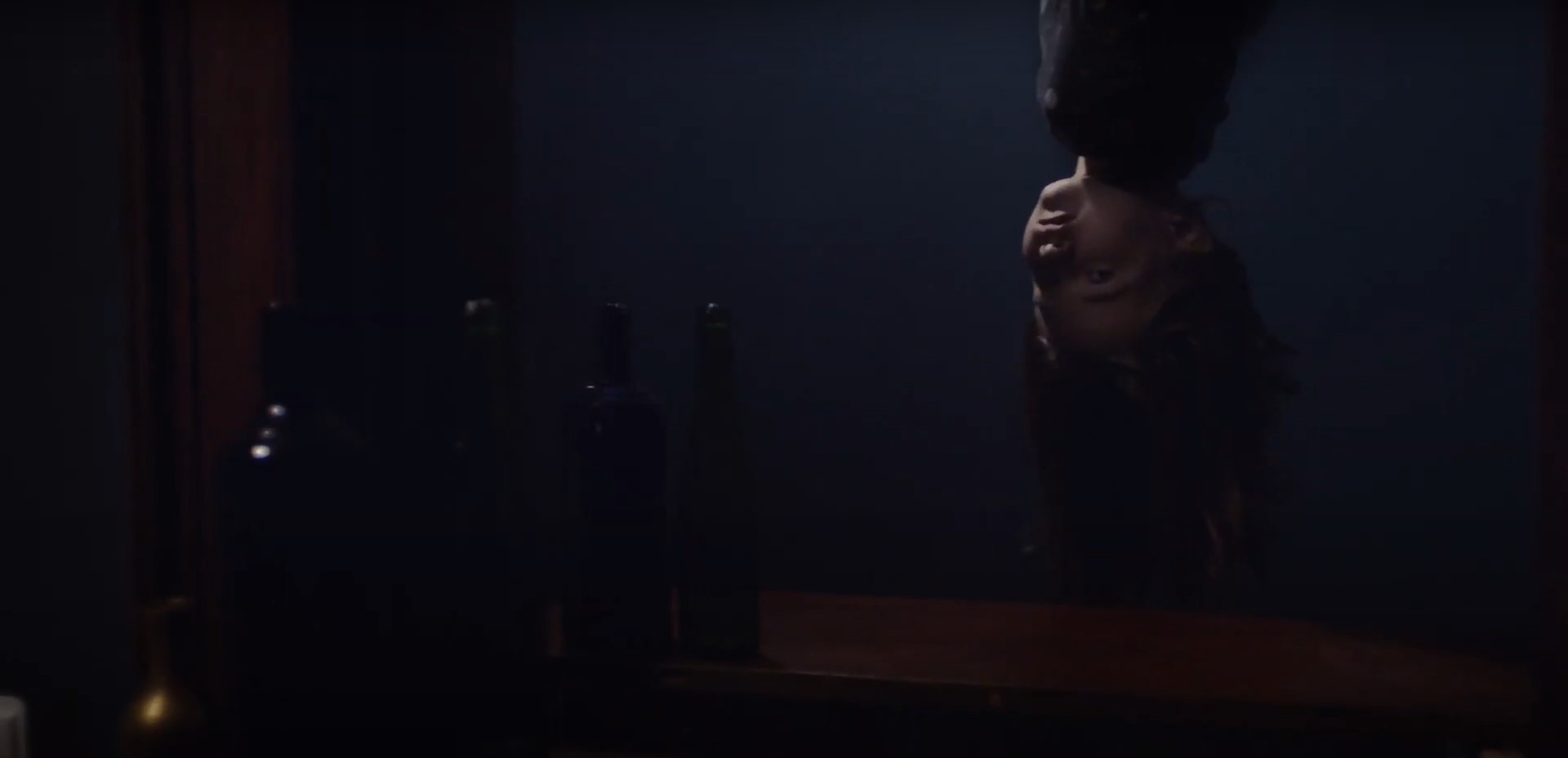
A blend between “Let the Right One In” and “The Babadook” but with less blood and less malevolent atmospherics, “Martyrs Lane” offers an imposing exhumation of a secret told in a way that doesn’t carry the sensation of something being hidden from Leah or even the audience in general.  Instead, Platt invests into the thematic subtleties with the bigger picture on the supernatural element of a strange, orphaned girl who knocks on the outside of Leah’s second story window, wearing dress up angel wings and is slowly deteriorating health wise with each passing night.  Yet, despite her appearance and reluctance at times, Leah’s peculiarly drawn to opening her window, letting her in, and even play childish games with her and tell jokes but soon those games become clues, near riddle-like, for Leah to push the envelope that link her mother, the locket, and this strange girl together.  Platt tacks on a silent and tenebrous after-hours backdrop during Leah’s sleepless nights and the stillness is greatly encroaching upon into the terror senses that you find yourself holding your breath and jumping at the breakneck editing aimed to momentarily scare you until a sigh of relief for when it’s over.  “Martyrs Lane” is externally melancholic and mood driven from outside Leah’s perspective as she, herself, internalizes and absorbs the emotions of others, studies them, and puts the pieces together to unravel the truth.

Ruth Platt’s “Martyrs Lane” is a wistful, and often eerie, entry into the creepy child subgenre. UK distributor, Acorn Media International, releases the Shudder exclusive-streaming film onto a PAL encoded region 2 DVD.  Presented in a widescreen 1.85:1 aspect ratio, there’s virtually no issues with the compression as even the night sequences retain the thick and obscuring black levels with almost unnoticeable banding, and it’s a clean dark too with balanced contrast to really home in on and define the shadows.  Details and textures are good for Platt’s dreamy-presented cinematic approach of slight overexposure and blur are more a stylistic attribute than an issue with the imagery.  I liked the tactile details in the loose strands of hair around Leah and the mystery girl that plays on their differences, and sometimes similarities, really well.  The English Dolby Digital 5.1 surround sound retains no significant issues.  Dialogue track perceives slightly muted or distant in some scenes and clarity, though free from audio blemishes, can be straining.  English subtitles are available.   Bonus features include a behind-the-scenes with snippets of interviews from Ruth Platt and the cast, an interview with Ruth Platt (which contains the same segments pulled for the behind-the-scenes), and a behind-the-scenes photo gallery.  The Acorn DVD is certified 15 for strong supernatural threat and injury detail.  In the end, “Martyrs Lane” is a dead-end road to melancholy, a family-affecting affair that peripherally chronicles not only one person’s struggle to maintain a slither of normalcy but also profoundly hits innocent youth who know nothing of the skeletons kept in the closet.

Purchase ACORN Release of “Martyrs Lane” on DVD

EVIL Won’t Let You Just Kill Yourself Even If You Wanted To! “Violator” reviewed! (WildEye Releasing / DVD)

“Violator” on DVD from Wild Eye Releasing and MVD Visual!

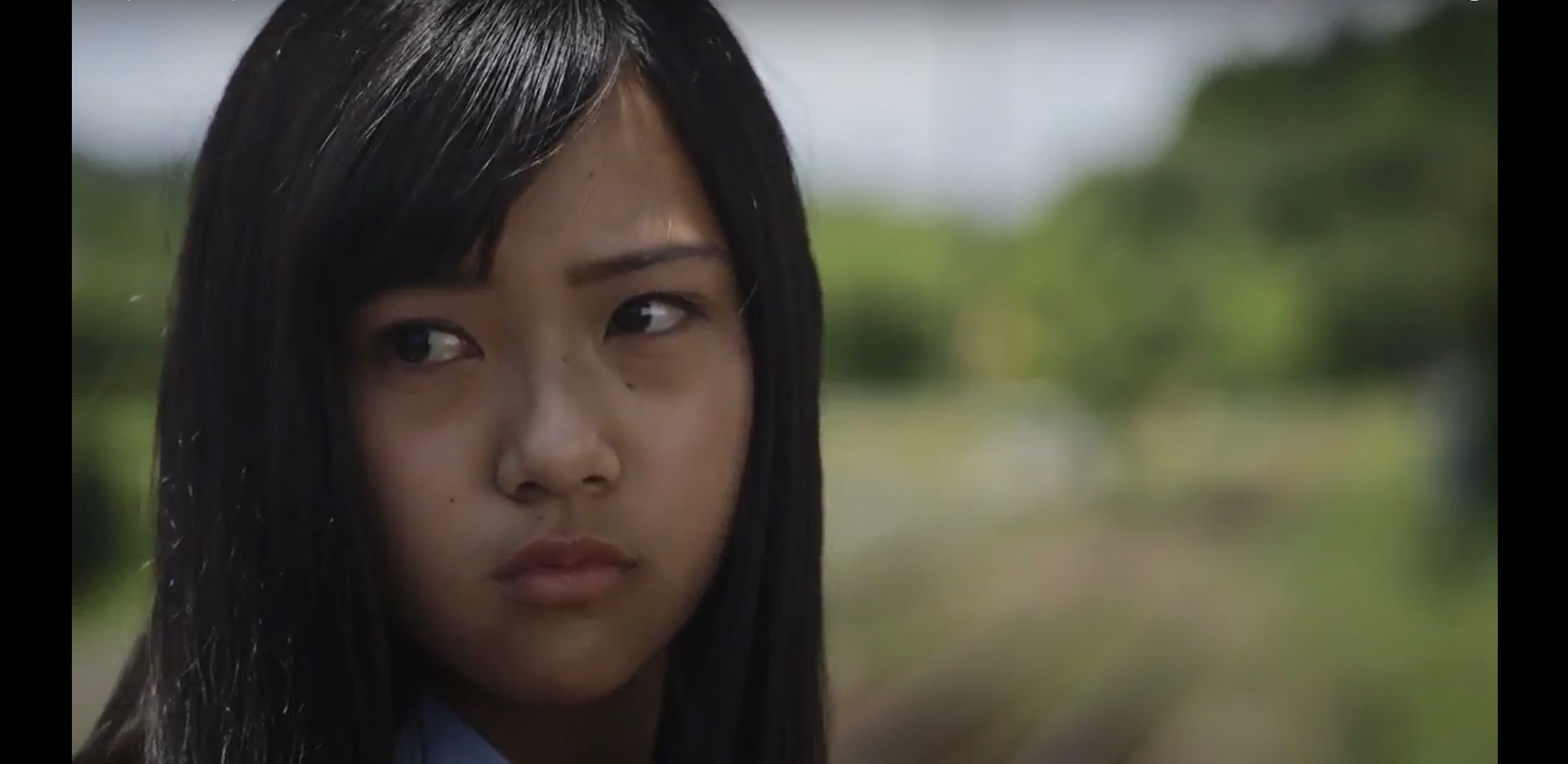
Desperate to track down her sister Naomi who becomes involved in an online social media forum about mass suicide, a woman’s investigation leads her on a train ride to a small village on the outskirts of the city.  There she meets Red Sheep, an internet handle for the mass suicide form greeter for those individuals seeking to give up their life willingly.  Returning her to the abandoned house where congregated patrons of their own demise wait for forum members from all over to gather before stepping into the afterlife, but the beneath the surface of simply drinking the Kool-Aid together is a wretched plan of death and self-inflicted suicide is not in the ill-fated stars for the group now sequestered in an isolated town. 

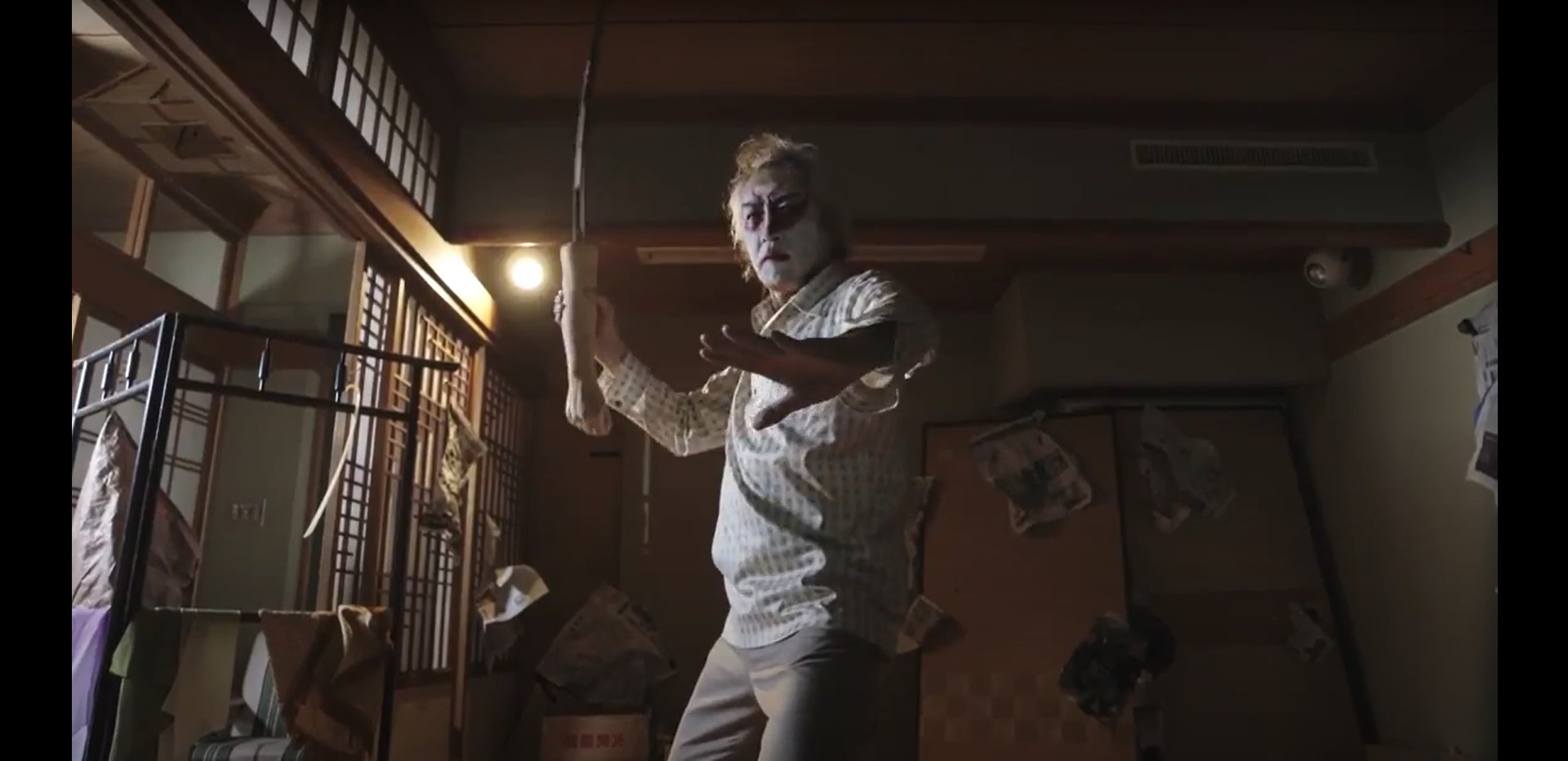
When the film is titled “Violator” and the very first images on the screen are flashing title cards, warning of violence and depravity from what you’re about to see, then a graphic intensity bar has been firmly set with the expectation that disturbing content is afoot.  The Japanese 2018 released horror-comedy comes from the cyborg-splattering mind of “Meatball Machine” writer-director Jun’ichi Yamamoto and is a continued part of the tokusatsu horror genre peppered with familiar Japanese motifs of mass suicide, samurai sword, oral fixations, and all with a pinch of Kabuki!  Yamamoto is no stranger to the Kabuki culture as he works in a callback scene and line from his 2008 actioner “Kabuking Z:  The Movie” into “Violator’s” evil eviscerating and executing entrapment.      

I wouldn’t call “Violator” aces in acting, but I’m not speaking to the general known fact that Japanese portrayals are often over-the-top exaggerated, and I’m referencing more toward the lack of selling the bizarre by any means possible.  The cast more than often feels like a rehearsal and robotic to the point where picking out cues can be almost a game.  Most of the cast are once overs or have a select history in the indie-tokusatsu market.  The biggest name in the film also has the shortest screen time with Nikkatsu Roman Pink film actor Shinji Kubo as the leader of the pact who lures lost souls to the abandoned house of doom.  Kubo doesn’t make or break “Violator,” but his character is pivotal in turn of events that alters the course of a few particular principals. Mai Arai plays the worried sick and searching woman tracking down her sister Naomi (Sora Kurumi) before she makes a grave suicidal mistake. Along the way, Arai’s character bumps into a mixed company of varying personalities revolving around their own death – one early 20-something young’un treats her suicide like the next cool thing, another ostentatiously can’t commit, and while another couldn’t be bothered by anything else surrounding her and plays it cool. The small village inhabitants are just as diversified and as quirky as the emotionally haphazard suicidals but with special, supernatural abilities to absolutely mess with their minds until satisfying their morbid, high-on-death munchies. Shinichi Fukazawa (“Bloody Muscle Body Builder In Hell”), Shun Kitagawa (“Prisoners of Ghostland”), Kanae Suzuki, Anna Tachibana (“Corpse Prison”), Ichiban Ujigami, and Rei Yatsuka round out “Violator’s” cast.

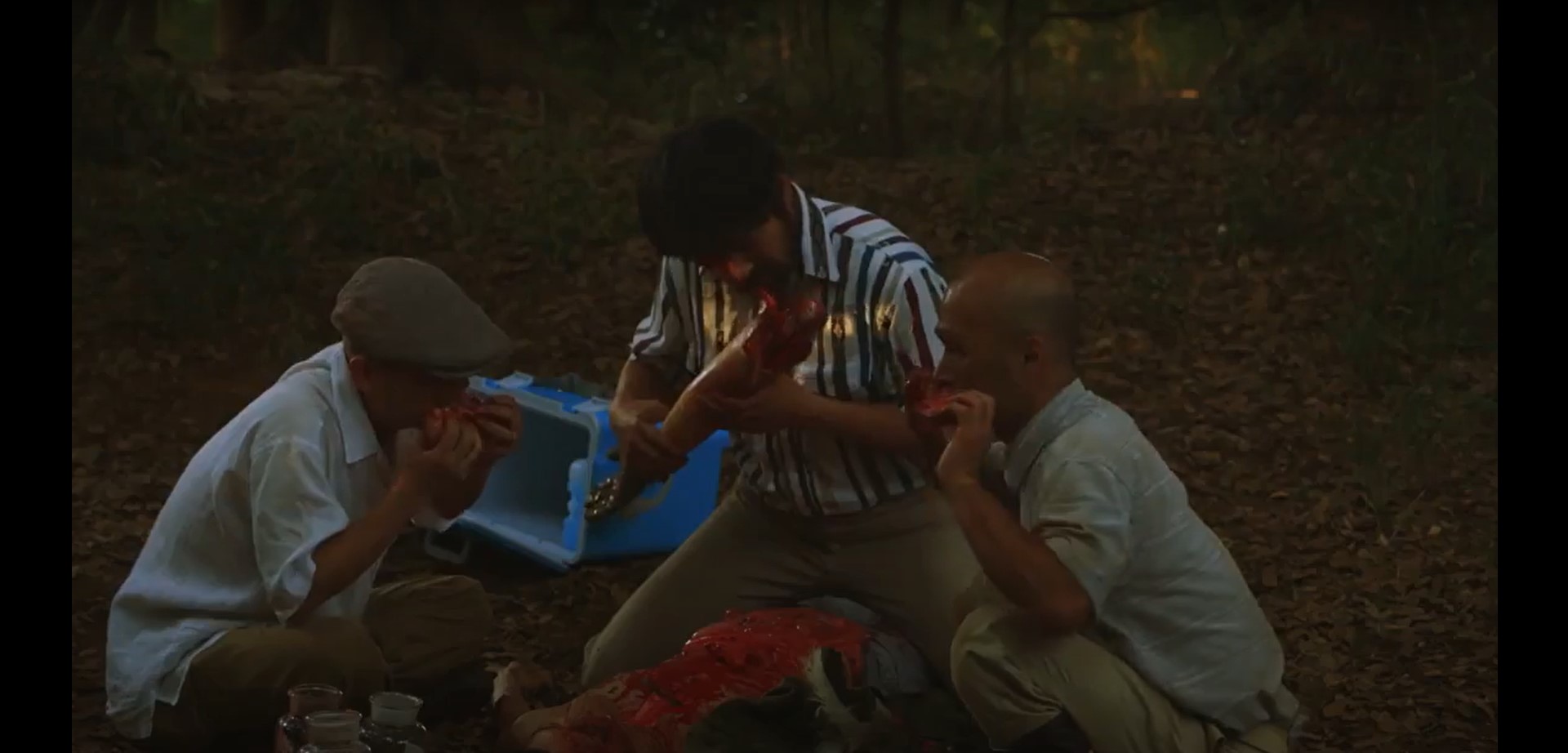
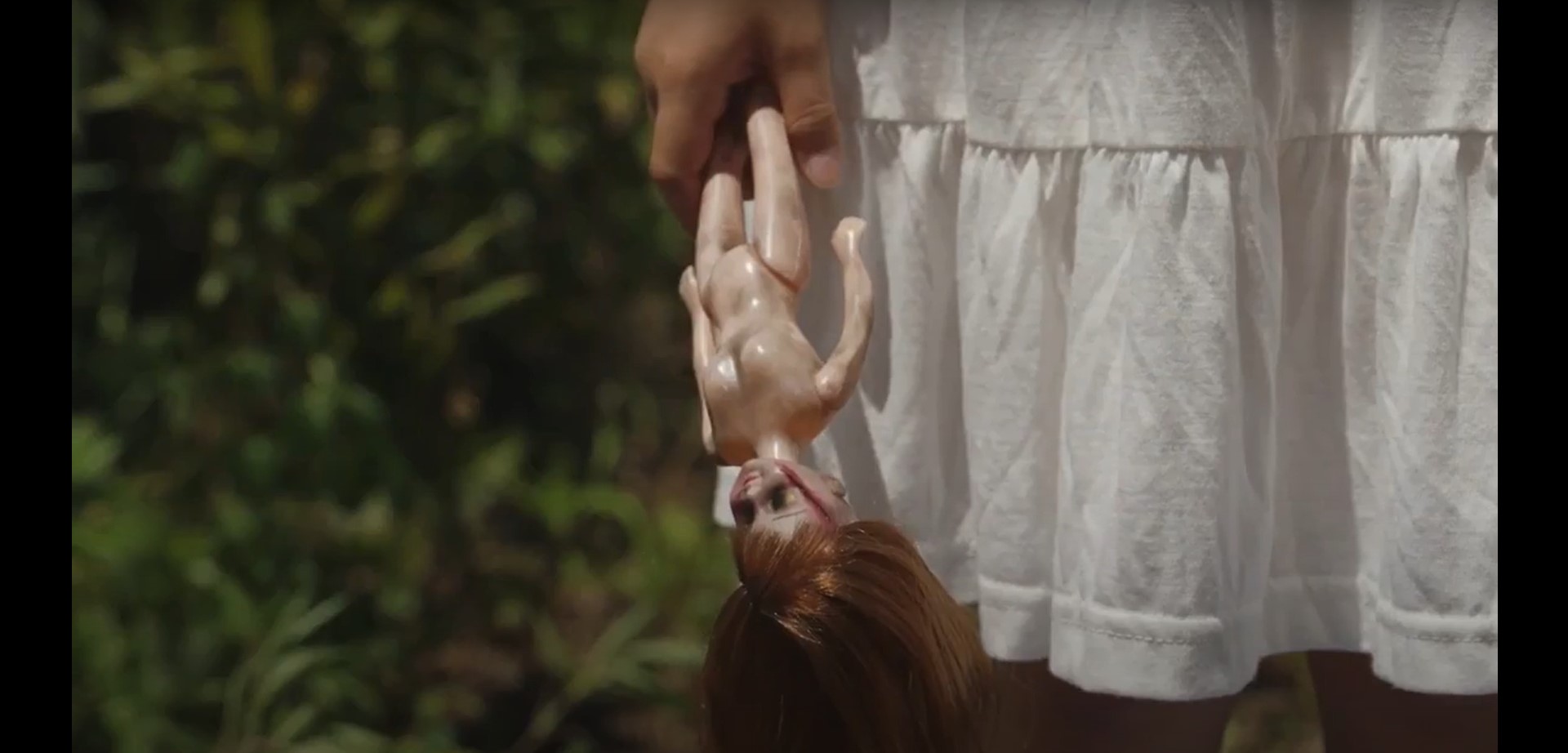
With a provocative title and a stern, flashing warning for taboo content, “Violator” starts off slow and continues so until about 3/4s into the film. Yamamoto glides not the sliced underbelly with murderous rage and profane callous through sexually and wicked means. No, Yamamoto builds each individual character, giving the what’s usually throw-away victims the time of day with a prolonged preface before their death that sets in who they are, what mindset they’re in, and, instead of just being collateral damage, what catalytic action becomes their ultimate undoing. By providing singular personalities, Yamamoto instills a breadth of subconscious care amongst the audiences that unintentionally react with the pangs of sympathy for the less naive during their demise to a straight up I’m glad they’re dead death because of their horrible unprincipled being and them dead makes the world a better place. Eventually, Yamamoto turns the keys to rev up the havoc as the death pact suicide squad disband into distinct, slasher-esque junctures to make good on the promise of building the character to give them a proper cutthroat curtain call and it’s about this time “Violator’s” pre-film turpitude caution actually applies with strange ritualistic kabuki decapitation, a virginal last-gasp cunnilingus before a protruding vaginal spear pierces through the skull, and a toy doll becomes a literal eye-opener for a suicide documentarian. Idiosyncratic in their own right, the kills are a violent spectacle that make “Violator” memorable enough to not forget it, but there’s far worse inflammatory material out there in the world of cinema that “Violator’s” handful of okay kills doesn’t exactly set off our internal omigod alarms.

“Violator” is the kind of off market brand and violence-laden film that fits like a glove with indie distributor, Wild Eye Releasing, in association with Tomcat Films (“The Amazing Bulk,” “Mansion of Blood”) and is perhaps one of the best releases out from the shlock usually produced from the latter company. With a muted colored and basic arranged DVD cover mockup that evokes every suspicion of an unauthorized release, I couldn’t love this cover any more than I already do with the promising depiction of a hysterical bloodbath and the singular moments represented in the collage of carnage and madness don’t stray away from the truth. The not rated DVD is presented in a widescreen 1.78:1 aspect ratio with a runtime of 72 minutes. DVD image quality is not terrible with a rate of decompression hovering around 6-7 Mbps, but still a little fuzzy in particular scenes with more than one character present and a in low-lit show production, that can hinder the viewing. The Japanese language PCM stereo track has no real flaw to speak of with a good synchronous English subtitle track and no detectable compression issues other than the lack of surround sound audio strength. The metal soundtrack also didn’t align, or rather clashed, with the mise-en-scene, added for just the sake of adding to make the story edgier. Bonus features include only a scene selection and trailers on a variable menu. Coy and different, “Violator” thinks outside the box with a simple supernatural revenge narrative that penetrates slowly at first but then really rams in the sudden disarray without a precautionary moment to lube up first.

“Violator” on DVD from Wild Eye Releasing and MVD Visual!

Mama’s EVIL Little Boy. “Mother” reviewed! (SRS Cinema / DVD)

A boy’s best friend…is his “Mother.”  DVD at Amazon.com

In the deep pocket of rural America, a son is born in a country home and over the years, the baby of the house lives a cossetted life by his mother.  Warped by her mollycoddling ways and unaffected by the death of his father, the now young man apathetically bends to his mother will whether she’s conscious of it or not.  He responds in unkind to overprotect his mother when an envious older brother derides their special son and mother bond and is murdered in cold bold.  As more years pass and his mother succumbs to her health deterioration, the son, now the last of his family, remains in solitary at the family home and the absence of his beloved mother haunts him as he processes his unnurtured and unhealthy sexuality onto the unwilling living and the unresponsive dead. 

In 2003, the NY-based indie horror filmmaker Michael P. DiPaolo gave us “Daddy,” an undead rape-revenge zombie-thriller that brought the corpse of an abusive father back from the grave to exact a fate far worse than death on his daughter and her friends who put an end to drunken state defiling of his little girl.   Three years later, DiPaolo releases to us “Mother.”  However, don’t expect this to a companion film connected to “Daddy.”  Instead, “Mother” is a whole new story with a whole new stylistic approach, including zero dialogue in a black and white frame – much like a silent movie but with more Foley and no corresponding continuous piano tunes. Ed Gein became the core inspiration for DiPaolo who retells the Plainfield, Wisconsin described Ghoul‘s horrifying deeds of exhuming corpses, creating trophies out of the remains, and even the slaying of two women, a tavern owner and a general hardware store clerk. DiPaolo self-produces the film under this Black Cat Cinema productions along with associate producer Zachary Balog and shoots the film most of the homestead around Cropseyville, New York, near Albany, and the surrounding area.

Comes no surprise that the actor who once portrayed the former Republican Vice President, Dick Chaney, for Damon Packard’s Fatal Pulse also plays the details likes of one of America’s most notorious murderers. The Buffalo, New York born John Karyus, who had a minor role in “Daddy,” reteams with DiPaolo to present a dialogue-less version of the life and death of Ed Gein by stepping into virtually his skin – that’s an Ed Gein joke in case you were paying attention. Karyus and DiPaolo don’t hold anything back in the peculiar biopic that dives deep into dismemberment madness, fascination killings, and the loss of motherly love. Half of the praise should be awarded to Nina Sobell as the son’s mother. Sobell not only plays mommy dearest but also the hardware store clerk and the tavern owner in an unrecognizable fashion. The up-in-age actress’s comfort level was high enough even for a nude scene in which Karyus has to dress her approaching older age and invalid body. Karyus might be on centerstage as the star of the show, but Sobell’s in the backstage manipulating the pullies, curtains, and supporting Karyus with different angles that give way to the avenues of an aggressor’s cloistered milieu. Other minor characters quickly come and go amongst the silence feature with costars in Jason McCrea as the bigger brother, Phil Sawyer Jr. as the best friend, Adam Zaretsky as the father, and Svetlana as the exhumed corpses brutally hacked away for her bone-afied trophies.

The distorted mind of Ed Gein must have been a surreal inverted world. I think Michael DiPaolo encapsulates a similar essence of the upside-down perspective seen through the eyes of a killer with what can be said to be his woven auteur’s arthouse tapestry. You would think no dialogue would drag the film through the monotonous much and show signs of repetitive tiresome, especially dressed in a colorless monochrome but the crafty cinematography and grisly gestures never waver interests as we’re along for the fall of man beheld as not only mother’s baby boy but also as her ardent admirer. Her presence was a tattered thin tether that kept him secure to reality and once she checked out, the abnormal fascinations that always laid dormant now flourishing with full force like an unchecked weed in an immaculate garden of prize-winning roses. The son goes from a chaperoned teetering-maligned individual to full-fledged grave robber and skin suit tailor, raping and ripping the flesh from dead bodies over the course of years, denoting just how psychologically paramount a mother’s care is for a boy in the balance of good and evil. DiPaolo more-or-less hits every note in the book in regard to Ed Gein’s past, tweaking a few historical moments for dramatization or budgetary limits, while still maintaining a professional code of conduct despite constructing the film on the cheap. DiPaolo definitely knows and understands what he’s doing and how to work the system as clearly seen between the tone and expression differences of 2003’s “Daddy” to 2006’s “Mother.”

First, there’s was the back form the dead “Daddy.” Now, there’s the spoiling to sociopathic “Mother.” A match made in Hell and both available on a region free home video DVD from SRS Cinema. The “Mother” release is presented in black and white on SOV 1.33:1 aspect ratio, reconstructed in an impressive 6-7 megabytes per second due partly because there is nothing to decode from a RGB color signal. Contrasting is good as you can greatly appreciate the spectrum between light and dark patches. Sporting no dialogue, the LPCM 2.0 stereo features slightly exaggerated Foley and a dissonant vocal score, some in the Russian language nonetheless, from the Moscow born, New York residing folk instrumental artist LJova (Lev Zhurbin). There’s clarity over ambiguity to the action-destined soundbites being conveyed even if a bit over-the-top as if to compensate for the no dialogue. The 76-minute film is coupled with a DiPaolo short film “Brutal Ardor” about a woman trapped inside her small apartment and an immense amount of despair living with a sexually overbearing and jealous husband. Also included in the bonus material is a making of featurette voiced over by DiPaolo as he goes through his creative process and techniques (and is also somewhat of a comedy track), a director’s commentary, the feature trailer, Michael DiPaolo film trailers, and other SRS trailers. Perfect for a double bill with DiPaolo’s “Daddy,” “Mother” is a cynical and desolation ark of biblical proportions adapted from a horrid torrent of truth.

A boy’s best friend…is his “Mother.”  DVD at Amazon.com

Fixing the Tracking on Those EVIL VHS Cassettes! “Snuff Tapes” reviewed! (MVDVisual / DVD)

Ready to be Recorded?  “Snuff Tapes” now available at Amazon.com!

Marcela Arkaino investigates a Talca, Chile rapist and murder who has been drugging and abducting women for years to record aberrant tapes of his cruel exploits.  Marcela takes a special eager interest in this particular assignment as she was one of those unfortunate women.  As a silver lining out of an extremely bad situation, she is one of three women left alive by her brutal sex-sadist aggressor.  As the reporter in her garners the difficult stories from the other two survivors, Cataline and Jesus, abused by the same masked man, she inches closer to his whereabouts by triangulating attacks and connecting similarities but her scouring of roadside market, unlabeled VHS tapes became the smoking gun needle in a haystack that produces not just any depraved tape of his victims but of her own ordeal, turning now an inch into a mile in finding him.  Bring the other two women into the fold, Marcela devises a plan of revenge to direct a snuff film of her own, starring their rapist and torturer.  

Hailing from Talca, Chile, the same location where the story is set, comes the shock-slamming, VHS-inspired thriller “Snuff Tapes,” aka “Cintas Tapes,” from the Chilean born independent filmmaker, Vito Garcia Viedma.  The writer-director’s prior two zombie-influenced short films, the 2012 “Bajo el sonido del tren” and the 2017 “Escape from Zombie City,” along with the criminal underbelly 2017 feature, Los culpables,” displays a course change deviation that wouldn’t prepare the average Viedma film fan for his 2020 venture into the dark underworld exploitation of indie snuff.  While the title highlights the concept around videotaping the misuse of a person’s trust and vulnerability for one’s own disturbing profit, in this case to get one’s jolly’s off, much of Viedma’s story skirts around the edge with just mentioning the nixing of captured and consumed of vivacity women, saving the story’s climax for more detailed death dealing in a vengeful perspective rather than a videotaped one. “Snuff Tapes” is created under Viedma’s ZineFilms production company in association with Cabro Chico and Trippas Productions.

“Snuff Tapes” is no “8MM” with a mega-Hollywood budget and Nic Cage doing Nic Cage antics. “Snuff Tapes” is no “Effects” with cult icons Joseph Pilato and Tom Savini helming sordid scenes from fantasy to non-fiction. “Snuff Tapes” isn’t even on the same level as “A Serbian Film” and, to be honest, I don’t think any film anytime soon will ever be on the same level as that twisted picture. What all three of those successful and notorious films have in common and what Viedma lacks in separating itself from the rest are in two very important details: a budget and an array of talent. Viedma’s film humbles in comparison with not only a microbudget but also in a cast makeup of essentially five actors with withering substance. Valentina Soto Albornoz stars as the retribution-reporter, Cataline Ibarra, who for the last decade has been piecing together clues of her kidnapper’s whereabouts by purchasing random video cassettes tapes from Talca street vendors and when Ibarra strikes gold unearthing her own ugly tape, she understandably feels overwhelmed reliving visually the nightmare and subsequently gravitates toward being hellbent for revenge. Ibarra recruits her survivor carbon copies in the tattooed Jesus Mayano (Camila Medina) and aspiring photography model Marcela Arkaino (Camila Carreno Arancibia) for a little payback, but Ibarra, aside from her good friend Esteban (Hugo Villar) providing her a PAL encoded VHS player and rewatching her tape to catch clues missed, she virtually does all the legwork in pinpointing the one responsible, drugging him, abducting him, and committing herself to the nitty-gritty, fantasy plan for whenever she got her hands on him. I’m not sure what roles or business Arkaino or Mayano actually had to just stand there moping other than maybe bear witness to the end of their lifelong torment, to see the boogeyman parish once and for all? Reinaldo Aravena plays the man behind the mask who initially puts up a strong showing as the camera operator and stud of his homemade videos but then quickly fizzles disappointingly on the opposite side of the camera due to a lack of scaled down combating in what becomes just a one-woman show without much to show for it.

Viedma paves an interesting structural path for his film, taking the audience an extended 36-minute introduction of voiced over VHS recordings of survivor stories before entering opening credits to what then becomes a dichotomy narrative between backstory and present day. This also speaks to the visual cinematography as well that jumps back and forth between being shot on the VHS’s boxed-in format (found footage) to a wider lens of the digital world, capturing past and present in two distinct formats as well as capturing the past that isn’t glossy, pretty, and is an inescapable prison where the walls, the horizontal pillars, are closing in on the world.  Appearances, no matter how apt to the subject, do not give the movie soul and “Snuff Tapes” misses that poignant shock value target with poorly written characters and a misaligned connect-the-dots investigation that doesn’t make much sense.  Ibarra examination of the evidence, or really lack thereof, points to one man, but like a cheating slacker in high school, she does not show her work to come up with that result.  Instead, she repeats, at least in a couple of instances, her gut knows she has the right man.  In Viedma’s world, a gut feeling is factual evidence for stringing someone up to face judgement.  In reality, that’s a severe boo-boo case of miscalculation that would get you jail time.  Circumstantial street justice on little-to-no proof separates the empathy from what an audience is supposed feel fired up against an unspoken truth and gives them satisfaction in a just cause to see the obliteration of scum from the face of the Earth. In the first half, “Snuff Tapes” is undeniably graphic and cuts deep with a veridical, degenerate villain, but falters with a lazy second half approach and gratuitous revenge.

MVD Visual in association with Danse Macabre and Jinga Films release “Snuff Tapes” on a North American DVD release. The region free DVD is presented in a VHS format of 1.33:1 when looking cassette camera lens with the rest of the film in a widescreen 1.85:1 aspect ratio. As expected, the VHS quality has semblance of overuse and age with a fuzzy display and muted, boxy sound. Outside of that, the picture quality is not much better in reconstituting a playback on lower end of the DVD spectrum – approx. 3-5 Mbps. Compression artefacts are heavily present with poor clarity around the edging and blacks shimmer and appear blotchy. The lossy Spanish language Dolby Digtial 5.1 Surround Sound loses some of it’s fidelity in the compression but is the overall highlight amongst the DVD’s A/V scorecard; however, the subtitle transcription is the worst I’ve seen in quite some time with duplicated segments, spelling errors, and a timing that equates to a microsecond blip of dialogue on some occasions. The release comes with another version of the film as the sole bonus feature with an entire VHS 1.33:1 (4:3) VHS Cut for an immersive effect. As always, snuff features can be difficult to digest but they are becoming more and more prevalent and popular in a highly accessible home video market and director, Vito Garcia Viedma, tries his creative hand at creating disturbing content only to defile the genre with a subpar entry sullied by deficient storytelling.

Ready to be Recorded?  “Snuff Tapes” now available at Amazon.com!