EVIL Relaxes in the Serenity of a “Full Body Massage” reviewed! (Unearthed Films / Blu-ray)

Lube Up and Get Ready for “Full Body Massage” on Blu-ray!

Nina, a middle-aged affluent art dealer, has just returned from a long business trip.  Settling back down into her own nature morte decked home, Nina pampers herself with a hot shower, a glass of wine, elegant music, and a soak in her open aired, backyard hot tub as she relaxes before for her masseur, Doug, a handsome young man she finds herself comfortably attracted to outside their professional relationship, arrives to put his oiled up hands up and down her naked body but when Fitch arrives, Doug’s more seasoned stand-in, Nina finds herself blindsided by the change and slightly disappointed in her sudden erotic deflation.  Fitch’s worldly approach to life conflicts against Nina’s narrow perspective on various topics, including art, happiness, and love.  Willing to be fully open with each other during the intimate and unorthodox massage, Nina and Fitch debate deep into their session without holding anything back with flashbacks on their experiences that led them to this very moment of unexpected connection.

Director Nicholas Roeg, the late acclaimed English director, is known for his in-depth humanizing of flawed or downcast protagonists, often times surrounded by desire and obstacles, having helmed such renowned features as “Walkabout,” “Bad Timing,” and “The Man Who Fell From Earth.”  Roeg has also dipped his directional toes in horror with films like “Don’t Look Now” and “The Witches,” running the gamut between adult and children thrills.  Later in his career, Roeg slowly moved away from theatrical features and into the realm of television, shorts, and TV movies with one of those made-for-TV films being “Full Body Massage” for the premium cable network Showtime.  Penned by “The Stranger’s” Dan Gurskis, “Full Body Massage” trades in a problematic mystery or obstacle for more of the unravelling of philosophical viewpoints of two strangers wounded in their own obvious way only to have the air purified each other’s different life paths and mere presence of mind.  The 1995 released U.S. network movie is produced by erotic thriller operators Julie Ahlberg and Michael Nolin of “The Pornorgrapher” under the LLC of Full Body Productions and Showtime.

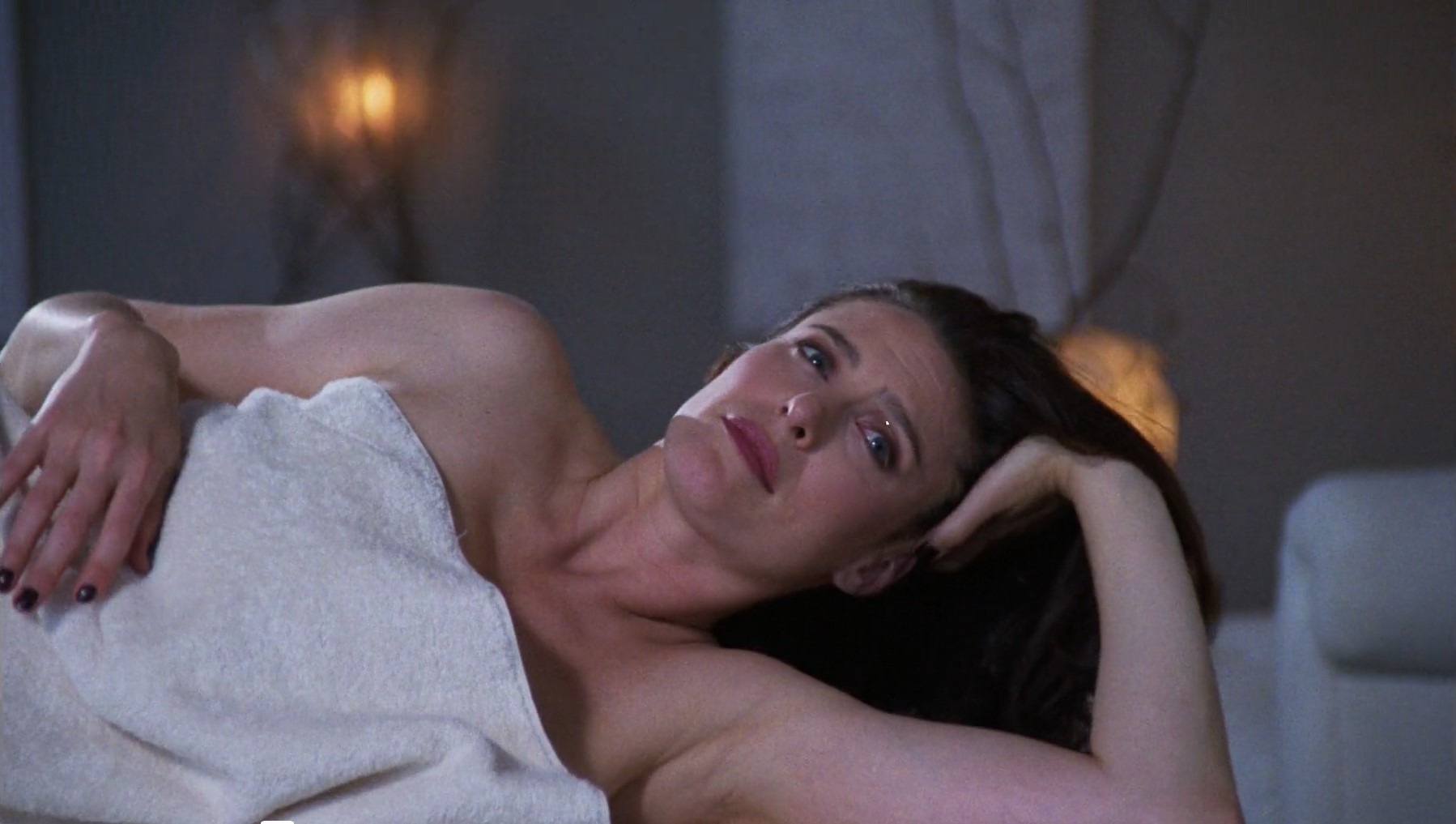
Though a made-for-television movie likely marketed for and airing as a late night skin flick for the premium network channel in the cable box era of the 1990s, “Full Body Massage” was anything but your ordinary after dark tits up production with two well-known stars substantially casted and not just for the headline attraction.  “Ginger Snaps” and “Hider in the House” American actress Mimi Rogers is joined by Australian star and “F/X” leading man Bryan Brown who undertake the respective roles of world-weary Nina and worldly-candid Fitch.  While “Full Body Massage” has the hallmarks of softcore programming, an titillating title, sexy sax soothing tones, and a very naked Mimi Rogers, the machinating devices have more bark than bite as Rogers and Brown never engage into sexual intimacy albeit a lot of sensual massage manhandling by Fitch on Nina’s more than happy to be naked body with a stranger she just met.  The two mainstays are pundits for the story, verbally expelling their own viewpoints and experiences that have shaped their choices in life, molding them to who they are, and nearing the edge of gospel when in rhetoric with each other.  Their conspicuous dispute is nearly all narratively all consuming but not as nearly all argumentative in it’s very adult approach to discussion of just two people seeing the world through two very different eyes.   Other characters are told through mostly flashbacks and never interact in the same aortic piece with Rogers and Brown with Christopher Burgard (“Syngenor”), Elizabeth Barondes (“Night of the Scarecrow”), Gareth Williams (“Striking Distance”), Patrick Neil Quinn (“Swamp Thing” television series), Heather Gunn (“Ed Gein”), and Gabriella Hall (“The Erotic Adventures of the Invisible Man”) and Brian McLane playing younger versions of Nina and Fitch. 

“Full Body Massage” is not an intense, edge-of-your-seat nail biter bursting with action and suspense.  In fact, I struggle with film’s point and overall message to the world in what in essence boils down to a character study.  Fitch’s disapproving father no matter how perfection Fitch achieved, Nina’s continuous search for approvals in love, Fitch’s losing love that sends him on a spiritual journey, and Nina’s failed marriages between fast-and-loose husbands and hard to connect with ones make the two underlyingly wounded adults rigid and confidence in that unyielding measure until they meet each other and experience pliability out of a long-winded dialogue in not only a face-to-face manner, but also in the healing power of touch and massage that’s feels erotic per Roeg’s direction but also works out every kink in their twisted, knotted pasts to where they end in an uncertain but good place, a place they’ve never been before or have long forgotten.  By the course of two people talking, which most the world does every day, there had to be buzzier bright light to attract swarming audiences to the premium cable network’s thirst for viewership and that would be Mimi Rogers going nearly full-frontal for nearly the entire runtime and Roeg really plays into that erotic prance of unabashed confidence and comfortability while also, contrariwise, the dynamic progresses platonically. 

A newly scanned 2K transfer of 1995 film comes from an unlikely boutique distributor known mainly for extreme horror, gore and shock, and controversial material. Unearthed Films proudly presents “Full Body Massage” on Blu-ray as title lucky number 13 on their Unearthed Classics label. The AVC encoded, high-definition 1080p, BD50 exhibits cable vision veneer in a television widescreen 1.66:1 aspect ratio. Roeg’s choice to go virtually without style really hinges on the substance for success. The natural approach consumes any low-lit or candle-lit warm interiors exclusively for flashback sequences. The 35 mm print has been cared for and it shows with pristine HD transfer that keeps the natural grain and doesn’t need to really sugarcoat any sour patches. The English lossless PCM 2.0 stereo mix offers exact fidelity of the original discourse and milieu ambience of an innate digital sound capture. With the dialogue heavy story, the discourse is clean, clear, and prominent, comprehensible in every which way. Depth provides expansion and echo inside Nina’s vastly roomy mansion, but range is limited to talking and not the sensual, sexy, arousing kind. English subtitles and SDH subtitles are available on this release. Special features include the television version presented in 1.33:1 aspect ratio, a minute still image gallery that’s mostly Bryan Brown behind Mimi Rogers giving her the massage, and the original trailer. While not a great selection of bonus content, the physical exterior succeeds slightly favorable with a cardboard O-slipcover with flat, yet beautiful, illustration of, again, Bryan Brown and Mimi Rogers in massage therapy that could be misleading as sensuality. The Amaray Blu-ray cover sports the same image on the cover art and even compressed even further on the disc art. The Blu-ray is rated R, locked in region A playback, and has a runtime of 93 minutes. I’m not going to try and kid you with what is and will be “Full Body Massage’s” immediate appeal, a very well-endowed and nude Mimi Rogers, but this anomalous Unearthed Classic brings a different highbrow criterion class to the extreme horror label in what is a brazen change of pace. 

Lube Up and Get Ready for “Full Body Massage” on Blu-ray!

Mama’s EVIL Little Boy. “Mother” reviewed! (SRS Cinema / DVD)

A boy’s best friend…is his “Mother.”  DVD at Amazon.com

In the deep pocket of rural America, a son is born in a country home and over the years, the baby of the house lives a cossetted life by his mother.  Warped by her mollycoddling ways and unaffected by the death of his father, the now young man apathetically bends to his mother will whether she’s conscious of it or not.  He responds in unkind to overprotect his mother when an envious older brother derides their special son and mother bond and is murdered in cold bold.  As more years pass and his mother succumbs to her health deterioration, the son, now the last of his family, remains in solitary at the family home and the absence of his beloved mother haunts him as he processes his unnurtured and unhealthy sexuality onto the unwilling living and the unresponsive dead. 

In 2003, the NY-based indie horror filmmaker Michael P. DiPaolo gave us “Daddy,” an undead rape-revenge zombie-thriller that brought the corpse of an abusive father back from the grave to exact a fate far worse than death on his daughter and her friends who put an end to drunken state defiling of his little girl.   Three years later, DiPaolo releases to us “Mother.”  However, don’t expect this to a companion film connected to “Daddy.”  Instead, “Mother” is a whole new story with a whole new stylistic approach, including zero dialogue in a black and white frame – much like a silent movie but with more Foley and no corresponding continuous piano tunes. Ed Gein became the core inspiration for DiPaolo who retells the Plainfield, Wisconsin described Ghoul‘s horrifying deeds of exhuming corpses, creating trophies out of the remains, and even the slaying of two women, a tavern owner and a general hardware store clerk. DiPaolo self-produces the film under this Black Cat Cinema productions along with associate producer Zachary Balog and shoots the film most of the homestead around Cropseyville, New York, near Albany, and the surrounding area.

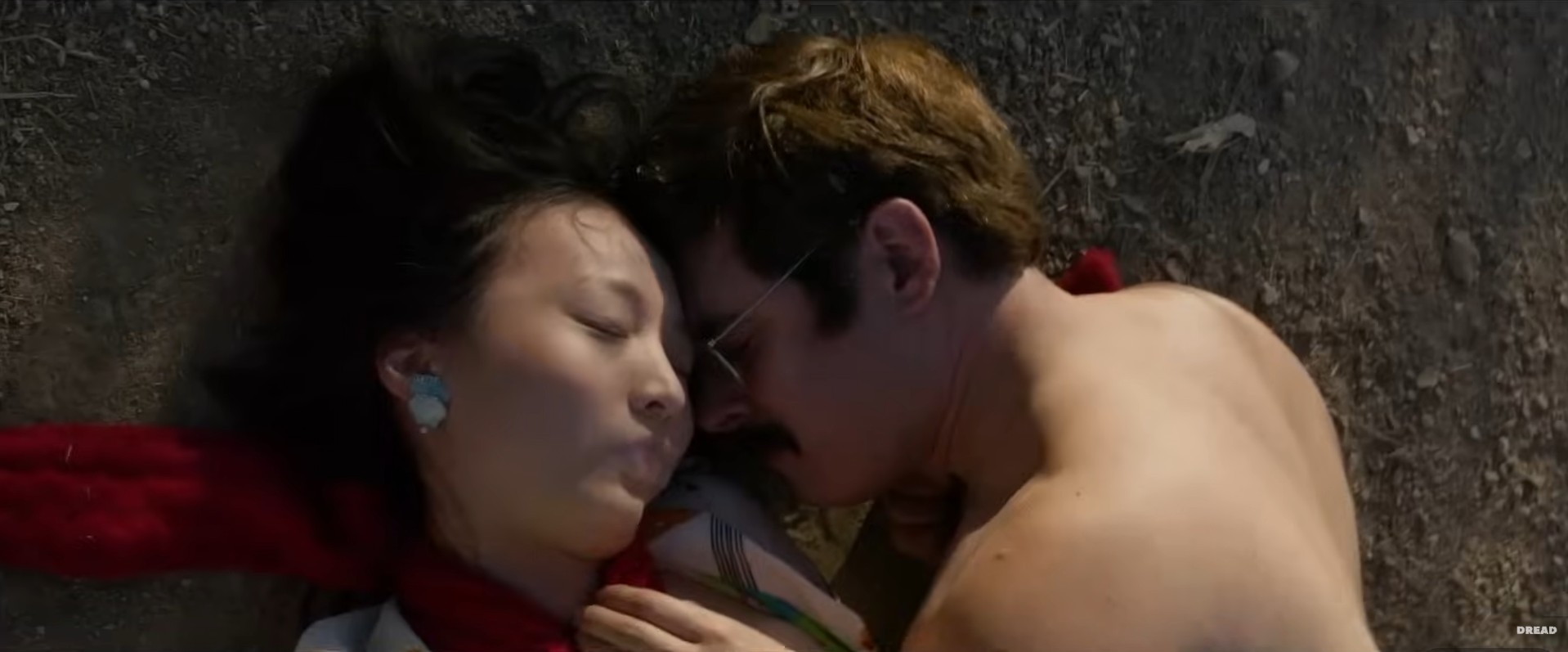
Comes no surprise that the actor who once portrayed the former Republican Vice President, Dick Chaney, for Damon Packard’s Fatal Pulse also plays the details likes of one of America’s most notorious murderers. The Buffalo, New York born John Karyus, who had a minor role in “Daddy,” reteams with DiPaolo to present a dialogue-less version of the life and death of Ed Gein by stepping into virtually his skin – that’s an Ed Gein joke in case you were paying attention. Karyus and DiPaolo don’t hold anything back in the peculiar biopic that dives deep into dismemberment madness, fascination killings, and the loss of motherly love. Half of the praise should be awarded to Nina Sobell as the son’s mother. Sobell not only plays mommy dearest but also the hardware store clerk and the tavern owner in an unrecognizable fashion. The up-in-age actress’s comfort level was high enough even for a nude scene in which Karyus has to dress her approaching older age and invalid body. Karyus might be on centerstage as the star of the show, but Sobell’s in the backstage manipulating the pullies, curtains, and supporting Karyus with different angles that give way to the avenues of an aggressor’s cloistered milieu. Other minor characters quickly come and go amongst the silence feature with costars in Jason McCrea as the bigger brother, Phil Sawyer Jr. as the best friend, Adam Zaretsky as the father, and Svetlana as the exhumed corpses brutally hacked away for her bone-afied trophies.

The distorted mind of Ed Gein must have been a surreal inverted world. I think Michael DiPaolo encapsulates a similar essence of the upside-down perspective seen through the eyes of a killer with what can be said to be his woven auteur’s arthouse tapestry. You would think no dialogue would drag the film through the monotonous much and show signs of repetitive tiresome, especially dressed in a colorless monochrome but the crafty cinematography and grisly gestures never waver interests as we’re along for the fall of man beheld as not only mother’s baby boy but also as her ardent admirer. Her presence was a tattered thin tether that kept him secure to reality and once she checked out, the abnormal fascinations that always laid dormant now flourishing with full force like an unchecked weed in an immaculate garden of prize-winning roses. The son goes from a chaperoned teetering-maligned individual to full-fledged grave robber and skin suit tailor, raping and ripping the flesh from dead bodies over the course of years, denoting just how psychologically paramount a mother’s care is for a boy in the balance of good and evil. DiPaolo more-or-less hits every note in the book in regard to Ed Gein’s past, tweaking a few historical moments for dramatization or budgetary limits, while still maintaining a professional code of conduct despite constructing the film on the cheap. DiPaolo definitely knows and understands what he’s doing and how to work the system as clearly seen between the tone and expression differences of 2003’s “Daddy” to 2006’s “Mother.”

First, there’s was the back form the dead “Daddy.” Now, there’s the spoiling to sociopathic “Mother.” A match made in Hell and both available on a region free home video DVD from SRS Cinema. The “Mother” release is presented in black and white on SOV 1.33:1 aspect ratio, reconstructed in an impressive 6-7 megabytes per second due partly because there is nothing to decode from a RGB color signal. Contrasting is good as you can greatly appreciate the spectrum between light and dark patches. Sporting no dialogue, the LPCM 2.0 stereo features slightly exaggerated Foley and a dissonant vocal score, some in the Russian language nonetheless, from the Moscow born, New York residing folk instrumental artist LJova (Lev Zhurbin). There’s clarity over ambiguity to the action-destined soundbites being conveyed even if a bit over-the-top as if to compensate for the no dialogue. The 76-minute film is coupled with a DiPaolo short film “Brutal Ardor” about a woman trapped inside her small apartment and an immense amount of despair living with a sexually overbearing and jealous husband. Also included in the bonus material is a making of featurette voiced over by DiPaolo as he goes through his creative process and techniques (and is also somewhat of a comedy track), a director’s commentary, the feature trailer, Michael DiPaolo film trailers, and other SRS trailers. Perfect for a double bill with DiPaolo’s “Daddy,” “Mother” is a cynical and desolation ark of biblical proportions adapted from a horrid torrent of truth.

A boy’s best friend…is his “Mother.”  DVD at Amazon.com

The Analogies of the EVIL that Plagues Us. “Hole” reviewed! (Wild Eye Releasing / DVD)


Three peoples’ lives become coiled around the unfortunate state of death with each experiencing individual variations of the concept. The recently released convicted felon, Ed Kunkle, faces reality on the brink of insanity as his past demons vilify his temperament in the direction of total carnage. Befriended by Kunkle is Eve Adams, a single mother who struggles to cope with her infant son’s untimely murder that happened right under her watch. Assigned to the Adams Boy’s case is detective Bodie Jameson who struggles with own malevolent urges brought upon by the unsurmountable cases of grisly homicides that come cross his desk while he also tracks down a child killer. Their differences connect them, looking into their future to rediscover the past that molded their disheveled lives into fateful affairs with death.

Over the course of three years between 2007 to 2010, auteur filmmaker Joaquin Montalvan directed and assembled a gritty glimpse into the grubby windows of condemned souls with the 2010 released “Hole,” produced by his own independent production company, Sledgehammer Films, and co-written with his longtime collaborator and wife in life, Eunice Font. “Hole” is Montalvan’s third horror feature following 2002’s beleaguered with loneliness thriller “Adagio” and psychological horror, “Mobius,” which was released the year prior in 2009, plus also behind a string of documentaries. Montalvan’s an optically surreal storyteller basking in a rich and unorthodox story and color palette that revives originality bobbing in an heaving ocean of lemming horror.

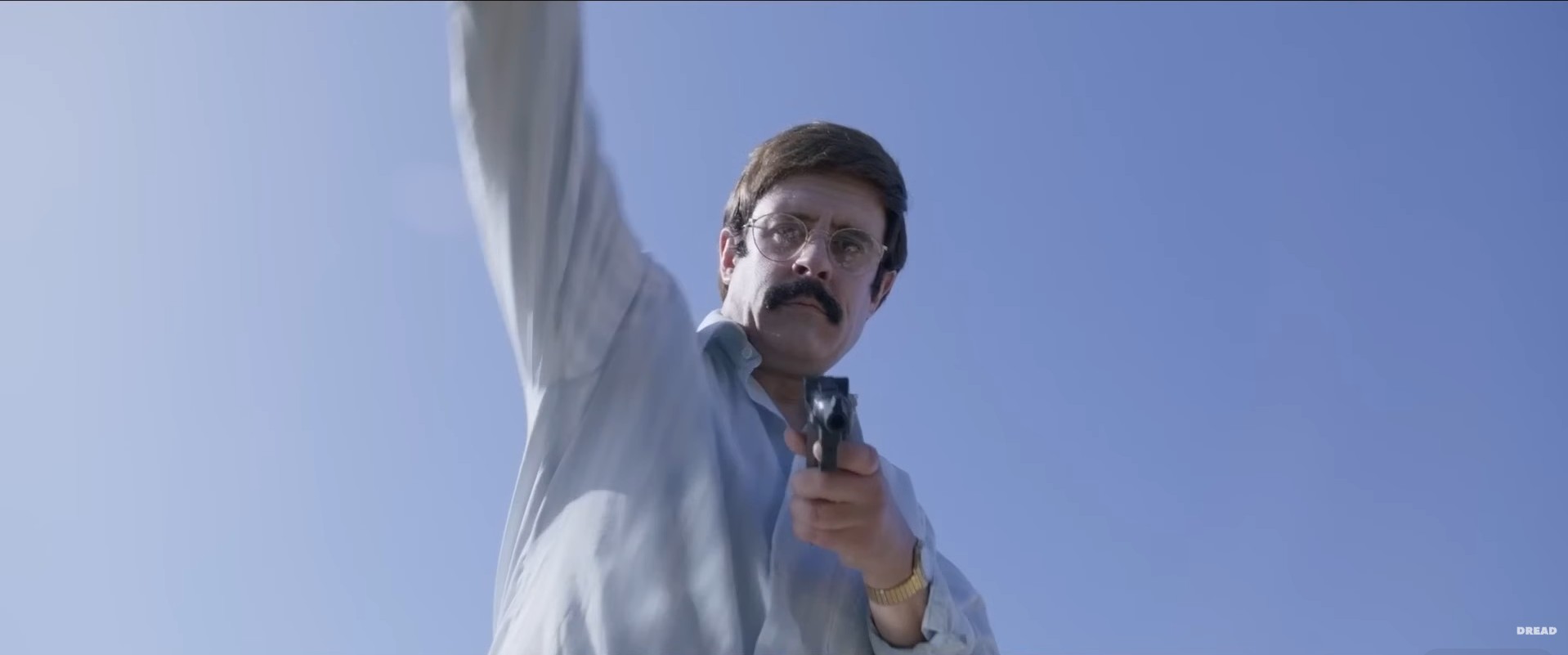
“Hole” is comprised of showcasing three stories from three tormented lives. One of those lives, the mentally unfit Ed Kunkel, gorges on being the centric force that thrives the other two into a descendant hell. The late Paul E. Respass tunes into Kunkel’s manic polarity as a person who can be extremely mild mannered and pleasant then explode with caustic abrasiveness and ugly torture. Respass’s shoulder length, wavy hair, graying goatee, and iron contoured face gives him a Charles Manson appearance that goes good with crazy. Behind closed doors Repass’s Kunkle breaks with sanity slaughtering his mother lookalikes as a result of mommy issues, but when conversing with Eve Adams, Kunkle’s maintains an upright keeled temper. Teem Lucas, who like Respass has worked with Montalvan previous, subdues the abnormal imbalance with a normal person’s reactionary response to loss and heartache when Eve Adams copes with the murder of her young child. In the middle these two extremities, detective Bodie Jameson’s work seeps into his psyche, fluctuating between irrational and rational thoughts. Another actor in Montalvan’s corral, Jim Barile, who looks more like a 70’s hippie than a detective, has the hardest performance of them all of slipping into a terrifying unknown mindset while maintaining status quo in work and romantic relationships. Barile’s role isn’t well recieved, flying mainly under the radar with an underperformed and pointless conclusion to detective Jameson right and wrong affliction. Charlotte Bjornbak (“Camera Obscura”), Katherine Norland (“Cannibal Corpse Killers”), Alina Bolshakova (“Dead End Falls”), Dennis Haggard (“Cannibal Corpse Killers), Theresa Holly (“Legend of the Hillbilly Butcher”), Micki Quance, Gavin Graham, and Char Frost (“Someone’s Knocking at the Door”) co-star.

Right away, a strong sense of resemblance washed over me when viewing “Hole.” The lead actor, Paul Respass, and the overall texture felt already acquainted with my visual cortex nerves. My suspicions were justified and my sanity was cleared as I have seen “Hole” before in a later film entitled “Legend of the Hillbilly Butcher,” another Joaquin Montalvan flick featuring Respass as a delusional manic. Yet, “Hole” is one of those films that after the credits role, hasty judgements should be chewed on, reflected upon, and recollected for a second analysis. Hell, you might as well just re-watch it all over. The thing with Montalvan is is that his brand has trademark cognizance on such a level that even if “Hole,” released in 2010, and “Legend of the Hillbilly Butcher,” released in 2014, instinctually ride the same wave, they ultimately compare as individual projects with a distinct personality and artistic flair. For instance, “Legend of the Hillbilly Butcher” denotes more of an homage to early exploitation films and “Hole” puts more stake into societal system failures, even if borrowing from the likes of Ed Gein with the killer wearing a flesh mask and sewing up a fleshy garment. Both films hark about mental illness, but one glorifies the act for the sheer sake of carnage fun and the other considers it a collateral damaging symptom of a broken justice structure. Another difference to note is “Hole’s” three-way non-linear narrative that moves like the Wonkavator from “Charlie and the Chocolate Factory” in every way imaginable and can be daunting to keep up.

Out of the depths of obscurity comes “Hole” distributed on DVD home video by MVDVisual and Wild Eye Releasing under the Raw and Extreme banner. Presented in a widescreen, 1.78:1 aspect ratio, Montalvan and his D.P. R.T. Norland, brightly bedazzling with every shade of matte box and some slow motion, play the field utilizing various techniques to tap into Ed Kunkle’s disorienting madness. Using backdrops like the ghost town of Bodie and the spiritual sanctuary (or bohemian commune) of Salvation Mountain, Montalvan’s able to cast an aberrant vision out inside an independent means. There are some points of posterization, details are softer than desired, and blacks lose composition with blocky noise so there are some drawbacks to the encoding. The English language dual channel audio mix pairs about the same as the video with spliced competing facets that tend to offer come-and-go range and depth. Scream queen moments go into feedback mode during Ed Kunkle’s kill mode, losing the ideal quality via unsound mic placement. Dialoge is okay being on the softer side with some background noise being flowing in and out between the audio edits, emitting a static effect around the dialogue and then cut out when not the actors are not speaking. The bonus features are aplenty and informative with a Montalvan commentary track, an extensive mack of documentary that fine combs every pore of the film that includes interviews with cast and crew, Ed’s Journal segment conversing about the backstory on Ed Kunkle’s perverse family and killed friends portraits and souvenirs, as well as trailers. Bloodhounds will want more from Ed Kunkle’s shed of horrors, but what director Joaquin Montalvan has fashioned threads madness with a neglected mental heath system while polishing a a shiny three prong, moviegoer narrative with blood, body parts, and butchery.

The Myth. The Legend. The Evil…. “Leatherface” review!


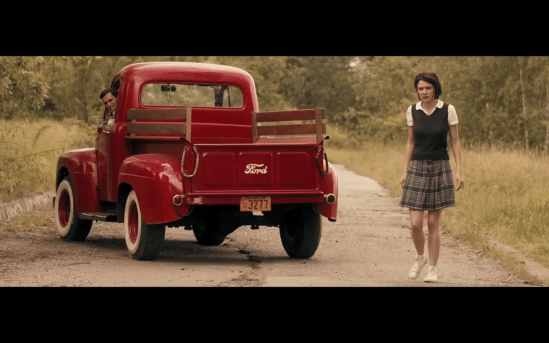
Texas 1955 – the pride of the Sawyer family was not their tattered farm, but a bloodline taste for something else – callous murder and a penchant for human flesh. Verna Sawyer sought to instill that pride into her children, especially her youngest, Jed, but when Hal Hartman, hard nose local Sheriff, learns that his daughter becomes victim of the Sawyer’s suspect nefarious carnage, he executes the law to his advantage, deeming the Sawyer house unfit for children and removes Jed from his labeled degenerate mother Verna. Ten years later, a group of teenage patients escape a mental hospital, kidnap a young nurse, and reek bloody havoc in their voyage to Mexico in an attempt to elude the very same lawman who put them away, but this time, Hartman isn’t adhering to the law, straying off his moral compass to pursue a vengeance mission against unprincipled youth that’s personally driven by Jed and the Sawyer family. Once the embattled Hartman catches up with his prey, a series of gruesome events lead to the creation and the construction of one of the most notorious killers Texas will ever see.

I love a good origin story. There’s something to be said about understanding the commencement of character, to be in the shoes of a long running icon, and to be able to sympathize with their story no matter how atrocious. Directors Alexandre Bustillo and Julien Maury’s 2017 “Leatherface” does just that with the film’s own origin enlightenment on how the chainsaw wielding, human skin mask wearing psychopath came to fruition inside a home of unspeakable brutality and influenced externally by a unforgiving society. From a script penned by Seth M. Sherwood, “Leatherface,” serving as a direct prequel to Tobe Hooper’s “The Texas Chain Saw Massacre,” briefly touches upon the preteen years to setup the catalytic road trip from hell, birthing a monster in a time of adolescence and if part of a legacy spanning over forty decades inspired by Ed Gein, the real life human skin wearing and notorious serial killer, then you damn well know “Leatherface” has to be genetically predisposed to be ultra-violent drenched in blood splatter. The French filmmaking duo, who’ve helmed 2007’s “Inside” and had directed the “Xylophone” segment in “The ABCs of Death 2,” nail the dark and gritty tone that not only breathes a gassy and exhaust fumed life into a massive flesh-ripping chainsaw, but also inflicts heartlessness across the story board into a heartfelt homage to the characters and to the story fathered by Kim Henkel and the late Tobe Hooper, both of whom were attached as executive producers.

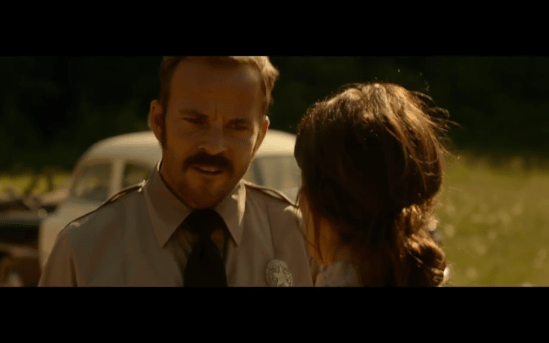
Over the years, many actors have held the mammoth power-drive cutting tool in their hand that’s ready to chip away at flesh such as Andrew Bryniarski (“The Texas Chainsaw Massacre” 2003 remake), Bill Johnson (“The Texas Chainsaw Massacre 2”) and, most famously, Gunnar Hansen, the original Leatherface. However, I’m not going to divulge who the pubescent Leatherface is in the story because the film plays out as a who out of the group of degenerate teens is the son of Verna Sawyer, even though you can easily obtain the information in a simple click and search on Google. Instead, Sam Strike, James Bloor, and Sam Coleman portray the three escapees who are accompanied by an equally insane sociopath in Jessica Madsen and an eagerly novice kidnapped nurse by Vanessa Grasse. Amongst a sea of English actors are a pair of vets to shepherd the young cast and be the embattled bookends to the dawn of an icon. Lili Taylor (“The Haunting”) and Stephen Dorff (“Blade”) face off as Leatherface’s mother, Verna Sawyer, who butts horns with a longstanding sheriff, Hal Hartman, with a steadfast vendetta against the Sawyer family. Christopher Adamson (“Razor Blade Smile”), Nathan Cooper (“Day of the Dead: Bloodline”), and Finn Jones (“Wrong Turn 5: Bloodlines”) co-star.

Usually with a pair of directors, two different styles spawn to an end result. With Bustillo and Maury, styles merge into a seamless effort of elegant wonders. Each shot emerges a purpose to the story whether it’s painting an image of the Sawyer’s death house to pulling a one-eighty with characters, the filmmakers ability to combine each element into a single story, that has such a close knit cult following, and still manage to cinematically pull off the atmosphere, the grit, and the gory carnage of a Texas Chain Saw Massacre film is impressive. Cinematographer Antoine Sainer, whose worked previously with the directing duo on the “The ABCs of Death 2’s” segment “X,” has the ever so poised eye that’s able to well-round and solidify Leatherface’s terror tenor, particular exampled in a foot chase scene through a moonlit forest, smoke bellowing out of a growling chainsaw, and a tattered young girl bawling, screaming, and fleeing for her life from a deranged masked killer whose huffing, snarling, and growling during the pursuit.

Lionsgate Home Entertainment presents the Millennium Films produced “Leatherface” onto Blu-ray + Ultra-violet combo disc, a MPEG-4 AVC encoded disc with a 1080p resolution and presented in a widescreen, 2.38:1, aspect ratio that displays the Bulgaria landscape in a yellowish-brown, Texas-like backdrop. Details are noticeably fine that exquisitely reveal the death and destruction of the Sawyers and those who unfortunately surround the family. The English DTS-HD Master Audio 5.1 track evenly distributes and consistently a range of engrossing fidelity, ambient, and dialogue layers. Bonus material includes a play feature with an alternate ending that’s less superior in contrast to the final product, deleted scenes, and a behind-the-scenes making of that includes brief interviews with directors Alexandre Bustillo and Julien Maury, actors Sam Strike, Stephen Dorff, Lili Taylor, and others, and goes behind the scenes in creating the tone and style of “The Texas Chain Saw Massacre” while implementing their own vision. “Leatherface” forces the unsavory and unpleasant down the throats of TCM fans, jamming an attempt to exposition a futile chance to a destined maniac of cannibalistic proportions and manages to mix up the Tobe Hooper’s weathered franchise with a barbaric bruiser of a tale.

“Leatherface” on Blu-ray! Buy it here, today!