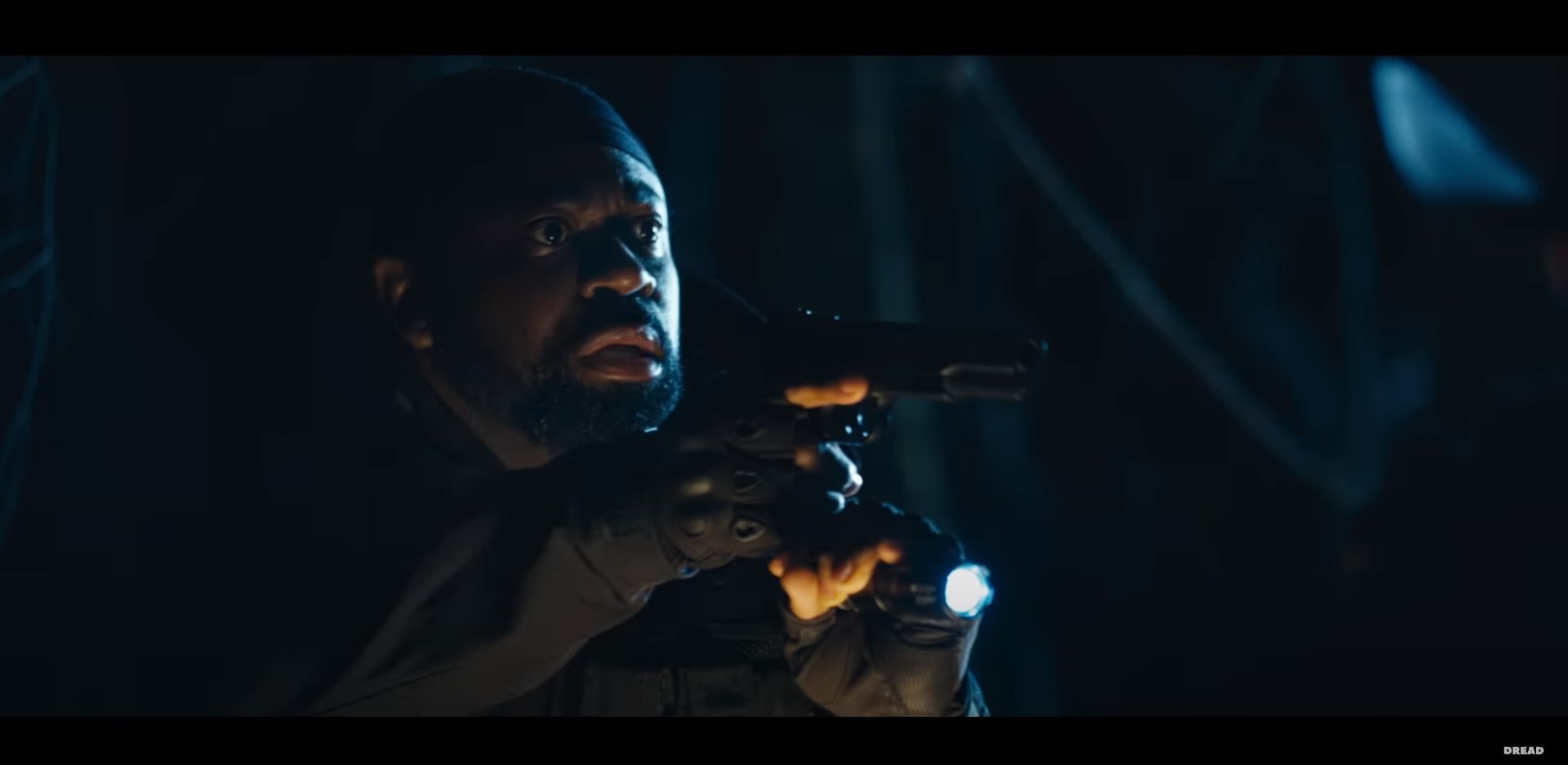
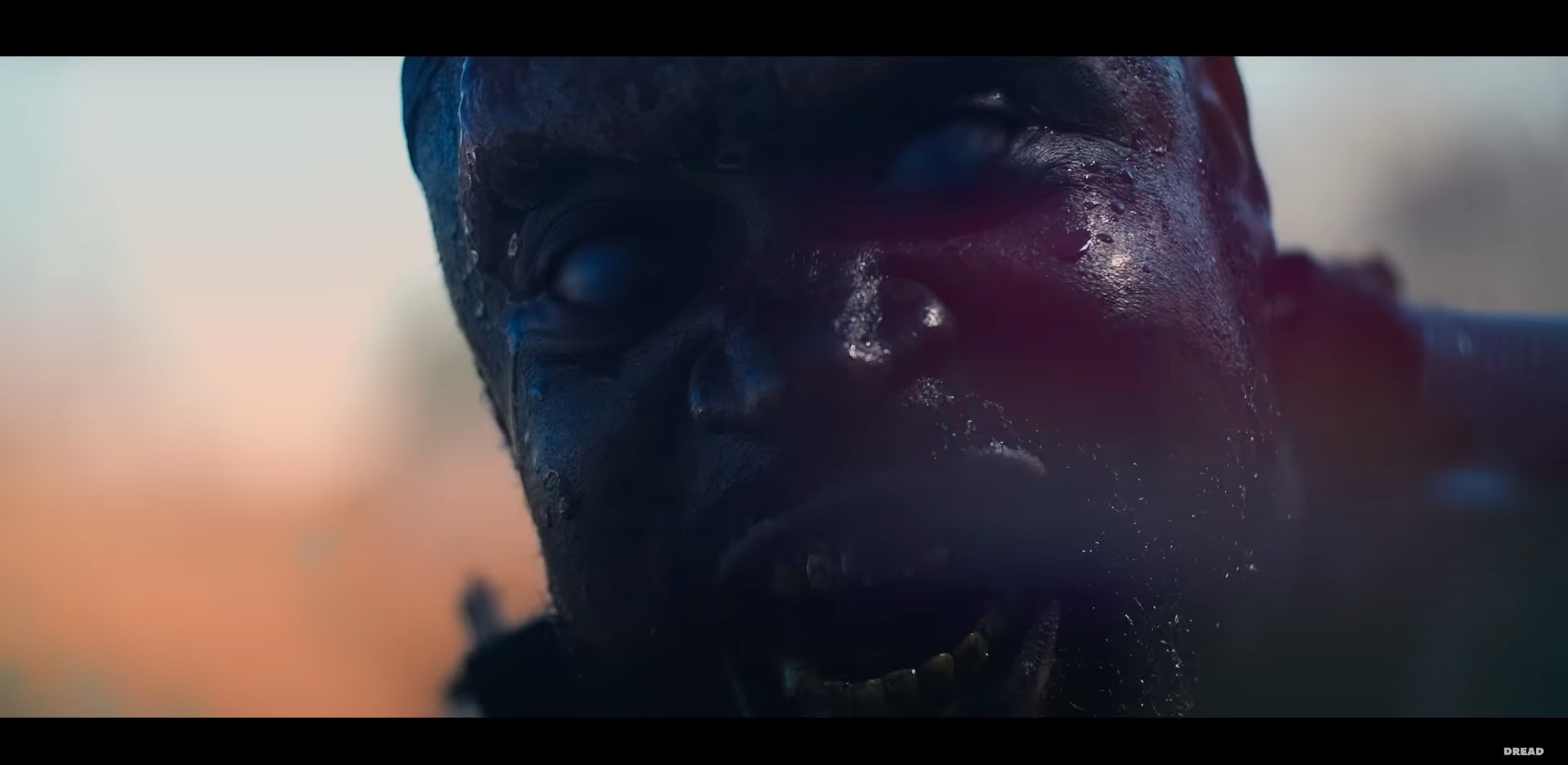
There’s No EVIL Magic Cure for the Inevitable. “Bag of Lies” reviewed! (Dread / Blu-ray)

See What’s in the Bag! “Bag of Lies” on Blu-ray!

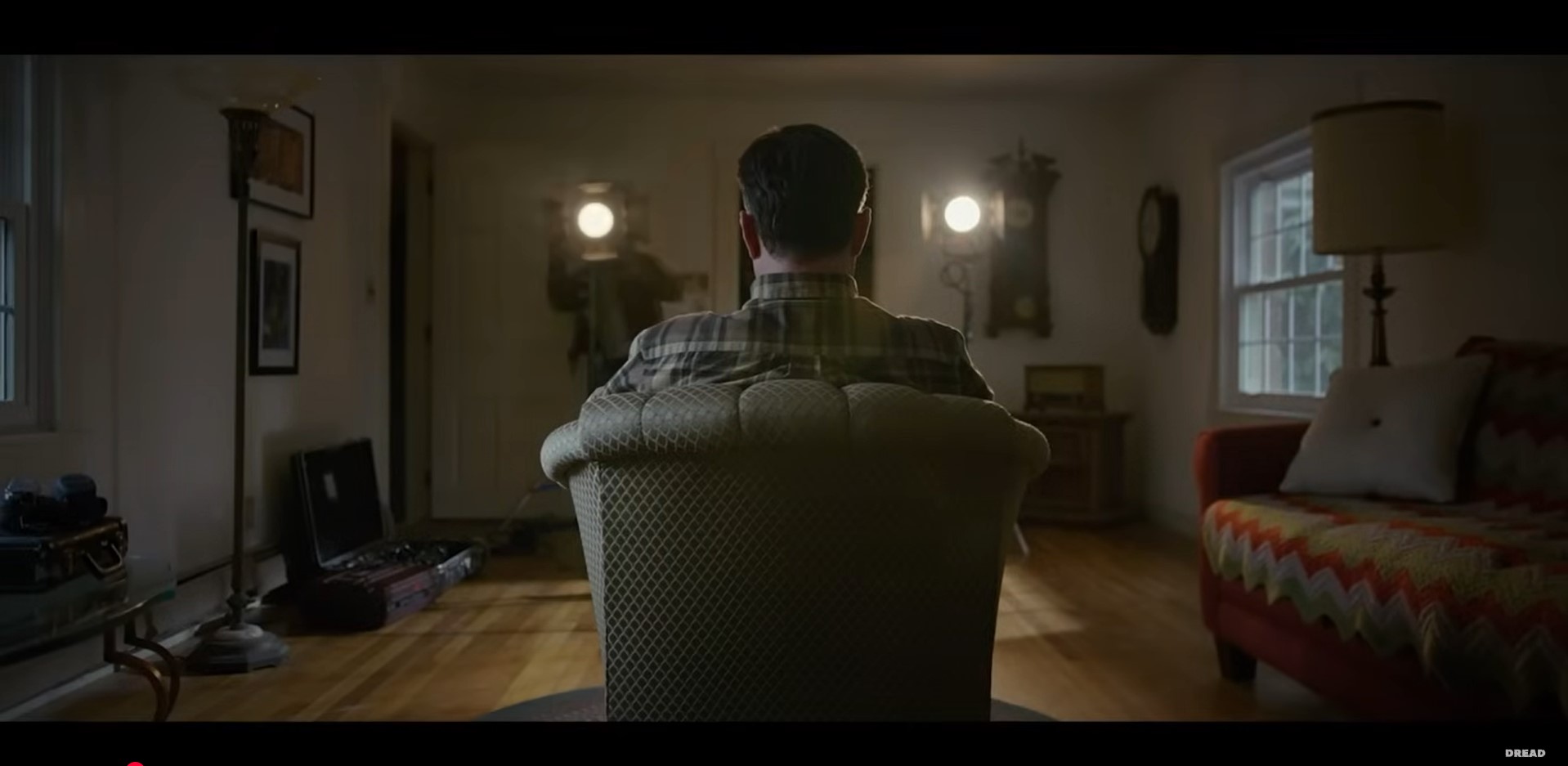
When everything seems to be going Matt and Claire’s way with a strong marital bond, a beautiful house, and rising careers, life throws them a nasty curveball – Claire is hit with inoperable, terminal cancer. Laid up in bed, her weak immune system and fleeting strength are spent on retching up the remains of the chemotherapy treatments she suddenly quits. Matt, under a considerable amount of pressure in losing his wife, has tried everything from conventional medical treatment to the snake oil practices of holistic cults. Desperate for a cure, Matt turns to a man and his bag. Not just any bag, but a bag given the right ritual and stated purpose will produce all that Mark desires and, in this case, the return of his wife’s good health. The man warns that rules must be followed and when Matt can’t uphold his end of the agreement, what he wishes for will still come true in a way most unpleasant.

“Bag of Lies” is the 2024 released supernatural thriller to boldly state that no matter whatever miracle cure is trialed or desperate attempted, one can’t stop the juggernaut of grim inevitability, and if somehow, someway one beats the momentous odds, nothing will ever be the same again or, perhaps, it will be worse.  Debuting his first feature, David Andrew James is the mastermind behind the screen treatment of the story, directing and writing the shooting script based off a story by Nick Laughlin, known for his art and props on “Wrong Turn” remake and “Bones and All,” and “Clever Girl” creator Joe Zappa that tackles one of the more painfully enduring occurrences of impending loss, the slow and excruciating rot of cancer that selfishly takes everything and all anyone, especially loved ones, can do is sit and watch the wasting away from internal consumption of being.  “Bag of Lies” is another Dread Presents and Traverse Terror collaboration, produced by Dread and Epic Picture’s Patrick Ewald and Matt Cleckner alongside Spencer Frazen, Joe Hui, Victoria McDevitt, Jake Heineke, and director David Andrew James.

One of the problems “Bag of Lies” has lies with the married couple Matt and Claire Quimby, played respectively by Patrick Taft and Brandi Botkin (“Bystanders,” “Wicked Ones”).  The problem is not chemistry as the affectionate teasing and relationship frustrations are the hallmarks done right to reflect any kind of amorous partnership on screen and the fact that Taft and Botkin have previously collaborated also makes establishing an already established couple a lot easier but the latter has been under different roles and conditions with Taft producing projects, such as “Wicked Ones,” and both also having roles in the same television series entitled “Wildfire” but overlapping only once in their own three episodes span.  The problem falls upon how their characters got to be where they are now and that creates an injustice to that particular unpleasant side of the story because the audience never experiences the good times the Quimby’s once had before cancer strikes at Claire, not even in a remote sense, and that ultimately fails them because its hard to fall long and hard if not privy to the height of their good fortune.  The lack of backstory extends to the supporting cast with Matt’s awfully empathetic cousin Harold (John Wells, “The Possessed”) who hangs around, brings over a 6-pack, and occasion reworks their basement to surprise Claire with an in-house music studio, more so the former two, and the mysterious man Al (Terry Tacontins) who offers or is sought out or is just happened upon, it’s unclear, the even more mysterious bag option to Matt with a vague understanding of instructions or the cost of what he’s about to unleash or sacrifice or both.  These supporting characters lack of reason for being a cog in the bigger machine seems happenstance rather than necessary to the progression or the problem in what evolves into more of a three-way triangle between Matt, Claire, and an unusual young woman sneaking into their house and property and has a quirky laugh and a dark circle on her palm, played by Madison Pullins (“Baby Oopsie: The Series”).  Aja Nicole and a Kayla Theis round out the cast as Matt’s doctor friend Gwen and local bartender Lilly who has loved one ailment issues that parallel to Matt.

The title “Bag of Lies” is a spin on the idiom a pack of lies, defined as a grouping of false statements or information led to deceit.  “Bag of Lies” plays and preys upon that deception of an all-in-one, quick-and-easy remedy aimed to be a cure-all when, in reality, the thing to solve all your problems is nothing but snake oil that builds hope out of desperation, that sees confidence stemmed from false promise, and instills blindness to the consequences it delivers.  David Andrew James favors suspending in disbelief more than what’s comfortable as Matt experiences haunting visions of ominous means to an end yet doesn’t seem too bothered to really dig into the background and so the story flounders in the second act with Matt just experience weird and frightening sights and sounds without even an attempt to explain, until near the end.  Frankly, if I kept seeing a quirky, quizzical madwoman constantly around and inside my house, the cops would be on speed dial.  Instead, Matt lets himself be silage for the taking, cut off from the rest of reality for the most part without ever going to the authorities, without ever confiding in his friends, nor without ever digesting his experiences and talking about it with his wife, who is usually part of the strange visional equation.  That isolation plays into the burdening effect of trying to beat the odds by doing it yourself and not asking for help, which is definitely being depicted here in Matt’s own surreal nightmare, but the lackadaisical effort and having one peculiar instance roll over him after another breaks down the story’s credibility.  Much like the cancerous rot that’s eating his wife from in the inside out, Matt’s own rot origins from being stagnant and it’s that do-nothing that bears the consequences of terrifying transfigurations in not only his sweet Claire but also in himself. 

“Invasion of the Body Snatchers” interlocked with desperation and a melancholic longing is how the “Bag of Lies” shapes fictional hope around a wrenched inevitability, similar to what the French author Guy de Maupassant once said,, “ the only certainty is death.”  Dread and Epic Pictures brings home an unrated, AVC encoded, 1080p high definition, BD25. Presented in a widescreen 2.40:1 aspect ratio.  Brandt Hackney’s shadowy cinematographer has a fairly nature presence in natural daylight sequences but utilizes a quite a bit of low-level, low-frequency lighting to create a soft incandescence and low-contrast shadows spreads.  Much of the same textures and colors are shown over and over and without that breadth of diversity, comparing scene-by-scene details are more than slim but what’s apparent is subordinate to the atmospheric lighting, or lack thereof, to create moody, broody dark house settings with little light to expose detail and color.  Even in bar sequences, the dimness doesn’t allow detail.  The English audio offerings are a Dolby Digital 5.1 and a Dolby Digital 2.0 Stereo. What’s uniquely about the “Bag of Lies” audio facet is the distinct distortional soundtrack by James Paul Bailey who, in his own words, could never recreate or repeat the score again because of the randomized tones and feedback produces by temperamental distortion boxes, overlayed and modulated to produce a one-of-a-kind soundtrack to parallel the rotting horror “Bag of Lies” corkscrews into. Dialogue does the job with a clean and clear rendering by an indifferently satisfying sort of humdrum performances unfazed by the surrounding sideshow of black bag magic and the curious curiosity that’s emerging vocally from within its capacity. There’s decent localized range within Quimby house with conversating interactions with a door or a vent in between, using post-production to fill in hurling diatribes from the basement below toward Matt in Claire’s voice. English and Spanish subtitles are optionally available. Special features include a brief behind-the-scenes featurette with cast interviews voicing their deconstructing opinions about the story. Though not listed on the back cover, there is a longer, more in-depth featurette around James Paul Bailey’s distortion oeuvre for the film that’s quite comprehensive, plus the film’s trailer and other Dread Presents film trailers. Physical features are just like all the other bare minimum Dread-Epic Pictures release with a standard Blu-ray Amaray and no inserts. The cover illustration has clunky written all over it with a photoshop job of what looks like a giant dirty taco, but it’s the titular bag, with a dirty disfigured hand reaching up and out. The release has a region A playback and has a runtime of 96 minutes.

Last Rites: Neither great nor is it terrible, “Bag of Lies” skips a few key steps toward being a promising indie horror and though the theme is poignant, fantastical, and infused with a jarring soundtrack, the ironic inevitability is there is no cure for what can’t be fixed.

See What’s in the Bag! “Bag of Lies” on Blu-ray!

Blind, Witchy, EVIL! “Beezel” reviewed! (Epic Pictures / Blu-ray)

“Beeze” is the Witchiest Blu-ray of 2024! Get it here!

May, 1966 – a young boy is murdered, eaten, in his Northeast home.  Nearly six decades later and a series of disappearances and strange deaths in between, a young couple inherent the property that the locals have feared haunted, cursed, and possibly even inhabited by a witch.  As the house-inheriting husband is eager to sell the house to get rid of the reminder of his mother’s abandoning betrayal, the wife is equally eager to keep the house, settle in, and start a family.  The house possesses a presence captured by the corner of the eye, the hairs on the back of the necks, and the overall sense of dread that lies heavy in the pit of the stomach as the more the couple stay in the house, the more the Beezel, a blind evil witch lurking and hiding in the basement, influences their dreams and reality.  Beezel also wants a child and will take what it desires and kill anyone standing the way. 

What the horror genre needs nowadays is a ferocious witch film and I’m not talking the spellcasting, broom-riding, cauldron-congregating kind of witches with black pointed hats, large warty noses, and catty familiars.  I’m talking about hardcore old and ugly broads with an extreme hunger for not just children but for all of humanity, capped off with, perhaps, a good, solid cackle that’ll redefine the iconic figure from the traditional sense to a reverse revolutionized hag rooted in folklore but scorned by life itself.  A few filmmakers have tackled the idea and filmmaker Aaron Fradkin has taken a stab at it with “Beezel,” a 2024 Northeast-shot, visceral supernatural witch tale that was originally a short film expanded into a full-length feature film based on the short’s positive feedback.  The “Val” director cowrites with wife and fellow “Val” actor-writer, Victoria Fradkin under their cofounded independent film production company Social House Films. 

Because “Beezel” was first a short film, to flesh out a full length, the Fradkins smartly built around the short story an episodic series around it that spans decades.  Different actors are casted to reflect different periods, circumstances, and develop a variety of reactions to keep with and keep going a timeline of change, connected all by one single element, the carnivorous blind witch lurking in the basement shadows.  1966 starts off with more of child’s perspective who opens a secret bathroom hatch to the basement to see his pleading-for-food mother before his arm is snatched and he’s rip-to-shreds off camera.  The vicious and quick opener doesn’t leave open the door of development and we don’t get a real sense of anything or anyone until LeJon Woods (“The Hangman”) meets Bob Gallagher (“I Don’t Want to Drink Your Blood Anymore”) about 20 years later outside the home as the documentarian and homeowner, Apollo and Harold Weems.  Having seen now three films his this year, LeJon Woods feels very much like a one-note actor playing the same person throughout those roles.  Gallagher dips into a more sinister cover as the seemingly Mr. Rogers or Ned Flanders neighbor that drops breadcrumb clues of his dark secret and its one scary in-character conversation he has with Apollo.  From there, we jump another 20 years into the early 2000s with what was initially the original short film of an at-home nurse named Naomi (Caroline Quigley) replacing another nurse who disappeared in the Weems house.  This leads into the third act really sets up nicely Harold Weems second wife, Deloris (Kimberly Salditt Poulin), who’s on her deathbed in hospice care and solidifies the tone with a girth of suspense that leads into what would be the final moments left unseen of young couple Lucas and Nova (French actor Nicolas Robin and the director’s wife Victoria Fradkin).  Lucas, who inherited the neighborhood blighted house from his mother Delores, is eager to remove all denotations of his mother from memory, the free-spirited and more forward Nova wants to settle, have children, and start living her life.  Their bond sours overtime with the witch influence invading the subconscious and conscious body for her own ravenous gain in a blood-spilled buffet of knives, guts, and videotape.  The film rounds out with Elise Manning, Leo Wildhagen, and Aaron Fradkin dons the makeup and prosthetics to play the blind witch Beezel.

Fradkin’s able to capture desolate mood with limited production sets.  Most of all the “Beezel” story is set inside Fradkin’s childhood home in Massachusetts and with real, cold, New England snow that latter half of the story takes place.  Every tight and cobwebbed crawl space, every radiator-induced floorboard creak, and every outdated, antiquated, and obsolete feature of his parent’s home gave every ounce of spooky energy to “Beezel,” which, ironically enough, is what Beezel actually inflicts upon the current residents of the house.  Editing and the practical witch effects build the tension and suspense without giving too much away of Beezel’s hideous figure, cherishing Beezel for timely appearances rather than relying on its overuse which often leads to exposing too many rubbery and prosthetic flaws.  The episodic nature also keeps the story from being stale by jumping years, if not decades, that shepherd new characters and new scenarios into the fold as the story evolves through the difference lens of technology, in a half-ominous and half-found footage perspective with the latter being shot in super 8, VHS, and digital handheld camcorder and the original short breaking up the pattern with a microcassette tape deck.  “Beezel” perfects the blend of live-action and found footage without feeling forced and unnecessary with a truly frightening approach to the witch trope that’s worth devouring whole. 

The Social House Films brings the meanest witch this side of 2024 and Dread, the subsidiary label of Epic Pictures Group, who also pushes their own boundaries with “Beezel’s” visceral path, as well as sport some uncommon nudity in one of their films, has the Blu-ray for you! The AVC encoded, 1080p resolution, single-layer BD25 manages to scare through the lower end of capacity format with really no issues with compression. No banding, no blocking, nor any other noticeably ostentatious artefacts to speak about as the rendered image, despite its softer detailer markers, pulls off a passable and potent portentous story through a digital, anamorphic 1.78:1 aspect ratio lens, often switching between media parallels of POV Super 8mm, VHS, and DVX camcorder that vary in levels of detail and grain. Dread Central presents two English audio options, both lossy: a Dolby Digital 5.1 and a Dolby Stereo 2.0. Surrounding, multi-level house atmospherics, various media equipment, in-and-out of the dream subconscious, and, of course, the blend witch herself, create an unfaltering, ample, and competent sound design although the format doesn’t reproduce true fidelity. Back and side channels flourish with frightful house creaks and other environmental elements while basking in the silence for a solid jump scare or building palpable tension. English subtitles, as well as Spanish subtitles, are available for selection. Special features include an in-depth look at the making of the film, Aaron Fradkin’s short films “Doctor Death” and “The Sleep Watcher,” and other Dread Central distributed film trailers. I had aforementioned Beezel not being shown too much in the film but her rather grotesque, bloodied-mouthed face captured in still image, glammed up and embellished for public consumption, graces Epic Pictures’ one-sided, front cover image, warmly soaked in a reddish-orange glow. The disc is pressed with a Scolopendra, or Giant Centipede, coiled over the title. No other tangible items come with the release. The not rated release has a runtime of 82 minutes and is region free for all!

Last Rites: As we close out 2024 with an evil old hag, “Beezel” is one hell of a movie to close out on. Soul-tattering story that spans decades, “Beezel’s” the witch with an incredible insatiability and her hunger will have you recoil in fear of being the main course.

“Beeze” is the Witchiest Blu-ray of 2024! Get it here!

Killed by Your Monstrous, EVIL Twin Set on Repeat. “Island Escape” reviewed! (Dread / Blu-ray)

“Island Escape” Available Here at Amazon.com

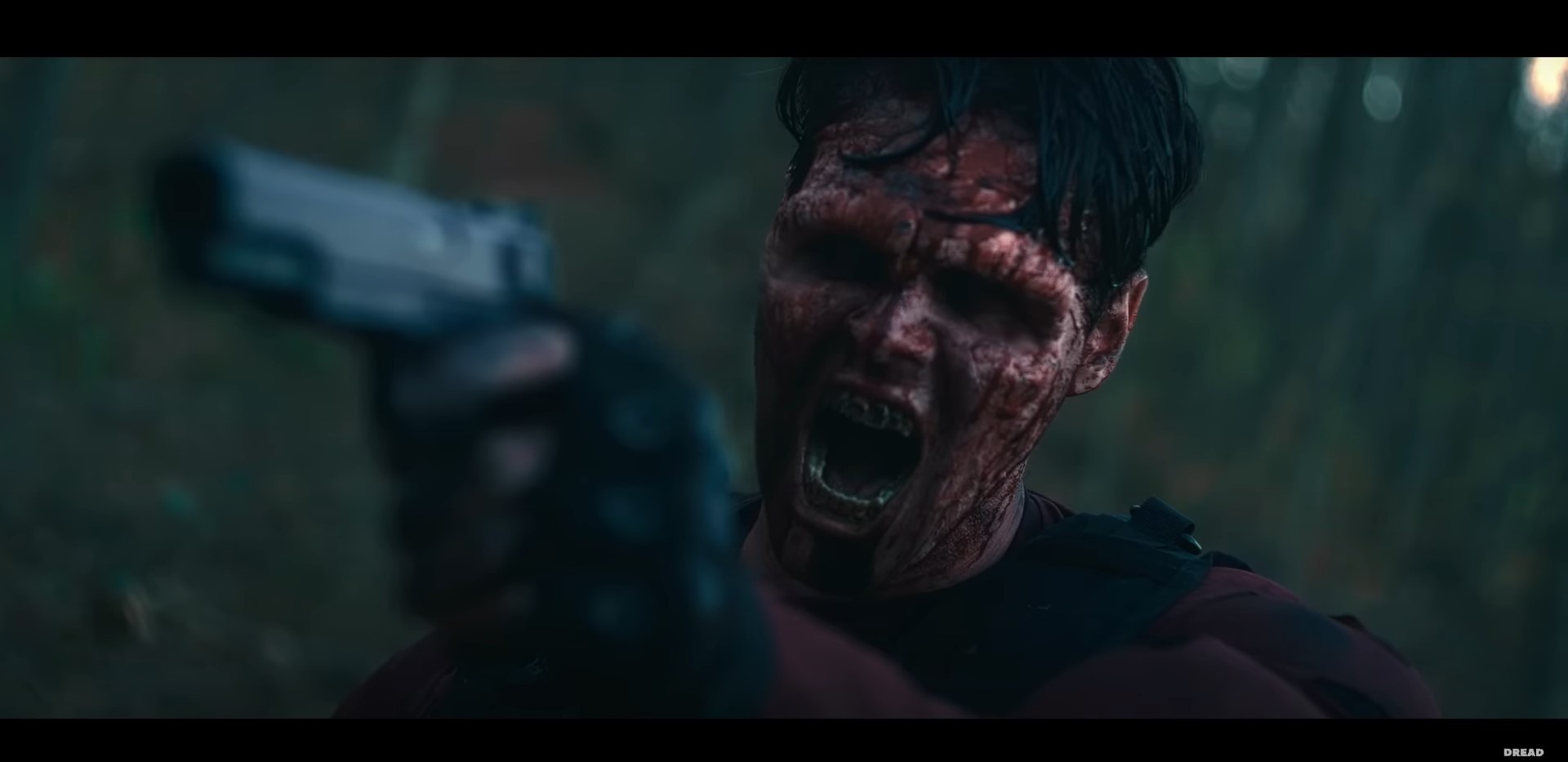
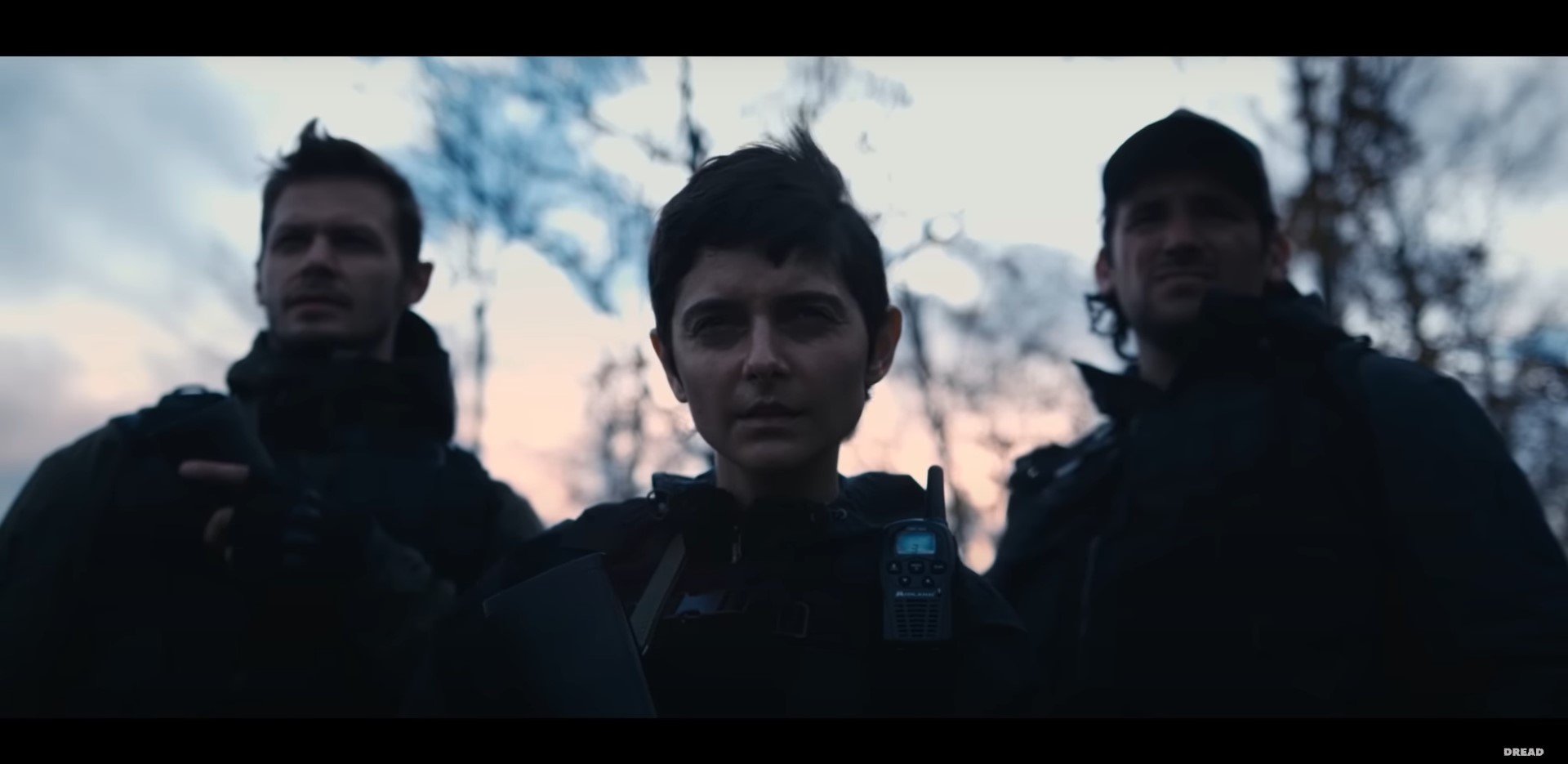
Chase, a washed up mercenary with touch of amnesia regarding his past, is hired to round out a six-person team for a rescue mission on the Isle of Grand Manan where a top secret TSL research facility has gone dark and a high-level CEO’s daughter has gone missing.  Ordered to retrieve the daughter inside a 48-hour window, the team arrives on the seemingly deserted island to find multiple dead scientists having been torn to shreds.  The team soon learns they’re not alone when attacked by bigger, aggressive, monstrous versions of themselves.  Unable to believe their eyes, the one scientist left on the island has determined they’ve been trapped inside an encircling wormhole that resets the island and it’s inhabitants every 3 days, turning those left alive after the third day into these humongous, blood-hungry creatures.  With the mission quickly dissolution, it’s quickly being pieced together that the rescuing mercenaries are the ones who actually need rescuing and their only way to escape would nearly destroy them all.

I’ve said this once before and I’ll say it again.  Weaving wormholes, time loops, time travel, and the like into a narrative is a tricky, tricky business.  Bending time and space can calamitously collapse a story so bad that every internet warrior and science fiction nerd, including myself, will pick apart and ridicule the film until the end of time, but if the portent collapse can be averted and little-to-no complaints with the time travel aspect of the story can go unscathed for a better part of the runtime, then the power of the multi-dimensional space time continuum can be magical and enthralling.  Writer-director Bruce Wemple (“Altered Hours,” “My Best Friend’s Dead”) wraps his hand around a wormhole-driven action-horror “Island Escape” to grasp ahold of the unruly concept of time.   The Traverse Terror production, a division of producers Cole Payne and Mason Dwinell’s Traverse Media in association with Wemple’s 377 Films, and presented and produced by Patrick Ewald’s Dread Central, “Island Escape” rounds out the producer set with Vincent Conroy.

Bruce Wemple carries with him a cast entourage, a staple of actors who have worked years with the filmmaker through a number of project.  “Island Escape” is no different as Wemple signs aboard his trusted troupe to tackle the terror on TLS island with a rescue gone wormhole wrong.  The story has a trifold focus Chase (James Liddell, “Hell House LLC Origins:  The Carmichael Manor”) as the washed up gun for hire with memory loss, Addison (Ariella Mastroianni, “My Best Friend’s Dead”) as team lead and recruit of the Isle of Gran Manan mission, and Russ (Grant Schumacher, “My Best Friend’s Dead”) as the dithery team member not in Chase’s good graces based of fragmented memories of a failed mission.  Between the three characters there lies a fleeting tautness that’s not tremendous carried out as expected from initial introductions.  Instances such as Chase expressing his distrust for Russ never has the tension reach open air in any time they’re together or in the case of Addison as a melancholic memory for Chase that eventually evolves into mid-misison romance that’s more spontaneous than building momentum to in the first and second act.  The undercooked characters fail to establish boundaries, positions, and progressing or regressing dynamics and arcs.  There’s more headway with supporting staff in Tag, a self-penancing father doing dirty, dangerous work to support his young daughter and this consistently shows throughout his screen span, hitting upon the nerve of a father trying his best for the sake of his child.  The cast rounds out with a handful more of mercenaries and scientists to become minced meat by their devilish doppelgangers with Chris Cimperman (“First Contact”), Michael L. Parker (“First Contact”), Andrew Gombas (“The Tomorrow Job”), William Champion (“The Tomorrow Job”), and the feature length debut of Renee Gagner filling those roles. 

Wormholes.  The suspended openings in space let the Dominion race invade Star Fleet in the Alpha Quadrant of “Deep Space Nine,” dropped a fiery plane engine on top of the titular character “Donnie Darko,” and brought back something alien and terribly evil in the titular ship “Event Horizon.”  For Bruce Wemple and his “Island Escape,” wormholes have become more earthbound thanks to a shady research corporation delving into dangerous methods and unscrupulous science practices for the go-to cover up slogan of a better world tomorrow.  While Wemple spins an intriguing yarn needled quick to be full of cankerous clones coming from all corners of the island to attack their uncorrupted selves while trying to survive and flee, the filmmaker skip stitches during his knitting of a tight narrative, fashioning an uneven story that can’t quite get the pattern right for in some of the more restlessly difficult areas of trouble island.  Fleshing out Chase’s blank slate produces no reason to light, Russ’s lack of motivation in divulging life-and-death information, the deep dive into Island experiments fall to the wayside, the CEO’s daughter seemingly dead to all of a sudden be alive, and I could go on with all the loose ends that kneecap the better parts of story, such as the creature action and the wormhole aspect, but the fact won’t escape that there’s a mishandling of the island’s treacherous overgrowth that’s severely underplayed and the epic scale Wemple tries to impress is torpedoed by omitted small cogs that turn the bigger, weight-bearing gears. 

Dread presents Island Escape onto a high-definition Blu-ray distributed by Epic Pictures.  The AVC encoded, 1080pm, BD25, presenting the film in an anamorphic 2.35:1 aspect ratio, is a slurry of personal style and cinematography issues.  Capacity-wise, not a ton of wall-bearing issues that would make the visuals crumble; a few fleeting areas of dark side banding and quick movement aliasing pop up occasionally.  Where most of the issues stem are stylistically with poor VFX compositions that stymie any high-action utile climaxes.  The light pink/fuchsia grading replaces much of the island’s, or island-like setting’s, innate green foliage for a broad one-tone that has an adverse effect of unnaturally darkening the characters.  Two English audio options are available to select:  a Dolby Digital 5.1 and a Dolby Stereo 2.0.  Both lossy formats offer what this particular films needs, a fast and loose sufficient mix that gets the job done without causing too many waves.  Most of the dialogue has a ADR pretense that I would take a wild guess and say is more a sound design issue of not creating space in the depth field.  Each character sound to be on the same audio plane that forces a full-on push of dialogue right to the front of the audio layering that makes ever channel in the 5.1 the same.  Ambience Foley is harshly isolated from other tracks so if a character is walking through the forest, you hear nothing else but the lonely crunching the tree litter that doesn’t mesh with onscreen movements.  With most digital recording, no interference and damage flaws are present.  Optional English SDH and Spanish subtitles are available.  Special features include a roundtable commentary with writer-director Bruce Wemple at the helm with most of the cast speaking through Zoom or some kind of video chat program.  In addition, the commentary is greatly colorful with more jokes and jabs at one another and at themselves that reflect how much of a good time they have working with each other on this film and previous Wemple credits.  Also included in the special features are a few deleted scenes, the making of “Island Escape,” feature trailer, and other Dread presented film trailers.  Like most Epic Releasing products, a standard Blu-ray Amaray case displays an intriguing cover art for Dread’s 47th at-home title with a wormhole opening to an skull-faced Island and a helicopter and four soldiers walking toward it.  Disc art renders the same image and there’s no insert included opposite side of the case.  With a region free playback, “Island Escape” has a runtime of 86-minutes and is not rated. 

Last Rites:  The haphazardly executed science-fictional survival film “Island Escape” has good plot bones underneath the shambled edifice of an ambitious façade with only decent monster mayhem and creature effects dwelling inside. 

“Island Escape” Available Here at Amazon.com

EVIL Loves to Clown Around. “The Jester” reviewed! (Dread / Blu-ray)

“The Jester” on Blu-ray Home Video!

Days before Halloween, a man hangs himself from off a bridge.  His funeral not only services the wake for his grieving daughter Jocelyn but also brought out his estranged and aggrieved daughter Emma, Jocelyn’s half-sister from a failed marriage their father had abandoned when Emma was very young.  Jocelyn reaches across the aisle to connect and to bond with the peripheral Emma, but the scorned older half-sibling only expresses anger and confliction over feeling grief for man who no longer wanted to be a part of her life until the very end after reaching out a few times to make amends.  Emma and Jocelyn soon discover that a malevolent, supernatural trickster, known as the Jester, was somehow involved with their father’s untimely demise and now, on Halloween night, the Jester is following and toying with them in a playfully sadistic manner, preying on the one thing that bonds and also disconnects the sisters from being content. 

Based on his 2016 three chaptered shorts of the same name, writer-director Colin Krawchuk pulls from the best parts of those shorts, sprinkles a little more sadism on top, and creates his debut into full-length feature film with this titular antagonist, “The Jester,” at the center.  Co-written with longtime collaborate on various shorts as well as “The Jester” shorts is Michael Sheffield, who also brings to life the Jester’s amusing animated animosity and flamboyant cryptic personality from script to screen.   “The Jester” represents a theme of tormenting guilt for this afflicted and those surrounding the person and is symbolized by the absurdity of a clown masked fool in a gaudily colored top-hat and cheap suit with a deviant chip on his shoulder.  Film in and around the Frederick, Maryland area, “The Jester” is a product of Cinematic Productions, based in local Maryland region, and the Dread Central acquiring entertainment company, Epic Productions, under the Dread genre label with Carlo Glorioso, Patrick Ewald, and Katie Page producing with Mary Beth McAndrews and Eduardo Sánchez (director of “Satanic Hispanics”) executive producing.

Through the years of cinema, a plethora of personalities have emerged all vying for our entertainment seeking eye and while most, especially in the indie market, recycle the very idiosyncratic eccentricities of notable characters or extract some inspiration for blatant misappropriation into their own performance, every once and awhile comes a role that can be undeniably fresh, engaging, and unpredictable.  That’s how Michael Sheffield’s Jester presents to me as a versatile villain with broad expressions and precise stratagem that even by not saying a single word in the entire runtime still manages to have us on edge with just what’s up the Jester’s playful, prestidigitate sleeve.  Sheffield’s tall and lanky stature greatly suits the Machiavellian complimented by the outlandish vestments and wooden cane.  As an unceremonious symbol of guilt, the Jester becomes the obstacle between half-sisters from both sides of their father’s railroad tracks.  Delaney White’s introductory feature film begins her off as Jocelyn, a well-liked, sympathetic, and balanced young woman who can’t help but want to connect with an older half-sister she never knew.  Lelia Symington (“Brut Force”) couldn’t portray older sister Emma anymore opposite as a daughter holding onto a rightful grudge against a father who abandoned here at a young age.   That same bitterness extends to the more affable and kept cherished extension of her father, to Jocelyn, but an innate emotion eats at Emma, an inexplicable pang for his death that drives her to pique when she shouldn’t care less about her deadbeat dad and that manifests into deadlier, dastardlier demons, or at least one dressed-up, duplicitous, and dapper demon.  Matt Servitto, Lena Janes, Mia Rae Roberts, Sam Lukowski (“You’re F@#K’n Dead!”), and Cory Okouchi (“Ninjas vs. Zombies”) fill out “The Jester’s” roles.

Once the end credits started roll, I immediately research “The Jester” like I do with all the films I review to try and go beyond just the film with information, trivia, connections, see other reviews and public opinion, etc.  Why?  Because I’m a hardcore nerd, but what I found in the public comments about the film, especially on Letterboxd, is that many compared “The Jester” as a rip of Art the Clown from “Terrifier.”  Initially, a small voice inside my mind, processing the images from my visual cortex, thought the very same the mass majority did, or does rather.  Quickly, I nipped that fleeting resemblance in the bud because of a couple of reasons: “Terrifier’s” whole gag is gore-drenched for purely shock value as Art the Clown terrorizes and kills those in his path whereas “The Jester” represents more between the lines of guilt, loss, and connecting with what matters between the disfiguration of a dysfunction relations and the other reason is both films nearly sprout at the same time.  Yes, “All Hallows Eve” was released three years prior to Krawchuk’s short films and while it’s unknown whether the director was inspired by Damien Leone’s first pass, “All Hallows Eve” didn’t quite overflow the social media cup like “Terrifier” did a few years later.  Many in the horror community compare “The Jester” to “Terrifier” despite the latter not having been coined until the same year as “The Jester’s” shorts films were released.  Sure, Art the Clown and the Jester share similarities, such as a form of a clown mask and have malevolent supernatural abilities, but the blanket comments are like saying just because Jason Voorhees wears a mask, uses a knife, and doesn’t say a word that he is a clone of Michael Myers.  Overall, “The Jester’s” understated tone with a no holds barred harlequin has decent dark humor due in part to Michael Sheffield’s charade of an act and precision special effect, editing, and camera angles.  Where “The Jester” struggles is where it hurts the film the most and that is with an ending that just drops off the edge of the cliff without a ton of closer that really wraps Jocelyn and Emma’s story neatly nor offers a satisfyingly open-ended dangler for more violent jest.   Perhaps 7-years too late after the release of the shorts, “The Jester” will see push back as a facsimile but I implore you, the readers, to give the Colin Krawchuk feature more than just a bias-gazing once over. 

Epic Pictures’ genre label Dread releases “The Jester” on an AVC encoded, 1080p high-definition, BD25 that’s presented in a widescreen 1.85:1 aspect ratio.  As much of the film takes place at night, details are heavily reliant on the lighting and the compression encoding.  While “The Jester” is not the epitome of sharp edge delineation and detail with a supercharged color palette, the encoded shingles retain a pullulating scheme of adequate grading and detail keeping artifacts to a reduced level within the slightly softer image. The heavier image compression is fastened to the three shorts in the bonus content with horrendous basins of splotchy patches. Two English Dolby Digital audio tracks come with the release: a 5.1 surround sound and a 2.0 stereo. Each render about the same with the 5.1 slimming down and isolating channels for specific back, front, and center audio assignments. No issues with the clean and clear dialogue through the digital, interference-free registering though most of the conversations are one-sided with the Jester’s mime expressions. English closed caption subtitles are available. The three Colin Krawchuk and Michael Sheffield 2016 shorts, as I said multiple times already, are included in the special features along with the official trailer and other Dread previews. The standard Blu-ray Amary has a hard-lit Jester face to exact ever fold of the mask smack on the front cover with a bare insert pocket and the pressed disc art fanned out with the Jester’s antique playing cards imprinted on top. The region free release has a runtime of 80 minutes and comes not rated. Clever, entertaining, and devilish, “The Jester” acts the whimsical clown of conscience-stricken torment with an indelible joker different from the rest of the villainy pool.

“The Jester” on Blu-ray Home Video!

Only EVIL Can Be Constructive Therapy for EVIL! “Dark Nature” reviewed! (Dread / Blu-ray)

Battle Your Inner Demons By Battle The Exterior Ones in “Dark Nature” now on Blu-ray!

Joy walks on eggshells around hot-headed and explosive boyfriend Derek.  Almost having been killed by Derek’s eruption into anger one night, Joy manages to flee his wrath for six months.  Long time good friend and weary ally Carmen convinces the haunted Joy to join a therapy group overseen by a psychologist with unconventional healing methods.  One of those methods is backpacking into the mountain wilderness for a therapeutic getaway to face personal fear with three other women who also experience the familiar paralyzing and manifesting symptoms of towering trauma.  Miles away from civilization, the group treks for two days until an unsettling feeling of being watched and their supplies being stolen forces them into a face-to-face with a mysterious influence that reconjures their individual terror through sight and sound, leaving them incapacitated with anxiety.  When realizing the amount of danger mounding against them, the fear-facing trip through the wilderness will put that aspiration to the survivalist test.

“Dark Nature” is a women-led psychological creature feature surrounded by themes of abuse, trauma, and the handling of the psychosomatic stress when at rock bottom and faced with internal, or external, demons figuratively for traditional storytelling and literally for cinematic storytelling.  Calgary filmmaker Berkley Brady writes and helms her first feature length film in 2022 from a storyteller’s collaboration with Tim Cairo, screenwriter of “Lowlife.”  Shot in the copious thicket of the picturesque and idyllic Canadian Rockies that stretch the provinces of British Columbia and Alberta, Brady’s scenic beauty parallels a skin deep exterior amongst a character group seemingly okay in the open-air while within the wayward withholding of crises becomes too burdensome to bear alone.  Brady and Michael Peterson co-produce “Dark Nature” under Nika Productions and Peterson Polaris in association with the Indigenous Screen Office and Telefilm Canada in this this Dread presentation, the production company subsidiary of Dread Central, and Tim Cairo, Kalani Dreimanis (“Polaris”), Jason R. Ellis (“Mother, May I?”), Patrick Ewald (“Turbo Kid”), and Katie Page (“The Man Who Killed Hitler and Then the Bigfoot”) serving as executive producers.

The cast comprises of five women at the core and one man hovering around the peripheral like a lingering, festering open sore.  At centerstage is Hannah Emily Anderson (“Jigsaw,” “What Keeps You Alive”) in character throes of relationship lamentation and a cracking psyche over the tumultuously violent and rarely passionate ex-boyfriend Derek, played convincingly cynical of his partner by Daniel Arnold (“Even Lambs Have Teeth”).  First meeting Joy, over a stove of a steaming dish and on the phone in an exchange of concerns and pseudo-comforts, audiences will already be in bed with the young woman’s nervous fraught when a sullen Derek steps into the apartment as she tries to appease him with his favorite food and positive inquisitively around his day.  A tense exchange of words turns into a lust entanglement of pre-sex kisses and touches that spirals into a physical aggression that has nothing to do with foreplay or sex.  The abusive opening act sets the tone for Joy’s edgy mindset into the early and middle acts as she’s standoffish and verbally combative and questioning everything about the group’s choice to venture into the wild under the unconventional means of one Dr. Carol Dunnley, casted by an over the years, well-versed television and movie doctor, or authoritative mentoring figure, Kyra Harper (“Hellmington”), with others continuing to rake over an unpleasant past.   Métis raised actress Roseanne Supernault (“Rhymes for Young Ghouls”) joins Helen Belay and “Don’t Say his Name’s” Madison Walsh as the other nature walking companions seeking a renewed lease on life.  While Belay broods in secrecy with a jaggedly defined backstory of a possible abduction or maybe something worse with Tara, Supernault adds a coping comedy mechanism with her former military background that has caused Shaina intense flashbacks.  “Dark Nature” might not be their characters’ exclusive story but certainly they’re components serve a pieces of the psychology behind it as well as fodder for the forest-dwelling fiend as the narrative aims to fragmentally unfold more of Joy’s affliction that not only cull reasons why this trip may or may not be a good idea but also challenges the friendship strength between her and Carmen until Joy can face down and take responsibility for her unprincipled stance on the seared in fear that renders her powerless and controls her.

“Dark Nature’s” adianoeta works excellently to service both the reclusive avoidance in seeking desperately needed help and the sinister presence lurking and stalking through the lush mountain weald.  Yet, audiences will identify more with the latter because like the principal Joy people tend to avoid their own problems and redirect to another pressing issue that has really nothing to do with them or affects those as a whole, turning a person’s dark nature into not a generally relatable theme no matter how intrinsically installed it is into the incorporated picture.  While seemingly sweeping with Joy’s entire circumstances, we’re led to believe the anxious woman remains haunted by her past, her abuser having this hold over her akin to Stockholm syndrome, as while on the trek through the mountainside she can hear his voice, hear the repetitive clicks of his Zippo lighter, and even experience his tight grip around her throat but Brady winds up the narrative with a few vacillating curveballs that pull toward difference directions to swing-and-miss from being squarely hit until the grand reveal of explanation.  Even then, the explanation retains some purposeful vagueness with an antecedent anecdote of an ancient indigenous people once offering sacrifices to a spirit on the very land the group is treading on.  The tale doesn’t offer much detail and certainly isn’t a full-proof explanation of what ensues but adds that comforting layer of setup into what becomes madness erupted from a furtive, cave-dwelling creature shellacked in a black muck and with supernatural abilities of emerging a person’s most personal fear.

A psychological creature feature that offers worse things in the world than one’s own personal demons comes to Blu-ray home video from Dread’s physical distribution partner, Epic Pictures.  The AVC encoded, high-definition 1080p, BD25, presented in a widescreen 2.39:1 aspect ratio, of “Dark Nature” looks undoubted sharp with details even if the color graded is somewhat desaturated.  The decoding of data details nicely around the foliage, skin features, and even in darker scenes with black levels not succumbing to any compression artefacts.  “Dark Nature” has two English audio options with a Dolby Digital 5.1 surround and a Dolby Digital 2.0 stereo of crisp sound design with a surround the wagon barrage of audio cues casting out through the back channels to denote an autonomic attack when alone in the woods.  Dialogue is clean, clear, and sorted out through the chaos with a perfect depth and reverberation from outside-to-cave-to-cave-to-outside.  An eclectic range is spread-out through the tale from the flashbacks adding explosions and whizzing gunfire to the guttural roars and bush movements of the creature that resemble an enclosing chill of being watched.  “Dark Nature” marks the debut score for the Canadian band Ghostkeeper and while the additional of delicate broodiness sweeps over the images, creating an ominous overhang for much of the picture, I wouldn’t say the score adds to the film’s soul in the subtilty of the low, whispery tones. English subtitles are available.  Special features include an audio commentary track, also hidden within the audio setup, with director Berkley Brady, makeup artist Kyra Macpherson (“Red Letter Day”), and costume designer Jennifer Crighton, a handful of deleted scenes cut for timing, Ghostkeeper stop-motion music video (1.33:1), and an oddly incorporated short film from “Dark Nature’s” editor David Hiatt (“Bloodthirsty”) entitled “Peanut Butter Pals,” a Scooby-Doo mystery solving trio comically and melodramatically tracking down a cave monster, “Dark Nature” trailers with a countdown list of a theatrical, 30-second, and 15-second trailer, and Epic Pictures trailers including “Colonial,” “Satanic Hispanics,” “Tomorrow Job,” “The Lake,” and “Woman of the Photographs.” Physical features are slimmer with a traditional snapper and a rather generic cover art of Joy and Carmen covered in blood superimposed in the foreground of a forest. Disc pressing has the two actresses, still covered in blood, reappear but this time within the jaws of a creature. The region free Blu-ray clocks in at 86 minutes and is not rated. Berkley Brady’s woodland set neurosis knot never says die in the face of adversity no matter the form in the filmmaker’s female-driven debut.

Battle Your Inner Demons By Battle The Exterior Ones in “Dark Nature” now on Blu-ray!