Bruce Lee Fought EVIL for Justice. Mark Swetland Follows Lee’s Footsteps in “Blood and Steel” reviewed! (SRS Cinema / DVD)

Hiyah! “Blood and Steel” – the Lost Kung-Fu Film now on DVD!  

The brutal murder of his sister and her husband sends Mark Swetland into a vengeful fury.  Behind the heinous act, a drug smuggling organization, using a steel fabricating warehouse and a dojo school as a front, had sent a merciless assassin to take out Mark’s sister after a previous incident with the organization’s personnel that could bring down the whole drug shipment operation.  As Mark investigates for answers and track down those responsible, he’s greeted with hostility and uses his extensive martial arts experience, and a little help from a few of his closest allies, to bring the syndicate down once and for all, but the cruelty conscious conspirators don’t plan to go down without a fight as they kidnap Mark’s girlfriend and hire a mercenary fighter to bring the fight to them on their own terms. 

If you’re a martial arts film connoisseur or just an aficionado of the action-packed genre, here’s an obscure title from 1990 you desperately need to get your hands on, today if at all possible!  “Blood and Steel” is the Bruce Lee dedicated crime and martial arts actioner from producer, writer, and director, Mark Swetland.  Yes, Mark Swetland plays himself, Mark Swetland, as the unstoppable, vengeful vigilante hero in his own production that pits him going solo against a scumbag kingpin and his narcotic import-export empire.  Only recently discovered after being lost for decades, “Blood and Steel” breathes fresh 2023 air with a new DVD release and institutes a brand new, never-before-heard maxim, created by yours truly, of though white men can’t jump, they can certainly Kung-Fu.  Perms, handlebar mustaches, and tight fitting and unappealing fashion grace the screen as nunchakus and hook kicks pave the way for this seriously gratifying choreographed Kung-Fu spectacular to be resurrected from the cache of forgotten films of the cinematic cemetery, shot in and around upstate New York complete with the N.Y. accented, short-a phonological vernacular.

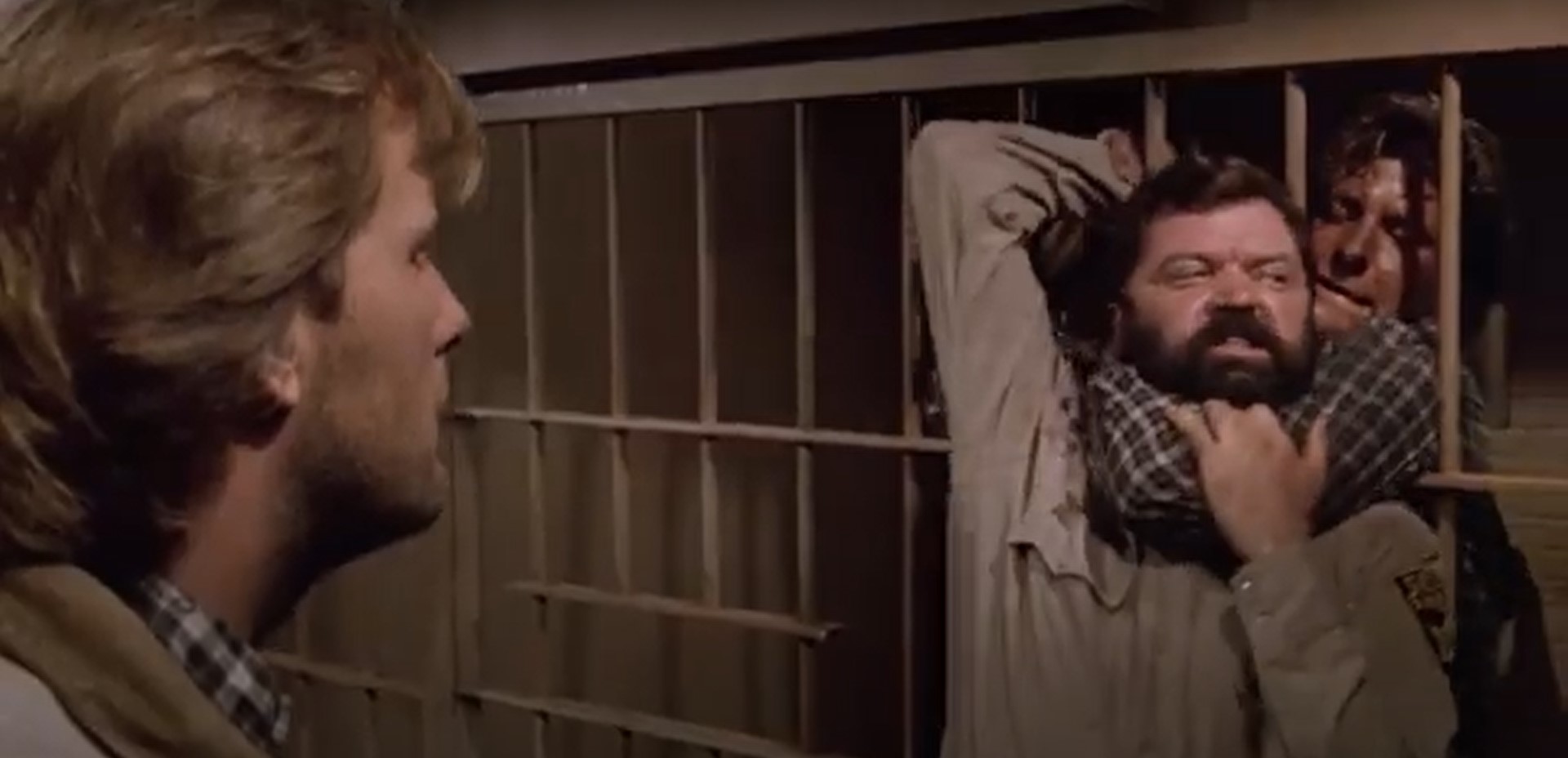
Mark Swetland, proprietor of a safe and vault cracking company in Cheektowage, New York, was once a martial arts instructor.  At the current age of 62, Mark has looked to cracking open safes instead of cracking open heads with his mixed martial art skills but Swetland also once dappled in film, developing his own low-budget Kung-Fu caper, inspired by his martial arts idol, the late and legendary Bruce Lee.   Ponying up much of the funds for what would be “Blood and Steel,” Mark poured every ounce of his soul and craft into the film that displays his range as a fighter as well as getting his chops busted in delivering lines and acting out emotions.  The former was more of his forte with asserting a magnetic presence as both an onscreen fighter and a competent choreographer to have the fight sequences appear realistic and quick against a slew of antagonistic opponents.  As a thespian, Mark often borrows too heavily from Bruce Lee with overzealous fist poses to even echoing Lee’s idiosyncratic short and elongated kiai sounds.    Swetland’s one-on-one scene with fellow martial artist David Bobnik, as the hired hitman Steiner, is well thought out coordination with lighting punch-kick combinations that would rival the best genre films of its time.  Neither Swetland or Bobnik are overly muscularly cut bodybuilders or the zero percent body fat of Bruce Lee’s rail frame as both men are in an ideal, physically fit shape to add to scenes test of time and doesn’t yell amateur hour of wannabe martial artist attempting half-hearted roundhouse kicks for their low budget movie.  “Blood and Steel” round out with a cast that includes Joanne Gargliardo as Mark’s girlfriend, David Male as drug kingpin Mr. Patterson, Elaine Arnone as the slain sister, Diane Zdarksky as the sister’s best friend, Rick Swetland as the sister’s slain husband, and cinematographer Al McCracken has the role of Mark’s best friend and sidekick to the end, Roy. 

Influenced by quintessential Bruce Lee films, “Blood and Steel” is entirely an homage to the exceptional action icon.  Mark Swetland’s film derives elements from “Enter the Dragon” with a plotline of the protagonists’ sister being killed by a drug trafficking enterprise as well as straight down to Mark Swetland’s yellow tracksuit, the same Bruce Lee wears in “Game of Death” with black lines down the arms and legs.  Despite the derivative aspects, Swetland still manages to output an entertaining reel in what has resulted as a passion project that has been stowed away and forgotten only to be unearthed as a transmogrified time capsule of awesomeness.  Swetland, who wore many productional hats, also edited, scored, and did sound design with a fair amount of adequate know-how.  Transitionally between scenes, “Blood and Steel” works to segue into the next scene with various connective images or fade away dissolve without appearing abrupt or muddled.  The additional Foley work, such as the whipping sound of the nunchakus, are done on a synthesizer with an unquestionable audio yield.   “Blood and Steel” has a little bit of everything that is very indicative of a Bruce Lee actioner.  Dirt bike chases that soar from off of a cliff into an exploding heap at the bottom of a ravine, forward and reverse car chases involving a 80’s Corvette Stinger, practical effects from throats being cut to spike cleats becoming lodged into the back of skulls, ridiculous over-the-head, over-the-knee backbreaking fatalities, helicopter entrances over the colossal Niagara Falls, shotgun squib explosions, and much, much more blood-churning excitement can engage the viewer into “Blood and Steel’s” edge of your seat conflict. 

Emerging victorious as a SRS Cinema home video release is the obscure revenge-action thriller “Blood and Steel” on DVD.  Presented in the boxy 1.33:1 aspect ratio, the standard definition 720p resolution, plus the type of camera being used seen in the bonus feature’s outtakes and the impurity characteristics of the image quality, all point to a super 8 shot feature.  Lined left with barely visible sprocket holes and occasionally lined right, a visible magnetic audio strip, often blue in hue, “Blood and Steel” is without a shadow of a doubt a glorified home movie in the right hands of Mark Swetland.  The washed look is a tell sign of no overlay grading, the tri-color emulsion layer remains as the original, natural grading, creating less shadowy contrast but remaining consistent and more-or-less delineated.  The English, single-channel mono track is about as flat as a pancake, if a pancake could make noise.  With hardly any depth, a steady crackling throughout, and depending on the camera mic placement in the shot, some scenes’ dialogue can barely be heard under what sounds like a soft breath or mumble while others are clearly audible and render no issue with understandability. SRS Cinema’s special features include a Fight Analysis with Mark Swetland and David Bobnik going over scene-by-scene, sometimes in slow-motion repeat, their fight sequences and explaining in commentary fashion how the crew set that all it up. Also included are outtakes, the original trailer, the new trailer, and other SRS trailers! The physical DVD sports the original “Blood and Steel” poster plastered inside a standard DVD case of an 80’s retro-rental mockup with color-coded round stickers of the genre action and of the Please be Kind & Rewind phrase. The disc art is a blowup of Mark Swetland from the original poster art. The film runs at a brisk 87 minutes, is region free, and is not rated. “Blood and Steel” has the independent spirit of the dragon, a fierce and fire-breathing martial arts film with fervent laudation for the late Bruce Lee, and is a white knight knockaround and Kung-Fu Flick that is vengeance glorious.

Hiyah! “Blood and Steel” – the Lost Kung-Fu Film now on DVD!  

Time Travelling Tourists Just Want to See the Spectacle of EVIL! “The Grand Tour” reviewed! (Unearthed Films / Blu-ray)

Unearthed Films Stopped a Disaster by Going Back in Time and Re-releasing “The Grand Tour” now on Blu-ray!

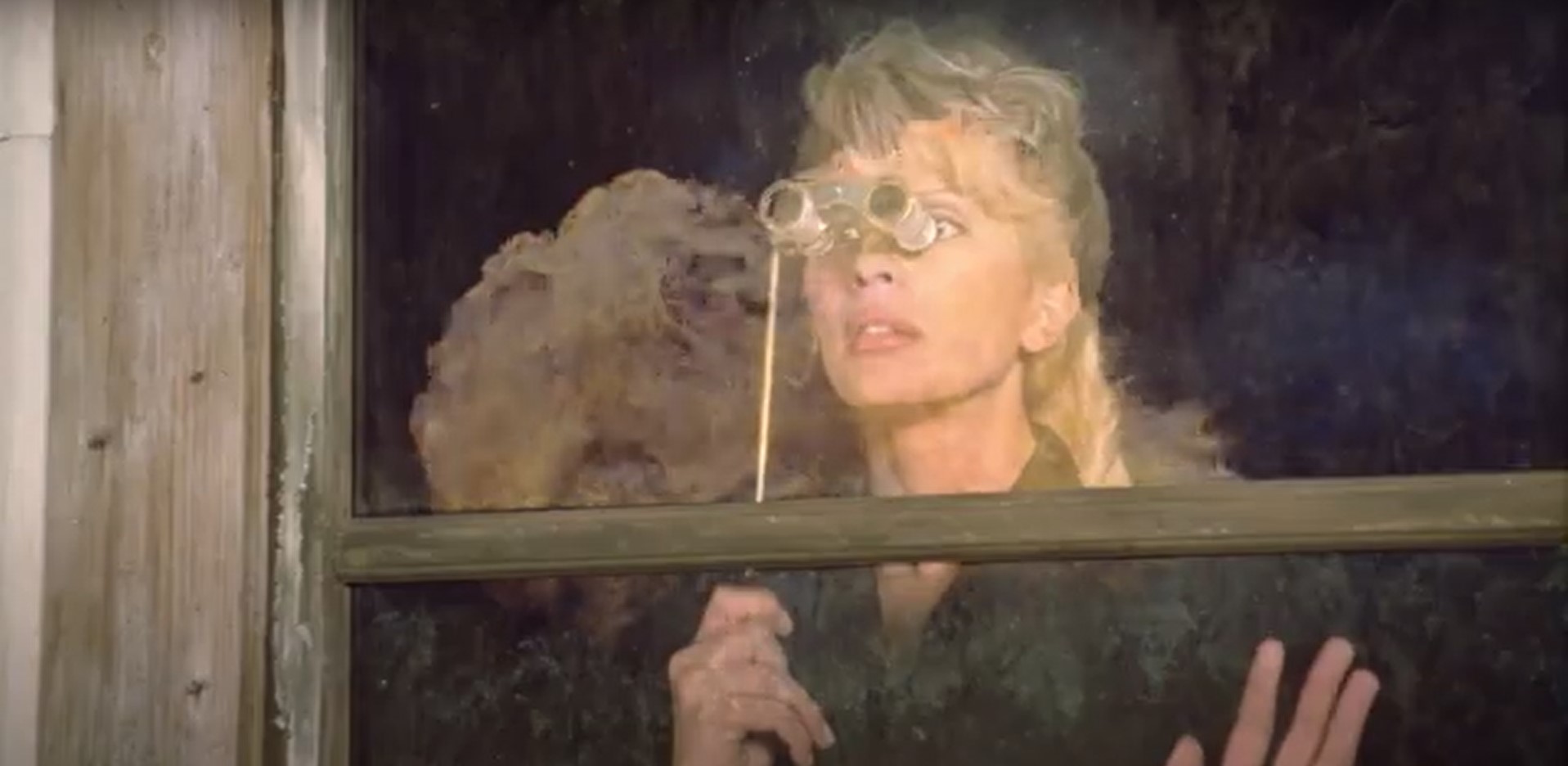
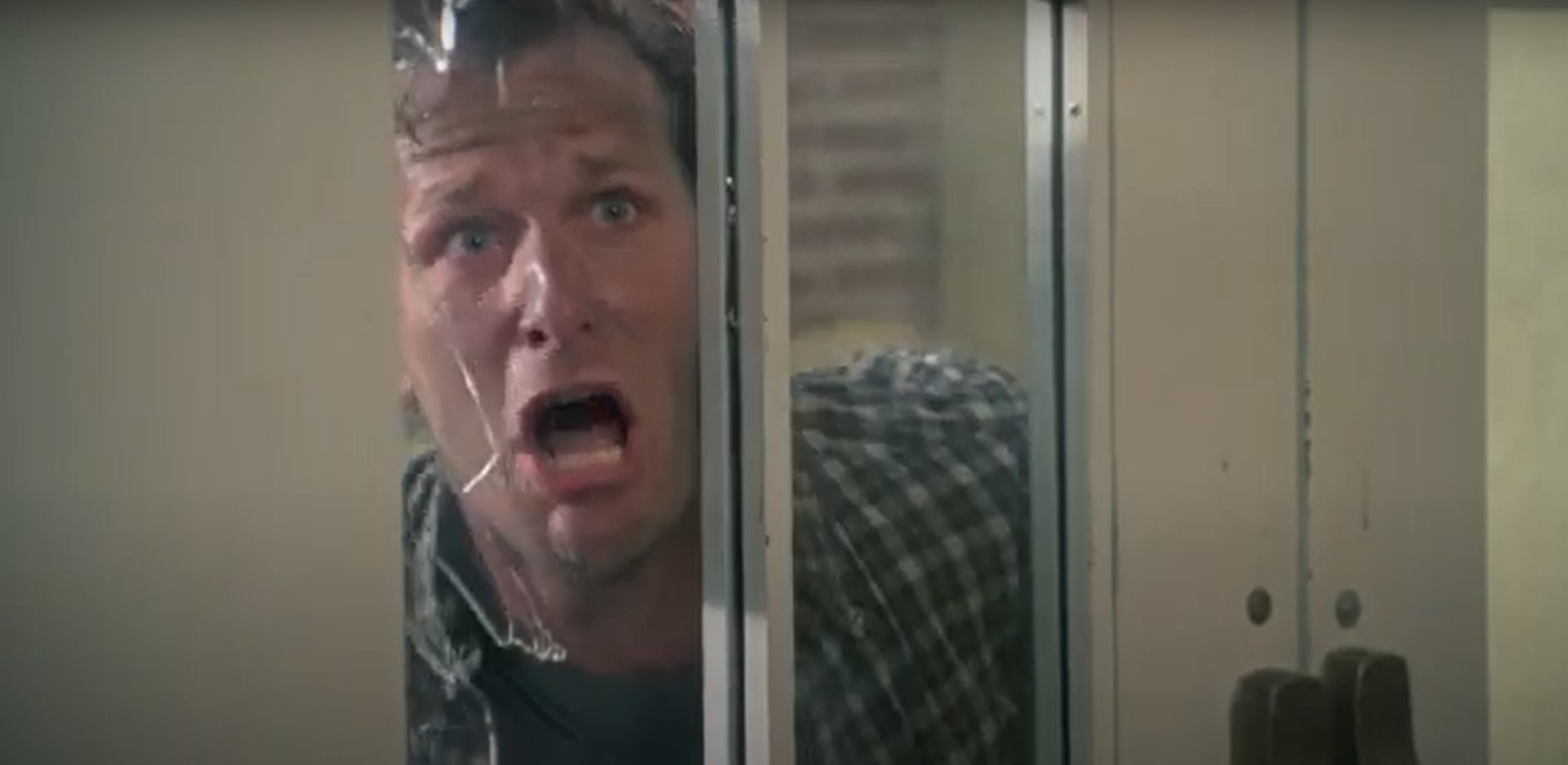
Widowed contractor Ben Wilson and his daughter, Hillary, are a many 2×4 and paint bucket deep into a renovation of a dilapidated inn on the outskirts of town. Haunted by his wife’s death violent death and reminded of it by an angry father-in-law, Ben tries his best to be the best father to Hillary that a single dad can be despite his urge to drink and forget about the horrors of that fateful day. Unexpected and eccentric guests arrive at his doorstep demanding to pay handsomely to stay at his unfinished inn, regardless of the condition, and eager to be present for the secret spectacle to come that makes his inn more desirable than all the amenities of the hotel in town. The guests’ odd behavior, strange belongings, and secret talk lead Ben to believe these so-called tourists are not from his time and that the spectacle their awaiting for is tragedy in the making.

For an extreme film label such as Unearthed Films, Jeff Daniels is not necessarily a headlined name I would see on the cover art. Nor, and more surprisingly so in this instance, would I ever have thought that a PG-13 rated film would be in the same assemblage of titles as “Slaughter Vomit Dolls,” “Philosophy of a Knife,” and “Christmas Cruelty.” Yet, here we are today, the year 2023, over two decades of extreme horror distribution, and David Twohy’s “The Grand Tour” has been released. The 1992 time-traveling clock-racer, that also went by other titles such as “The Grand Tour: A Disaster in Time” or “Timescape,” is written for filmic treatment by the “Riddick” franchise director, adapted from the novella “Vintage Season” by the husband and wife writing team, Henry Kuttner and C.L. Moore. “The Grand Tour” is a production of Channel Communications and Drury Lane Productions, the companies behind Brian Thompson starring “Nightwish” which became also another Unearthed Films’ vault release and is produced John A. O’Connor (“Steel Justice”) and Robert Warner (“The Return of Swamp Thing”).

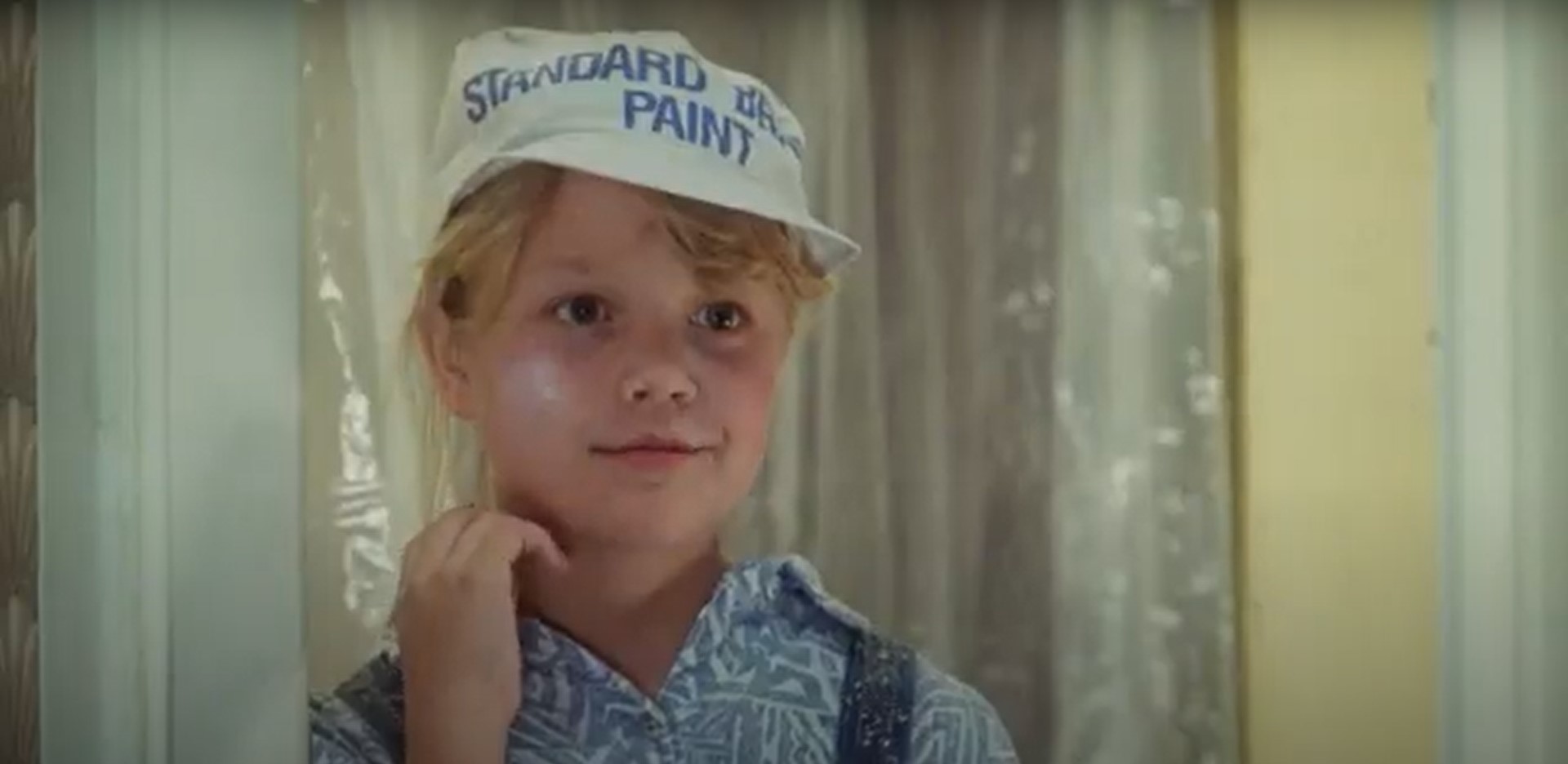
“The Grand Tour” stars the aforementioned Jeff Daniels who at this point was coming off the phobic-inducing success of the itsy-bitsy film called “Arachnophobia.” Daniels brings the same family man charisma, sarcastic wit, and unnerved intensity to the widowed construction contractor Ben Wilson. The character of Ben Wilson is unbuttoned from the beginning with only nightmares of an accident involving a horse drawn sleigh and verbal tit-for-tats with his bristly former father-in-law concluding the death of his wife only a short time ago. Wilson’s marked as a drunk and a shirker though barely do we see only a slither of the former; instead, Wilson’s rather astute, loving, and fearless in his time of time designed duress. Perhaps, Wilson’s arc has already been puzzled together and Twohy only mirrors into his once shameful soul to showcase how much he’s learned and how far he’s come to be more than just an abashed single dad and though Wilson is unbuttoned from the beginning of the story, Daniels buttons up the role with nothing less of perfection. Wilson’s daughter Hillary is played by pre-“Jurassic Park” screamer Ariana Richards who solidified her round-eyed concerned, over-the-shoulder look first in “The Grand Tour.” Hillary becomes the crux torn between the loving father that Wilson’s portrayed to be and an overreaching grandfather, who’s also the town judge (George Murdock, “The Death Squad”), holding a longstanding and personal grudge with his daughter’s ambivalent death. The youngster is also the reason Wilson is willing to risk the perfect future to save an ill-fated past. “The Grand Tour” enlists a versed lot of talent to round out the cast with Marilyn Lightstone (“Heavy Metal”) as the voluble tour guide, David Wells (“Society”) as a tourist with a conscious, and Jim Hayne (“Sleepwalkers”) as a down-to-Earth bus driver caught in the middle just like Wilson. There’s also Nicholas Guest (“Dollman”), Time Winters (“Skinner”), and Anna Neill.

Temporal manipulating or time-travelling films will undoubtedly always have faults as time is a finicky thing, some films accomplish time loops better than others, but I personally feel that as long as the narrative is entertaining enough and the time theory isn’t ludicrously idiotic, all can be forgiven or overlooked on the stretched fabric of time and place concept that can have easily spotted loopholes.  “The Grand Tour” is one of those divertingly pleasurable narratives with calamity hanging in the balance, a central do-or-die performance, and theme that hits at the core of a numb human perspective when seemingly life is nothing less than perfect.  The script bypasses the whole negating physics of the narratives time-travelling and butterfly effect piece with Daniel’s character verbally damning the hypothetical’s inaccuracies in a fit of life- and time-saving panic to not hang up on the details and keep the story churning.  Twohy never offers too much too early when the intrusively eccentric inn guests appear without concern for their surroundings but are increasingly curious about minor, trivial things that when compared to the small town residents, people would take such things for granted, yet their curiosity isn’t exactly appreciation for the humbler things as it’s more of a naively morbid reflection on how who these well-dressed and fit-as-a-fiddle travelers call “bygoners” lived and died.  Historical catastrophes have become looking glass sideshows for the bored or how the event is termed as a spectacle is if the disaster is an extravagance performance for others to reap the benefit from its grim amusement.  Twohy pulls off the massive feat of catastrophe without the use of computer-generated imagery that we see heavily in his later films to create galactic worlds and creatures.  There’s composite motion paint work and diorama miniatures to create the illusion of a small town in turmoil that works just as well, if not better.  The whole “Grand Tour” package sells the sleight of hand devastation but also the intrinsic emotion and passion that follows it, or in this rewind the clock case, before it as well. 

Though I’m wigged out by the tame release from Unearthed Films, I’m still glad the out of print and sci-fi jarring “The Grand Tour” has booked an excursion back to the physical media outer rim!  A brand-new AVC encoded Blu-ray, released as the 11th cult classic under the Unearthed Classics sublabel, shepherds a new in-print North American option.  Sold as a Hi-Def release with 1080p, there’s honestly nothing that can be really done or to improve upon a Betamax 350 resolution by 480 pixels in a stretched 1.85:1 aspect ratio.  Certainly better video and audio quality compared to VHS, and likely the best quality “The Grand Tour” will ever be in to-date, the release remains a deficient for detail with blurry, soft-glowing traits.  The Blu-ray’s bitrate is also erratic, dipping as low as upper DVD, 8-11 Mbps, to shooting up as high as lower 20s which tells me the storage capacity of the BD25 likely isn’t enough to properly decode the film and, in certain frames, compression artifacts show with smooth surface, color blurring that eliminates sharper edges amongst other issues, such as faint banding and blocking nothing to really warrant discouragement. The English PCM 2.0 stereo mix is commensurable with the original Betamax audio recording and though soft around the audible gills, the dialogue, ambient, and soundtrack mixes satisfy the need but in case you need an English SDH option, the Unearthed Films’ Blu-ray has you covered with a well-synched and timed error-free translation. The special edition bonus features include the “Timescape” title sequence, production stills, various posters and one-sheet artworks, a new Lost in Time: Cannes promo discussion with Ed McNichol who worked on the pre-production Cannes promotional trailer with Jeff Daniels but isn’t available in the special features here, and Unearthed Classics trailers. The physical aspects of the release include a cardboard o-slip with a front image reminiscent of outside region 1 DVD covers of Jeff Daniels running between two periods in time. The slipcover sheaths a clear Blu-ray case with latch, the inserted cover art is the same slipcover but is reversible with a mockup of the Canadian released DVD cover. The disc print image echos the reversible cover art image. “The Grand Tour” is Blu-ray has a region A playback, clocks in at 99 minutes, and the film is rated PG-13. An obscure Jeff Daniels film lost in time, unable to reach back into the past for a new, refreshed release, is paradoxically meta in its own right but luckily for us, Unearthed Films has our best interests in mind while keeping the blood and guts at bay for only for a single, solitary stitch in time.

Unearthed Films Stopped a Disaster by Going Back in Time and Re-releasing “The Grand Tour” now on Blu-ray!

I Think We’re Going To Need Bigger EVIL! “Deep Blood” reviewed! (Severin / Blu-ray)

As kids, four boys were warned with an anecdotal tale of an ancient Native American spirit that took the shape of a killer shark malevolently stalking and killing the native villagers for their overfishing ways.  Now adults, the four friends pursue very different lives as all four return home for the summer with interests in rebuilding family relations, girls, colleges, and avoiding the local punk, Jason, hellbent on making their lives miserable, but when a shark turns up and kills one of them during a solo dive, they recall the ancient tale and sound off to the authorities who take little heed to the incident.  Their small beach community thinks they’ve killed the man-eating shark causing the ruckus, but when more chewed up bodies color the ocean red, the friends must take the task upon themselves to see the shark never devours anyone else again. 

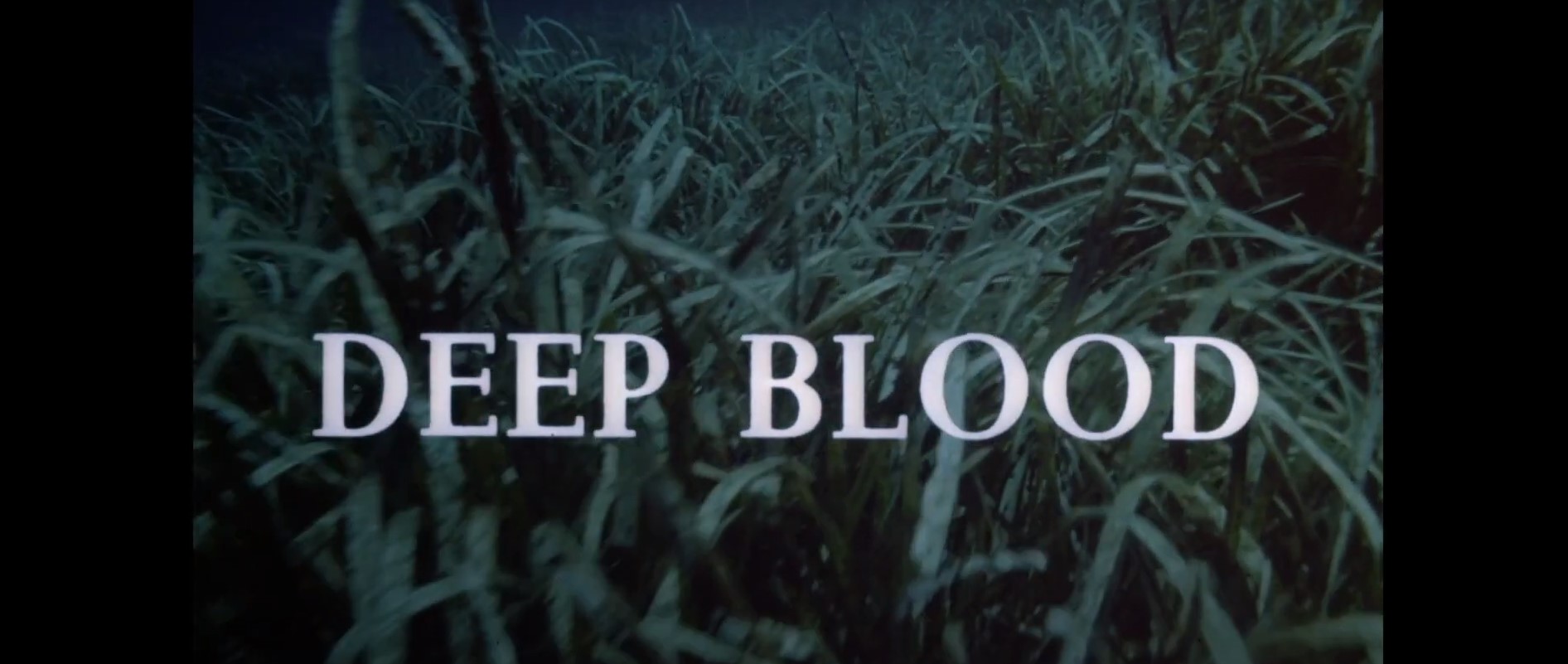
Italian shark-on-a-loose romper helmed by the legendary serial Italia horror and erotica trash filmmaker, Joe D’Amato (“Emanuelle in America,” “Anthropophagus: The Grim Reaper”), cashes in on the monster, man-eating shark celluloid frenzy with an uncredited directorial of the 1990 sharksploitation, “Deep Blood.”  Originally to be Raffaele (Raf) Donato’s directorial debut, the George Nelson Ott script was salvaged by the then producer and cinematographer D’Amato after Donato’s change of heart and professions in the film industry.  “Deep Blood,” that went under working titles “Wakan,” the designation for the Native American evil spirit, and just simply “Sharks,” was shot mostly with an English cast in the sunshine state of Florida with various underwater scenes filmed in Italy.    D’Amato’s production company, Filmirage, supported the film in collaboration with Variety Film Production that has dipped it’s toes into another killer shark flick, Enzo G. Castellan’s “The Last Shark,” which some footage was utilized for D’Amato’s film nearly a decade later.

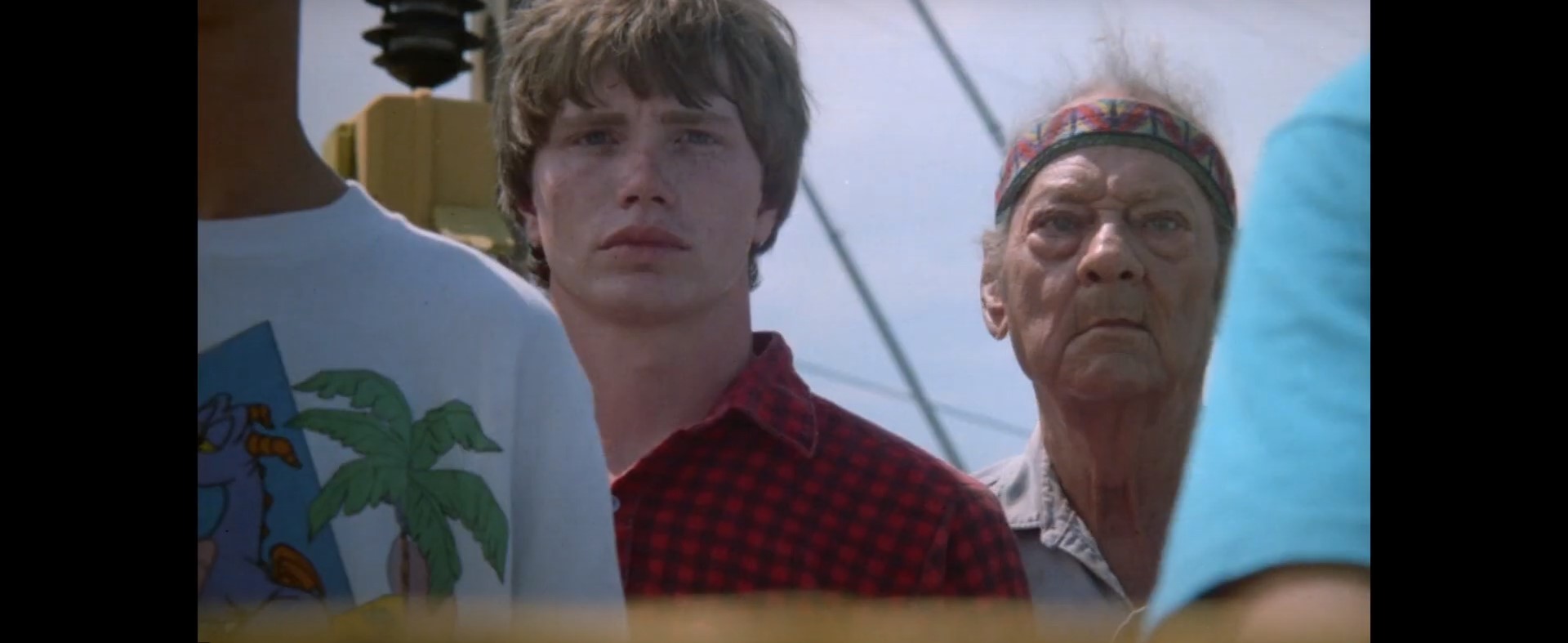
“Deep Blood” circles around the opening of four friends innocently having the time of their lives with a normal ocean side firepit, roasting wieners, being told horrifying campfire stories of the black finned Wakan by a mysterious Native American (Vans Jensens) who hands them a relic piece of oblong driftwood with noteworthy carvings about Wakan and slicing their wrists to make an impromptu blood pact to fight against Wakan whenever the time comes.  You know, the usual stuff you do with your friends.  As grown men, Miki (Frank Baroni), Allan (Cort McCown), Ben (Keith Kelsch), and John (John K. Brune) find themselves back home, reunited to only have their friendship ripped to shreds when John becomes Wakan’s tasty snack on a solo dive.  Ott’s script really, really, and I mean really, tries to add depth to the characters, such as Allan’s spoon-feeding Mayor of a father handing out life advantages to his son every possible moment or with Ben who struggles between fulfilling his parents’ wishes of going to college or starting his professional golf career.  There’s also some backstory about the death of Ben’s sibling at sea that has had some psychological torment on his father, Shelby (Charlie Brill, “Dead Men Don’t Die”).  D’Amato crumples up character development like a piece of scrap paper and shoots a fade away jumper into the waste basket.  My personal favorite in the shallow end moment is the local lout and head of a gang, Jason, who senselessly disparages the four friends, for whatever reason we don’t know, acutely 180’s from I’m-going-to-kill-you to becoming a good friend (out of respect?) and takes an active participation in hunting down the shark.  All the relationship dynamics seem to just culminate right into the big, explosive deep-dive and pursuit for shark blood in the guys’ booty shorts and cut off sleeve shirts.  Talking roles are aplenty but nothing worth the empathy or sympathetic emotional baggage surrounding the remaining cast of characters played by actors James Camp, Margareth Hanks, voice actress Mitzi McCall, and Tom Bernard as Sheriff Brody…I mean, Cody.   

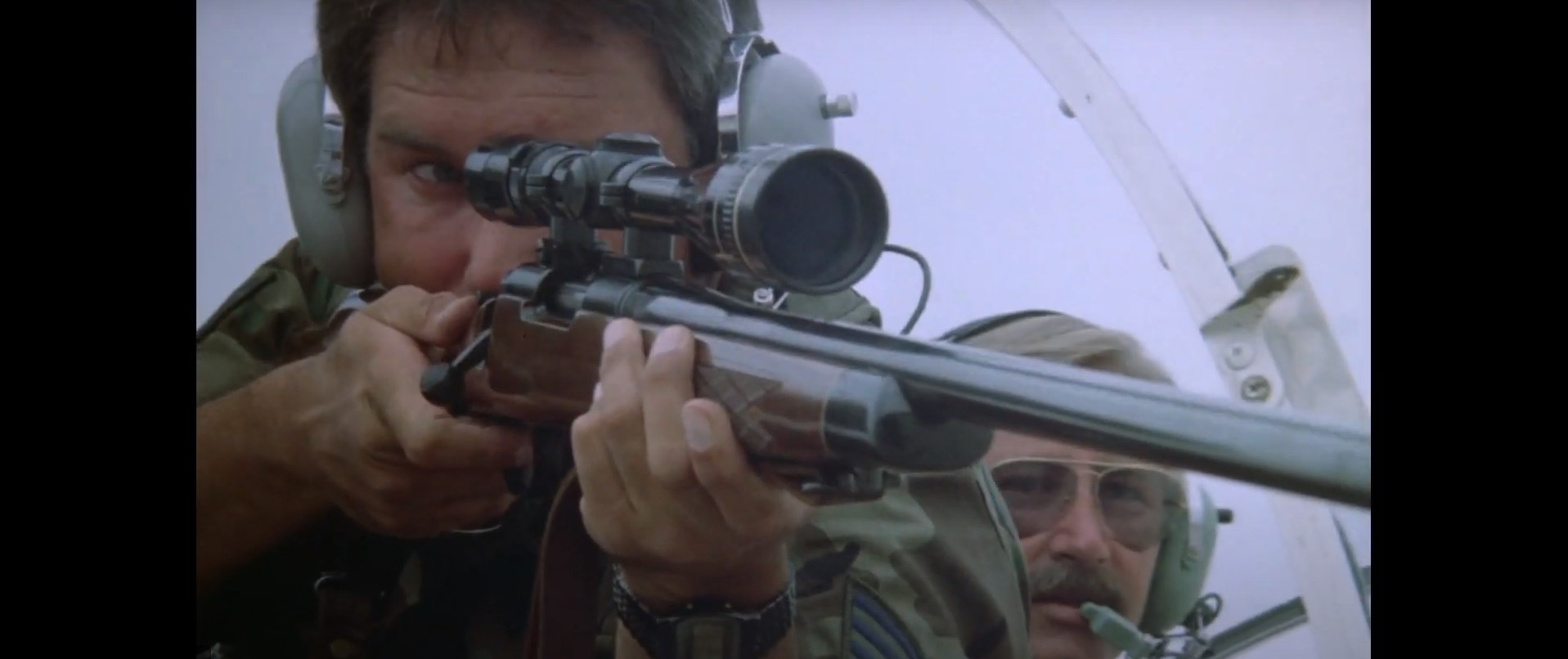
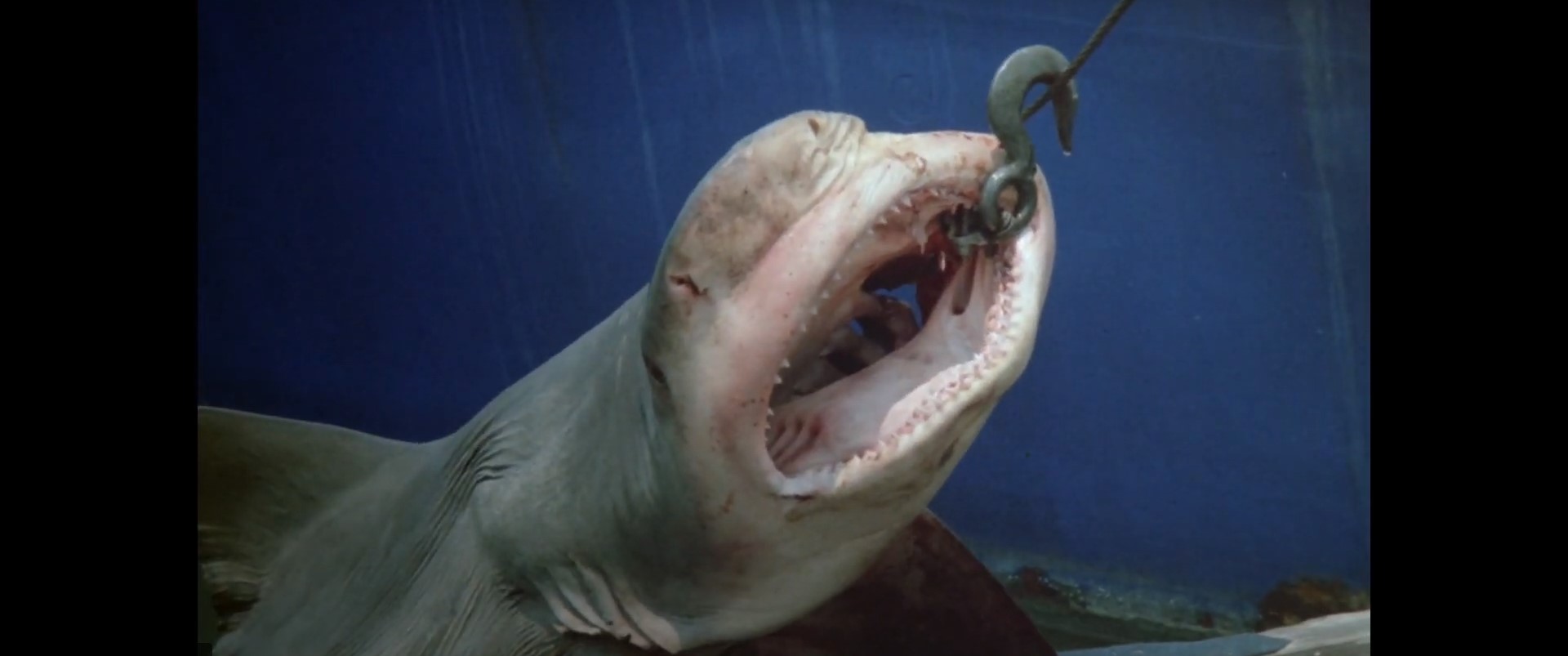
Only slightly echoing acts of Steven Spielberg’s flawless “Jaws,” “Deep Blood” also begs, borrows, and steals scenes to piecemeal together a semi-coherent story.  In the wild Great White shark snippets from National Geographic video clips and shark scenes plucked and reused straight from another Italian schlocker, there lies a nonexistent sliver of thought in creating an original piece of footage that puts the resemblance of a monstrous shark and an actor in the same scene together with D’Amato relying burdensomely on editor Kathleen Stratton to handle the fragmentary bits of different look and feel shots and turn it into single profit linear narrative gold. But honestly, what do you expect? D’Amato was to be the director of photography but ended up in his lap directorial duties, taking on the extra work like any good producer. Many of the shark attack scenes are spliced together with the actors bobbing and turning up and down in the water with the iconic bubble and splash sequences that solidly create the allusion and the illusion of a frenzied blood bath, but some locations are blatantly amiss shots, especially those of the actors snorkeling and scuba diving inside an obvious aquarium vivarium in clearly an exterior beach scene, that are more of a blow toward our intelligence than anything else. When the movie magic shark finally does make an appearance, a rigid, clean cut, my 9-year-old nephew could draw better shark effects sells little amazement, wonder, or pelagic terror of the open water. “Deep Blood” is a see-it-to-believe sharksploitation disaster-piece with the Joe D’Amato Midas touch.

Luckily, seeing every story blighted nook and cranny and experiencing all the dysfunctionalities between characters have never looked better with Severin Films’ worldwide inaugural Blu-ray release of “Deep Blood.” Newly scanned in 2k from the original 35 mm negative and presented in a pillarbox 1.33:1 aspect ratio with a high definition 1080p transfer, the image clarity is about the only thing flawless in the film with natural looking color grading for a richer hue presentation. Aside from the wonkiness of equipment quality differences with Nat Geo’s stock footage, there wasn’t much in the way of image imperfections aside from faint speckle damage and a slight scratch briefly visible in one of the later scenes. Details are phenomenally crisp in the face, as you see every sagging wrinkle on Van Jensens’ mug, and even the slight white capping of the waves renders clearly across. The English language 2.0 mono track features a clean, discernable dialogue albeit some slight hissing. Carlo Maria Cordio’s synthesized score doesn’t invoke fear of the water, but does contribute to the Italiano-charm of D’Amato’s underwater thriller with a seducing melody of lo-fi chords to accompany the shark attack scenes. Optionally, a parallel Italian track provides a dub that isn’t typically as elegant in syncing with American actors. Special features for the 91 minute film include a trailer and a listed multi-region playback; however, I could get the disc to play on the region B setting. If you’re a shark film aficionado like myself, no matter how undeniable cheesy (and I’m looking at you “Bad CGI Sharks”), then “Deep Blood’ is an enjoyable serrated chomp into a chum soaked sandwich good to the last morsel.

Own Deep Blood on Blu-ray from Severin Films!

EVIL Hoodooism is No Mumbo-Jumbo! “Spell” reviewed! (Paramount Pictures / Digital Screener)

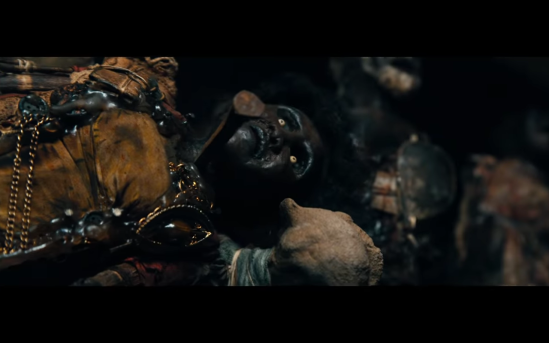
Marquis E. Woods is a powerful defensive attorney good at his job, attaining wealth and position to the likes he’s never had as young boy raised by a fervent and abusive father in the Appalachian mountains of Kentucky; a life now he always wanted he can now share with wife, Veora, and pass to their children, Samsara and Tydon.  The news of the death of his father sends him and family on a flying to the rural part of Kentucky to pay their respects in Marquis’ personal small aircraft.  A terrible storm forces down the plane down in a remote wooded valley and an injured Marquis wakes up in attic on a farm ran by a proclaimed rootwork old woman, Ms. Eloise, with her husband and oxen-strong farm hand.  Trapped and concerned for his missing family, Ms. Eloise slowly nurses him back to health with a Boogity, a Hoodoo figured representation of Marquis comprised of his flesh, blood, and other DNA elements, but her Southern hospitality isn’t for good intentions as she mends and prepares his wounded body, brewing a sinister spell upon his soul, for the forthcoming blood moon that lies days ahead.

Experiencing Hoodoo dark magic horror back on a bigger production scale is on the same extraordinary gamut in discovering the lost city of Atlantis.  Well, maybe not as profoundly archeological as discovering Atlantis, but still immensely impactful. Films like the Mark Tonderai directed “Spell” hit like a ton of brick-shaped talismans, fettering the imagination with hexes that bewitch fascination and captivation, and roots through an endless torrential fountain of ancient beliefs to scour the dark side of the practices for celluloid terror. “The House at the End of the Street” director Tonderai moves away from restraints of PG-13 horror before heading into a stint of helming television episodes only to make a glorious return back to features with the R-rated black magic action-thriller, “Spell,” penned by Kurt Wimmer who knows a thing or two about action-thrillers as the writer of the gun-toting, martial arts dystopian, “Equilibrium,” and bloodily vindictive thriller, “Law Abiding Citizen”.  Filmed in Cape Town, South Africa that, through the slight of hand of movie magic, turns South Africa into rural Kentucky, “Spell” is a co-production of Paramount Pictures, LINK Entertainment, and MC8 Entertainment as well as being a product of puncturing the rarely topical social class and racism division within the same race.

To play a determined and savvy father and husband on the ropes of survival, “Power’s” Omari Hardwick steps into the detained role of Marquis E. Woods, surely prepping himself against Ms. Eloise’s wicked dark magic before battling the flesh hungry undead in the upcoming Zack Snyder zombie-geddon horror, “Army of the Dead.” Hardwick is the ideal actor for a role that, at times, can be physical; his athletic build suits also Woods’ affluence though not required as scene with the brawny farm hand that introduces South Africa’s very own fitness entrepreneur, Steve Mululu.  Woods is pitted not only against formidable muscle, but also has to outwit the four or five lifetime smarts of an old root woman, Ms. Eloise, diabolically portrayed with a legendary entrenched Southern vernacular by the “Urban Legend” actress, Loretta Devine.  On the downside of the character, Ms. Eloise is rich with historical saturation that goes unchecked and unexplored and she seems a little more slapdash with her rituals and her captives.  In what really is a mind game of wit and Podunk wizardry between Hardwick’s Marquis E Woods and Devine’s Ms. Eloise, the remaining cast for “Spell” shoulders only little to annex more substance toward the tensions between the two principles, including performances from Lorraine Burroughs, John Beasley, Andrew Jacobs, Tumisho Masha, RJ-Karlo Handy, Hannah Gonera, and Kalifa Burton.

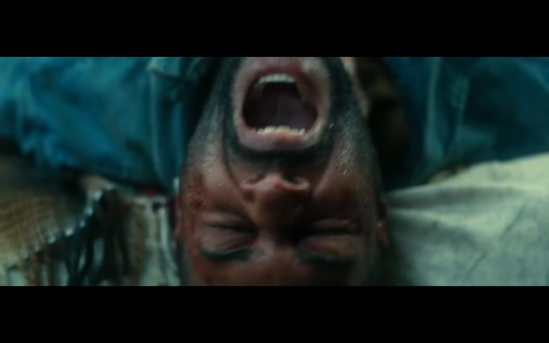
Aforementioned, “Spell,” between the domestic xenophobia opulence dividing the Woods family, the quaint, yet tangible body horror, and the abhorrent mysticism surrounding Hoodooism, teeters on loose ground with not only Ms. Eloise’s foundation, but also with main character, Marquis E. Woods, who suffers continuously from trauma-induced nightmares of his abusive father. Through flashbacks, Marquis is beaten with verbal assaults and even, seemingly, being stabbed or mutilated by his father. Yet, that’s about as far as the flashback dynamic progresses the thread bare bond until a minor moment at the climax is when Marquis then embraces his father’s aggressive nature, tuning more into a theme of stative stance that Marquis and father might not have seen eye-to-eye, but the son learns to survive through amplified evil by way of his father’s tough, tortuous care. The relationship circles backs with Marquis’ entitled children, whose piggyback wealth has molded them indifferent against the benefits given to them and partisan toward the backwoods people of color, and “Spell” becomes an insidious allegory creeping into the fold with a little tough love from your parents, in this case father, will go a long way. “Spell” also rarely pulls any punches with a welcoming cringe of ghastly violations of the human body (that pulling, inserting, and then re-pulling out the spike in the bottom of the foot gag will make you actually gag!) and inside the rustic and isolating confines of Ms. Eloise’s Kentucky farm compound, there’s a rough-hewn atmosphere that elevates the subgenre, shaking it to the core at times.

“Spell” is terrific urban horror tinged with “Misery” but driven by historical oppression stemmed Hoodoo, releasing just before Halloween on October 30th distributed by Paramount Players, a division of Paramount Pictures that’s still very much in it’s infancy. Jacques Jouffret (“The Purge” franchise) has a tight knit and jarring cinematography that puts the audience in the front, debilitating seat, empathizing the mind-warping effects that Marquis faces with a violent plane crash, nerve seizing torture, and banding Hoodoo hallucinations. Plus, there is fancy crane camerawork that marvels to capture multiple actions between characters. The score from Ben Onono fulfills the tension-riddle need with incessant zest, complimenting the narrative tenfold. Since “Spell” is a brand new release, there were no bonus material included and there were no bonus scenes during or after the credits. Don’t belittle the Boogity in this year’s most unique and contending horror movie that casts a “Spell” over the rest of the competition.

Pre-order “Spell” on Prime Video


There’s Astronomical Evil in Them Mountains of Mars! “First Man on Mars” review!

screen-shot-2016-11-05-at-9-46-41-pm
The Cologne Space Labs launch their project billionaire sponsor and gold-greedy astronaut Eli Cologne into a two-year journey in hopes for a beneficial Mars expedition. Cologne, being the first man on the red planet, encounters a shiny gold-like object that infects him with a foreign organism. As mission control rashly make the decisive decision to abort the expedition and leave Cologne stranded on the wasteland that is Mars, the brazen astronaut plans not to die on the alien planet, fleeting back to the return module, and blasting off back into space where he becomes lost for one year until his return module crash lands on Earth under the massive cloak of Hurricane Katrina. His human form ceases to exists, transformed into a flesh feasting, hideous extraterrestrial in a space suit who wreaks havoc and terror for years in a podunk Louisiana bayou where the nearby local Sheriff, Dick Ruffman, attempts to save from ultimate destruction.
screen-shot-2016-11-06-at-8-20-17-pm
When Tempe Video and TomCat Releasing dropped the news of “First Man on Mars” feature on my e-doorstep in a Tempe Video press release, something very deep in the cavernous, unholy part of me wanted to screen the film’s trailer. After witnessing a primo homage of super-8 b-horror schlock, I immediately brought my finger tips to my laptop’s keys and typed ferociously, requesting a press coverage copy for a film that had me instantly reminisce of “Lobster Man of Mars,” a 1989 sci-fi comedy directed by Stanley Sheff. As weeks passed, no response of my request was returned from the distributor. However, when the film’s director Mike T. Lyddon, an experienced independent filmmaker with more than two decades worth of low-budget films under his belt, e-mails Its Bloggin’ Evil and wonders if the site could review his latest project, a satirical sci-fi comedy, by forwarding over a screener link, I gladly jumped at the opportunity and, low and behold, I wasn’t disappointed when the end credits started to roll!
screen-shot-2016-11-06-at-8-01-52-pm
Under a massive umbrella of pop cultural science fiction references, “First Man on Mars” oversteps many plot conventions, exaggerating to the fullest extent a simple story of one man’s plight of an unquenchable desire for shiny gold that literally consumes him and, consequently, consumes others surrounding him in a cauldron of cannibalistic campiness. Even though the lesser part of Benjamin Wood’s dual role shows his mug as a friendly bar patron, his Eli Cologne performance never shows character face beyond the golden shield of his space helmet or before his pre-gruesome transformation into a hideous, razor-teethed, otherworldly beast, providing anonymity to an important character much similar to that of the character V in “V for Vendetta,” if you don’t consider the stock footage prior to the film’s title. Okay, so I might be comparing caviar to spam, but nonetheless, Lyddon uses comedy and a jerry-built space suit to create an ambiguity villainous character.
screen-shot-2016-11-06-at-8-24-48-pm
Trust me, “First Man on Mars” is not at all serious as the feature is comprised of zany rednecks, birdbrain scientists, and gratuitous violent hilarity garnished with suitably colorful dialogue that can be funny while being extremely crude, can be smart in it’s admiration, and can be juvenile with bathroom-riddled humor where appropriately scened. Every actor executes the swallowing of pride process to extend verbal and physical indirect comedy that purely goes hand-in-hand with this sort of satirical storyline constructed from the certifiable portions of Mike Lyddon’s brain that might or might not be sizzling on an illegal and dangerous narcotic. Gavin Ferrara, Kirk Jordan, Marcelle Shaneyfelt, Roy “Rusty” Jackson, Jr., Kelly Murtagh, Joey Harmon, Sam Cobean, and Tresslar Burton round out the comically darling cast.
screen-shot-2016-11-06-at-8-10-44-pm
“First Man on Mars” is an absurd blast from low-budget director Mike Lyddon and his team of willing actor and crew participants, putting everything on the proverbial line to make this ambitious project first and put their seemingly absent shame second. The TomCat Releasing was presented to me as a screener link, therefore I can’t officially review the audio and video quality nor any bonus features that might have accompanied the release, but as a soft judgment, the 16mm stock that “First Man on Mars” is shot on revels in the hokey dialogue, the substantial monster violence, and the utter gore as a remembrance of the once larger than life creature feature movies from the drive-in theater era.

BUY “FIRST MAN ON MARS” ON DVD! AMAZON.COM