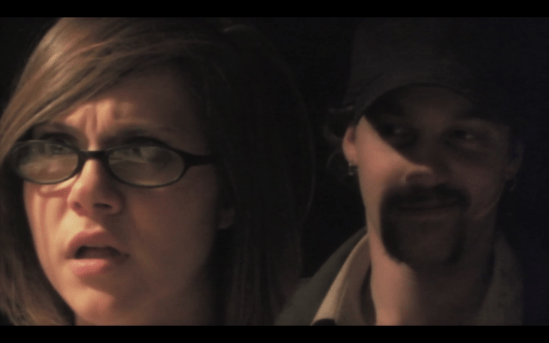
All You Need to Protect You From Everything is a Pile of EVIL Socks! “Crust” reviewed! (Anchor Bay / Blu-ray)

Sean Whalen’s Debut “Crust” Now on Blu-ray!

Vegas Winters is a famous washed-up child actor now working at a laundry mat. Depressed from having been exploited during his career years, Vegas’s problems continue as an unkempt, middle-aged man still enamored with an ex-girlfriend who can’t stand the sight of his growth impotency and the news of his show’s revival that stirs up the past’s unwelcomed hubbub. Day-in and day-out, Vegas does the laundry mat rounds, collecting lost socks for his own personal use, whether be for blowing his nose, cleaning a blood lip, or masturbating into for his daydreaming fantasies, until one day the poor schlub is beyond humiliated and sheds a tear into his pile of used and unwanted collection of socks that turns the heap into his own personal protector he calls Crust. Murdering all who emotionally hurt or threaten Vegas, Crust becomes his best pal who has to vie with Vegas’s drunkard business partner and friend as well as his newfound girlfriend who’s infatuated with him.

Sean Whalen is one of the more underappreciated side characters in the last 30 years.  You know the face, but you may not know his extensive filmography.  Most of us horror fanatics adore Whalen in what was likely one of East coast born actor’s most notable roles from early in his career as the wall-crawling, good-hearted, inbred child named Roach from Wes Craven’s “The People Under the Stairs.”  From that film in 1991 to today, Whalen has run the genre gamut as a supporting actor in “Tammy and the T-Rex,” “Waterworld,” Rob Zombie’s “Halloween II,” as well as Zombie’s “3 From Hell” and a slew of other films, made-for-TV movies, and popping up in television series, including the U.S. version of CBS’s Ghosts pilot which I’m still sorely peeved he no longer continued the basement-dwelling, leprosy ghost role.  Now, we’re seeing a whole new side to our favorite side actor who steps into the lead principal role and, also, writes-and-directs his first feature length film with the 2024 comedy-horror “Crust.”  The indie film is cowritten with Jim Wald and is a production between Mezek Films, Moonless Media & Entertainment, Wicked Monkey Pictures, Stag Mountain Films, and the LLC, Crustsock Productions, supported by a crowdfunding campaign that generated nearly 100K dollars from over 600 backers.

A personal project for Whalen, “Crust” came to fruition as an allegorical metaphor for his own depression after a divorce and he plays Vegas Winters, a former child actor who left the industry after the success of his show due to those around him mistreating him or forgetting about him once the show success wore off.  Gloomy-faced, disheveled, and suppressively lethargic and explosively frantic when called for, Vegas is the epitome of depression while co-running a bland laundry with an alcoholic Russ, played by another horror-friendly, long-time supporting actor in Daniel Roebuck (“Final Destination,” “Terrifier 3”).  Audiences will feel for Vegas and his ultimate wish to be left alone as he sends his blood, sweat, tears, and amongst other bodily fluids, into the leftover socks of strangers, but audiences will also be delighted in his return to fervor materialized by a spur-of-the-moment, quirky laundry mat dance routine with his newfound cute-and-cuddly, stiff-sock creature, Crust. Like Daniel, Nila is too entangled in Vegas’s sticky-sock situation as his from-afar admirer turned quickly cemented girlfriend, played by Rebekah Kennedy (“Two Witches,” “Traumatika”), and there ensues the conflict when friend and girlfriend don’t know where they place or stand alongside a sock-monster. Roebuck and Kennedy manage to fiddle the strings of being the irresolute and concerned while not being a total antagonist to Vegas, who himself might not be 100% the hero of the story. “Crust” rounds the big hitting cast with “Sleepaway Camp’s” Felissa Rose and “Ferris Bueller’s Day Off’s” Alan Ruck along with William Gabriel Grier, Charles Chudabala, Ricky Dean Logan, Shawntay Dalon, and Zoe Unkovich.

Divided into laundry themed chapters, “Crust” is all about the depression and the stagnation that it entails. The creature Crust is that imaginary hope or need fabricated to pull one out of its depths and talons as a protector and a friendly companion to retreat into when the world around is threatening with a difficulty level of hard. Vegas is bombarded with down-in-the-dumps missiles being reminded of an unpleasant past, an ex that continues to belittle him, and an escape from reality that soon becomes an invasion of privacy. Whalen’s decision to shoot in black and white is a conscious one that eliminates colorful distractions to keep story focus around the characters, driving down the narrative nail into Vegas’s episodic progress that deepens to deprecating d, depths, and to keep blemishes with Crust’s marionette-ways to a bare minimum. That’s not to express that Crust is a mealy patchwork of loose socks and back felt for eyes. Crust construction might be simple in design but effective in applied personification with emotional swings, eyebrow moods, and hand gestures despite the obvious movement limitations that require multiple shots and cuts at different angles to sell its tearful autonomy and aggressive nature to protect. Remember, “Crust” is a comedy-horror with emphasis on comedy and while Whalen’s directorial debut comedy is fettered by a lighter shade of black, there’s a waving playfulness about it, such as Whalen and Crust’s spontaneous choreography, that provides a wake from the satirical black humor and completely submerge the story in surrealism with laughs and heart-wrenching moments.

One of the first, and hopefully many to come, titles a part of the initial Anchor Bay Entertainment revival by Umbrelic Entertainment cofounders Thomas Zambeck and Brian Katz, “Crust” hits the Blu-ray market with distribution assistance from MVD Visual.  The AVC encoded, 1080p high-definition, BD25 has the work cut out for it with the black-and-white presentation that allows for a better decoding bitrate, hovering around easily a high-20 Mbps.  Monochromic anamorphic widescreen 1.78:1 aspect ratio exhibits cleanly, clearly, and classically in a consistent contrast that balances situational light and shadow where appropriately.  Textures are dullened without color but the picture is crisp without showing fuzziness or compressed without blocky or bandy issue.  Not listed on the back cover, my player detects an English Dolby Digital Stereo 2.0 track.  More talkative than taking action, “Crust” delivers a fine digitally recorded dialogue track through a lossy Dolby compression that while isn’t as an exact replica, it is clear. Yet, dialogue’s separated from the pack, isolated from the caricature ambience of a laundry mat that has settles on a single wash or dryer sound, the exaggerated sounds of exterior paparazzi, and minor action sounds reach the upper audio layer hemisphere, diffusing into virtually the same foreground plane as dialogue rather medium-to-near range background in what is more of a production stemmed, Foley incorporated audio design.  Blu-ray’s bonus features include a Sean Whalen feature length audio commentary track, a Los Angeles premiere Q&A with Sean Whalen, Rebekah Kennedy, Daniel Roebuck, Felissa Rose, and William Gabriel Grier along with Crust puppeteer, Lisa Hinds, and two short comedies about Dorothy post-Wizard of Oz by many, many tragic years of alcoholism, sex, and delusional state of poor Dorothy, written and played by Whalen in “Dorothy:  50 Years Later” and “Dorothy 2:  The Bump and Run.”  Anchor Bay’s releases standard fair within a traditional Amaray case with the image of Whalen, or rather Vegas, the sock-monster Crust, and a trail of speckled blood in a back-and-white laundry mat with no tangible inserts and the same image pressed on the disc but digitally rearranged.  The region free release has a runtime of 102 minutes and is not rated.

Last Rites: Depression sucks, but “Crust” doesn’t in its sticky sardonic theme told simply in genericisms and broad grayscale strokes. Whelan’s first feature is first rate farce with fantastic puppet work and a Whelan, himself, best at self-deprecating his image for what’s good of the story, which is a morsel of his own.
Sean Whalen’s Debut “Crust” Now on Blu-ray!

Happy, EVIL Halloween, Halloween, Halloween. Happy, EVIL Halloween, Silver Shamrock! “Halloween III: Season of the Witch” reviewed! (Via Vision / Limited Edition Blu-ray)

“Halloween III: Season of the Witch” Available on Limited Edition Blu-ray from Via Vision!

Just days before Halloween, a man stumbles hurt and delusional rantings into the hospital of Dr. Daniel Challis.  Clutching a Halloween mask to his chest, Challis figures the man to be crazy before stabilizing his vitals for rest but when the man is heinously murdered in his hospital room and the murderer burns himself alive in the hospital parking lot, Dr. Challis doesn’t know now what to make of the man’s rantings about something or someone is going to kill us all.  In walks Ellie Grimbridge, the man’s daughter, who has been investigating her father’s mysterious death.  Intrigued not only by the case, but also by the lovely Ellie, Dr. Challis and Ellie’s investigative work leads them to the Silver Shamrock mask factory in Santa Mira, the same mask factory that created the mask Ellie’s father was clutching before he died.  What they uncover is a plot of sacrifice on Halloween night, spearheaded by an Irish toy maker in Conal Cochran.

With a novel concept in the hands of one of horror’s most promising filmmakers, John Carpenter, a script penned by an uncredited yet famed British science fiction writer in Nigel Kneale and touched up by Carpenter, and a young Carpenter protégé, Tommy Lee Wallace, at the helm, “Halloween III” attempted to be an off-the-beaten path of success new story for what would have an annual Halloween-themed anthology going forward.  Unfortunately, and regrettable, “Halloween III:  Season of the Witch” failed to connect with an audiences and Michael Myer fanboys too stubborn to let go of The Shape.  It wasn’t until years later that the 1982 feature, released on the coattails of 1981’s part II of the original Michael Myers saga, found footing with fans who now appreciate the unique story, its practical effects, and the bold, yet defunct, vision Carpenter and crew once envisioned.  Carpenter and Debra Hill returned to produce, alongside Joseph Wolf, Irwin Yablans, and Barry Bernadi, with Universal Pictures as the backing studio. 

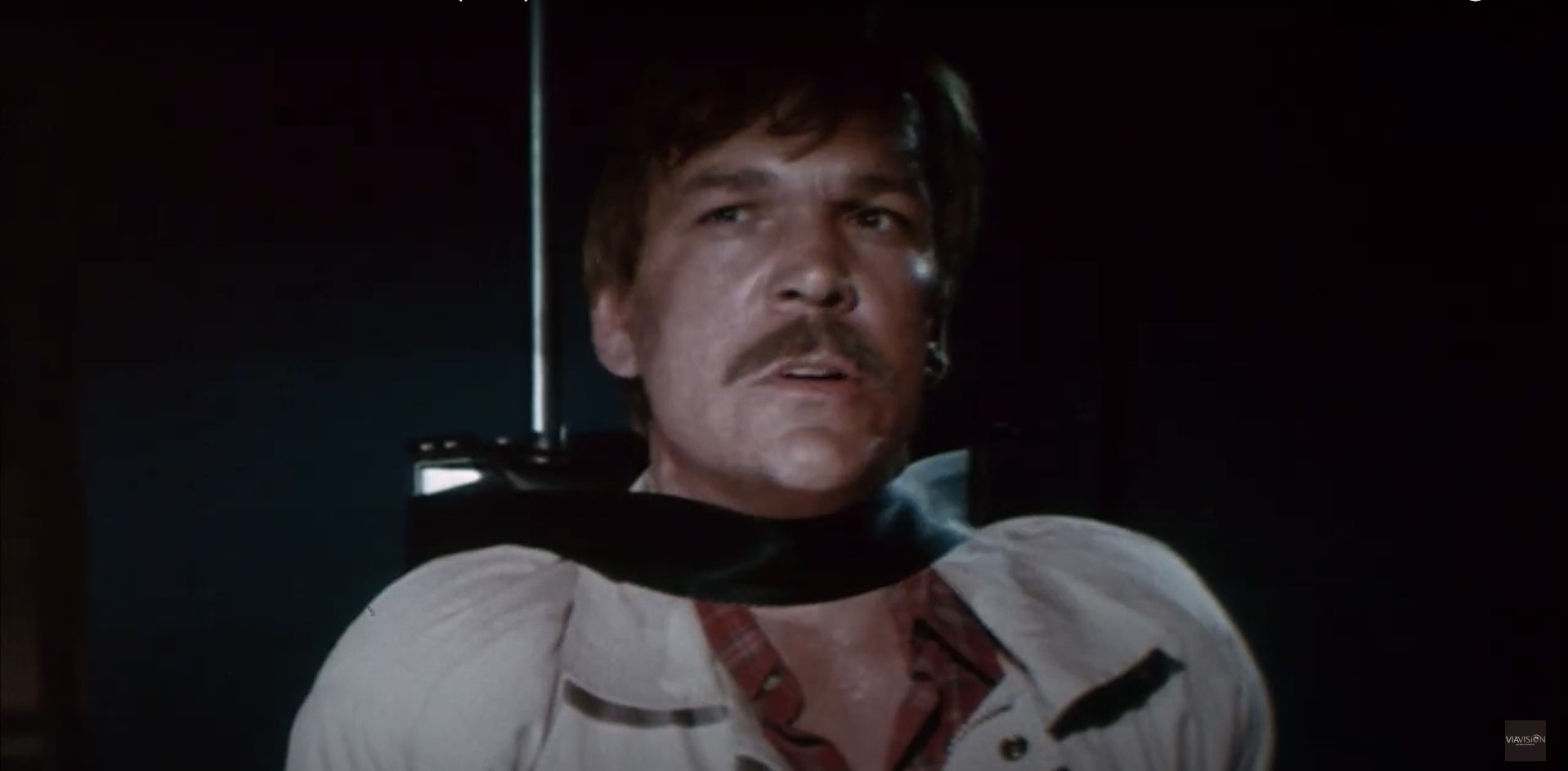
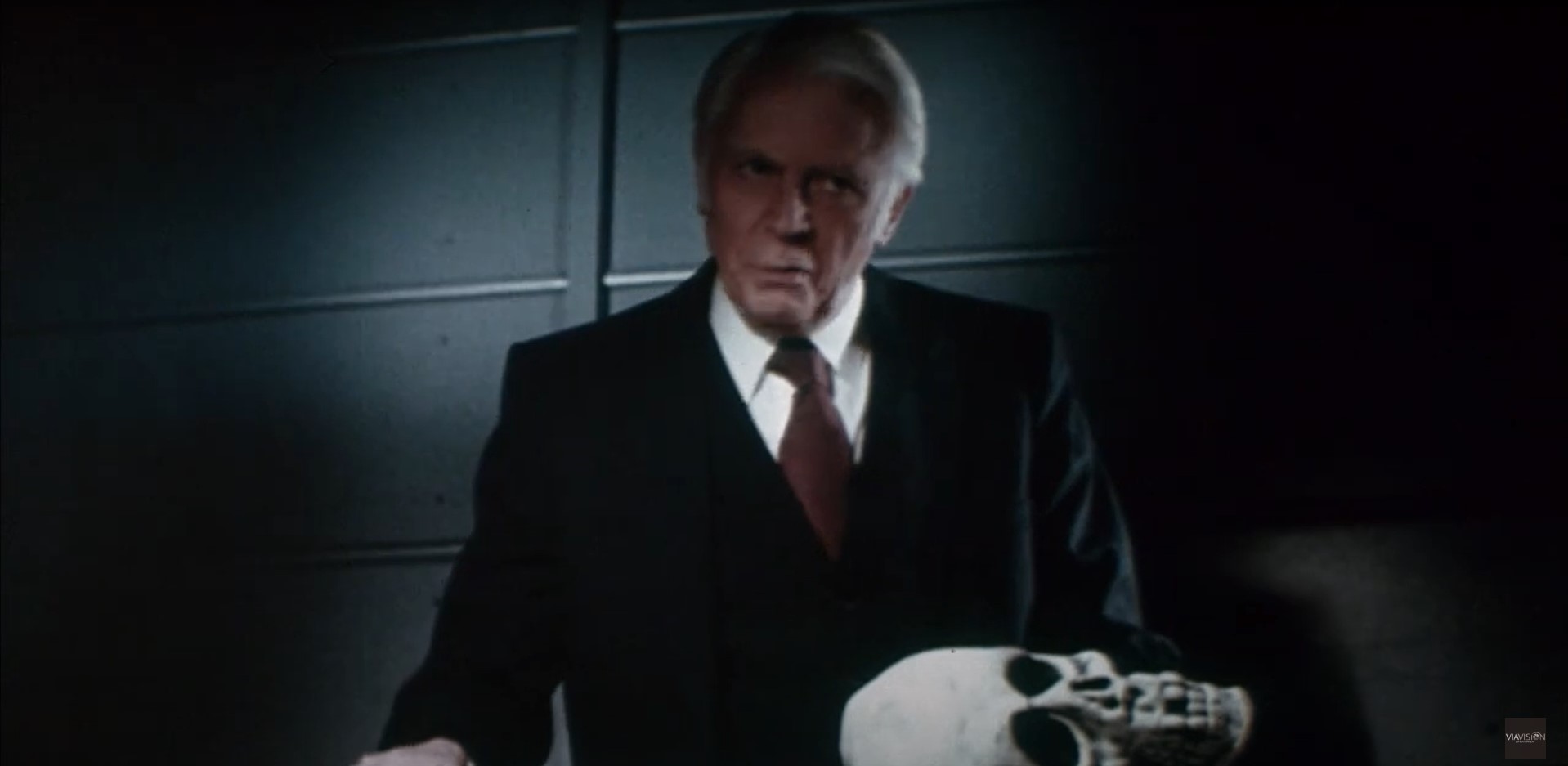
Now, “Season of the Witch” just didn’t star a bunch of nobodies in this offshoot of a newly branded “Halloween” concept.  Before playing the quasi-alcoholic, deadbeat father Dr. Challis, Tom Atkins was already a rising star in the land of John Carpenter films with “The Fog” and “Escape from New York” In 1980 and 1981.  Atkins’s usual confident and charming qualities underneath the rugged good looks and trimmed mustache serve him the better part of man doing his bit part in a not-his-business investigation of a man’s death to please a good-looking woman that happens to be the dead man’s daughter.  That good-looking woman is Ellie Grimbridge, embodied by the Mad Magazine Production’s “Up the Academy’s” Stacey Nelkin, and if you blink, you might miss Atkin’s Dr. Challis being perhaps the worst father ever to his two children and ex-wife.  The subplot is so subtle and overshadowed by the Silver Shamrock Halloween plot that being invested in the crumbling family dynamics doesn’t even hold substantial weight and it truly works to subvert the subconscious and plant a destructive pipe bomb smartly into your moral compass because if you think Dr. Challis is the hero of the story, which in many perspectives he is, he’s also doesn’t keep up with his own children interests or current events, numerously bails on their planned care, runs off and sleeps with a much younger woman he hardly knows, is an active alcoholic, and is quite the handsy philanderer at that when he grabs his much older nurse’s bottom in a playful moment.  No, Dr. Challis is every ounce an antihero hidden in plain sight and in the guise of a potential savior of the children, the world, as he takes on Silver Shamrock and its founder, an Irish toymaker named Conal Cochran with tremendous evil genius and mastermind appeal by Dan O’Herlihy (“The Last Starfighter”).  “Halloween III:  Season of the Witch” rounds out the cast with Ralph Strait, Jadeen Barbor, Al Berry, Michael Currie, Garn Stephens and Essex Smith in key support roles.

Lots of previous opinionated chatter surrounding “Halloween III” collectively concludes to if the filmmakers decided to title the film anything else, maybe just the tagline of “Season of the Witch,” then the film would have won over audiences with a fresh take of science fictional horror and would not have been wrongfully panned by critics and moviegoers.  I call BS on this take.  The original intention was to deliver a new, Halloween-themed horror film year-after-year with John Carpenter attached in some way, shape, or form of bringing novelty terror to our eyeballs and brain.  Instead, public persuasion and studio submissiveness rendered the concept powerless and as a result, and no disrespect to any Michael Myers films that followed, was the departure of John Carpenter and Debra Hill and a string of mediocre and wacky Michael Myer sequels that went deep off the far end.  “Season of Witch” is not a teeny bit at all slasheresque, separating itself far from Michael Myers as much as possible by unconfining itself from location concentration by expanding the threat domestically, if not globally, with a parlor trick plot that involves special, laser-shooting masks that make kids’ heads melt into glop of crickets, snakes, and other creepy-crawly sui generis of the animal kingdom.  While strange in the cause and effect, the practical effects and superimposed visuals work to convey some taught gore and prosthetic knots that can be unraveled, even retrospectively critiquing them by today’s standards.  Wallace masters the film while, at the same time, hitting the ground running on his debut feature that has a look and feel of a graduate from the film of the John Carpenter. 

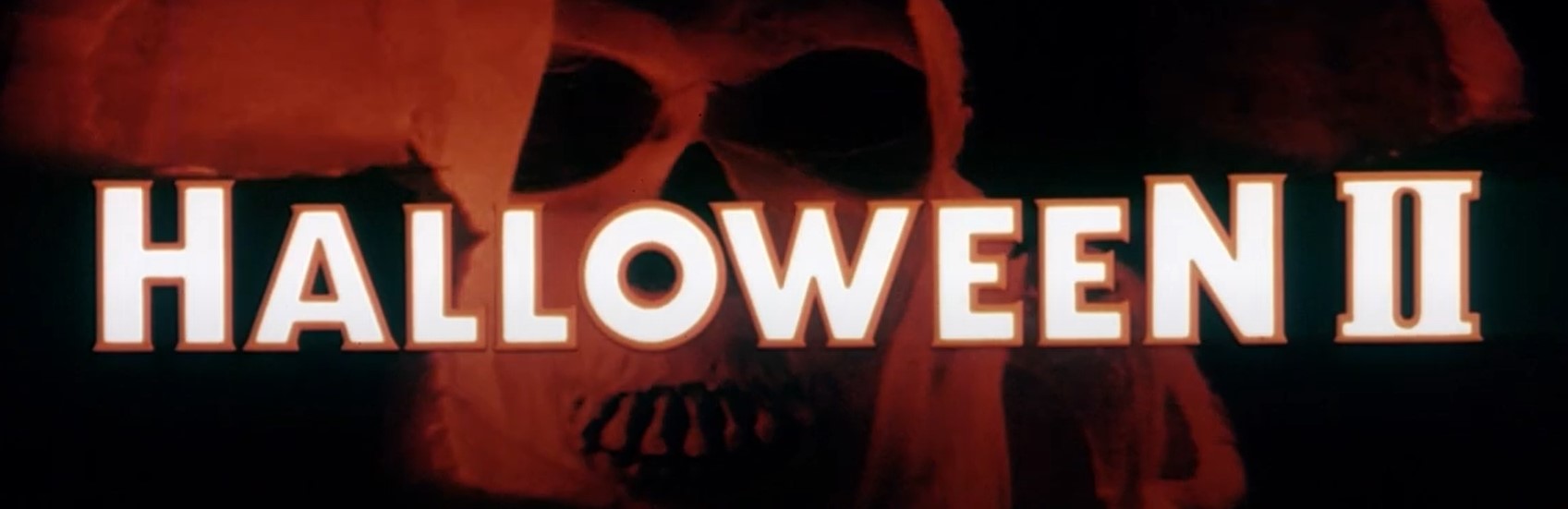
Halloween season may be months away, but Christmas comes early with Via Vision’s limited-edition Blu-ray set of “Halloween III: Season of the Witch.” The AVC encoded, high-definition 1080p, BD50 presents the film in a widescreen aspect ratio 2.35:1. Much like the Via Vision’s companion release with “Halloween II,” “Season of the Witch” mirrors the same resolution picture quality and stellar package presentation. Dean Cundey’s delivers another smoky noir realism that definably hard-edged and hard-lit that while isn’t the most colorful contrast it does create an abundance of inky shadow to lost in and sink into. A cleaner picture does bring with a reveal of how obsolete some of the composite matte effects but, simultaneously, revives what once was, nostalgia and a more tactile truth in movie magic. Details come through within contour delineation and textural elements. The English language DTS-HD Master Audio 2.0 has dual channel balance and strength with lossless fidelity. Dialogue retains saliency throughout from a rather middle-of-the-road strength ambience albeit a wide range of effects from explosions to laser beam bursts and its constructed, catchy Silver Shamrock jingle, often muted through the television programming, and John Carpenter’s and Alan Howath’s synth collaboration that’s tonally reminiscent of previous “Halloween” films but stands by itself in distinct measure to garner new-sound tension. English subtitles are optionally available. Also, like Via Vision’s “Halloween II” Blu-ray release, a 2024 commentary is recorded and encoded with film critic/historian Lee Gambin and a special appearance by “The Howling” director Joe Dante. Archival commentaries from Tommy Lee Wallace and Tom Atkins are also on the disc with all three commentaries in the setup menu. Special features content includes 2012 Scream Factory-Red Shirt productions with Stand Alone: The Making of Halloween III: Season of the Witch documentary surrounding a Micheal Myers-less picture, it’s critical shockwave, and its ultimate cult following and Horror’s Hallowed Grounds: Revisiting the Original Shooting Locations hosted by Sean Clark visiting a few of the locations used for the film. A still gallery, theatrical trailer, and television spots round out the rest. Of course, my favorite part is the lenticular cover on the limited-edition and numbered cardboard sleeve case of the three, silhouetted little trick-or-treaters with a crone-ish face coming down from above the fire red dusk sky. The slightly thicker Blu-ray Amaray case cover art is stark still image from the movie with another, different image on the reverse side. The black background disc has the skull mask and title across from each other in nice compositional juxtaposition. Next to the Amary case is an envelope with 6 art (picture) cards taken from the film. The Via Vision release is rated M for Mature for moderate violence and moderate coarse language, has a runtime of 109 minutes, and has region B playback only.

Last Rites: Who knew being the outcast looked so damn good. “Halloween III: Season of the Witch” deserved better and received the best on this Australian, limited-edition, lenticular Blu-ray set that’ll leave you whistling the Silver Shamrock jingle and fearing Halloween masks more than ever.

“Halloween III: Season of the Witch” Available on Limited Edition Blu-ray from Via Vision!

Classic Sequel Gets a Lenticularly EVIL! “Halloween II” reviewed! (Via Vision / Limited Edition Blu-ray)

“Halloween II” Limited Edition Blu-ray + 6 Photo Lobby Cards! Order here!

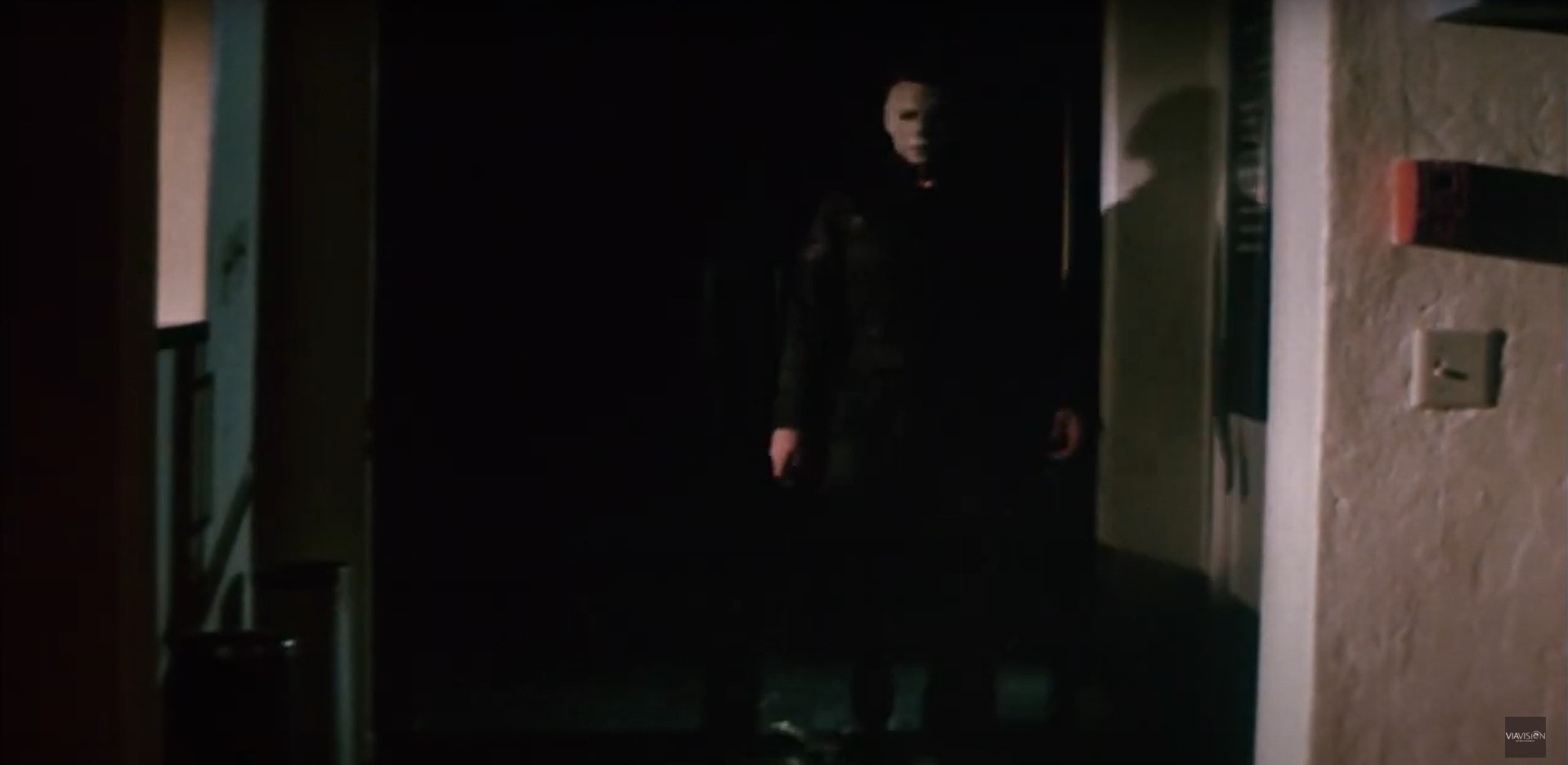
The horrific Halloween night massacre in Haddonfield where a masked escaped mental patient named Michael Myers murdered the close friends of Laurie Strode has not yet ended.  Hurt and in shock after narrowly escape Michael’s relentless pursuit, Laurie is rushed to Haddonfield Memorial Hospital to receive treatment from a skeleton shift while Dr. Loomis, who shot Michael six times, continues his hunt for the hard-to-catch, hard-to-kill killer.  Frantic about the evil inside his former patient, Dr. Loomis will not stop at nothing to track him down with police assistant and try to puzzle together just why Michael had returned to his hometown in the first place.  As Laurie recovers from her injuries and copes with her friends’ deaths, The Shape arrives at the hospital, continuing his emotionless killing spree of hospital staff in order to get to Laurie, and with nowhere to run, Laurie’s only hope is in the hands of a determined Dr. Loomis. 

Picking up where the highly successful independent horror, John Carpenter’s “Halloween,” that changed the slasher genre to what we know it as today, “Halloween II” provides more illumination on The Shape, Laurie, and shuts the door on the significant open-ended and fear-inducing mystery at the finale of Carpenter’s masterpiece.   The 1981 sequel, released three years after the first film, was not helmed by Carpenter whose success skyrocketed post-“Halloween.”  Instead, Carpenter and creative producer Debra Hill agreed to the executive producer title with some creative control in penning the script that would be a what-happens-immediately-next continuation with newcomer Rick Rosenthal sitting in the director’s chair.  The director who would helm later the follow year’s “Bad Boys” with Sean Penn had a goal to retain the same Carpenter stylistic choices to make the sequel seemingly seamless.  Alongside Carpenter and Hill in the melting pot of producers, the more narratively opinionated Moustapha Akkad and Dino De Laurentiis served as executive producers along with Joseph Wolf (“A Nightmare on Elm Street”) and Irwin Yablans (“Tourist Trap”) in what became a coproduction between Universal Studios and Dino De Laurentiis’s production company.

“Halloween” converted the then unknown Jamie Lee Curtis into a couple of things.  She instantly became a household name that at the same time also made Laurie Strode a household icon.  Curtis also became what was a relatively new coined term at the time of a scream queen, propelling her career in the horror genre with “Halloween” subsequent films such as “The Fog,” “Prom Night,” “Terror Train” and, of course, the more recent titular television series “Scream Queens” and the contemporary “Halloween” sequels.  What also emerged post Lee’s performance is the actress was eager for the role and effortless to work with making the 23-year-old daughter of Janet Leigh and Tony Curtis a treat to work with, malleable toward her role, and enthusiastic about returning as Laurie Strode for the sequel.  Curtis falls right back into the role as if filming didn’t stop rolling with Strode in a confounding state of shock and injury from her the relatively short scuffle with Michael Myers until Dr. Loomis intervenes with six gunshots into The Shape at the key and climatic moment, saving Strode from being strangled.  The difference in the sequel is Curtis’s instilled knowledge for her frightened character.  It’s that kind of touch that doesn’t hesitate to react to a force of evil.  Returning as Dr. Loomis, and again as if he never stopped performing as the paranoid and fervent good psychiatric doctor, is the iconic and late Donald Pleasence tracking down his former patient with trench coat sagacity, an understanding that no one else shares except for maybe Myers’ ultimate prey, Laurie Strode.  A new cast of relegated kill fodder magnifies part two’s grislier death count with Lance Guest (“Jaws: The Revenge”), Pamela Susan Shoop (“The One Man Jury”), Leo Rossi (“Maniac Cop 2”), Tawny Moyer (“Looker”), Ana Alicia (“Romero”), Gloria Gifford (“Virgin Paradise’), Hunter Von Leer (“Trancers III”), Cliff Emmich (“Hellhole”), Ford Rainey (“The Cellar”), and Dick Warlock putting on the mask as The Shape with Charles Cyphers and Nancy Stephens returning in their respective roles as Sheriff Brackett and Marion Chambers.

What new can be said about “Halloween II” that hasn’t been already said?  Dichotomously, “Halloween” and its sequel share a single narrative that emanates the same stylistic tone; however, both films couldn’t be more different in their surface level and underlying intentions and that gnaws raggedly on the connective tissue that binds them.  Carpenter’s original embraces the mystery enshrouding Michael Myers motivations with a merciless, yet nearly bloodless, killing spree of horny hopped-up teenagers who wiggle themselves out of responsibility for a little trick-or-treat fun under the sheets or for just being alone in their house.  Myers unneeded and unheeded explanation formed The Shape as evil personified, an incarnate force compelled to return home where the light switch was flipped to an expressionless compassion for human life.  Rosenthal’s part two subverted the unknown by providing Michael reason and that reason being Laurie Strode, anyone else who gets in his way, could foil his plans, or are just in the vicinity of the hunt are eliminated with extreme prejudice, and that leads into the ramped-up gore with large pools of blood and other gratuitous displays of damage to unsuspecting soon-to-be stiffs.  Despite the different strokes, the sequel is not bad by a longshot.  In fact, “Halloween II” is just an extension spiraling in intensity and terror, a product of its time when everyone and their brother had directed gore-ladened slashers during the steep beginnings of the slasher renaissance. 

Though a many number of “Halloween II” video media exists between the current formats, the collaboration of Via Vision and Lionsgate release from Australia is beyond reproach for any kind of transfer print woes, lackluster bonus features, and drab packaging.  The limited edition and numbered 2-Dsic Blu-ray set is a physical media thing of beauty with an AVC encoded, full high-definition 1080p, BD50 on both discs.  Disc one houses the theatrical cut of film, presented in a widescreen 2.35:1 aspect ratio, from pristine print, likely the original negative licensed through Universal Pictures for this very release, with the Via Vision caveat of every effort has been made to produce the highest quality on the back cover.  Not a single reason comes to mind on that statement being false as the Dean Cundey’s cinematography retains an undiluted facsimile of the original “Halloween,” represented here with phenomenally suitable contrast that can presumably hide Micheal Myers in every shadow and create the apprehension in every darkly lit scene with minimal key lighting in various, sometimes neon, shades of red, yellow, and white.  The 35mm film grain has a pleasant consistency of a low-to-medium low visual viscosity that never reaches levels of blotting out picture quality, presenting no issues with zoomed in images or any other touchup enhancements to note for that matter.  Perceptible details sanction The Shape’s tactile and weathered look of a rough night in Haddonfield.  Colorfully warranted scenes, such as the Nurse Alves on a gurney in the middle of a pool of her blood, are robust to display the carnage whereas other, more minimalistic approaches detail just enough for the imagination to take over.  Disc two contains the standard-definition, upscaled to 1080p, television cut of the film, presented in a made-for-TV 1.33:1 aspect ratio, that omits some of the gorier moments, suitable for broadcast viewers.  Audio options include two lossless English language selections with a DTS-HD Master Audio 5.1 and a DTS-HD Master Audio 2.0.  The audio codec distributes punchier ambiences of Myers’s rhythmic breathing through the mask, the jarring alert of a hospital room buzzer, and the impactful moments of Myers slamming his fist-loaded weapon into the skull, back, and….a pillow with the cringe-worthy associated crunch and thud.  No impediments on the dialogue track that’s free of crackling, hissing, and popping and is consistently prominent and mixed well within more chaotic, milieu-mania scenes, such as with the finale with hissing air tanks and scalpel swoops.  Optional English subtitles are available.  Special features are consolidated to the theatrical cut disc only with Shout Factory’s inaugurated 2012 documentaries – The Nightmare Isn’t Over:  The Making of Halloween II and Horror’s Hallowed Grounds:  The Locations of Halloween II – featuring cast and crew interviews with director Dean Cundey, Tommy Lee Wallace, Dick warlock, Leo Rossi, and more as well as visiting locations in a modern time with host Sean Clark, and two commentaries featuring director Rick Rosenthal and Leo Rossi in one and stunt man/The Shape Dick Warlock in the other.  There’s a brand new 2024 commentary with author Dustin McNeill, co-author of Taking Shape:  Developing Halloween from Script to Scream.  The encoded features round out with the alternate ending with more explanation on the fate of a certain left ambiguous character, deleted scenes, a theatrical trailer, TV and radio spots, and a still gallery.  What makes the Via Vision a limited, numbered set is the neat package and physical goodies inside.  The rigid lenticular cardboard sleeve of the skull pumpkin has eyes that follow you at every angle.  Inside is a slightly thicker Blu-ray Amaray casing with reversible cover art displaying notable stills from the feature.  The extra disc, disc 1 likely, is in a clear push-lock, page-turner disc holder.  Six photo lobby cards featuring stills from the movie come alongside the Blu-ray.  Via Vision’s release has a region B playback encoding, a runtime of 93 minutes on both cuts, and rated R.

Last Rites: Michael Myers has been slashing away in the cinema for nearly half a century and “Halloween II” has been a staple entry that, to this day, is a memorable fan-favorite in the grand scheme of most of the franchise’s sequels. Via Vision’s limited edition, lenticular Blu-ray packaging just sweetens the deal with a crystal clear and top-tier quality release worthy in any physical media collection.

“Halloween II” Limited Edition Blu-ray + 6 Photo Lobby Cards! Order here!

One Wish Sparks a Lifetime of Evil. “A Wish for the Dead” reviewed!


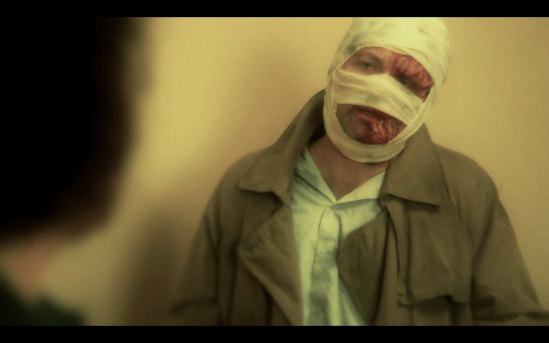
Ever since his wife’s life has staggered on the near brink of death, John’s mental state has been thrust into constant turmoil. Unable to get straight answers from doctors and stuck inside the vapid white walls of a hospital, John remains by his unconscious wife’s hospital bed. When a mysterious man with a severely disfigured face wrapped in bandages offers him a locket that will grant him a single wish, John’s desperation to try anything to save her soul stretches beyond logic and reality, overpowering his rational principles. Despite coming with an ambiguous warning on how to detail his wish, John heedlessly requests that death cease to exist. The locket grants endless life not only for John’s wife, but for everyone as the dead rise from their eternal slumber in perpetual anguish that sends them into a frenzy of violence without a means to an end.

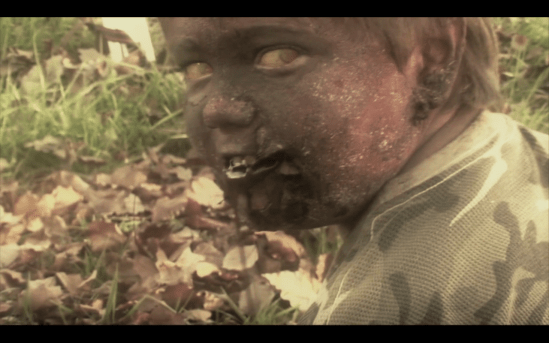
“A Wish for the Dead” is the first venture into a Renegade Art production and a Shami Media Group, or SMG, release for Its Bloggin’ Evil and, to be frank, the viewing re-establishes a couple of important things: 1) “A Wish for the Dead” has tremendous bite for an under the radar flick and 2) never rule out modestly financed films based on their technical appearances. The 2014 micro-budget indie horror from the short film director of “The Confession of Fred Kruger,” Nathan Thomas Milliner, along with the editing, photography, and co-writing assistance from “Girl Number Three” writer Herschel Zahnd, takes the cautionary tale themed with a careful what you wish for approach when despondency has one backed against the wall that leads to direly lethal negligence. Milliner’s film that’s based off a comic book of the same title might not be “Wishmaster,” starring Andrew Divoff, but can certainly be grouped into that similar genre realm where the ugliness of mysticism mischief can be personally devastating instead of gratifying. The film can also be lassoed into the over saturated zombie category because, well, you know, the whole arise of the undead thing.

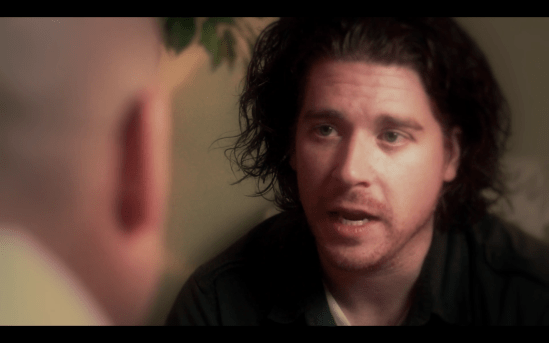
“A Wish for the Dead” has a fairly large cast, but doesn’t have definitive leads. Instead, Milliner and Zahnd scribe a tale with miniature, personal scenarios for characters with John being a considerable catalyst or, an interpretation, of a centralized character. John’s played by Chris Petty, who had a bit part in the Zac Efron Ted Bundy biopic “Extremely Wicked, Shockingly Evil and Vile,” and despite the character being fairly one dimension, Petty sells the performance of a grieving, greedy husband. John encounters the mysterious, disfigured stranger in a trench coat, head wrapped like a mummy, and nodding John over like a he’s going to sell him a knockoff Rolex from the inside lining of his coat, in Robert Hatfield that tempts him with the wish granting locket. Hatfield version of a biblical villain has charismatic and devilish value, but nothing new to note the rendition from previous performances of shallow humor and sly mischief upon an cutting grin. Branch off stories that indulge into supporting characters un-charmed, demised lives fill in the gaps and provide fuel for the undead fire and these supporting characters include Lori Cooke (“Girl Number Three”), Kristine Renee Farley (Hi-8 – Horror Independent 8), Adam Pepper (“The Zombie Movie”), Julie Strebl (“Volumes of Blood: Horror Stories”) and Ashley Anderson.

The beginning of this film starts off oddly as soon as the title credits roll for the feature film and coming to the realization that the viewer is actually not submersed into the actual story yet. First slither portion of the film is a short thriller, noted at the conclusion as being directed also by Milliner, that becomes clearly distinct from the rest of the plot line. The abnormal sequence snaps the story’s fluidity as a seamed segue that then constructs the multiple-tiered building blocks for the heart of the feature. Once the short has past, much to our chagrin that we believed to be the actual film, “A Wish for the Dead” goes into a precision mode with coordinating individually wrapped death backstories and while Milliner attempts to get us to care about these characters, all is washed away and lost when death revokes all their previous, present, and future terminations. The backstories become null and void when not circled back to for the exception of John and his wife that find’s a sweet ironic malevolency making “A Wish for the Dead” satisfying in the end.

MVDVisual and Shami Media Group courteously releases Nathan Thomas Milliner’s “A Wish for the Dead” onto a not rated DVD home video. Presented in a stretched 16:9 aspect ration, the lossy video quality and the lack of color, mostly in a squashy greenish-yellow, chap into sore spots along the 80 minute runtime to the almost the point of SOV quality. Darks are plagued with digital noise that remove the sharp quality from the image, leaving the story to fend for itself and make up for the lack of presentation. The English 2.0 stereo sound mix pops during the higher pitches of dialogue and of some action points, but the dialogue is in the forefront and nicely balanced amongst depth and range considering. There are no bonus features on this release, but as an interesting note, Milliner illustrated much of Scream! Factory’s home video artwork (releases such as “Halloween II and III”) and for HorrorHound Magazine. The artist and filmmaker’s graphically detailed and perfectly suited talents grace the SMG cover as well. A wish granted for the major win with “A Wish for the Dead” as a macabre success story for independent filmmaking for aspiring artists despite the post-production engineering for a cleaner release, but death isn’t pretty, is it?

Watch “A WISH FOR THE DEAD” on PRIME VIDEO!