Backyard is Spacious, Green, and has an EVIL Portal to the Underworld! “The Gate” and “The Gate II” reviewed! (Via Vision / Blu-ray)

Better Hurry! Amazon Has a 20% Coupon for This Very Release! Limited to 1500 Copies.

The Gate

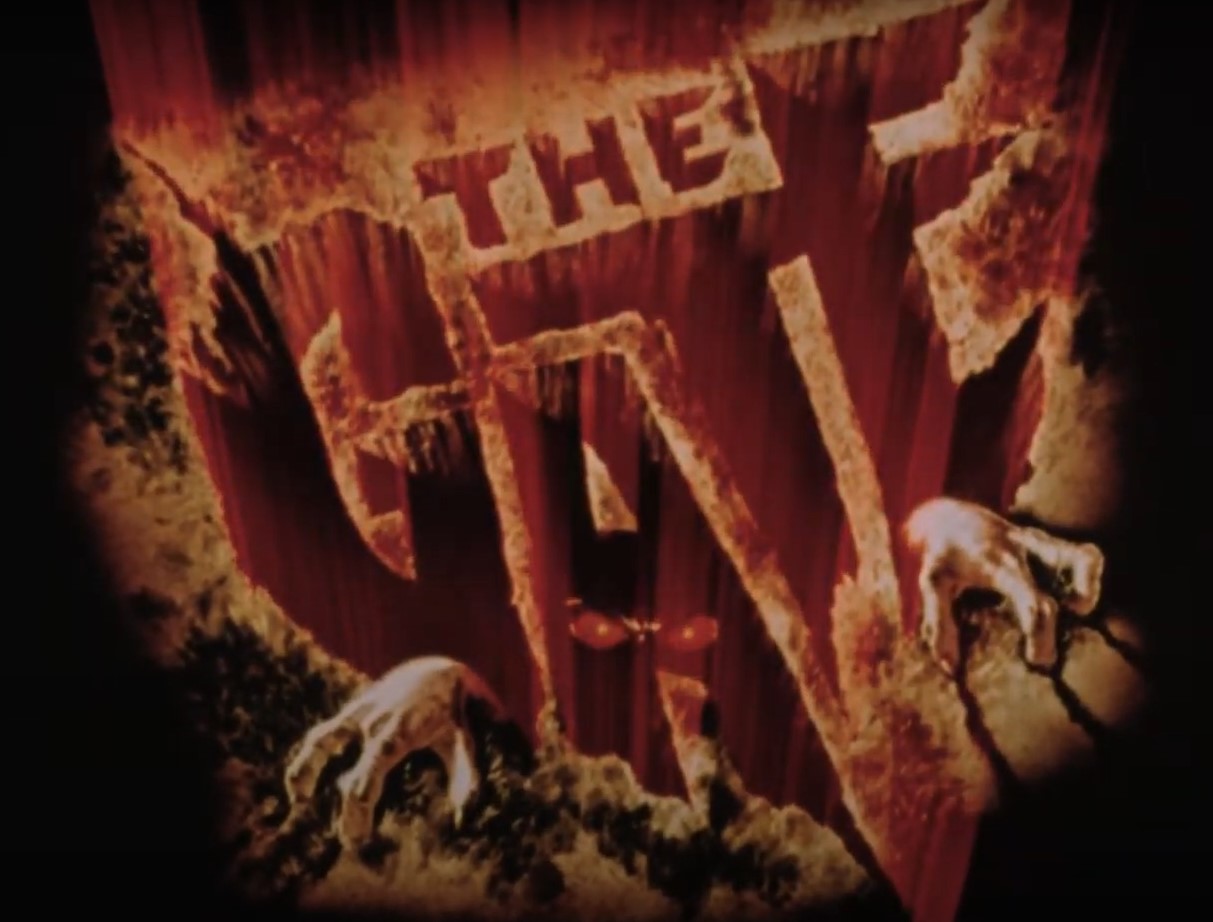
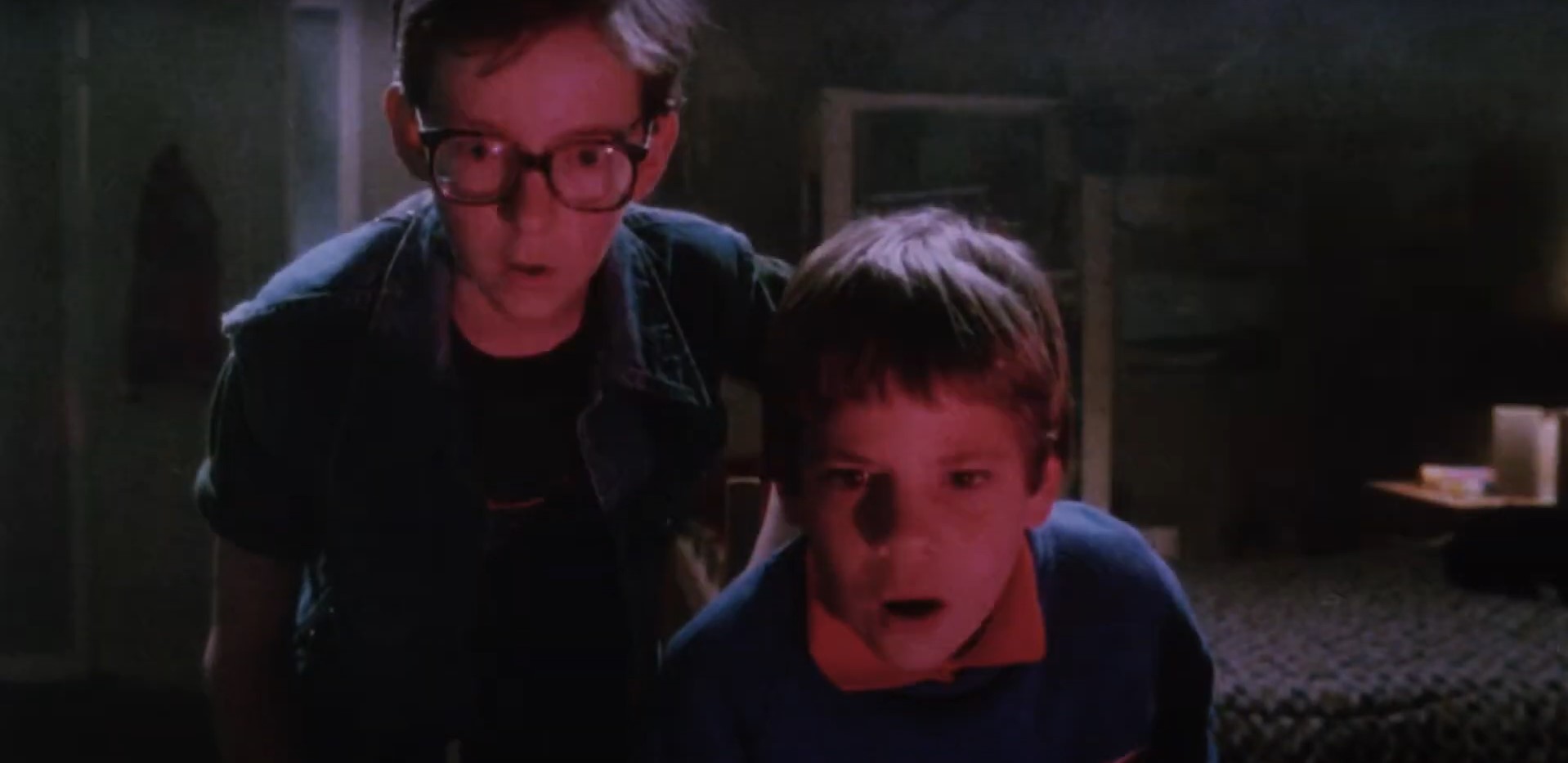
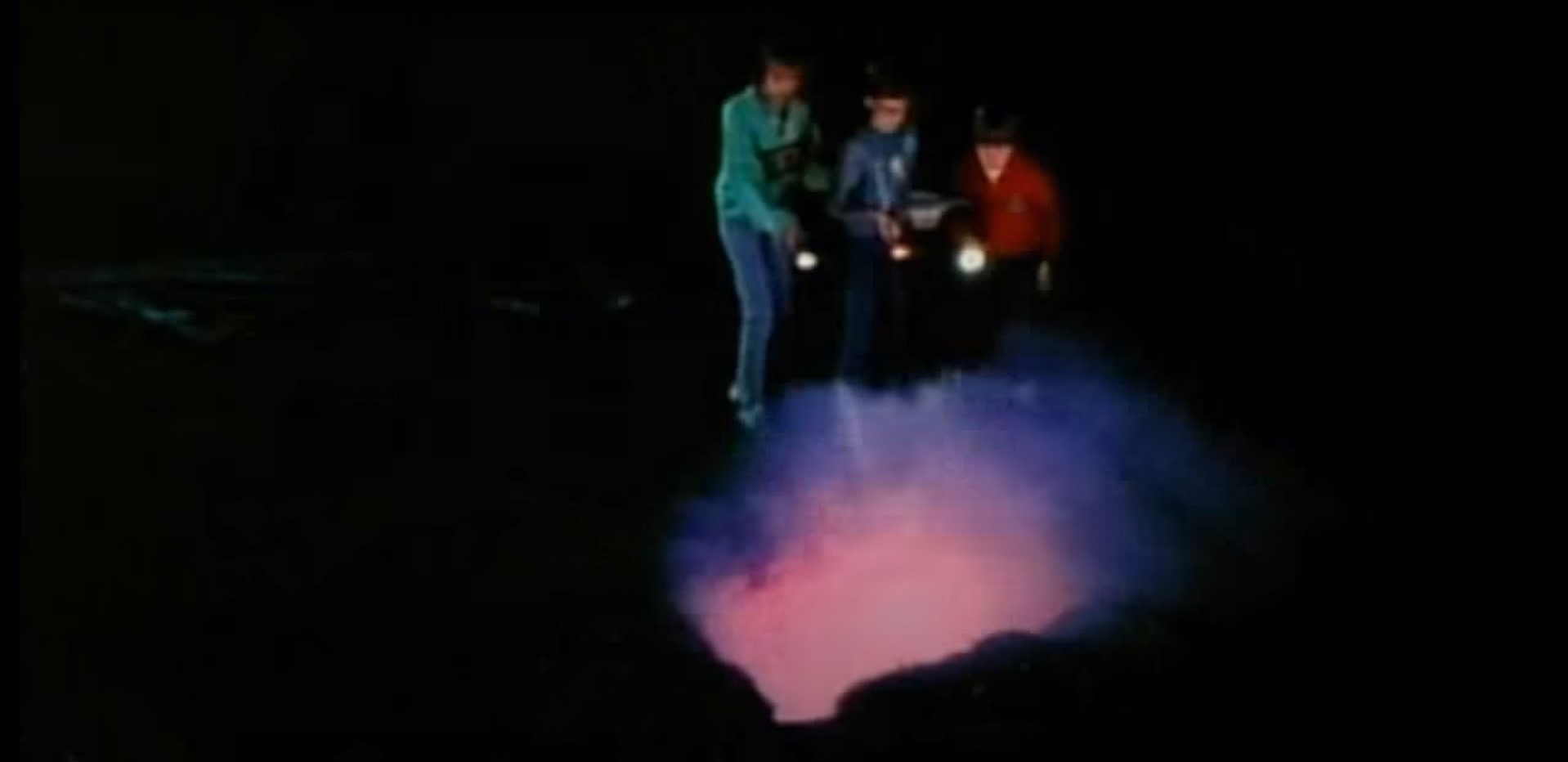
A severe storm brings down Glen’s treehouse, leaving a giant hole in his background.  Discovering what looks to be precious geode rocks, Glen and his friend Terry continue to dig hoping to strike larger, more valuable, geodes.  When they come upon a sizable rock, breaking it open unveils a crystalized liner of colorful minerals as well as a strange gas that unearths an incantation to open a gate to the underworld.  With Glen’s parents gone for the weekend, he, his teenage older sister Al, and Terry must somehow reverse the opening of the gate but demonic-serving, pint-sized minions hunt down a pair of human sacrifices in order to unleash their powerful demon master, an old God reemerging from being locked away from Earth for billions of years.  Serving the night is a fight for their very lives as the minions use their cunning tricks and supernatural powers to deceive the home alone kids into traps in order for there to be Hell on Earth. 

Created in mind to appeal to children with the limitless possibilities of a child’s imagination, “The Gate” caters to a wide audience of all ages.  Hungarian-born Director Tibor Takács and American-born writer Michael Nankin bring out of the shadows the scary corners of a young mind into the light with a demonic tale, a portal from another plane of existence, and a theme of growing up and being accountable in a context of taking head on a doomsday event without mommy and daddy.  The 1987 released Canadian production, shot mostly around Ontario, is the first of two “The Gate” films under the studio flag of Alliance Entertainment.  Presented by New Century Entertainment, as one of the company’s limited credits, “The Gate” is produced by fellow Hungarians in Andras Hamori, who went on to produce fellow Canadian filmmaker David Cronenberg’s “eXistenZ,” and “Quest for Fire” and “The Wraith’s” John Kemeny.

The Gate II:  The Trespassers

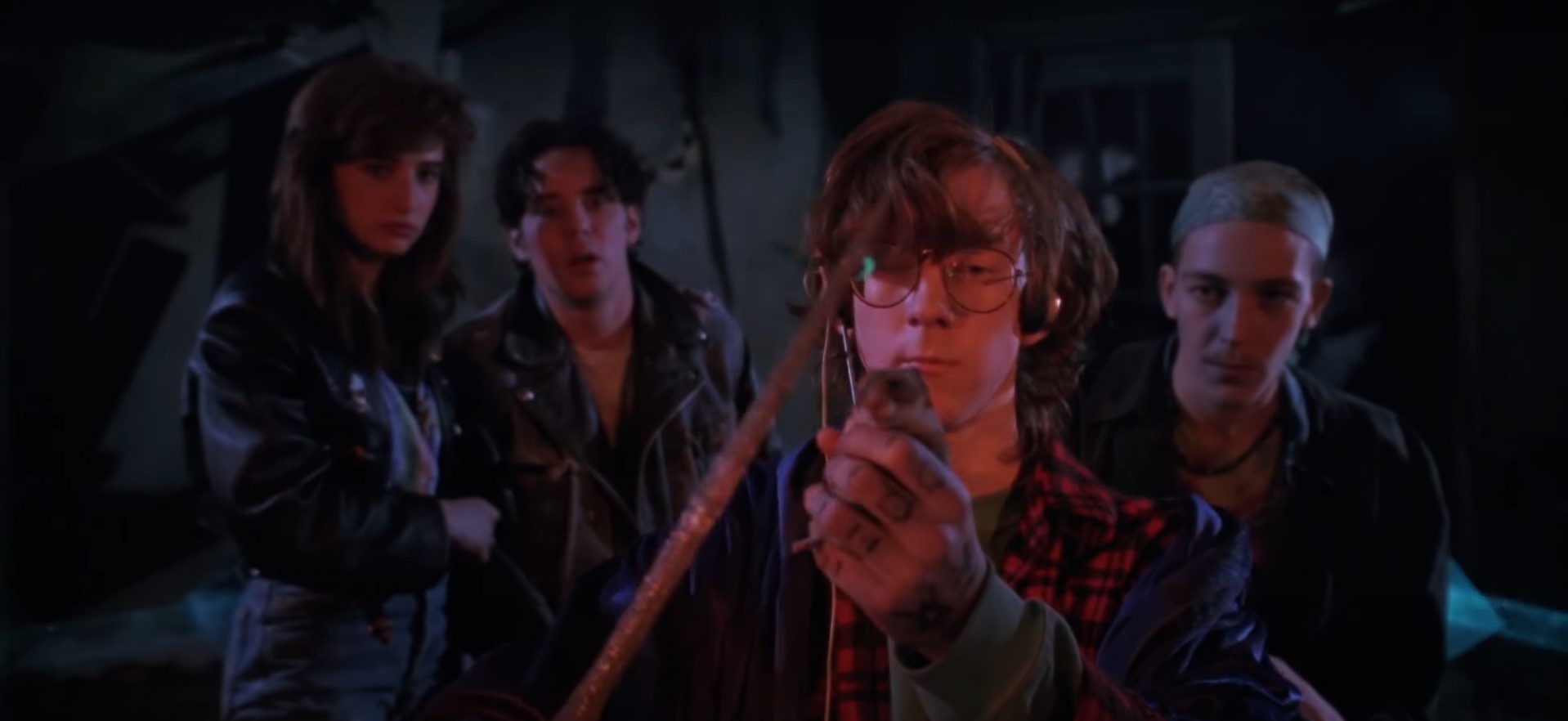
Five years after narrowly surviving near Hell of Earth, Terry’s obsession to return to Glen’s abandoned and dilapidated home and resurrect the demonic powers of wish granting stems from his jobless father’s dwindling livelihood, drinking himself into a stupor every night at the bottom of a bottle.  With equipment powered to project his incantations and protect him from evil, Terry is about to begin his summoning when interrupted by three teens led by bad boy John who mostly ridicules his fixation until one of the pint-sized minions comes out of the shadows and is quickly gunned down by John.  The injured minion self-heals and is captured for wish granting exploitation but when the wishes turn into a disastrous chimera, Terry soon realizes that his summoning has not just been answered for selfish motives, but it also re-opened the portal for three power demons to transmogrify from within him and his friends. 

The success of “The Gate” sought the fast tracking of a follow-up story produced within two years’ time after that spoke a different tone and came in a different approach to the nightmarish content and the age of the kids.  Takács and Nankin reteam for “The Gate II:  The Trespassers” who, at the authoritative behest of executive powers, had to take the fantastical lining of a child’s imagination to more extreme measures that evolved the original film’s grotesquely saturated PG-13 rating into a lighter, water downed R rating, removing a good chunk of the viewer base from a theatrical run.  The 1990 released venture was also shot at some of the same sets in Ontario Canada as the first film with Alliance Entertainment returning as producing studio and Vision International presenting to the world.  Andras Hamori and John Kemeny also return as producers.

Doesn’t take the understanding mechanisms of rocket science to discern “The Gate’s” cinematic victory.  Demons were all the rage in 80’s from Italian eurotrash to American grindhouse and why shouldn’t the Canadians get into the action?  Special and makeup effects, in themselves, are tremendously impressive, as aspect we’ll go thoroughly more into later in the review.  Yet, the one golden ticket area that deems “The Gate” as an unsullied hero of PG-13 horror is the unaccompanied children misadventure narrative coupled with, or maybe elevated by, good dialogue sanctioned by even better performances.  The 80’s saw scads of children in danger storylines that either had no responsible adult in sight or the adult party was the adversarial danger.  “Explorers,” “Adventures in Babysitting,” “E.T.,” and, one of the biggest examples of all, “The Goonies,” caddied the action-adventure and thrills-and-chills long game for the better part of the 80s decade and “The Gate” teed up on the opportunity, bringing together a trio of varying degrees of adolescents to go toe-to-toe with an ancient evil in what would have been seen as a no-win situation.  In his feature film debut, the barely teenage Stephen Dorff (“Blade”) lead the trio as the highly impressionable and model rocket enthusiast Glen, the youngest of the cast to be the one to save them all, including big sister Al, played by Christa Denton, and best friend Terry, played by Louis Tripp.  Tripp would go on to be principal lead in the sequel that veered away from the fantastically supernatural misadventures of innocence into a more older teen intrinsic narrative that no longer saw the world warp through youthful eyes.  While Tripp segues seamlessly in his role, he finds himself in new territory as the heavy metal and demonology aficionado sparks potential romantic interest in Liz (prolific voice actress Pamela Adlon, “Vampire Hunter D:  Bloodlust”) and is seized by arrogant bullies with two pot smoking hooligans Moe (Simon Reynolds, “P2”) and John (James Villemaire, “Zombie 5:  Killing Birds”), both instances a premiere example of the raw rite through to adulthood.  Again, “The Gate II” keeps adults at an arm’s length away, forsaking youth the challenge of cleaning up their own mess.  Both films fill out their respective performances from Kelly Rowan (“Candyman:  Farewell to the Flesh”), Jennifer Irwin (“Another Evil”), Deborah Grover (“Rated X”), Scot Denton (“Murder in Space”), Carl Kraines (“The Slayer”), and Neil Munro (“Murder by Phone”).

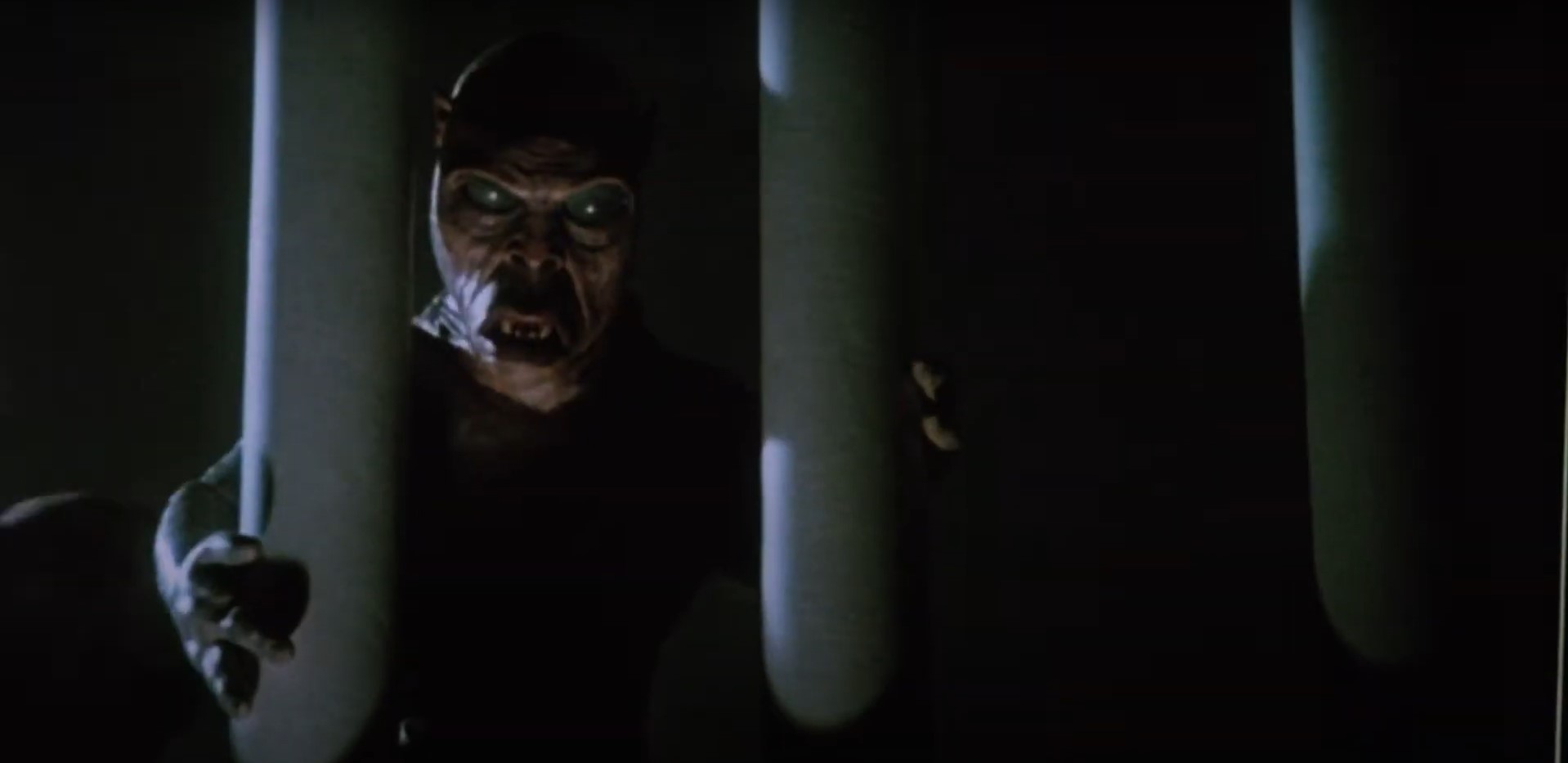
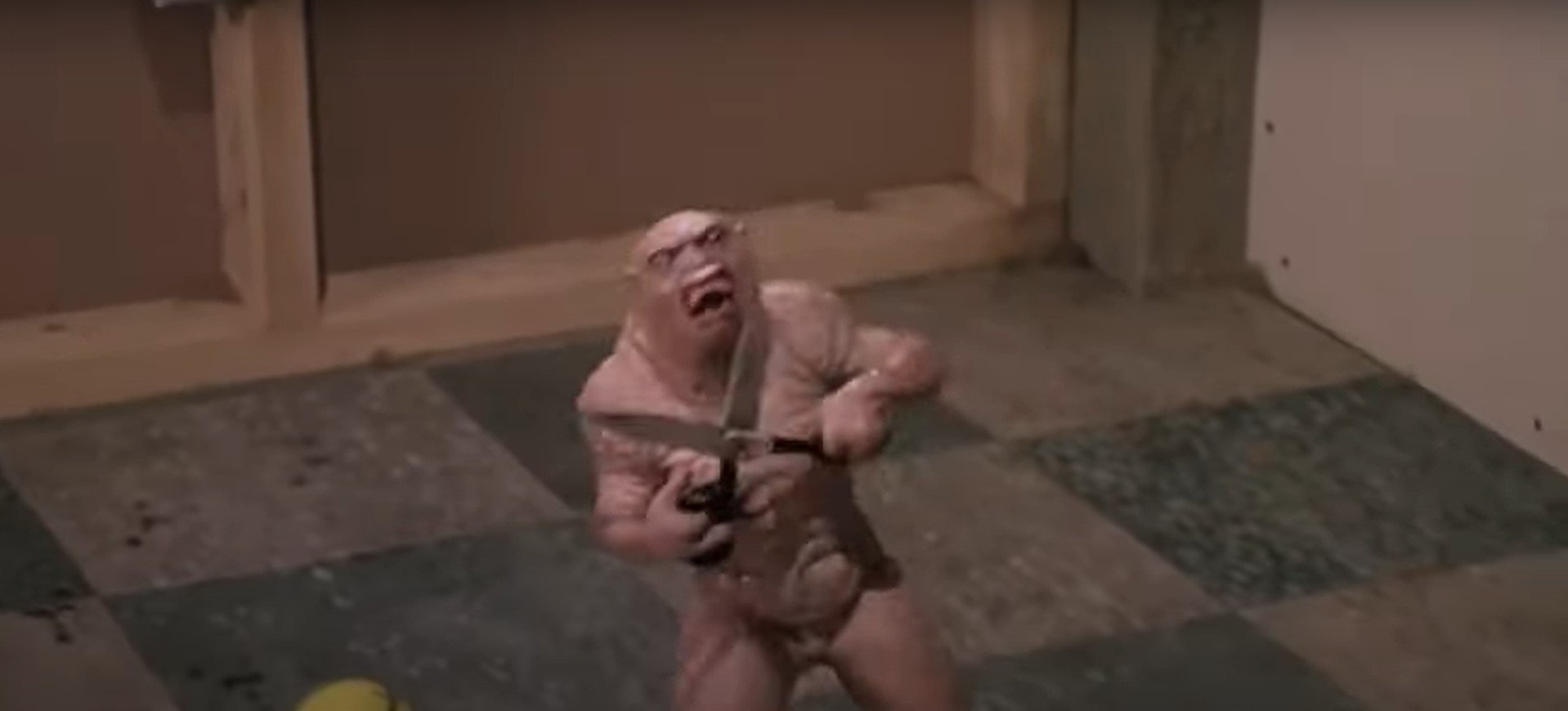
Special effects by the team of Randall William Cook, Craig Reardon, and Frank Carere couldn’t have pulled off an ambitiously suburban horror hyper focused inside Glen’s home any better.  Fashioning mind-bending illusions that are still marveled at to this day, Cook’s forced perceptions eliminates mostly the use of stop motion tactics for the miniature sized minions, replacing the rigid effect with a more lively physical man-in-suit option that smooths out the actions, attributing the creatures idiosyncratically with not only depth of perception to contrast sizes but also shot in a faster camera speed compared to which the seemingly normal sized actors would have to slow down their performances to become level with the creature.  The whole process is crazily multifaceted and mind-boggling effective if pulled out in great detail and “The Gate” team does so, twice, in face, between the two films, with Reardon’s fleshy creature designs enhancing the hideous zeal in the bulbously decaying Workman zombie and even in Reardon’s blamelessly slapped together endgame demons for the ordered change of a quickly surmised climax in the sequel.  As a collaborating unit, the special effects crew pulls off seamless transitions in what is captivatingly pure eye-candy of movie magic.  The stories themselves, especially in “The Gate,” are enchanting, full of mysterious and unpredictability, and stretches the imagination beyond the confining limit as we’re led to inevitable showdown only to be pleasantly accosted on the optics.  The sequel has a rougher go with the story as the narrative feels like a wound-up toy twisted tight to the threshold only to be released spinning in all different types of directions that ultimately lead to an exhausted stopping point. The stark contrast between the two films doesn’t offer a lot of subsequential continuity in narrative and even in some areas of the special effects but the silver lining in that last statement can be a sigh of relief in not receiving a rehashed product sought to recap or repeat off the back of the original’s success. Instead, “The Gate II” begs to be separated to be its own entity and does so while being a homage to the practical illusions that sparks awe, joy, and terror!

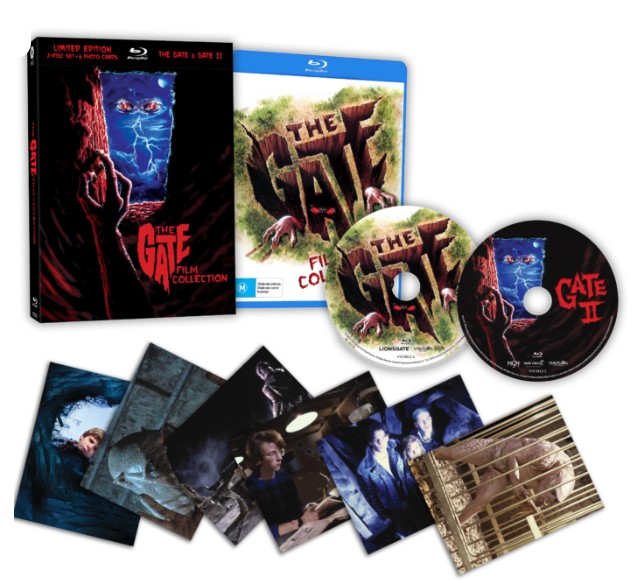
If looking to physically own both “”The Gate” and “The Gate II” in one deluxe package, the Australian based distributor Via Vision has set the bar high with their 2-disc, numbered limited edition, Blu-ray collector’s set. Both films, shown in a widescreen 1.85:1 aspect ratio, are AVC encoded with a high-definition, 1080p resolution on a BD50 (“The Gate”) and BD25 (“The Gate II”) and we’ll come to the reasoning to that split later on. Shot on 35mm and scanned into a 2K print, not many details are noted about what film negative or other print element is scanned to 2K but most of the bonus content on this particular release is Vestron produced, leading to believe the same Vestron print is also used here. Between the two pictures, “The Gate II” has a better saturated image whereas the original film almost seems ungraded with a slight gray concealer that somewhat mutes the hues. The forced perception shots are seamless yet are also delineated nicely that curves into a believable and pleasing symmetry without an inkling of divisional depths. Skin tones are natural looking and textures, such as practical prosthetic masks and molds, score high in all the nooks and crannies of the folds and surface level haptics. The English encoded tracks include a lossy DTS-HD 2.0 stereo codec on “The Gate” and an uncompressed, lossless PCM 2.0 stereo on “The Gate II.” These sole options provide suitable stereophonics without significant compression issues, other than “The Gate’s” minor fidelity data loss, or original source damage or technical gaffs, such as hissing or popping. Dialogue design sees the “The Gate” come out on top over the course of layering and projecting atmospheric augmenting. I don’t get that same sense from “The Gate II” that modulates the dialogue with a redounding heavy-handed echo effect in locations it does not make sense for reverberations. “The Gate” has English and Spanish subtitles with the sequel reduced to just English subs available. “The Gate’s” greater format capacity holds most of the special feature cards with a number of duplicated Vestron produced bonus content, including two audio commentaries: commentary one with director Tibor Takács, screenwriter Michael Nankin, and special effects designer/supervisor Randal William Cook and second commentary with Cook again along with his f/x crew Graig Reardon, Frank Carere, and Bill Taylor. Composer Michael Hoenig and J. Peter Robinson discuss the score with selected isolated tracks to enjoy, a conversation between Takács and Cook in The Gate: Unlocked, Craig Readon in an interview about creating the pint-sized creatures in Minion Maker, an interview with co-producer Andras Hamori From Hell it Came, an interview with actor Carl Kraines aka The Workman aka Terry the Demon The Workman Speaks!, an interview compilation from the local Toronto talent involved Made in Canada, a 2009, archival retrospective look and discussion from Reardon and Cook at their monstrous being handiwork From Hell: The Creatures & Demons of The Gate with Randall William Cook and Craig Readon, a 2009, archival retrospective look and discussion with director and writer Tibor Takács and Michael Nankin The Gatekeepers, a vintage making-of featurette, teaser and theatrical trailers, TV spots, and storyboard and behind-the-scenes galleries. In what is a David and Goliath size imbalance, “The Gate II” special features ultimately will not trump with smaller disc capacity and the lack thereof content but the second disc sequel does contain a new, 2023 audio commentary by Tibor Takács and film historian Jarret Gahan as well as a documentary with Takács, Nankin, and Cook Return to the Nightmare: A Look Back at The Gate II that discusses how and where the film strayed off the intended course, an interview with make-up effects artist Craig Reardon From the Depths, the theatrical trailer, and retain video promo. Via Vision’s limited-edition packaging is another world chic and cool with a rigid sleeve box and a lenticular “The Gate II” front cover art. Slipped inside from the right is a single Amary Blu-ray case with a center stationed second disc attachment. While the front cover on the sleeve box showcases the sequel cover, the Amaray’s reversible cover sports the original “The Gate” cover art with a Glen still image and film cast/crew credits on the other side. Also inside the sleeve box are six fully colored glossy photo cards! Both films are Australia certified Mature for moderate violence and moderate course language and have a runtime of 84 minutes (“The Gate”) and 93 minutes (“The Gate II”). The Via Vision release is region B locked (note: the release did play on my region A setting).

Last Rites: Digging a hole to open “The Gate” and the contradistinctive sequel unburies a pair of underrated underworld-creeping-toward-the-surface 80’s phantasmagorias, a regular doomsday fait accompli with children standing between Hell of Earth and saving the world, and what better wait to see the world potentially burn to the ground than with a beautiful new Blu-ray collector’s set from Via Vision!

Better Hurry! Amazon Has a 20% Coupon for This Very Release! Limited to 1500 Copies.

Isolated Between Mountains, EVIL Rises Out of the Refuge. “Lycan Colony” reviewed! (Visual Vengeance / Blu-ray)

“Lycan Colony” available on Blui-ray Collector’s Edition!

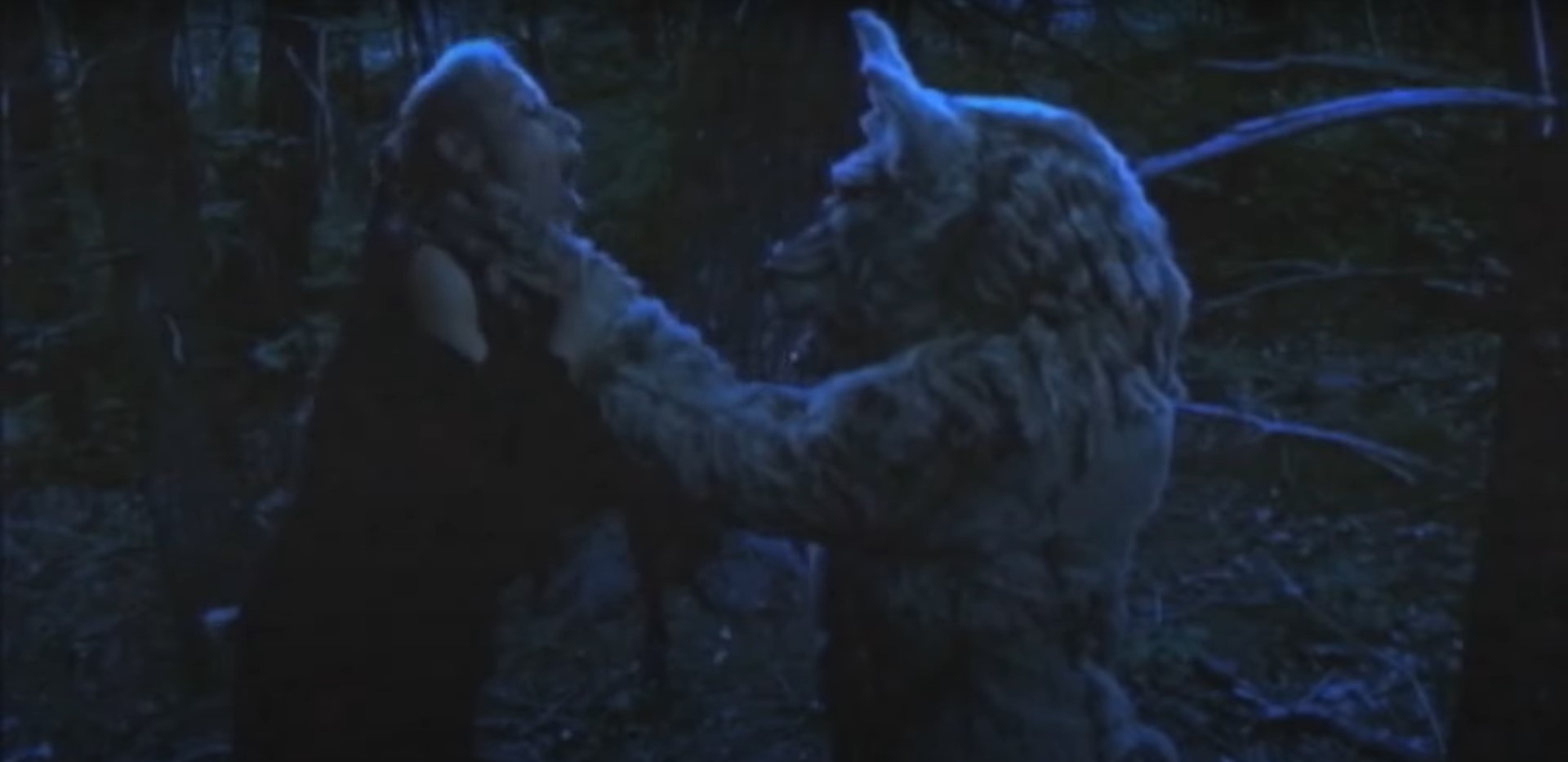
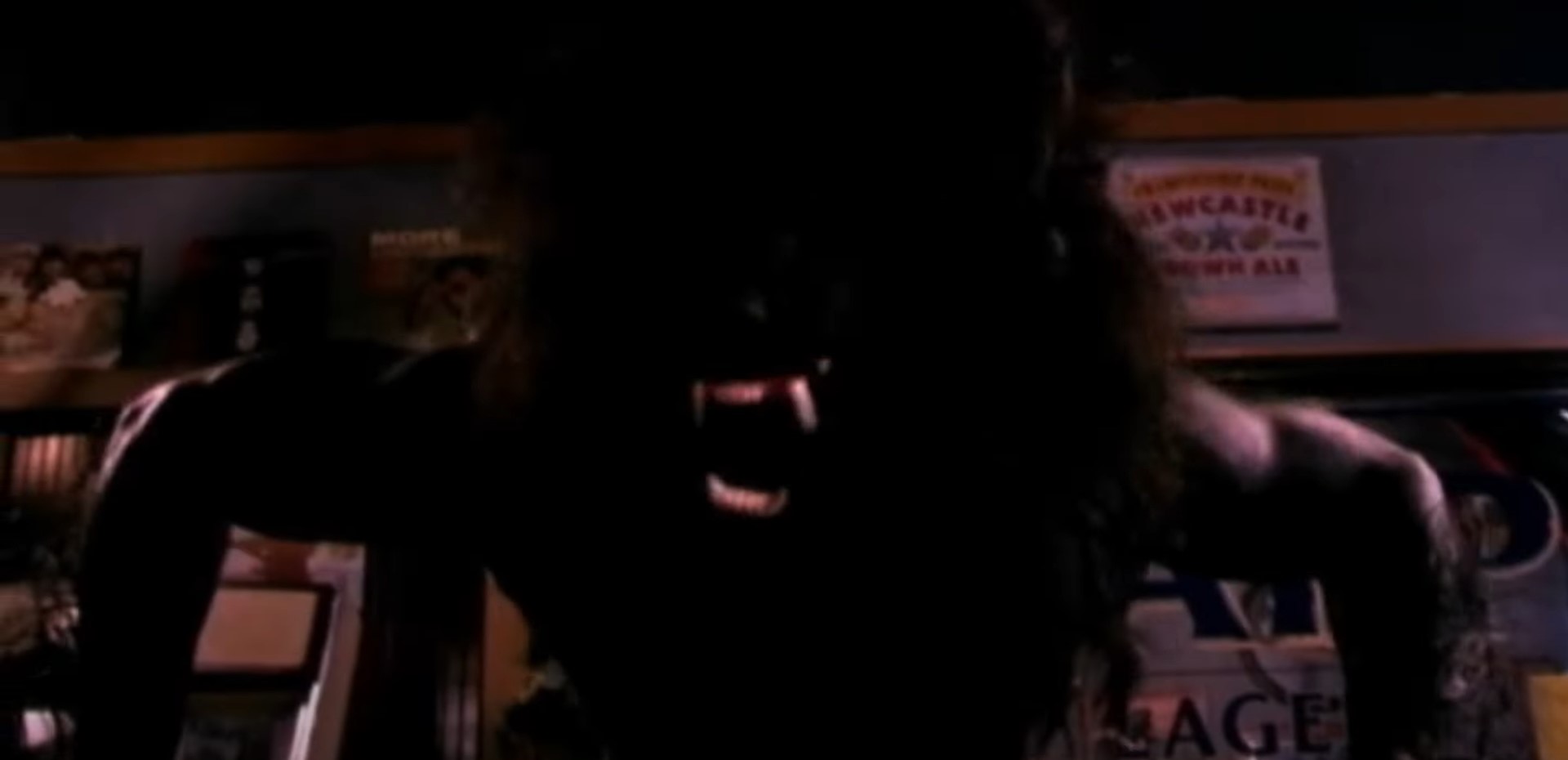
A big city surgeon on the mend of an alcohol problem and two siblings searching for their father who disappeared in the mountains hunting a mysterious big game find themselves in a small town inhabited by an ancient werewolf tribe.  Mostly seeking a peaceful way of life, many of the werewolves have tamed their inner beast to live normally isolated from their human neighbors to avoid bad blood and fear-driven conflict, but a rogue faction of werewolves has tasted human flesh, transfixing them with an insatiable need to hunt and feed on human outsiders who have uncovered the small town’s truth.  On the verge of the Equinox where every lycanthrope resident will transform into the primal versions of the beast, a select few have been able to conquer not losing their humanity as they team up with trapped, arsenal-ready humans and the eldest werewolf who is half witch to squash the evil werewolf population for good. 

In the rural areas of New Hampshire 2006, Rob Roy tries his creative hand at making a movie, writing a script ingrained with his personal affinity for fantasy and werewolves, with the action-packed, shot-on-MiniDV camcorder thriller “Lycan Colony.”  Roy’s first attempt is ambitious to say in the least with a vim and vigor narrative with a visual and practical effects heavy ornament that Roy single-handily constructs all himself learning all the tricks to the trade as he goes.  What ultimately results is initially a colossal flop of technical mishandlings, bad acting, and rushed final products, but in recent years nearly two-decades later, “Lycan Colony” has been revived with a second chance by fans of the so bad, it’s good sect who, like the evil werewolves in the film, have tasted blood and want more.  Rob Roy self produces the film under his Wits’-End Entertainment company.

In producing a movie yourself, with your time, money, equipment, and the little know-how of the process, Rob Roy casts mostly family, friends, and newcomers in his New England werewolf film.  Both of the director’s sons make it into the picture with the older Ryan playing the mistakenly werewolf bitten teenage son of Dr. Dan (Bill Sykes), the surgeon, and Roy’s youngest, Jacob, as a presumed pup running for his life from hunter Sgt. Roger Allen (Paul Henry) as we see in the preface opening.  Though an important piece to some aspects of the story, such as Stewart’s creaturized adolescent transfiguration to help Dr. Dan and wife Sandy (Kadrolsha Ona Carole, “Attack of the Killer Chickens: The Movie”) understand and cope with their now lycanthropic son, Roy’s boys are not the centralized characters as the narrative awkwardly pivots from building up Dr. Dan’s choppy family dynamics and his alcoholic mishap substory to more nondescript kickass and chew bubblegum action of good versus evil as the missing Sgt. Roger Allen’s offspring, the commando-suited daughter Russ (Gretchen Weisiger) and the bad werewolf killed yet risen to the ranks of being a good lycanthrope Doug (Bill Finley), team up with the eldest wolf-witch  and spiritual liberated Athena (Kristi Lynn, “Hypnagogic”) and David (Sean Burgoyne) who can control his beast side with hero pose mediation and tribal chants.  As you can tell, it all becomes disturbingly clear as mud on what exactly we’re bearing witness to, but the “Lycan Colony” burghers flesh out with Sophia Wong, Steve Pascucci, and Libby Collins.

There’s nothing inherently wrong with Rob Roy’s good wolf pitted against bad wolf with man trapped in the middle story.  Throw in some subtle themes of alcoholism juxtaposition where the mountain water tames the beast with hints of silver nitrate and Dr. Dan’s post-career predicament that sends him to AA meetings and also themes of puberty or some kind of other rite of hormonal passage and “Lycan Colony” can work as an action-fantasy with a strong horror element.  The problem lies in the ambitious undertaking for a first-time filmmaker with more gung-ho carpe diem than actual experience and Roy will be the first one to tell you, as heard in bonus content interviews, his goal is to go big and not limit himself with a tightknit narrative with little-to-no special effects.  To the detriment of “Lycan Colony” however, that mentality of thinking took a three-month shooting-script down to a mere three weeks, rushing the final product to the point of using a blue screen for the nearly the entire third act in a real shoddy piece of VFX compositing.  Transpiring on screen resembles similar to the early days of 2D fighting video games with its mix of antiquated motion capturing technology, practical effects, and digital matte but while those traits appear raw, lifelike, and add that certain je ne sais quoi that makes it so attractive, for “Lycan Colony,” the effect miscarries for its time in what is a laughable imbrication.  For some, “Lycan Colony’s” campy crust will be a holy grail to obtain; one could compare Roy’s film to Dave Wascavage’s “Suburban Sasquatch,” another Visual Vengeance, early 2000s, revived flick that had similar rough-cut visuals.  For others, like me, what comedy rises to surface is digestible, the rest of the movie might make you sheepishly queasy. 

For the first time on Blu-ray, “Lycan Colony” has become a part of the Wild Eye Releasing’s Visual Vengeance tribe.  The AVC encoded, 1080i upscaled, BD50 is presented in a full frame 1.33:1 aspect ratio, sourced from an original tape shot on a Panasonic DVX100 MiniDV at 24fps.  Safe to say nothing will outshine celluloid, millimeter film or even today’s digital cameras as that period of time where videotape made a stand offered a rival format with cheaper costs and comparable picture quality; yet videotape, as with “Lycan Colony,” squeezes the resolution combined with matted visual effects, making inaccurately distanced composite look even more compressed.  Details suffer through the compression of MiniDV’s interference noise, undersaturation, and vertical tape impression lines seared into a few frames.  The undersaturation lies the biggest concern leaving behind darker tones that keep the image popping with color, rendering the entire scheme more overcast even when not exposed to rough gel lens which is used quite often in various Crayola hues.  The English lossy Dolby Digital stereo 2.0 has enough strength to get around and get through with a tenuous dialogue track complicated by the not truest of fidelities on likely the onboard camera mic and by the boxy echoes of a blue screen stage, likely Roy’s garage.  Stock file notes give the full body suited lycanthropes enough growling canine bite and the gunshots are awarded cacophonous explosivity, solidifying a decent range of sound, but there are missed or asynchronized effects against the action with brief seconds of delayed catchup or just plain omission.  Boxy areas eradicate the depth, especially in the whole third act when the last battle is held in the woods but is mainly a blue screened forest, so the compounding loss of milieu affects atmospheric track greatly.  Visual Vengeance’s track record on delivering new special features has not gone unnoticed and the trend continues with “Lycan Colony” with a new interview with director Rob Roy.  Also included are two commentary tracks:  one with director Rob Roy and a second with B&S About Movies’s Sam Panico and Drive-in Asylum’s Bill Van Ryn.  A second version of the film is a full Rifftrax version, a blooper reel, the “Lycan Colony” music video, original trailer, and the Visual Vengeance trailer round out the release’s ancillaries.  The colorful Stephen Gammell-esque, presumably pastel, front cover illustration greatly over exceeds expectations but is nonetheless phenomenal full-moon imagery on the cardboard slipcover and also dichotomizes the style on the translucent Amaray Blu-ray case’s cover art depicting a scene from the film of a hungry wolf behind the alcohol-decked bar.  And also true to Visual Vengeance, the release is jammed-packed with inner goodies, such as a New Hampshire Forest Scent air freshener, retro VHS Sticker sleeve, a 3-page pamphlet with essay from Sam Panico with color picture, and a folded mini-poster of the Blu-ray cover art.  Not also to neglect to mention is the reversible cover art with the original one sheet art.  The Visual Vengeance release comes region free, unrated, and has a runtime of 90-minutes. I’m extremely happy for the appreciation and newfound love director and enjoyer all-things-werewolf-fantasy Rob Roy is receiving for his resuscitated escapism but, for me, “Lycan Colony’s” jerry-built and doesn’t come anywhere close relieving the so good, it’s bad itch in Roy’s filmmaking first pass done on the cuff. 

“Lycan Colony” available on Blui-ray Collector’s Edition!

Sooie EVIL Sooie! “Pig Killer” reviewed! (Breaking Glass Pictures & Darkstar Pictures / Blu-ray)

On This Farm There Was a “PIg Killer” now on Blu-ray!

Pig ranching landowner Robert “Willy” Pickton’s compulsions to pick up unprincipled women involved in prostitution and drugs and horrifically rape and murder them in the name of salvation stems from a severely abusive childhood with the father’s physically and mentally tormenting as well as a scornful mother sexually assaulting him.  Willy’s fanatical obsession threatens his drug-fueled, orgy-laden, rock-n-rolling Piggy’s Powwow party, a regular throwdown held at his ranch that has elicited a cease and desist letter from the city, but Willy pushes the party forward despite his brother David and their lawyer’s stern opposition.  Paralleling Willy’s story is Wendy Eastman who almost dies of an accidental drug overdose.  The incident stirs more the already contentious bad blood between her uncompromising stepmother and insecure father that leads to storm out and bump into Willy at a bar with the feeling of destiny bringing them together only to horrifically discover Willy’s unsavory secret the hard way. 

Part one of my reviews on serial killer biopics, headfirst we go into the psychotic world of Robert “Willy” Pickton, a pig former turned one of Canada’s most notorious serial rapists and killers living in Port Coquitlam, British Columbia.  While the extent of his butchery is vague at best and even in some ways evolving over the course of the last two decades, Pickton was able to be the filmic inspiration for the Chad Ferrin brazen biopic “Pig Killer.”  The “Easter Bunny, Kill! Kill!” and “Someone’s Knocking at the Door” director wrote-and-helmed the interpretation of the egregiously presumed methods Pickton executed upon his female victims, mostly drug-addicted sex workers from the Eastside of Vancouver.  Once under the working ttile of “Pork Chop Rod,” Ferrin’s Crappy World Films, Girls and Corpses (of Robert Steven Rhine’s Girls and Corpses Magazine), and the post-production company Laurelwood Pictures served as co-productions with 50-year acting vet Robert Miano (“Malevolence,” “Giallo”) co-producing.

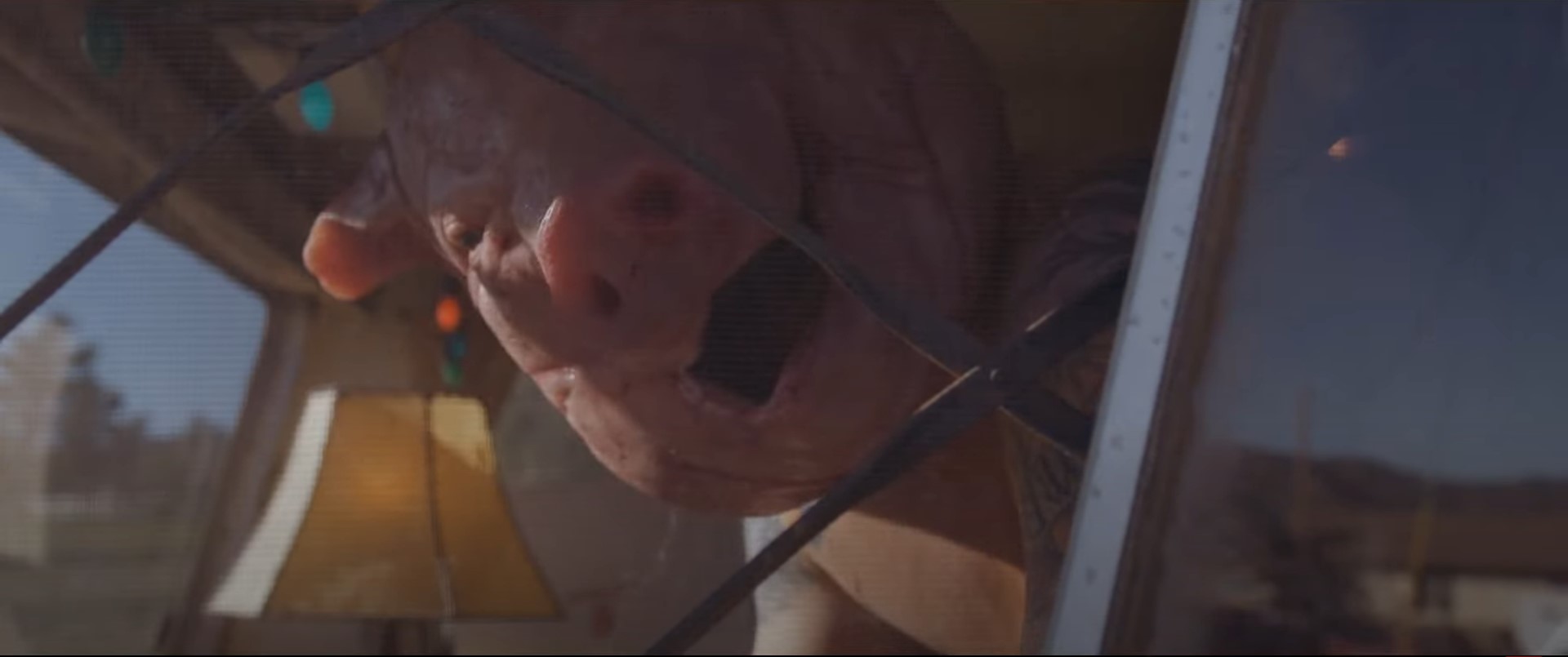
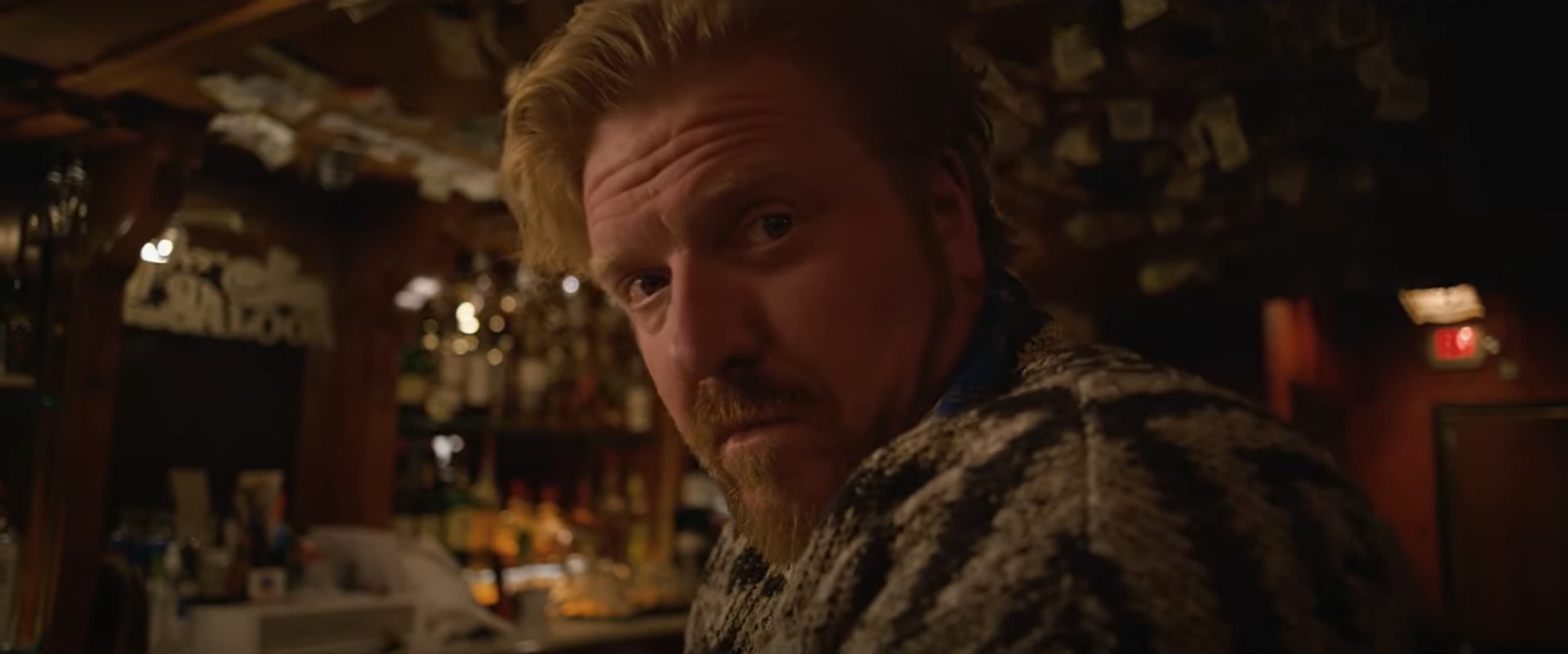
Even though this actor has portrayed serial killers in “Identity,” “The Hitcher II,” and “The Frighteners,” and even a deranged zealot in “Contact,” I would never have imagined in a million years “Starship Troopers” actor Jake Busey would have stepped into the sordid shoes of Willy Pickton in a Chad Ferrin production.  There’s something to be said for Jake Busey’s nerve in moving forward with eccentric and controversial and Willy Pickton is every fiber of those infamy traits and all that is in between.   Disheveled and dirty, maniacal and demented, prosthetic phalluses and dildo revolvers, pig masks and masturbation – Jake Busey doesn’t hold back on an exigent script important to Pickton’s state of mind.  Creepy and apathetic blanked by his deceased mother’s devout spitefulness and her incestuous sexual abuse, Busey secretes these irascible qualities held dormant in Pickton until the sleaze is sated and his patients runs out then it’s time to go hog wild, literally. Lew Temple (“Halloween,” “Devil’s Rejects”) plays Willy’s brother David who also has mother issues, but that avenue is not as profoundly travelled as Willy’s, both men see delusional visions of their mother’s tirades but definitely lopsided in disfavor of Willy and that leaves David left in the dust some to not have his mental faculties inspected.  Their flashback, foul-mouth, and Electral loving mother goes to an unabashed by former adult actress turned low-budget horror scream queen Ginger Lynn Allen (“Murdercise,” “31”) in what her scenes can only be described as uncut and uncomfortable lewdness as she bares it all at the ripe young age of 60 years old.  Another standout performance goes to Kate Patel as the debut actress, who in her own right is an Amazonian goodness buff beyond rebuff in black lace underwear, finds her voice as a young woman named Wendy Eastman in a complicated and dysfunctional household after the death of her mother, at odds with a wicked stepmother, and an insecure father with passive fortitude.  The only obstacle that can be rendered cleanly from her performance is how her character’s written to be drawn to Willy Pickton as because between age gaps and social differences, the two have nothing tangible to drawn them together mutually.  “Pig Killer” rounds out the cast with producer Robert Miano as Wendy Eastman’s father, Michael Paré (“Streets of Fire”) and producer Robert Rhine as Detectives Oppal and Schneer, Silvia Spross (“Parasites”) as Wendy’s disparaging stepmother, Jon Budinoff (“Someone’s Knocking at the Door”) as Wendy’s friend and drug source, Elina Madison (“Caged Lesbos A-Go-Go”) as a druggie sex worker, Bai Ling (“Exorcism at 60,000 Feet”) as also a druggie sex worker, and Kurt Bonzell (“Parasites”) as Willy’s disfigured and throat-cancer suffering friend Pat. 

Sensationalized for cinematic charm, the story behind the “Pig Killer” hits near the bullseye of all major bullet points from the escape of Wendy Eastman (actual person being Wendy Eistetter) and her coinciding her drug addiction to the wild gathers at the Pickton farm known as Piggy’s Powwow (actual title being Piggy Palace Good Times Society) where motorcycle gangs and prostitutes congregated for a drug-fueled good time.  If having viewed a few of Ferrin’s credits before, some of the unrestrained gore and shock will not come at a surprise.  The benumbing unconcern of misanthropy is poignant amongst Ferrin’s soft-pedaling of horror with a whimsical manner within a gritty film that doesn’t feel as gritty as it should be considering the subject and subject material.  Another mitigating moment, one that’s more counterproductive to the Pickton storyline, is the parallel melodramatics of Wendy Eastman that eventually rendezvous with the titular “Pig Killer” and become the rendition of Wendy Eistetter supposed personal backstory and escape from death.  Wendy’s overdose and family issues provide reason for her subsequent run away from home, but the extent of the backstory unnecessarily rivals Willy Pickton’s and the whole destiny meetup enlists some deeper rooted significance that isn’t neatly fleshed out, turning awkwardly impertinent that waters down their entanglement. 

Arriving onto a Breaking Glass Pictures and a Darkstar Pictures collab, “Pig Killer” oinks itself onto an AVC encoded, 1080p, High-definition Blu-ray.  Presented in an anamorphic widescreen 2.39:1 aspect ratio, “Pig Killer” under the warm glow and desert dry eye of cinematographer Jeff Billings (“The Deep Ones”) sundries the shot types in various techniques, such as closeup slow motion to be inside Willy’s moment of divination, to provide Ferrin’s feature with comely appeal even in the vilest of moments. Details are sharp and delineated nicely albeit the quick editing for intensity purposes and to float Willy in and out of psychosis. Coloring is more natural than anything else with a few gels scatter about to spruce up the vibrancy. The lossless English DTS-HD 5.1 master audio renders clear dialogue without any distortions or other audible disturbances; however, the strength of the dialogue favors an infirm conveyance to grasp a few exchanges, especially in the exterior. A maximal Gerard McMahon soundtrack scores the entire biopic from start to finish with a range of 80’s power ballads to 90’s pop rock; the 76-year-old not only scores the project but also has a concert performance role with his band G Tom Mac. Depth and range supplement greatly as sound design cater to the surrounding atmospheres, such as the echo vibrations under the Eastside bridge or the pig-pen oinks and frenzies when feeding bits and pieces of sex workers to his farmyard swine. English SDH is optionally available. Packed with extra content, supplements included are an interview intercut with scenes with Ginger Lynn as well as a few of her clothed adult industry spreads/modeling, a behind-the-scenes footage with Michael Paré, deleted and extended scenes, and Q&A from Cine Excess, the making-of the Pig Mask, a making-of the film entitled Canadian Bacon, an introduction to Spunky the Pig aka Willy’s pig, a screen test of Kate Patel in the role of Willy, which was considered before Jake Busey landed the role, “Pig Killer” auditions, and the trailer. The clear Blu-ray Amaray case sports a dark-and-dirty gilt image of a half-naked Kate Patel and a menacing pig-masked person holding a clever overhead. Reverse side contains a still image of the insides of Willy’s pigsty camper while the disc is pressed with the same menacing pig and clever but more prominent. The collab release has a region A playback, a runtime of 122 minutes, and is not rated. The back cover also lists a 2000 production date, conflicting with the 2023 release states elsewhere, but the 2000 date would be before Willy Pickton’s arrest and so that might be a misprint. Chad Ferrin and Jake Busey jointly tackling the monster that is brutal serial killer Willy Pickton with an inkling of lighter material coursing through its arteries, style secreting through the madness, and, of course, gore, the most important ingredient to the likes of a film entitled “Pig Killer.” 

On This Farm There Was a “PIg Killer” now on Blu-ray!

Never Trust a Script Written by an Egotistically EVIL “Scream Queen” reviewed! (Visual Vengeance / Blu-ray)

This Chainsaw’s Made for Cutting! “Scream Queen” on Blu-ray!

Malicia Tombs, an acclaimed horror actress known for B-movies and bad attitude, bursts into a wreckage of flames when her car sudden explodes after storming off the set of her new movie, “Scream Queen,” in which she wrote and starred as the titular character.  Part of the cast and crew were devastated by the accident that had cut their own career short while others were relieved the egotistical Tombs had perished despite publicly feigning grief over the loss of a genre fan-favorite.  Months later, the small cast and crew receive a mysterious invitation to gather at a creepy mansion butlered by Runyon.  When their host is unveiled as to be a very much alive Malicia Tombs, she offers them a lucrative sum of money to finish the film they’ve started but with a new script.  As the guests read through the new treatment, the cast and crew realize their present moments read just as their being played out in the script, even their deaths. 

If there was ever a single face deserving the representative distinction within an overpopulated categorized scream queen genus, Linnea Quigley would be that green-eyed, blonde-topped, beautiful face with an infectious smile.  Quigley worked with an array of filmmakers, ranging from some of the most renowned cult films of all times amidst reams of horror movies for nearly half a century (yes, we’re feeling old now) to the most independent of the independents films never having really receive the proper exhibition format or audience attention.  To what would be a delight to Quigley’s fanbase, one of those obscure features is Brad Sykes’ “Scream Queen,” a late 90’s filmed, 2002-released, SOV, U.S. slasher written-and-directed by the “Camp Blood” and low-budget filmmaker with Quigley in mind to play the scream queen character Malicia Tombs, now available, officially, on Blu-ray.  “Scream Queen” is the first major project for Brad Sykes in a collaborating effort in not only as a director but also as a co-producer alongside David Sterling of Sterling Entertainment.

“The Return of the Living Dead” and “Night of the Demons” Quigley puts on another memorable and wickedly fiendish performance as the haughty genre scream queen Malicia Tombs who superiority has gone to her head as she embraces her designation to an exact mania, displayed early on when her character’s character attempts to choke-kill another actress despite the numbered scene not being a death scene and Malicia harps on wanting to continue with the resembling act of murder.  As much as Malicia Tombs embraces the killer instinct inside of her, Linnea Quigley very much embraces Malicia Tombs without having to take her top off and despite having less screen time than her costars.  While Quigley fades in and out of the linear story, the narrative progresses with livelihood hardships of the now out-of-work cast and crew who relied heavily on that small film to boost their acting and filmmaking careers.  That crop of characters falls short tipping into their expectations, aspirations, and even their relations to be just slasher fodder for the mysterious maniac roaming the house.  Jenni (Emilie Jo Tisdale,” Escape from Hell”) and Devon (Nova Sheppard) are inferred romantic roommates who sell clothes on the side of the street to make ends meet post failed film but don’t have surmountable direction to either be a full-fledged couple to sympathize or seem terribly concerned about opening their own clothing shop other than what would be a bad decision to reside at the mansion overnight.  Again, no sympathy there either.  The special effects goof Squib (Bryan Cooper churns chuckles relentlessly by relating more to his crafted effects dummy more than people, marking him conclusively comedy relief as well as fated for death that, like in life, no one takes him seriously when he shows up gruesomely mutilated.  The other principal actress across from Tombs is Christine (Nicole West, “Dimension in Fear”), a buxom blonde tired of secretary work succumbing to lead man flirtations in a dark and scary house where every shadowy corner is lodged with threat.  The pair fall into that horror character cliché of have sex, will die, quickly downgrading their pre-professional relationship into nothing more than dark house desire.  Director Eric Orloff (Jarrod Robbins, “Evil Sister 2”), a presumed spin on the Awful Dr. Orloff and perhaps hints at his motives, seems to be stuck in angsty avoidance and melancholy stemmed by what could have been with Scream Queen but that also peters to a gross negligence end of an arc waste.  Rounding out the cast are a couple of special bit parts played by prolific Full Moon Entertainment and overall horror movie screenwriter C. Courtney Joyner (“Puppet Masters III,” “From A Whisper to Scream”) as a televised homicide detective and Kurt Levee in a quasi-return of his character Runnion from “Evil Sister” but alternatively spelled “Runyon” in “Scream Queen.”  

Though obviously and definitely not the first to do this, “Scream Queen” humors metacinema measures built upon horror tropes and spherical plot points that redirects the story back upon itself for a killer effect.  The feature has no issues making and poking fun at itself within a campy context albeit the usually grave apprehensions of a true scary slasher movie that’s less campy of which a scream queen is born – think Jamie Lee Curtis in “Halloween” or Neve Campbell in “Scream.”  Bryan Cooper not only portrayed the foolish effects guy persona but also actually did a lot of the gore gags for the film, achieving very detailed inlaid gore prosthetics for a smalltime picture with an axe embedded into a chest and a mangled face to name a few.  The story itself feels a bit rough and ready as it slips into supernatural obscurity and, as aforementioned, character setups flounder to a stagnation, killing instantly the miniscule arcs that were structured prior to their mansion gathering in what becomes a slapdash of serial offing that wraps up the story post-haste without much cat-and-mouse tension.  With that said, “Scream Queen’s” unpolished plot had once mirrored its fallowed physical release until recently but now witnessing its birth out of twilight has been multitudinous worth the wait. 

Another of Linnea Quigley’s lost films has been resurrected from the format graveyard by Visual Vengeance with a new Blu-ray release of “Scream Queen.”  The Wild Eye Releasing sublabel release comes with an AVC encoded, high definition interlaced scanned and director approved 1080i transfer from the 480p tape elements on BD50 capacity and comes also with the qualitative joys of a standard definition shot on video experience.  SOV tape upconversion can never completely eradicate the imperfections associated with tape and we also know this going in courtesy of Visual Vengeance’s standard practice of a fair warning before the film, but the overall “Scream Queen” presentation passes as clear content despite some minor tracking blips, 1.33:1 aspect ratio, original lower resolution, and scan line visibility, which is smoothed out nicely by the 1080i conversion. Exteriors and brightly lit scenes take on more shape compared to darker and low-lit areas that become like a void in standard DEF, which also hits the natural grading into a washed-out drab.  The English Dolby Digital 2.0 stereo labors to maintain some form of auricular strength but often nearly goes dark to where certain Linnea Quigley monologues periodically go silent for a few seconds, so the dialogue isn’t entirely clear but when it is, it’s relatively clean. There’s no hardiness pop in the audio track, staying suppressed throughout, and having little-to-no range or depth to the compile contexture. Some electro-interference throughout but nothing to be bothered by considering the grade of the SOV. Optional English subtitles are available. Special features include a commentary with writer-director Brad Sykes, a new behind-the-scenes documentary Once Upon A Time Horrowood that’s mostly Brad Sykes going through the stages of making “Scream Queen” and his recollections of his first big time produced film, a new interview with star Linnea Quigley, a new interview with one of the three various editors Mark Polonia (director of “Splatter Farm”), an original full-length feature producer’s cut of “Scream Queen,” a behind-the-scenes image gallery, Linnea Quigley image gallery, snippets from the original script, original trailer, and other Visual Vengeance distribution trailers. Along with the hearty software special features, hardware physical features include a six-page trifold with behind-the-scenes color photos notes by Weng’s Chop Magazine’s Tony Strauss and beautifully illustrated with dripping blood, a chainsaw, and Linnea Quigley on the front cover, a folded up mini color poster of a scantily-leathered Linnea holding one of the film’s murderous weapons, retro stickers, and your very own Four Star Video plastic rental card. All of this great stuff is stuffed inside a clear Blu-ray Amary case with a pressed disc art of a bloody illustrated Linnea sawing some unknown guy’s face off. The same illustrated graces the front cover in an expanded form and under a different hue. If you don’t like it, which I would be hard-pressed if you don’t, the reverse side contains one of the original cover arts with, again, a scantily-leathered Linnea holding that murderous weapon. The entire package is sheathed inside a rigid O-slipcover with an extended view of that chainsaw scoring with a bloody spray the eyeball from some guy’s face. The 13th Visual Vengeance release comes region free, unrated, and has a runtime of 78-minutes. Lost vintage now found and digitally revived to give us even more Linnea Quigley than we knew we needed with a meta-film shows initiative and fit special effects but swerves off trajectory into a more-of-the-same pathway. 

This Chainsaw’s Made for Cutting! “Scream Queen” on Blu-ray!

Your Mother Sucks EVIL in Hell! “The Exorcist: Believer” reviewed! (Universal Studios / 4K-Blu-ray)

Let the Power of 4K Compel You!  “The Exorcist Believer” from Universal Home Video!

Thirteen years after having to make the tough life-and-death choice between his wife and unborn child, Victor Fielding strives to protect his daughter now teenage daughter Angela, even if that means being a little overprotective.  When Angela persuades her father for an afterschool study date with a friend, Angela’s seizes his moment of letting down his guard with real intentions to sneak into the woods with a different friend, Katherine.  Eager to connect with the late mother she never knew, Angela evokes a simple rite to call upon her mother’s spirit.  Three days later, Angela and Katherine are found in a barn, with no memory of days passed, and returned to their worried parents only to deteriorate with violent behavior, self-abuse, and an altered appearance that can’t be explained by science.  Desperate, Victor is turned toward Chris MacNeil, author of similar experiences that happened to her daughter Regan 50-years ago, to help exorcise an entity that has taken residence in the girls. 

William Friedkin’s “The Exorcist” has been labeled one of if not the scariest movies of all time, according to sources like Rotten Tomatoes, Rolling Stone Magazine, and countless other outlets who run a top-rated lists.  Usually in pensile at the top seed spot, “The Exorcist” has become a terrifying beloved and timeless horror classic amongst genre crossing fans who hide in horror behind a blanket as priests do battle in good versus evil while others may revel in and gawk at the profane possession of a young girl turned into a head-spinning, vomit spewing demon host.  No matter which category fans find themselves in, there’s one singular, common impression, “The Exorcist” could never be dethroned as the scariest movie of all time, even if direct sequel “The Exorcist:  Believer,” helmed by the latest “Halloween” trilogy director David Gordon Green, and marks the return of Ellen Burstyn as Chris MacNeil, contemporarily challenges the 1973 demonic suspenser.  The sequel would be doomed in an instant of it’s trailer, and know what?  It was for the fans had immediately forsaken it, prejudging it without a second thought and a holy exorcism prayer.  Fortunately, prejudging is not in my lexicon database until the credits role.  “The Exorcist:  Believer” is written and executive produced by David Gordon Green, cowritten by “Camp X-Ray” writer-director Peter Sattler, and executive produced Danny McBride (actor of “Pineapple Express” and producer of the latest “Halloween” trilogy), Atilla Salih Yücer, and “M3GAN” producer Mark David Katchur with James G. Robinson and Blum House’s Jason Blum producing.

Much like Linda Blair stepping into Regan’s white gown before becoming vilely sullied by a demon, “Believer” hosts two up-and-coming actresses fresh for being Hell’s marionettes in Lidya Jewett and Olivia O’Neill.  Jewett, with more acting chops experience having had roles in kid friendly and feel good stories of “Wonder” and “Nightbooks,” plays daughter Angela to “Murder on the Orient Express’s” Leslie Odom Jr.’s widowed father Victor, a photographer who had to make a difficult decision after a massive Earthquake on their babymoon trip to ancestral Haiti cost wife Sorenne (Tracey Graves, “Sebastian”) her life but not their child.  The father-daughter combination becomes center story as a daughter trying to understand and know the woman who bore her despite living in reason to her death and a guilt-ridden father serving his existence by helicopter protection of his miracle child.  Angela and Victor’s story becomes intertwined between the past and the upcoming events, shedding light on circumstance that hinges on the subtle cracks of their relationship.  Meanwhile, the whole second possessed, Katherine, is essentially collateral damage.  Played as her debut role, Olivia O’Neill awfully resembles Linda Blair, recreating a Regan anti-transfiguration that has two purposes into the tale – 1) being a second difficult choice for Victor Fielding and 2) a bridging support to connect to Friedkin’s film in it’s 50-year gap alongside the more prominent connection in Ellen Burstyn returning as Regan’s mother Chris MacNeil.  MacNeil’s return gives “Believer” a boost in legitimacy and the potential to put die hard “The Exorcist” fans’ butts back into theatrical seats for the sequel, but the then now 91-year-old actress, who was likely in her late 80s or 90 at the time of principal photography, seemed relatively uninterested.  Now whether that was age related weariness or not is undeterminable, I’m sure it was a factor, but there is no pop in the actress’s step as a mother who previously fought the devil for her daughter’s soul and won.  “Believer” rounds the cast with some throwaway characters who come into the picture offering slim worth despite being pivotal to the story’s universal belief theme with performances from Danny McCarthy, Sugarland country singer Jennifer Nettles (“The Amityville Horror” ’05), Norbert Leo Butz (“New World Order”), E.J. Bonilla (“The House That Jack Built”), Okwui Okpokwasili (“Master”), Rapheal Sbarge (“There’s No Such Things as Vampires”), and “Handmaid Tale’s” Ann Dowd as the former nun-turned-nurse neighbor of the Fielding’s. 

Much of “Believer’s” message is to separate the Catholicism answer in order to separate the sequel as a duplicate of the 1973 production where Catholic priests dig in deep to expel the demon from within.  Writers nix the Catholics by making them not only unwilling participants, afraid of the damage that might incur from an exorcism, but also immediately removing the only willing Catholic to go against the Church in order to do the right thing.  Damned if you do, damned if you don’t.  Instead, “Believer” marks an era of new faith or, rather, new faiths with a sundry of religious convictions unifying to bring the girls back beyond Hell’s reach and dominion.  Pastor of a Georgia Baptist church, excommunicated nun, Earth-centric religious beliefs, and skeptics formulate a bond to save loved ones, creating the perfect bedrock for taut tension with colliding beliefs and, yet there’s none of that disagreement as much of the dissent is turned toward from within the individual who challenges their own convictions in what they see, hear, and experience.  For the most part, the farrago works against the grain of dichotomies who are usually at each other’s throats to one up their own beliefs, Gods, or what have you.  The incongruous mix of faiths easily falls into rough-and-ready kumbaya in what assumed scared beyond the point of a reality-smacking wakeup call that announces the confirmation of Heaven and Hell.  Netherworld hellion can very much be felt akin to Regan, though I believe Pazuzu’s possession of Regan was more violent and obscene in comparison to the diluted Lamashtu having been split into two bodies.  Lidya Jewett and Olivia O’Neill rocked the Christopher Nelson (“Fear Street” trilogy) makeup artistry to distinguish and differentiate themselves from each other but still stay in line with the Regan model and like the Pozuzu demon, we don’t get to see or experience much of Lamashtu other than phasing briefly into that plane of existence within the soul to see the winged, horned, and deformed body cast of the demon through the distorted, blurry sight of a viewing glass.  While practical effects shine with the makeup, prosthetics, cable work, and so forth, praise for the entire body of work is containment by the use of poor, poxy visual effects in an attempt to be bigger than its much older predecessor.

For double the demon, you can get 4-times the sharper image with the new Collector’s Edition of “The Exorcist: Believer” on a Universal Studios 4K UltraHD, Blu-ray, and Digital Code set. The 2-disc set presents the feature in a widescreen 1.85:1 aspect ratio. The 4K UHD is stored on an HEVC encoded BD100 with a HD10/Dolby Vision resolution while the Blu-ray comes AVC encoded, BD50 stored with a 1080p resolution. There’s nothing really to fault with the presentation that sets crystalized moods and tones without a hint of compression complications on either format. Through the lens of Michael Simmonds, the tenebrous tone of the new Halloween trilogy, variegated briefly only by surround bursts of the environment elements, is transplanted to “Believer’s” as in equal in less light austerity. UHD pixels offers slightly contouring and detail but not much to make a tremendous different between image presentation, which both really do the job pulling every surface attribute from the possessed girls’ abraded faces and a mounting demon taking shape. Both formats contain an English Dolby Atmos and Digital Plus 7.1 surround with the Blu-ray also sporting a DVS 2.0 stereo mix. Again, not much to express negatively here with a multifaceted and versatile output that creates the tension but lacks the palpable finesses of the original film by adding more score to the production with a sample nod of Mike Oldfield’s iconic tubular bell theme integrated into a less iconic composition by Amman Abbasi and David Wingo. Sound design ushers in a nice ambience and spatial rhythm while also inducing a couple of sudden low-frequency jump scares. Dialogue is clean and clear with the appropriate intensities in due part. Other non-English options include Spanish and French on the UHD and Blu-ray. English, Spanish, and French subtitles are included and optional. Bonus features, in 1080 HD, includes Making a Believer a behind-scenes-look with cast and crew interviews and raw principal photography footage, Ellen and Linda:Reunited sits down briefly with director David Gordon Green, Ellen Burstyn, and Linda Blair on reuniting the actresses after many years for the first time in scene, Stages of Possession goes through the makeup process and the Lydia Jewett and Olivia O’Neill’s impressions on the possessed makeup and prosthetics, The Opening shot in the Dominican Republic to recreate Haiti where the story begins, Editing an Exorcism has editor Timothy Alverson (“Sinister 2”) speak toward editing the chaos and creating scares in a new “Exorcist” installment, Matters of Faith explores theologies via consulting experts to recreate accurate depiction of different beliefs, and feature-length parallel commentary with co-writer/director David Gordon Green, executive producer Ryan Turek, co-writer Peter Sattler, and special makeup FX designer Christopher Nelson. Stylistically, I really like this sleek multi-format package design of the two deeply possessed girls, sideways on a black and silver and monochrome kissed cover as you don’t get too lost in the coloring and focus on just what we’re all here to see, the demonic destruction, right on the rigid O-slipcover with embossed title in the middle. The 4K Amary case holds the same image arrangement back and front compared to the slipcover. Inside, each format resides on its own side of case real estate with the Blu-ray pressed with simplistic CD-like art while the UDH goes with the same front cover image. In the insert slip is a digital code for your downloading pleasure. With a near 2-hour runtime at one hour and 51-minutes, the release doesn’t list region playback, but I would suspect region one and is rated R for some violent content, disturbing images, language, and sexual references. With the exception of a few moderately eye-twitching jump scares, “The Exorcist: Believer” has been exorcised of the breath-holding terror that exalted William Friedkin’s film. However, what David Gordon Green produces is a different breed of religious cultivating inclusiveness inclined to be more so about the social commentary than being about the rite of excruciating deliverance. 

Let the Power of 4K Compel You!  “The Exorcist Believer” from Universal Home Video!