Who You Gonna Call to Stop Evil? “P.A.S.S. (Paranormal Activity Security Squad)” review!

1YtYNMd4RCeXhCZeZsyZ_Screen Shot 2016-02-03 at 3.50.29 PM
A young group of phony ghost ass kickers who call themselves Paranormal Activity Security Squad, aka P.A.S.S., setup a reality show to earn quick cash from gullible callers. When the calls for help trickle into their call center, aka their garage, P.A.S.S. eagerly answers the call, but they become intertwined into the sinister plot orchestrated by a real nasty demon named Vladimir Van Housin. Now, they must obtain the assistance of a slightly unorthodox, if not totally narcissistic, sorcerer, a brutishly strong Asian man-child, and the loyalty to each other to stop the powerful Van Housin demon from entering their world, tilting their very existence.
Screen shot 2016-05-07 at 7.00.58 PM
“P.A.S.S.” is either the prime candidate for the schlock of Troma or needs to be seriously considered by Jonathan Turell, CEO of The Criterion Collection, for upscaled distribution with all the bells and whistles. To be honest, my initial thought was another stupid horror-comedy with bathroom jokes while camera focusing a lot on Katie Heidy’s Wrench character’s cleavage. Lots of cleavage I can deal with, but when Rigan Machado’s dimwit character dumps a log out of his brown soaked whitey-tighties and then proceeds to pick it up and eat it, I nearly gave up on P.A.S.S….and eating anything…ever. But I continued to watch. And watch. And watch. And the more I watched, the more I witnessed untapped creativity and enigmatic entertainment that kept me enthralled to the cliffhanging end.
Screen shot 2016-05-07 at 7.02.10 PM
Among nearly all the other credits for P.A.S.S., writer, director, and star Alex Wraith has astronomical vision, using his galactic gonads to implement slight rotoscope technology and practical specials effects that develop a wicked comic world of insane determination. “P.A.S.S.” breaks all the laws of filmmaking. When a film attempts to homage an untouchable classic, in this case Ivan Reitman’s “Ghostbusters,” the project nearly gets blacklisted by fans. If you don’t believe me then check out the critical responses to this year’s “Ghostbusters” remake. Wraith’s film incorporate’s the humorously stiff commercial, the transformed hearse, and a team of four amateurs that all attach itself to the beloved Bill Murray comedy while also adding in public domain footage of retro horror from “Night of the Living Dead” to Ted Browning’s “Dracula” in the montage introduction and seriously ripping Star Wars. Wraith and some of his cast aren’t exactly newbies to the Hollywood game with Wraith having minor roles in “Savages” and “Taken 3,” and Sean Stone in also “Savages” and “Wall Street.” Katie Heidy and Jean-Claude Van Damme’s daughter, Bianca Bridgitte Van Damme, bring the squad’s, if not the movie’s overall, sex appeal while Dale C. Reeves portrays an awesome antagonistic spawned from hell demon who can’t be defeated and who also looks like Darth Maul. Don’t miss appearances by Dawna Lee Heising and “Amateur Pornstar Killer” director Shane Ryan!
Screen shot 2016-05-07 at 7.00.16 PM
Aforementioned, the rotoscope and practical effects are not top shelf material, but achieve a otherworldly sensation and set the tone for the film’s kooky and demented nature. Wraith loved to overuse the lens flare which works favorably for the world he was trying to create. Also, at some point in time in the duration, I felt as if I was inside the video game series “Twisted Metal.” Perhaps because three of our heros were pitted against a evil clowned-faced giant reeking havoc in an alternative universe. I truly believe this piece of work is a look into the warped mind of some very open minded individuals who eager seek to spill their madness onto paper and onto the big screen.
Screen shot 2016-05-07 at 6.57.36 PM
“P.A.S.S.” feels rightfully inexpensive due to Wraith and his team’s self funding, but the finished product reveals a smartly written script and some superb editing that keep the laughs rolling and the craziness fresh, turning up the intensity dial to beyond the max! I’m unable to critique the entire package as I was handed a screener link to review and I believe “P.A.S.S. has yet to find home distribution, but the handheld camera footage for the squad’s reality show looks amazing even if purposefully hectic at times and the audio is equally as clear and as balanced. Check out “Paranormal Activity Security Squad” wherever the film ends up and, I promise you, this film kicks not only demon ass, but the ass of many independent movies.

CLICK ABOVE IMAGE to Buy P.A.S.S. from Amazon for only $0.99!

The Evil. The Horror review!

Screen shot 2016-04-01 at 2.24.52 PM
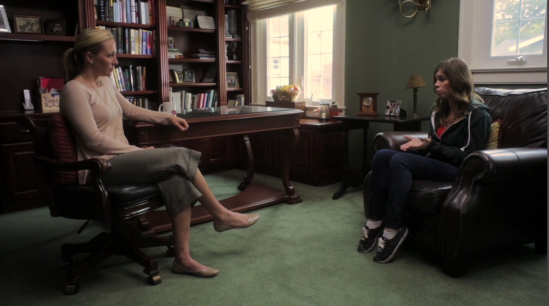
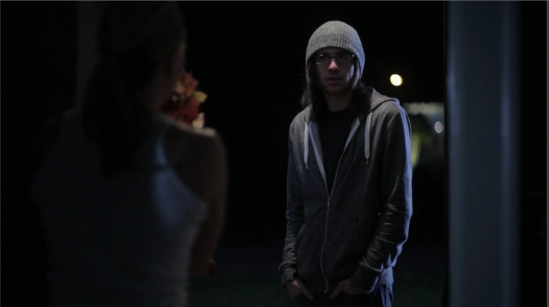
Coping with the sudden death of their parents, twins Malcolm and Isabel Rademacher take a trip with their friends to the family lake house in Bear Lake, Michigan. The siblings ultimately neglect their friends, forcing their companions to abruptly leave the lake house without Malcolm or Isabel’s knowledge. Soon after, the two experienced a home invasion by two masked individuals, barely escaping with their lives. Feeling alone, isolated, and ill-fated, Malcolm and Isabel steer to two different paths: Isabel seeks professional counseling, while her brother sank deeper into his own despair. Malcolm spends most of his time at the lake house, digging into the lake’s frozen over to reclaim one of the mask’s of the home invaders. Isabel fears that Malcolm’s obsession threatens her safety, as well as her counselors.
Screen shot 2016-04-01 at 2.25.32 PM
“The Horror” is a story of one person’s traumatic event turning deeper into the darkness, taking a turn for the worst, and becoming overwhelming with rage and insanity. Director Jerry J. White III’s first solo feature thriller features a talented cast with Raymond Creamer, “WTF!’s” Callie Ott, and Schell Peterson headlining. Raymond Creamer also pens the script and Creamer’s character becomes centric heavy; an internally emotion individual just ready to explode from a slow burn. However, the film is literally a slow burn, creeping along, without being too frighteningly creepy, at a snails pace that doesn’t translate into Malcolm’s transition into madness. While in session with her counselor, Isabel states her brother is changing and we see Malcolm’s odd behavior at the lake house, but nothing suggests menacing turmoil. Until Malcolm randomly shows up at the counselor’s door step.
Screen shot 2016-04-01 at 2.24.06 PM
Raymond Creamer’s Malcolm is clearly the fearsome force of the film, flying solo for most of his scenes. But when Creamer interacts with others, he’s absolutely frightening. This makes Creamer outshine the rest of the cast and leaving no yin to his yang, unbalancing the film in oppositions. Creamer’s dark, bleak attitude and tone is solid throughout to where hope feels like a memory and a part of natural extinction. If Isabel is suppose to be the light, then her character must have had black out shades on as she can’t withdraw herself from the shadow casted down from the giant that is Creamer’s Malcolm. The unbalance creates no passion for revival and no sense of the grim reality resolving itself. This ultimately begs the question, what are we, the viewer, suppose to be hoping for?
Screen shot 2016-04-01 at 2.23.05 PM
“The Horror” story is also very encrypted. Explanations aren’t rapid nor are they delivered as an easy handout. Everything from physical metaphors to character dialogue can have an underlining meaning, sourcing “The Horror’s” entertainment value out to be another hard sell. The film’s marketing focused “The Horror” as a home invasion sub-genre film, but that particular scenario only lasts mere minutes that leaves more focal points on Malcolm’s odd behavior and Isabel’s therapy sessions explaining Malcolm’s odd behavior to her therapist. Also, the finale is wide open, again more underlining, that results in no concrete conclusions on where we leave Malcolm, holding an axe, invading Isabel’s counselor’s home.

The indie thriller “The Horror” is released on Digital VHX and limited edition VHS courtesy of Moondog Media. Jerry J. White III’s freshman film circles around being a Hitcockian draft of a modern day thriller with day of reckoning performance by writer-star Raymond Creamer, but pieces are missing or omitted to actually have “The Horror” come full circle.

Don’t Leave Evil On Hold! “Serial Kaller” review

output_jxZGQ4
Phone sex models broadcast their televised provocatively dressed bodies over the British airways while chatting with lonely customers. During their biggest broadcasting night, all the girls and crew become purposefully trapped in the sleazy studio, making the phone sex business a dead line. Disappearing one-by-one, each model falls viciously victim to a murderous psychopath who could by one of their most disturbed and perverted fans. With the power out and the studio on shambles, the survivors attempt to escape dead air by any means possible, even if that means coming face-to-face with their stalker.
vlcsnap-2016-03-01-21h26m42s211
The cast full of busty beautiful women enthralled to a murderer’s maniacal impulses sounds to be a bit of good horror movie fun untamed by the restrictive harnesses of big studio conventions. Director Dan Brownlie and his producing company Brand B Corporation develops “Serial Kaller” to be the limited budget archetype of the slasher films with an inkling into the very real world of broadcasting UK’s phone sex girls or better known as simply “babe shows.” Co-writer and star of “Serial Kaller” Dani Thompson once worked in the business, and appropriately proportionately so, that sparked the idea in her for a killer loose in the bare bones, deathtrap studio of a babe show. The diminutive budget project attached some B movie talent such as Suzi Lorraine and the iconic Debbie Rochon while rounding out the cast with top heavy talent in Jess Implazzi, Aisleyne Horgan-Wallace, Suzy Deakin, and Zoe Morrell.
vlcsnap-2016-03-01-21h28m01s241
With all the dazzling, easy-on-the-eyes women in the cast and a sweetly promised premise coinciding, “Serial Kaller” squirms itself onto the independent slasher scene with barely a thrill to offer and a death to deem applaudable. “Serial Kaller” stands out as much as pig in the middle of a stable of horses with mediocre kills, colorless dialogue, and disjointed concept that resembles more like an unfinished thought than a complete work. Brownlie’s and Thompson’s film subtly whispers similarities to, or homages to, that of the England’s 19th century prostitute murderer Jack the Ripper, with the start of an undefinable and causeless figure stalking sinfully innocent sex workers that happen to be, coincidentally, English. Yet, somehow that hint of respect becomes lost in translation; with a title like “Serial Kaller,” one might be under the impression that phones with have a significant role in the story, such as in Bob Clark’s “Black Christmas.” In reality, the phones are just, well, phones, while the story takes a rogue route that’s far from the intentions of the title, losing the motivations and the inspirations of a modern day Jack the Killer.
The covlcsnap-2016-03-01-21h23m02s66rrelation between the model’s baleful setup and the murderer circling nearby doesn’t jive to build successful suspense and when the moment finally comes to fruition where a model is about to bite the inevitable dust, there’s no jolt of anxiety toward the situation. The kill effects, consisting of minuscule budget practical and CGI effects, fail to heighten the murderous affairs. Probably the best kill scene in “Serial Kaller” is the electrocution through one of the babe show tech’s genitals, zapping up into the girl that’s unenthusiastically grinding his crotch with her clothes on and exploding out her eye balls. Zany death, but still kind of cool, right?
vlcsnap-2016-03-01-21h24m59s213
My good friends at Wild Eye Releasing brought “Serial Kaller” onto DVD, presenting the feature in a director driven retrofitted 4:3 full screen aspect ratio to give homage to once praised VHS nasties. Despite the slight lean toward a grindhouse appeal in the aspect ratio, the picture quality is clean, naturally toned, and detailed. The audio goes without hiss and is well balanced. Extra content includes director’s commentary, behind the scenes featurette, and trailers. The overall, “Serial Kaller” is the epitome of big concept packaged small and can’t quite muster a snowball effect to wrangle in the much needed thrill rush to go along with the scantily-cladded women, but Brownlie’s film redeems a little with Debbie Rochon phenomenal joker-esque performance that, unfortunately, has very little screen time.

#Programming_Evil. “Nightmare_Code” review!

output_CIyNHS
Brilliant programmer Brett Desmond has been hired at a tech start-up to quickly complete the groundbreaking coding of a previous programmer Foster Cotten who went on a murderous rampage at the start-up’s tenth floor office right before killing himself. Desmond, struggling with the federal government breathing down his and his family’s necks due in part of him leaking sensitive classified material, works night and day and around the clock to crack Cotten’s code for ROPER, a behavior recognition program. A small work group remains with Desmond during the day, but at night, Desmond sleeps at the office, working aggressively to make the deadline and get his life back in order. The further Desmond or anyone else becomes familiar with the code, the code starts to modify their behavior, twisting their thoughts, and succumbing them to it’s will of the dead programmer.
vlcsnap-2016-01-17-20h28m17s239
From time to time again, the film industry on the subject of pioneer technology relays information upon the fears and consequences of intertwining arrogant brilliancy and controversial technology. From the genres of cyber punk to Sci-Fi horror, decades old films such as the virtual reality plotted “The Lawnmower Man” and “Virtuosity” to the more recent “Transcendence,” transferring consciousness into the machine, have been outspoken against the use of behavior modification and recognition programs. The idea behind the notion can said that the person envisioning the possibilities of such software will become obsessed, power hungry, or vengeful if the creation is taken away from them to which all three can be attributed to director Mark Netter’s 2014 film “Nightmare Code.”
vlcsnap-2016-01-17-20h24m11s79
Shot entirely through a surveillance-like setup and notebook web cams, “Nightmare Code,” for most of the duration, is viewed through four screens as like security footage. Netter and cinematographer Robert Fernandez designed this structure not for the sole purpose of a novelty exhibition, but to also confine characters in a small box coded by technology, as explained in an DVD’s bonus featurette, and creating a sense of isolation and distant connections that make the life of a programmer very lonely and depressing which develops in the characters very thoroughly. The story is told through the virtual eyes of ROPER, using it’s self-awareness and advanced modules to voyeuristically watch the small group of programmers and manically motivate their actions by use of altered video projections. ROPER also accesses the past, filling in the gaps that only the infamous story of the genius Foster Cotton can fill, and by accessing the past, the dead programmer’s coding can be understood for it’s malevolent behavior modification.
vlcsnap-2016-01-17-20h28m42s232
“Nightmare Code” is complimented by an underrated cast whom work well together through the smaller ROPER displays in the small screen film industry. Andrew J. West, better known for his role as the Terminus cannibal Gareth on “The Walking Dead,” takes on the protagonist role of Brett Desmond who battles legal and family trouble and West epitomizes isolation by effectively taking a man with a moral conscious in leaking immoral government information and leading him down a path of legal morality, but at the same time, being unfaithful, deceitful, and prone to corruption. He becomes pitted against antagonist Foster Cotton, played by veteran actor and long time supporting actor Googy Gress, notably recognized as a NASA mission controller from Ron Howard’s “Apollo 13.” The two foes never have screen time together as their stories live separate lives, tangled by their connection to ROPER, and so without that nourishment from the other actor, West and Gress use their talents to virtually interact with one another, developing a realistic struggling relationship that isn’t really there. The characters that surround Desmond and Cotton are negatively affected by both main characters and Mei Melançon’s supporting character Nora Huntsman figures into that coded nightmare as she becomes affectionate with Desmond. Even though he’s married, Nora feels the urge to fulfill her needs after separating herself from addictions: gaming, abusive boyfriend, and drugs. Melançon, who had portrayed a minor role as a major character, Psylocke, in the mutant world of “X-Men: The Last Stand,” had another hugely important role as a side dish techie lover, but her role doesn’t seem very present and that might because of the editing technique to create the dooming cyber vision.
vlcsnap-2016-01-17-20h27m50s226
Netter’s resulting editing style inefficiently told the story, I thought. We’re well aware that ROPER can mislead the performance buggy human race, but ROPER, in my mind, wasn’t responsible for some of the delayed or fast forwarded actions of the characters seen through the security footage as it stylishly seemed unimportantly and pointless. Luckily, these particular editing moments are far and few in between and don’t exactly hinder the narrative. What does hinder the narrative are the quick, considerably choppy, edited scenes. Netter creates long, sometimes drawn out, scenes to convey the office solitude, but then transitions to the numerous and quickly implemented scenes that spawn a constant stop and go narrative that loses the ominous factor. The longer scenes tend to generate gloom, dread, and despair. Supporting characters become underdeveloped in the quickly edited in scenes, affecting not only life recovering Nora, but also the rest of Desmond’s team – Louis, Kevin, and Ray – who become the underdeveloped characters and they are worthless to the viewer, essentially. Still, check out the Tonya Kay scenes as you might care about hers.
vlcsnap-2016-01-17-20h37m45s27
The Indie Rights Inc. produced film and MVD distributed release has a clean and sleek 1.78:1 anamorphic widescreen presentation. Colors seem balanced and bright. There lies some minor noise, but that only adds to the security cam charm. The Dolby Digital 5.1 audio is clean and balanced in all channels and douses with Ari Balouzian’s synth soundtrack that embarks to terrorize. Balouzian’s score reminds me of Ennio Morricone’s “The Thing” theme, developing a soundtrack character that contributes to the intensity of “Nightmare Code.” Extras includes the film with commentary and a handful of featurettes explaining briefly the characters, the production, and the fear on the technology horizon. Mark Netter, along with the cast and crew, has good source material here and though this sort of tech horror isn’t exactly novel, “Nightmare Code” is fiercely entertaining and forebodingly frightening on a low-budget, startup scale.

Evil Lies and Waits Under A Blanket of Amnesia! “Deadly Revisions” review!

output_w4KTBL
Popular horror screenwriter Grafton Torn wakes up screaming in a hospital room and suffering from amnesia, unable to recall how he ended up lying face down at the bottom of his stairs. His special effects friend, Deter, offers Grafton his woodsy cabin, isolated from town, to relax from the extreme nightmares that plague him. Soon Grafton’s nightmares become a blur between dream and reality, constantly causing him to question his sanity when movie prop objects go missing, unexplainable mental blackouts, and visions of people brutally murdered. Grafton must sift through the bitter memories of his separation with his wife Cat and ghastly manifestations of horror to seek the truth of his insanity or he’ll die trying.
vlcsnap-2015-12-31-23h59m48s177
I spent my New Years Eve night with Bill Oberst Jr. and his performance in the horror-thriller “Deadly Revisions” was better than gazing at explosively colorful fireworks. While the rest of the drunkard world partied stupidly away, counting down the year’s end, “Deadly Revisions” had been summoning me with a familiar “Evil Dead” cabin in the ominous woods gracing the front cover art. Honestly, I wasn’t expecting much from the Gregory Blair directed film because of the SGL Entertainment distribution company whom usually acquires and distributes low-end independent horror that’s generally amiss favorably. And even though that ominous front cover cabin in the woods wasn’t exactly ominous in the actual movie, this SGL production deemed to be a diamond in the most dirtiest of roughs; a shining example proving that all is not what is seems.
vlcsnap-2015-12-31-23h23m37s218
Just the mere name Grafton Torn sounds like name of a Bill Oberst Jr. character role, but the character seemed even keeled and intelligently acute to his surroundings which doesn’t usually fit the bill of Bill’s unusual characters. Just in recollecting previous films, Oberst played numerous zany characters such as a crazed werewolf in “Werewolf Rising,” a zombie news reporter in “Zombie World,” and a murderous child rapist in “Krampus: The Christmas Devil.” Though Oberst portrays lunacy frighteningly well, he outperformed his other more enthusiastic roles with Grafton Torn by composing himself properly and being more reactive to the possibility of insanity.
vlcsnap-2015-12-31-22h19m21s66
Where in the world did Gregory Blair come from? Blair certainly has a talented eye for the horror genre or at least an inspired taste to shape and mold a familiar setting with horror fans. The latter is more likely with minor characters suggestively named after horror icons; such characters are named Nurse Voorhees (Jason Voorhees reference) and Doctor Myers (Michael Myers reference). With no previous directorial credits to his name, “Deadly Revisions” is the freshman film for Blair under the direction and penmanship categories. Well edited, great angles, and quality effects contribute to a well received viewing. The long time actor also had a minor role in the film and helped produce the film in conjunction with PIX/SEE Productions, capturing a few awards during “Deadly Revisions” two-year journey to home video, including a win for Best Narrative Feature at the Los Angeles Movie Awards and Best Screenplay at the Terror Film Festival.
vlcsnap-2015-12-31-23h15m14s53
The story will keep one guessing and, technically, the ending goes unforeseen. Blair’s puzzling horror-thriller produces bluffs upon bluffs upon bluffs, manufacturing an unpredictable and murky ending. Blair quickly jabs in minor hints to the finale that don’t TKO until the end and his writing scheme and direction puts the unwitting protagonist Grafton, and the unwitting viewer, in a whirlwind state of total confusion and distressing fear that’s highly valuable for a film with restricted independent capacities. Even though “Deadly Revisions” took shape in 2013, the DVD didn’t hit shelves until 2015 and I can frankly state that “Deadly Revisions” has one of the best narratives I’ve seen this past year in independent horror.
vlcsnap-2015-12-31-23h00m20s79
“Deadly Revisions” makes the 2015 underrated list for sure. Technically and entertainingly, the Gregory Blair and Bill Oberst Jr. collaboration models a damn good thrilling story. Don’t be fooled by the generically tacky DVD cover art; instead, make the effort go forward with this reviewer’s positive recommendation and be pleasantly surprised and delightfully terrified. If a negative comment had to be made about this film, the DVD quality could use some work with the darker digitally shot scenes. Posterization and noise clout much of the night time scenes, annoying creating a speckled blob effect that briefly causes narrative loss – a familiarity with the likes of SGL Productions.