This Serial Killer is the Mother of all EVILs. “Ed Kemper” reviewed! (Dread / Blu-ray)

“Ed Kemper” on Blu-ray Home Video

Edmund Kemper at the age of 15 tortured animals and killed his grandparents just to see what it was like.  For five years, Kemper was held at and subsequently released from a psychiatric ward where he was deemed not harmful to society.  His acrimonious relationship with his mother as a child did not stop Kemper from living with her as an adult man after his release and her abusive, alcoholic ways continued on him as well.  After some time, Kemper’s aggressive sexual urges sought out hitchhiking women and in the months between 1972 and 1973, Kemper had abducted multiple school age women and either strangled, stabbed, or shot them in isolated areas of arid California.  From there, Kemper satisfied his depravities with dismembering their bodies and committing necrophiliac acts with the sawed-off parts.  Before turning himself in to authorities, Kemper’s killing spree culminates back to his very existence with the death of his abusive mother and he does not spare her from receiving the same kind of posthumous dismemberment and sexual acts he done upon the young women before her.
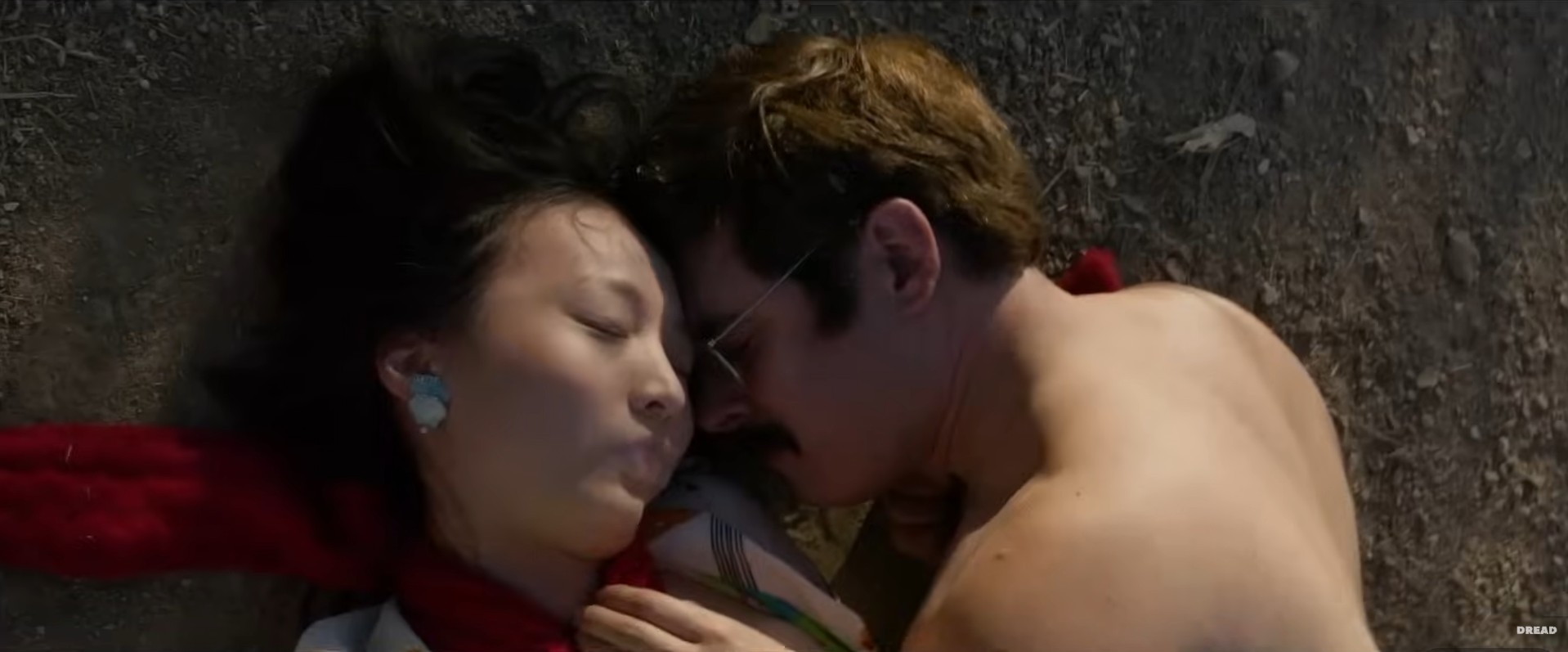
American Edmund Kemper is the titular subject of the latest film from director Chad Ferrin, horror director known for pushing eyelids open for atrocity-laden films, such as “Someone’s Knocking at the Door,” “Pig Killer,” and “Scalper.”  Ferrin also cowrites the biographical horror drama with Stephen Johnston, a serial serial-killer screenwriter who has painted with font some of America’s most notorious serial murderers from Ed Gein to Ted Bundy, to Kenneth Bianchi from “The Hillside Strangler.”  The tall, dark complexioned, round glasses framed, and pitched mustached Kemper is the next subject for Johnston and the first serial killer biodoc from Ferrin that takes him from fiction to nonfiction while still retaining his admiration for graphic content, produced under Ferrin’s production company of Crappy World Films in association with Dance On Productions and Laurelwood Pictures.

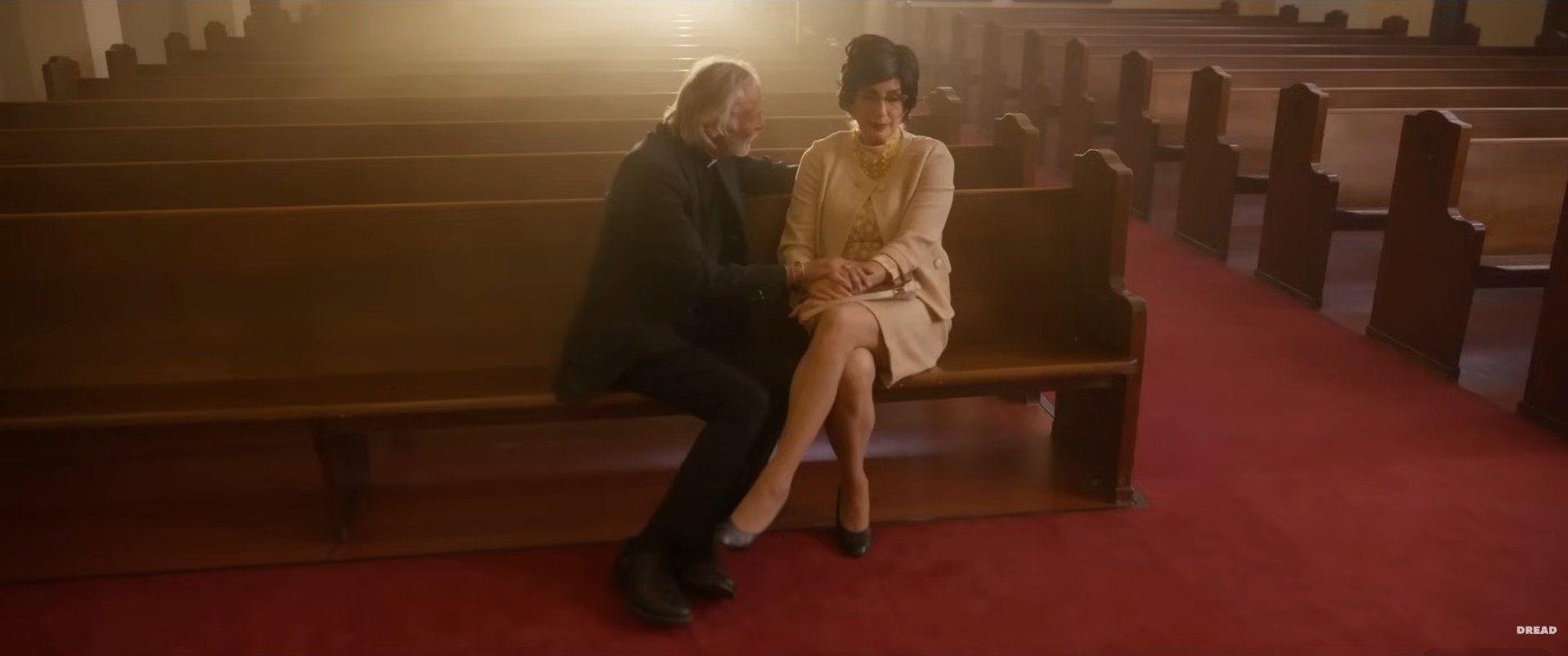
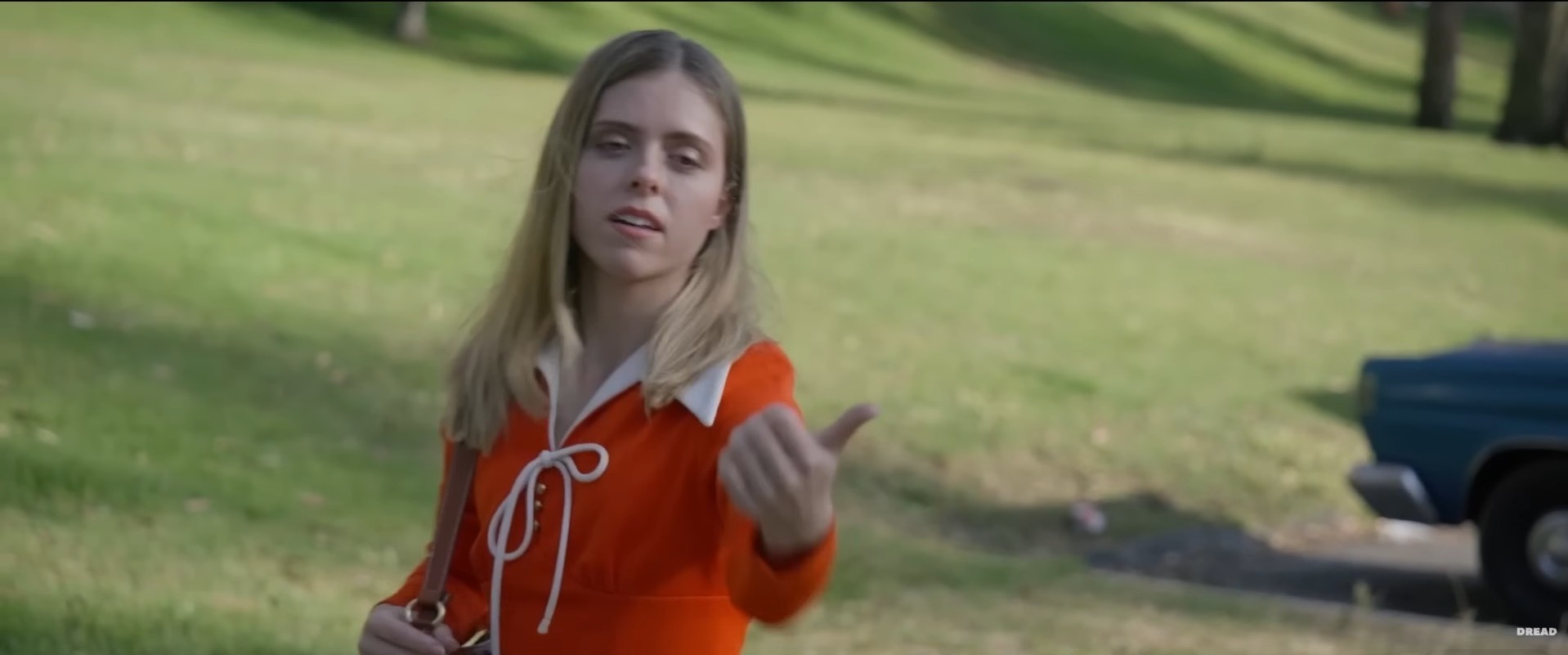
In the role of Kemper is Brandon Kirk who is a by all comparisons a beefier Ed Helms and Kirk has worked with Ferrin on numerous projects since their first collab in 2021’s “Night Caller,” marking “Ed Kemper” as their sixth film together in Ferrin’s rapid release method.  Initially, Kirk seemed to not fit the role that started off with Kemper suitcase in hand being escorted out of the psych hospital and back into society.  His presence felt shallow, unimportant, and a punching bag for his mom’s barrage of boozy hate with little kickback from Kemper’s large and formidable frame and his deadly past which was only half a decade ago.  Kirk has the tall stature and framework to resemble Kemper in that department but didn’t quite fit the bill instill a confident killer that can chill to anyone to the bone with a simple smirk.   By the end, Kirk proves our conceptions incorrect by becoming a delusionally composed killer that no longer needed a smirk to make blood curdle but rather just look into the camera with his plain eyewear frames and mile stare when casually conversing atrocity as if noting the weather.  It’s plain to see how Kemper came to be with a mother like Clarnell Strandberg and her incessant physical and verbal abuse through and beyond Kemper’s youth; Susan Priver, who has also worked with Ferrin and Kirk since “Night Caller,” nails worst mother of the year being in Strandberg’s constant drunken tirade.  Kirk and Priver’s mother-son dynamic has no and is not depicted to have such traditional warmth or merit and, instead, is a one-sided browbeating at Kemper’s expense is fueled by necessity, and perhaps a little bit of masochism on Kemper’s part because if it really got under the skin of either one of them, I’m sure living on the street would have been better.  Repeat scene principals are laid with only a few with Brinke Stevens (“Nightmare Sisters,” “Slave Girls from Beyond Infinity”) in the role of Clarnell’s closeted lover Sally Hallett, adding a bit more complexion to Clarnell’s life choices and fueled bitterness after failed heterosexual marriages, and Joe Castro (“Blood Feast 2:  All U Can Eat”), special effects makeup artist on the film, also down the traditional black horn, red-caped devil that influences young Kemper’s abused mental state.  The co-ed of the Co-Ed Killer include roles filled in by Erin Luo (“Feral Female”), Patty Hayes, Isabelle Morgan, Autumn Rose Ruch, Gloria Therese, and Katie Silverman (“The Exorcists”).  Familiar faces of Lew Temple (“The Devil’s Rejects”), Robert Miano (“Chained Heat”), and Cassandra Gave (“Conan:  The Barbarian”) pop in supporting parts. 
If you’ve seen the deeply studio underappreciated and fan-favorite “Mindhunter” Netflix television series that was prematurely and devastatingly cancelled, Cameron Britton’s performance may have already seared a first impression of Kemper.  The David Fincher crime drama was dark, bleak, and interesting in what makes serial killers tick as the series investigators sat down with Kemper and utilized him as a source of knowledge, much like novelist Thomas Harris had done with his Hannibal Lector character to track down the Red Dragon killer.  Britton’s large stature and soft-spoken delivery made for a terrifying persona when Kemper goes bluntly, coldly, and without expression into detail of his own exploits and methodology with women and corpses.  Side-by-side, Britton and Kirk are starkly different portrayals and those familiar with “Mindhunter,” like me, may already have an impressed idea of Ed Kemper, but Kirk manages to reign in that initial impression and engrave his own version of the murderer into the solidified stone.  In contrasting stylistic and storytelling choices, Ferrin’s film also strays away from reality quite a bit with the Devil inside Kemper’s mind as a child, his frequent disconnection with time, and delusions with seeing things, like John Wayne knocking on his driver side window and giving him sage advice.  There’s more cinematic universe with “Ed Kemper” the feature film than reality-gripping realism to tell his tale without sensationalism, but the story does get down and dirty in Kemper’s Co-Ed killing days.  Initially, the feature felt watered down and wouldn’t go into the darkest of territories inside Kemper’s skeleton closet and deranged mindset but Ferrin, true to form, gets weird with Kemper and his sexualized obsession with dismembered corpses, unafraid to flash gore and nudity that couldn’t go untold with this type of nonfictional narrative, and to be honest, being the nudity shy Dread Presented film, I was shocked with their green light of certain scenes. 
Dread and Epic Pictures Group present true crime horror-drama “Ed Kemper” on Blu-ray that’s AV encoded with 1080p resolution on a BD25.  Presented in a widescreen 1.85:1 aspect ratio, Jeff Billings cinematographer handles the 70’s aesthetic of an arid brown California scenery melded perfectly with 70’s period specific avocado green, mustard yellow, and a singed orange while also tackling the black-and-white representing Kemper’s childhood past.  No compression issues to note, blacks are solid, the colors saturate and diffuse nicely throughout, and details are on the softer side but stick the detailed landing unequivocally in the color scenes with the black-and-white harnessing what it can through lack of color.  The English language audio track is compressed with a Dolby Digital 5.1 and Dolby Digital 2.0.  The sole compressed options hangs back the full potential of disorienting muscle, such as with Joe Castro’s basement dwelling devil who’s aimed to be an intense, delusional provocateur of Kemper’s evildoings and also Kemper himself when he goes into full-throttle turmoil within himself, when he can’t take his mother abuse or when he’s grinning ear-to-ear with killing, hacking up, and necrophiliac-loving co-ed victims.  Dialogue comes through clear and clean with optional English and Spanish subtitles available under the title menu.  What’s additional interesting about the “Ed Kemper” score is it’s orchestrated by Richard Band, brother of Charles Band, and is a stray away from his conventional carnivalesque tone into a more traditionally dark that swells tension when needed and coddles the more abusive scenes to picture Kemper as the victim of abuse.  Special features contain an audio commentary track with director Chad Ferrin, co-ed victim audition tapes, deleted scenes, a Kemper 70’s Psycho featurette documentary that’s a raw look behind-the-scenes and get a real sense of Chad Ferrin’s all-in, guts and all, directing style, a Lost Ending providing an alternate finale to the sensationalized Kemper tale for this release, “The Devil’s Slide” music video, the official theatrical trailer, and trailers for other Dread Presents films.  The traditional Blu-ray case has a mustard yellow covert art of Kemper’s face close up but does not appear to be Kirk’s Kemper mug.  The cover art is one sided and there are no other physical trimmings with a disc printed with Kirk’s Kemper mug split down the middle expressing two different faces and incorporated into a personnel file like design.  Not rated with a runtime of 92 minutes, “Ed Kemper” is encoded with a region free playback compatibility. 

Last Rites: To put all of his immoral and depraved transgressions into just over 90 minutes is simply skimming the odious surface but the Chad Ferrin and Dread / Epic Picture Group collaboration condense the irreverence and the ickiness of “Ed Kemper” onto a platform that reminds us all there is true pure evil in this world.

“Ed Kemper” on Blu-ray Home Video

Tonight’s Next Guest is EVIL! “Late Night with the Devil!” reviewed! (Second Sight Films / Limited-Edition 4K UHD and Standard Blu-ray)

Check Out the Package on Second Sight’s Latest Limited Edition – “Late Night with the Devil!

In the golden age of late-night television shows, Jack Delroy was one of the hottest late-night comedians and talk show hosts of the early 1970s, only to be beaten out by inches by rival talk show host Johnny Carson every year.  By 1977, Delroy’s viewers and popularity on his show Night Owls was slipping after multiple failed attempts to revive the show’s viewership figures and to hit the number one spot for syndicated station UBL during sweeps week year after year.  That years Halloween episode, during the sweeps week, would promise to be one to be remembered when Delroy brings a medium, a magician-turned-magician promulgator, a paranormal psychologist, and her adopted subject, a young girl who was the last known survival of a Satanic cult.  While the lineup entertains the live audience and those viewers at home throughout the night as well as being excellent for the ratings game, Halloween thins the layer between the real world and the supernatural world and an awry demon summoning goes horribly wrong, caught on the station’s camera, and with Jack Delroy and his guests caught in the middle.

If you’ve never had the pleasure of seeing “100 Bloody Acres,” the 2012, underrated Australian comedy-horror has a fine entertaining balance of black humor, gore, and suspense.  The directors behind the little-known venture, brothers Cameron and Colin Cairnes, may not have moved the needle with their debut feature in Australia, nor globally for that matter, but their latest, a 1970s, found footage, period piece surrounding demonic catastrophe on live television entitled “Late Night with the Devil,” carries with it significance and growth, personally and globally.  Having also written the script, the Cairnes recreate a time period when television use to capture grotesque and jarring images to shock the masses in full, unbridled color through the whimsical lens of a late-night television show.  In a production company opening that seemingly would never end, “Late Night with the Devil” is a conglomerate effort from IFC Films, Shudder, Image Nation Abu Dhabi, Spooky Pictures, Good Fiend Films, AGC Studios, VicScreen, and Future Pictures and produced by Adam White, Steven Schneider (“Trap”), John Mulloy (“Killing Ground”), Mat Govoni, Derek Dauchy (“Watcher”), and Roy Lee (“Barbarian”).

In order for “Late Night with the Devil” to work, the Carines brothers needed a principal lead to understand what it means to be a charismatic and funny host of 1970s late night television.  They found niche trait in “The Last Voyage of the Demeter” and James Gunn’s “Suicide Squad’s” David Dastmalchian who is an adamant man of horror himself from genre scripts, articles, and comic books to being a horror themed host himself as Dr. Fearless hosted by Dark Horse comics.  Dastmalchian plays a different sort of host for the film, a quick-wit, neat as a pin, and handsome Jack Delroy who has lofty goals of elevating his show to the number one spot in the domestic market.  Early success drives Delroy who will do anything to outscore late night king Johnny Carson but when his wife (Georgina Haig, “Road Train”) falls ill and dies early, the ratings battle slows for Delory’s show until his return to try and revive glory with kitschy content.  Halloween 1977, sweeps weeks, proves to be a chance for Delroy and his manager (Josh Quong Tart, “Little Monsters”) to spice things up with phantasmagoric guests in Christou (Fayssal Bazzi), an arrogant former magician turned cynic (Ian Bliss, “The Matrix Reloaded”), and a paranormal psychologist (Laura Gordon, “Saw V”) and her adopted subject Lilly, the debut feature-length film of Ingrid Torelli.  Aside from Chicago-born Dastmalchian, the rest of the Australian production is casted natively and do an impeccable vocal mimicry of an American accent while stunning and convincing in their respective roles, especially for Torelli whose piercing blue eyes, rounded check line, and gently raspy voice gives her an uneasy accompaniment to her off-putting innocence that works to the story’s advantage.  The cast rounds out with key principal Rhys Auteri playing Jack Delroy’s quirky sidekick host Gus McConnell whose story progression trajectory borders the voice of reason ironically enough and without McConnell and Auteri’s spot-on depiction of host announcer and comedic adjutant, there wouldn’t be steady fidelity for those who grew up on late night TV.

Late night TV essence is beautifully captured with mock production set of a 70s television studio, acquired era garbs, costumes, and accessories, and performances that provide a real flavor for programming of that time, and I would know as I would obsessively glue my attention to Johnny Carson reruns at a young age in the 1980s to early 90s.  The Cairnes and director of photography Matthew Temple deploy a studio reproduction of a three-way camera system to unfold the carnage; yet the forementioned behind-the-scenes moments in between live-air tapings feels forced, unnecessary, and artificial to the story with a lack of explanation to who and why these in-betweens are being done.  The black-and-white scenes vary in cameraperson positions from behind the coffee and snack table, behind fake floral, or just right in their face that steals from the live-tape realism.  What then ensues when the demonic light beams from one of the guest’s split open head does redirect attention to the psychokinesis death and destruction and this removes those behind-the-scenes fabrications with a replaced personal, interdimensional Hell for Delroy, shot in a more conventional style outside the confines of found footage under omnipotent means.  Cameron and Colin’s part-documentary, part-found footage, and part-conventional efforts prologue the story with an out, one that sets up connections to link violence on a single character lightning rod with maximum collateral damage, and that lead up of information almost seems trivial but works to the advantage on not only the character’s background but also generates a real spark of juicy, full-circle, nearly imperceptible greed that comes with a cost. 

Second Sight Films knows a good movie when they see one and quickly snatches up the rights to release “Late Night with the Devil” on a limited-edition, dual-format collector’s set.  The UK distributor’s 4K UHD and Standard Blu-ray combo box comes with an HVEC encoded, HDR with Dolby Vision 2160p, BD66  and an AVC encoded, 1080p high-definition, BD50, both formats decoding at a refresh rate around 24 frames per second and presented in the three aspect ratios to reproduce 70’s era television ratios with a 1.33:1 and European ratio 1.66:1 as well as seldomly switching to a 2.39:1 widescreen for more down the rabbit hole sequences.  Much like the variety of aspect ratios, an intentional ebb and flow design between color and black-and-white draws demarcating lines from the colorful live tapings to the monochromic backstage footage after the live cameras stop broadcasting.  To help lift the period piece, three-way studio cameras film within a broadcast simulated fuzzy aberration, interlacing or analog abnormalities, and color reduction used to flatten out the vibrancy some, just enough to be perceptible, until the transcendental camera takes hold and the color because richer, glossier in a moment of unclear clarity.  Textures are often lost in the fuzziness but emerge better out of the backstage footage and the eye-in-the-sky scenes.  The lossless English language DTS-HD Master Audio 5.1 adds an eclectic charge to the mostly grounded television broadcast, rooted by a single set nearly most of the duration.  In frame band elements and instrumentation adds that upbeat and jazzier score denoting late night introductions and commercial breaks.  Vocals are often muffled when viewing the show on a screen and in depth but becomes more robust and clearer when switched to camera angle; this goes hand-in-hand with the dialogue which is clear and acute when needed.  The demonic presence can come off as artificial but still manages to work within the construct.  The range is impressive for a single setting that sees audience’s reactions and loop tracks, the hustle and bustle of backstage when off air, spontaneous combustion, sickening wrangling of bodies, and, naturally of course, a blazing beam of light.  English subtitles are optionally available for the hearing impaired.  With Second Sight’s limited-edition contents, you know you’re getting your money’s worth in exclusives.  Both formats include bonus features, which is surprising considering the UHD takes up a lot of space.  These features include a new audio commentary by film critics Alexandra Heller-Nicholas and Josh Nelson, a new interview with The Cairnes brothers Bringing Their ‘A’ Game, an interview with actor Ian Bliss Mind if I Smoke?, an interview with actress Ingrid Torelli We’re Gonna Make a Horror Movie, an interview with actor Rhys Auteri Extremely Lucky, a video essay entitled Cult Hits by Second Sight content creating regular Zoë “Zobo With A Shotgun” Rose Smith, behind-the-scenes, the making-of the Night Owls brassy band music, the SXSW 2023 Q&A panel with star David Dastmalchian and directors Colin and Cameron Cairnes.  Limited-edition contents come with a rigid, black slipcase of minimalistic but effective artistic work of Jack Delroy and the devil’s pitchfork complete with pentagram on the backside.  Inside the slipcase is a tall, media jewel case to hold both discs on each side, each represented with a story character in front of black backdrop.  A 120-page color book provides new essays by Kat Hughes, James Rose, Rebecca Sayce, Graham Skipper, Juliann Stipids, and Emma Westwood, plus storyboards, costume designs, and a behind-the-scenes gallery.  Lastly, there are six 5 ½’ by 7” character collector cards.  Second Sight’s Blu-ray release is hard encoded region B playback only but the 4K is region free with both formats clocking in with a runtime of 93 minutes and are UK certified 15 for strong horror, violence, gore, and language.

Last Rites: Once again, Second Sight Films clearly has their eyes on the prize and contributes to dishing out the best possible transfers and exclusives when considering physical media. Their latest, “Late Night with the Devil,” is no longer the host but the hosted with a tricked out limited-edition set best watched from under the sheets late at night and thoroughly enjoyed within its special features after the film credits roll.

Check Out the Package on Second Sight’s Latest Limited Edition – “Late Night with the Devil!