Rage EVIL Leads to A Legion of Drone Dwarfs! “The Brood” reviewed! (Second Sight / 4K UHD)

“The Brood” Available Now from Second Sight!

After a series of mentally abusive behavior, Frank Carveth’s wife Nola resides under the unorthodox psychology of Dr. Hal Raglan whose controversial impersonation techniques to break down his patients’ dissociative psychological hangups and destructive blocks.  After months of therapy and witnessing Dr. Raglan’s methods in action, Frank is ready to pull the plug on the doctor’s sideshow sessions he deems are doing more harm than good when his daughter shows signs of physical abuse after a visit with her mother.  The prolonged verbal bout to get his wife out of Raglan’s care leads to Frank confiding in Nola’s mother who is found brutally murdered soon after.  When Nola’s estranged father comes into town to oversee the burial arrangements, he’s also brutally murdered.  Frank begins to connect pieces, theorizing that Dr. Raglan’s procedures and the murders may be linked and as he investigates further, the truth is more terrifying than he could ever imagine. 
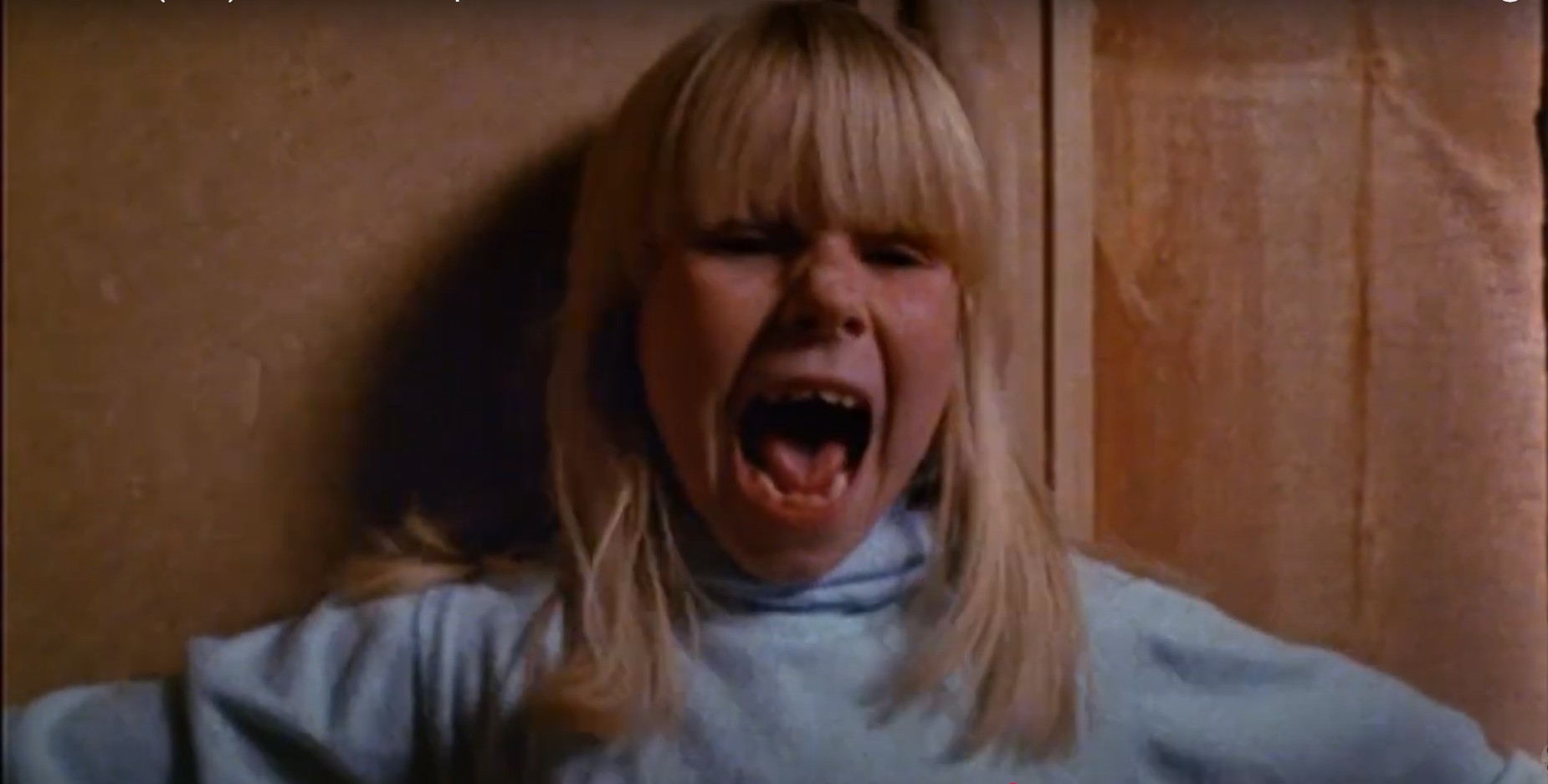
Surging with emotional turmoil through a bitter divorce with ex-wife Margaret Hindson, Canadian body-horror director David Cronenberg pulled the rancorous inspiration from that turbulent time to write the originial screenplay for “The Brood,” a 1979 released thriller between an estranged couple, the effect of their ascending troubles upon their only child during the separation, and the sort of radical and systematic behaviors and practices used to reform a relationship bond that actually divides the emotional expanse even further.  Sprinkle a little of the unknown and grotesque abilities of unnatural corporeal world in there and you have yourself one hell of a dysfunctional and undomesticated horror only the unconventional David Cronenberg could conjure.  “The Brood” is produced by Claude Héroux, who would go on to produce Cronenberg’s next series of films, “Scanners” and “Videodrome,” and the Ontario filmed production is a studio venture from the CFDC (Canadian Film Development Corporation), Elgin International Films, and Mutual Productions.

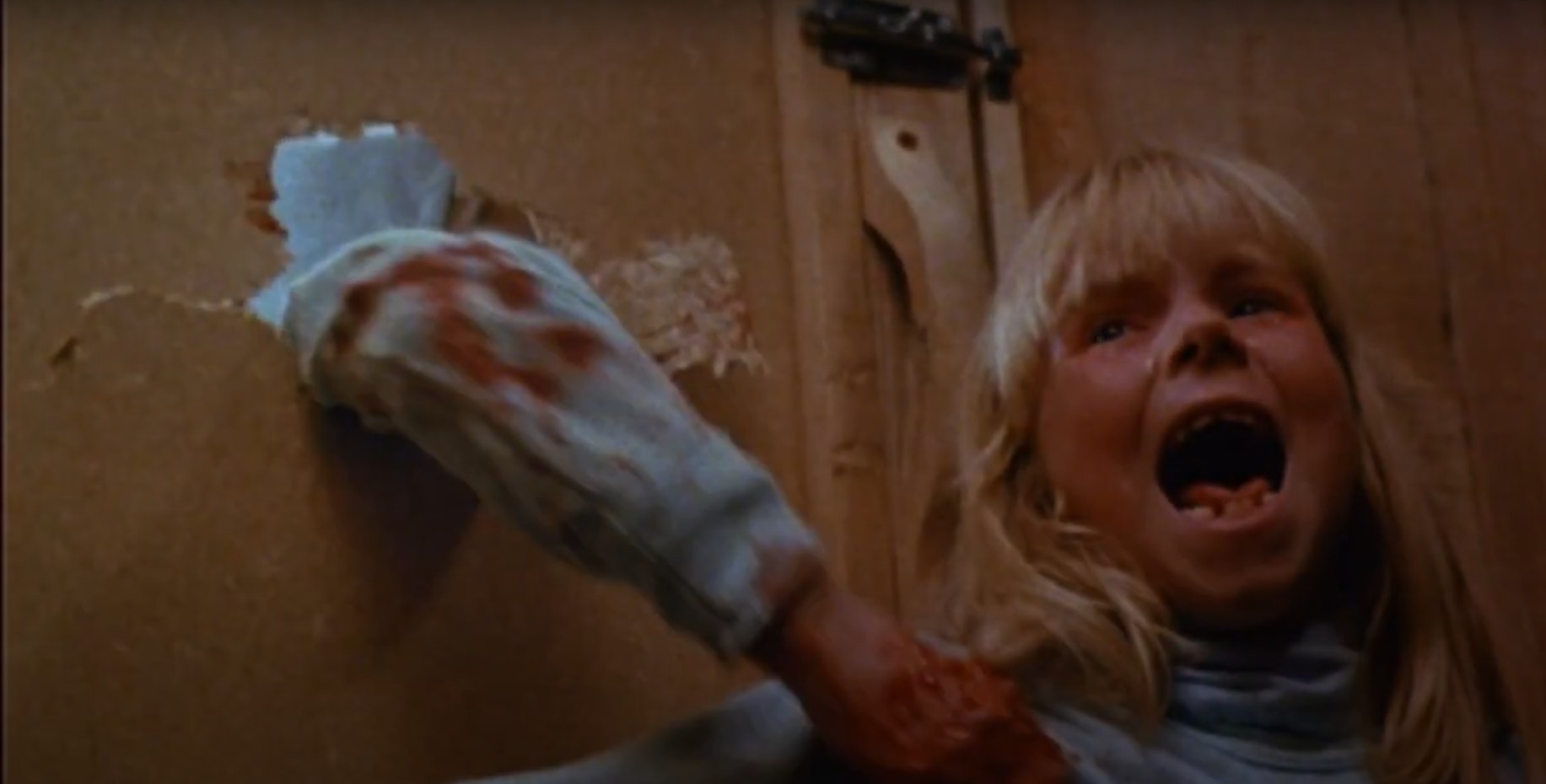
Art Hindle is in the role of Frank Carveth, a father initially skeptical and frustrated with his wife’s supervised treatment and care.  The “Black Christmas” and “Invasion of the Body Snatchers” actor Hindle plays the role of a hinged investigative husband-parent involved into something far more unbelievable than initially imagined.  Next to his on screen dazed and mentally tarnished wife by Samantha Eggar, of “The Exterminator” and “Demonoid,” Hindle enacts normal responses that carry over into extreme situations when those around him – his mother-in-law (Nuala Fitzgerald, “Obsession”), his father-in-law (Henry Beckman, “Side Roads”), and his daughter’s teacher (Susan Hogan, “Phobia”) who might have had a little something-something with while on the rocks with the misses – dies a violent death at the hands of kid-sized mutants that resemble, partially, his own daughter Candace (Cindy Hinds, “The Dead Zone”).  As Nola Carveth, Eggars is only present in a few scenes alongside Dr. Raglan, played by the formidable British actor Oliver Reed (“Paranoiac,” “Gladiator”), as a staring into space, emotionally compromised woman struggling to cope with her past that makes her angry and upset and, in turn, makes her inexplicably conjure do-bidders in the birthing means of advanced evolution or in a parallelism to eusocial insects, like bees or ants.  Reed is the monkey in the middle of all of this between fending off Frank Carveth who challenges the results of his unorthodox psychological methods while also using those methods to unearth the root cause of Nola Carveth’s strange and unusual behavior and, eventual, psychic abilities.  Reeds delivers his typical stoic indifference which makes him ideal for a confident character of the scientific community eager for results rather than feeding his motivations with emotional fodder by empathizing with Carveth’s concerns.  Gary McKeehan (“Rabid”) and Robert A. Silverman (“Naked Lunch”) costar.

In his 50-year plus career, David Cronenberg has evolved in style, substance, and story that dip into more of alternate universes and deliver new ways to blend the future into an organic composite with commercial and social sub context.  While technology and personal and professional growth have developed the director into what he has accomplished and known for today, especially on the verge of his latest release with the living and dead connection theme in “The Shrouds,”  the core of what David Cronenberg does best and still does today has an etiology leading back to his earlier work and “The Brood” is definitely an archetype of his niche.  Cronenberg works the narrative up to his reveal of body horror, and “The Brood” is dangerously on the edge of being atypical, subjecting audiences to more of a buildup in the story and the delimitation of character  disclosure without a steady course of the maladjusted, mutated or modified human body as the villain or the escape, only for that theme to be quasi hinted and then unveiled at the end in a shocking reveal.  “The Brood” plays more of the slasher tones, using the children, dwarfs, or however you want to describe the little, mutant minions to be unknown villain tropes, even when one is laid up on a morgue slab for examination of its biology, or lack thereof.  Cronenberg’s directed ambiguity tees up one of the best endings of his career and, perhaps, even horror cinema as “The Brood” is queen sized stomach-churner, literally.
David Cronenberg’s “The Brood” arrives in 4K on a Ultra HD Blu-ray from UK boutique label Second Sight Films.  The BD100 is HEVC encoded with a 4K resolution or a pixel count of 2160 with Dolby Vision HDR10 and presented in a widescreen 1.85:1 aspect ratio.  On the back cover, the 4K restoration is approved by David Cronenberg.  There’s definitively a more positive treatment of the restored transfer that brightens with a slightly tweaked color grading compared to other DVD or Blu-ray releases, improving delineation as well as rectifying intended details to burst through what’s been long frustrating by a darkened wall of low-resolution definition.  Retaining and sustaining cinema coarse grain, the picture looks and feels incredibly natural without the presence of compromising touchups and smoothing overs that do more harm than good in the plastic-like approach to restoration.  The UHD reinforces the coloring with vibrant richness and range, boosting the once little Canadian film that could into an expensive-appearing optical overhaul that puts to shame previously shelved videos.  Audio fidelity is too retained with a LPCM 1.0 mono that although funnels through a single output is more than an adequate mix all in thanks to the competent sound engineering of Peter Burgess and team to amalgamate recorded sound and post-production ADR into a brawny singular unit that meshes nicely.  Dialogue foots the bill as a clean and clear presentation, the ambient sound design renders distinctly over without ambiguity, and longtime David Cronenberg collaborator and friend Howard Shore conducts an orchestra score that breaks through and keeps the course with an unforgettable amount of tension build.  English subtitles are available.  Special features are aplenty with a new audio commentary by film critics and historians Martyn Conterio and Kat Ellinger, a second commentary with film academic William Beard, interviews with actors Art Hindle and Cindy Hinds moderated by Fangoria’s editor Chris Alexander Meet the Carveths, an interview with executive producer Pierre David Producing the Brood, interview with cinematographer Mark Irwin The Look of Rage, interview with composer Howard Shore Scoring the Brood, an interview with actor Robert A Silverman Character for Cronenberg, a new video essay by film journalist Leigh Singer Anger Management: Cronenberg’s Brood and Shapes of Cinematic Rage, and an archived David Cronenberg interview The Early Years.  The standard Second Sight release comes in the traditional 4K UHD black Amaray case with new unnamed, unsigned illustrated cover art.  The UK certified 18 film is presented region free in this release and has a runtime of 92 minutes. 

Last Rites:  Cronenberg’s play on the word Brood is next level genius with litter rage as a result of mental health and a broken home.  The director’s filmic roots have proved time-and-time again his mastery of moviemaking as his body horror and thought-inducing stories, intermixed with social commentary, are complex visual and narrative devices braised an organic edge. 

“The Brood” Available Now from Second Sight!

There’s No EVIL Magic Cure for the Inevitable. “Bag of Lies” reviewed! (Dread / Blu-ray)

See What’s in the Bag! “Bag of Lies” on Blu-ray!

When everything seems to be going Matt and Claire’s way with a strong marital bond, a beautiful house, and rising careers, life throws them a nasty curveball – Claire is hit with inoperable, terminal cancer. Laid up in bed, her weak immune system and fleeting strength are spent on retching up the remains of the chemotherapy treatments she suddenly quits. Matt, under a considerable amount of pressure in losing his wife, has tried everything from conventional medical treatment to the snake oil practices of holistic cults. Desperate for a cure, Matt turns to a man and his bag. Not just any bag, but a bag given the right ritual and stated purpose will produce all that Mark desires and, in this case, the return of his wife’s good health. The man warns that rules must be followed and when Matt can’t uphold his end of the agreement, what he wishes for will still come true in a way most unpleasant.

“Bag of Lies” is the 2024 released supernatural thriller to boldly state that no matter whatever miracle cure is trialed or desperate attempted, one can’t stop the juggernaut of grim inevitability, and if somehow, someway one beats the momentous odds, nothing will ever be the same again or, perhaps, it will be worse.  Debuting his first feature, David Andrew James is the mastermind behind the screen treatment of the story, directing and writing the shooting script based off a story by Nick Laughlin, known for his art and props on “Wrong Turn” remake and “Bones and All,” and “Clever Girl” creator Joe Zappa that tackles one of the more painfully enduring occurrences of impending loss, the slow and excruciating rot of cancer that selfishly takes everything and all anyone, especially loved ones, can do is sit and watch the wasting away from internal consumption of being.  “Bag of Lies” is another Dread Presents and Traverse Terror collaboration, produced by Dread and Epic Picture’s Patrick Ewald and Matt Cleckner alongside Spencer Frazen, Joe Hui, Victoria McDevitt, Jake Heineke, and director David Andrew James.

One of the problems “Bag of Lies” has lies with the married couple Matt and Claire Quimby, played respectively by Patrick Taft and Brandi Botkin (“Bystanders,” “Wicked Ones”).  The problem is not chemistry as the affectionate teasing and relationship frustrations are the hallmarks done right to reflect any kind of amorous partnership on screen and the fact that Taft and Botkin have previously collaborated also makes establishing an already established couple a lot easier but the latter has been under different roles and conditions with Taft producing projects, such as “Wicked Ones,” and both also having roles in the same television series entitled “Wildfire” but overlapping only once in their own three episodes span.  The problem falls upon how their characters got to be where they are now and that creates an injustice to that particular unpleasant side of the story because the audience never experiences the good times the Quimby’s once had before cancer strikes at Claire, not even in a remote sense, and that ultimately fails them because its hard to fall long and hard if not privy to the height of their good fortune.  The lack of backstory extends to the supporting cast with Matt’s awfully empathetic cousin Harold (John Wells, “The Possessed”) who hangs around, brings over a 6-pack, and occasion reworks their basement to surprise Claire with an in-house music studio, more so the former two, and the mysterious man Al (Terry Tacontins) who offers or is sought out or is just happened upon, it’s unclear, the even more mysterious bag option to Matt with a vague understanding of instructions or the cost of what he’s about to unleash or sacrifice or both.  These supporting characters lack of reason for being a cog in the bigger machine seems happenstance rather than necessary to the progression or the problem in what evolves into more of a three-way triangle between Matt, Claire, and an unusual young woman sneaking into their house and property and has a quirky laugh and a dark circle on her palm, played by Madison Pullins (“Baby Oopsie: The Series”).  Aja Nicole and a Kayla Theis round out the cast as Matt’s doctor friend Gwen and local bartender Lilly who has loved one ailment issues that parallel to Matt.

The title “Bag of Lies” is a spin on the idiom a pack of lies, defined as a grouping of false statements or information led to deceit.  “Bag of Lies” plays and preys upon that deception of an all-in-one, quick-and-easy remedy aimed to be a cure-all when, in reality, the thing to solve all your problems is nothing but snake oil that builds hope out of desperation, that sees confidence stemmed from false promise, and instills blindness to the consequences it delivers.  David Andrew James favors suspending in disbelief more than what’s comfortable as Matt experiences haunting visions of ominous means to an end yet doesn’t seem too bothered to really dig into the background and so the story flounders in the second act with Matt just experience weird and frightening sights and sounds without even an attempt to explain, until near the end.  Frankly, if I kept seeing a quirky, quizzical madwoman constantly around and inside my house, the cops would be on speed dial.  Instead, Matt lets himself be silage for the taking, cut off from the rest of reality for the most part without ever going to the authorities, without ever confiding in his friends, nor without ever digesting his experiences and talking about it with his wife, who is usually part of the strange visional equation.  That isolation plays into the burdening effect of trying to beat the odds by doing it yourself and not asking for help, which is definitely being depicted here in Matt’s own surreal nightmare, but the lackadaisical effort and having one peculiar instance roll over him after another breaks down the story’s credibility.  Much like the cancerous rot that’s eating his wife from in the inside out, Matt’s own rot origins from being stagnant and it’s that do-nothing that bears the consequences of terrifying transfigurations in not only his sweet Claire but also in himself. 

“Invasion of the Body Snatchers” interlocked with desperation and a melancholic longing is how the “Bag of Lies” shapes fictional hope around a wrenched inevitability, similar to what the French author Guy de Maupassant once said,, “ the only certainty is death.”  Dread and Epic Pictures brings home an unrated, AVC encoded, 1080p high definition, BD25. Presented in a widescreen 2.40:1 aspect ratio.  Brandt Hackney’s shadowy cinematographer has a fairly nature presence in natural daylight sequences but utilizes a quite a bit of low-level, low-frequency lighting to create a soft incandescence and low-contrast shadows spreads.  Much of the same textures and colors are shown over and over and without that breadth of diversity, comparing scene-by-scene details are more than slim but what’s apparent is subordinate to the atmospheric lighting, or lack thereof, to create moody, broody dark house settings with little light to expose detail and color.  Even in bar sequences, the dimness doesn’t allow detail.  The English audio offerings are a Dolby Digital 5.1 and a Dolby Digital 2.0 Stereo. What’s uniquely about the “Bag of Lies” audio facet is the distinct distortional soundtrack by James Paul Bailey who, in his own words, could never recreate or repeat the score again because of the randomized tones and feedback produces by temperamental distortion boxes, overlayed and modulated to produce a one-of-a-kind soundtrack to parallel the rotting horror “Bag of Lies” corkscrews into. Dialogue does the job with a clean and clear rendering by an indifferently satisfying sort of humdrum performances unfazed by the surrounding sideshow of black bag magic and the curious curiosity that’s emerging vocally from within its capacity. There’s decent localized range within Quimby house with conversating interactions with a door or a vent in between, using post-production to fill in hurling diatribes from the basement below toward Matt in Claire’s voice. English and Spanish subtitles are optionally available. Special features include a brief behind-the-scenes featurette with cast interviews voicing their deconstructing opinions about the story. Though not listed on the back cover, there is a longer, more in-depth featurette around James Paul Bailey’s distortion oeuvre for the film that’s quite comprehensive, plus the film’s trailer and other Dread Presents film trailers. Physical features are just like all the other bare minimum Dread-Epic Pictures release with a standard Blu-ray Amaray and no inserts. The cover illustration has clunky written all over it with a photoshop job of what looks like a giant dirty taco, but it’s the titular bag, with a dirty disfigured hand reaching up and out. The release has a region A playback and has a runtime of 96 minutes.

Last Rites: Neither great nor is it terrible, “Bag of Lies” skips a few key steps toward being a promising indie horror and though the theme is poignant, fantastical, and infused with a jarring soundtrack, the ironic inevitability is there is no cure for what can’t be fixed.

See What’s in the Bag! “Bag of Lies” on Blu-ray!

Weak Meekness Leads to One’s Own EVIL Destruction. “Catacombs” reviewed! (Imprint / Blu-ray)

Own Your Copy of Imprint’s “Catacombs” on Blu-ray!

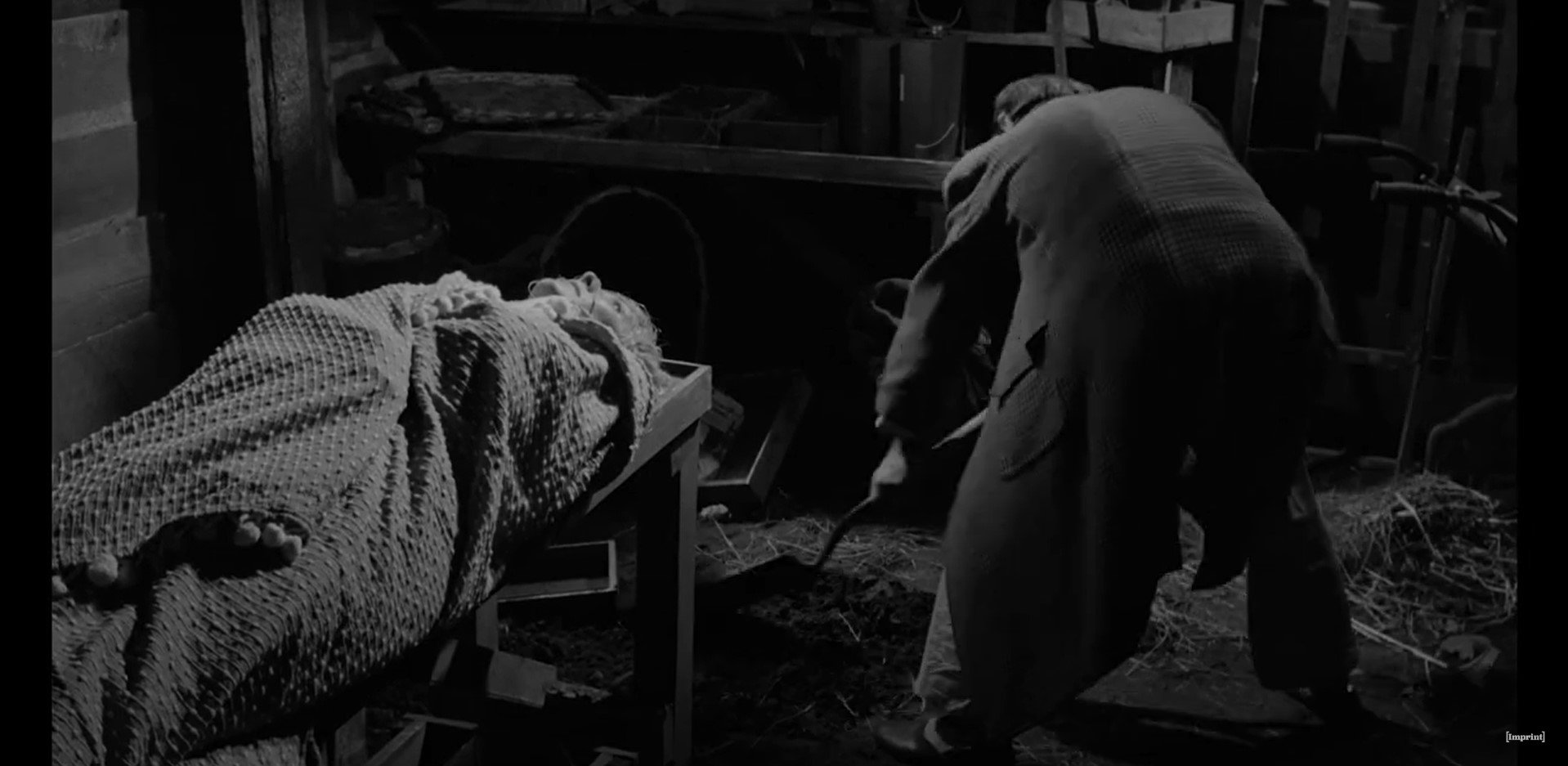
Ellen Garth, a strong willed and wealthy but physically afflicted businesswoman devotes her all her love to an enervated doormat of a husband, Raymond.  When Ellen’s beautiful young niece, Alice, returns to London from Paris after a year abroad, Raymond is smitten by her flirtations for older men and strikes up an affair behind his very perceptive and sly wife’s back who catches them in each other’s embrace.  Tired of being a slave to his wife’s controlling behavior and wanting to be free to court Alice, Raymond kills Ellen and buries her in the potting shed behind their honeymoon house in a plot conceived with Ellen’s right-hand secretary and former con, Dick Corbett.  Believing he’s free of her and having been willed her fortune to share with Alice, Raymond suddenly suspects, after a series of strange events, that he’s being haunted by Ellen’s ghost, or even worse, the undead Ellen herself. 

Black and while horror from half a century or more ago always leaves a lasting impression that terror and suspense can be created by virtually story and acting alone instead of a heavily reliance of special effects and visceral coloring, such as with gore or grotesqueness of the unfathomable creature.  The British film “Catacombs,” or otherwise known as “The Woman Who Wouldn’t Die” in America, is one of those fear manufacturing films generated by pure acting talent and the managing cleverness behind the camera.  The 1965 film is directed by “The Oblong Box” and “Scream and Scream Again” director Gordon Hessler with American screenwriter Daniel Mainwaring (“Invasion of the Body Snatchers”) penning the script based off an American novelist Jay Bennett’s novel of the same UK title.  Shepperton Studios served as house of operations for the Parsons-McCallum production under Neil McCallum and Jack Parsons and distributed by the BLF, British Lion Films.

There’s no such thing as wasted parts or throwaway performances in Hessler’s murderous-revenge haunt with precision-acute actors and actresses chin deep in their characters’ cruelty, callousness, conformity, and control.  Twists and tension-riddle rods help elevate this nearly 60-year-old film to refrain from aging poorly.  Gary Merrill, former husband of silverscreen actress Bette Davis and star of “All About Eve,” plays the meek husband Raymond wed into money but at the cost of his manhood.  Merrill plays convincingly into Raymond’s submissive, passive nature under the more dominant but fair and kind mogul lady Ellen Garth, a hip-afflicted women that doesn’t feel the ailment impede her wealth or attitude in life by way of British actress Georgina Cookson.  In the mix is Ellen and Raymond’s parentless niece Alice who has returned from her studies in Paris seemingly transfigured from a chubby child to a beautiful lady.  Jane Merrow, who co-headlines “Catacombs” with Merrill, finds her stride as the elder-entangling Alice secretly at-odds with her aunt by seducing Raymond behind her back.  Rounding out the principal foursome is Neil McCallum (“Dr. Terror’s House of Horrors’) as Ellen Garth’s sneaky secretary Dick Corbett who has a façade of a hard worker, but Corbett can’t keep up with boss’s demanding energy and is itching to subvert her.  When the story’s peak turning point hits, the expectation of character change recedes back to status quo as if Ellen’s death changed nothing other than open the door of opportunity for Raymond and Alice to connect without concern.  Yet, that inkling of shame, guilt, and fear, mixed under a plot of deception and murder, has the reverse effect of a now burdenless happiness, producing a very little capricious life-change, especially in Raymond who is still as amiable as ever.  “Catacombs’” fills out the intimate cast with Rachel Thomas and Frederick Piper.

The actual use of catacombs, or subterranean burial grounds, has little do in the film other than in its infinitesimal moment of being a key piece of evidence toward something amiss, a tell for foreboding or already doomed health, and serves as one playful, paralleling reason to Ellen’s resurrection, though not reflected in plain sight as playful or parallel by Hessler.  What’s intended the most is building the mysterious dread around Ellen Garth’s return in a semi-gloss gothic polish aimed to crack Raymond and Alice’s psyche in half.  Hessler breeds tension after tension to engulf the characters in an unrelaxing state of disgrace and distrust and what makes the matters worse for Raymond and unscrupulous company is while Ellen Garth may have held all the cards being an authoritative woman of status and wealth, she showed loyalty, humility, and adored her family, friends, and lover despite their flaws and circumstances.  That unjustifiable murder stings audiences the most, a straight shot to the sympathetic heart that creates a need to see those responsible punished by Ellen’s earth-soiled, grave-escaping, dead-cold hands with edge of your seat anticipation.  Is Ellen Supernaturally haunting her killers or is the guilt driving them mad? 

The only way to find out in glorious high-definition is to pick up a copy of Imprint Film’s definitive Blu-ray version of “Catacombs” on an AVC encoded, 1080p, BD50 presented in a 1.66:1 European aspect ratio. The black and white picture receives a 4K scan from the original nitrate negative for its worldwide Blu-ray debt and though not much to mention in regard to colorization and black levels, the monochrome remains sharp at all times in a pristine negative that sees no damage. Usually, black and white can issue fuzziness, heavy grain, and ghosting during spliced cell overlap but this print, or rather this scanned print, looks amazingly fresh, holding patterns and transitioning seamless to the highest of restorative care. The English language is a mix between American and British English encoded with an uncompressed LPCM 2.0 mono, rendering a dialogue centric audio with composter Carlo Martelli brass band that’s minor keys taut tension to swell during the height of suspense. Dialogue is clean and clear with very minimal crackling; there’s no wispy or hissing detected. Although the mono feed vectors flatly, the range surrounding “Catacombs” is vast and timed to tackle distinction between the audio idiosyncrasies. Optional English subtitles are available. Special features include an exclusive feature-length audio commentary with authors Jonathan Rigby (“English Gothic: Classic Horror Cinema 1897-2015”) and Kevin Lyons, a new interview with co-star Jane Merrow on her experiences in “Catacombs” Merrow & Merrill, new interview with continuity supervisor Renee Glynne and sound designer Colin Miller The Glynne-Miller Story, a new interview with composer Carlo Martelli Martelli & Martell, and with a still gallery ending the bonus material. Housed in a Hammer blood red cardboard slipcase designed with a rendition of the original poster, the Imprint release is it’s 317th title. The clear Blu-ray Amaray case is even more colorful with a giallo-colored title and back cover, overtop a frightened scene with stars Merrow and Merrill. The reverse side of the cover has more of the psychotronic photo of Ellen Garth (Georgina Cookson) staring blankly into a pocket mirror to submit herself under a trance. The BD is pressed with the same red coloring and half-woman, half-death figure as the slipcase with no inserts included. One thing I will say on the negative side of the package is that the Amaray case is a bit difficult to extract from the slipcase; you kind of have to shimmy and shake it out enough to pull the case out. The 90-minute feature is unrated and did play on our region free player without having to setup flip to the desired region for playback.

Last Rites: Gorgeously macabre yet classic packaging, Imprint’s Blu-ray release of “Catacombs” is must-own Machiavellian umbra of greed and foul play, a timeless tale yarned to yield a megaton of shadow-lurking, supernatural suspense.

Own Your Copy of Imprint’s “Catacombs” on Blu-ray!

A Thousand EVIL Little Legs Wriggle Inside You! “Creepy-Crawly” reviewed! (Well Go USA / Blu-ray)

Get Wigged Out by “Creepy Crawly” on Blu-ray!

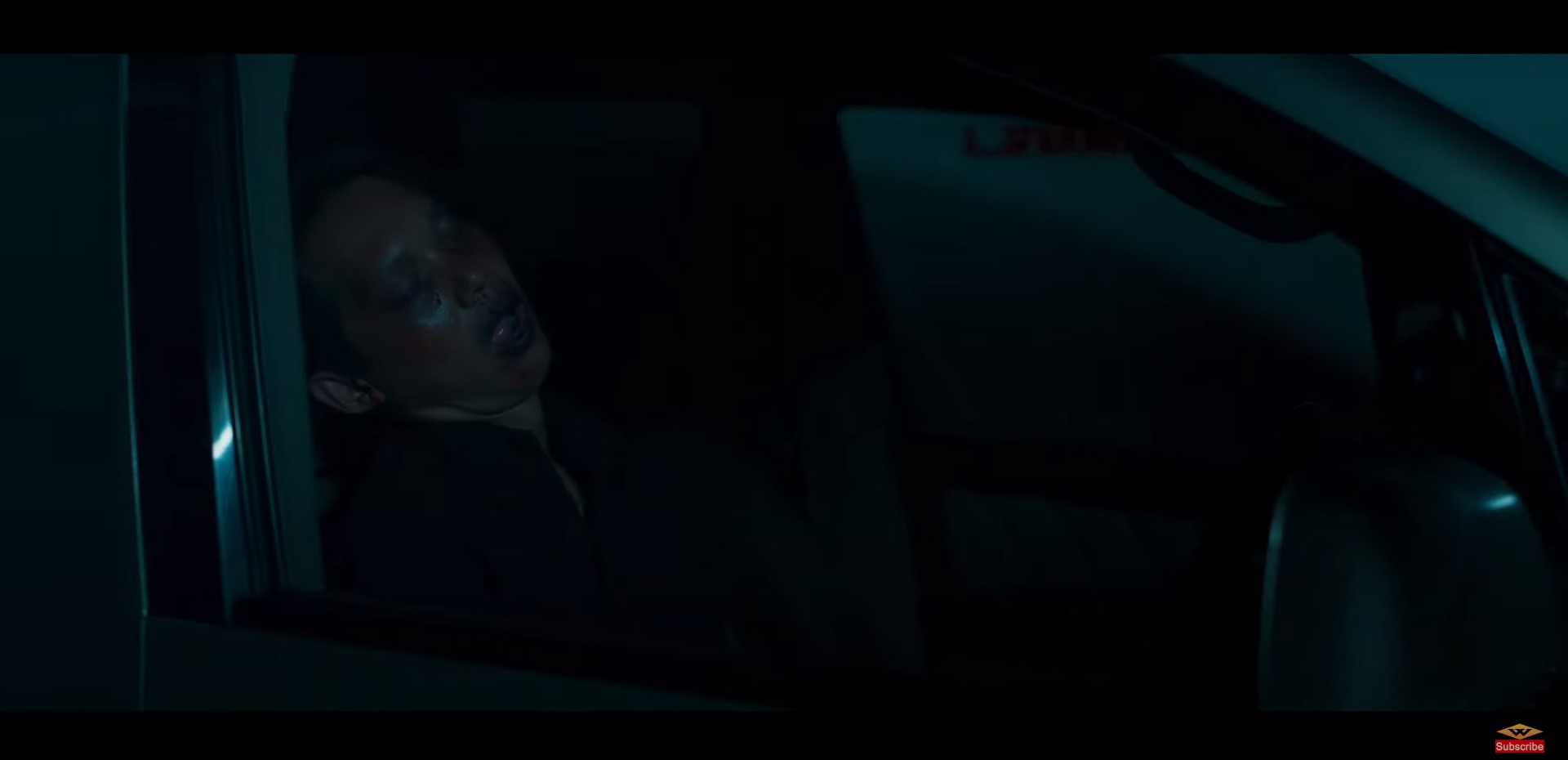
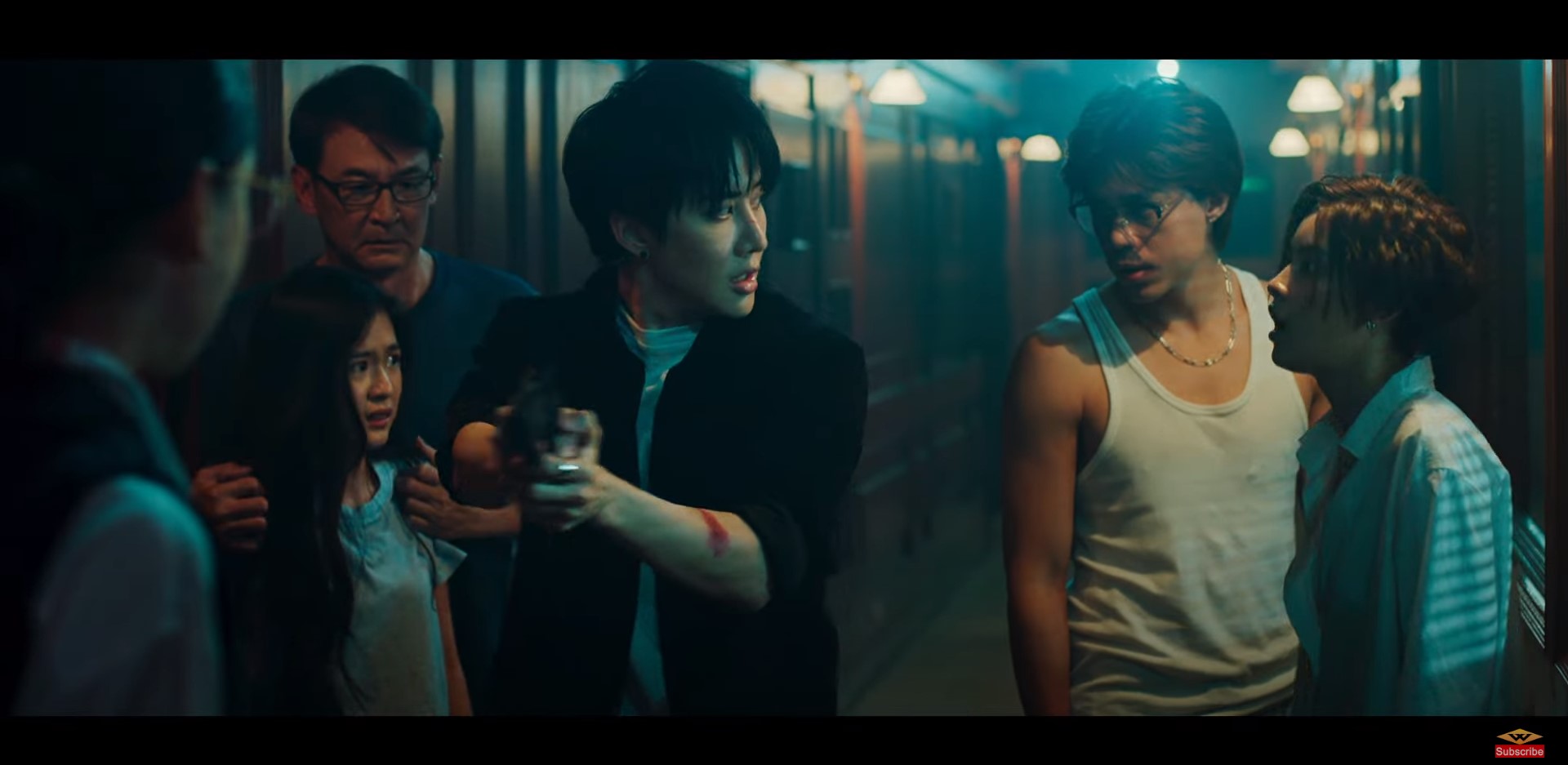
During the COVID lockdown, a group of tourists are confined to a quarantine appointed hotel in a Thailand city. Fielded by skeleton hospitality, the hotel aims to make the tourists comfortable as possible with the limited number of staff and security on hand. Though frustrated and displaced, the quarantined few feel ultimately satisfied by their popup accommodates spearheaded by the Thai government. However, one amongst the staff and tourists is a shapeshifting monster of local legends, jumping from body to body in hopes to find a person with unique blood in order to survive for eternity. Forcibly detained by a sleazy and easily persuadable hotel manager, Leo, Fame, and their families hardly trust anyone, even themselves, as a hidden creature invades a new host to become closer to living forever. It’s true shape like a centipede, the creature summons its smaller, poisonous brethren to wreak havoc inside every crevasse of an inescapable shelter.

Tapping into the same slithery vein as “Night of the Creeps,” “Invasion of the Body Snatchers,” or even “Slither” itself, co-writers-and directors Chalit Krileadmongkon and Pakphum Wongjinda channel their inner spirit animal, the thousand-legged wriggler, back to their home country of Thailand for a new creature feature sure to have your skin recoil with formication.  Also co-written alongside, Charoen Kaithitisuwan, “Creepy Crawly,” or better known in Thailand as “The One Hundred,” is the second feature for Krileadmongkon behind another unearthing creature construction in “The Beast Below” that was released the same year as “Creepy Crawly.”  For Wongjinda, the 2022 released film marks the 9th feature in the filmmaker’s 20+ year-long career who began in 2001 with a script surrounding a feminist ghost killing men victims in “Body Jumper.  “Wongjinda has been once around the horror subgenre carousel to now collaborate with the fresh perspective and ideas from the up-and-coming Krielandmongkon to extend Thai’s catalogue of cinematic chills and thrills.  Neramitnung Film and Fatcat Studios serve as production studios with producers Natchanok Kamonrattananan, Punyanet Tanaprapass (“The Beast Below”), and Kamonwan Kanaraksunti. 

Perhaps better if told in the perspective of an ensemble cast, “Creepy Crawly” reduces is principal character pool to just two, a hot-headed Taekwondo champion named Leo and a social media influencer aptly named Famed.  The two cross paths while being COVID quarantined, sharing a smoke in the stairwell while sharing breaking the hotel rules of remaining locked in their rooms.  There’s not much in the way of connection between the two characters, played by one half of the Golf & Mike musical group Mike Angelo (“The Misfits”) and the mixed heritage of English, Chinese, and Thai actress Chanya McClory, as the progressive action teases something more than just stairwell strangers as Leo frequently comes to Fame’s aid whenever he his sixth sense senses danger.  Both principals carry collateral damage weight with family members also being in quarantine with them; Fame has her brother and social media partner Fiew (Benjamin Joseph Varney, “The Promise”) while Leo has a slightly more extensive circle and greater family drama with sister Lena (Kulteera Yordchang) and their mute, widowed father (Paramej Joiam, “407 Dark Flight 3D”) to which with the latter Leo has an aversion in connecting with periodical flashbacks of Leo and Lena’s dying mother and somehow, which is revealed later, their father is to blame.  This creates more of an arc for Leo with an imbalanced, shared protagonist lead with Fame who we don’t get to know as intimately other than she has an incurable blood disorder that could be fatal if not treated with meds.  “Creepy Crawly’s” cast is beautifully eclectic, and I don’t mean with appearances but rather their interesting, robust with personal motivations, and not terribly dull or overtly bland with performances from Wanpiya Omsinnopphakul, Chanidapa Pongsilpipat, Sita Chutipaworakarn, Chutaporn Chaikawin, and David Asavanond as the slimy hotel owner.

As I sit down to gather my thoughts about this review squirming with venomous centipedes, a house centipede, or what we like to call in our house a thousand-legger, steps hundreds of feet-over-feet on the wall in front of me. Talk about good timing, bad omens, or just a straight up coinkydink when a cousin of the deadly antagonist you just bore witness in a film crawls up the wall in front of you. Despite the inspiration that scuttles in front of me, “Creepy Crawly” has a more fantastically gigantesque infestation. The story has a COVID-19 backdrop and is supposedly based off the story of Battambang told by King Chulalongkorn, aka King Rama V. I, unfortunately, can’t elaborate much about the story as I couldn’t dig up anything that closely resembles the analogy between a centipede invasion and a French conflict. Or are the centipedes a metaphor for the European encroachment? Or are they a metaphor for the COVID pathogen that’s hidden amongst the atypical carriers? Either way, “Creepy Crawly” is visual effects driven with a crevasse-trenched and many-moving-leg scaled arthropod with a pincher-laden head but before the monstrosity makes face, the mega-centipede can hop from body to body, able to protrude tentacled pinchers like spears, impaling victims as well as transposing itself into another body before sucking and skinning the host dry of life and flesh – very reminiscent of an Edgar suit. The jutting spears from the host never harms the body, alloying to-and-fro the skin, and clothing, in a compatibility of supernaturality that fits the folklore mold explained during the opening credits. That’s where I imagine the lore ends and the exoskeleton evil begins as we’re sucked into Leo’s daddy issues, the hotel manager’s self-preservation, and Fame’s bad blood that’s good for the big bad bug. Though Leo’s emotional pull the right heart chords and the hotel manager selfishness and greed adds tension and conflict to an already imposing no way-out scenario, the blood disorder plot device is skimmed to be barely tolerable without diving into the science of why a 10-foot centipede can survive on a compromised blood.

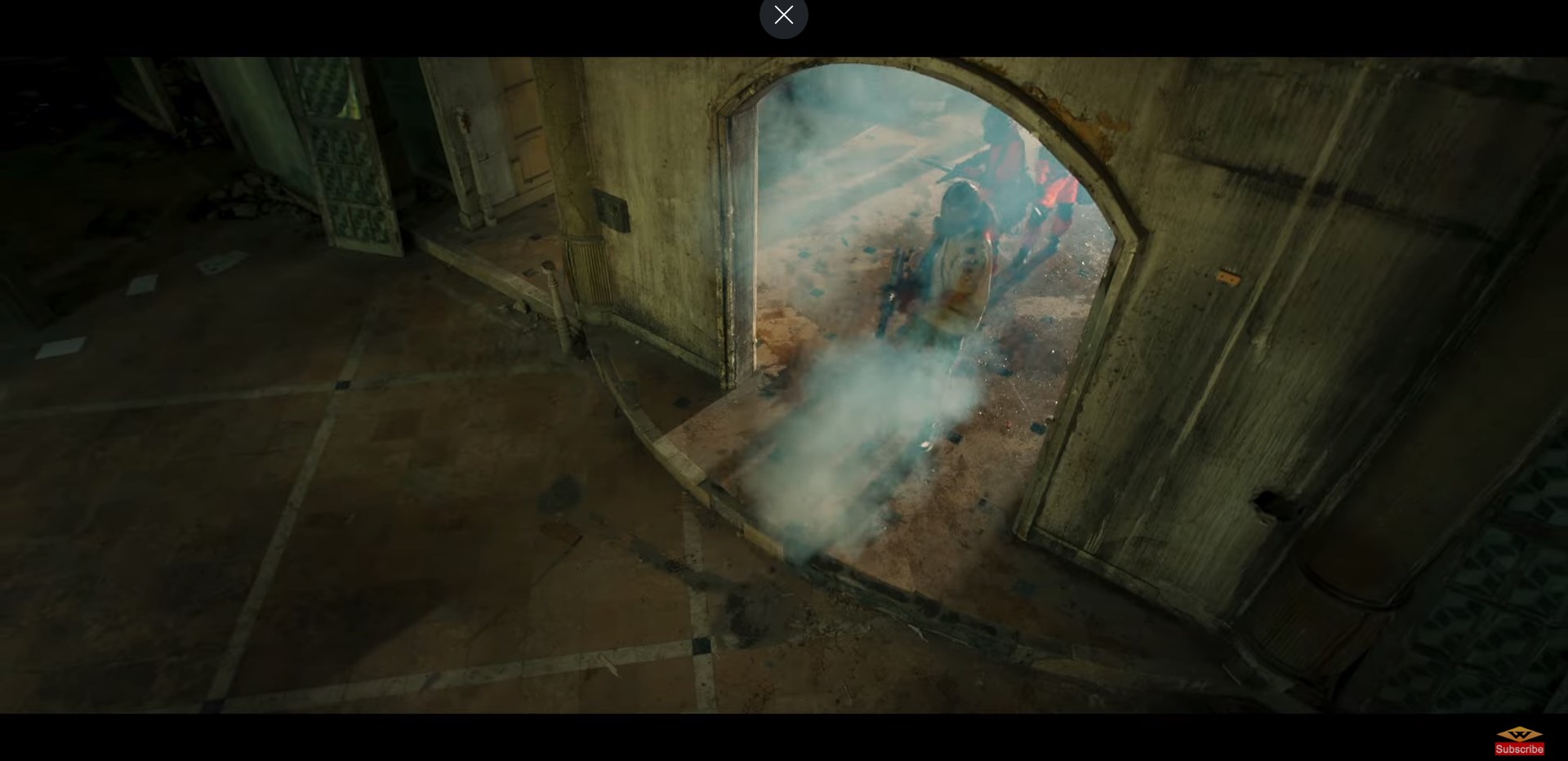
As far as COVID-theme foreign productions, “Creepy Crawlers” checks out as a roach motel monster movie from Well Go USA Entertainment. The distribution company’s Blu-ray is an AVC encoded, 1080p high-definition, and presented in a 2.39:1 aspect ratio. Visual effects conducted by Thailand’s Matchmove team have remarkable detail in the composited scenes with the exception of one latter scene that compromises the blacks of reality to a darker shade of gray or blue when overlaying it with the digitally added creature. Details are generally delineated nicely, color grading pops natural tones, and the BD25 offers sufficient space to suppress compression artefacts. The Thai DTS-HD 5.1 Master Audio with optional English subtitles greatly exudes the centipede click-marching and pinch clips to effectuate an army of killer scurrying arthropods swarming onto, into confined quarters and those suspected of sickness, COVID-19 to be exact. Dialogue cleanly renders, especially between the majority of Thai and the medley of minority languages, such as Chinese and English. Bonus features are limited to just Well Go USA previews/trailers in what has become another barebones release for the company. The Blu-ray comes in a standard amary case with snapper with fantastically to truth image of the creature on the front cover while the inside has a paper advert for three Well Go USA films with the disc art displays warm shades red and yellow in what is a very culturally appropriated Thai coloring. “Creepy Crawly” scritch-scratches the lousy sensation of a buggy creature feature with loads of action that tries to add and induce more into the narrative beyond what’s innately there and that can be a great repellant to this wecl invasive species of Thai genre films.

Get Wigged Out by “Creepy Crawly” on Blu-ray!