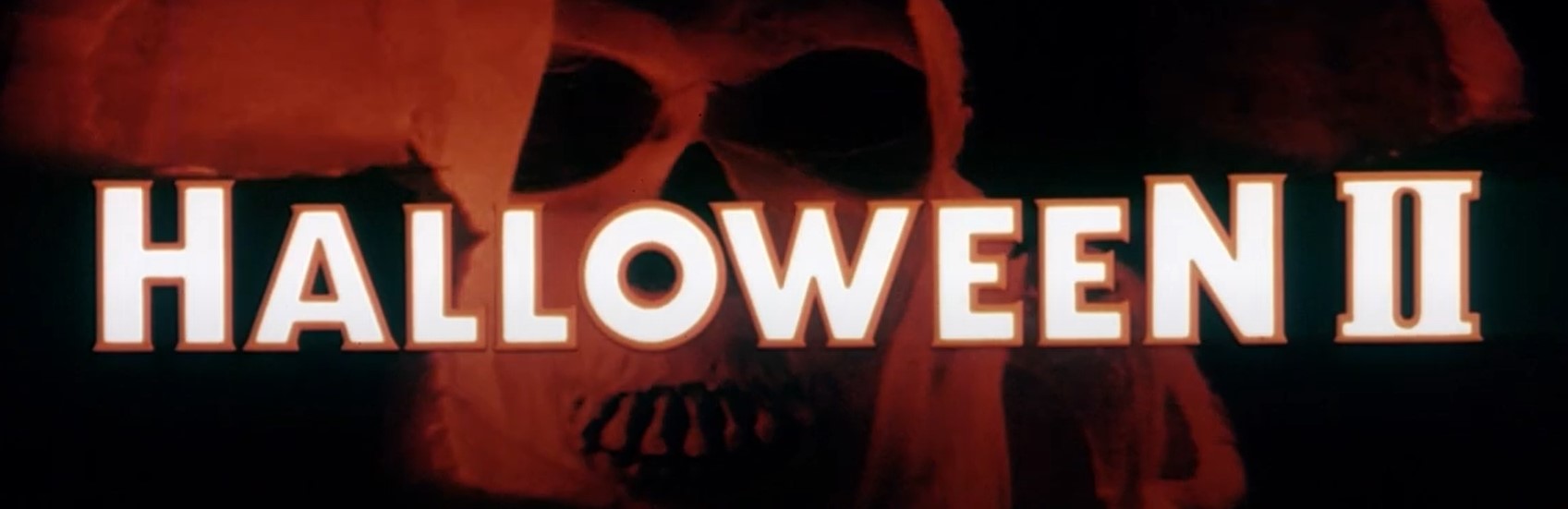
Classic Sequel Gets a Lenticularly EVIL! “Halloween II” reviewed! (Via Vision / Limited Edition Blu-ray)

“Halloween II” Limited Edition Blu-ray + 6 Photo Lobby Cards! Order here!

The horrific Halloween night massacre in Haddonfield where a masked escaped mental patient named Michael Myers murdered the close friends of Laurie Strode has not yet ended.  Hurt and in shock after narrowly escape Michael’s relentless pursuit, Laurie is rushed to Haddonfield Memorial Hospital to receive treatment from a skeleton shift while Dr. Loomis, who shot Michael six times, continues his hunt for the hard-to-catch, hard-to-kill killer.  Frantic about the evil inside his former patient, Dr. Loomis will not stop at nothing to track him down with police assistant and try to puzzle together just why Michael had returned to his hometown in the first place.  As Laurie recovers from her injuries and copes with her friends’ deaths, The Shape arrives at the hospital, continuing his emotionless killing spree of hospital staff in order to get to Laurie, and with nowhere to run, Laurie’s only hope is in the hands of a determined Dr. Loomis. 
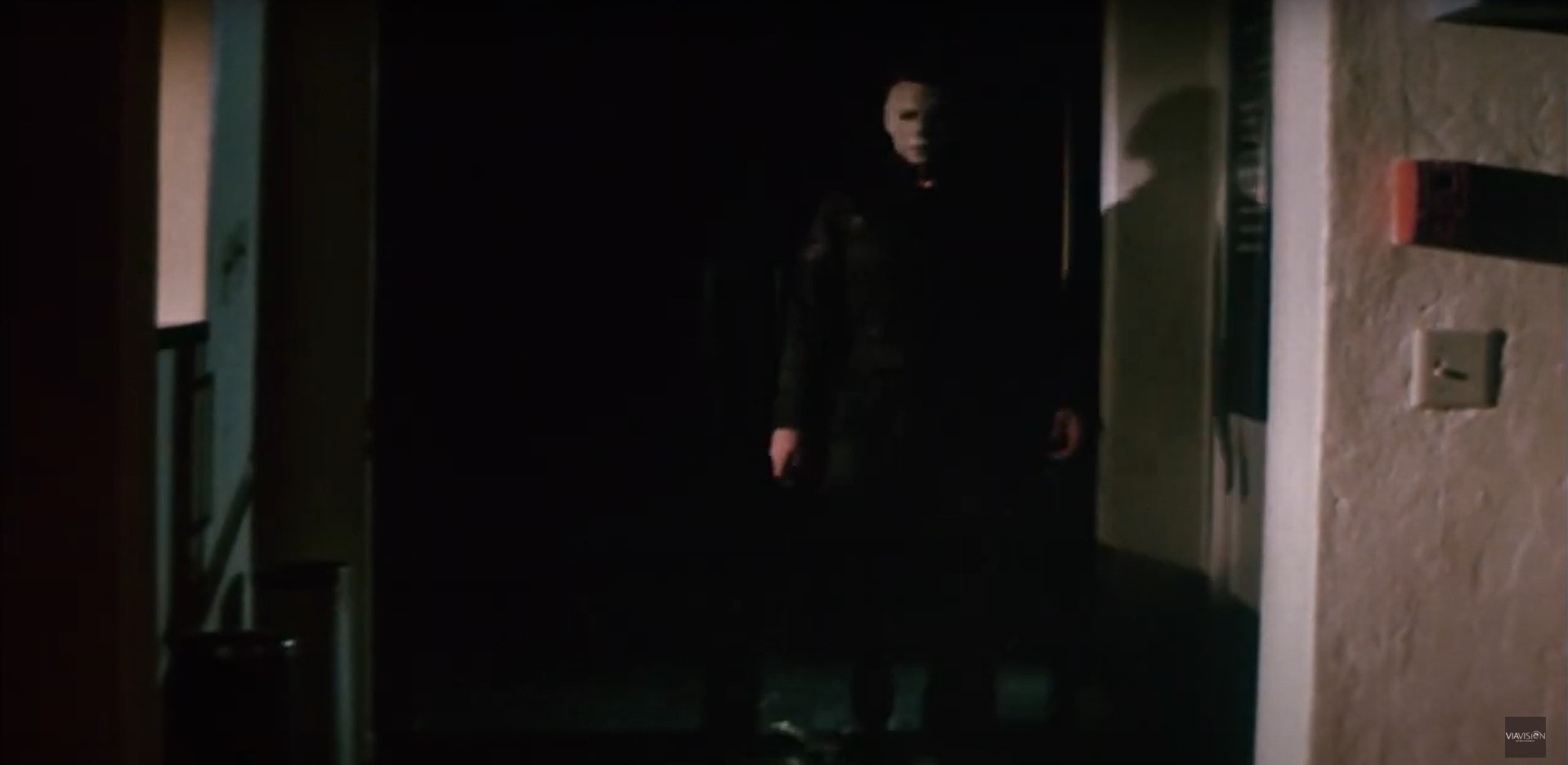
Picking up where the highly successful independent horror, John Carpenter’s “Halloween,” that changed the slasher genre to what we know it as today, “Halloween II” provides more illumination on The Shape, Laurie, and shuts the door on the significant open-ended and fear-inducing mystery at the finale of Carpenter’s masterpiece.   The 1981 sequel, released three years after the first film, was not helmed by Carpenter whose success skyrocketed post-“Halloween.”  Instead, Carpenter and creative producer Debra Hill agreed to the executive producer title with some creative control in penning the script that would be a what-happens-immediately-next continuation with newcomer Rick Rosenthal sitting in the director’s chair.  The director who would helm later the follow year’s “Bad Boys” with Sean Penn had a goal to retain the same Carpenter stylistic choices to make the sequel seemingly seamless.  Alongside Carpenter and Hill in the melting pot of producers, the more narratively opinionated Moustapha Akkad and Dino De Laurentiis served as executive producers along with Joseph Wolf (“A Nightmare on Elm Street”) and Irwin Yablans (“Tourist Trap”) in what became a coproduction between Universal Studios and Dino De Laurentiis’s production company.

“Halloween” converted the then unknown Jamie Lee Curtis into a couple of things.  She instantly became a household name that at the same time also made Laurie Strode a household icon.  Curtis also became what was a relatively new coined term at the time of a scream queen, propelling her career in the horror genre with “Halloween” subsequent films such as “The Fog,” “Prom Night,” “Terror Train” and, of course, the more recent titular television series “Scream Queens” and the contemporary “Halloween” sequels.  What also emerged post Lee’s performance is the actress was eager for the role and effortless to work with making the 23-year-old daughter of Janet Leigh and Tony Curtis a treat to work with, malleable toward her role, and enthusiastic about returning as Laurie Strode for the sequel.  Curtis falls right back into the role as if filming didn’t stop rolling with Strode in a confounding state of shock and injury from her the relatively short scuffle with Michael Myers until Dr. Loomis intervenes with six gunshots into The Shape at the key and climatic moment, saving Strode from being strangled.  The difference in the sequel is Curtis’s instilled knowledge for her frightened character.  It’s that kind of touch that doesn’t hesitate to react to a force of evil.  Returning as Dr. Loomis, and again as if he never stopped performing as the paranoid and fervent good psychiatric doctor, is the iconic and late Donald Pleasence tracking down his former patient with trench coat sagacity, an understanding that no one else shares except for maybe Myers’ ultimate prey, Laurie Strode.  A new cast of relegated kill fodder magnifies part two’s grislier death count with Lance Guest (“Jaws: The Revenge”), Pamela Susan Shoop (“The One Man Jury”), Leo Rossi (“Maniac Cop 2”), Tawny Moyer (“Looker”), Ana Alicia (“Romero”), Gloria Gifford (“Virgin Paradise’), Hunter Von Leer (“Trancers III”), Cliff Emmich (“Hellhole”), Ford Rainey (“The Cellar”), and Dick Warlock putting on the mask as The Shape with Charles Cyphers and Nancy Stephens returning in their respective roles as Sheriff Brackett and Marion Chambers.

What new can be said about “Halloween II” that hasn’t been already said?  Dichotomously, “Halloween” and its sequel share a single narrative that emanates the same stylistic tone; however, both films couldn’t be more different in their surface level and underlying intentions and that gnaws raggedly on the connective tissue that binds them.  Carpenter’s original embraces the mystery enshrouding Michael Myers motivations with a merciless, yet nearly bloodless, killing spree of horny hopped-up teenagers who wiggle themselves out of responsibility for a little trick-or-treat fun under the sheets or for just being alone in their house.  Myers unneeded and unheeded explanation formed The Shape as evil personified, an incarnate force compelled to return home where the light switch was flipped to an expressionless compassion for human life.  Rosenthal’s part two subverted the unknown by providing Michael reason and that reason being Laurie Strode, anyone else who gets in his way, could foil his plans, or are just in the vicinity of the hunt are eliminated with extreme prejudice, and that leads into the ramped-up gore with large pools of blood and other gratuitous displays of damage to unsuspecting soon-to-be stiffs.  Despite the different strokes, the sequel is not bad by a longshot.  In fact, “Halloween II” is just an extension spiraling in intensity and terror, a product of its time when everyone and their brother had directed gore-ladened slashers during the steep beginnings of the slasher renaissance. 

Though a many number of “Halloween II” video media exists between the current formats, the collaboration of Via Vision and Lionsgate release from Australia is beyond reproach for any kind of transfer print woes, lackluster bonus features, and drab packaging.  The limited edition and numbered 2-Dsic Blu-ray set is a physical media thing of beauty with an AVC encoded, full high-definition 1080p, BD50 on both discs.  Disc one houses the theatrical cut of film, presented in a widescreen 2.35:1 aspect ratio, from pristine print, likely the original negative licensed through Universal Pictures for this very release, with the Via Vision caveat of every effort has been made to produce the highest quality on the back cover.  Not a single reason comes to mind on that statement being false as the Dean Cundey’s cinematography retains an undiluted facsimile of the original “Halloween,” represented here with phenomenally suitable contrast that can presumably hide Micheal Myers in every shadow and create the apprehension in every darkly lit scene with minimal key lighting in various, sometimes neon, shades of red, yellow, and white.  The 35mm film grain has a pleasant consistency of a low-to-medium low visual viscosity that never reaches levels of blotting out picture quality, presenting no issues with zoomed in images or any other touchup enhancements to note for that matter.  Perceptible details sanction The Shape’s tactile and weathered look of a rough night in Haddonfield.  Colorfully warranted scenes, such as the Nurse Alves on a gurney in the middle of a pool of her blood, are robust to display the carnage whereas other, more minimalistic approaches detail just enough for the imagination to take over.  Disc two contains the standard-definition, upscaled to 1080p, television cut of the film, presented in a made-for-TV 1.33:1 aspect ratio, that omits some of the gorier moments, suitable for broadcast viewers.  Audio options include two lossless English language selections with a DTS-HD Master Audio 5.1 and a DTS-HD Master Audio 2.0.  The audio codec distributes punchier ambiences of Myers’s rhythmic breathing through the mask, the jarring alert of a hospital room buzzer, and the impactful moments of Myers slamming his fist-loaded weapon into the skull, back, and….a pillow with the cringe-worthy associated crunch and thud.  No impediments on the dialogue track that’s free of crackling, hissing, and popping and is consistently prominent and mixed well within more chaotic, milieu-mania scenes, such as with the finale with hissing air tanks and scalpel swoops.  Optional English subtitles are available.  Special features are consolidated to the theatrical cut disc only with Shout Factory’s inaugurated 2012 documentaries – The Nightmare Isn’t Over:  The Making of Halloween II and Horror’s Hallowed Grounds:  The Locations of Halloween II – featuring cast and crew interviews with director Dean Cundey, Tommy Lee Wallace, Dick warlock, Leo Rossi, and more as well as visiting locations in a modern time with host Sean Clark, and two commentaries featuring director Rick Rosenthal and Leo Rossi in one and stunt man/The Shape Dick Warlock in the other.  There’s a brand new 2024 commentary with author Dustin McNeill, co-author of Taking Shape:  Developing Halloween from Script to Scream.  The encoded features round out with the alternate ending with more explanation on the fate of a certain left ambiguous character, deleted scenes, a theatrical trailer, TV and radio spots, and a still gallery.  What makes the Via Vision a limited, numbered set is the neat package and physical goodies inside.  The rigid lenticular cardboard sleeve of the skull pumpkin has eyes that follow you at every angle.  Inside is a slightly thicker Blu-ray Amaray casing with reversible cover art displaying notable stills from the feature.  The extra disc, disc 1 likely, is in a clear push-lock, page-turner disc holder.  Six photo lobby cards featuring stills from the movie come alongside the Blu-ray.  Via Vision’s release has a region B playback encoding, a runtime of 93 minutes on both cuts, and rated R.

Last Rites: Michael Myers has been slashing away in the cinema for nearly half a century and “Halloween II” has been a staple entry that, to this day, is a memorable fan-favorite in the grand scheme of most of the franchise’s sequels. Via Vision’s limited edition, lenticular Blu-ray packaging just sweetens the deal with a crystal clear and top-tier quality release worthy in any physical media collection.

“Halloween II” Limited Edition Blu-ray + 6 Photo Lobby Cards! Order here!

An EVIL Assassin Battle Royale! “Mean Guns” reviewed! (MVD Visual / Blu-ray)

“Mean Guns” on MVD Rewind Collection Blu-ray! Purchase Here!

A Crime syndicate mid-level enforcer named Vincent Moon invites professional hired killers and syndicate affiliates to a new, urban-centric prison constructed by the organization the day before grand opening.  The reason for this elaborate invitation is simple:  all those invited have betrayed the syndicate in one way or another and are brought into the locked down prison to battle royale to the death.  The rules of the competition clarify no one will leave the premises, unless being gunned down by a rooftop sniper is acceptable to them, and three contestants must survive the game to claim the prize, the prize being a three-way split of ten million in cash.  As guns, ammunition, and melee weapons are dumped onto the battle grounds, a scramble ensues, and factions are made with 6-hour clock to kill nearly everyone in sight to live and be rich or to be slaughtered by Vincent Moon.  However, there’s no honor amongst thieves and thugs and the rules bend in a rigged high-stakes game of kill-or-be-killed.

The late director Albert Pyun was an ambitious, fast-paced, and prolific director who dominated the late 1980s through much of the 1990s with eclectic, science-fiction action.  The “Cyborg” and “Nemesis” writer-director severed the line between reality and the alternate that brought science fiction to a more grounded realism, such as we see in the aforementioned films, mostly because Pyun was always short on funds and short on time to deliver a final, finished feature.  With his 1997 actioner “Mean Guns,” Pyun severed into another layer on the existential plane and took hold of different kind of alternative reality, one that is plagued by an all-powerful crime syndicate that has its insidious hands in everything, even in the personal and professional lives and secrets of its own employees and hired contracts.  Andrew Witham wrote the script that was produced by longtime Pyun collaborating producers Tom Karnowski (“The Sword and the Sorcerer,” “Cyborg”) and Gary Schmoeller (“Hong Kong 97,” “Omega Doom”), together the trio founded Filmwerks which became the production company under “Mean Guns.” 

Pre-“Law & Order: SVU,” which would define his career in the film and television industry, rapper Ice-T worked himself in from behind a mic to in front of a camera mostly beginning in the 1990s with “New Jack City,” an urban gangster film that matched his on stage musical presence and starred opposite Wesley Snipes (“Blade”), Chris Rock (“Jigsaw”), and Mario Van Peebles (“Jaws:  The Revenge”).  Ice-T found cult status in more pulpy thrillers with exploitation “Surviving the Game” as a homeless man hunted down by a group of rich sport hunters and playing a post-apocalypse beast in the graphic novel adapted “Tank Girl,” but his gangster persona had stuck with him, leaving him the legendary rapper seemingly encircled in the same kind of urban gangster films. This is the case with “Mean Guns” as he portrays a philosophical, upper-level syndicate criminal Vincent Moon spearheading a game of wetwork for the unscrupulous wetworkers associated with his organization.  Not the most prolifically dialogued or screen timed role, Ice-T does what he can to bring Vincent Moon into the fold of much more colorful characters.  “Highlander’s” Christopher Lambert receives co-top of the bill as a psychotic assassin looking to atone for a careless sin.  Lambert is wonderfully unhinged while calculating as he integrates his “Highlander” sword skills and maniacal grin into his character of Lou, who through flashbacks had accidently killed a child on one of his hits and retrieves his biological daughter for an abusive stepfather to start life anew.  More pragmatic is Lou’s rival Marcus, stoically portrayed by Albert Pyun regular Michael Hasley (“Dollman,” “Nemesis 2”).  Together, Lou and Marcus must team up, along with the coldhearted D. (Kimberly Warren, “Blast”) and syndicate accountant turned informant Cam (Deborah Van Valkenbugh, “The Warriors’), to survive against the fray of likeminded killers.  “Mean Guns” cast fills out with Tina Cote (“Nemesis 2”), Thom Mathews (“Return of the Living Dead”), Yuji Okumoto (“Robot Wars’), Jerry Rector (“Vampire’s Kiss”), James Wellington (“The Evil Inside Me”), and introducing Hunter Doughty.

Like many of Albert Pyun’s caffeinated action films, “Mean Guns” is the epitome of vehemently slick dipped in a 90’s glaze of an alternative, unchecked free-for-all of bad hairdos, trench coats, and guns.  Lots of guns in a pre-computer-generated muzzle flash with real recoil and really bad, but good, one-liners.  What’s more surprising about this Pyun is that, unlike his previously mentioned films, “Mean Guns” is virtually bloodless albeit the shoot’em up melee violently lays waste to nearly 100 bad guys.  Pyun integrated a liberal use of blood squibs in his other guns-blazing and contentious conflicts, but “Mean Guns” takes a step back to a less severe tile like “Unkind Guns” with a comically coated film pulled straight out of a cheesy graphic novel.   For example, a combatant, thinking they just scored the briefcase full of millions, finds their head aflame and their face covered in black powder loony toon style after the opened briefcase explodes offscreen.  These moments provide a reality check to the already outlandish, yet highly entertaining, every man for himself game of death made willingly subjectable by its limited principals and Pyun style action. 

Getting ready to kill for this new Blu-ray of Albert Pyun’s “Mean Guns.”  The MVDVisual release, a part of their MVD Rewind Collection, is presented in a 2.35:1 aspect ratio, AVC encoded onto a 1080p, high-definition BD50.  Pyun and director of photography George Mooradian, who collaborated on many of Pyun’s films, such as “Cyborg” and “Nemesis” as well as standalone projects with “Bats” and “K-911,” utilized a spherical lens with steep drop-offs around the edges of the frame, almost looks like everything around the left and right sides should be falling.  IMDB states anamorphic lens but judging from the complete focus of the background and the severe oval-like nature of the frame, I’m leaning toward a spherical lens. For vast landscapes where length is nearly limitless, a spherical lens would be ideal to unify depth and main focus but since confined to a prison interior, compact hallways are squeezed in beyond a reasonable limit and often side-stance characters are warped in frame.  Details are generally fine with the hi-def pixel count that translates skin tones naturally pleasing with a few moments of corrective coloring aside from the occasional red hot temperature flashbacks that bath everything in color-varied reversal exposure.  The transfer isn’t perfect either with a couple of noticeable damage blips on the 35mm print.  The uncompressed English LPCM 2.0 stereo is a mambo-ladened, bullet-whizzing, melee-skirmishing, and depth-exacting design that’s well balanced and layered.  Dialogue remains free of audible blights and courses prominent throughout.  Optional English and French subtitles are available.  Special features, including an Albert Pyun introduction that’s encoded into the Play Film as well as the bonus content and to which had to be shot well before his death judging by the appearance of his rather healthy person in the video, includes an audio commentary by the director, a new interview with producer Gary Schmoeller, a new interview with executive producer Paul Rosenblum, and a new interview with composter Anthony Riparetti..  The original theatrical trailer is also included. I’m always elated to see the MVD’s throwback package design and the 59th Rewind Collection release continues the theme with a cardboard slipcover in mock disrepair with a corner edged torn and exposing the corner of a VHS tape cassette. Not to forget to mention the designed rental stickers to heighten the effect. Underneath the slipcase is a clear Blu-ray Amaray case with reversible cover art, each side promoted with a scaled down poster art bordered and backgrounded with a similar coloring shade. Inside, the disc is smartly pressed with a VHS-façade while the insert side has a mini-folded poster of the primary cover art. The region free release comes rated R and has a runtime of 104 minutes, which when watching the feature one can see perhaps some cuts were made for timing. Perhaps, Pyun had a longer version and had to edit and cut down for time.

Last Rites: A romping mayhem, “Mean Guns” is ballistically ceaseless and entertaining, if not also the touchstone of 90’s cheesy action, and is presented well here with in the latest, and greatest, MVD Visual Rewind Collection Blu-ray.

“Mean Guns” on MVD Rewind Collection Blu-ray! Purchase Here!

Everything is Bigger, and EVILLER, in Texas! “Deep in the Heart” reviewed! (Fun City Editions / Blu-ray)

“Deep in the Heart” on a Fun City Edition Blu-ray! Here for Purchase.

Boston born Catholic Kathleen was raised in a good home by Irish immigrant parents.  Having moved from the liberal Northeast America to Dallas, Texas, Kathleen finds employment as an American history teacher at a local high school.  She meets born-and-raised Texan, attorney, and gun enthusiast Larry Keeler at a colleague’s outdoor barbeque and the two casually see each other off and on with Kathleen not interested in something more serious with the charming and handsome, budding attorney, but Larry believes Kathleen’s too uptight to see how madly desirable she makes him and rapes her at gunpoint when he can longer steady his urges, proclaiming her sexual hangups and rigidness as faults against her immense drawing of sensuality during post-coital.  Reporting her attack to law enforcement and her Catholic priest for prosecution and spiritual relief, both agencies fail to side with Kathleen’s trauma based on the facts of the case and God’s ever-tolerant forgiveness toward everyone.  The anger seething inside impels her to chop off her long, blond hair, dress more matronly, and join a handgun gun club after Larry continues to casually insert himself into her life like nothing ever happened and down the barrel’s site, Kathleen plots her vengeance. 

If there was an ever a more culturally relevant and timely film today produced and released decades ago, encapsulating the worst parts of American history, “Deep in the Heart,” aka “Handgun,” is that very film.  Through the perspective of the expatriate filmmaker Tony Garrett, having been born and raised in a country without an intense gun culture, “The Prostitute” English writer-and-director entrenches his outsider take on America’s unique, and unhealthy, gun fascination around an equally powerful systematic rape culture that ignores the severity of the transgression and assigns blame to the victim and, in turn, has the attacker come out unscathed due to being an upright citizen and a pillar of the community amongst his, also male, peers.  Filmed entirely location in Dallas in 1981 but not released in 1983, Tony Garrett co-produces the film with American producer David Streit (“The Prowler”) under United Kingdom production companies EMI and Kestrel Films where American distributors were eager to bank off the sexy rape-and-revenge thrillers of “Ms. 45” or “The Last House on the Left” but received a more thought provoking and provocative thriller that analyzed more of a problematic inward of U.S. culture and global societal toxicity. 

A daunting and difficult role for any actress to play, Karen Young had captured the epitome of a formulaic victimized women in an injustice system for her first major feature-length role.  Young, who went on to have roles in “Jaws:  The Revenge,” “Daylight,” and “The Orphan Killer,” embodies the American dream of the young, educated woman, Kathleen, from humble beginnings living away from home and having a career as a high school teacher in Dallas, Texas.  Kathleen’s American dream is crushed by the methodical mentality of Larry Keeler, representing America’s grasping of the past of taking what you want, even if that means by way of force.  Keeler is played by born-and-raised Texan Clayton Day (“Osa”) with a fast-talking, full of himself reproach to a debut performance that involve rape at gunpoint and being fully nude with your equally green costar.  Garrett’s able to convert the two inexperienced actors into raw talent, extracting their singular qualities into a combined effort of a sordid cultural subtext and cat-and-mouse rape-and-revenge suspenser.  Kathleen’s transitional arc from the shy and innocent Catholic outsider to the hate-filled, pro-gun, self-serving vigilante proved to be a dazzling gem of range and moxie pulled from the rough depths of untapped talent and getting to that point is a journey expressed vividly and thoroughly to build up both characters’ constitutions without a ton of exposition or visual insight.  Keelers intentions never slip but we understand through his conversations with Kathleen he’s a gun advocate and collector, he’s a good-time, good ol’ boy party animal at a colleague’s bachelor party at the Foxy Boxy – a Women’s see-through T-shirt boxing competition, and he has overt charm pasted thick with insincerity with out on dates with the high school teacher from Boston.  “Deep in the Heart” is centrically designed around these two principals with an already established built around gun-toting, fast-and-loose, and blinders on male dominated environment inhabited by smaller, yet key roles from the denizens of Dallas.

“Deep in the Heart” is not the sexy, rapey, glorified femme fatale film every will think it is.  “Deep in the Heart” is what Tony Garrett understand and believe in from the interpretation of dark side, misguided American values and how those cultural thorns that prick into the side of the free world change the course of all that is good and pure in the foundational basis America is built upon.  Engrossingly tied to modern day hot topics, Garret had incredible foresight or, maybe, was just brazen enough to go against the grain being an foreign expat shocked by not only the legal system but by the backwards ideas and beliefs of everyday citizens in different regions of the country.  In not only the rape but the whole pre- and post-rape setup is surrounding Kathleen’s inquietude is noticeable and uncomfortable to watch.  Men and women alike should feel icky of the transpiring contexts of spirituality failure, justice system failure, and an overall human being failure that lets Kathleen suffer in silence without the hoopla of scandal and punishment.  Instead, Kathleen’s bottled anger works inward toward a radical, retribution fix, resurrecting her from downtrodden ashes like a phoenix carrying a six-shooting revolver poised to a point of no return in DIY selfcare. 

Fun City Editions understands the power from “Deep in the Heart” by showcasing a new, restored transfer for their Blu-ray release.  Restored in a 4K scan from the original 35mm camera negative, making its first Blu-ray appearance globally, “Deep in the Heart” is stored on an AVC encoded, 1080p high-definition, BD50 and presented in an anamorphic widescreen 1.85:1 aspect ratio.  Not a whisper of image infraction, “Deep in the Heart” has a gorgeously graded picture that sees hardly any signs of aging or wear and the Fun City Edition’s restoration keeps the elements in alignment with the feature’s period of a late 70’s to early 80’s harsh filmed layer.  Color hues are vibrant and bold without appearing washed, presenting near perfect textures on clothing, skin, and environment and darker scenes keep contours and some details present without being completely dense or lost in any compression banding and splotches.  A lossless English DTS-HD mono track is more than ample audio for a very tight knit thriller mostly for indoor acoustics.  Exteriors capture the and highlight the appropriate milieu ambience, managed well within the single layer monaural to keep dialogue front and center.  Dialogue does not go without some crackling and hissing but not enough to be a nuisance, just noticeable.  Mike Post’s soundtrack is eclectic between night club boogies and harrowing hangers.  English subtitles are optionally available.  Special features included are a newly recorded audio commentary by Erica Shuliz, co-host of the Texas-based Unsung Horrors podcast, and Irish filmmaker Chris O’Neill providing in-depth insight and analyst of Tony Garrett’s underappreciated film, a brief archive interview with directory Tony Garrett on his perspective route as an outsider looking at the celebration and de-celebration of guns in America, an image gallery, and the theatrical trailer.  Tactile elements and striking rigid slipcase art from graphic artist Tom Ralston makes this Fun City Edition highly desirable as the U.S. title “Deep in the Heart” graces one side and the U.K. title “Handgun” can be found on the back (or front depending on how you look at it).  Sheathed inside is a clear Blu-ray Amaray casing with reversible cover art of three different country posters from the U.S. (primary) and U.K. and Japan (on the inside).  Disc is pressed with more Ralston imagery while the opposite side insert is of a 10-page color booklet with a new essay from film critic and author, Alexandra Heller-Nicholas.  Rated R with a region A playback, “Deep in the Heart” has a runtime of 99 minutes. 

Last Rites:  “Deep in the Heart” is an important film.  For some, the rape-revenge thriller can be either be eye-opener and another reminder added to the long list that America is gun crazy and legally not perfect.  For others, those expecting the sleazy, sexy rape film followed by the subsequent gratuitous violence will quickly go limp by Tony Garrett’s call-it-as-he-sees-it narrative that, for an intensive purposes, coincides with the rest of the world’s perception. 

“Deep in the Heart” on a Fun City Edition Blu-ray! Here for Purchase.

Evil’s Gonna Need a Bigger Boat! “Megalodon” review!


A covert Russian submarine is trying to drill into the Southern Pacific communications system to benefit from United States secrets, but when the gung-ho captain decides to push the drill team to maximum velocity, the submarine inadvertently release a pre-historic, though to be extinct Megalodon. A nearby U.S. military vessel intercepts the heavily damaged Russian sub with a submersible and saves three uncooperative, Kremlin patriotic survivors from Davy Jones locker while barely escaping jaws of the powerful Giant shark. The aging U.S. sea captain, Streeper, and accompanying admiral, King, rely heavily on Commander Lynch to maintain constant attention on the circling predator, while Streeper attempts extracting vital information from the Russian operatives to further establish the hostile tense and disruptive Russian-U.S. relations. When the shark turns its ravenous attention to the vessel, the crew must use their smarts and what’s on board to go head-to-head against a ferocious, battle ready Megalodon!

You really have to hate-to-love The Asylum for producing and capitalizing on highly lucrative films. This past summer’s “The Meg” was a major blockbuster success for not only director John Turteltaub but also for Warner Bros and as if the Carcharocles megalodon wasn’t exploited enough, The Asylum’s “Megalodon” aimed to reap from Jason Statham face-off with “The Meg.” Director James Thomas, who delivered another knock off with “Tomb Invader,” a cash in on last year’s “Tomb Raider” reboot adaptation to the popular video game, submerses himself into the SyFy movie. The SyFy channel is no stranger in shelling out monstrous shark movies; let’s just name a few to paint a picture of what’s being described here: “Sharktopus,” “2-Headed Shark Attack,” “Ghost Shark,” “Jersey Short Shark Attack,” “Malibu Shark Attack,” and let’s not forget to mention the channel’s most prolific and preposterously entertaining “Sharknado” franchise. Unfortunately, sharks an easy target for villainy that viewers can easily digest and be enthralled by their mysterious nature, but to buffoon them with genetic mutations unnatural superpowers stiffens not only their actual gentle prowess, but also attenuates legitimate shark films. That’s not to say that Thomas’ over-saturated titled “Megalodon,” penned by “6-Headed Shark Attack’s” Koichi Petetsky, is a mega hit, but at least the shark isn’t radioactive, isn’t a spliced abomination, and can’t dorsal slice through sand, ice, and earth. The back to simplicity for the man-eating shark is a breath a fresh air in my book.

“Reservoir Dogs’” star Michael Madsen headlines with his name splayed right about the titular creature about to swallow a submersible. Madness, sporting a military non-regulation curly hairstyle, portrays an naval officer, Admiral King, at the end of his lustrous career. King’s lame duck presence is a formulaic means to an end that will decide the fate of more prominent characters so Madsen, as an unconvincing and unconventional U.S. admiral, has screen time that’s limited mostly to the first and third acts and scarcely peppered in between the dynamics of Captain Streeper and Commander Lynch. While Streeper and Lynch essentially share the lead and neither have the star-studded power to be an influencing purchase-me-now headliner, the two onscreen officers are structured as a one-two punch against two opposing forces. “The Demonic Dead’s” Dominic Pace, as Captain Streeper, has promising capabilities as a military ship commander as Pace maintains his usual type casted tough guy role from prior credits while his counterpart, Caroline Harris, plays passively strong in Streeper’s shadow that’s supposed to display edge-bordering defiance but never comes to fruition. As Pace and Harris jockey for lead, Russian submariners, Captain Ivanov and Yana Popov, sheathed a more interestingly perspective on duty versus mortality. Ego Mikitas (“Nazi Overlord”) and “Fear Pharm’s” Amiee Stolte lined “Megalodon” with a sub-story, no pun intended on the sub, as bullheaded survivors aiming to complete their clandestine mission without lifting a finger to assist the opposition. To be fair, the James Thomas script didn’t exactly put the U.S. in good light, scribing Streeper, Lynch, and others as pushy information extractors and the Russian are stereotypical misers of information. If I was being intensely interrogated while a massive shark circled our boat, I would also question the intentions of my captors and not give them squat. Other shipmate actors include Scott Roe (“Transformers: Dark of the Moon”), Sebastien Charmant (“Halloween Hell”), Elizabeth Cron (“SuperHot Apocalypse”), Paulina Laurant (“Triassic World”), and Luke Fattorusso.

“Megalodon” provides a laugh track of production inadequacies and a cinematography from Paul Thomas could be said to be straight out of the Michael Bay school of filmmaking, but as far as SyFy premiered movies and The Asylum Home Entertainment films go, “Megalodon” is a Giant Shark sized leap of success. The CGI shark has surprised me being an object of crude, but of commending detail that exhibits an ancient beast marked with battle scars and also exhibiting realism with the donning of an acceptable gray-blue hue. Plus, the shark doesn’t have atomic level laser vision, can’t breathe fire underwater, and has the normal shark fins instead of octopus tentacles. Thank the shark Gods! While the megalodon passes plausibility of natural facts, it’s swimming motion and trajectory checks the box of clunky territory with a rudimentary, two-dimension view of the shark swimming at an unnatural diagonal angle away and toward the ship, like something out of the NES “Jaws the Revenge” video game. The CGI ship and submersible is more of an immediate concern than the CGI shark as Roger Rabbit has more realism. Suffering succotash! Actual location of the ship is a the USS Lane Victory, a defunct military vessel from WWII turned museum that’s docked off California and the museum aspects tactlessly are not veiled from view and, if a modern day military ship is supposed to go toe-to-toe with a megalodon, a ship with brass communication tubes. The obvious museum décor ships “Megalodon” into a strange and bewildering backwards alternate universe that causes confusing and complexities with a quarry full of questions.

MVDVisual and The Asylum Productions presents the SyFy original film, “Megalodon,” onto DVD home video. Original being the suspiciously key word here as original never really goes hand-in-hand with The Asylum produced films. Presented in the original widescreen format, “Megalodon,” for what it’s worth, has distinction despite the questionable special effects. No blotchy or aliasing detected and the coloring renders consistently. The 5.1 surround sound audio tracks has clear verbal dialogue, ample gunfire and explosion range and depth, and no distortions to note. The painfully generic stock score is an ear sore, but has balance and isn’t an overly commanding and obtrusive presence. The trailer is the only special feature available, but to broaden upon the lack of bonus material, the Asylum DVD releases always have kitschy graphic cover art and “Megalodon” is front and back gold standard that exaggerate the film’s action-packed appeal. Director James Thomas’ dual story batters the pre-history shark narrative to nearly null, but “Megalodon’s” unwavering action chums the water that begins with a large shark taking a bite out of a foreign reconnaissance submarine and ends with Michael Madsen extinguishing a cigar on the said shark’s large snout in pure Michael Madsen fashion.

Please consider support ItsBlogginEvil by purchasing products through this link! Thank you!

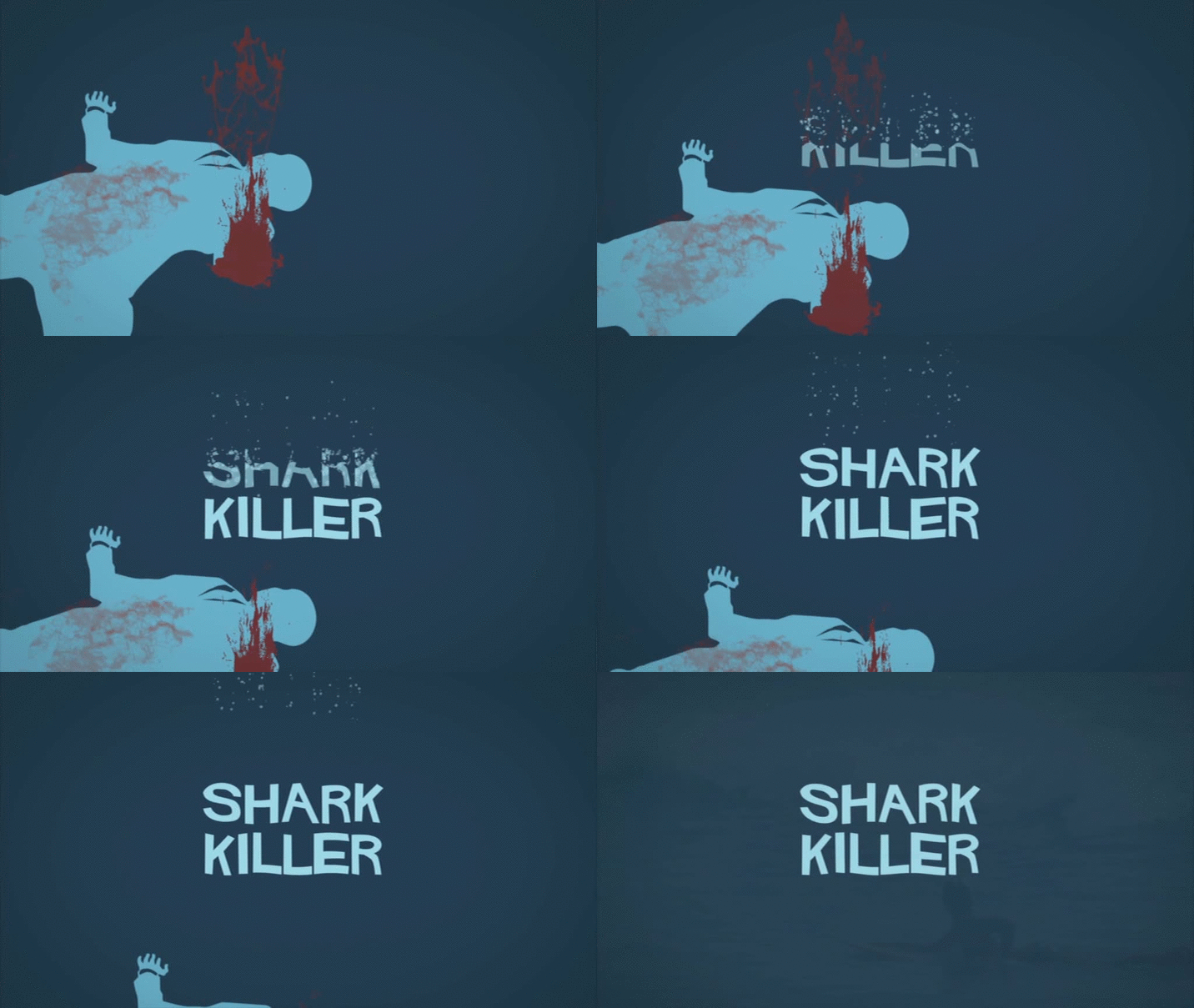
Evil Killers Don’t Always Lurk Below Water! “Shark Killer” review!

output_b5Mcds

Shark tracker Chase Hunter has been employed by his estranged brother-by-adoption Jake to hunt down a black-finned great white shark off the shores of South Africa. Jake, the head of a South African crime ring, has interest in the shark due to the very large and rather valuable diamond the shark swallowed after a botched meeting between rival gangs. Jake lends his brother his beautiful lawyer Jasmine as a guide who is familiar with the South African waters and has diving experience with sharks. Things become even more convoluted when Chase becomes involved with the ever dangerous and hard to kill Nix, a competing crime lord with a severe diamond obsession, and Nix uses every means of persuasion to motivate Chase in finding this priceless, shark-ingested diamond even if the persuasion is to kidnap Jasmine. Chase and Jake must put their differences aside and use their respectful talents to save Jasmine from a deranged killer that doesn’t lurk under the glassy South African waters.
vlcsnap-2015-06-26-17h31m56s251
Sheldon Wilson was once a director I tried to keep my all seeing eye on over a decade ago after the release of one of his earlier films, a ghost film entitled “Shallow Ground,” which I reviewed (not for Its Bloggin’ Evil) very positively with haunting attributes and a hint of foreshadowing of horror integrity from an upcoming director. Eleven years later and after viewing his latest release “Shark Killer” which he co-wrote with “Prom Night IV” penner Richard Beattie, I’ve come to the conclusion that the foreshadowing I thought I saw within “Shallow Ground” and within a promising young director didn’t quite take and didn’t live up to the expectations of continuing a film legacy or even a cult following. “Shark Killer,” like most films involving the underwater apex predators, doesn’t make the cut of being a cinematic masterpiece, but turns out to be similar to other certain frenzy-feasting films, such as “Sharknado,” “Deep Blue Sea,” and “Shark Night,” and all of which contain charming entertainment qualities in their own right from whether being absolute ridiculous where sharks fly through the air and attack their prey, or where sharks viciously rip apart and devour famous celebrities, or where sharks swim and stalk in unsuspecting places like at an isolated lake resort.
vlcsnap-2015-06-26-17h30m37s234
Here’s what little I liked about “Shark Killer:” I liked the film’s budget which allowed for some decent shark special effects which in any other Syfy channel case would be unbearable. The effects are great, but not great white great and are just barely digestible with a slightly bad after taste. Another positive aspect of “Shark Killer” is the scripted dialogue. A witty dynamic between estranged brothers Chase (Derek Theler) and Jake (Paul du Toit) made for some quaint comedic relief in the second and third acts where the two had to work their way through an army of henchmen to rescue Jasmine (Erica Cerra). Derek Theler has potential to be the next Chris Pratt with a dimwitted charm, a handsome face, and a tall and bulky build. Theler’s acting also flows finely and is well-timed, but he does need to expand his range as his character Chase becomes tiresome and predictable, especially for a character torn between a dwindling family relationship with his brother Jake and a new love interest in Jasmine.
vlcsnap-2015-06-26-17h30m06s174
In hindsight, “Shark Killer” should have never been titled “Shark Killer.” Much of the film rarely involves Black Fin, the diamond eating great white shark, and, instead, “Shark Killer” comes off as more of an action thriller between shark hunter Chase and a criminal warlord over a diamond with such importance that is never actually explained from either of the battling criminals Jake and Nix with the exception that it’s a priceless gem. What’s also not explained is Jake and Chase’s past as we’re given only minute information such as their not actually brothers by blood, but for some reason Chase owes Jake for saving his life from presumably a instance with shark. Again, an important explanation should be provided to give us more reason to believe the Chase needs to do Jake this dangerous and pointless venture. Great white Black Fin swims silently in the background caught in the middle of this diamond war. What’s more interesting are some of Black Finn’s murderous scenes where Chase explains that the giant shark follows them to the harbor and leaves the hunters fatal calling cards; regardless of how mysterious this shark becomes from these scenes, they all become pointless when compared to the foreground story.
vlcsnap-2015-06-26-17h34m21s162
Also, I was expecting a bloody good show from director Sheldon Wilson and a film called “Shark Killer.” What I witness was a tame and timid PG-13 action thriller with witty banter which makes “Jaws: The Revenge” look like a hardcore bloody snuff movie. All the shark kills are off screen and implied leaving everything to imagination, but where is the visual visceral nature of being an apex predator? There should be flesh shredding, vein puncturing, and blood squirting violence whenever sharks are supposedly the main focus. South African native and the film’s most recognizable actor, “Darkman” portrayer Arnold Vosloo had the most violent scene where he executes one of his bumbling henchmen with a bullet to the head. Chase Walker mainly just beats people up, Jake shoots a couple of guys, and a shark becomes stab multiple times, but you don’t really see that part and, instead, just get a a couple of close up scenes of a determined eye of the shark being stabbed to death.
vlcsnap-2015-06-26-17h32m37s152
Overall, “Shark Killer” has classic PG-13 entertainment value, but doesn’t bring any new material to the deep trenches of a vast cinematic ocean. A disappointing creature-feature and action-adventure thriller entry from director/writer Sheldon Wilson who has taken a step in the wrong direction, away from the intense and jarring “Shallow Ground” that gave me hope for new blood in the water. “Shark Killer” incorporates too many variables and just chums the water with useless scenes where only a little simplicity and focus to a film could have been more beneficial for the Blue Ice Pictures production, who gave us “Fido” and “Alien Outpost,” and the RLJ Entertainment home entertainment release.