An EVIL Assassin Battle Royale! “Mean Guns” reviewed! (MVD Visual / Blu-ray)

“Mean Guns” on MVD Rewind Collection Blu-ray! Purchase Here!

A Crime syndicate mid-level enforcer named Vincent Moon invites professional hired killers and syndicate affiliates to a new, urban-centric prison constructed by the organization the day before grand opening.  The reason for this elaborate invitation is simple:  all those invited have betrayed the syndicate in one way or another and are brought into the locked down prison to battle royale to the death.  The rules of the competition clarify no one will leave the premises, unless being gunned down by a rooftop sniper is acceptable to them, and three contestants must survive the game to claim the prize, the prize being a three-way split of ten million in cash.  As guns, ammunition, and melee weapons are dumped onto the battle grounds, a scramble ensues, and factions are made with 6-hour clock to kill nearly everyone in sight to live and be rich or to be slaughtered by Vincent Moon.  However, there’s no honor amongst thieves and thugs and the rules bend in a rigged high-stakes game of kill-or-be-killed.

The late director Albert Pyun was an ambitious, fast-paced, and prolific director who dominated the late 1980s through much of the 1990s with eclectic, science-fiction action.  The “Cyborg” and “Nemesis” writer-director severed the line between reality and the alternate that brought science fiction to a more grounded realism, such as we see in the aforementioned films, mostly because Pyun was always short on funds and short on time to deliver a final, finished feature.  With his 1997 actioner “Mean Guns,” Pyun severed into another layer on the existential plane and took hold of different kind of alternative reality, one that is plagued by an all-powerful crime syndicate that has its insidious hands in everything, even in the personal and professional lives and secrets of its own employees and hired contracts.  Andrew Witham wrote the script that was produced by longtime Pyun collaborating producers Tom Karnowski (“The Sword and the Sorcerer,” “Cyborg”) and Gary Schmoeller (“Hong Kong 97,” “Omega Doom”), together the trio founded Filmwerks which became the production company under “Mean Guns.” 

Pre-“Law & Order: SVU,” which would define his career in the film and television industry, rapper Ice-T worked himself in from behind a mic to in front of a camera mostly beginning in the 1990s with “New Jack City,” an urban gangster film that matched his on stage musical presence and starred opposite Wesley Snipes (“Blade”), Chris Rock (“Jigsaw”), and Mario Van Peebles (“Jaws:  The Revenge”).  Ice-T found cult status in more pulpy thrillers with exploitation “Surviving the Game” as a homeless man hunted down by a group of rich sport hunters and playing a post-apocalypse beast in the graphic novel adapted “Tank Girl,” but his gangster persona had stuck with him, leaving him the legendary rapper seemingly encircled in the same kind of urban gangster films. This is the case with “Mean Guns” as he portrays a philosophical, upper-level syndicate criminal Vincent Moon spearheading a game of wetwork for the unscrupulous wetworkers associated with his organization.  Not the most prolifically dialogued or screen timed role, Ice-T does what he can to bring Vincent Moon into the fold of much more colorful characters.  “Highlander’s” Christopher Lambert receives co-top of the bill as a psychotic assassin looking to atone for a careless sin.  Lambert is wonderfully unhinged while calculating as he integrates his “Highlander” sword skills and maniacal grin into his character of Lou, who through flashbacks had accidently killed a child on one of his hits and retrieves his biological daughter for an abusive stepfather to start life anew.  More pragmatic is Lou’s rival Marcus, stoically portrayed by Albert Pyun regular Michael Hasley (“Dollman,” “Nemesis 2”).  Together, Lou and Marcus must team up, along with the coldhearted D. (Kimberly Warren, “Blast”) and syndicate accountant turned informant Cam (Deborah Van Valkenbugh, “The Warriors’), to survive against the fray of likeminded killers.  “Mean Guns” cast fills out with Tina Cote (“Nemesis 2”), Thom Mathews (“Return of the Living Dead”), Yuji Okumoto (“Robot Wars’), Jerry Rector (“Vampire’s Kiss”), James Wellington (“The Evil Inside Me”), and introducing Hunter Doughty.

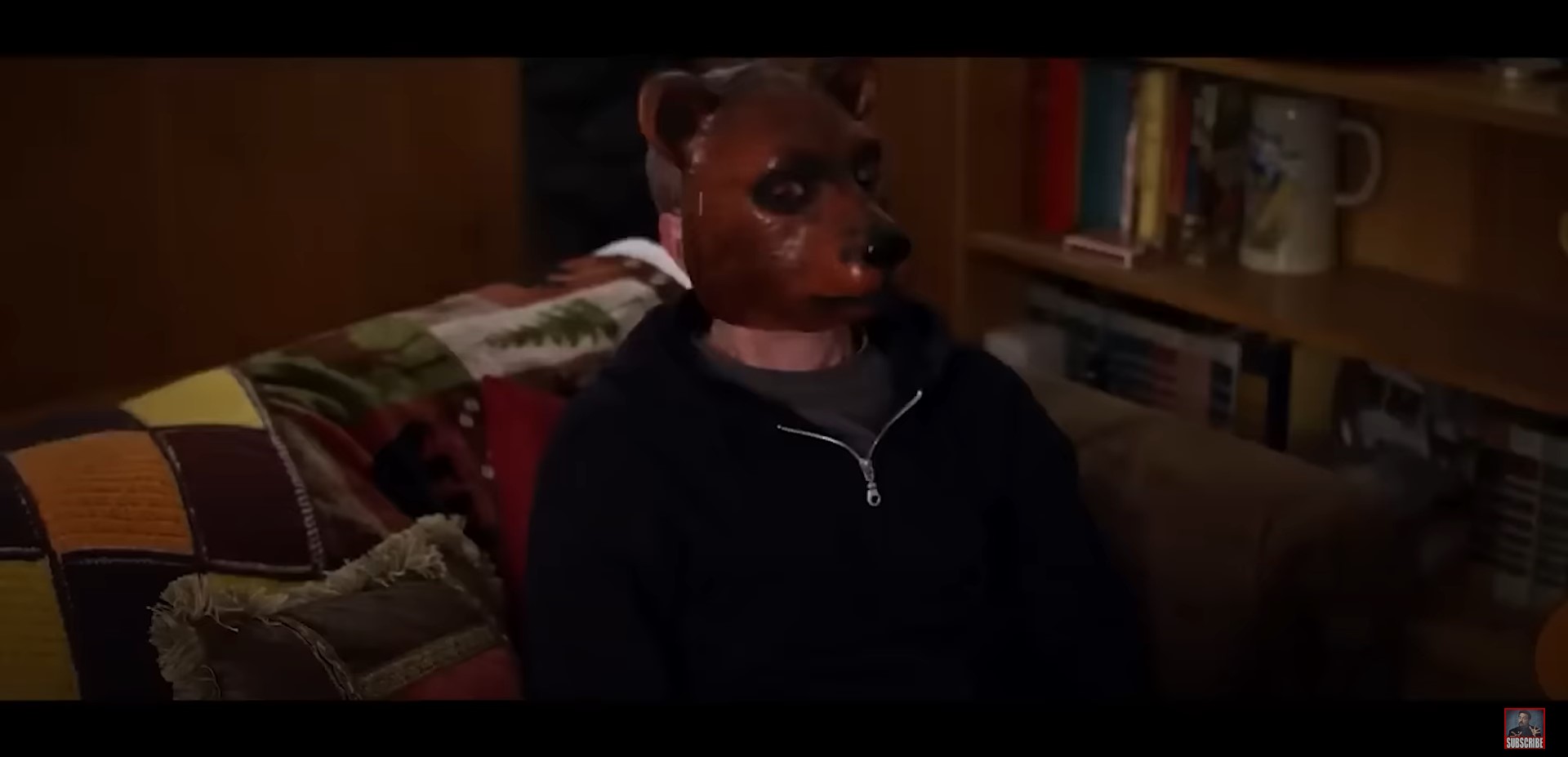
Like many of Albert Pyun’s caffeinated action films, “Mean Guns” is the epitome of vehemently slick dipped in a 90’s glaze of an alternative, unchecked free-for-all of bad hairdos, trench coats, and guns.  Lots of guns in a pre-computer-generated muzzle flash with real recoil and really bad, but good, one-liners.  What’s more surprising about this Pyun is that, unlike his previously mentioned films, “Mean Guns” is virtually bloodless albeit the shoot’em up melee violently lays waste to nearly 100 bad guys.  Pyun integrated a liberal use of blood squibs in his other guns-blazing and contentious conflicts, but “Mean Guns” takes a step back to a less severe tile like “Unkind Guns” with a comically coated film pulled straight out of a cheesy graphic novel.   For example, a combatant, thinking they just scored the briefcase full of millions, finds their head aflame and their face covered in black powder loony toon style after the opened briefcase explodes offscreen.  These moments provide a reality check to the already outlandish, yet highly entertaining, every man for himself game of death made willingly subjectable by its limited principals and Pyun style action. 

Getting ready to kill for this new Blu-ray of Albert Pyun’s “Mean Guns.”  The MVDVisual release, a part of their MVD Rewind Collection, is presented in a 2.35:1 aspect ratio, AVC encoded onto a 1080p, high-definition BD50.  Pyun and director of photography George Mooradian, who collaborated on many of Pyun’s films, such as “Cyborg” and “Nemesis” as well as standalone projects with “Bats” and “K-911,” utilized a spherical lens with steep drop-offs around the edges of the frame, almost looks like everything around the left and right sides should be falling.  IMDB states anamorphic lens but judging from the complete focus of the background and the severe oval-like nature of the frame, I’m leaning toward a spherical lens. For vast landscapes where length is nearly limitless, a spherical lens would be ideal to unify depth and main focus but since confined to a prison interior, compact hallways are squeezed in beyond a reasonable limit and often side-stance characters are warped in frame.  Details are generally fine with the hi-def pixel count that translates skin tones naturally pleasing with a few moments of corrective coloring aside from the occasional red hot temperature flashbacks that bath everything in color-varied reversal exposure.  The transfer isn’t perfect either with a couple of noticeable damage blips on the 35mm print.  The uncompressed English LPCM 2.0 stereo is a mambo-ladened, bullet-whizzing, melee-skirmishing, and depth-exacting design that’s well balanced and layered.  Dialogue remains free of audible blights and courses prominent throughout.  Optional English and French subtitles are available.  Special features, including an Albert Pyun introduction that’s encoded into the Play Film as well as the bonus content and to which had to be shot well before his death judging by the appearance of his rather healthy person in the video, includes an audio commentary by the director, a new interview with producer Gary Schmoeller, a new interview with executive producer Paul Rosenblum, and a new interview with composter Anthony Riparetti..  The original theatrical trailer is also included. I’m always elated to see the MVD’s throwback package design and the 59th Rewind Collection release continues the theme with a cardboard slipcover in mock disrepair with a corner edged torn and exposing the corner of a VHS tape cassette. Not to forget to mention the designed rental stickers to heighten the effect. Underneath the slipcase is a clear Blu-ray Amaray case with reversible cover art, each side promoted with a scaled down poster art bordered and backgrounded with a similar coloring shade. Inside, the disc is smartly pressed with a VHS-façade while the insert side has a mini-folded poster of the primary cover art. The region free release comes rated R and has a runtime of 104 minutes, which when watching the feature one can see perhaps some cuts were made for timing. Perhaps, Pyun had a longer version and had to edit and cut down for time.

Last Rites: A romping mayhem, “Mean Guns” is ballistically ceaseless and entertaining, if not also the touchstone of 90’s cheesy action, and is presented well here with in the latest, and greatest, MVD Visual Rewind Collection Blu-ray.

“Mean Guns” on MVD Rewind Collection Blu-ray! Purchase Here!

Travel to Mexico, EVIL Said. Cure my Cancer, EVIL Said. Let the Game Begin, I Said. “Saw X” reviewed! (Lionsgate / Blu-ray)

Become A Part of the Game in “Saw X” on 4k/Bluray/DVD

Having a finished a trial by fire game of rebirthing the morally bankrupt that has coined him notoriety as the Jigsaw Killer, a terminal ill John Kramer ceaselessly searches a cure in order to continue his work.  Meeting a fellow cancer therapy group member outside of session provides hope when John learns a radical new and unauthorized surgery and serum cocktail that is seemingly a miracle cure for cancer.  His desperation led inquiry lands him in Mexico where he meets a team of specialists prepping his next day surgery and just when post-surgery John Kramer believes he’s beaten cancer, Kramer realizes he’s been a victim of fraud that’s exploits the most vulnerable and desperate ill-fated people.  Now, a new game begins to test the con artists on how far they will go to live. 

Six years has passed since the last “Saw” sequel was released with the Chris Rock helmed tangent spinoff “Spiral” and 13 years has passed since the last time John Kramer was a part of the game in “Saw 3D.”  2023 marked the return of to the basics with no divergent story from the Book of Saw or fleeting three-dimensional gimmicks to feign tangible blood and body parts in the tenth feature length film of the franchise known as “Saw X.”  The original story-lined sequel also reengages director of “Saw VI” and “Saw 3D” Kevin Greutert to pick up where he left off with a prequel that explores more of Kramer’s more vulnerable side as well as explore the time in between “Saw” and “Saw II” and it’s now unveiled characters who were then shrouded from view, working side-by-side with John Kramer, many years ago.  The writing duo of Peter Goldfinger and Josh Stolberg return from to the franchise after “Jigsaw” and “Spiral” to pen the script for the Twisted Pictures and Liongsgate Production with franchise decision making team of Mark Burg and Oren Koules producing.

So what has Tobin Bell, the face and persona creator behind John Kramer, been up to since 2017’s “Jigsaw?”  Well, let’s just say the now 81-year-old actor has starred in a string of under-the-radar, non-theatrical films that can’t seem to break him out of his bread-and-buttered pigeonhole as a man testing people’s will to overcome by severe measure.  The past year’s dysfunctional family rollercoaster “Sleep No More,” Darren Lynn Bousman’s creepy Saudi Arabian horror “The Cello,” and even a stint of various roles through “The Flash” television series over the years in between have barely moved the needle amongst audiences despite the projects critical and public acclaim.  While it’s a shame Bell receives little recognition for other projects, seeing him return to the role that made him a household name amongst horror fans is a sign of relief knowing Tobin Bell can still draw in a crowd, stepping almost seemingly effortless into John Kramer’s shoes of controversial convictions and never losing a step to bring a cunning and complex antihero back to the big screen with more blood on this hands, literally.  Kramer is not the only familiar to return as Amanda Young comes into the fray prior to her coming out in – ***Spoiler Alert***- “Saw II.”  Shawnee Smith reprises the role donning an unflattering pixie cut that’s even shorter than her “Saw II” hairdo, which keeps true to the timeline, but what plagues both Bell and Smith for a prequel is father time that rears his ugly head on both actors who are not getting any younger to play supposedly younger versions of their characters from which they last portrayed them.  This applies especially to Shawnee Smith who resembles very little of herself from her last appearance in a “Saw” film.  Yet, this doesn’t stop both Bell and Smith to re-embrace their roles and add more layers to their already nuanced identities as John and Amanda ensnares new game players South of the border in Gabriela (Renata Vaca), Valentina (Paulette Hernandez, “My Demons Never Swore Solitude”), Mateo (Octavio Hinojosa, “Come Play With Me”), and Cecilia Pederson (Synnøve Macody Lund, “Haunted”). ”Saw X” co-stars Steven Brand (“Mayhem”), Michael Beach (“Deep Blue Sea 2”), Costas Mandylor, Joshua Okamoto, and Jorge Briseño.

What most will come to realize about “Saw X’s” series placement in time is the foreshadowed knowledge of when and where John Kramer and Amanda Young meet their demise. What can the writers and producers add to a prequel that will enthrall and cause apprehension knowing that the two biggest players in “Saw’s” franchise ultimately live at the end of this intermittent story that mainly surrounds Kramer’s desperation for a cancer cure? To enthrall is simple by adding new bad apples into new escapable blood-drawing, death-dealing traps inside a humanizing John Kramer footnote outside the core city games that intertwine, interweave, and intersect from the very first Saw to the very last Saw in 3D. To surface apprehension for our foretold survivors would take some creative effort. In comes Jorge Briseño playing an adolescent Mexican boy innocent in all of this die-cathlon caught in the wrong place at the wrong time. While the boy, Carlos, adds an X-factor to the dilemma, the fate unknown is relatively short-lived as the boy only becomes a noteworthy shake up of emotional twists between the game’s masterminds near the very tail end, leaving only the wills to struggle painfully as they face themselves in forced contrition. The games Kramer quickly rigs up after the disbelief of being scammed are as industrial medieval and terrifyingly tense as any other “Saw” but unlike the other installments where Jigsaw has planned and engineered meticulously each game, these new set of trap trials are quickly welded and mechanically put together in a blink of an eye, or at least it seems, with no real show for the time put into the turnaround from fraud to fear and that lack of attention can seriously dull “Saw’s” already serrated credibility. 

Saw X” arrives onto a 2-disc and digital combo set from Lionsgate home video.  The Blu-ray is an AVC encoded, high-definition 1080p, BD50 and the DVD is MPEG2 encoded, DVD9 and both formats present the film in a 1.85:1 widescreen.  Through the lens of franchise newcomer Nick Matthews, there’s a sense that the “Spoonful of Sugar” director of photography tries to reproduce some of the style of the first six of David A. Armstrong’s steely industrial color palette but emulating more of his own personal choices to match the out-of-the-city harsh blues and greys for more warmer tones, like mustard yellow, but those progressive hues establish in the second half after really teetering on a natural lens and a harsh saturating tints, such as when John Kramer enters the surgical cube and is bathed in a navy blue hue that eliminates details entirely but only for that tinted moment.  For the rest of the picture, details are grisly good with lots of medium-to-extreme closeups to detail out exposed anatomy of what makes “Saw” rotate so well.  Charlie Clouser returns to score the tenth film on an English Dolby Atmos mix with Dolby Digital TrueHD 7.1 and 5.1 Spanish and French options available.  A really potent and powerful recreation of fidelity scores well for Clouser who recaptures the original crescendo of the final twist while keeping an industrial discordance floating behind the storyline with rising volume during trap countdowns that never interferences with the range of sounds or depth between each of the character sand the traps and the characters.  Dialogue is clean as a whistle and balances perfectly on that serrated slack line of a chaotic countdown to one’s own demise.  English descriptive audio and English SDH are available with regular English, Spanish, and French subtitles also included.  Special features include an audio commentary by director Kevin Greutert, cinematographer Nick Matthews, and production designer Anthony Stabley, a Reawakening documentary that discusses how the prequel was actually “Saw 9” but was shelved for the Chris Rock produced spin-off and how the sequel evolves since it’s rejuvenation years later, there’s a drawing inspiration look into bringing the series to Mexico and all its unique culture and mythos, makeup department trap tests, deleted scenes surrounding more depth between Kramer and Amanda, and the theatrical trailer. On the outside features, a slightly embossed titled and eye-sucking trap victim grace the rigid cardboard O-slipcover, keeping true to most of the “Saw” theme traps in home video posters and home video art, with the traditional Amaray cover art sporting the same design without the embossing. Along with the digital code insert, the two discs are housed separated on each side of the case, both pressed with the same Aztecan-inspired circular saw. The Lionsgate release is locked on region A North American playback with a runtime of 118-minutes and is rated R for sequences of grisly bloody violence and torture, language, and some drug use. ”Saw X” breaks many of its own traits like set not in a city and doesn’t have an incorporated investigation parallel but, in the same breath, feels very much like a back to basics, not only in proximity to the original “Saw” story and with the return of familiar faces and characters, but also in John Kramer’s preadolescence in figuring out and shaping himself to what he would become as the notorious Jigsaw Killer. 

Become A Part of the Game in “Saw X” on 4k/Bluray/DVD

Punk Rock EVIL For All the “Wrong Reasons” reviewed! (MVD Visual / Blu-ray)

“Wrong Reasons” is this Year’s Punk Rock Film!  

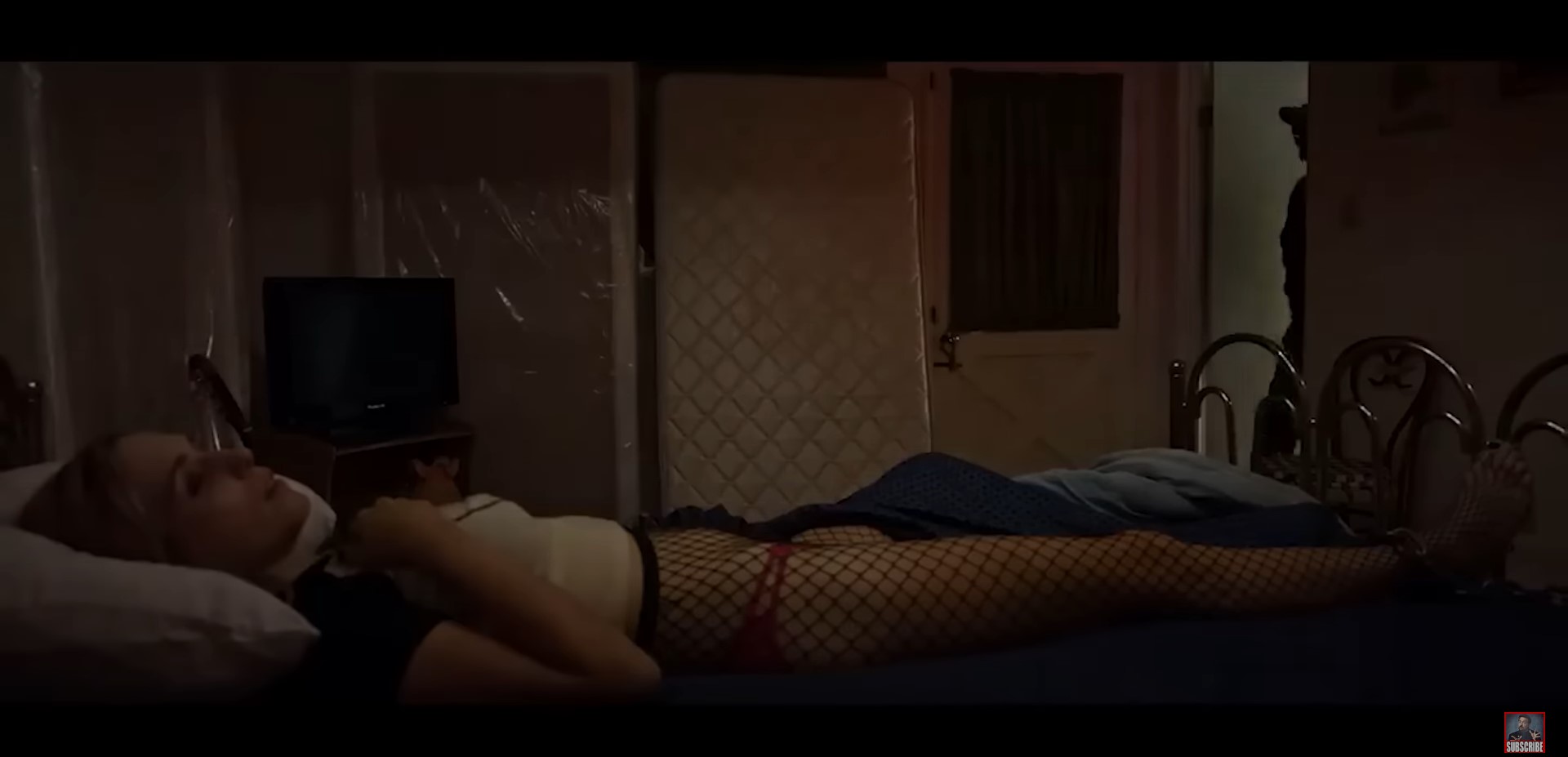
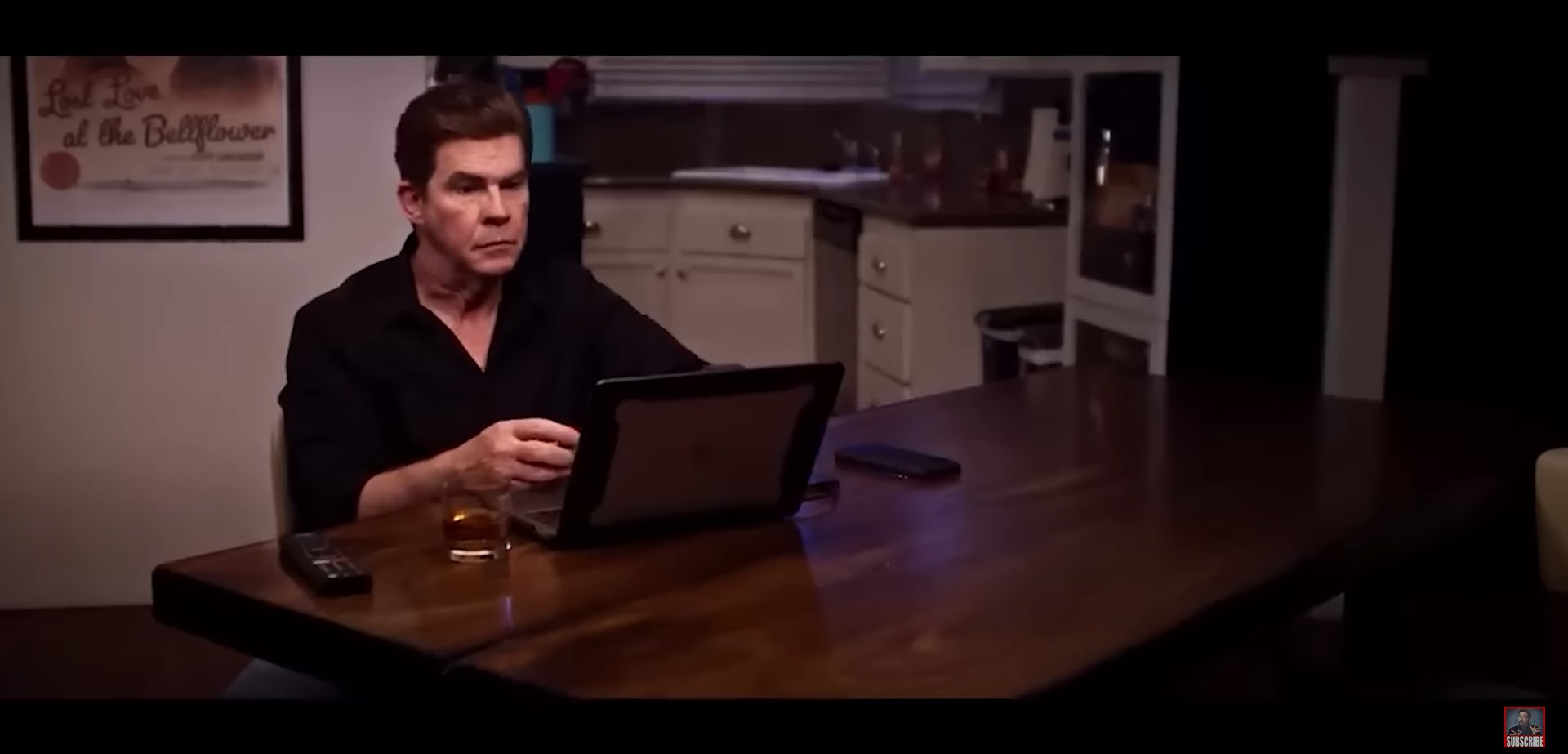
Australian punk rocker Kat Oden has fame in her home country and is steadily trending in the U.S. but when a masked man kidnaps while she lays unconsciously high in a drugged-out stupor, she wakes up being chained to a bed far away from where she was abducted.  Her mild-mannered kidnapper’s intentions revolve around getting Kat clean of narcotic impurities while the media circus explores wild theories, interviews her self-centered parents, reveals ugly secrets of her American rocker boyfriend, and follows the browbeaten investigation of an actor-turned-detective handling the Kat Oden case.  When the detective goes rogue, burned out by constant belittlement from his chief and being blamed for the inadequacies of his clownish subordinate officers, he makes a deal with an eager news reporter to give them the exclusive solving of the case for his own news show.  As he inches closer to finding Kat, the kidnapper and Kat dynamic undergoes significant strides to understand one another’s wayward reasons. 

The one major difference between major studio productions and the micro independent features shooting during peak COVID weeks, months, or years was the indies made use of the time whereas the bigger budgeted and the hundreds of cast and crew employed were virtually on furlough, hiatus, or just plain scrapped future movie ideas altogether.  Independent films had structural concept advantages, such as a smaller cast and crew to lessen the changes of infection, locations were typically limited so travel was not necessary, and indies sometimes would shoot guerilla style anyway to capture the scenes required for the story.  Writer-director Josh Roush, who lived and breathed producing Kevin Smith documentaries for the “Clerks” and “Dogma” director’s more contemporary credits, decided to pivot into the fictional route and just as soon as his dark comedy script for “Wrong Reasons” was about to start principal photography fruition, the world shut down in a pandemic lockdown.  However, a global emergency didn’t hinder Roush’s ambition and scaled down his crew and cast on set to get the job done. Executively produced by Landon Thorne, Kim Leadford, and Kevin Smith doing his version of Cameo appearances as well as David Shapiro contributing the other half of the funds, “Wrong Reasons” is a production of Rousch’s AntiCurrent Media, with Liv Roush and Matthew Rowbottom producing, and Shaprio’s Semkhor Studios.

In the role of Kat Oden, a real life Australian making her full-length feature film debut, is none other than director Josh Roush’s wife, Liv Roush.  Co-producing the numerous Kevin Smith making-of featurettes and other independent productions, including her husband’s music videos, Liv Roush has always been a face behind the camera and now she’s stepping Infront of the camera, mainstage as the center of a kidnapping ordeal being a promising up-and-coming punk rocker who has lost her way by sinking into drugs and an objectifying relationship with an egotistical American rocker.  While Roush can obviously handle her own being chained to bed in fishnet stockings and dip into a range of rage, fear, hurt, and acceptance, “Wrong Reasons” splits the story with another centric character in Detective Dobson.  Kevin Smith film regular Ralph Garman has a grip on the competent yet pent up case detective Charles Dobson but the detective goes through a series of case mishaps to scheming his own rogue operation that pulls away from the Kate Oden kidnaping ordeal perpetrated by James Winandi, an ambiguously misunderstood role by James Parks (“Red State,” “The Hateful Eight”), son of the legendary actor Michael Parks (“Nightmare Beach,” “From Dusk Till Dawn 3”).  The connection made between Winandi and Oden faces challenges in fully fleshing out what Winandi is trying to accomplish in by removing the lyrically strong and influential rocker toward a path of permanency for other listeners to experience the epiphany that befell Winandi.  It’s a motivation that couldn’t be grasped fully because we’re more invested in this parallel plot of Dobson’s working of an advantageous angle for himself that the message or the theme becomes lost in the superficiality for one’s own sake.  The cast rounds out with perfectly suitable supporting cast including Teresa Ruiz, Daniel Roebuck (“Final Destination,” “31”), David Koechner (“Cheap Thrills,” “Snakes on a Plane”), Matt Passmore (“Jigsaw,” “Come Back to Me”), John Enick (“Project Eve”), Harley Quinn Smith (“Once Upon A Time in Hollywood”), Kym Wilson (“Deadly Cheer”), true to form punk rocker Donita Sparks of L7, Darren Hayes of duo band Savage Garden, as well as a relatively quiet genre icon Vernon Wells (“Commando”) as Kat Oden’s dad and Kevin Smith as the a news cameraman in cargo shorts.

The divided narrative limps unbalanced between the two parallel storylines soon to collide in eventual finality.  We don’t really receive much wisdom, clarity, or even any kind of progressive dynamic between Oden and Winandi who quickly and quirkily come to a sensible understanding with Winandi’s masked kidnapping and Oden being chained to the bed. There’s also piped in televised news reporters covering the kidnapping case or verbally attacking the president or something enthusiastically bias and gospel from the news channels in what becomes a motif of media circus frenzy, corresponding also with the live news coverage that vultures around the Oden case. What Roush is attempting to convey through the unlikely kidnapper and kidnappee pairing doesn’t strum the right chords and flutters in place to where we’re not exactly sure how Kat Oden’s music affects her kidnapper given little-to-no backstory on him and not foreseeing a future outcome of his act in what is almost an akin to winging the situation.  Instead, we’re more engrossed into Detective Dobson’s downtrodden investigation.  A seemingly capable detective with good instincts, negotiating with suspects, and even has a new woman in his bed every night, the luck he has with his professional counterparts, subordinates, and report-to doesn’t necessarily reflect his personality.  When Dobson starts scheming to finally be the one top, the audiences’ attention shifts from the fluttering wrong reason to kidnap your idol to the wrong reason for turning into a self-serving public servant.

“Wrong Reasons” has all the right A/V and bonus content moves on MVDVisual’s Blu-ray release.  The AVC encoded, high-definition 1080p package is presented in a widescreen 2.85:1 aspect ratio.  Cinematography by Josh Roush and Matthew Rowbottom ensure the look Roush wants to obtain for his first feature length fiction, a clean less-is-more, truth-in-practicality visual that often echoes Kevin Smith’s earlier body of work on the indie scale.  The Blu-ray’s BD50 storage capacity handles compression well to thwart any artefact popups and the limited variety of color range, aka a more natural grading, doesn’t pressure the digitally shot film to crumble under the compression.  Details are sharp and textural in what is a solid visual presentation.  The English DTS-HD 5.1 surround sound is equally comparable with a dialogue first clarity.  There’s slight continuous feedback on the underlay, perhaps equipment interference picked up by the mic as it becomes a constant throughout.  Range is also limited to what is essentially a talk head picture with bits of action here and there with “Wrong Reasons” driven by the performances rather than by action.  “Wrong Reasons” is made for and presented by punk rockers with a film that’s very much dedicated to the music genre.  The soundtrack highlights a faction of the punk rock with bands such as Tim Armstrong, L7, The Wipers, Channel 3, The Unseen, Black Flag, and Bi-Product having tracks on the production.  Optional English subtitles are available.  Special features include an lengthy but informative Kevin Smith introduction in his very animated and enthusiastic Kevin Smith style, an audio commentary with director Josh Roush, producer Kevin Smith as well as another a second audio commentary with the director alongside co-producer Matthew Rowbottom, composer Cam Mosvaian, and wife/star Liv Roush, a Q&A session with the Roushes, Kevin Smith, Ralph Garman, and James Parks, deleted scenes and outtakes, Josh Roush’s short film “Idiot Cops,” and the original theatrical trailer.  The exclusive MVD release comes with a cardboard O-slip of a generically staged, or promo-esque, Liv Roush ankle-chained to a chair with a masked man standing next to her in non-menacing positions.  Inside is a reversible front cover of the same image, but I prefer the reverse side of the black and red illustrated silhouettes of the same character inside the clear Blu-ray snapper as it invokes more intrigue and suspense.  The disc art misleads with a horror composite of Kate Oden screaming, looking afraid, and the kidnappers mask hard lit to look more dramatic.  There are no insert materials.  The not rated film has a runtime of 97 minutes and has region free playback.  Josh Roush’s debut dark comedy has transference troubles, perhaps I’m not too punk enough to fully absorb how the music should move me, but we see acting veterans and greenhorns mix it up fitly for this COVID era picture.  

“Wrong Reasons” is this Year’s Punk Rock Film!  

Only EVIL Can Be Constructive Therapy for EVIL! “Dark Nature” reviewed! (Dread / Blu-ray)

Battle Your Inner Demons By Battle The Exterior Ones in “Dark Nature” now on Blu-ray!

Joy walks on eggshells around hot-headed and explosive boyfriend Derek.  Almost having been killed by Derek’s eruption into anger one night, Joy manages to flee his wrath for six months.  Long time good friend and weary ally Carmen convinces the haunted Joy to join a therapy group overseen by a psychologist with unconventional healing methods.  One of those methods is backpacking into the mountain wilderness for a therapeutic getaway to face personal fear with three other women who also experience the familiar paralyzing and manifesting symptoms of towering trauma.  Miles away from civilization, the group treks for two days until an unsettling feeling of being watched and their supplies being stolen forces them into a face-to-face with a mysterious influence that reconjures their individual terror through sight and sound, leaving them incapacitated with anxiety.  When realizing the amount of danger mounding against them, the fear-facing trip through the wilderness will put that aspiration to the survivalist test.

“Dark Nature” is a women-led psychological creature feature surrounded by themes of abuse, trauma, and the handling of the psychosomatic stress when at rock bottom and faced with internal, or external, demons figuratively for traditional storytelling and literally for cinematic storytelling.  Calgary filmmaker Berkley Brady writes and helms her first feature length film in 2022 from a storyteller’s collaboration with Tim Cairo, screenwriter of “Lowlife.”  Shot in the copious thicket of the picturesque and idyllic Canadian Rockies that stretch the provinces of British Columbia and Alberta, Brady’s scenic beauty parallels a skin deep exterior amongst a character group seemingly okay in the open-air while within the wayward withholding of crises becomes too burdensome to bear alone.  Brady and Michael Peterson co-produce “Dark Nature” under Nika Productions and Peterson Polaris in association with the Indigenous Screen Office and Telefilm Canada in this this Dread presentation, the production company subsidiary of Dread Central, and Tim Cairo, Kalani Dreimanis (“Polaris”), Jason R. Ellis (“Mother, May I?”), Patrick Ewald (“Turbo Kid”), and Katie Page (“The Man Who Killed Hitler and Then the Bigfoot”) serving as executive producers.

The cast comprises of five women at the core and one man hovering around the peripheral like a lingering, festering open sore.  At centerstage is Hannah Emily Anderson (“Jigsaw,” “What Keeps You Alive”) in character throes of relationship lamentation and a cracking psyche over the tumultuously violent and rarely passionate ex-boyfriend Derek, played convincingly cynical of his partner by Daniel Arnold (“Even Lambs Have Teeth”).  First meeting Joy, over a stove of a steaming dish and on the phone in an exchange of concerns and pseudo-comforts, audiences will already be in bed with the young woman’s nervous fraught when a sullen Derek steps into the apartment as she tries to appease him with his favorite food and positive inquisitively around his day.  A tense exchange of words turns into a lust entanglement of pre-sex kisses and touches that spirals into a physical aggression that has nothing to do with foreplay or sex.  The abusive opening act sets the tone for Joy’s edgy mindset into the early and middle acts as she’s standoffish and verbally combative and questioning everything about the group’s choice to venture into the wild under the unconventional means of one Dr. Carol Dunnley, casted by an over the years, well-versed television and movie doctor, or authoritative mentoring figure, Kyra Harper (“Hellmington”), with others continuing to rake over an unpleasant past.   Métis raised actress Roseanne Supernault (“Rhymes for Young Ghouls”) joins Helen Belay and “Don’t Say his Name’s” Madison Walsh as the other nature walking companions seeking a renewed lease on life.  While Belay broods in secrecy with a jaggedly defined backstory of a possible abduction or maybe something worse with Tara, Supernault adds a coping comedy mechanism with her former military background that has caused Shaina intense flashbacks.  “Dark Nature” might not be their characters’ exclusive story but certainly they’re components serve a pieces of the psychology behind it as well as fodder for the forest-dwelling fiend as the narrative aims to fragmentally unfold more of Joy’s affliction that not only cull reasons why this trip may or may not be a good idea but also challenges the friendship strength between her and Carmen until Joy can face down and take responsibility for her unprincipled stance on the seared in fear that renders her powerless and controls her.

“Dark Nature’s” adianoeta works excellently to service both the reclusive avoidance in seeking desperately needed help and the sinister presence lurking and stalking through the lush mountain weald.  Yet, audiences will identify more with the latter because like the principal Joy people tend to avoid their own problems and redirect to another pressing issue that has really nothing to do with them or affects those as a whole, turning a person’s dark nature into not a generally relatable theme no matter how intrinsically installed it is into the incorporated picture.  While seemingly sweeping with Joy’s entire circumstances, we’re led to believe the anxious woman remains haunted by her past, her abuser having this hold over her akin to Stockholm syndrome, as while on the trek through the mountainside she can hear his voice, hear the repetitive clicks of his Zippo lighter, and even experience his tight grip around her throat but Brady winds up the narrative with a few vacillating curveballs that pull toward difference directions to swing-and-miss from being squarely hit until the grand reveal of explanation.  Even then, the explanation retains some purposeful vagueness with an antecedent anecdote of an ancient indigenous people once offering sacrifices to a spirit on the very land the group is treading on.  The tale doesn’t offer much detail and certainly isn’t a full-proof explanation of what ensues but adds that comforting layer of setup into what becomes madness erupted from a furtive, cave-dwelling creature shellacked in a black muck and with supernatural abilities of emerging a person’s most personal fear.

A psychological creature feature that offers worse things in the world than one’s own personal demons comes to Blu-ray home video from Dread’s physical distribution partner, Epic Pictures.  The AVC encoded, high-definition 1080p, BD25, presented in a widescreen 2.39:1 aspect ratio, of “Dark Nature” looks undoubted sharp with details even if the color graded is somewhat desaturated.  The decoding of data details nicely around the foliage, skin features, and even in darker scenes with black levels not succumbing to any compression artefacts.  “Dark Nature” has two English audio options with a Dolby Digital 5.1 surround and a Dolby Digital 2.0 stereo of crisp sound design with a surround the wagon barrage of audio cues casting out through the back channels to denote an autonomic attack when alone in the woods.  Dialogue is clean, clear, and sorted out through the chaos with a perfect depth and reverberation from outside-to-cave-to-cave-to-outside.  An eclectic range is spread-out through the tale from the flashbacks adding explosions and whizzing gunfire to the guttural roars and bush movements of the creature that resemble an enclosing chill of being watched.  “Dark Nature” marks the debut score for the Canadian band Ghostkeeper and while the additional of delicate broodiness sweeps over the images, creating an ominous overhang for much of the picture, I wouldn’t say the score adds to the film’s soul in the subtilty of the low, whispery tones. English subtitles are available.  Special features include an audio commentary track, also hidden within the audio setup, with director Berkley Brady, makeup artist Kyra Macpherson (“Red Letter Day”), and costume designer Jennifer Crighton, a handful of deleted scenes cut for timing, Ghostkeeper stop-motion music video (1.33:1), and an oddly incorporated short film from “Dark Nature’s” editor David Hiatt (“Bloodthirsty”) entitled “Peanut Butter Pals,” a Scooby-Doo mystery solving trio comically and melodramatically tracking down a cave monster, “Dark Nature” trailers with a countdown list of a theatrical, 30-second, and 15-second trailer, and Epic Pictures trailers including “Colonial,” “Satanic Hispanics,” “Tomorrow Job,” “The Lake,” and “Woman of the Photographs.” Physical features are slimmer with a traditional snapper and a rather generic cover art of Joy and Carmen covered in blood superimposed in the foreground of a forest. Disc pressing has the two actresses, still covered in blood, reappear but this time within the jaws of a creature. The region free Blu-ray clocks in at 86 minutes and is not rated. Berkley Brady’s woodland set neurosis knot never says die in the face of adversity no matter the form in the filmmaker’s female-driven debut.

Battle Your Inner Demons By Battle The Exterior Ones in “Dark Nature” now on Blu-ray!

One Man Takes on the EVIL Australian Crime Syndicate! “The Man from Hong Kong” reviewed! (Umbrella Entertainment / Blu-ray)

“The Man From Hong Kong” on the Ozploitation Classics Blu-ray from Umbrella Entertainment!

A newly formed Australian narcotics unit busts up a major drug deal that lands a crime syndicate pusher into the custody of the authorities.  The pusher, low on the totem pole of a larger drug organization, speaks no English and with the inexperience of the Australian unit, Hong Kong special branch inspector, Fang Sing-Leng, is requested for interrogation interpretation and be the escort of extradition back to the pusher’s native Hong Kong residence, but while in custody, the pusher is gunned down by an assassin.  Sing-Leng thrusts himself into Sydney’s criminal underworld the Hong Kong way, leaving a trail of destruction in his solo-takedown of formidable drug kingpin, Jack Wilton.

For film loving youngsters, would they know what cinema was like before green screens, motion capturing technology, and other computer imagery devices to create alien worlds and improbable fight sequences?  Would comprehending the idea that before the pre-implementation of these technological advances in film there was a just-do-it fortitude toward the physical and raw aspects of special effects and stunt work?  Those wee moviegoers’ heads would explode into itty-bitty chunks of brain matter by the very slight thought of a man jump kicking another man off a high-speed dirt bike without even one ounce of a tethered harness or helmet for safety.  Hazard upon dangerous hazard is what writer-director Brian Trenchard-Smith offers on the table from his debut martial arts film “The Man from Hong Kong,” the first martial arts film of its kind hailing out of Australia.  Trenchard-Smith’s working title “Yellow Peril” sought to sprinkle in between the high kicks and hyahs an amusingly intended, but greatly nearsighted, prejudice of the subtle racism in how Australian people viewed East Asia; however, Raymond Chow, the Hong Kong-side producer for this two-country co-production, ozploitation actioner, didn’t quite see the humor in “Yellow Peril” (and we don’t blame him).  Thus, “The Man from Hong Kong” title was born with some minor contentious distaste for its generic branding.  Trenchard-Smith’s The Movie Company Pty. Ltd (“Stunt Rock”) and Hong Kong’s Golden Harvest Company (“Sex and Zen”) served as co-productions, releasing the joint venture in 1975 with variable success across the globe.

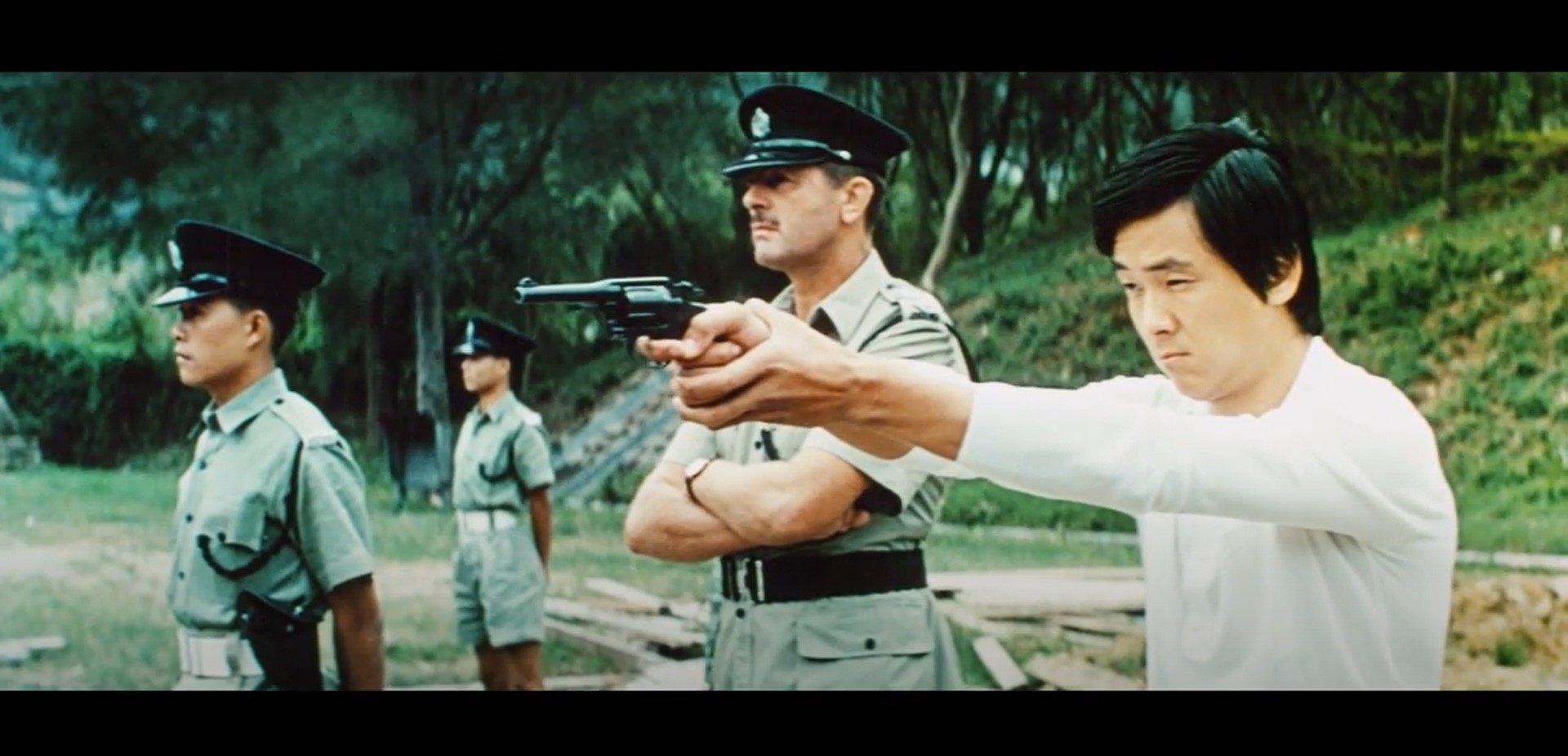
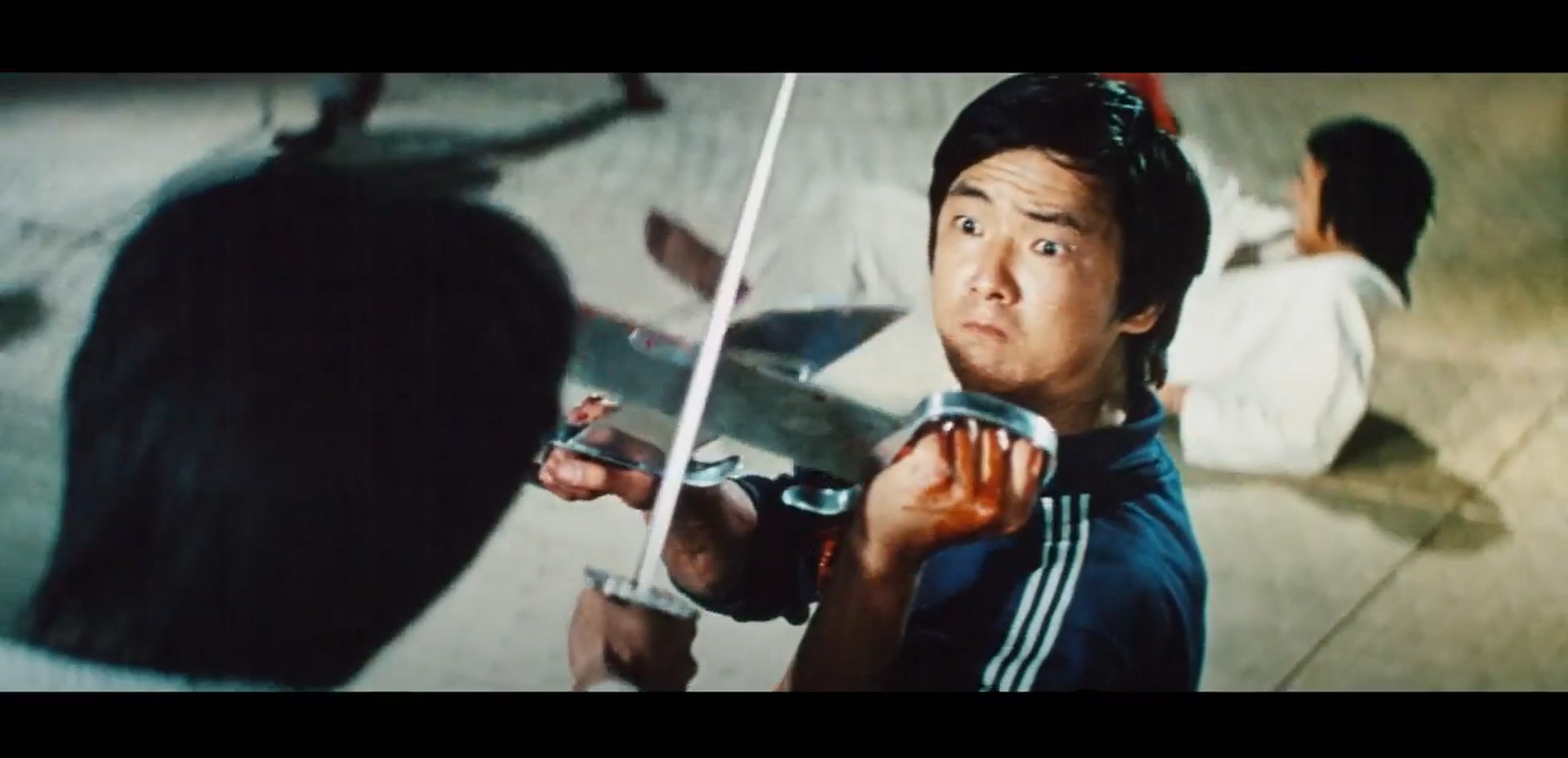
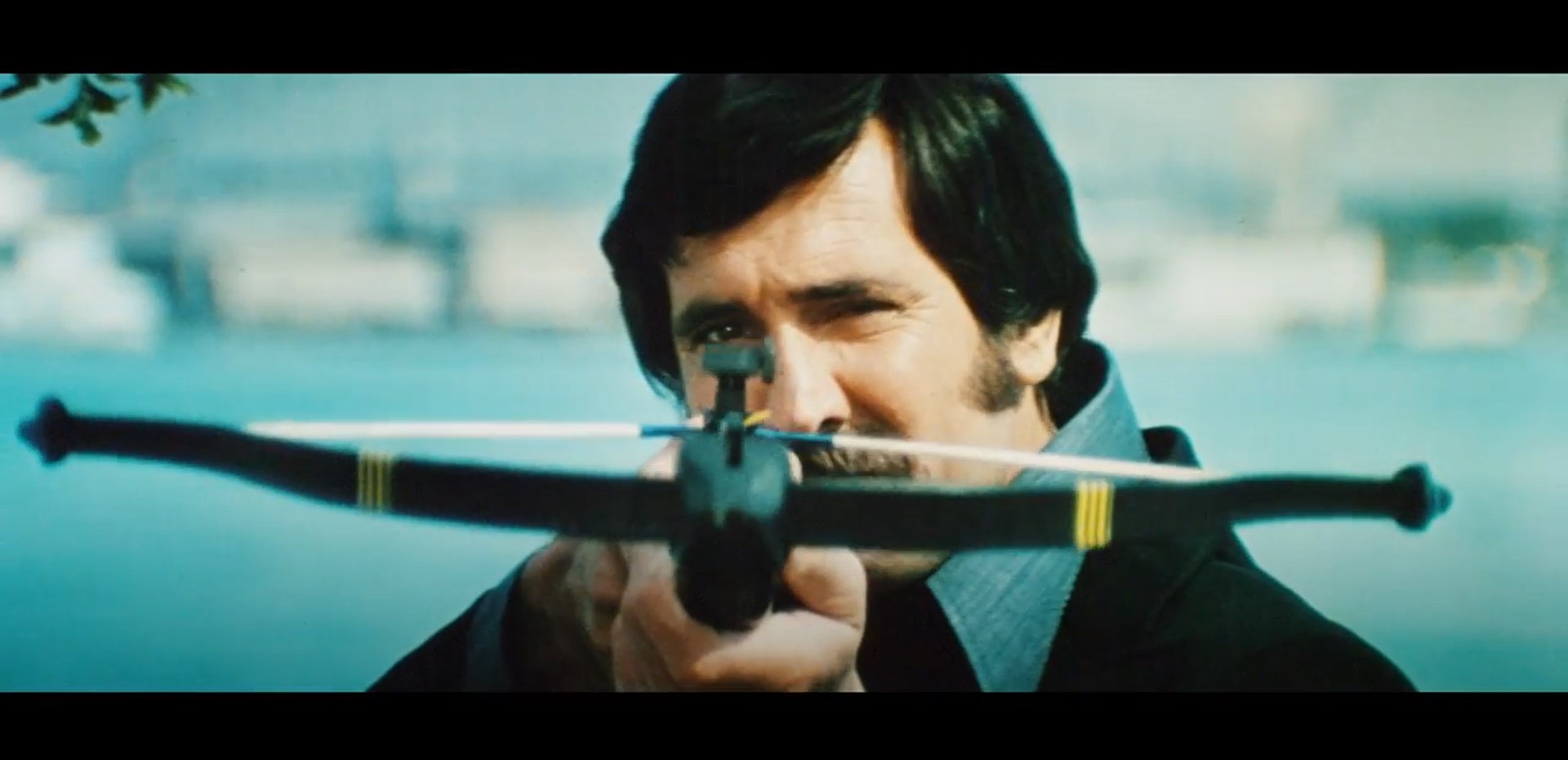
The first choice Brian Trenchard-Smith had in mind for the role of Fang Sing-Leng was mega-martial arts superstar Bruce Lee hot off the success of 1972’s “Fist of Fury,” 1972’s “The Way of the Dragon,” and 1973’s “Enter the Dragon.”  “The Man from Hong Kong” seemed to be a perfect segue into Lee’s next martial arts box-office hit that may have also reclaimed cinematic stardom for his soon-to-be co-star George Lazenby who fell into a blacklist slump after declining to reprise his 007 James Bond role from “Of his Majesty’s Secret Service.”  Unfortunately, and tragically, Bruce Lee suddenly died at the age of 32, leaving a void to fill not only Trenchard-Smith’s first film but also in the martial arts entertainment world.  In comes Jimmy Wang Yu, China’s former #1-turned-#2 after the quick rise of Bruce Lee.  The “One Armed Swordsman” series Wang Yu not only entrenches himself into the titular role at the behest of producer Raymond Chow as a suitable replacement, but Wang Yu also became Trenchard-Smith’s directorial counterpart of the Hong Kong shot scenes and the fight sequences, the latter being superbly thrilling by Wang Yu and his stunt team’s dedicated skillset to make the showmanship look authentic and bruising.  The extended chase through the streets of Sydney and into a no holds kitchen brawl with legendary stunt man Grant Page (“Stunt Rock”) is one of the best one-on-one rundown combat arrangements of its era.  Lazenby’s an effective villain with his towering height, broad build, and Tom Sellick mustache and has the ability to choreography not-so-half-assed kung fu, meeting and matching Wang Yu’s on screen moves without looking dopey or forced.   Australia’s film industry was so small at the time, there are number of recognizable actors mostly from the “Mad Max” series with the likes of Hugh Keays-Byrne (“Mad Max,” “Mad Max:  Fury Road”), Frank Thring (“Mad Max Beyond Thunderdome”), Roger Ward (“Mad Max”) in key or notable performance roles along with Bill Hunter (“Mad Dog Morgan”) and a pair of titular character love interests in Rebecca Gilling and Rosalind Speirs.

When judging a martial arts film, one critiques the hand-to-hand or melee weapon play contests, scrutinizing every punch thrown and kick taken, for complexity and believability.  If it looks real, it sure as hell feels real when conveyed from off the screen and to the audience.  Though “The Man from Hong Kong’s” scenes feel a little airy, pulling punches slightly too perceptibly, the choreography is quick and exhibits naturally enough through a variety of action and locations, including on top of Australia’s famous tourist attractions Ayers Rock for a wham-bam, drug sting and bust opening with a great-looking and thrilling car explosion shot that nearly takes the camera man’s head off with an unplanned, detonation jettison of a spinning car door toward the camera crew.  Those sorts of risky stunts are prevalent throughout that lends to “The Man from Hong Kong’s” enthralling physicality tone with Trenchard-Smith and his team’s wiliness to learn as they go in their death-defying acts.  The film is a tour de force of stunts, ranging from car chases, glider flights, skyscraper plunges, and an unforgettable kitchen skirmish with real melee weapons kneaded into its very fabric, with a Dirty Harry hero whose more of an anti-hero lawbreaker than the villains he’s up against by specializing in China’s miscreant brand of investigative police work. 

Perfectly suited as number 9 on the spine of the Umbrella Entertainment’s Ozploitation Classics banner is Brian Trenchard-Smith’s “The Man from Hong Kong,” now released on a region free, 2-disc AVC encoded Blu-ray.  Presented in a widescreen 2.35:1 aspect ratio with full 1080p, high-definition resolution, Umbrella has pulled out all the stops to release the best transfer to drool over.  Subtle vertical scratches here and there have no standing impact on viewing and the distinguished color palette is quite good and natural-looking for a film from nearly five decades ago.  There is a healthy amount of positive grain from the 35mm film stock, but the compression never comes into an issuance of sacrificing the quality, leaving darker scenes appearing bright and visible without the effect of enhancement or zealous contrasting.  My only substantiated gripe is with the subtitle cards that, in a way to not have to redo the English subtitles for the Mandarin dialect, the original frames were seemingly kept in and the image reverts back to a lesser quality degree.  Two audio options are available, an English-Mandarin language DTS-HD 5.1 Master Audio and a lossy DTS-HD dual channel.  Umbrella’s kbps output erratically fluctuations between 2400-3400 but even with the rollercoaster ups-and-downs, “The Man from Hong Kong” still had a robust action track and the dialogue came through discernibly clear.  Only goofy aspect about the audio is “Game of Death” and “Bloodsport’s” Roy Chiao’s English dubbing of Jimmy Yang Yu who obviously knew English or knew how to act like he knew English by watching his mouth articulate the native vernacular.  Umbrella also pulls out all the stops for the special features department in this limited to 3000 copies 2-disc set with the second disc a CD soundtrack arranged with Noel Quinlan funk-rock score and the main Billboard topping opening theme “Sky High” by the band Jigsaw.  Also included is a 2001 audio commentary from director Brain Trenchard-Smith, actor Hugh Keays-Byrne, and stunt director Grant Page, an all-new(ish) interview with Grant Page from 2008 entitled Real!Quick! pulled from Mark Hartley’s ozploitation documentary “Not Quite Hollywood,” extended interviews with the director, executive producer David Hannay, cast members George Lazenby, Roger Ward, and Rebecca Gilling, cinematographer Russell Boyd, 2nd unit cameraman John Seal, and first assistant director Hal McElroy from the same Hartley documentary, Trenchard-Smith’s 50-minute documentary “The Stuntmen,” a 75-minute “Kung Fu Killers” TV special directed by Trenchard-Smith and featuring Grant Page and George Lazenby, behind the scenes footage, opening night press conference footage, various and alternate  trailers and promos including a HD theatrical trailer, a cardboard slipcover with new illustrated design, and a reversible Blu-ray case cover art that also lists all 23-tracks on the CD.  The special features runtime outshines the 106-minute feature with a slew of interviews; however, much of the interviews really harp over-and-over upon George Lazenby’s set-on-fire coat mishap scene and Jimmy Wang Yu before the camera rolls catching and eating dragon flies ahead of a kissing scene with Rebecca Gilling.  “The Man from Hong Kong” isn’t notable because it’s Australia’s first martial arts film.  It isn’t notable for the attempt of resurgence of a former James Bond actor or because of its robbed promise of the late Bruce Lee.  What makes “The Man from Hong Kong” important to the film industry as a whole is its precursor value for being the example of a cast and crew to put life and limb on the line for the sake of motion picture art and be damn good at it.

“The Man From Hong Kong” on the Ozploitation Classics Blu-ray from Umbrella Entertainment!