Protect Yourself from EVIL Because “Tonight She Comes!” reviewed! (Jinga Films – Danse Macabre – MVDVisual / DVD)

“Tonight She Comes” is Now Available on DVD! Purchase Here!

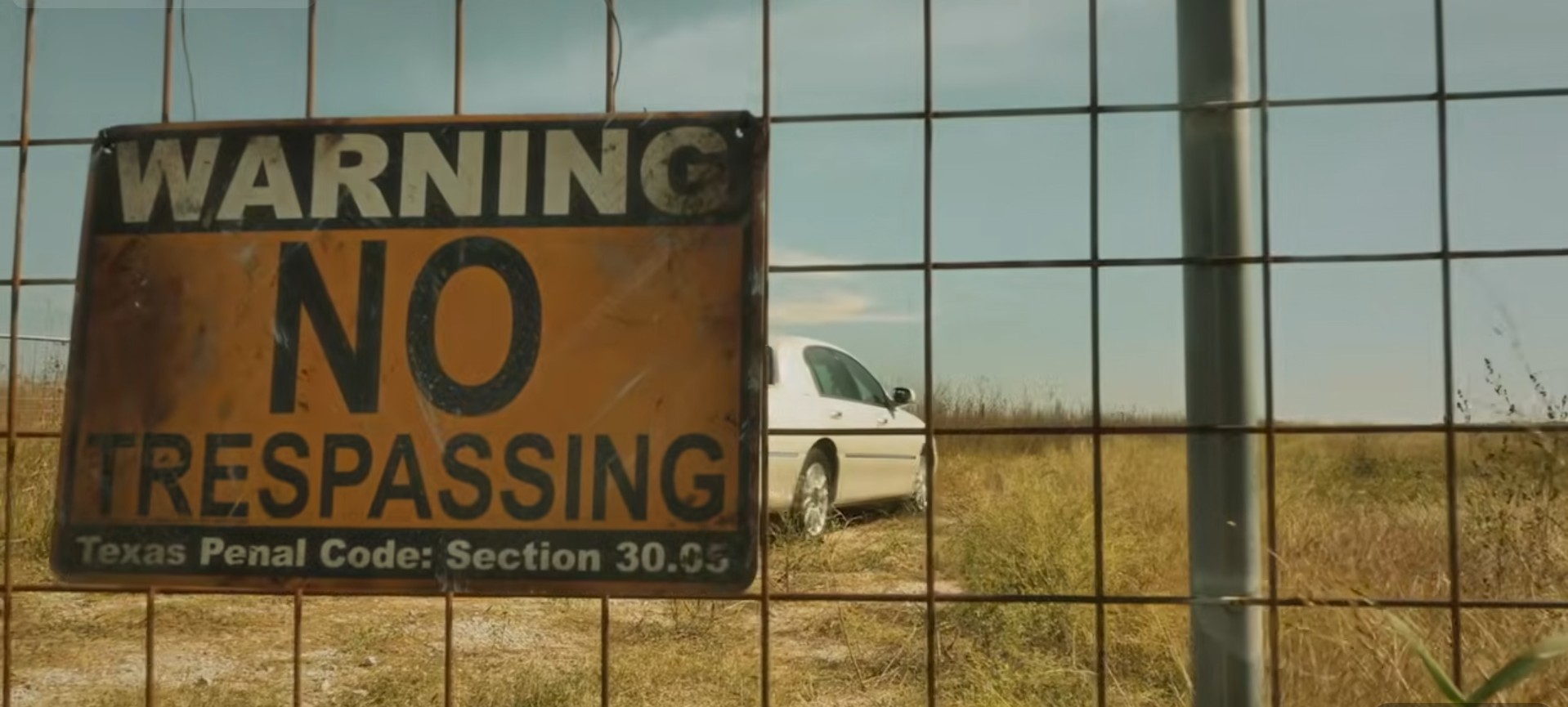
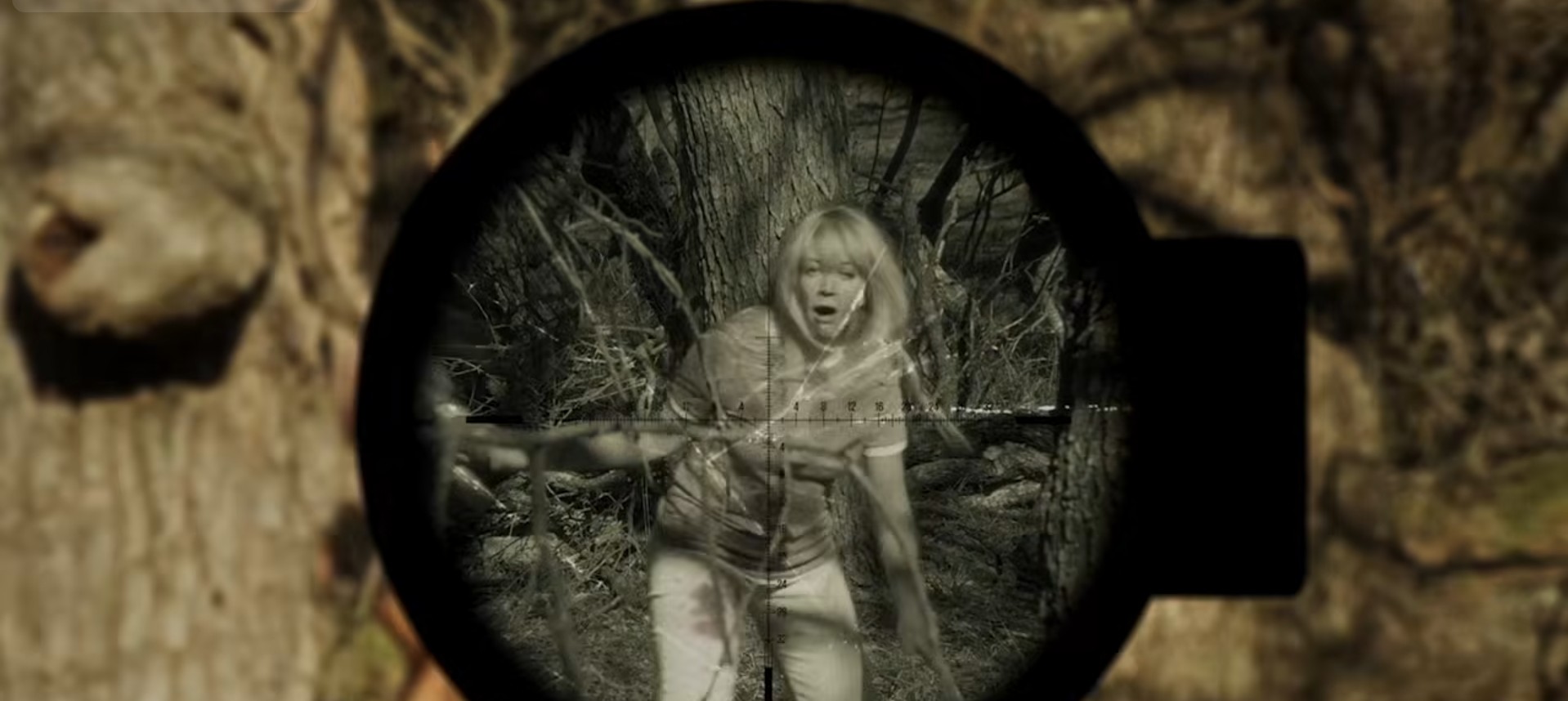
Two women looking to spend quality debauchery time with their friend at her family’s rural cabin arrive find their friend is nowhere to be seen or heard from but they do discover a lost mailman asleep on the cabin porch on his first day.   As the trio yuck it up with plenty of booze and flirtation around the campfire, locked out of the cabin with still no sign of their girlfriend, the day turns to night and they’re eager to get into each other’s pants for an alcohol fueled fling.  Unfortunately for them, their lost friend just showed up naked out from the adjacent lake.  What usually would be an invitation for an extended good time, the naked friend is stained head to toe in blood and determined to kill anyone in her path.  In their escape, they run into a backwoods family of black magic occultists trying to fix their titanic satanic mistake before everyone dies.

If a campy, gory, backwaters horror engulfed in occult get your filmic scary movie juices flowing, then “Tonight She Comes” should be at the top of your must-watch list.  The 2016, American-made feature from writer-director Matt Stuertz takes the cabin-in-the-woods trope to the extreme to the likes of a farcical feat many have tried but only a few achieve.  “Tonight She Comes” is Stuertz’s sophomore picture behind the cleverly titled found footage horror “RWD,” or “<<RWD,” as in the rewind symbol you’d typically see on VHS players, and has since his bloodthirst for horror with the practical effects-driven and supernatural terrorizing of a young woman in this year’s “Human” and is currently in production with a gory vampire flick, “Wake Not the Dead.”  Gory is Stuertz niche tinged with a repulsive tone that’s not just splatter nor intestinal evisceration.  Cinematographer Chris Benson and sound designer Jamison Sweet, of the St. Louis-based production company Lamplight Films, and Twenty Eighteen Seventy-Six’s Stuertz produce the film.

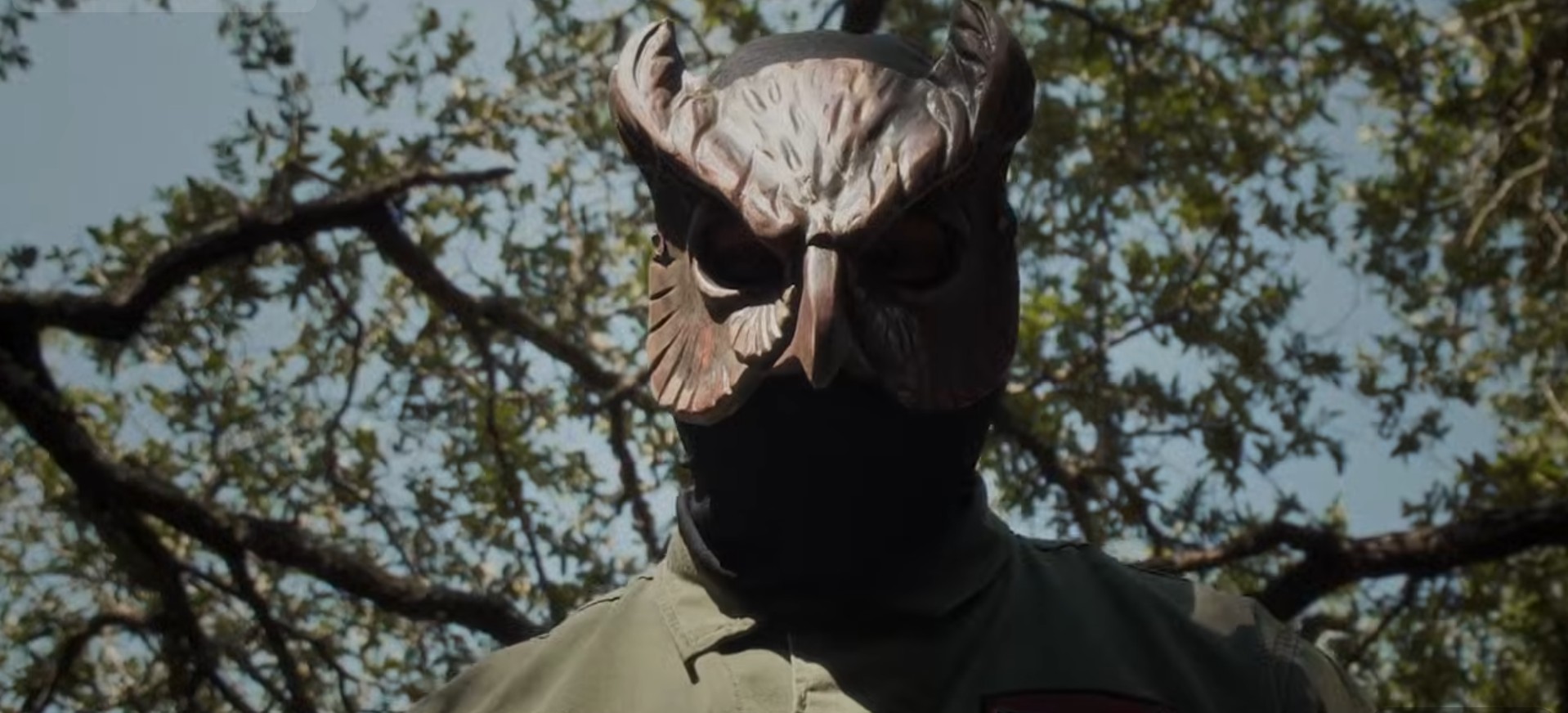
What’s neat about the progressing script, acutely angling 90 degrees to keep the story fresh and unsuspecting, is the principal leads constantly change hands.   By conventional standards, the young, good looking, white male mail with a pleasant disposition in James (Nathan Eswine) places audiences on that path with a post title opening of the inexperienced, first-day-on-the-job James doing his route diligently despite difficulties locating an address.  Also, in comparison to his dimwitted and degenerate best friend Pete (Adam Hartley, “The Slender Man”), James is a pedestalled prince.  As the day turns to night, James begins to show cracks in his gallantry and the baton is roughly passed to the rough around the edges but tough as they come Ashley (Larissa White, “Charlatan”).  In another dynamic duo curiosity, her best friend in Lyndsey (Cameisha Cotton) drunkenly sluts her way to the end of the whiskey bottle and toward the inside of James’ pants, demarcating the horror tropes between the two pairings by sticking up and out the perverted goofball and the alcoholic promiscuous while keeping in protagonist good graces and staid James and Ashely up until the baton is passed along again inside the trio of an occult practicing backwoods family who messed up a reincarnation spell and inadvertently resurrected a powerful, murderous demon.  Between the family-first Pa, Frances (Frankie Ray, “Bad Haircut”), the near silent big brother, Philip (Brock Russell) and the rational sister, Felicity (Jenna McDonald), the protagonist shift lands in the lap of the younger sister who takes charge in a show of no nonsense command and force that deserves respect for a role that’s usually diluted or wasted in isolated cabin horror.  Each actor performs exactly on Stuertz given script with the cast rounding out with former model Dal Nicole in her full birthday suit for most of her screentime as the Kristy inhabited demon plodding to kill in a nonstop wrath.  

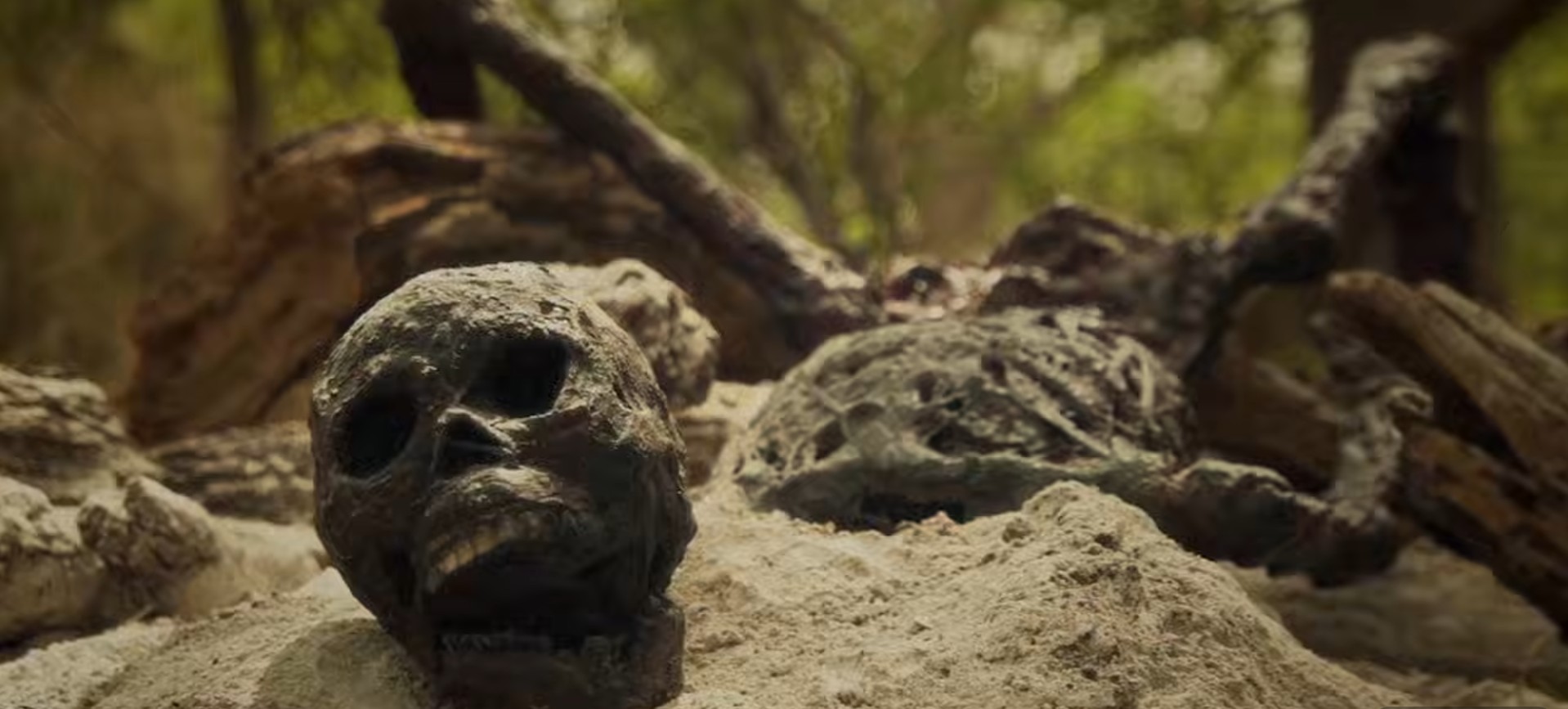
Most audiences and critics will pan “Tonight She Comes” as nonsensical drivel touting a gauntlet of gore and a fixed nudity to carry it into a favorable edge with fans.  All I have to say about Matt Stuertz script and vision is it breaks the conventional stereotypes into shattered shards and uses those shards as gouging, bloodletting weapons.  On it’s face, “Tonight She Comes” appears to be another run-of-the-mill cabin-in-the-woods horror with throwaway characters and many vague plot points that don’t have an encircling reference.  Stuertz purposefully throws cation to the wind and makes the movie he wants to see, a no-holds barred blood fest geared to obliterate the tropes and only provide slivers of important information, just enough to pass the bar to the next round of ironfisted thrashings.  The story never allows the sediment to settle between the character action and dialogue debauchery, the eclectic and interesting POV shots, the diabolical practical effects, the sparingly used but effective visual effects, the continuously guess where this story is heading and, of course, the unabashed eye candy that is Dal Nicole fully nude in full time.  The other thing that can bog down viewers, and rightfully so, is the time check title cards that are supposed to tick down to the moment the demon emerges into the fold, turning the events of youth fun into a grind of survival. Randomized and spelled out, literally, the interjected times don’t seemingly match the span of time passed on screen.  What should take a few minutes between scenes, the title card states hours had passed; I’m not positive if this is part of Stuertz’s trope lampooning or not but this portion excels as more distracting from its theme-bombing track.

Another great and gory to the extreme release from the collaborating collective of Danse Macabre, Jinga Films, and MVDVisual.  “Tonight She Comes” comes to a new DVD release that’s MPEG2 encoded, 720p standard resolution, on a DVD5 and presented in a widescreen 1.78:1 aspect ratio.  Not peak image quality by any means of available formats out today, solidifying this DVD release a roll back to a lesser picture quality, but digital capturing goes without saying that DVD can still be a formidable format in regard to picture quality.  Likely, you will not see too much different between standard and high-definition but there are subtle areas of contrast, such as the black areas does contain faint banding and the details don’t inlay a zing of crispness like they should.  A film that starts off with a title card reading, THIS FILM SHOULD BE PLAYED LOUD… AS HELL, the DVD does the statement and Stuertz’s film justice with an uncompressed English 5.1 surround sound mix that highlights on and hits upon the important sound effects, screams, and building discordance, tumbling minor tone, and spiny synth-rock and 80’s horror-inspired score of Wojciech Golczewski (“We Are Still Here”).  Dialogue lands with prominence amongst the clatter and chaos layers that gives a real sense and elevation to the dialect of Jenna MacDonald’s tough backwoods occultist.  Not much in the way of depth as mostly everything is taken to the extreme volume, actions far and near, but range is aplenty by spanning the innocent swashing of alcohol in a bottle to the splatter of brains on the wall, from the crackling of fire to the gnarly rip of flesh being torn apart, and the robust force of bullets being fired to the deluge of menstrual blood filling a cup.  Yes, it’s one of those movies!  English subtitles are available for selection.  Special features include a Matt Stuertz commentary track, deleted scenes, a behind-the-scenes and raw footage look with cast and crew interviews with some still in character wardrobe, the Stuertz’s short film “Slashers,” and the teaser and theatrical trailer.  The DVD packing is about as generic as they come with the naked silhouette of the titular villainess standing in front of not the cabin the film in not the forest this movie takes place.  The arrangement is reminiscent of an “Evil Dead” knockoff.  The tall DVD Amaray case has nothing more to note in terms of physical prowess.  Aforementioned, this DVD is a rollback release in a few ways, and one is, unfortunately, the rating with a Rated R cut with a runtime of 84 minutes whereas previous releases were not rated clocking in at 90 minutes.  However, as far as I can tell, the Jinga Films, Danse Macabre, and MVDVisual does offer region free playback unlike early editions locked in at region 1.

Last Rites: If looking for something not too serious, checks all the gory and gross boxes, has decent practical and visual effects, and bares skin, “Tonight She Comes” is a fierce, ferocious, and fight-to-the-death option worth the viewing calories!

“Tonight She Comes” is Now Available on DVD! Purchase Here!

Never Trust an EVIL Trucker with a Drug and Prostitute Addiction! “The Bunny Game” reviewed! (Jinga Films, Danse Macabre, MVDVisual / DVD)

“The Bunny Game” is Not for a Weak Stomach! Now on DVD!

Bunny, a prostitute on the streets of Los Angeles, subjects herself to the lowest of clientele lists looking to exploit her services with their own abusive fetishisms.  Just to get by to her next meal.   Bunny is constantly in coked out state when tricking becomes nearly unbearable.  Manhandled, abused, and unconsciously raped, there seems to be no end, and she must persevere to survive the streets, beautifying and feeding herself physical and mental nourishment to keep up strength.   When she encounter’s a trucker named Hog, Bunny’s just looking to endure another insufferable John, but Hog has other plans for Bunny, kidnapping her, driving somewhere isolated, and chaining her up deep within his trailer, and tormenting and torturing her to a different kind of no end Bunny has never experienced.  Hog’s derangement is fueled by his extreme drug use in what is not his first rodeo with working in whores for his own personal enjoyment and the girls’ own personal Hell. 

Banned in the UK, “The Bunny Game” is an extreme torture porn horror based off the real events that happened to principal star Rodleen Getsic with being abducted.  There’s not much publicly known on her own horrible experience, but the “The Bunny Game” is a baseline shockumentary written in collaboration between Getsic and filmmaker Adam Rehmeier with in the director’s chair of his debut feature film.  Rehmeier, director and cinematographer of numerous music videos and shorts, conjures up a story and a completed film with singer-actress Getsic without ever materializing an official script.  Instead, improvising and extemporizing fluff up Rehmeier’s storyboarding bullet points of where people and places should be in the narrative construct, hence why much of the story goes without dialogue, replaced with frenetic visuals and montages of recalcitrant convention.  Rehmeier co-produced the film under his company Death Mountain Productions alongside Rodleen Getsic.

For having been abducted herself and for the film to be an overemphasis of it, Getsic steps into the main role’s fishnet stockings to be the used and abused sex worker, known only in the credits as Bunny, and the role is no walk in the park or for the faint of heart.  Bunny is a self-inflicted punishing performance and mostly what you see on screen being inflicted upon Bunny is genuinely be done to Getsic which includes branding of the caduceus symbol on her back, as well as the same symbol seared into the flesh of Getsic’s friend, Drettie Page, who was game to receive much of the same for-the-story, for-the-film punishment as another victim of Hog in, supposedly, flashback sequences.  Hog is played by Jeff F. Renfro, a regular in the industry for his transportation services owning a big rig and tractor-trailer, but as the formidable serial killer Hog, Renfro brings and matches the intensity of “The Bunny Game’s” near free for all improvisation and experimentation provocation.  Getsic’s willingness to go the extra mile, from being branded, lighting scored by knife play, having her head shaved, is equally matched by Renfro’s being the recipient of being spit in the face, handling the fondling and the other physical exploitation of Getsic and Page, and being a total wild eyed, masked and shirtless, top of his lungs maniac with a mindset that’s cruel and oppressive with another human being’s life in his hands.  Dynamically, it’s a cat playing with a mouse, a deplorable show of chauvinism, and a callously cruel picture of control with the players in full control and full acceptance of their characters.  Gregg Gilmore, Loki, Curtis Reynolds, and Norwood Fisher cast a supporting line to trawl the Rehmeier, and what Rodleen Getstic refers to, monsterpiece

Rehmeier and Getsic have both been recorded stating every action on screen, aside from the excess drug and alcohol use, is 100% real.  Now, “The Bunny Game” immediately slaps viewers in the face with Bunny on her kneeds giving extended, adult industry-enthusiastic, fellatio to some unknown man only shown from his clothed backside at mid-section down to the top of the knee.  While not as sloppy as one might think despite Getsic’s vigorous efforts, the opening oral provides that provocative, eye-opening, banned-in-the-UK scene that now has snuck insidiously in the recesses of our minds and, in conjunction with the previous Rehmeier and Getsic authentic claims that never really specifying sex as one of them, audiences will wonder if what they’re subjected to is in fact a real act of oral sex.  To digress briefly, what’s the deal with movies with Bunny in the title (“The Bunny Game,” “Brown Bunny”) and oral sex?  From there, if you’re not disgusted by the voyeurism and chauvinism of sex work and misogyny, you’re digging Rehmeier’s film and hooked with curiosity tied to Bunny’s unfortunate fate, but what ensues embodies the essence of a crazed industrial music video of minor, discordance chords that produce harsh sounds and tones to envelope the choppy and cutting editing that shatters linear time, as well as the struggling soul, especially in montages of maniacal torture and onset introspective  between the punishment giver and taker in the Hog and Bunny intersection that will instill a catalytic crossroad for one of them.   There’s plenty of empathy to be had for Bunny, or maybe even sympathy if one has gone through similar abduction, torture, or has had a previous life on the streets, but the coarse nature of Hog’s slow and measured wrath can certainly be felt in the 1 hour and 16-minute runtime as revisiting Bunny for another dash of screaming, laughing, and misuse of her body and being at the hands of Hog is often on a wash, rinse, and repeat cycle of cynicism, an unavoidable problematic staleness often associated with films that do not have a shooting script, or any script for that matter.  Ideas tend to run dry and the then cornered concept is to bedazzle with nonstop bedlam but the fresh frenzy of exploitation is often fleeting and expires a lot quicker than the film’s runtime does.

A tale of street tragedy and what should be an always constant reminder that deranged killers are here, there, and everywhere, “The Bunny Game” scores high in extreme exploitation within its experimental execution.  Jinga Films, Danse Macabre, and MVDVisual bring the corrosively cuddly film back onto DVD after the original Autonomy Pictures release has been out of print for a while.  The single layer DVD5’s codec is of MPEG-2 compression and presented in 720p resolution in a widescreen 1.85:1 aspect ratio.  The achromatic black and white image stacks additional bleakness to the already soulless content with a low field of contrast creating borderless shadows but the use of handheld key lighting, aka flashlight, does create a miniscule delineation at times when under a blank of black.  Blacks succeed in being solid for the most part with only a couple instances of minor banding which is pretty good DVD compression, likely a result of the zero color to encode and decode.  The English LPCM Stereo is not a girthy mix of dialogue, soundtrack, and ambience.  Now, all three elements exist, but since “The Bunny Game” has zero script, there’s not much in the way of conversating and what’s there is prominent enough amongst the layers of industrial jarring dissonance that, at times, beats in sync with the visceral montages.  Inside the mic recording scope, ambience comes and goes based off the intensity of the scene and score but there are quieter moments to reflect on the improper handling of Bunny with Hog and the other indiscriminately disgusting Johns her life as a prostitute absorbs.  Special features include an archival Caretaking the Monster behind-the-scenes interviews with cast and crew, including actors Rodleen Getsic, Jeff Renfro, Greg Gilmore, and director Adam Rehmeier, discussin the original concept that was more aligned with Getsic’s personal abduction accounts but then evolved into something more horrifying that lead to the casting of Renfro, their isolated locations, and the realism inflicted upon Getsic as well as the teaser and theatrical trailer.  The DVD packaging is much the same as previous editions with a video aesthetic resembling black and white contrast but unlike previous releases, the cover art shows off its graphically artistic masked bunny in shackle design that speaks to the content.  The Jinga, Danse Macabre Danse, and MVD release lists this as a rated R release whereas the previous version was unrated; however, both releases have a 76-minute runtime.  A quick review suggests this “R” cut is actually the same as previous versions.  The DVD also has region free playback.

Last Rites: This game is not for the faint of heart. “The Bunny Game” tests willpower to stay through to the end, through the torture, rape, and the real violence in a one-sided acrid affair. If you can survive the brutality, this game is for you.

“The Bunny Game” is Not for a Weak Stomach! Now on DVD!

Midnight Showing of the Lost EVIL Tape Will Be the Last Thing You’ll Ever See! “Transmission” reveiwed! (Jinga Films, Danse Macabre, MVDVisual / DVD)

“Transmission” Transmitting to Your Television on DVD!

A Santa Mira elderly man sits in a dark room with a glowing television illuminating his silhouette.  As he channels surfs through the night, amongst what’s being broadcast over the airwaves is a bible-thumping televangelist, a children’s puppet show, an 80’s teen romance comedy, a live local news broadcast of a hostage situation and a documentary on the investigation of the disappearance of notorious cult horror film director Frank Tadross Roth pursued by his granddaughter Rachel and her boyfriend.  Going deeper into Ross’s disappearance through archived interviews with the director and crew, on set raw behind-the-scenes footage, and the examination of Ross’s quest for an obscurely treasured videotape by an occult group, the director’s pursuit of, and his eventual unearthing, of the tape become the push for his last and recently discovered film Transmission, thought to have been lost in a building fire after his suspected involvement of the film’s lead actress murder.  Going back and forth between the channel programs builds a sinister, terrible dread that will soon be revealed to terrorize all those glued to the set. 

Late night television has never been so bodingly evil!  Channel surfing transmits an anthological approach between mockumentary and found footage in this uniquely crafted scrolling of boob tube terror entitled “Transmission.”  The 2023 horror is from writer-director Michael Hurst, the English director behind a pair of franchise sequels in “House of the Dead 2” and “Pumpkinhead 4:  Blood Feud.”  His latest venture takes twist to a whole new level different from his repertoire of linear independent horror with backlot dark legend surrounding an occult obsessed horror filmmaker.  Hurst also produced the film, his first in over a decade since 2017 with Andy Hurst’s (“Are You Scared?,” “Wild Things: Foursome”), alongside other self-employed filmmakers with the How to Kill Your Roommates and Get Away with It” producing duo Robbie Dias and Pat Kusnadi.  New Blood Productions serves as the production studio.

“Transmission” traverses in guile under TV guide pretenses of local channels, channeling the horror through the back and forth of unsettling, televised channels that have a familiarity of broadcast shows – sponsor subsidized children shows, perfunctory local news, and black and white sitcoms – but there’s more than what meets the eye.  The film uses recognizable genre names to get the message across with “Sleepaway Camp’s” Felicia Rose in her most vanilla action news reporter role, “Scary Movie’s” Dave Sheridan as an over-the-top protective father caricature in a teen romance comedy, and “The Road Warrior’s” Vernon Wells at the center of the amassing occult suspense as the missing notorious horror director Frank Tadross Roth.  Over the years, Wells’ performance has tapered to a subtle crawl of expression as if the veteran actor is now just running through the motions of the everyday hired gig that’ll headline his name, unlike his former wide-eyed and eccentrically villainous roles in “Commando” and “Innerspace,” but “Transmission” suits his stern act portrayed in video flashback as an occult maniac and peculiar director gripped by the search of an arcane, dark sect’s perniciously videotape.   Spearheading the effort to track down the filmmaker is his granddaughter Rachel, played by Nicole Cinaglia (“Death House”) with an inexplicable character shifting of gears from curiosity and intrigue from the documentary to the frantic and fearful ramblings of a paranoid hostage taker in the new story stemmed by her findings surrounding her grandfather’s disappearance.  There’s potential gap there in the lack of development, or rather the lack of acknowledgement overall, with Rachel’s parents as it’s just a grandfather and granddaughter affair without the recognition of those in between.  There’s also a gap in Rachel’s attained information about the sect, the videotape, and her grandfather’s endgame as she seemingly has more knowledge about the insurmountable otherworld evil on the horizon but how she got there is a few clicks short to fully bridge.  Sadi Katz, Del Howison, Marcella Di Pasquale, Ben Kaplan, Hunter Johnson, Raymond Vinsik Williams, Jennifer Nangle, McKensie Lane, Jessica Cameron, Charles Chudabala, Michael Glenny, Christopher Bryan Gomez, Ruby Reynolds, Ben Stobber, Mark Schaefer, and Robin Hill fill out the channel surfin’ cast of characters.

“Transmission” has a neat story structure built upon components with the premise being a movie inside a documentary while amongst a flipping through the broadcast waves that coincide with another movie as well as television shows, podium preaching, puppet skits, etc., to which is then wrapped up inside and latched onto another movie, a metanarrative with a preamble setup.  The Roth directed Transmission, presented for the first time on Malvolia’s spooky late night show (an Elvira rip) is a space horror off-brand for the filmmaker that mirrors vaguely the reality outside the boob tube but told through the Rachel Roth investigative documentary that builds the timeline pieces while flipping back and forth between the late night movie and the documentary as well as the scroll through every other broadcastings of paralleling programming in what feels like an antiquated prelude to the cable guide button on a tube television with depicted content that resembles much like what programmed over-the-air decades ago down to the very staticky outlines of porn stars expertly doing their fleshy vocational craft in snowy pixelations.  The edited series of a varietal shows creates an erratic unsettlement with an atmosphere churning over the idiosyncrasy content of what’s eventually to spoil or come to chaos by Transmission’s, or rather ”Transmission’s,” twist ending and what a fairly good twist ending it is, even with the slightly ham-fisted acting, by pulling off misdirection as you think you know where the finale is heading but the forces of evil seep through with a backup plan. 

Jinga Films, Danse Macabre, and MVDVisual present “Transmission” onto a MPEG-2 encoded, upscaled 720p (but upconverted on my player but since this title is shot digitally the image appears fairly good to begin with), DVD5 and presented in a widescreen 1.78:1 aspect ratio.  As stated, imagine quality has a fair amount of detail and intended panache interference amongst a broad range of different aesthetic styles and gels through the varied televised broadcasts from static and grain filters to colorless sepia, to filming scenes on television screens, and to other mock-electrical afflictions inside a digitally shot story truck to intermittently snap normality and cause a rising fear of curiosity amongst the TV goers.  Throughout the picture, there were no noticeable true compression issues with the picture.  Some scenes felt slightly stretched by that I chalked that up to filmmaker style when rendering various programming for the narrative.  Though not listed which format is used, the player registers an English Dolby Digital 2.0 Stereo.  With imitating the perspective of someone watching television, audio tracks are distinguished with a flat concave that elevates the pitch but disperse through a single channel.  Emitting through a dual channel stereo, the audio can discern potently through, providing clarity.  When looking at the perspective, we’re either the old man watching the television or when inside the show itself watching from the fourth wall in and subsequently the strength and tone change often quite a bit, creating a rich depth when done correctly.  English subtitles are optionally available through the moving menu.  The DVD is essentially a feature release but there are other Jinga Film trailers that include, “Iconic,” “Tonight She Comes,” “The Protos Experiment,” and this film, “Transmission.”  The DVD comes in a standard single, push-lock, black DVD case with single-side cove art that I personally found gratifying when considering the film as it speaks to the abnormal and drawing glow of a brightly illuminated television in place of a head on top of the shoulders of an opened-armed cultist with a pleasingly red and black contrast.  The DVD is pressed with the same yet cropped image.  “Transmission” has a R rating (no singled-out rationales but there is some language and nudity), has a runtime of 74 minutes, and is region free for all players.

Last Rites: There are no mixed signals from “Transmission’s” gradual rise to impending cosmic doom with an exceptional Lovecraftian twist to nightcap this Michael Hurst channel-hopping and ominous occult production.

“Transmission” Transmitting to Your Television on DVD!

Business and Pleasured are Ruined by EVIL’s Obsession! “Tulpa: Demon of Desire” reviewed! (MVDVisual / DVD)

“Tulpa: Demon of Desire” Now on DVD!

Lisa Boeri is a career-driven businesswoman successful in locking down deals and achieving financial gains in a fast-paced, no-holds barred global market as she slaves away from dawn to dusk at the office, but when the sun goes down, Lisa releases the stresses of occupational hazards and her thirst for carnal desires at an exclusive, hidden-away nightclub where sexual fantasies range from BDSM to orgies while esoteric mystic and club owner Kiran trains her to release her Tulpa, an inner being of sensual self-exploration and freedom, through ecstasy elevating drugs.  When Lisa comes across printed news reports of her club sexual partners being brutally murdered by a serial killer, she must warn Kiran and her last partner before another body makes the press but Kiran isn’t too keen on making public private identifying information that goes against club rules and Lisa must do whatever it takes to investigate who and why would want to murder her intimate encounters. 

“Tulpa:  Demon of Desire” is a contemporary giallo from “Shadow” and “The Well” director Federico Zampaglione attempting his hand at the sordid Italian genre that has come to cult infamy over the past few decades with a regained revival and following on physical media.  Zampaglione co-wrote the script with father, Domenico Zampaglione, and Giacomo Gensini, the writing collective’s second collaboration behind the 2009 thriller “Shadow.”  Also known in Italian as “Tulpa:  perdizioni mortali,” the 2012 erotic giallo is a glow up of the everyday modern giallo that doesn’t try as hard as other productions that lean strictly toward being an homage to notable films and directors, “Nightmare Symphony” comes to mind as a compliment to Lucio Fulci’s “Cat in the Brain,” aka “Nightmare Concern” with a fairly identical storyline, rather than be self-serving toward its own identity within the subgenre context.  The producer behind Tinto Brass’s “Cheeky” and Zampaglione’s “Shadow,” Massimo Ferrero, returns to produce “Tulpa:  Demon of Desure” under his studio company Blu Cinematografica and IDF, Italian Dreams Factory.

At the center of a murder’s relentless focus is conservative promiscuous lead character, Lisa Boeri, played by Claudia Gerini who has had roles in Mel Gibson’s “Passion of the Christ” and Chad Stanhelski’s “John Wick:  Chapter 2” as well as reteaming with Zampaglione for his last film “The Well.”  Gerini’s versatility proves its worth in “Tulpa” as Boeri’s required to be business professional and quick witted and then is contrasted against her carnal rendezvous that’s no longer has in control of herself.  There’s a freedom from the business shackles that takes place but when her night world comes crashing down in a heap of bodies, Boeri finds herself unable to focus on anything else other than the lives of her anonymous sleeping partners.  Club owner Kiran (Nuot Arquint, “Shadow”) is a bit of an odd bohemian duck with his psychosomatic holistic spirituality and the biochemical, psychedelic drugs he pours into his clients’ drinks.  The rest of the Italian cast are a series of rotating characters that, unfortunately, don’t flesh out enough to warrant when becoming intertwined into a killer’s web with to note Ivan Franek (“T.M.A.”) as the last sex-partner to be a killer’s crosshairs and Boeri has to save, Frederica Vincenti as Beori’s envious coworker out for her colleague’s scandal, and Michela Cescon (“I Am the Abyss”) as Boeri’s best friend outside of work and play as well as Pierpaolo Lovino, Michele Placido (“The Pyjama Girl Case”), Giorgia Sinicorni (“Canepazzo”), and Piero Maggio (“The Vatican Exorcisms”) rounding out the rest of supporting company.

Zampaglione’s giallo attempt is coursed with suspense with a masked, gloved killer targeting a beautifully flawed woman complicated by her own sexual exploration and reach inside a world that’s viewed as taboo as it is tantalizing with sexual delight.  The director fashions Boeri’s alternative and secretive lifestyle as a self-harming vice, much the same way as illegal drugs or excessive alcohol, done in the shadows and hidden from friends and family.  There’s a moment in the midst of Boeri’s desperation search for her last partner’s name where an adversarial colleague learns of her sex club nightlife and aims to expose her, turning her private venture public through means of blackmail.  Eventually, more than one type of obsession over Boeri comes into play and the bodies pile up because of the unhealthy nature of the meddlesome and malevolent.  Though taut when tension bred from a killer whose maniacal plan involves and extends to a torturous and gruesome end against those hovering in Beori personal bubble, a couple of key catalysts are not cleared very well.  One of the individual obsessions over Boeri falters right at the end with a quick cut that doesn’t allow breathing room for comprehension of what went down and, perhaps one of the more complexing and important outliers that strays off the narrative from off the straight and narrow, a supernatural sign of power, perhaps the Tulpa force in practice, that gives the story a taste of Lucio Fulci giallo, such as “The Psychic.”  Yet this revelation of an ability receives lukewarm reception that cases the story’s drive into a wait-a-minute of mystical puzzlement. 

“Tulpa:  Demon of Desire” arrives onto DVD from MVDVisual in association with Danse Macabre and Jinja Films.  The upscaled from 720 to 1080p MPEG-2 encoded DVD9 is presented in a widescreen 1.78:1 aspect ratio.  Bathed in warmer tones of yellow, green, and red that often blend into a confluence of orange, Guiseep Maio’s noir dark veneer engages a sordid world of sophisticated sleaze and maniacal murder, creating a side-by-side dualism of Boeri’s day-and-night lifestyles.  Details are soft for this upscaled DVD as if the format slightly shimmers to keep focus on textures and delineations, the vibrant gel coloring for eliciting illicit behaviors doesn’t help either, but the release manages to produce a discernible image without the strain of compression issues and still convey Zampaglione’s visual aesthetic of a darker, viscus blood, heated shades of fervor, and a higher contrast to intensify shadows.  The English and Italian PCM 5.1 Surround Sound mix caters to the score and dialogue layers rather than creating worlds with ambience audio.  Though the dialogue is not listed as Italian on the DVD backside, there is a sizeable chunk of the dialogue in Italian with English subtitles, but the feature is mostly in a heavily accented English language.  The overall dialogue is clean without interference other than the accents and is prominently positioned, but still integrated in, amongst the other layers with a timed Francesco Zampaglione (last name incorrectly misspelled on the DVD back cover with missing the I in Zampaglione) and Andrea Moscianese exotically haunting score that works to not overpower the dialogue and plays into the sex-club and giallo themes  English subtitles appear to have no flaws and are paced well.  For a side note, I would suggest using the English subtitles to get through the Italian accents that can be challenging at times with certain actors.  Special features include a “Tulpa” behind-the-scenes featurette that interviews cast and crew, the official trailer, and two trailers for two other Federico Zampaglione productions – “Shadow” and “The Wall.”   The MVDVisual DVD release is a perfect example of less is more with a black background with a contrasting silver and intrinsically cracking Venetian mask and white logo with a blood-tipped spear.  The standard, region free, rated R release comes with no other physical or encoded attributes in its 84-minute runtime.

Last Rites: Honestly, a kill-focus blood overtakes the slim waist of sex in what’s supposed to be a blend of both motifs as the title suggests in”Tulpa: Demon of Desire,” but this modern-day giallo from those who did the niche subgenre the best, the Italians, is still worth viewing calories.

“Tulpa: Demon of Desire” Now on DVD!

Ancestor’s Didn’t Quite Incinerate All the EVIL. “The Ones You Didn’t Burn” reviewed! (MVD Visual / DVD)

Burn While You Got’em. “The Ones You Didn’t Burn” on DVD home video!

Siblings Nathan and Mirra are reunited at their childhood farm home after their father suddenly passes away from drowning.  The self-well-kempt Mirra handles the business end of their father’s farmland estate as the recovering drug addict Nathan struggles with his past urges while also helping with the cleanout of their father’s things.  They meet farmhand Alice who still maintains the crops and who is close to her unusual and quieter sister Scarlett.  Soon after, Nathan begins experiencing vivid nightmares on drowning and an unknown woman crawling out from the depths of the ocean.  He also feels the presence of malevolent forces around him and digs into his father’s past only to find that his ancestors were once witch burners and that the farmhand and her sister’s family lineage had settled from Massachusetts long ago.  In the midst of piecing the clues together, the siblings find themselves in the lingering black cloud of darker forces seeking retribution of a fiery ancestral past.

“The Ones You Didn’t Burn” is the 2022 released, independent horror from writer-director-and-costar Elise Finnerty.  The first-time feature film director from Long Island, New York infuses a slow dread of psychological thrills with a painted American folklore maquillage where past imprudence and costly mistakes catch up with the future generations stuck in a rut of their own problems. Filmed in and around Finnerty’s hometown, “The Ones You Didn’t Burn” is a family affair film with the filmmaker producing her first film co-produced by the immediate Finnerty family of father Dennis, mother Diana, and brother Sean.  Nicolas Alvo and Brett Phillips also co-produce with executive producers lined up with Estelle Girard Parks, Maxine Muster, Shannon Gallagher, and Alec Phillips financially footing the feature under the banner of Red Booth Productions, founded by Estelle Girard Parks and Elise Finnerty.

With the smaller production comes an intimate cast working in a handful of public locations and only a couple of home interiors and about a third of the cast are also working multiple roles in front and behind the camera, such as Elise Finnerty and Estelle Girard Parks not only the chief governors of “The Ones You Didn’t Burn’s” creative process but also as the inscrutable sisters Alice and Scarlett.  In principal roles, you receive exactly what writer-director Finnerty intends with her happy-go-lucky helping hand farm manager that strikes a small odd chord within the adrift Nathan, son of the drowned father who never recalls his father mentioning Alice.  Nathan, played by Nathan Wallace, is clearly exhibited and stated as a habitual user attempting sobriety but the more delineated the dreams become and the uneasiness that washes over him, mixed with the sudden, subconscious grief of a lost father and being peer-pressured by an immature, drug-fueled, and degenerate high school buddy Greg (Samuel Dunning), Nathan becomes mentally bombarded to the point of using again and breaking, though ambiguity leads us to believe that some witchery might be subverting his faculties.  Wallace shows great range in a downward spiral character arc, complimented by sheer intensity when that strangeness takes hold and shape.  Also feeling the pressure, in a different manner, is Nathan’s sister Mirra, sequestered by Jenna Rose Sander to make Mirra go solo sorting all the postmortem to-dos of her father’s belongings, extending out any hope or chance of Nathan and Mirra to reconnect in light of death.  In fact, the siblings become even more estranged and tensions simmer, especially when Mirra finds comfort in newfound friends, such as Alice and Scarlett, lending to more loss and disconnect for Nathan and other, again, possibly witchery waywardness to divide and conquer in the name of rancorous retribution.

“The Ones You Didn’t Burn” certainly is a slow burn filled with more fluff and reoccurring scenes than desired in an intriguing face value premise of a pair witches setting the wheels in motion to rid the land of witch burning descendants.  Insidious dreams and ubiquitous tarot card dinner flavor the film’s underlining horror but there’s not a ton of dynamics between characters as progression evolves almost without interactive sway, relying heavily on those dream sequences and Nathan’s zippy scrutiny into his father’s past as he comes up with not a lot, or rather circumstantial, evidence to deduct Alice and Scarlett as witches.  Finnerty certainly parallels Nathan’s supernatural trepidation with a more relatable one, drugs, stress, and lack of purpose that could be instigating a false drive to put a stop to the evil at work, affecting the only family he, a money-less addict, has left to rely on.  Finnerty provides some lucratively strong visuals with the stark night beach scenes of an unfaced woman crawling from out of the surf toward a bewildered Nathan in only what could be described as psychosexual and ominous.  Does Nathan fear beautiful women who have influence or authority over him and his family now that the patriarch is gone?  Mirra loaned him money and is successful professionally that initiated a denotation of inferiority only aggressively exaggerated by Alice and Scarlett’s inclusion of Mirra into a trifold takeover that will inevitably exorcize his junkie backside for good.  In any case, whether you believe Finnerty’s intention is to ride a fine line between witchcraft payback, and one being cut loose from his threadbare support system, “The Ones You Didn’t Burn” is a character-driven story that needed more character development and story devices but has tuned in performances and some eerie dreamscapes. 

MVD Visual in partnership with Jinga Films and Danse Macabre release “The Ones You Didn’t Burn” on DVD.  Presented in a widescreen 1.85:1 aspect ratio, the MPEG2 encoded, single-layered DVD5 settles for mostly natural grading in the exteriors with interiors being hard-lit by the natural light blocking features with the low-lit nightmares casting tenebrous drapes with key lighting techniques to isolate main objects.  Compression on here is decent with pleasant detail to show for it and only a few patches of softer nuances around skin layers.  The back cover lists a 5.1 stereo audio mix but the sole English language available, per my player technical readings, on the DVD is a 2-channel Dolby Digital stereo and I do believe the latter over the former as there is no singular output from the multi-channels; however, what’s render is par for the course and suits the release well with ample volume in all regards:  range, depth, dialogue, and a brooding, melancholic, and, at time, tension building soundtrack from composer Daniel Reguera.  Dialogue renders clean and clearly throughout.  English subtitles are optionally available.  Only other MVD and Jinga Films trailers, along with this feature’s trailer, are listed on the static menu in regard to bonus content with trailers of “After,” “Midnight Son,” and “Gnaw.”  On the standard DVD Amaray case front cover is an illustrated and portrait compositional of Elise Finnerty’s Alice character overlapping with yellow and black branches that give it that folklore and woody-witch coating.  The disc is pressed a same art but cropped and there is no insert or reversible cover included.  The region free DVD has a runtime of 70 minutes and is not rated.  “The Ones You Didn’t Burn” debuts Elise Finnerty as a competent filmmaker with a retrained witch tale with payback overtones and dysfunctional family undertones. 

Burn While You Got’em. “The Ones You Didn’t Burn” on DVD home video!