Playboy Discovers Vengeful EVIL’s Hidden BDSM Room A Little Too Snug. “Emanuelle’s Revenge” reviewed! (Cinephobia Releasing / DVD)

Emanuelle’s Revenge now on DVD from Cinephobia Releasing!

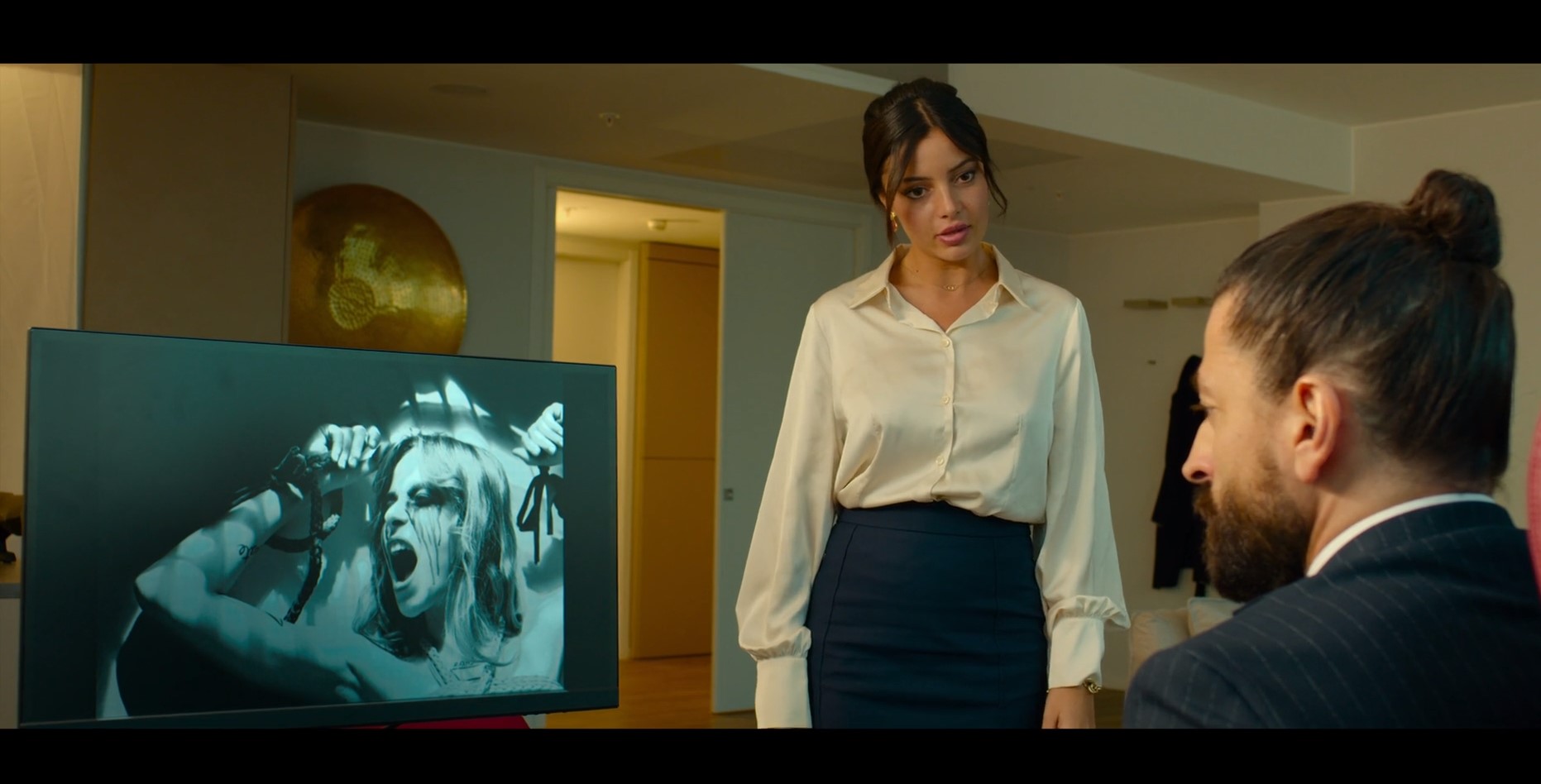
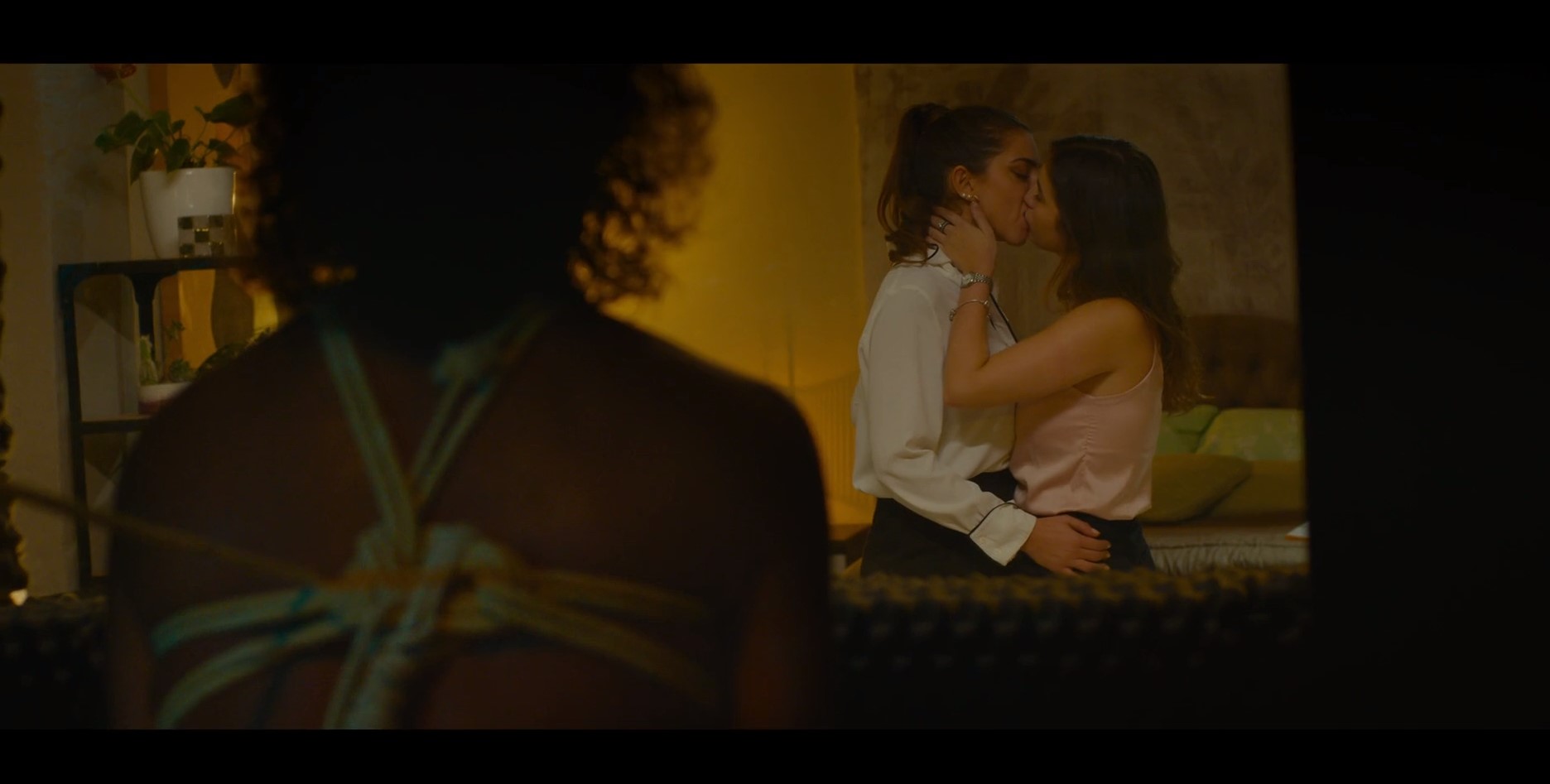
A wealthy businessman philanders his way through woman in a pursuit of satisfactory conquest.  The formidable challenge of bedding a hard-to-get woman arouses him and the chase is all that more thrilling and erotic.  His persistence and perfect man act pays off with up-and-coming model Francesca, but for the playboy, Francesca becomes another notch in his belt and quickly implodes Francesca’s romanticized relationship after a sexual tryst in the public eye.  A year later, he begins his surmounting quest again with Emanuelle, a renowned writer in a lesbian relationship.  The beautiful and darkly seductive woman catches his eye and the game begins as he uses every excuse to rendezvous with her despite the Emanuelle’s partner standoffish opposition, but as his tenacity appears to be paying off as she leads him on, awarding his constant charm with favorable kittenish returns, Emanuelle is actually leading him straight into the jaws of a deceitful plan.
Italian co-directors Monica Carpanese and Dario Germani are copiously inspired by the heyday of Italian Eurotrash cinema.  The actress-turned-debut director Carpanese has starred in a handful of erotic and horror thrillers of the prolific trashy filmmaker Bruno Mattei, such as “Dangerous Attraction” and “Madness,” while also having a principal performance in the 2022 sequel to Joe D’Amato’s notorious cannibalism film “Anthropophagus.  Her colleague Dario Germani is also the cinematographer for the spaced-out follow-up as well as establishing himself in the genre not as a filmmaker behind the lens but also a director with genre films under the belt with “Anthropophagus II,” a dissimilar lover’s anguish in “Lettera H,” and a snuff-slasher “The Slaughter.”  Carpanese and Germani’s next collaborating venture continues with another D’Amato influence mixed with the popular erotic series, and its tangent spinoffs, of Just Jaeckin’s “Emmanuelle” that has official and unofficial sequels spanning all through Europe with enticingly, titillating erotic stimuli and thrills.  Their explicit explication of the near 50-year-old sexy-laced franchise comes in the form of “Emanuelle’s Revenge.”  Dropping the second “m” along with the choice of similar story and title moves the film closer to being a remake of the Joe D’Amato “Emanuelle and Francoise,” aka “Emanuelle e Francoise” or “Emanuelle’s Revenge.”  Carpanese pens the Marco Gaudenzi and Pierpaolo Marcelli produced script under the production flags of Flat Parioli, Haley Pictures, and TNM Productions. 
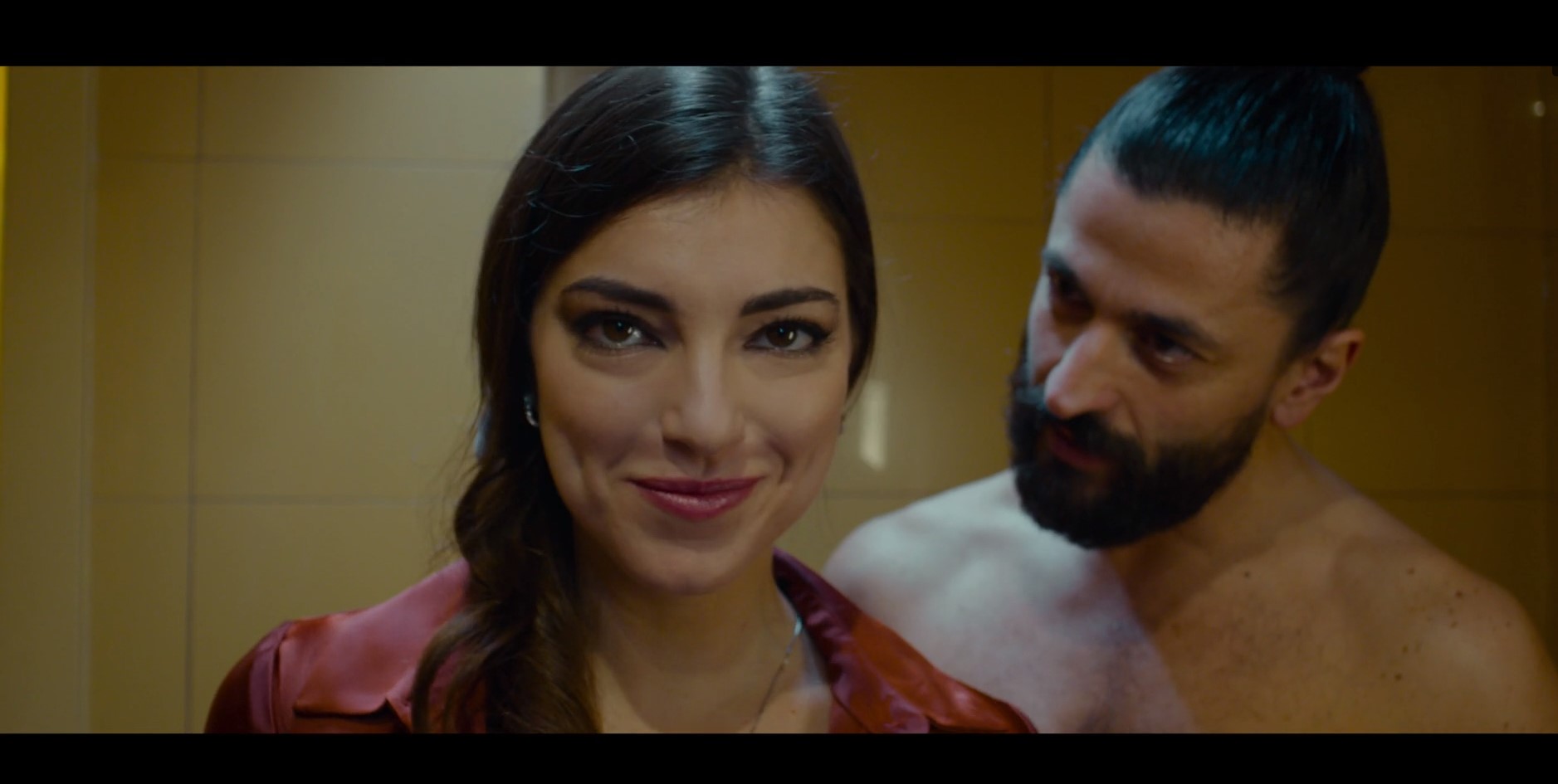
“Emanuelle’s Revenge” is carried by a small, four-person principal cast and half that for peripheral players within a dual-timeline story that provides the same cat-and-mouse game but with different, yet shocking outcomes on both of them.  At the tip of the spear is playboy Leonardo played by Gianni Rosato.  Sporting his best bandholz beard and pony bun, Rosato’s aggressive entrepreneurship extends beyond the working stiff hours and into the extracurricular activities of hunting down and dominating the opposite sex to sate his kicks for kink.  As the primary principal, Rosata receives the screen time that digs further into Leonardo’s psyche and what’s revealed about Leonardo’s nature is obvious trouble with an aggressive flirtation to the point where his whole game is akin to a stalker, showing up unannounced where he knows his targeted woman will be, obtaining their property that he has no right to, and essentially sucking their face with really bellicose kisses that look like they hurt.  Okay, maybe the latter is more overzealousness on Rosata’s part but certainly adds to Leonardo’s alarming behavior to which women seem to be attracted to as if giving into the idea that women prefer bad boys.  Such as the case in the first narrative with Francesca, a promising model with a now sex-relationship smart attitude after a previous relationship went terribly wrong with revenge porn.  Played by Ilaria Loriga in her own credited role, the young actress isn’t quite the epitome of innocence but is understandably weary to fall in love again with the persistent Leonardo but with all the foretell warnings of a disaster in the making, Francesca’s penned as sorely naïve and having learned not one single lesson of her past relationship with promiscuous men.  A year later, in the second act’s story, Emanuelle strolls into the picture under the olive-skin and deep eyebrows of Beatric Schiaffino who bats enticing eyes of the titular character’s hidden agenda. Schiaffino’s crafts a demeaner starkly different against her previous year counterpart as Emanuelle’s coquettishness doesn’t refrain from the fact she’s already in a hot-and-heavy relationship and matching Leonardo’s hot-to-trot escapade with a come-hither that’s just out of his reach. If a rake beckons a game of amorous desire, then Emanuelle enacts a game of her own, one of a lure to lead the blind right into her spider’s web and Schiaffino properly tightropes pleasure and purpose to a somatosensory stimulation level. “Emanuelle’s Revenge” rounds out with Luca Avallone as Leonardo’s licentious friend and business understudy, Ilde Mauri as Emanuelle’s lesbian partner, and Miriam Dossena as Leonardo’s 20-something daughter who suddenly pops into play in the Emanuelle story.
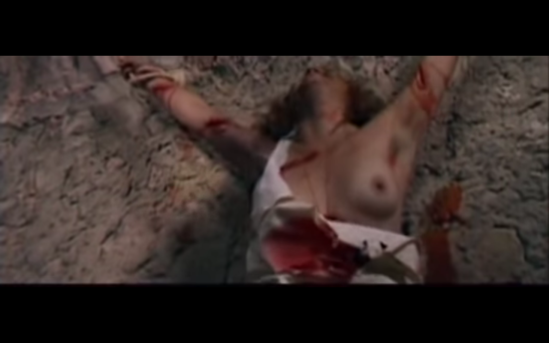
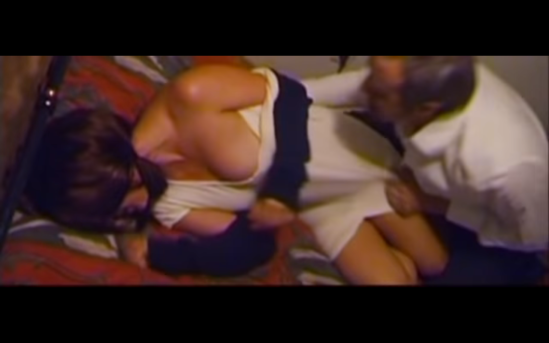
Even though “Emanuelle and Francoise” has never traipsed across my eyes, from what I’ve read the Joe D’Amato and the coproduction of Monica Carpanese and Dario Germani share a lot in common, but the modern-day version of this sordid tale of lust and revenge sticks to the venereal veneer only whereas D’Amato engages a cannibalism and other ghastly horrors. “Emanuelle’s Revenge” seduces with melodramatics, frisky fantasies, and contemptible thralldom because of one man’s wandering libido, focusing tremendously on the building game of mostly pavalar rather than diving into shock value. The narrative begins with a suicide of Francesca, jumping half nude off a busy passenger vehicle bridge, and this segues into Leonardo’s assertive activity into Francesca’s life and so the tale’s non-linear format is already incredulously fated with tossed in opening scene just to grab attention. When following Leonardo’s uncomfortable pursuit, and uncomfortable henpeck kissing, of Francesca, the audience is just along for the ride up to the point of incident where they’re abruptly blue-balled by cut-to a year later without knowing why Francesca decided to throw in her life towel. The brain and our movie-watching experience eventually catchup with the fact everything will be explained at the climatic, but the format jars the assimilating process a tad. Throughout the narrative, there’s plenty of a T&A to go around as I believe nearly every actress with speaking lines drops at least her top, living up to the long history of “Emmanuelle’s,” or “Emanuelle’s” fleshy affluence and erotic elements. Considering the plot twist, Carpanese’s approach doesn’t compel any creativity into the mostly remade erotic-revenger and makes contact with formulaic properties that poison any kind of novel ideas that might have been indited in the inner story layers.
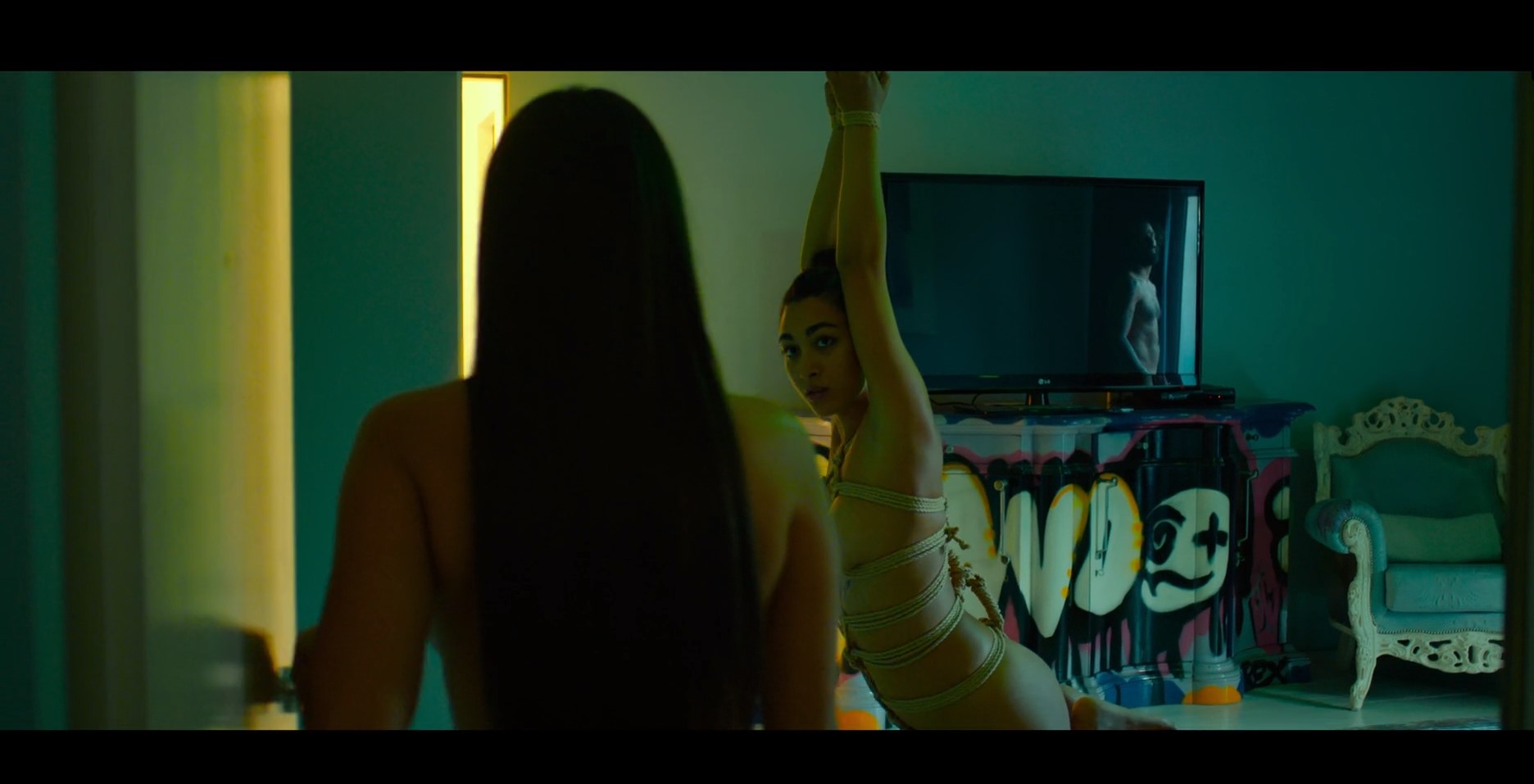
Arriving at number 8 on the spine for Cinephobia Releasing, “Emanuelle’s Revenge” is now on DVD, presented in a widescreen 2.35:1 aspect ratio. The MPEG-2 encoded DVD9 has a sleek look albeit tumbling through a bitrate spread of 5 to 7 Mbps. Some surface coloring suffuse, especially on skin where similar tones seep into the adjacent due to block boundary artifact, but the amount is very little and doesn’t sully much to render the picture an admixed wash in the lion’s share of soft lighting. Details are okay here with the stunning urban landscapes and more opened metropolitan venues, such as a rooftop party, opening up audiences to the chic levels of high society’s profanation of control and sex. The release offers two Italian language audio tracks: A Dolby Digital 5.1 surround and a 2.0 stereo. If asked, I would suggest less channels as they are redundant and useless and go for the 2.0 stereo as there’s not much frequential range in what is essentially a talking head film with an exposition driven narrative. Dialogue is clearly and cleanly stated overtop other audio layers with a powerfully boosted stock file soundtrack in parallel unison to the theatrics. English subtitles are optionally available and the error-free translations keep up with dialogue pacing. Only other Cinephobia Releasing film trailers, including “Brightwood,” “The Goldsmith,” “The Human Trap,” and “Amor Bandido,” are available bonus content. The black background front cover delineates deliciously Beatric Schiaffino as the titular Emanuelle sitting open robed, in thigh-high laced stockings, and on her wicker chair throne. This image reminds me of a mistake in this revealing scene with the very first image of Emanuelle sitting in the oversized back chair resembling closely the front cover image, but the subsequent scenes have her once flesh exposed chest to midriff covered up with censurable continuity. Inside the DVD Amary case lie no insert and the same provocative front cover Emanuelle image more centrally cropped down and blow up to emphasize the seductive siren. The not rated, 83-minute feature is limited to a region one playback. “Emanuelle’s Revenge” spices up the contemporary franchise with erotic entails, exorbitant egos, and illicit indecencies despite its sacrificing of pacing and organization for sleaze, skin, and a side dish of kink.


Emanuelle’s Revenge now on DVD from Cinephobia Releasing!

Don’t Mind the Glowing, Ominous Hole in the Wall. That’s Just a Gateway to Evil. “Beyond Darkness” reviewed! (Severin / Blu-ray)

A witch acolyte of Ameth, an underworld demon, is executed on multiple counts of child murder.  The priest who oversaw the witch’s last rites came in with a doubtful heart and upon researching Ameth through an unholy book, disavowed his own religion only to fall into a near drunken stupor of atheism.  Months later, a new priest and his family move into a home arranged by the archdiocese, but soon after settling into the old house, a series of disturbances point to a closed in wall behind a door that’s uncovered to be a gateway to another plane of existence; an existence where the child killing witch is granted access to seek the souls of the priest’s young children.  Fighting with his own struggles of faith, the ex-Jesuit assists the priest and his family in an attempt to cast out evil once and for all. 

Perhaps common knowledge amongst diehard horror fans, but not so much among the casual curiosities of an oblique coursed moviegoer is the fact that “Beyond Darkness” and Sam Raimi’s “The Evil Dead” share a cinematic series connection.  Well, not one in any official capacity one at least.  Drained from the same bloody vain that unofficially corrals Lucio Fulci’s “Zombi 2” as a sequel to George Romero’s “Day of the Dead,” retitled in Italy as “Zombi,” the American-made, Italian-orchestrated “Beyond Darkness” too fell upon the slew of Italian title changes sword with a rechristening into the “La Casa” series.  With the success of “The Evil Dead” in the U.S., Raimi’s video nasty was renamed to “La Case” and “Beyond Darkness” became the fifth “sequel” in the series as “La Casa 5.”  Since Italy has no copywrite laws, a light breeze can easily change any filmic title.  Even the director, Clyde Anderson, dons a false pretense as the Americanized alter ego of Italian director Claudio Fragasso.  The “Scalps” and “Troll 2” Fragasso pens “Beyond Darkness” with longtime script confederate Rossella Drudi, under the Sarah Asproon pseudonym.  “Beyond Darkness” is shot in the deep American South of Louisiana under the Joe D’Amato (aka Aristide Massaccesi) founded Filmirage (“Anthropophagus: The Grim Reaper,” “Deep Blood”), produced by D’Amato, as the Filmirage Production Group.

While behind the camera is mostly an Italian production team, in front of the camera is a cast of American and English actors with an opening Louisiana penitentiary pre-execution theology debate between Bette the witch, played by Mary Coulson, and Father George, a priest having a crisis of faith, played by one of D’Amato’s regulars in English actor David Brandon (“StageFright,” “The Emperor Caligula:  The Untold Story”).  Coulson’s role may be punitively small as the “Beyond Darkness’” lead witch and predominant face of the core evil, but the actress puts all into the Bette character comprised of a maniacal laugh and a lots of very European skin-tag makeup effects whereas the classically trained David Brandon has an array of lively emotions and facial expressions sized to fit Father George’s clerical shirt and white tab collar when he’s not sloshed with doubt.  Both characters interweave into the life of a new-to-the-area priest, his wife, and two kids who move into an old house, built on unholy ground, to start his new chapter in priesthood.  Days later, as the kids become instantly okay with a giant black swam rocking horse in the middle of their bedroom, the family is terrorized by flying kitchenware, flooded with a bayou mist, and frightened by figures in black, tattered shrouds seeking to steal their children’s souls.  Christopher Reeve’s lookalike Gene LeBrock (“Night of the Beast”) fails at double father duty in his poorly lit excuse of a worried father with his children being lured to the realm of the spirit side and as a grounded in faith Father combating the forces of evil without a solid sense of what to do.  Both parents are equally written off as incompetents who continue to stay in the house despite on the continuous threat of Baba Yaga wannabes knocking at every door in the house.  As the mother, Barbara Bingham felt as if she had a little more skin the game.  Perhaps having just come off the legacy success of a “Friday the 13th” sequel (“Jason Takes Manhatten”) she felt the responsibility of maintaining a more diligent approach toward being a mother coursing through occult’s dire straits.   Michael Paul Stephenson (“Trolls 2) and Theresa Walker excel much better in their roles as the two kids, Martin and Carole, who’ve become the centerpiece of Bette’s maliceful desires. 

“Beyond Darkness” will come across as very familiar amongst both horror fans and fans of movies in general with a story pulling inspiration from films like William Friedkin’s “The Exorcist” and Tobe Hooper’s “Poltergeist.”  Fragasso picks and chooses a blanket of trope elements to rework with great malleably in order to not be a total copy.  However, for those who know anything about low-budget Italian horror, Fragasso’s rousing similarities to major and independent hits should come as no surprise.  Notoriously renowned schlock horror directors Joe D’Amato and Bruno Mattei, amongst a sea of others, use to fabricate out of fame at every opportunity by gobbling up successful films, chewing them up, and spitting out their Italian produced counterparts without a second thought just to cash in on just a fraction of the original narrative’s success.  The way I see it, the method was (and still is) an honorable form of flattery. Yet, flattery doesn’t cure sloppiness and “Beyond Darkness” is about as sloppy as sloppy joes. Plot hole after plot hole stack up on Fragasso’s inability to amalgamate elements in an entirely coherent way. There are underwhelming revelations to anticipating character build ups that fizzle; such as a thick-tension mystery behind the local archdiocese and their involvement to place a good Christian family in a house built on evil land or what precisely convinced Father George of Ameth’s power to sink him into an alcoholic pit of despair? I already mentioned Martin and Carole’s inept parents on not fleeing the house at first sign of poltergeist activity or any activity since then so don’t get me started. The story needs some fine tuning but not after is amiss. The acting is not entirely a humdrum of monotony, Carlo M. Cordio’s eclectic synthesizer riff and haunting keynotes score is on another level akin to a composition pulled right out of a survival horror video game, and Larry J. Fraser, another one of Joe D’Amato’s pseudonyms, has an honesty about his scenes unlike we’ve ever seen before in a D’Amato production as the cinematographer captures the fog luminously and effervescently surrounding and chasing the family from out to in.

“Beyond Darkness” is no “The Evil Dead” but is a solid demon and ghost dog and pony show from 1990. Now, the Claudio Fragasso (or is it, Clyde Anderson?) classic is heading straight to your level room television set with a new 2-disc Blu-ray. The hardcoded Region A is presented in widescreen 1.66:1 aspect ratio in a full high definition and 1080p resolution. With only a possible color touch up here or there, I would venture to say the transfer used is the most pristine copy with hardly any damage or any age deterioration. The grain looks amply checked and no cropping or edge enhancing at work in an attempt to correct any issues, if any ever existed. Severin offers two audio options: an English language DTS-HD master audio 2.0 and an Italian dub of the same spec. With dual channels, there retains an always room for growth inkling and with the film’s broad range in sounds, a difficult to swallow lossy audio pill plays the aftertaste tune of, man, this could have been way better. Yet, the track is solid enough, if not more so, with virtually zilch damage. Dialogue comes across clean and clear, but there tails some minor hissing. Like with many Severin releases, new interviews are the star of the special feature show with one-side, talking head interviews with writer-director Claudio Fragrasso Beyond Possession, co-writer Rossella Drudi The Devil in Mrs. Drudi, and actor David Brandon Sign of the Cross. Though the theatrical trailer rounds out the first disc special features, Severin also includes Carlo M. Cordio’s superb soundtrack as disc number two along with a two-page booklet with an introduction to the ingredients of a horror score and to Cordio himself as well as a listing of all 17 tracks. “Beyond Darkness” is Claudio Fragrasso’s unbridled mutt, a motley of motion picture royalties rolled up into an adulating and piggybacking horror beyond comparison.

“Beyond Darkness” 2-disc Special Edition Blu-ray Available on Amazon

Pandemic EVIL Is Just Not For Dry Land Only! “Virus Shark” reviewed! (SRS Cinema / DVD)


Deep at the bottom floor of the ocean is CYGNIS, a research laboratory retrofitted to be a race against the clock in finding a cure for a world devasting virus called SHVID-1.  Spread by infected oceanic sharks, a handful of shark attacks on unheeding beachgoers turns the world’s populace into mutated marauders and blood thirsty, zombified killers.  Running quickly out of time, the handful of scientists, a maintenance chief, and a security guard find themselves under pressure, literally, as the 30-year-old antiquated CYGNIS station is beginning to show signs of buckling under the ocean’s immense weight.  Factor in virus-mad sharks chomping at the station’s life sustaining systems and a betrayal by the project leader looking for cure glory in greed, a perfect storm brews 1000 leagues down overshadowing the severe global pandemic that has swallowed the world whole.  Survivors must surface topside with the cure before all hope comes crumbling down on top of them.

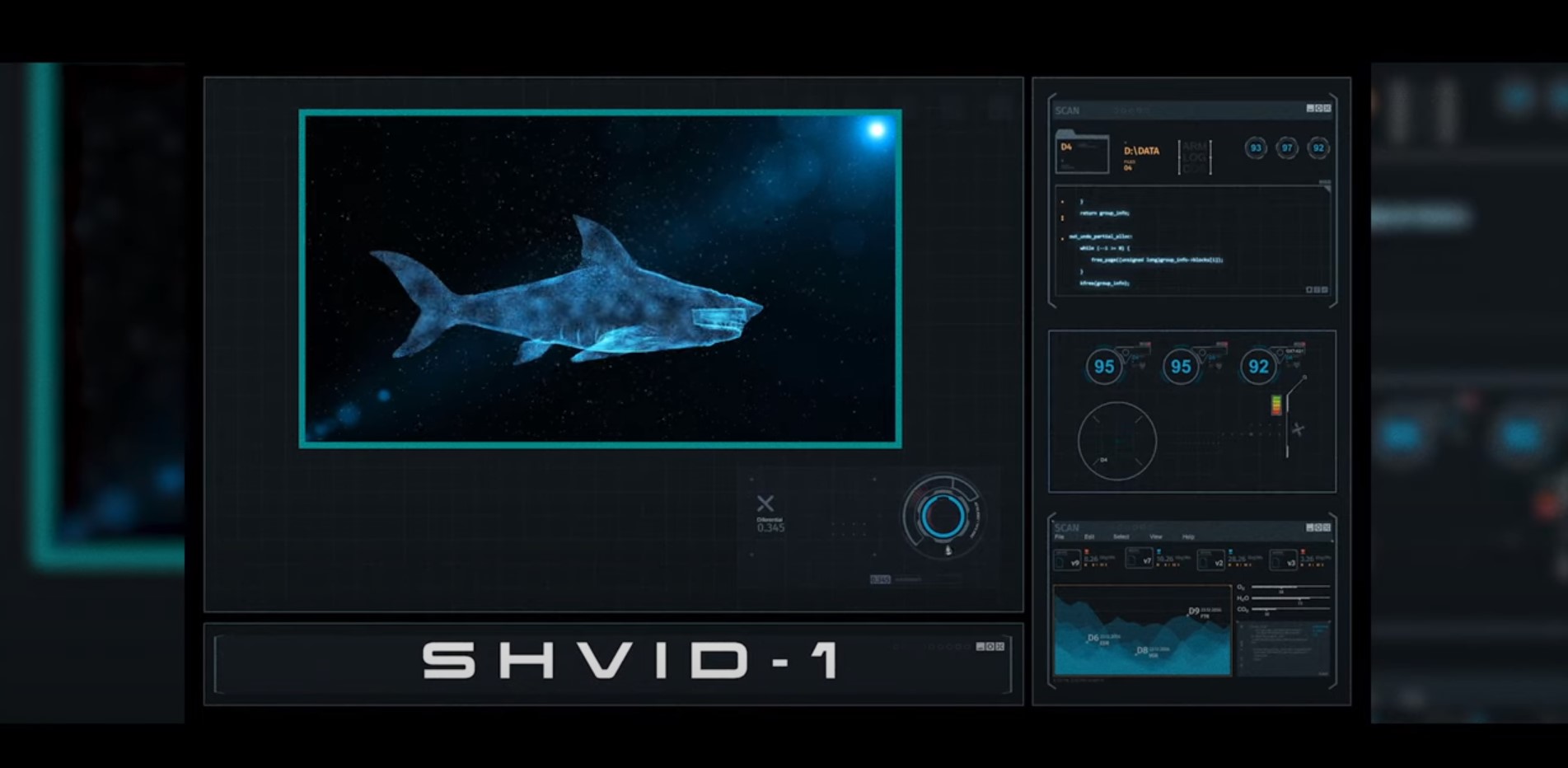
Okay!  I’m pretty sure director Mark Polonia parallels or exceeds my own unhealthy obsession of the sharksploitation genre with his own series of outrageous D-flicks dedicated to the gross profit of the monstrous shark rampage stigma seen in the Pennsylvania born filmmaker’s previous works in “Sharkenstein,” “Land Shark,” “Amityville Island,” “Shark Encounters of the Third Kind,” and the soon-to-be-released, the vampire and shark alliance, “Sharkula.”    Polonia’s latest, “Virus Shark,” is written by Aaron Drake and echoes the pro-Trump public ideology of willful ignorance in snubbing governmental official warnings about staying away from large crowds unmasked during the COVID-19 pandemic.  Polonia throws Megalodon-sized shade at partygoers and right wing conspiracists with SHVID-1, an obvious play on the real virus, and the sun and sand worshippers who venture into the shark infected and infested waters despite the recommended counsels to stay on shore.  Aside from the social commentary lampooning, the rest of “Virus Shark” is in shambles as a super low-end indie production from Polonia Bros. Entertainment and produced by SRS Cinema’s Ron Bonk. 

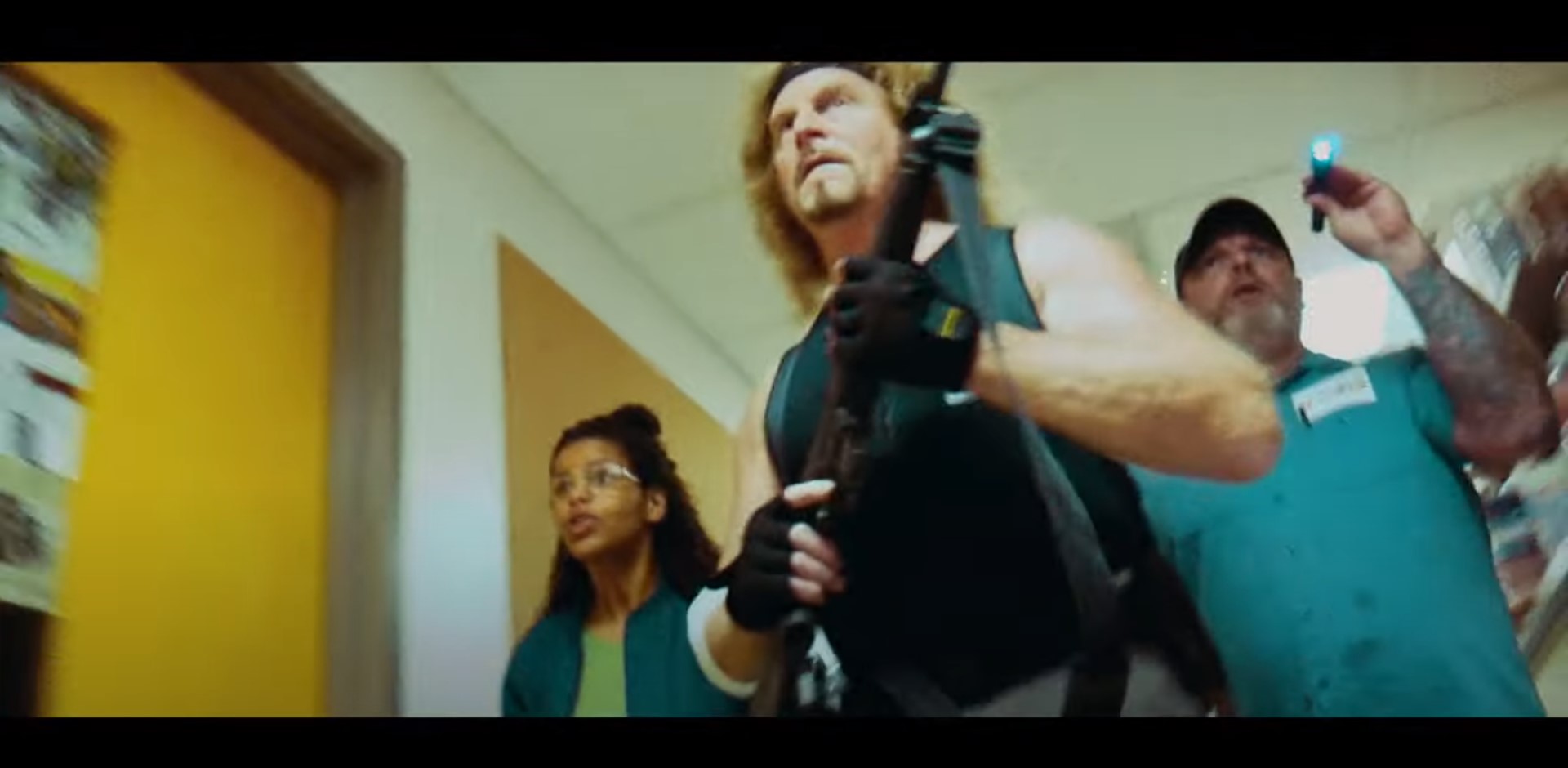
Served up as chum for contagious sharks are a troupe of regular independent staples beginning with lead actress Jamie Morgan entering her second bout with a killer shark after surviving another SRS Cinema gem, “House Shark.”  In the role of marine biologist Kristi Parks, Morgan is not free diving into the vivarium pens and wrangling or bareback riding the maneaters like “Deep Blue Sea’s” Thomas Jane; instead, the actress has a more meek stance as her limiting character transforms into a protective shield over mankind’s last known hope – a cure for the virus.  Fellow scientists Anne Satcher (Natalie Himmelberger, “Shark Encounters of the Third Kind”) and Gregory McLandon (Natalie’s real life husband, Titus Himmelberger, “Sharkenstein”) don the lab coats and spectacles to look the researcher part without actually seemingly doing anything of importance, or anything that makes sense anyway.  The team is rounded out with “Queen Crab” actors Steve Diasparra as the maintenance man Rickter D’Amato, an homage to Joe D’Amato who has helmed a trashy sharksploitaiton film himself with “Deep Blood” (read our recent coverage review here!), and the awesomely 80’s hairdo’d Ken Van Sant the dated commanded-cladded security guard and horn ball, Duke Larson.  Deliveries and any sense of conveyed emotions are a smidge above forced as if reading straight from a cue card.  The off camera stare has to be my favorite gaze into space moments, especially when an aggressive Great White beelines right toward them and the reactions are nothing more than a gaping mouth.  Van Sant wins top prize for at least giving a half-hearted attempt at empathy for a character completing a character arc.  “Virus Shark” fleshes out with Yolie Canales, Noyes J. Lawton, and Sarah Duterte who are also a part of the tight knit celluloid circle of deep-six cinema. 

Speaking of deep six, as in “DeepStar Six,” a semblance toward notable underwater horror films of the deep really do crest through “Virus Shark’s” stagnant flat surface.  Little bits of adulation toward “”DeepStar Six” with the jettisoned escape pod, “Deep Blue Sea” with the shark pool, and “Leviathan” with the topside communication sans Meg Foster sprinkle a blanket of welcoming derivativity amongst a cheaply endeavor.  When I say cheaply, I mean “Virus Shark” scrapes the bottom of the barrel with embarrassingly bad shark hand puppets, interior locations of the underwater sea lab are about as realistic as the innards of your run of the mill High School building, and every single gunshot is the same soundbite stuck on repeat, no matter the gun or the caliber.  I do admire the innovation at times.  An example I would pull would be the two miniaturized pincers matted on top of a live-action still frame used as hydraulic clamps to pickup the rather rigid shark figurine from the “pool.”  You can call it sloppy, but on a pea-sized budget, I call it thinking outside the box.  Much of the story felt underdressed, missing parts pivotal to the impelling actions that either progress cataclysmically or just drop off the face of “Virus Shark’s” malfunctioning sonar.  Under the table deals and sexual innuendos made between project head Dr. McLandon and topside liaison Shannon Muldoon are skimpy at best as well as Kristi Parks’ all for naught endgame to saving the world.  Everything seemed and felt pointless, senseless, and without merit that the “Feeders” and “Splatter Farm” director shouldn’t be totally judged by as we’ve seen much better on much lower budgets from Polonia who he and his late twin brother, John, have been around for decades making movies up until 2008 when John passed away.  Mark Polonia continues to carry the torch but the lack effort has seemingly been replaced with chugging out one scab film after the next to the tune of tone deaf gratification.

Wash your hands, wear your mask, and maintain a social distance of 6-feet from the television when swimming with the “Virus Shark,” that has beached itself onto DVD home video courtesy of SRS Cinema.  The unrated DVD is an AVC encoded single layer DVD-5 and presented in a widescreen, 1.85:1 aspect ratio.  The image quality appears relatively sharp without a hefty loss from compression, especially around the spectrum of low-cost effects that range from rigidly clean to absolutely warped and absurd, but what do you expect from a release that has the cameraman’s reflection visible in the shot and spells region with an extra I – reigion 0 – on the back cover?  Underwater sea lab shots filtered through an oceanic blue hue make due the illusion of a domed research station on the sea floor bed whereas the insides lack a production manager’s personal touch as much of the interior scenes look to be a school with an obvious swimming pool setting and many insipidly sterile hallways and rooms.  Extras on the 74 minute film include a commentary track and SRS trailers with no bonus scenes during or after the rehashed intro credits for the end credits.  The English language 2.0 mono track isn’t the peak of fidelity with the lossy audio compression and inadequate mic placement made apparent by the limited depth and range in  dialogue tracks.  The overlaid narrow foley remains on one level from start to finish finished by stock soundboard snippets.   As far as Sharksploitation goes, “Virus Shark” ranks near the bottom of the food chain.  Of course, there have been far worse killer shark films threshing in the genre pool, but the COVID parodied subaqueous actioner wades underneath the skills of Mark Polonia.

Get Infected by the “Virus Shark” on DVD Home Video!

I Think We’re Going To Need Bigger EVIL! “Deep Blood” reviewed! (Severin / Blu-ray)

As kids, four boys were warned with an anecdotal tale of an ancient Native American spirit that took the shape of a killer shark malevolently stalking and killing the native villagers for their overfishing ways.  Now adults, the four friends pursue very different lives as all four return home for the summer with interests in rebuilding family relations, girls, colleges, and avoiding the local punk, Jason, hellbent on making their lives miserable, but when a shark turns up and kills one of them during a solo dive, they recall the ancient tale and sound off to the authorities who take little heed to the incident.  Their small beach community thinks they’ve killed the man-eating shark causing the ruckus, but when more chewed up bodies color the ocean red, the friends must take the task upon themselves to see the shark never devours anyone else again. 

Italian shark-on-a-loose romper helmed by the legendary serial Italia horror and erotica trash filmmaker, Joe D’Amato (“Emanuelle in America,” “Anthropophagus: The Grim Reaper”), cashes in on the monster, man-eating shark celluloid frenzy with an uncredited directorial of the 1990 sharksploitation, “Deep Blood.”  Originally to be Raffaele (Raf) Donato’s directorial debut, the George Nelson Ott script was salvaged by the then producer and cinematographer D’Amato after Donato’s change of heart and professions in the film industry.  “Deep Blood,” that went under working titles “Wakan,” the designation for the Native American evil spirit, and just simply “Sharks,” was shot mostly with an English cast in the sunshine state of Florida with various underwater scenes filmed in Italy.    D’Amato’s production company, Filmirage, supported the film in collaboration with Variety Film Production that has dipped it’s toes into another killer shark flick, Enzo G. Castellan’s “The Last Shark,” which some footage was utilized for D’Amato’s film nearly a decade later.

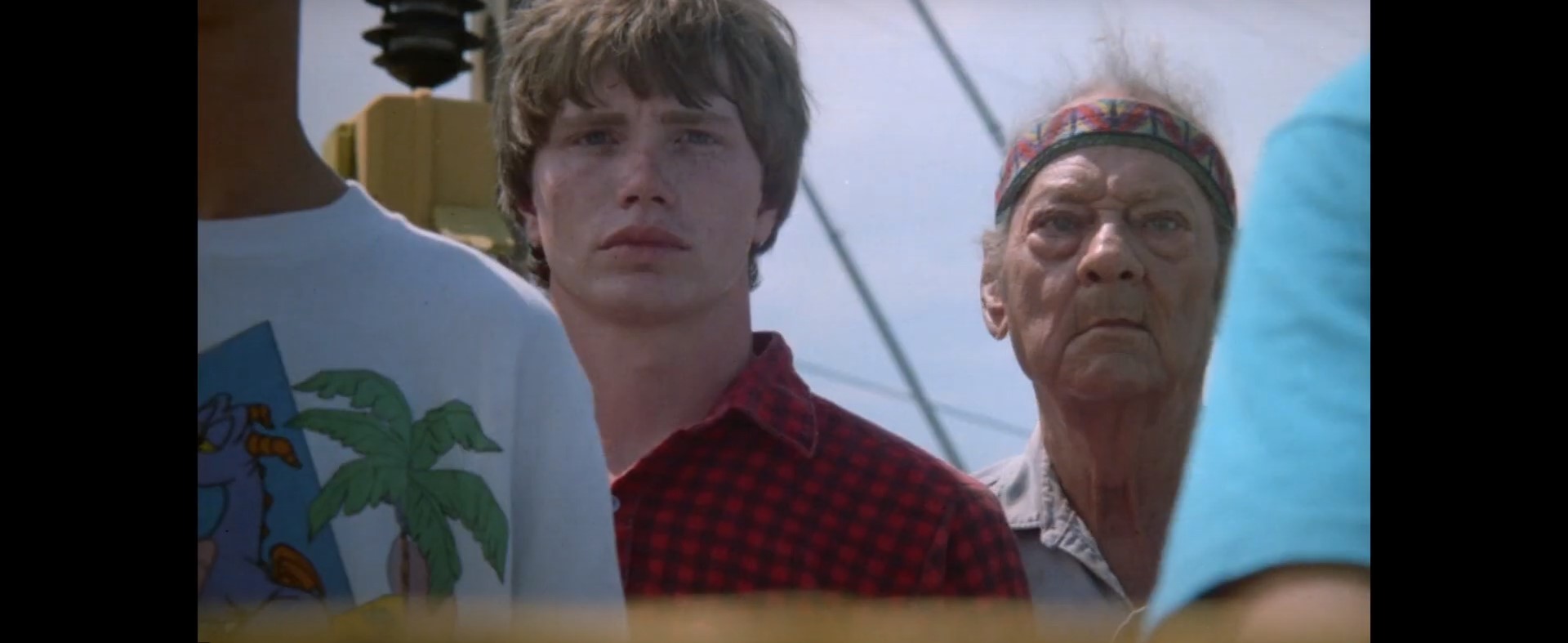
“Deep Blood” circles around the opening of four friends innocently having the time of their lives with a normal ocean side firepit, roasting wieners, being told horrifying campfire stories of the black finned Wakan by a mysterious Native American (Vans Jensens) who hands them a relic piece of oblong driftwood with noteworthy carvings about Wakan and slicing their wrists to make an impromptu blood pact to fight against Wakan whenever the time comes.  You know, the usual stuff you do with your friends.  As grown men, Miki (Frank Baroni), Allan (Cort McCown), Ben (Keith Kelsch), and John (John K. Brune) find themselves back home, reunited to only have their friendship ripped to shreds when John becomes Wakan’s tasty snack on a solo dive.  Ott’s script really, really, and I mean really, tries to add depth to the characters, such as Allan’s spoon-feeding Mayor of a father handing out life advantages to his son every possible moment or with Ben who struggles between fulfilling his parents’ wishes of going to college or starting his professional golf career.  There’s also some backstory about the death of Ben’s sibling at sea that has had some psychological torment on his father, Shelby (Charlie Brill, “Dead Men Don’t Die”).  D’Amato crumples up character development like a piece of scrap paper and shoots a fade away jumper into the waste basket.  My personal favorite in the shallow end moment is the local lout and head of a gang, Jason, who senselessly disparages the four friends, for whatever reason we don’t know, acutely 180’s from I’m-going-to-kill-you to becoming a good friend (out of respect?) and takes an active participation in hunting down the shark.  All the relationship dynamics seem to just culminate right into the big, explosive deep-dive and pursuit for shark blood in the guys’ booty shorts and cut off sleeve shirts.  Talking roles are aplenty but nothing worth the empathy or sympathetic emotional baggage surrounding the remaining cast of characters played by actors James Camp, Margareth Hanks, voice actress Mitzi McCall, and Tom Bernard as Sheriff Brody…I mean, Cody.   

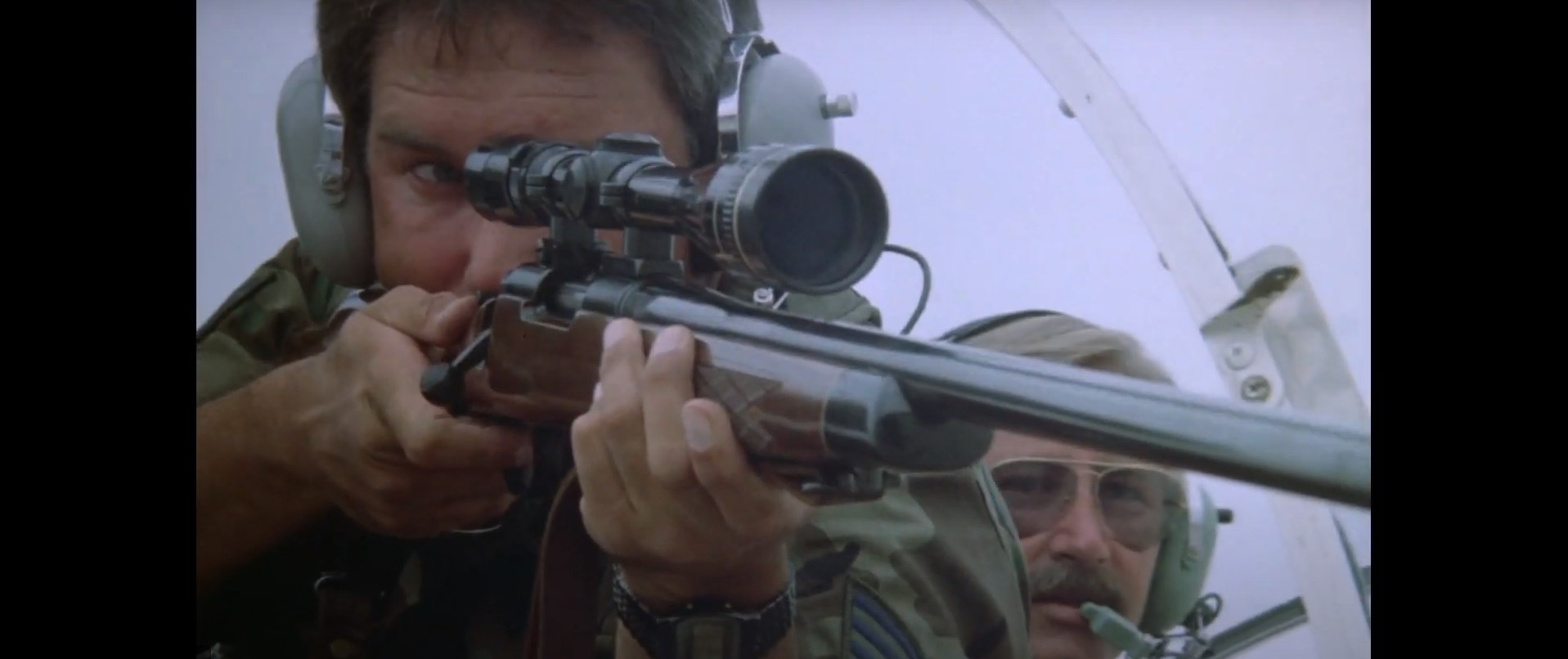
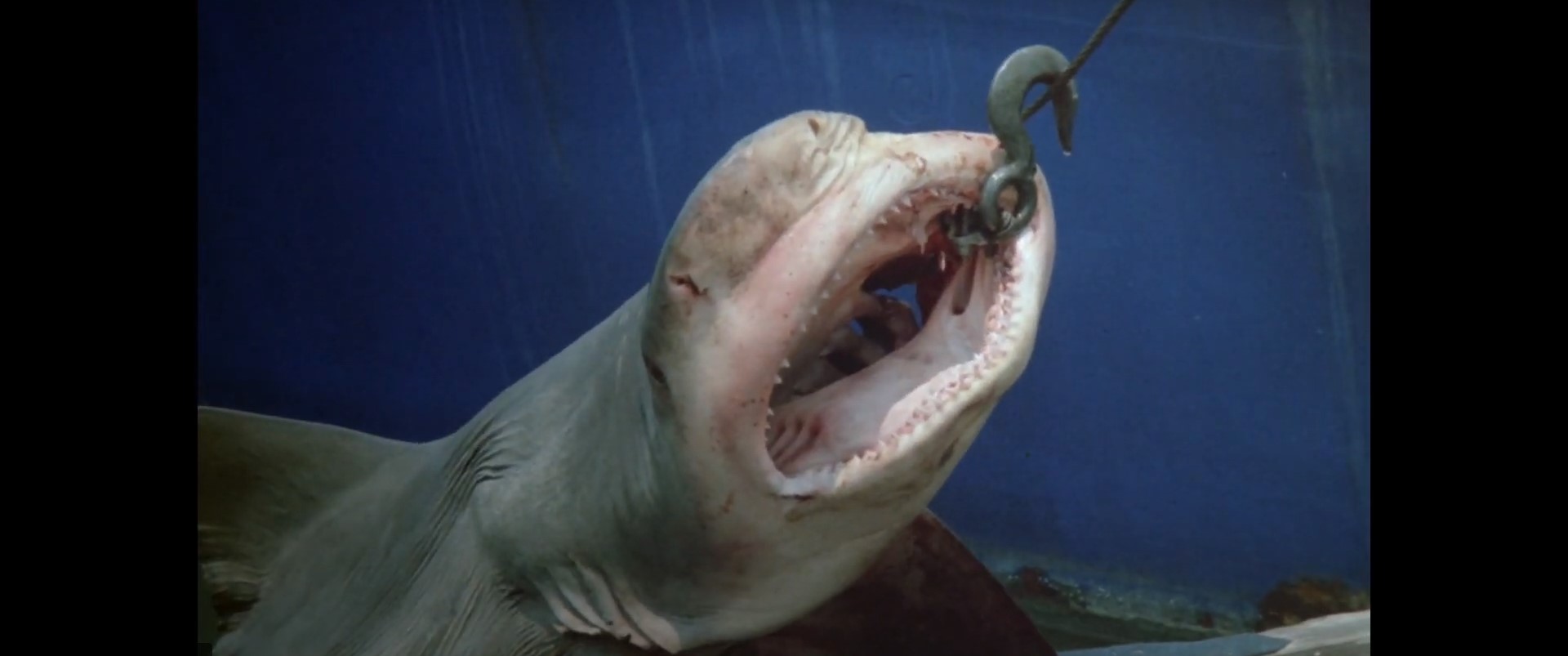
Only slightly echoing acts of Steven Spielberg’s flawless “Jaws,” “Deep Blood” also begs, borrows, and steals scenes to piecemeal together a semi-coherent story.  In the wild Great White shark snippets from National Geographic video clips and shark scenes plucked and reused straight from another Italian schlocker, there lies a nonexistent sliver of thought in creating an original piece of footage that puts the resemblance of a monstrous shark and an actor in the same scene together with D’Amato relying burdensomely on editor Kathleen Stratton to handle the fragmentary bits of different look and feel shots and turn it into single profit linear narrative gold. But honestly, what do you expect? D’Amato was to be the director of photography but ended up in his lap directorial duties, taking on the extra work like any good producer. Many of the shark attack scenes are spliced together with the actors bobbing and turning up and down in the water with the iconic bubble and splash sequences that solidly create the allusion and the illusion of a frenzied blood bath, but some locations are blatantly amiss shots, especially those of the actors snorkeling and scuba diving inside an obvious aquarium vivarium in clearly an exterior beach scene, that are more of a blow toward our intelligence than anything else. When the movie magic shark finally does make an appearance, a rigid, clean cut, my 9-year-old nephew could draw better shark effects sells little amazement, wonder, or pelagic terror of the open water. “Deep Blood” is a see-it-to-believe sharksploitation disaster-piece with the Joe D’Amato Midas touch.

Luckily, seeing every story blighted nook and cranny and experiencing all the dysfunctionalities between characters have never looked better with Severin Films’ worldwide inaugural Blu-ray release of “Deep Blood.” Newly scanned in 2k from the original 35 mm negative and presented in a pillarbox 1.33:1 aspect ratio with a high definition 1080p transfer, the image clarity is about the only thing flawless in the film with natural looking color grading for a richer hue presentation. Aside from the wonkiness of equipment quality differences with Nat Geo’s stock footage, there wasn’t much in the way of image imperfections aside from faint speckle damage and a slight scratch briefly visible in one of the later scenes. Details are phenomenally crisp in the face, as you see every sagging wrinkle on Van Jensens’ mug, and even the slight white capping of the waves renders clearly across. The English language 2.0 mono track features a clean, discernable dialogue albeit some slight hissing. Carlo Maria Cordio’s synthesized score doesn’t invoke fear of the water, but does contribute to the Italiano-charm of D’Amato’s underwater thriller with a seducing melody of lo-fi chords to accompany the shark attack scenes. Optionally, a parallel Italian track provides a dub that isn’t typically as elegant in syncing with American actors. Special features for the 91 minute film include a trailer and a listed multi-region playback; however, I could get the disc to play on the region B setting. If you’re a shark film aficionado like myself, no matter how undeniable cheesy (and I’m looking at you “Bad CGI Sharks”), then “Deep Blood’ is an enjoyable serrated chomp into a chum soaked sandwich good to the last morsel.

Own Deep Blood on Blu-ray from Severin Films!

Knights, Murder, Zombies…It’s an EVIL Smorgasbord! “Erotic Nights of the Blind Dead” reviewed!


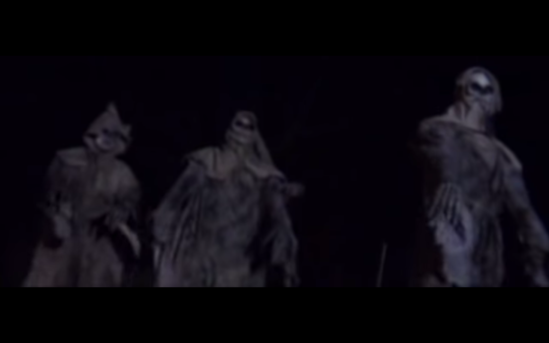
Buitrago, Spain in 1310, Templar priests set forth on a mission, wandering the countryside to root out evil witches for torture, flogging, and eradication, but what the priests kept secret from public eye is that the village women they were apprehending were actually innocent and used as a means for sacrifice. The sadistic, malevolent priests drank the blood of their innocent victims for eternal life. Fed up with the Templar priests authority, the village men tracked them down to a gruesome end as the vowed in the throes of death to return for revenge. Buitrago, Spain in 1976, the Templar Priest, decomposed to the bone inside their tattered and dirty ceremonial robes, arise from their shallow graves with a hunger for vengeance and feed upon the flesh and blood of unsuspecting outside partygoers under the moonlight night.

Baring a thin shred of anything approximating a resemblance to Joe D’Amato’s “Erotic Night of the Living Dead” and Amando de Ossorio’s “Tombs of the Blind Dead” from the 1970’s to early 1980’s is Vick Campbell’s “The Erotic Nights of the Blind Dead. Also known as “Graveyard of the Dead” or, in it’s original language, “El Retorno de los Templarios,” is the 2007 Spanish produced throwback to the gothic and erotic ghoulish horror genre that once widely flourished through Europe and parts of South America and has, more or less, been nearly forgotten admirably for decades. “Erotic Nights of the Blind Dead” marks Campbell’s feature and script debut that blends the gothic and the erotic for an entry into the soles (or souls, perhaps?) of considerable shoes to fill and the consensus is Campell’s a size 10 trying to fill out into a size 18 wide but leaving too much wiggle room for missteps.

Campbell, also known Vick Gomez, commissions mostly a Spanish cast of the unknown variety, starting off with Eloise McNought in her breakout performance as the troubled, young Miranda who has been sexually abused by her father and has, somehow, misplaced her husband. Miranda’s backstory has an equal amount of ambiguity as the rest of the cast with bits of family melodrama to piece together her obviously distraught mental state. McNought’s a budget actress at best as she sometimes looks right at the camera in the midst of intense scenes and Campbell has a knack for upskirt scenes with McNought which feels creepy and impertinent to the story. Miranda’s the searched figure for her brother Jorge, Albert Gammond. Gammond, who had a role in Campbell’s short “Violencia gore,” has less backstory as the estranged son of the family and when he arrives to 1976 Buitrago, out of nowhere, to search for his sister, the siblings tango the enigmatic dance of who, what, when, why, and how? Gammond’s few dialogue moments are eaten up by Jorge trying to convince a distressed Miranda he’s her brother and reminding them of the childhood songs they sang as kids. Thais Buforn, Rick Gomans, Anarka de Ossorio, Dani Moreno, Anthony Gummer, Julian Santos, and Jose Teruel co-star.

“Erotic Nights of the Blind Dead” flatters being as an economic version of an Amando de Ossorio “Blind Dead” film, which centers around the vile and wretched depravities of the ghastly Templar Knights ethos and while Campbell captures the essence of the Knights and their menacing macabre presence of soiled garbs and persistence, the attention to the rest of a, literally, non-story is hastily slapped together or stuffed with cinched time wasters. The first half hour involves nothing more than Templar Priests roaming the countryside, flogging with an endless crack of a whip those who they deem dissident. The Knights’ whip must be malfunctioning as it could not rip flesh or break the souls of man until well into the lashing that mercifully warrants an edit for some bloody, but still steadfast firm, scarring and sheered rags. I felt the floggers arm and shoulder pain with such extensive beatings. Next, the majority of the second act consists of Jorge pleading with his sister Miranda to listen to him and convince her about his brotherly love and bring her back home. At this point, flashbacks of her father’s lust for her are introduced to backstory Miranda’s despair; the smoking gun catalyst finally rears a father-daughter rape-incest ugly head in act three when the Templar Knights have resurrected for blood thirsty revenge and gives some context of Miranda’s blabbering incoherency in the middle of the dry Buitrago landscape; yet, Miranda’s daddy issues hardly explain why the Templar Knights have returned at this point in time and just want the undead Knights tend to accomplish with their revenge at hand. In fact, there’s no explanation given at all…they just return and rampage. Campbell extends upon the risible execution of an Amando de Ossorio film by inverting scenes that are the same shot just in reverse, utilizing a single ambient track over and over again on multiple scenes, and countering whatever shred of terror from the Knights with an easy way out of unexplained reasoning for their befuddling demise. Almost as if Campbell didn’t know how to end his film and gave up with a snap of his fingers. Who does he think he is, Thanos!?

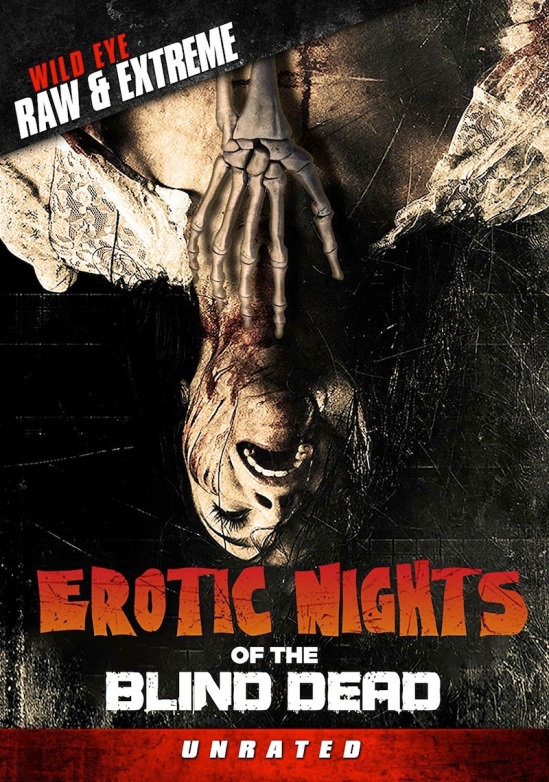
“Erotic Nights of the Blind Dead” lands DVD home video distribution from MVDVisul and Wild Eye Releasing on their Raw and Extreme banner. More raw, then extreme, Vick Campbell’s gleaming debut homage offers no eroticism either on the region free, 70 mintue runtime title, but, rather, lingers over incest and whipped-bloodied breasts of slim illicit pickings and suggests the title was more a ploy against “Graveyard of the Dead” to gain buys. The picture is presented in a widescreen format, but suffers from horrible color banding and severe compression issues that nearly make this title indiscernible like an aged or scores of duplication VHS transfer. The Spanish language stereo track also has flaws with speckled quality and coarse feedback at times due to bad mic placement. As aforementioned with the repetitive ambient and score tracks, range and depth do not reside with these versions of the Templar Knights that are probably inundated in a violent anguish of the same loop of rattling chains and heavy breathing. To add salt to the audio wound, the English subtitles are riddled errors such as Obbey instead of Obey or Swete instead of Sweetie. Special features include a behind-the scenes segment of ho-hum production takes, deleted scene, and Wild Eye trailers. One thing I think might be interesting is actress and executive producer Anarka de Ossorio who, I can’t confirm, might have some relation to Amando de Ossorio; the idea would be neat if his legacy still lives on through his kin. A brooding atmosphere from beginning to end, “Erotic Nights of the Blind Dead” has little else to offer under a guise to link itself to legendary Euro-trash gold, but filmmaker Vick Campbell detrimental diegesis could tarnish the very jeweled films in which he attempts to honor.

Purchase Erotic Nights of the Blind Dead on DVD!