No Train Coach is Safe from a Family of EVIL Bandits. “Kill” reviewed! (Lionsgate / 4K UHD and Standard Blu-ray)

Get Your “Kill” on! 4K UHD and Standard Blu-ray Available at Amazon!

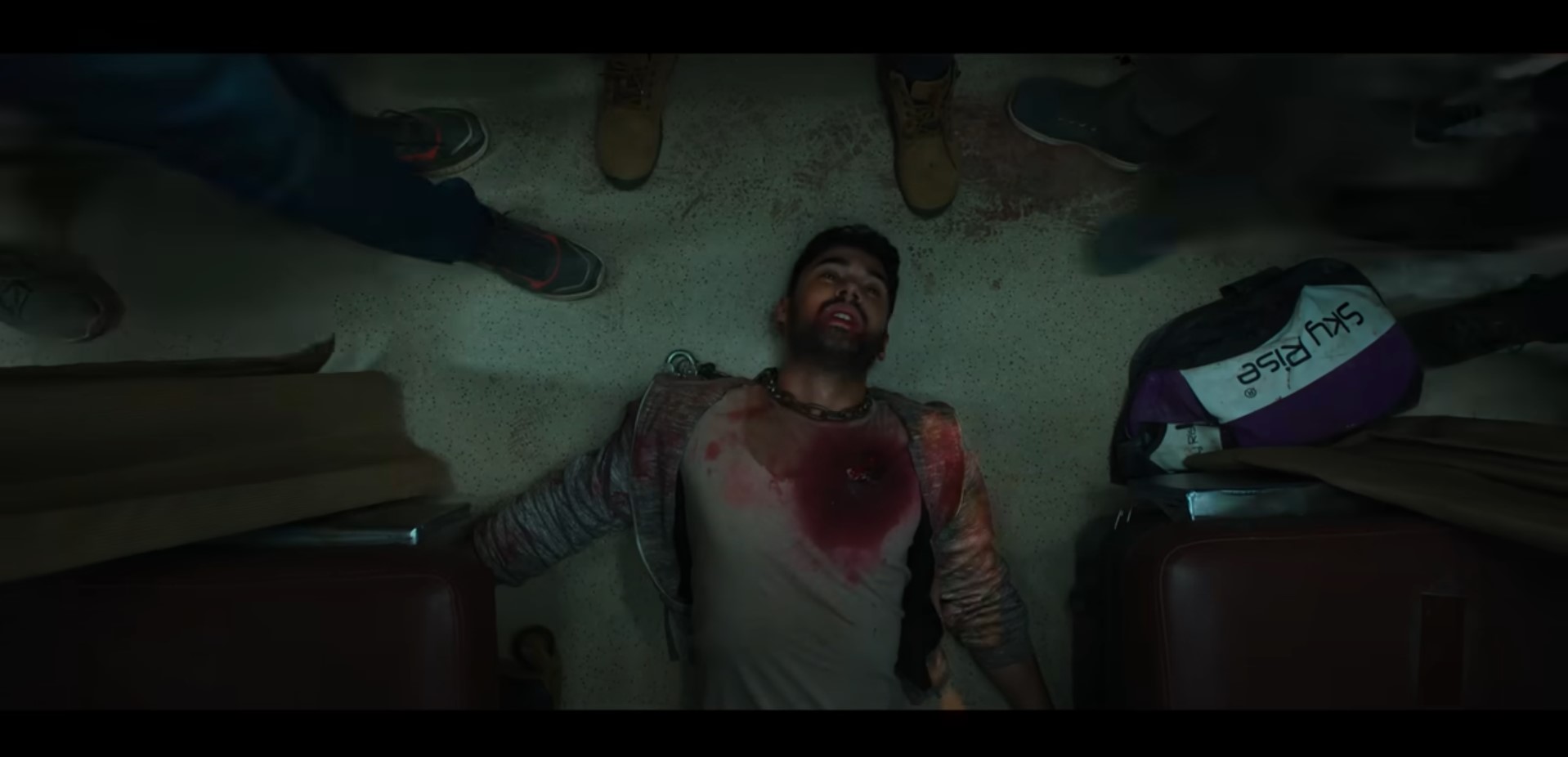
Captain Amrit of India’s National Security Guard boards a commuter train to stop the arranged marriage of his true love, Tulika.  As the two lovers reunite and promise each other to one another, a large family of thieves hijack the coach cars to loot the passengers.  Amrit and fellow captain and friend Verish fight to protect Tulika, her family, and the innocent passengers for the sake of their very lives.  When Tulika is taken by the hands of Fani, the ruthless thug son of the thieves’ leader, Amrit’s kill switch engages an unstoppable force of ferocity to get his blood-soaked hands around Fani’s neck.  He’ll first have to brutally bulldoze his way through 40 melee-weapon armed looters, all related to Fani, to get to his target while, at the same time, protect more innocent passengers from the hands of killer, uncompressing thieves and it’s a long train ride to destination New Delhi.
An India film that doesn’t have the typical unrealistic Bollywood action and violence and is labeled India’s most violent and gory film ever, “Kill” comes from writer-director Nikhil Nagesh Bhat (“Long Live Brij Mohan”).  Every ounce of close-quartered, free-for-all action is set entirely inside carefully detailed and constructed railcars that replicate almost down to the paint the very commuter diesel trains coursing the India rail lines. “Kill” accurately describes what Bhat accomplishes with a nonstop drive to protect the ones you love at no matter the cost and when moral planks are broken right underneath your feet.  The Lionsgate and Roadside Attractions presentation is a production of Sikhya Entertainment and Dharma Productions and is produced by Guneet Monga Kapoor (“Darkness Visible”), Apoorva Mehta (“Bhoot:  Part One – The Haunted Ship”), Achin Jain, Hiroo Johar (“Bhoot:  Part One – The Haunted Ship”), and Karan Johar (“Bhoot:  Part One – The Haunted Ship”).

“Kill” introduces actor Lakshya as the one-man army and killing machine Amrit, driven by love’s unflinching rage that’s about as unstoppable as the freight train he’s on.  The train has become a bout ring of carnage when a literal 40-person family of thieves, or dacoits, suddenly disperses to take control of multiple train cars, killing some passengers in the process.  At the head of the snake is a battle in itself between father Beni Bhushan (Ashish Vidyarthi, “AK 47”)) and son Fani (Raghav Juyal) but though they don’t see eye-to-eye on handle a sudden downturn with Amrit being a wrench in their looting scheme, there’s a glue that keeps them aligned.  Much of the loyalty is present throughout without ever a sense of treachery on either side but Vidyarthi and Juyal delineate juxtaposition well, especially with Fani’s loose cannon antics that make him formidable even if he’s not fully in charge. Lakshya and the rest of the cast move with intent when considering their action choreography but Lakshya offers one step further being a romantic and a tragic hero when it comes to his darling Tulika (Tanya Maniktala, “Tooth Pari:  When Love Bites”) as she’s used a pawn when the bandits discover her wealthy and powerful father on the train, Baldeo Singh Thakur (“Harsh Chhaya), to exploit him for more ransom riches.  There are also great dynamic interactions with standout sublevel principals in Amrit’s brother in arms and best friend, Viresh (Abhishek Chauhan) and Fani’s towering large and strong cousin Siddhi (Parth Tiwari) that support the main adversarial opposites.  The Bollywood actors in “Kill” round out with Pratap Verma, Devang Bagga, Adrija Sinha, Meenal Kapoor, and a train load supporting cast to play bandits and passengers.

Bollywood films are known for their grandiose appeal with beautifully crafted costumes, large scale sets, and physics defying action that’s makes the “Matrix” look like child’s play.  “Kill” hits different.  “Kill” offers some of the same characteristics of a “Bollywood” production, such as a lone-wolf hero slathered in a focused and swathed cool aura, but the film heavily contrasts with aspects that are uncommon in India’s moviemaking industry.  “Kill” is uber-violent that’s graphic, gory, and on a more realistic scale than other Bollywood action films which typically go against the laws of physics for pure ego-eccentric entertainment.  “Kill’s” heroic heart goes icy cold, reforming the moral principles of a man who out of duty and respect upheld life as precious to a man hurting with antiheroic qualities that sees every bad guy as just another disposable body in the way of his goal – revenge.  Amrit doesn’t turn into a Frank Castle killing machine until a little after 45 minutes when, at the same moment, the title drops in a surprise move of editing.  You really find yourself unaware that “Kill” did not name itself until almost halfway into the story and it becomes an indicator, a switch if you will, that Amrit, as too with the story’s tone, is different from before.  The kills pre-title and post-title change from barely a whisper with a few shrouded stabbings to a varietal, punchy onslaught of massacre proportions.

Pulling into the physical media station, carrier a story all the way from India, is “Kill” from Lionsgate.  The 2-Disc 4K UltraHD and Standard Blu-ray set comes with an HEVC encoded, 2160p resolution, BD100, per other source outlets on the UHD capacity; however, I only see two layers with code identifiers, which might suggest BD66.  Given that the UHD houses the movie plus special features, I’m inclined to agree with the BD100.  The Standard Blu-ray is AVC encoded, 1080p resolution, on a BD50.  HDR on the UHD provides a deeper saturation with easy transition between hues with the Blu-ray accomplishing much of the same with lesser color reproduction but that doesn’t stop the release from being vibrant and bold as mood density changes from a colorfully rich, jovial scheme of celebration and love to a colder tone with muted yellows, harsh grays, and milky blue as destruction and death continue down the rabbit hole.  The trains confined space doesn’t deter depth in either the parallel or perpendicular view of camera direction.  There’s also a great reproduction of textural details from clothes to skin to finer points, like hair or silks.  The Hindi Dolby Atmos 5.1 is a blaze of glory with full-bodied, immersive sound that puts you right in the middle of Coach A1 for the hand-to-hand melee with the rear and front channels while the back channels isolate the train’s depth of railway locomotion and exterior audibles created by the train’s passing, such as air ambient rearrangement when occupying the same space.  Dialogue is not compromised with a clean and forefront present track that progresses with each state of action.  The English subtitles are burned into the coding.  If native language audio tracks are not your thing, there is an English dub Dolby Digital 2.0 track available.  Spanish subtitles are optionally included on both tracks with English subtitle optionally available only on the English dub.  An approx. 46-minute making-of featurette How to Kill:  Making of a Bloody Train Ride goes into depth with set construction, interviews with cast and crew, action choreography, and the overall cinematography from the blood to standout in the picture to the natural colors of India being tweaked for the camera.  There are also individual behind-the-scenes and interviews that are basically Cliff Note versions of the arterial bonus feature with Making of the Train, Introduction Lakshya, Behind the Blood, and Behind the Action.  The theatrical trailer is also included.  The dual format release centers Amrit (Lakshya) about to take on knives, axes, and pipe-wielding attackers with the title yellow and largely in bold behind him.  The green UHD Amaray comes housed inside a rounded cardboard O-slipcover with a glossier version of the same cover art.  A disc of each format is snapped into each side interior with a blue hued 4K UHD for the hero and a red hued Standard Blu-ray for the villain.  A digital code is included in the insert of the 4K and Blu-ray release but is feature only.  Rated R for strong bloody violence throughout, grizzly images, and language, “Kill” is presented with a hard-encoded region A playback and clocks in at 105 minutes. 

Last Rites: Kill, Kill, Kill! India has stepped up the violence not yet seen in the land of Bollywood and “Kill” introduces a whole lot of new to the country’s movie industry that will revolutionize India’s filmmaking game.
Get Your “Kill” on! 4K UHD and Standard Blu-ray Available at Amazon!

An EVIL Re-Imaging of a Donald Farmer Classic! “Savage Vengeance” reviewed! (SRS Cinema / DVD)

“Savage Vengeance” now available on DVD home video!

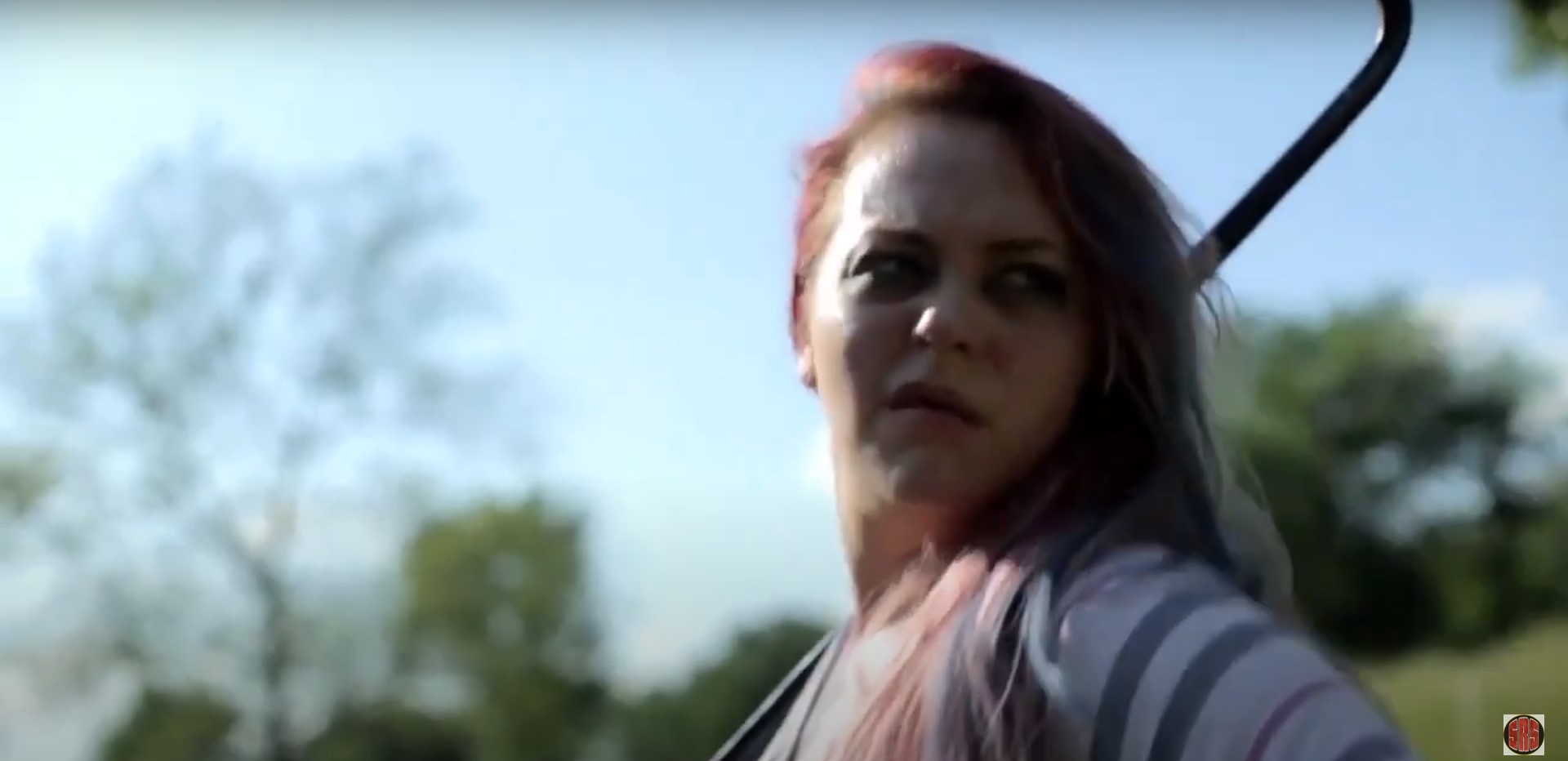
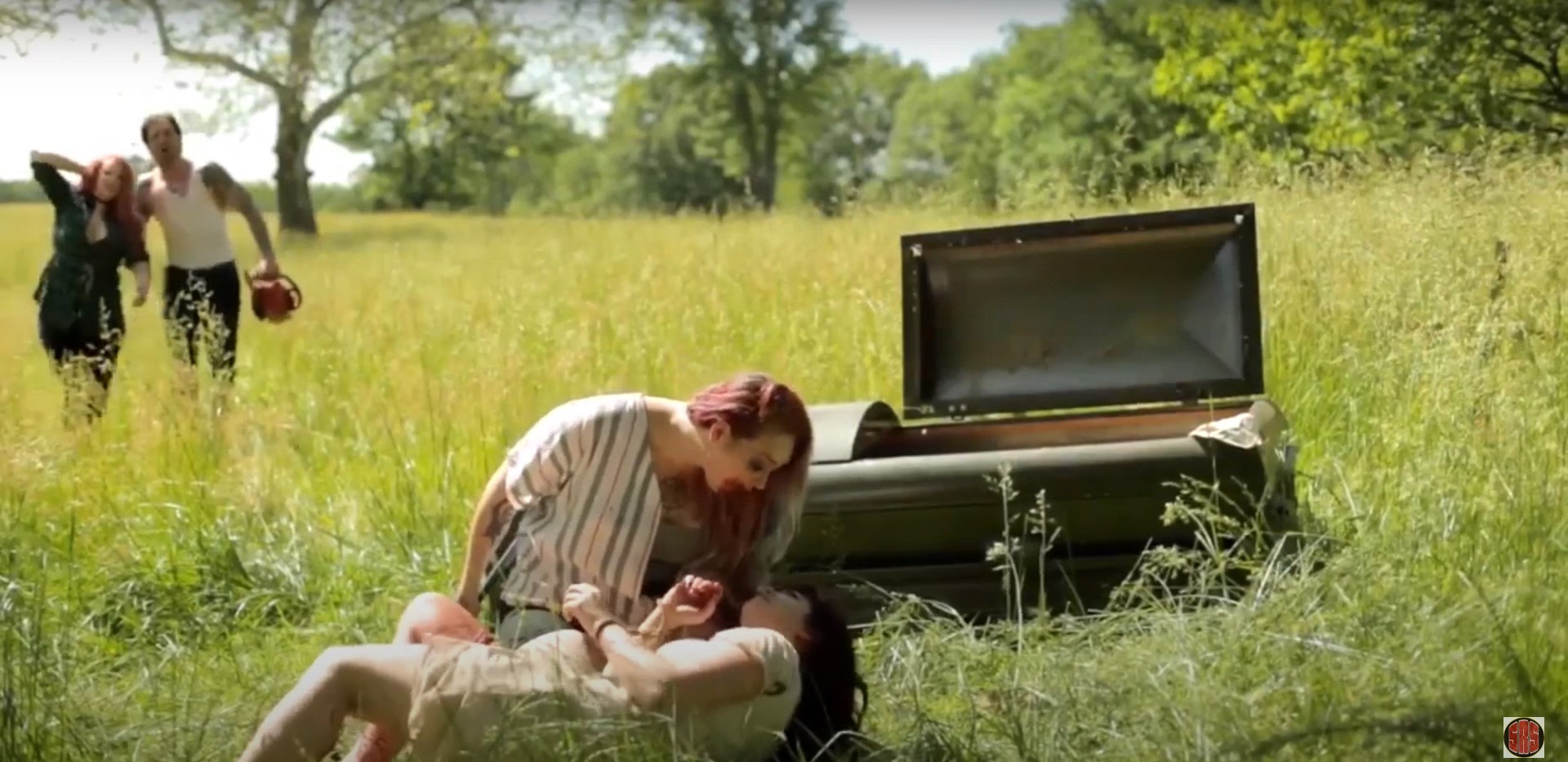
Best friends and law students Tara and Meghan take a much needed depressurizing road trip and run into a Ronnie and Thom, a pair of locals with car trouble looking for assistance at the nearby gas station.  Hesitate to offer a ride, Tara agrees to their proposal of a life for sleep accommodations at Ronnie and Thom’s lake house in the Ozarks.  A serene lake and a drink in hand relaxes Tara’s foremost suspicions about the sketchy couple who seemingly chill and all about a good time catering to Tara’s stressed out needs.  The next thing Tara remembers is waking up to Ronnie and Thom standing over her, tied up, and her and Meghan threatened to become dinner for a pair of bloodthirsty cannibals who’ve just about wrapped up their previous viscera meal, but Tara isn’t as innocent as she appears as she shares the same killer instinct as her captors.  A struggle ensues, the tables begin to turn, and what was once prey has now become the predator!

A re-imagining of Donald Farmer’s 1993 original of the same title starring “I Spit On Your Grave’s” Camille Keaton, director Jake Zelch takes a pun-intended stab at “Savage Vengeance” with a twist in the schlocky sordid and dark tale by replacing Farmer’s original motivation for revenge for cannibalistic carnage.  “The Haunting of Mia Moss” and “The Dark Web Tapes” director helms Farmer’s story as a base while attempting a revamp and build upon with new characters and new plot devices along with contributing screenwriting by “Another Evil Night’s” Jason Harlow and “Lycanimator’s” Sébastien Godin.  Shot in Tennessee, “Savage Vengeance” is a production of Zelch’s Missouri based company, Unreality, and is produced by the filmmaker and headlining star Tamara Glynn (“Halloween 5:  The Revenge of Michael Myers”) with Donald Farmer and Curtis Carnahan as executive producers, marking the third feature film collaboration between Carnahan and Zelch.  Stratosphere Films handled the theatrical distribution.

Zelch’s “Savage Vengeance” has an identity problem.  Having reformulated the original premise, which doesn’t offend me as I think reinventing the wheel can sometimes be fresh and creative under the same directive title, the script has trouble nailing down a proper principal by shooting, by my count, three different segments disconnected from each other and with three different protagonists leading the charge in each.  Tamara Glynn receives top bill despite only garnering about 10 minutes of screen time in the beginning due to much of the opening footage being lost due to backup hard drive failure, according to Zelch on the director’s commentary.  The “Terrifier 2” and “Halloween 5” actress is essentially captured, chained, and trying to find a way out after waking up in a scarce-looking attic but because of her aforesaid credits, the DVD front cover banner head makes for a great advert sell point.  Instead, modern scream queen Roni Jonah (“Kill, Granny, Kill!,” “The Bloody Man”) becomes the runtime face of “Savage Vengeance” as Jake Zelch intends for the girth of the story.  Jonah, as Tara, paired with Jasper Evans as best friend Meghan heading toward an in schtook situation not only the cannibals on the road ahead but internally with rape, pregnancy, and a dysfunctional love triangle that has more to do with illicit lust than love with Tara’s boyfriend David (Dave Ivan), a theme much closer to the original essence of Donald Farmer’s rape-revenge exploitation.  However, what’s assumed is taken for granted and not utilized to all its pathways the concept could have complexed the characters rather than freezing them in a face value understanding.  That understanding comes a tool against cannibals Ronnie (Kat Underwood) and Thom (Cody Alexander, “Eat the Rich”) who are your typical crazed anthropophagus antagonists, as well as sadistic sodomist as we see with Adam Freeman’s (“Debbie Does Demons”) character, of film.  When these characters meet and try to be merge an acquaintance or friendship, in Tara’s shoes, I might just be a little more judgmental of two heavily tattooed wanderers, the male sporting a knife sheathed in holster around his backside as he walks around his wifebeater tank-top, handing out to me mysterious drinks on their isolated, rural property.  The whole setup doesn’t do the story justice to Tara’s decision making but then again, she’s not as pulled together as Zelch’s useable footage relays.  The third segment pops up after initial closing credits with Jessa Flux (“Debbie Does Demons”) to possibly offer up an imminent sequel “Savage Vengeance 2:  Better Off Dead, starring Flux.

Almost seems unfair to cover and review Zelch’s “Savage Vengeance” because of so much of the footage being forcibly cut and the shot narrative going through essentially restructured surgery to make pieces segue and make sense on screen.  Honestly, the recut doesn’t work, leaving too much unanswered and too much to decipher to put a solidified stamp on the series of events.  Thus pushing forward the abridged cut may warrant an impartial review until a more definitive, complete cut sees the light of day.  The material “Savage Vengeance” shows currently splices together the MPEG files that survived the great blue screen of death and transfer fail, such as with the Tamara Glynn opening that’s only connected by the brief present of Ronnie eating cat guts and Thom surprising and looming over Glynn before her deafening scream.  The additional footage explained by Zelch added context to the cannibals and provided a memorable kill to setup the tone of Zelch’s homage to late 70’s rural horror.  Fortunately for Zelch, horror fanatic brains are wired differently, able to fill in most of the gaps of a formulaic building blocks; however, the success of this can also be attributed to Zelch’s scramble editing to make a semi-intelligible story with what’s left contextless of the low budget nitty-gritty.  Another highlight is the blood with pretty-penny special effects from the multi-hat wearing Kat Underwood and her colleague Erin Felts who drum the gore the best they can with prop dummies for splitting in two, a whistle dogged dildo-penis gag, and saucy blood and guts to give the film the edge it needs to tribute Farmer’s ferociously.

I’ve said it once and I’ll say it again, I do applaud SRS Cinema’s time, effort, and creativity in the physical media artwork as the gorgeously dripping blood, sex, and horror pulp is quintessential eye candy for fans in what is typically a microbudget and mediocrity poor effort in the graphic cover art department of terribly arranged and hack job compositions. None of that rubbish here with many of the SRS Cinema titles, including “Savage Vengeance” on DVD.  The 1.85:1 widescreen and 720p standard definition presented DVD5 might have a deliciously illustrated cover but the film itself is marred by the artificial VHS overlay of tracking lines and macroblocking, especially when Zelch aims for a 70’s exploitation veneer that was mostly 16 or 35mm.  Instead of a grainy-laced, dirt-spotted, cigarette-burned, and scratched up celluloid frames, or a resemblance of something akin to it, “Savage Vengeance’s” aesthetics only bask in the softer details of lower resolution clarity and in the ethereal of a delicate lighting that eliminates shadowy contours that offer depth.  Frame rate also seems to be slow down some sporadically throughout as well as the erratic focus as if you’re coming out of sleep and trying to regulate your eyes from dark to light.  The English Dolby Digital 2.0 audio mix stems from the onboard, built-in camera mic that captures the surroundings which has pros and cons, such as diluting the dialogue to a subdued audible.  Not a ton of balance from the surrounding environment when augmented sounds, like the zaps of the electric fence or the overpower roar of chainsaw decibels that don’t change in closeups or wide shots, make their way into the fold.  No subtitles are available.  Bonus features include a Jake Zelch commentary with scene-by-scene backstory and explanation as well as the full explanation of his lost footage, actor Adam Freeman commentary that revolves around his acting craft, male nudity on screen, and his opinions of rape and sexual assault in general, a gallery slideshow, and the feature’s trailer.  Aforementioned, the illustrated cover of Tamara Glynn looking slyly and sexy holding a blood chainsaw is primo quality on front of the standard DVD case.  Inside lies no insert and with the same image on the disc art. Until a completely restored version of director Jake Zelch’s vision, the filmmaker’s “Savage Vengeance” can barely stand as perspicuous testimony of an uncalled for 30-year-reimagining.

“Savage Vengeance” now available on DVD home video!