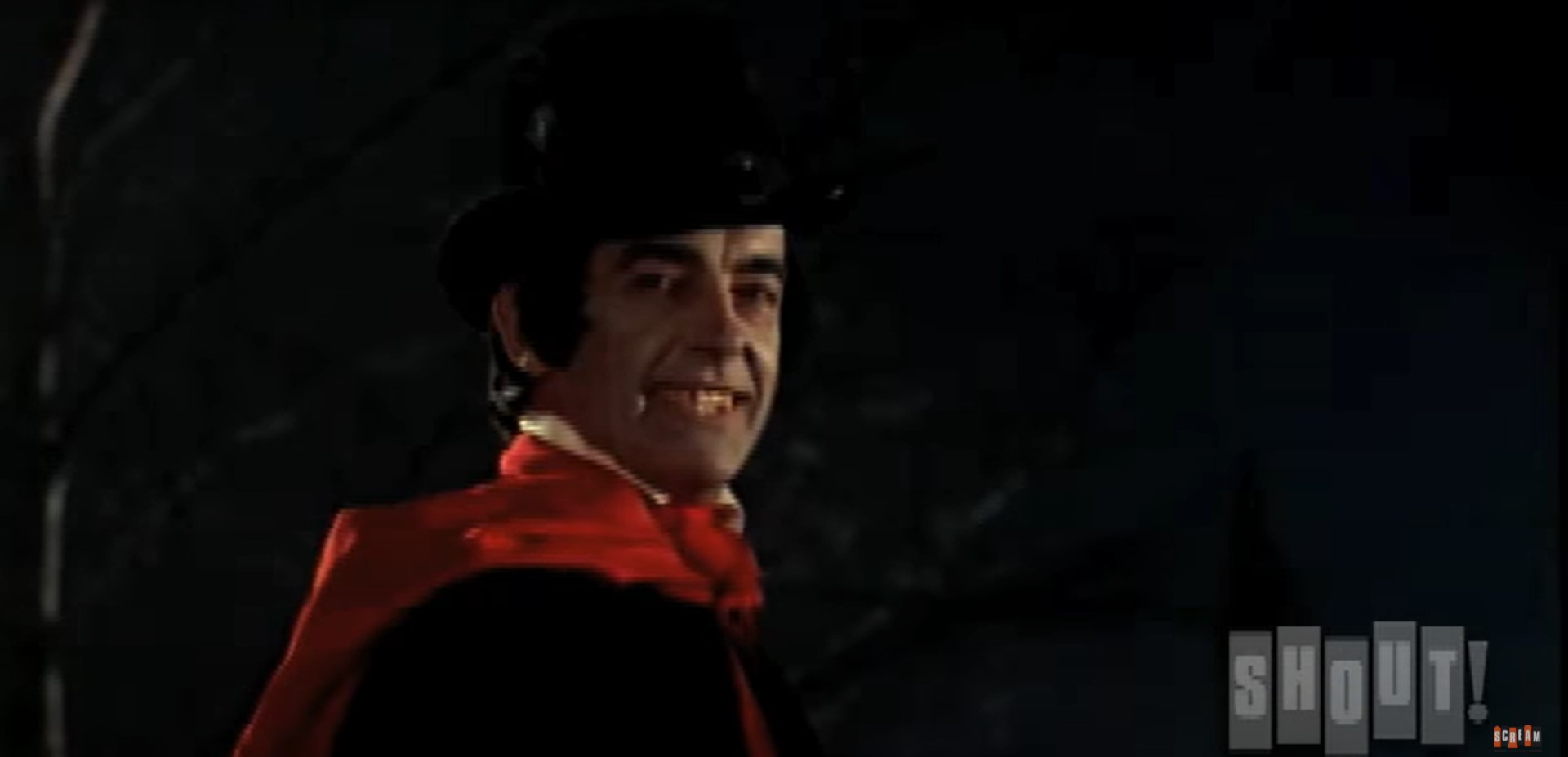
100-Year Return Brings a Plague of Flesh-Eating EVIL to a Small Town! “Messiah of Evil” reviewed! (Radiance Films / Blu-ray)

The “Messiah of Evil” has Come to Blu-ray Home Video!

Arletty travels up the California coast to a small beach town known as Point Dune.  The reason for her visit is to find her artisan father after a series of bizarre letters came to an abrupt stop.  She arrives at his mural-graffitied home to discover it empty and decides to stay a few days to ask around town about his whereabouts and to be present for his return home.  Her inquiries at art gallery shopkeepers lead to a motel where Thom, a wealthy collector of urban legends and spooky stories, and his two travelling female companions, Laura and Toni, have also sought out Artletty’s father for his bizarre experiences.  As the days pass, Point Dune slowly becomes a literal ghost town that forces Thom and his companions to stay with Arletty and, together, they experience the horrible truth of what’s really happening to the  residents of the west coast community who eagerly await the arrival of the dark stranger. 
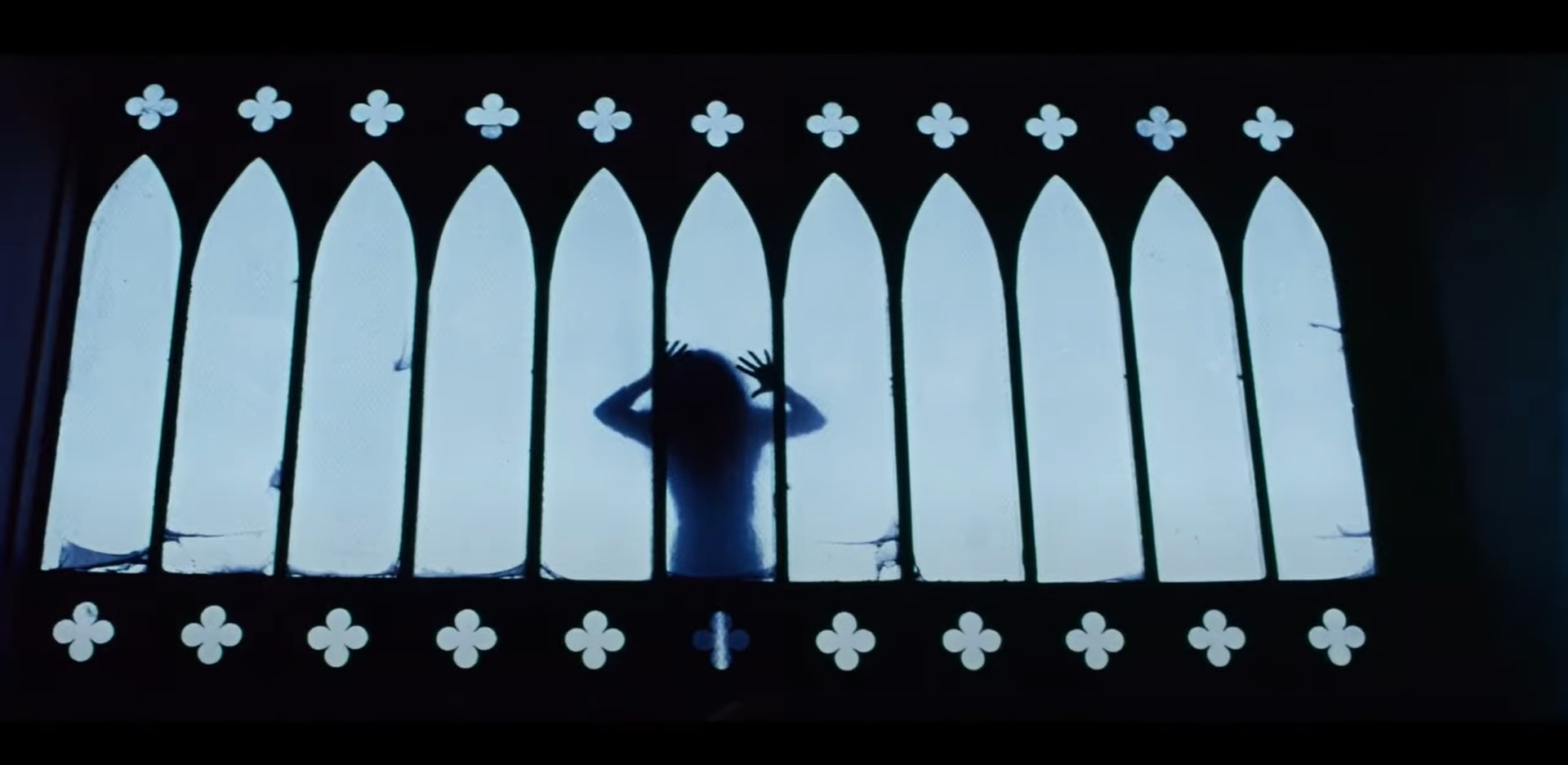
Once married filmmakers Willard Huyck and Gloria Katz are the creative minds behind the stories of “Howard the Duck” and “Indiana Jones and the Temple of Doom.”  They also wrote “American Graffiti” in what was to become their link toward working on Steven Spielberg’s Indiana Jones sequel since both “American Graffiti” and “The Temple of Doon” were both produced by the father of “Star Wars,” George Lucas.  Yet, in the midst of “American Graffiti,” the couple also penned and Huyck came into the entrance of directing with the 1974 horror-thriller “Messiah of Evil” that pulled from various themes of mindless consumerism and the rising fears of dangerous and deadly cults in the U.S.  Also known by a variety of titles around the world, including “Dead People,” “Night of the Danmed,” “Messiah of the Evil Dead,” “Revenge of the Screaming Dead,” and “Blood Busters” to name a few, the Californian coast shot film is a production of the International Cine Film Corp and V/M Productions with Gatz producing and Alan Riche (“Deep Blue Sea”) serving as executive producer. 

“Messiah of Evil” slinks into the soul leaving behind dread’s unwashed pull against what we know as conventional horror.  In order to accomplish such a fear-induced feat, a cast must envelope themselves fully in world of weird and irregularities that nestle an uneasiness stemmed not solely from their performances but from how they react to the eccentric environment, to the crumbling small town society, and to ghastly behaviors of normal-looking people.  Like most daughters, Arletty has concerns for her father and seeks to understand the truth behind his unhinged letters.  Marianna Hill (“Schizoid,” “The Baby”) plays the quietly curious at a cat daughter dabbing residents with barely an effort in interrogational questioning of her father’s whereabouts.  Hill floats Arletty through stages of a slow descent into madness that simmers slowly to a boiling point understanding of what’s taking shape around her.  The same happens to Thom, played by Richard Greer (“The Curious Female”), who initially is a fraction of the nonconformity surrounding Point Dune with his obsession toward collecting strange stories and his polyamorous collection of women.  Of character, Greer is resoundingly in control without being dominating with Thom who has wealth and magnetisms but isn’t someone to be beholden to forever as we see with Laura (Anita Ford, “The Big Bird Cage”) who deserts him for his open-door intimacy policy in his pursuit of Arletty and with the childish Toni (Joy Bang, “Night of the Cobra Woman”) in her infinitely naïve opinions surrounding the dull Point Dune.  One actor I wish we had more of but is utilized perfectly as Arletty’s father and a harbinger of what’s coming is Royal Dano (“Ghoulies II,” “Spaced Invaders”) in a non-humorous nor drunken idiot role that seemed to typecast him later in his career.  Dano’s short but sweetly terrifying stretch divulges a man torn between his previous life and a new terror that now occupies him as he interacts with Marianna Hill as concerned and contaminated father holding it all within toward his frightened, confused daughter.  “Messiah of Evil’s” cast rounds out with Elisha Cook Jr (“Rosemary’s Baby”), Bennie Robinson, and Charles Dierkop (“Grotesque”). 

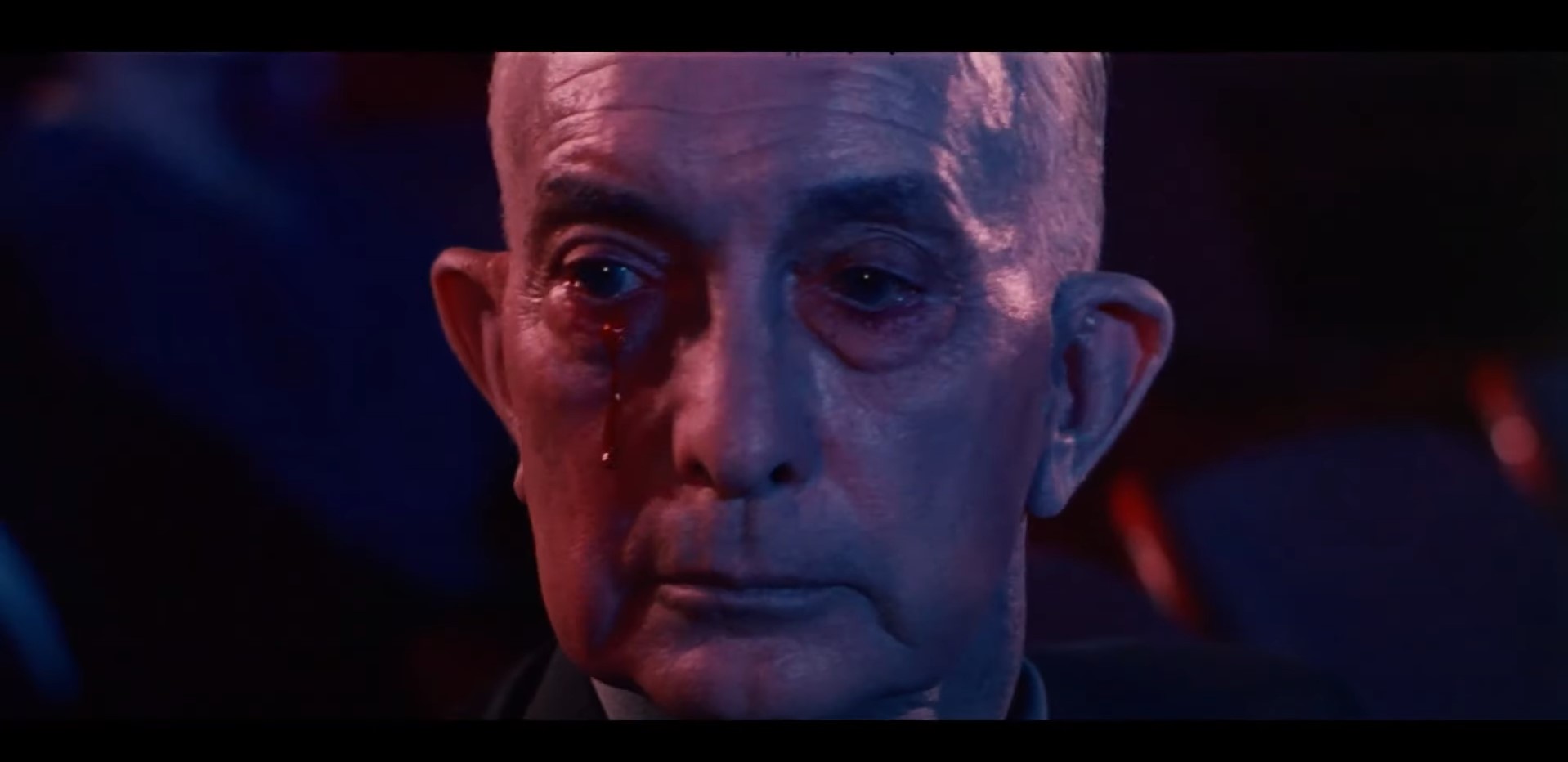
Huyck directs with colorful and verismo synergism that takes the positives of what should be life’s routine pleasures and turns them against us as fantastical and harrowin deadly elements of false securities.  The rolling crashes of Point Dune’s waves takes on a constant cacophony of sinister foreshadowing, a bright and welcoming supermarket becomes a vacant trap in every aisle, the entertaining movie theater darkens with blood on the screen, and an artist’s home, full realistic murals and colors, is an oppressive feast of lifeless eyes.  Point Dune becomes a dead town, literally, as the inhabitants succumb to dark forces from beyond their years, turning primeval in their contemporary three-piece suits and evening blouses.  Huyck and Gatz story pulls inspiration from U.S. history and folklore to mark the 100-year return of spreading evil amongst the land, an evil that resorts to cannibalism by either spellbinding archfiend, an internal infection, or the rise of the undead and not just any mindless, shuffling, flesh-eating zombie but a transmogrified plotter able to move fast and think as a single unit with the touched by evil masse with telltale signs of a single rivel of blood seeping from out of their eye and their insatiable need to consume other people. ”Messiah of Evil” is not overtly graphic like George A. Romero zombies or like the unbridled number of zombie films to follow inspired by Romero’s zombie game-changing wake for the last 60 plus years, separating the flesh-eaters from Romero’s gut-gnashing, pale faced, and slow-walking undead and Huyck and Gatz’s transmitted pestilent receiving horde running fast in their best church shoes with vastly different traits. Huyck and Gatz dip into more eldritch means with the return of a paganistic dark stranger in a pared down explanation without explicitly being definitive who or what the dark stranger (a demon?Antichrist?) is that is driving foreboding signs to a doomsday-disseminating end. ”Messiah of Evil” thrives as the mysterious and strange fulcrum of the beginning of the end told through the point of view of young woman left to tell the world of what’s to come only to be about as believed as much as a man wearing a polka-dotted tutu who has delusions of unicorns dancing the waltz with garden gnomes in his front yard. 
United Kingdom distributor Radiance Films releases a new restoration transfer of “Messiah of Evil” also on their U.S. line. The AVC encoded, 1080p high-definition, BD50 presents a 4K scan of the best-known surviving 35mm print from the Academy Film Archive in a widescreen 2.35:1 aspect ratio. As noted in the release’s inserted booklet, the restoration processes used was the Digital Vision’s Phoenix Finish and DaVinci Resolve was used for color correction, under the supervision of Sebastian del Castillo at the Heavenly Movie Corporation. Audio was also restored with the Izotope RXB. For a surviving print, the original elements look pretty darn good with barely any celluloid hiccup. No vinegar syndrome, not significant tearing, or exposure to name a few issues of possibility. There are a few minor blemishes and missing or damaged frames that seem to provide an unwanted cut but most of “Messiah of Evil’s” film problems stem mostly behind the camera with a rework of the story during the stop-and-go production and conflicts in marketing the film, hence the various title aliases of the film from around the globe. Other detail low points are when the film is bathed in blue and purple gels and tint for to set an apprehensive wander and wonder while retaining more natural grading in its majority throughout. The resorted audio is a lossless English LPCM mono mix. Really focusing on the electronic score of Phillan Bishop (“The Severed Arm”), the low-frequency score sets a perpetual and durable tone of dread out of place in a prosaic small town, much like the Arletty’s father’s work-of-art home that sticks out amongst the mediocrity. In design, dialogue remains robust yet delicate when the scene calls for it, such as Elisha Cook Jr. story of how he was born in what is essentially him, as a vagrant paid for his story, making the only noise in the room. Dialogue in these moments is greatly discernible with negligible electronic interference. Depth layers the permeating isolation of a town gone mad in unison with the range stretching from the distressing design of rolling, crashing, oppressive waves to the scuffles of zombies’ consuls and heels scuffing against asphalt, pavement, and shattering through panes of glass. Radiance provides English subtitles with their release. Bonus features include a new audio commentary by film historian and horror archetype authors Kim Newman and Stephen Thrower, an archived interview with director Willard Huyck, and a new, feature-length documentary showcasing “Messiah of Evil’s” background, themes, production, and influences by various horror scholars, including Kat Ellinger who also voiceovers a visual essay on American Gothic and Female Hysteria, which if I’m being honest, parallelly treads on similarities with Ellinger’s Motherhood & Madness: Mia Farrow and the Female Gothic on Imprint’s “The Haunting of Julia.” Radiance has in the short time poured their heart and soul into their releases and “Messiah of Evil” is no different with a sleek cladded and clear Amara Blu-ray case that’s subtle in showing less but feeling more on the cover art, opposite of the reverse side that houses a classical black and white compositional illustration of characters. Inside the 28th release for the label is a 23-page color booklet insert with the appraisal writings of Bill Ackerman, transfer notes, release credits, and acknowledgements. The disc is pressed red, much like the red moon in the film, with a stark black title. The Radiance release is unrated, region free, and has a runtime of 90 minutes. ”Messiah of Evil” uses cult fears, satanic panic, and the loss of ordinary life to penetrate the spirit by way of slowly eating at it. The crawling, creeping dread meanders, much like Artletty who is seemingly held in place at Point Dune, and we’re glued to the engrossing rate of the terror to come orchestrated by the captivations of a once married couple on a fast track toward success.

The “Messiah of Evil” has Come to Blu-ray Home Video!

Who Let EVIL Out of the Bag? “The Catman of Paris” reviewed! (Imprint / Blu-ray)

Meow!!  “The Catman of Paris” is on the Prowl on Imprint Blu-ray!

From rags to riches, writer Charles Regnier pens one of the most popular and polarizing books of France.  Titled Fraudulent Justice, the subject matter coincidently contains secret court case information in it’s text.  Regnier stands firm his book is creative fiction while the French government think otherwise.  When a government agent of the Ministry of Archives, carrying the detail accounts of the case to be reviewed, is found slashed to death and the case file missing, the police naturally suspect Charles Regnier while also another, eccentric police theory circulates of a monstrous cat person.  Regnier, who suffers from headaches and blackouts from a tropical fever he contracted during his two year travels away from Paris, begins to suspect himself as the deranged killer on the loose, attacking and killing those around him.  Without a solid alibi and the unknown from his blackout memories, Regnier evades the police by hiding with his darling lady friend, Marie Audet, but when the headaches begin and Regnier conscious slips into a strange darkness, will he let the cat out of the bag to strike again?

Let’s travel back in time to 1946, just after the Great Second War, when the movie industry rolled film once again and take a pawing look at Lesley Selander’s shapeshifting film noir “The Catman in Paris.”  Though story set in Paris, the black and white horror film helmed by “The Vampire’s Ghost” director is a United States product shot on location at the Republic Productions studios in Los Angeles, reusing and transforming many of the company’s stout storage of Western set pieces into Parisian milieus.  From the spittoon saloons to high end restaurants and from dusty stagecoaches to redesigned aristocrat carriages, Republic Pictures aimed to take transformative risks in order to hop on the Val Lewton and his 1942 “The Cat People” success train while making statements of his own from a Sherman L. Lowe (“Valley of the Zombies”) script.  “The Catman of Paris” is produced by Belarus expat Marek Libkow who fled Europe because of World War II but the feature would be his last producing feature.

In the ambiguous role that puts into question his sanity and his humanity is the Austrian actor of “Slave Girl,” Carl Esmond.  Esmond plays the rift creating writer adored by the public and despised by the government, driving him back into a corner of continuous defense of his work that has been argued to be plagiarized form secret documents and unlawful for the access of aforesaid secret documents regarding a controversial court case decades prior. On his tail is a paranormal receptive prefect of police (Fritz Feld, “Phantom of the Opera” ’43) and a more pragmatic inspector named Severen (Gerald Mohr, “The Monster and the Girl”) who, based on little-to-no evidence, immediately suspect the writer by affiliation to the court case he could in no way possible have known. This dichotomy of theory doesn’t affect the prime suspect, doesn’t seep into a larger suspect pool, and keeps the investigation status quo up until the revealing finale, but the police state characters have subjectively targeted Regnier with all but a harassment mentality, adding to Regnier’s conflicted dismay about the association between the killings and his disassociation with consciousness – which is visualized by a series of random, inverted images of a gusty barren tundra, a buoy gushing ocean water, a dark and cloudy moon, and a black cat’s eyes at the center. Regnier finds comfort in the bosom of Marie Audet (Lenore Aubert, “Abbett and Costello Meet Frankenstein”) over his finance (Adele Mara, “Curse of the Faceless Man”) and in his promised fickleness, broke her heart before falling victim to the cat’s claw in a metaphoric gesture of aggressive sexual assault. The whole love triangle is loosely adhesive to “The Catman of Paris’s” integral entanglement of un-kittenish affairs. In fact, Regnier is very kittenish with Marie to the point that his engagement appears to be frivolously made and has locked him into an inescapable promise because of emasculating masculine posture. Instead, the writer could care less about his word, or rather conveniently forgets, as he plays footsy with the girl of his dreams. “The Catman of Paris” rounds out the cast with Douglas Dumbrille, Francis Pierlot, and Georges Renavent.

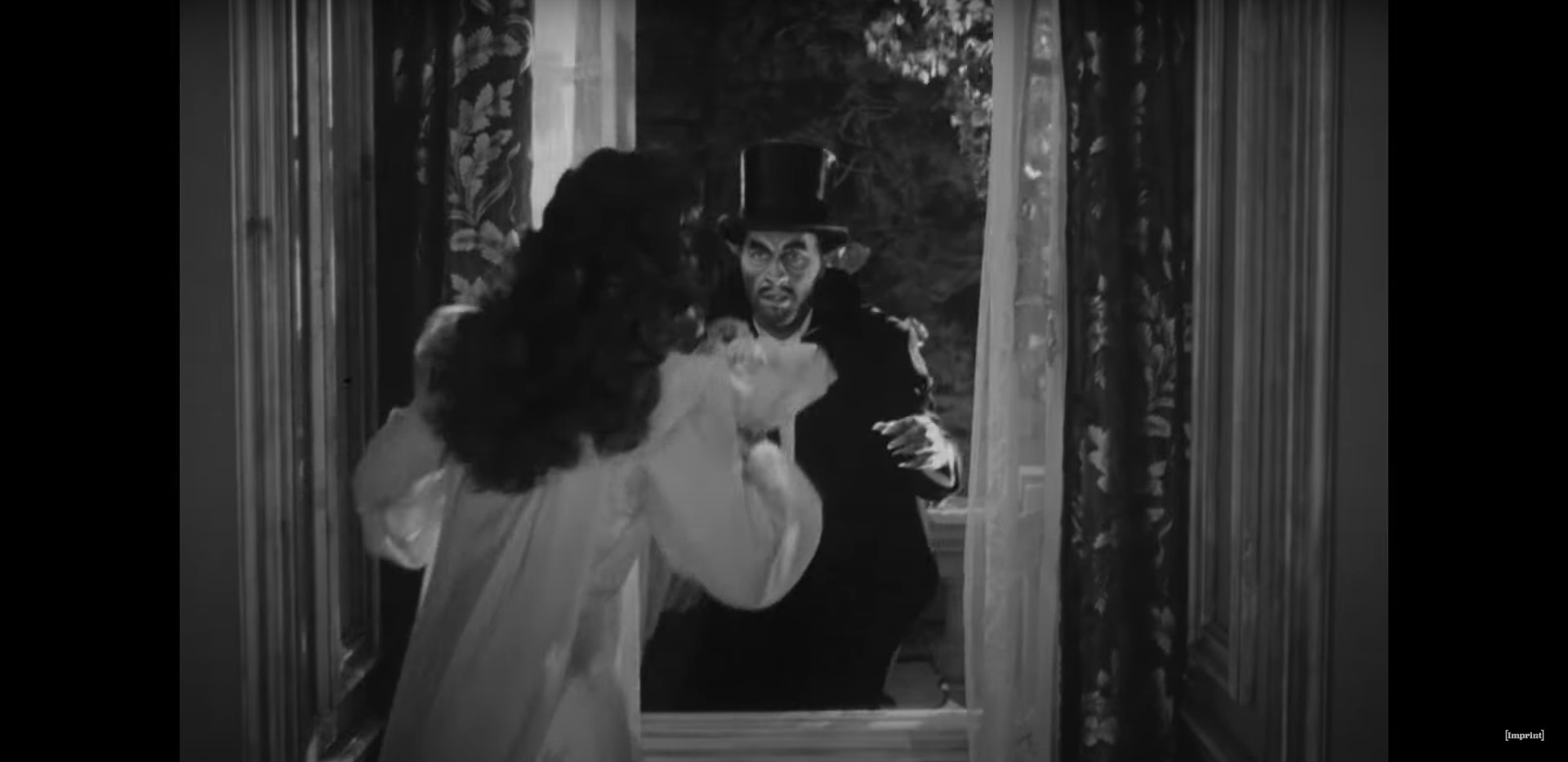
Long thought derivative of Val Lewton’s “The Cat People’s” success, Republic Pictures challenges the perspective with a cattier fracture of manhood, putting the main protagonist of their own cat person horror, “The Catman of Paris,” through the whiskery wringer of test and tribulations of harboring suspicions about oneself. Charles Regnier has seen the other side of the tracks. For all intents and purposes, Regnier was a nobody who suddenly rose to respect and wealth in the eyes of the general public with the stroke of a pen for creative thought to formulate an enthralling story, out of the fabric of his own mind he assumed he wrote. Yet, his work of fiction has also become a sign of guilt, suspicion, and unlawfulness in the eyes of the authorities. If the weight of the government isn’t burdensome enough, Regnier is also divided with personal doubt when a killer’s bodies pile during his time spent in a stint of amnesia and all of evidential signs point in his clueless direction. The more dire latter echos his former self in a subconscious belief that he isn’t his true self, such as with imposter syndrome in which he questions his current, more affluent status and fame with being contributed by a darker, murderous side, perhaps a sign of his impecunious past. The story has Regnier averting decisions to marry into opulence when he really just wants to continue his fervent pursuit of his publisher’s daughter, a sign that now he’s worth a pretty penny, he can muster enough confidence to chase after the woman of his dreams and still feel grounded to the common people despite is sudden wealth. At one point in time, “The Catman of Paris” was a harrowing horror tale with fantastic prosthetic cat features, a decent carriage chase and crash sequence, and a whodunit mystery quencher for the masses, but, for today, the 1946 is about as antiquated as they come like most of “The Golden Age of Film” features with a one-note suspense narrative and a monotone melodrama that’s imposing and frank without a lot of flair. I will say one thing about “The Catman of Paris'” twist ending is it’s not easily reckoned as Selandar has beguiling direction to pile on guilt to the point that audiences will have to submit to the director’s feline frisky hokum.

A part of the Imprint Collection, coming in at #219 on the spine, is “The Catman of Paris” on an Australian Blu-ray release. The limited edition high-definition release is AVC encoded on a single layer, BD25. The 1080p Blu-ray presentation comes from a 2017 4K scan of the original negative and is presented in the Academy ratio of 1.37:1. The original print material has sustained a few visible marks of infrequent vertical scratch damage, minor dust and dirt, total loss single frames, noticeable cigarette burns, and wavering levels in grayscale and contrast stability during edit transitions. Yet, there’s still a richness of the black and white image for the majority that refuses to fold outside the competent restoration attempt that gives dimension to a nearly 80-year-old film. The overall picture is a solid pass above par as it’s likely the best we’ll ever see in our time. The English language LPCM 2.0 mono track crescendos with a run of the mill brass band score overtop a quite clean dialogue track. Sure, the unmitigated track is slightly sullied by a consistent yet unimposing shushing with sporadic, stifled popping; however, there are no major issues with the mix and the dialogue through the dual channel is clean and distinguishable. Optional English subtitles are available. Special features include a new audio commentary track feature film historians Kim Newman and Stephen Jones, an oldfangled feature length documentary running through the cinematic history of stills and video clips from Republic Pictures The Republic Pictures Story, and a film historian Kat Ellinger video essay entitled Mark of the Beast: Myth Making and Masculinity in The Catman of Paris. Imprint’s tangible package is eye catching with color-washed front cover image on a thick cardboard side-slipcase; the illustration is pulled from one of the feature’s various marquee posters. Inside the slipcase, a character composition mockup includes the menacing Catman at the forefront with Regnier and female principals frozen in fear. The Imprint release runs at a slim 64 minutes, is unrated, and has a region free playback. “The Catman of Paris” is in servility of early Cat People productions but stands on its own two, or rather four, feet with an entrenching murder mystery that can keep you anthropomorphically guessing.

Meow!!  “The Catman of Paris” is on the Prowl on Imprint Blu-ray!

Smuggling EVIL Past the Revenue Men! “Night Creatures” reviewed! (Blu-ray / Scream! Factory)

The Marsh Phantoms are Coming to a Blu-ray Near You!

A savage pirate is left for dead on a remote island by his ruthless captain, a small village avoids taxation from the British King’s revenue men by smuggling French Brandy, and on the same village’s marsh land, ghostly skeletons ride into the night, placing the fear into wanderers with ghastly-glowing skulls and undead horses. At the center of it all is Dr. Bliss, the Romney Marsh village Vicker, who also heads the liquor smuggling ring in town and plays the King’s tax revenue soldiers as fools by misdirecting their attention to elsewhere and away from their illegal brandy run. Keeping up with a ruse that’s cracking at the foundation with one of Romney Marsh’s irresolute community leaders forces Dr. Bliss to think fast and stay on top of a smuggling operation at the constant brink of collapse, but a return of a familiar face stirs up conflict and the captain of the revenge men continues to push for the truth no matter the cost.

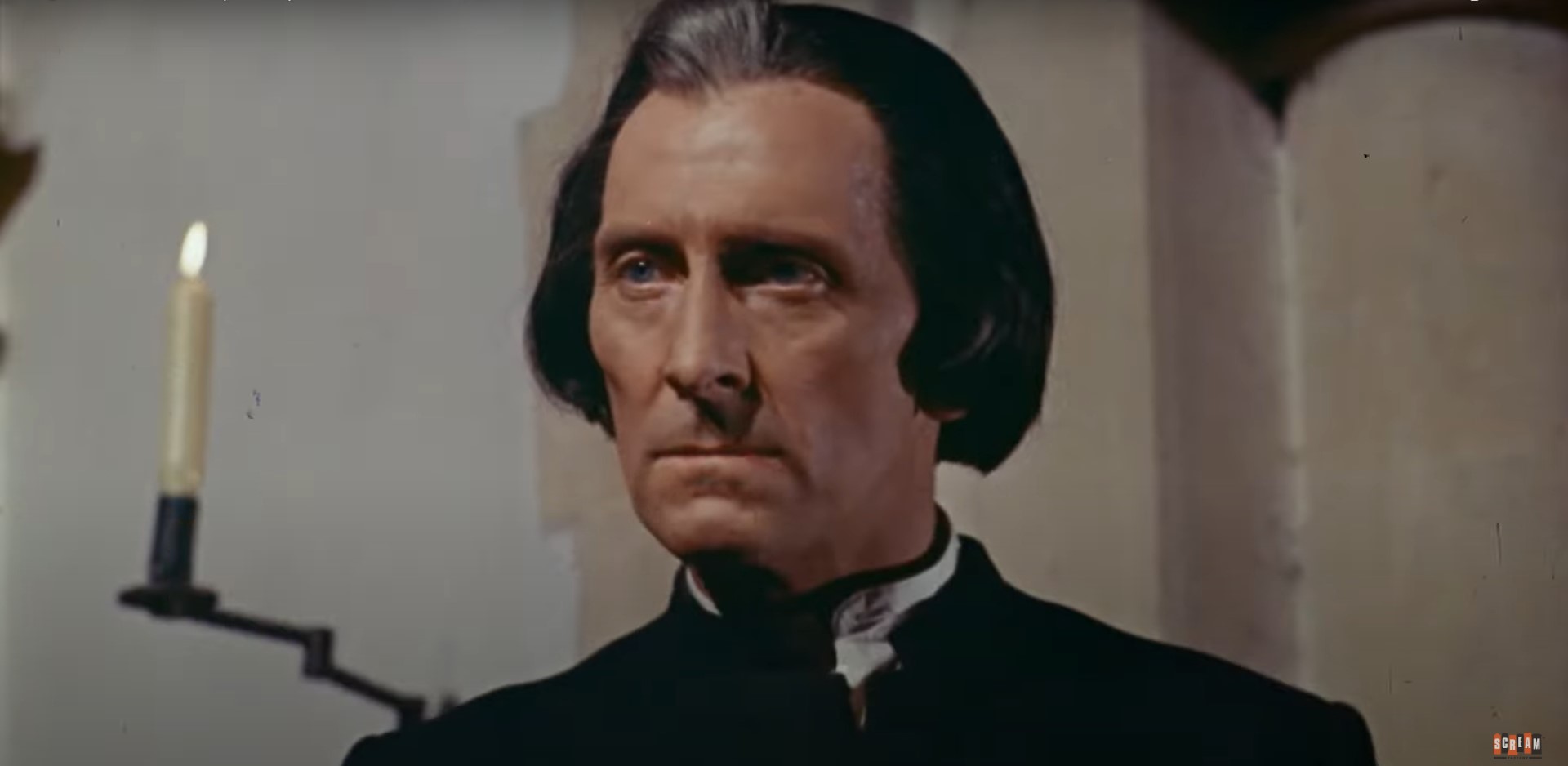
Peter Cushing is well-known for his solemn gothic horror roles in nearly a slew of countless Hammer films. An unequivocal and stoically determined vampire hunter, the intelligently disillusioned creature maker befallen by his creation, and a wizard sleuth with a nose for clues in tracking down murders are just a few of his linchpin roles for Hammer Productions that the English actor portrayed so very brilliantly in the company’s peak, and off-peak, years. Yet, one of his most pinnacle performances stem from one the lesser-known Hammer productions based off the English author Russell Thorndike’s anti-hero and swashbuckling novel “Dr. Syn” published in 1915. Known in the United Kingdom as “Captain Clegg” and “The Curse of Captain Clegg” because of legal rights issues with the Thorndike title and Disney (yes, that Disney!), U.S. audiences might recognize the Cushing film as “Night Creatures,” directed by a Hammer one-off in Peter Graham Scott (“The Headless Ghost”) and is written by Hammer vet Anthony Hinds (“The Brides of Dracula,” “The Kiss of the Vampire”) under his usual pseudonym John Elder with additional dialogue from Barbara S. Harper. John Temple-Smith produces the film under Hammer Film Productions

Though the cast, crew, and production company were bound not able to use “Dr. Syn” in the film that didn’t stop Peter Cushing in becoming Dr. Bliss, the peoples of Romney Flat’s very own Vicker who revitalized the small town and severed them from hefty taxation with a scheme of smuggling. Clearly, Cushing is in his glory, in his element of wide range, and can be seen as having a ball with playing a dualistic character in Dr. Bliss. Dr. Bliss bares no sign of being saintly stiff around the gills as any pious man might be portrayed and Cushing, at times, can be as rigid as they come in certain roles. Not Dr. Bliss though as a man playing the facade to hide behind-the-curtain his good intentions from those who want a piece of the pie for king and country. Opposite Cushing is “Never Take Candy from a Stranger’s” Patrick Allen as Captain Collier who trucks men by boat to land a surprise inspection after being tipped off about a possible smuggling ring. Allen’s cuts Collier from the clever cloth but the leader of revenge men is always one step behind his time as Pirate chaser and now as a fraud nabber. Another excellent act of thespianism in “Night Creature” is another Hammer household name in Michael Ripper (“The Curse of the Mummy’s Tomb,” “The Plague of the Zombies”) after a long stint of playing unnamed sidelined roles early in Hammer’s beginnings. Ripper has an unforgettable look with gravely gruff voice and a quick timed wit that makes him a pleasure every time he steps into the scene. Just coming onto the scene is Oliver Reed on the coattails of his success with “The Curse of the Werewolf” and though his role is purely supportive, his act as the love stricken and loyal to the smuggling cause son of the naive local squire and magistrate (Derek Francis, “The Tomb of Legeia”) who isn’t in on the scheme. “Night Creatures” rounds out the cast with Yvonne Romain (“Circus of Horrors”) as about the closest thing resembling a love interest, Martin Benson (“The Omen”), and Milton Reid (“Deadlier Than the Male”) as the Mulatto pirate exploited as a shackled hound dog to sniff out French Brandy…literally.

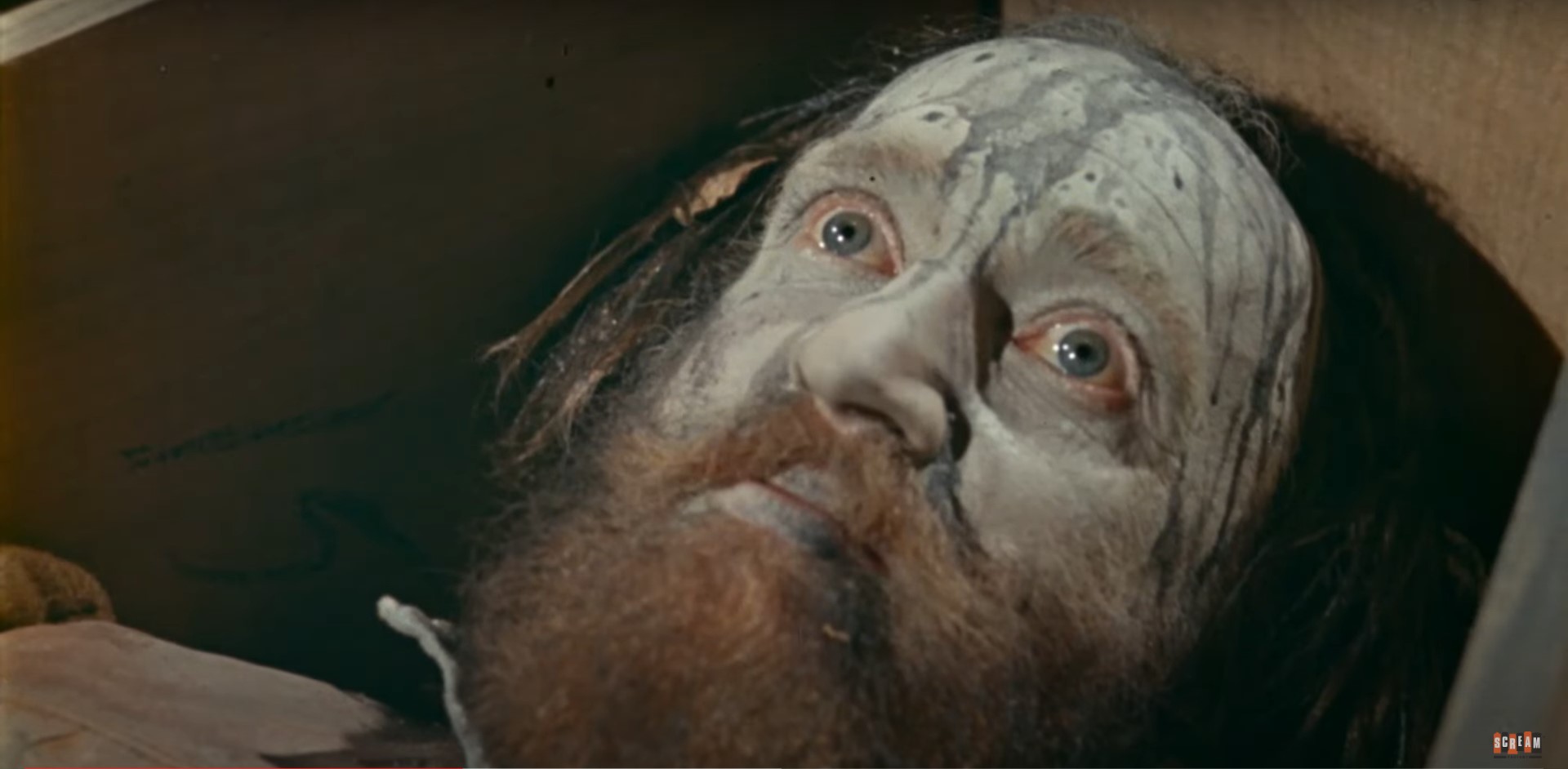
A swashbuckling, smuggling caper with notes of macabre imagery and a purloin-the-show performance by Peter Cushing stows “Night Creatures” away as one my favorite Hammer productions. Laced with characteristically grand production pieces and sets, mostly shot at Hammer’s Bray Film Studios, “Night Creatures” looks luxurious and feels expensive as pirate ship interiors, magnificent church hall, and haunting shots of a scarecrow with voyeuristic eyes propped on the countryside landscape elevate not only the story but also the rich characters brimming with complexity. Scott does a fine job sustain an ambiguous Dr. Bliss who, from our own suspicions, can be immediately pinpointed with a backstory that never falls in the pit of exposition. The true story behind Dr. Bliss is practically pressed, squeezed, tugged, and pulled by tooth and nail to finally be revealed to the audience and the moment is greatly satisfying when admission to something we all know is finally out in the open. While Dr. Bliss purposefully misguides the revenge men astray from his illicit activity, “Night Creatures” is also misguiding the audience with ghastly suspense in the existence of the Marsh Phantoms, a luminescent design of full body skeletal depictions on top of midnight cloaks and onesies, pulled off by special effects supervisor Les Bowie (“Paranoiac”) and his team to add a taste of horror to a rather subterfuge storyline of rebirth and sacrifice.

Now on a part of their Collector’s Edition line, Scream! Factory releases “Night Creatures” onto Blu-ray home video with a new 2022 2K scan from the original interpositive. The result is mostly immaculate with visualize details along the skin lines that makes every bead of sweat and every follicle more apparent to the eye. The release is presented in a 1080p high-definition transfer in what’s now labeled Univisium, an aspect ratio that is 2:1 (2:00.1), reformatted from the original 1.85:1 aspect ratio. Less than a handful of scenes display what looks to be posterization and a degrade in the scan, causing the scene to revert back to the original transfer for a split second. For this you receive a little more width that, ironically enough, homes better in on the focal image. The English language DTS-HD Master Audio mono mix has little to speak ill of as the dialogue, with a hint of continuous static, is greatly clean and clear, ambient track is balanced in range and depth, and you can follow every clashing note in Don Banks’ dramatically orchestrated score. Special features include a new audio commentary with film historian Bruce Hallenback, a new interview with Les Bowie’s special effects technician Brian Johnson, Pulp Friction with film historian Kim Newman on his take on the clustering mess of “Dr. Syn” film rights, Peter Cushing’s Changing Directions with film historian Jonathan Rigby mostly on Peter Cushing’s admiration for the role and his invested interest in playing the main role, a making-of featurette narrated by John Carson, The Mossman Legacy of film historian John Carson showcasing the lot of antique carriages crafted by the George Mossman company in Hammer films, a still gallery, and the original theatrical trailer. The unrated, 83-minute feature also includes a cardboard slipcover with new illustrated from cover art by Mark Maddox. Don’t let a claggy title like “Night Creatures” fool you! Though not the sexiest title, “Night Creatures” will enliven with the mystery of Marsh Phantoms, the suspense of the cat & mouse smuggling game, and the pure bliss on Peter Cushing’s face as he fully immerses himself into the role of his lifetime.

The Marsh Phantoms are Coming to a Blu-ray Near You!

Is Deceptional Fraud More EVIL Than Psychopathy? “Paranoiac” reviewed! (Scream Factory / Blu-ray)

Get “Paranoiac” on the Collector’s Edition Scream Factory Blu-ray!

The parents of siblings Tony, Simon, and Eleanor Ashby die in a tragic plane crash. Two years later, Tony commits suicide by plunging himself off a cliff into a watery grave with his body never having been recovered from the ebb and flow of crashing waves upon the oceanic rocks. Eleven years later, the long thought dead Tony suddenly and unexpectedly returns to what’s left of his family: an overprotectively cold and matriarchal substitute in Aunt Harriet, a narcissistic and alcoholic brother Simon, and a sister, Eleanor, on the precipice of losing her mind from grief over Tony’s death. Shocked by this return, the surviving Ashby siblings split their concerns regarding Tony’s authenticity. Eleanor believes her brother is alive and has come back to rebuild the happy relationship between them whereas Simon denounces Tony’s validity and works underhandedly to either expose Tony as a fraud or to get rid of the imposter by any means necessary, especially when the conditions of receiving the Ashby family fortune have nearly come to an end and a hefty inheritance awaits his opulent tastes. Tony’s arrival causes complications with the inheritance, opens up old wounds, evokes new romantic sensations, and regresses transgressional guilt toward a fiery conclusion to the Ashby family mystery.

A ravishingly dark, mystery thriller inspired by Scottish author Josephine Tey’s crime novel “Brat Farrar” from 1949, the 1963 “Paranoiac” works from off of Tey’s dysfunctional and deceptional family building blocks and extending it into a gothic framework of demented greed in a brand-new of-shooting avenue of psychological thrillers from Hammer Films, hoping to branch off the traditional horror trunk and piggyback success off of the American released, 1960 Alfred Hitchcock film, “Psycho.” “Paranoiac” is the junior film of Freddie Francis (“The Skull,” “Torture Garden”) and penned by the longtime Hammer writer, who basically wrote all of Hammer’s classics, Jimmy Sangster (“Horror of Dracula,” “The Revenge of Frankenstein”). Anthony Hinds and Basil Keys served as producers.

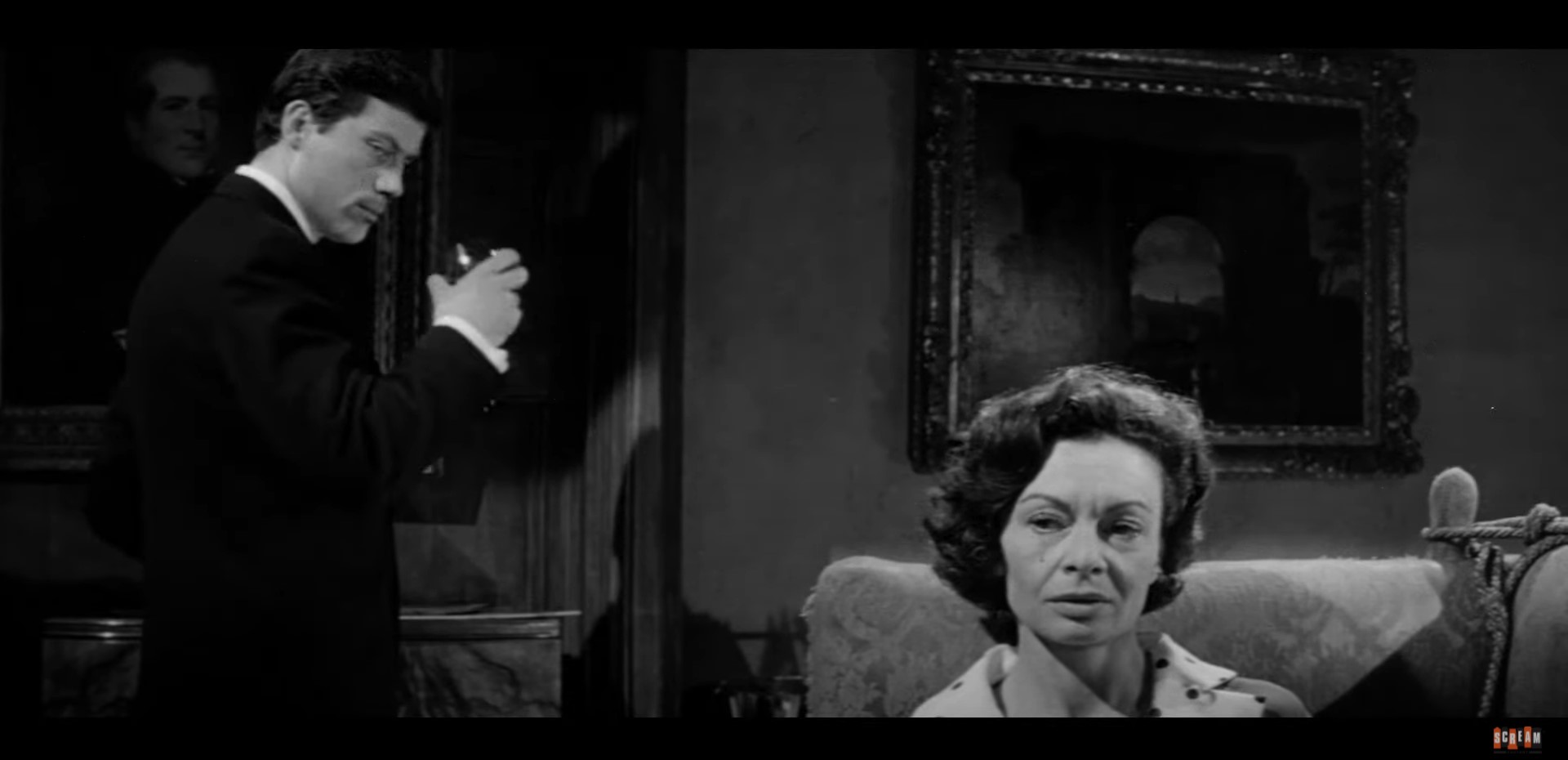
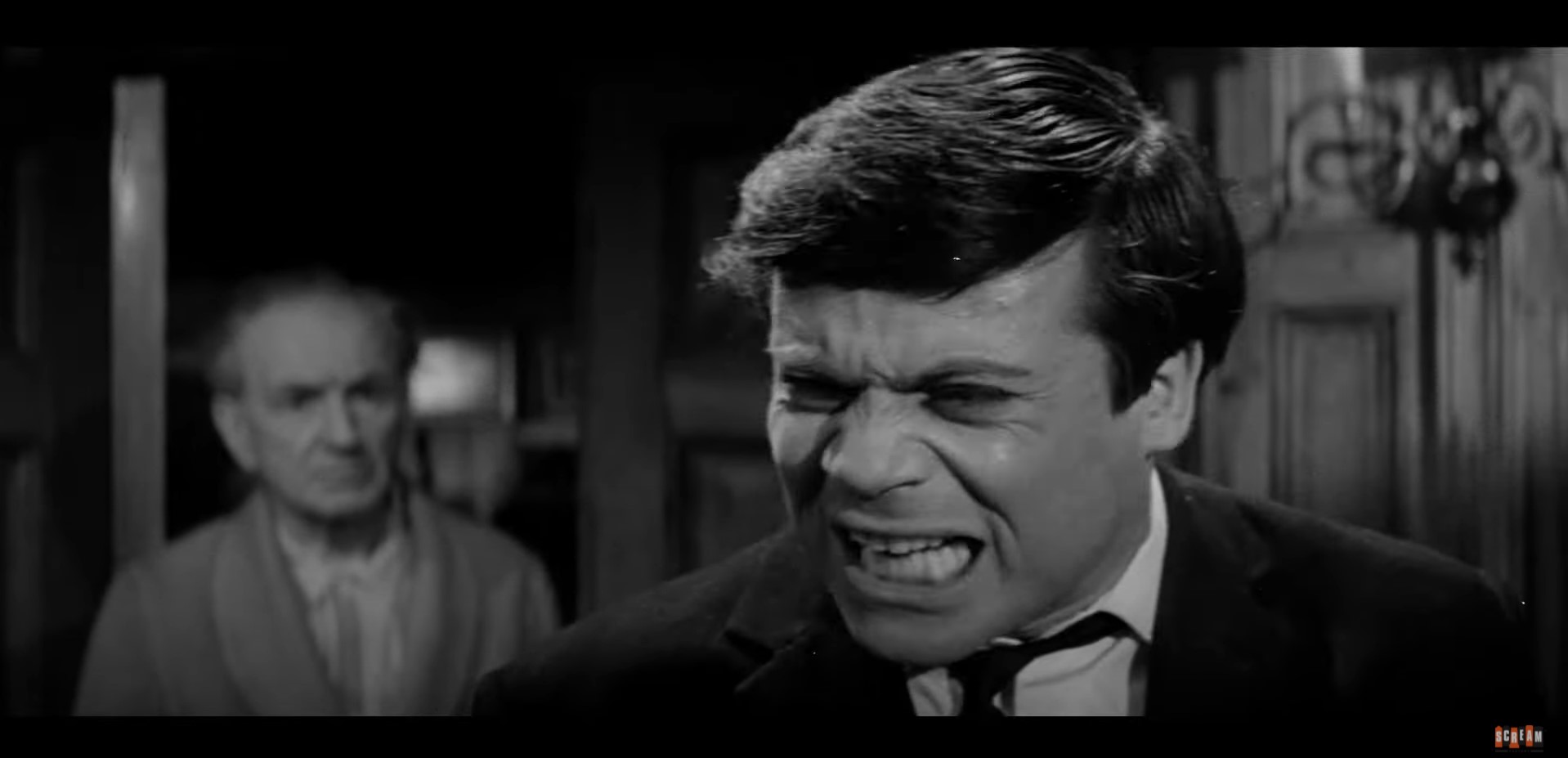
“Paranoiac’s” ensemble cast is quite brilliant in their respective roles.  Oliver Reed (“Curse of the Werewolf,” “Gladiator”) stands out immensely with a flamboyantly cruel and warped performance as the erratic Simon Ashby constantly under the influence of Brandy, Champagne, or whatever alcoholic beverage he can get his organ-playing hands on.  Reed puts out this hateful energy that can’t be ignored and outlines Simon with defined truth about where the character stands with his own flesh and blood – a callously cold and calculating black sheep.  Simon becomes fascinating in every scene, every scenario, and continues to unravel as a wild card that always leave us wondering what he’s going to do next.  Then there’s sweet and innocent but overly distraught Eleanor from Janette Scott in complete sibling behavioral polarity that sinks Eleanor further and further into madness designed by those close to her.  Scott, who also had a starring role in “The Old Dark House” that was released the same year, came aboard relatively new to Hammer but equates her status against Reed, who Hammer was grooming to be a prominent leading man for more of their productions, by selling Eleanor’s despair and the deep-seeded craving for her other, more sweeter, brother, Tony.  Encompassing the thought dead younger brother is Alexander Davion, another newbie to Hammers’ brand with, in my opinion, a neutral and bland face that doesn’t fit the Bray Studio’s swarthy and distinguished lot of male actors.  Davion’s also doesn’t do terribly much with Tony’s sudden resurrection as he folds himself back into Ashby manor.  While this could be Freddie Francis’s shrouding display of truth upon Tony’s legitimacy, there is literally no life or passion behind Alexander Davion’s eyes as he stares blankly at accusations and even Eleanor’s incestuous flirtations.  Yes, incest becomes a rummaged theme that walks a tightrope between more than just two family members.  “Alone in the Dark’s” Sheila Burrell is the stern protector in Aunt Harriet, “Blood Beast from Outer Space’s” Maurice Denham ruffles Simon’s feathers as the Ashby estate treasurer holding all of his inheritance, “The Maniac’s Liliane Brousse nurses a façade over the well-being of Eleanor and the love interests of Simon, and the cast wraps up with John Bonney as the treasurer’s fraudulent son.

Hammer had by 1963 already established itself as a horror powerhouse with the success of colorfully bold, violently stout, and sexually-saturated innuendo classic monster features, such as with “Horrors of Dracula,” “The Curse of Frankenstein,” and “The Mummy.”  Capitalizing on the coattails of Hitchcock’s “Psycho” and sitting on the adaptational rights for Josephine Tey’s “Brat Farrar,” Hammer decided to pivot into the crime and suspense thriller direction that alluded to the aftereffects of cerebral breaking blended into elements of collusion, creating an endless tense-filled turbine revolving around the whodunit particles and the who’s veneer is covertly smeared by corruption.  In a way other than the similar one word title and an unhinged theme, “Paranoiac” could be mistaken as a Hitchcockian-shot production with the larger than life and depth rich landscapes; the vast wide shots of Isle of Purbeck’s peaks and cliff steeps are engulfed oxymoronically as an idyllically menacing key peninsula landscape centric to Tony’s long thought demise as well as a place of hopelessness as the natural English Channel waves crash relentlessly onto the rocks below.  Francis and Sangster hinge the film success on the colossal subtext of brittle strength, guilt, and a vague but prominent suggestion of incest between sister and brother and brother and aunt that, in all honestly, was a personal surprise to myself that it passed the British Board of Film Certification (BBFC).  Yet, the insinuation did and paved a real pothole plague path for viewers in a good way that the story kept evolving, kept us on our toes, and when it spiraled, it spiraled quickly and sharp in a descent onto those very hopeless rocks below waiting for our emotions to be swept away lost in a mobile, violent current. 

Paranoia runs rampant like an epidemic in this Freddie Francis aptly entitled sullen celluloid “Paranoiac,” the next Hammer film receiving a collector’s edition Blu-ray treatment from Scream Factory, the horror sublabel from Shout Factory! The region A locked encoded Blu-ray features a new 2K scan from the interpositive. By 1963, Hammer was well versed in technicolor, especially for Stateside releases of UK films, but “Paranoic” opts for the black and white picture in another subtle nod to “Psycho.” Under veteran Hammer Film’s cinematographer Arthur Grant, that famous gothic-cladded manor house is aesthetically fetching with in every detail captured by Grant’s 35mm camera as well as the broad wide shots in the bird’s eye view of Isle of Purbeck. Scream Factory releases the film in 1080p, full high definition of the original aspect ratio 2.35:1 with sterling results in extracting details and balancing the contrast without brightening or darkening where not needed or intended. There were no real damage spots to point out nor were any crops or enhancements made to touch up possible problematic or stylistic areas. The release comes with a single audio option in a DTS-HD Master Audio monaural track with slight static in the background. Dialogue is clean and mostly clear with an occasion hiss during more boisterous moments, but the range and depth of a faultless ambience and Elisabeth Lutyens brassy and bass soundtrack comes through symmetrically balanced. English SHD Subtitles are also optional. The special features include a new audio commentary with Film Historian Bruce Hallenbeck, two new interviews with author and critic Kim Newman in Drink of Deception and with film historian Jonathan Rigby in A Toast to Terror – two familiar faces seen in recent Scream Factory’s restorations of Hammer productions, a making-of segment that dives archive interviews with Jimmy Sangster and others going over the genesis of the story and into Hammer’s aspirations at the time, and a theatrical trailer. “Paranoiac” is more than just its creepy, bulbous mask that graces the Mark Maddox gorgeously green illustrated slipcover and snapper case cover art. Rarely does a film evolve from one narrative into another without crisscrossing the stitchwork, becoming overly convoluted beyond repair, yet “Paranoiac” digs in and dilates the already volatile chemistry with integrated and powerful performances from Oliver Reed and Janette Scott that makes this film high on the Hammer watch list.

Get “Paranoiac” on the Collector’s Edition Scream Factory Blu-ray!

EVIL Infiltrates to Seduce All Your Women! “The Vampire Lovers” reviewed! (Scream Factory / Blu-ray)

“The Vampire Lovers” Now Available at Amazon.com!

The Karnstein family’s notorious legends of evil spread vast throughout 18th century Germany. Once thought their wicked leeching of nearby villages exterminated after the Baron Joachim von Hartog dispatched all the villainous vampires after his sister fell victim to their seductive fangs. However, years later, the aristocratical General von Spielsdorf and his niece Laura find themselves in the unexpected company of a houseguest with Marcilla, the beautiful daughter of a new neighboring countess. Days later, Laura unexplainably dies from continuous nights that drain her of energy and flourish her mind full of nightmares of being strangled by a large wild animal. In the wake of her death, Marcilla also disappears. Sadden by the news of her friend’s death, Emma and her father take in the daughter of a travelling countess named Carmilla to provide Emma with cheery, distracting company in a time of distress, but the mysterious cycle of enervation and nightmares start back up all over again and it’s up to the survivals of Laura’s death to stop death before it’s too late.

Unlike any other Hammer horror film you’ve ever seen before prior to 1970, “The Vampire Lovers” blazed the trail for permissiveness of the era’s newly reformed certification system that moved the bar from 16 years order to 18 and kept in line with society’s leniencies toward the favoring sex and free love.  “The Vampire Lovers” opened up to not only a new line of exploitation and violence at the turn of the decade but also introduced the longtime fans to new faces, especially actresses, who would accumulate labels and prominence inside the genre that last until this day.  Based from the story of “Carmilla” from Irish writer Sheridan Le Fanu, relatively new at the time Hammer director Roy Ward Baker (“Scars of Dracula,” “Dr. Jekyll & Sister Hyde”) took the Harry fine and Michael Style adapted original story and ran the distance with the screenplay from Tudor Gates whose writing forte was not specifically well-known within horror genre nor was horror Gates’ personal interest, yet Gates tweaked the Le Fanu female vampire tale to accentuate more of lesbian themes in a very turmoiled time when lesbianism, or just being gay, was seen as a disease or an unstoppable influencing evil force amongst the young people.  Fine and Style serve as producers in this co-production between Hammer Films and American International Pictures.

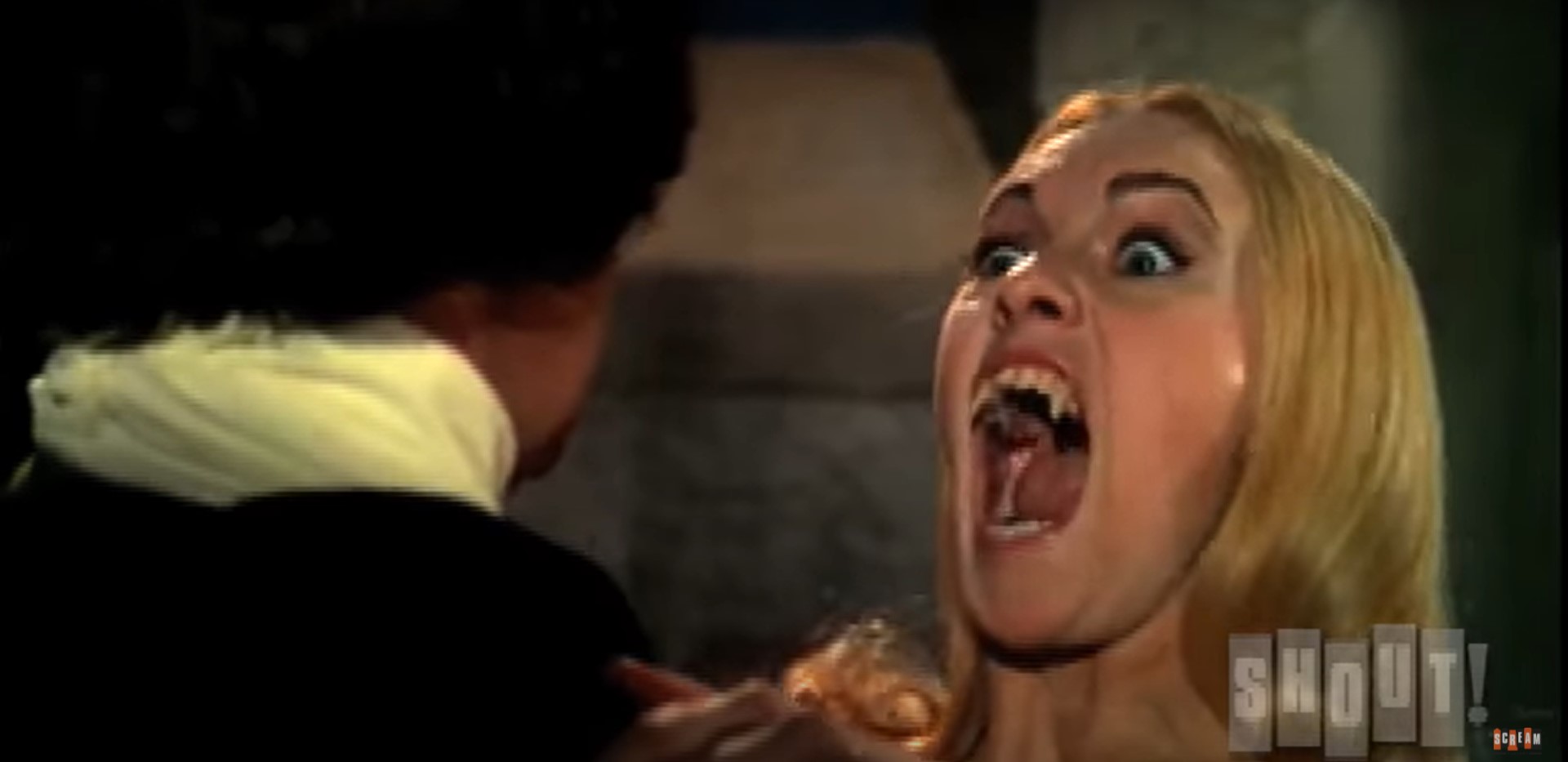
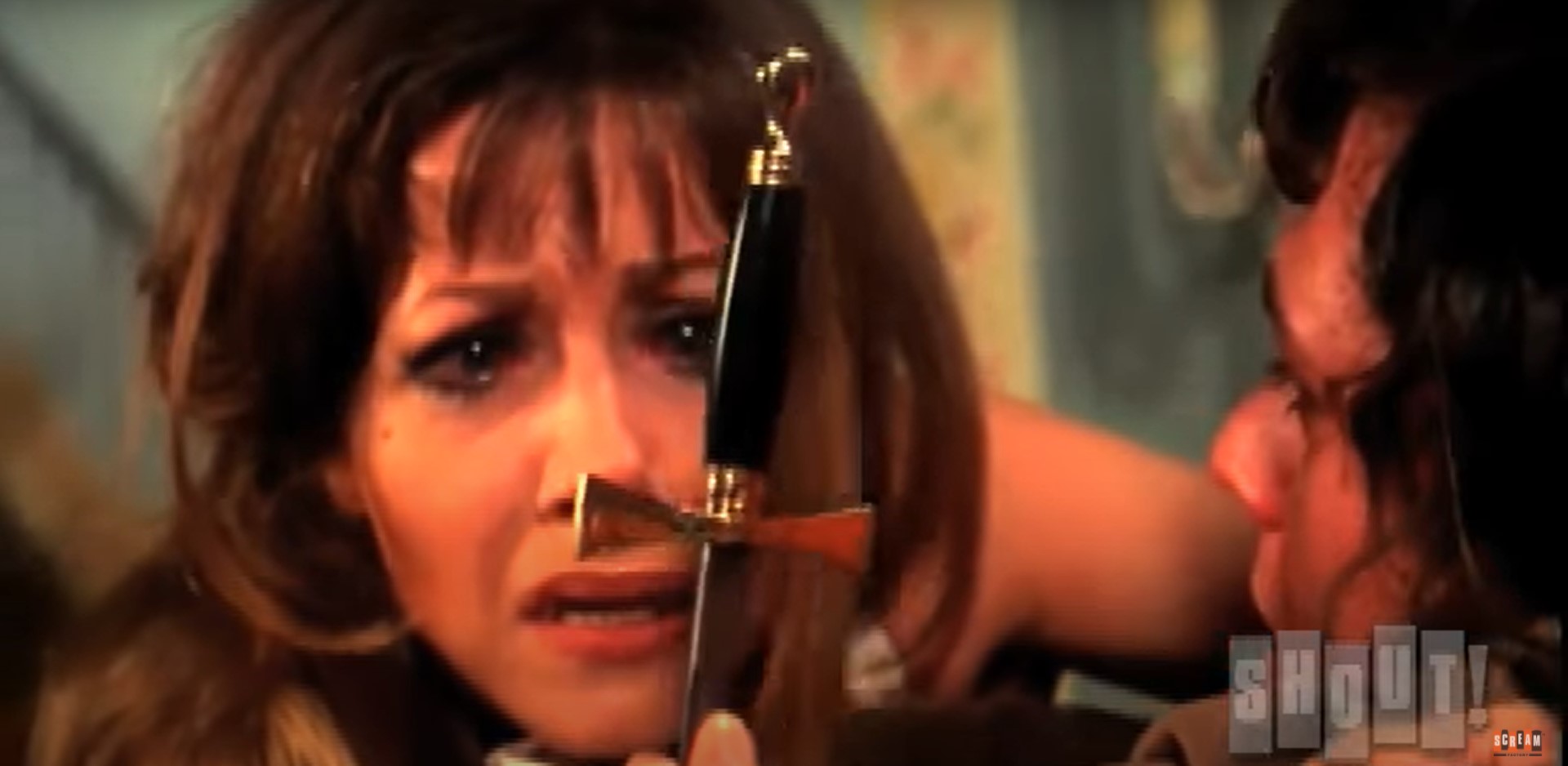
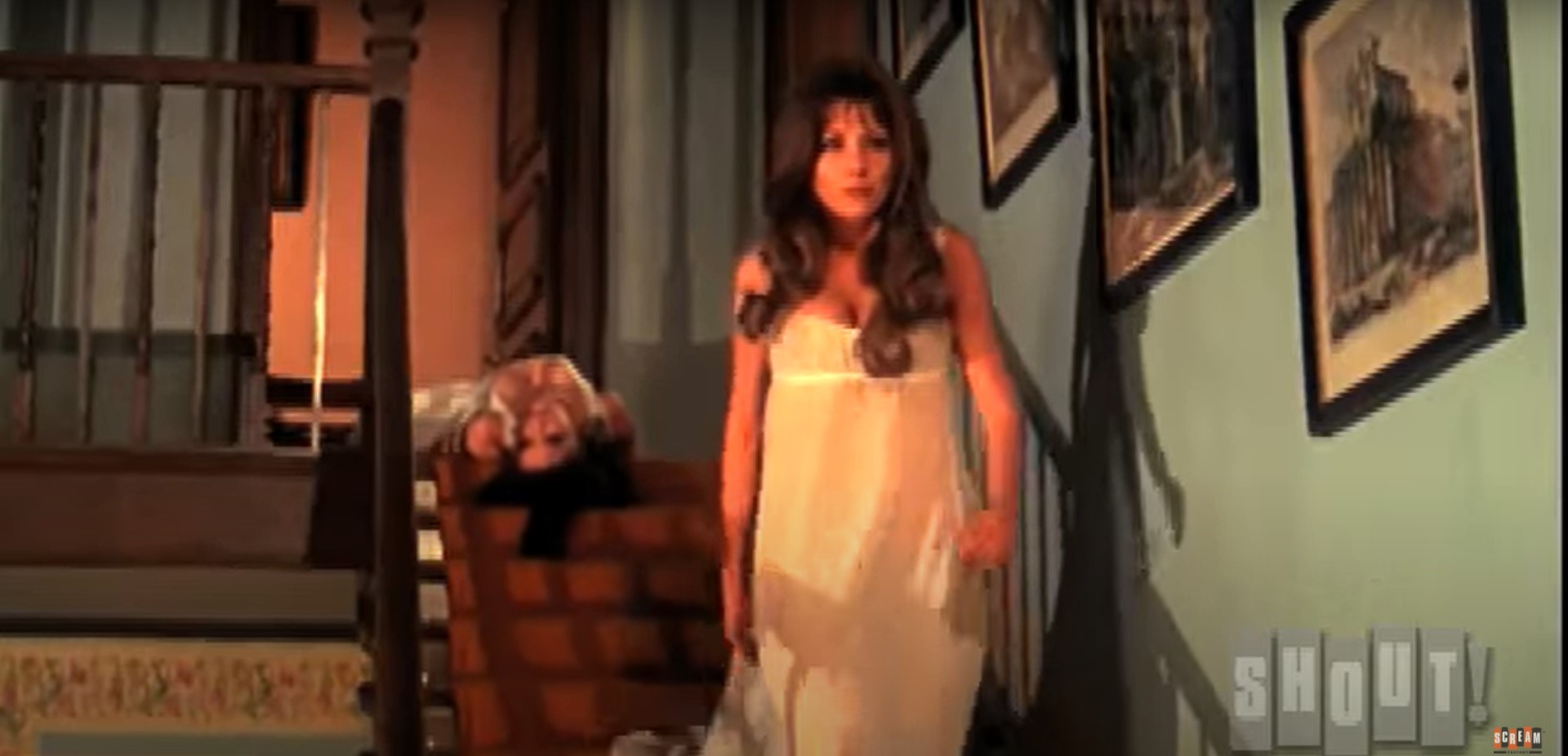
“The Vampire Lovers” comes under an atypical rule of the protagonist role or roles.  Previous Hammer films oriented themselves with a male lead from Christopher Lee’s domineering monster Dracula to the fearlessly courageous vampire hunter played by Peter Cushing, but “The Vampire Lovers” has Hammer trade in the masculinity presence for femme fatale with the introduction of Ingrid Pitt (“Wicker Man”) in the role of the hungry Karnstein vampire, Carmilla as well as Marcilla and Mircalla as the sneaky creature of the night infiltrates estates. Pitt’s exotic look and uninhibited attitude discerns obvious sex appeal for the Polish actress who can also act with gripping emotion that develops compassion for her malevolent facade. Add another pretty face and innocently sensuous woman arm-to-arm to Pitt with then 20-year-old Madeline Smith (“Frankenstein and the Monster from Hell”) and you have a two-front protagonist made up of women. Tack on the dark features and piercing blue eyes of Kate O’Mara (“The Horror of Frankenstein”) and “The Vampire Lovers” evolves into the something unlike anything we’ve ever seen from Hammer horror trifecta as once the scene settles into the narrative’s girth, the dynamic turns into a love triangle of unspoken women intimacies and jealousy, under the guise of supernatural persuasion, rears its ugly head. The menfolk really do feel absent from the excitement despite being pivotal pieces to the story and despite being the iconic representation in face and name of Hammer films. Peter Cushing’s longstanding work with the company has branded him forever legendary in the eyes of horror fans young and new. As the benevolent General von Spielsdorf, “The Horror of Dracula” Cushing looks wonderfully regal, gentlemanly dashing, and epitomizes the very essence of a strong male figure who also takes a very noticeable backseat for much of the second and into the third act. Same can be said for that other vampire portrayer who’s not Christopher Lee, Ferdy Mayne (“The Fearless Vampire Killers”) as the village doctor with a scene plopped here and there to inch the story along as a motivational vessel and another player caught in the Karnstein fang-game. “The Vampire Lovers” sees through to move plot significant characters, played by notable actors, to and from the storyline with performances from George Cole (“Fright”), Jon Finch (“Frenzy”), Dawn Addams (“The Two Faces of Dr. Jekyll”), Pippa Steel (“Lust for a Vampire”), Harvey Hall (“Twins of Evil”), and Douglas Wilmer as the Baron Joachim von Hartog who give a great opening expositional prologue that sets the background and tone of the film.

Laced in the traditional gothic style we all know and love from Hammer Films, “The Vampire Lovers” has grandiose late 19th century interiors and costumes with the latter gracing the starlets with strikingly bright tropical colored dresses that are elegant beyond the more stiff, and sometimes more imperialistic, outfits representing the period.  In a way, the outfits contrast against the brooding gothic prominence that speak of subversive liberation much paralleling the very thematic elements of lesbianism, sexual motifs, and a nearly an all-encompassing female lead.  If sex was ever a subtle insinuation in previous Hammer film it was not so subtle in “The Vampire Lovers” that consistently and constantly thickened the sexual tension and produced blunt scenes of eroticism between two or more women.  Even with the powerful commingle of womanhood desires, as much as it was depicted to be devasting to their lifeblood, Tudor Gates’ narrative still pit them up against nearly impossible odds when the male characters, no longer duped by the formalities of chivalrous intentions, figure out what’s really happening under their noses, in their households none the less, and band together to put a to a heart-staking stop to the macabre madness aka metaphorical lesbian evil.  The story has the women’s lusts and desires, whether their choosing or not, be an outlier from normalcy, yet on the other hand, nudity flourishes within the new laxed certification guidelines that see in some way, shape, and form four actresses baring skin in what what would have been considered risqué X-certificated scenes prior to 1970.  “The Vampire Lovers” is by far a perfect film with a lack of character context, such as with the male vampire on horseback indulging his penchant for observing Camilla’s attacks from afar and doesn’t proceed to explain further or with more insight to who he is and what his position may be within the Karnstein family ranks, as well as the narrative format with early on into the story being bit choppy and disorienting when Carmilla assaults nightly the General’s fair niece as a furry beast in the confines of a lurid nightmare.

Deserving of a collector’s edition, Shout Factory subsidiary horror label, Scream Factory, presents a new Blu-ray release of “The Vampire Lovers” scanned in 4K of the original camera negative.  Scream Factory should be extolled for their color grading toward Hammer transfers as the release looks stunning with quality stability and richness that brings the era alive.  Transfer also appears free from any kind of major blemishes and barely of any smaller ones. The English language DTS-HD Master Audio mono has resolute fidelity in the best possible audio offering “The Vampire Lovers” will likely see now and in future releases with a clear dialogue track and a Harry Robertson score that relives the classic studio orchestra in compelling fashion. The release comes with a slew of special features including an exclusive new interview with film historian Kim Newman, who also shows up again in archived interviews in the “Feminine Fantastique: Resurrecting ‘The Vampire Lovers'” (Scream Factory lists it as Femme Fantastique on the back cover) featurette commentary snippets from John-Paul Checkett and David Skal and other historians and collectors of Hammer Films. Audio commentaries with director Roy Ward Baker, star Ingrid Pitt, and Screenwriter Tudor Gates, audio commentary with film historians Marcus Hearn and Jonathan Rigby, two interviews, one of them new, with co-star Madeline Smith that span about 10-15 years apart, Trailers from Hell: Mick Garris on “The Vampire Lovers,” a reading of Carmilla by Ingrid Pitt, a single deleted scene of Baron von Hartog radio spot, still gallery, and the theatrical trailer round out the bonus material. The 89-minute, Region A encoded, R-rated version runs solo as the only main feature and the transfer Scream Factory uses, or licenses, is the edited version of Ingrid Pitt’s bath scene that cuts away to a medium closeup of Madeline Smith holding a towel for Pitt who’s standing up in the tub and then cuts back to Pitt’s bare backside. However, in the “Feminine Fantastique” featurette, you can experience the unedited brief full-frontal of Ingrid Pitt standing up in the tub if that tickles your fancy. The collector’s edition sports reversible cover art with original poster art on the inside and a newly illustrated, and superbly beautiful in its simplicity, front art by Mart Maddox sheathed inside a cardboard slipcover of the same Maddox art. Turning a corner into vast opportunities for more violence, explicit nudity, and unrestrained vampire gore became a new dawn for Hammer Films without entirely prostituting themselves with wayward tactics to the point of unrecognition as “The Vampire Lovers” still emitted gothic characteristics and a partial token cast and now made even more alluring with a feature packed collector’s edition from Scream Factory!

“The Vampire Lovers” Now Available at Amazon.com!