EVIL’s Vampiric Power Over the Homunculus is Short Lived! “Decadent Evil” reviewed! (Full Moon Features / Blu-ray)

The Remastered “Decadent Evil” is now on Blu-ray!

An evil vampiric bloodline has stretched from Europe to U.S., specially in the Los Angeles area, where Morella, a centuries year old master vampire, collects the blood of innocent victims and she requires just one more soul to fulfill a prophecy to be the most powerful and invincible vampire ever.  Morella is so cruel she even transformed her once lover into a homunculus, a scaly and green shrunken humanoid, to keep as a caged pet.  When two of Morella’s thralls are uncovered working at a strip club by a dwarf vampire hunter with a grudge, she finds obtaining the last soul to be challenging, especially when one of her subservient vampires, Sugar, is against the whole bloodsucking attribute and falls in love with the strip club DJ.  With Sugar, the DJ, the homunculus, and the vampire hunter standing in her way of total immortality of godlike proportions, Morella has little allies in her corner but has the majority of evil power behind her ancestral lineage. 

An early 2000’s Anne Rice facsimile, “Decadent Evil” is Charles Band and Full Moon’s other Gothically romantic infused vampire feature behind “Subspecies” and “The Vampire Journals,” which are technically all part of the same “Subspecies” universe in one way or another.   The “Puppet Master” and “Trancers” cult filmmaker helms the 2005 low-budget feature and cowrites it alongside a staple Full Moon screenwriter Domonic Weir (“Evil Bong”) in what would be one of Weir’s first feature length films for the longtime genre producing company after gifting the horror community with a “Critters” screenplay in 1986.  After a few minor re-writings of Hong Kong actioners for an English dub, Weir returns to horror with Full Moon and indulges Band on his diminutive obsession with tiny terrors.  And what may you ask is the small creature in a sexy-slathered vampire flick?  A homunculus is written into the story, of course!  Band produces “Decadent Evil” not under Full Moon but Wizard Entertainment in collaboration with Shoot Productions and Astonishing Features with Jeremy Gordon and Jethro Rothe-Kushel as association producers on the Los Angeles based shoot. 
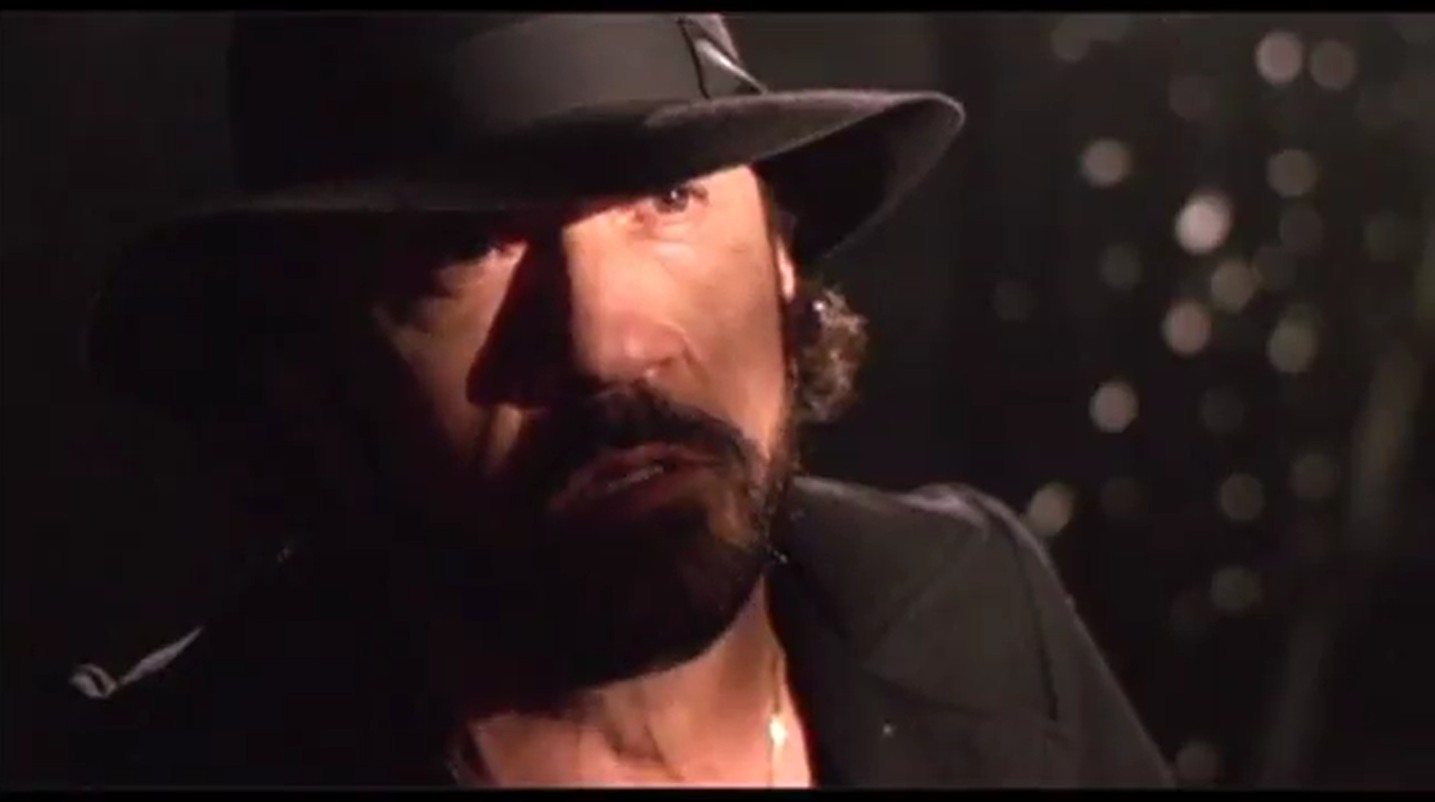
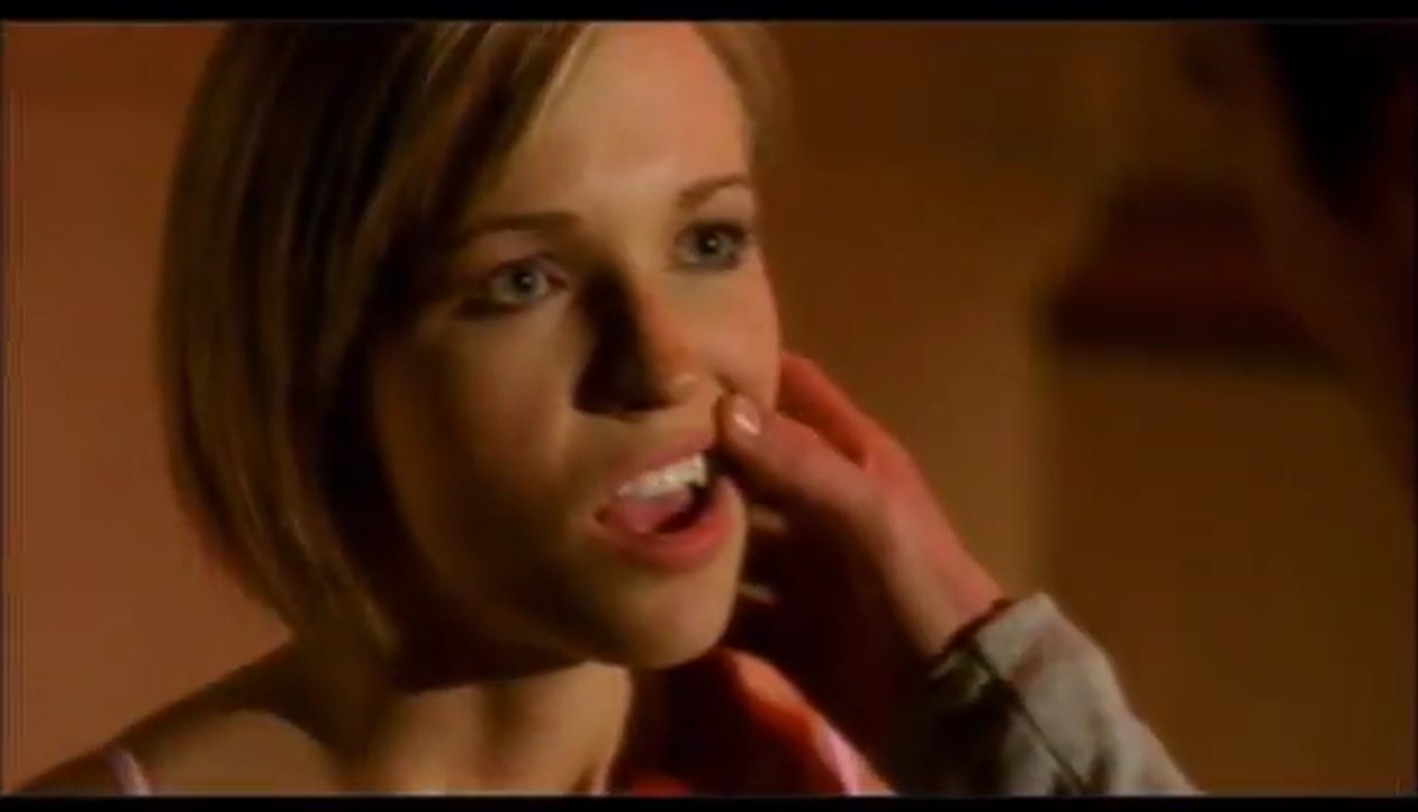
The prologue backstory of “Decadent Evil” can be misleading as to who the main characters will be with a restructured, recut introduction made from bits and pieces of scenes of “The Vampire Jounrals,” another Full Moon production, that uses a power Euro male vampire bloodline as the basis for Morella’s L.A. homebase of operations, which include the ying yang, naughty and nice, vampiric sisters, Sugar and Spyce.  “Blood Dolls” and “Prison of the Dead’s” Debra Mayer, a late 1990’s scream queen for about a decade and half until her eventual departure from acting, plays the head vampire in charge Morella with a firm grip on her subservient thrall, the angsty and gothic-inclined Spyce (Raelyn Hennessee, “Cutter’s Club”) and the sweet-and-innocence exuding Sugar (Jill Michelle, “Erotic Secrets”).  The sisters go through the motions of obedience but to an extent with Sugar basically disavowing her vampire blood in hopes for a romance relationship with her strip club’s DJ Dex (Daniel Lennox, “The Black Magic”) and Spyce pushes the limits of her own control, like a teenager testing their parents, by drinking the blood of those meant for Morella’s grand power count.  With a 67-minute runtime, “Decadent Evil” doesn’t have the minutes to really explore the characters that force the actors to be plain, act plain, and never be anything more than plain.  Even Phil Fondacaro, the headlining star and most recognizable face of the troupe, must purge backstory in a flash upon his acute introduction mid-way through.  The “Willow” and “Ghoulies II” actor is a vengeful vampire hunter after his father falls victim to Morella.  April Gilbert (“The Butcher”), Roger Toussaint (“Illicit Dreams”), John F. Schaeffer, and, of course, it wouldn’t be a Charles Band picture without a half-naked adult film star in Harmony Rose who goes topless for the cause. 
Locally shot near the company home base of Los Angeles, full of either Full Moon actors or greenhorn actors, little-to-no budget for practical or computer generated effects, a runtime of under an hour, and the tacking on of “The Vampire Journals” at the beginning to extend the length to just that under the hour mark is a true show of low-budget colors from Charles Band and Full Moon.  The premise of Morella becoming an omnipotent vampire through a scrapbook collection of pure blood is a solid enough premise that is unfortunately not explored enough to become invested, turning this Full Moon venture into what it has become over the last couple of decade, a feast of female-casted eye candy and fatigued nostalgia without implementing anything new to the vampire or horror genre.  There’s also the matter of the homunculus that becomes a centerpiece and eventually tops as the main motif that hangs around in a bird cage and perversely has eyes for blood while simultaneously carrying around a major libido with scenes of molesting and raping involving the pint size creature.  The whole idea is a bit off, added to sate Charles Band’s fascination of with small creatures, and only adds mild interest in its development through the story which ends in a perversion of slapstick that, again, doesn’t fit, this time in the narrative tone. 
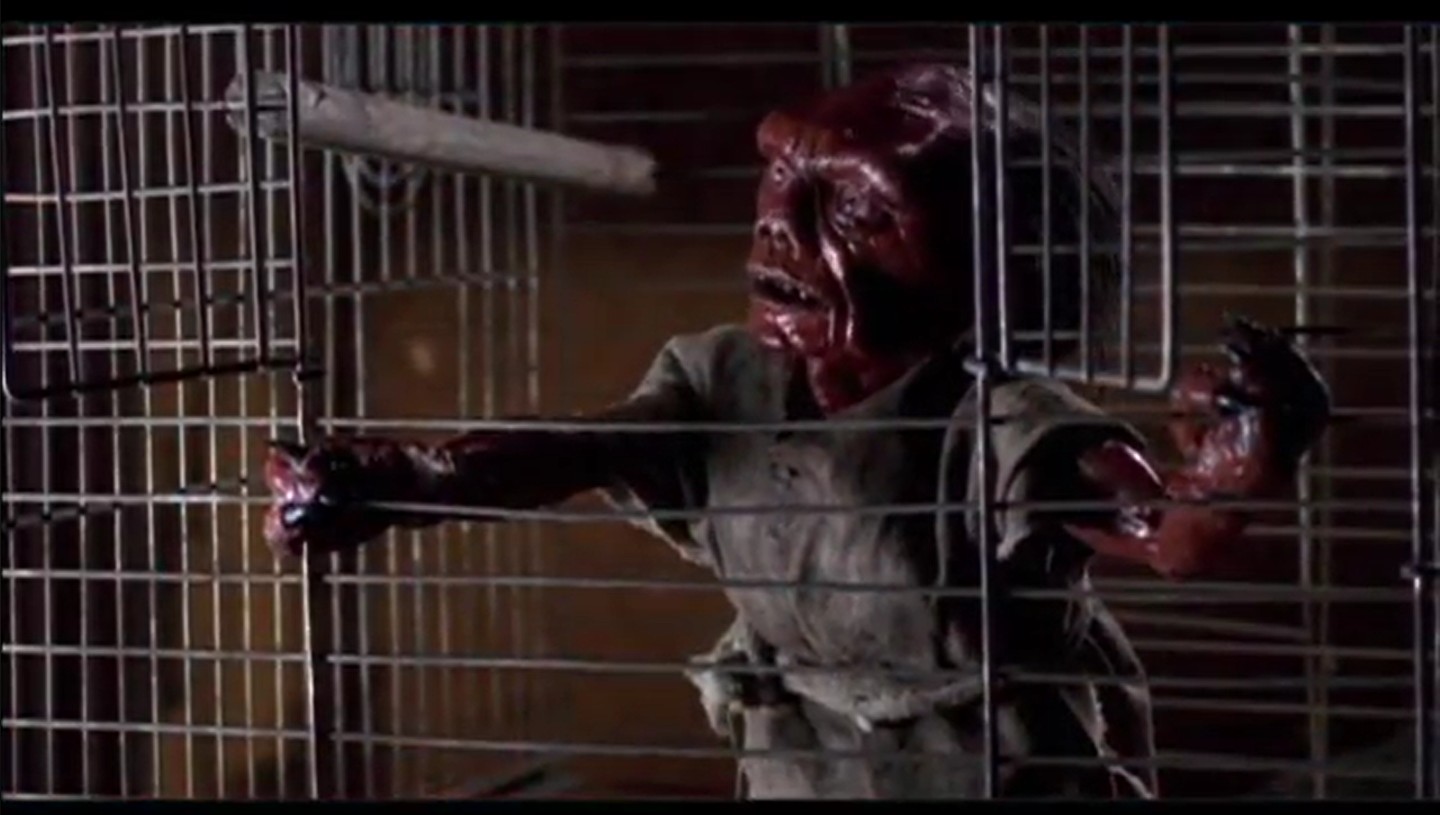
Full Moon continues to upgrade their catalogue, and the “Decadent Evil” films are the latest to be AVC encoded onto a BD25 with a remastered, high-def, 1080p, resolution for the first time ever in HD with a transfer scan form the original 35mm negative.   The early 2000 film sustains a fair amount of its 35mm charm despite most companies flocking to the less expensive digital format and this helps retain a richer saturation and an organically bold image that accentuates the hardlines and elaborately dressed gothic interiors and the smoke-filled darkness of the strip club.  The rest of the settings are standard fair, but the focus is within Morella’s L.A. mansion that has a mistress vampire’s touch.  The digitized conversion and the upgrade in pixels have cleaned up the image some but hasn’t exactly wowed with impressive measure as the details often fluctuate outside stylized lighting and smoke.  There’s often superb, granule detail on the homunculus’s shiny wet gland-filled dermis and deep contoured bone structure in the obvious puppet’s face and head.  The English audio comes with a couple of uncompressed formats with an PCM 5.1 and a 2.0 Stereo.  The 5.1 is more than enough for dialogue, soundtrack, and the ambient environment, though the latter is more for immediate focal points rather than the natural course of surroundings.  For instance, the homunculus’s heavy breathing and slippery skin provide characteristics to the already unique character but since much of the narrative is held indoors in a still mansion, there’s not much to the audio atmospherics, and even the strip club is doused with a rock track that swallows any other diegetic and nondiegetic noise.  Dialogue prominently in front but can struggle with depth in the 5.1 mix that often doesn’t pick it up; there’s better discernibility within the dual channel that maintains a front forward audio rather than trying to diffuse the already distance stilted audio.  “Decadent Evil’s” soundtrack is less carnivalesque than other Full Moon productions because Richard Band is not at the orchestrator helm, providing “Deathbed” composer James T. Sale’s soap opera Gothicism and playful low-tones more opportunities to flourish with this campy vampy film.  Extra features include a behind-the-scenes with snip interviews with the cast, a blooper reel, the original trailer, and other preview trailers from Full Moon Features.  The physical release mirrors much from the same line of DVD to Blu-ray upgrades with standard Amaray case.  The one-sided sleeve art illustration is new, which is a fine collage of characters, yet is uncredited.  There’s no inserts or other tangible extras on this region free, 74-minute, unrated vampire indulger. 

Last Rites: Fans of Full Moon’s “Subspecies” and ‘The Vampire Journals” will find “Decadent Evil” to stagger in its more modern affiliation with a meek story having little-to-no bite, favoring more the shorter stints of an arbitrary homunculus inclusion and Phil Fondacaro’s flyby hunter.

The Remastered “Decadent Evil” is now on Blu-ray!

100-Year Return Brings a Plague of Flesh-Eating EVIL to a Small Town! “Messiah of Evil” reviewed! (Radiance Films / Blu-ray)

The “Messiah of Evil” has Come to Blu-ray Home Video!

Arletty travels up the California coast to a small beach town known as Point Dune.  The reason for her visit is to find her artisan father after a series of bizarre letters came to an abrupt stop.  She arrives at his mural-graffitied home to discover it empty and decides to stay a few days to ask around town about his whereabouts and to be present for his return home.  Her inquiries at art gallery shopkeepers lead to a motel where Thom, a wealthy collector of urban legends and spooky stories, and his two travelling female companions, Laura and Toni, have also sought out Artletty’s father for his bizarre experiences.  As the days pass, Point Dune slowly becomes a literal ghost town that forces Thom and his companions to stay with Arletty and, together, they experience the horrible truth of what’s really happening to the  residents of the west coast community who eagerly await the arrival of the dark stranger. 

Once married filmmakers Willard Huyck and Gloria Katz are the creative minds behind the stories of “Howard the Duck” and “Indiana Jones and the Temple of Doom.”  They also wrote “American Graffiti” in what was to become their link toward working on Steven Spielberg’s Indiana Jones sequel since both “American Graffiti” and “The Temple of Doon” were both produced by the father of “Star Wars,” George Lucas.  Yet, in the midst of “American Graffiti,” the couple also penned and Huyck came into the entrance of directing with the 1974 horror-thriller “Messiah of Evil” that pulled from various themes of mindless consumerism and the rising fears of dangerous and deadly cults in the U.S.  Also known by a variety of titles around the world, including “Dead People,” “Night of the Danmed,” “Messiah of the Evil Dead,” “Revenge of the Screaming Dead,” and “Blood Busters” to name a few, the Californian coast shot film is a production of the International Cine Film Corp and V/M Productions with Gatz producing and Alan Riche (“Deep Blue Sea”) serving as executive producer. 

“Messiah of Evil” slinks into the soul leaving behind dread’s unwashed pull against what we know as conventional horror.  In order to accomplish such a fear-induced feat, a cast must envelope themselves fully in world of weird and irregularities that nestle an uneasiness stemmed not solely from their performances but from how they react to the eccentric environment, to the crumbling small town society, and to ghastly behaviors of normal-looking people.  Like most daughters, Arletty has concerns for her father and seeks to understand the truth behind his unhinged letters.  Marianna Hill (“Schizoid,” “The Baby”) plays the quietly curious at a cat daughter dabbing residents with barely an effort in interrogational questioning of her father’s whereabouts.  Hill floats Arletty through stages of a slow descent into madness that simmers slowly to a boiling point understanding of what’s taking shape around her.  The same happens to Thom, played by Richard Greer (“The Curious Female”), who initially is a fraction of the nonconformity surrounding Point Dune with his obsession toward collecting strange stories and his polyamorous collection of women.  Of character, Greer is resoundingly in control without being dominating with Thom who has wealth and magnetisms but isn’t someone to be beholden to forever as we see with Laura (Anita Ford, “The Big Bird Cage”) who deserts him for his open-door intimacy policy in his pursuit of Arletty and with the childish Toni (Joy Bang, “Night of the Cobra Woman”) in her infinitely naïve opinions surrounding the dull Point Dune.  One actor I wish we had more of but is utilized perfectly as Arletty’s father and a harbinger of what’s coming is Royal Dano (“Ghoulies II,” “Spaced Invaders”) in a non-humorous nor drunken idiot role that seemed to typecast him later in his career.  Dano’s short but sweetly terrifying stretch divulges a man torn between his previous life and a new terror that now occupies him as he interacts with Marianna Hill as concerned and contaminated father holding it all within toward his frightened, confused daughter.  “Messiah of Evil’s” cast rounds out with Elisha Cook Jr (“Rosemary’s Baby”), Bennie Robinson, and Charles Dierkop (“Grotesque”). 

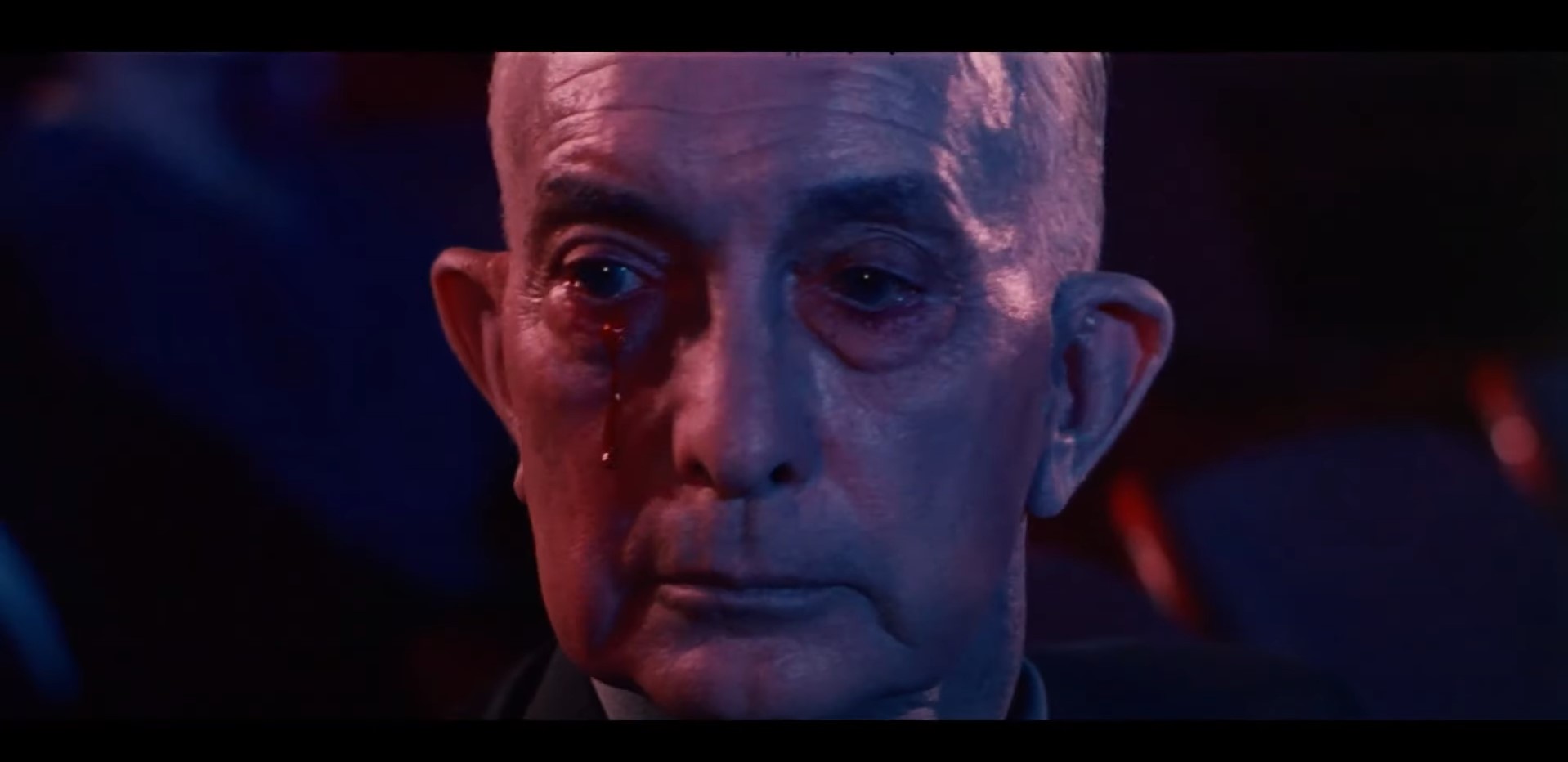
Huyck directs with colorful and verismo synergism that takes the positives of what should be life’s routine pleasures and turns them against us as fantastical and harrowin deadly elements of false securities.  The rolling crashes of Point Dune’s waves takes on a constant cacophony of sinister foreshadowing, a bright and welcoming supermarket becomes a vacant trap in every aisle, the entertaining movie theater darkens with blood on the screen, and an artist’s home, full realistic murals and colors, is an oppressive feast of lifeless eyes.  Point Dune becomes a dead town, literally, as the inhabitants succumb to dark forces from beyond their years, turning primeval in their contemporary three-piece suits and evening blouses.  Huyck and Gatz story pulls inspiration from U.S. history and folklore to mark the 100-year return of spreading evil amongst the land, an evil that resorts to cannibalism by either spellbinding archfiend, an internal infection, or the rise of the undead and not just any mindless, shuffling, flesh-eating zombie but a transmogrified plotter able to move fast and think as a single unit with the touched by evil masse with telltale signs of a single rivel of blood seeping from out of their eye and their insatiable need to consume other people. ”Messiah of Evil” is not overtly graphic like George A. Romero zombies or like the unbridled number of zombie films to follow inspired by Romero’s zombie game-changing wake for the last 60 plus years, separating the flesh-eaters from Romero’s gut-gnashing, pale faced, and slow-walking undead and Huyck and Gatz’s transmitted pestilent receiving horde running fast in their best church shoes with vastly different traits. Huyck and Gatz dip into more eldritch means with the return of a paganistic dark stranger in a pared down explanation without explicitly being definitive who or what the dark stranger (a demon?Antichrist?) is that is driving foreboding signs to a doomsday-disseminating end. ”Messiah of Evil” thrives as the mysterious and strange fulcrum of the beginning of the end told through the point of view of young woman left to tell the world of what’s to come only to be about as believed as much as a man wearing a polka-dotted tutu who has delusions of unicorns dancing the waltz with garden gnomes in his front yard. 

United Kingdom distributor Radiance Films releases a new restoration transfer of “Messiah of Evil” also on their U.S. line. The AVC encoded, 1080p high-definition, BD50 presents a 4K scan of the best-known surviving 35mm print from the Academy Film Archive in a widescreen 2.35:1 aspect ratio. As noted in the release’s inserted booklet, the restoration processes used was the Digital Vision’s Phoenix Finish and DaVinci Resolve was used for color correction, under the supervision of Sebastian del Castillo at the Heavenly Movie Corporation. Audio was also restored with the Izotope RXB. For a surviving print, the original elements look pretty darn good with barely any celluloid hiccup. No vinegar syndrome, not significant tearing, or exposure to name a few issues of possibility. There are a few minor blemishes and missing or damaged frames that seem to provide an unwanted cut but most of “Messiah of Evil’s” film problems stem mostly behind the camera with a rework of the story during the stop-and-go production and conflicts in marketing the film, hence the various title aliases of the film from around the globe. Other detail low points are when the film is bathed in blue and purple gels and tint for to set an apprehensive wander and wonder while retaining more natural grading in its majority throughout. The resorted audio is a lossless English LPCM mono mix. Really focusing on the electronic score of Phillan Bishop (“The Severed Arm”), the low-frequency score sets a perpetual and durable tone of dread out of place in a prosaic small town, much like the Arletty’s father’s work-of-art home that sticks out amongst the mediocrity. In design, dialogue remains robust yet delicate when the scene calls for it, such as Elisha Cook Jr. story of how he was born in what is essentially him, as a vagrant paid for his story, making the only noise in the room. Dialogue in these moments is greatly discernible with negligible electronic interference. Depth layers the permeating isolation of a town gone mad in unison with the range stretching from the distressing design of rolling, crashing, oppressive waves to the scuffles of zombies’ consuls and heels scuffing against asphalt, pavement, and shattering through panes of glass. Radiance provides English subtitles with their release. Bonus features include a new audio commentary by film historian and horror archetype authors Kim Newman and Stephen Thrower, an archived interview with director Willard Huyck, and a new, feature-length documentary showcasing “Messiah of Evil’s” background, themes, production, and influences by various horror scholars, including Kat Ellinger who also voiceovers a visual essay on American Gothic and Female Hysteria, which if I’m being honest, parallelly treads on similarities with Ellinger’s Motherhood & Madness: Mia Farrow and the Female Gothic on Imprint’s “The Haunting of Julia.” Radiance has in the short time poured their heart and soul into their releases and “Messiah of Evil” is no different with a sleek cladded and clear Amara Blu-ray case that’s subtle in showing less but feeling more on the cover art, opposite of the reverse side that houses a classical black and white compositional illustration of characters. Inside the 28th release for the label is a 23-page color booklet insert with the appraisal writings of Bill Ackerman, transfer notes, release credits, and acknowledgements. The disc is pressed red, much like the red moon in the film, with a stark black title. The Radiance release is unrated, region free, and has a runtime of 90 minutes. ”Messiah of Evil” uses cult fears, satanic panic, and the loss of ordinary life to penetrate the spirit by way of slowly eating at it. The crawling, creeping dread meanders, much like Artletty who is seemingly held in place at Point Dune, and we’re glued to the engrossing rate of the terror to come orchestrated by the captivations of a once married couple on a fast track toward success.

The “Messiah of Evil” has Come to Blu-ray Home Video!

Amusing Little EVIL Enjoying the Carnival Rides! “Ghoulies II” reviewed! (MVD Visual / Blu-ray)

Next Time You Sit On the Can, Check the Bowl First!  “Ghoulies II” on Blu-ray!

The travelling Hardin Family carnival has been on a steady decline through the years.  The Hardin Holdings group, aka Mr. Hardin, dispatches his young senior accountant and son, Philip Hardin, as authoritative proxy to ensure sustainable profit.  One of the longstanding attractions, Satan’s Den, lies headfirst on the chopping block with a dismal profit rate.  Determined to recover and avoid being permanently shut down, Larry, his drunk uncle Ned, and actor Sir Nigel Penneyweight won’t give up so easily despite needing a miracle.  That miracle comes in the form of the Ghoulies who hitch a ride on Satan’s Den’s trailer while escaping persecution.   The pintsized demons bring the slowly withering Satan’s Den back to lucrative life but at the deadly cost of the patrons and carneys who fall victim to the Ghoulies impish behavior.  Larry vows to rid the amusement on their infestation after uncle Ned perishes at the demons’ tiny hands but Philip has glimmering money signs in his eyes. 

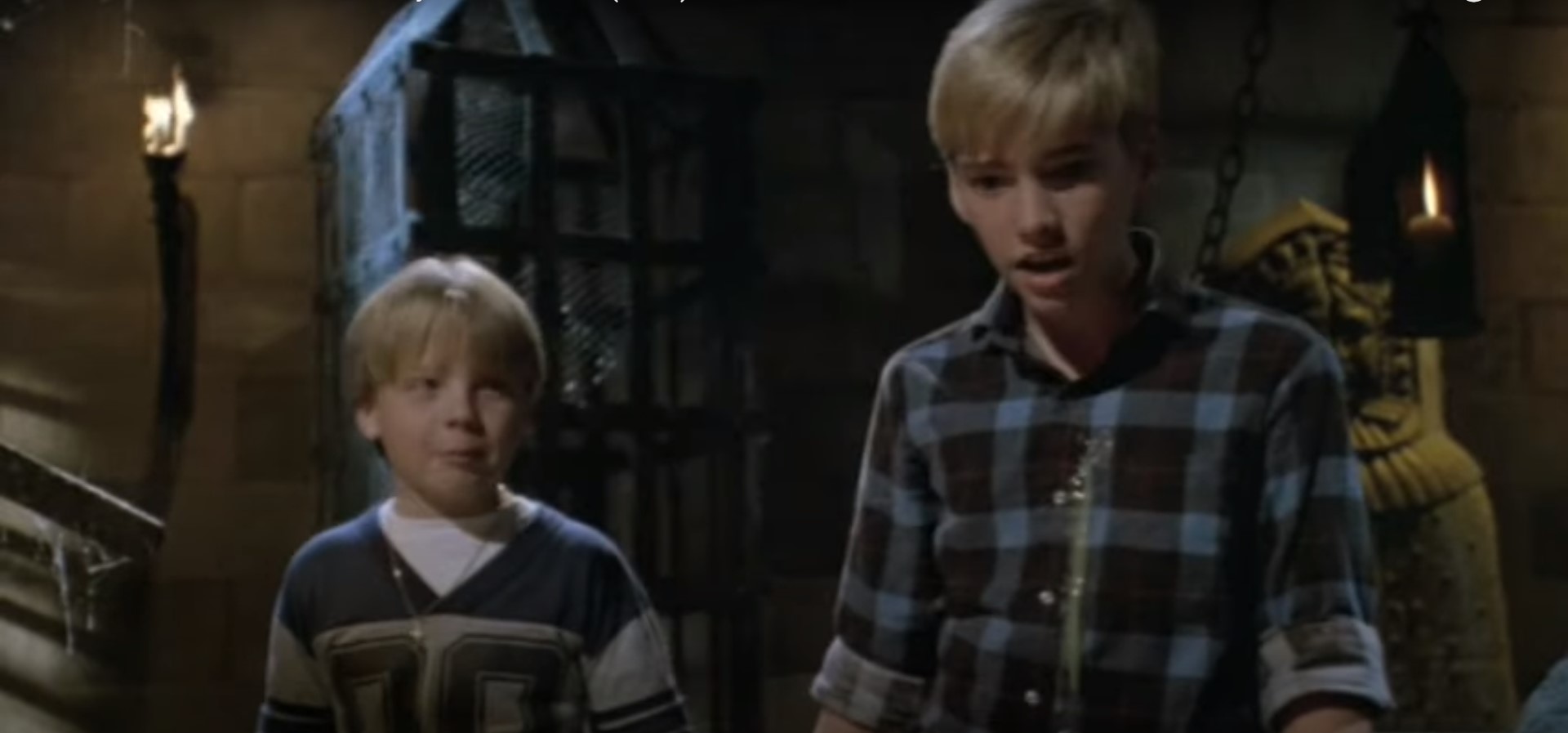
They’re back!  The Ghoulies return as masterless nomads after a failed attempt of abduction by a devout crusader aiming to destroy the pagan evocations and wreak mischievous havoc on a two-bit amusement park suffering from low attendance.  The late Albert Band, father of Full Moon’s Charlie Band and director of “Dracula’s Dog” and “I Bury the Living,” took over the reins from first film director Luca Bercovici and helmed “Ghoules II,” a vastly different kind Ghoulies tale of terrorizing totality based off the Charlie Dolan story and a polished script from “Re-Animator’s” and “From Beyond’s” Dennis Paoli.  Filmed entirely in Rome, and mostly in a soundstage, where Empire Pictures headquarters were located, the 1987 sequel was the last Ghoulies venture from executive producer Band and his Empire Productions empire before Vestron oversaw the subsequent sequels.  Albert Band produced the feature with Frank Hildebrand (“Once Bitten,” “Project Metalbeast”) serving as associate producer. 

With the contestable exception of the five prosthetic creatures receiving a dust off and sprucing up paint job, none of the lively characters from the first film return for the sequel in what becomes a principal clean slate.  The story starts off with who appears to be a man of God fleeing on foot with a bag over his shoulder from three cloaked cult acolytes.  There’s never a reference to this escaping man (Anthony Dawson) or the shrouded cultists in torch-in-hand tow but does arouse a bit of enigmatic energy around the Ghoulies misadventures through the human plane and happening upon the likes of two opposite side of the spectrum carneys who are also related between the long-in-the-tooth and drunk Ned by the loveable character actor in Royal Dano (“Killer Klowns from Outer Space,” “Spaced Invaders”) and his big top tenderfoot nephew Larry played by Damon Martin.  Ned’s alcoholism combined with stress over possibly losing Satan’s Den makes causes him complexity within his closest confidants for when he happens upon the Ghoulies after citing an incantation, he’s also in a drunken stupor, and so he words of exciting, or maybe even warning, fall on deaf ears as intoxicated imaginations that result in a pity for his dependency.  As Larry and the Shakespearean line spewing Sir Nigel Pennyweight (Phil Fondacaro, “Willow”) continue with setting up the ragamuffin that is the antiquated Satan’s Den, they let Neg wander despite suspecting his delusions of demons due to the pressures of one carnival hotshot Phil Hardin (J. Downing, “Robot Wars”) who has come to town to clean up his family’s carnival act with threatens of shutdowns and layoffs.  Hardin’s your typical weight-throwing antagonist with a pompous attitude and wandering eye for the most gorgeous girl under the tent, in this case it’s with Larry’s love interest Nicole (Kerry Remsen, “Pumpkinhead”), a once great high-wire performer turned belly dancer for the departmental freakshow act.  Nichole’s hidden talents, buried deep beneath past personal pain, will undoubted be utilized for climatic gain as all chaos breaks loose on carnival grounds with the Ghoulies break free of Satan’s Den menagerie of cardboard and latex-crafted horrors.  “Ghoulies II” rounds out the cast with Jon Pennell, Sasha Jenson, Donnie Jeffcoat, Donald Hodson, Dale Wyatt, Romano Puppo, Ames Morton, Michael Deak, and Full Moon actor-turned-director William Butler (“Night of the Living Dead” ’90, “Baby Oopsie”).

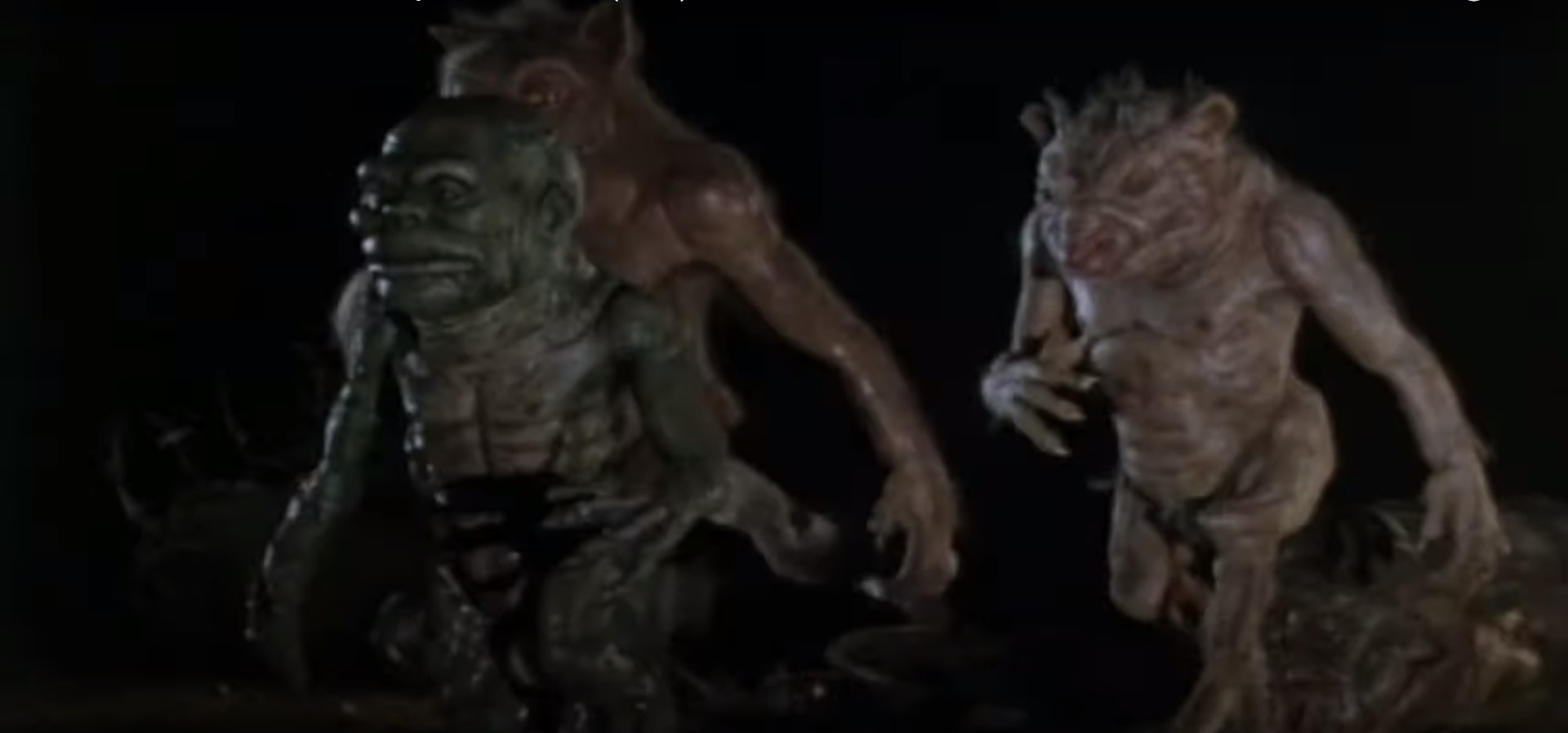
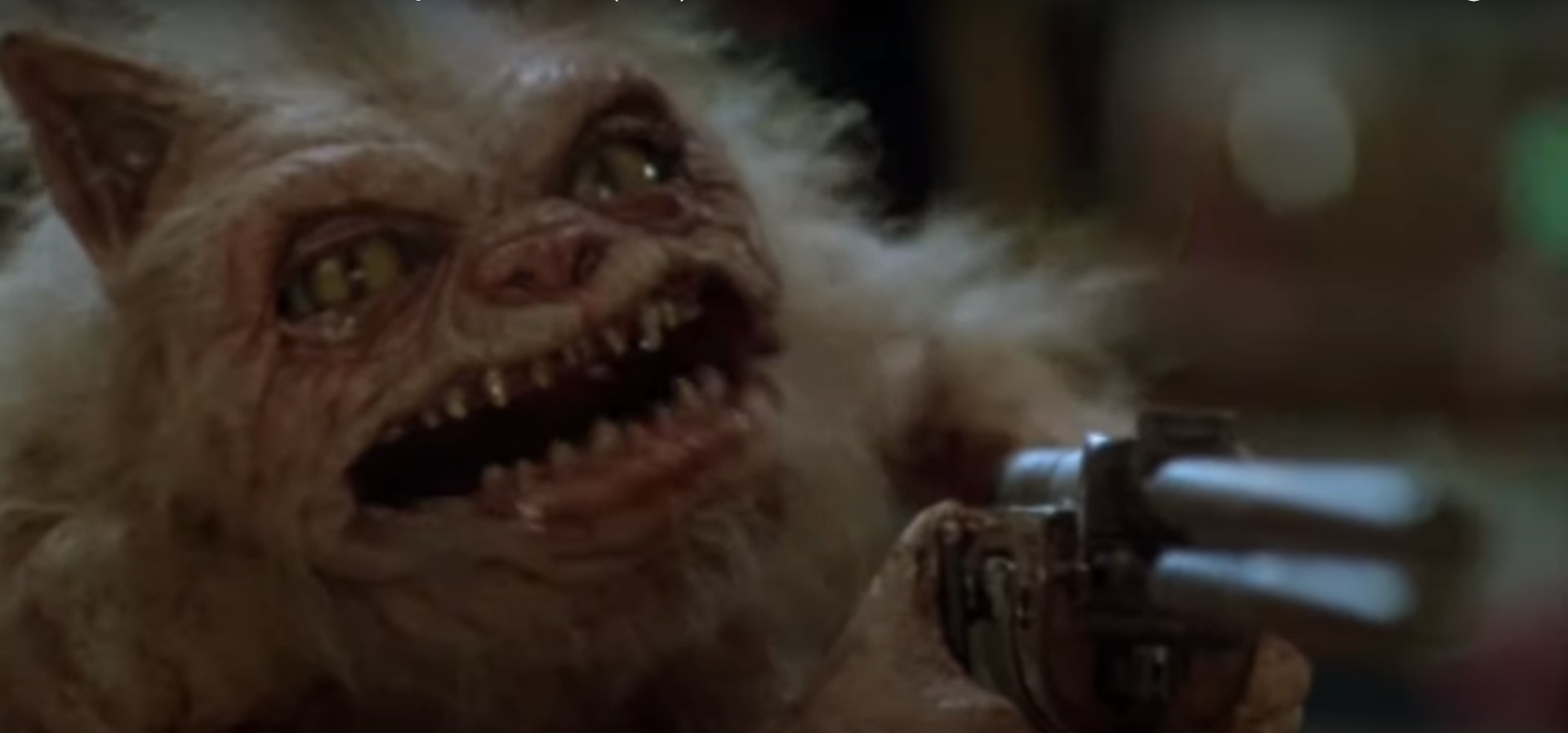
Along with a new set of human characters, “Ghoulies II” also freshens up the trajectory by focusing less on the black magic that saturated the plot of the first film and relying more on the gremlin-like playfulness of the Ghoulies themselves, rightfully giving way into the very creatures of the title. There’s some magic involved but only to the extent that doesn’t have the Ghoulies rely on a master to evocate them from the Netherworld or for the dark powers to be used to perpetuate wickedness upon others.  Instead, the ghoulies are depicted utilizing their skillsets, such as flying, oral expelling sticky-gunk, super-strength, and chomping, which obviously lead to more of a micro-level apocalypse of carnage; however, the print obtained for the MVD Blu-ray release is the edited down version for theatrical circulation so some, not a lot mind you, of the gory bits have been taken out and this makes the storyline stutter with misplaced time with rough segues and an imbalance of edits that aren’t as smooth.  From what I’ve seen, the minuscule timed deleted scenes are not much more violent or gory but add just that tad more context to the next scene instead of our brains working to connect the dots on what should be a brain shutoff, entertaining creature feature.  Yet, you can’t deny the sequel’s appeal that has turned to center around the little demons assiduously but managing to keep the same, steady pace of ferity and gothic skim of mise-en-scene from the first.  Puppetry is retained for that palpable product while also introducing stop-motion, a visual effect that has served Empire/Full Moon well throughout the years and is only used sparingly to wet the limitless capabilities of our miniature monsters to roam free in open spaces. 

“Ghoulies” return with the sequel to MVD’s Rewind Collection as Blu-ray release number 53 on the spine. The AVC encoded, high-definition, 1080p Blu-ray is presented in a widescreen 1.85:1 aspect ratio. A virtual carbon copy of the first film in regard to a well-preserved print, the sequel isn’t noted in having a 4K restoration scan like the antecessor release number 52 but the 2K scan offers an abundancy of positive picture rendering with a seamless color grading that isolates distinction and range as well as a tangible details, especially on characters and the ghoulies alike who are often gleaming and show off every nook and cranny ridge on their dark, hairy bodies. Aforementioned, this print is the theatrical cut, missing some gruesome elements for the sake of a broader audience, and while most of the print is near flawless, there is one dunk tank scene that’s cropped and noticeably marred with horizon creases in the brief airtime. The English LPCM uncompressed 2.0 stereo mix caters to every audible necessity of the “Ghoulies” soundtrack, ambience, Foley, and dialogue. The latter is clean and clear with prominence over the rest of the layers though I wouldn’t label it flawless with some echoey segments, almost a doubling effect, that might be due to the soundstage vibrations at Empire. Ambient track provides a wide range with exact depth with the example being inside Satan’s Den of horrors where doors creak, motorized bats fly overhead, and other models of haunted house spookery, along with an underlining carnivalesque soundtrack by Fuzzbee Morse (“Dolls”), is the epitome of a great sound design suffused together. English, French, and Spanish subtitles are optionally available on this release. Special features include an introduction by screenwriter Dennis Paoli, which is also available as a standalone at the play feature option, More Toilets, More Terror: A Making of Ghoulies 2 is a retrospective lookback with select cast and crew, an interview with Dennis Paoli Under a Magic Moon, the gruesome deleted scenes, a photo gallery, and theatrical trailer. Physical attributes include a VHS retro-esque mockup of the original poster art on a cardboard O-slipcover, fitting for the sub-bannering Rewind Collection. The same image graces the front cover of the clear Blu-ray Amary case, but the cover art is also reversible with one of the film’s most memorable smoochy-kiss moments plus title above. The disc is art pressed similar as the first film, a laser disc veneer on the Blu-ray top. Opposite side is the folded poster insert of the slipcover front image. The region A playback release has a runtime of 90 minutes and is rated PG-13. “Ghoulies II” retains that same diabolical energy as the first film but channels it very differently into the very titular creatures that puts them at the forefront instead of being just an afterthought in a sequel that celebrates their uncontrollable knavery and loving every second of it.

Next Time You Sit On the Can, Check the Bowl First!  “Ghoulies II” on Blu-ray!