The Body Must Go Through an EVILution to Survive! “Crimes of the Future” reviewed! (Second Sight / 4K-Blu-ray)

“Crimes of the Future” 4K UHD/Blu-ray Set is the New Sex!  

Physical pain no longer resides in the human body, infection has all but been inexplicably eradicated, and new organs spontaneously appear, mutating their bodies and humanity into grotesque performance artist and back alley surgical pleasure seekers.  Saul Tenser and his partner Caprice showcase the new organ oddities with surgical art of removing the organ in front of sensually aroused and curiously stimulated spectators.  When an admirer offers an idea for a show, an autopsy of his recently deceased son he promises will be full of surprises, the artists dig into what could be a spectacular operational observation for shocking advant-garde art, but the deeper they dig the more than realize their own bodies might be evolving to a synthetic-laden environment and there are those working in favor and against what it means to be considered human in the New Vice Unit, at the National Organ Registration Office, and clandestinely, behind-the-scenes of the corporation Lifeform. 
David Cronenberg is known for pushing provocation in style and in substance.  His latest dystopian picture “Crimes of the Future” continues the provoking, controversial trend in his verve of body horror that has collectively corroborated Cronenberg as the face of the biologically integrating subgenre.  Cronenberg writes and directs the quasi remake of his 1970 feature of the same title with modern day effects as well as providing new reconstructive surgery on the story surrounding the man who grows new organs just to have them cut out shortly after.  Cronenberg tackles themes of human physiological evolution in a plastic consumed and destroyed environment and the evolution of performance art as it relates to sex or stimulation while also dipping his toes into the darker side of control with organization entities that either become an obstacle or a complete antagonist of corruption within a commercial corporation sense or a threadbare government agency that attempts to control and police a person’s own body and life.  Shot entirely in Athens, Greece under local production company Argonauts Productions, as one of man of the companies backing the 2022 feature, “Crimes of the Future is also funded by the capital investment company Ingenious Media (“Guns Akimbo”) and the Canadian governmentally funded Téléfilm Canada (“Ginger Snaps”) with Serendipity Point Films, Crave, and Rocket Science to name a select few in the co-productions.

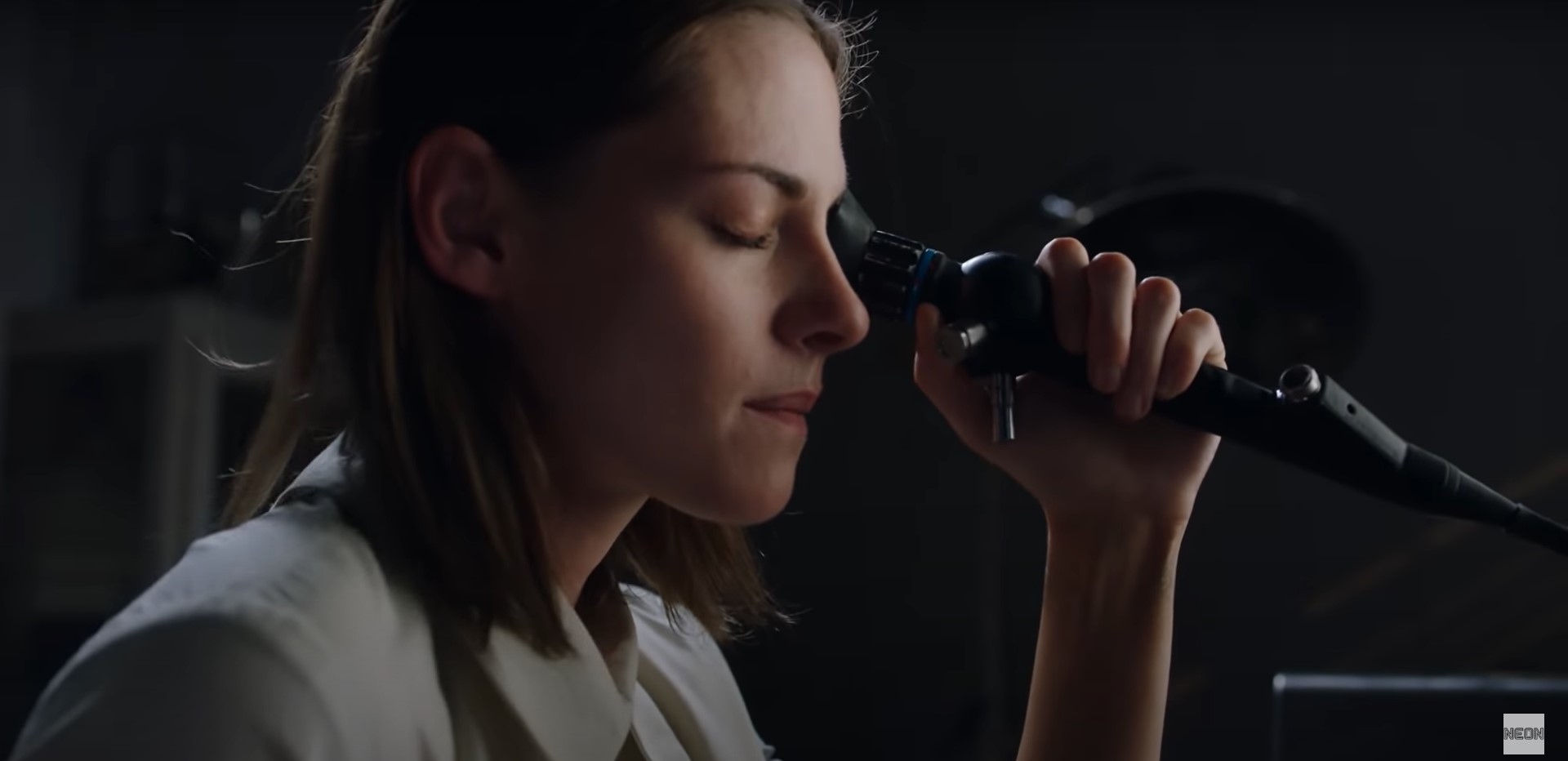
Marking his fourth collaboration with the director, Viggo Mortensen (“Eastern Promises,” “A Dangerous Method”) handles the fame of Saul Tenser, the subject of performance art with a knack for spontaneously growing new organs, or tumors, nearly at will and having them removed during surgical exposition at the hands of his intimate partner Caprice, quizzically seduced by the performance from “Blue is the Warmest Colour” and “Spectre’s” Léa Seydoux. Mortensen plays into Tenser’s will to remain what the institutes define has human only to become conflicted with the investigation into the prospect of rib-splitting a deceased young boy that sends Tenser into what-if territory. Scott Speedman (“The Strangers”) is the cause-driven father of the expired boy and Speedman sustains the character with his usual calm, soft-spoken demeanor which didn’t quite feel passionate enough for a neo-rebel against a society against what he stands for, what he is, and what he thinks everyone should relinquish to – to let the organs grow and flourish. Instead, the New Vice Unit Agent (Welket Bungué), the National Organ Registry’s bureaucrats, the excitable Whippet (Don McKellar, “eXistenZ”) and odd yet attractive Timlin (Kristen Stewart, ‘Underwater”), and an unscrupulous corporation looking to stop the spread of evolution insurgence for capital sustainability. Full of complex characters and neoteric performances, “Crimes of the Future” leaves a lasting impression, makes you stop and think, and indulges in the possibilities of the future with the help of a supporting cast that rounds out with Nadia Litz, Tanaya Beatty, Lihi Kornowski, and Yorgos Pirpassopoulos.
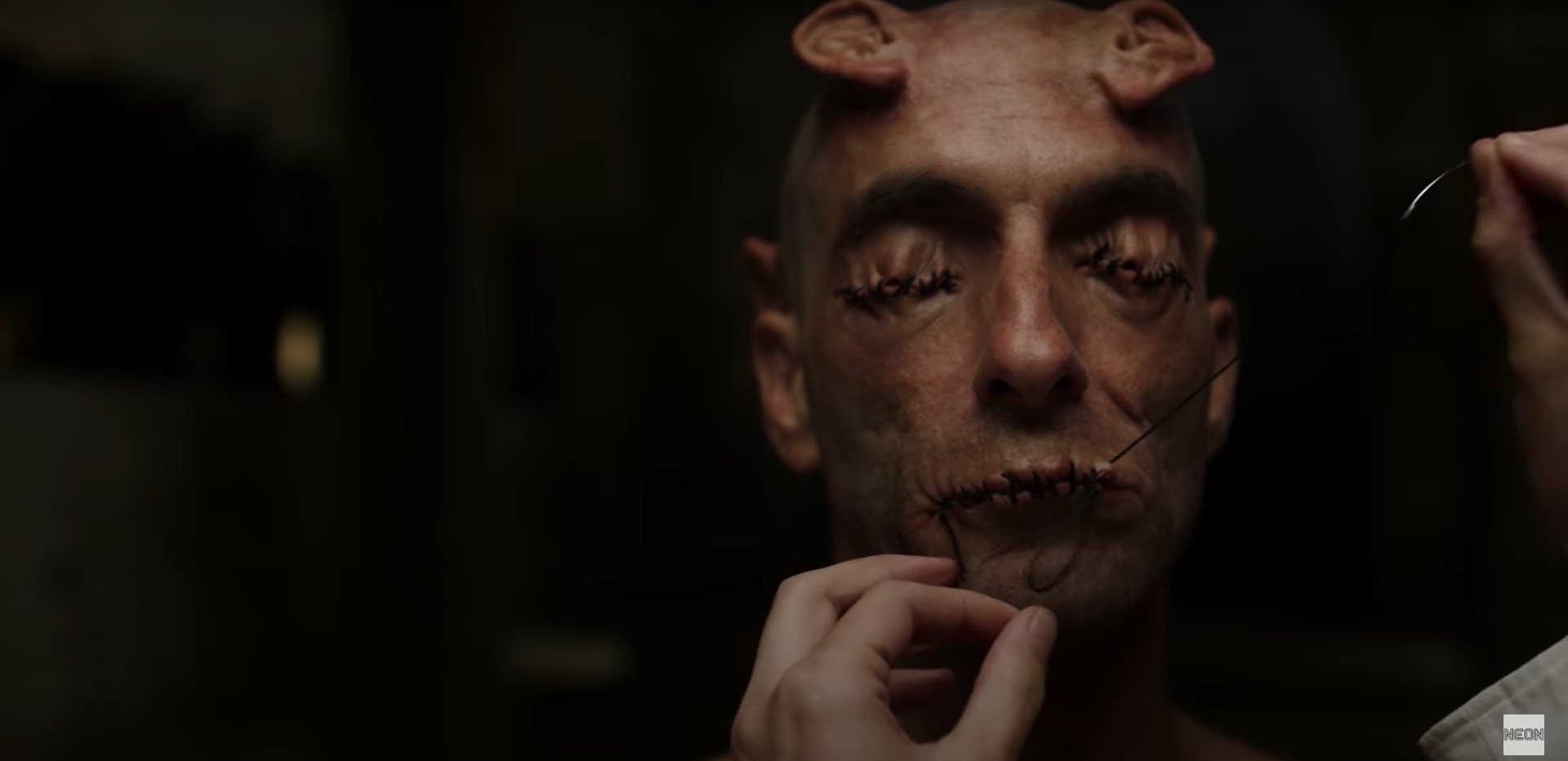
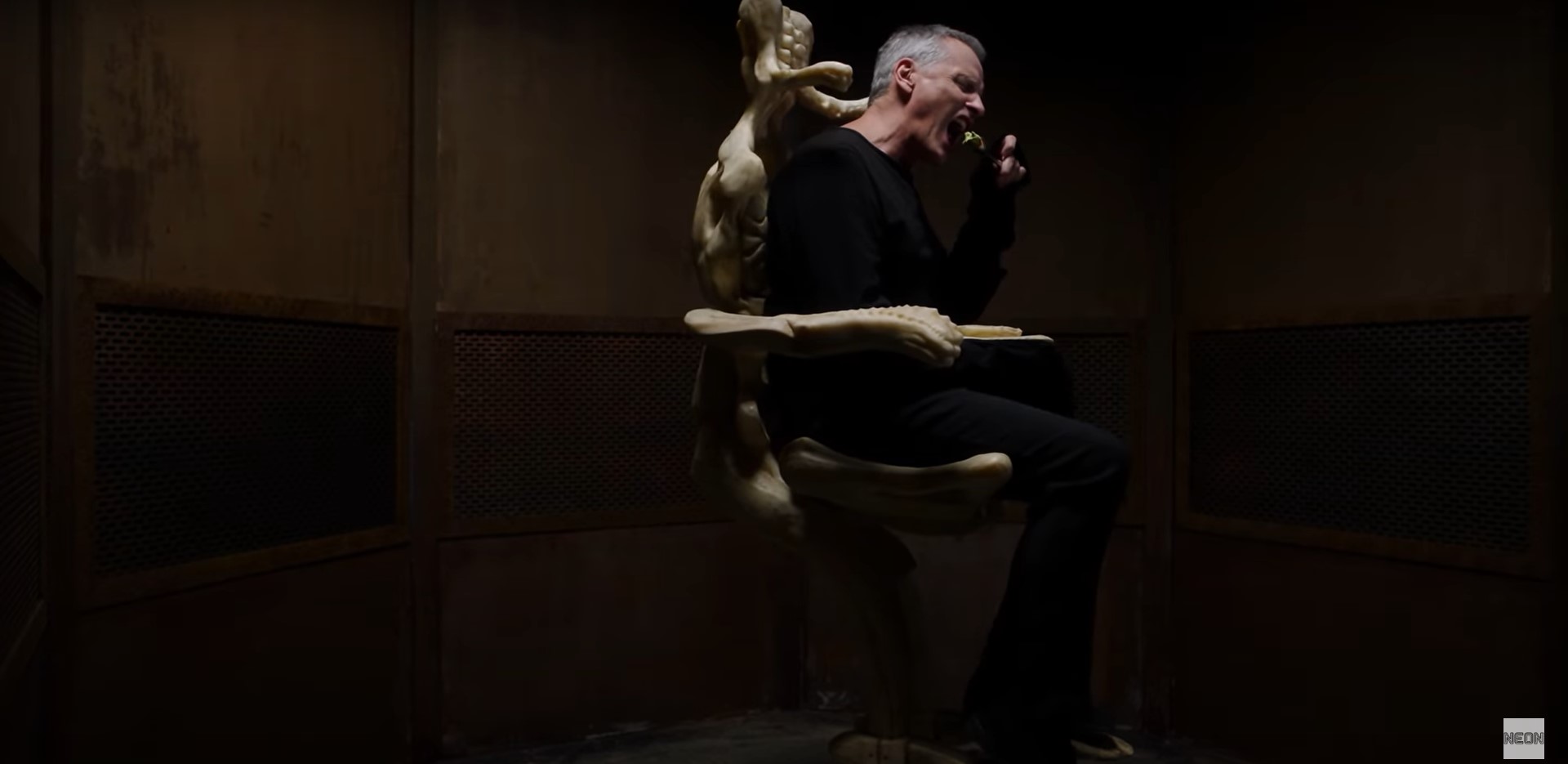
My official opinion about Cronenberg’s “Crimes of the Future” is that many viewers won’t see the multifaceted sides of what the writer-director is trying to convey.  What will be seen is the grunting organic bed that tilts back-and-forth, the fleshy and clunky moving digestive assistance chair that also has low guttural sounds, a dancing man sewn with many human ears, people being sliced open and enjoying it, and a dystopian future where suffering is not a main element.  People will see surface level abnormalities and gore and not understand the layers of a hard-pressed evolution in stagnation by unknown fear and extreme prejudice that runs rampant throughout Cronenberg’s underlying implication of an adaptation and updated normalcy inside a synthetic world.  “Crimes of the Future” is grotesquely beautiful in the depiction of not only how human culture and arts have morbidly progressed by the elimination of pain and by the advancement of technology only to be harshly juxtaposed against the grimy, gritty, and dilapidated habitation where infection feels high risk and imminent, but also in the corruptibility of the human condition that isn’t a naturally biological one like growing spontaneous organs.  Instead, the two bureaucrats of the National Organ Registry are supposed to be hardliners, rule followers, and thorough with their newfangled profession in the everchanging, unexplored future of the human physiology but are seduced by the intimacy of surgery, comparing it to sex with a high addiction rate.  The two agents are constantly breaking government policies and rules in order to be close to the dazzling aciurgy considered artful and alluring like a beauty pageant for the celebration of one’s innards.  Cronenberg also adds the caveat of corporate greed into the folds and flaps of “Crimes of the Future’s” dash of commercial retail that can be fleeting if not paying attention.  The threat of evolution aims to put body mechanism-correcting bed and chairs out of business and so a concealed aim to lobotomize that particular information permanently creeps up onto the narrative in some of the more frightening and gruesome scenes of smothering the risk it can spread like theater fire panic.  “Crimes of the Future” is an eye opening epiphany of everlasting ecological entrapment and the only way to survive is becoming accustomed to the taste of waste in order to be free of it.
If “Crimes of the Future” isn’t already remarkable enough in the wake of David Cronenberg returning to the body horror heir class, Second Sight stuns us with an impressive collector’s set from the UK. The 2-disc 4K UHD and Blu-ray set exhibits the film in a widescreen 1.85:1 with both formats decoding at an average bitrate of 23Mbps. The 4K UHD Dolby Vision comes in a HDR10 2160p while the High-Definition Blu-ray comes in a 1080p. Douglas Koch’s umbrageous urban bathed in greens and yellows and all the colors in between starkly hard lighting against softer details on the visual effects. Most details are lost in the tenebrous and decaying background of age worn and spartan warehouses with little-to-no wide longshots other than the opening of an overturned cruise ship in one of the very few daylight scenes, but the extreme contouring lucidly delineates the shapes around people and objects. Both formats include an English DTS-HD 5.1 Master Audio, providing a coherent and even robust dialogue through much of the Mortensen’s Tenser throaty rasp, Stewart’s Timlin robotic inflections, and Speedman’s Lang soft and breathy speech. “Crimes of the Future” is not volatile and full of action in what’s more a slow noir progression, focusing in on intimacy of dialogue, the proximate ambience, and Howard Shore’s (“Lord of the Rings”) neo-space opera and synth score. English subtitles are available for the hearing impaired. Second Sight puts heart and soul into every release when not only considering A/V but also special features and limited-edition contents. Special features include multiple succinct Second Sight produced interviews with director David Cronenberg and stars Viggo Mortensen, Léa Seydoux, and Kristen Stewart regarding “Crimes of the Future’s” broad vision. An extended interview with Don McKellar dives into his relationship with David Cronenberg from over the years plus his role as the National Organ Registry agent, plus additional crew interviews with producer Robert Lantos, cinematographer Douglas Koch, and editor Christopher Donaldson. Famed film journalist Leigh Singer provides a video essay New Flesh, Future Crimes: The Body and David Cronenberg, a making of featurette, production design materials that go deep into the austere and spartan look of Greece-turned-dystopian future, and a short film “The Death of David Cronenberg by Cronenberg and his daughter, Caitlyn. The physical features are a whole other beast within a rigid slipcase with new artwork by Marko Maney of a pitchy Saul Tenser relaxed in his orchid bed with tentacles while the back reads in stacked words, Body is Reality, glowing inside an old tube television. Both discs are held in an insert jewel amary case with its own Maney artwork of extracted organs in the same color scheme as the slipcase. Alongside the casing, there are 6 collectible art carts, a 120-page color book with production designs, location setups, and new essays by Reyna Cervantes, Tim Coleman, Joel Harley, Rich Johnson, Mikel J. Koven, Phil Nobile Jr., Ian Schultz, and Hannah Strong. “Crimes of the Future” is certified 18 for strong gory images and sex reference and runs 107 minutes on both formats with the Blu-ray locked in B region while the 4K UHD is listed as region free. Plausibly absurd, “Crimes of the Future” imparts far-fetched and dark humored science fiction, but if plants and animals biologically adapt to new or changing environments in order to survive, director David Cronenberg sees the future and renders a concept that, on a second sight thought, may be existentially key.

“Crimes of the Future” 4K UHD/Blu-ray Set is the New Sex!  

When EVIL Won’t Let Go to “Those Who Walk Away” reviewed! (VMI Releasing / DVD)

Never Abandon Your Problems.  Face Them!  “Those Who Walk Away” on DVD!

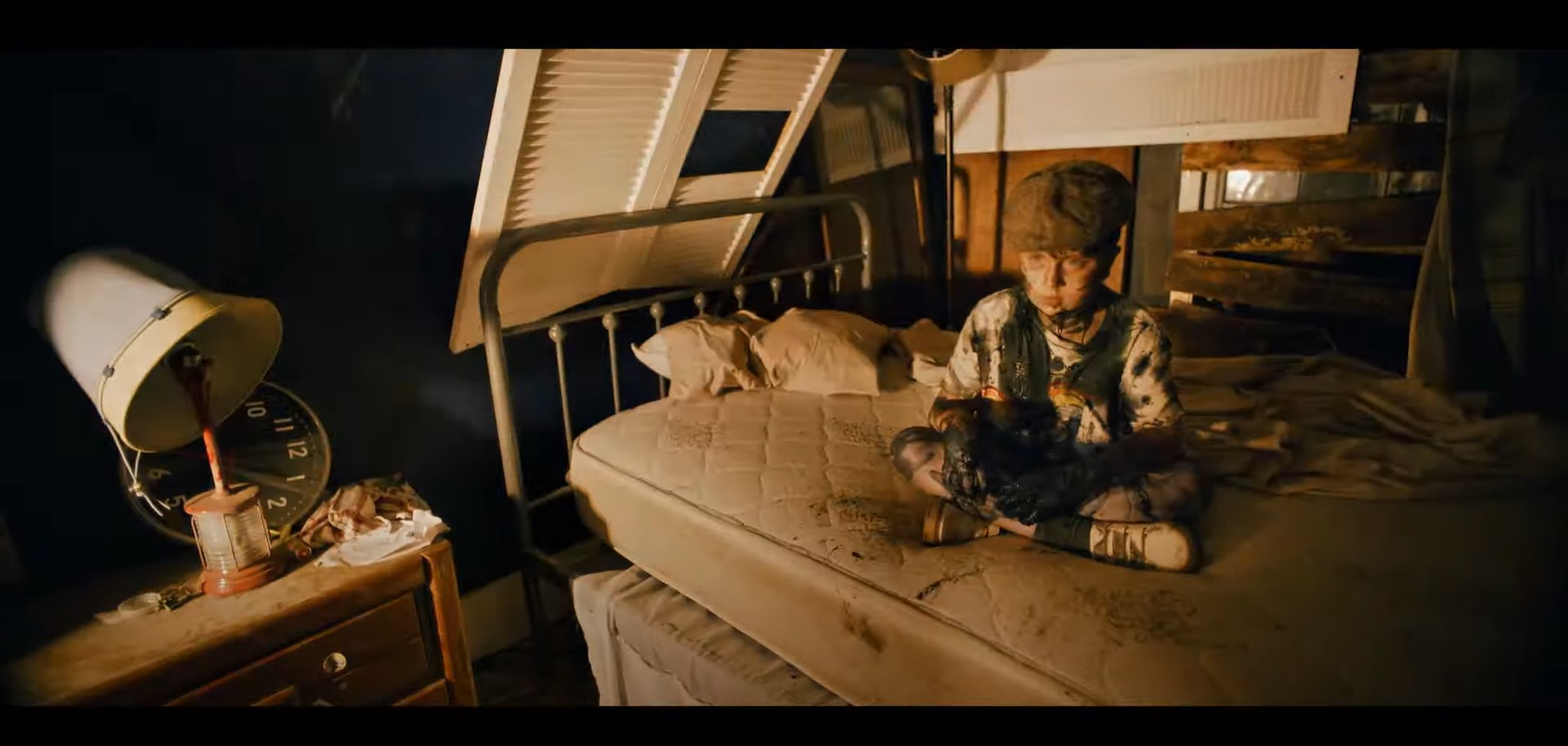
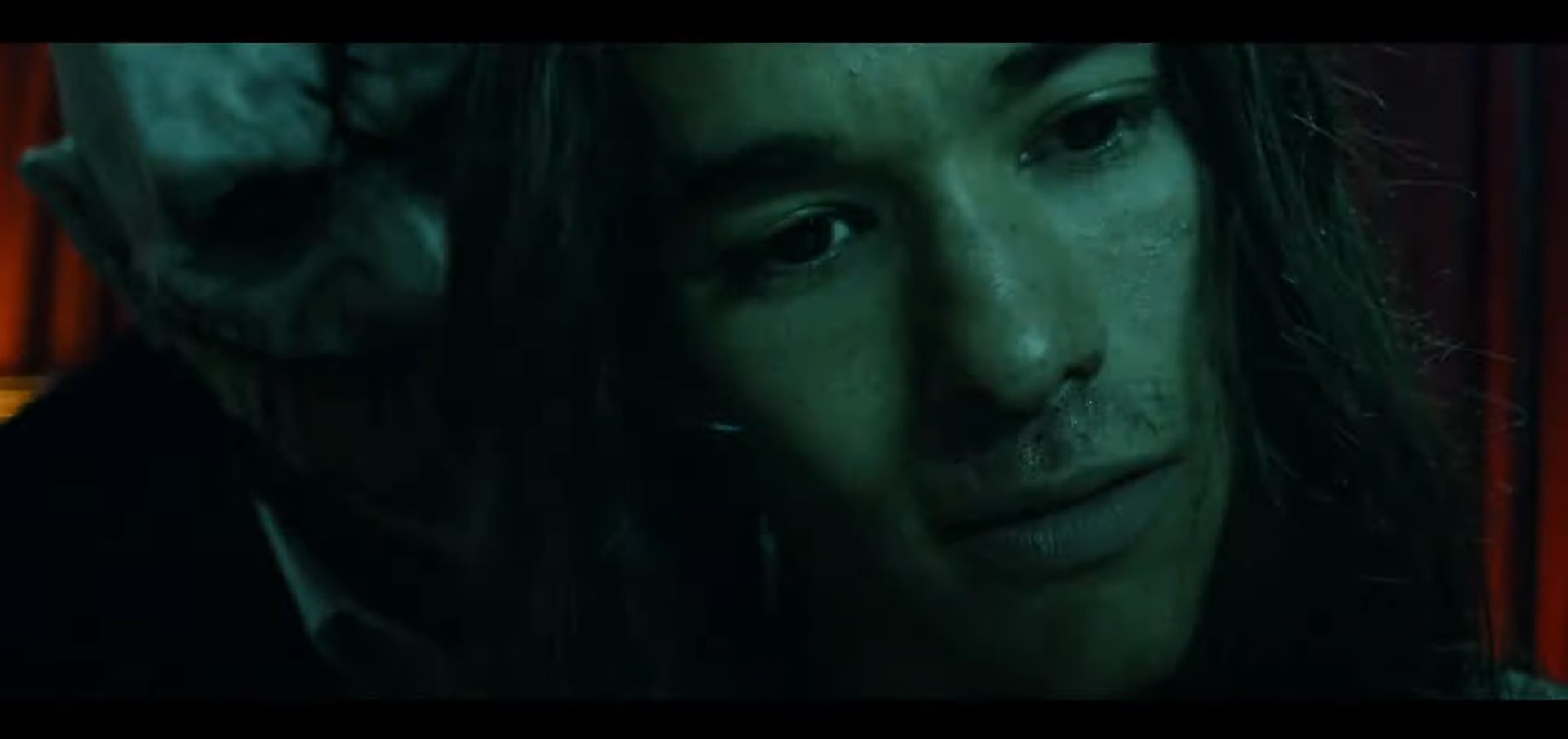
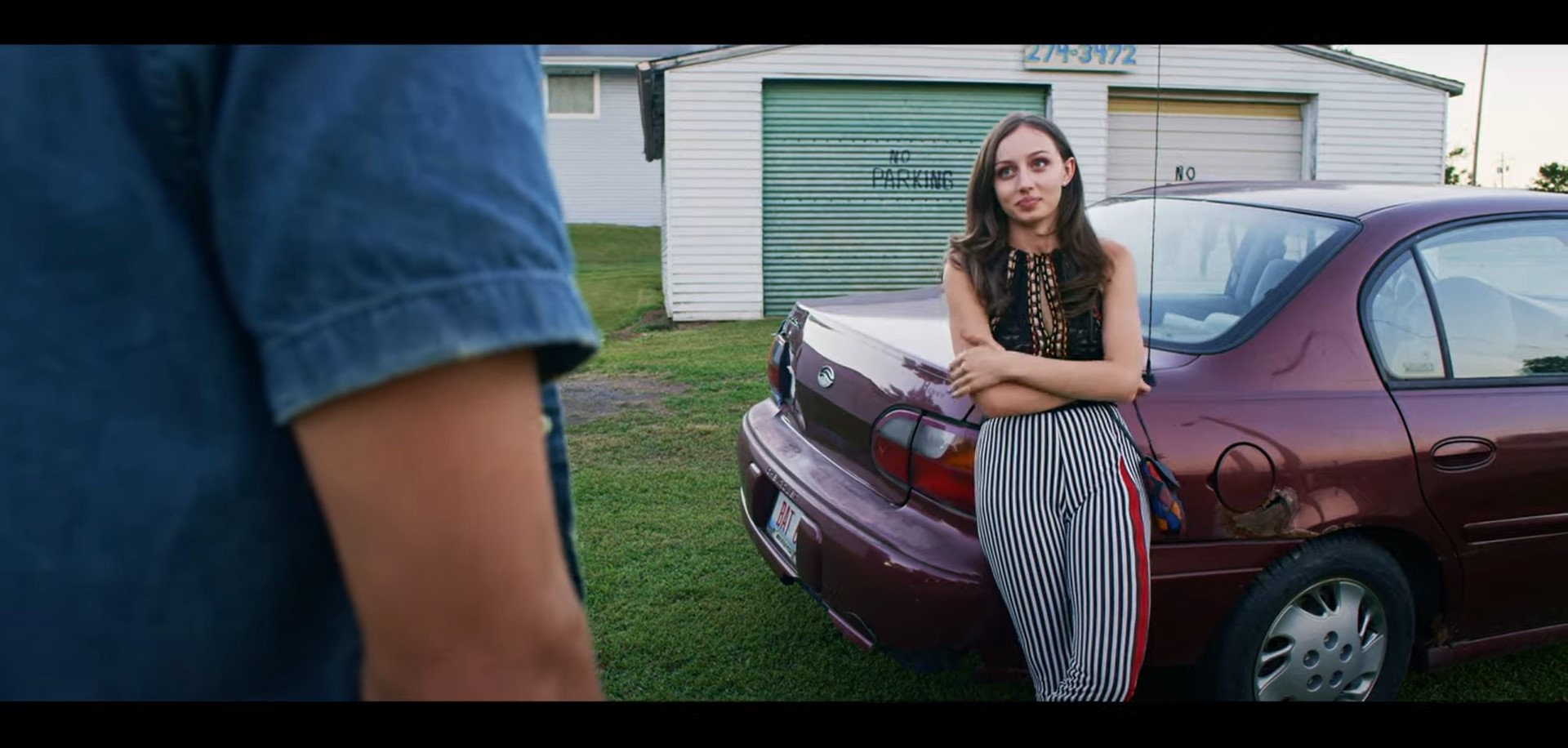
When Max could no longer stomach the sight of his mother falling deeper into severe sickness, he abandons his mother’s side after a year of care.  A year-long hiatus from dating has put a temporary halt on his love life, but as he rejoins the socializing game, he connects with Avery on an online dating app.  Avery appears to be the perfect girl:  smart, witty, and really into him.  The start of their first date is a match made in heaven until the girl too good to be true decides to drive him to a supposed haunted house for uninhibited fun when their original plans fall through.  Inside, a dilapidated abode comes with an appalling story, surrounding a malevolent urban legend spirit known as Rotcreep.  Swallowed by house’s notoriety, Max and Avery grapple with their own personal demons that have come back to haunt them and with no escape, facing the trauma is the only path toward survival.

A lot of films, past and present, are drenched dripping in the trauma theme that the subtopic has become waterlogged in the independent and mainstream scene, but has there ever been a trauma touted full length feature film that was done in one long single take?  That’s the novelty concept to proof of product feature from writer-director Robert Rippberger, a documentary filmmaker who has only recently dipped his toes into fictional storytelling.  After the 2019 unsung release of “Strive,” an urban drama of perseverance starring Danny Glover (“Predator 2”), Rippberger’s latest “Those Who Walk Away” sets two personal distresses into a prevailing evasion of death.   Rippberger’s script, cowritten with Spencer Moleda, materializes one’s own baggage being personified as waking nightmares or a manifestation of shackling malevolence, manacled by past mistakes and centrifugal hurt.  The Chillicothe, Illinois shot picture is a production of Ripberger’s own Los Angeles based SIE Films, Argentic Productions, and is in association with Slated Productions and Sandeep Sekhar Films with Rippberger, Sandeep Skehar, and Argentic’s KT Kent producing. 

At the center of the story are Max, played by “Twilight” franchise’s Booboo Stewart (no relationship to Kristen Stewart), and Avery, played by Scarlett Sperduto (“Float”), as individuals looking for love or connection having met on a dating app.  Necessary lengthy exposition provides the footing for “Those Who Walk Away’s” climatic third act, giving Max and Avery a chance to go to town on their historical credentials during the date as we learn about Max’s ill mother and his sudden departure from her around the clock care before the heartache becomes soul consuming and about Avery’s fight or flight childhood, anecdotal and accounts that are kept closer to her chest,  with her close and adored brother.  The chemistry is palpable between them with nervous conversational exchanges and teasing jocularity that makes their one long scene seem like an actual first date, completely selling the dynamics with the audience who are induced with anxious butterflies and an eagerness to connect, emotionally and sexually, on Max and Avery’s behalf.  The narrative, ultimately, has to change because “Those Who Walk Away” is not a romantic-comedy but rather a dramatic-horror.  Whereas everything seemed to go swimmingly with the two young love birds really getting into the moment, we’re suddenly engaged with a different, if not darker, tone that has come out of the swindling shadows and into the light of a dimly lit, ramshackle haunted house that is the premier first date destination experience, if you’re a sociopathic survivor that is.  “Those Who Walk Away” works with a tight, small cast that finishes off the list with Grant Morningstar, Devin Keaton, Bryson Whereas, Connor McKinley Griffin, and former professional wrestler, veteran stuntman, and veteran actor of such films as “The Mask,” “Barb Wire,” “Hot Wax Zombies on Wheels” with Nils Allen Stewart, aka The Stomper, as the Rotcreep – again, not related to Kristen Stewart, but is father of lead actor Booboo Stewart.

“Those Who Walk Away” has the concentrated acting chops to pull off the two-pronged plot and despite the obscure and incoherencies with the revelation climax, the turn of events still bids a gripping blank check on what to expect next.  Yet, the most interesting portions of the film are not those aspects that do have a degree of excellence for an indie project.  Instead, the single long take from opening-to-ending credits is a mind-blowing feat.  Unless there’s a seamless cut that I’m missing or blind to, “Those Who Walk Away” never edits or cuts away from the action that puts the actors in a position of having to perform to perfection.  Rippberger also doesn’t remain stationary to a single location for the first half of the film, coursing through the populated public park and bustling small town of Chillicothe during Max and Avery’s getting-to-know-you talk-and-walk, and as the story evolves toward more sinister circumstances in a one house setting, Rippberger can’t sit still and uses nearly every square inch of the creepy, boarded up house to his advantage, creating and changing up room interiors that fashion an illusionary creepy funhouse that Max scrambles from room-to-room avoiding Rotcreep and finding a way out of what could be perceived as Hell in a house, a metaphor for Max’s own mother-abandoning torment.  If that isn’t impressive enough, Diego Cordero’s camera handling to make the single take work isn’t bush league cinematography as having the frame trajectory move in tight, confined spaces without a bit of awkwardness, like moving from outside the car to inside the front of the cab then to the back between the driver and passenger seat while keeping characters in frame and keeping the characters acting is a tough, planned shot.  What’s also tough is achieving crisp dialogue in one take and that’s where the film falters a little with the pivotal exposition losing strength and clarity where it’s needed the most, essentially being muddled instead of meticulously articulate if actors are either not vigorously vocal enough, mic placement isn’t exact, or mic picks up other noises that scuttle overtop the dialogue.

Courtesy of VMI Releasing and MVD Visual comes a chilling crucible in “Those Who Walk Away” on DVD.  Presented in 720p on a widescreen 1.78:1 aspect ratio, the film is distributed on a DVD5 with a reasonable compression rate to keep the image sharp without a lot of addition fluff to bog down the overall compacted digital transfer.  Instances of off and on lens focus works against the long take, much like the audio, where timely is key but as far as VMI Releasing’s handling of the storage, the resolution and image quality do the work to represent the best quality possible.  Although the DVD back cover states one audio option – an English Dolby Digital 5.1 – there is a second option with a English Dolby Digital 2.0 Stereo.  Unless you’re setup with a surround sound, the stereo option will have identical dialogue and ambience noise but there is an amplified finish on the soundtrack by video game composer Dmitrii Miachin with the drawn out violins and a brooding, sonorous pitch.  Dialogue is a minorly muddle as mentioned before with the tribulations on a feature length shot but mostly clean and clear to the point of satisfaction.  Aside from the static menu’s original trailer for the film, and the illustratively ghoulish opening sequence, the DVD comes with no other bonus material.  The DVD comes in a standard DVD tall case with a front cover of a bloodied Booboo Steward looking dazed walking through fire and the same image is used for the disc art.  Psychologically scything, “Those Who Walk Away’s” fillets guilt from the bone with scene shooting originality and a cast that nails every second lapse. 

Never Abandon Your Problems.  Face Them!  “Those Who Walk Away” on DVD!

Evil is the Pits! Jug Face review!

jug-face-poster

“The pit wants what it wants.” Sometimes it is that simple. That saying could be the meaning of life for all we know? Could be the answer to the mysterious universe? Hell, could tell us what happened to Jimmy Hoffa and if there really lives a Loch Ness Monster. For the backwood folks of the movie Jug Face, that phrase is life and death. A backwoods community just on the outskirts of civilization serves an unseen entity in a deep muddy pit. The pit psychically connects with Dawai, a local simpleton who loses consciousness when connected to, to create a ceramic jug face of the face the pit wants to sacrifice in order for the community to keep sustaining their health. When young and out of wed-lock pregnant Ada’s face becomes the jug face, she steals the jug and hides it in the woods in attempt to not only save her life but her baby’s too. When the entity is ignored, the wrath of a gruesome death comes down upon the whole community by taking one person at a time until the pit gets what it wants.
tumblr_mu48k1KxMH1rne776o1_250
Jug Face strikes an originality chord in this reviewer’s bones. Usually when too much is happening one could easily become lost in the thick of the story, but where the thick might be the thickest, Jug Face fiercely cuts through and weaves a story of a women coming into her own to face responsibility and a story about fate in which no matter how much you try to re-arrange it, you’ll receive your rightfully due diligence in the end. The story ends up being grim for everyone and nobody has a one speck of happiness. A great parallelism to reality if you ask me because not every ending is sugar plums and puppy dog tails.
tumblr_mu48k1KxMH1rne776o3_250
The pit entity doesn’t seem like the “bad guy” villain that we might expect. Ada is not saint as she commits carnal sins and her actions result in the deaths of her friends and family and not all at the hands of the pit, but some by the community as well. Granted, not all the victims were innocent – some just as guilty as Ada – but we struggle with Ada’s compelling reason to live and to keep her unborn baby alive too. We’re more partial to Dawai, who like I said earlier is the community nitwit, and her father Sustin who tenderly loves her more than anything as a father should but obeys the pit’s commands when a jug face is revealed.

The ensemble cast headlines with Lauren Ashley Carter as Ada. A relatively unknown actress with a great pair of breasts; she’s topless in the first 5 minutes of the movie. Carter is a wide eyed beauty with a face like Kristen Stewart except without that dumb glare. Indie genre favorite Larry Fessenden (I Sell The Dead, Habit) takes on Ada’s father Sustin. Sean Bridges plays a great village idiot as Dawai and the other Sean, Sean Young, Ray Finkle him-herself, is Ada’s sadistic mother.
tumblr_mu48k1KxMH1rne776o4_250
Overall the movie watchable value and cult status written all over it (I has saying cult status, but what else is there to label it?). In reality, the MVDVisual distributed film with come and go with much of the straight-to-DVD market and that is a grisly disappointment because this little bizarre script from first feature film direct received a little money behind it and has a great cast, but the names aren’t big enough, the distributor isn’t big enough, and the story will fly over most people’s heads. MVDVisual and Modern Distributors did do a great job with the 5.1 Surround Sound and the clear 2:35 Widescreen format. Everything is pretty sharp here, but don’t expect jug Face to make waves amongst the masses.