Disguise as the Dead to Defeat EVIL! “The Shadow Boxing” reviewed! (88 Films / Blu-ray)

Corpse Herding Isn’t Easy in “The Shadow Boxing.” Purchase Your Copy Here!

Corpse herder Fan Chun-Yuen has studied Master Chen for years, learning the ritual incantations and mastering the nuances of getting the dead home to their loved ones for proper burial.  What should have been a routine corpse herding goes astray when the last arrival of a corpse, a bald man, seemingly has issues following the simple incantations and master Chen’s leg is broken during a misunderstanding over gambling winnings at one of their resting pitstops.  Being left with no choice, Fan Chun-Yuen must herd the rest of the hopping corpses, publicly feared as hopping vampires, to their terminus with the aid of aspiring corpse herder and an undeterred woman Ah-Fei.  At the same time, criminal overlord Zhou, a casino owner, and a corrupt military leader are in search of a moral sub-lieutenant who can foil their plans and who has seemingly evaded all military checkpoints in route to Zhou, leaving the corpse herding understudies in the middle of a danger. 

The jiāngshī, or hopping vampire, is the Chinese version of the living dead, whether be a vampire, zombie, or a ghost in the country’s folklore.  In Chia-Liang Liu’s 1979 comedy-actioner “The Shadow Boxing,” the horror element of the jiāngshī is reduced to no more than a few false scares on the Chinese cultural collectiveness of superstitious fears.  Originally known as “Mao shan jiang shi quan” and also known as “The Spiritual Boxer II,” the film is considered a quasi-sequel to also Liu’s 1975 “The Spiritual Boxer” but only in association to the director and one of the principal actors and not a direct, character-connecting sequel by any other means.  The late “Human Lanterns” and “Demon of the Lute” writer Kuang Ni pens the script with Kung-fu comedy in mind amongst seedy corruption aimed to thwart tradition and principles, shot in Hong Kong by Celestial Entertainment on the Shaw Brothers studio lot, and produced by younger Shaw brother, Run Run or Shao Renleng. 

The actor who carries over from “The Spiritual Boxer” is “Dirty Ho” star Yue Wong in the role of corpse herding apprentice with a bad memory, Fan Chun-Yuen.  Wong’s character is a likeable learner who has the skills to be great at his vocation but lacks the confidence without being tethered to his master, played as drunkard and obsessive gambler by Chia-Liang’s brother, Chia-Young Liu, a longtime stunt man (“Once Upon A Time in China,” “The Savage Killers”) and actor (“The Return of the One Armed Swordsman,” “Five Fingers of Death”).  Fan Chun-Yuen tries to keep his sifu on a straighten arrow and focus on the task on hand and Wong and Chia-Liang invest that dynamic wholeheartedly while maintaining their sense of strength outside military force and criminal brutality to be masters under the flags of good and just.  Between them, a level of trust and reliance is displayed through their fighting casino goons and military soldiers where Wong needs his master to shout commands of the vampire style due to his bad memory.  There’s almost zero context on why that is but adds a melted layer of slip-in, slip-out comedy to make it unusually entertaining.  An understudy of the understudy and borderline love interest comes from Cecilia Wong (“The Hunter, the Butterfly and the Crocodile”) as Ah-Fei, a friend of Fan Chun Yuen who doesn’t want an arranged marriage but has an underscoring coyness with Fan Chun but their misadventures delivering the beloved bodies to grieving relatives proves to be difficult and much of their shenanigans to try and make their “mastery” believable in order to deliver the goods gets in the way of that amorous connection.  Also in the way are the corruptive forces hellbent to track down Chang Chieh (another Liu brother in Gordon Liu, “Kill Bill”) before he foils their transgressions, coinciding with performances from Lung Chan, Han Chiang, Wu-liang Chang, and Norman Chu.

“The Shadow Boxing” finely blends the chop-socky action with mystical folklore and comedy that’s not overly slapstick or buffoonery.  A serious layer runs through the middle of story and while the line chart fluctuates between peaks of let-loose Wing Chun and then violent sway the other direction with fleeting spikes of death and ghoulish shades, there’s never a tiresome tone of stagnating acts as Kuang Ni’s script develops and progresses upon the micro and macro dynamics of good versus evil characters, especially how Ni slyly introduces audiences to the last and bald corpse and it’s diverging acts of not exactly following incantational direction, in a mistakenly, humorous way.  The off feeling is there of baldie being of some importance but not until more third-party clues come to light halfway through the runtime and it’s by then the lightbulb begins to flutter and anticipatory wait for exposure begins.  If looking at “The Shadow Boxing” on a more comprehensive scale in the martial arts genre, the pace of fighting emulates too much on the lines of choreography counting.  Slow and herky-jerky, there’s not a smooth transition of moves in either of the individualized faceoffs or in the group skirmishes that doesn’t reflect well upon the stunt department as martial arts is the centerpiece of the action.  Every other aspect of creating tension and levity with the action works perfectly only to be lopsided by the sudden starts, stops, starts of checklist kick and punches. 

88 Films’ North American label lands the new high-definition release of “The Shadow Boxing” with an AVC encoded, 1080p, BD50.  The transfer is processed from the original negative and presented in the original Cinemascope aspect ratio of a 2.35:1.  The anamorphic lens used compresses the image, creating a spherical or rounded out sides on tighter shots, a known issue for the lenses of those times.  The 35mm negative has won the test of time with a near spotless print that 88 Films sharpens the color palette and defines the broader details with texture lacing, decoding the image at an average of 33Mbps.  There are times the details appear too texturally chiseled with the Shaw Brothers’ set backgrounds exposed as obviously painted backdrops, see the final showdown fight.  A single audio, uncompressed output of a LPCM Mandarin 2.0 mono is offered on the release.  The track comprises enough overlapping range of effects to sturdy the sound design almost as if it was an innate recording.  The instilled post effects have the traditional Chinese martial arts flare of whacks and thunks but added with greatly synchronous care whereas the dialogue, though clean and present at the front, has the expected timing issues with an intensity level that doesn’t quite match at times.  English subtitles are optionally available.  Surprisingly, this is one of the few 88 Films releases without special features other than the original trailer.  Instead, the label elevates the physical release with a limited-edition stunning monochromatic and illustrated cover art by Mark Bell with subtle tactile elements on the cardboard O-slipcover.  The same image is showcased as the primary clear Amaray cover art but with slightly more color added to it while the reverse sleeve features the original Hong Kong poster art.  The LE also comes with 4 collectable artcards, though they’re more still image cards than art.  The not rated, 101-minute runtime 88 Films release is encoded for only two of the three regions with an A and B playback.

Last Rites: Hong Kong cinema has been fast, loose, and either furiously funny or folklorically fist over hard-hitting fist and Chia-Liang Liu’s “The Shadow Boxing” takes into account both now on a format pedestal with a new Blu-ray release from 88 Films!

Corpse Herding Isn’t Easy in “The Shadow Boxing.” Purchase Your Copy Here!

The Bishop and Castle seek to Checkmate EVIL! “Sabotage” reviewed! (MVD Visual: Rewind Collection / Blu-ray)

“Sabotage” on MVD Visual’s Rewind Collection Blu-ray!

Former Navy Seal Michael Bishop was nearly killed on a gone awry Bosnia mission at the hands of former special forces soldier turned mercenary Jason Sherwood.  Three years and one court martial later, Bishop’s recently hired as a bodyguard for a wealthy businessman and his wife until a successful assassination on the businessman leaves Bishop as the prime suspect in the eyes of Special FBI Agent Louise Castle and his former Bosnia commander Nicholas Tollander now a spook with the CIA.  As Bishop strives to prove his innocence with the help of single mother Castle, looking to impress and rise in the agency to support her daughter, he’s determined to uncover an elaborate conspiracy that involves the FBI, CIA, and the man that put seven holes into him in Bosnia, Jason Sherwood, who enjoys the playful art of mercenary work.  The deep-rooted plot that exploited Bishop as a scapegoat to eliminate gunrunners plays out like a game of chess and each move is deadlier than the next. 

“Sabotage” is the 1996 independent, Canadian cloak-and-dagger thriller from “The Gate” and “I, Madman” director Tibor Takács and cowritten between Rick Filon (“The Redemption: Kickboxer 5”) and Michael Stokes (“Jungleground”).  “Sabotage’s” inspiration pulls from the simple, strategic game of chess where all the pieces, moves, and players are witnessed in plain sight in what is a tactical tornado of interagency spydom and the innocent are only the pawns in the middle, sacrificed to be a part of the puzzle to strike the monarchy behind the shadows on behalf of the across adversaries.  The Andy Emilio (“Shadow Builder”) produced and Ash R. Shan (“Lion Heart”) and Paul Wynn (“Tiger Claws III”) executively produced feature, shot in Toronto Canada (which also doubles for Bosnia in certain brushy areas), is a production of Applecreek Productions and presented by Imperial Entertainment. 

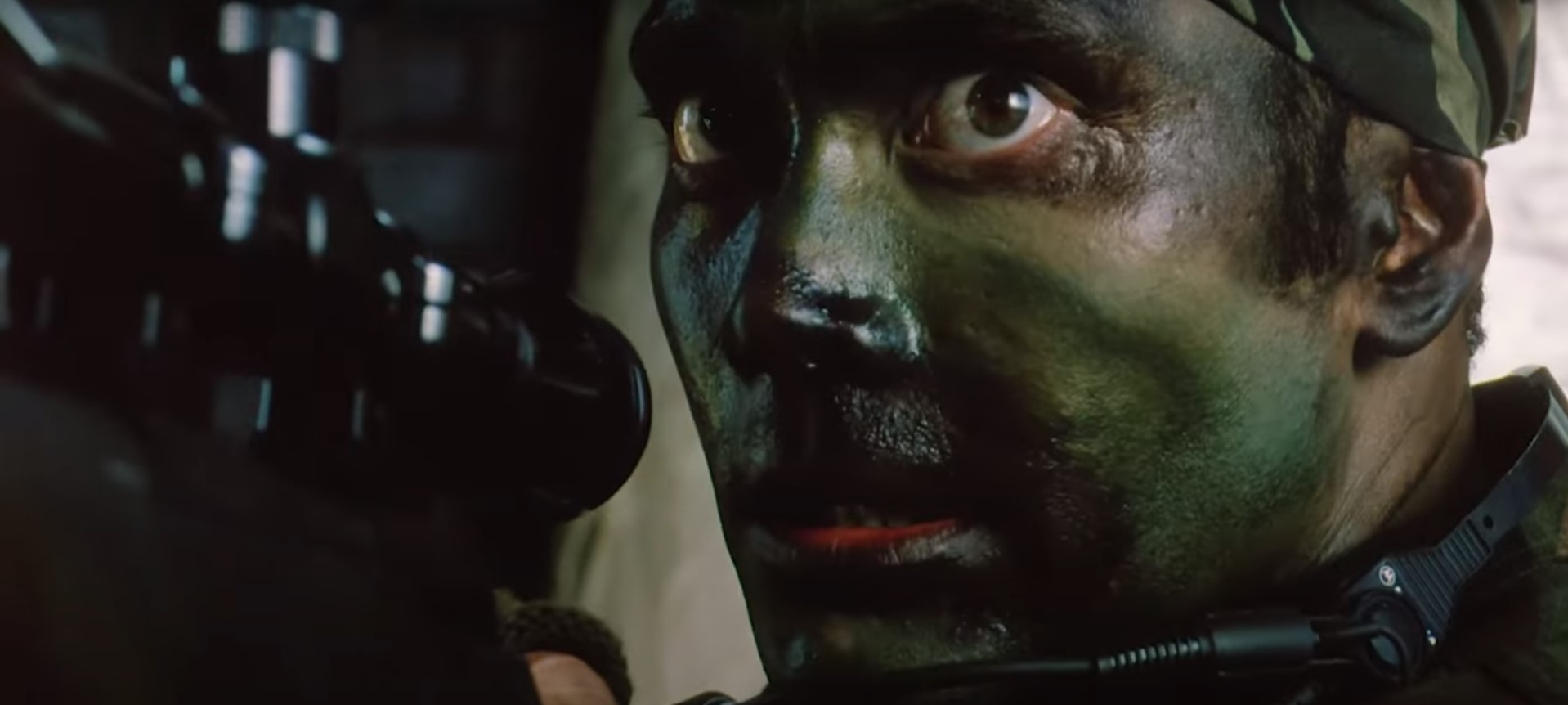
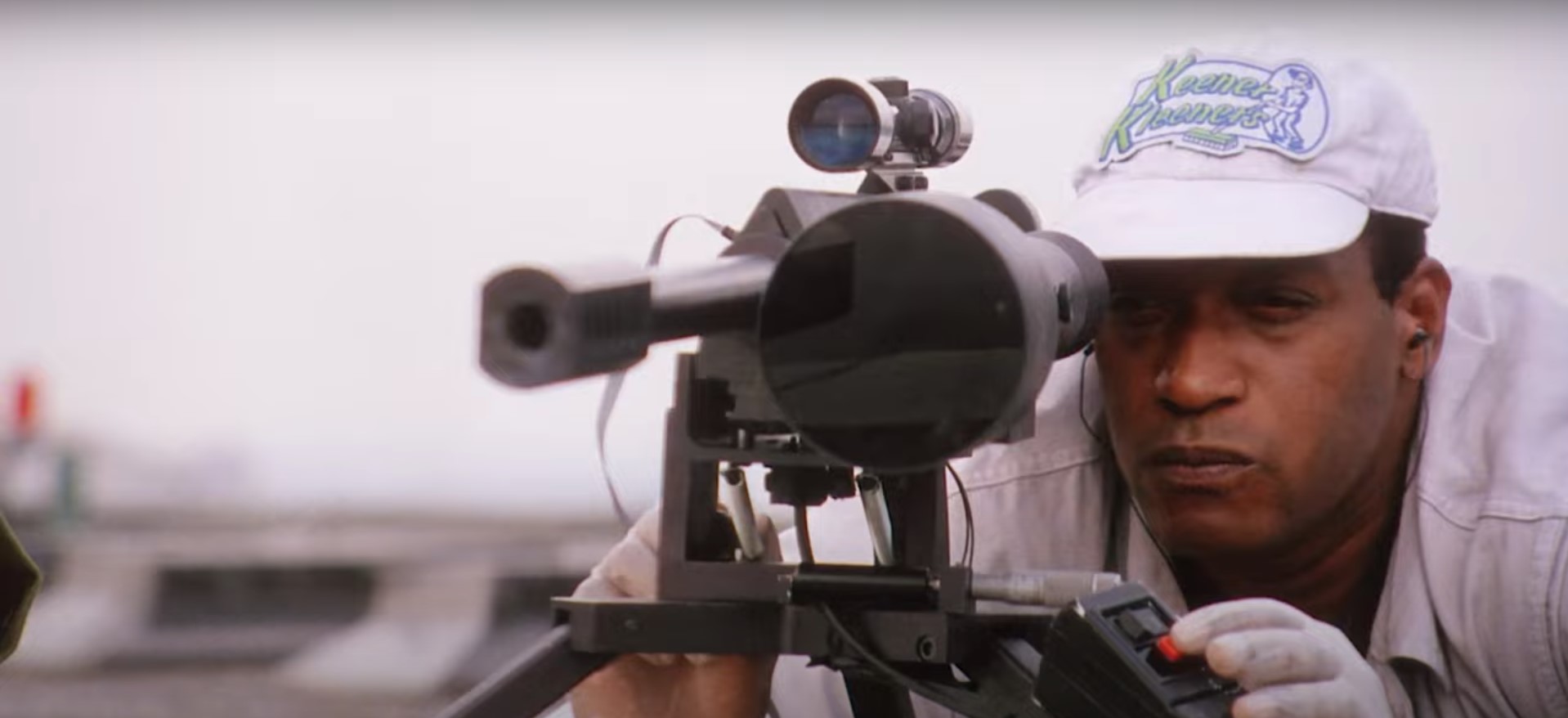
Working off another script from Rick Filon, the previous being “The Redemption : Kickboxer 5,” and hot off his humanoid cheetah role in John Frankenheimer’s “The Island of Dr. Moreau” remake, opposite Marlon Brando and Val Kilmer, the mixed martial artist Mark Dacascos plays the setup and scorned Michael Bishop, disgraced by his own military organizations, and reduced to being a bodyguard for an unscrupulous businessman.  Despite being soft spoken, Dacascos has great charisma on screen that mixes greatly with his eclectic array of martial art fighting styles, such as Muay Thai and Kung Fu.  Dacascos is a shoe in for leading man material, which also includes his swarthy good looks, and does fill the shoes of being a blacklisted former Navy Seal now on the hunt for who burned him in a botched Bosnia mission years earlier.  However, Bishop’s early motivation speaks more toward his character than his need for revenge as Bishop is not aware that it was his former attempted murderer James Sherwood, played by the towering and formidable Tony Todd (“Candyman”), who whacked his client.  Bishop becomes obsessed with the case which speaks to his loyalty and his completist mentality to see something through.  Overshadowing the leading man is Sherwood as Tony Todd instincts with this character is to be a merciless and cutting with his smooth handiwork and jibe remarks, all the while doing the horrible things with a sociopathic smile on his face.  Opposite Dacascos, in a semi-love interest role, is the pre-“Matrix” Carrie Anne Moss as Special Agent Castle who has more complexity of character than Dacascos and Todd combined.  Castle is a struggling single-mother trying to make headway in her governmental career but hits a snag when her morality is checked as she must either stay the course and go along with corruption to obtain security for her daughter or do the righteous thing and unsnarl dishonestly at the highest level with extreme prejudice for her sake of her daughter’s life.  Between the three principal leads, Castle’s arc is the steepest and more stirring with internal conflict, a testament to Moss’s performance.  Graham Greene (“Antlers”), James Purcell (“Bloodwork”), John Neville (“Urban Legend”), Heidi von Palleske (“Dead Ringers”), and Richard Coulter make up the rest of the cast.

“Sabotage” is a down-the-rabbit hole spooktacular 90s thriller, and I don’t mean spooky as in scary.  What I’m referring to is the characters’ covert agencies, such as the spooks of the Counter-Intelligent Agencies, and far-reaching operations that meddle and deconstruct a what should be a tidy organizational design with pot-stirring double-crossing, even triple-crossing, narrative paths that can be a strain to keep straight.  The film’s prelude and core story span 3 years apart and connect while there’s a simultaneous backdrop narrative that’s also connects but only exclusively in exposition.  Audiences will have to hamster wheel their mental gears to connect the dots and keep up with the pacing in this ever-evolving plotline that keeps the action caffeinated with a winding, hard-target center.  Takács also stylizes “Sabotage” with bullet-tracking special effects, high impact shelling, and an indulgence of explosive blood squibs that elevates the independent picture to an upper-class of B movie and gives the feature an edge of fun and entertainment that dichotomizes it from the more slapdash action films of the mid-90s where sex-appeal played more of a role than any other kind of actual action. 

Number 60 on the spine of MVD Visual’s Rewind Collection Blu-ray, Tibor Takács’s “Sabotage” breathes new life into the crisscrossing, projectile-pursuing, scacchic espionage extraordinaire. The AVC encoded BD50 provides a 1080p high-def resolution presented in an anamorphic widescreen 1.78:1 aspect ratio. A well-suffused and maintained print results in an excellent detailing of pixels and a punchy-noir grading. Details on the 2K scan print are historically omitted here, like with many in the Rewind Collection catalogue, but “Sabotage” doesn’t feign to be a product of enhanced visual replication with an organically pleasing form with minimal grain and only one noted frame containing age or damage wear. The uncompressed English language LPCM 2.0 stereo has abundance of vitality, discerning the layers through the dual channel funnel. Range of melee fire power has individualized zenith occurrences rendered at the right synchronization and depth makes the distinction of foreground and background dialogue, ambience, and the sort. Speaking of dialogue (pun intended), the uncompressed encoding keeps faithful fidelity, an ample and adequate of clearly expressed conversations without ever sounding muddled or lost in the skirmish. Optional English subtitles are included. Special features are little light for a Rewind Collection bannered release but what’s available packs a wallop with two new interviews with stars Tony Todd and Mark Dacascos on Zoom, or whichever face time platform is being used, going through their recollection and thoughts of “Sabotage” from nearly three decades ago. A Mark Dacascos trailer reel rounds out the special feature content. The rigid slipcover contains the reprint of the original “Sabotage” poster in a mockup of a VHS case; however, this particular Rewind Collection cover composition has less flair to sell the VHS facsimile. Inside cover art of the clear Blu-ray Amaray case contains the same poster sheet but is reversible with a less-is-more one sheet. In the insert section is a folded mini-poster of the primary cover art and, opposite, the BD50 is pressed with a plastic-patterned, VHS-tape motif. The region free Blu-ray comes unrated and has a 99-minute runtime.

Last Rites: Overall, a gratifying A/V and physical presentation of a mid-90’s, mid-level action-thriller encompassing a showcase of Mark Dacascos’s leading man chops as well as a different side to Tony Todd that isn’t encapsulated in the supernatural during the height of his career.

“Sabotage” on MVD Visual’s Rewind Collection Blu-ray!

Getting Revenge on EVIL is a 6-Year Plan! “Kill Butterfly Kill” reviewed! (Neon Eagle Video / Blu-ray)

“Kill Butterfly Kill” – Both Films Available on Blu-ray!

Caught on the wrong side of the tracks during  a torrential downpour one dark and stormy night, a soaked Mei-Ling seeks shelter in a haybarn where a group of drunk men are playing cards.  Through an intoxicated lens of brash confidence, the men rape Mei-Ling as if the whole ordeal was nothing more than a game, like them playing cards.  For Mei-Ling, the night that changed everything ate at her for six long years as she worked her way up into a nightclub business as she sought the names and faces of her attackers.  When one of the men, a crime boss, stiffs a hitman after taking out leaders of a rival gang, Mei-Ling and the assassin form a mutual business and romantic relationship, pledging to help one another’s revenge. Together, along with Mei-Ling’s most trusted female accomplices, they plot, seduce, and lure each man out of hiding and take them out one-by-one in different ways.   

“Hei shi fu ren,” aka “Underground Wife,” aka “Kill Butterfly Kill,” is the 1982 rape-revenge Taiwanese thriller from director Yu-Lung Hsu, a fast-paced crime-action filmmaker with credits “The Boy from Dark Street” and the more fantastical, kaiju picture “King of Snakes” under his belt later in his career.  The script is penned by a compeer of such genres in Ching-Kang Yao who wrote “One-Armed Swordsman vs Nine Killers” and “Superdragon vs. Superman,” starring Bruce Lee imitator, Bruce Li.  Yu-Lung and Ching-King would collaborate often, making the film one of those efforts right at the height of their joined forces; yet, the film has gone through various titles and edits, even recut and edited in new scenes into what would become “American Commando 6:  Kill Butterfly Kill” five years later from director Godfrey Ho (as Charles Lee), and trying to get a sense of the original intention has proved nothing but difficult.  “Official Exterminator 2:  Heaven’s Hell” executive producer Wu-Tung Yet produces the film what we’ll refer to as “Kill Butterfly Kill” for the sake of his review and Fortuna Film Company is the production firm and presented by International Film Distributors (IFD).

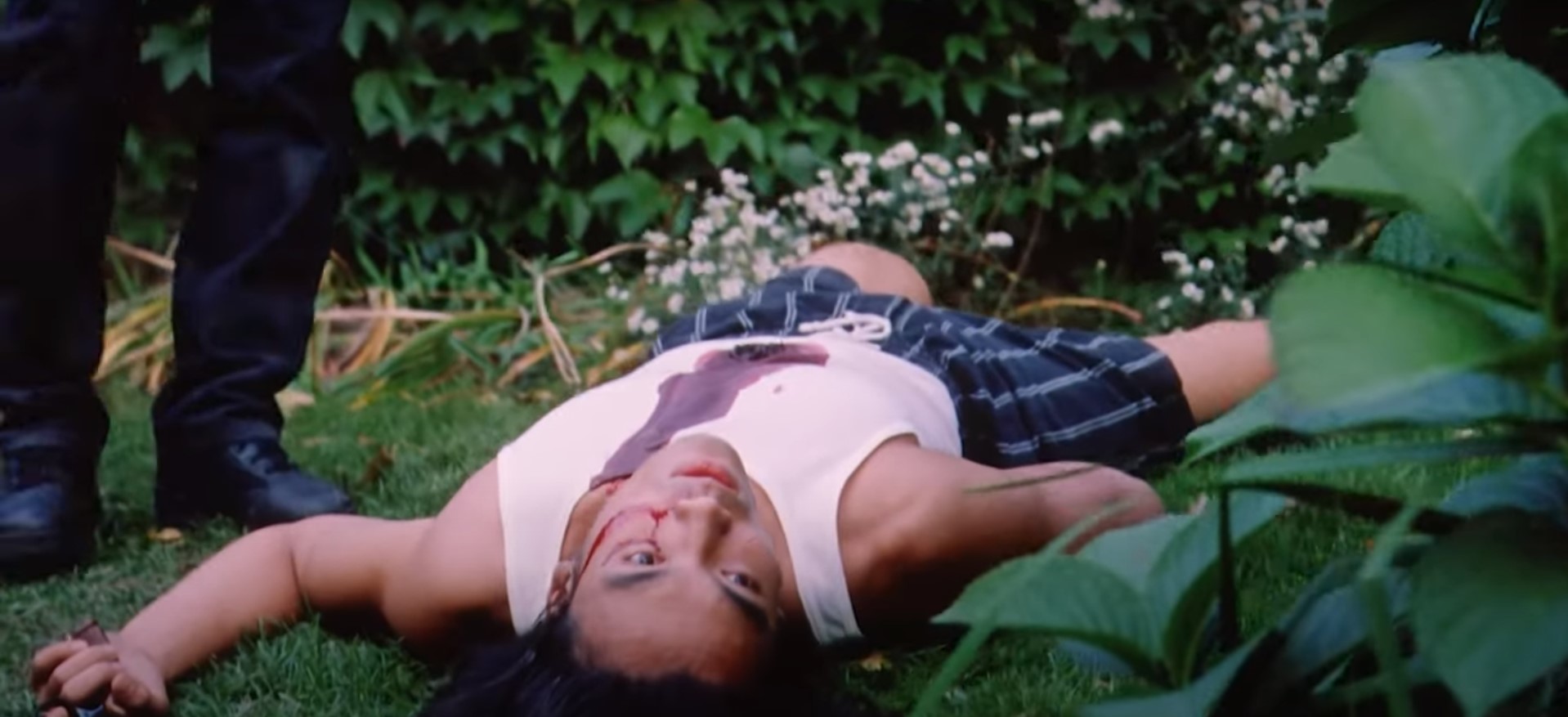
Li-Yun Chen stars as the nightclub madam Mei-Ling hellbent on lethal revenge.  Chen, who continued her career in a few other sexy femme fatale roles in “Commando Fury” and “The Vampire Dominator,” plays the damsel in distress, forced into romping in the hay with a few baboonish male drunkards.  The rape scene is nothing to be overly wrought about as the close-ripping pursuit through the barn is violently toned down and the rape is more implied than explicit.  There isn’t even any nudity of the private parts with just Chen in ripped attire and the men baring their sweaty chests.  Chen never really receives the sympathetic tone one is supposed to receive after going through harrowing humiliation and assault.  Not because of the less intense attack, perhaps more so with how jovial and goofy the intoxicated men are, but Mei-Ling is never lit in a low-point light.  Even after the rape, Mei-Ling is standing strong, glaring, and with a look of determination to get payback while still having straw hang from her disheveled hair, segueing seamlessly right into her powerful businesswoman persona six years later.  This is the point in time where, as an exclusive call girl for a powerful crime boss (Paul Chang Chung, “Vengeance of a Snowgirl”) in a variant subplot, she meets cheated assassin Shiu Ping (Sha Ma, “The Nude Body Case in Tokyo”) who becomes a kindred spirit in seeking revenge.  Their intertwining falls on a fated sword and too serendipitous to make a lot of sense but their run-in to each other makes for good buddy action, an assassin and a high-end prostitute going full tilt on some really bad men who have dispersed into their own idiosyncratic corruption paths that makes them all the more detestable when Mei-Ling and Shiu Ping come for them.  “Kill Butterfly Kill” rounds out the cast with Sing Chen, Hung-Lieh Chen, Fu-Cheng Chen, Yaun Chuan, Li Hsu, Shao Hua Chu, Ti-Men Kan, Chen-Peng Kao, Yun Lan, Fei Lung, Wen-Tseng Liu, Kuan-Wu Lung and Ta-Chuan Chang.

“Kill Butterfly Kill” is inarguably a cult film from Taiwan with sordid themes coursing through its cinematic circulatory system.  Conjoined with the rape-revenge aspect, one of the staple themes of the genre, society corruption, gang wars, assassination attempts, prostitution and martial art skirmishes and brawls run rampant and serve “Kill Butterfly Kill” as Eastern grindhouse ambrosia.  Yet, the seemingly positive film style paraphernalia can also be detrimental.  In the case of “Kill Butterfly Kill,” there’s not a clear cut profile from Yu-Lung Hsu with lot to ingest but not a ton targeted nourishment.  The rape-revenge aspect, which feels like the keynote, foundational plot, careens into awkward comedy and the swindled assassin territory a little too much or invests heavily into the sudden and unexplained relationship between the two protagonists without much background or backstory. There’s no phoenix moment of rising from the ashes with a quick cut from the rape to the revenge without delving into the nitty-gritty details needed to satisfy an important sympathetic and empathetic resurrection.  Sha Ma’s assassin feels like a threadbare connection serving mostly for patriarchal palaver because, surely, a woman couldn’t undermine five influential men by herself, right?  In any case, what’s filmed is filmed, and the fight coordination doesn’t displease with fast-paced action and quick-striking movements.  There’s also a lean cinematographer stylistic palette that fashions surreal moments to coincide with fast action, offering unique methods in tracking down, seducing, luring, and inevitably dispatching the scum.

The film having been through multiple remixes, edits, and being obscure to begin with, the Neon Eagle Video’s 2-Disc Blu-ray release restore what’s feasibly possible in effort to showcase the best possible elements.  In return, the quality on the AVC encoded, high-definition BD50 houses a variable image that never falls terribly below par. The best surviving print is a burned-in English audio export now scanned in 4K and restored to the best possible extent that still sees vertical scratches, frame damage, splicing, and possible print decay. Yet, that doesn’t halt the fast-acting, slow-motion, and tripping visual lenses from being savored. Coloring’s limited saturation offers a flat, little-to-no, pop but there’s quite a bit of exterior light coming through the lens, creating a vivid lens flare effect that makes print have designer appeal. Aforementioned, the burned-in English DTS-HD 2.0 mono dub is the only audio track available and is about as gum-flapping as the next dub track over the likely original Mandarin, the native language track that’s presented on the standard definition presentation of “Underground Wife” in the special features. Foley’s fine with timely inclusions in the fight sequences and other naturally prescribed milieu audio bytes important for the story. English SDH subtitle are optionally available. On the first disc, “Underground Wife,” the feature’s original title and as I already mentioned available in the special features in standard definition, is a bonus version of the film in the original language audio. Also included an audio commentary by Podcast on Fire Network’s Kenneth Brorsson and Paul Fox as well as the “Kill Butterfly Kill” trailer. The second disc contains the remix of the 1982 film with the release of a 1987 “American Commando 6: Kill Butterfly Kill” with more-or-less the same premise except with the newly shot and edited in scenes of International Film Distributor (IFD Films and Arts Ltd.) regulars Mike Abbott and Mark Miller intercut to fit into the narrative that’s expanded by bringing in a powerful crime boss syndicate and his endless Rolodex of assassins. Also scanned and restored in 4K, “American Command 6: Kill Butterfly Kill” has a little more color in the cheeks and is in much healthier celluloid shape. I actually like the bastardized, Frankenstein cut better because of not only the image quality but because the fights show more intensity, but this isn’t to say “Kill Butterfly Kill” scrapes are poorly orchestrated – just different. The second disc also comes with the trailer and an IFD trailer compilation. The non-slipcovered release is housed in a clear Blu-ray Amaray with reversible cover art – one for each of the features. Inside, there’s a disc on either side of the cast featuring composite and illustration art for the respective features. Both films are region free and are not rated with “Kill Butterfly Kill” clocking in at 87-minutes and “American Commando 6: Kill Butterfly Kill” done in 90-minutes.

Last Rites: IFD had procured the rights to “Underground Wife” and mercilessly re-edited and re-mixed the storyline through the meatgrinder, producing two English exports for quick cash, and while intelligible to extent, each version carries a volatile variation that leads to a problematic personality disorder that loses sight of the story’s initial purpose. In the end, the differences denote diversity within the same framework, like facelifting a building with its original good steel bones, and shows how fluid and flexible the editing room can be as long as possibilities and creativity can prevail.

“Kill Butterfly Kill” – Both Films Available on Blu-ray!

Bruce Lee Fought EVIL for Justice. Mark Swetland Follows Lee’s Footsteps in “Blood and Steel” reviewed! (SRS Cinema / DVD)

Hiyah! “Blood and Steel” – the Lost Kung-Fu Film now on DVD!  

The brutal murder of his sister and her husband sends Mark Swetland into a vengeful fury.  Behind the heinous act, a drug smuggling organization, using a steel fabricating warehouse and a dojo school as a front, had sent a merciless assassin to take out Mark’s sister after a previous incident with the organization’s personnel that could bring down the whole drug shipment operation.  As Mark investigates for answers and track down those responsible, he’s greeted with hostility and uses his extensive martial arts experience, and a little help from a few of his closest allies, to bring the syndicate down once and for all, but the cruelty conscious conspirators don’t plan to go down without a fight as they kidnap Mark’s girlfriend and hire a mercenary fighter to bring the fight to them on their own terms. 

If you’re a martial arts film connoisseur or just an aficionado of the action-packed genre, here’s an obscure title from 1990 you desperately need to get your hands on, today if at all possible!  “Blood and Steel” is the Bruce Lee dedicated crime and martial arts actioner from producer, writer, and director, Mark Swetland.  Yes, Mark Swetland plays himself, Mark Swetland, as the unstoppable, vengeful vigilante hero in his own production that pits him going solo against a scumbag kingpin and his narcotic import-export empire.  Only recently discovered after being lost for decades, “Blood and Steel” breathes fresh 2023 air with a new DVD release and institutes a brand new, never-before-heard maxim, created by yours truly, of though white men can’t jump, they can certainly Kung-Fu.  Perms, handlebar mustaches, and tight fitting and unappealing fashion grace the screen as nunchakus and hook kicks pave the way for this seriously gratifying choreographed Kung-Fu spectacular to be resurrected from the cache of forgotten films of the cinematic cemetery, shot in and around upstate New York complete with the N.Y. accented, short-a phonological vernacular.

Mark Swetland, proprietor of a safe and vault cracking company in Cheektowage, New York, was once a martial arts instructor.  At the current age of 62, Mark has looked to cracking open safes instead of cracking open heads with his mixed martial art skills but Swetland also once dappled in film, developing his own low-budget Kung-Fu caper, inspired by his martial arts idol, the late and legendary Bruce Lee.   Ponying up much of the funds for what would be “Blood and Steel,” Mark poured every ounce of his soul and craft into the film that displays his range as a fighter as well as getting his chops busted in delivering lines and acting out emotions.  The former was more of his forte with asserting a magnetic presence as both an onscreen fighter and a competent choreographer to have the fight sequences appear realistic and quick against a slew of antagonistic opponents.  As a thespian, Mark often borrows too heavily from Bruce Lee with overzealous fist poses to even echoing Lee’s idiosyncratic short and elongated kiai sounds.    Swetland’s one-on-one scene with fellow martial artist David Bobnik, as the hired hitman Steiner, is well thought out coordination with lighting punch-kick combinations that would rival the best genre films of its time.  Neither Swetland or Bobnik are overly muscularly cut bodybuilders or the zero percent body fat of Bruce Lee’s rail frame as both men are in an ideal, physically fit shape to add to scenes test of time and doesn’t yell amateur hour of wannabe martial artist attempting half-hearted roundhouse kicks for their low budget movie.  “Blood and Steel” round out with a cast that includes Joanne Gargliardo as Mark’s girlfriend, David Male as drug kingpin Mr. Patterson, Elaine Arnone as the slain sister, Diane Zdarksky as the sister’s best friend, Rick Swetland as the sister’s slain husband, and cinematographer Al McCracken has the role of Mark’s best friend and sidekick to the end, Roy. 

Influenced by quintessential Bruce Lee films, “Blood and Steel” is entirely an homage to the exceptional action icon.  Mark Swetland’s film derives elements from “Enter the Dragon” with a plotline of the protagonists’ sister being killed by a drug trafficking enterprise as well as straight down to Mark Swetland’s yellow tracksuit, the same Bruce Lee wears in “Game of Death” with black lines down the arms and legs.  Despite the derivative aspects, Swetland still manages to output an entertaining reel in what has resulted as a passion project that has been stowed away and forgotten only to be unearthed as a transmogrified time capsule of awesomeness.  Swetland, who wore many productional hats, also edited, scored, and did sound design with a fair amount of adequate know-how.  Transitionally between scenes, “Blood and Steel” works to segue into the next scene with various connective images or fade away dissolve without appearing abrupt or muddled.  The additional Foley work, such as the whipping sound of the nunchakus, are done on a synthesizer with an unquestionable audio yield.   “Blood and Steel” has a little bit of everything that is very indicative of a Bruce Lee actioner.  Dirt bike chases that soar from off of a cliff into an exploding heap at the bottom of a ravine, forward and reverse car chases involving a 80’s Corvette Stinger, practical effects from throats being cut to spike cleats becoming lodged into the back of skulls, ridiculous over-the-head, over-the-knee backbreaking fatalities, helicopter entrances over the colossal Niagara Falls, shotgun squib explosions, and much, much more blood-churning excitement can engage the viewer into “Blood and Steel’s” edge of your seat conflict. 

Emerging victorious as a SRS Cinema home video release is the obscure revenge-action thriller “Blood and Steel” on DVD.  Presented in the boxy 1.33:1 aspect ratio, the standard definition 720p resolution, plus the type of camera being used seen in the bonus feature’s outtakes and the impurity characteristics of the image quality, all point to a super 8 shot feature.  Lined left with barely visible sprocket holes and occasionally lined right, a visible magnetic audio strip, often blue in hue, “Blood and Steel” is without a shadow of a doubt a glorified home movie in the right hands of Mark Swetland.  The washed look is a tell sign of no overlay grading, the tri-color emulsion layer remains as the original, natural grading, creating less shadowy contrast but remaining consistent and more-or-less delineated.  The English, single-channel mono track is about as flat as a pancake, if a pancake could make noise.  With hardly any depth, a steady crackling throughout, and depending on the camera mic placement in the shot, some scenes’ dialogue can barely be heard under what sounds like a soft breath or mumble while others are clearly audible and render no issue with understandability. SRS Cinema’s special features include a Fight Analysis with Mark Swetland and David Bobnik going over scene-by-scene, sometimes in slow-motion repeat, their fight sequences and explaining in commentary fashion how the crew set that all it up. Also included are outtakes, the original trailer, the new trailer, and other SRS trailers! The physical DVD sports the original “Blood and Steel” poster plastered inside a standard DVD case of an 80’s retro-rental mockup with color-coded round stickers of the genre action and of the Please be Kind & Rewind phrase. The disc art is a blowup of Mark Swetland from the original poster art. The film runs at a brisk 87 minutes, is region free, and is not rated. “Blood and Steel” has the independent spirit of the dragon, a fierce and fire-breathing martial arts film with fervent laudation for the late Bruce Lee, and is a white knight knockaround and Kung-Fu Flick that is vengeance glorious.

Hiyah! “Blood and Steel” – the Lost Kung-Fu Film now on DVD!  

Romance and Chinese Boxing Don’t Equal EVIL and That’s Okay! “Gorgeous” reviewed! (88 Films / Blu-ray)

Fall in Love with “Gorgeous” on Blu-ray at Amazon.com!

Bu believes in true love.  The young Taiwanese girl, with immense positivity, travels from her small fishing village of Jibei to the big city of Hong Kong after discovering a bottle containing a romantic note floating in the sea.  When Bu is let down by the originating sender, a gay makeup artist in an attempt to use fate and fortune to bring back an ex-lover, she strikes up a friendship with him which leads to a wealthy business owner and Chinese boxing enthusiast C.N. Chan who serendipitously comes into her life.  With a well-known reputation of being a rake, Bu pretends to be a prominent ex-lover of a notorious crime boss in order to not be taken advantage of as she slowly falls for Chan’s playful charm.  A longtime rival businessman causes conflict by driving a wedge between Bu and Chan as fight training intensifies after losing to his rival’s hired professional fighter and Chan loses sight of what’s really important in life – happiness.  

International martial artists superstar Jackie Chan makes his debut on our little boutique review blog for his Hong Kong cult film, the 1999 romantic comedy with stellar fight sequences, “Gorgeous.”  “Forbidden City Cop” writer-director Vincent Kok teams up with Yiu Fai Lo and the “Rush Hour” star to pen a new kind of story for the stuntman and martial artists that would put a roundhouse kick of insecurities onto any action star’s chin.  Based on the Ivy Ho (“The Accidental Spy”) story, “Gorgeous” involves more than just punches, kicks, and high-flying antics with a comedy romance story about two very different people and perspectives finding commonality in unflinching happiness, joy, and love.  Jackie Chan does comedy very well but the comedy in “Gorgeous” is half non-physical, which the action star has mastered the craft by integrating into his physical model.  “Gorgeous” is a production of Golden Harvest Productions and is produced by Jackie Chan and then Golden Harvest president the late Raymond Chow.

Obviously, you can’t have a Jackie Chan movie without high-level martial arts action.  In the same breath, Jackie Chan wanted to give his Asian fans another movie after the tremendous success of “Rush Hour” that sent the longtime East-adored icon into global stardom.  Thus, “Gorgeous” was born, developed, and rewritten to add Jackie Chan as the lead character, playboy and business tycoon C.N. Chan, alongside costar Shu Qi of “Sex and Zen II” and “The Transporter” with Jason Statham.  As Bu, Qi develops a starry-eyed longing for unequivocal romance that you can only find in fairytales and storybooks as she is confronted by the puppy dog eyes of the local fishing boy proclaiming his love for her only to be rejected by Qi’s downplayed naivety that makes her appear to be the village simpleton.   Yet, the character is surrounded by a carefree comedic mom-and-dad of beer-drinking restaurant owners, Sung-Young Chen (“Hello Dracula”) and Elaine Jin (“The House That Never Dies”).  As a flirtatious couple of Bu’s hopeless romanticism driven by the signs and kismet and Chan’s all-business, no-play waning for a girl to be childlike to bring out the dormant happiness inside him, Jackie Chan and Shu Qi manage to never close that gap to fully immerse themselves as onscreen love interests in their 80’s structured amorous narrative and go get’em montage.   Where “Gorgeous” charisma lies is with Chan’s mano-on-mano dual with Jackie Chan’s hired member of his stuntman team, Brad Allan.  The former Australian gymnast and Chinese circus acrobat has a towering magnetism about him despite only standing 5’4” tall, shorter than Jackie Chan.  The fight sequences between the two nimble men with incredible speed and form, mirror each other with precision in their own individual styles, garner some the best one-on-one choreographed bouts ever to hit the screen and to be felt by the audiences with hard-hitting throws.  While the impact of the Chinese boxing is palpable, Chan and Allen pepper in lighter moments of great physical comedy that take the intensity down a notch in a welcoming reprieve from solemn combat.  That solemnity in Allen’s character is greatly received and adds to his magnetic appeal that doesn’t make the mercenary fighter a bad guy though hired by the antagonist (Emil Chau, “Super Cop 2”) of the story; instead, Allen’s fair without pulling punches and without dirty tricks, as he mentions to Chan to avoid, and we end up rooting for both men’s dignified square up being battled not in a square ring.  Tony Leung Chiu-wai (“Internal Affairs”), Ken Lo (“Holy Virgin vs. The Evil Dead”), Tats Lau (“Dating Death”), Richie Jen (“Tales from the Occult”), Siu Wai Cheung, and “Kung Fu Hustle’s” Stephen Chow costar.

While “Gorgeous” may not be evil in the least for our conversational liking and our in-depth coverage with its abundance of lighthearted goodness, romanticized ideals, and slapstick comedy, the turn of a century film has cult qualities with shoddy 90’s effects, intricate fight choreographies, and eclectic, eccentric performances that make the Hong Kong-Taiwan product standup and standout to be noticed.  The fight sequences alone swallow much of the attention and overwhelm a rather flimsy passionate plotline between C.N. Chan and Bu in what stirs between feels more platonic than desire.  “Gorgeous” attempts, and succeeds to a version of a successful end, a theme about positivity and happiness and how that brightness can be diminished by deceits, workaholism, and distracting contentions, sucking the joy from out of life and spitting out a solitude bitterness without any kind of understanding of how it all happened.  We see this more in the dynamics of business rivals Chan and L.W. Lo, two childhood friends driven apart by their subjective comparisons as they try to top one another, culminating from their back-and-forth to see who is the best at everything into the realization that their bond was ultimately worth more than success at material things.  This enriching theme, plus Jackie Chan’s stunt team work, pushes asides the infatuation glop of Chan and Bu’s playful childlike intimacy that just seems to slip through your fingers, unable grasp traction to be interesting enough.

“Gorgeous” receives an 88 Films’ 2K overhaul with a Blu-ray upgrade from the original film materials of the Hong Kong & International versions of the film, delivering two cuts in high definition 1080p and presented in an anamorphic widescreen 2.35:1 aspect ratio.  The AVC encoded BD50 offers plenty of room for “Gorgeous” to look, well, gorgeous on hi-def with a vibrant, spotless transfer of the 35mm shot print.   Coloring is consistently stable and rejuvenated for a fresh picture image; no one-off blips or glitches on the grading in sight on this very azure and teal toned production.  Despite holding two features and a handful of extras, the dual-layered single disc offers no hint of compression issues, creating a smooth beginning to end viewing.  The Hong Kong cut comes with a Cantonese DTS-HD 5.1 MA while the International Cut comes with the same as well as an English DTS-HD 5.1 dub track.  For authenticity purposes, the original native language is always the preferred choice and the Cantonese track on the HK cut simply shines with an orotund dialogue track, robust milieu and ambience, and a blended bubbly and businesslike score whenever the mood hits by Dan-yee Wong.  Balanced and kept in the check, neither track overtakes the other with a timely parallel consonance.  The newly translated English subtitles are paced well with error-free transcription.  Special features include Shy Guy – Andy Cheng, a member of Jackie Chan’s stunt team, discusses the rise of Brad Allen as well as note on the stunt team in general and Jackie Chan’s success at the time of “Gorgeous,” an interview with director Vincent Kok on Chan’s unfamiliar territory into romantic comedies, an archived making-of “Gorgeous” with raw and behind-the-scenes footage and interviews, “Gorgeous” music video in Cantonese and Mandarin, and the Hong Kong and International trailers.  The limited edition slipcover feature is a cardboard o-slip with illustrative art from 88 Films graphic artist Sean Longmore overtop a 2 to 3 millimeter thicker Blu-ray snapper to house the 32-page color booklet with daily set report of “The Accidental Spy” by writer Matthew Edwards and behind the-scene photos, a dual-sided mini-poster of Longmore’s slipcover art and the original poster one-sheet, a disc pressed with the image of Shu Qi smiling, and reversible cover art with the original poster one-sheet and a couple of “Gorgeous” stills joined together on one half.  Each cut is drastically different in length with the international cut heavily trimmed at 99 minutes while the HK cut keeps unedited at 2 hours.  Both features are not rated and are both have a region A and B playback with C untested.  Jackie Chan has always been a pillar of entertainment and “Gorgeous” is no exception to the rule.  88 Films refreshes the now 24-year-old film with a new, exciting transfer and physical package that commits one of the best fights in cinematic history to hi-def.

Fall in Love with “Gorgeous” on Blu-ray at Amazon.com!