There is no EVIL like the Firefly Family! “3 From Hell” reviewed!


A bullet-riddled shootout with police left Baby Firefly, Otis Driftwood, and Captain Spaulding full lead, but not dead! The trio barely survives despite getting shelled by 20 gunshot wounds a piece and are tried and incarcerated for over a decade in maximum security prisons. After Captain Spaulding’s wears out his welcome on death row and becomes the first one executed, a merciless escape carried out by Otis’ half-brother, Winslow Foxworth Coltrane aka The Midnight Wolf, leaves a trail of blood and violence in their wake up to freeing Baby Firefly who can’t wait to play and unleash her uncontrollable crazy cyanide upon the world. However, there’s only one itsy-bitsy problem – they’re faces are about as dangerous to themselves as they are dangerous to others. The three from hell vamoose to a dumpy Mexico town to start afresh, but little do they know, no place is safe for long.

Over the span of 16 years and 14 years since “The Devil’s Rejects,” shock rock and rockabilly, metal rocker Rob Zombie returns to write and direct the third and highly anticipated sequel film in the Firefly trilogy with “3 From Hell.” The 2019 continuation of the Baby, Otis, and Captain Spaulding rejuvenates interesting in returning hellions that’ll undoubtedly wreak havoc across the midwest plains, splatter some brains, remove some flesh, and, well, you get the gist of their unholy hobbies. “3 From Hell” had to literally dig out these characters from the grave since being shot to shreds at the end of,***spoiler alert***, “The Devil’s Rejects” and Zombie was able to sell Lionsgate and Saban Films on the story divergent from the last film, much like “House of a 1000 Corpses” horror show went straight into exploitation extravaganza with “The Devil’s Rejects.” “3 From Hell” is a whole new animal, an anti-hero’s indulgent fantasy of crime, action, and still barely kickin’ to kick ass through the rampaging blood.

The three in “3 from Hell,” Baby Firefly, Otis Driftwood, and Captain Spaulding, return for one more three amigo misadventure through hell and brimstone and the original cast, respectively include Sheri Moon Zombie, Bill Moseley, and Sid Haig, suit up to be a depraved family once again. Sadly, Sid Haig’s health rapidly deteriorates in the midst of filming, leaving Zombie no other choice other than to write him quickly from the script and introduce a new character, a transgression tyrant to pass the torch to, with Winslow Coltrane played fittingly by “31’s” Richard Brake. As though like never missing a backwoods bumpkin beat, Richard Brake embraces the Midnight Wolf and breaks in the character with such ease and fortitude that the question never arises if the Midnight Wolf should be a part of the sacred Firefly pack. Sheri Moon Zombie steps out of a time machine and right into Baby Firefly, despite being a little aged around the eyes. The quirky and unpredictable Baby doesn’t reinvent the wheel, which should please the fandom, and is a wonderful sadistic mecha with Sheri Moon at the helm. The same can be said about Bill Moseley who, goes without saying, has a unique voice that’s been rebranded as Otis Driftwood. Every other movie, old or new, with Bill Moseley starring, or not starring, will forever be tainted by Otis Driftwood for when Moseley monologues or even just speaking one or two words of dialogue, the spine starts to twinge and tingle, the hairs shoots straight up, and that stepping on your grave feeling of cold desolation swallows you in an instant. The “3 From Hell,” plus Coltrane, face the world with a big knife and lots of guns and those who stand in their way are played by co-stars Danny Trejo (“Machete”), Jeff Daniel Phillips (“31”), Emilio Rivera (“Sons of Anarchy”), Richard Edson (“Super Mario Bros.”), Pancho Molar (“Candy Corn”), Dee Wallace (“Cujo”), Sean Whale (“The People Under the Stairs”), Clint Howard (“Evilspeak”) and Bill Oberst Jr. (“Dis”).

Rob Zombie has mentioned in a behind the scenes featurette that he didn’t want to recapture the magic of the previous Firefly cruelty and the rocker-filmmaker has done that just, straying away from the horror of “House of the 1000 Corpses” and the exploitation vehemence of “The Devil’s Rejects,” which the fans groveled for, and going bravely, or blindly, into crime action with the “3 From Hell” that still’s beholden to Rob Zombie’s hillbilly swank. Rob Zombie risks a new path and also gambling on more of Lionsgate’s capital with showing off more visual effects than in the former films. Bullets tearing through flesh and flying straight toward the camera lend to example of the computer imagery effects that, from a fan’s perspective, dilute Rob Zombie’s adoration for horror who takes less and less chances with this film that not only feels rather ordinary and just another piece of maize in the field, but “3 For Hell” also doesn’t feel to have substance to all the madness. Baby, Otis, and Coltrane go from point-to-point, aimlessly pondering what’s next, and just happen to fall into a barrage of bullets and blood, rather than being the epitome of evil bring vile upon mankind. Just being a Rob Zombie film that resurrects his beloved and beguiling modern iconic characters, “3 From Hell” coopers the longing with a fierce show of violence that opens the door for one more installment.

Lionsgate and Saban Films, along with Spookshow International, proudly presents Rob Zombie’s “3 From Hell” onto a R rated DVD and an unrated, 1080p Blu-ray sheathed inside a slipcover. The two disc, dual format release are both presented in a widescreen, 1.85:1 aspect ratio, and the image is about as sleek as they come with an ARRIRAW formatted 2.8k ARRI camera that shoots 48fps. Zombie reins back on the color palette and hones onto more natural coloring. The details are delineating, as aforesaid with Sheri Moon Zombie’s crows feet. The English language 7.1 Dolby TrueHD audio track is lossless with a crisp dialogue and ambient mix. The range and depth are robust with explosions and gunfire. The release comes with Spanish subtitles and English SDH subtitles. In accompaniment with the 115 runtime, bonus features include To Hell and Back: the Making of 3 From Hell which is a 4-part documentary on the Blu-ray only and both formats include an audio commentary from writer-director Rob Zombie. Also included is a digital copy to instantly stream and download onto personal devices. The horror element might be gone, but the inexplicable chaos surges through death row to desperado Mexico in Rob Zombie’s “# From Hell!”

Own “3 From Hell” on Blu-ray/DVD!

Evil Sows With Others’ Body Fluids! “DIS” review!


Ariel Konk, A former soldier fleeing from his regrettable past, seeks refuge in an isolate cabin located deep in the forest, adjacent to a lagoon. Struggling to live off the land and coping with loneliness, the soldier marches on, exploring his new, secluded surroundings. His loneliness comes to an end when investigating the ruins of a dilapidating building structure, spotting a masked half naked female and as he pursues her, Ariel witnesses her voluntarily jump from the highest level of the opened air building. Wrought with anguish, Ariel attempts suicide only to be knocked out before he could pull the trigger on his rifle. He wakes up being chained to the wall with a mute, mask figure drugging him and extracting his blood and semen fluids as necessary nutrients for a nearby Mandrake garden. A practice that has been executed many times before Ariel’s arrival.

“DIS” is a bordering arthouse horror film from writer-director Adrian Corona (“Nariz Ioca”). A blend from a horror influenced literary poem and a mythological folkore, Corona crafts a lurid, hyperbolic story that pulls, as Cornoa describes as a prefix of sorts, from Dante Alighieri’s epic journey through hell told in Dante’s Inferno, using the City of Dis that’s described as a lower hell for sinners who’ve committed violent and fraudulent transgressions, and interlocks that inspiration with the archaic lore surrounding the Mandrake plant that involves superstitiously condemning those to hell after reaping the intensely narcotic plant with the human shaped root and that would, also superstitiously, scream when pulled. “DIS” is full of interpretative terror through the 61 minute runtime that’s virtually expressive. Corona provides little dialogue to his script, keeping most of the dialect scribal incased within flashback confines, and let his actors’ raw emotions and visceral eloquence provide the tale that’s peppered with moments of visual shock and cathartic abhorrence.

I’ve said it once and I’ll say it again, Bill Oberst Jr. is one hell of an actor. The upcoming Rob Zombie “3 from Hell” actor has become a prominent staple professional in the indie horror film circuit, tackling the bizarre, the inexplicable, and the most difficult of roles with such vigor and passion that his motivation is seemingly inhuman. Right up there with “Deadly Revisions,” “DIS’ tops or equals being one of the best performances of his career, from the perspective of this reviewers’ cache of Bill Oberst Jr films. There’s quite a bit of difficulty catching up to the man who roughly does, whether as a lead or as support, 10 films a year! As Ariel Konk, Oberst captures the essence of pain and anger that saturates the character’s own personal delirium and hell with his past mistake catching up to his self-battered soul. The faceless figure who opposites Ariel feeds off the ex-soldiers repugnant and guilt-riddled past actions in a seemingly perverse mission that’s actually mandated by the suspected demon’s Mandrake lot. The plants are held in a nursery for engendering creatures, but what kind of creatures exactly? Other demons from the seed of murdered vehement people?
Remaining cast include Peter Gonzales Falcon, “Prison Heat’s” Lori Jo Hendrix, Manuel Dominguez, and Anne Voitsekhova.

The casual viewer will inherently disavow the hour spent watching “DIS” due to a number of reasons, whether it’s Ariel wandering the forest for more than half the film, or dialogue is fairly infrequent, or the chaptered sequence of events don’t perfectly describe just what the hell is going, or, just perhaps, the motif of genital masturbation and mutilation is just too much to stomach. Either way, “DIS’s” traction will slip and only a few are willing to get dirty and push the story forward with open mindedness and artistic appreciation. Speaking of artistic appreciation, Rocco Rodriguez’s cinematography is a character upon itself. The top of a Cofre de Perote volcano in Perote, Veracruz, Mexico during principal photography has breathtaking visuals that Rodriguez captures exquisitely and becomes a backdrop against the coarse material. Outside is vivid, bright, full of life, but when in the belly of the rundown structure, the manmade confines are claustrophobic and crummy, infernally ablaze for ritual, much to the akin of Dante’s Inferno. Rodriguez, again, depicts lustrous imagery that assists in telling Corona’s nightmarish story and that’s a skill all can recognize.

MVD Visual and Unearthed Films present Adrian Corona’s enigmatic and surreal “DIS” from 1922 Films onto high definition Blu-ray. The region A release is presented in a widescreen, 1.85:1 aspect ratio, and has the near epitome of perfect with, again, Rocco Rodriguez stunning photography. The lighting really comes to the fold that upheaves the brilliancy in the textures, such as in the building’s illustrious graffiti, and dares to switch to black and white when appropriate. Skin tones are fresh looking and natural in colored scenes. Only a minor aliasing issue around Obsert flared up momentarily, but ceased going forward. The Dolby Digital 5.1 surround sound has forefront dialogue, but not a bit soft, especially with Peter Gonzales, that made following difficult. There was not enough examples of range or depth to necessarily comment as Oberst was essentially alone for much of the film. Bonus features include an explanation introduction by writer-director Adrian Corona, a behind-the-scenes featurette that exhibits three takes of two scenes, a wonky static menu Q&A formatted interview with Bill Oberst Jr., a short film entitled “Portrait,” still gallery, and Unearthed Films trailers. Bill Oberst Jr. is, basically, a one man show knitted into an Adrian Corona allegory of unknown terror through conduits of literary works and medieval folklore, making “DIS” prime real estate for viewers seeking a film as an open book toward abstract gardening.

Like Indie Horror and Want to Support Bloggers! Please Consider Purchasing this title from Amazon by Clicking Here! Thank you!!

Enter Into Your Darkest, Evilest Fantasies. “We Are The Flesh” review!

screen-shot-2017-02-25-at-8-55-19-pm
Struggling to survive the conditions of the outside world, a brother and sister locate shelter inside a desolated complex and stumble upon it’s strange inhabitant, a solitary middle-aged man named Mariano with a penchant for welcoming his insanity. The alcohol distilling and isolating embracing Mariano has a twisted offer for harboring the young siblings as he also puts the two to work, constructing Mariano’s trash-ridden home into a cavernous structure from taped scraps of lumber and cardboard. Mariano desperately needs them to explore unorthodox depravities upon themselves to become one with their unhinged host that forms, in more than one way, one flesh-ravenous happy family.
screen-shot-2017-02-25-at-8-51-52-pm
“We Are the Flesh,” aka “Tenemos la carne” in the original title, is an experimental art house feature from controversial Mexican director Emiliano Rocha Minter. The 2016 film harbors more than just three hermit individuals dipping their toes into a forbidden pool of acts, but also provides numerous metaphors and symbolisms that might be hard to swallow and difficult to sit through during the 79 minute runtime. “Sin Nombre” actor Noé Hernández stars as Mariano and there isn’t enough praise in the art house world from his performance that consumes his mortal being, transforming him into a well oiled psychotic machine with a blazing stare, a certifiable grin, and a defined muscular physique. Hernández steals scenes left and right from his young and novice co-stars María Evoli and Diego Gamaliel, whom are equally as brave as the more experienced Hernández in their respective roles. “We Are the Flesh” emits racy undertones by just hearing the title alone and, absolutely, lives up to the title’s very core by displaying non-simulated sex acts. Think about it. Minter’s film only has three main characters for most of the narrative and two of them are siblings. Yup, Minter went the incest route for the sake of art.
screen-shot-2017-02-25-at-8-51-43-pm
In the opening scene, heavy breathing creeps upon a black screen until the image pops open to a Mariano’s face, laboring over something. Next cut is Mariano hunched over with a high stack of baled cardboard, walking in the color tone of a dark cool blue with a slight haze engulfing him. This opening scene is one instance where Mariano is portrayed the Messiah prophet Jesus. Other religious symbolistic events that connect Mariano, who would be condemned for his actions in the Christian scope, to Jesus that occur throughout, such as being dying and being reborn, the cave aspect, the motifs of faith from the mysterious eye dropper liquid, and being the sacrificial body as if transpiring to be some sort of demented wafer during a crazed cannibal communion orgy. Of course, opening anybody’s eyes or mind to this notion can be immensely difficult and profanely sacrilegious to even spell it out in text because seeing the streaming drug use, the attempted murder, the cannibalism, and the sibling incest rule the majority of the narrative makes a case that affiliates more with an unholy antichrist rather than Christ, but I believe director Emiliano Rocha Minter, being a Mexican national and growing up in a Catholic, like the majority of Hispanics, culture aimed to blur the lines between the heavens above and the fires below and embodying them as a singular whole.
screen-shot-2017-02-25-at-8-51-34-pm
Intrinsically irrational and insatiably grotesque, “We Are the Flesh” has momentum in a colorfully abrasive form, quickly evolving from act to act with characters reemerging anew every second onscreen. What might seem as a visionless quest for the sole purpose of producing shock value can be re-construed as a message more aesthetically beautiful in man’s most detested nature. Yollótl Alvarado’s cinematic vision is absolutely dripping with gripping, mature atmospherics that are well doused in vividness while, at the same time, being despairing in a post-apocalyptic haze. The experience charges at you, pulls you into this cavernous womb, and scratches at your tender barrier lining, trying to sneakily slip into your soul. The sensation is as much unreal as the film’s avant-garde structure.
screen-shot-2017-02-25-at-8-54-38-pm
Produced by production companies Piano, Detalle Films, Sedna Films, Estudios Splendor Omnia, and Simplemente, “We Are the Flesh” is a poetic approach experimental wonder, gratifyingly brought to home entertainment fruition from Arrow Films in the United Kingdom and Arrow Films, in conjunction with MVD Visual, in the United States on Blu-ray and DVD. Between Lex Ortega’s brutal social commentary gore-flick “Atroz” and Emiliano Rocha Minter’s art house metaphor “We Are the Flesh,” Mexican filmmaking stands high and bold, unafraid to tell unapologetic stories in conservative societies; a mere taste of what’s to come, I’m positive. While recommending this type of film isn’t the easiest for status quo movie lovers, “We Are the Flesh” hopefully will expand minds, open eyes, and encourage skin-on-skin contact for the cinematic adventurers.

“We Are the Flesh” available in USA! and in the United Kingdom!

Mexico’s Stomach-Turning Evil is Here! “Atroz” review!

20tbjuo
In a wake of fatally striking down a young woman with their vehicle, two errant and drunk men, Goyo and Gordo, are arrested for the gruesome crime at the scene of the accident While handcuffed in the back of a squad car, an unorthodox police chief named Juarez discovers a video tape recorder in the front of their mangled car with a tape revealing the violent torture and killing of a young transvestite hooker. One tape leads to another, and then another, individually exhibiting a trail of cascading blood and merciless torture in the deaths caused by Goyo and his unstable and dysfunctional life. Juarez digs further into Goyo’s ghastly cases going through each horrific tape setting up Goyo for a shocking conclusion from his past he long thought was dead.
vlcsnap-00021
“Atroz” will make you never want to tour Mexico! I can fully understand why “Cannibal Holocaust” director Ruggero Deadato fully backs Lex Ortega’s graphic horror film an associate producer and presenter as the two films, separated by decades, are much alike with the majority of their likeness in found footage techniques, frighteningly realistic imitations of murder, and their artistic and austere grandeur of filmmaking narration. Ortega also sustains an effective horror feature through the confines of a problematic ultra micro-budget. Along with aid from a talented roster of actors and crew, no way was Ortega’s film was not being made. “Atroz,” translated to “Atrocious,” opens with the unsavory side of Mexico’s impoverishment that contributes to much of the Central American nation’s disturbing amount of unsolved murders. The montage opening is so powerful and moving that what precedes shocks as a gritty insight of what everyday Mexican residents might experience one way or another in their lifetime and though Ortega goes that extra mile to be obscene and disgusting in every way possible, the director supports his work with seeding a traditionally patriarchal society with gender identity afflictions that evolves organically and is purposefully displayed in reverse order to add more, if it wasn’t possible already, to the shock value of “Atroz.”
vlcsnap-00002
The outer story involving Goyo’s interrogation about his stash of tapes is only the tip of the iceberg, sheltering three background influencing stories about Goyo that set up more familiarly in an anthology manner. Inked with intricate arm sleeve tattoos and perforated with metal facial piercings, Goyo and his larger friend Gordo, which means large man in Spanish fittingly enough, seem nothing more than your typical lowlife gangbangers. However, Goyo and Gordo are more disturbed than any Mexican cholos from the first torture tape of a transvestite prostitute, a punished, bit-part role awarded to actress/singer Dana Karvelas. The next two tapes are just as hard to swallow and stomach from the assorted fluid being consumed, to the explicit varying degrees of rape, to the vivd genitalia multination, and to just the sheer ultra violence depicted makes “Atroz” the gorehound’s holy grail of horror. Never have I’ve witness a film so graphic to come out of Mexico and, by golly, I thought the world needed this Lex Ortega film. In most cases, extreme gore and shock features run a course shortly after hitting the play button on your home entertainment device, but with “Atroz,” a drive to learn more about what motivates Goyo’s unholy acts unravel little-by-little and that quality is usually omitted and uncharacteristic of explicit gore horror.
vlcsnap-00014
Performances are firmly established all around with Carlos Valencia and Lex Ortega himself leading the charge as Juarez and Goyo. While Ortega doesn’t necessary have much of dialogue role with Juarez during interrogations, the undiluted carnage he lays down on the tape recordings are a rare and twisted characterization hardly visited by the indie circuit and certainly not given the light of day from Hollywood, being mostly sidelined to an underground context. Rare is it to have one actor who can impersonate malice upon others that when a doppleganger appears in Goyo’s younger years video tape, “Atroz” becomes that much of brighter highlight as a dark film birthed from Mexico. Carlos Padilla truly frightens as the younger version of Goyo staged in an abusive household with an unsympathetic father, an naive mother, and lots of physical and verbal mistreatment. Goyo’s a psychoanalytical unicorn, an epitome of the mind’s deranged wealth, and a testament that his surroundings molded the very fibers of his intentions do commit evil. The sight of blood is all it takes arouse Goyo and “Atroz” provides the character an ocean of sangre ready for lapping.
vlcsnap-00024
Practical effects wizards Jamie Lopez and Alfredo Olguín produced unrivaled effects on a budget that didn’t provide a second chance if the effect didn’t spin right the first round. Absolutely flawless did the duo’s work gleam in the blood it was soaked in and firmly how I held on for dear life my testicles when seeing a set being cleaved graphically severed. Lopez and Olguín have a combined 23-years of experience in the special effects game and that surfaced buoyantly at the top of “Atroz’s” shocking content. In the nature versus nurture debate, “Atroz” sides with nurture putting Goyo in the impoverished and traditional meat grinder that is Mexico and spat him out where wades in a chrysalis until bursting out into a state of lust for an endless stream of revenge and blood. Ortega accomplishes nurture’s wickedness by tenfold and Lopez and Olguín exemplifies it even more.
vlcsnap-00001
Unearthed Films and MVDVisual’s limited edition 3-disc Blu-ray and DVD set includes a JH5 & Eggun soundtrack. Presented in a widescreen 1.85:1 aspect ratio, the 79 minute runtime feature sports no blemishes and falters on any flaws, baring and setting a fitting desolate tone through a number of camera options. There’s also and English and Spanish language Dolby Digital 5.1 with optional English subtitles intent on properly channeling every port of your surround sound system. A pair of issue lie with the subtitles involving quite a few typos in English and some synchronization problems delaying captioning a full second or two after dialogue has proceeded. Bonus material includes the short film of “Atroz,” a crowd funding video, behind the scenes: music and sound design, behind the scenes: practical effects, behind the scenes: production, Unearthed trailers, a behind the scenes image gallery, and, of course, the aforementioned soundtrack. Whatever you do, don’t consume any food before and during experiencing the gore charged “Atroz,” Mexico’s most deranged cinematic delicacy to date!

LIMITED EDITION 3-Disc Blur-ray/DVD/CD Set! Hurry! Get It Quick!

Seeing Evil! Curandero: Dawn of the Demon review!

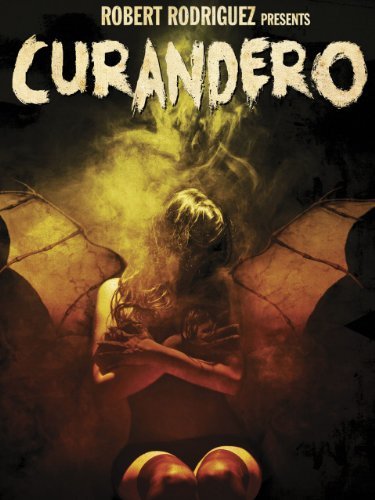
curandero-poster

By now I imagine we’re all, by all I mean avid movie-goers, familiar with the director Robert Rodriguez. The balls-to-the-wall flare for action Rodriguez has written and directed some of the most memorable movies in nearly the last two decades – Desperado, From Dusk till Dawn, Planet Terror and, yes, even Spy Kids. Rodriguez is now a well-known household name now that he has his own production company – Troublemaker Studios – and is a hot-shit friend of Django Unchained writer and director Quentin Tarantino (they’re always in each other films if you haven’t noticed). Now, I had thought that I’ve seen all of Rodriguez’s work with the exception of Spy Kids, but I was wrong. Curandero: Dawn of the Demon is a latest release from Lionsgate; however, the movie was completed and released in 2005 – why such a delay? Perhaps the delay was a product of the film being made in and using the language spoken in Mexico. I wouldn’t doubt this as El Mariachi was not known to the American audience until Antonio Banderas and Selma Hayek starred in Desperado, a sort of sequel or remake of El Mariachi, and an American DVD of El Mariachi was released later.

Curandero, which translate to The Healer, follows the healer Carlos – a practical man who uses his knowledge of healing on those he think are weak minded fools just so they feel better about their lives. That is until he meets Mexican Federale Magdalena who hires him to become involved a case where a satanic cult terrorizes Mexico City. Carlos beliefs will be challenged as black magic becomes ultimately real and the forces against him are closer to home than what he could ever imagine.
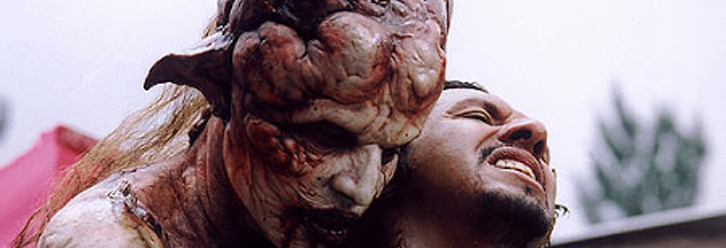
curandero1
Curandero grabs you right from the start as we’re thrown into Carlos’s simple hometown world where he competes with another curandero named Alex Munez who is more popular around town, but even though Carlos thinks his line of work is a bit of a sham, he still makes an effort to please other people making him well liked in the community and has been given respect due to his father’s healing services. The horrifying action begins when Agent Magdalena enters the story; the saucy tall Latina is a realist and doesn’t much in the mumbo-jumbo that is black magic, but her story makes a complete 180 degree turn at the finale and so does Carlos. The story is well written by Rodriguez giving the both Carlos and the federale the same view on spirituality yet making both reason completely different.

Robert Rodriguez’s style directorial feels implemented into Curandero even though Robert Rodriguez didn’t direct the film. It is another Rodriguez who takes the credit for Curandero’s fast-paced, over-exaggerated action. Director Eduardo Rodriguez tries to recreate Robert Rodriguez, but does molds his own take to reconstruct the elements and add great horror qualities that contribute to the action.
curandero2
This 2005 cult/possession film should have had a much earlier release in the U.S. There is definitely an appeal here for niche horror fans. Would Curandero have done well with mainstream audiences? No because there is just too much working against Curandero when considering American mainstream audiences – it’s in Spanish, it’s lost in translation with the dialogue, and it deals with some Mexican traditions. Certainly pick this up from Lionsgate Home Entertainment. Curandero will fill your cup of blood and horror.