They Went To Look For Their Parents. They Found EVIL Instead. “Feed the Gods” reviewed (MVD Visual / Blu-ray)


Brothers Will and Kris just lost their foster mother to a sudden stroke but the bereaving moment between their clashing personalities only lasts a minute of solace before they’re back at each other’s throats.  When Will finds a strange VHS tape in their foster mother’s last will and testament belongings, recorded in a remote mountain town, they witness their parents on the tape.  The brothers, along with the encouragement and accompaniment of Kris’s girlfriend Brit, travel to the small tourist-sparse town that seems to have been all but forgotten and abandoned by the local residents.  Instead of locating their parents, the strange, remaining locals hoodwink them in believing their quaint backwoods town is quiet and unsuspecting as they chain the brothers and Brit to a sacrificial pole then waiting until a town-terrorizing beast that craves an offering for the townsfolk’s freedom feasts upon them. 

Always on the hunt for a good, or at this point even a mediocre, bigfoot horror, coming across Braden Croft’s “Feed the Gods” seemed like an stimulating option that dabbled in quasi-bigfoot lore rather than a full blown assault of Sasquatch bombardment.  The 2014 Canadian film is written and directed by the “Hemorrhage” filmmaker as Croft stays steadfast in the thrills and chills genre.  The elusive bigfoot is not only hard to capture sight of in the deep forest undergrowth, but also difficult to find sight of in a coherent, well-made film without an inglorious narrative that doesn’t respect Bigfoot’s towering eternal myth and legend.  Hard to believe, I know, but the hairy humanoid has crumbled down to nearly a gutless pelt of its former big screen self.  Every rare blood red moon, a fiercely gory 2006 “Abominable” or a kid-friendly and effects driven “Harry and the Hendersons” comes to our salivating attention and scratches the itch until the next dumpster fire Sasquatchsploitation crapper.  Keep reading for how Croft’s “Feed the Gods” fairs amongst the fray on the Bleiberg Entertainment subdivision, Compound B (“Dahmer,” “Monster Man”), presented Random Bench (“Sisters of the Plague”) production.

Having a hand in producing “Feed the Gods” as well as having a lead role is Albert Wesker himself, Shawn Roberts (“Resident Evil” franchise), playing the half-wit older brother, Will.  Roberts’s simpleton performance can be amusing, even when dangling nonsense like his bad German swashbuckler accent, as he runs around half the film with barely any clothes on which I’m sure will give some audience a thrill that’s not horror related.  I prefer Roberts when he’s “Tucker & Dale-ing” bad guys left and coolly wriggles his way through the forest and cabins to save his more common sensed younger brother, Kris, played by Tyler Johnston.  Will and Kris constantly butt heads and Roberts and Johnston make good on the sibling rivalry effectively communicating verbally and in body language their characters’ unsatisfactory levels with each other.  Some character developments, for example Kris medicating to relieve stress, never properly fleshes out after Will and Brit discover the medicine bottle, bringing no turmoil to his relationship with the obviously pissed Brit (“Kingdom Hospital’s” Emily Tennant).  In fact, neither character grows beyond their already initially established selves, leaving a lot on the table to be desired.  Characters are interesting enough, the plight is there, the need for growth is there, actors have unearthed the personalities with an X-Acto knife and yet the narrative executive fails them, revving us up only to hit the brakes right when the light turns green.  We definitely gain more out of townsfolk in Emma (Britt Irvin, “She Who Must Burn”), Hank (Lane Edwards, “Mortal Remains”), Curtis (Edward Witzke, “The Predator”), and Pete (Aleks Paunovic, “Snowpiercer” television series) who have either root themselves as they are or struggle with a change of heart that innately arc the character completely.  Rounding out the cast is Tara Wilson, Christine Willes, Garry Chalk, Robin Nielson, and Bill Croft.

Well, my search continues for exceptional bigfoot tales of terror after my viewing of “Feed the Gods” raised a mountain of questions without sating the curiosity.  The story itself is interesting of a dilapidated and antiquated town, on the cusp of timeless ruin, are hostage to a wilderness beast that requires a human meal and for each sacrifice, a ticket is granted to a local to decamp the town, but who physically grants the ticket?  Who are the people enforcing the barrier around the town?  These are just a couple of examples that go unanswered against the backstory of the wild forest creature who was fed small animals by the natives long ago, but when the white settlers purged the land of the red plague, the beast starting devour the white man ever since.  “Feed the Gods” becomes a that classic tale of lifelong consequence where the sins of ancestors becomes the sins of their children, but there had to be this covert group, who we never meet aside from a mean ole rifle-toting farmer at the preface scene, that kept the townspeople in check for generations.  Death special effects are routine but soluble to digest and are well done, though too dark at times the locations are aplenty between cabins, caves, and forests, and, as said, the acting holds its own, but Croft’s story feels terribly unfinished with an acute cut to credits.  As soon as creature presents itself, a man in full furball suit complete with passable prosthetics and teeth, standing face-to-face with our heroes for the first time ever, the protagonists run away in separate directions and that is where the practically ends.  After you pick your jaw up off the ground in disbelief, you’re quickly try to piece together what, where, when, why and how of how Croft that this route was plausible enough to properly finish a film.  After scoping out the bonus content’s behind-the-scenes, even the creature designer Travis Shewchuk was taken aback by Croft’s sudden alterations to have a shadowy monster, silhouetted mostly in the dark, become brilliantly lit up in day sequences at the last minute and had to scramble to figure out how to make it work.  Adding another noticeable layer is the heroes and the revealed creature obviously never share the same scene with slapdash editing to make the appearance as such. 

Serve up “Feed the Gods” as your main course plated with Sasquatch mystery and with a side dish of buff Shawn Roberts in his underwear coming to you as a MVD Visual Blu-ray release on the distributor’s Marquee Collection sublabel.  The region free BD25 is presented in HD, 1080p, of a widescreen 2.35:1 aspect ratio.  For a 2014 film, the contrast between day and night scenes are, frankly, day and night with the darker framed action less than desirable discernibility. You really have to have every single light source completely turned off to spy the faint silhouettes. Day scenes settle for better but the high definition in the detail personally feels a little soft, feeding into more of upper tier standard levels of resolution experience with lush foliage surrounding. Picture is not bad, but it’s not great is the end message here. The English language DTS-HD Master Audio 5.1 surround sound mix bare little to separate itself from the other audio option, a 2.0 LPCM stereo. You hear the difference in a more vivacious, if not voracious, soundtrack, but the hike never extends beyond that to the dialogue or ambient tracks. Aside from the soundtrack that oversteps at times, dialogue is rather clean and clear. No apparent damage to either audio or visual aspects but that’s fairly expected with any digital playback. Special features include writer-director Braden Croft and associate producer-creature designer Travis Shewchuk on a feature overlay commentary track, a “Feed the Gods” behind the scenes featurette in HD which plays out reminiscently between Croft and Shewchuk, the original theatrical trailer, and reversible Blu-ray cover art. Call me jaded by my previous down in the dumpster Bigfoot film reviews, but “Feed the Gods” has none of that deity staying power to rise the Sasquatch game out of the pits of despair; in fact, “Feed the Gods” only adds more fuel to the fire in another pernicious hit to our mean and nasty, rarely lovable, man-thing, Bigfoot.

“Feed the Gods” on Blu-ray.  Click here to purchase at Amazon.com!

Pandemic EVIL Is Just Not For Dry Land Only! “Virus Shark” reviewed! (SRS Cinema / DVD)


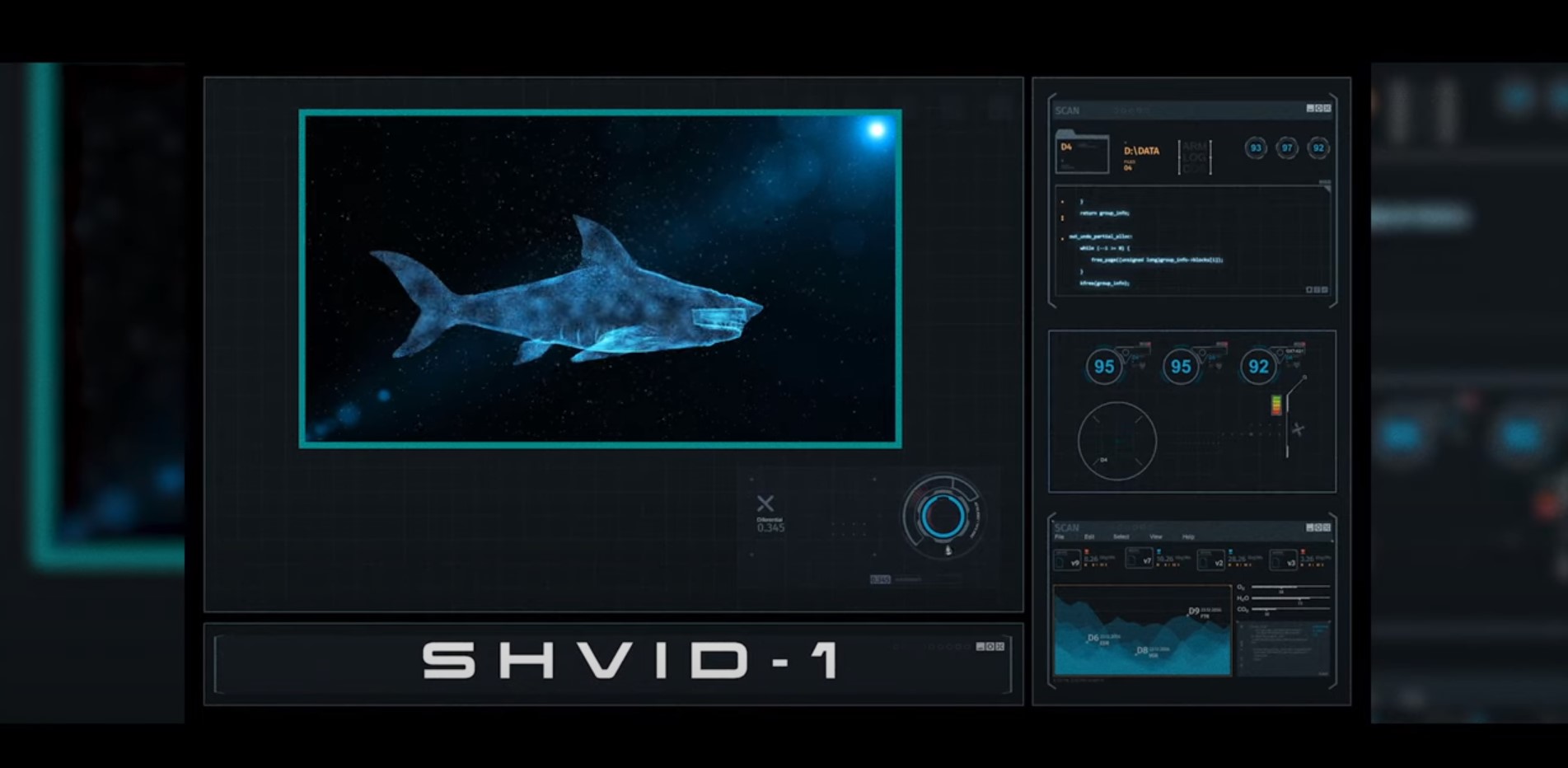
Deep at the bottom floor of the ocean is CYGNIS, a research laboratory retrofitted to be a race against the clock in finding a cure for a world devasting virus called SHVID-1.  Spread by infected oceanic sharks, a handful of shark attacks on unheeding beachgoers turns the world’s populace into mutated marauders and blood thirsty, zombified killers.  Running quickly out of time, the handful of scientists, a maintenance chief, and a security guard find themselves under pressure, literally, as the 30-year-old antiquated CYGNIS station is beginning to show signs of buckling under the ocean’s immense weight.  Factor in virus-mad sharks chomping at the station’s life sustaining systems and a betrayal by the project leader looking for cure glory in greed, a perfect storm brews 1000 leagues down overshadowing the severe global pandemic that has swallowed the world whole.  Survivors must surface topside with the cure before all hope comes crumbling down on top of them.

Okay!  I’m pretty sure director Mark Polonia parallels or exceeds my own unhealthy obsession of the sharksploitation genre with his own series of outrageous D-flicks dedicated to the gross profit of the monstrous shark rampage stigma seen in the Pennsylvania born filmmaker’s previous works in “Sharkenstein,” “Land Shark,” “Amityville Island,” “Shark Encounters of the Third Kind,” and the soon-to-be-released, the vampire and shark alliance, “Sharkula.”    Polonia’s latest, “Virus Shark,” is written by Aaron Drake and echoes the pro-Trump public ideology of willful ignorance in snubbing governmental official warnings about staying away from large crowds unmasked during the COVID-19 pandemic.  Polonia throws Megalodon-sized shade at partygoers and right wing conspiracists with SHVID-1, an obvious play on the real virus, and the sun and sand worshippers who venture into the shark infected and infested waters despite the recommended counsels to stay on shore.  Aside from the social commentary lampooning, the rest of “Virus Shark” is in shambles as a super low-end indie production from Polonia Bros. Entertainment and produced by SRS Cinema’s Ron Bonk. 

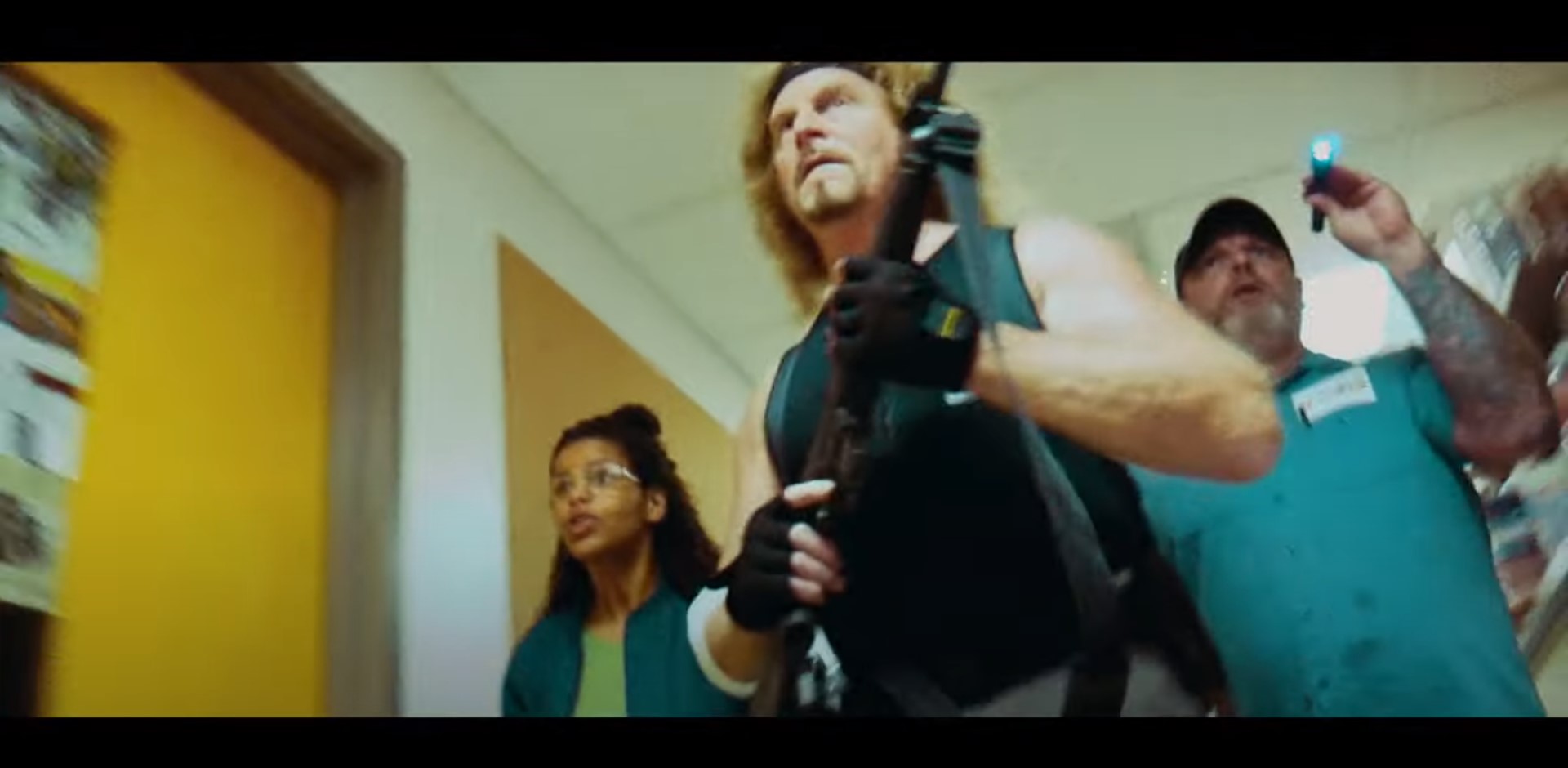
Served up as chum for contagious sharks are a troupe of regular independent staples beginning with lead actress Jamie Morgan entering her second bout with a killer shark after surviving another SRS Cinema gem, “House Shark.”  In the role of marine biologist Kristi Parks, Morgan is not free diving into the vivarium pens and wrangling or bareback riding the maneaters like “Deep Blue Sea’s” Thomas Jane; instead, the actress has a more meek stance as her limiting character transforms into a protective shield over mankind’s last known hope – a cure for the virus.  Fellow scientists Anne Satcher (Natalie Himmelberger, “Shark Encounters of the Third Kind”) and Gregory McLandon (Natalie’s real life husband, Titus Himmelberger, “Sharkenstein”) don the lab coats and spectacles to look the researcher part without actually seemingly doing anything of importance, or anything that makes sense anyway.  The team is rounded out with “Queen Crab” actors Steve Diasparra as the maintenance man Rickter D’Amato, an homage to Joe D’Amato who has helmed a trashy sharksploitaiton film himself with “Deep Blood” (read our recent coverage review here!), and the awesomely 80’s hairdo’d Ken Van Sant the dated commanded-cladded security guard and horn ball, Duke Larson.  Deliveries and any sense of conveyed emotions are a smidge above forced as if reading straight from a cue card.  The off camera stare has to be my favorite gaze into space moments, especially when an aggressive Great White beelines right toward them and the reactions are nothing more than a gaping mouth.  Van Sant wins top prize for at least giving a half-hearted attempt at empathy for a character completing a character arc.  “Virus Shark” fleshes out with Yolie Canales, Noyes J. Lawton, and Sarah Duterte who are also a part of the tight knit celluloid circle of deep-six cinema. 

Speaking of deep six, as in “DeepStar Six,” a semblance toward notable underwater horror films of the deep really do crest through “Virus Shark’s” stagnant flat surface.  Little bits of adulation toward “”DeepStar Six” with the jettisoned escape pod, “Deep Blue Sea” with the shark pool, and “Leviathan” with the topside communication sans Meg Foster sprinkle a blanket of welcoming derivativity amongst a cheaply endeavor.  When I say cheaply, I mean “Virus Shark” scrapes the bottom of the barrel with embarrassingly bad shark hand puppets, interior locations of the underwater sea lab are about as realistic as the innards of your run of the mill High School building, and every single gunshot is the same soundbite stuck on repeat, no matter the gun or the caliber.  I do admire the innovation at times.  An example I would pull would be the two miniaturized pincers matted on top of a live-action still frame used as hydraulic clamps to pickup the rather rigid shark figurine from the “pool.”  You can call it sloppy, but on a pea-sized budget, I call it thinking outside the box.  Much of the story felt underdressed, missing parts pivotal to the impelling actions that either progress cataclysmically or just drop off the face of “Virus Shark’s” malfunctioning sonar.  Under the table deals and sexual innuendos made between project head Dr. McLandon and topside liaison Shannon Muldoon are skimpy at best as well as Kristi Parks’ all for naught endgame to saving the world.  Everything seemed and felt pointless, senseless, and without merit that the “Feeders” and “Splatter Farm” director shouldn’t be totally judged by as we’ve seen much better on much lower budgets from Polonia who he and his late twin brother, John, have been around for decades making movies up until 2008 when John passed away.  Mark Polonia continues to carry the torch but the lack effort has seemingly been replaced with chugging out one scab film after the next to the tune of tone deaf gratification.

Wash your hands, wear your mask, and maintain a social distance of 6-feet from the television when swimming with the “Virus Shark,” that has beached itself onto DVD home video courtesy of SRS Cinema.  The unrated DVD is an AVC encoded single layer DVD-5 and presented in a widescreen, 1.85:1 aspect ratio.  The image quality appears relatively sharp without a hefty loss from compression, especially around the spectrum of low-cost effects that range from rigidly clean to absolutely warped and absurd, but what do you expect from a release that has the cameraman’s reflection visible in the shot and spells region with an extra I – reigion 0 – on the back cover?  Underwater sea lab shots filtered through an oceanic blue hue make due the illusion of a domed research station on the sea floor bed whereas the insides lack a production manager’s personal touch as much of the interior scenes look to be a school with an obvious swimming pool setting and many insipidly sterile hallways and rooms.  Extras on the 74 minute film include a commentary track and SRS trailers with no bonus scenes during or after the rehashed intro credits for the end credits.  The English language 2.0 mono track isn’t the peak of fidelity with the lossy audio compression and inadequate mic placement made apparent by the limited depth and range in  dialogue tracks.  The overlaid narrow foley remains on one level from start to finish finished by stock soundboard snippets.   As far as Sharksploitation goes, “Virus Shark” ranks near the bottom of the food chain.  Of course, there have been far worse killer shark films threshing in the genre pool, but the COVID parodied subaqueous actioner wades underneath the skills of Mark Polonia.

Get Infected by the “Virus Shark” on DVD Home Video!

Evil Not So Easily Vanquished in “The Song of Solomon” review!


After bearing witness the brutal suicide of her father, Mary undergoes family counselling as a result of being the cause of her father’s death with repetitive public accusations of molestation. The ill-equipped counselor suggests medical evaluation from a professional who beseeches the assistance of The Catholic Church when the determination concludes that Mary is suffering from severe Satanic possession. Directives from high positions in the Church service in waves three priests to perform the delicate exorcism; all of whom have conducted an exorcism under difficult and soul-exhausting situations. The irresolute and embattled priests field the call, blindly walking into Mary’s slithery persuasive possession state of soul-tormenting and death. The priests will tirelessly seek to have the beleaguered Mary exorcised of the nasty demon from within and have her tattered body come back to Jesus…or perhaps be personally delivered to the Devil.

Finally! American Guinea Pig: “The Song of Solomon” has been on my highly anticipated review material list for a very, very long time. Written, produced, and helmed by the founder and president of Unearthed Films himself, Stephen Biro has been more than widely known for years to promote and glorify gore in the shock-provoking films underneath his banner; a practice that has made his company a stable in the realm of horror aficionados. “The Song of Solomon” keeps the blood flowing….splattering, squirting, spurting, spilling, in fact! Whereas many of the Unearthed Films productions and distributions have a granular or avant garde stories, Biro, despite the confined and limited locations, pens an engrossing narrative with evocative, haunting, and surreal characters surged into a powerful and ageless tale that sordidly spanks “The Exorcist” like an irrefutably forgotten and spoiled rotten step-child. “The Song of Solomon” is that good and soars to the top in being one of this reviewer’s favorite Unearthed Films’ titles.

Jessica Cameron should just be handed a ton of awards for her performance as the possessed Mary. Cameron’s creative creepiness is unsurpassable and just oozes out of the character, zapping an icy chill down each disk of the spine whenever she uses the playful sing-songy voice of a snake’s fork tongue. As a whole, Cameron singlehandedly comes off overwhelming haunting and delivers a personality made up of nightmare material; a phenomenal performance that rivals, if not outright tops, Linda Blair’s Regan. There are moments when you think the 2003 “Truth or Dare” director and actress had post-production enhanced vocals to make Mary persuasive, enticing, and demonic, but only a slight vocal overlay on top is the only thin icing on the already devilish cake. It’s not as if Cameron didn’t have any competition on screen, either. Scott Gabbey, David E. McMahon (“Followers”), Angelcorpse’s Gene Palubicki (“American Guinea Pig: Bloodshock”), and Jim Van Bebber (“The Manson Family”) compliment the versus’ righteous, if not also flawed, challenger with immense passion for their respective roles of grief-stricken priests, plucked carefully by top Church officials to handle the exorcism. Maureen Pelamati, Josh Townsend, and Scott Alan Warner (“3-Headed Shark Attack”) co-star.

Production value must reign above the conventional indie fare and special effects owns much of that real estate. The man behind the special effects on such films as “Mohawk” and “Lung II,” Marcus Koch, has teamed up with “Bereavement” and “Murder-Set-Pieces'” Jerami Cruise to assemble some of best, yet refreshingly basic, gore effects seen recently. Regurgitation of internal organs, the compound splintering of bones, and even a Columbian necktie are the prime examples of what to expect from the unlimited imagination of the Koch and Cruise collaboration. Locations are simple and tight, leaving not much room for exploration of options for practical effects, but each scene is well thought out, choreographed, and designed for gruesome upshot that keeps true to Unearthed Films brand of filmmaking. Toss all that into a sack along with fellow colleague Gene Palubicki’s malevolently cacophony soundtrack and the outcome is a well-rounded horror film with extreme unapologetic values worth the time of day and night.

“The Song of Solomon,” an Unearthed Films production, lands onto Blu-ray distributed courtesy of MVD Visual. The 86 minute runtime film is presented in a High Definition 1080p widescreen format, 1.90:1 aspect ratio, on a single layer BD-50 disc. If you want gore, you got it with this particularly warm hued transfer really puts the devil in the details with grisly effects that could be hard to stomach. The English LCPM Dolby Digital 2.0 audio track caters with nice fidelity. Dialogue is clearly present amongst the Palubicki score and the ghastly ambience augments the visual viscosity of the gore. Bonus features include an audio commentary with Stephen Biro and Jessica Camera, another commentary with Biro and effects gurus Marcus Koch and Jerami Cruise, interviews with Jessica Cameron, Stephen Biro, Marcus Koch, Gene Palubiki, David McMahon, and director of photography Chris Helleke, a behind the scenes look, outtakes, and a photo gallery. Comparing Stephen Biro’s “The Song of Solomon” to William Friedkin’s “The Exorcist” is like comparing apples to oranges as both films relish and thrive in their own atmospheres. However, “The Song of Solomon” stands firm as a powerful competitor that offers up a ravishingly foul and metaphysical entry into the genre realm of demonic possessions casted with raw talent.

Tell, Don’t Ask, Evil to Go Away! “The Addiction” review!


NYU Philosophy doctoral hopeful, Kathleen Conklin, has a run-in with a woman on the night streets of New York City, attacking her into a secluded dark enclave, and biting her on the neck after Kathleen is unable to comply with the woman’s bizarre instructions of ordering her to go away. The incident instills fear into Kathleen that quickly turns to a painful vampirism transformation that involves aversion to sunlight, self-antipathy, and a craving for blood. She continues to her studies that evolve into a deeper analytical parallelism of her newly acquired immortality, the results of it, and the human aspect that’s affected by it while along the way, feeding and turning friends, colleagues, and strangers into her brood of own image. Kathleen happens upon Peina, a vampire like herself, that has claimed to conquer his own addiction to blood and can even mirror himself as human, such as eating normal food and jogging. The agonizing withdrawal with Peina drops a slither of a notion into Kathleen that her gargantuan thirst for blood will overdose her soul to pure evil and she has to come to terms with her immortal being on the life she wants to live.

Abel Ferrara’s “The Addiction” has such anti-Hollywood tenacity that the black and white aurora of the 1995 noir vampire film goes against the more conventional grain that is Ferrara’s body of work, but still maintains a healthy amount of the director’s trademarks and his dispositional motifs to give the feature enough claim to clearly become his imprint of a screw you onto the big money motion pictures. The “Driller Killer” and “Bad Lieutenant” director orchestrates a film from without the complications of a union, with producers breathing down his neck to do this or that, and on such a minuscule budget; the vampires here are not transforming in bats, their eyes do not glow in the dark, and they even don’t have jugular piercing canines. Nicholas St. John’s script was written to portray monsters as just people with a severe addiction this particular drug of choice – the blood. The symbolism is so potent that’s hardly symbolism as the main character literally injects a syringe full of blood into the crook of her arm to get a fix.

Ravished without hesitation, Lili Taylor seizes Kathleen Conklin as if Taylor herself was addicted to the character, overtaking the character to an enlightened savagery of an academic disciple on the cusp of achieving stress-inducing doctoral status. Through the studious muck and death of mankind’s prior carnage, the “The Haunting” star goes for the full throttle transformation in the blink of a bite and never blatantly displays the hesitation of her former mortal self until the tide turns to whether stay blood thirsty or to live with the embattlement of struggling addiction. Kathleen crosses paths with Peina whose been undertaken by a classic Walken, Christopher Walken that is, and the New York City born “Communion” star had a big year in horror as “The Prophecy” was released the same year – 1995. Though Peina is crucial to Kathleen’s ultimate survival, the character has little screen time and Walken nails the performance with credence and gusto as some sort of subversive mentor to the young vampire protégé. The cast rounds out with Edie Falco, Paul Calderon (“Fear the Walking Dead”), Fredro Starr, and “The Hand That Rocks the Cradle’s” Annabella Sciorra as Casanova, the female nightstalker who takes a bite out of Kathleen and initiates the carnage.

Ferrara’s choice for black and white isn’t all surprising. At the time, numerous notable directors were doing the very exact concept in the 1990s, examples being Steven Speilberg’s award winning “Schindler’s List” in 1993 and Tim Burton’s dark comedy biopic “Ed Wood” with Johnny Depp in 1994, but Ferrara had a conceptually aesthetic noir appearance that created distance between the rest and established a solid black and white film that renders being akin to, perhaps, George Romero’s “Night of the Living Dead.” Not only did Ferrara’s film fit in the scheme of the 90’s fad, but extended “The Addiction’s” disturbing dramatic value and horror sensationalism in which color would have for sure diluted the story due in part to the pocket change budget. Taylor, Walken, and Sciorra very much believed in the project and that belief brought their characters to the formidable forefront to where a color picture didn’t really matter in the end.

Arrow Films presents “The Addiction” onto Blu-ray home video and is distributed by MVD Visual. The Blu-ray has been newly restored 4K scan of the original camera negative and approved by director Abel Ferrara and director of photography Ken Kelsch. The high definition 1080p widescreen, 1.85:1, picture has a clean palate and despite the lack of the color palette, the black and white has virtually little-to-no blotching or DNR, leaving a flawless image. The English 5.1 DTE-HD MA and 2.0 LPCM soundtracks, with optional English subtitles, is well-balanced, at least in the 5.1 DTE-HD Master Audio. Dialogue in the forefront with a brooding and jarring score by composer Joe Delia has great distinction and range, but there’s a curious lack of ambiance that focuses more on direct action of characters. NYC should be booming with surrounding noise; yet the direction Ferrara takes with reduced ambiance is risky, but exquisitely done to add a more personal touch to Kathleen Conklin’s struggle. Bonus material includes an audio commentary by Abel Ferrara, moderated by critic and biographer Brad Stevens. There also includes a new documentary, entitled Talking with the Vampires, directed by Abel Ferrara that features new interviews with composer Joe Delia, Ken Kelsch, Christopher Walken, Lili Taylor, and Ferrara himself. A new interview with Abel Ferrera going into the background of the film’s construction and the era of filmmaking, a new appreciation by Brad Stevens, an achival piece from the time of production, original trailer, and a reversible sleeve featuring original and newly commissioned artwork by Peter Strain. A supremely inclusive Blu-ray release by Arrow Films and MVD Visual of Abel Ferrara’s grittiest work of his gritty catalogue and the very spartan vampire film has an outlook of what future vampire films should aspire to with great beneficial expectations.

Buy “The Addiction” today!

Evil Invades Musically Inclined Fetish Nightclub! “Splatter Disco” review!


Kent Chubbs manages a popular fetish nightclub called Den O’Iniquity in a small conservative town and the demanding, ever-present pressure to close his proclaimed “smut” club from the angry puritanical protestors and unethical politicians have Kent on the hair pulling fences about what to exactly do with his beloved club and loyal employees. To make the matters worse, Kent’s father and club owner, Shank Chubbs, is knocking on death’s door with a bad ticker. To make the matters even more worse, the club’s been a remarkable safe haven for those who choose to express their closeted intimate desires in spanking, furry sex, or lube wrestling, but, during the holiday season, the club has had a low hanging dark cloud in a form of a deranged killer whose been destructively rampaging through the club’s most precious employees and enthusiastic patrons. In order to save everything he holds dear, Kent must find a way to keep everything afloat despite the challenges and his ill-advised legal advice from his acid tripping hippie attorney while also tracking down a psychopath.

In 2007, Richard Griffin directed a hybrid film that structured an abled bodied comedy and interjected moments of gruesome horror and fashioned it with elaborate musical numbers and the result was a niche slasher-musical simply known as “Splatter Disco.” We like this film. Actually, we love this film. Not because we enjoy watching and reviewing Richard Griffin films (see “Flesh for the Inferno,” “The Sins of Dracula,” “The Disco Exorcist,” “Frankenstein’s Hungry Dead,” “Future Justice”) and enjoy seeing where his toddler career began, but because “Splatter Disco” embodies the unlikely mixture of oil and water genres, doesn’t take itself seriously, and was whole-heartedly invested in by some of the biggest names in cult cinema as well as some talented actors and actresses you’ve may have never heard of before, but should certainly know.

Ken Foree, Lynn Lowry, and Debbie Rochon. Three big, well-known names that add their own delectable charm into the mix and, also, three big names who have developed a dynamic, who know each other’s styles, and who can still churn new material on the fly like it’s no big deal. Tack on Trent Haaga (“The Ghouls”) and the then new and Richard Griffin regular from that point on, Sarah Nicklin, who both have the favorably b-movie glow and “Splatter Disco” goes to a whole new level. One of the best performances goes to Jason McCormick as Echo, a DJ Qualls lookalike, with a timely comedic toss that provides a unique schtick to keep the character rememberable and McCormick nails the character right on the flat head. Overall, there were no slacking performances; every actor was chin deep getting into their respective roles with the various fetishes, cloak and dagger shades, and violent intentions. Rounding out the cast is Carlos Brum (“Beyond the Dunwich Horror”), William DeCoff (“The Haunting of Alice D”), Robin L. Watkins (“Poultrygeist”), and Brian L. Mullen III (“Pretty Dead Things”).

If you never experienced a Richard Griffin feature, you’ll pleasantly find out very quickly the director goes all out and the Providence, Rhode Island born director has a great 1970’s-1980’s homage style side dished with lots of vibrant colors and the abundance of suspending smoke and you’ll see why we cater to much of his work. The script’s dialogue, co-written by Griffin and producer Ted Marr, also excellently defines and solidifies the quick wit and whimsical nature of the comedy-horror and to make no mistake, this comedy-musical-horror has no shame with perversions, has well edited bloody special effects, and is ultimately a blast of lively cult cinema! “Splatter Disco” is a self-proclaimed first slasher musical of it’s kind; honestly, I couldn’t think of a prior film of it’s kind, but “Splatter Disco” has hit and catchy imitative tunes provided by Tony Milano and performed by Daniel Hildreth that go hand-and-hand with the humbling dance choreography.

MVDVisual, POP Cinema, and Shock-O-Rama re-releases “Splatter Disco” onto a not rated DVD home video with a 16:9 widescreen presentation. Regrettably, I’m sorely disappointed in the video quality that fully suffers from the distorting and blotchy compression artifacts that make night scenes fuzzy and flimsy in defintion. The lossy 2.0 stereo track is par for the course, even with musical pieces and soundtrack overlay, but does provide a little restitution for the image loss. Bonus features are aplenty that include a commentary with director Richard Griffin and star Lynn Lowry, a behind-the-scenes documentary, alternate scenes, and a Shock-O-Rama trailer vault. “Splatter Disco” is an entertaining 87 minute Richard Griffin slasher capsule classic full of degenerate song and dance!