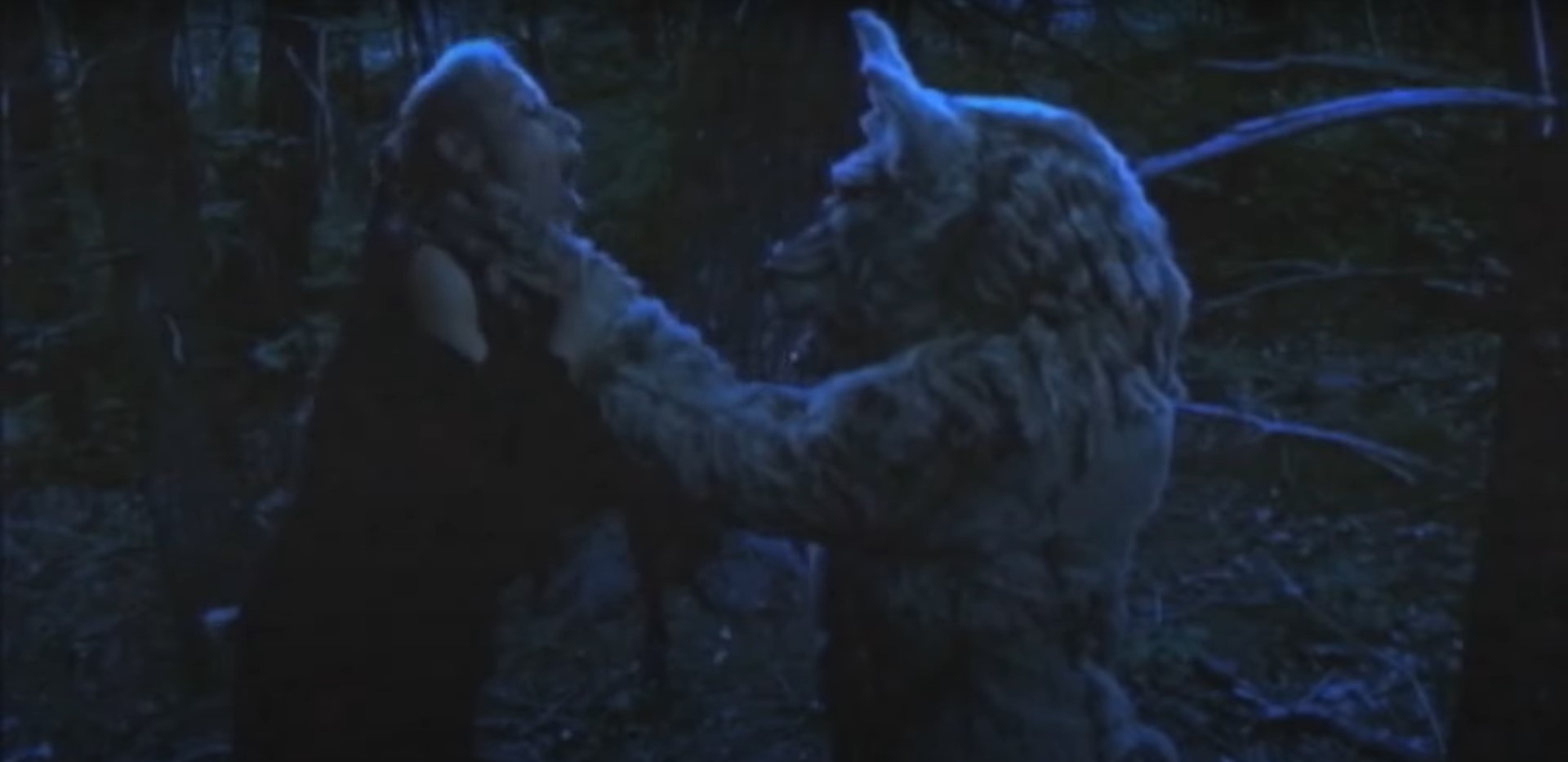
Beer Can Stuff Boots Give EVIL a New Height! “The Lost” reviewed! (Ronin Flix / Blu-ray)

Click Here to Purchase “The Lost” on Blu-ray!

Sociopathic teen-adult Ray Pye guns down two young women he suspects are romantically involved with each other and wants to feel the thrill of the kill for the first time with his two friends, Jennifer and Tim, as frightened, reluctant witnesses and abettors to his heinous crime.  Four years later, police investigation can’t pinpoint Pye as the culprit when the only surviving victim succumbs to her wounds after being in a coma all this time.  Pye, the slicked haired, pathological liar and assistant manager of his mother’s motel, continues his nice boy act as he peddles drugs and tries to woo any girl into bed while having a firm, feared grip on best friend Tim and girlfriend Jennifer to keep them in line.  As Pye chases after new women that enter in his world, the police continue their unofficial investigation, waiting for Pye to slip up and make a mistake but as his manipulation backfires and things don’t go his way, Pye’s already unstable nature morphs into an all-in, serial killer rampage and kidnapping of the three prominent women that have recently challenged his masculinity.

A real down spiral of machoism and growing up out of the adolescent fantasy world, “The Lost” is the 2006, loosely based biopic thriller inspired by real-life serial killer, the Pied Piper of Tucson, Charles Schmid interpreted from the book of the same title by late horror novelist Jack Ketchum.  This part II of our serial killer film review coverage, following the Robert “Willy” Pickton Canadian murders inspiring “Pig Killer,” “The Lost” bring us back to American murderers and is the first solo feature run for writer-and-director Chris Sivertson.   The father-son duo Mike and Lucky McKee, the filmmakers behind “May” and “Roman” co-produce “The Lost” alongside Sivertson and Shelli Merrill under the production company banners of Silver Web Productions.

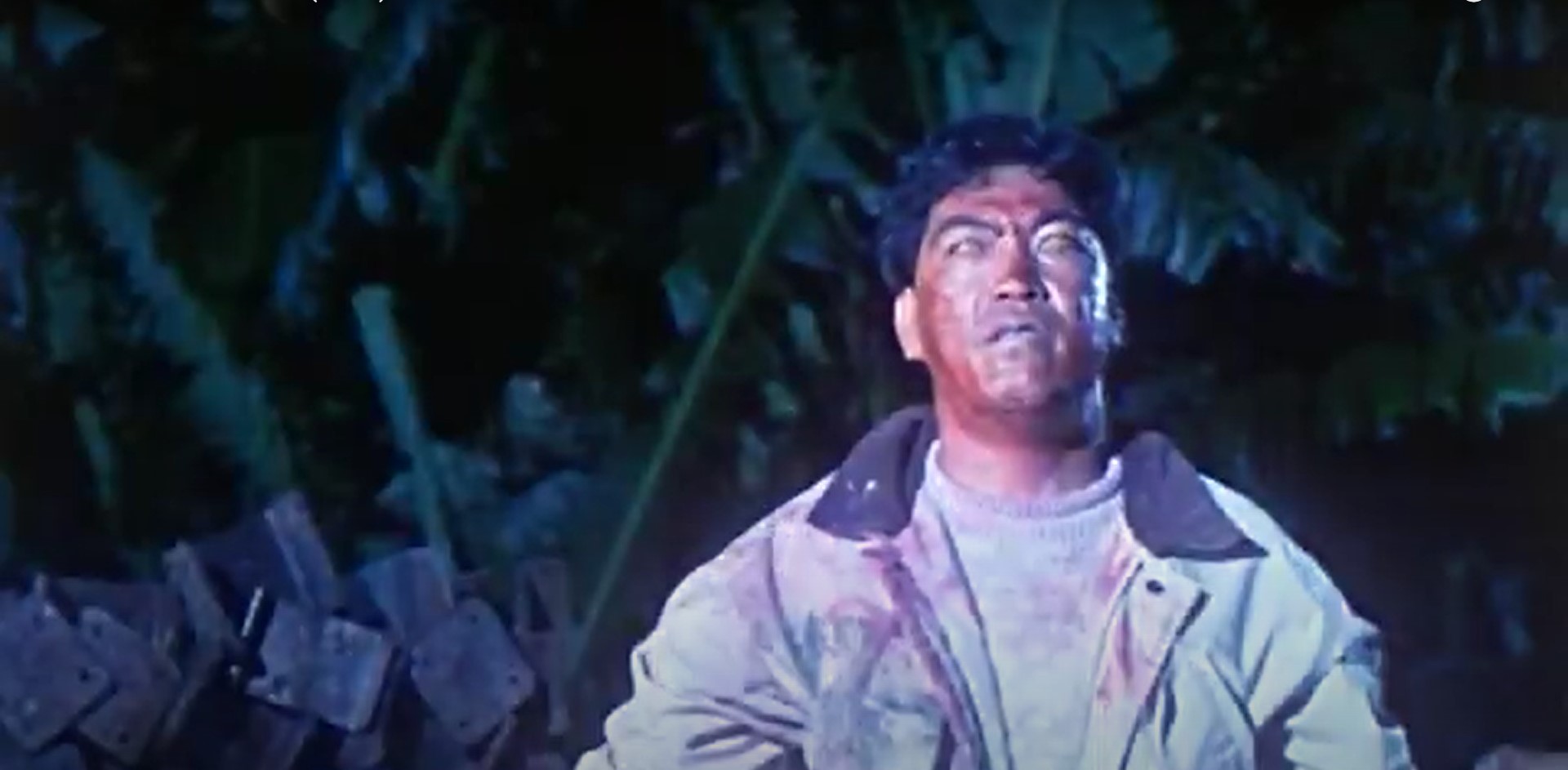
To play Ray Pye, the actor must incarnate being on the edge of principles and be crazed to the point of no return.   For Marc Senter, Ray Pye was a means to break from minor television roles and star as a leading man defying principal conventions in being the best bad guy he could cook up.  Senter, who went on to be in credited roles of “Wicked Lake,” “Cabin Fever 2:  Spring Fever,” and “Old Man,” will forever be seen as the crushed soda can-filled boot wearing and greaser veneered Ray Pye as the boyish-looking Colorado native brings the ferocity, the energy, and the killer instinct of a high-strung teen teetering the line of losing it all.  Senter’s approach rides on insecure masculinity of being a short man showing teeth to appear larger than life and exacts a screen perforating fear that holds friends Jennifer (Shay Aster, “Ernest Scared Stupid”) and Tim (Alex Frost, “Elephant”) in a tail-between-the-leg stasis of his end all, be all despot presence.  Aside from the Ray Pye storyline, a trio of sub-stories add more development and substance to other principal characters, such as Tim and Jennifer hooking up dictated by them inching out from under Ray Pye’s reach, a washed out midlife Detective (Ed Lauter, “Cujo”), who was formerly on the Ray Pye investigation, and his romantic involvement with a Pye pursuant Sally (Megan Henning, “I Know Who Killed Me”), who is approx. 40-years the Detective’s junior that creates an intriguing, struggling dichotomy between love and appearance, and with the alluring Katherine Wallace (Full Moon regular actress Robin Sydney, “Evil Bong” franchise) in a love-hate, obstinate relationship with an absent psychotic mother and her fondness for Ray in who on some levels mirrors the same qualities as Katherine’s mother.  Michael Bowen (“Deadgirl”), Dee Wallace (“Cujo”), Tom Ayers (“Bloody Bridget”), Cynthia Cervini, Richard Riehle (“3 From Hell”), and to compound skin scenes, soft-core erotic starlets Erin Brown (aka Misty Mundae, “An Erotic Werewolf in London”), and Elise Larocca (“Blood for the Muse”) co-star.

What first struck me about Sivertson’s “The Lost” is it doesn’t define a period in time.  Charles Schmid’s reign of terror coursed the span of a year in the mid-to-late 60s, which follow’s Ketchum’s timeline in the novel.  Yet, the books’ characters follow the movie’s scheme without clearly stating the years, stringing the connection between the three like step-relationships.  Pye’s greaser finish, drive-in burger joints, boxy-rectangle cars and VW Beetles, and a motel as one of the principal shooting locations float in the very essence of the title itself, as a Lost in time story that stretches the decades.  What’s not lost is the aggressive sexual nature that drives the nihilistic Ray Pye’s bedding scorecard by feigned compassion and romance; yet there’s plenty depth behind his sleazy cockiness that warrants more discussion into his problematic psyche, such as how he’s able to charm the pants of these women and how he’s able to keep those who fear him, close to him.  Sivertson’s unafraid to make a statement in “The Lost’s” sexuality with plenty of skin from a number of the principal actresses to the simulated sexual acts in and out the vein of style and in and out of Pye’s sociopathic tantrums that’s more self-doubting bullying than actual power.  At a young age, Pye aims high for machohood by the misguided dealings of the cards he’s dealt, augmenting himself with shoe stuffers and makeup to make him taller and more attractive.  “The Lost” is very much a deconstruction of masculinity mania in the way we see Pye’s worlds comes crashing down and he loses everything when his guard is down by one swift moment of real, tangible love with Katherine and the only way to gain back control, like a hissy-fitting baby, is to go berserk in a if I can’t have it, nobody will tear. 

Evil never looked so dapper as “The Lost” receives a new 2K remaster produced from a 4K scan of the original camera negative by the boutique label Ronin Flix.  The AVC encoded, 1080p, high-definition BD50 contains the presented anamorphic widescreen 2.35:1 film with pixel-by-pixel coherence exacting extensive details and chromatic fidelity.  What stuck out the most from the 4K scan was the night scenes blanked in near sheer darkness with minimal direction illumination from natural and unnatural lighting in a positive, well, light.  In night forest scenes, especially around the lake, objects are lost in the void of shadows, tenebrously covered in obscurity, and that’s accomplished and accentuated in the opening moments of Ray Pye’s debut double murder, creating a better illusion of reality rather than creating an illusion out of often folly fabrication of dark blue gels or immense random key lighting.  Textures are strong through, greatly defined by the delineating of edges on striking clothing, cars, and the amount of skin displayed.  Two lossless English audio options are available to select from:  a 5.1 DTS-HD Master Audio and a 2.0 Stereo DTS-HD Master Audio.  “The Lost’s” audio/video design produces a high fidelity and contains a blend of unprocessed and stylistic expression that stretch the audio range depending on the current Ray Pye Richter scaled mood.  Pye’s occasional rapid-fire rants are unmistakable and clear as the decoding unfolds every syllable without sounding seamless or garbled.  English SDH are optionally available.  Ronin Flix delivers new and previously owned special features.  New content like an audio commentary with director Chris Sivertson and Lucky Mckee serve as a trip down memory lane with new, pondered upon insights and recalled tales and new individualized interviews with principal actors Marc Senter, Robin Sydney, and Shay Astar in regard to auditioning, prepping for the role, and recalling their experience on the shoot expand more into “The Lost’s” attention and what it took to illuminate focus on the Pied Piper of Tucson.  A second, archival commentary with writer Monica O’Rourke moderating conversation with late novelist Jack Ketchum, audition tapes, outtakes, storyboard sequence, and the original “Jack and Jill” short film directed by Chris Sivertson fill out the special features.  A new front cover design, replacing the bland bullet hole-riddled and blood-puddled eyes cover on the Anchor Bay DVD and Blu-ray, on the trio of cardboard O-slipcover, translucent Blu-ray Amaray case, and disc art spruces up the Ronin Flix’s lifted release with a sense of hep threads and fatal knuckle sandwiches.; however, that’s about the extent of its physical beauty and tangible adjuncts.  The region free Blu-ray comes not rated and has a runtime of 119 minutes.  Marc Senter’s tour de force burns rubber, a ferocity of friction and perpetual anger sculps one of the best true-to-life silver screen villains from the last two decades. 

Click Here to Purchase “The Lost” on Blu-ray!

EVIL Explains EVILThings! “Mansplained” reviewed! (SRS Cinema / DVD)

“Mainsplained” on DVD. Do You Need Me to Explain It To You?

Middle class professional Sara has just been mansplained how to be better at her job.  Numb by the experience, the humiliating moment eats at Sara’s sanity like a nagging drip of a leaky pipe.  In fact, drip sounds of a leaky sink invade her mental space as she nonchalantly places a towel and bucket under the constant dribble.  When her boyfriend Ryan comes home, his exasperation is triggered by Sara’s acute indifference and he breaks up with her, mansplaining in bullet points the reasons this relationship has failed.  Her blank stares send him off only to return later at the behest of his sister to make amends, but when he notices the leak and starts to mansplain and nitpick her solution, even though she called a plumber, the fed-up Sara stabs him in the eye and hides his body in the closet.  When the plumber arrives and begins mansplaining and making gross advances, she stabs him as well and hides his body in the closet.  Sara descends further into madness as the mansplaining and the dripping continue, and continue, and continue….

Mansplaining.  The newly conjoined word, that’s combines man and explaining is defined as a man condescendingly explaining a process or a subject they, themselves, know little about and assume the knowledge extent of the other person is less than their own, was officially added to the U.S. dictionary in March of 2018 during the height of the #MeToo movement.  Evan Jones, the man responsible for write and directing the substandard classics “Death Toilet” and its numerous killer commode sequels, is now behind “Mansplained,” a bareboned, indie psychological thriller self-described as Roman Polanski-esque and inspired from a story concept by SRS Cinema’s Ron Bonk who also produces the derogatory pejorative term and wokeness themed film alongside Jacobs’ microbudget production company Anhedenia Films.

One aspect of microbudget is a micro cast.  Not only is Evan Jacobs the writer, director, and producer, the filmmaker with 52 directorial projects under his belt since 1995 also dons four different characters mansplaining to Sara, played vacantly by Angelique Flores, to show masculinity similarity as well as to save a little mullah on the production bottom line.  Jacobs in multi-roles wouldn’t be so much of an issue if there putting in more variety of persona; instead, Jacobs just puts his own off-camera fundamentals into each role, rehashing the same guy, with the same inflections, with the same gestures, and with the same face and bald head.  Perhaps that carbon copy plays into the formula of a faceless man creeping into Sara’s one bedroom apartment to tell her how it is and how it should be.  I would like to think that’s how Evan Jacobs conveys this story but without any other real indicator that’s the vehicle we’re supposed to be taking a ride in, we’re still stuck at the curb waiting for our elucidation Uber to arrive.  As Sara, a woman internally cracking under ignorant male chauvinism, Flores is given no lines nor direction to do anything but to stay virtually silent with a 1000-yard stare.  Even when at a boiling spillage point where stabbing is the only way to mute mansplaining, there’s no fire in Flores’s eyes nor any searing-red anger people sometimes go blind to when up to their eyeballs in fury.  Sara stultifies about her apartment, looking out the window, looking the drip under the sink, meandering around the square footage, and this goes on for the allotted runtime.  “Mansplained” rounds out the cast with an experienced bunch typecasting themselves as various media talking heads, mostly men in newscasters, vloggers, etc., roles, with Clint Beaver (“Woods Witch”), Erica Dyer (“Macabre Mountain”), Brandon Farmer (“Amityville Apocalypse”), Francis Erdman (“Yule Log”), Paul Bradford (“Amityville Karen”), Rudy Ledbetter (“Night of the Tommyknockers”), and Jeffrey Wolf (“Motorboat”) with Lindy Hartsfield and Erin Hickman providing the telephone voice and physical presence of Michelle in a mixed up of associations with Sara.

To be honest, “Mansplained” is a slog which is more Polanski-lite than Polanski-esque.  The channeled madness Sara displays only nibbles the bait of being in the deluge of mansplaining by what is, essentially, the same person in her eyes and even the titular mansplaining comes off slightly feeble, never pushing the condescending boundaries of Sara’s limits and is more repetitive nonsense than patronizing prodding.  Without Sara reacting or trying to get a word in edge wise against Evan Jacob’s motor-mouthing salvo, a one-sided approach to a two-person dynamic renders the madness useless and impotent, especially when there are no other devices to support it.  Only in the very end does sanity crack open for us to peer into Sara’s disturb nature but even that moment of clarity has its legs cut out from under it, erasing the acrid accumulation of Sara’s stoically murderous, pent-up rage from the past hour in a quickly summed up way of an unexpected twist-like ending.  The periodic splice-ins of news reporters, vloggers, podcasters, and the like plant seeds of the philosophical sense around objective and subjective views, posing questions and raising awareness as if speaking to the audience watching the movie rather than to drive the characters in the story.  What Jacobs set out to accomplish was woman empowerment over condescending men in an enough-is-enough, kill-the-man way but what results is more the opposite with the heroine cracking under the bombardment of man’s sexist spew, succumbing to a catatonic and deranged state as she’s unable to handle the pressure. 

Produced by Ron Bonk, it comes to surprised that the home video rights would fall under Bonk’s SRS Cinema, a safe haven distributor for DIY indies.  The DVD is a MPEG2 encoded, standard definition, dual-layered DVD9, plenty of format space for adequate compression outcome as the bitrate maintains an average of 7.7Mbps.  Yet, the not as sharp quality stems from commercial grade video equipment that’s jittery, possible motion blur with the handheld and compounded by the slow-motion frame rate for stylistic effect and doesn’t produce finer details in the electronics’ finite capabilities.  Aside from some flashbacks and inner thoughts denoted by black and white imagery, “Mansplained” stays the natural color course without any strategic lighting to jazz up the appeal.  The English language Dolby Digital 2.0 mono has no complains inside a one location set with no vigorous action.   Overlaid telephone and podcast conversation audio, dripping/leak soundbites, and the brooding, discordant string soundtrack clearly come through with in-frame recording being very satisfactory, like ASMR satisfactory, in the minor, around-the-apartment hubbub as well as the dialogue albeit the audibly innate elbowroom echo.  There are no subtitles available.  Special features include a feature audio commentary with Evan Jacobs going into the genesis of the idea and his explanation for his methods and style choices, a 22-minute making-of featuring interviews with Evan Jacobs, Angelique Flores, and Lindy Hartsfield with crew including cinematographer Mike Hartsfield, “Mansplained” rehearsals that’s chiefly a PJ’ed Evan Jones acting alone in his residence, and the trailer.  The standard DVD Amaray case carries no ancillary material with the disc that has the same disc art as the DVD front cover, photoshopped with a maniacal Evan Jacob’s face grinning ear-to-ear between the opening of a chained lock door. The feature has a runtime of 74 minutes, comes not rated, and the SRS DVD has a region free playback.  Too much ambiguity on the table and not enough production value trumps the underlying expression as we actually need to be “Mansplained” to fully understand the endgame. 

“Mainsplained” on DVD. Do You Need Me to Explain It To You?

This EVIL, Straight-Razor Killer Has a Novel Idea! “Tenebrae” reviewed! (Synapse / 4K-Blu-ray Combo Set)

2-Disc 4K UHD and Blu-ray Set Now Available of Dario Argento’s “Tenebrae”

While on a media book tour for his latest popular crime thriller novel, “Tenebrae,” American novelist Peter Neal is swiftly entangled in a killer’s puritanical wrath shortly after landing in Rome.  Using Neal’s story as an inspirational guideline to rid the world of what the fictional book labels as depraved people, the killer brutally murders women closely resembling characters in Neal’s book with a straight razor and sends Neal a deranged poetic message shortly after each death.  Police are on the case but always once step behind, even when the murders have seemingly stop connecting to the pages of Neal’s novel.  When the writer investigates by running through the list of possible suspects, the writer in him goes rogue by setting off to solve the case himself that would sensationalize and authenticate him as a crime writer, but the deeper Neal directly involves himself, the more the grislier the murders become and they’re starting to come closer to home than before. 

Dario Argento is unequivocally one of the best masters of horror for half a century, writing and directing not only some of the best Italian crime-mystery Giallos, splashed with hue vibrancy and caked in gruesome blood splatter, but also writing and directing those same films with major success internationally as his films connect with a global audience.  “The Bird with the Crystal Plumage,” “Deep Red,” and “Suspiria” have skyrocketed the filmmaker within the first decade of movie-crafting and Argento would not have been who is now without the guidance and the financial foundation constructed by father, Salvatore Argento.  Before his death in 1987, Salvatore produced one more of his son’s ventures in 1982 with “Tenebrae,” an emblematic mystery that brings Italian and American actors into the fold of Argento’s violent pulp puzzler.  Argento’s younger brother, Claudio, co-produced the feature under the Sigma Cinematografica Roma production company.

The Italiano-Americano production casts a pair of native New Yorkers in Anthony Franciosa (“Death Wish II,” “Curse of the Black Widow”) and John Saxon (“A Nightmare on Elm Street,” “Black Christmas”) who regularly crossed over the Atlantic for roles in international pictures.  Franciosa plays the novelist Peter Neal with Saxon as Neal’s newly hired agent Bullmer.  Their portrayed amicable relationship succeeds expectations of client and manager professionalism, but a good publicity campaign can be torpedoed by a sadistic killer with a throat cutting fetish and Roma’s best officers on the case intruding into the Neal’s personal promotion with Detective Germani, played by spaghetti western regular Giuiliano Gemma (“Day of Anger”), and his partner, Inspector Altieri, played by Carola Stagnaro (“Phantom of Death”).  The third English speaker is John Steiner (“Caligula”), a proper Englishman setup as an Italian television host on the docket to interview Peter Neal’s latest release success.  Steiner becomes an early favorite as the suspected killer with his odd pre-show questioning that falls in line with the Killer’s motives, but he isn’t the only person of interest as Neal’s estranged lover Jane (Veronica Lario) holds a lover’s quarrel with the writer who has seemingly become intimately close with his personal assistant Anne (Daria Nicolodi, “Deep Red”).  A conglomerate of characters gyrate Argento’s maelstrom mystery, each exhibiting profound performances that make each rich in their own right, and fill out with an assemblage of robust supporting characters diffusing through the story with Ania Pieroni (“The House by the Cemetery”), Lara Wendel (“Ghosthouse”), Eva Robins (“Eva man”), and Mirella Banti (“Scandal in Black”), the model most infamously on the front cover of most home video releases and poster one sheets with the iconic neck-sliced open and dripping blood along with her wavy hair suspended in a pose of vivid void and color.

“Tenebrae,” in Latin translates to darkness, describes Argento’s post-“Suspiria” feature intently.  Giallo lives within this time capsulated enigmatic madness, color-coated and visually complex to become an easy pill to swallow amongst all others in the Italian-reared niche.  Accompanying all the hallmarks of a Giallo construct – the killer’s gloved hands in POV, psychosexual tropes, mental instability exposures, violent and gory – Argento also impresses us with baroque mise-en-scene of lavish houses, detailed interiors, and extremely broad, emotionally phrenic individuals.  We also receive technical style wonders like a long boom shot that cranes up a house exterior to follow the idiosyncratic and opposing activities of two presently quarrelling lesbian lovers on a dark, stormy night in a tensely presage moment mixed with the synth-rock sounds of the “Goblin” theme track.  “Tenebrae” is chic in its ugliness and the patience Argento shows is formidably impenetrable without being flawed with lingering stagnancy.  While wallowing into what we’re led to believe, red herrings and other subterfuges to throw off audiences’ keen-to-solve sniffers, the story stirs a cauldron of coherent progression that is, more often than desired, lost in most gialli trying to weave through an intelligible punchy crime-mystery without becoming disoriented by the twists, turns, and topsy-turvy outcomes.   

“Tenebrae” hits 4K onto a 2-Disc, UHD and Blu-ray combo set from the genre-leading distributor, Synapse Films. The HEVC, mastered in Dolby Vision, encoding 2180p UHD and the AVC encoded 1080p high-definition Blu-ray are presented in a widescreen 1.85:1 aspect ratio in both the English and Italian versions of the feature.  One of the more gorgeously restored versions ever to be presented, with sharp delineation and organic popping colors within the narrow margins of infrequent gel lighting, the near flawless original negative is greatly elevated by Synapse’s ultra high-def facelift that resound the lavish textures of various sets, the expressional details of the characters’ face, and the glistening shine of the spraying blood.  There’s real balance between the colors in this presentation, offering not only a wide variety of hues but a great display of the mix.  Gels are not overly used and are more key lighting spotlights to heighten tension or introduce moods on an almost subconscious level.  Both English and Italian versions score a lossless DTS-HD Master Audio 2.0 mono.  This release caters to the very suspense Argento acoustically and phonically propounds that, in the same regard to the eyes, places viewers’ ears right in the middle of the action.  Every sound is distinct and unassuming during the throes of violence, a cleanly serrating effect that compounds killer consternation of being everything, everywhere, all at once.  Typical of the time and cost-efficient ADR usually retains some dubbing disharmony, but “Tenebra’s” tracks are neatly synchronous with Anthony Franciosa and John Saxon’s recordings timed exact and as if captured in the scene.   Some of the dubbing isn’t as in the bag, such as with Giuliano Gemma’s recording that’s does denote that space in between intensified by likely another voice actor’s reading overtop Gemma’s actual dialogue.  UHD offers English SDH on the English version while the Italian version has just regular English subtitles; the Blu-ray disc has the same.  Hours of bonus content, identical on both formats, begin with an audio commentary by Dario Argento: the Man, the Myths, the Magic author Alan Jones and film critic/historian Kim Newman, a second audio commentary by Dario Argento expert Thomas Rostock, and a third audio commentary by Maitland McDonagh, author of Broken Mirrors/Broken Minds:  The Dark Dreams of Dario Argento.  The fun doesn’t end there with a 2016 feature-length documentary “Yellow Fever:  The Rise and Fall of the Giallo” with interviews from Dario Argento, Umberto Lenzi, Luigi Cozzi, and Ruggero Deodato amongst the biggest names in film critic authoritarians, a newly edited archival interview with actor John Steiner, a newly edited archival interview with Maitland McDonagh, an archival featurette Voices of the Unsane with “”Tenebrae’s” Dario Argento, Daria Nicolodi, Eva Robins, Luciano Tovoli, Claudio Simonetti, and Lamberto Bava interviews, an archival interview with actress Daria Nicolodi, an archival interview with writer-director Dario Argento, an archival interview with composer Claudio Simonetti, an archival introduction from Daria Nicolodi, an international theatrical trailer, the Japanese Shadow trailer, an alternate opening credits sequence, “Unsane” end credits sequence, and an image gallery to wrap things up.  Inside the rigid O-slipcover, graced with a high quality and beautifully macabre illustration rendered by Nick Charge, is a Synapse Films’ black, 4K UHD labeled Amaray case with a double side disc lock and a reversible cover art with the Nick Charge graphic as default underneath the slipcover with the reverse side the Synapse Films’ standard Blu-ray cover art pulped with a famous death scene in pop art color. The insert houses a Synapse Films’ catalogue, and the discs are pressed with two notable kill scene frozen moments pulled in still image form. Feature runs at 101-minutes with an uncut presentation of the feature with a region free playback on both formats. ”Tenebrae” is Dario Argento in a cracked-up nutshell, paradoxically beautiful and horrible and burgeoning with suspense and color. The restored and remastered Synapse Films’ UHD and Blu-ray set is equally as such in its gorgeously grotesque packaging of film, its director, and its legacy that will outlive us all.

2-Disc 4K UHD and Blu-ray Set Now Available of Dario Argento’s “Tenebrae”

EVIL’s Coaxial Cord Right into Your TV Set! “HeBGB TV” reviewed! (Scream Team Releasing / DVD)

Contact Your Local Cable Provide to Upgrade Your Box for “HeBGB TV” on DVD!

In a world of streaming devices, the cable box era has become nothing but a memory until mysterious HeBGB cable boxes sudden appear on retail shelves and on homeowner doorsteps.  The what looks to be a brain in a box with some wiring quickly self-installs right into the cable jack and manifests a gaudy-dressed tangible host, The Purple Guy, right into your living room.  Promising a guaranteed fun time, The Purple Guy is eager for souls, I mean viewers, to subscribed to the endless commercial content of HeBGB TV, promising nothing but the best entertainment from the other side of the dimension has to offer.  Sordid horror, 90s-inspired carving infomercials, grotesque commercials, monstrous sexy hotlines, demonic feature films, and more provide a source of endless brain-rotting consumerism over the TV broadcast waves.  Eye-glued patrons of senseless horrors become slave to the screens that send their very souls to a machination machine from another world.  Who can stop the evils of doom channel surfing? 

Those who are now in their late 30s, early 40s likely remember how awesome and nearly uninhibited cable television was back in the day.  Money and creative talent were invested in turning the most ordinary retail product into a mini-movie of ostentatiousness, imbued with vividly stark colors and an insanity of pure energy.  Television didn’t coddle, it shaped the very fabric of impressionable children of that era, resulting in imagine and inspiration.  That is what comes to mind when speaking of “HeBGB TV,” a comedy-horror anthology of sorts of shorts written-and-directed by Eric Griffin, Adam Lenhart, and Jake Mcclellan.  The trio’s initial concept, prior to the creation of “HeBGB TV,” was something along the lines of an interactive variety show with short films, standup comedy, and puppetry held in front of a live audience.  When COVID hit in 2020, their idea pivoted toward a movie, eventually a script evolved into a drivable wraparound narrative chalked-full of some of the prefabbed material as well as some other new zany, horror-inspired skits, shorts, and string-pulling puppetries.  Griffin, Lenhart, and Mcclellan produce the feature under their LLC of HeBGB TV productions and PatchTown Films, based right in my regional backyard of Lancaster, PA.

Credited in the film as Knucklehead, Jake Mcclellan may act to the very definition of pseudonym but, in the lack of better words, is the face of “HeBGB TV” by having scores of roles and personalities at his disposable to dress up and become a totally new and grotesquely phantasmagoric character.  Whether be The Purple Guy, PU News’ greasy anchorman, the Blue Monster, or just desperate dieter with a health-hazard late night snacking problem, Mcclellan goes all out with makeup, costuming, and prosthetics in what could be considered a one man drag show and its gorgeously panache and over-the-top but doesn’t stray terribly too far from the outrageous era the horror-comedy emulates.  “HeBGB TV” is full of caricatures of late-night television and oddities of live TV and marketing campaigns, even Eric Griffin and Adam Lenhart get involved in front of camera as a hobo watching a portable antenna TV and as Smokie, the exterminator of potheads with noxious weed, as seen on TV, or rather “HeBGB TV.”  Most of the enthusiasm, and eccentrics, are within film’s faux television programming but the cast of performances flesh out with Ian Sanchez, Curtis Proctor-Artz, Josh Dorsheimer, Zenobia Decoteau, Michael Garland, Mike Madrigall, Ellen Tiberio-Shultz, Kristie Ohlinger, Colleen Madrigall, and Willow and Van Reiner as the kids who The Purple Guy connivingly entertains and Andrew Bowser reprising his most beloved YouTube persona, Onyx the Fortuitous.

Cut from the same cloth as Weird Al’s “UHF, Peter Hyams’s “Stay Tuned,” and Jeff Lieberman’s “Remote Control,” the cable box antics of the 80s-90s TV is quickly fading the analog years into nothing more than static snow of broadcast noise.  However, “HeBGB TV” is the answer, the recollection, and the nostalgia-driven film that delivers better than trying to get a glimpse of the vague outlines of adult actresses in the static noise of premium adult channels.  Directors Griffin, Lenhart, and Mcclellan combine their creative geniuses, incorporate their sentimental love of 90’s media, and integrate their own other interests into a cinematic cannonball of colorful comedy-horror.  While the wraparound stories outside the HeBGB TV box proves able with the inexplicable mass rollout of the brain-in-a-box cable program provider and rotting, killing, and transfiguring viewers into mindless gawkers, overdosed smokers, and malevolent demons, the real star of the feature is flipping through the channels for the go-hard mock-commercials and other putrid programming laced with horror themes and capturing the spirit of television culture of 20-to-30 years ago.  While most of the visual effects reside around the wraparound story, contributing to the alloying of the story, Adam Lenhart’s practical effects more than make up for it a DIY initiative of can-do sculpting, molding, and crafting ingenuity below the embraced realm of unreality.

Don’t touch that dial as Scream Team Releasing delivers cable television like never before with “HeBGB TV” now on DVD! Though the Scream Team Releasing DVD back cover lists the format as a Blu-ray, the data file is actually a MPEG2 encoded, singer-layer DVD5 that has a widescreen 1.78:1 aspect ratio presentation. A combination blend of interlaced and digital video swirl “HeBGB TV” into a time warp of the past and present. The filmmakers captured not only the feel of rambunctious, eccentric, and vividly brilliant 90’s commercials but were also able to capture the look of it too with the interlacing horizontal lines indicative of video frame rates of the time. The wraparound narrative portions are digitally cleaner in juxtaposition, factionalizing present and TV programming with distinction until the culminating plan comes to conclusion. Some of the digital visual effects gags crumble under the practical elements of an analog airing, proving once again that the tangible and practical outstage the digital composition, but the crumbling doesn’t stem from compression issues. The English language Dolby Digital 2.0 mix is a symphony of frenzied chaos, pinpoint advert jingles, and deliciously distasteful horror gags facsimiled perfectly, as if it was plucked straight from the pre-millennium. Dialogue is quick but renders clean and clear in a blend of inset and ADR vocal recording, per the commentary. No issues with depth, range, or any kind of compression side effects. Well scored with a catchy main theme and topnotch sound designed to add to “HeBGB TV’s” romp commercial content. English subtitles are optionally available. Bonus features are aplenty with a retrospective interview with the three directors and short clips going in-depth with behind-the-scenes movie magic, a HeBGB TV video installation guide, a world-premiere pre-show, the first interactive show prior to COVID, and the theatrical trailer in the motion menu option shaped like a retro tube television with right side buttons. Inside the setup option along with the English Subtitle toggle, a directors’ commentary can be selected and played from there. The standard edition encased inside an Amaray comes with faded hues on an illustrated composition cover art of most of the “HeBGB TV’s” wacky pastiches and a disc pressed with the pulsing brain-loaded cable box. The release comes not rated, region free, and has a copasetic runtime of 78 minutes. ”HeBGB TV” is couch potato worthy that syndicates together hilarious travesties and transvestites for timeless television touting, stitched together from previously shot short films, puppetry depravities, and a new sci-fi fiction.

Contact Your Local Cable Provide to Upgrade Your Box for “HeBGB TV” on DVD!

EVIL Relaxes in the Serenity of a “Full Body Massage” reviewed! (Unearthed Films / Blu-ray)

Lube Up and Get Ready for “Full Body Massage” on Blu-ray!

Nina, a middle-aged affluent art dealer, has just returned from a long business trip.  Settling back down into her own nature morte decked home, Nina pampers herself with a hot shower, a glass of wine, elegant music, and a soak in her open aired, backyard hot tub as she relaxes before for her masseur, Doug, a handsome young man she finds herself comfortably attracted to outside their professional relationship, arrives to put his oiled up hands up and down her naked body but when Fitch arrives, Doug’s more seasoned stand-in, Nina finds herself blindsided by the change and slightly disappointed in her sudden erotic deflation.  Fitch’s worldly approach to life conflicts against Nina’s narrow perspective on various topics, including art, happiness, and love.  Willing to be fully open with each other during the intimate and unorthodox massage, Nina and Fitch debate deep into their session without holding anything back with flashbacks on their experiences that led them to this very moment of unexpected connection.

Director Nicholas Roeg, the late acclaimed English director, is known for his in-depth humanizing of flawed or downcast protagonists, often times surrounded by desire and obstacles, having helmed such renowned features as “Walkabout,” “Bad Timing,” and “The Man Who Fell From Earth.”  Roeg has also dipped his directional toes in horror with films like “Don’t Look Now” and “The Witches,” running the gamut between adult and children thrills.  Later in his career, Roeg slowly moved away from theatrical features and into the realm of television, shorts, and TV movies with one of those made-for-TV films being “Full Body Massage” for the premium cable network Showtime.  Penned by “The Stranger’s” Dan Gurskis, “Full Body Massage” trades in a problematic mystery or obstacle for more of the unravelling of philosophical viewpoints of two strangers wounded in their own obvious way only to have the air purified each other’s different life paths and mere presence of mind.  The 1995 released U.S. network movie is produced by erotic thriller operators Julie Ahlberg and Michael Nolin of “The Pornorgrapher” under the LLC of Full Body Productions and Showtime.

Though a made-for-television movie likely marketed for and airing as a late night skin flick for the premium network channel in the cable box era of the 1990s, “Full Body Massage” was anything but your ordinary after dark tits up production with two well-known stars substantially casted and not just for the headline attraction.  “Ginger Snaps” and “Hider in the House” American actress Mimi Rogers is joined by Australian star and “F/X” leading man Bryan Brown who undertake the respective roles of world-weary Nina and worldly-candid Fitch.  While “Full Body Massage” has the hallmarks of softcore programming, an titillating title, sexy sax soothing tones, and a very naked Mimi Rogers, the machinating devices have more bark than bite as Rogers and Brown never engage into sexual intimacy albeit a lot of sensual massage manhandling by Fitch on Nina’s more than happy to be naked body with a stranger she just met.  The two mainstays are pundits for the story, verbally expelling their own viewpoints and experiences that have shaped their choices in life, molding them to who they are, and nearing the edge of gospel when in rhetoric with each other.  Their conspicuous dispute is nearly all narratively all consuming but not as nearly all argumentative in it’s very adult approach to discussion of just two people seeing the world through two very different eyes.   Other characters are told through mostly flashbacks and never interact in the same aortic piece with Rogers and Brown with Christopher Burgard (“Syngenor”), Elizabeth Barondes (“Night of the Scarecrow”), Gareth Williams (“Striking Distance”), Patrick Neil Quinn (“Swamp Thing” television series), Heather Gunn (“Ed Gein”), and Gabriella Hall (“The Erotic Adventures of the Invisible Man”) and Brian McLane playing younger versions of Nina and Fitch. 

“Full Body Massage” is not an intense, edge-of-your-seat nail biter bursting with action and suspense.  In fact, I struggle with film’s point and overall message to the world in what in essence boils down to a character study.  Fitch’s disapproving father no matter how perfection Fitch achieved, Nina’s continuous search for approvals in love, Fitch’s losing love that sends him on a spiritual journey, and Nina’s failed marriages between fast-and-loose husbands and hard to connect with ones make the two underlyingly wounded adults rigid and confidence in that unyielding measure until they meet each other and experience pliability out of a long-winded dialogue in not only a face-to-face manner, but also in the healing power of touch and massage that’s feels erotic per Roeg’s direction but also works out every kink in their twisted, knotted pasts to where they end in an uncertain but good place, a place they’ve never been before or have long forgotten.  By the course of two people talking, which most the world does every day, there had to be buzzier bright light to attract swarming audiences to the premium cable network’s thirst for viewership and that would be Mimi Rogers going nearly full-frontal for nearly the entire runtime and Roeg really plays into that erotic prance of unabashed confidence and comfortability while also, contrariwise, the dynamic progresses platonically. 

A newly scanned 2K transfer of 1995 film comes from an unlikely boutique distributor known mainly for extreme horror, gore and shock, and controversial material. Unearthed Films proudly presents “Full Body Massage” on Blu-ray as title lucky number 13 on their Unearthed Classics label. The AVC encoded, high-definition 1080p, BD50 exhibits cable vision veneer in a television widescreen 1.66:1 aspect ratio. Roeg’s choice to go virtually without style really hinges on the substance for success. The natural approach consumes any low-lit or candle-lit warm interiors exclusively for flashback sequences. The 35 mm print has been cared for and it shows with pristine HD transfer that keeps the natural grain and doesn’t need to really sugarcoat any sour patches. The English lossless PCM 2.0 stereo mix offers exact fidelity of the original discourse and milieu ambience of an innate digital sound capture. With the dialogue heavy story, the discourse is clean, clear, and prominent, comprehensible in every which way. Depth provides expansion and echo inside Nina’s vastly roomy mansion, but range is limited to talking and not the sensual, sexy, arousing kind. English subtitles and SDH subtitles are available on this release. Special features include the television version presented in 1.33:1 aspect ratio, a minute still image gallery that’s mostly Bryan Brown behind Mimi Rogers giving her the massage, and the original trailer. While not a great selection of bonus content, the physical exterior succeeds slightly favorable with a cardboard O-slipcover with flat, yet beautiful, illustration of, again, Bryan Brown and Mimi Rogers in massage therapy that could be misleading as sensuality. The Amaray Blu-ray cover sports the same image on the cover art and even compressed even further on the disc art. The Blu-ray is rated R, locked in region A playback, and has a runtime of 93 minutes. I’m not going to try and kid you with what is and will be “Full Body Massage’s” immediate appeal, a very well-endowed and nude Mimi Rogers, but this anomalous Unearthed Classic brings a different highbrow criterion class to the extreme horror label in what is a brazen change of pace. 

Lube Up and Get Ready for “Full Body Massage” on Blu-ray!