Time Travelling Tourists Just Want to See the Spectacle of EVIL! “The Grand Tour” reviewed! (Unearthed Films / Blu-ray)

Unearthed Films Stopped a Disaster by Going Back in Time and Re-releasing “The Grand Tour” now on Blu-ray!

Widowed contractor Ben Wilson and his daughter, Hillary, are a many 2×4 and paint bucket deep into a renovation of a dilapidated inn on the outskirts of town. Haunted by his wife’s death violent death and reminded of it by an angry father-in-law, Ben tries his best to be the best father to Hillary that a single dad can be despite his urge to drink and forget about the horrors of that fateful day. Unexpected and eccentric guests arrive at his doorstep demanding to pay handsomely to stay at his unfinished inn, regardless of the condition, and eager to be present for the secret spectacle to come that makes his inn more desirable than all the amenities of the hotel in town. The guests’ odd behavior, strange belongings, and secret talk lead Ben to believe these so-called tourists are not from his time and that the spectacle their awaiting for is tragedy in the making.
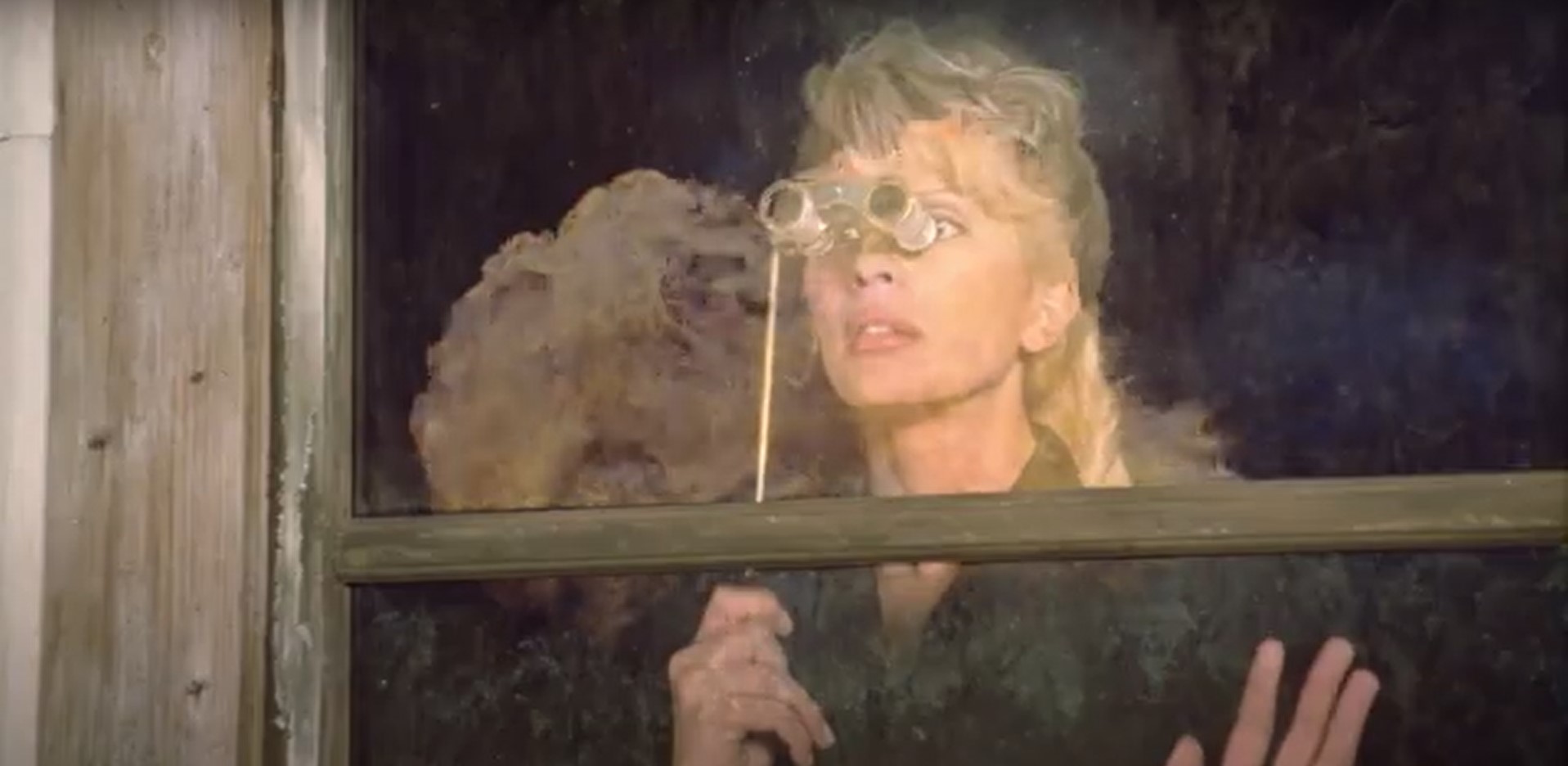
For an extreme film label such as Unearthed Films, Jeff Daniels is not necessarily a headlined name I would see on the cover art. Nor, and more surprisingly so in this instance, would I ever have thought that a PG-13 rated film would be in the same assemblage of titles as “Slaughter Vomit Dolls,” “Philosophy of a Knife,” and “Christmas Cruelty.” Yet, here we are today, the year 2023, over two decades of extreme horror distribution, and David Twohy’s “The Grand Tour” has been released. The 1992 time-traveling clock-racer, that also went by other titles such as “The Grand Tour: A Disaster in Time” or “Timescape,” is written for filmic treatment by the “Riddick” franchise director, adapted from the novella “Vintage Season” by the husband and wife writing team, Henry Kuttner and C.L. Moore. “The Grand Tour” is a production of Channel Communications and Drury Lane Productions, the companies behind Brian Thompson starring “Nightwish” which became also another Unearthed Films’ vault release and is produced John A. O’Connor (“Steel Justice”) and Robert Warner (“The Return of Swamp Thing”).
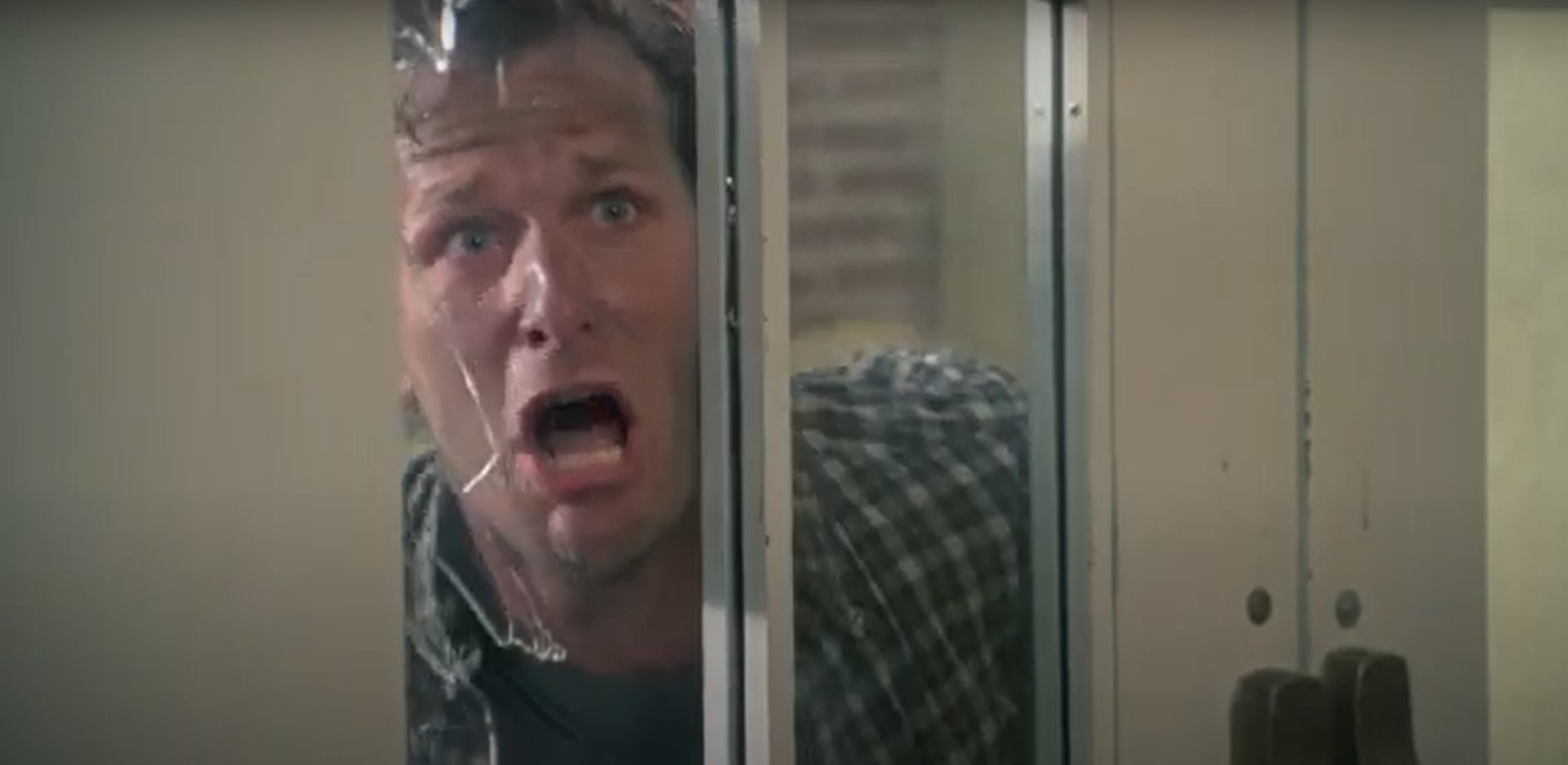
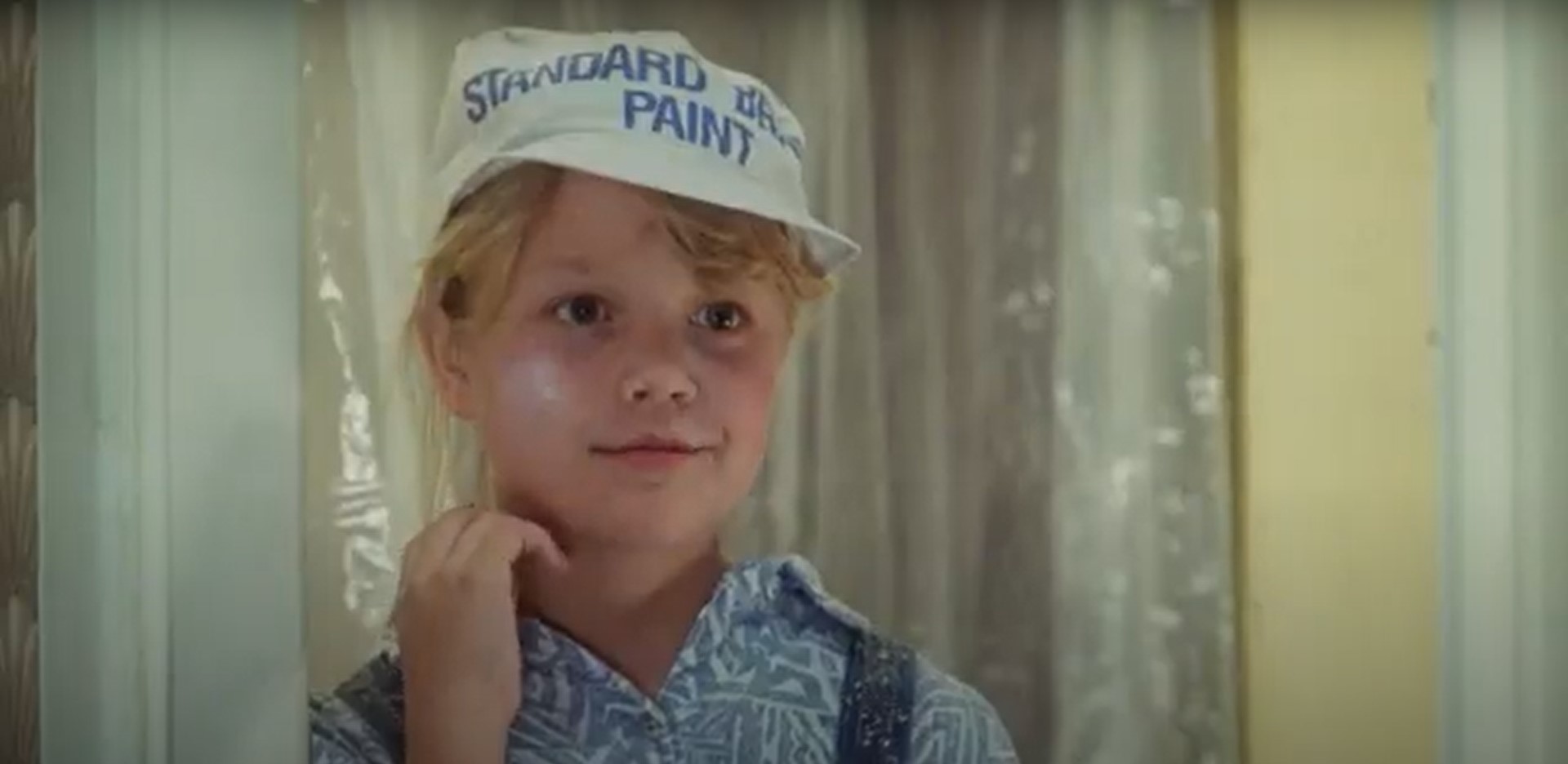
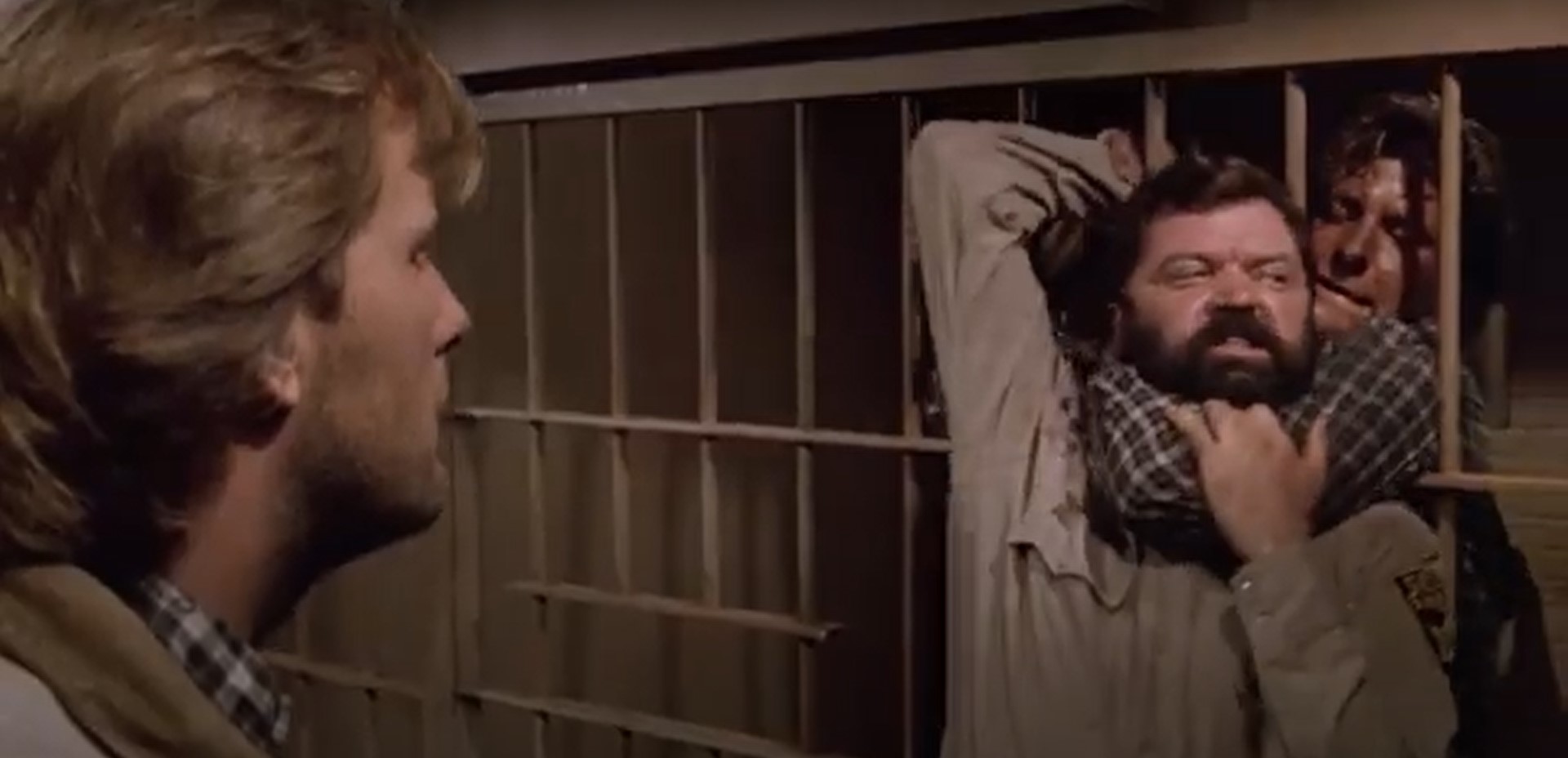
“The Grand Tour” stars the aforementioned Jeff Daniels who at this point was coming off the phobic-inducing success of the itsy-bitsy film called “Arachnophobia.” Daniels brings the same family man charisma, sarcastic wit, and unnerved intensity to the widowed construction contractor Ben Wilson. The character of Ben Wilson is unbuttoned from the beginning with only nightmares of an accident involving a horse drawn sleigh and verbal tit-for-tats with his bristly former father-in-law concluding the death of his wife only a short time ago. Wilson’s marked as a drunk and a shirker though barely do we see only a slither of the former; instead, Wilson’s rather astute, loving, and fearless in his time of time designed duress. Perhaps, Wilson’s arc has already been puzzled together and Twohy only mirrors into his once shameful soul to showcase how much he’s learned and how far he’s come to be more than just an abashed single dad and though Wilson is unbuttoned from the beginning of the story, Daniels buttons up the role with nothing less of perfection. Wilson’s daughter Hillary is played by pre-“Jurassic Park” screamer Ariana Richards who solidified her round-eyed concerned, over-the-shoulder look first in “The Grand Tour.” Hillary becomes the crux torn between the loving father that Wilson’s portrayed to be and an overreaching grandfather, who’s also the town judge (George Murdock, “The Death Squad”), holding a longstanding and personal grudge with his daughter’s ambivalent death. The youngster is also the reason Wilson is willing to risk the perfect future to save an ill-fated past. “The Grand Tour” enlists a versed lot of talent to round out the cast with Marilyn Lightstone (“Heavy Metal”) as the voluble tour guide, David Wells (“Society”) as a tourist with a conscious, and Jim Hayne (“Sleepwalkers”) as a down-to-Earth bus driver caught in the middle just like Wilson. There’s also Nicholas Guest (“Dollman”), Time Winters (“Skinner”), and Anna Neill.
Temporal manipulating or time-travelling films will undoubtedly always have faults as time is a finicky thing, some films accomplish time loops better than others, but I personally feel that as long as the narrative is entertaining enough and the time theory isn’t ludicrously idiotic, all can be forgiven or overlooked on the stretched fabric of time and place concept that can have easily spotted loopholes.  “The Grand Tour” is one of those divertingly pleasurable narratives with calamity hanging in the balance, a central do-or-die performance, and theme that hits at the core of a numb human perspective when seemingly life is nothing less than perfect.  The script bypasses the whole negating physics of the narratives time-travelling and butterfly effect piece with Daniel’s character verbally damning the hypothetical’s inaccuracies in a fit of life- and time-saving panic to not hang up on the details and keep the story churning.  Twohy never offers too much too early when the intrusively eccentric inn guests appear without concern for their surroundings but are increasingly curious about minor, trivial things that when compared to the small town residents, people would take such things for granted, yet their curiosity isn’t exactly appreciation for the humbler things as it’s more of a naively morbid reflection on how who these well-dressed and fit-as-a-fiddle travelers call “bygoners” lived and died.  Historical catastrophes have become looking glass sideshows for the bored or how the event is termed as a spectacle is if the disaster is an extravagance performance for others to reap the benefit from its grim amusement.  Twohy pulls off the massive feat of catastrophe without the use of computer-generated imagery that we see heavily in his later films to create galactic worlds and creatures.  There’s composite motion paint work and diorama miniatures to create the illusion of a small town in turmoil that works just as well, if not better.  The whole “Grand Tour” package sells the sleight of hand devastation but also the intrinsic emotion and passion that follows it, or in this rewind the clock case, before it as well. 
Though I’m wigged out by the tame release from Unearthed Films, I’m still glad the out of print and sci-fi jarring “The Grand Tour” has booked an excursion back to the physical media outer rim!  A brand-new AVC encoded Blu-ray, released as the 11th cult classic under the Unearthed Classics sublabel, shepherds a new in-print North American option.  Sold as a Hi-Def release with 1080p, there’s honestly nothing that can be really done or to improve upon a Betamax 350 resolution by 480 pixels in a stretched 1.85:1 aspect ratio.  Certainly better video and audio quality compared to VHS, and likely the best quality “The Grand Tour” will ever be in to-date, the release remains a deficient for detail with blurry, soft-glowing traits.  The Blu-ray’s bitrate is also erratic, dipping as low as upper DVD, 8-11 Mbps, to shooting up as high as lower 20s which tells me the storage capacity of the BD25 likely isn’t enough to properly decode the film and, in certain frames, compression artifacts show with smooth surface, color blurring that eliminates sharper edges amongst other issues, such as faint banding and blocking nothing to really warrant discouragement. The English PCM 2.0 stereo mix is commensurable with the original Betamax audio recording and though soft around the audible gills, the dialogue, ambient, and soundtrack mixes satisfy the need but in case you need an English SDH option, the Unearthed Films’ Blu-ray has you covered with a well-synched and timed error-free translation. The special edition bonus features include the “Timescape” title sequence, production stills, various posters and one-sheet artworks, a new Lost in Time: Cannes promo discussion with Ed McNichol who worked on the pre-production Cannes promotional trailer with Jeff Daniels but isn’t available in the special features here, and Unearthed Classics trailers. The physical aspects of the release include a cardboard o-slip with a front image reminiscent of outside region 1 DVD covers of Jeff Daniels running between two periods in time. The slipcover sheaths a clear Blu-ray case with latch, the inserted cover art is the same slipcover but is reversible with a mockup of the Canadian released DVD cover. The disc print image echos the reversible cover art image. “The Grand Tour” is Blu-ray has a region A playback, clocks in at 99 minutes, and the film is rated PG-13. An obscure Jeff Daniels film lost in time, unable to reach back into the past for a new, refreshed release, is paradoxically meta in its own right but luckily for us, Unearthed Films has our best interests in mind while keeping the blood and guts at bay for only for a single, solitary stitch in time.

Unearthed Films Stopped a Disaster by Going Back in Time and Re-releasing “The Grand Tour” now on Blu-ray!

The Picked-On Runt Can Be EVIL Too. “Little Corey Gorey” reviewed! (SRS Cinema / DVD)

“Little Corey Gorey” Uncut and on DVD home Video at Amazon.com!

After losing his father to a fatal accident, little Corey Gorey is forced to relocate to a new home with his overweight, alcoholic, and verbally abusive stepmother and similarly so, racist brother-in-law, Biff.  Constantly receiving the short end of the stick, Corey tries to retain a normal life by buying Ozzy Osbourne concert tickets and meeting girls at high school, but when his bigger, older Biff raids Corey’s broom closet of a room searching for a pinup one-sheet, he discovers the concert tickets and hooks up with Corey’s dream girl from school.  In a fit of rage, Corey accidently kills Biff as the two scuffle and with that Corey sows the seeds of salvation as the teen who was constantly tormented and afraid to talk back now is eager to take his life back.  Keeping his stepmother tied to the couch and gagged from making noise, Corey dismembers what’s left of his brother into the storage freezer and includes the sociopathic girl of his dreams into the fold but when a nosy mail carriers begin to snoop around and a drug dealer is seeking payment for the cocaine he fronted Biff, the bodies begin to pile up and Corey finds himself over his head.

Talk about your unhappily ever after Cinderella story, “Little Corey Gorey” goes from rags to wreaking havoc by way of severing limbs and meat grinding body parts all the while trying to sweep a rebellious older high school girl off her feet in an attempt to run away from all the carnage and abusive adults.  Bill Morroni, credited as William Morroni in the film, wrote and directed his debut feature in sunny California that is anything but sunshine and good vibes in this 1993 released, dark horror comedy obscure to many horror fans. A real highlight of early 90’s low-budget horror done right with smartly placed and highly effective practical effects, “Little Corey Gorey” is a begrimed gem waiting to shine, produced solely by Morroni under his self-funded principal production over the course of a few weekends. 

What makes “Little Corey Gorey” half as enjoyable as it turns out to be is because of the cast.  Once plagued by unfortunate circumstances, such as an example with the untimely death Divine (“Multiple Maniacs,” “Pink Flamingos”) who was to have a lead role, that one might consider the film be cursed celluloid even before principal photography, Morroni was able to overcome with a perfectly suited set of talent to tackle Corey Gorey’s gruesome exploits of dysfunctional family survival.  The titular role was awarded to Todd Fortune whose diminutive size really plays against the larger and towering figures that make his life a living hell.  Divine would have stepped into the shoes of wicked stepmother Betty and even though Divine would have done phenomenally in a constant-drunk state of a barraging verbal abuse and torment, Pat Gallagher filled the cankerous role with despicable-inducing results and gives a real witch of a woman performance to not only Corey but also her actual on-screen son Biff.  Greg Sachs might be stiff as a board as the older brother with racist overtones and a compounding dislike for Corey, but Biff turns out twisted enough to be an antagonizing accomplice in building Corey’s pent-up survival garnished with ghastliness.  One of the more scene stealers is Brenda Pope as the bitchiest high school narcissist Jackie who has somehow swooned Corey’s rationality and has him hanging on her tongue with every lie.  From special feature commentary by Morroni, Pope was a real life true-to-form unpleasant person behind-the-scenes as well as in front of the camera but that doesn’t stop her good looks and devilishly delectable moodiness and conceitedness from drying out.   As a group, you can feel every resounding personality types and cluster of chaos that spits out sympathy for Corey despite the curated torture from those who are supposed to care for him and also feel not one ounce of pity for Corey’s tormentors turned minced meat at the hands of the water treading teen.  “Little Corey Gorey” has a neighborhood ensemble featuring parts by Edenia Scudder, Sabino Villa Lobos, Kristin Caruso, Bernice Smiley, John B. Tomlinson, and William Linehan has an escaped prisoner and mass murderer being built up by the news media with his convenient store killings only to be the only part of “Little Corey Gorey” to fizzle out in a subplot to nowhere. 

With a spiffy name, a thematically onboard cast, and some really good editing and camera work, “Little Corey Gorey” surprisingly has a lot going for it despite being shot on 16mm variational stock and using scratch audio, aka studio dubbing, that makes the 1993 feel and appear more rough and ready than necessary, like a wrinkled, toothless middle-aged man after smoking and drinking heavily for half his life, but in the grand scheme of things, “Little Gorey Corey” has held up moderately well in quality and in story.  Through the spikey colored wigs, cut off sleeve shirts, mullets running rampant, and good seat concert tickets with a price tag of $18 might have run their course over father time, bullying remains a hot topic to this day.  Dysfunctional family dynamics, blind and fatal obsession, drugs use, and being in the friend zone with a haughty hottie also hasn’t changed much.  You can’t help not feeling pity for Corey and the excruciating awkwardness of him pulling out all the stops in order for Jackie to notice his heartfelt, romantic gestures and advances only to be immediately blown out of the sky like a Chinese weather-spy balloon gliding over Montana.  Everything that happens to the thick-skinned kid culminates to a head, to a finale of penetrating his usually impenetrable, encrusted scar tissue of a shell that just seems right or justifiable that when the world pisses on you, you cut off its penis with a corded circular saw.   

“Little Corey Gorey” receives a new scan (upscaled?) of the 16mm source material and drops onto a re-release from SRS Cinema!  Though still framed in a full screen 1.33:1 letterboxed aspect ratio, the transfer looks much clearer than the original VHS release with brighter grading and an enriched image that delineates edges and some details.  The variation in 16mm stock is obvious, more so in only a handful of scenes in comparison to others, with only a very select few offering a shoddy, nearly obstructed view of focal objects.    One thing about the SRS Cinema DVD back cover is it lists a new HD transfer from original camera negative, but DVD can’t be high definition. Since the DVD and the limited-edition Blu-ray share the same cover, I assume this speck of information wasn’t removed, redacted, from the Blu-ray back cover. The English Dolby Digital 2.0 scratch track, aka dub track, is what it is – an on-budget audio format that has doesn’t quite run in the same space to the image but is still an impressive parallel audio track that synchs nearly identical to the actors’ mouths. There’s an obvious electronic hum throughout that never quits so the interference often drowns out slightly any ambient noise, if any, were added for depth and weakens the dialogue strength, which was not entirely robust at the beginning. Hair metal becomes “Little Corey Gorey’s” soundtrack to slashing with featured tracks from Creature because if you can’t hire Ozzy Osbourne to score your film, you get the 2nd, 3rd, or 10th best thing that brings the metal. The bonus features include a directory’s commentary, a 77-minute William Morroni interview that unboxes all the aspects of the film from individual cast bios to equipment availability and issues to marketing woes and to the whole kit and kaboodle in regard to his little movie, and SRS Cinema film trailers, including this “Little Corey Gory”. The DVD sports a beautifully grisly illustrated cover art, similar to what SRS Cinema accomplishes with all their other titles, with an accompaniment mustard yellow, retro-grading design. The disc art is duplication of the front cover art and there is no inserts inside the traditional DVD snapper case. The region free DVD comes with an uncut version of the film that has a total runtime of 91 minutes. “Little Corey Gorey” is a big gory lorry that drives a mean-spirited, misanthropic marvel right out of the 90’s and into our television sets as this forgotten film can no longer stay forgotten.

“Little Corey Gorey” Uncut and on DVD home Video at Amazon.com!

Norwegian EVIL Has Women Issues! “The Thrill of a Kill” reviewed! (Wild Eye Releasing / DVD)

Enjoy the “Kill” on DVD now Available on Amazon.com

Out of work Kimsy and her irritated mother butt heads over Kimsy’s lack of effort in trying to find a job and help out with responsibilities around the house.  After a particularly nasty argument, Kimsy storms out to walk off her frustration in the quiet surrounding woods.  Instead of lowering her blood pressure, Kimsy’s blood runs scarred and runs down her head as she’s knocked out and picked up by a playful serial killer with an irreparable hate for women and takes gratification in degrading them by any means possible.  Sadistically bred by unconditional motherly abuse, the killer treats each of his prized possessions like dogs to submit to his every beckon and call.  Kimsy’s mother and sister, Camilla, grow concern for Kimsy who hasn’t returned home and set off to find her.  When they realize she’s been abducted, they’re able to track her to a remote, vacant cabin used as a kill house and as they set foot inside the cabin to save Kimsy, a killer lies and waits to strike. 

Lars-Erik Lie’s Norwegian torture porn, “The Thrill of a Kill,” resonates with the old and true proverb, what comes around, goes around.  Filmed in and around Norway’s largest ski destination and resort, the Scandinavian mountain town of Trysil becomes the backwoods abattoir for the director to set his exploitation workshop for the bleak Norse horror.  “The Thrill of a Kill” is the first feature length fictional film from the Norway-Born Lie who has digs into the indie underground and gory storytelling, self-funded by his own banner, Violence Productions, and is coproduced by Morten K. Vebjørnsen and Arve Herman Tangen, Morten Storjordet, and Linda Ramona Nattali Eliassen serve as executive producers.

Dichotomizing “The Thrill of a Kill” into two stories set during two different time periods, Lars-Erik Lie’s focal point is not the hapless victims caught in a deadly spider’s web of perversities.  Instead, Lie’s story formulates the theory on how the sociopathic killer was ill-nurtured into a monster with an interweaving plot set in 1968 of a young boy (Carl Arild Heffermehl) neglected and abused, verbally and physically, by an alcoholic and sexually promiscuous about town mother (Sonja Bredesen) who would bring home another town drunk to bed. Missing his (deceased?) father and tired of being bullied by his own mother, the boy mental state snaps like a twig under immense emotional, family-oriented pressure and descends into a murderous madness. Years later and all grown up, the maniac mountain man abducts young women as a direct result of the hate toward his mother and her mistreatments. Arve Herman Tangen becomes the goateed face of the grown man gone haywire. Tangen develops his character with purposeful intent and with a nonaggressive tone to persuade his bound quarry to remain subdued. The role is nothing short of typical that we’ve seen in other films of its genus where a screwed-up child-turned-adult runs a deviancy amok sweatshop of imprisoned flesh and torture devices and Tangen really adds nothing meaningful to derangement. In her debut and only credited role, Kirsten Jakobsen, former Model Mayhem model from Oslo, succumbs to being the unlucky alternative girl, Kimsy, that runs into the big, overwhelming man while strolling through the forest. One would think Kimsy would have suffered brain damage after being struck and knocked unconscious not once, not twice, but three times by the killer who undresses her after each time with the third and final blow putting the final touches on his toying with the girl and bringing her back for a visit to his hen house of brutalized women. After the first blow or two, Jakobsen doesn’t show that much concern for Kimsy’s attentive wellness or concern as Kimsy continues to just wander as if nothing major has happened. Camilla Vestbø Losvik is a much more reliable and realistic rendition of the situation as Kimsy Sister, Camilla. As another alternative and attractive woman, Camilla shares a strong kinship with Kimsy despite their mother’s disciplinary differences toward them, to which eventually their mother (Toril Skansen) comes around as the patron saint of motherly worriment that’s likely a contrasting parallel to the killer’s unaffectionate mother. With an ugly-contented subgenre, “The Thrill of a Kill” has various compromising positions for its cast with rape and genital mutilation that there’s some shade of respect give to those who can mock play the unsettling moments we all are morbidly curious to see. The film rounds out with a lot of half-naked women strung up in bondage or chained to the wall with Linda Ramona Nattali Eliassen, Veronica Karlsmoen, Veronica Karlsmoen, Madicken Kulsrud, and Ann Kristin Lind with Raymond Bless, Niclas Falkman, and Jarl Kjetil Tøraasen as drunk, male suitors.

“The Thrill of a Kill” recreates the simulacrum of SOV horror as Lars-Erik Lie pulls out his handheld video to follow Kimsy’s journey through the jollies of a madman and the mother and sister’s rout out for their lost Kimsy. The beginning starts off with a zombie-laden dream sequences that places Kimsy in a field with a killer and his mutilated corpses that reanimate in a bit of foreshadowing of what’s in store for the spikey haired damsel. By dismissing her vividly horrifying dream of diminutive meaning, just like she does with everything else, Kimsy falls easily into the killer’s hands signifying one of the films’ themes to never take things for granted, especially those things that are important to you as exampled later on in the story. That’s about as much purpose I could pull from out of Lie’s film that floats like a feather on surface level waters. There is one other tangential offshoot Lie attempts to explored but never fleshes out fully is the unbeknownst to Kimsy and Camilla’s perverted hermit of a father who lives on the outskirts of town. Their mother thought he would have insight on Kimsy’s whereabouts but instead he tries to forcibly coerce Kimsy into his shack for involuntary lovemaking and then the exposition ensues after Camilla barely escapes his axe-chopping in (sexual?) frustration clutches. That exposition literally goes into a tunnel leading to nowhere and doesn’t alter the actions of Camilla or her mother to do anything different, expunging any kind of knowledge to utilize for a complete character arc and just comes to show Lie’s written bit parts don’t define the narrative of learned opportunities or gained instinct but rather are just additional sleazy show. The same sleazy show can be said about the rape scenes as they won’t ascertain the intended reaction of squeamish uncomfortableness. Now, while rape is no laughing matter or accustomed at any degree, there’s a level of numbness to these scenes that carry a severe flat affect to doesn’t display the anguish, the terror, or the hurt these women are going through as the killer decides upon himself to violate them. There’s literally no fight in these undrugged, still vigorous, young women who have just been snatched and made into his plaything and while some seasoned BDSM partisans may get aroused, the emotional receptor in me wants to empathize what their strife agony, but maybe that’s why the film is titled “The Thrill of a Kill,” to be an emblem of fun, cheap thrills.

Coming in at number 70 on the spine, the Norway schlocker-shocker, “The Thrill of a Kill” lands appropriately onto the Wild Eye Releasing’s Raw & Extreme banner. The 2011 released film finds a vessel for its North American debut over a decade later after its initial release and presented in a 1.33:1 aspect ratio, with vertical letterboxing on 16×9 televisions, despite the back cover listing a widescreen format and being released in 4:3 is a bit surprising as other countries display in anamorphic widescreen and the lens used in the film is definitely anamorphic as you can tell with flank falloff that distorts the image and makes the picture appear rounded. Color grading is slightly washed and lives in a low contrast. Again, I have to wonder how aesthetically different the transfer is on the outer region product. Soft, SOV-equivalent details don’t necessarily kill the image quality, but you can obviously notice some pixelation in the frame inside the shack and in wider shots of the landscape amongst the low pixelated bitrate. The Norwegian Golby Digital Stereo 2.0 comes out clean, clear, and about as full-bodied as can be with a two-channel system. Some of the Foley is overemphasized production which comes off sillier than the deserving impact of a thrown punch or a meat hook going through the lower mandible. English subtitles are burned/forced into the picture but are synched well without errors though the grasp maybe lost a little in translation. Bonus content is only a trailer selection warehousing select Raw & Extreme titles, such as “Hotel Inferno,” “Acid Bath,” “Morbid,” “Bread and Circus,” “Absolute Zombies,” “Whore,” and “Sadistic Eroticism.” Continuing to achieve maximum controversial covers, Wild Eye Releasing doesn’t hold back for “The Thrill of a Kill” DVD with a crude, yet fitting DEVON illustrated cover art that is a platterful of unclasped splatter while in the inside is a still frame of one of the more tongue biting scenes. No cuts with this unrated release and the film clocks in at 85 minutes with a region free playback. A grating gore gorger with mother issues, “A Thrill for a Kill” redundantly recalls our attention back to the subservience of what makes horror horrifying and while what terrifies us is pushed aside, the free-for-all fiend-at-play treats the death-obsessed to a buffet of blood and defilement.

Enjoy the “Kill” on DVD now Available on Amazon.com

The EVIL is Inside Me! “Nightmare Man” reviewed! (Ronin Flix / Blu-ray)

“Nightmare Man” Is Here To Haunt Your Dreams in High-Definition!  Blu-ray Available at Amazon.com

To channel mystical help with her and her husband’s fertility issues, Ellen purchases a mask from overseas that supposed to provide fruitful results.   Instead, Ellen is plagued by nightmares of a demon figure, forcing himself onto her with a maniacally grin.  Diagnosed a paranoid schizophrenic and on medication to dilute the vivid dreams, Ellen’s husband chauffeurs her to the mountain isolated Devonshire Institute to commit her for treatment, but when the car runs out of gas and her husband ambles for gas, Ellen finds herself alone in the car at night and with the nightmare man lurking outside,   Escaping barely with her lift now that the physical form of her tormentor is no longer just in her dreams, Ellen takes refuge with a pair of couples celebrating an engagement party.  Rambling erratically about an entity no longer inside her, a debate between the group of friends question Ellen’s sanity until the nightmare man shows up and slaughters anyone in his path, but the party’s just beginning when another killer has been freed from suppression.

Pivot stories are the best!  The investments into a foundation roots a focus, provides a clear understanding of the forthcoming, and can be, for better or worse, an expectation of narrative structure.  What happens when a monkey wrench is thrown into the story and completely bends the storyline at a 90-degree angle onto another totally unexpected path?  Some would be too jarred by the jerk toward another direction, coming out of the film with a severe case of whiplash that joggles and boggles the mind, while others, like myself, would find a refreshing phoenix out of the tired ashes of a stale genre and welcome it with open, grateful arms to keep my rear-end sewn to the couch and eyes glued to the television to see what happens next!  Writer-Director Rolfe Kanefsky (“There’s Nothing Out There,” “Art of the Dead”) alters the early 2000s post-“Scream,” masked-slasher with a twist and never second guesses the decision to bounce from out of one subgenre and into another without skipping a beat.  “Nightmare Man” is a production of Delusional Films and is non-SAG, shot in the area of Big Bear, California, produced film by the father-son team of Rolfe and Victor Kanefsky and Esther Goodstein, and Frederico Lapenda.

What’s very curious as well as fascinating about “Nightmare Man’s” character hierarchy is that there isn’t just one lead principal throughout the film.  In fact, lead principals change hands at least three times and also misleads audiences into thinking someone is going to charge of the situation only to be cut down in a blink of eye and a jolt to the normal hardwires of our cerebral higher functioning.   The titular star of Rolfe Kanefsky’s “Jacqueline Hyde,” Blythe Metz, returns to work with the filmmaker as a woman overwhelmed by dreams of a demonic dybbuk of sorts who chases her and tries to force himself onto her, into her, in a violating way.  Metz convinces much later as someone suffering from delusions and paranoia but her Ellen character, a woman who is supposed to be wealthy from some of the dialogue bits, is a bit more lucid and grounded early into the story with only her frustration to lean back on to warrant being committed, which seems like a harsh and unconvincing setup for the character that also induces early suspicion on her husband’s (Luciano Szafir, “Hopekillers”) eagerness to check his wife into a mental institution.  Before long, we’re introduced to two couples, played by Jack Sallfield (aka Jack Sway), Johanna Putnam (“Feast II and III”), James Ferris (“Jacqueline Hyde”), and every fan’s favorite scream queen, who’s currently playing a reoccurring character in season 3 of “Picard,” Tiffany Shepis (“Abominable,” “The Black Room”), partaking in an intimate celebration and partaking in what mostly early 2000s portrayed characters love to participate in – sex themed conversation, games, and forbidden secrets.   Soon, the two parties collide when Ellen is chased through the woods by her African horn-masked dream stalker (Aaron Sherry) and then the situation turns into mice in a glass cage with a snake circling hungry.  Shepis doesn’t stray terrible too far from her normal cache of credits or Tromaville antics as a provocative, promiscuous, and downright master of her domain with intent.  While Shepis doesn’t necessarily compete with any other onscreen personas, as the long-time horror vet can steal a show with ease, we’re also treated to strong performances from her costars, such as Metz splitting into thirds with her diagnosed paranoid-schizophrenia, and we’re introduced to Johanna Putnam in her debut role as an engaged woman has who a dangling lesbian secret from her past hanging over her head.  The dynamic works not in a dramatic means but rather as a comedy portico tossed into the narrative structure to spruce up character conversing toward something humorous and interesting as arrows plunge into chests and knives are puncturing through lower jaws.  “Nightmare Man” rounds out the cast with Richard Moll.  Yes, Bull from Night Court, as well as “Scary Movie 2” and “Sorority Party Massacre, makes brief cameo appearance as the local sheriff and you need look very closely because the scene is so dark, you can barely tell it’s him. 

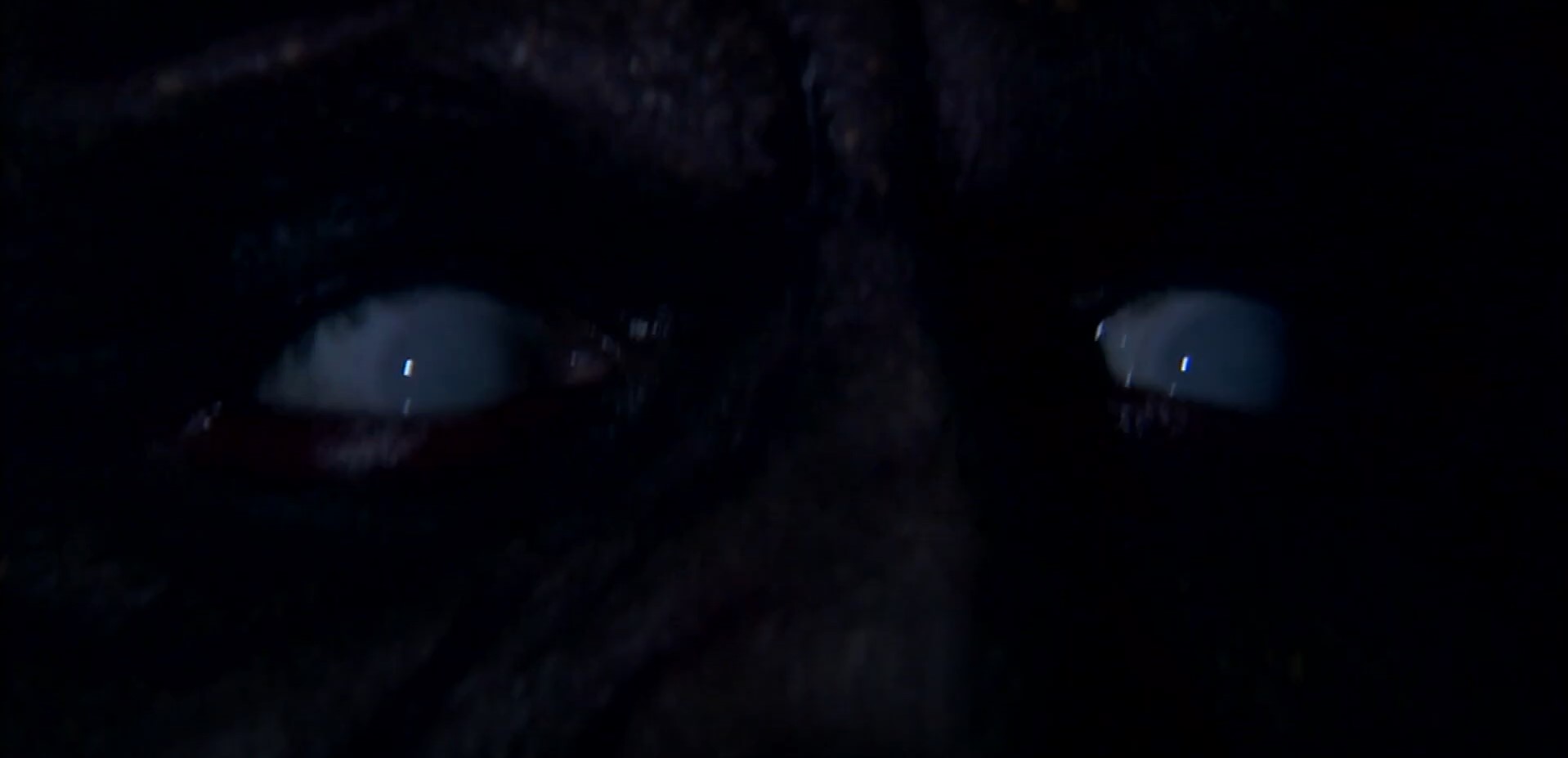
The one theme that keeps popping up in the recess of the mind is perhaps the one theme that eludes being talked enough about when overhauling “Nightmare Man” as a message bearer. Being an early 2000’s horror in the long established and well-dipped into the shadow of the “Scream,” “I Know What You Did Last Summer,” and “Urban Legend” franchises that defined the turn of century before it even happened might have had something to do with “Nightmare Man’s” lack of enticements for distributors to feel love for the man of nightmares and notice it for the novelty and the theme for what it is, an instilled paranoid fear that one’s sexual attacker leaves behind as a post-traumatic stress bomb that is everything all consuming. Kanefsky patterns the hallmarks of rape trauma stealthily into the script, disguised as a shadow, with a teethy mask, and vividly glowing and menacing eyes. Some other scenes are more obvious than others, such as Ellen’s dreams of the sinister smiling figure pinning her to the attic floor and spreading her legs right before she wakes or when she cries out, “I still feel him inside me,” while held up inside the cabin, with Kanefsky painting with a broader brush on “Nightmare Man’s” obscured presence and masked killer with an agenda that attaches itself directly in avoidance of calling a spade a spade. The kills and gore effect gags can stand up against any big budget, Hollywood production and are just unique enough to make the killer interesting in diversity and brutal enough to give “Nightmare Man” an edge sharper than the knife he wields.

If a Tiffany Shepis fan, or a fan of Tiffany Shepis in her underwear holding a crossbow and won’t be rattled by the bent elbow plot pivot, the Rolfe Kanefsky picture is an enjoyable, campy romp that gives homage to the horror films that have set the scene for “Nightmare man” to exist.   Ronin Flix plucks “Nightmare Man” out of standard definition dreamland and into the reality of high-def, 1080p Blu-ray.  Presented in an anamorphic widescreen 1.78:1 aspect ratio, the story is set almost entirely at night with more household lighting for interior shots and not too much exterior lighting to brighten objects or even cast hard-edged shadows.  While this creates more realistic atmospherics of isolating apprehension in the woods horror, Kanefsky and cinematographer Paul Deng (“Trancers 6,” “Song of the Vampire”) bathe many of the night shoots in deep blue tint and the Ronin Flix transfer appears to display in low contrast and is very dark, leaving focal objects nondelineated and obscured.  I haven’t checked out the Lionsgate After Dark DVD print of this film so I can’t compare.  There some dip in the compression decoding as the release hovers in the mid-30Mbps for good periods of time but does dip into the lower 20s and it shows with light phasing macroblocking.  When not bathed in blue, skin tones and grading often look natural and palpable.  The English language DTS-HD 5.1 Master Audio is balanced between all levels tracks, putting the dialogue in the forefront, keeping the range of ambient noises at an appropriate depth, and a soundtrack that maintains tensions rather than over intensifies to a fault.  I will say that the multi-channel lacked a significant stalwart production that didn’t provide the anticipated strength of audio.  Dialogue is clean and clear with no perceptible issues and the overall package track can be said the same.  English SDH are optional.  With the Ronin Flix release, new bonus supplementals extend more background and insight with retrospective discussions and distribution challenges associated with “Nightmare Man,” such has a new interview featurette with director Rolf Kanefsky, producer Esther Goodstein, and star Tiffany Shepis in There’s Something Out There:  The Making of Nightmare Man and a new audio track isolating the film score by Christopher Farrell (“Bus Party to Hell”).  Also included is Creating the Nightmare:  The Making of Nightmare Man – a raw footage behind-the-scenes look at some of special effects, makeup, and off-the-cuff tomfoolery during in between take down time, extended scenes, Tiffany’s Behind-the-Scenes of Tiffany Shepis weaponizing a handheld camera with her flare of sexualized humor and potty-mouth pizazz, an audio commentary track, on the audio setup, with director Rolf Kanefsky, producer Esther Goodstein, and star Tiffany Shepis, Flubbing a Nightmare Gag Reel, still photos, and a promo reel.  The physical features include a David Levine package design of an abract-esque composite of the Nightmare Man mask, Tiffany Shepis in a bra, and a knife all splashed in red lined inside a traditional Blu-ray snapper case with no insert.  The release is locked on Region A playback and the film has a runtime of 87 minutes and is rated R for horror violence, gore, some sexuality/nudity, and language – what Tiffany Shepis release wouldn’t include all of that?  “Nightmare Man” is a dream of a subgenre-bending film; sexy, gory, intense, and unpredictable, all the prefigures of a hell of a good time.

“Nightmare Man” Is Here To Haunt Your Dreams in High-Definition!  Blu-ray Available at Amazon.com

Never Weekend on Sadomasochists’ EVIL Private Island Alone! “Eugenie” (Blue Underground / 4K UHD and Blu-ray)

“Eugenie” is Waiting to Tell You Her Story of Perversion!  See It Now on 4K UHD at Amazon.com

A wealthy, sexually sadistic Madame St. Ange, a specialist in the Marquis de Sade’s teachings, entices to coerce the father of a young and beautiful innocent girl, Eugenie, St. Ange befriends to permit the naïve teenager to visit Madame’s private island for the weekend.  Excited and overjoyed with the idea of feeling like an adult indulging in mature activities, Eugenie is unaware that Madame and her equally as cruel stepbrother and lover Mirvel, who has been beguiled by Eugenie’s beauty, have ulterior motives and lured the unsuspecting youth into a ritualistic trap of sexual corruption and sadomasochism.  The step-siblings drug and rape Eugenie for their unspeakable gratifications only for her to awake in what only be explained as horrible nightmares of phantasmagorical encounters but when the nightmares unveil a disturbing reality when the dogmatic Dolmance and the rest of his Marquis de Sade acolytes arrive to initiate Eugenie into more than just pain and pleasure educations but to be a pawn in a murder scheme that tears the very fabric of virtue. 

Spanish director Jesús Franco, or widely known as Jess Franco, helmed an excessive number of provocative-pushing films over his nearly 60-year-career as a filmmaker before his death in 2013.  Many of the once labeled video nasties director were crafted on a tight budget with an even more so tight timeline as Franco churned out regularly mostly trashy horror and sexploitation that would more than often wind up in the projection booth of local red light district theaters for a dime and a wank.  Yet, “Eugenie” strokes a different kind sensation, one that lies in the ethereal concept of sexploitation and the ruin of youth made to order by the Marquis de Sade himself and artfully stitched by Jess Franco’s profundo knowledge of cinematic sculpturing.  “Eugenie,” or “Eugenie…. The Story of her Journey into Perversion” in the extended title, is based off the French 1795 novel, La Philosophie dans le boudoir (Philosophy in the Bedroom) written by de Sade and the script adaptation is penned by “99 Women” and “Christina” screenwriter and profound producer of film, Harry Alan Towers.  Towers also produces “Eugenie” under the pseudonym of Peter Welbeck for Video-Tel International Productions and was theatrically distributed by Distinction Films.

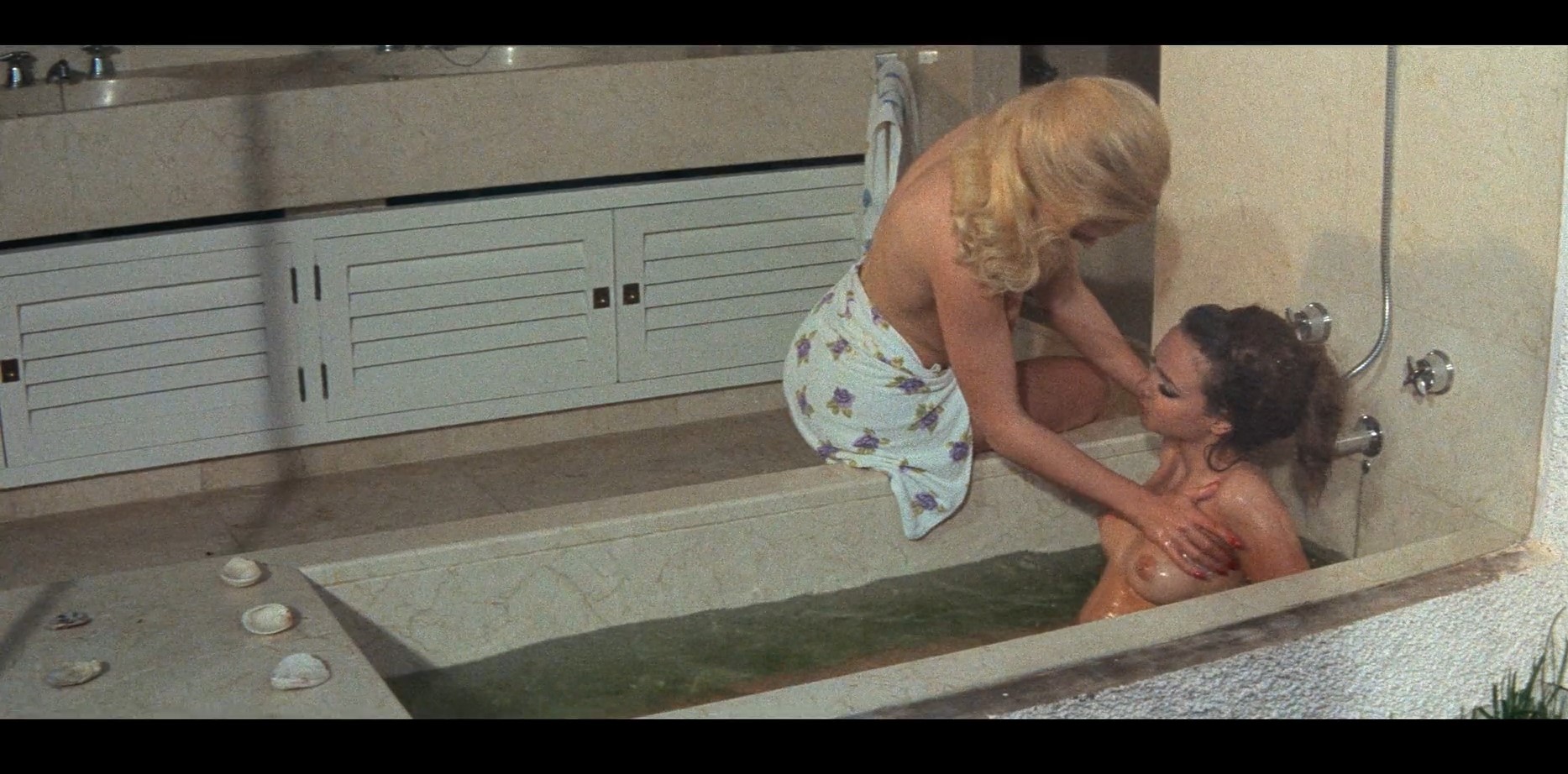
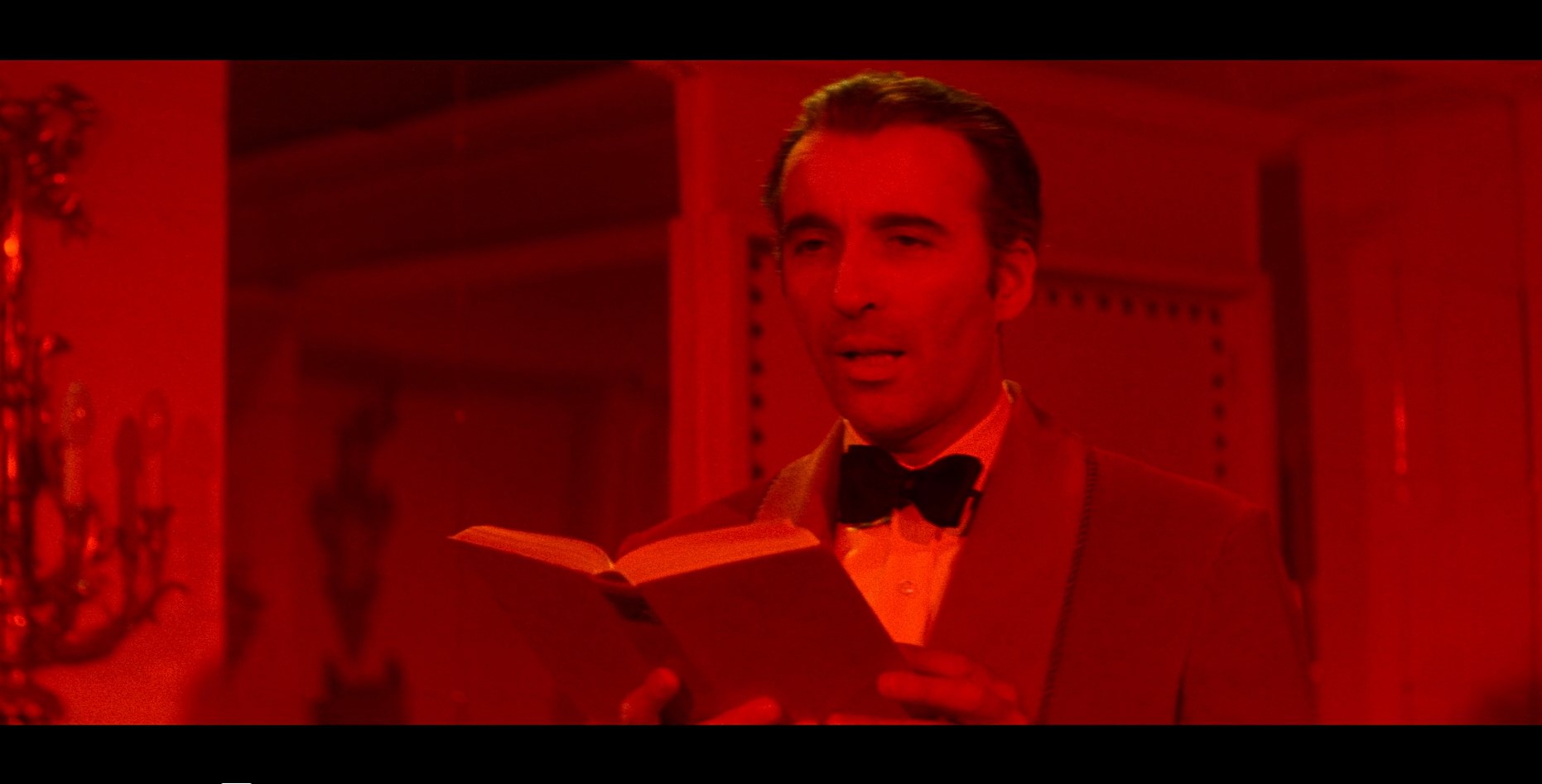
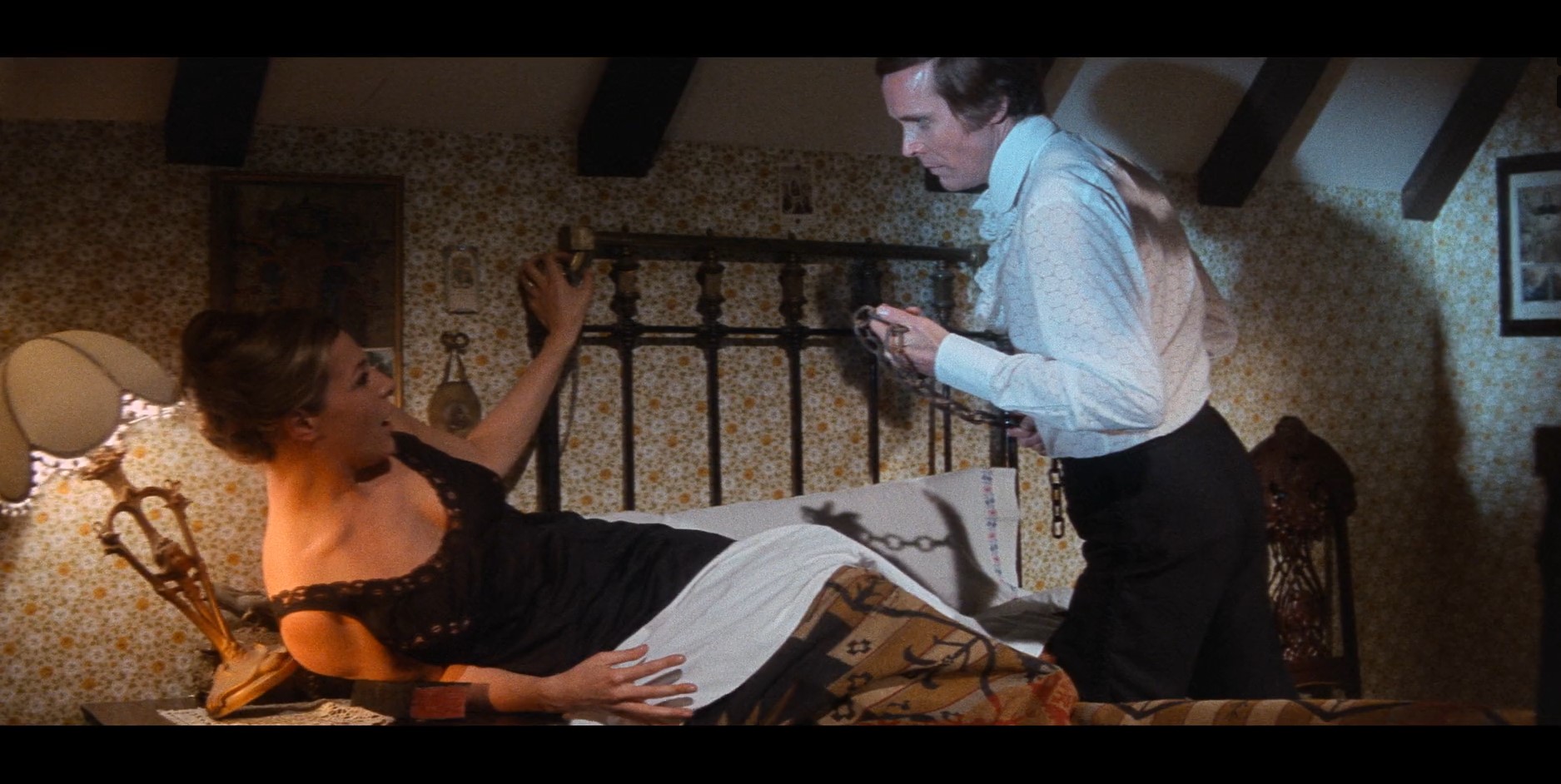
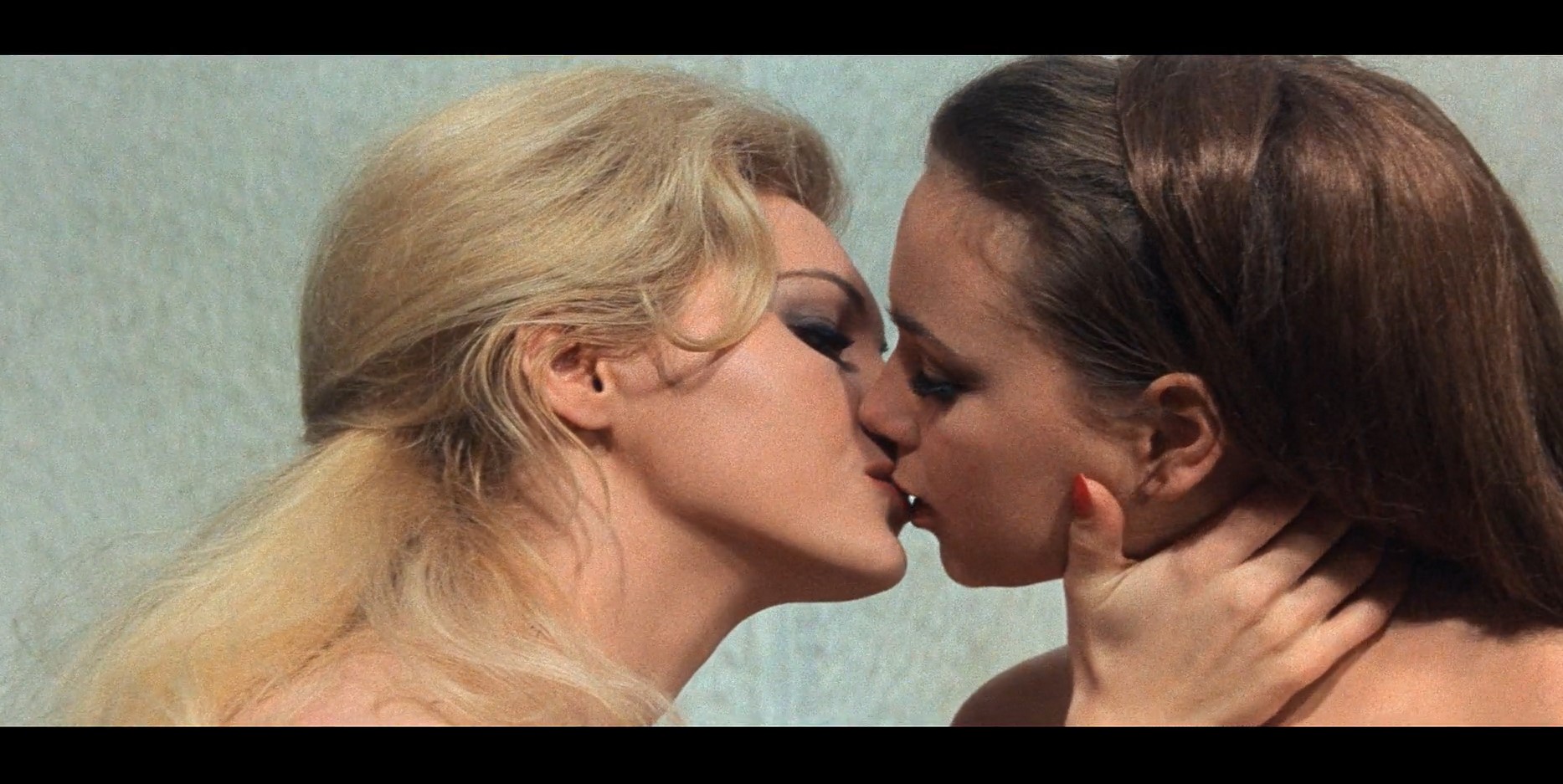
At the frayed edge of an already soul crusher subject matter, “Eugenie” repels against the grain of easily digestible roles,  Marquis de Sade’s characters are sadomasochist with abhorrent qualities of deception, malintent, and insatiability for a cathartic release from sexual pleasure and punishing pain.  On the other side of the coin, Franco and Towers film calls for the characters to push beyond the limits of their comfortability around the idea of drugging and raping, or being the victim of such, as well as violence and murder as part of a cult normalizing and rationalizing unrestrained freedom and ideology.  Swedish born actress Marie Liljedahl had a brief stint in erotica, as a power-seductress as the titular Inga, and only dabbled with sexploitation, “Eugenie” being that dabbled powder only once snorted to warrant a sudden disinterest in the theme altogether.  Liljedahl plays the titular character and she looks every bit the age later-aged teen with a round, youthful face, vibrant demeanor, and curvaceous like a ripe peach.  Like that knot forming in your gut spurred from anxiety, watching Eugenie exploited while in a stupor is the equivalent imaginations of what the deplorable effects and actions of a roofied drink that produces vague and foggy recollections and disbeliefs in what is reduced down to a vivid dream gone wild.  The two inveiglers at the heart of Eugenie’s virtuous destruction quickly become despicably loathed by not only their debauchery plans to corrupt good embodied but also by their snooty affluency and their acrid arrogance with the help.  “The Blood of Fu Manchu” and “99 Women” blonde beauty, Maria Rohm, and the stern faced “Succubus” and “The Vampires Night Orgy” actor Jack Taylor exemplify the essence of evil as the de Sade principled lovers and step-siblings Madame Saint-Ange and Mirvel.  The opened-ended lust Mirvel has for Eugenie morphs into a determined, nagging desire to have her at all costs, kept close to the chest by Taylor but knowing it’s simmering quickly to a head, and you can see in the Madame’s eyes that she’s either really internally pissed about Mirvel’s narrowed focus on a new toy or she’s basking in her ideology’s unchained gratification.  Rohm’s nonaligned decision maintains Madame’s sensual composure and undisclosed intentions until the shocking end.  The presence of Sir Christopher Lee in a Jess Franco film isn’t all that surprising.  The legendary, late British actor – “The Blood of Fu Manchu,” “The Bloody Judge,” and “Count Dracula” – where a handful of euro trashy and exploitative horror that were released around the same time as “Eugenie,” but “Eugenie” garishly bathed in the idea of sexual misappropriations and Lee being a last minute addition due to another actor’s ill-fate, agreed to fulfill the role without knowing how involved the nudity would ultimately land perverted cuts of the film into spank cinema houses.  Lee’s red smoking jacket, elegantly stoic composure and dialogue delivery, and his incredible ability to perform an intimidating figure without as much as lifting a finger compounds the value of Franco’s filmic adaptation to the point where I firmly believe with the original slated actor George Sanders (“Village of the Damned, 1951) in the ringleader and adherent role of Dolmance would likely have not have been half as good.  Anney Kablan, Paul Muller (“Vampyros Lesbos”), Uta Dahlberg, and Maria Luisa Ponte (“El Liguero Mágico”) costar.

Through an ocean of film filth, “Eugenie” may be the very film that proves Jess Franco is a cinematic genius in his own rite by capturing de Sade in the flesh, so to speak, with a plain-sighted fetish that diabolically hatches a scheme within a scheme.  In addition, “Eugenie,” dare I say it, almost feels like a Hammer film, especially with Lee in the picture.  The interior sets are modernly gothic with sleek and sterile furniture but garnished with large candle holders and the Marquis de Sade era sartorial worn by Dolmance’s muted followers. There’s a cadence to Franco’s story, one that leaves breadcrumb plot aspects to go against divulging a straightforward story right from the start, and the history between acquainted characters is contentious and fraught with unpleasant emotions in the act nice, play nice master sadists and the subservient help hierarchy that hints at a fraction of degrading minorities. Saint-Ange and Mirvel boatman Augustine, a black man who has his life reborn from the ashes of poverty only to be toiled as their attendant and frivolous plaything when the mood is right. There’s also deaf and mute woman brought on to be the new maid in a moment’s conversation between the siblings just to drop a dab of her presence amongst them. Augustine and the maid represent the lower class of people, a man of color and a woman of disability, to easily take advantage of just like Saint-Ange and Mirvel do with Eugenie’s innocence. France shies away being overly showy in slipping in this unjust dynamic that unfolds bit by bit as mentioned earlier of Franco’s revelation design. “Eugenie” not only dangles the attractive set locations and nudity carrot to draw attention but also invests in its talent as Frnaco the cherishes the cast of individual portrayers with longer shot moments to speak volumes of their unique objective or to pedestal them in their own keynote scene of power and, subsequently, obliteration that makes every occurrence worth noting and not just something to write off. “Eugenie” has no tears or apologies to spare but only inhuman indecencies separated by a blurred, unfettered line of sex and sadism satisfactions. This is Jess Franco at his finest.

The 1970 “Eugenie” print takes on more pixels, 2180p to be exact, with 4K UHD transfer and a re-release 1080p high-definition Blu-ray in a 2-disc set from Blue Underground. The 4K restoration from the original camera negative with Dolby Vision Hi-Def resolution on a 66GB, double layer UHD and is also on an AVC encoded Blu-ray that are both presented in an anamorphic widescreen 2.40:1 aspect ratio. Both transfers execute their respective program, offering an average frame rate of mid-high 30s Mbps, but there’s a focus issue with the transfer brought upon likely at the origin of filming and we know this because the frame rate never drops, staying consistent throughout the issue. Periods of unfocused detail come and go between edits and often in the same shot as if attempting to render delineation between the foreground and the background in order to get the shot on the fly (there are many instances Franco had limited time to shoot). Color grading, including skins tones, are natural appearing until the red tint, a symbol of when the subject matter becomes dark, eliminates and reduces vast color palette to one single hue. Both formats offer an English and French dub language 1.0 mono mix that buff enough to be ample; in fact, the mix is rather good considering the single channel with substantially clarity with no hissing, popping, or other blights on the dialogue track, Foley, or any track for that matter. Subtitles are offered in English, French, and Spanish. If you’re looking for special features, they mostly encoded onto the second disc, the Blu-ray, with Perversion Stories, a retrospective interview with the late Jess Franco, writer Harry Alan Towers, and stars Christopher Lee and Matrie Liljedahl discussing the behind-the-scenes measures and understandings of the sexploitation classic, Stephen Thrower on Eugenie, an interview with the author of “Murderous Passions: The Delirious Cinema of Jesus Franco,” a new interview with costar Jack Taylor Jack Taylor in the Francoverse, a newly expanded poster and still gallery, and theatrical trailer. The 4K disc also has a new commentary with film historians Nathaniel Thompson and Troy Howarth, plus a theatrical trailer. A two-disc UHD case holds a disc on each side of the interior and the case itself sports the class naked Eugenie pose with her brown locks draped over her shoulders, covering her chest. Speaking of covering, the snapper case is sheathed in a O-slipcover with oval cutout of the front to display Eugenie with a Victorian-aged mirror border. The darkened slipcover is also prominently titled under Marquis de Sade’s novel English moniker, “Philosophy in the Boudoir” that has a regal and classic aesthetic. The unrated, 87-minute film has an all-region playback. Jess Franco distills revolutionary extravagance and couples it with the notion that youth will inevitably be corrupted by family, friends, and a group of cruel Marquis de Sade cultists in what can be construed as one of the director’s most prestigious sexploitation and melodramatic films of his oeuvre.

“Eugenie” is Waiting to Tell You Her Story of Perversion!  See It Now on 4K UHD at Amazon.com