EVIL Will Scrape You Clean Right to the Bone in “Scavenger” reviewed! (MVDVisual – Cleopatra Entertainment / Blu-ray)

A ruthless post-apocalypse world consists of killing others for their vital organs and sell them on the black market to earn a living or to score the next high.  The latter is the life Tisha lives as a bounty hunter assassin sustaining through a bleak existence of the next job and another hit.  When a new job brings her ugly past to the present, no payment is necessary as she gladly assassinate a smutty bar owner and brutal cartel head.  Things don’t go as planned when Tisha winds up naked on one of grimy sex mats of her target’s whore house after encountering and being seduced by Luna, the boss’s best laid side piece stripper and confidant.  The assassin must fight tooth and nail to survive on her filthy course to truth-hurting vengeance.
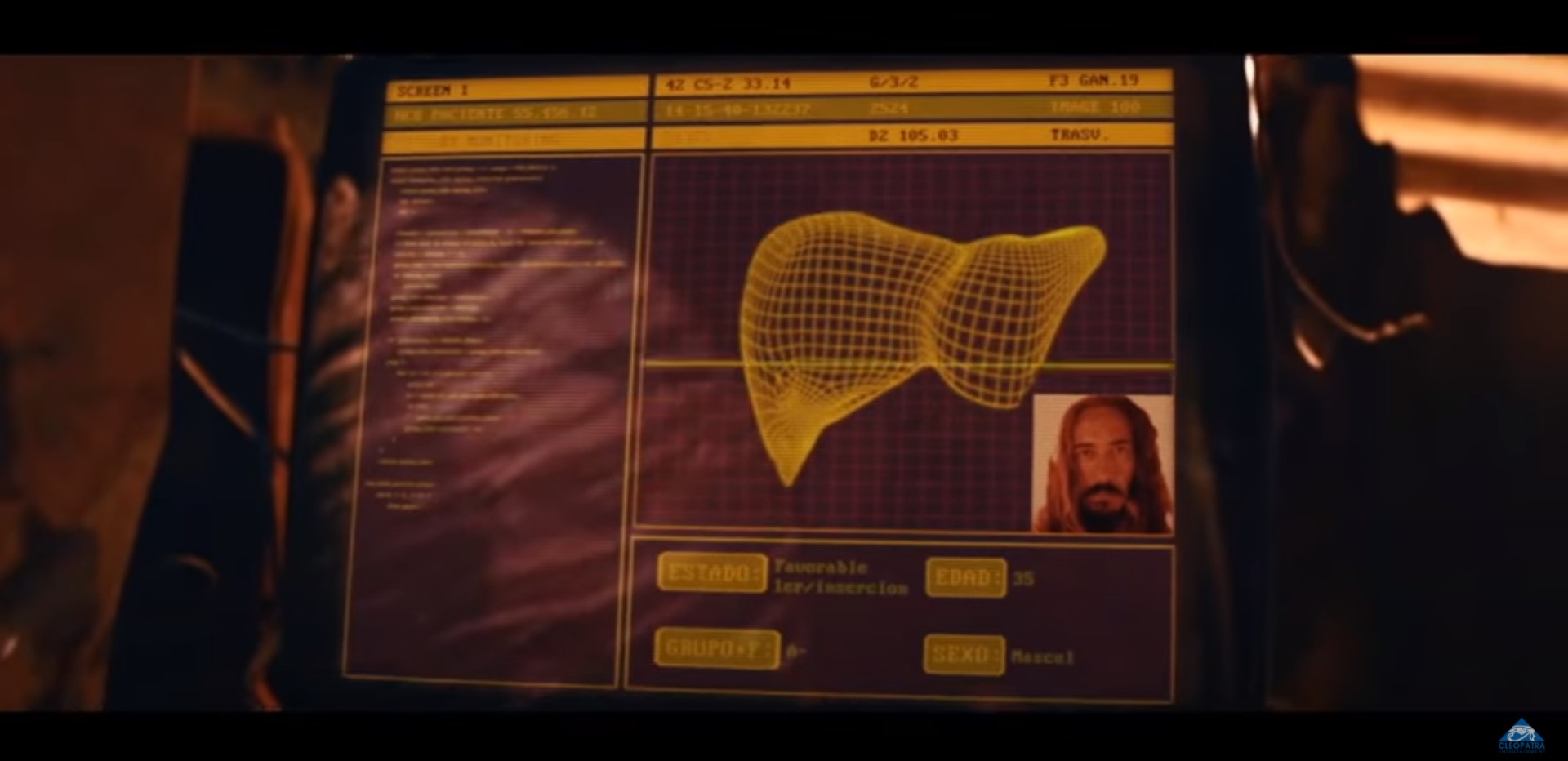
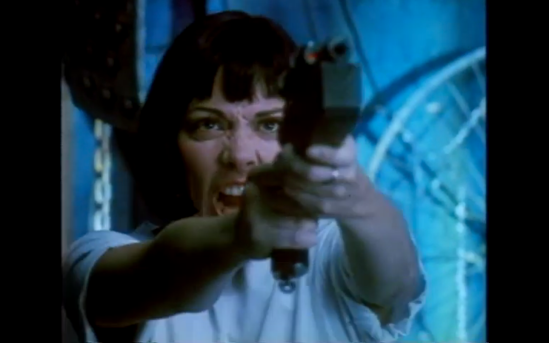
A complete ball of filth and fury is how I would begin to describe Eric Fleitas and Luciana Garraza’s sordid wrapped “Scavenger,” hailing from Argentina with wild west undercurrents in a post-apocalypse wasteland that makes George Miller’s barren lands look like Disneyworld.   Titled originally as “Corroña” in española,  the filmmakers also pen the violent screenplay alongside a third writer in Shelia Fentana to produce their very first feature length credit together that clocks in at 73 minutes, and 73 minutes is plenty enough to be entranced and be gorged by the anarchist sleaze, galloping gore, fast cars, and loose whores.  The trio financially self-produce “Scavenger’s” journey to silver screen fruition while Ronin Pictures provides special effects work that can rival the best independent productions. 

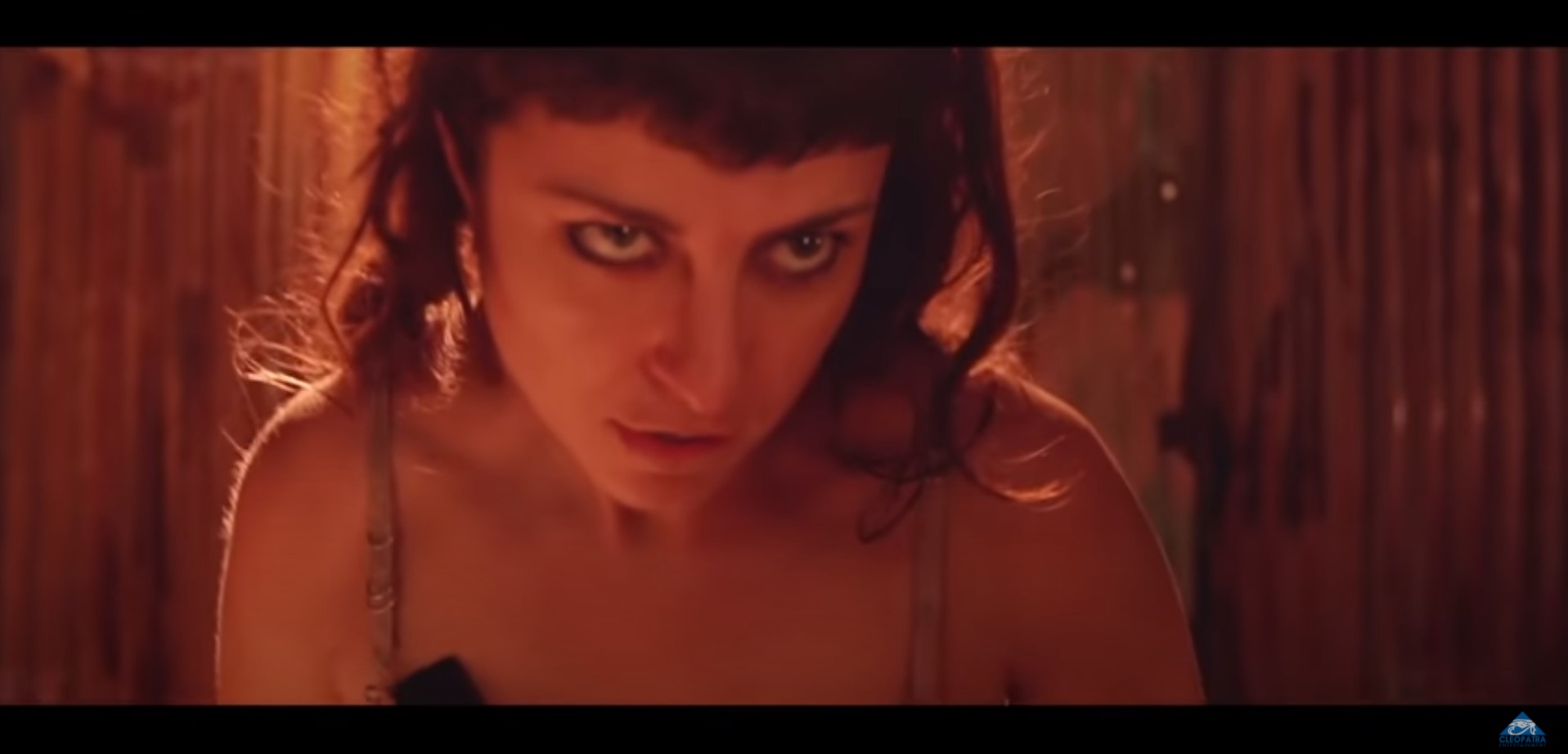
The role of Tisha is not a pleasant one, no role in where the protagonist being raped is pleasant to begin with, but to compound the character with a nasty drug habit, a gruesome vocation, traumatically scarred past, and be the objectifiable plaything for a bunch of society-fallen degenerates, Tisha’s fortitude had to be uncompromisable and her sensitivity dialed way down to zero in order to survive in her cutthroat world where not even your bodily organs are safe.  In steps Nayla Chumuarin, a fresh face Argentinian actress unknown to the majority of general audiences, ready to slip into a demanding role antithesis to Mel Gibson’s Max Rockatansky that’s only similar in a very few ways.  Geared in masculine attire, sporting a pixie cut, and gleaming with sweat and dirt from head to toe, Chumuarin offers up an intriguing anti-femme fatale in a more cold shouldered assassin vibe with a fast barb wired cladded car and who can handle herself around all types of antagonists, even those two times her size and are a disfigured mutant!  Tisha tracks down Roger, a brothel and bar owner who has ill-fatedly crossed paths with Tisha in a previous life.  Played by Gonzalo Tolosa, the mohawk-sporting Roger abides by his own set of rules unless they’re coming out of the sensual viperous mouth of Luna (Sofia Lanaro), Roger’s stripper girlfriend with a true sense of the femme fatale archetype.  Together, Roger and Luna call the shots and lust suck each other faces in the torment of Tisha who by the end of the film just wants to waste them both from the face of the post-apocalypse Earth.  Fleitas and Garraza purposefully and rightfully omit much of the backstories from most of the film and slide them in, crashing down like a house of falling cards, right on top of not only the characters but also the audience in a moment of realization and shocking truth from everything that has happened in the story up to that climatic end.  “Scavenger” rounds out the cast with Tisso Solis Vargas, Denis Gustavo Molina, Norberto Cesar Bernuez, Vanesa Alba, Rosa Isabel Guenya Macedo, and Gaston Podesta as the Mutant.
“Scavenger” is pure debauchery nonsense.  A gore loaded free for all.  The story is about as ugly as you would expect with the exploitation of carrion from those slowly succumbing to death in one form or another.  “Scavenger” is an entertainment juggernaut doused in corrosive material that will either disgust or amuse, depending on your temperament, with no middle ground to balance.  Characters are driven by unadulterated greed or rage, even the heroine of vengeance who just a few scenes prior stabbed a man in the back to harvest his organs, without one morally redemptive character to relieve the incessant current shocking the mind’s nipples with searing voltage.  Fleitas and Garraza slather in a laissez-faire fashion the exploitation veneer of grindhouse muck to serrate the unsavory snaggleteeth even sharper, but there are points where too much of a good thing becomes bad to the film’s health.  As such is with the licking of the face motif.  Like Quentin Tarantino and his obsession with closeup shots on female’s feet, Fleitas and Garraza shoot a handful of scenes of sexually engaged males lapping the sweat and pheromone droplets from the faces of their carnal conquests in all types of scenarios from rape to consensual.  The saliva wet, grainy muscle just slides right across the soft flesh covered cheekbone in more scenes that I cared to count in what seems more like a filmmaker fetish than an object necessary to overboard the obscenities.  It’s a weird action to call out but happens more than just a couple of occasions and between different characters.  The pacing’s fine albeit a few nauseating slice and dice editing that doesn’t take away or hinder in abundance understanding the progression of Tisha’s journey, but definitely causes a bit of blurriness on the heroine’s perspective of whether what she’s experiencing is a nightmare, a flashback, or a bad trip from whatever narcotic she withdrawals from that once injected speeds her into a kill monger. 
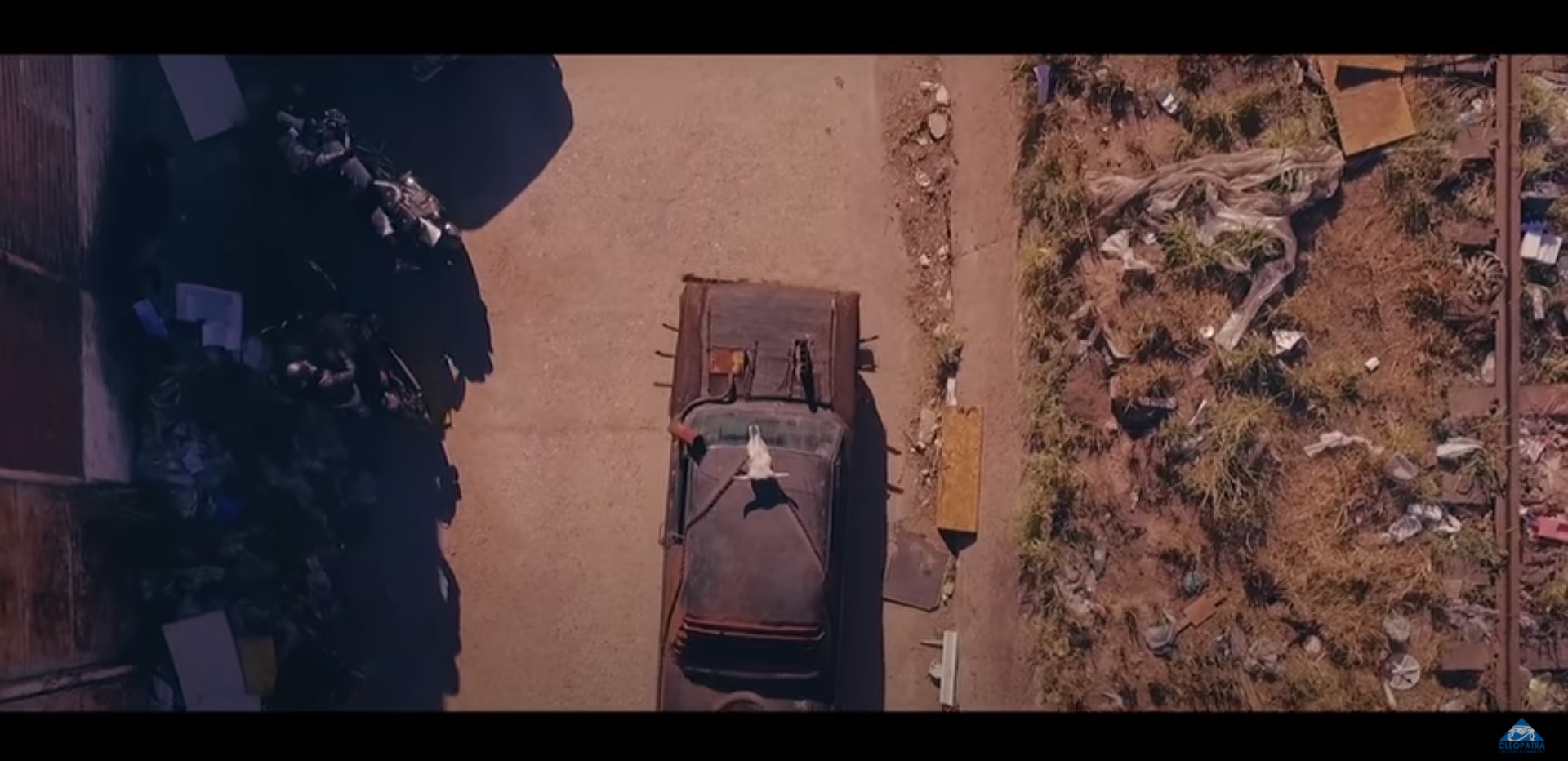
If what I’ve gone over doesn’t entice you, I can tell you this much.  “Scavenger” is perhaps the best Cleopatra Entertainment film release I’ve seen up-to-date.  The subsidiary of the independent record label, Cleopatra Records, Inc, in collaboration with MVD Visual release the South American grindhouse-fest film on a 2-disc Blu-ray and Compact Disc set featuring the film’s soundtrack, including music from Rosetta Stone, The Meteors, The 69 Cats, Philippe Besombes, Damon Edge and more with a full artist list on the reverse side of the cover liner along with alternate cover art of the film.  Presented in a widescreen 16:9 ratio, don’t expect a high-definition output with a homage to grain and a warm high-key contrasts to augment the desert outward show under the eye of Sabastian Rodriguez.  Negative space is only used for intense shadows to cloak the lurking menace around every corner.  There’s a variety of shots, including some great wide shots and crane angles, that sell “Scavenger” beyond the frenzy of blood-soaked and furrowed brow closeups.  There are four audio options available:  a dubbed English 5.1 surround and a 2.0 stereo as well as the original Spanish dialogue track in a 5.1 surround mix and a 2.0 stereo.  Unfortunately, the Spanish tracks do not come with option English subtitles so if you don’t understand the language, you’ll need to sit through the always awful English dub; however, this particular dub track is not obviously horrendous.  With all the Cleopatra Entertainment titles, the soundtrack sticks out like a sore thumb to promote their investments with high quality sound but also in true Cleopatra Entertainment titles, the lack of bonus features continue with “Scavenger” with only a theatrical trailer and an image slideshow.  “Scavenger” is a particular breed of film where you just flip your mind’s decency switch to off and gladly watch the world burn in depravity to get your jollies off.

Own “Scavenger” on Blu-ray and Soundtrack CD combo Set!

Steamed Pork Buns Stuff With EVIL! “The Untold Story” reviewed (Unearthed Films/Blu-ray)

Wong Chi-hang brutally beats and sets fire to a fellow gambler who refuses to lend him money.  After destroying his identification card and creates a new look and identity, Wong flees Hong Kong before he can be hunted down for first degree murder and be served capital punishment for his crime.  For the last 8 years, Wong has lived and worked on the island village of Macau, running a small, but well-known, steamed bun restaurant, Eight Immortals Restaurant.  He receives inquisitive letters everyday asking about the whereabouts of the former owner, Cheng Lam, by Lam’s older brother on the mainland.  The letters force Wong to attempt manipulating lawyers into signing over the restaurant to him without Lam’s presence.  When the police discover dismembered limbs washed up on the beach, an investigation ensues that connects the body parts to a Chan Lai Chun, the mother-in-law to Cheng Lam, leading a small task force of blockheaded detectives to Wong’s restaurant where he becomes the prime suspect in the disappearances, but he won’t break so easily after being apprehended, unwilling to cooperate and confess to the whereabouts of the bodies of the vanished owner, his entire family, and a pair of workers.  Yet, what were exactly in those steam buns that made them so delicious?

Full disclosure.  I’m not too terribly familiar with Hong Kong’s rating system of Category I, II, and III, but I’ve more-or-less dabbled in the Category III (Cat III) horror and exploitation cinematic market, owning only a handful of these gruesome-and-sexually gratifying guilty pleasure full of sex, violence, and taboo concepts of titles such as “Riki-Oh:  The Story of Ricky,”  “The Chinese Torture Chamber,” and “Three…Extremes” and only “The Story of Ricky” has ever been popped into my player for recreational viewing.  Also, in my collection, is a Tai Sing DVD copy of Herman Yau’s 1993 crime-and-cannibalism graphic thriller “The Untold Story” and, frankly, I never opened it either, but when Unearthed Films sent me their new Blu-ray release to review, I’ll never be able to see chop sticks the same way again!  The eye-opening experience also screamed that I should definitely rip open and see those other films to quench my thirst for Cat III’s offensive opulence.  Based off a true story of the Eight Immortals Restaurant murders in 1985 around the Macau area, the nearly unwavering from the truth storyline parallels the Kam-Fai Law (“Dr. Lamb”) and Wing-Kin Lau (“Taxi Hunter”) co-written story in which a madman slaughters an entire family over a gambling dispute and runs their family business, the Eight Immortals Restaurant, until the police capture him, but Yau sticks more sensationalism to the already brutal notoriety surrounding the actual case with ground human barbecue steamed buns to tease with abhorrent flavor under the Golden Sun Films Distribution distribution of the Uniden Investments and Kwan Hung Films production.

“The Untold Story’s” lead man in the shoes of the maniacal, rage-filled Wong Chi-Hang is “Ebola Syndrome’s” Anthony Wong who initially thought the script was greatly unattractive.  Little did he know that his performance would be so good, so osmosis with his wide-eyed lunatic stare through the luminating pixels of the television screen, that the role would honor him with a Hong Kong Film Award for best actor; Hong Kong’s equivalent to the best actor award for an Oscar in the States.   The “Hard Boiled” actor embodies a soul of frustration and anger to rise his character up to the demented level of nihilism and heartless exploitation that unforgettably scores being the face of “The Untold Story’s” cruelty.  Yet, there is a Jekyll and Hyde complex with Yau’s film that cuts the cynicism with a risible troupe of police officers supervised by Officer Lee (Danny Lee “The Killer”).  With a beautiful foreign woman, a blatantly announced hooker, always at his side and being the sharpest detective on the force, Lee’s a contradictory, authoritative commander meshing immoral principles and duty into one while leading a four-person squad of non-initiatives comprised of three rubbernecking men, craning their gulping jugulars toward Mr. Lee’s arm-candied gals, and one tomboy woman with an affinity for Mr. Lee who struggles with being taken seriously amongst her peers as an unenticing woman in cop’s clothing.  The officers’ western names are a slither of satire to poke fun at the nicknames of tough or macho cops go by in the States with Bo, King Kong, Robert, and Bull (respectively Emily Kwan, King-Kong Lam, Eric Kei, and Parkman Wong of “Dr. Lamb”).  The cast rounds out with Fui-On Shing and Julie Lee. 

“The Untold Story’s” embittered nihilistic violence, gratuitous rape and sodomy, and steamy, mouth-watering cannibalism leverages this Cat III film as tiptop horror exploitation from the far East.  If broken down more, director Herman Yau pins and sews together a liaising three act prong story of a horrid man’s attempt at deadly stability in society and a madcap group of officers, with a penchant for police brutality and coercing confessions, bumbling their way through clues that ultimately funnel into a blended third act of magnetizing the two sides together toward a satisfying, almost faithful, ending of “The Eight Immortals Restaurant:  The Untold Story’s” purloin and murder fiction and non-fiction exploit.  Yau spares no expense for gore, serving up a platter worth the splatter of some nifty chop’em up and grind their meat into the dough effects that’ll turn stomachs as well as heads and doesn’t exude as bargain basement quality; yet, just enough gore goes uncovered to tantalize without a full onslaught tarp covering the ground of disembodied limbs and floor-splattering entrails that boil down to an overshadowing character that detracts from the cast performances as such can accompany with the more extreme Asian horror catalogue.  There’s nothing gentle about the actions of Wong Chi-Hang, but the way he’s scribed to manifest spur of the moment carnage, stemmed by the most minute disputes, and the way Anthony Wong carries and maneuvers of a monstrous villain with ease takes an esthetical point to not stray away from his, or rather his victims’, story.  “The Untold Story” is, in fact, meta-exploitation fiction of non-fiction down to the very last tasty morsel. 

In what is perhaps the epitome of Hong Kong’s Category III film index, “The Untold Story” arrives onto high definition Blu-ray courtesy of the gore and shock genre label, Unearthed Films as part of the label’s Unearthed Classics line and distributed by MVDVisual. The well preserved, near flawless transfer is presented in a widescreen, 1.78:1 aspect ratio, and the picture is a vast improvement over the slightly washed previous DVD releases though favors a higher contrast resolution that ekes trading out the details for a brighter, softer film in an overall compliment of Cho Wai-Kee’s beaming cinematography. Whether in the police station or the restaurant, fluorescent lumens light up the scenes with a sterile-driven madness. The Cantonese, Mandarin, and some English 1.0 PCM audio track denotes, without surprise, the lossy quality doddering from age and antiquated equipment, but renders well enough without the imperfections of hisses, distortions, or any vocal impediments. The option English subtitles display without error with only the issue in their breakneck pacing when attempting to keep up with reading the subtitles and the rapidfire dialogue. You basically have to skim read. The special features include commentaries with star Anthony Wong and Herman Yau, the superbly dark and traditional film score isolated for audible pleasure, commentary with Art Ettinger from Ultra Violent magazine and Bruce Holecheck of Cinema Arcana, a Q&A with Herman Yau, a featurette of the history behind Category III films of Hong Kong Exploitation Cinema, a interview with Rick Baker entitled Cantonese Carnage, and Unearthed Film trailers. There’s also an two-page insert of Art Ettinger’s write up about Hong Kong cinema and “The Untold Story.” Resilient to the test of time, “The Untold Story” benchmarks a high point in High Kong exploitation cinema, recalls the tremendous feat of performance by Anthony Wong, and displays the sheer mastery of disciplined filmmaking from Herman Yau in this unforgettable gruesome black comedy.

Must Own Christmas Gift! “The Untold Story” on Blu-ray!

EVIL Trifles With a Vindictive Obsessed Cop in “Split Second” reviewed! (MVDVisual / Blu-ray)

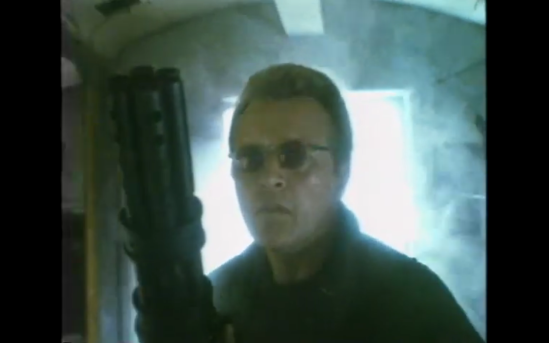
Global warming has taken a toll on the Earth’s polar ice caps in 2008 with cascading amounts of water flooding around the world bringing knee high waters to coastal cities.  London is hit hard with drenching sewer overflows and coastal run overs that result in an over infestation of rats to storm the streets, back alleys, and even resident homes, carrying a harmful disease in their occupation.  However, something else compounds the rat plague that slashes at random victims, tearing their hearts out violently from their chests without ever leaving a witness except for one, a rogue and paranoid detective Harley Stone whose partner was slain in one of the deadly attacks and himself marred by the killer. Partnered with a new hot shot know-it-all detective following the murders, an obsessed Stone confronts his haunting traumas as he continues to pursue the inhuman perpetrator who has a psychic connection to Stone, personally toying with the on-edge officer, and has kidnapped his girlfriend as bait.

Even though 2008 has come and gone now almost 12 years ago, Tony Maylam’s 1992 actionized-creature feature “Split Second” still holds water just like the rising tide pools on the streets of London.  “The Burning” director, Maylam, helms, with the finishing touches of the final sequences directed by Ian Sharp after Maylam’s sudden departure, a fast paced and snarky script penned by Gary Scott Thompson as one of the writer’s very first big budget outputs from nearly 30 years ago that was followed up with major studio films, including a little project you may or may not have heard of, “The Fast and The Furious” mega franchise.  Before nitrous suped-up cars hot-rodding on asphalt, jumping high speed trains, and flying off cliffs in a lap strap of criminal activity luxury, Thompson created a formidable, heart-devouring beast that became the trap-setting, trophy-hunting predator and the teeth-snapping, chest-bursting xenomorph all in one package to symbolize the irreversible and ignored effects of an overpopulated, warming planet.  “Split Second” is a production of Challenge Film Corporation and produced by Muse Productions with Chris Hanley, Laura Gregory, and Keith Cavele serving in a producer role.

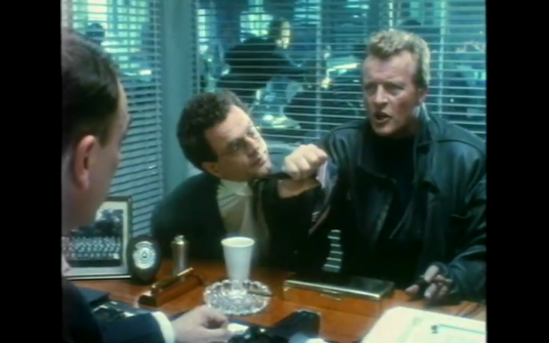
The Netherlands’ very own Rutger Hauer sheds his nice guy exterior for Harley Stone’s shell-shocked, rough and tough outer shell.  The late “Blade Runner” and “The Hitcher” actor brings a certain cinematic coolant to “Split Second’s” overheating fringe of disproportionate action and science fiction horror, a lop-sidedness typical of a Rutger Hauer production, by being larger than life in the little aspects that add to the dimensions of the scene, making every moment famished for Stone’s next eccentric and animated move.  Stone is partnered with an equally vigorous Detective Dick Durkin who starts out as a cultured drip of criminal activity and an astronomical proficient before quickly blooming into the same gritty mirror image of Stone.  Credited as Neil Duncan, the current vocational voice actor Alastair Duncan has a natural dynamic with Hauer despite their asymmetrical careers and endures an incredible character arc successfully turning Durkins’ relatively square image – though debatable with smart, good looking, and gets sex every day swagger – into a Stone acolyte after witnessing the human threatening existence of an unnatural ferocious monster.  The female love interest didn’t seem to fit the “Split Second’s” gentle steampunk lace and zany character scheme with Kim Cattrall as Stone’s estranged girlfriend, Michelle McLaine.  As much as love the “Big Trouble in Little China” actress’s late 80’s to early 90’s career, the girlfriend role feels sorely plopped into the film for the sake of having a love interest as much of the character is illuminated through exposition with McLaine being the wife of Stone’s former partner stemmed from her and Stone’s affair and then lingers her subsequent alienation from the rogue cop despite an inextinguishable flame between them. As Cattrall provides the sexiness in the city of London, McLanie iss aesthetically airy without tangible substance other than kick in the pants motivation for saving. “Split Second” rounds out with the late Pete Postlethwaite (“The Lost World: Jurassic Park”), Alun Armstrong (“Van Helsing”), Stewart Harvey-Wilson and “Scoorged’s” Michael J. Pollard as London’s the rat catcher.

“Split Second” is an early nineties junket spiraling with flashy facets of easily digestible, entertaining chewables that continuously hits all the right flavor sensations in terms of acting, dialogue, production design, creature design, and cinematography. The bonkers script and equally as bonkers visual concept inserts an extremely likable brazen world of the future in the form of a dank, or danker, London under one or two feet of water; in every moment Stone or Durkin hit the streets, they’re essentially swimming in brown street liquid and the overall effect places a blanket of filth glazing over my eyes and secreting out of my captivated body is a cold spine-shivering chill that’s immersive to Stone and Durkin’s slushing around. Stephen Norrington, who went on to direct “Death Machine” and “Blade,” slapped together a fairly effective creature design despite the creature rarely being in full exhibition and for very good reason. A brief flash of razor sharp fingers, a quick dash of unearthly skin, and the gruesome aftermath in it’s wake evolved a better rendition of the creature in our minds than perhaps the actual resulting appearance with result that tacked on one big mysterious allure that doubled down coinciding with the principle characters who also has never seen the killer before. “Split Second” is constantly suspended in action with little down time to reflect on the theme of global warming and it’s life-changing choking effects that not only rushes thousands of gallons of water onto the streets and increase the survivalist rat population up to nearly impossible control levels, but also tampers with the balance of astrometric forces, bringing evil to the world in the form of a heart-eating devil to the surface when astrology deemed the moon in position for such an event and that’s also perhaps the downside to Tony Maylam’s film. The monster bares little backstory to sink one’s teeth into and raises an immeasurable amount of unanswered questions relating to the fate that intertwined Stone into the creature’s inner sphere of extrasensory perception, the origins of the creature and it’s genetic makeup, and the relationship between it and the cult correlations.

A melting pot of feculent and bloodshed pother, “Split Second” arrives onto a high definition Blu-ray courtesy of 101 Films and on MVDVisual’s MVD Rewind Collection banner. The region free, R-rated feature is presented in 1080p with a widescreen, 1.85:1 aspect ratio with a newly 4K scan complete with restoration and coloring grading from the original 35mm negative. The inviting image, with adequate grain and a cigarette burn here and there, basks mainly in a steely blue among other primary colors rearing up while thick with a brightly contrasted neo-noir shadow wrung through. Skin textures are consistently and continuously glistening with sweat setting on top of the natural coloring and the facial follicules present a rather sharp image, making this release the best looking transfer to date. The English language 2.0 LPCM stereo mix doesn’t let up with a robust mix of forefront dialogue, a balance of range and depth, and a pulsating cheesy-action soundtrack Stephen Parsons and Francis Haines. English subtitles are optionally included. The heft bonus features package includes exclusive content such as an audio commentary by action film history Mike Leeder and filmmaker Arne Venerma, a new conversation entitled “Great Big Bloody Guns!” between actor Alastair Duncan and producer Laura Gregory, a “Call Me Mr. Snips!” interview with composer Stephen Parsons, a “Stay in Line!” interview with line producer Laura Borg, a “More Blood!” interview with creature effects designer Cliff Wallace, and a “Shoot Everything!” interview with cinematographer Clive Tickner. But, wait, there’s more! Also included is the original making of feature with stars Rutger Hauer, Kim Cattrall, Alastair Duncan, Michael J. Pollard, writer Gary Scott Thompson, original behind the scenes feature with effects creator Stephen Norrington and other cast and crew, the “Second Split” Japanese cut includes the deleted scenes and built in Japanese subtitles, 7 promotional TV clips, U.S. VHS home video promo, theatrical trailer, and a MVD exclusive reversible sleeve with artwork from The Dude Designs, cardboard slipcover, and mini-poster insert. The difficult decision to determine Rutger Hauer’s best work can be daunting as the man is King Midas with every project he touches, but “Split Second” reveals now more than just being pure gold with this MVD Rewind Collection Blu-ray release that’s a must own, must have, must see, and a must collect physical release of the rundown of a monster-run amok, neo-noir, steampunk, action-comedy-horror….in a nutshell.

Own this Rutger Hauer classic “Split Second” on Blu-ray!

See Through the Eyes of EVIL. “Dahmer” reviewed! (MVDVisual / Blu-ray)

On February 15th, 2992, Jeffrey Dahmer was convicted on murder, dismemberment, and sexual offenses on 17 young males.  Before then, Dahmer preyed on the desperate and the unsuspecting males living undisclosed in the then tabooed gay culture between 1978 and 1991.  Drugging, raping, killing, and then sometimes raping his victims posthumously became the Wisconsin serial killer’s unhinged obsession for companionship while working auspiciously as a chocolate factory warehouse worker.  Dahmer’s mind blossoms through the graphic dual prose narrative of events that circle around his lonely existence from a novice outcast drawn to kill to a calculating cold-blooded manhunter with deviant tendencies. 

Jeffrey Dahmer is one of those cerebral oddities you wish had a sight tube or a port hole to gape into and absorb the torrent of deranged thoughts in order to get a better understanding of how a serial killer’s mind functions and rationalizes vice and death as a sustainable life style.  Writer-director David Jacobson attempts to explain that very concept that sordid Dahmer’s visceral vision of the world around him in the 2002 interpretational blend of fact and fiction film, “Dahmer.”  Based on real events with some tweaks to protect the identities of real people, Jacobson’s crime biopic forces the uncomfortable measure of a bedeviled seduction, placing viewers in both the objective and subjective hot seat of Dahmer’s beginnings to his submersed praxis of his warped theoretical longings.  “Dahmer” is a production of a Peninsula Films, Inc., the same production company behind another serial killer biopic, Clive Saunders’ “Gacy,” a year later.

Surrounding the film, it’s been rumored that many actors don’t want anything to do with playing the titular sociopath; perhaps, Dahmer’s past scruples the filling of his size 10 shoes smeared with blood or, perhaps, exploring the dark caverns of his mind was too treacherous to traverse and come out unscathed from a crippling, crestfallen place of trauma.  Then, there’s Jeremy Renner.  Before his fame and fandom from “The Avengers” franchise, even before his breakout role in the pro-cop action blockbuster, SWAT, Jeremy Renner filled those monstrous size 10 shoes in the most quietest of ways, but the Hawkeye star’s skin-crawling version of a notorious killer he eerily takes a resemblance of provided that much more of a tactile insight into Dahmer’s inhuman nature.  Renner carries the film through two stages in Dahmer’s life, one being as an adolescent with homoerotic obsessions and deranged peculiarities whose living with his parents and grandmother while the other is paved by his own hands as an emotionless and manipulative rapist and murderer.  The distinct development is brilliantly illuminated by Renner’s understanding of Dahmer at certain stages of life.  Rounding out “Dahmer’s” cast is a fellow cinematic Marvel comics movie actor in Bruce Davison (“X-Men”) as Dahmer’s father, Lionel, Artel Great whose character is derived from real life Dahmer victim escapee, Tracey Edwards, and with Matt Newton, Dionysio Basco, and the late Kate Williamson adding their supportive performances.

Director David Jacobson didn’t want to explore and exploit the gory side of Jeffrey Dahmer’s tucked away carnage; instead, Jacobson dives into the psyche of Dahmer, molding human emotions around the sociopath who felt inadequate, if not also frightened, of his yearnings that propelled him to do the unspeakable acts of meticulous violence.  “Dahmer” obviously isn’t a true-to-fact biopic, regaling with colorful discourse and captivating with uncomfortable actions as filler to a near Hollywoodize stitching, but Jacobson did sprinkle with truth to fill in the mental gaps with interpretations of Dahmer’s connections with others, from family to victims.  Director of photography, Chris Manley, is able to capture the intensity with contrast lighting between young Dahmer and old Dahmer.  In Dahmer’s young life, the lighting is very natural, very bright, and very normal in a showcase of Dahmer’s mental space and, if we were not already enlightened about the serial killer’s, Dahmer would be just an usual misfit or a closeted homosexual with an obscure inkling to do more malevolency.  Only during scenes of mature Dahmer is the lighting saturated with hazy primary colors of blue, green, yellow, etc. that heighten madness and mark an ominous, dangerous presence inside the gay club or Dahmer’s apartment while everywhere else is in natural lighting.  A good companion piece to “Dahmer” is “My Friend Dahmer” directed by Marc Meyers that sought to visualize High Schooler Jeffrey Dahmer as an outlier spaz who desired attention to the point of making ruckuses in public places with other practical jokers and dived more into his obsession with eviscerating the local wildlife for curiosity and disolving them with his father’s chemistry concoctions, a nice little connective tissue between the two films. Watch Meyers’ “My Friend Dahmer” and Jacobson’s “Dahmer” in said order and while the two films are veritably different in style, each depiction captures a loner at heart with a minacious defense to feel, the very least, something by overpowering-to-death the unsuspecting prey.

Jeffrey Dahmer’s tactics were gruesome, perverse, and unsavory without question, but David Jacobson attempts the impossible of detaching the human from the monster in “Dahmer” that’s now being distributed onto Blu-ray by FilmRise and MVDVisual under their Marquee Collection. The High-Def, 1080p picture is presented in a widescreen, 1.85:1 aspect ratio, from the original 35mm negative film. While the upscaling looks fairly well achieved that seizes to put more life into the coloring, especially with those rich colorful shots in Dahmer’s later years, a good portion of 35mm negative sheens through with hairline scratches and the occasional blip of a cigarette burn. The overall delineation renders nicely with little-to-not soft edges and there doesn’t seem to be any cropping or edge enhancing. The English language DTS 5.1 Surround sound is as equally competent with clarity throughout the vocal track. There was too much depth or range to paint a picture, gaining a win by default with the conversing being held in tightly packed rooms or in extreme closeups of conversating duos. The musical score by Christina Agamanolis, Mariana Bernoski, and Willow Williamson haunts mostly like the caressing sounds of viper’s mellifluous tongue with breathy moans, irregular percussions, and a whisking uneasiness tune that sinks its teeth into you. The soundtrack is mixed with some monotonous club beats, doo-wop, and soft and classical alternative rock that include Patsy Cline, Gladys Knight and the Pips, and Freddie Cannon. Bonus materials are a little antiquated with a making of featurette from back when the film was closer being first released, a behind-the-scenes photo gallery, story boards, a red band and theatrical trailer, and an audio commentary by director David Jacobson and actors Jeremy Renner and Artel Kayaru. “Dahmer” doesn’t need to sell us on the diabolical nature of Jeffrey Dahmer, but what the film does do is formulate a systemic idea of who Dahmer disposes to be, as a loner, as a sufferer, and as a killer, underneath the skin of an average young white male.

Order “Dahmer” on Blu-ray!

Flesh Combustible EVIL Ore in “Primal Scream” reviewed! (Dark Force and Code Red / Blu-ray)


In the future of 1993, a privatized and powerful mining corporation is extracting a newfangled element cleaner and more abundant than any other energy source known to mankind, but the element, known as Hellfire, is also the most dangerous as it causing the human body to spontaneously ignite the internal organs in a heap of electro-combustion, searing the body from the inside out. A private detective is hired under the pretense of an affair scandal but becomes intertwined in a power struggle to harness complete control of Hellfire that leads from explosive skirmishes on a mining station on Saturn to the many charred bodies scorched by the unforgiving Hellfire on Earth and the investigator is caught in the middle behind a veil of cloak and dagger criminal conduct, searching for answers and the truth.

A gumshoe narrative with a caustic boost of flesh destroying flair, “Primal Scream” is the 1987 independent science fiction action epic from first time filmmaker William J. Murray and an equally tenderfoot crew buckling down for their inaugural ignition into full-length feature film space. More recently familiar with Murray’s work on the Jersey shore thriller, “Exit 0,” as the director of photography, the writer-director got his big start helming “Primal Scream,” also known originally as “Hellfire,” a planetary, melodramatic perusal also set in New Jersey, shot primarily on location in Atlantic City. The title change from “Hellfire” was the brainchild of the distributor who bought the rights to the film, claiming “Primal Scream” as a more marketable title, but with a name like “Hellfire,” the spaceship models, web of lies, and evil corporations detective story would have garnered an audience. “Primal Scream” is a production financed by a movie theater concession stand franchisee, Howard Foulkrod, looking to be a part of movie-making team.

Before working with Murray in “Exit 0” as a heedful bed and breakfast front desk attendant with a pervading cocksure attitude, New York born Kenneth McGregor first and foremost collaborated with the filmmaker on “Primal Scream” as a washed up police officer turned private dick Corby McHale that became McGregor’s debut lead role in the low-budget sci-fi feat. McGregor could carry the weight on such a profound role that required physicality from a browbeaten scoundrel that could attract young new love as well as re-attract his former affairs. However, I wasn’t especially sold on McHale’s love interest, Samantha Keller, who came off strong toting up a lip-giving and gritty female officer who has history with McHale. Sharon Mason dons the role with her lanky, on the gaunt side, appearance that could have elevated the role in a incongruous, yet positive, light, but Mason withers down to a lovestruck puppy besotted with McHale back in her life, losing that salt of the Earth edge that keeps her sharp in repelling the scum around her as a beat cop. Jon Maurice was a real presence on screen as a weary and angry captain on the force and maintains a mutual respect for his former office and friend, McHale, though doesn’t look it. In his only credited acting role, Maurice has the towering posture of “Dawn of the Dead’s” Ken Foree or “Candyman’s” Tony Todd with a resonating voice, a gospel actor, and compliments McHale’s unkept and insouciant façade. Rounding out the cast is Julie Miller, Stephen Caldwell, Edward N. Fallon, Joseph White, and timeless showman Mickey Shaughnessy in his last performance before death.

I find difficulty in thinking of one single aspect in where “Primal Scream” doesn’t deserve admiration. Do I think “Primal Scream” is a flawless attempt of a gargantuan dystopia of escapism? Not at the least, but for a pressurized, first time director, William Murray, his equally untried crew, and a cast of novice actors, the space ship model and pyrotechnics-laden gumshoe narrative palpitates wildly with tremendous heart for the amount of other intrinsic details that went into the feature, like the video phones and the ultramodern everyday vehicles, that didn’t produce a sensory overload of futuristic adornment and kept a practical milieu of face-to-face gambling bookies (location was set in Atlantic City after all) and ballistic projectile weapons despite a significant advancement in space travel. Hell, there’s even a sleek unrivaled-looking DeLorean in the first moments of the movie as a cherry on top. Granted, “Primal Scream” is set in 1993, nearly a decade outlook from production, and maybe undershot a realistic timeframe for interplanetary mining base construction. Another thing unclear is the story’s plasticity, murkily prefaced with a drop-in climax that is then refocused on the beginnings of Corby McHale’s seemingly diminutive hired involvement that leads to corruptive strife and dislodging of greed for the better of mankind. While trying to maintain a belief in the systemic universe the characters live in, the scenes are told through McHale as noted in the climatic introduction, but there are a few scenes outside that perspective box and don’t make filmic sense to the storytelling core. Ambitiously executed, “Primal Scream” dotes on films, such as “Blade Runner” or “Brazil,” of an Earth dystopian future and challenges us to totally recall our affection for the practical movie making magic.

In what I consider an odd release for Dark Force Entertainment and Code Red, I have to remind myself that William Murray’s “Primal Scream” is an oddity film with rich background and ludicrous-speed potential all around and makes a grand, high-definition Blu-ray debut distributed by MVDVisual. The region free release is presented in anamorphic widescreen, 1.78:1 aspect ratio, from a rather preserved source. The picture maintains a stable course throughout with some flare ups of scratches, blemishes, cigarette burns, and omitted frame jumps that were nearly inherent with 35mm productions. Yet, the coloring is excellent and balance with no diluting edge enhancements or cropping. A forced English language DTS-HD Master Audio 2.0 stereo mix is a palpable mix that is clear and unfractured by distortions. There remains a constant, low-toned crackle and hum throughout the approx. 85 minute runtime, almost as if it’s electronic interference, but the mix maintains a par score that offers beveled depth and a resounding range of bombastic explosions and the snap, crackle, pop of skin being corroded and cooked by Hellfire. Special features include an audio a new commentary by director William Murray and crew as well as the same group in a Making of “Primal Scream” featurette “Made A Movie, Lived to Tell,” showcasing current interviews recollecting 30 years ago their experience in making, and surviving, their first movie. Also included is the “Hellfire” 1981 promo reel. “Primal Scream” is more down to Earth than it is pew-pewing in the inky expanse, paralleling the dangers of new and unexplored elements and mining procedures, such as fracking, with a sleuth story rigmarole to save man from not only destroying their corporeal selves, but also destroying their souls from corruption.

Own Primal Scream on Blu-ray today!