EVIL No Longer Swims Only in the Water! “Bad CGI Sharks” reviewed! (Sub Rosa Studios / DVD)


Living hesitant, unconfidently, and unfulfilled in Hollywood, California, Matthew finds himself fired by his employer after experiencing a promotion interview from hell, but that’s not the worst of his problems. Earlier the same day, Matthew learns his estranged older brother, a free-spirited and enthusiastic Jason, has been kicked out of his parents’ home, provided a plane ticket, and sent to live with him possibly forever. The estranged brothers finally reunite after years apart and Jason infiltrates back into Matthew’s uptight life their childhood obsession with sharks to try and finish a rough, shark-thriller script from their past, entitled “Sharks Outta Water.” When a magical movie muse decides to grant them their boyhood cinematic aspiration, the sudden appearance of a poorly render man-eating shark floats about their neighborhood streets, hunting down the brothers during a night of computer imagery terror limned with shoddy shark frenzies.
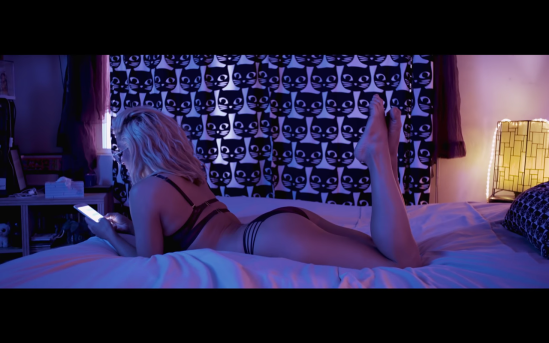
Out in the surf of the internet, a list lurks just beneath the dark waters of the web. A list containing a flooded genre of some of the worst shark movies detrimental to mankind’s inherent fear of a primordial aquatic creature that was once known to be the ocean’s apex predator. To save us from the cold, bleak shark banality, “Bad CGI Sharks” absorbs all toxic mundane trash skimming the vast global networks and big picture boxes to recourse from the singular trained thought that sharks are much more than a punching bag of relapsed rendered dogfish with jaws. Written, produced, and directed by MaJaMa, an alias for Matthew Ellsworth (Ma), Jason Ellsworth (Ja), and Matteo Molinari (Ma), “Bad CGI Sharks” flaunts a straight-to-video, no-budget comedy-horror in the face of whoever is willing to once again put themselves in front of a speeding bad shark movie train; yet, the filmmaking trio embark on a creative, meta journey risky with little blood shed and a swarm of animated things that mark somewhat of a resemblance to sharks. What crests is insightful satirical wit over the ostentatious flare of gratuitous explosion, nudity, and monstrous sharks.
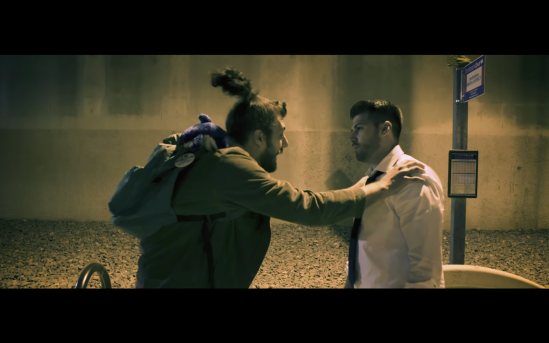
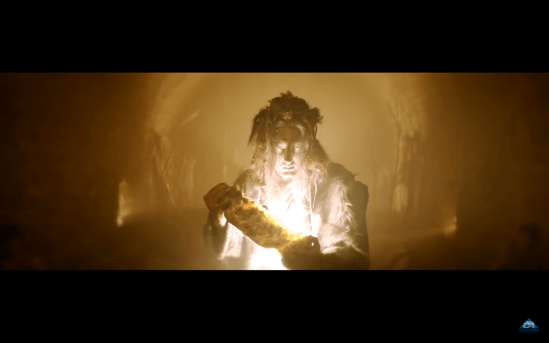
In keeping to the budget, MaJaMa already wear many hats behind the camera. To extend even further their invested working capital, the filmmakers also star in the lead roles, virtually as themselves, to surely hammer down a film entitled “Bad CGI Sharks” in their own brand of humor. We begin with Matteo Molinari, the Genova, Italy born actor who had a small role in 1994’s “Silence of the Hams,” a spoof starring Dom DeLuise and Billy Zane derived from the Jonathan Demme’s Hannibal Lector thriller, “Silence of the Lambs,” if the title itself wasn’t self-evident enough. Molinari is the only main lead not using his namesake and, instead, becomes the magical movie wizard Bernardo with his muse movie clapper. Bernardo was built for Molinari as the two are synonymous to each other’s manners, speech, and quirky simpatico charm, resulting in an innocent, mischievous movie imp to be the bridge connecting the gulf between Jason and Matthew’s polarizing characters. Jason’s a severe caricature of hyperactivity and of someone whose stuck in the past and while Jason Ellsworth has his moments, without his brother Matthew’s stern, grown-up, and spruced up onscreen self, the dynamic just wouldn’t be as potent as Matthew is essentially the activator spray to Jason’s gluey personality. The cast concludes with Jenn Liu (“Stranger in the House”), Josh Sterling, and Shaun Landry.

Tiptoeing around the fringes of being a stoner film, “Bad CGI Sharks” pushes a hyper-meta reframe of how shark movies, or perhaps the film descends deeper into the water molecule level of just the shark representation itself, should be brought back to the shores of reality from the watery depths of Davy Jones’ poorly rendered locker. Coinciding with crystallizing the shark-sploitation category is a more tender note of embrace with relatable themes of rediscovering brotherhood and mending broken bonds. Matthew’s parental manufactured disgust with his older, yet childlike, brother casts a large, dark cloud that seizes up any kind of affection and the floating shark, the symbolic dream of their childhood, tests their relationship, motivating the the character arches in the face of “Bad CGI Sharks.” Amongst the witty banter and flying carnivorous fish, “Bad CGI Sharks” shows innate signs of no-budget difficulty such as story pacing where the middle sags with Jason and Matthew running around Hollywood for awhile in a progression stagnation and there lies some early editing miscues with audio mixing and mic work. Like a shark, “Bad CGI Sharks” needs to keep swimming or else it’ll upend and die; luckily, MaJaMa saves the cinematic beast with the shark devours the internet and all bets are off!
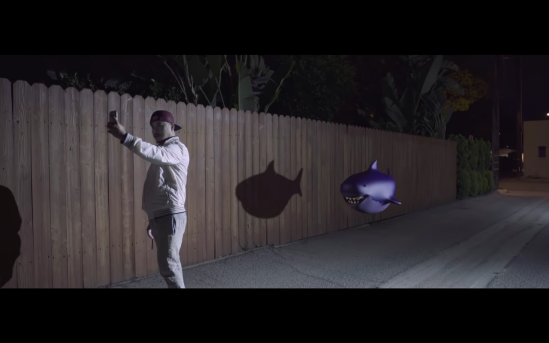
If you like your sharks floating and roaring, then “Bad CGI Sharks” DVD home video is for you, sailor, courtesy of SRS Cinema and MVDVisual. The not rated, region free DVD is presented in a widescreen, 16:9 aspect ratio, with, an IMDB listed, Sony a75 II Mirrorless camera complete with a “vintage” lens. Most of the image transpires cleanly and sharp, even the inorganic, floating sharks look fair in their farce facade, and with the specialized lens seemingly cornered to just around the Bernardo’s outer shell host duties and intermission skit and also in the initial attack sequence in which is the only scene with any kind blood shed. The English language audio tracks include a 5.1 surround sound mix and a stereo mix. The audiophiles will find solace in knowing “Bad CGI Sharks” doesn’t mean bad audio tracks. Dialogue has clarity throughout, depth and range remains steady, and there’s negligible hum electric feedback. Bonus features include a commentary track with MaJaMa, a retrograde toy commercial for all the characters, the teaser trailer, trailer, and SRS promoted trailers. Though lacking bloody chum, “Bad CGI Sharks” has bite albeit with more comedy than creature feature horror, fleshing out real world problems with hilarity in a cheapjack rendition of a killer shark.

Chomp! Chomp! Chomp!

Watch William Shatner Shell EVIL With Explosive Munition! “Devil’s Revenge” reviewed!


Obsessed in locating a relic that has cursed his family for generations, archeologist John Brock desperately searches the cave his difficult father’s dispatches him to to locate and destroy the artifact that has plagued his lineage. His last expedition kills a man and John begins to question his father’s ranting and whether a curse actually exists, but when a mysterious accident sends him to the hospital, horrifyingly devilish visions nearly kills him in the unconscious state. As he snaps back to reality, John is hellbent on ridding the relic’s clinging evil and his family joins him for one last expedition to the cave that’s also a portal to hell and the Devil is waiting for him.

The above synopsis sounds terribly convoluted for such a rectilinear plot of the William Shatner story of demonic spelunking entitled, “Devil’s Revenge,” from 2019. The “Devil’s Domain” and “Halloween Pussy Trap Kill! Kill!” director, Jared Cohn, tackles the position’s obstacle of frustrations working with a rumored overly difficult Shatner as well as flushing out a cohesive story suited strappingly as can be on establishing a hell bound narrative with little backstory mythology from a script by Maurice Hurley, a writer on “Star Trek: The Next Generation.” What’s unusual is Hurley isn’t credited at the end or on the backcover of the Blu-ray and it’s a project he supposedly collaborated with Shatner up until his death in 2014 at the age of 75. Luckily, Cohn’s on the record saying Shatner was professional and precise, a true credit to his skill. “Star Trek” does become a constant motif not inside the frames, but more behind the camera with the cast, including Shatner, and Hurley who is the creative parent of one of outer space’s biggest nemesis, The Borg. “Devil’s Revenge” is a far cry from the final frontier, seizing on the border fringes of the underworld that seeps above ground.

Trekkie fans will appreciate the Captain Kirk star’s uncharacteristic doomsday pessimism and grand finale grenade launching that turns demons into canon fodder. Shatner is a savage as John’s fanatical father, bombarding his grown, near middle-aged, son with constant disappointment and disparagement that becomes one source of John’s (“Blood Lake: Attack of the Killer Lamprey’s” Jason Brooks) dire motivations to risk his family inside the gaping mouth of the netherworld, a questionable and ill-advised move especially when death is evident. Brooks is a career television and TV movie actor who can settle right into a third rate production with ease without batting a condemnatory eye lash. While Shatner and Brooks’ one-sided family role quibbles over languishing curses and John’s inability to man-up for the situation goes into the hilariously bad category, the second “Star Trek” star, Jeri Ryan from the “Voyager” series, lands a subdued role as John’s foot mat wife who just goes with the punches without making too much of a wake serving as John’s better half and reasonable conscious. Ryan and Brooks’ on-screen relationship is a supposed marital one, but the chemistry just isn’t present and wanders into questionability with their relationship status. The script’s backstory on John and wife is obliquely exposed through exposition without any of the visual depth and discharge of fleshing out a better dynamic for Ryan and Brooks to work with in building their characters. The remainder of the cast list includes Ciara Hanna (also from “Blood Lake: Attack of the Killer Lamprey”) and Robert Scott Wilson (“American Fright Fest”) as John’s college(?) aged kids who add little substance to the narrative.

Without a better way of putting this, there’s much to demerit against “Devil’s Revenge.” The concept is sound: a disarrayed and browbeaten archeologist must locate an evil transmitting relic from destroying his family with a everlasting demonic curse. Sounds good, right? Combine that with Shatner blasting demons to smithereens with a multi-barrel grenade launcher, the potential for a solid and fun viewing experience would be a no-brainer. However, what’s sold is the made in China version of what’s being marketed. Hard to imagine Maurice Hurley’s, the man who helped re-pioneered space exploration and developed The Borg adversaries, script was so out of whack and had gone into various limp curvatures that I don’t expect all blame should point to him for the posthumous misstep as the direction is emphatically coarse and incoherent of too many ideas without any connective tissue much unlike boldly going where no man has gone before. In fact, many filmmakers have gone this route before by taking all sense of a rounded script and dissolving it the way Cohn does. The path Cohn ultimately takes is to splice loads of unnecessary and repetitive flash backs into the story to try and retain into viewers over and over again the events that conjured hell’s minions to surface. I’m sure we saw the same scenes at least five or six times from beginning to end, even during the opening credits. There’s also a looseness about how this curse attaches itself to John’s family from long ago that inexplicably goes without being conveyed and we find ourselves asking, why these people? What have they’ve been suffering through all these years? What makes them important? The curse seems rather recent rather than historic and for John’s family legacy to go uncharted just poses too many unanswered questions. What’s fundamentally right is Inan, the head demon, who represents the best parts of the “Devil’s Revenge’s” netherworld rock and roll presence with a large and ghastly humanoid with blank, fiery eyes and a protruding clasping mouth and the visual effects surrounding Inan are pretty good despite their some minuscule glossy bad aftertaste. An aftertastes that extends into Shatner using the grenade launcher with the goofiest of detonations in an unrealistic distance between him and his targets without so much of a single piece of shrapnel grazing his well postured gun-toting stance.

MVDVisual distributes “Devil’s Revenge,” a Cleopatra Entertainment production, onto a region free, special edition Blu-ray and soundtrack CD combo. The Blu-ray is presented in a widescreen, 2.78:1 aspect ratio, in a BD-25 with a 1080p transfer. “Devil’s Revenge” implores more than the natural lighting used through much of the 98 minute runtime and while natural lighting isn’t a flaw in any sense, Ryan Broomberg’s cinematography falls flat, uninspired that doesn’t represent well the presentiment eventualities past, present, or future. Technically, “Devil’s Revenge” isn’t soft around the details albeit minor banding in closer quarters of the cave. Practicality versus the computer imagery really do go head-to-head between Vincent Guastini’s (“Art of the Dead”) special effects and the visual effects team of Eric Chase (“The Black Room”) and Mike Rotella (“The Predator”). The detailed rubber body suits and the composited explosions akin to the military hellfire creatures were bombarded with in monsters movies from the 50’s are of the campy independent film culture and purgative of any expectations of the Devil actually making good on revenge. The English language Dolby Digital 5.1 surround sound audio is not as lossy as the usual Cleopatra Entertainment Blu-ray releases and certainly regales with the theatrics of a William Shatner monologue (can’t you tell I love me some Shatner). Range and depth are concurrent appropriate with each other and dialogue is clean and clear. Surprisingly and rarely does a Cleopatra Entertainment releases goes without a soundtrack intertwined with the score that contracts their signed artists from parent company Cleopatra Records; instead, we receive a brooding industrial score composed by Jürgen Engler, co-founder of German punk band “Male” and “Die Krupps,” which can be gorged on as the film’s coveted silver-lining. Luckily and conventionally for a Cleopatra special edition release, an un-cursed 13-track CD of Jürgen Engler’s score accompanies the feature Blu-ray. That being the height of the special features, other bonus material includes a picture slideshow and theatrical trailer. “Devil’s Revenge” won’t shudder your bones to milky pigments of sawdusts and will likely strikeout with fans, as perhaps the Devil’s actual revenge for portraying him so ill-conceived. Still, I suggest checking out the Jürgen Engler’s gnawing and insidious industrial score, a gleaming highlight for sure.

Check it out for yourself! “Devil’s Revenge” on Blu-ray.

The EVIL In Our Past Will Forever Plague. “Ever After” reviewed!


A plague has decimated the world, turning citizens into crazed, flesh eating zombies. In Germany, only two cities have survived the devastating apocalypse the last two years – Weimar and Jena. In Weimar, the infected are immediately eradicated on site without exceptions. In Jena, compassionate individuals strive for a cure for the diseased. Weimar residents, Vivi and Eva, sneak out of the authoritative camp for their own personal reasons and flee toward Jena’s safe-haven policy in hopes for a better way of life, but a perilous journey through the horde occupied Black Forest stands in between them and salvation. Without weapons, food, and one liter of water between them, chances of coming out unscathed are slim-to-none as long as nothing separates them from assisting their survival.

Based off the illustrated graphic novel of the same name written by Olivia Viewig, “Endzeit,” also known as “Ever After” in the English translation, hits the big screen in the 2018 film adaptation under the orchestration of a female, Sweden-born director Carolina Hellsgård as her sophomore feature with Viewig herself providing the script treatment. With pop culture entrenched and seemingly an extension of herself, Olivia Viewig is by trade a German cartoonist best known for her quirky “Why Cats…” series, a children’s book author, and regularly contributions to the world of Manga to which she was influenced. Viewig then turned to horror with “Endzeit” that served as a graduating studies project that earned her a University degree in 2012. The initially 72-page full-length comic became extended six years later in 2018 by a major German publisher named Carlsen and served as the basis of the script for the film about to be covered below that’s a coming-of-age film that also symbolizes passing of the torch for two young and dissimilar women scrambling between two opposing worlds with a common calamity.

Initially, “Ever After” focuses around the immense struggles of a shut-in named Vivi, a character instilled with paralyzing fear and guilt that has more or less clinically diagnoses her as an extreme agoraphobic whose been hasn’t stepped outside the last two years ever since the plague occurred. “Nothing Bad Can Happen” actress Gro Swantje Kohlhof envelopes herself as the “weakling” her character is ascribed by hardened and callous Weimar survivors, but as Kohlhof evolves Vivi’s fragile resolve into something more concrete, Kohlhof also opens a little more trait range for Vivi when she is finally pushed across the threshold of letting go her fear and guilt. Eva can be said as Vivi’s hard-bitten muse whose looking for a softer slice of life and as Eva becomes engulfed in Vivi’s massively sheltered circle by chance, the former Weimar grunt is able to crack through the hardened exterior and let someone like Vivi into be a calming force in her own anxiety riddled interior. Maja Lehrer compliments as the aggressor in an encouraging pair of diverse female characters driven by their regrettable past to never look back on it and keep moving forward to a better prospect that’ll wash their souls clean. Haired tied back tight, form-fitting mercenary-esque clothing, and a self-preserving attitude to match, Lehrer rounds Eva out well to arch her role hard when Vivi is ready to take the reins as an apocalyptic ranger of the Black Forest. In the forest, Vivi and Eva encounter a mystical being, a half-breed of sorts between living and dead, who doesn’t have a name but goes by The Gardener is played by Denmark actress Trine Dyrholm. Since “Ever After” references quite a bit about nature taking the world from man, I’d like Dyrholm represents Mother Nature as the character invites Vivi to her abundant tomato green house, a serene scenery of low-hanging fruit trees, and the character herself has vines and leaves growing out of the side of a human face and can temporary restore or extend life to a person. Vivi and Eva’s brief encounter prompt’s a change in them both that defines their destiny going forward toward Jena. The cast rounds out with minor roles from Barbara Philipp, Yuho Yamashita, Amy Schuk, Axel Warner, Muriel Wimmer, and Ute Wieckhorst.

If you’re looking for blood, “Ever After” is not that kind of zombie film that glorifies the flesh chomping violence but rather utilizes the violence as a motivator for Vivi and Eva to embark from safety, but that isn’t to say the sheer zombie terror is omitted or even diluted. The mass of running undead continues to be a force of concentrated fear with heart pounding side effects, much carried over from Danny Boyle’s “28 Days Late” and Zack Synder’s remake of “Dawn of the Dead,” and director Hellsgård seldomly relies on a crazed horde to be the mindless exploit of “Ever After’s” core message. Instead, the story clearly defines the growth and understanding Vivi and Eva as individuals and as part of something more, taught in part by their short time with The Gardener, and a highly reflective poignant past that ripples through their memory banks over and over again. Their ambitions nearly shot from existence at the beginning of the apocalypse to the start of their Black Forest voyage have found harmony in letting the past be the past by the end of the story. Once could call it a coming-of-age to see the two women elevate themselves from a place of inner turmoil and, in my opinion, the two women part of that is greatly important because “Ever After” is almost, about 95%, completely female cast driven. So, not only is the story a coming of age one, but also speaks upon self-reliance and empowerment for women.

The swotted comic of Olivia Viewig gains a visual odyssey amongst the undead catalogue with a Blu-ray release of the Das Kleine Fernsehspiel and Grown Up Films production, “Ever After,” distributed by MVDVisual and Juno Films. Stored on a BD-25 and presented in an anamorphic widescreen of it’s original aspect ratio of 2.35:1, “Ever After’s” 1080p full high definition image is sleek to every sensory receptor in the eye and captures the topographic thickets of Germany landscapes in grand wide angles. There is not a lot of tint work here, if any, and relies much on the luminescent and glowing beauty of natural light. The German language DTS-HD 5.1 master audio sufficiently taps into all five channels without overbearing results from zombie hordes. Instead, the focal points here discern more on the tiny tunes and tones of nature. Also included in the setup is an option for a 2.0 LCPM Stereo Audio track and English subtitles, which appear accurate but are hastily paced. Other than a static menu, the region free, 90 minute runtime release bares no special features other than the trailer. “Ever After” is an ascension from within the very weary genre oeuvre, encouraging the strength to stomach guilt and fear as important, but presently irrelevant if one wishes to change with a world that has redesigned around them.

Purchase Ever After on Blu-ray! Click the Cover to buy!

Knights, Murder, Zombies…It’s an EVIL Smorgasbord! “Erotic Nights of the Blind Dead” reviewed!


Buitrago, Spain in 1310, Templar priests set forth on a mission, wandering the countryside to root out evil witches for torture, flogging, and eradication, but what the priests kept secret from public eye is that the village women they were apprehending were actually innocent and used as a means for sacrifice. The sadistic, malevolent priests drank the blood of their innocent victims for eternal life. Fed up with the Templar priests authority, the village men tracked them down to a gruesome end as the vowed in the throes of death to return for revenge. Buitrago, Spain in 1976, the Templar Priest, decomposed to the bone inside their tattered and dirty ceremonial robes, arise from their shallow graves with a hunger for vengeance and feed upon the flesh and blood of unsuspecting outside partygoers under the moonlight night.

Baring a thin shred of anything approximating a resemblance to Joe D’Amato’s “Erotic Night of the Living Dead” and Amando de Ossorio’s “Tombs of the Blind Dead” from the 1970’s to early 1980’s is Vick Campbell’s “The Erotic Nights of the Blind Dead. Also known as “Graveyard of the Dead” or, in it’s original language, “El Retorno de los Templarios,” is the 2007 Spanish produced throwback to the gothic and erotic ghoulish horror genre that once widely flourished through Europe and parts of South America and has, more or less, been nearly forgotten admirably for decades. “Erotic Nights of the Blind Dead” marks Campbell’s feature and script debut that blends the gothic and the erotic for an entry into the soles (or souls, perhaps?) of considerable shoes to fill and the consensus is Campell’s a size 10 trying to fill out into a size 18 wide but leaving too much wiggle room for missteps.

Campbell, also known Vick Gomez, commissions mostly a Spanish cast of the unknown variety, starting off with Eloise McNought in her breakout performance as the troubled, young Miranda who has been sexually abused by her father and has, somehow, misplaced her husband. Miranda’s backstory has an equal amount of ambiguity as the rest of the cast with bits of family melodrama to piece together her obviously distraught mental state. McNought’s a budget actress at best as she sometimes looks right at the camera in the midst of intense scenes and Campbell has a knack for upskirt scenes with McNought which feels creepy and impertinent to the story. Miranda’s the searched figure for her brother Jorge, Albert Gammond. Gammond, who had a role in Campbell’s short “Violencia gore,” has less backstory as the estranged son of the family and when he arrives to 1976 Buitrago, out of nowhere, to search for his sister, the siblings tango the enigmatic dance of who, what, when, why, and how? Gammond’s few dialogue moments are eaten up by Jorge trying to convince a distressed Miranda he’s her brother and reminding them of the childhood songs they sang as kids. Thais Buforn, Rick Gomans, Anarka de Ossorio, Dani Moreno, Anthony Gummer, Julian Santos, and Jose Teruel co-star.

“Erotic Nights of the Blind Dead” flatters being as an economic version of an Amando de Ossorio “Blind Dead” film, which centers around the vile and wretched depravities of the ghastly Templar Knights ethos and while Campbell captures the essence of the Knights and their menacing macabre presence of soiled garbs and persistence, the attention to the rest of a, literally, non-story is hastily slapped together or stuffed with cinched time wasters. The first half hour involves nothing more than Templar Priests roaming the countryside, flogging with an endless crack of a whip those who they deem dissident. The Knights’ whip must be malfunctioning as it could not rip flesh or break the souls of man until well into the lashing that mercifully warrants an edit for some bloody, but still steadfast firm, scarring and sheered rags. I felt the floggers arm and shoulder pain with such extensive beatings. Next, the majority of the second act consists of Jorge pleading with his sister Miranda to listen to him and convince her about his brotherly love and bring her back home. At this point, flashbacks of her father’s lust for her are introduced to backstory Miranda’s despair; the smoking gun catalyst finally rears a father-daughter rape-incest ugly head in act three when the Templar Knights have resurrected for blood thirsty revenge and gives some context of Miranda’s blabbering incoherency in the middle of the dry Buitrago landscape; yet, Miranda’s daddy issues hardly explain why the Templar Knights have returned at this point in time and just want the undead Knights tend to accomplish with their revenge at hand. In fact, there’s no explanation given at all…they just return and rampage. Campbell extends upon the risible execution of an Amando de Ossorio film by inverting scenes that are the same shot just in reverse, utilizing a single ambient track over and over again on multiple scenes, and countering whatever shred of terror from the Knights with an easy way out of unexplained reasoning for their befuddling demise. Almost as if Campbell didn’t know how to end his film and gave up with a snap of his fingers. Who does he think he is, Thanos!?

“Erotic Nights of the Blind Dead” lands DVD home video distribution from MVDVisul and Wild Eye Releasing on their Raw and Extreme banner. More raw, then extreme, Vick Campbell’s gleaming debut homage offers no eroticism either on the region free, 70 mintue runtime title, but, rather, lingers over incest and whipped-bloodied breasts of slim illicit pickings and suggests the title was more a ploy against “Graveyard of the Dead” to gain buys. The picture is presented in a widescreen format, but suffers from horrible color banding and severe compression issues that nearly make this title indiscernible like an aged or scores of duplication VHS transfer. The Spanish language stereo track also has flaws with speckled quality and coarse feedback at times due to bad mic placement. As aforementioned with the repetitive ambient and score tracks, range and depth do not reside with these versions of the Templar Knights that are probably inundated in a violent anguish of the same loop of rattling chains and heavy breathing. To add salt to the audio wound, the English subtitles are riddled errors such as Obbey instead of Obey or Swete instead of Sweetie. Special features include a behind-the scenes segment of ho-hum production takes, deleted scene, and Wild Eye trailers. One thing I think might be interesting is actress and executive producer Anarka de Ossorio who, I can’t confirm, might have some relation to Amando de Ossorio; the idea would be neat if his legacy still lives on through his kin. A brooding atmosphere from beginning to end, “Erotic Nights of the Blind Dead” has little else to offer under a guise to link itself to legendary Euro-trash gold, but filmmaker Vick Campbell detrimental diegesis could tarnish the very jeweled films in which he attempts to honor.

Purchase Erotic Nights of the Blind Dead on DVD!

The Pangs of an EVIL Movie in “Virgin Cheerleaders in Chains” reviewed!


Shane desperately desires to be a part in the making of a low-budget horror movie. Failure after failure of submitting to production studios who opt out rather than option his scripts and the discouraging financial hits with each festival entry, Shane and his girlfriend Chloe decide to venture into producing, writing, and shooting a film themselves. With the script still a work in progress, the promising title alone scores a film crew from his friends and roommates, generate a small fortune of crowdfunded cash, a leading scream queen from the skanky residue poles of a strip club, and a set location provided by a local video store clerk and schlocky indie horror filmmaker named Machete Mike. As the young film crew bumbles through raising more money and the headaches of production woes without a completed script, a demented clan of hardcore snuff and cannibalistic filmmakers seek a hostile takeover of their ambitious endeavor that’ll produce authentic screams and real blood, the very basic foundations of a good horror movie.

You have to admit it. “Virgin Cheerleaders in Chains” is an appetizing, exploitation glazed carrot of a title, a salivating lure that’s hard to ignore for any enthusiast for licentious material. Brazilian born director, Paulo Biscaia Filho, helms the Big House PIctures and Vigor Mortis Apresentam production of an ostensibly horror-comedy that leisurely alters into a slasher-survival-esque structure courted with all the admirations of torture porn with a pinch of homage toward the iconic Sawyer family without a Texas size chainsaw wielding maniac wearing a flesh mask. Blueprinted as a meta-horror with twists and turns galore, “Virgin Cheerleaders in Chains,” by name alone, doesn’t take itself seriously as an inebriated version of the genre it represents and layers to weave a non-linear, outlier story into the heart of the plot, sewn together by the co-producer Gannaway and went in and out of production in 20 or so days to finally hit festival markets a year later in 2018.

While Shane might feel like the focus of the story, Amber and Chloe undercut his presence and steal his thunder as the naïvely ambitious filmmaker with their final girl fight and vengeance. Amber’s the stripper whose yearning for her spot in the limelight no matter how small and she’s portrayed by prominent Manga voice actress Elizabeth Maxwell (“Dragon Ball Super”) and Maxwell is paired with “Last Girl Standing’s” Kelsey Pribilski in Chloe, initially as a mortal enemy toward Amber when the issue arises of the most common, basic, and core division between women – men. Yet, Amber and Chloe dominate the principal antagonists whose subtle quarrels frame an mulishness and aversion relationship build a stronger support for one another when they come toe-to-toe with utter sadism that threatens what collectively matters most to them. Maxwell and Pribilski demonstrate the conventional markings of the popular final girl trope, acting as a single unit, while Ezekiel Swinford bares the helpless victim and ignorant filmmaker, Shane, to be in the crosshairs of death and for the two corners of his semi-triangular love affair to be his saviors. Swinford acts the giddy fool well enough to warrant his character’s witless person in distress calling. Machete Mike lastly, but not at the least, rounds out the core four personas from Don Daro. The “Sex Terrorists on Wheels” actor has little-to-no kindness in his face, marking him intriguing and guileful as the video store clerk whose more than what meets the eye. Ariana Guerra (“Hollow Scream”), Lindsey Lemke, Gary Kent (“Bonehill Road”), Ammie Masterson, Larry Jack Dotson (“Humans vs Zombies”), Kaci Beeler, Michael Moford, Woody Wilson Hall, Ken Edwards, and professional bassist musician in the band Drag, Dominique Davalos “Howard the Duck”), co-star.

“Virgin Cheerleaders in Chains” resembles a movie inside a movie that tries to pull a fast one over the audiences with an open for interpretation of the true nature of events and leaving those once thrilled at firsts sight of the title moviegoers kind of stun like a mouse batted over the head right before being fed to the famished pit viper. Filho and Gannaway’s film does swallow you whole, down it’s gullet, and dropping you right into the stomach acids that begins to dissolve the disillusion of what was imagined from the get-go. Nothing wrong with some slight of hand, but the overall result meanders on the promise of being hyper meta; an attempt to disrupt the conventional and tummy tuck in the tropes from being too loose and obviously exposed. The attempt is well intentioned, but that’s where the summiting the mountain ceases, at attempted, with a great, low-budget desired, premise aimed to upheave the genre and the audience’s expectations, whirl them all into a massive maelstrom, and spit out a “I fooled you!” expose. One aspect that made the grade were the Creeper Labs FX’s Andy Arrasmith and artist Shelly Denning’s special effects work that held a modest candor of blood and severity when the proverbial shit hit the fan. Heads being lopped off, eviscerated stomachs with guts oozing out, and just enough chainsawing and machete work to go around to properly finish the beautifying of “Virgin Cheerleaders in Chains” appropriately.

Rack’em and hack’em those chaste cheerleaders with a Blu-ray copy of “Virgin Cheerleaders in Chains” distributed as the 10th spine from the wild cinema aficionados of Darkside Releasing and MVDVisual. The Blu-ray is presented unrated and in 1080p on a BD-25 with a widescreen 1.78:1 aspect ratio. The estimated $70,000 crowdfunded budget has a rather aesthetic and sleek digitally recorded imagery, perky with natural lighting and dark tint where appropriate, and is an overall pleasant outcome on a moderately robust budget for indie horror out of Austin, Texas. The English language Dolby Digital 2.0 stereo track maintained a balancing act between dialogue and score where the two fought for priority. Dialogue should always have right of way unless intended not, but for the sake of “Virgin’s” story, there’s doubt that drowning out the dialogue momentarily was purposeful. Bonus material includes Brazilian promotional videos, a behind-the-scenes tour of the Bloorhouse Tour with Gary Gannaway being the tour guide himself, a Machete Mike introduction version of the film, and a 16 page booklet that includes stills, original sell sheet cover art, and the birth of the project penned by Gannaway. “Virgin Cheerleaders in Chains” is meta-sexy, meta-slasher, and meta-fun, but wanders into meta territory a little too long for comfort while still positioning a piecemeal survival horror with fine talent and high kill count.

“Virgin Cheerleaders in Chains” available on Blu-ray!