When Evil Strikes in Holy Gotham City, Only One Hero to Call… “Bat Pussy” review!


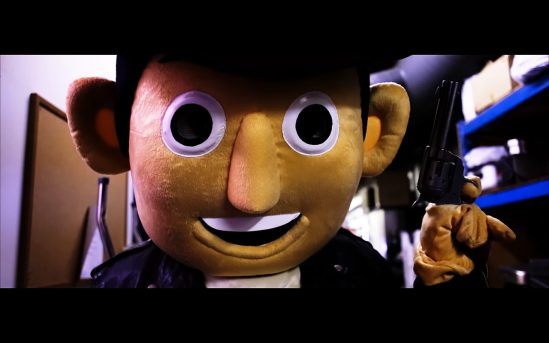
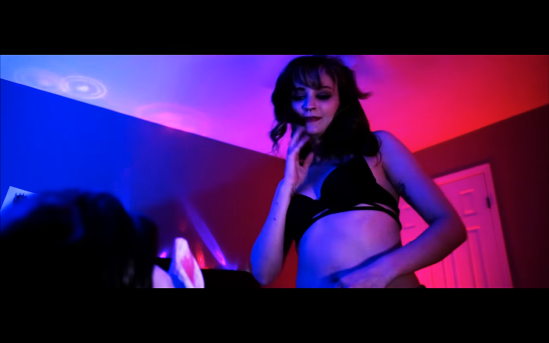
Good for nothing Buddy and his two-bit working girl wife Sam bicker slangily about their sexual performances. As Sam lays nude in bed and a naked Buddy flips through a sleazy magazine in search for the new positions to experiment, the two become inspired to ravage each others’ privates all the while expletives toward one another fly. Soon, Buddy decides to start snapping photographs of his nude wife as part of a plan to create an adult spread, like in the magazine. Deep inside Bat Pussy’s headquarters, a tingle in her twat informs her that somebody, somewhere is creating porn in her holy Gotham City and she quickly dresses from nightgown to bat suit to spur into action. The not-so-caped crusader jumps onto her Hoppity Hop and makes haste across town to intervene, but as soon as Bat Pussy dives in to stop the perversive pornographic nature, she dives right into the fold of lustful, foulmouth appetites.

American Genre Film Archive and Something Weird Video, partnered with distributor MVDVisual, releases a restoration of one of the earliest known porn parodies, “Bat Pussy,” onto Blu-ray that spoofs, horrendously, the Adam West starred “Batman” television series from the late 1960s. As far as a porn is considered, “Bat Pussy” lacks any sensical sexual action resulting in a double one-two punch wham!-bam! of no plot and no actual sex; instead, Buddy and Sam’s southern caints and worsh tub conversing of ignorant and pointless potty mouth conversation is more entertaining than Buddy’s limp impotence that dangles between the legs of being bizarre foreplay with the very freckly and curvy Sam. Since both of whom are seriously unattractive in appearance and performance, “Bat Pussy” has the stigma of being the worst porn ever produced. The actress behind “Bat Pussy” has far superior attributes than compared to her costars, but lavishes in a twang that’s hard to ignore and her vigorously tasteless implementation into Buddy and Sam’s awkward makeshift threesome is beyond the point of cringe worthy.

“Bat Pussy’s” gridlocked and effortless plot isn’t much to write about unless a bonus movie accompanies it and, in this particular release, “Robot Love Slaves” waits to be received in the bonus material. The bonus feature tells the story of Clark, a mad scientist who creates pleasure gifting robotic women in spite of a conniving wife whose scheming to be handicapped to steal her Husband’s groundbreaking work and be in the arms of her illicit and conspiring lover, Dr. Dicks. Clark constructs four pleasure bots, testing two of them on his friends with their specific built in sexual qualities, and keeping two for himself until the very right moment to strike against those who seek to dethrone him of his creation.

“Robot Love Slaves,” also known as “Too Much Loving,” is another early 1970s stag film. The science fiction sexploitation arouses a little better than the main feature and consisting of a plot that starts from A-to-Z and more striking women involving Sandy Carey (“Drive-In Massacre”), Sandy Dempsey (“Country Hooker”), and Candy Sampler (“Flesh Gordon”). Though roughly and technically hardcore, “Robot Love Slaves” is more softcore not by directorial design, but by edited manipulation that serves as a drastically cut-downed final product; nonetheless, the overall tone plasters a more earnest setting of deception, sadism, and pleasure rather than fooling around in a waste of runtime. Billy Lane and Adam Ward costar.

AGFA and Something Weird Video’s MVDVisual distributed “Bat Pussy” and “Robot Love Slaves” is a restoration of cult bric-a-brac right onto Blu-ray home video presented in the original aspect ratios of 1.33:1. “Bat Pussy” has been through a 2k scan from the only surviving 16mm print in existence found in the back room of Paris Theater in Memphis, Tennessee. The restoration puts the pieces in order that result in a slightly washed glaze from the dated print. Scratches and grain remain evident, but, like the not-so-hardcore material, nothing too obscene. The mono audio track is more interesting with pieces of the audio track removed upon the unknown director’s direction; during some points of the awkward romping, the audio would cut out, Buddy would look up, audio would come back in, and Buddy would say, “what?” and then the audio would cut back out. You’d have to see hear it to believe it. “Robot Love Slaves,” which also went through the 2k scan from the 16mm elements, suffers far worse from father time. Doesn’t help that the film is also heavily cropped and edited to avoid being extremely explicit. The audio track cuts in and out near the end, popping with distortion under a low ranged ceiling, and flushed with hisses. Bonus material includes a commentary track from Something Weird’s Lisa Petrucci and Tim Lewis, crime-smut trailers and shorts from Something Weird Vault, and liner notes by Lisa Petrucci and Mike McCarthy. The vivid and hilariously illustrated “Bat Pussy” blu-ray cover is perhaps the most remarkable aspect of this release. Though both films are of unknown origins and much of the cast and crew are an enigma, “Bat Pussy” and “Robot Love Slaves” revel in a sexploitation realm all their own with wish-washy filmmaking and poor, but exuberant, performances from a cast who never spoke of these two, under an hour, cult hits ever again!

In Search for Evil, Evil is Always Close! “Lycan” review!


Set in Talbot County Georgia of 1986, six university students are assigned a write a 25-page report on a moment in history. The subject for the report was ultimately based off of local lore, a haunting story from a century old newspaper clipping that told legend of Emily Burt who was the prime suspect of being the notorious wild animal that tore through the local sheep herds. Ill-prepared and flippant for the report’s hot Georgia weathered journey into the woods, the students ride horseback through a labyrinth of trails on the Burt property and come under attack by a lurking bloodthirsty presence hellbent on separating them and tearing them to pieces. Desperation sets in when tensions flare, sides are taken, and perceptions are misled in a time of grave crisis, leaving the schooled students being taught a lesson in isolation and confusion in a classroom of ill-fated situations.

“Lycan” is the 2017 released survival horror thriller from co-writer and director Bev Land, making his inaugural feature film debut. Michael Mordler co-wrote the script that’s been described as “Hitchockian” and resembles a backdoor twist much to the similitude of M. Night Shayamalan films. Like Shaymalan’s earlier work, “Lycan’s” horror is extremely effective without having to bare witness an antagonistic beast and by leaving the girth of the killer’s destructive path to the imagination, our minds begin to formulate diegesis theories and build hypotheticals to the killer’s characteristics. The use of wolf-o-vision is a past time tool that flashes all it’s teeth to bring life to an unseen threat, but Land and Mordler pen a breadcrumb trail of hints that compound to a head in the midst of the chaos, unveiling the true threat in a full frontal way that’s a silver screen rarity, but nearly takes the fun out of the mystery.

Starring in “Lycan” is Bev Land’s wife, Dania Ramirez (“Quarantine”), in the lead role of the mysterious Isabella Cruz. Ramirez’s has to accomplish multiple feats with Isabella Cruz whose a bit of an awkward loner who then has to reintegrate herself into the social realm of a group of variously distinguished characters. Parker Croft portrays as pot smoking, wise-cracking, pervert named Kenny McKenzie who documents the trip with an 8mm camera, Rebekah Graf is the stuck up and prissy Blair Gordon who only accompanies the group on this trip because of Jake Lockett’s baseball jock Blake Simpson. Craig Tate, unfortunately, falls into the stereotypical ‘token black guy’ Irving Robinson while Blair’s sorority pledge, Kalia Prescott’s Chrissy Miller, opts to the gal to get laid. Aside from Ramirez, the rest of the cast of characters fall into formulaic limbo, stuck in their own devices, and never really elevate into more than just surface level characters. Two of the more eyebrow raising actors that never saw the character development light of day were that of Gail O’Grady (“Chromeskull: Laid to Rest 2”) and Vanessa Angel (television’s “Weird Science”). O’Grady’s Ms. Fields warranted more background into how the ranch owner came to have Isabella Cruz enter her life and much more unopened mysteries about their dynamic.

While “Lycan” offers an up-to-snuff survival horror, the story’s bookends fall short of fully completing the story. The opening puts big man Presley Melson’s lonely farm boy stuffing lady of the night Anna, played by Alina Puscau (“Dracuala: The Dark Prince”), full of his pork roll. As the wolf-o-vision circles the lovemaking barn setting, Melson and Puscau trot out with only their skivvies to check out the outside racket and become, uh, victims of the antagonist? Not really sure because the scene starts from afar and the wolf-o-vision glides right up to Melson’s face without much of a peep from either Puscau or Melson. The ending is just as enigmatic with a brief present day scene (the story is set in Georgia 1986) of an unknown little girl picking up a razor sharp object from the leaf strewn ground and then there’s a cut to black to roll credits. Before this useless segment, the pinnacle moment of the third act springs too many leaks to plug. Combined with the stagnant and underdeveloped characters, “Lycan” is an unkempt story left wide open becoming a victim by it’s own scripted structure.

MVD Visual presents onto a region one, unrated DVD, the 1 Bullet in the Gun production, “Lycan.” Presented in anamorphic widescreen 1.85:1, MVD’s DVD image is beyond spectacular with immense details in every scene, even in the production illuminated night scenes. Digital noise is completely absent and the coloring is naturally vibrant. The Dolby Digital 5.1 Surround Sound has an effective ambient track with clarity and range in the wolf howls and the cracks and snaps of outdoor living. The original soundtrack by Devine Adams and score by Jason Pelsey revel in distortion free perceptible measures. An audio downside would be the dialogue track that suffers from unfortunate mic placement, leaving major story affected parts of the dialogue left muddled and indiscernible. Bonus material includes interviews with director and co-writer Bev Land, along with co-writer Michael Mordler, the cast including with Dania Ramirez, Rebekah Graf and Vanessa Angel, and Crystal Hunt (Executive Producer) and Steven C. Pitts (2nd Unit Director). A panel discussion with the Lycan producers and the original theatrical trailer round out of the extras. Land and Mordler’s “Lycan” disperses moments of original horror with snap-witty dialogue, but as a whole, the story trends toward a paint-by-the-numbers route without breaking the mold as a low tier “Hitchockian” thriller.

Buy “Lycan” on DVD at Amazon!

A Retelling of an Iconic Evil! “Apostle of Dracula” review!


While at a Spanish night club, Lucy meets a darkly tall and handsome gentleman who takes her back to his luxurious yacht and spends a romantic night with him inside his cabin on the sea. The next morning, Lucy suffers from a terrible case of amnesia, unable to recall where she’s met this mysterious man before or even remember her own past and as she relaxes in her hotel room after a soothing bath, a past life vision of herself entangled with her one night stand, otherwise known as Dracula, establishes her place amongst Dracula’s side as his undead love, but vampire hunters, Doctor Van Helsing and his faithful assistant Seward, are hot on Dracula’s scent toward his brooding castle in order to save Lucy from succumbing to Dracula’s cursed evil forever.

“Apostle of Dracula” is a Spanish retelling of the classic Bram Stoker “Dracula” tale, versed in Edgar Allan Poetry, and is directed and co-written by Emilio Schargorodsky. Also known more in other parts of the world as “Dracula 0.9,” Schargorodsky’s film boldly tiptoes through a minimalistic approach regarding the mythos of the legendary vampire that dabbles in some special effects when required and uncomplicated imagery that still relishes in wondrous imagery. The “Spirits of the Dead” poetic works of American macabre writer Edgar Allan Poe reinforces the Gothically garnished settings and costumes and heightens the gloomy sensationalism in Schargorodsky’s melodramatic horror soap opera that redesigns slightly Dracula’s origins and his infatuating love interest that isn’t Mina Murray.

Instead, Dracula’s focus is resuscitating the undead cursed life into Lucy dreamily and elegantly portrayed by model-actress Nathalie Le Gosles. Le Gosles has ghostly grey eyes that pierce vividly on screen through her Lucy Westerna performance that’s quite different than what audiences might be typically used to in the character. Lucy is the titular character, being the “Apostle of Dracula,” and Dracula (Javier Caffarena) spares no expense or time and effort in making Lucy his forever. Caffarena’s Dracula is very much overshadowed by Le Gosles’s beauty and performance as Caffarena’s acting experience before his freshman film only credits him in on other role in a short film directed by Schargorodsky, but Caffarena’s a busy body on this feature, delving into many facets from cast to crew as also one of the three co-writers and also donning not only the cape and fangs of the vampire but also creating a composing soundtrack, editing the film, and acting as a producer. In all honest, Paul Lapidus stole the show with his role as the most famous vampire hunter that was ever created – Van Helsing. Virtually embracing every facet of his time hopping character, along with the rest of the cast, Lapidus’s steadfast approach toward a more conventional Van Helsing relieves many anxieties of jumbling up Dracula’s mythology. Antonia Del Rio, Francisco Del Rio, Jose Luis Matoso, and Virginia Palomino round out the cast.

Schargorodsky’s indie Gothic Dracula feature is not immaculate; however, because Schargorodsky is an experienced photographer, a silver lining in his filmmaking playbook is his impeccable eye for cinematography. Whether in the framing or capturing the organic beauty of the landscape, Schargorodsky blends a dream with classic styles that had once scared the pants off people by incorporating shadow imagery that pays a dear homage to that of F.W. Murnau’s “Nosferatu” alongside Caffarena’s Dracula shaving his head and extending his fingers to be a lookalike Max Schrek. Captivating as many of the frames might be, the juxtaposition to the story doesn’t hold water as the story hops from one century to another without much regard for exposition. Lucy’s passionate yacht fling with a daylight walking vampire not only raises many vampire mythos questions, but also leads into Lucy displacing much of her memories of herself and her past. She then goes into a trance after returning to her hotel room, envision her great lineage self intertwined with Dracla and that story unfolds for a good portion of the film from the time Lucy’s bit to when Van Helsing and Seward interject at Dracula’s Castle. The story then returns Lucy’s back to present time where she then fights to urge to be a bloodsucker, but can’t stop her desires to be with her undead beau all the while a modern day Van Helsing and Seward, sporting sleek Secret Service-issues shades and wardrobe, seek to protect Lucy at all cost. Lost somewhere in the midst of the story is an important pice of the puzzle that goes unexplained.

Wild Eye Releasing MVDVisual present the 2012 “Apostle of Dracula” onto DVD for the first time in the U.S. The DVD, graced with a cover illustrating an unrelated naked female vampire crotched down and glaring outward, widescreen presentation sports a digitally shot transfer that fairly mediocre throughout despite soft details, faint aliasing, and spotty moments of digital noise during darker scenes. However, the worst technical aspect lies with the dialogue audio track that’s horrendously dubbed in non-optional English in such a flat, monotone voice that all the passion behind the actors is lost. If you watch close in the special features, clips of untainted portions of the film can be caught with the original Spanish track, bringing a whole new life into the scenes. There are no options to play the original language or even optional subtitles. Caffarena’s looming score comes out clean with subtitle details in the LFE emitting from Stereo audio which can be seen discussed on the bonus material about composing the score. Another special features contain a pleasant surprise with a never before scene interview with the late Jess Franco, who looked to be on his death bed, conversing his positive thoughts and praises on Emilio’s film that does have a faint resemblance to Franco’s work consisting of elements, but not limited to, the gothic, dream-like, and slightly sleazy. Bonus material comes full circle with Wild Eye Releasing trailers. Emilio Schargorodsky’s self-funded Dracula film proves any filmmaker can be a auteur without losing focus despite some flaws being on the grand stage of an iconic horror monster and while “Apostle of Dracula” flips the script on Bram Stoker’s telling of one of the greatest villains ever scribed, there’s something to be said for the multiple ways to skin a cat in this and still able to construct a solid story in this European horror.

Evil Walks Among Us in “The Zodiac Killer” review!


Jerry is your average, everyday Californian man. He’s tall, handsome, and can hold down a good government job as a United States postman, but Jerry has another side to him. A dark side that’s hidden beneath a façade of apparent normalcy. His random acts of senseless violence and murder have Jerry a great advantage over the rest of society, especially the police, as he commits homicidal tendencies right under their noses without an inkling of a motive and stretching out his urges to kill days, weeks, and months a part under the guise of the notorious Zodiac Killer.

Based on the factual and claimed murders of Northern California’s infamous serial, director Tom Hanson helmed the thriller “The Zodiac Killer” and released his finished project in spring of 1971 when the serial killer was still very active. In a little history tidbit, Hanson had the idea to premiere “The Zodiac Killer” at the Golden Gate Theater in San Francisco in attempt to lure the Zodiac Killer to the screening by way of having patrons writing “what-ifs” as the real Zodiac Killer and then analyzing the handwriting to the letters the real killer submitted to the police and news outlets. Of course, the stunt didn’t work, but did bring about awareness of the prospect that everyday people – neighbors, gym teacher, mailman – could be a deranged, blood thirsty wolf underneath sheep’s clothing. In their first and only writing credits, Manny Cardoza and Ray Cantrell penned the script.

With a minuscule budget and a performance driven script, “The Zodiac Killer” could only speculate on the person behind the deaths and though in today’s filmmaking standards, some points in the dialogue and the action are awfully outdated in it’s rigidity and over exposition, but when getting down to brass tax and looking deep at the root’s message, the effective troubling performance by lead actor Hal Reed, as Jerry the Zodiac, transfixes viewers as the tall, handsome, and baritone-voiced actor bore an eerie on-off switch between pure good and polluted evil. Before knowing Reed’s true self, not every character was black and white as Hanson attempts to a lineup suspects, especially with a truck driver named Grover (Bob Jones) whom had a knack for pretending to be a wealthy businessman on his nights off in hopes to score naive bar tail. Whether flawed by design or by the obsolete nature of filmmaking, the curve ball attempt to throw the viewer for a loop doesn’t stick and for every second, Hal Reed is the titular maniac even if not proclaimed at first sight. Ray Lynch and “Invasion of the Bee Girls'” Tom Pittman round out the cast as the two police officers not hot on the Zodiac’s trail.

For early 1970’s, “The Zodiac Killer” is graphic, verbally and in imagery with an example being Jerry enthusiastically jumping up and down on a car hood while an elderly woman is pinned between the hood and the engine or Grover calling every single female character a “broad” or a “bitch” in the film; “The Zodiac Killer” certainly strikes a chauvinistic chord from a male’s point of view with not only Grover’s attitude toward women, but also portraying women as shrewd, powerless, and as sex objects. Culturally, this attitude toward women might have been accurate for the time period as well as many of the portrayed Zodiac attacks though numerous of the attacks were only claimed by the Zodiac and not actually confirmed. In any case, Hanson’s rendered theories are well thought out and entertaining in spite of their tragic background.

The American Film Genre Archive, Something Weird Video, and MVDVisual present “The Zodiac Killer” on a 2-disc DVD/Blu-ray set exhibited in the film’s original aspect ratio of 1.33:1, keeping the black bars on the right and left of the screen to preserve the format. The new digital transfer was scanned from the only existing 35mm theatrical print through to 4K resolution on a Lasergraphic film scanner and the image has a real clean look to it despite some minor print damage with horizontal scratches and burn flares. The print also suffers from a color degradation, voiding the coloring and replacing it was a washed look. The DTS-HD Master Audio 2.0 mono track has a mighty bite that’s surprisingly clean and clear despite the obvious low fidelity. Special features include an interview with director Tom Hason and actor Manny Nedwick, a commentary track with Tom Hanson, Manny Nedwick and the AFGA crew, and a tabloid-horror trailers from the AGFA archive. Also, the release has a sleek illustration with reversible cover and an inner booklet complete with the film’s tidbits, transfer information, and distribution company credentials. Plus, a bonus movie “Another Son of Sam” (1977) that’s been scanned in 2k from the original 35mm theatrical print. The Zodiac might have ceased a wrath of carnage and made a brazen exodus from California before being caught before his or her identity became known, but the killer’s notorious legacy lives on with this stellar release of Tom Hanson’s “The Zodiac Killer” and serves as a chilling reminder that vicious killers walk among us.

Buy “The Zodiac Killer” on Amazon Today!

Evil Gets Trashy in this Giallo-Inspired Mystery! “Three Tears on Bloodstained Flesh” review!


Before being butchered in the woods of a small town, a frightened young woman, Lexie, sends her estranged Uncle Dominic a letter desperately asking for his help. Plagued by his own dark past and a penchant for being hot tempered, Dominic drags his wild, coked up daughter Kendall to his quaint home town which he had long ago abandoned. Most town folk don’t want Dominic snooping around, investigating a town that faces a sinister murder spree under the unmotivated supervision of a perversive and power hungry eye of the local sheriff. Dominic’s anger rages on, fueled by sheer vengeance, as he searches answers for the cause of his niece’s untimely and gruesome death in which three strips of her flesh were torn from her bloodstained thigh, but the closer he gets to the unbearable truth, those closest to him are swallowed by the town’s harboring unimaginable secret and that’s when Dominic’s true violent calling becomes unleashed upon the unsuspecting locals.

Self-described as a “modern, Midwesternized spin on the Giallo,” Jakob Bilinski’s “Three Tears on Bloodstained Flesh” is the writer-director’s comprehensive ode to the multifaceted cult genre. Set on location in Evansville, Indiana, Bilinski unapologetically implores an outrageous white trash horror story that can drop just as many F-bombs and be just as sadistically crude as any Rob Zombie production, but on an indie budget. A budget with unlimited constraints when pinpointing a genre identity as “Three Tears on Bloodstained Flesh” has the word play of a Giallo-like inspired title, even accompanied with masked antagonist armed with a switchblade in a complex plot, but also sharply pivots and dabbles heavily in subgenres such as the revenge thriller, the occult, and torture porn that engages a plot twist, after plot twist, after plot twist up until the very end.

Bill Gobin stars as Dominic and Gobin’s appearance and actions channel very similarly that of Michael Chiklis’ Vic Mackey from F/X’s hit cop drama “The Shield,” but with an important piece of Dominic missing to fully sell the performance. Dominic’s tender melancholy moments of his lost Lexie are to bring out the human side in a cold and stern tough guy, but Gobin lacks that rightful emotion, replacing the tearjerking moments with more of the icy blank stare used in just about ever other scene and to the point where Gobin just might smack his tears back into his tear ducts. Kendall (Kayla Crance) is the constant bittersweet thorn in Dominic’s life as the father and daughter are more like father versus daughter. Crance challenges Gobin very well, even overpowering him in select scenes, protruding a defiant brat without an inkling of remorse until bodies start to really pile high. While Dominic and Kendall are certainly scribed as emotionless mavericks, Stella (Angela Steel) brings us down to a more sensible and realistic character who grieves for her slain daughter with alcohol and depression while also rekindling a once extinguished flame in a surprising twist of events. The best character performance overall goes to Jim Dougherty as the local sheriff who can stand toe-to-toe with Dominic and spitfire insults between Dominic and Sheriff Rex scribed very well for the Indiana University studied actor. Rounding out the cast is Scott Ganyo, Rosalind Rubin, and Grant Niezgodski.

Perhaps a little too ambitious trying to compact a endless frontier, Grand Theft Auto world story into over two hours, clocking in at 142 minute runtime, that feels every minute of it. There’s, perhaps, too much going on here with the potluck genres and plot twists that once the apex of the story has finally been reached, the first acts take on a whole different significance that doesn’t build to the necessary resulting finale that ultimate defines Dominic who, in the beginning, starts off strong, a tough guy who doesn’t take crap from anyone and that’s including his rebellious daughter Kendall, but then flounders just after reaching the small town, interacting passively with his sister Stella and a few townies, to the point where Dominic is just an inquisitive visitor. Dominic’s purpose is the push, push, push the town folk into giving the answers he seeks, like Porter tracking down his share of the stolen money in “Payback;” instead, Dominic’s is the one being pushed to the point of breaking and, finally, then do we see the Dominic’s dark side and his particular skill set in torture and manipulation.

Unearthed Films and MVDVisual presents a not rated 2-disc DVD collector’s edition of Jakob Bilinski’s “Three Tears on Bloodstained Flesh.” The 2014 Cinephreak production is display in widescreen, 1.78:1 aspect ratio, and the image quality above par with a clean picture composited with natural color tones and colorful filters to give some Giallo cinematography charm. The CGI bloodsplatter near the end is, well, CGI, but the run of the scene is fun and brutal that the generated pseudo-blood is used appropriately. The Dolby Digital 5.1 dishes out a well-balanced concoction of ambiance, soundtrack, and dialogue, with the dialogue being clean and clear even during more intense moments. Disc one contains the feature film with option audio commentary by writer-director Jakob Bilinksi and star-producer Bill Gobin. There’s also commentary by Cinematographer DP Bonnell along with Bilinski on the track. Disc two contains even more with a making of piece entitled “Peeling Back the Flesh,” 21 deleted and extended scenes, a gag reel, auditions, and Unearthed Films trailers. Under a stellar presentation within the plentiful content of a 2-disc set from Unearthed Films and MVDVisual, “Three Tears on Bloodstained Flesh” is certainly a “modern, Midwesternized spin on Giallo,” plus much, much more when considering the other genres that might have diluted the foul-mouthed scripted story and left the focus more fuddled, but happens to maintain a fun, semi-gory approach that can’t be argued.

Purchase “Three Tears on Bloodstained Flesh” today at Amazon!