The Evils After World War III! “The Aftermath” review!


On the space shuttle Nautilus, three astronauts are returning home after one year in deep space. Their outbound transmissions to Earth are not being returned nor are they being received and as their ship draws closer to Earth, the only option for reentry is to take a risky crash landing into the Pacific Ocean, just off the coast of California, hoping someone, anyone, would see their shuttle coursing downward from the sky. Only two survive the crash and swim to shore where no boats, no planes, nor onlookers were around to receive them. They soon find out why. World War III had engulfed much of the Earth during their time in space, reaping the land of the urban jungles and making food and living conditions scare. Germ warfare had mutated much of the population to cannibalistic creatures and when torrentially raining, acid rain pours from the war torn atmosphere from ferociously brilliant and deadly clouds. Only a small band of good people remain and the two astronauts seek to keep them safe from the harsh elements, even against a merciless gang of thugs.

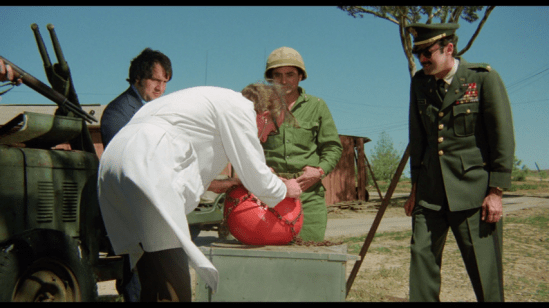
In the early 1980s, an ambitious and visionary filmmaker sought to produce, write, direct, and star in his very own modest budget feature film that would rival Hollywood’s glamourous and expensive effects while still maintaining a down-to-Earth independent production. That filmmaker was none other than Steve Barkett, creating his debut film, the 1982 science fiction post-war catastrophe, “The Aftermath.” “The Aftermath” is like if the “Planet of the Apes” met “The Walking Dead,” a sheer blunt for trauma of returning to your home to discover the world in shambles with different factions of hard nose killers ready to plunder all that you own and all that you will ever have. Barkett, with assistance from the brothers Dennis and Robert Skotak, who’ve went on to work on major studio films such as “Aliens” and did the matte work for John Carpenter’s “Escape from New York,” create a destroyed Los Angeles landscape through the power of some serious movie magic considering the time period and the budget.

Steve Barkett is Newman, one of the three astronauts with no first name, and the tough hombre’s hard disposition comes from his background exposition where he lost his wife and child before going up into space. Newman’s cold, but not heartless, and Barkett taps into that fairly well despite some robotic and formulaic performances. However, Christopher Barkett, Steve’s son, was a complete first generation cyborg, a regular toaster oven with teeth and eyeballs that monotones through all the lines and actions. The most interesting casting here is Lynne Margulies, who at the time of this release, was or was not yet the late Andy Kaufman’s girlfriend. Margulies, who previous worked on an adult film entitled “Young, Hot ‘n Nasty Teenage Cruisers,” continued the racy trend with a shirt-pokey role in Sarah, Newman’s quick-to-sack love interest with a briefly, well-endowed nude scene. Yet, Sig Haig manages to steal the Barkett’s film from right under his nose. The young and ruggedly muscular “The Devil’s Rejects” star sports his trademark shaved head and thick, dark goatee, labeling him the perfect casting choice in gang leader Cutter. Alfie Martin, Forrest J. Ackerman (“Dead Alive”), Larry Latham, Linda Stiegler, and Steve’s young daughter, Laura Anne Barkett costar.

One aspect that’s really appreciated in Barkett’s enterprising venture through post-war commentary and morally righteous themes is the special effects matte work from the Skotak brothers. Detailed paintings, such as exampled in the war-ravaged metropolis that was formerly L.A. embodying the once towering buildings, are now destructively cut short in a mangled heap in a matte effect with live actors. Practical effects work wonders for Barkett’s large scale premise despite the small scale performances, except from Sid Haig. The detail in the violence dawns a newly restored faith in early 1980’s sci-fi films; violence that was more prevalent in the genre later in the decade, in such films as “Aliens” or “Robocop,” making Barkett’s film a trail blazer that paved the way to deliver more sensational savagery and lots of blood of a high body count to a already fantastic genre.

MVDVisual and VCI Entertainment release Steve Barkett’s “The Aftermath” onto a dual format, DVD and Blu-ray, combo pack. Presented in 1080p on a MPEG-4 AVC encoded BD-50, the post apocalypse never looked so good in a widescreen 1.78:1 aspect ratio from a 2K remastered transfer of the original 35mm negative. VCI has bested the rest with colorfully enriched scenes and untouched framing. Slight grain more so over the matte special effects that optically contrasts between the two different layers where a little touchup could have smoothed out the indifferences, but other than that, the details are quite stark. The clean and untarnished English LCPM 2.0 mono track is also vastly well constructed that contains minuscule hissing and the occasion pop, clearly making the dialogue a prevalent force. Composer John Morgan’s traumatically dramatic score is full-bodied and robust that coinciding renders well with the action sequences and tranquil moments. The extras offer the original laserdisc bonus material that provide snippets of interviews from cast and crew, Steve Barkett’s short film “Night Caller,” over an hours’ worth of John Morgan’s soundtrack complete with title information, VCI promo announcement for Barkett’s other director “Empire of the Dark, and the original theatrical trailer. A retrospective journey to the early 1980’s science fiction indie sector is also a visually stunning resurrection of “The Aftermath” courtesy of VCI Entertainment and with impressive effects and a bigger-than-life concept despite an underwhelming performance as an actor, director Steve Barkett’s legacy as a filmmaker remains stronger than ever with this prominent and well-deserved upgrade of the lazer-gun and mutant inhibiting world reckoning.

The Aftermath available at Amazon.com!

Evil Doesn’t Care for pH Levels! “Hot Tub Party Massacre” Review!


In the midst of a deranged serial killer’s escape from prison, Four Delta Omega sisters enter a school raffle to represent their sorority and end up winning an all expenses paid hotel suite complete with a luxurious hot tub. As student bodies fall in the maniac’s wake, the sisters flight toward fun times before taking notice how many of their friends and fellow students become unfortunate slashed-up victims and just when things are getting wet and carnal, the killer checks in, crashing good times, and making mince meat out of the lucky winners and their boyfriends.

Budget horror filmmaker Chris Greenaway gets his hands into the sisterhood horror genre with his 2016 written and directed tongue-and-cheek horror-comedy “Hot Tub Party Massacre.” Campy. gratuitous. Schlocky. Greenaway has covered all the bases of a satirical slasher sporting a killer wielding a small garden cultivator – “cultivator” is a good title or moniker for another campy slasher as long as you put the proverbial “the” in front of it. Instead, we get the Canadian cult no-so-classic “Hot Tub Party Massacre” because nothing says killer party than an actual killer at your party and here the party is wet and wild with an escaped maniac on the loose, ready to randomly slice and dice the unscrupulous and individualistic sisters of Delta Omega sorority.

While there’s not a sole headliner to Greenaway’s film, like a Jamie Lee Curtis to Laurie Strobe or a Neve Campbell to Scream, the sorority girls attending the bubbly hot tub affair function as a collective headlining mass of alternative women. In alphabetical order, Amanda Nickels, Erin Hyndman, Jynx Vandersteen (“Father’s Day”), and Sarah Foster each represent Delta Omega’s finest in their respective personas as popular, bookworm, party (or slut?), and goth. The quintessential tropes to any routine slasher star as surprisingly benevolent with their upbeat attitudes and gracious acceptance of all kinds of people. When Hyndman’s nerdy Bethany states she probably shouldn’t attend trip, party girl Brandi, aka Vandersteen, counteracts with you’re one of us, a Delta Omega, and only the best become Delta Omegas. Their stalker, the elusive serial killer, is played by Mark Kiazyk trying to do his best Michael Myers impersonation from the chest down, as he’s frequently screened. Kiazyk’s has the look, a face of pure hatred, and I wish that was more prevalent as it’s a face for television. Rounding out the cast are Delta Omega boyfriends Danny Warren and Ken Wright, “Rust’s” Corey Taylor as a school spirited University newscaster, “you’re all doomed” guy Nicholas MacDonald, and the indie scream queen Brinke Stevens making her bit cameo.

“Hot Tub Party Massacre” is essentially one big homage to the enshrined horror flicks and pays it’s respects to, as aforementioned, Halloween with the killer. Also gives a head nod to Friday the 13th Part II in which a couple are jointly impaled in a very similar frame-by-frame sequence. Even one of the official poster concepts is a direct take from “Slumber Party Massacre” and perhaps the Delta Omega is a sign of respect to another Brinke Stevens’ classic, “Die Delta Die!” Greenaway’s “Hot Tub Party Massacre,” by title alone, is not a serious horror film looking to ripoff the foundational slashers, but relishes in a lighthearted satire that begins in a realm of Zuckeresque that loses the visual gag steam at the tail end. The montage of gratuitous nudity of Amanda Nickela, Jynx Vandersteen, and Sarah Foster notch up the “Hot Tub’s” antics in fleshing out the skin craving viewers who can’t get enough of blood and boobs. Awarding this feature as a good film, as a pivotal staple in horror, is an extreme over exaggeration and a poor case of judgement, but consider only chocking “Hot Tub Party Massacre” up to being Chris Greenaway’s ode to the archetype slasher genre.

Ron Bonk and his Sub Rosa Studios, along with MVDVisual, proudly present “Hot Tub Party Massacre” onto DVD that absolutely belongs right in SRS’s arsenal of cheap and outrageous horror. The Full Screen 1.33:1 presentation is what it is, an unmatted sign of low resolution and blotchy, patchy image quality. The 2.0 audio track is a seesaw of fidelity where some aspects of the dialogue are barely audible and then the high pitched shrieks, and their are many shrieks, could pierce ear drums through popping static noise. There wasn’t an expectation of par level video-audio quality, but the due diligence is to publicize, not necessarily criticize, that of the DVD technical contents. The DVD cover is straight out of a photo shoot with a round, thong-cladded booty and long legs very shapely in front of an in ground hot tub. FYI – the hot tub in the movie is above ground and in a hotel. Bonus features include commentary tracks, behind-the-scenes footage (that contains more nudity, by the way), and trailers. Chris Greenaway’s “Hot Tub Party Massacre” has a premise of a short-lived concept that has been run through the kitty-grinder more than once over, but unquestionably is a honoring low-rent tributing spoof of cult classic works that obviously inspired the Canadian horror filmmaker.

Get wet with “Hot Tub Party Massacre!”

The Unspeakable Evil That Drugs Do to Your Body! “Red Krokodil” review!


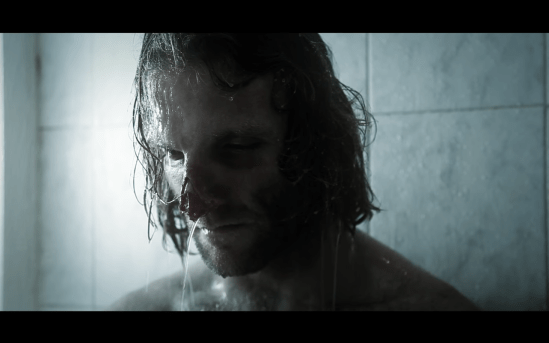
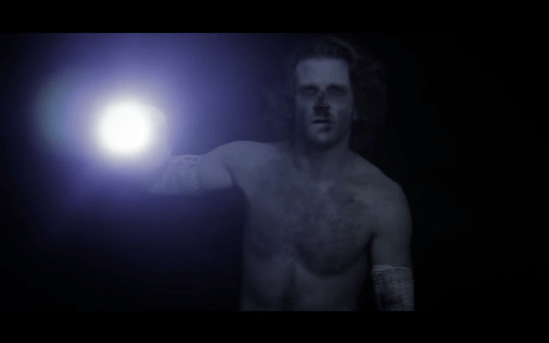
“Krokodil is a homemade drug. It combines codeine, lighter fluids, gasoline, paint thinner, alcohol, and other ingredients.” This fast growing Russian street drug gnaws along the inner layers of one man’s insides and clawing its way out. Also, the drug deteriorates his mental stability, invigorating extreme hallucinations from his damaged cerebral equilibrium and manifesting faux body images of himself as well as inviting humanoid demons into his tattered reality. The powerful opioid, if fabricated haphazardly, induces prolonged and deathly ill effects, both physical and mental, and as his body has survived in a post-nuclear world, his mind is as much of a ramshackle as the rest of the world is in ruin. As he spirals down, out of control, through the opioid rabbit hole, he becomes only a shell of himself, transforming into the purest toxicity of the drug that creates alligator scale-like sores over portions of his body.

The need to put the definition of Krokodil” first and foremost, in front of the plot summary above, felt necessary. Director Domiziano Christopharo made it essential to do the same prior to the credits of his 2012 film “Red Krokodil.” To the average joe, the very mention of “krokodil” means nothing other than a seemingly skewed, alternate version of the English word crocodile, but the gore and shock director, best known for his debut work “House of Flesh Mannequins,” wanted the background behind the street drug to sink in, to be injected, to be snorted, and to be smoked before audiences continue with their trip through the breakup of the body. Based off a script written by Francesco Scardone, the Italian director had set the stage with his grippingly ghastly tale telling talents toward the dominion of body horror combined with ample psychological manipulation from substance abuse and while Christopharo is no David Cronenberg, the eclectic filmmaker cycles the story through a poetic flow with mostly an off-screen monologue approach that gives glimpses of a degenerative mindset.

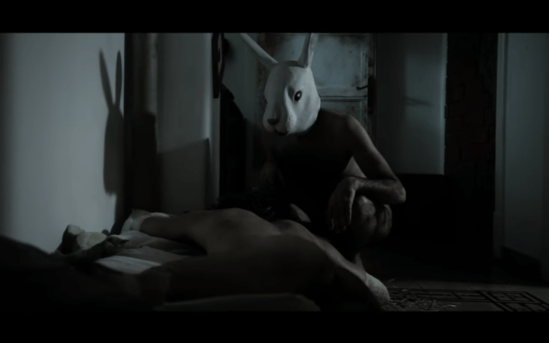
Co-producer of the film, Brock Madson, also stars as the withering drug addict. There are hints Madson plays the character named Arthur, but the film only credits the character as simply him, and theoretically, that’s proportionate to the storyline staged as a post-apocalyptic world where it’s just him, ensnared and isolated. The role’s non-verbal role leaves Madson to go full-throttle in physicality with a semi-to-fully nude performance and he maintains an animated disconcerting fear and aloof glee whenever the moods start to swing. For most of the duration, Madson is solo, but a couple of minor characters, fabricated by his addiction, freakishly gloom over him. Viktor Karam, as the Bunny Man, and Valerio Cassa, as the Monster, positions themselves as enduring internal calamities that plague the Madson’s character.

“Red Krokodil” is laced with themes and symbolism, especially in a religious sense with the resurrection of Jesus Christ that parallels the trials and tribulations of the addict, mainly with going through the withdrawals. In order to save himself to be reborn, he must first sacrifice himself and Madson literally dons the crown of thorns and self-inflicts a stake through his feet. However, this self-crucification is all in his head, but when he awakes he’s able to ignore the heavily influential calls of the krokodil. Christapharo had kept the addicts apartment a dull, colorless prison, growing with filth and decay, but once the addict has saved himself, the room brightens, the outside sky has illuminated, and the near-death abuser has a little life left to be jovial, but to keep the grim themed tone against this man’s struggle to live through strife, Christapharo invokes false hope that ultimately becomes the addict’s concreted freedom from it all. The addict’s inner monologue goes through the steps how recovery, rekindling good memories from the past and wanting to not feel himself as it’s painful to feel your own skin be on fire from the corrosive drug, but rather be a personification of the wind, sun, water, or the grass, an element of the film that touches upon how humans mistreat the Earth much like they mistreat their bodies.

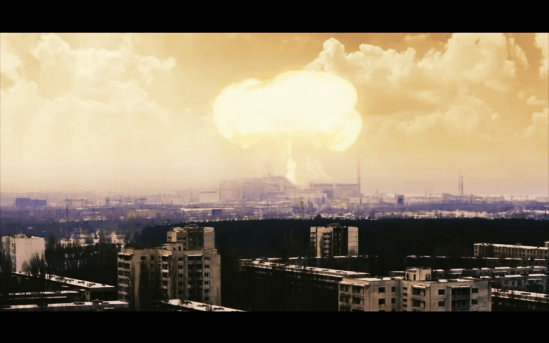
Unearthed Films and MVDVisual present “Red Krokodil” on a director’s cut, high definition, 1080p Blu-ray. Sporting a macabre, yet gorgeously illustrated cover, the release also has the same attributes in the image quality presented in a widescreen 1.85:1 aspect ratio. Like most film distributed by Unearthed Films, the grime and the disgusting reign as supreme and “Red Krokodil” has ample muck with bleeding orifices and an unappetizing uncleanliness about it, but the picture quality is clean and detailed with very little electrical interference. Color palettes, when the addict dreams to escape to nature, is a potent reminder that “Red Krokodil” isn’t just transmitting two-toned, gray and black, scale and displays exquisite landscapes. Even the computer generated Chernobyl like waste land of a city going up in an atomic fashion is well done with only a slightly glossy feel. The Dolby Digital 2.0 track broods with the ideal amount of LFE from composer Alexander Cimini that’s not acutely jarring, but still manages to showcase the detriment. Bonus material includes an alternate musical ending, deleted scenes, photo gallery, the CGI test of the nuclear explosion, teaser trailer, two theatrical trailers, and Unearthed Films tailer reels. “Red Krokodil” is a total out of body experience. Overwhelmingly brutal with muscular and mental breakdown, director Domiziano Christapharo’s indie picture of ill-effects of drug abuse has done what “Requiem for a Dream” has done for the mainstream with the matter-of-fact implication that manufactured street drugs are the purest evil that we could voluntarily do to sabotage ourselves.

Buy “Red Krokodil” from Amazon today!

From the Garden of Evil Come the “Attack of the Killer Tomatoes” review!


The United States comes under a relentless siege from a formidable foe unlike any other. An enemy that’s risen from the ground up to overthrow the very soil Americans’ inhabit. Flashing proudly their red colors, this adversary will fight and destroy anyone in their path. The attack of the killer tomatoes will seek to end mankind and take over the world! As desperation sets in, top U.S. generals, under the aloof guidance of the President of the United States, assemble a motley crew of special ops that become America’s best hope against a vicious barrage from the killer fruit….or are they vegetables? Under the leadership of Mason Dixon, his team will infiltrate, investigate, and, if lucky, exterminate the rotten to the core tomatoes. From the glossy red cherries to the plump big boys, the round ripe killers are hungry from human pulp and only Dixon and his team can stop them!

Courtesy of the MVD’s Rewind Collection, a newly released line of retro cult cinema, comes the impeccably unsystematic comedic spoof “Attack of the Killer Tomatoes!” for the first time on high definition Blu-ray! Writer-director John DeBello, along with his co-writers and fellow many hat wearing cohorts Costa Dillon and J. Stephen Peace, takes satire to the composter, lets it fester for a month, and releases a heaping pile of slapstick gold to the masses. The zany indie production, backed by various family members and local mom and pop retail operations, has been a horror comedy staple for past 40 years with not-so-cutting edge timeless humor that pokes a satirical finger at other more serious ventures such as Alfred Hitchcock’s “The Birds” with the film opening with a message about viewers brushing-off jovially the Hitchcock subtle creature until the event actually happened with aggressive, unflinching fowls terrorizing a small town and in that context, a film about killer tomatoes was born. DeBello’s film aimed to poke fun at many other things as well and successfully pulled the wool over the eyes of critics who remarked how awful his film was to behold, but that was the director’s sought-to, goal line intention.

Out of a cast of untrained talents and actors and actresses who never saw the bright lights and prepped sets ever again, only one actor stands out as a recognizable face and household name and that face and name was of Jack Riley as a Government slug. I might be a sucker for classic re-runs, but I remember Riley from his stint on “The Bob Newhart Show” and his very presence in “Attack of the Killer Tomatoes” legitimizes not on the film’s creditability but set the humor tone that was to be expected and despite almost being killed during filming as the rented helicopter accidentally crashes with him in it, the comedian rose from the ashes like a reborn phoenix and suggested to use crash footage to seemingly boost the pint-sized production value. However, it’s David Miller, who has zero interactions with Riley, in the lead role as a Mason Dixon. Though with an uncanny resemblance to the late funny man John Belushi with the wavy dark hair upon his short round figure, Miller goes fairly dark, as in quiet, for his leadership role as perhaps the only sane, and logical, character in the entire sequence of misfits. Dixon’s right hand Lt. Wilbur Finletter is played by co-writer, co-producer J. Stephen Pearce who courageously commits himself to doing all his own stunt work in a film that proudly wishes to just have a good time. Pearce’s approach to the lieutenant is with a sullied gung-ho persona that’s effective, but barely in the eyes of Mason Dixon. Dixon’s love interest Lois Fairchild, the only credited role of actress Sharon Taylor, inarguably is involved in an awkward game of being coy with Finletter as Fairchild, being a rookie reporter, aims to get the story at any cost while Finletter’s dimwit has him skate around her advances and oblivious to her information seeking intentions. Rounding out the cast is George Wilson, Eric Christmas (“Porky’s), Ernie Meyers, and Ron Shapiro.

Before “Scary Movie,” before “Naked Gun”, and even before “Airplane!,” “Attack of the Killer Tomatoes” had tailored, if not probably pioneered, this particular gag humor and in today’s day-and-age of political correctness, films like John DeBello’s are much like the Dodo bird – extinct. In the mix of light hearted witticisms, a number of racial, sexist, and overall bad taste cracks lie sporadically about the 87 minute runtime that wouldn’t make past the MPAA standards of today, that would invoke public ridicule and outcry for the filmmakers’s heads, and would unjustly place on a blacklist mark all involved, but just like a many number of these cinematic relics, they’re grandfathered into the fold. Though I doubt many millennials have even heard of the killer tomato franchise which would be baffling since health conscious wackos would enjoy seeing genetically modified tomatoes run a rampage, proving their points.

“Attack of the Killer Tomatoes” arrives on a special collectors edition Blu-ray/DVD combo set from MVD’s Rewind Collection. For the 1978 film, this release, presented in an AVC encoded 1080p 4k digital transfer of a 1.85:1 aspect ratio, is by far the best yet with a rich coloring range that pop and bring new life to the cult favorite. Hair line blemishes and some blotchy moments rear ugliness every so often, but the outcome of this release is astonishing when compared to previous DVD versions. The mono uncompressed PCM track reinforces a well rounded release when technically speaking. The dialogue is crystal clear and the musical numbers go off without a hitch. Perhaps, not as resonating as one would hope, but in the end, the mono track really sounds good here. Bonus features aplenty with audio commentaries from director John DeBello, J. Stephen Pearce, and Costa Dillon, three delete scenes, a collection of old interviews from cast and crew entitled Legacy of a Legend, a discussion on the helicopter crash, and “Attack of the Killer Tomatoes” original 8mm short film plus much, much more. Roughly about two hours of bonus content on this release makes it certainly a definitive collection. It took only 40 years for “Attack of the Killer Tomaotoes” to receive the treatment the John DeBello directed creature feature rightfully deserves and though might stink like rotten organic matter, there’s certainly nothing like the splat-fest riot of rolling, death-dealing fruit fleshed with trail blazing comedy unlikely to be repeated in today’s uptight community.

Own this version of “Attack of the Killer Tomatoes!”

Evil Doesn’t Care About Your Love! “True Love Ways” review!


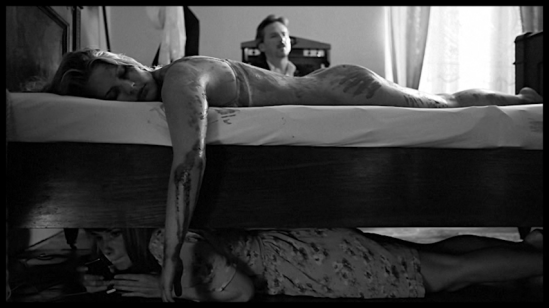
An absent Séverine wants to take a holiday away from her boyfriend Tom after she awakes from a dream where she has fallen in love with a man in a top open, white car. Frustrated and desperately in love with her, Tom agrees to a pact with a bar room stranger to stage a faux kidnapping of his lovely girlfriend and Tom would her hero, swooping in to rescue her from “evildoers” and hoping to rekindle her passion for him, but the Tom’s newfound stranger friend has a more devious agenda up his nicely tailored coat and white collared shirt sleeves; one that involves kidnapping young women to star in their snuff movie productions. When the plan begins the unravel and actual intentions are exposed, Séverine’s forced into a deadly cat-and-mouse game against unsympathetic sadists who have laid the prep work foundation into getting to know their victim and know every inch of her youthful body, but Séverine won’t submit without an unflinching, vicious fight as she trudges through areas of an old villa compound, looking for to escape or kill her captors.

If you search for a combination of the classic Hitchcockian style with a smidgen of cold blooded savagery, Mathieu Seiler’s “True Love Ways” would be at the top of the search result. The 2015 German, black and white thriller surpasses being a surprising sleeper film and goes directly into a notorious favorite category helmed by the Switzerland born director who integrates a complex lead character into an unfathomable story of selfishness, unscrupulous power, and sheer determination. Despite the sepia overlay, the colorful venomous of the characters explodes brilliantly, adding vim and vigor to a story that begins with a slow burn to quickly escalating in an anxiety-riddled and captivating narrative pivoting to one harrowing moment to the next. Seiler, who also wrote the script, blends a detailed art house thriller with feminist undertones that surface the severe ugliness in man whose either selfish with his needs, sexually deviant, or insecure. There’s even a case where Séverine’s father isn’t safe from being scrutinized. Séverine’s the strongest character in the bunch by overcoming one obstacle over another while managing each male driven situation with disregard and hostile improvisation.

Steering Séverine’s reactive and survivalist rampage is Berlin native Anna Hausburg. The then 25 year old actress embodies a major milestone in maturity for her physical performance. The entire film is driven by physicality, not dialogue, and Hausburg prove her grit and sexuality seemingly effortless. Hausburg is joined by Kai Michael Müller as Séverine’s unassertive husband Tom. Together, Hausburg and Müller couldn’t be more distant from each other while David C. Bunners interjects with a sly director of snuff film operations. Bunners has a modest performance, but if you accept it, let it sink in, you’ll experience his devilishly, rugged good looks and sophisticated business intelligences just ooze out into a white collar sleaze, perfectly suitable with Bunners’ method on his character. His production crew, played by Michael Greiling, Axel Hartwig, Beat Marti, and Marcel Schneider, are equally skeezy in a choreographic manner whom each have a role to play. Rounding out the cast is Christian Samuel Weber, Anja Margoni, Alina Sophia Wiegert, and Margarita Ruhl.

Seiler’s “True Love Ways” is open to many different interpretations. One that seems to bubble up over and over again in the analytical gear works is that could the entire ordeal, Séverine’s ordeal, be all a lie. Not just a single cell lie, but a couple of angles that undercut the linear option laid before the viewers. For instance, the first lie would be that the dark, heinous snuff producers are all in Séverine’s head. Too many coincidences from the specifics from her dreams to come true in such a manner and she always has this mysterious ailment, near the beginning, that’s never explicitly explained. Second lie would be is this Séverine embraces the darkness of her captors; is she herself unstable after the ordeal that the very sever boredom of regular life? The predictability of it all from her vivid dreams have turned her to seek the man who wants to exploit her and who “freed” her from the incompetent men in her life – Tom, her father, etc. Seiler’s abstract bookends shed light upon slithered clues that reveal potential possibilities of where Séverine’s stands as a hero or anti-hero lead character.

MVDVisual and Synergetic Distribution present “True Love Ways” onto home video DVD. Like the monochrome tone, the DVD cover is elegantly simple with blood covered Anna Hausburg, looking disheveled and holding a blood stained axe, standing in front of a white background encasing the 95 minute film. Presented in a 1.85:1 aspect ratio, the black and white appears absolutely timeless, especially with Mathieu Seiler’s directorial style. However, slight aliasing can be detected in fast paced scenes that liquify the detailing and there’s a bit of digital noise amongst the black objects, like the Old Villa door. The German 2.1 stereo has slightly lower fidelity, but has a still absolute and manageable to understand. There wasn’t really much to test for dialogue depth or range as the film progresses physically rather than with dialogue so many woodsy chase sequences, running through the Villa house, and cars speeding down an isolated road to which all ambient nicely enough. There are no extras included on this release. What starts out as a melodrama between a withering couple turns barbaric under a perennial style of filmmaking. “True Love Ways” provides two-tone carnage with some gore, some sexuality, and a lot of inhuman nature that signifies what’s great about this German indie picture with cascading undertones.

Don’t miss out on “True Love Ways!” Available at Amazon.com