
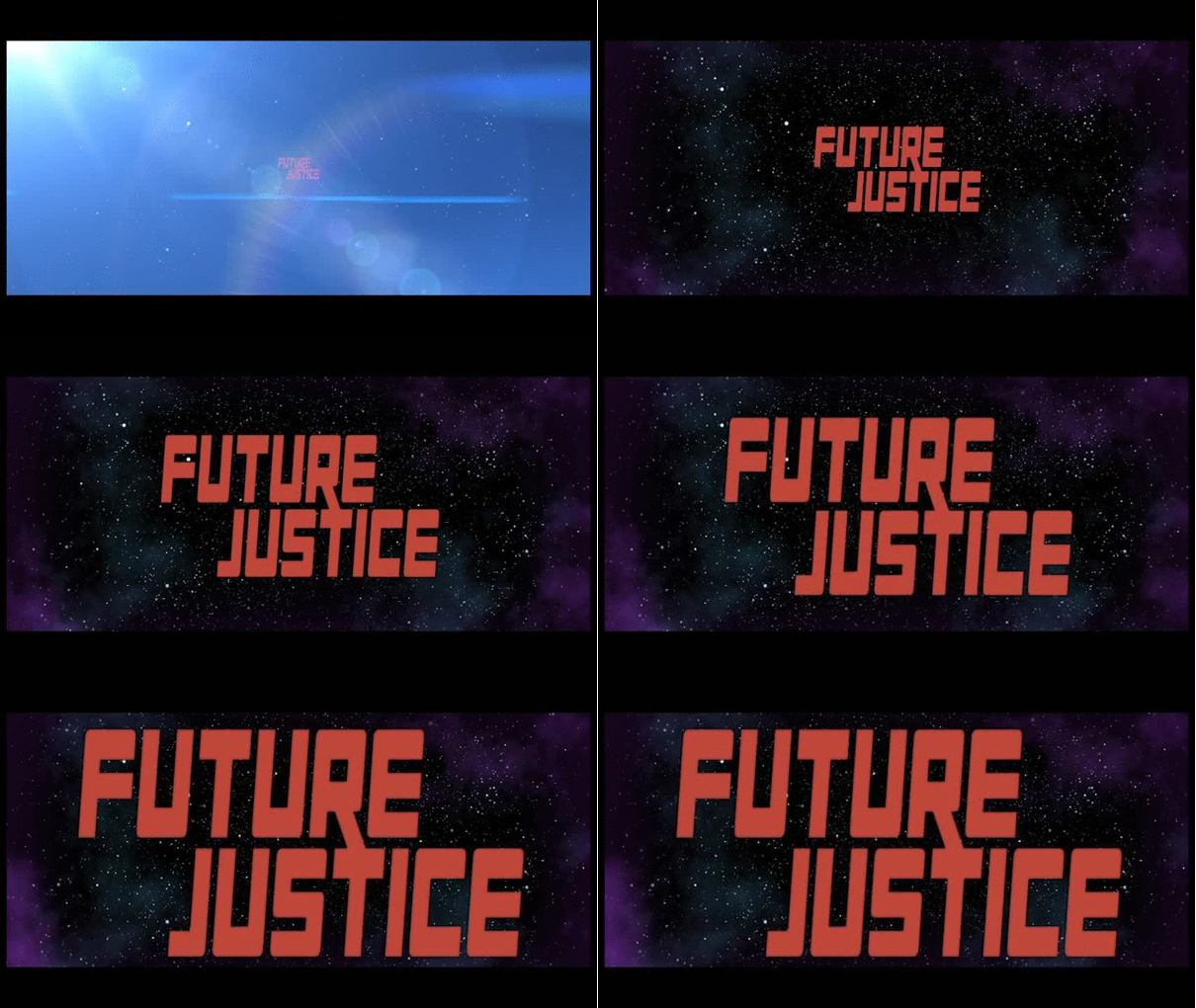
After five years of cryogenic solitude, Python Diamond returns on a heavily armored military escort ship, returning from Saturn where a maximum prison holds Earth’s most dangerous convicts until their execution date. As they close in on home, Earth has gone dark, communications have gone silent, and massive radiation cover most of the populated soil. A faint signal of power draws the crew down to a manageable radioactive portion of scorched Earth where they discover a small band of people, surviving in an underground bunker and striving to live in a post nuclear fallout. The exploration of life search doesn’t go unnoticed as a violent, more dominant group of survivors seek to take the military’s possessions, if not their lives too, and when war breaks out between them, another mutated and dangerous player enters the game.

Another Richard Griffin directed project and another great example of a superbly self-reliant genre film thats sharp-witted, off-colored, and, of course, entertaining to horror and post-apocalypse fans. Though Griffin and his usual cast of cast members tackle the homage with full-brute strength, Griffin places a gently new-used spin upon each of his inspired works in the form of great absurdity that’s hard to refute or dislike no matter what genre of movie fits your fancy. His post-apocalyptic, science-fiction, horror film “Future Justice” revolutionizes the homage by stripping iconic films of their popularities and mashing them together into a very coherent and comprehensible story without seeming like a total rip off. Instead, Griffin takes the Nathaniel Sylva written story and runs with it like a powerful running back whose hugging on tight to that pigskin ball and charging like hell to the end zone for his first touchdown, treasuring that first score and making it his own unique success even though scoring touch downs has been down countless times before.

The underwhelming title, “Future Justice,” doesn’t speak much to the film’s overall enthusiastic gesture. Yet, the witnessing of gung-ho filmmakers given only an inch to work with and stretching that into a long mile, or even two, is always an amazing length. Nathaniel Sylva didn’t only write the film, he also starred as the lead character, a confident and calculating convict named Python Diamond which is a bit of a play on the John Carpenter Snake Plissken character from “Escape from New York” and “Escape from L.A.” Then, the story embarks on a motley crew, like you would see in a “Mad Max” movie, group of scavengers looking to take all and leave nothing for the rest. Finally, “Future Justice” takes an unexpected turn by introducing a radiation mutated, humanly doctored, one pissed off person-creature that hungers to seek and destroy every last living being in the underground bunker.

The successfulness of character actor Steven O’Broin’s Gazeebo, head of the blood thirsty gang, makes him ruthlessly enjoyable to watch on screen. O’Broin and Griffin have worked previously together on “Sins of Dracula;” O’Broin aspired to be similar to Vincent Price in the Hammer Horror influenced Dracula film. Michael Thurber, more notable one of Griffin’s entourage of actors and also co-stars in “Sins of Dracula,” delivers a phenomenal and intentionally excessive method acting skill that always fits into, in every which way, all of Griffin projects. Working with an estimated $20,000 budget and limited locations doesn’t translate over to O’Broin or Thurber who can transform a small production into the illusion of a bigger ordeal, causing a mind altercating effect with their viewership. “Future Justice” delivers movie magic at its finest.

Speaking of movie magic, visual effects supervisor John Dusek works along side again with Griffin and meshes a blend of practical effects with campy computer generated imagery. The result only adds to the unique charm, capturing the zany essence of this world gone dark story and running with it to take the zaniness one step further, but also respecting the Italian post-apocalyptic films of the 1980s. Exploding heads, detaching limbs, brain-splattering head shots keep the violence fresh when various effect methods are implemented and Dusek tunes right into his entire arsenal to deliver. The effects go hand-and-hand with Daniel Hildreth’s space epic score, striking the composer analogue of other Sci-Fi film greats.

The MVDVisual region free DVD release is presented an in unrated 16:9 widescreen format at a runtime of 83 minutes. The extras include a commentary with cast and crew, a short film entitled “Mutants of the Apocalypse,” and a theatrical trailer of the film. The clear picture defines the details and vividly displays the colors, especially when the mutated creature emerges. The 2.0 audio mix hinders a little in the dialogue by the overpowering score and ambient tracks, but doesn’t disrupt much at all. “Future Justice” doesn’t apologize for laying down the law by smacking action and thrills right to the face. I’d recommend this title to any Sci-Fi or horror buff in a need of a necessary relapse into the post-apocalypse.
Tag Archives: MVDVisual
Evil Times Out. “Reminiscence: The Beginning” review!

What if there were multiple universes and only one time line? Then, what if time breaks down? Being aware of, in theory, the coming lapse of time, Miska uses her talents in physics to calculate the days of when exactly the rare event will occur; she brings along her boyfriend Akçay and together they experience, not an immaculate and breathtaking event, but a horrifying phenomena that intertwines parallel universes and opens the door to our world to mind manipulative beings known as The Others or Shadows. When Miska misjudges the occurrence date, the lovers find themselves trapped in a vicious loop, unable to tell the difference between what’s reality and what’s a realistically terrifying nightmare.
“Reminiscence: The Beginning” is the screenplay written by musical artist and Blue Arc Studios founder Akçay Karaazmak, who also directs film and stars as, you guessed it, the male lead named Akçay. The concept of time breaking down and releasing horrifying entities is intriguing to captivate audiences, like a moth to a bright night light, toward noticing the estimated $500,000 budgeted independent feature that has an exotic filming location on the crystal clear water beaches of Çeşme, Turkey. Alternate realities have an unique appeal since the lot of such films haven’t been saturated by previously exploration and their ventures, unlike the recycled storyline of the zombie genre, can always be varied because time is tangible; we see the parallel time lines within the established stories of popular sci-fi franchises such as “Star Trek” and “Terminator”. Karaazmak’s film, his first ever venture into the movie biz, has similarities to other works such as Stephen King’s film adapted novel “The Mist” or in “Silent Hill,” the video game adapted into film where two universes collide and ferocious monsters seep into the human world, blending time and worlds into one existence. Can we expect the same type of viscera innards from Karaazmak that resulted very favorably for the other recent genre-related films?
The answer to this time bending film is: don’t waste your time. Here’s why…

On a pitch black night, with no street lights, Akçay and Miska barrel down an isolated road; their seemingly anxious and intense conversation annoyingly underwhelms, nearly beneath the wave lengths of the human ear. Miska, in the passenger seat, examines through numerous pages of physic notes and while Akçay drives erratically fast through the thickness of night, she’s communicating something to him but the dialogue track is, frankly, inaudible. The fault lies at the feet of a couple of major issues: shoddy post-production audio work as the soundtrack severely steps up to become an unintentional focus point above the dialogue tracks and actors Akçay Karaazmak and Michaela Rexova mumbling horribly through the bland dialogue due to their heavily broken English and immature acting status. Our ears inevitably have a chance to relax once the two finally reach the Çeşme beach after a near accident.

The beach scenes turn out to have just as much post-productions issues as the superficial opening. The editing work will require an heavy dosage of Dramamine pills to suspend any nauseating effects from the tirelessly and pointlessly shot and edited scenes. Karaazmak’s film feels unsure on how to convey each scene appropriately, cutting and splicing two and three second scenes together. Karaazmak’s editing process resembles something close to tossing contents of a mixed bag of options and seeing what sticks to sort of fit. Also, If I’m going camping in the natural elements of a beach, dressing the occasion might heighten Akçay’s and Miska’s characters’ authenticity; instead, the lovers, cladded in dance club clothing, doesn’t speak highly of our hero and heroine as black hole researchers seriously. Michaela Rexova, starring in her only credited film according to IMDB.com, has the beauty, but her dull persona and monotonous speech makes her instantly unlikeable to which her beauty can’t rekindle and if I would have heard the word “baby” one more time between them under that low breath of either one of them, my brain would have created it’s own timeless black hole and void itself into non-existence as if some kind of mindless suicide.

However, there are moments, brief moments, during the film’s latter that peak through the unwatchable, indigestible blitzkrieg that is “Reminiscence: The Beginning.” Surprisingly, the scenes I’m referencing satisfy some kind sexual aesthetic while managing to remain a lasting and haunting impression. In one of Akçay’s nightmarish visions, a blonde lays facedown and prone across the hall of a vacant and dark structure. She suddenly awakes, stands with only one ripped above knee stocking on, and backs against the wall, sensually moving up and down, caressing her thigh and a knife with her bloody hands, and dripping blood on the ground from the only piece of clothing covering her chest – a male’s white button down shirt stained at the abdomen. With the knife she holds in her hand, she suddenly thrusts it into her crotch and begins to masturbate. Karaazmak manages to create a visually interesting scene in a creepily sexy or psychosexual fashion and there are other just above mediocre short scenes that glimmer, but these scenes would value more as short films rather than as a whole.

Once again, Karaazmak, has his hands in another department and this time it’s with the waffling special effects. You have to give the musician credit for multi-tasking, but when one person helms many departments, the tasks become overbearing, causing multiple areas foundering as if cables from a suspension bridge are snapping one by one to the point that the bridge begins to wobble. That’s how I feel the effects played out by wobbling, but the effects are par for the limited-budgetary course as being not terribly horrific on a modest budget, but nothing stellar beyond fantastic that would be worth bragging about to promote enthusiastic interest in the film. Karaazmak majorly implements CGI to spookily distort the faces of the other-dimensional shadow people, especially when the leads meet their dopplegangers; a comparison draws from when Ash meets Evil Ash in the 1992 horror-comedy “Army of Darkness” after having buckshot spread blasted point blank into Evil Ash’s face. “I’m bad Akcay and you’re good Akcay,” if only.

Blue Arc Studios and SGL Entertainment, a well-established cult and horror distribution company, along with MVD distribution release “Reminiscence: The Beginning” on a region 1 DVD, presented in a widescreen format. Be prepared for 107 minutes of one of the few sci-fi, alternate reality, horror concoction genre film projects to come out of Turkey, but also be warned of director Karaazmak’s migraine inducing editing technique and a dialogue drowning soundtrack that might condemn the viewing ability. Will Karaazmak take “The Beginning” to the sequel level? Time is, hopefully, on our side.
There’s Evil in Oklahoma! “Meet Me There” review!

Ada and her boyfriend Calvin love each other tremendously, but Calvin finds difficulty in their intimacy when Ada continues to push him away, as if hurting her, in the middle of intercourse. Her sexual dysfunction puts a strain on their marriage, but Calvin has a plan that he hopes will resolve Ada’s, as well as Calvin’s, intimacy issue. His plan involves travelling to her hometown of Sheol, Oklahoma where much of Ada’s childhood memories seem to have been repressed and might be the root cause of her mental blockage. When they arrive at Sheol, they’re not exactly welcome as the town’s deranged inhabitants have a bible-thumping darkness about them and they don’t agree with Ada’s and Calvin’s lifestyle. When the couple try to escape, the town won’t let them.

Director Lex Lybrand helms the “Meet Me There” story, written by Brandon Stroud, and Lybrand seems to lose the structure as soon our hero and heroine arrive in the town of Sheol. The film tries to relay underlining messages about sexual dysfunctions, repressed or fragmented memories, suicide, paranoia, and, of course, just plain lethal psychosis. In short, “Meet Me There” attempts to mask the mental repercussions of childhood atrocities with a story about a couple becoming trapped in a town of deadly druids and God-fearing folk. Lybrand didn’t quite pull off the effect I think he was going for and that was creating an overall nightmarish realm without no escape, like a bad dream you’re unable to awake from, and what was missing was smooth segues to keep the glue together for the plot to naturally play out.

The story’s outer shell might be compromised, but only technically from a director’s chair. The introductory story of two complete strangers meeting at an airport bar, flying in separate passenger seats to Sheol, renting a car together to head to the same destination, and only to blow their brains out in a field at the same instance becomes lost in reason without the backup of exposition. However, the story of how Ada overcomes her sexual dysfunction and her fragmented memories can’t be any clearer and once she realizes and understands her upbringing involving drugged up parents, a creepy Grandfather, and a verbally abusive father, she bangs Calvin in the middle of the field, half naked and without care.

Lisa Friedrich and Michael Foulk as Ada and Calvin make a mediocre convincing couple. Their tattoos and choice of music, whether created for their characters or in most micro-budget productions the actors just have to bring themselves, labels them as rebellious to which heightens the towns’ scrutiny upon them. Foulk has great timing in his delivery when being comical with Ada, fairing rather naturally for him. Friedrich’s character lumbers a good amount of the film; her spacey attitude leaves nothing to desire and her character becomes dislikeable. I don’t blame Friedrich for a character written too sluggish and poorly for viewing comfort because even when Ada triumphs over her problems, she’s still very out of sorts.

Ada and Calvin don’t really have a single antagonist pitted against them; basically, the whole town is against them. WWE’s Golddust, aka Dustin Runnels, is one of a many wrestlers who appear in “Meet Me There,” along with other unknown wrestling talents such as Addy Starr, Leva Bates, and Angelus Layne, and is also one of the villains as the town’s preacher. There’s also Ada’s paranoid Aunt who severely disapproves of Ada’s lifestyle choices, the country store bumpkins who wield shotguns, the cloaked orgy-committing druids, and etc. Now, that all might sound enticing, but only the orgy gives a little stimulating thrill to the bone. I would like to know who set fire to Ada and Calvin’s car because the effect is priceless; when Ada and Calvin return to her aunt’s house to flee town, their car is set to inferno and someone on the crew thought that a matchbox car with blazing flames through the windows and being shot up real close would be pass for a great special effect. I admit, the effect kind of works, but still hilariously executed.

“Meet Me There,” distributed by MVDVisual and produced by SGL Entertainment, is presented in a widescreen presentation with a standard 2.0 mix. The images a bit grainy with dark tones during night scenes. Overall, “Meet Me There” needs a bigger catalyst to get Ada and Calvin into a more dire situation, but the sensation of being in a bad dream is achieved here yet the transitions from act-to-act or even scene-to-scene becomes muddled. Check out Lex Lybrand’s “Meet Me There” and see what the town of Sheol has in store for our hero and heroine.
Earn Your Evil Badge at Fat Camp! “Camp Massacre” review!

Ten overly obese contestants compete on a boot camp type reality show to lose the extra pounds and have a chance at winning one million dollars in prize money. With intense health-crazed coaches, a strict unconventional exercise regiment, and a low-carb diet on the menu, things couldn’t be worse for the over weight competitors until people started to disappear and end up being murdered. Shedding the weight was literately the case as one-by-one a contestant’s eviscerated remains were discovered. Now the competition’s stakes have intensified and death is lurking around every corner. And we all thought fat shaming was worst that could happen to the weight challenged…
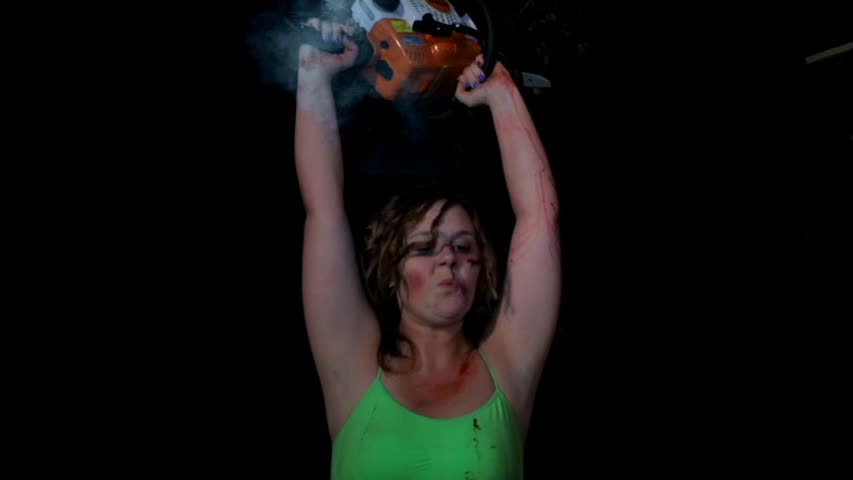
“Camp Massacre,” “Massacre Camp,” “Summer Camp Massacre,” Klown Kamp Massacre.” No matter how you jumble up these specific words, a generic title is still a generic title and the title “Camp Massacre” puts a pre-viewing damper on a long night of film watching along with a cover splayed with a former porn starlet and Charlie Sheen ex-“goddess” Bree Olson, semi-retired wrestler Al Snow, and, well, some unknown hot brunette chick with a bloodied chainsaw who doesn’t appear to be a part of the cast. Going into “Camp Massacre” knowing that this title considers itself a horror-comedy had helped push myself into popping in the disc and pressing the play button or else this title might still be collecting cobwebs on the nightstand.

The opening scene introduces the viewers to two young and attractive women and one large, unattractive woman in a hotel room discussing plans on what they’ll do tonight on a foreign island land which is undisclosed to us – looked like Key West, honestly. One of the women pondering going out on a night on the town is Bree Olson and before you know, Olson is fully and gratuitously nude in a sensual, extended shower scene and you all know what happens if you show your skin too soon in a horror movie! This ambiguously set and gratuitously shot segment proceeds into the main title and credits that slide right into the meat of the film that seemingly almost has nothing to do with the opener. The introductory scene barely hangs on even with the finale connection, but this thin connection creates an out of place awkward sequence that stands out like a sore thumb.
Connectivity and longevity of story remembrance sums up co-directors Daniel Emery Taylor and Jim O’Rear’s experience in filmmaking. The two filmmakers also produce and star in this collaborated effort to bring comedy and horror to a Biggest Loser reality show parody and to homage their love for certain horror icons. The hot topic of obesity is currently in a state of widespread prevalence making “Camp Massacre” relevant to the world’s personal and social problems that the media hops on, but the real question is did directors Taylor and O’Rear succeed in making a good comedic and horrifying quasi-film out of movie about obesity? That conclusion is all in the eye of the beholder and all in the interpretation of the viewer.

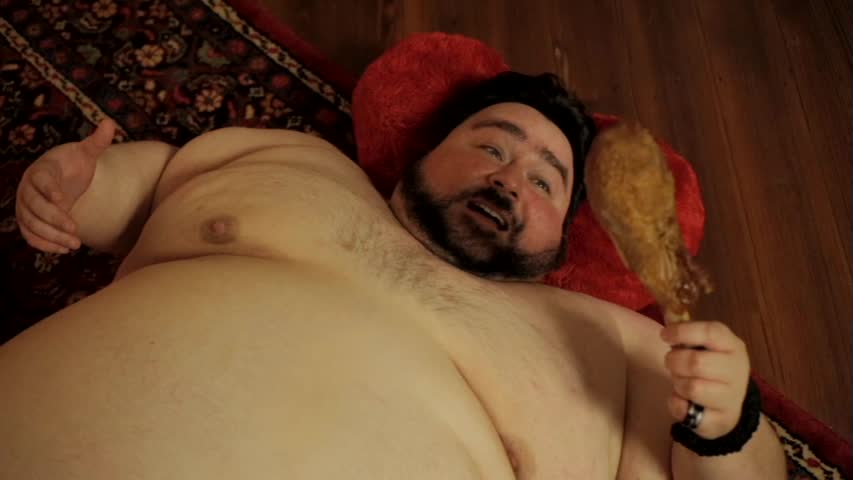
Is “Camp Massacre” a horror film? Yes. Is “Camp Massacre” a comedy movie? Yes. Is “Camp Massacre” a good horror-comedy? On a scale from one to ten, with ten being the highest – a three. Let me explain; the killer is written as a chubby villain with a “Six Pack, Abs” red apron and a Kentucky Fried Chicken family bucket on his head for a mask. If the killer’s looks intended to be a hoot, then there was a monumental failure. The killer’s arsenal is a collection of obviously off-colored prop knives and machetes that could be considered costume jewelry or packaged costume outfit accessories for party goers. The death effects are a bag of cheap tricks which are not sold convincingly and don’t bring the blood in which “Massacre” implies. The one single element going for “Camp Massacre” being a horror film – or even within the standards of a comedy – is the amount of nudity. Bree Olson, Megan Hunt, Amy Boyatt, and even Taylor’s wife, Ami Taylor, succumb to the conventions of a campy horror film and reveal the goods for the world to bear-witness. My only question is, where was Ava Cronin’s nude scene?

As far as the comedy side of this horror-comedy, “Camp Massacre” delivers on some levels mostly hanging around on a slapstick and immaturity elements. Daniel Emery Taylor’s character Greg paired with T.J. Moreschi’s Andy couldn’t ask for a better coupling as a budding duo who compliment each other’s wits with different character personalities. Add in a self absorbed narcissist body guard (who on the DVD cover looks like a coach with a whistle and clipboard) character named Ritz played by the bulky wrestler Al Snow and you’ll get a chuckle or two out of this feature. Ritz delivers quirky quips like “everything is good on top of a Ritz” during the scenes right moment. However, much of the comedy misses the mark and also just comes off as saying a lot of “fucks” in the dialogue which becomes stale after a first twenty. Simply put, the comedy is overly clichéd, but can still give you a half-assed tickling.

I’m not overtly excited about “Camp Massacre’s” characters either. Greg, Andy, and Ritz are fine and I’m found the homosexual Jarrod and the hispanic Josue to be entertaining. The rest of the cast seemed a bit tired. Actor William S. Tolliver was either sitting or laying flat the whole movie which was probably due to his weight, but the character became old as Tolliver didn’t express much versatility for an immobile character. Darc Ness, played by Ernest Douglas Nichols, didn’t bring the Goth attitude I had hoped. The character mixed Goth and serenity blending the persona into a off-key concoction. Most of the cast have worked with Taylor and O’Rear and have become their own heavy set version of entourage. What the film needed was more Michael Myers portrayer Dick Warlock, but that’s neither here nor there.
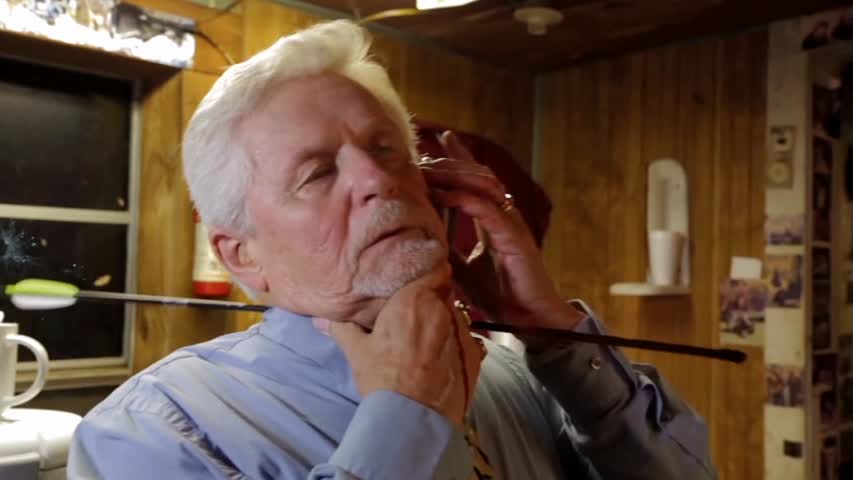
The MVDVisual DVD dons a 1.78:1 widescreen transfer that looks decent except for a bit of posterizing after the opening credits in the darker scenes. The Dolby Digital 2.0 mix does well channeling and prioritizing the dialogue, but some production issues weigh heavy on an uneven mic placements causing slight interference from scene to scene. For disc extras, there is solely the movie’s trailer. Overall, “Camp Massacre” doesn’t deserve to be completely passed over, but I wouldn’t expect instantaneous cult status or life changing acting nor an outer-body experience in filmmaking. Instead, take “Camp Massacre” for what it’s worth; a bunch of fat guys at boot camp being stalked by a bucket head killer with Al Snow and lots of nudity. Where can you go wrong with all that?
The Mold Knows Evil. The Mold Knows! “Motivational Growth” review!

Ian Foliver is a pessimistic, depressed, and reclusive young man with a touch of agoraphobia. When his best friend, an old Commodore tube Television named Kent, bites the bullet with a busted boob-tube tube in his unkept apartment, Ian determines that life is no longer worth living because that television named Kent was his only friend, his only ray of daily sunshine and that life-worthy activity had just suddenly died. Feeling that life is no longer worth living, Ian gathers up household chemical products and decides to gas himself to death in his bathtub, but when trying to clog the bathroom air vent, he slips and falls landing on his head. When he wakes up, Ian is face-to-face with a growth of conversing mold. The Mold, as it refers to itself, wants to help Ian – clean up his apartment, shave and bathe, and attract the attention of his attractive next door neighbor who Ian stalks and ogles daily through his front door peephole. In return for this helpful motivation to live, The Mold demands that Ian follows The Mold’s precise instructions which might not be as helpful as Ian first thought.

The Don Thacker directed dark comedy is a surreal voyage into the internal life struggle of Ian Folivar, played beautifully by Adrian DiGiovanni, who directs his own downward situation making the audience part of Ian’s life. Ian is a character that is aware of his flaws but can’t accept his life and his analysis is that “life is shit” and is dangerous so shutting himself in his small apartment fairs way better than living the conventional life. “Motivational Growth” shares commonalities with prior cult favorites; one of those favorites is the Peter Hyams directed and John Ritter starring film “Stay Tuned” to where Ian becomes sucked into eccentric television programs he was viewing before Kent blew a fuse. Also, another cult favorite film, Don Coscarelli’s “John Dies at the End,” which shares that wacky fantastics of dark and ironic situations. All three of these dark comedy romps are in a small, rare genre group that dares to be different and do well at it.

The Mold is an unique, life-like creation of filth that can actually make you feel the fungi-filled griminess lying within between the nooks, crannies, and crevices of your body. A job well done by Thacker and his The Mold puppetry team led by special effects supervisor Steve Tolin of TolinFX. They really did an amazing job creating a practical effect living-being that works in sync with the iconic voice of Jeffrey Combs whose voice fits as The Mold’s persona – confident and inspirational with a hint of cynicism. The interactions between Ian and The Mold becomes symbiotic where Ian needs The Mold to rejuvenate his depressed life back to order and back to the land of the living while The Mold needs Ian to fulfill it’s inauspicious desires for Ian’s “well-being.” When Adrian DiGiovanni interacts with The Mold, he’s interacting with an actual character in the room and not a hokey-hapless effect. You have to hand it to DiGiovanni in forming a believable dialogue and relationship between himself and an inanimate object such as the lowest scum, excuse me – fungus, on Earth.

What I adore about “Motivational Growth’s” plot is the mysterious time period that it’s set in as many references point to the late 1980’s to the early 1990’s with the video game imagery, the television personalities, and the hairdos and clothing lines of characters in Kent’s hosted top shows Ian mindlessly views. Ian, himself, is stuck in time not knowing what a Plasma TV was which would fall right in line with the time frame above since Plasma’s didn’t start rolling around until the mid 90’s. I also like the peculiar characters Ian encounters even though his setting his solely set in his cramped apartment. Box the Ox, played by the intimidating Pete Giovagnoli, pinpoints his character perfectly as a seemingly overbearing, yet somewhat absent and simple minded, landlord who threatens Ian with off-the-wall metaphors, thus making him fun to watch and see how Ian attempts to interact with Box until Box cuts him off all the time even if Ian is provoked with a question by Box the Ox. Ken Brown as Plasmoday is by far my favorite. With a creepy face and creepy mannerisms, Plasmoday had too short of a role and I thought he would make a return to Ian’s abode to lick his TV again, but in the character’s short amount of screen time, Brown is able to up-play the oddity that embodies Plasmoday with such passion that it’s hard not to love the character.
“Motivational Growth” molds itself into greatness amongst cult movies. The nitty-gritty portions are grossly stimulating and will sure to have you jump in the shower for a quick rinse. Whether or not Ian is suffering from brain trauma, purgatory, or just to awake to a nightmare scenario, the story is left open for interpretation, giving the audience a chance to determine the ending for themselves which is always fun in my little black book. The MVD Blu-ray is spectacular technically. Super clear with no disturbances in the transfer. The Hi-resolution downplays the obvious practical effects on The Mold but that only brings more charm to the film. The sound is clear and the extras are plentiful. I’d suggest “Motivational Growth” to anyone – even to a neat freak with cleanliness issues.
 It's Bloggin Evil!