EVIL, Over a Decade in the Making! “Profane Exhibit” reviewed! (Unearthed Films / Blu-ray)

“The Profane Exhibit” is Finally Here! Come And Get It!

Forged, smelted, and baked from the fiery grounds of hell, 10 stories of bleak and utter horror crimson the soul with blood and pale it with terror.  Ten directors, ten stories, ten obscure unfathomable depictions tell of a draconian religious sister matron with a despotic rule over a child orphanage, a daughter held prisoner by her parents in her own home basement, a cult willing to sacrifice newborns for the sake of their demonic tribute, the Third Reich submitting to extreme measures to keep their ranks pure, a reenactment of a father and son’s unnatural skin-to-skin bonding, a nightclub’s underground bloodletting witchery, and more unnervingly bizarre ballads.  These tales of torment tatter the life force piece-by-piece until there’s nothing left to exhibit, nothing left of one’s humanity, nothing left of being human.  A cruel anthology awaits just beyond the play button, ready to shock, appeal, and maybe even stimulate the perverse, primal nature in us all.   

An anthology a decade in the making or, to be more specific, a decade plus one year in the making in the long awaited “The Profane Exhibit.”  The 10-short film anthology is the brainchild of Amanda Manuel that began principal production in 2013 and finally saw completion and release in 2024 after a slow slog of shoots, edits, and post-production this-and-thats to finally crossover the finish line.  Varying from micro shorts and to average length short films, the anthology employed 10 different in degree genre directors from all over the world to make the mark in what would become a manic syndrome of monsters, mayhem, and molestation.  Yes, we’re talking about some really gross things, some terrifying things, and some other abnormal, abstract, and abysmal things that could be happening right now in your nightmares, or under your nose.  Anthony DiBlasi (“Malum”), Yoshihiro Nishimura (“Tokyo Gore Police”), Uwe Boll (“Bloodrayne”), Marian Dora (“Cannibal”), Ryan Nicholson (“Gutterballs”), Ruggero Deodato (“Cannibal Holocaust”), Michael Todd Schneider (“August Underground’s Mordum”), Nacho Vigalondo (“Timecrimes”), Sergio Stivaletti (“The Wax Mask,”) and Jeremy Kasten (“Attic Expeditions”) helm shorts they’ve either written themselves or by contributing screenwriters Carol Baldacci Carli (“The Evil Inside”) and Paolo Zelati (“Twilight of the Dead,”).  Harbinger Pictures and Unearthed Films, who also premiered it’s at-home release, co-produced the anthology.

Much like the diversity of directors, the cast is also an assortment of aggregated talent that stretches the global gamut.  Popular and classic horror figures like Caroline Williams (“The Texas Chainsaw Massacre 2”) and Clint Howard (“Ice Scream Man”) play the normal couple next door conversating about politics, date night, and work while all the while they’ve locked their daughter away from the world and use her as daddy’s little sex slave in Uwe Boll’s “Basement,” depicting the normal and safe is actually abnormal and danger right in the middle of suburbia.  Others such as the underrated scream queens Monique Parent (“The Witches of Breastwick”) as a fully naked and willing “Goodwife” to her sadistic husband, Mel Heflin (“Queen Dracula Sucks Again”) donning a pig mask, naked by the way, in a rave club along with Tina Krause (“Bloodletting”), Elhi Shiina (“Audition”) and Maki Mizui (“Mutant Girl Squad”) finding happiness amongst death, and notable global genre actors Thomas Goersch (“Voyage to Agatis”) as the German father crippled by his son’s retardation, Dan Ellis (“Gutterballs”) as the hardworking husband who has everything but it all means nihilistically nothing, and Art Ettinger, the editor name and face of Ultra Violent Magazine doing his part with a bit patron part in the nightclub.  Mostly all listed have previously worked with their short film directors previously that denotes a sense of ease and expectation from their performances but that still makes their acts nonetheless shocking.  “The Profane Exhibit” also sees a few newer faces in the conglomerated cast with Christine Ahanotu, Tayler Robinson, Tara Cardinal, Mario Dominick, Witallj Kühne, Valentina Lainati, Josep Seguí Pujol, Dídac Alcaraz, and Stephanie Bertoni showing us what they can dish out disgustingly. 

Was the 11-year wait worth it?  Over the last months years, “The Profane Exhibit” received substantial hype when Unearthed Films announced its home video release, pelting social media with here it comes, get ready for it posts, tweets, and emails and for fans who’ve been following the decade long progress, director Amanda Manuel’s “The Profane Exhibit” does not disappoint as the content storyline harks back to the lump-in-your-throat, gulp-swallowing roots of general discomfort from an Unearthed Films release.  While it may not “Slaughter Vomit Dolls” level gross of upheaved bile and whatever was ingested moments before shooting, the filmmakers go deeper into the viscerally ignorant, ugly truths.  We’re not talking monsters or supernatural entities tearing Hell a new rectum, but “The Profane Exhibit” delineates the sordid nature of the human condition in an egregiously behavioral way that some of these ideas are not so farfetched.  A select few of the filmmakers incorporate surrealism into their shorts, such as with Yoshihiro Nishimura’s aberrant Mary Poppins, known as Hell Chef, replaces a spoon full of sugar with a bowl full of cooked human when turning a frown upside down of a young girl who just killed a man who she suspected tried to rape her.  The Geisha-garbed Hell Chef flies through the air holding up her Wagasa, Japanese umbrella, when her job is done.  Most others are grounded by realism with sadism being the primary culprit – “Basement,” “Goodwife,” and, to an extent, “Sins of the Father” and “Mors of Tabula.”  And then, there are shorts like the late, and great, Ruggaro Deodato’s “The Good Kid’s” that feels hackneyed and unimpressive coming up short amongst the others and makes one think if his name alone awarded the short a spot in Manuel’s lineup. 

In all, “The Profane Exhibit” delicately caters to the indelicate and is a visual instrument of visceral imagery curated for pure shock value. Unearthed Films’ Blu-ray release has finally arrived and is now in our bone-exposed and gory fingertips. The AVC encoded, 1080p high-definition, BD50 allows for dual-layer capacity for not only to squeeze in the 108-minutes’ worth of micro shorts, but allow for extended extras, deserving to fans who’ve waited years for this production to see the light of day.  Like any other anthology, a mishmash of styles but up against each other with the assemblage of different stroke directors and cinematographers but there seems to be no issues with compression, such as banding, blocking, aliasing, or any abundance of blurry noise, in the flexing widescreens aspect ratios of 2.35:1 and 1.78:1.  A good example of Unearthed Films’ codec processing is Deodato’s bridge scene; while I don’t care for the short all that much, the long shots of the bridge are nicely detailed in the nighttime, lit only be the bridge’s powered light poles, creating a downcast of warm yellow along a solid shadow-spotty bridge.  You can see and realize the stoned texture without even using your imagination on how it should look and that tell me there’s not a ton of lossy codec at work here.  An English, Spanish, Italian, and German mix of uncompress PCM 2.0 audio serves as the common output to be as collective and unified as possible.  No issues with hampered dialogue with a clear and focused track.  There dual channel quality is robust and vibrant, living up to Yoshihiro Nishimura’s surreal energy and a commanding Japanese tone while still finding voice prominence in other shorts, if dialogue exist.  Depth is fleeting without the use of a surround mix with an anthology that’s centered around the human condition rather than atmospherics, but I do believe Jeremy Kasten’s Amuse Bouche would have greatly benefited from the distinct gnashing, squirting, and smacking sound elements of a pig being processed to consumption in his wraparound.  English and Spanish subtitles are optionally available. Years of bonus content has been produced and collected for this special release which includes an audio commentary Director Michael Todd Schneider, Producer Amanda Manuel and Ultra Violent Magazine’s Art Ettinger, a world premiere interview with creator Amanda Manuel and short director Michael Todd Schneider at the Buffalo Dreams Fantastic Film Festival, a world premiere Q&A, a 15-minute mini documentary Ten Years Later with “Mors in Tabula” director Marian Dora, an extended short entitled “Awaken Manna” with introduction and discourse, PopHorror’s Tiffany Blem Zoom interviews select directors with Michael Todd Schneider, Uwe Boll, Jeremy Kasten, and showrunner Amanda Manuel, image gallery, and trailer. The 2024 release has a runtime of 110 minutes, is not rated, and is region free.

Last Rites: Worth it. That’s the bottom line for this long-awaited film imbuing with bottom-feeders. Unearthed Films returns to roots with rancidity and fans will find their bloodlust satisfied.
“The Profane Exhibit” is Finally Here! Come And Get It!

Crooked EVIL’s Fixation for Chocolate and a Childlike Girl Will be its Sole Destruction. “The Dead Mother” reviewed! (Radiance Films / Blu-ray)

“The Dead Mother” Lives on a 2-Disc, LE Blu-ray/CD Set from Radiance Films!

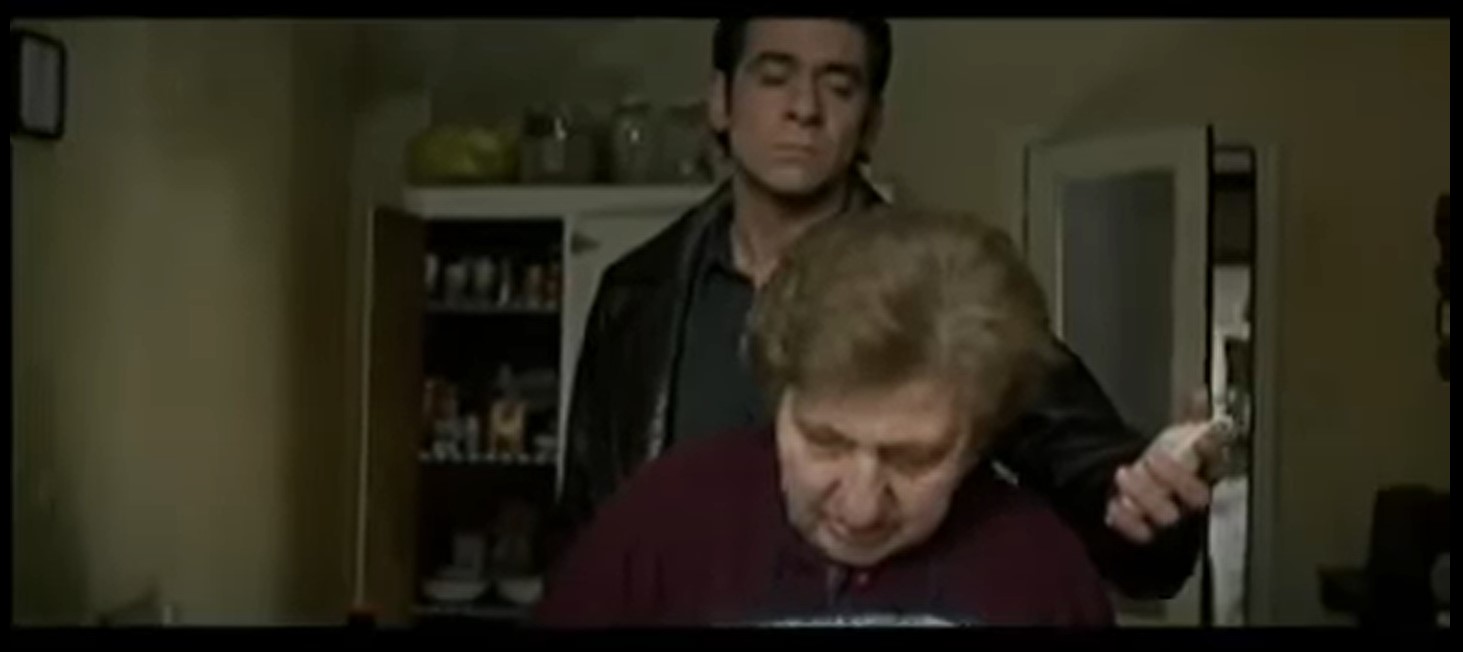
A botched burglary of an art restorer’s home leaves the art conservationist dead and her daughter wounded by a shotgun blast at the hands of apathetic criminal Ismael Lopez.  Years later, the daughter, Leire, has grown into being a young and beautiful simpleton at a mentally disabled clinic where the mute girl often recesses to a caretaker’s city home off clinic grounds.  By coincidence, the lifelong crook Ismael catches sight of her on the street and becomes obsessed with her witness of his past transgressions.  Conferring with his love-hate girlfriend and felonious partner Maite, the two decide to kidnap her while she’s off clinic campus and put her up for ransom after Ismael couldn’t bring himself to initially kill her but an increasing preoccupation for the chocolate-fond and childlike Leire within a stoic Ismael places an insidious jealously and enigmatic strain between him and Maite that tests that already turmoiled codependency of affection and survival.

Emotionally recrudescent with multiple intrinsic layers of tough guilt, incontrollable desire, and maybe even a pinch of forbearing responsibility that can be labeled cossetting at times, “The Dead Mother” is a beautiful film with unsettling undertones from Spanish filmmaker Juanma Bajo Ulloa.  The “Baby” director cowrite the “The Dead Mother” alongside younger brother Eduardo Bajo Ulloa, their second collaboration after hit success with the duo’s crime thriller “Butterfly Wings” two years prior in 1991.  The Spanish film is shot primarily in Vitoria, Spain with the backdrop of a near classic medieval architecture of urban city with old wooden interiors, high ceilers, and gothic qualities, providing a relative old world air to a tale of petty ideals and madness that disintegrates by the mere site of pure, ingenuous goodness. Under the private and state run production companies Ministry of Culture and Gasteizko Zinema, “The Dead Mother,” or “La Madre Muerta,” is produced by Fernando Bauluz.

To obtain the intensity, the coldness, the unpredictable, the pitch-black humor, and the soft touch, Juanma Bajo Ulloa doesn’t hire a vocational dramatic.  Instead, the filmmaker chances actor just getting his feet wet the Spanish cinema with Karra Elejalde whose assortment of comedy and drama in his first years seasons him for the role of the reprobate Ismael Lopez, a coldhearted killer with a short fuse for anyone who defies or belittles him and, on the opposite side, can be pensive about his past and next steps in a haphazard way. Opposite Ismael is a devout partner/lover, equal in ruthless potential, yet happy, in her own way, to play house wife in their ramshackle, fly-by-night home.  Played by the Portuguese-born, Belgium-raised singer Lio, her stage name in lieu of Vanda Maria Ribeiro Furtado Tavares de Vasconcelos, the pop star, who still to this day floats between acting and singing, rivals Elejalde’s dark-and-light intensity within her own character’s amorous feelings for the petty crook and murder and would do anything to keep him, even if that means destroying what he adores.  And what does Ismael adore?  Ismael’s new fascination is with Leire, the once little girl who attempted to murder now all grown up, developmentally disabled, and beautiful.  While I can’t fault in any of “The Dead Mother’s” cast performances, I could not imagine Leire being portrayed by anyone other than Ana Álvarez (“Geisha”).  Exuding innocence in her eyes amongst a full-body vacuity, Lio might be the professional singer but it’s Álvarez who hits every note of amentia that constantly has us questioning how much of her facility is there, conscious of the bizarre love-triangle or the homicidal-involving abduction.  In the same breadth, a muted Álvarez talks with her eyes, her expressions, and her body language that subtly fidgets or does other under-the-radar subnormal behaviors to convey an unequivocal virtue starkly in contrast amongst her callous captors who enjoy playing house or even try to make her smile or laugh with jokes and play.  Eventually, the dynamic dissolves, like many love triangles do, between an advantageous perversion and deadly ultimatums that will result unfavorably for most.  “The Dead Mother” rounds out the cast with Silvia Marsó, Elena Irureta, Ramón Barea, and Gregoria Mangas.

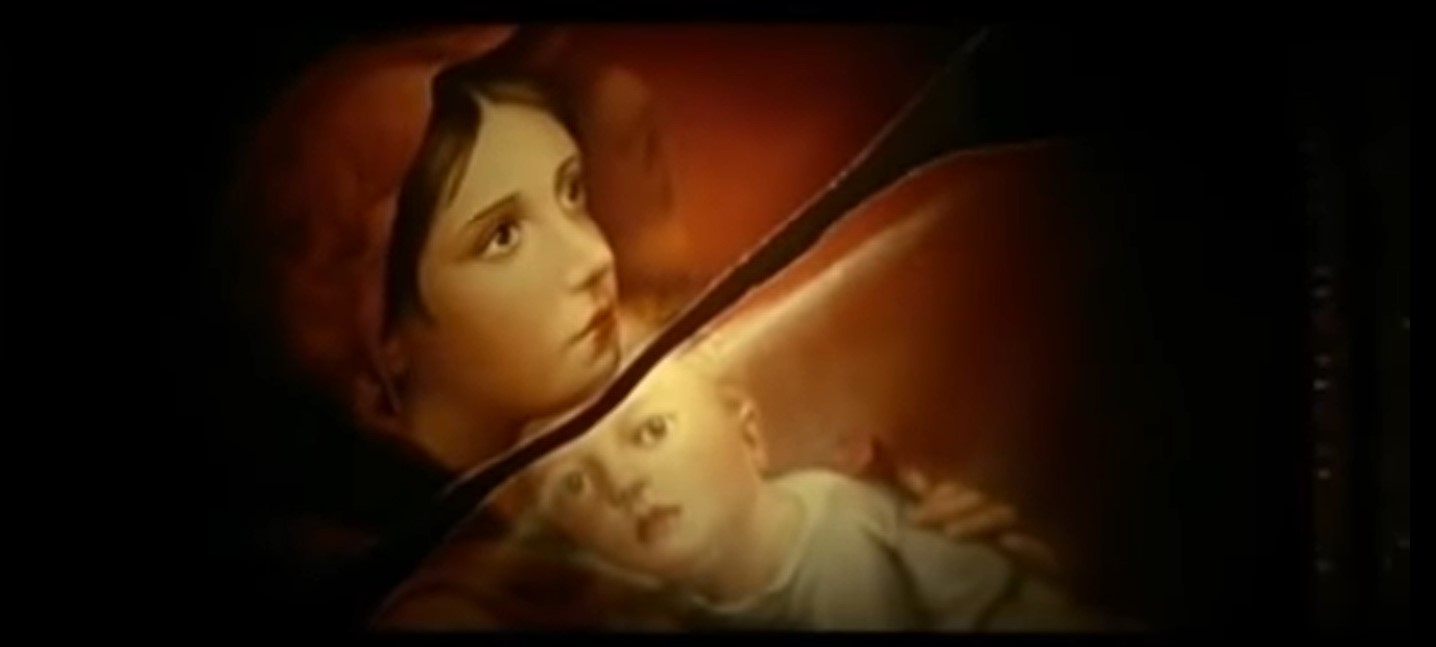
Ismael’s fixation toward Leire is so tremendously opaque without much exertion it’s difficult to understand the criminal’s ultimate motives, leaving audiences with a shrouded aftertaste of open interpretation.  Perhaps guilty from killing his mother all those years ago and nearly killing her, a wash of responsibility for her now placid and childish existence courses through him, driving him to do the bare necessity in taking care of her.  Another facet to Ismael’s curious interest is Leire’s inherent beauty despite her absent situational awareness.  His attempts to make the young woman’s empty expression become joyous with a smile fails, as if that blank-faced barrier keeps him from moving forward with something akin to being romantically involved.  In a couple of brief, uncomfortable viewing stints, Ismael gropes with the second time being passionately fondled by Maite in attempt to win over affection in what Maite believes is a duel between Leire for his attention.  Leire can be interpreted as a burden that has passed from the mother, hence the title, to Ismael, an assuming responsibility pseudo-father figure.  When Ismael kills Leire’s mother during the bungled burglary, a hint of a smile extends upon her face before the blood drips down her eyes in a fantastic POV shot by cinematographer Javier Aguirresarobe.  Supporting this theory is the Renaissance painting of mother and child with a tear in the canvas between them, a painting that Ismael lingers over for a few seconds while rummaging through the art restorer’s home.  The ambiguous nature of “The Dead Mother” only succeeds because of the confident performances and Juanma Bajo Ulloa’s august eye for the impeccable shots he wants and achieves. 

“The Dead Mother” arrives onto a limited-edition Blu-ray, to the tune of 3000 copies, from Radiance Films U.S. line.  The new 4K scanned transfer, restored from the 35mm negative and stored on an AVC encoded, high-definition 1080p, BD50, is presented in a widescreen 2.35:1 Cinemascope aspect ratio.  Juanma Bajo Ulloa oversaw the pristine cleaning of film strip defects and the new, frame-by-frame color grading at the Cherry Towers lab in Madrid, Spain.  The excellent work by the restoration company and Ulloa’s supervision of the process resulted in a naturally clean edged and detailed saturated transfer to rejuvenate the image with a fresh look.  The overcasting shadows and slate aesthetics with brilliantly hued low-key lighting suggest an immense lugubrious tone throughout, accentuated by the antediluvian structures. The Spanish language uncompressed 2.0 stereo audio absorbs what’s absent, which isn’t much, with an uninhibited, original fidelity of the dialogue, surrounding milieu, and the bordering whimsical string soundtrack by Bingen Mendizábal. There are no hints of hissing, cracking, popping, or fragmented damage of the audio track that persists on being punchy with every Ismael scuffle down to the very rustling of the chocolate wrapper in Leire’s chocolate-stained hands. While range is plentiful and natural, depth is not as utilized unless absolutely necessary, such as with the oncoming horns of the diesel trains in the trainyard or Ismael whistling between the pews of a decrepit church shot from the chorus balcony. English subtitles are available and optional. Special features on this limited-edition set include a Spanish audio commentary by the director with burned in English subtitles, The Story of the Dead Mother an archive behind-the-scenes featurette of retrospective interviews from 2008 and some raw footage of takes that’s, again, in the Spanish language with English subtitles, Bajo Ulloa’s short film “Victor’s Kingdom” aka “El Reino de Victor” from 1989 and now restored in a 4K scan, the film’s trailer, and photo gallery. Physical attributes impress within the clear, slightly thicker amary Blu-ray case that’s been conventional distribution use with Radiance Films in its near retro, austere facade. Sheathing a reversible cover of the original media artwork inside, the outside cover continues to remind me of its Arthur Fleck appeal with a doleful Ismael Lopez in his very best clown make up. Both discs, the Blu-ray and the CD soundtrack, are overlapped and locked in place pressed their respective black and creme coloring scheme. On the insert side contains a 35-page color booklet filled to the brim with captured film images, promotional images, and cast-and-crew posed pictures along with the CD track listing, cast and crew breakdown, and expressionism written pieces and essays by Eduardo Bajo Ulloa, Juanma Bajo Ulloa, Nacho Vigalondo, and Xavier Aldana Reyes. The unrated feature has a runtime of 111 minutes and his region free for all you worldly, cultured lovers of cinema out there. The mother might be dead but Juanma Bajo Ulloa’s converging of cynical odd behavior with the breakdown of status quo by a wicked curveball makes for a darkly cherub of Spanish filmmaking worth coddling in Radiance’s exceptional release.

“The Dead Mother” Lives on a 2-Disc, LE Blu-ray/CD Set from Radiance Films!

A..B..C..D..Evil! The ABCs of Death review!

abcsofdeathAbout damn time a way of learning your ABCs by the teaches of death! The ABCs of Death brings together 26 international directors to direct, at their own artistic freedom, their each short film segment. Each director was given a letter and were told to choose a word to title their work with and create a story around that word. The individual segments are not your typical horror thrillers about death and what I mean by that is that you don’t have a vampire segment, a slasher segment, etc. Death can come in any way, shape, or form and is certainly explored every single way in this fatal anthology.

I’d like to start off with my favorite segment which is entitled “D is for Dogfight” directed by Marcel Sarmiento, who you might remember from his direction work on Deadgirl and it’s been a little bit since that project! “D is for Dogfight” simply pits a man versus a vicious dog in an underground “fight club” style face-off. The short film is shot nearly without dialogue and the twist ending will leave you more with a sinister grin rather than a shock on your face. The man versus dog fight is excellent when done in slow motion with every dog punch and every bite to the arm or leg just as real as you would see on any animal attack video on RealTV.

Those Japanese directors again....

Those Japanese directors again….


The worst videos have to come from the Japanese, especially the one entitled “F is for Farts” directed by Noboru Iguchi. Iguchi did Machine Girl which is ultra-violet and just brutally stupid in a good way, but then Iguchi followed up later on with Zombie Ass: Toilet of the Dead and, well, yeah. By The ABCs of Death title alone, you can tell he hasn’t expanded his horizon’s much further. The whole episode, which lasts no more than four or five minutes, is about stinky, women farts. The comedy element I get, but the death part I do not and nor will I ever. Maybe I’m just not Japanese educated enough to learn the history behind Japan’s wackiness.
CLAYMATION!!!!

CLAYMATION!!!!

There are other really cool segments (Timo’s Tjahjanto’s “L is for Libido”) and other silly toilet humor death segments (Anders Morgenthaler’s “K is for Klutz”). This anthology is unique because you get a taste of everything, of every culture, of every opinion with no restraint and with no influence. Creativity is boundless and that is what is more outstanding here than most of the segments and you won’t get bored which is great! I can’t wait for The ABCs of Death 2 and the anticipation is killing me – wait – that should be in the sequel – “A is for Anticipation.”

The ABCs of Death is distributed by Magnolia Home Entertainment.