Milan Has All the Best Short Film EVIL! “Drag Me To Fest” reviewed! (Rustblade / DVD)

Hurry! Grab the Limited Edition Copy of “Drag Me to Fest” Before Its Gone!

An outpatient nurse is requested by an old woman leaving by her lonesome.  Always forgetting and troubling eccentric, the humble nurse finds he’s in way over his head with a clearly unstable, possibly delusion woman, until the truth of her hidden secret unveils a web of horror.  A young couple looking to help a lonely farmer find themselves erecting a sheep fence as well as maintaining the upkeep of a strange rock formation known as a Tursemorkel that emits ooze out of black orifices and soon find the psychological and physiological energy from the Tursemorkel is more than they can withstand.  An elderly couple, tucked away inside their roadside camper trailer, whips up a finger-licking meaty stew made from all natural, locally sourced ingredients as they watch the nightly news’ top story of a missing person.  A man answers the doorbell and finds a package on his step, scratching and crawling out is a festering corpse eager to play with him.  A priest with an obsessive bug collection has him turnaround when a recently caught rare beetle toys with his mind.  Dafne, a young woman lost in another state of mind, is in the presence and in the arms of her own, personal demon. 

These bloodcurdling tales are the latest batch of horror shorts from the annual Milan, Italy hosted Drag Me to Fest.  The festival brings together Italy and international filmmakers to submit their unique brand of terror.  The 2024 lineup were submitted to the Milan collection in 2023, hit the festival the following year, and has now been compiled onto a home video release for North American audiences to enjoy and cower in teeth chattering fear under its namesake title, “Drag Me to Fest,” from Italian distributor Rustblade Records in association with MVD Visual, a subsidiary of MVD Entertainment Group.  Norway’s “Vevkjerring,” or “The Weaving” by Øyvind Willumsen and “Tistlebu” by Matthew Valentine kick off the anthology followed by Italian filmmaker’s Riccardo Suriano’s “Long Pig”, Julie Gun’s “Dafne is Gone,” and Jacopo Vismara’s “Il Coleottero” and finally rounding out with Japanese director Nori Uchida’s “For What the Doorbell Tolls,” all of which are self-produced.

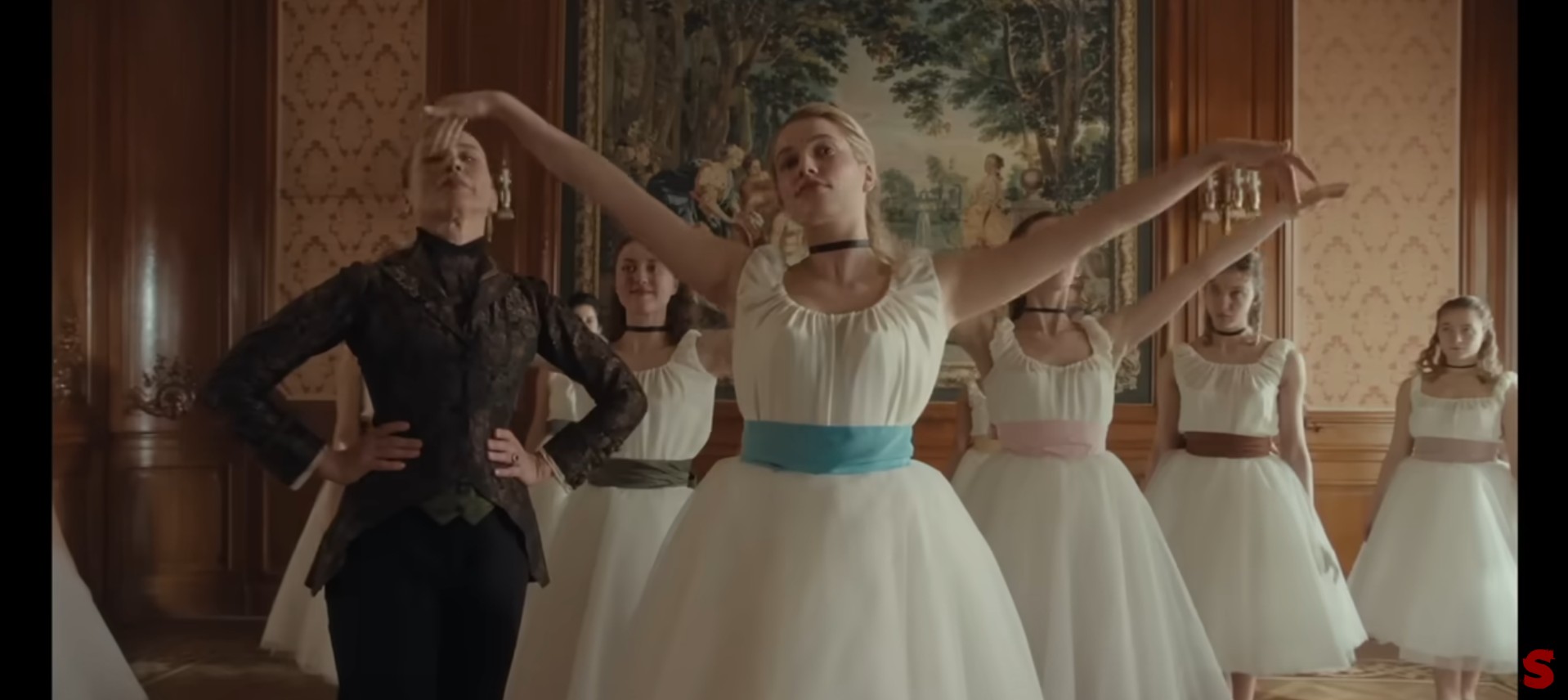
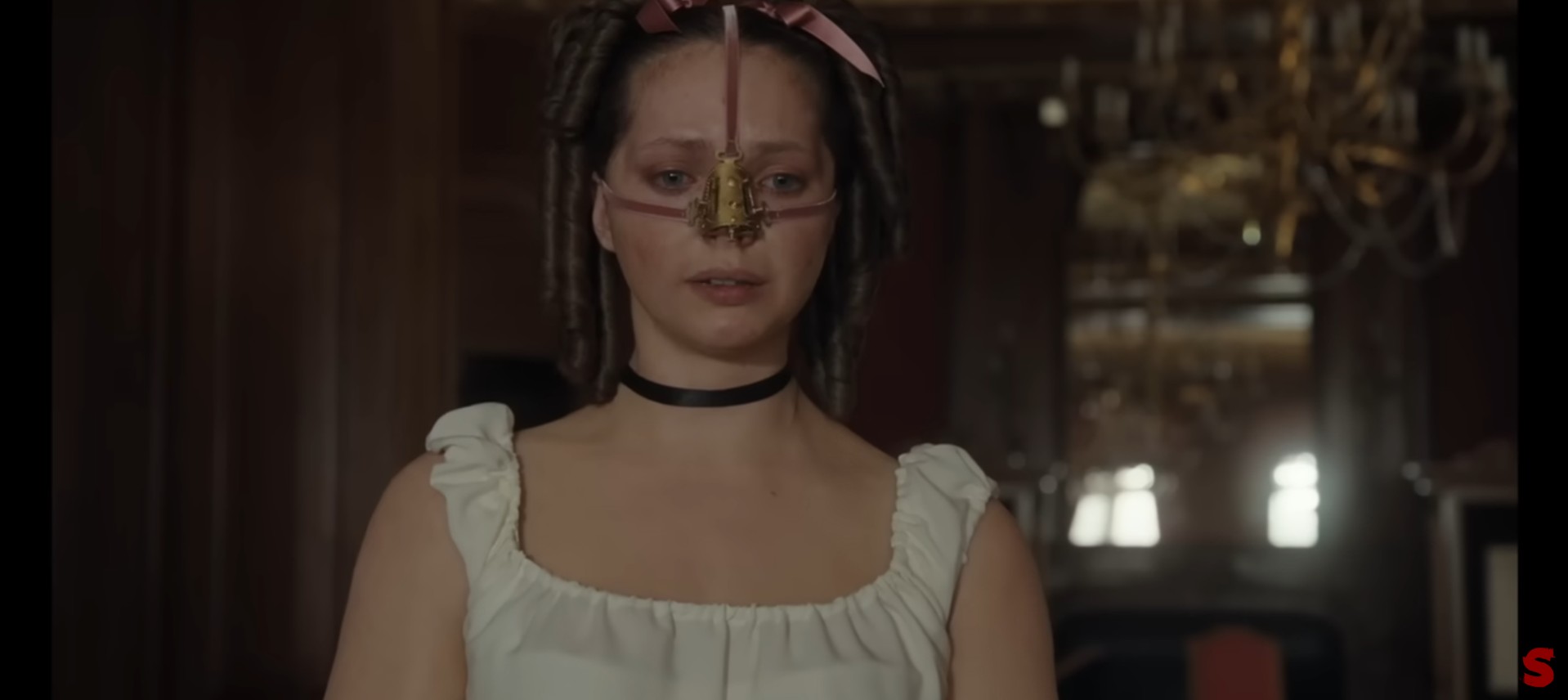
Three countries, six distinct films, and all packed into the unusual side of ambiguously horrifying elements contained inside six short films.  Each character is curated to fit inside the narrative design, no matter how outrageous or avant grade the message is.  Willumsen’s “The Weaver” is a more straight forward, common structured horror of building up tension in an already uncomfortable situation of a friendly, living assisted male nurse Henrik (Fredrik Hovdegård) knocking on the doorstep of a haggard and kooky old croon named Gudrun, played devilishly and disgustingly by Isa Belle.  The next four episodes become a bit vaguer in their intentions of madness, purgatory, survival, and obsession that intends to either harm or transfigure into something beyond the dimensional standard.  “Tistlebu” aims to transfigure as a young city couple (Sascha Slengesol Balgobin and Sjur Vatne Brean) look to connect with nature and their curiosity, coupled by intrusive misuse and sexuality, toward an earthy pillar of energy inside a widow’s (Oda Schjoll) barn enraptures them into something more primordial, literally connecting them to an omnipresent natural world that’s much bigger than their insignificant need.  Uchida provides his own one-of-a-kind performance based immensely off Sam Raimi’s “Evil Dead” by playing not only the hero but also the decaying plaything that arrives at the hero’s doorstep in one’s mirrored rotting of loneliness.  “Il Coleottero’s” Don Antonio (Mimmo Chianese) has a crisis of faith that become sidetracked by his diligent hobby of entomology when his prized find, a rare beetle, suddenly disappears from his collection.  Chianese finds the balance between being a disenchanted priest and an anxious man hunting for the beetle that got away and that will eventually destroy him.  Julie Gun’s “Dafne is Gone” is more operatically finessed with interpretive dance between Dafne (Giulia Gonella) and a demon (Jason Marek Isleib) that’s completely absent of dialogue, stagecraft visualized, and characteristically naked to showcase Dafne’s descent into the Demon’s spellbinding movements.

The collected and presented works are not the highest dollar productions but do encase a prosthetic practicality as seen in Willumsen’s “The Weaver” with a shedding of an exterior layer into a more grotesque freak of nature while Uchida takes the tribute route using filleted flesh and milky contacts, along with LFE tones and grading, modulated vocals, to accomplish his own version of “Evil Dead” without the presence of Ashley Williams.  The others are not as cut and dry with their infinite interpretational insights that likely will speak more on a personal level than a glossy buttered popcorn one that requires little effort to absorb.  “Tistlebu” and “Dafne is Gone” entrench themselves in their respective unknown and modern art by providing very little in the one thing they both have in common, a shared sense of unsettlement.  There’s also an undertone of sexualism as if it equates to the very beast that entrances, which in these shorts is the Tursemorkel, which is a large surface growth that emits an allurement of safety and gratification, and, in comparison, to the demon, perhaps her own visceral demon, that frolics to breach Dafne’s temptation, drawing her closer to his own colorfully neon netherworld in a production of warmly dark euphemism.  “Il Coleottero” is perhaps the best understated undercurrent between the skepticism that plagues man and his faith.  Shot mostly naturally, tension is built on Father Antonio continuous deviations from his religious duties, distracted in his homilies and divine surroundings, by the mere fact of a lost beetle, a beetle, similar to the appearance of a Stag Beetle, that toys with him.  One could assume the beetle represents a test from God to challenge the priest’s diversification balancing his faith between realism against spirituality, to quote biologist J.B.S. Haldane, and I paraphrase, if the creator had made life, it must have been inordinate fondness for beetles because of their profound species diversity.

“Drag Me to Fest” has now hit DVD home video for the first time in its 3rd annual run with a limited edition to 500 copies courtesy of Rustblade Records, routed through the North American distribution channels of MVD Entertainment Group under their MVDVisual label.  The region free release, presented in a widescreen 1.78:1 aspect ratio, is encoded onto a MPEG2, upscaled 1080p, DVD5 with palatable average of image quality in its varying degrees of filming equipment, lighting, and technical know-how to get the intended look without suffering cinematography faux pas.  Compression wise can be a different story but, generally, “Drag Me to Fest” has an adequate presentation albeit a less-than-desirable color saturation, especially Gun’s “Dafne is Gone” that implements warm neon primary coloring in a high contrast, hard light emulsion.  Skin and pattern textures vary from short-to-short, but the delineation is there to not blend depth nor create solid, smoothed out surfaces.  Valentine’s “Tislebu” relies heavily on the rolling hills and greenery farmscape to enact its character qualities for an Earthy or terrestrial mystery important to the sentient and engrossing formation.  The Italian, Japanese, and Norwegian language Dolby Digital 2.0 Stereo offers a passable mix that doesn’t elevate the atmospherics or construct tension to the max but neither does it flounder or lay waste to the support of the shorts.  There’s not a profound amount of leveled depth or creative sound design to fabricate space as much of the dialogue and environment resides in the foreground, and the dialogue does render over clean and clearly with forced errorfree English subtitles, but the focus is primarily on moving the story in a matter of minutes for some of the shorts, leaving narrative devices, such as characters and the effects, to drive the story and its tension.  The DVD is a barebones released that does not come with any encoded extra content, but the slim, trifold jewel case does depict a grouping of cherry-picked ideas from the shorts in a green bath illustration from graphic artist Gonz and has individual taglines and color stills for each short.  The 92-minute anthology is unrated. 

Last Rites: Abroad anthology with a goal to highlight and amplify short filmmaker voices, “Drag Me to Fest” finishes up from the main screen and extends to home video for the first time! Rustblade and MVDVisual illuminate the cinema obscure for the general public and we’re all the richer for it!

Hurry! Grab the Limited Edition Copy of “Drag Me to Fest” Before Its Gone!

Norwegian EVIL Has Women Issues! “The Thrill of a Kill” reviewed! (Wild Eye Releasing / DVD)

Enjoy the “Kill” on DVD now Available on Amazon.com

Out of work Kimsy and her irritated mother butt heads over Kimsy’s lack of effort in trying to find a job and help out with responsibilities around the house.  After a particularly nasty argument, Kimsy storms out to walk off her frustration in the quiet surrounding woods.  Instead of lowering her blood pressure, Kimsy’s blood runs scarred and runs down her head as she’s knocked out and picked up by a playful serial killer with an irreparable hate for women and takes gratification in degrading them by any means possible.  Sadistically bred by unconditional motherly abuse, the killer treats each of his prized possessions like dogs to submit to his every beckon and call.  Kimsy’s mother and sister, Camilla, grow concern for Kimsy who hasn’t returned home and set off to find her.  When they realize she’s been abducted, they’re able to track her to a remote, vacant cabin used as a kill house and as they set foot inside the cabin to save Kimsy, a killer lies and waits to strike. 

Lars-Erik Lie’s Norwegian torture porn, “The Thrill of a Kill,” resonates with the old and true proverb, what comes around, goes around.  Filmed in and around Norway’s largest ski destination and resort, the Scandinavian mountain town of Trysil becomes the backwoods abattoir for the director to set his exploitation workshop for the bleak Norse horror.  “The Thrill of a Kill” is the first feature length fictional film from the Norway-Born Lie who has digs into the indie underground and gory storytelling, self-funded by his own banner, Violence Productions, and is coproduced by Morten K. Vebjørnsen and Arve Herman Tangen, Morten Storjordet, and Linda Ramona Nattali Eliassen serve as executive producers.

Dichotomizing “The Thrill of a Kill” into two stories set during two different time periods, Lars-Erik Lie’s focal point is not the hapless victims caught in a deadly spider’s web of perversities.  Instead, Lie’s story formulates the theory on how the sociopathic killer was ill-nurtured into a monster with an interweaving plot set in 1968 of a young boy (Carl Arild Heffermehl) neglected and abused, verbally and physically, by an alcoholic and sexually promiscuous about town mother (Sonja Bredesen) who would bring home another town drunk to bed. Missing his (deceased?) father and tired of being bullied by his own mother, the boy mental state snaps like a twig under immense emotional, family-oriented pressure and descends into a murderous madness. Years later and all grown up, the maniac mountain man abducts young women as a direct result of the hate toward his mother and her mistreatments. Arve Herman Tangen becomes the goateed face of the grown man gone haywire. Tangen develops his character with purposeful intent and with a nonaggressive tone to persuade his bound quarry to remain subdued. The role is nothing short of typical that we’ve seen in other films of its genus where a screwed-up child-turned-adult runs a deviancy amok sweatshop of imprisoned flesh and torture devices and Tangen really adds nothing meaningful to derangement. In her debut and only credited role, Kirsten Jakobsen, former Model Mayhem model from Oslo, succumbs to being the unlucky alternative girl, Kimsy, that runs into the big, overwhelming man while strolling through the forest. One would think Kimsy would have suffered brain damage after being struck and knocked unconscious not once, not twice, but three times by the killer who undresses her after each time with the third and final blow putting the final touches on his toying with the girl and bringing her back for a visit to his hen house of brutalized women. After the first blow or two, Jakobsen doesn’t show that much concern for Kimsy’s attentive wellness or concern as Kimsy continues to just wander as if nothing major has happened. Camilla Vestbø Losvik is a much more reliable and realistic rendition of the situation as Kimsy Sister, Camilla. As another alternative and attractive woman, Camilla shares a strong kinship with Kimsy despite their mother’s disciplinary differences toward them, to which eventually their mother (Toril Skansen) comes around as the patron saint of motherly worriment that’s likely a contrasting parallel to the killer’s unaffectionate mother. With an ugly-contented subgenre, “The Thrill of a Kill” has various compromising positions for its cast with rape and genital mutilation that there’s some shade of respect give to those who can mock play the unsettling moments we all are morbidly curious to see. The film rounds out with a lot of half-naked women strung up in bondage or chained to the wall with Linda Ramona Nattali Eliassen, Veronica Karlsmoen, Veronica Karlsmoen, Madicken Kulsrud, and Ann Kristin Lind with Raymond Bless, Niclas Falkman, and Jarl Kjetil Tøraasen as drunk, male suitors.

“The Thrill of a Kill” recreates the simulacrum of SOV horror as Lars-Erik Lie pulls out his handheld video to follow Kimsy’s journey through the jollies of a madman and the mother and sister’s rout out for their lost Kimsy. The beginning starts off with a zombie-laden dream sequences that places Kimsy in a field with a killer and his mutilated corpses that reanimate in a bit of foreshadowing of what’s in store for the spikey haired damsel. By dismissing her vividly horrifying dream of diminutive meaning, just like she does with everything else, Kimsy falls easily into the killer’s hands signifying one of the films’ themes to never take things for granted, especially those things that are important to you as exampled later on in the story. That’s about as much purpose I could pull from out of Lie’s film that floats like a feather on surface level waters. There is one other tangential offshoot Lie attempts to explored but never fleshes out fully is the unbeknownst to Kimsy and Camilla’s perverted hermit of a father who lives on the outskirts of town. Their mother thought he would have insight on Kimsy’s whereabouts but instead he tries to forcibly coerce Kimsy into his shack for involuntary lovemaking and then the exposition ensues after Camilla barely escapes his axe-chopping in (sexual?) frustration clutches. That exposition literally goes into a tunnel leading to nowhere and doesn’t alter the actions of Camilla or her mother to do anything different, expunging any kind of knowledge to utilize for a complete character arc and just comes to show Lie’s written bit parts don’t define the narrative of learned opportunities or gained instinct but rather are just additional sleazy show. The same sleazy show can be said about the rape scenes as they won’t ascertain the intended reaction of squeamish uncomfortableness. Now, while rape is no laughing matter or accustomed at any degree, there’s a level of numbness to these scenes that carry a severe flat affect to doesn’t display the anguish, the terror, or the hurt these women are going through as the killer decides upon himself to violate them. There’s literally no fight in these undrugged, still vigorous, young women who have just been snatched and made into his plaything and while some seasoned BDSM partisans may get aroused, the emotional receptor in me wants to empathize what their strife agony, but maybe that’s why the film is titled “The Thrill of a Kill,” to be an emblem of fun, cheap thrills.

Coming in at number 70 on the spine, the Norway schlocker-shocker, “The Thrill of a Kill” lands appropriately onto the Wild Eye Releasing’s Raw & Extreme banner. The 2011 released film finds a vessel for its North American debut over a decade later after its initial release and presented in a 1.33:1 aspect ratio, with vertical letterboxing on 16×9 televisions, despite the back cover listing a widescreen format and being released in 4:3 is a bit surprising as other countries display in anamorphic widescreen and the lens used in the film is definitely anamorphic as you can tell with flank falloff that distorts the image and makes the picture appear rounded. Color grading is slightly washed and lives in a low contrast. Again, I have to wonder how aesthetically different the transfer is on the outer region product. Soft, SOV-equivalent details don’t necessarily kill the image quality, but you can obviously notice some pixelation in the frame inside the shack and in wider shots of the landscape amongst the low pixelated bitrate. The Norwegian Golby Digital Stereo 2.0 comes out clean, clear, and about as full-bodied as can be with a two-channel system. Some of the Foley is overemphasized production which comes off sillier than the deserving impact of a thrown punch or a meat hook going through the lower mandible. English subtitles are burned/forced into the picture but are synched well without errors though the grasp maybe lost a little in translation. Bonus content is only a trailer selection warehousing select Raw & Extreme titles, such as “Hotel Inferno,” “Acid Bath,” “Morbid,” “Bread and Circus,” “Absolute Zombies,” “Whore,” and “Sadistic Eroticism.” Continuing to achieve maximum controversial covers, Wild Eye Releasing doesn’t hold back for “The Thrill of a Kill” DVD with a crude, yet fitting DEVON illustrated cover art that is a platterful of unclasped splatter while in the inside is a still frame of one of the more tongue biting scenes. No cuts with this unrated release and the film clocks in at 85 minutes with a region free playback. A grating gore gorger with mother issues, “A Thrill for a Kill” redundantly recalls our attention back to the subservience of what makes horror horrifying and while what terrifies us is pushed aside, the free-for-all fiend-at-play treats the death-obsessed to a buffet of blood and defilement.

Enjoy the “Kill” on DVD now Available on Amazon.com

All Hail the EVIL Slumbering One! “Sacrifice” reviewed! (101 Films / Digital Screener)

Years after being quickly whisked away to America as a small child from his remote Norwegian island birthplace, Isaac returns nearly 30-years later with his new, pregnant wife, Emma, after the death of his mother leaves the empty family home in his inheritance.  With their heart set on fixing up and selling the house before the birth of their child, Isaac and Emma learn that marketing the seaside and scenic estate comes with a tragic past when the local sheriff discloses the brutal murder of Isaac’s father inside the home.  The dreadful information and the bizarre locals with their customary traditions doesn’t alarm Isaac who, instead, feels a strong connection and is drawn to staying whereas Emma, plagued by terrifying nightmares ever since stepping onto the island, is eager to sell and return to American as soon as possible, fleeing a community that worships an aquatic deity beneath the water’s surface.   

Based off dark fantasy and science fiction writer Paul Kane’s short story, “Men of the Cloth,” found in the author’s “The Colour of Madness” collective works, “Sacrifice” is an alienating folklore horror bound by the influence of a Lovecraftian core under the direction of a filmmaking due in Andy Collier and Toor Mian.  As their sophomore film as collaborating directors, following their 2017 psychological cop horror “Charismata,” Collier and Mian tackle Kane’s short story head-on by changing only a few details, such as location, family structure, and the title from formally known as Kane’s “The Colour of Madness” to “Sacrifice”, but keep rooted the foremost principles of “Men of the Cloth’s” cultish discomfort that’s greatly inspired with the otherworldly sensation of an amiss atmosphere akin to Robin Hardy’s “The Wicker Man.”  Filmed around the idyllic and mountain enclosed shore town of Bjørk, Norway and in the town of Volda, Norway, the 2020 film seeks to plop strangers into a strange land as a production of the London-based companies, Loose Canon Films and Hydra Films RKM, in association with Dread.

Over two years ago was the last time we reviewed a Barbara Crampton movie with “Death House,” that included a plethoric cast of her all-star genre brethren with Kane Hodder, Bill Moseley, Dee Wallace, and others, and, now, Crampton makes her glorious return to the Lovecraftian turf that nostalgically brings most of us horror fans back to the New York-born actress’s “From Beyond” and “Re-Animator” days.  “Sacrifice’s” Cthulhu spirit finds Crampton playing a small town Norwegian sheriff, Renate Lygard, in which Crampton, under the training of a dialect coach, surprises us with a fair Norway accent as she provides a quasi-warm hospitality set of manners upon island outliers in Isaac (Ludovic Hughes) and Emma (Sophie Stevens) Pinkman. Hughes and Stevens nudge their way into a solid man-and-wife, but their dynamic density becomes crispy at times and pale from their initial arrival soon after rustling with the natives. The lack of vitality doesn’t stem from the wedge being driven between from the lure of Isaac being called by the natural phenomena of the Northern Lights, the drunken friendly benevolence of Gunnar (Lucas Loughran) and Ledvor (Jack Kristiansen), and the full frontal skinny dipping of Renate’s beautiful daughter, Astrid, an eye-opening film introduction from Johanna Adde Dahl; instead, the Pinkman’s bond held together about as tight as using kindergarten grade craft glue that bled into the performances as well that came off stiff and unnatural. Aside from Hughes and Stevens hailing from the United Kingdom and Crampton from the U.S., the remaining cast was curtailed to Norway nationals, as such with Loughran and Kristiansen, rounding out the cast with Erik Lundan, Dag Soerlie, and Ingeborg Mork Håskjold.

“Sacrifice’s” cult mania lays on a thick coating of grass roots that really set the tone for an foreboding outcome.  An idyllic Norway fishing village propped between the eclipsing mountain range and marine inlet intrinsically obscures an already unspoken secret that’s only been rendered on the faces and actions of the residents.  At the center of village’s idiosyncrasies are the two hapless protagonists venturing into unknown territory with only an inherited house in their back pocket and a vague sense of youthful recollection; this sets up for an obvious antagonism theme of locals with a sense of xenophobic nationalism, especially against two Americans.  The initial friction opens the flood gates for cultural customaries to be weaponized against Isaac, who wants to strongly embrace his heritage, and Emma, who can’t seem to grasp the village’s peculiar beliefs and even goes as far as being naïve of and mocking the village’s traditions and deity.  The tension is compounded by the ominous presence of the labeled slumbering one, sleeping beneath the glossy surface of the inlet waves, but conjuring up tangible and intense nightmares that plague the every island inhabitant, a mystery Emma can’t explain, won’t entertain, and ignores exploring that turns Emma floundering more into Isaac’s sudden disinterest in her albeit soon-to-be-parents.  “Sacrifice’s” climatic, tell all scene harbors more secrets regarding Isaac and Emma’s purpose on the island that are to be interpreted by the audience, but don’t connect back to any string along clues leading up to a poignant and sharply-shocking ending.  Instead, “Sacrifice” acutely wraps up not only the story but also the characters like a paper wrapped fish at the fish market ready for sale without any huff about where, why, and how that particular bug-eyed fish became the gutted victim of man’s delicacy.

“Sacrifice” shores folklore horror swelled with Lovecraftian roots and is docking digitally today, March 15th, in the UK courtesy of 101 Films. The film has a runtime of 87 minutes and is presented in a widescreen 2.35:1 aspect ratio, shot on a Sony CineAlta Venice camera. Co-director Andy Collier tackles his first credit director of photography gig with interesting shots looking up through all different angles and vessels that hold water. Whether boiling eggs, taking a bath, or in small cove, Collier, and Mian, put eyes on the bottom surface, promoting all varieties of water within it a lurking presence and the imagery is done extremely well with depth and space to pull off the illusion. A fair amount of soft lighting, moments of bright primary color glow, and the specs of well-placed lighting to barely illuminate a scene is broodingly worthwhile. Tom Linden’s original score is fiercely compliment as a folklore staple, harsh-chord intensity that lingers well after the boiling blood levels drop to a mere tentacle dwelling simmer. There were no extra features or bonus scenes included with the digital screener. While the build up didn’t pay off at the bloody end, the two-tone terror of “Sacrifice” wrecks the nerves and frays warm pleasantries with wicked wallowing, slumbering, nearby in the shallows.

The Bends Can Be EVILLY Depressurizing. “Breaking Surface” reviewed! (Music Box Films / Digital Screener)

Two half-sisters, Ida, and Tuva, return home to spend time with their mother, preparing for a family dive in the frigid Norwegian waters near an isolated rock cliff.  When the mother withdraws because of her health, the sisters embark without her.  When a sudden rockslide traps Tuva, also the more experienced diver, between a rock and a hard place Ida must race against the clock to free her from being pinned to the bottom floor before viable air runs out, but with most of their gear under the rockslide rubble on the topside and only a few usable spare air tanks available, Ida, paying no heed to decompression sickness with her hasty reoccurring ascents to the surface, will do whatever it takes save her sister, even if that means being detrimental to her own life.

Scandinavian filmmaking has always been in this personally dissatisfying commercial stasis of public recognition oversight for years even though there are a number of projects, birthed from Sweden or Norway, that have the budget for success, compelling storytelling, and still fly shamefully under the radar and most audiences, speaking more for the U.S. based general admission moviegoers, don’t ever get the chance to experience without the bombardment of marketing or, perhaps more so, they intentionally skip over to titles with, who in large popcorn and soda glazed eyes, are well-known, recognizable thespian faces, or maybe a trailer they’ve seen during their morning daily talk shows and “Keeping Up With the Kardashians,” or for the worst reason of all, the subtitles are a big deterrent since Scandinavian films are in Scandinavian languages, but one of those films that depicts the immense Baltic beauty landscape but can also be edgy with touch of sensationalism is Joachim Hedén’s “Breaking Surface.” The director’s fourth feature length film in 2020 is woman versus nature, time versus the elements, when scuba diving hits direly rock bottom. Hedén wrote the film that’s presented by a Swedish and Norway co-production of companies, including Water Feature Films in association with Film i Väst, Film i Skåne, Umedia, Filmfond Nord, Sveriges Television, and Weggefilms. Julia Gebauer and Jonas Sörensson serve as producers.

At the core of the diving mishap are two sisters, Ida and Tuva. Half-sisters to be exact that are written with tremendous interfamily complexities because of their mother remarries Tuva’s father angle plus incorporating their own personal hang ups in adulthood with the genesis of their problem is stuck in the past. “Breaking Surface” is a woman domineered thriller, challenging the stereotyped patriarch activities of men and, to an extent, whatever role that is inhabited by a man is exhibited in not a good light. It’s reminiscent of the “47 Meters Down” films in more ways than one with scuba diving and an inclination for female principle characters dealing on hand with the cards dealt together to survive the elemental odds. Moa Gammel and Madeleine Martin play the respective leads of older sister Ida in the midst of divorce proceedings that comes complicated with two small children and has mother issues that she projects onto her younger half-sister, Tuva, who lives at the top of the food chain fearlessly and isn’t grounded by anyone, anything, or anywhere. Gammal and Martin instill into their characters a reaffirmations of their talents with Ida being a more recreational diver whereas Tuva lives and breaths underwater professionalism. This dynamic unfolds nicely when Tuva is trapped under a rockslide and her older sister has to be instructed, painfully detail-by-detail, what to do. At times, Ida is a character at a point of collapse because of how overly incompetent she can seem with no-brainer solutions; yet, this is where I believe Hedén to excel at scribing realism because no matter how frustrating can Ida’s actions be, any situation under that much pressure (pun intended) can discombobulate the mind, body, and senses. If my sister was trapped under a rock at the bottom of the sea floor, my id would explode and she would asphyxiate and drown before I could compute the situation. Yet, Ida comes around in her arc, completing more confidently and independently the challenges that face her despite their increase in difficult and severity with only minor eye-rolling cringes loitering in and between the second and third acts.

“Breaking Surface” is a modestly paced film with a slim runtime of 82 minutes that captures the entire trialing day odyssey of conquering nature, time, and death while decompressing fraught mental retentions of estranged sister and motherhood, parroting life circumstances, and a past event parallel that’s nearly paralyzing. As much as underwater thrillers excite as one of my personal favorite subgenres, there are downsides to “Breaking Surface” timing that felt limitless when Ida struggles to regain control from failure-after-failure of hopeless rescue endeavors of the most easiest of solution routes, but when the older sister resurfaces from below for a second time, a quick lap to a neighbors house didn’t quite jive with time and space, especially when the Sweden-residing Ida has to frantically read a map of a near alien Norwegian coastal topography. Miraculous, Ida is able to arrive at her destination, rustle about an absent homeowner’s isolated cabin for internet, phone, or an essential tool, and be back in half hour to scuba back down again toward her sister. I would imagine the series of event would have been on the better part of an hour, but what do I know about Norwegian landscapes? On the topic of knowing stuff, since I’m not a diving expert or aficionado, Hedén, in my eye, was able to sell explaining scuba diving jargon and actions with brief but natural expositions that forms innately with Ida’s recreational side of the activity. While not as tenderly macabre as “Let the Right One In” nor as wonderfully gory as the inane undead Nazi horror, “Dead Snow,” “Breaking Surface” is an oxygenated subaquatic air gasper tussling with submerged phrenic psychological and physical problems of two sisters trying desperately to save their frayed relationship.


As breathtaking as the Scandinavian artic north coastlines are, the icy waters of “Breaking Surface” will definitely take your breath away as an exhilarating underwater survive the clock time chaser. Arriving on VOD platforms on December 15 courtesy of Music Box Films under their Doppelganger Releasing banner, the film will be available on iTunes, Google Play, Amazon, Vudu, and YouTube presented in a widescreen, 2.35:1 aspect ratio, and in a Norwegian and Swedish language 5.1 surround sound with optional English subtitles. Anna Patarakina’s nominal two-tone cinematography induces a steely gray and blue cold environment of Scandinavian’s artic snow covered north. Patarakina captures the immense grandiose of Norway’s Lofoten’s mountains of serenity encircling their imminent, uncertain fate. Eric Börjeson joins the crew as the director of photography underwater and Börjeson, whose credits include “Let the Right One In (that unforgettable pool scene), keeps the shots tight from wandering beyond the cobalt blue, almost black, waters, fulfilling a nerve-splintering sense of disorientation. There were no bonus features included with this release nor were there any bonus scenes during or after the credits, but I did find Juliet Simms’ “100 Little Deaths” to be a great rock-n-roll outro singled to signify the multiple possibilities the two sisters could have met their maker. “Breaking Surface” flurries with a cliffhanging suspense in an extreme counterpart of blending family therapy with acute disaster that brings two incongruous sisters back into restored harmony.

Evil Roars as a Monster Tsunami! “The Wave” review!

waveposter
Local geologist Kristian, of the small lake side town of Geiranger, and his family pack for their start of a new life in the big city where Kristian has offered a new job. But when seemingly insignificant activity in the Åkerneset mountain that surrounds the nestled Geiranger displays on first alert’s monitors, Kristian fears that his beloved town will be washed away by the possibility of an 80ft tsunami created by a mountain landslide. Unable to leave town, Kristian stays one more night; a night in which a landslide occurs, creating a massive Tsunami heading straight for the heart of Geiranger and Kristian only has 10 minutes before impact to alert the town and escape with his family.
wave
Norwegian’s 2015 natural disaster-thriller “The Wave” aka “Bølgen” is a landslide victory for director Roar Uthaug. “The Wave” funnels disaster into a single locality where as Hollywood tends to doll up and glossy disasters films, Roland Emmerich’s “2012,” Steve Quate’s “Into the Storm,” Brad Petyon’s 2015 “San Andreas” starring Dwayne Johnson just to name a few, that hyper peril the catastrophes into a global event. The focus becomes too spread out and the parlous state is diluted amongst the characters if the catastrophe is affecting everyone in the world. To pinpoint an area or a region isolates the drama and the thrills resulting in more of an impact upon the characters. On a global scale, characters can escape with ease because the space is vast and non-constricting, but in Geiranger (which is also a real place with the same very real threat), a fortress of mountains loom over the town, higher elevation is safe haven, and the possibility of escape is not so easily achievable.
wave3
Academy Award winning The Revenant star Kristoffer Joner plays the heroic lead in Kristian who fights and claws his way through disaster and destruction. Joner isn’t bulky like Dwayne Johnson, but has a more down to earth appeal that’s more appreciated than Hollywood’s grander is better ideal. But like the “San Andreas” conquerer, Kristian is a family man trying to save his wife and two children. Joner’s Kristian reminisces a much older disaster film involving a small town with a Mount St. Helens explosion. “The Wave” story has Kristian with inklings of forthcoming disaster and his fears are put aside in the interest of tourism. The 1997 Roger Donaldson film “Dante’s Peak” compares very similar with Pierce Bronson’s Harry Dolton has the same concerns, but the town leadership ignores the facts and only has dollar signs on the mind. When disaster strikes, both Kristian and Harry stay behind to save whomever they can.
wave2
The cast rounds out with a enormously talented cast in “Dead Snow’s” Ane Dahl Torp, Jonas Hoff Oftebro, and Fridtjov Såheim. Their working dynamics are accomplished by their individual challenges due in part of the threatening tsunami wave and the second half of obstacles that comes post-event to where Kristian and his wife Idun must now stay alive to find each other through a girth of destruction from high elevation to sea level. The script is penned by John Kåre Raake and Harald Rosenløw-Eeg and I praise their storytelling in creating worthy characters and developing the plausible cataclysm on paper.
wave4
The special effects rival the big boisterous effects of Hollywood. The menacing tsunami means business on screen was created under the supervision of Pål Morten Hverven and splayed on the natural blue hue heavy and tone setting cinematography of John Christian Rosenlund. Usually, giant waves in Hollywood just can’t cut that CGI feel. Uthaug’s wave crests with such realism it’s frightening and to experience our characters at the moment of impact makes you never want to go in the water again – forget about giant man-eating sharks, its giant killer waves you have to worry about. Uthaug puts the viewer right in the path of an immense wave, capturing all the fear and intensity and the breathtaking aspects of simulating a dire situation.

Magnolia Entertainment releases the Norwegian disaster flick in Theaters and On Demand. Magnolia courtesy sent me a screener link so I am unable to comment on the video and audio quality. Also, there were no extras included in the screener as it’s solely a feature. “The Wave” washes over Hollywood’s big budgeted calamity films that’s been released over the past decade and will have you holding your breath from start to finish and long after the wave has subsided.