When Trying to be Good, EVIL Will Always Pull You Back In! “Streets of Darkness” reviewed! (SRS Cinema / DVD)

Just Look at this “Streets of Darkness” Cover!  It’s a Must Own!  

After avenging the death of his friend and sister, Danny completed his prison stint and was released back into his Miami neighborhood to restart his life.  Looking to stay clean of violence, Danny doesn’t want to connect himself to any crime organization but when a cruel Cuban drug lord assaults his mother due to his father’s past transgressions, Danny’s seek for solitude drives him into the embracing arms of the Italian mafia who also has a grudge against their rival drug trader.  One hit leads to another and Danny finds himself back in the criminal world rising quickly to become one of the mafia’s profitable enforcers.  Danny has everything he’s ever wanted – money, respect, and the woman of his dreams – but when a pre-affiliation sexual tussle with one of the crime boss’s young vixens come to light, a division between the family turns the tide on Danny’s uncertain future when a target is placed on his back.

If you’re looking for that Miami Vice feel of a movie with hot locations, hot bods, and hot criminal action, look no further with “Streets of Darkness” having been rightly resurrected from video obscurity, lost to Father Time since the mid-1990s.  The 1995 crime thriller comes from director James Ingrassia who hasn’t cinematically published a movie since his double billed features of 1988 – a surfing themed sex comedy entitled “Hot Splash” and an island survival slasher in “Kiss of the Serpent.”  “Streets of Darkness,” paying titular tribute to and cashing in on perhaps the popular stage fighting game “Streets of Rage,” is also a direct sequel to “Just a Chance” of 1992, a semi-biographical story of Danny’s descent into the depths of criminal syndicates told anecdotally while in his incarceration  Both stories are the pen presentation of Creative Productions’ Vincent LaRusso, the creative wordsmith, producer, and star of both films trying to capitalize on the market’s desire for toned bodies and gang dramas with treachery and murder. 

Vincent LaRusso isn’t just the leading man of his own film, he’s also a workout enthusiast that helped his own cause in creating a chiseled mafioso who’s smooth with women and even smoother laying down criminal keystones to the way he runs operations.  Yet, LaRusso’s character Danny can often talk-the-talk but can’t seemingly walk-the-walk with his own principles as he quickly turns against his own rules of operations by joining the mafia with dollar signs in his eyes after repeating himself, at least three times, noting how he doesn’t want to be attached to anyone or anything.  Repeating himself also becomes a running motif, or maybe a running joke, as much of LaRusso’s script recycles a ton of aforementioned material.  You can even make “Streets of Darkness” a drinking game on how many times Danny, or any character in general, says, “you understand me?”  If you do make it a drinking game, the possibility of being drunk half-hour in is very possible.  You’ve been forewarned.  Commingle the script spiraling with LaRusso’s one note performance and what churns out only scratches the surface of potential in what could have been a lucrative gem of indie filmmaking.   Instead, what’s achieved is a lifeless centric character in the midst of decent supporting players, such as Armand Cassis as the ruthless Cuban Hector, Jerry Babij as a cuckold crime boss, and Christine Jackobi as the cuckolding and scorned Diabolique.  Speaking in regard to the latter’s veneer that LaRusso aims for, “Streets of Darkness” offers that sexy, supermodel, Andy Sidaris-type of female principals, including a Hawaiian Tropic contestant.  Monique Lis and Jennifer Cole (a Miss Hawaiian Tropic), along with Christine Jackobi, fit that busty and beautiful bill that solidifies that beach body and vice viscera.  “Streets of Darkness” fill out with Joseph Cappello, Peter Gaines, Stanley Miller, Frank Palanza, Gennaro Russilo, Louisette Geiss, Lou Rebino, Angelo Maldonado, and Patrick Berry.

LaRusso’s “Just a Chance” was a made for CTN, the Christian Television Network, to deliver a religious message of strength of endurance and overcoming the cause-and-effect in turning toward a life of violence and crime.  For the sequel, LaRusso wanted to embark on a more entertaining product for the public with edgier content, hence the naked women and graphic violence which most of the Christian community won’t understand, shy away, and definitely wouldn’t fund a financial base.  With a budget doubling “Just a Chance,” LaRusso is able to obtain through private funding a higher production value with areal cigarette boat footage in and around Miami and its waters, decent lighting in a broad and focal sense, camera movement work, variety of locations though many look like hotel rooms, and achieving the overall Miami mise-en-scene cinematography.  For a 90’s indie production, “Streets of Darkness” reaches that particular look of tropical turmoil and drug scene, the perfect beachy bodies, and the complex story of one man’s reluctant return to the savage, dark streets but the picture doesn’t take the elements to the next level beyond other Miami-based gang/cartel movies like “Scarface” or “Cocaine Cowboys” where there’s a continuous blanket of thick aired intensity and explosivity of big shootouts.  “Streets of Darkness” is more expositional and story driven, likely due to budget reasons, to integrate gangster Danny’s plight into our own understanding of this character’s vow to do the right thing but ultimately destines him in the opposite direction.  The editing starts off funky with a clunky fast forward scene that comes around later to then slowly but eventually, level out to a chin high in too deep path of no return from life of crime.

Due to some shady dealings with a corrupt distributor, the Beta SP master was lost but Ron Bonk and SRS Cinema was able to obtain the VHS master tapes for an Apple Hi-Def ProRes digital remastering of “Streets of Darkness” onto DVD.  What results is a beautifully slick and clean appearance of Vincent LaRusso’s vision, especially for a standard definition 480p, sourced almost impeccably from one of the best possible VHS format options, the Beta SP.  Though virtually wear free with no signs of VHS degradation issues, details are generally and expectedly soft presented in the letterbox 1.33:1 full frame but not overwhelming glossy smooth to the point of splotchy or granularly patchy.  Remastered coloring, along with the innate lighting, sell “Streets of Darkness’s” semigloss South Beach brushstroke and achieving LaRusso’s production value desire tenfold.  Audio options only include an English Dolby Digital 2.0 stereo mix has been augmented with additional score and soundtrack by Tim Ritter (“Truth or Dare?,” “Killing Spree”) and Toshiyuki Hiraoka (“Clownado,” “Cannibal Claus”).  From the commentary track, a few of original soundtracks had expired copyrights and so additional music was needed to rescore the film but, honestly, the additional pieces delved too much into Tim Ritter’s gore-and-shock territory with heavy low-frequency tones that rattle the eardrums and don’t necessarily scream Miami’s synth-beat rock or Latin flair.  I would have been interested to hear the original music and compare to the newly supplemented release.  However, dialogue protrudes into the forefront with lesser force than normal but still clean, clear, and prominent other than the heavy duty, reverberating bass notes.  There’s slight static feedback throughout but doesn’t hinder the audio senses.  The Brutal special features include a second film, the Vincent LaRusso’s “Just A Chance” along with video commentaries and interviews with both films featuring video discourse between LaRusso, Tim Ritter, and filmmaker Larry Joe Treadway and Ritter and LaRusso only on the audio commentaries.  The bonus content ends with theatrical trailers of both films.  While not chockablock with physical fixings, the SRS release has one of the more amazing cover arts sourced from the original poster elements of a shirtless and ripped Vincent LaRusso in between two model women for the front cover.  Immediately eye-fetching and intriguing, the image is accentuated by SRS’s mock retro designed DVD casing with a round ACTION and BE KIND REWIND stickers and an image bordering encompassment to make the appearance of a VHS cover.  Disc pressed art is the same image but cropped to focus on the three individuals on the front cover.  The not rated film has a runtime of 102 minutes and is region free.  “Streets of Darkness” is a win-win for SRS Cinema and Vincent LaRusso in its newly remastered form that revives the Miami mania even if it’s only for one more heat and beach encore.

Just Look at this “Streets of Darkness” Cover!  It’s a Must Own!  

No EVIL Gets Left Behind! “P.O.W. The Escape” reviewed! (Ronin Flix / Blu-ray)

“P.O.W. The Escape” on Blu-ray at Amazon.com!

Colonel James Cooper’s moto is no one gets left behind.  The seasoned P.O.W. extraction officer volunteers for a politically spearheaded suicide mission to save Vietcong American captives before a cease fire treaty ends the war, effectively turning the P.O.W.’s into M.I.A. and possibly never heard from again.  As the U.S. Airborne Colonel expected, the mission of rescue results in a complete fiasco of resources and being empty handed of prisoners as the enemy suspected an imminent attack.  Cooper becomes a P.O.W. alongside the men who set to rescue but that doesn’t deter the determined officer to plan his escape, but before detailing out a route out, the camp’s warden Captain Vinh has alternative plans for his prized captive in all of North Vietnam.  Vietcong headquarters wants to retrieve the Colonel in two days for public execution but Capt. Ving seeks a better life outside his country and accumulates the K.I.A. and P.O.W.s valuables plus in addition to stealing gold bars form his country in order to relocate him and his family to the U.S. but on his terms with a perilous journey across enemy lines with all the P.O.W.s in order for no one to get left behind.

The Carradine name is one of the most recognizable names in Hollywood with David Carradine the most famous, behind his father John Carradine, with his highly successful television series from the mid-70s, “Kung Fu.”  A part of “Kung Fu’s” success was due in part of the decade itself where kung fu films were a peak popular with rising star Bruce Lee.  A decade later and still in the shadow of that breakout series with a made-for-television movie, Carradine breaks into another rising type of films that trades in hip-throws and round house kicks for M1 assault rifles, Huey helicopters, and the jungles of the Vietnam war.  And coincidently enough, Vietnam actioners were made popular by another martial artist with “Missing in Action” starring Chuck Norris.  Carradine’s venture into the America’s shame frame being exploited for personal gain is P.O.W. The Escape, a rip-roaring and explosive do-or-die war caper from first time director Gideon Amir and penned, and re-penned, by Jeremy Lipp (“The Hitchhiker” TV series), James Bruner (“Invasion USA”), and “Deadly Sins” co-writers Malcolm Barbour and John Langley.  Also known as “Attack Force ‘Nam” and “Behind Enemy Lines,” the Philippines doubling Vietnam production is produced by Yoram Globus and Menahem Golan as a Globus-Golan Production.

The Late Carradine epitomizes stone-faced patriotism as the exfiltration expert Colonel Cooper.  Showing hardly any emotion except for a handful of scenes that call for it, or else Cooper would be a full-scale unempathetic sociopath, Carradine gives his best harden American warrior as well as an indestructible combat commando where a barrage of bullets whizz around him, explosions don’t impede his health, and an army of Vietcong are no match for the Colonel’s American flag draped, M60 machine strapped fighting spirt in an uphill battle of certain death.  Its farcically funny to behold but that was the traditional one-man-army paradigm back then and, to an extent, still is even today to give audiences as gung-ho and impossibly invincible hero.  Cooper leads a bunch of weary P.O.W. troopers on the brink of becoming lost in wartime politics and only three out of the bunch are highlighted throughout the misadventure toward safety with those roles’ boots on the ground by Steve James (“McBain”), as the order-following Sgt. Johnston, Phillip Brock (“American Ninja”) as wise-cracking know-it-all, good soldier Adams, and Charles Grant (“Witchcraft”) as the maverick Sparks who initially goes against Cooper’s plan.  Sparks is likely the most interesting and complex character with an internal conflict having set into his own path of escape dedicated on selfishness and greed only to feel the tremendous weight of guilt and burden of his fellow soldier while on the bed of a half-naked, North Vietnamese prostitute.  The last major principal is actually a Captain, that is Captain Vinh, played by one of the most recognizable faces in Japanese cinema history, Mako, of Arnold Schwarzenegger “Conan” fame as the Akiro the Wizard.  Understanding Vinh’s motivation hardly musters conclusively on why he wishes to defect his country and why he needed Colonel Cooper to accomplish it.  Perhaps Vinh’s undergoing hate for his own country was lost in the editing room as the film is noted to have gone through multiple re-writes, edits, and additional post-production shoots.  “P.O.W. the Escape” fills out the cast with Daniel Demorest, Tony Pierce, Steve Freedman, James Acheson, Ken Metcalfe, Ken Glover, Rudy Daniels, and Irma Alegre.

For Gideon Amir’s first picture, this Vietnam vehicle is an action-packed romp.  Never letting up on the accelerating peddle, especially with Cooper’s blank determination to get all the men out of the arm struggle before a treaty wraps up the conflict and leaves his charge in casted away in the arms of the enemy, what Amir accomplishes at the behest of his influential producers wonders how this high-value production ever made it past post without being a completely incomprehensible mess.  There lies choppy moments of editing that puts into question it’s original concept even if one isn’t aware of the film’s narrative conflictions.  What ensues is not a traditional rally and escape from a torturous, inhuman enemy camp that one can’t abscond from so easily; instead, the narrative becomes an escapade of itinerant provides various difficult scenarios that split up the group, sees internal turmoil, and propels desperation to get to the friendly Huey’s with their very lives, but doesn’t see Cooper come under threatening fire as he spurts off short rifles rounds and takes out a handful of Vietcong at once with one scene reminiscent on a particular World War II hero charging up hill and taking out a whole German squadron alone with a machine gun.  Audie Murphy, If remembering accurately, but instead of sustaining any projectile wounds, Cooper thrusts forward unscathed while those G.I.s he’s trying to recover and rescue perish in an inescapable firefight.  Carradine’s stoicism throughout the life profit and loss campaign doesn’t match Cooper’s liberation maxim that forces “P.O.W. the Escape” into an impassive, often times comical, attitude with the story’s central character.

Director Gideon Amir and David Carradine tempt their hand at the Vietnam vamoose now on a Hi-Def Blu-ray forged by Ronin Flix through way of Scorpion Releasing’s 2019 HD transfer of the previous MGM print.  The widescreen 1.78:1 aspect ratio presented feature fails to capture impeccable clarity of acme perfection with approx. half the frames wilted away with artefact de-escalation of details. Half the scenes look great with a semi-serious saturation of color, a few of facial and foliage details come out, and textures have tactile range at times, but the film’s glass is only half full within a darker dilution of speckled splotches. The English DTS-HD 2.0 master audio mix relays a fair enough dialogue consignment with comprehensible clarity and is utterly clean but lacks punchiness with a flat as a David Carradine’s poker-face facade. With a robust range of gunfire, explosions, and modes of transportation, especially going through the mucky and miry jungles of war-torn Vietnam, the film definitely needed a stronger suit of sound but was ultimately discharged without dullness. English subtitles are available. Special features include three on-camera interviews with Director Gideon Amir, screenwriter James Bruner, and stunt man Steve Lambert discussing their particular involvement in pre-and-principal shoots, some of the process woes, and how exotic the opportunity was to work internationally and with David Carrine. The film’s original trailer rounding out the special features block. Physically, the Ronin Flix release comes in a standard Blu-ray snapper with an action-packed and commandoed David Carradine blasting off his rifle like in a Ghana-esque illustrated movie poster. Inside, the lack of insert and reversible cover art leads our eyes straight to the disc art that’s the same as the cover, cropped down to fit in the circumference. Rated PG, that is rated 1986 PG with strong war violence, strong language, and nudity, the release is region A locked in playback and has a runtime of 86 minutes. A campy commando campaign capitalizing on the success of the Vietnam prison camp subgenre, “P.O.W. the Escape” could be much worse for wear as a solid action flick fierce in delivery yet fickle in substance.


“P.O.W. The Escape” on Blu-ray at Amazon.com!

Limited Edition EVIL to the Extreme! “August Underground” reviewed! (Unearthed Films / DVD/Blu-ray Combo)

Limited Edition “August Underground” Ready to be Received! 

A young farm owner invites his quirky, video-taping friend into the soiled and confined basement of his home where he keeps a nude, young woman gagged and rope bound to a chair, previously been tortured, and covered in her own blood and filth.  Both feeling giddy with excitement over their new plaything, the two sociopaths revel inflicting more torment and pain on the woman while her boyfriend’s mutilated and dead corpse is being dismembered in the next room.  When their basement plaything expires after days of neglect, the two joy killers hit the New Jersey and Pennsylvania turnpikes and backroads to continue a merciless killing spree of whomever stands in their path.  Convenient store clerks, hitchhikers, prostitutes, even their tattoo artist and his twin comic book enthusiastic brother are not safe from their chockful of callous carnage and every moment is recorded via videotape for reliving the moment in posterity. 

As far as underground horror goes, Fred Vogel’s “August Underground” is about as extreme and underground as they come and still be recognizable amongst the most casual of horror fandom.  Vogel’s inaugural written-and-directed, pitilessly violent, exploitation begins a direct-to-video trilogy of torture-on-tape with SOV quality, imparting grisly shudders to the unfathomable amount of blank-labeled VHS cassettes through man’s stowage, collecting dust bunnies and remaining unseen over the years to the horrors the magnetic tape just might behold.  What “August Underground” essentially boils down to is a raw day-to-day look of two maniacal serial killers on a free-for-all of a butcher’s market, the shooting locations stretch from the recesses of Vogel’s hometown of Warren, New Jersey and all the way to the surrounding back roads and isolated areas of Pittsburgh, Pennsylvania.  Self-produced by Fred Vogel and co-producer John A. Wisniewski, “August Underground” set inaugural voyage on the blood red sea for Vogel’s Toe Tag Productions in 2001.

There is a severe lack of story for Vogel’s debut and that’s no oversight or a sign of omission of a subconscious creativity.  Most normal, everyday people video-record with the intent on not making a feature-length film but rather to capture memories and store them away for another day.  Vogel strives for that realism here where a plot is, for lack of a better word, pointless for the depicted atrocities where the sole purposes is to exhibit dementedness and insanity.  The same can be said about the cast of nameless characters.  The freeform recording does not spout off introductions or make references to monikers to, again, portray as much as organic conversation or realism as possible to further skewer an already gore and violence skewed imagination into thinking what we’re seeing is authentic and inconclusive of its entertainment purpose.  Fred Vogel, under his so-called porno stage name of Peter Mountain, plays the main principal dressed in arrogance and apathy as he’s recorded in a thumbed selection of runtime filmed by an equally bad-natured, sociopathic friend behind the camera, played by a post-release distancing actor under the pseudonym of Allen Peters.  The two complement each other in a Beavis and Butthead friendship kind of way with Vogel in synch with his character’s bloodlust as well as the burly bulk while camera buddy perversely watches, giggling to his friends’ blood shedding exploits.  Their relationship feels like a lonesome outlet to do harm and senseless killing makes the connection firmer, more enjoyable, in the easiest opportunities of a rural area where bored people do evil just to pass the time.  Vogel sets up a series of scenarios rather than plotting acts of a linear story in what becomes an anthology of anarchy that has us climbing down the manhole of maniacal mischief.  Mania is soaked into every inch of “August Underground” and that fits snug and makes warm the scattered story into a much more coagulated coherency.  “August Underground” rounds out the victims, I mean cast, with AnnMarie Reveruzzi, Erika Risovich, Randi Stubbs, Aaron LaBonte, Ben LaBtone, Victoria Jones, Alexis Iris, Stephen Vogel, Dan Friedman, Casey Eganey, Kyle Dealman, and Andy Lauer.

“August Underground” is ugly, nasty, grimy, sordid, perverse, tasteless, callous, and not shot with technical or detailed perfection.  “August Underground” is also unique, bold, unafraid, successful, gory, realistic, practical, and not shot with technical or detailed perfection that’s actually, in its own way, gorgeous.  “August Underground” is all those things and more with its rough-and-ready, extreme exploitation that will be polarizing amongst horror fans and not be a film for everyone’s taste or collection.  Frankly, there are worse underground and extreme horror films out there in the world, but “August Underground,” through the disgusting trices of dismemberment, force feeding of feces, and vomit inducing snuff, has somehow ,at least in this reviewer’s humble opinion, who like in a Dr. Seuss line, has been here, there, and everywhere within the horror spectrum, slipped through the veil of obscurity, having a foot well positioned in the land of the universal acknowledgement where many genre fans putter around with the same old formulas.  The depth of this story is so shallow that digging any deeper into the themes and the possibilities isn’t necessary with its home-made movie facade of people joyfully torturing and killing people being already horrific enough. 

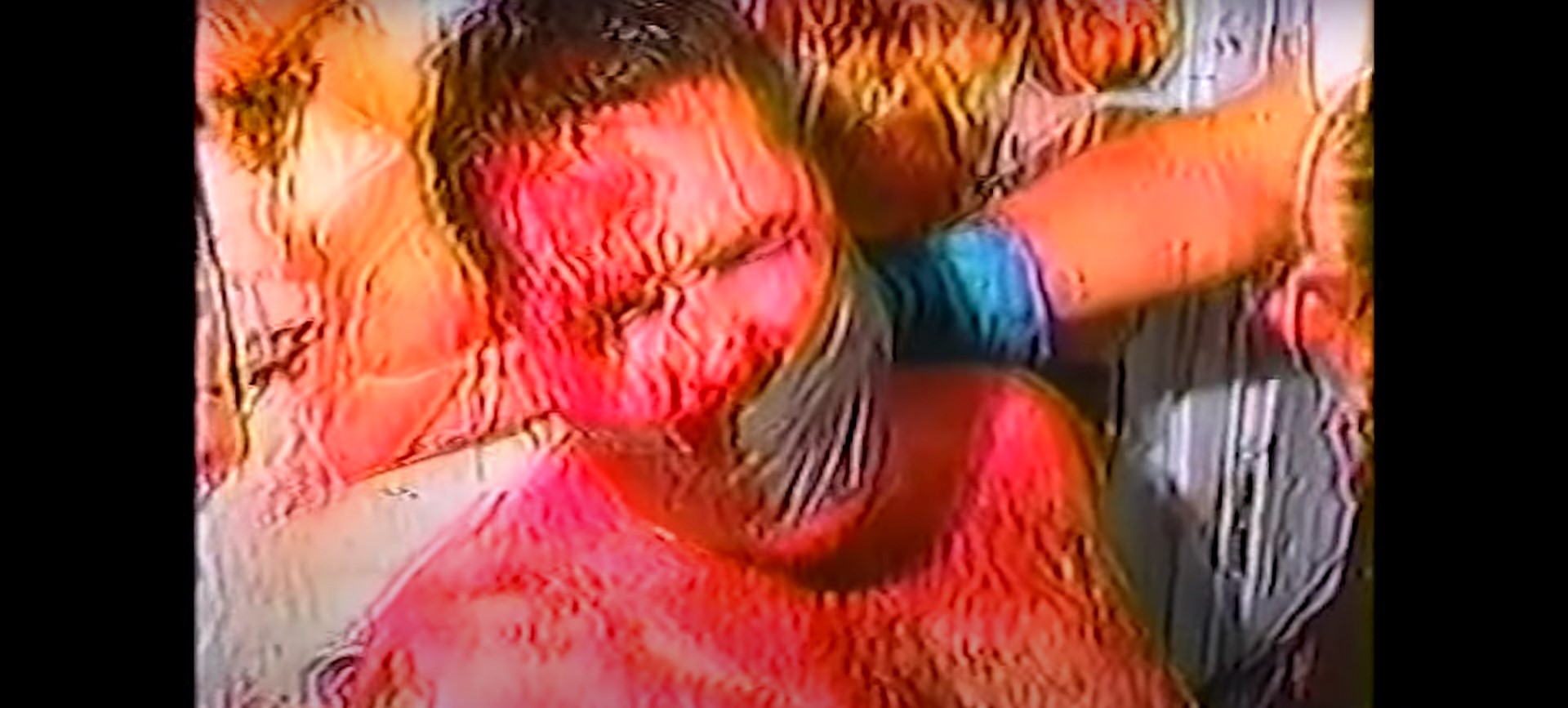
For certain to go out of stock and out of print into physical release obscurity once again, Unearthed Films’ limited-edition collector’s edition of “August Underground” is the 2-disc DVD/Blu-ray combo set to act on right now. The AVC encoded, high definition 1080p, BD50 comes from a MiniDV print, often considered the transitional format from analog and to digital in a tape format with lossy compression. Presented in the original aspect ratio of 1.33:1 aspect ratio, don’t expect image quality to be pristinely detailed and sharp as the MiniDV maxes out at 720p resulting in both, standard and Hi-Def formats, having indistinguishable presentations. Resembling the amateur, at-home movie, scaled down tape quality renders ghosting which shapes and details are bleary and the coloring resembles ember or incandescent with a warm, red-and-yellow layer. What we don’t see much of is a ton of tracking, static, or a ton of noticeable interlace but blacks can be prominently spotty with the horizontal bars. The lossless on-board MiniDV English audio is a PCM 2.0 that doesn’t extend beyond the limits of the camera’s microphone, but the clarity fairs well with clean and commanding dialogue with a natural range between the proximitous cameraman and his killing machine star of a friend in front of the camera. Also, equally interchangeable between the physical formats with what’s made to be a rough recording, discernible differences are minute at best. The Blu-ray and DVD have many of the same special features with the Blu-ray containing a few more frills over its format counterpart with a new Dave Parker interviewing Fred Vogel as well as a separate interview with Vogel and Mike Watt of Rue Morgue Magazine, another new interview with Fred Vogel from Severed Cinema Revisiting Infamy. The formats shared bonus content includes never before seen and new material, such as the original screener version of the film that comes with watermark and a slightly different color grading, a new audio commentary by Fred Vogel and Ultra Violent Magazine’s creator Art Ettinger, a new 10 questions with Fred Vogel answering some of the longstanding queries surrounding the film’s realism achievements and behind-the-scenes permissions and achievements, and a new Toe Tag Masterclass that compares storyboards with the screen version. Archived bonus content include audio commentary with Vogel and actors-producers-brothers Aaron and Ben LaBonte, another commentary track with Fred Vogel alone, an audio commentary by the witty, giggly “Killer,” Hammer to the Head closer look at “August Underground,” on location behind-the scenes, a behind-the-brutality of the film, outsiders’ perspective take in a Too Real for Comfort discussion, an introduction by director Fred Vogel, photo gallery, and trailers. The limited-edition collector’s set comes with a cardboard slipcover with a blurry, interlaced still of Vogel’s character wrapping a forearm around a gagged-girl’s throat while peering into the camera, but it’s the clear snapper case’s front cover that’s more developed with a graphic pencil-graphite illustration of the same slipcover image with more visible mutilated skin and visual weapon of human body destruction. Front cover is also reversible with an interlacing black-and-white image of the main killer. Both discs also sport two different art presses with the Blu-ray mirroring the slipcover image while the DVD has nearly the identical position of killer and victim but with a whole new victim. The region A locked edition has a digestible 70-minute runtime and is, of course, not rated. I would never say Unearthed Films has been diluting their pool of extreme underground gore and guts horror, but their “August Underground” release puts the brazen company back on the mondo-macabre map with definitely a too real for comfort twisted depravity and an au naturel sense of debauchery.

Limited Edition “August Underground” Ready to be Received! 

DCU Can’t Handle this EVIL! “Swamp Thing” reviewed! (MVD Visual / 4K & Blu-ray)

“Swamp Thing” on 4k / Blu-ray Combo!  Now Available on Amazon.com!

A top-secret government project in the Louisiana swamps concern the combination of aggressive animal genes into plant DNA to result in creating super food for the potential famine and overpopulated future.  Agent Alice Cable becomes assigned to the project when her predecessor is unexpectedly devoured by a gator and becomes acquainted with the passionate head scientist, Dr. Alec Holland.  However, the government isn’t the only interested party in obtaining a formula when a faction of cutthroat mercenaries invade the swampy compound in the name of Arcane, a mastermind sociopath looking to hold the fate of the world in his hands.  Storming the compound with force, all the government agents are slaughtered except for Cable who managed to escape while Dr. Holland suffers a tragic accident of combusting with his volatile formula during the attack.  Believed to be dead, Dr. Holland returns transformed into a half-man, half-vegetal thing with superhuman abilities.  Now, Arcane is after him with Cable trapped in the middle. 

Having success in the grisly rape-revengers and mutant-cannibals section of his career in the 1970s, Wes Craven tussled with creating and securing another hit film to pay the ever mounting bills.  Before “A Nightmare on the Elm Street,” one of two biggest titles that have gone synonymous with the director’s name, the other being “Scream,” Craven dived into a DC Universe project before the DC Universe ever existed as such with the script adaptation and the helming of “Swamp Thing,” a vegetational anthropomorphic superhero inhabiting elemental powers, such as regrowth and superhuman strength.  What Craven originally scripted may not have been the same as the finished product on screen but the 1982 captured audiences attention and created lifelong fans of an underappreciated hero still germane to what is now a large universe of revitalized superheroes films and television shows.  Film in and around Charleston, South Carolina in the Cypress Gardens doubling as deep South everglades, “Swamp Thing” is produced by long time DC films coproducers Benjamin Meiniker and Michael E. Uslan as their first DC superhero venture as a Melinker-Uslan production and distributed by Embassy Pictures and United Artists.

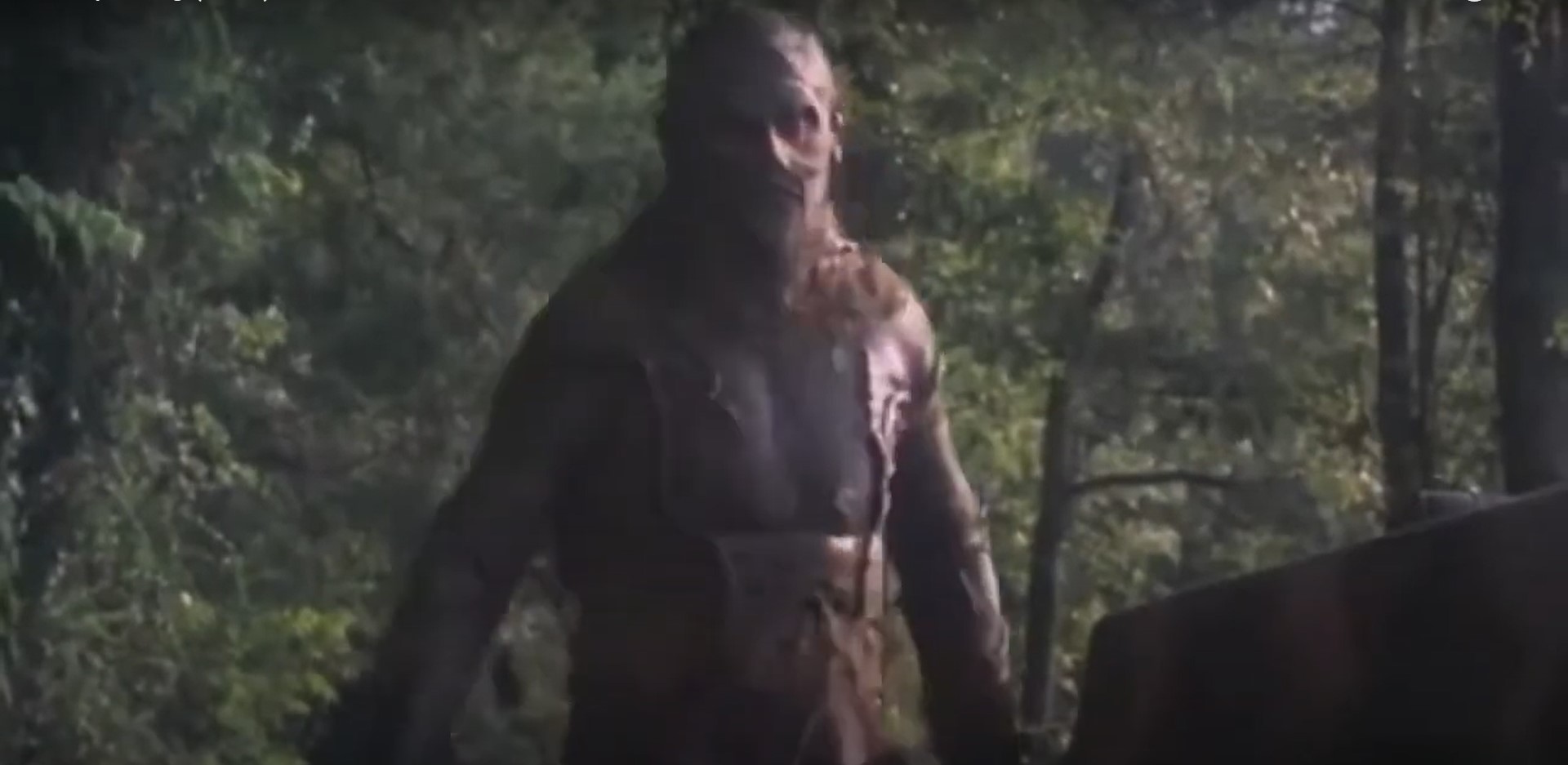
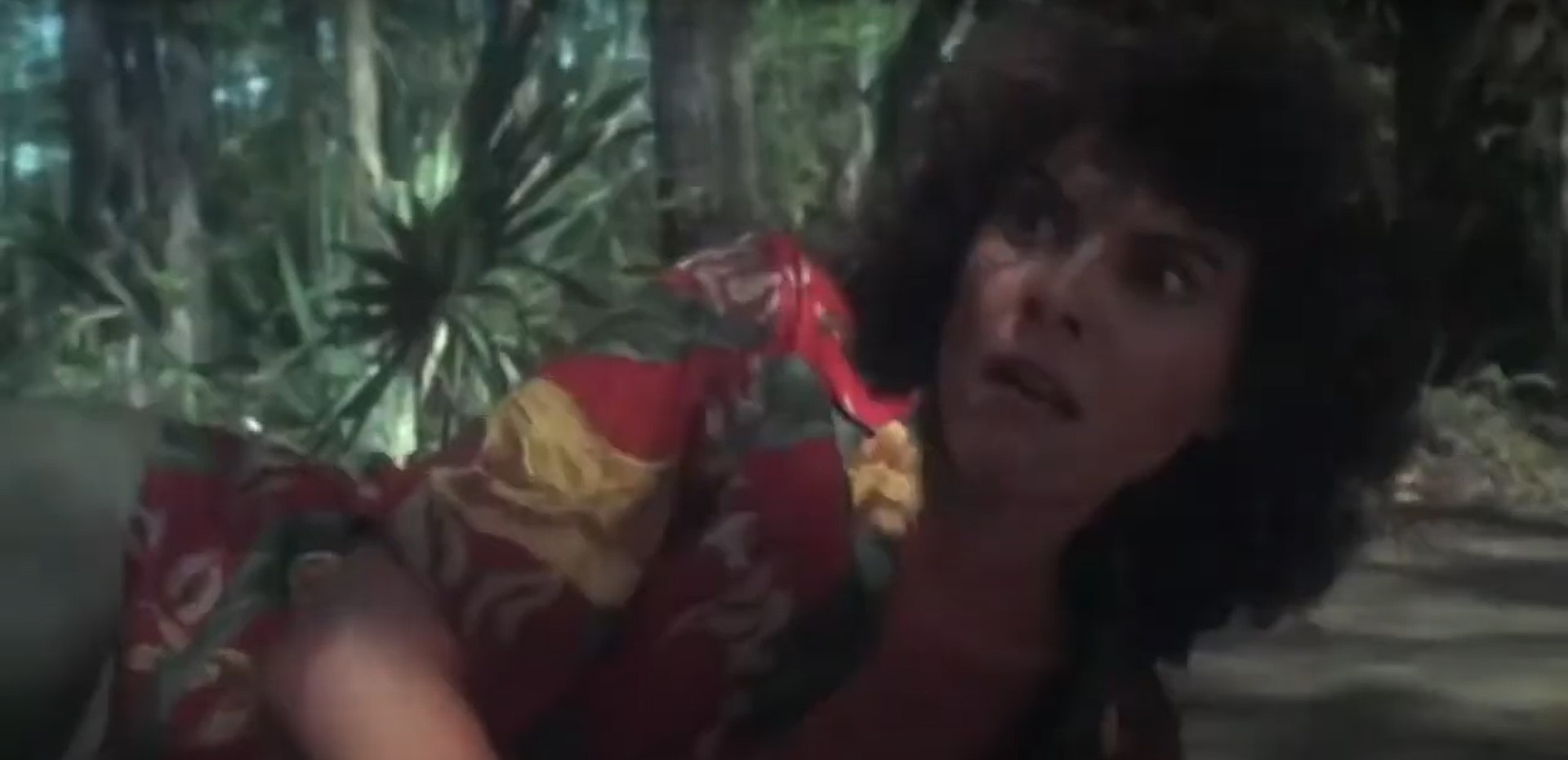
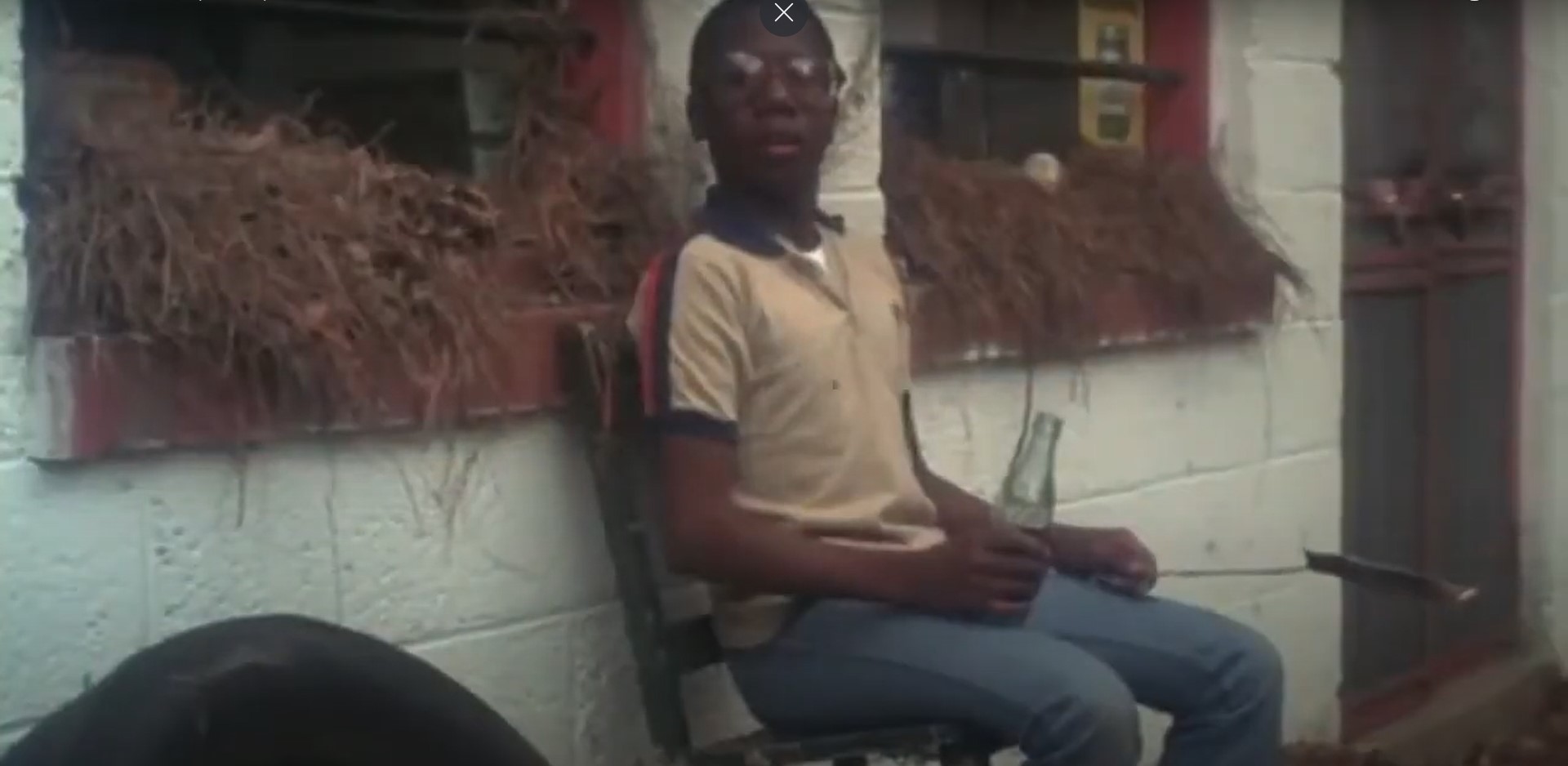
The question of who would bring this monolithic human-hydrangea?  Answer:  Dick Durock.  The 6’5” former Marine Durock was not afraid to jump into character skin, no matter how hairy, tight, or otherwise uncomfortable it might have been.  Durock may not have been the face of Dr. Alec Holland, played by genre cult actor Ray Wise (“Robocop,” “Twin Peaks”) before succumbing to transformational injury and rebirth, but the Indiana born actor certainly became the face of “Swamp Thing” throughout a decade with the sequel and the subsequent television show.  Durock captures not only the strength but also the humanity of the superhero in this origin story, a feat hard to accomplish for a man in a skin-clinging green and bulky suit.  Not to diminish Ray Wise’s performance by any means as the charismatic Wise is charming, passionate, and invested into making his Dr. Jekyll jive with the soon permanent Mr. Hyde to come, but as titular principal, Durock becomes the face of foliage on steroids.  Before solidifying herself as a scream queen, a young Adrienne Barbeau would have more difficulty in her Alice Cable role reflected in having some kind of feelings for essentially the same character in two versions played by different actors.  Yet, Barbeau beats the buggy Carolina heat as well as the differentiate obstacles by being a kickass government agent able to handle herself around the frighteningly new swamp creature and Arcane’s goon squad.  Before he was a James Bond villain in “Octopussy,” Louise Jordan donned the arrogancy of a tyrannical thinker yearning for the unique powers of others.  Jordan’s quite pretentious as the unrelentless Arcane and that makes the actor be the quintessential antagonist but I would not say his performance places his character in complete rivalry as “Swamp Thing’s” archnemesis.  Something is missing from their dynamics within their broad encounters that make the struggle appear impersonal and distant.  Even when Arcane ingests the formula and turns into a werewolf-like beast and the two superpowers clash, I wouldn’t label their conflict personally intertwined.  Perhaps Alec Holland and Alice Cable’s pre-mutation passion wasn’t strong enough or Swamp Thing’s deep-seeded desire for Alice wasn’t rooted well that makes Arcane just whither like a sun-beaten plant without water.  Another character that’s beaten into the ground is Ferret played by David Hess (“The Last House on the Left”) as head mercenary without any real power or absolute authority over his men, turning Hess more into like Tracey Walter in Tim Burton’s “Batman” but not as cool or as likeable.  “Swamp Thing” cast rounds out with Nicholas Worth (“Darkman”), Don Knight (“Death in Space”), Nannette Brown (“My Boyfriend’s Back”), Al Ruban (“1,000 Shapes of a Female”), Mimi Craven (“Last Gasp”), Karen Price, and Reggie Batts as the unlikely best child character in all of the film as an interesting and lone gas station attendant with hilarious, deadpan wisecracks. 

“Swamp Thing” may not be the first comic book superhero to be pulled from the DC lined colorfully illustrated and action-packed pages and adapted to the big screen but what separates the mucky-dwelling plant hero from the other is he’s cape-less, without ray guns and jetpacks, and appears as a monstrous humanoid rather than a regarded normal looking servant of justice as with Superman, Batman, or Wonder Woman.  “Swamp Thing” intrigues viewers with their own internal conflict stemmed from a foundationally laid idea that mutant creatures or unnatural monsters are inherently bad guys.  “Swamp Thing” becomes a part of that trailblazing group of grotesque good guys with hearts of gold.  Yes, the 1982 feature hasn’t held up over time with some of the low on the totem pole creatures suits and makeup I’ve seen, even with the agreeable Swamp Thing suit showing the rubbery creases and fold overs when Dirk Durock has to hold an object; however, to balance out the cut-rate features, special features picks up the tab with stunt boat chases, invisible pull wires, and a man set on fire that’s intense.  With a slashed budget, Wes Craven scripts on the fly to churn out a watered down but still flavorful cinematic origin story that’s full of heart and humanity and partly carried by the sweat and endurances of an eclectic cast and a handful of popcorn action patches.

“Swamp Thing” emerges from out of the muck yet again and onto a 2-Disc 4K/Blu-ray combo set from MVD Visual’s Rewind Collection label, specially marked as the first release on the LaserVision Collection.  The restored 4K UHD Dolby Vision is presented in 2160p and in a 1.85:1 widescreen aspect ratio on a BD100 while the Blu-ray is presented in 1080p high definition with the same aspect ratio on a BD50.  Each format presents two cuts of the film – a PG version and an international Unrated version – both of which have collated from various cuts of the film, resulting in some impressively rich grading that offers refreshed saturation levels of a lusher swamp environment.  More of that richness is conveyed through the UHD with providing deeper tones to make the swamps isolate and swallow characters while also have a sense of being alive amongst the hazy, knee-high fog, opaque waters, and thick vegetation.  Black levels look fine with the amount of grain that can vary from scene-to-scene but not compression issues to talk about on both spectacular approached formats.  The 4K offers a remastered DTS-HD MA 2.0 mono, which is same as on the Blu-ray, that unjustly limits “Swamp Thing’s” audible potential.  Dialogue has some deficiency projecting with all the tracks transmitting through a single channel that’ll force the up arrow on the volume setting or require a punchy soundbar or headphones to get to a clearer understanding of what characters are conversing.  The intrinsic ambience would have been better suited for multi-channel network to extract everything the swampy milieu had to offer, plus punchier fights, but if not an audiophile, these tracks will ultimately sate a viewer’s goal.  Range decently enough limps through despite the surround sound as we receive enough explosions and barrages of bullets to check that box, but depth struggles through the audio layers.  Both formats also include a Spanish language mono track and optional English subtitles.  Special features vary across the two releases with the UHD having limited extras due to storage but what is included is the PG version, the Unrated International version that includes Adrienne Barbeau’s topless scenes, an archive commentary with writer-director Wes Craven moderated by commentary director Sean Clark on both versions of the film, commentary with makeup artist William Munns moderated by Michael Felsher of the commentary/documentary conducting Red Shirt Pictures, also on both versions.  The Blu-ray contains the same extras above plus another Red Shirt Pictures’ interview with Adrienne Barbeau Tales from the Swamp, an interview with Reggie Batts Hey Jude, a discussion with Len Wein, the creator of “Swamp Thing,” the featurette Swamp Screen:  Designing DC’s Main Monster, the featurette From Krug to Comics:  How the Mainstream Shaped a Radical Genre Voice, photo galleries, and theatrical trailer. This must-own set, that caters to paying homage to the Laserdisc, comes retail green 4K Ultra HD snapper that in holds the 4K and Blu-ray on each side of the interior wall. The exterior features an illustrated encirclement of the main players – Dirk Durock and Andrienne Barbeau in comic character – on a single-sided front cover, sheathed inside a cardboard O-slip cover with the same cover art. Both disc presses also represent the original Laserdisc art. The insert contains a folded mini poster of the slipcover design. Two version, one release headline both the 91-minute PG and 93-minute Unrated version of the film with the entire package region locked in A. I may have finally watched Wes Craven’s “Swamp Thing,” but I won’t be the last as I highly recommend this stellar launch into ultra high-definition territory with the original quagmire superhero.

“Swamp Thing” on 4k / Blu-ray Combo!  Now Available on Amazon.com!

Feminism Fights EVIL The Only Way Possible in “Broken Mirrors” reviewed! (Cult Epics / Blu-ray)

The Best Depiction of the Unpleasant Side of Brothels.  “Broken Mirrors” on Blu-ray.

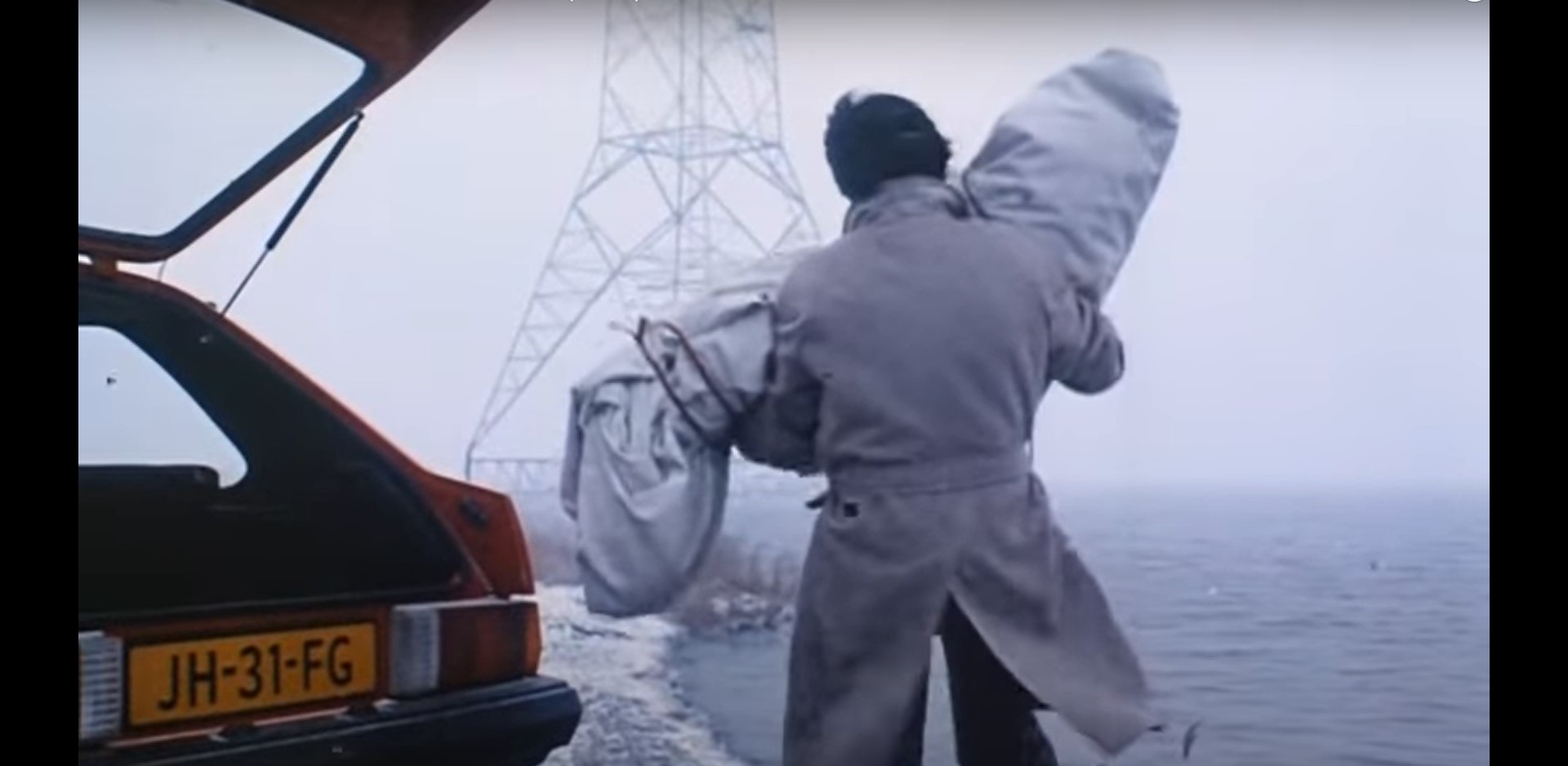
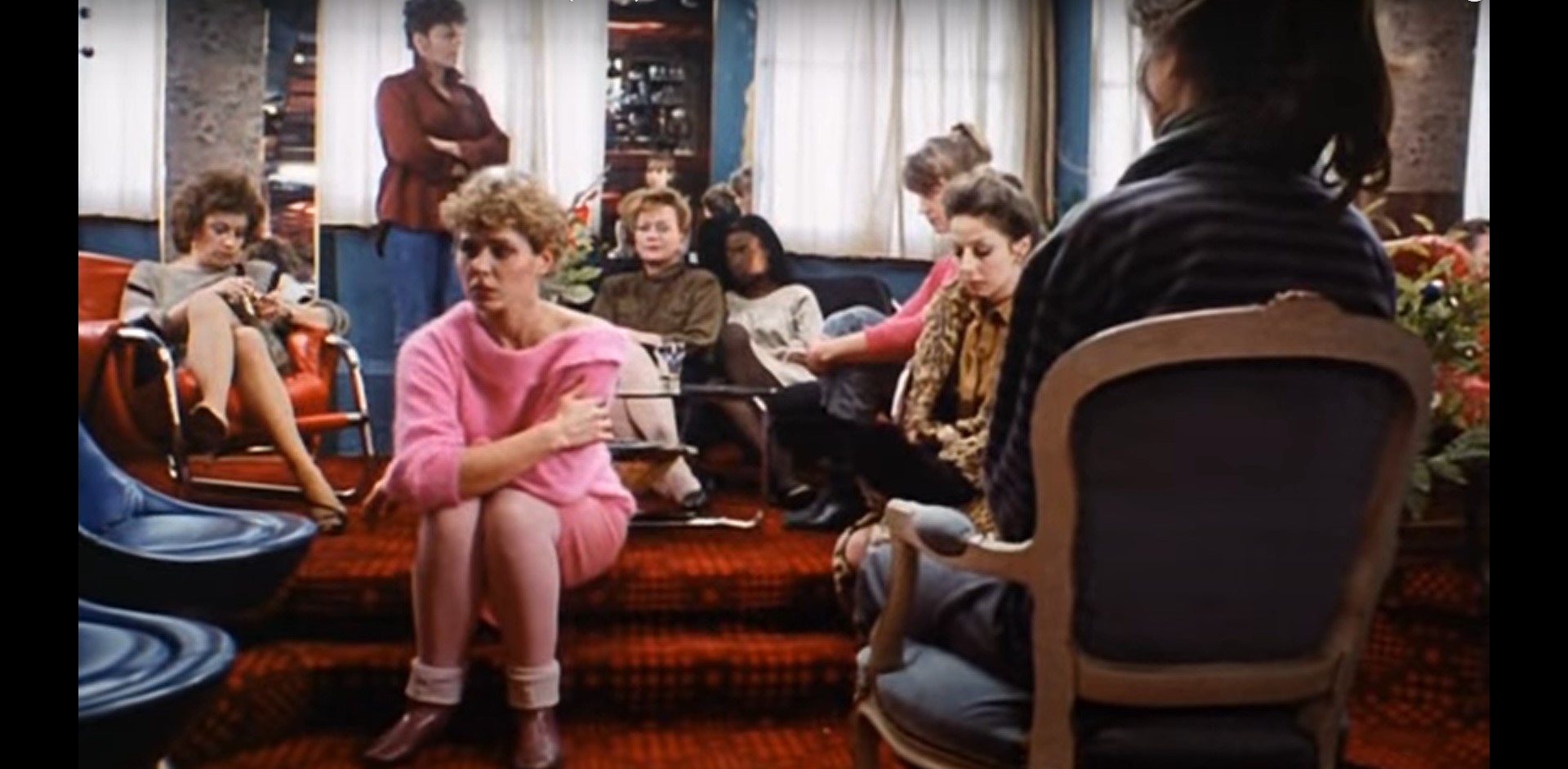
An Amsterdam brothel Happy House Club clings to the good girls that remain employed to pleasure the reprobate and insensitive johns that visit.  Dora, a virtual working girl lifer, brings in new blood, Diane, a young mother desperate in need of financial support because of her drug addicted husband.  Night after night, customers select through the ever-growing service list the club’s owner deems profitable while the women and the matron manager naively cope with a profession that’s quick, easy cash.  They create a process, a standard of procedure so to speak, that tries to make the work that much less degrading but with each client, a little piece of their humanity is chipped away.  Simultaneously, a methodical serial killer abducts the women he previously surveillances from off the street, chains them to a bed in a remote room, takes snapshots of them in confinement, and slowly starves them to death, which could last months.  The two stories are intertwined and connected by a gender dominance disease in which a slow resistance begins to build to an explosive head.

The unofficial sobriquet of the Queen of Feminism Marleen Gorris had made a name for herself as a staunch supporter of feminism and lesbianism with her controversial and provocative films.  Her acclaimed 1982 debut written-and-directed “A Question of Silence” show oppressed gender solidarity and mutiny against a systematically enslaved masculine society.  Continuing her crusade against the patriarchal grain, Gorris followed up “A Question of Silence” with another powerfully messaged, social commentary film that, again, places women emotions and safety under the unyielding thumb of men two years later with “Broken Mirrors.”  Natively known in the Netherlands as “Gebroken Spiegels,” the film marks the return of select cast from her inaugural feature, marshalling in a new narrative in the neo-feminism cinema under the returning production company Sigma Film Productions with producer Matthijs van Heijningen (“A Woman Like Eve,” “The Cool Lakes of Death.”).

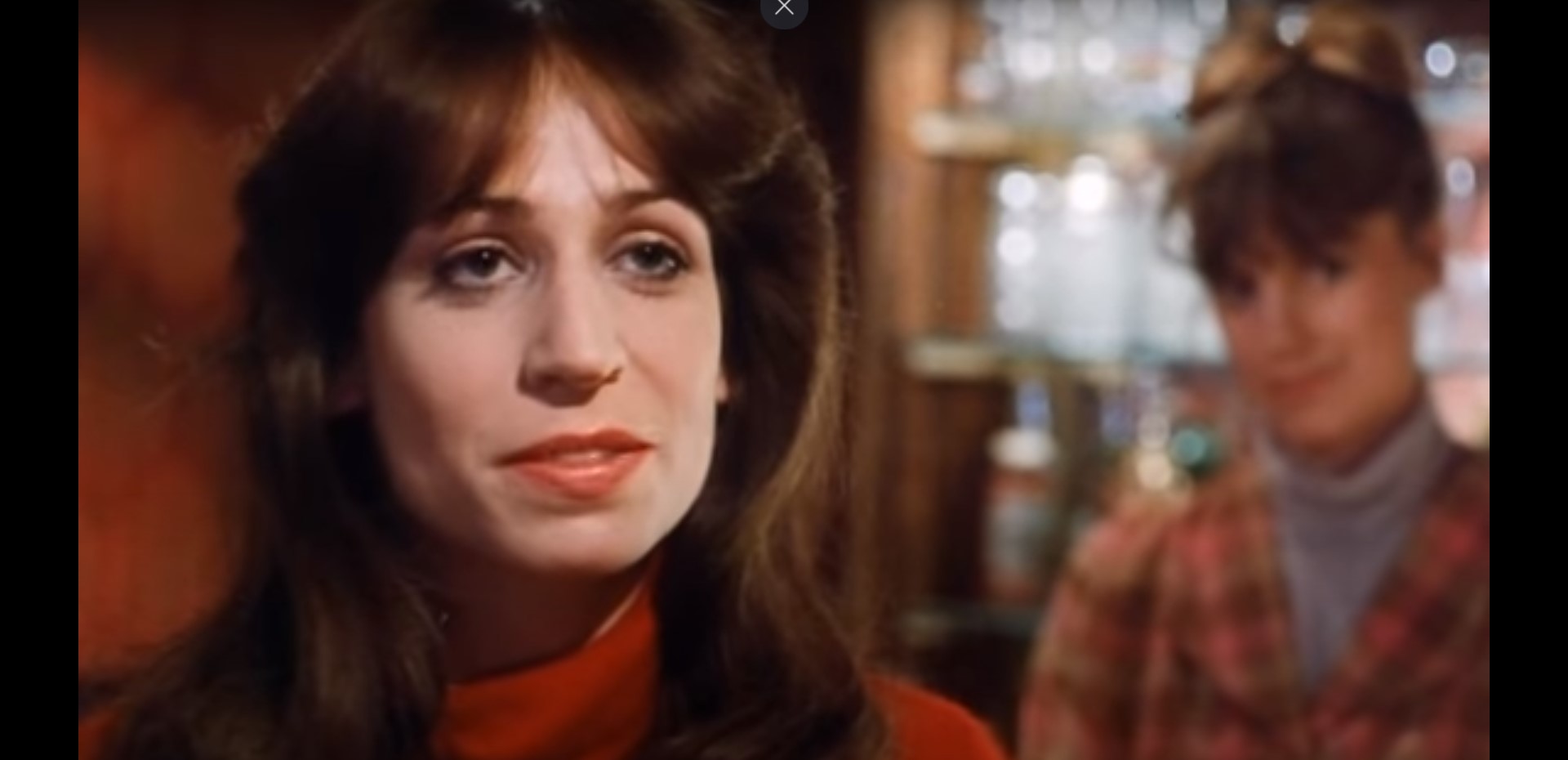
As mentioned, a pair of actresses have carried over from “A Question of Silence” to maintain a principal performance in “Broken Mirrors,” beginning with Henriëtte Tol who played the outwitting secretary in Gorri’s debut returns as a woman working in Amsterdam’s red-light district as a seasoned employee of the Happy House Club.  Tol ups the ferocity levels of her previous performance while still maintaining a gradually steady sex appeal.  Another returning actress who nearly didn’t have any dialogue in her previous role as a mother without a voice is Edda Barends now in a character that can’t stop screaming for her life as the latest abductee chained to a cruddy bed in a cruddy room with a coming-and-going, polaroid-enthused sociopath. In Barends starkly different rage against the man machine archetype, the actress finds herself discomposed in the face man she can’t understand but eventually recognizes his nasty need and withdraws it.  Both women excel beyond the unsavory current conditions and transfer the power that’s been dangling over their heads into themselves.  Newcomer Diane, played by Lineke Rijxman, becomes the key to initiate the unraveling of power of a man-owned brothel that subjugates women not as mere employees of a man-owned business but as nothing more than moneymaking ass-shakers and back-layers.  Rijxman puts in the work of having her character be resilient at work and at home as she juggles a wide variety of disgusting clients to please their whims while coming home to deal with a junkie husband’s mess.  As the story progresses and the women fall deeper under life’s heel, Dora and Diane spark what begins as a mutual friendship that slips gradually into sexual tension, giving them more assurances when they need it the most as the brothel parties become bigger and more intense.  The parallel story runs along the same oppressive path but in unconventional, unlawful, and inhuman way with the kidnap and starvation torture of a young mother.  Eddie Brugman is also a returning “A Question of Silence” actor who now finds himself in the shoes of Jean-Pierre, a mild-manner husband and by all rights societally normal seemingly man who visits the brothel for a quickie, easy money as Francine (Marijke Veugelers) would proclaim, but his dark hobby is to snatch unsuspecting women for his own perverse pleasure of watching and hearing them plea for their lives.  By the end of both stories, connected by Jean-Pierre and who finds himself at the end of the disappointing stick for his kicks, crafts more than one way to not give in and to stand up against male malarkey and nastiness.  The cast rounds out with Carla Hardy, Coby Stunnenberg, Anke van ‘t Hof, Elja Pelgrom, Hedda Oledzky, Arline Renfurm, Johan Leysen, Wim Wama, and Elsje de Wiljn.

Not only is “Broken Mirrors” another contentious and provocative incendiary story that wedges apart men and women, with the latter being victimized and justified in their actions, but Marleen Gorris also directs one hell of a boiling point intertwining between parallelisms that almost have no link to each other until the reveal.  Gorris doesn’t necessarily employ red herrings to keep audiences guessing but rather keep the killer obscure, as all that we are exposed to see is from behind the man, who doesn’t speak much either and if he does speak, his responses are to the point with as little descriptors and adjectives as possible.  Not only is the editing between simultaneous stories organic but also the other editing techniques that materialize the characters’ emotional decaying befit the mostly linear structure, such as with the student party montage at the brothel that does a roundtable of individualized scenarios between the women and their slimeball clients in an emotionally painful grin-and-bear it series that culminates to which one character best describes the ordeal as feeling like a human lavatory.  The feeling is very much mutual with viewers as well, like a used wet nap to scrub off a soul staining filth covering head to toe, as Gorris represents a thematic exactitude of fiercely dividing feminism that would define her career. A clear understanding of how brothels operate is greatly depicted with that flimsy layer of excitement and efficiency to mask the ugliness underneath.

“Broken Mirrors” arrives on a Blu-ray home video from Cult Epics and, once again, resurrects and restores a pièce de résistance of Netherland celluloid. The new 4K high-definition transfer from the original 35mm negative is presented in European widescreen 1.66:1 aspect ratio on an AVC encoded, 1080p, BD50. 35mm print looks none worse the wear over the course of father time with a mint print. Restored color graded has freshened up the natural print palette of the brothel story while the kidnapper’s tale sustains a grayscale to bisect the narrative and the delineation for both presents a palatable depth. The aplenty natural grain doesn’t swarm and takeover the higher pixelations to award us with a satisfying vintage image that now enriched without any smoothing enhancements nor any compression issues to note. The Danish language release comes with two audio tracks: A DTS-HD MA 2.0 Mono and a LPCM 2.0 Mono. “Broken Mirrors” fair well from both dual channel formats with the DTS-HD aggrandizing the Lodewijk de Boer razor synth score with intent that in itself is a character. Comparatively elsewhere, the two outputs offer little differences and sate with forefront dialogue, balanced in front an equally balanced ambient track. Optional error-free English subtitles are available with haste text to keep up with the fast-paced Dutch. Special features include an audio commentary by Leiden University film scholar Peter Verstraten, an archived 1984 interview with U.S. sex worker and activist Margo St. James with Cinema 3 host Adriaan van Dis, a promotional still gallery, and trailers. The Cult Epics Blu-ray comes in a clear, traditional snapper sporting the film’s most iconic and titular moment, displayed also on the disc art, while the reverse side of the cover depicts a still image of Carla Hardy. The region free Blu runs at a not rated 110 minutes. A good double bill against “A Question of Silence,” “Broken Mirrors” makes for a morosely on the trot sister feature in more ways than one to further a Marleen Gorris artfully aired agenda.

The Best Depiction of the Unpleasant Side of Brothels.  “Broken Mirrors” on Blu-ray.