Sonar Radiation is Music to the EVIL’s Ears! “The Living Dead at Manchester Morgue” reviewed! (Synapse / Blu-ray)


Don’t Let the Sleeping Corpses Just Lie!  Grab a copy of “The Living Dead at Manchester Morgue” at Amazon!

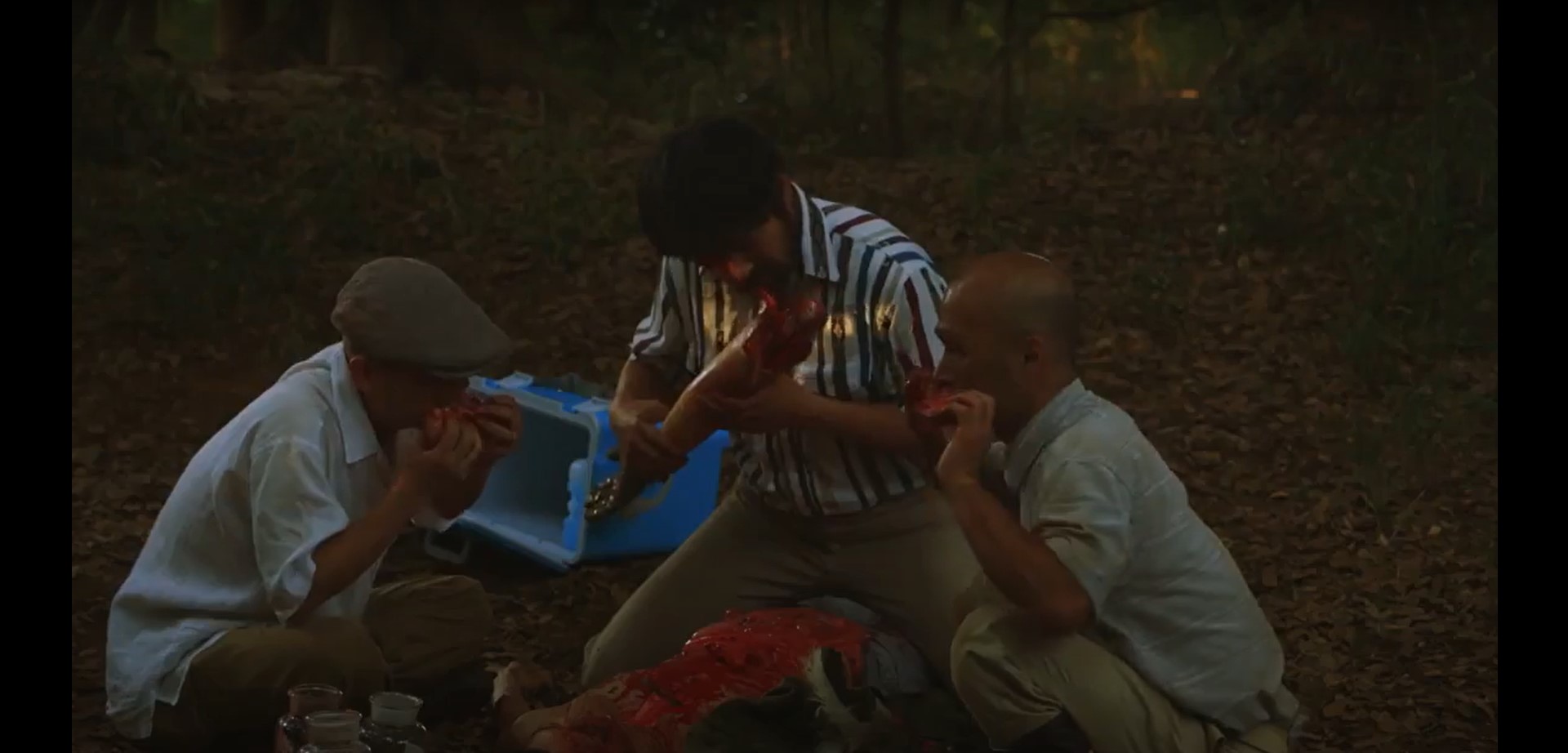
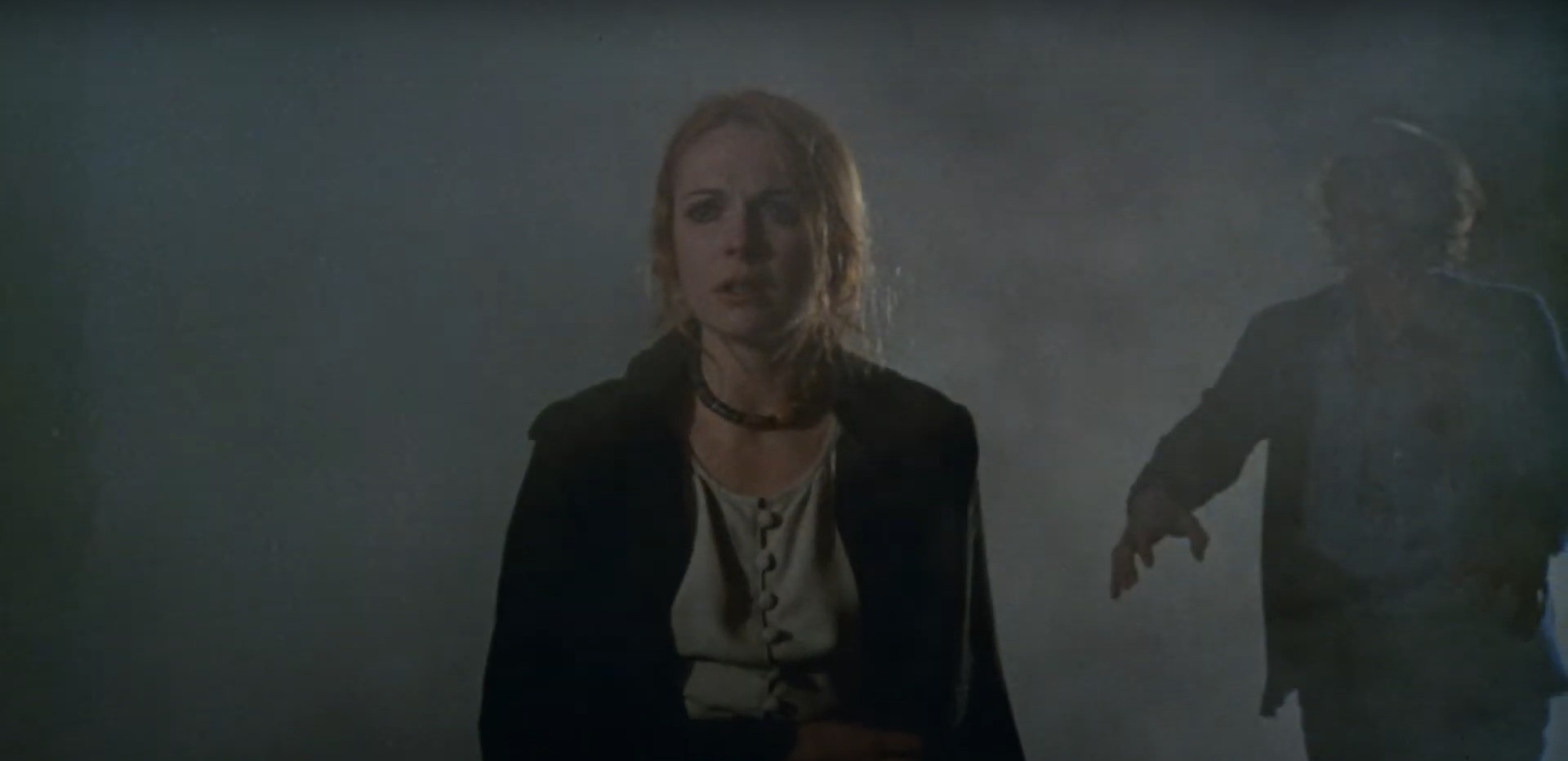
After having a run-in with a beautiful woman, Edna, at a gas station who accidently wrecking his motorbike, Manchester antique dealer George offers to drive her car to her destination in the country, her sister’s place in Southgate, and then borrow the car to continue on toward his appointment in Windermere.  However, upon their arrival in Southgate, Edna’s husband Martin has been brutally murdered and the police immediately suspect the two urbanite out-of-towners George and Edna of coming the heinous crime.  In reality, the recently dead in a mile radius has their nervous system reactivated and directed to kill the living by a new sonar radiation technology aimed to destroy crop pests.  With the police and the dead on their heels, George and Edna seek to expose the truth to the world before its too late and the experimental new pesticide’s range is extended to cover more ground. 

Hitting the stop button here before we dive into our review of “The Living Dead at Manchester Morgue.”  If you’ve never seen the Jorge Grau directed 1974 flesh eating zombie film then drop everything – you’re work, your kids, your winning lottery ticket worth millions – and take the next one hour and 33 minutes to enjoy the graphically gory, social commentary horror that not only cashes in on the George Romero “Night of the Living Dead” gamechanger undead horror but also rivals Romero’s film in story and in full, gorgeous color.  “The Legend of Blood Castle” director Jorge Grau helms the Spanish-Italiano co-produced script penned by Sandro Continenza (“Uncle Was a Vampire”) and Marcello Coscia (“Teenage Emmanuelle”) and was provided to Grau by “The Eroticist” and “Don’t Torture the Duckling” producer Edmundo Amati who wanted to make a Romero-esque flesh-eating zombie film of his own.  Also more widely known as “Let Sleeping Corpses Lie,” “The Living Dead at Manchester Morgue” is co-produced by Manuel Pérez and is a co-production between Star Films and Flaminia Produzioni Cinematografiche.

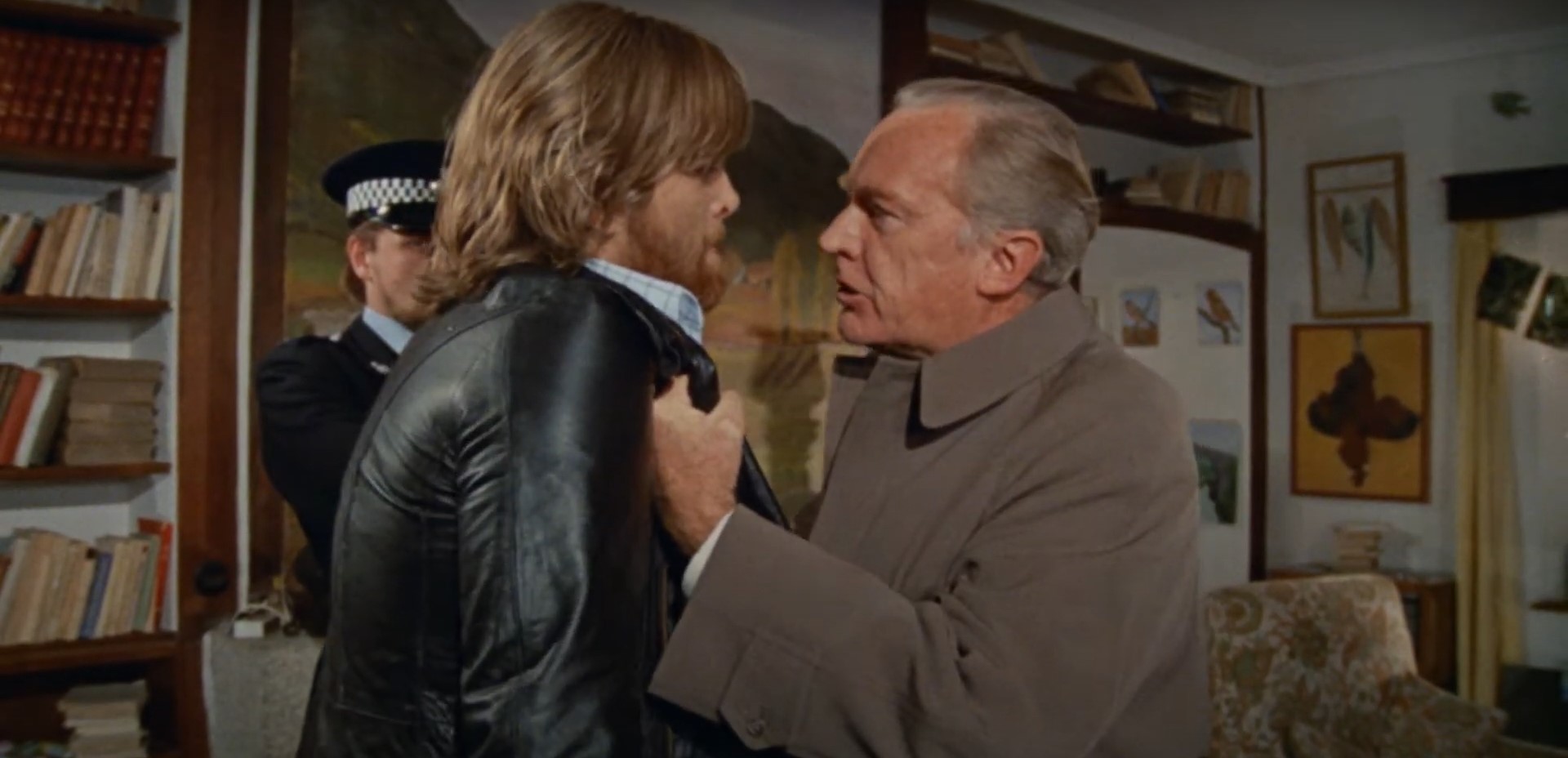
Hot off the presses of Italian action-crime dramas, Ray Lovelock (“Emergency Squad,” “Almost Human”) finds himself playing an antique merchant holding up shop in the metropolitan area of Manchester, England and as George Meaning, the relatively undisclosed personal experience as an antique merchant, Lovelock gets into character not on the business end but when the shopkeeper goes on holiday in the country, riding his motorcycle Windermere where he has arranged a meeting with some very important people that never flesh out in the end. Speaking of flesh, don’t expect the leading lady Cristina Galbó (“The House that Screamed”) to provide any as the panicky Edna Simmonds on her way to her sisters (Jeannine Mestre, “Count Dracula”) for an intervention toward her sister’s severe heroin use. Much of the only flesh to be hand in “The Living Dead at Manchester Morgue” is that is which ripped from the bodies and stuffed into rotten, undead mouths. In itself, the entire scenario between Edna and her druggie sister is a compelling enough story to warrant attention in accumulating a sense of sisterly betrayal and a sacrificial compassion to do the right thing despite the consequences. However, that pathway, no matter how distressingly prominent it may seem, does not carry over into the main plot points of an experimental pesticide treatment involving sonar inadvertently raising the dead to be superhuman zombies. Between an Italiano (Lovelock) and a Spainard (Galbó), who not throw in an American while we’re at it with Massachusetts born Arthur Kennedy (“The Antichrist”) to be the aging local inspector keen on pinning every murder on youthful urbanites with their hippie ways and satanists beliefs. “The Living Dead at Manchester Morgue” fills out the cast with José Lifante (“Night of the Walking Dead”), Vincente Vega (“Historias para no dormir“), and “Flesh+Blood’s” Fernando Hilbeck as the foremost feared zombie.

What makes Jorge Grau’s take on the living dead canon so impressive is not only the social commentary story that seeks to deconstruct ecological progression as an ironic destructive poison to the Earth and its inhabitants and the striking moments in gore effects from the team of Juan Antonio Balandin, Luciano Byrd, and Giannetto De Rossi (of Lucio Fulci’s “Zombi”) that have remained timeless in holding up and rivaling against many of today’s gruesome effects, but also the terror-inducing sound design that combines Giuliano Sorgini’s funky-spook with Antonio Cárdenas zombie-vision resonances of heavy breathing and resonating heart thuds that cues the lurking of an undead lurker.  The effect is potent and full of imminent danger when included into Grau and cinematographer Francisco Sempere’s (“Death Will Have Your Eyes”) perfectly framed shots of the Romero-esque zombie lumbering toward their prey in an unstoppable hunger to kill and eat and, sometimes, convert to their infant-legion inside-and-out of the zombie perspective.  Along the lines of “The Living Dead at Manchester Morgue’s” environmental theme is the juxtaposition of big city and countryside in regards to their pollution levels in the opening credit scene where George rides out of Manchester through the degradation of the masses who are popping pills, wearing face masks (like in today’s COVID climate), numb to shock (in the scene where a naked protestor runs in front of stalled traffic for peace and the motorists are blank to the moment), passing by death and polluted nuclear smoke stacks.  Once the lead George reaches the countryside, he removes the scarf covering his nose and mouth and breathes in fresh air with a smirk on his face.  From then on, the story moves forward with a cautionary tale of ill-fated modern progression, such as urbanism, seeping into a natural landscape and causing death and destruction, leaving an poignant aftertaste in the inevitably of man’s ignorance will kill us all.  Grau’s film is a good candidate to be a promotional movie for the dramatic effects of climate change in today’s campaign for ecological change to reduce our carbon footprint.

Synapse brings “The Living Dead at Manchester Morgue” home onto a Blu-ray home video, restored in 4K from the original camera 35mm negative that includes the authentic and intact opening and closing credit sequences. The region free, AVC encoded release is presented in 1080p high definition of a widescreen 1.85:1 aspect ratio and the picture is the gold standard of presentation with a vivid and stable color palette, controlled DNR without any posterization, and greatly detailed without an inkling of lossy image quality. Two audio mix come with the release – a DTS-HD Master Audio 5.1 surround sound remix and the distinctive to the Synapse release the original English theatrical mono mix. Though nice and nostalgic in the original English mono mix, the clarity and robustness of the channels on the DTS-HD track is by far superior with its reformulated by Synapse lossless quality and fidelity, especially in that aforementioned sound design by Antonio Cárdenas. The English dub on Ray Lovelock can be off-putting at times but the track is still beyond the best of the two available audio options. English SDH subtitles are available. Extras include two audio commentaries by author and film scholars Troy Howarth, Nathaniel Thompson, and Bruce Holescheck, a feature length (89 min) documentary Jorge Grau – Catolonia’s Cult Film King that explores the lift and films of director Jorge Grau, The Scene of the Crime is special effects and makeup artist Gionnetto de Rossi discussion on the film, another de Rossi feature of the SFX artist at a Q&A at the Festival of Fantastic Films in the UK (43 minutes), the theatrical trailer, TV and radio spots, and a sleek black snapper case that wouldn’t be complete with a Synapse catalogue booklet. If you’re a diehard zombie genre fiend, Jorge Grau’s “The Living Dead at Manchester Morgue” must be at the top of your personal video collection. If it isn’t, kick yourself in the shin really hard and then check out Synapse’s gorgeous release of the Spanish-Italiano production that’s worth every second of your life viewing.

Don’t Let the Sleeping Corpses Just Lie!  Grab a copy of “The Living Dead at Manchester Morgue” at Amazon!

EVIL Lights Up When Peeling Skin! “Human Lanterns” reviewed! (88 Films / Blu-ray)


Own this beautiful release from 88 Films of the “Human Lanterns”

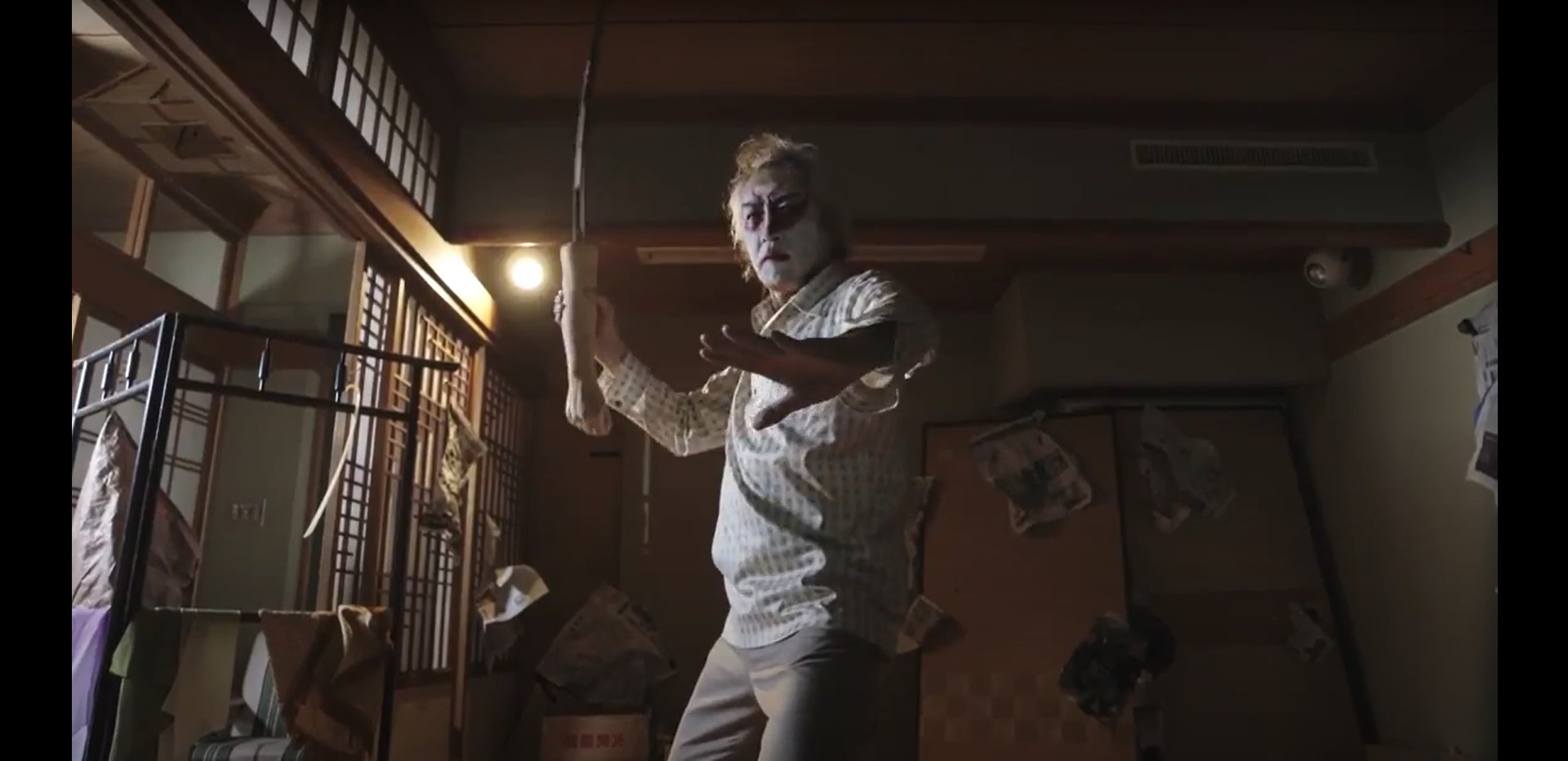
Two respected and wealthy Kung-Fu masters have a long rivalry, trying to one-up each other at any cost even if that means stooping into their personal life to gain the most public admiration.  With the annual lantern festive approaches, to have the best and brightest lantern would sustain at least a year of gloating over the other master.  When a lantern maker with a retaliation mindset against one of the more boastful masters is hired to make his festival entry, the lantern maker exacts horrifying revenge by fueling their feud behind the scenes. Kidnapping beautiful women who are dear to each master and exploiting their soft delicacies for his crazed creations, the maniac lantern maker turns the village upside down, forcing the local constable into an impossible investigate into the village’s most popular residents when none of the evidence points to the other.

“Ren pi den long,” aka “Human Skin Lanterns,” aka “Human Lanterns” is a grisly Kung-Fu murder-mystery that’ll make your skin crawl right off from your body. The stylishly colored and ethereally varnished 1982 Hong Kong film is written-and-directed by Taiwanese director Chung Sun (“Lady Exterminator) that blended the likes of a giallo mystery into the well-choreographed martial arts mania with the profound Kung-Fu screenwriter, Kuang Ni (“The One-Armed Swordsman,” “The Flying Guillotine”), co-writing the script alongside Sun. While not as ostentatiously gory or as cinematically profane as the 80’s released Category III certified films that rocked Hong Kong audiences, and the censor board, with shocking, gruesome imaginary and content, “Human Lanterns” does sit teetering on the edge with mostly a tame Kung-Fu feature that quickly turns into the blistering carnage of a basket case, or in this a lantern maker, who uses hiding as a double entendre. “Human Lanterns” is a Shaw Brothers Studio production executively produced by the oldest of two brothers, Rumme Shaw, and, then new to the Shaw Brothers’ board of directors, producer Mona Fong.

“Human Lanterns” starred two the renowned names in martial arts films from the 1970s and well into the 1980s with “Fist of Fury” and “The Swordsman and the Enchantress’s” Tony Liu as the impeccably arrogant Lung Shu-Ai with a self-image to protect more than the women in his life and “Bloody Monkey Master” and “Return of the Bastard Swordsman” Kuan Tai Chen sporting a sweet mustache as Lung’s longtime rival, Tan Fu. Shu-Ai and Chen have really spot on, well-versed, fight sequences together braided into their play off each other’s character’s haughty personas. While behind the curtain of overweening and defiance between the two masters, Chao Chun-Fang unceremoniously sneaks into the fold by happenstance as Lung offers him money for the best lantern this side of the lantern festival. Lung and Chao Chun-Fang, played with a demented, idiosyncratic duality from Leih Lo (“The Five Fingers of Death,” “Black Magic”), another master in the art of fighting in his own style, have an inimical past…well, at least thought so by Chun-Fang. In a sword dual over a woman, Lung defeats Chun-Fang and purposefully scars him above the left eye, causing him the inability to look up, and while the lantern maker has stewed for many years, training all the while to be the best fighter, his tormentor Lung Shu-Ai has nearly all forgotten about the incident and found trivial enough to ask Chung-Fang to make him a lantern and offer him out for drinks for being old buddies of yore. However, this yard pulls the wool over the eyes of self-centered, the upper class, and the unruffled nonchalant as Chung-Fang takes advantage of the Kung-Fu masters naivety and uses the rival as a screen to cover up his kidnapping deeds of the women in their lives, played by Ni Tien (“Corpse Mania”), Linda Chu (“Return of the Dead”), and Hsis-Chun Lin. “Human Lanterns” rounds out the character list with a hired assassin in Meng Lo (“Ebola Syndrome”) and a competent but out of his league village constable in Chien Sun (“The Vampire Raiders”).

The look of “Human Lanterns” is often dreamy. No, I don’t mean dreamy as in gazing into the strong blue eyes of your tall and dark fantasy man. The dreamy I’m speaking of is produced by cinematographer An-Sung Tsao’s luminescence that radiates of background and the characters through the wide range of primary hues. Tsao’s colorful and vibrant eye doesn’t clash with the vintage era piece consisting of impressively detailed sets, a costume design plucked straight from the 19th, and hair, makeup, and props (which I’ve read some of the blades were authentic) to bring up the caboose of selling the completed package of delivering a spot-on period film. When Leih Loh dons the skull mask, an undecorated and unembellished human skull, with wild, untamed hair sprouted from every side of the eyeless mask, Loh transforms into a part-man, part-beast jumping, summersaulting, leaping, and seemingly flying through the air like a manically laughing ghost. The visual cuts petrifyingly more than described and if you add an extensive amount of Kung-Fu to the trait list, “Human Lanterns” has a unique and unforgettable villain brilliantly crafted from the deepest, darkest recesses of our twisted nightmares. “Human Lanterns” has a wicked and dark side that balances the more arrogantly campiness of Lung and Tan’s hectoring rivalry. When Lieh Loh is not skinning in his workshop or Lung and Tan are not bullying each other into submission, there’s plenty of action with the heart stopping, physics-defying martial arts that just works into the story as naturally as the horror and the comedy. With shades of giallo and fists of fury, “Human Lanterns” is Hong Kong’s very own distinctive and downright deranged brand of good storytelling.

88 Films lights the way with a new high-definition Blu-ray of the Shaw Brothers’ “Human Lanterns” from the original 35mm negative presented in Shawscope, an anamorphic lensed 2.35:1 aspect ratio that more than often displays the squeeze of the picture into the frame. One could hardly tell the upscale to 1080p because of the very reason I explained in the previous paragraph of the airy An-Sung Tsao façade that softly glows like bright light behind a fog. Nonetheless, the image quality is still stunning and vivid, a real gem of conservation and handling on this Blu-ray release. The Mandarin dubbed DTS-HD 1.0 master audio is synched well enough to the action for a passing grade. The foley effects, such as the swipes and hits, are often too repeated for comfort, but adds to “Human Lantern’s” campy charm. The newly translated English subtitles are synchronous with the picture and are accurate but, in rare instances, come and go too quickly to keep up with the original language. The release comes not rated with a run time of 99 minutes and is region locked at A and B. Why not go full region free is beyond me? Licensing? Anyway, special features include an audio commentary by Kenneth Brorsson and Phil Gillon of the Podcast On Fire Network, “A Shaw Story” interview with then rising Hong Kong star Susan Shaw who talks about the competitive and easy blacklisting Hong Kong and Tawain cinema market, “The Beauty and the Beasts” interview with in story brothel mistress played by Linda Chu often harping upon not wanting to do nudity despite directors begging her, “Lau Wing – The Ambiguous Hero” interview with Tony Liu that comes with its own precaution title card warning of bad audio (and it is really bad and kind of ear piercing) as the lead man really regales his time on set and in the industry between Golden Harvest Productions and Shaw Brothers Studios, and rounding out the main special features is the original trailer. The package special features is a lantern of a different color with a limited edition cardboard slipcase with new artwork from R.P. “Kung-Fu Bob” O’Brien, a 24-page booklet essay entitled “Splicing Genres with Human Lanterns” by Barry Forshaw accompanied by full colored stills, posters, and artwork by O’Brien, a double-sided fold out poster, and reversible Blu-ray cover art that can be flipped from the same, yet still awesome, O’Brien slipcover art to the original release art. The new 88 Films’ Blu-ray set conjures a renaissance satisfaction like none other for a highly recommended, genre-ambiguous, vindictive affray.

Own this beautiful release from 88 Films of the “Human Lanterns”

Southern Hospitality is all EVIL Cloaks and Daggers! “The Long Night” reviewed! (Well Go USA / Blu-ray)

“The Long Night” now available on Blu-ray home video!

After spending years in foster care as a child, the now adult Grace tries to track down any information or background about her biological parents with the help of affluent boyfriend Jack.  The New York City couple travel into the rural, deep south on a seemingly solid lead about her folks.  As Grace and Jack drive up to their contact’s isolated and grand manor estate, their contact with the information doesn’t greet them upon their arrival and as they search the house, they find it as empty and still as the wide open land around them.  When darkness falls, cloaked members of a demon worshipping cult surround the estate, using their telekinetic and telepathy powers to infiltrate and corral Grace toward being a host for the prophesized return of 400 year slumbering and powerful demon the night of the equinox.  The couple battle the subservient minions inside and outside the manor as the night progresses into terrifying visions of Grace’s predestined lineage and the hope of surviving the night is quickly dwindling.

A longstanding demonic cult with supernatural psychotronic abilities besieging two city slickers armed with broken cell phones and a fireplace poker feels like the mismatch from Hell.  Somehow, “The Curse of El Charro” director, Rich Ragsdale, was able to stick the landing with loads of dourly, yet intensely powerful, cinematography crafted from a Mark Young (“Tooth and Nail”) and Robert Sheppe script based off the Native American mythology of the Horned Serpent, Utkena.  Keeping with the mythos’ descriptors involving snakes and horns or antlers, Ragsdale utilizes his usual bread and butter music video talents to fashion psychedelic imagery out of an extremely committed cult mercilessly stopping at nothing in resurrecting their preeminent master who will cleanse the world of corrupted humanity to start the world afresh…or so they believe.  Shot on site at a deep-rooted and isolated plantation house and property in Charleston, South Carolina, “The Long Night,” also known as “The Coven, is a production of Sprockefeller Pictures (“Fatman”) and Warm Winter in association with Adirondack Media Group, El Ride Productions, and Hillin Entertainment.

Super stoked that “The Lurker” and Rob Zombie’s “Halloween” remake star Scout Taylor-Compton is playing an age-appropriate role and not another high schooler, the actress plays the soul and parent searching Grace who has a strong desire to track down her parents, which never comes to the forefront why Grace was placed in foster care to begin with. Compton is completely competent assuming a role that requires her physicality as well as her emotional range in fear through resistance against a group of mostly unknown cast of characters that mostly keep their hoods and masks on for the entire engirdling of the manor house. Compton can also exude being a badass at times, but the script shamefully holds the character back that never allows Grace to become a true opposition to their exalting will toward their demon god. Nolan Gerard Funk (“Truth or Dare”) might ooze that trope persona of a dude-bro bred out of spoiled opulence as Grace’s boyfriend Jack. Despite his unappealing swaggering veneer, Jack reaches for depth more than any other character in the film and Funk pins it pretty well. Jack loves Grace but can’t face his Hamptons residing parents’ derision of a woman, of any woman in fact, who will never be good enough for their son and that creates some nice early on tension that fizzles out to being actually nothing of real importance to the couple. Yet, Jack continues to be the one with more common sense, receiving pre-plot point hump bad vibes since arriving at the manor and also making some of the better decisions when the bottom drops out and snake-charming demonists come calling for his main squeeze to squeeze out the resurrection of an unholy being. Funk adds bits of comedic charm throughout like someone who watched too many horror movies and tries to reenact scenes that could be beneficial to their survival in theory but hopelessly fails in a humorous way. A real waste of a raw cinematic talent is in Jeff Fahey (“Body Parts”) who plays the brother of the missing manor owner. Fahey feels very much used for solely his veteran star power, a recognizable face, just to be nearly instantaneously forgotten at the same time and by the climatic ending, you might not even remember Fahey being a part of the story. “The Long Night” rounds out with Deborah Kara Unger (“Silent Hill”) and Kevin Ragsdale (“Little Dead Rotting Hood”).

“The Long Night” is a delicate incubus uncoiling its snake-biting venom of inexorable fate. Rich Ragsdale hyper stylizes flashbacks and often mundane moments to conspicuously denote unimaginable and resistant-futile power over a pair of out of their league NYC outlanders. Speaking of which from within the script, there is a sting of contrast between North and South, as if the Civil War was still relevant, ever since the first moment Jack and Grace hit the screen with their travel plans. Jack passively continues to harp upon his dislike of South and even looks to Grace to make sense of a demon cult outside on the front and back lawn, hoping that her Southern roots can explain the provincial nonsense raising torches and speaking in tongues that’s blocking any and all exits. Even Grace, a character originating from the South, believes that the makeshift totems surrounding the property are resurrected to ward off evil. As a Southern, I never heard of such a thing. The concept for a Lazarus possession out of the depths of dimensional binding sounds like a winner in my book, but Ragsdale can’t quite smooth out the edge to effectively and properly give the cult and Grace a banging finale of supercharged hellfire that sees our heroine fight to the bitter end. Instead, the entire third act and ending feels like a sidestep because not a single better thought came to the writers’ imaginations. Cool visuals, good special effects, but a banal trail off ultimately hurts “The Long Night’s” longevity.

Well Go USA Entertainment delivers the Shudder exclusive, “The Long Night,” onto Blu-ray home video with a region A, AVC encoded, high definition 1080p release. Presented in 16X9 widescreen, some scenes look compressed or rounded suggesting an anamorphic picture, but the overall digital codec outcome is really strong elevated by the creepy folkloric and the pernicious dream atmospherics of “Escape Room’s” Pierluigi Malavasi who can masterfully casts the light as well as he shields it in a menacing silhouette. Some of the nightmares or hallucinations see more of compression flaws in the mist, smoke, or gel lighting with faint posterization. The English language 5.1 DTS-HD master audio balances a vigorous surround sound output, catching and releasing all the appropriate channels with a range of environmental ambient noise and the scuffle between violent contact, denoting a strong amplitude with depth between foreground and background. Dialogue comes out nice and clear with a vitality that’s reverberates in the ear channels whenever a momentous moment sparks an outburst of rage and dominion. Special features include a behind-the-scenes featurettes that look at the raw footage of the birthing flashback scene, the overall aesthetic tone of the film, and the resonating tribal score. Also included is a Rich Ragsdale commentary track, the theatrical trailer, and Ragsdale’s 2019 short film “The Loop,” a meta-horror surrounding a scary VHS tape and two young brothers. While “The Long Night” has flaws with unfinished plot details that will leave a lingering unsatisfied aftertaste, entrenched within the narrative is a contemporary premise revolving around dark fate and that gut feeling toward belonging to something bigger that unfortunately turns out to be murderous summonsing of a demon scratching at the door wanting to be let out in the world. An unforgettable long night of terror.

“The Long Night” now available on Blu-ray home video!

Catalepsy EVIL Blended with Japanese Folklore! “Snow Woman” reviewed! (Darkside Releasing / Blu-ray)

Beware the “Snow Woman!”  She Just Might Just Leave You With the Cold Shoulder!  Amazon.com

Trekking up a mountain side are three male villagers hauling up a wooden casket.  Inside the casket is thought to be the malevolent Yuki Onna, the urban legendary beautiful snow woman spirit who roams the snowy landscape enticing men to their death.  Found seemingly dead and half naked amongst the village at the bottom of the mountain, this will mark the second trip up to the crag with her corpse that suddenly comes back to life.  Feared by the men, her casket is left abandoned and stranded atop of the icy, cold mountain yet the thing inside the casket isn’t a ghost, but rather a shunned woman, Yuki, with a thought supernatural evil power that’s actually a death-trance condition where her intense sexual climaxes render her unconscious and not breathing for long stretches of time.  Lodge owner Hyubei discovers her predicament firsthand after bedding the strange woman and the two use her condition to feign the killing of the “Snow Woman” when other persecuting-seeking male villagers coming calling for her head.

Many unusual, but still erotically stimulating, pink films have come across my desk for a professional review and for personal viewing.  Shintaro Sasazuka’s “Snow Woman” might be the goofiest, nonsensical one, and threadbare storied one yet.  Based off the Japanese folklore of Yuki-onna, various versions of Yuki-onna revolve around the freezing harm or death of children as well as succumbing those near the child to an icy grave.  For Sasazuka’s “Snow Woman,” the 2009 released adaptation follows more closely to the Ojiya region of Niigata Prefecture where a beautiful and mysterious woman sought out a man to marry for her own sensual desires only to dissipate into frozen droplets when forced into a bath.  While there’s no forced bathing in the film, the writer-director does pull inspiration of a woman immediately eager to please and marry the first man who doesn’t expel her permanently from companionship upon her climatic death-trance and is, in fact, more inexplicably inclined, aka an inkling of amorousness, to keep her around despite her unsettling disorder that locks their genitals together until she awakes from her stupor.  “Snow Woman” is produced by Takeyuki Morikakuo (writer of “Rika:  The Zombie Killer” and producer of “Legend of Siren XXX”) and is a production of the AMG vintage erotic catalogue.

“Tokyo Gore Police,” “Grotesque,” and JAV model actress Tsugumi Nagasawa stars in the folkloric titular role or Yuki. Nagasawa’s a bit all over the board, which is usually the case with all Japanese pink films, with her misjudged ghostly “Snow Woman” that loses all the pizazz when much of the mysticism is removed almost instantly when the immediate revelation of her sexual catatonic disorder renders her into a rigor mortis like state. Nagasawa doesn’t exactly sell the ethereal quality of the folklore of a presence able to float above sheets of snow without a trace left behind or burst into icicles surrounding heat. Yes, yes, I know pink films are strapped with very little cashflow, banking on the nudity and the bump-and-grind of exploiting popular and historical culture. Takishi (listed as Takashi on other platforms) Okabe opposites Nagasawa as the lonely lodger Nyubei who saves Yuki from an icy death by trying to charge her warmth and shelter. Okabe and Nagasawa fail to bring any kind of chemistry to the screen, romantically or sensually, that render themselves far short of saving this pink’s film vitality rebound on the home video market. The villagers who are seemingly more interested in destroying the Snow Woman as well as contemplating speculative conjecture on whether having intercourse with a monster is better than having intercourse with a woman who eats a lot is better. That whole section of the dialogue arc to the portrayed monster in the story, the Snow Woman, and when the virginal deft villager sees the Snow Woman for the first time, he immediately ravages her in a rape-eseque moment to prove no matter how monstrous she is he’s going to conquer by way of copulation. The other villagers round out with a cast in Takehisa Futagawa, Daisuke Tamaru, Horiken Fumio Yamamoto, Tetsu Teraoka, and Nami Uehara.

As mentioned, “Snow Woman” is considered a pinksploitation parody of a well-known folklore and as stated, the film’s financial support leaves much to be desired in the finish product to the point that there’s really not a story here to be told. Ostentatiously goofy without a morsel of A-for-effort lore or supernatural suspense to call a foundation, the struggle is inherently real to get through the entire film, a film that’s only approx. 1 hour long. The humor doesn’t stick and that would have flipped “Snow Woman” to a more advantageous experience coinciding with the one-on-one action that’s puts pink films on the erotica map. “Snow Woman” ultimately is a double flop on both fronts with the humor missing marks in its ultra-dry deliveries and miscued moments to the romping that’s not stimulating, titillating, or satisfying in the positioned choreography or character heterogeneity as a basic setup and cycle that inches toward only a chip of difference between the sexual scenes by adding the accompaniment of villagers with only the usual outcome results. The scenic views are actually pretty and breathtaking in see the snow-covered landscape with plenty of long and wide shots to capture Japan wilderness and while the location becomes only important in its aesthetic beauty, the b-roll footage never becomes important to the storyline as should with any Snow Woman themed media adaptation. I, personally, just wanted the characters to vamoose the lodge, or rather the overly large hut, that kept becoming the place of Yuki’s catalepsy trances because the location is the only interior location and gets old really quick.

For the first time, Shintara Sasazuka’s romantic-pink-comedy, “Snow Woman,” has a North American release from Darkside Releasing and distributed by MVD Visual. The region A coded Blu-ray release is an AVC encoded BD-R 25 presented in a widescreen 1.78:1 aspect ratio. There are two versions of “Snow Woman” available for viewing: the vintage version retains the Japanese orb of censorship around the nether regions and a newly restored version that basically means the removal of the those said orbs. Both transfers are identical in a clean and free from blemishes and damage eyesores. However, banding is a real issue that creates visible clear lines across a shade washed picture. The Japanese language Dolby Digital 2.0 soundtrack renders over quite well with discernable and clean dialogue, but the English subtitles are slightly out of synch and have at least one error that I saw. Special features include the original “Snow Woman” trailer, an erotic trailer reel that contains erotica and horror from select Italian productions, and a pink trailer reel that includes classic and modern pink films from PinkEiga. I guess in a world where pink films are outrageously perverse and can be downright sleazy and horrific, a necessity for balance would come in the form of goofy-romanticism and that’s what “Snow Woman” offers humbly by exemplifying passion and compassion as a cure for the mobbing disorderly and the ones with misunderstood disorders.

Beware the “Snow Woman!”  She Just Might Just Leave You With the Cold Shoulder!  Amazon.com

Prepare Yourself for the Side-Splitting EVILS of Adultery. “Sex and Zen” reviewed! (Umbrella Entertainment / Blu-ray)

A Must-See, “Sex and Zen” is highly erotic and highly funny.

A wealthy educated man is arranged to marry the beautiful and sexually naïve daughter of a high scholar.  After persuading her sex being a cornerstone to a healthy marriage, she quickly concedes to his insatiable desires.  Yet, the man wants more and decides to venture out into world seeking passionate sexual escapades and when he happens upon a distinguished scoundrel, who’s good at swordplay, martial arts, and as a carnal adviser, the man is schooled about his insignificant manhood needing to be the size of a horse’s.  The obvious thing to do, transplant his penis with a horse’s.  The comical insanity pursues from then on out with the man falling for not only the brutish fabric maker’s wife, but also a bisexual noblewoman with a jealous lady lover.  When the scholar’s secret is found out, the jealous lover imprisons the man’s stay-at-home wife into prostitution, spearheaded by the seduction of the vengeful fabric maker posing as the house’s new gardener.  

Attuned to the same idea as war and peace, “Sex and Zen” is a delicate balance of control between the two and the dire consequences suffered if the sanctity of matrimonial fidelity is not respected.  Hailing from Hong Kong under the infamy of the Category III rating and with surprising staggering budget of approx. 4 million USD, director Michael Mak’s artfully erotic 1991 sex-comedy is by far one of the most entertaining of its genre ever to be produced into the world.  Michael Mak, the director of the three sequels following the “Long Arm of the Law” after taking over the franchise from his brother Johnny Mak, helms a script penned by “To Be Number One” writers Alexander Lee and Ying-Chiet Lee, based loosely off the drama-tragedy novel “The Carnal Prayer Mat” by Yu Li.  While definitely not a mirror dramatization of Li’s novel, “Sex and Zen’s” melodrama is in full-frontal effect with outlandish sex organ transferring and fiendish-flings and betrayals that make this slapstick an absolute riot.  Raymond Chow’s Golden Harvest (“Game of Death,” “The Man from Hong Kong”) and Michael Mak’s brother’s company, Johnny Mak Productions,” build “Sex and Zen’s” luxurious sets and wardrobe, bright with colors and backed by phenomenal talent. 

“Sex and Zen” is only as good in its absurdity as it’s actors and actresses and, fortunately, Lawrence Ng and Amy Yip, and amongst the others, infuse and imprint themselves to the carnally comically characters with pleasure.  Ng (“The Underground Banker,” “Madame Q”) plays the travelling sex alcoholic husband Mei Yeung-Sheng to “Erotic Ghost Story’s” Amy Yip character, Huk-Yeung.  Huk-Yeung is an in the closet nympho taught to be disgusted by sex from her father’s puritanical stance.  Though Ng. and Yip’s scenes are few, they sizzle as explorers of each other’s bodies with Ng portraying shameless lust for the flesh against Yip’s innocent purity.  When Mei Yeung-Sheng ventures out into the world seeking erotic flings, that’s when Kungfu superstar Lieh Lo (“Fiver Fingers of Death”) enters the fold as the famous masterful thief Choi Kun-Lun who not only steals from the rich and gives to the poor as a Robin Hood-esque martial arts bandit but also becomes the sexual advisor to a hapless Yeung-Sheng and his itsy-bitsy trouser snake problem.  Lo’s hilariously cavalier and unpredictable in his performance that offers a divergent against the constant yearnings to follow the graphic depictions of pornographic picture art.  The scholar becomes entangled with an abused fabric seller (Japanese-born actress Mari Ayukawa, “Groper Train Hurry Up and Come”) and, in consequence, the fabric seller’s husband Wong Chut, a ultra-physical ruffian played vigorously intensive by Elvis Tsui (“The Boxer’s Omen”), who has a vendetta against the scholar and has an affair with the scholar’s wife that leads to prostitution, frail health, and immense guilt in an parable about the misconduct of unchecked sexual liberties.  “Sex and Zen” rounds out with a solid cast in Hong Kong comedian Kent Cheng (“Dr. Lamb”), Isabella Chow (“The Nocturnal Demon”), Carrie Ng (“Angel Terminators”), and Feng Tien (“Fist of Fury”) as the Sack Monk who warns about lust-induced karma that pulls the story into a full arc.

“Sex and Zen’s” mighty price tag is beyond being obvious with elaborately detailed set designs and structures, equally elegant and era appropriate wardrobe and makeup, elevated stunt work that blends highflying Kungfu with softcore eroticism, a physical and omnipresent choreography, and a few complicated shots, especially the one involving the back-and-forth editing of above and below the surface of a steamy hot tub sexual assault-to-fantasy fornication.  The inexplicit story can be difficult to follow at times without much being conveyed to what the characters are doing, especially in the first act that jumps from a licentious Mei Yeung-Sheng debating with a temple-residing Sack Monk on the principles of polyamorous relationships, to the scholar fulfilling his engagement to and the slow deshelling into wanton exercises of the aristocracy daughter, to finally his sudden departure from her as he ventures out into the world for untamed carnal delights with strange women.  From that point, “Sex and Zen” becomes a little more cohesive and coherent, building upon the scholars need for a bigger penis at the suggestion of his newfound friend Choi Kun-Lun and bedding the wife of a loutish fabric maker while paralleling a forbidden lesbian love affair of two stepsisters without the meddlesome of man in the mix.  As Mei Yeung-Sheng and the lesbians’ paths collide, stiff and unforgiving karma catches up to each and every one of them with the welting sting of tit-for-tat cuckolding.  Yet, Mak’s depiction of the story is wilder than the slapstick and melee humor with a stark contrast of, or maybe a complete overshadowing all together of, the perversion of foreign sex toys.  From the hilt of a scroll brush to both ends of a golden flute (I’ll let that visual sink in)the women of “Sex and Zen” have a knack for insertion talents in this Hong Kong Cat III sideshow of debauchery and comedy. 

Coming in at #2 on Umbrella Entertainment’s Sensual Sinema label, “Sex and Zen” lands on a sleek Blu-ray home video from the Australian distributor. Presented in a widescreen 1.85:1 aspect ratio, the “Sex and Zen” Umbrella Blu-ray has impeccable full high definition, 1080p quality that pops right off the screen. The original 35mm transfer has a healthy amount of good grain and the colors lavishly seize control over every scene with a full-bodied range of hues. Blacks are inky and unaffected by any major artefact issues and the skin shades are poor-riddles and hair-laden in every since of the detail spectrum. Umbrella’s Blu-ray offers two audio options with a Cantonese 5.1 DTS-HD master audio with optional English dub or a Cantonese 2.0 Dolby Digital stereo with optional English dub. The dubbed-dialogue overlay is slightly asynchronous with the image, but there’s robust dialogue amplification centralized out of the five channels coinciding with isolating individual ambient sounds, such the swooshing of the swordplay or the chains clinking during acrobatic coitus. Special features are a little slim and of yore for a second title on a new sublabel, but the release offers an achieved, English-subtitled interview with director Michael Mak diving into the budget, working with the actors, and creating certain scenes. The theatrical trailer is also available on special features. The hot pink Sensual Sinema cardboard slipcover has a retro impression with various posters of the film on the slip and the snapper case surrounded by also a hot pink border. The film is listed as region B coded but played on my region free player without issue, runs at 95 minutes and is rated R+ for high level sex scenes. “Sex and Zen” is, by far, one of the best and most fetishized sex comedies ever produced and though a notorious Hong Kong CAT III production, the film is absolutely riotous and one-of-a-kind, deserving of praise from hedonistic crowds around the globe.

A Must-See, “Sex and Zen” is highly erotic and highly funny.