

Kent Chubbs manages a popular fetish nightclub called Den O’Iniquity in a small conservative town and the demanding, ever-present pressure to close his proclaimed “smut” club from the angry puritanical protestors and unethical politicians have Kent on the hair pulling fences about what to exactly do with his beloved club and loyal employees. To make the matters worse, Kent’s father and club owner, Shank Chubbs, is knocking on death’s door with a bad ticker. To make the matters even more worse, the club’s been a remarkable safe haven for those who choose to express their closeted intimate desires in spanking, furry sex, or lube wrestling, but, during the holiday season, the club has had a low hanging dark cloud in a form of a deranged killer whose been destructively rampaging through the club’s most precious employees and enthusiastic patrons. In order to save everything he holds dear, Kent must find a way to keep everything afloat despite the challenges and his ill-advised legal advice from his acid tripping hippie attorney while also tracking down a psychopath.

In 2007, Richard Griffin directed a hybrid film that structured an abled bodied comedy and interjected moments of gruesome horror and fashioned it with elaborate musical numbers and the result was a niche slasher-musical simply known as “Splatter Disco.” We like this film. Actually, we love this film. Not because we enjoy watching and reviewing Richard Griffin films (see “Flesh for the Inferno,” “The Sins of Dracula,” “The Disco Exorcist,” “Frankenstein’s Hungry Dead,” “Future Justice”) and enjoy seeing where his toddler career began, but because “Splatter Disco” embodies the unlikely mixture of oil and water genres, doesn’t take itself seriously, and was whole-heartedly invested in by some of the biggest names in cult cinema as well as some talented actors and actresses you’ve may have never heard of before, but should certainly know.

Ken Foree, Lynn Lowry, and Debbie Rochon. Three big, well-known names that add their own delectable charm into the mix and, also, three big names who have developed a dynamic, who know each other’s styles, and who can still churn new material on the fly like it’s no big deal. Tack on Trent Haaga (“The Ghouls”) and the then new and Richard Griffin regular from that point on, Sarah Nicklin, who both have the favorably b-movie glow and “Splatter Disco” goes to a whole new level. One of the best performances goes to Jason McCormick as Echo, a DJ Qualls lookalike, with a timely comedic toss that provides a unique schtick to keep the character rememberable and McCormick nails the character right on the flat head. Overall, there were no slacking performances; every actor was chin deep getting into their respective roles with the various fetishes, cloak and dagger shades, and violent intentions. Rounding out the cast is Carlos Brum (“Beyond the Dunwich Horror”), William DeCoff (“The Haunting of Alice D”), Robin L. Watkins (“Poultrygeist”), and Brian L. Mullen III (“Pretty Dead Things”).

If you never experienced a Richard Griffin feature, you’ll pleasantly find out very quickly the director goes all out and the Providence, Rhode Island born director has a great 1970’s-1980’s homage style side dished with lots of vibrant colors and the abundance of suspending smoke and you’ll see why we cater to much of his work. The script’s dialogue, co-written by Griffin and producer Ted Marr, also excellently defines and solidifies the quick wit and whimsical nature of the comedy-horror and to make no mistake, this comedy-musical-horror has no shame with perversions, has well edited bloody special effects, and is ultimately a blast of lively cult cinema! “Splatter Disco” is a self-proclaimed first slasher musical of it’s kind; honestly, I couldn’t think of a prior film of it’s kind, but “Splatter Disco” has hit and catchy imitative tunes provided by Tony Milano and performed by Daniel Hildreth that go hand-and-hand with the humbling dance choreography.

MVDVisual, POP Cinema, and Shock-O-Rama re-releases “Splatter Disco” onto a not rated DVD home video with a 16:9 widescreen presentation. Regrettably, I’m sorely disappointed in the video quality that fully suffers from the distorting and blotchy compression artifacts that make night scenes fuzzy and flimsy in defintion. The lossy 2.0 stereo track is par for the course, even with musical pieces and soundtrack overlay, but does provide a little restitution for the image loss. Bonus features are aplenty that include a commentary with director Richard Griffin and star Lynn Lowry, a behind-the-scenes documentary, alternate scenes, and a Shock-O-Rama trailer vault. “Splatter Disco” is an entertaining 87 minute Richard Griffin slasher capsule classic full of degenerate song and dance!
Tag Archives: nudity
Evil’s One Click Away! “Slasher.com” review!

A Missouri city is terrorized by a slippery psychopath who gratifyingly kills women after meeting them on an online dating service and chopping off a lock of their hair for his serial killer souvenir. During this reign of urban terror, Jack and Kristy decide to meet for the first time in the midst of all the chaos of online skepticism. Kristy’s elaborate first date idea involves driving out to an isolated cabin on the outskirts of the big city ran by Momma Myers and her eccentric family. After an eventful day and passionate night of exploring each other inside the dark cabin enclosure, Kristy and Jack find themselves in the malevolent grips of the rural area’s most delinquent and psychopathic residents who know the wooded landscape like the back of their blood soaked hands. Escaping a killer in the city was the easy part, but in the woods, no one can hear you scream, no signal can be transmitted, and there’s nowhere to run, but what comes about of Jack and Kristy takes a twisted turn of events that has transformed this secluded campground into a war zone.

“Slasher.com” assumes to exercise an excessive vat of survival slasher tropes by creating foreboding scenarios that are extremely obvious to keen horror eye. If you know your slashers, you know the drill. Missourian native director Chip Gubera’s has developed a half-serious, half-self-deprecating 2017 thriller co-written by fellow Missourian Chelsea Andes with her first feature script credit. The story starts off hot and steamy enough with the sounds of moan-and-groan lovemaking, but turns sour in a split second with a half naked victim becoming shish kabob. Great start so far. Proceeding goes into a montage about an anonymous online dating service homicidal psychopath who lures women to their ultimate demise and whacking off a piece of their hair for trophy. Here’s where things become little satirical. Main characters Kristy and John, knee deep in online terror dating and who know each other solely from their online conversations, hike up toward a deep-wooded cabin in a small podunk town and with a bit of overzealousness, the ease between them feels whole-heartedly unnatural and very uncomfortable, but makes for superb Cliffnotes version of the whole slasher genre mock up. You got your daft couple, you got your deranged campground establishments, and then you got your gratuitous nudity – what else could you ask for?

And who are these players Chip Gubera was able to sway to be in “Slasher.com?” First up, Ben Kaplan, relatively unknown, steps into the shoes of John, an organized, easy going good looking guy who you wouldn’t expect to be online dating and the same goes for Kristy, portrayed by a very beautiful Morgan Carter, also an unknown in her first and only credit. The two have a weird and robotic dynamic that’s hard to swallow, hard to accept, and hard to comprehend why they’re both seeking what’s behind the other end of the keyboard and computer monitor, but here they are casted into the lead roles. On the opposite end of the spectrum are a duo of veterans in the horror field and, as well, in the erotic genre. “Leatherface: Texas Chainsaw Massacre III” and a few other notable horror sequels’ R.A. Milhailoff, a very large and threatening man, does have the killer presence and dwarfs a out of this world demented performance by the one and only Jewel Shepard as Momma Myers. The same Jewel Shepard from “Return of the Living Dead” and from the recently reviewed sex-tastic action film “Christina” and she’s so sleazy and so unbelievable rank that’s it’s truly scary. Rebecca Crowley, Delious Kennedy, and Adam Boster fill out of the support cast.

“Slasher.com,” from what you read earlier in this review, might seem like stiff drink with the same cobalt, down-the-hatch taste, but there’s a flick of the wrist in the finale that’s leaves Gubera’s film standing just slightly above the mediocre, low-budget melee and taser-charges the nuts of what could be a new breed of horror. Just out of reach and falling flat on it’s face is the quick rise and long hard fall for Chip Gubera’s “Slasher.com” who took a quirky, fly-by-the-seams slasher and contributed to it a brief glimpse of ambition that never reach full potential, but there were moments. Good moments that cleared the ugly scrap show up every so often; for example, the dead body pit, or the captivating needs of Momma Myers by the delectable Jewel Shepard, or even the final showdown between the Myers and John and Kristy.

Cinedigm and ITN Distribution release “Slasher.com,” also known as “S/ash.er,” onto DVD home video presented in widescreen with a poor English Stereo 2.0 track. The digital noise waves through nearly all scenes of the image, especially the ariel shots, and doesn’t sharply display the forest, but keeps the vague Myers dungeon in the shadow’s of it’s own shoddiness. Sleazo, that’s the creative moniker of the scorer, provides a synthesized track that’s horribly exploited because it is a fairly good soundtrack even if it’s only a one track, sorry trick, pony. There’s also no bonus features on the DVD, leaving only the feature to fight for itself, and with that omission of extras, with that poor quality, and with steep drop at the end, “Slasher.com” fails to take advantage of the sui generis story that needed to blossom.

Bathor’s Battle of Evil Melodramatic Vampires! “Blood of the Tribades” review!

Bathor, the great vampire conqueror and provider of peace, had established a serene vampire village, driving out disorderly vampires from impeding conventions and rules. After two millennia, civil unrest has stricken the village. A plague has struck the male population, leaving nasty sores that disfigure their faces. With a religious and superstitious, power hungry megalomanic named Grando exploiting the plague and the name of Bathor, an uprising cult of desperate men seek to destroy all Bathor’s female vampires thought to be the cause of the mens’ ill misfortune. Lovers Élisabeth and Fantine survive brutal attack after brutal attack with the aid of banished vampires and the hunted vampires attempt a last chance endeavor to quickly preserve their once lost belief system instilled by the great one, Bathor, and rid the lands of Grando once and for all!

“Blood of the Tribades” is the 2016 homage powered, melodramatic social commentary vampire film from co-directors and co-writers Sophia Cacciola and Michael J. Epstein. As much as a micro-budget film as “Blood of the Tribades” is on paper, certain important attributes surface through the money constraints and convey a larger footprint such as elaborately classic locations in Massachusetts, Rhode Island, and New York that bring out the beauty in penny-pinching productions. Another notable quality from “Blood of the Tribades” is the large cast that exemplifies the scale of the story by tenfold and with an abundance of roles, there will follow a plentiful of deaths in a vampire film. Truth be told, Cacciola and Epstein’s film doesn’t have one single human in the bunch. That’s right, “Blood of the Tribades” is 100% vampire casted. Which, come to think of it, do vampires drink their own kind? In this film, the answer is yes and, as well as, staking their own kind.

Associate producer Chloé Cunha stars alongside another associate producer, Mary Widow, as the lesbian vampire couple Élisabeth and Fantine who seek to thwart Grando’s unwitting and cultish coup d’état. The characters represent two different, and well crafted, styles of vampiric women that are the dream-like, wanderer, such examples are pulled from films by Jean Rollin (“Fascination”) or Jesus Franco (“Female Vampire”), as well as the hard-nose, dark seductress from Hammer films that channel some great actresses such as Ingrid Pitt or Barbara Shelley. Cunha and Widow perfectly capture the essence of the distinctive styles more so than I could have ever thought possible. Élisabeth and Fantine are pitted against one of the more over-the-top performances of a villain I’ve seen in a while. Grando’s presence amounts to every inch of the screen from a very talented Seth Chatfield, who not only becomes a clear cut antagonist but does so with infectious enthusiasm. Topping of the main characters comes Bathor, who only receives a handful of screen time minutes. Tymisha Harris meshed well with the outlined characters, being equally extravagant in her own manner, and delivering the power Bathor must bestow upon her children. Kristofer Jenson, Zach Pidgeon, Stabatha La Thrills, Sindy Katrotic, Simone de Boudoir, and Dale Stones, plus many, many more, round out the cast.
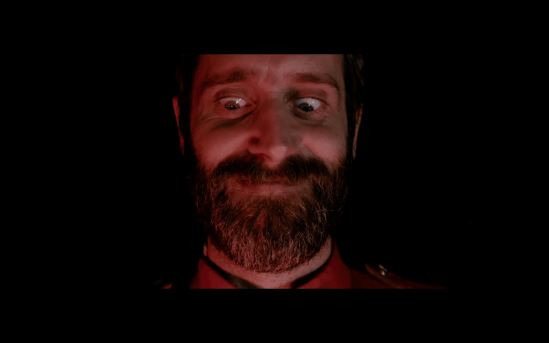
Actually, “Blood of the Tribades” is a feminist movie that just happens to have vampires. Male oppression to keep the women from being themselves, from being outspoken, and from being open with their sexuality is clearly combated through the social commentary symbolism. Plus, touches on the suppression of sexuality and the outward projection of a society forbidden love, but however exposed the feminist versus complacency and closeted angst message might be, the script’s dialogue, despite the film’s 78 minute runtime, is extremely long winded with an unapologetic amount of exposition to explain the messages in various scenes where dialogue is not needed; one of the early scenes, with a man peeping outside the window of a very naked woman bathing before shooting an arrow through her bloodsucking heart, had the right message with that actioned a tone conversing the unspoken subplot of men against women. There’s also no telling which time period, or even universe, the story is set with various era styled garments from conservative nightwear, to bright red band-leader tops, to skin-tight, scantily night club outfits. The latter felt really out of place with Sindy Katrotic’s fighting wear.

Production company and distributor, Launch Over, presents “Blood of the Tribades” on high definition Blu-ray and is available for pre-order before the April 30th release date! Image quality of the 1080p picture, despite the number of filters used, still manages to pull off balanced and vivid hues of the forest and castle rooks, skin tones look too good for the plague makeup’s own well being, and thick black tones highlight the right amount of mise-en-scene without much aliasing or compression issues. Bonus features include a theatrical trailer and an in-depth behind-the-scenes with interviews from the directors, cast, and crew. Chock full of nudity and delivering a high body count, “Blood the Tribades” is an adoring, beautiful, and slightly satirical homage to the multifaceted 1970s female vampire by way of dogma masculinity and righteous fanaticism that isn’t far skewed in reality’s present day!


Never, Ever Climax With Evil! “Female Vampire” review!

A cursed countess has returned home to the Madeira Island. Countess Irina Karlstein has an insatiable thirst, deadly to any man or woman she’s comes in content with on the scarcely populated island. By day and night, the beautiful mute countess, wandering the terrain more than half naked, enjoys the islet’s amenities, including sucking the blood, or the sperm, out from her erotically hypnotized prey and zapping their life essence right at the point of climax. Discredited Dr. Roberts and a mystical blind Dr. Orloff aim to track down the creature practicing vampirism, despite the local authorities unwillingness to aid them and wishing to debunk the outlandish theory. Amid the rising death toll, the countess unexpectedly falls in love with an aspiring writer on holiday and she fears her curse, her hunger, her need to be filled will consequently overtake the love she has bestowed upon the writer.

Classic European schlock from the greatly candid and voyeuristic director Jesús Franco, “Female Vampire” goes by many interesting titles, just like Franco himself who also has a cache of various, widely used monikers. “Erotikill.” “Loves of Irina.” “Lustful Vampires in Sperm Frenzy.” These are just the tip of the enigmatic iceberg that is of the English titles associated with Franco’s film with “The Bare-Breasted Countess” and “Female Vampire” the better suited for the version reviewed by Its Bloggin’ Evil. Oh, did I forget to mention there are multiple cuts and versions of this film? The 1975 sleazy vampire flick has numerous renderings from an XXX version with sexy-time vampire scenes to a 35-minute reduced cut where many of the sexually graphic material has been removed and more of the horror either remains or second, more conservative, takes are introduced. Whether “Female Vampire” is a good film or not ultimately determines to be an unnecessary factor as Franco’s film can be rather an interesting case study in how one story or, in this case, one reel can be reworked and reconstructed to emit a completely different sensational perceptive.

Barcelona born actress Lina Romay exposes herself as the Bare-Breasted Countess Irina Karlstein. Her striking dark features and piercing eyes make her resemble your typical lady bloodsucker and with vampires being naturally attributed with strong sexuality and influential powers, Romay doesn’t need the omitted dialogue as she instills beauty, sex, and power into the body and the expression of her character. The untrained actress leads by being an extrovert, uninhibited by conventional proprieties, and Romay wins at being Countess Irina Karlstein just by naturally being herself. Her longtime collaborator and future husband, Jess Franco, had developed, whether intentionally or not, this role for his free-spirited companion and, as well, stars himself as the inquiring Dr. Roberts. As the countess’ love, cult genre favorite Jack Taylor brings his tall, dark attributes to be a soft spot for the unquenchable cursed and an Amazonian built Anna Walican gets hanky-panky as a islander journalist with Lina Romay in a sensual scene of unchained lust. Alice Arno (“Justine de Sade”), Monica Swinn (“Hitler’s Last Train”), Luis Barboo (“Conan the Barbarian”), and Jean-Pierre Bouyxou round out the cast surrounded by Romay’s eroticism.

On the outside, Jess Franco directs like the utmost perversity, deep-seeded with gratuitous nudity and filled with revamped versions of the same scene. On the inside, “Female Vampire” is tragic love letter with Countess Irina Karlstein’s wretched curse stretching beyond her power. Her curse is more than just yearning from blood (or semen), but also an ache of the inability to be sexually gratified. Even when her victims are dead, she continues the carnal ritual of graphic grinding, tantalizing touching, and manic masturbating. Aside from being mostly nude throughout the entire feature, and if not, semi nude through a see-through blouse, Lina Romay’s perfectly shaped apple bottom is constantly upended, flaunting her pheromones in more way than one, with each conquest more exposed than the other.

Screenbound Pictures has released “Female Vampire,” aka “The Bare-Breasted Countess,” as one of the first United Kingdom DVD titles from the new Euro cult label, Maison Rouge, who specialize in Euro trash and sleaze. I was offered a DVD-R screener and can’t comment on the quality or the bonus features, but with release, with excellent cover art, contains two versions of the film: the highly erotic version with as much body part exposure as one can handle and the “Erotikill” which has alternate scenes and less sleaze. The main feature dons no blood, except the countess in a blood tub, and allows Countess Karlstein to roam in sunlight, non-typical traits of the conventional vampire and as the “Erotikill” version still lets the countess be exposed to ultraviolet rays, there’s more blood that’s more than enough to barely gentrify the horror genre. “Female Vampire” is an usual bird of love and lust, a perfect example of Jess France’s body of work, in an awful take on an iconic horror villain legend.
Evil Is Only Skin Deep. “The Wax Mask” review!

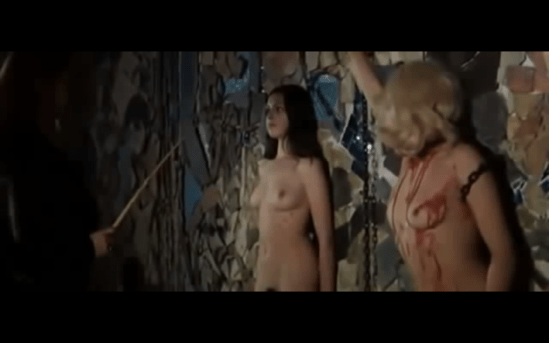
Set in Rome of 1912, a newly constructed wax museum, under a mysterious alchemy artist known as Boris Volkoff, stirs controversy with the showcasing of the world’s most grisly and notorious murder scenes. Two brothel customers’ debate result in the one challenging the other to spend the night at the curated museum of horror without having an ounce of fleeting fear. The next morning, the man has been found, apparently keeling over in fright, and the police are baffled, but something more sinister is afoot when Sonia, a young costume designer with a horrific past as the sole witness in the gruesome death of her mother and father in Paris 1900, becomes employed at the museum to costume the wax figures and faints when the scene of her parents’ brutal death is recreated as the museum’s new showpiece. Sonia and a reporter closely examine the museum when more people begin disappearing off the street, people who have ties with the beautiful costume designer, and learn the waxed creations are much more underneath their plastic-lifelike skin.

Before his untimely death, the Godfather of (Italian) Gore, Lucio Fulci, had been cooperating on a semi-quasi remake of Vincent Price’s 1953 thriller “House of Wax,” based on the Gaston Leroux’s novel, alongside fellow iconic Italian horror director Dario Argento (“Suspiria”) in a comeback collaboration for Fulci, but the entitled “The Wax Mask” film was evidently delayed partly in because of Fulci’s death. “The Wax Mask” was handed over by Argento, who was producing, to special effects guru Sergio Stivaletti (“Cemetery Man,” “The Church”) and months after Fulci’s death, a finished product shared very similar traits to the Godfather of Gore’s style craftily blended with more modern approaches to filmmaking was released to the public. Though tailored more toward the interests of gory special effects, Stivaletti’s 1997 film is dedicated to Fulci with the implementation of many of the director’s popular trademarks, including closeups on various eye expressions and zoom-ins on gore and the weapons before their fateful strikes, while also basking in strong bright colors in the midst of shadowy cinematography that’s typical of the giallo genre.

In such a crimson world, an elegant performance by Romina Mondello, who stars as the orphaned Sonia, has the Rome born actress bring beauty, innocence, and charm to the macabre that harbors contrasting arguments against undermining marred antagonists and she provides a breath of aesthetic liveliness amongst a narrative that surrounds itself in capturing beauty in inanimate wax figures. “Cemetery Without Crosses'” Robert Hossein embraces the enigmatic museum curator, Boris Volkoff, with struggling internal black aspirations that involve his recently acquired employee, Sonia, and Houssein is able to turn off and on that switch of longing and menacing, playing the hand of the character superbly to keep audiences guessing his true intent. Volkoff’s faithful assistant and exhibit creator, Alex, embodies creepy and morbid attributes wonderfully contributed by a relatively unknown Umberto Balli. The trifecta cast sells the ghastly science fiction that slowly builds toward the transformation of “The Wax Mask” from classic giallo to sensational mad science Gothicism with a boost of euro trashiness that’s more relative to the work of Jesús Franco or Joe D’Amato. Riccardo Serventi Longhi (“Symphony in Blood Red”), Valery Valmond, Gabriella Giorgelli (“The Grim Reaper”), and Gianni Franco (Dario Argento’s “The Phantom of the Opera”) round out the cast.

Stivaletti’s toolbox of special effects celebrate in the practicality that escalates when the cloaked killer’s metal claw literally rips terror through the hearts and souls of characters, but the glossy composite imagery thwarts realism and cheapens the already cheesy Euro horror with a laughable fire set ablaze and a slew of lampoon electricity while half naked women are strapped to a barbaric mechanized chair. The cut-rate composite won’t ruin a guilty pleasure viewing and won’t blast apart an arguably respectable adaptation of Gaston Leroux’s novel, but the script, co-written between Argento, Fulci, and “The House of Clocks'” penning collaborator Daniele Stroppa, does pull from other, interestingly enough, inspirations that one wouldn’t think would be genre compatible. The action-packed finale of James Cameron’s 1984 pre-apocalyptic, time-traveling cyborg blockbuster, “The Terminator,” makes an unexpected appearance with an endoskeleton villain donning some familiar and memorable moments from one of the greatest sci-fi films of all time.

“The Wax Mask” greatly resembles Italian horror cinema from the 1970s and 1980s spawned in the late 90s, a superb feat for a director more aligned in vocational special effects, but the jaded historical background accompanying the film places a stain on whether Lucio Fulci had much to do with the project at all. Much is speculated that Argento and Stroppa re-wrote Fulci’s original script after his death, removing much of Fulci’s atmospheric flair and adding more gore, but in the end, “The Wax Mask” instabilities are overshadowed by great practical effects, an engaging storyline, and a roster of flavorful characters. The One 7 Movies and CAV Distributing Blu-ray release is presented in 1080p. The widescreen 1.78:1 aspect ratio is the not the original 1.85:1 aspect ratio, but doesn’t constrain the image. The MPEG-4 AVC codec emits a bit of shakiness under the compression, suggesting a lower bitrate, but the One 7 Movies’ release is the best, sharpest looking transfer of the original source material with natural coloring on skin tones, vibrant shades of various colors, and shadows being exquisitely black. Four audio options are available from the English and Italian Surround 5.1 tracks to the English and Italian Stereo tracks with no accessible English or Italian subtitles in the static setup menu. Extras are slim with a handheld camera behind-the-scenes that’s solely in Italian. “The Wax MasK” is an ambitious Gothic hybrid horror that cements the memory of Lucio Fulci, pleases the gore of Dario Argento, and showcases the talents of debut director Sergio Stivaletti.

Purchasing One 7 Movies’ “The Wax Mask” at Amazon!

 It's Bloggin Evil!