A Stop-Motion EVILscape of Totalitarian Hell! “Mad God” reviewed! (Acorn Media International / Blu-ray)

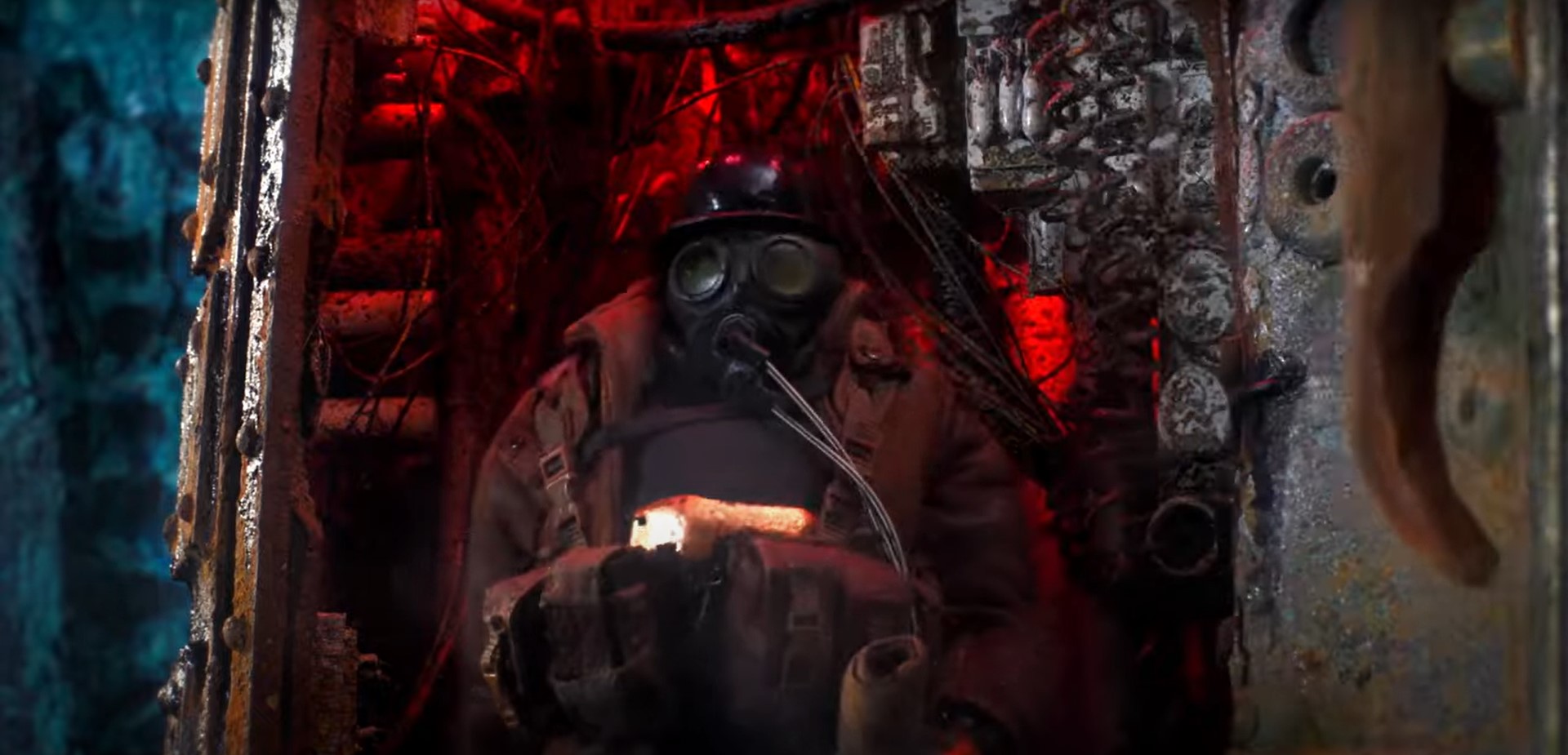
Descending from above into the depths of grotesque terror and suffering, The Assassin steps out of the drop pod with a gas mask, industrial armor, a suitcase, and a crumbling map.  Bearing witness to the surrounding horrors – cruel experimentations, enslaved beasts, tortured manufactured slave laborers, dog-eat-dog atrocities – The Assassin sallies forth, descending deeper into the primordial pit.  The missioned at hand is to set an explosive charge that will eradicate out the ruinous, oppressive filth that aims to corrupt the everything, but there the darkness won’t be so easily wiped away and The Assassin must stay in the shadows and out of sight or else become a tortured fixture in the fray. 
“Mad God?”  More like mad genius!  Phil Tippett’s 34-year, stop-motion, pet-project “Mad God” is the purest Hell I’ve ever seen.  Tippet, famed stop-motion and puppeteer effects artist responsible for the iconic visual effects and stop motion work in fan films such as the original “Star Wars” saga and the “Robocop” franchise as well as cult favorites “Howard the Duck,” “Piranha” and “House II:  The Second Story,” started “Mad God” in 1987 that become more of an ambitious project than originally thought and once the 1993 saw a computer generated effects revolution with a little prehistoric dino-disaster film called “Jurassic Park”, a film Tippett also did work on as dinosaur movement consulting supervisor because of his expertise on the short “Prehistoric Beasts,” the gifted animator had shelved “Mad God” for about 20 years with the though a newer, shiner, computer-driven animation would be the next best thing studios would ardently desire. This two-decade span gave Tippett time to outline objectives and really expand upon ideas of how “Mad God” should look and feel when conveyed. Tippett co-produces the film with Jack Morrissey under Tippett Studios and presented by IFC Midnight and AMC’s Shudder.
Just because “Mad God” is dialogue-less doesn’t make the “Mad God” voiceless. All around, in every scene, is a disturbing commentary or an unhinged metaphor bred mostly out of the animatable inanimate, but there are some live action performances weaved into the mad tapestry of monstrous titans and despot of cruelty. The most clearly discernible face of the lot comes from a director, “Repo Man” and “Sid and Nancy” director Alex Cox to be more exact. Cox plays the long nailed and regime-driven “Last Man,” representing divine leadership of a modest, dieselpunk heaven above a more organic and grotesque hell-type world. Only on screen for perhaps a total of 5-to-10 minutes, Cox grunts and gestures with precision articulation to give off a fair and just ruler impression. Niketa Roman plays the next real person to have some substantial screen time. Less of an actress and more of an animator by trade, with credits including “Blade II,” “Jurassic World,” and “Star Wars: Episode IX – The Rise of Skywalker,” Roman finds an expressive talent in her striking, heavily made-up eyes overtop a surgical mask and gown when whisking away one of the Assassin’s souls to be studied and experimented on by a broodingly ethereal entity. Other micro-performances include minor roles of tortured monkeys, various iron-cladded Assassins, witches, and gnomes from Satish Ratakonda, Harper Gibbons, Arnie Hain, David Laur, Chris Morley, Anthony Ruivivar, Tucker Gibbons, Tom Gibbons, Hans Brekke, and Jake Freytag.
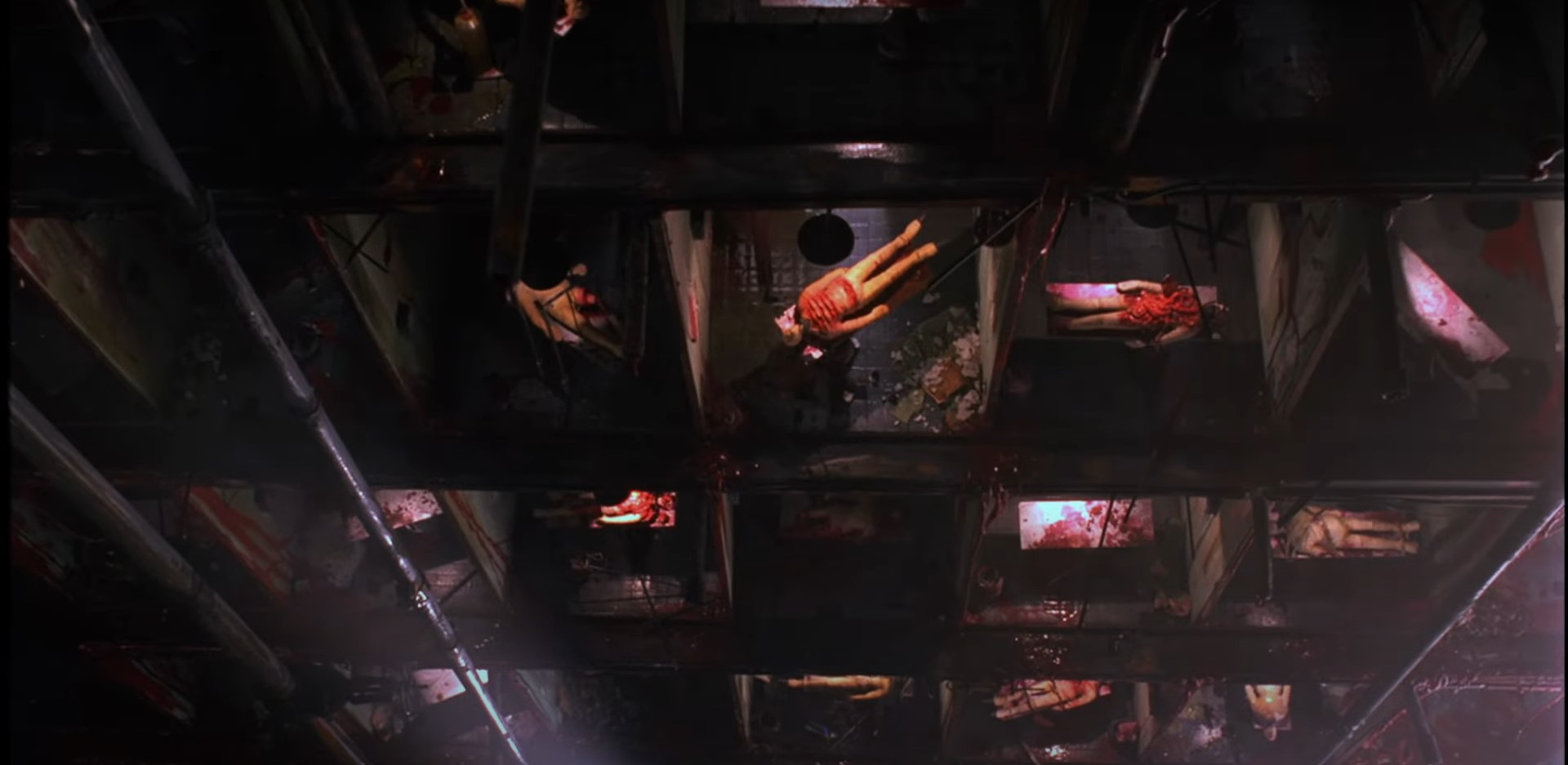
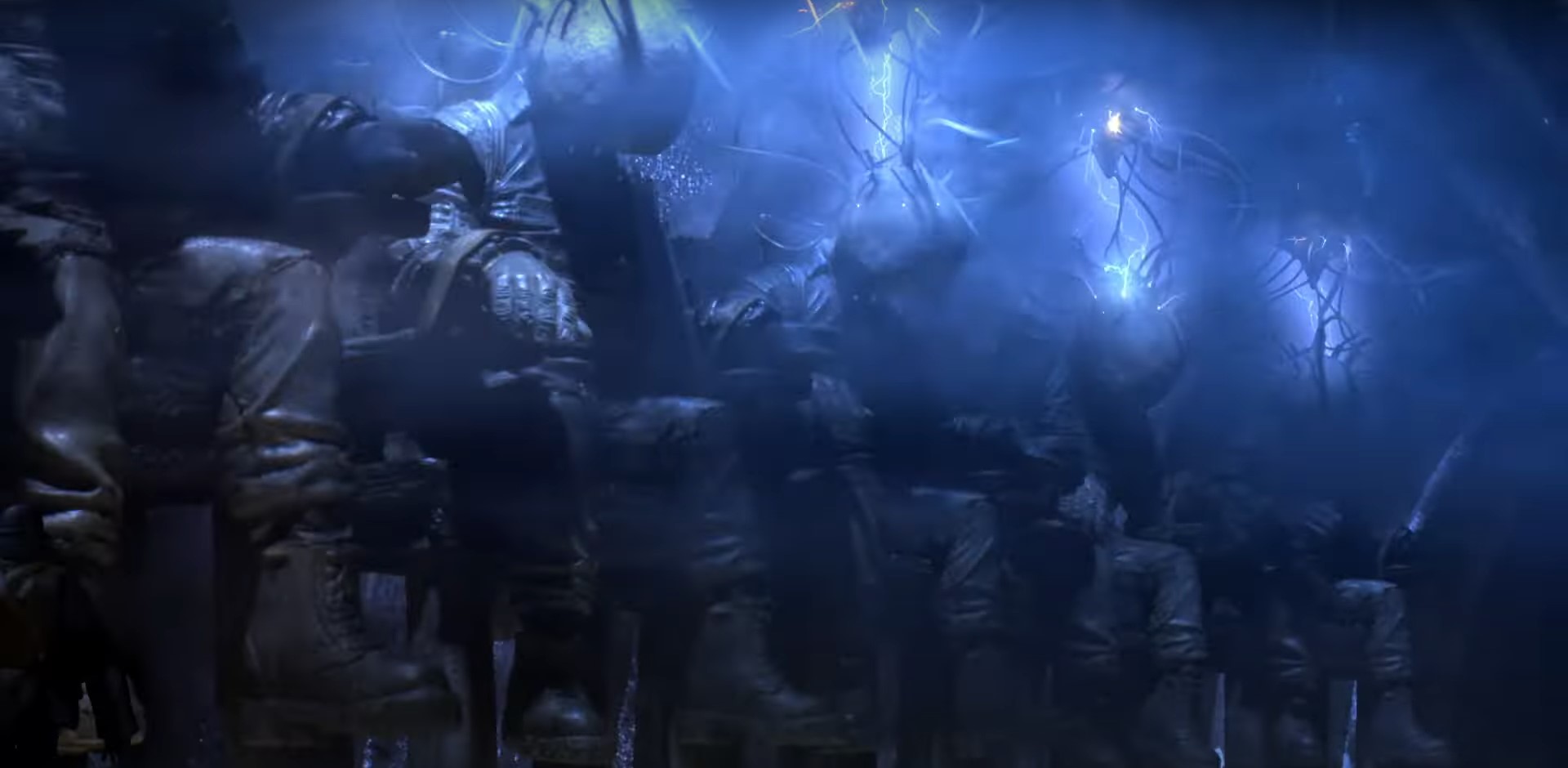
“Mad God’s” possibilities and interpretations are endless. Phil Tippett pulls from a motley of inspiration that includes, but is not limited to the fantastical, sometimes hellish, paintings of Hieronymus Bosch, the wacky, often gonzo animation of Tex Avery, the stop-motion titans of Nathan Juran’s “The 7 Voyages of Sinbad, and Dante’s Inferno. The mind is a deranged and wonderful creator of the macabre and of the aberrant and as a receiving device, the mind can also, if opened up enough, accept such visceral visuals of bowel fluids being jettisoned out by electric shock and into the mouth of an organic machine that manufactures fibrous, lumbering humanoids for slave labor. Like lemmings in a way, these exploited shadows of human beings will succumb under their own demise or at the gnarled and unforgiving hands of their master’s gargoyleish work-whippers. “Mad God’s” eye for detail is greatly disturbing to see cities in monolithic cities and cultures in ruins, the composite depth between foreground and background action in one scene reminds me a lot of older works like “The Neverending Story” or “Clash of the Titans” that create a vast scale with smaller objects, and the playful irony of a nightmare netherworld being commanded over by a baby’s babble doesn’t nearly seem to a stretch from the truth. As the multiple Assassins trek through the chaos and the insanity, an overwhelming sense of life is meaningless scores the landscape as there isn’t an ounce of compassion or empathy to be had or displayed for any of the malformed creatures and wretched humans. A laborer is crushed by a stone – no biggie. A cute and cuddle animal is attacked and whisked away for food storage – all in the day of cruelty. A man is stripped of his armored gear, injected with a mysterious substance, and prepped for exploratory surgery – all for show in front of a live clapping and cheering audience. The only compassion I can make sense is the Assassin’s mission to blow up this God-forsaken world of eternal suffering to restart the heart. Madness grinds bones, fillets spirits, and crushes souls in Phil Tippet’s Godless underworld and can haunt you even while you’re awake.
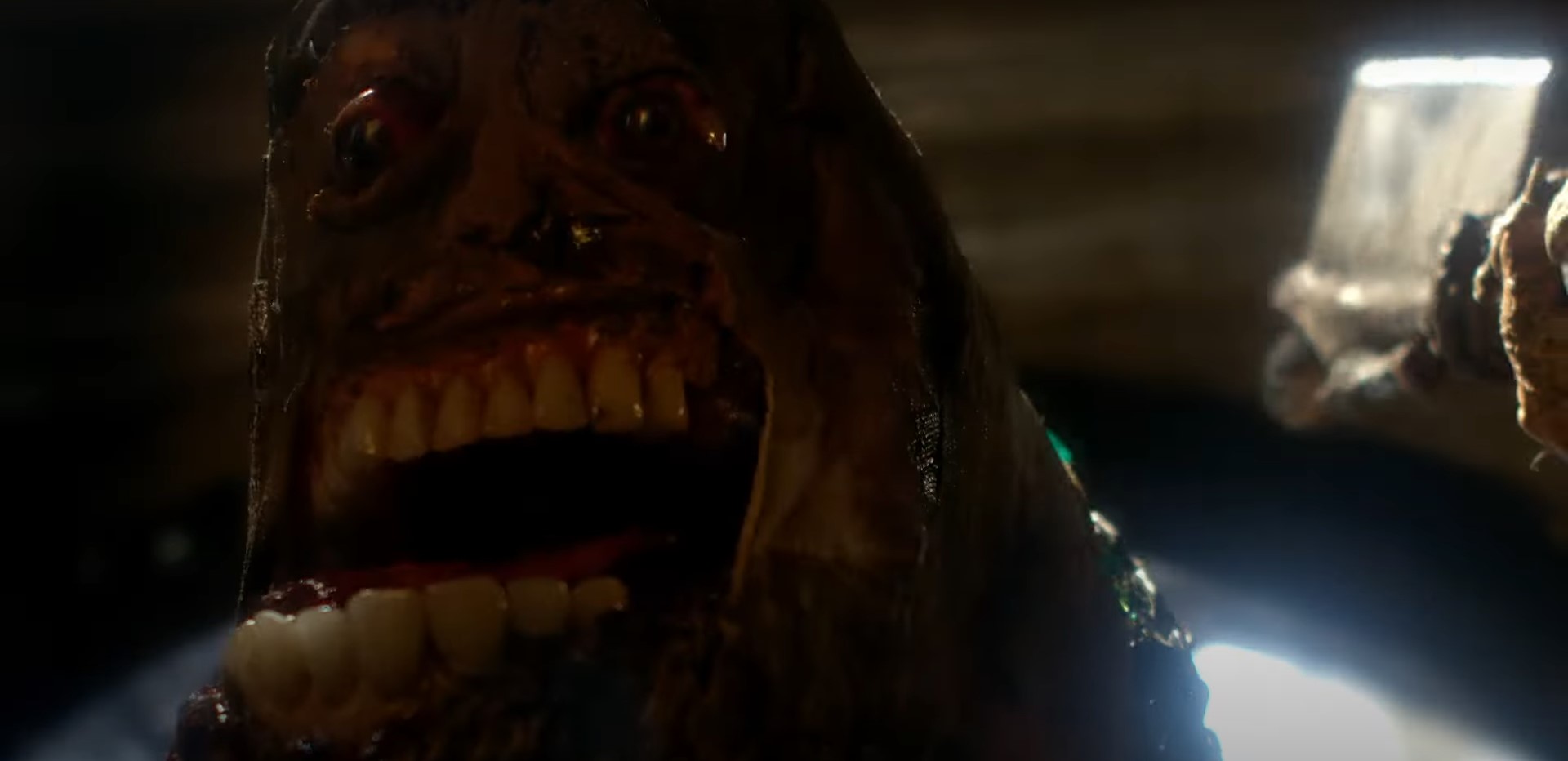
A surreal stop-motion wonder and excruciation, “Mad God” brings all the horrors of the subconscious mind to the surface with a high-definition, 1080p Blu-ray. The region 2, PAL encoded release from UK distributor Acorn Media International presents Tippet’s tour de force in a widescreen 1.78:1 aspect ratio and the image is purposefully varied to exhibit different strokes of craft as students would assist Tippet with contrastive topographies to carve out an apocalypse-riddled world that’s in a state of a violet retrogression. Tippet and Tippet Studio visual effects artist, Chris Morley, pivot to “Mad God’s” cinematography appearance with brooding, darker tones that illuminate and are erratically sparked with warm neon glows or brilliant voltage streaming through highly conductive bodies. Some earlier scenes from the late 80’s have natural grain from the 35mm stock and then later, more recent scenes have a cleaner, sleeker look with the digital recording. The Dolby Digital 5.1 surround sound mix has an all-embracing range, mostly with sudden and alarming blazons of guttural roars, unnerving baby babble, elongated zaps and shocks, and the indistinct yips and yaps of a mad world, that sustains on a line of being lesser than crisp, which might be contributed to the inexact capture of depth as sometimes all sounds casts like from inside the reverberations of a fishbowl. Descriptive SDH subtitles are available. Bonus features include audio commentary with Phil Tippett and “Pan’s Labyrinth’s” Guillermo del Toro, cast & crew commentary, an interview with Phil Tippett, “Mad God’s” various painter, cartoonist, animator, and psychology inspirations, the making-of “Mad God,” Maya Tippett’s Worse than the Demon – Phil Tippet’s daughter’s 12-minute thesis documentary of her father’s 34-year passion project journey, Academy of Art & “Mad God,” a behind-the-scenes montage, and a behind-the-scenes photo gallery. “Mad God” has a runtime of 84 minutes and is UK certified 18 for strong violence and gore. A motion picture diorama of Phil Tippett’s neoteric psyche, “Mad God” is wrath wrapped in heart and soul, two descriptors not topmost on the surface but are meticulously integrated into every frame of pain, suffering, and despair.

Starve EVIL With Unseen Faith. “A Banquet” reviewed! (Second Sight / Blu-ray)

After the long-term care of her terminally ill suffering husband, he suddenly commits suicide right in front of her and right in front of their oldest daughter who just came home.  Holly must now pull it together for her two teenage daughters, Betsey and Isabelle.  Drowning in debt to maintain a wealth front of normalcy, Holly puts on the facade to juggle life’s adversities to order to keep the family above water, but when Betsey is overcome by an apocalyptic vision that intermittently possesses her behavior, Holly’s unsure of how to cope as any threats of committing Betsey for treatment is rebutted by talks of suicide.   Betsey goes into deep trances, deep sleeps, and won’t eat despite not losing any weight and as imaginations run wild of what’s driving her unusual behavior, Holly must contend to survive and triumph not only in her daughter’s wellbeing but in all of the seemingly insurmountable problems threatening to tumble down and crush her spirit.

If you’re a fan of elevated horror then Ruth Paxton’s debut dysfunctional family drama horror, “A Banquet,” will tickle your thinking pickle.  While some would argue there is no need for elevated horror in the genre, sometimes exercising the old thinker can be immensely stimulating as well as scary in the same breath.  The 2021 psychological thriller-horror hailing from the United Kingdom was one of the first productions shot in the thick of government issued pandemic lockdowns that tossed the moviemaking job market into a frenzy, scary void of uncertainly and, what seemed like, an eternal limbo, similar to what “A Banquet” offers in its multifarious themes and interpretations that involve faith and religion, family hierarchy, and postural image.  With many departmental crews and cast out of a job and unable to find work during forced lockdowns, “A Banquet” became a beacon of hope and a chance to indulge a passion no matter how little it paid.  “A Banquet” is penned by Justin Bull (“Merge”) and was secured by first time producer Leonora Darby with Nik Bower (“Replicas”), James Harris (47 Meters Down”), Mark Lane “Cockneys vs Zombies”), and Laure Vaysse (“A Dark Place”) co-producing the conglomerated production from HanWay Films, Riverstone Pictures, Tea Shop Productions, and Reliance Entertainment Productions 8 LTD.

“A Banquet” surrounds around a nuclear family minus the patriarch who immediately removed from the picture within the first five-minute opener in a powerful scene of weary difficulty, distressing pain, and a harsh untethering of a burden that begins the inklings of the uncanny to come. Enter mother Holly (Sienne Guillory, Paul W.S. Anderson’s “Resident Evil” franchise) and her two daughters, Betsey (Jessica Alexander) and Isabelle (Ruby Stokes), into the frame weeks, maybe months later, and resided to the loss. Playing the center of concern is the raven-haired Jessica Alexander in what is one of her first feature film performances and it’s a doozy.  As Betsey, a mild-manner older teenage girl at the forefront of adulthood, Alexander earns the chance to showcase herself in a variety of ways with a role that transcends from a docile daughter to a variable vessel of unknown origin that’s haunting and unpredictable as you can never tell what’s taken control over Betsey is naturally good or evil.  Alexander even gets to dip her toes into, or rather dig her fingers into, gross and horrifying practical effects with brilliant results.  Opposite Alexander in the role of the mother, Holly, is Sienna Guillory, a beguiling veteran actress now in the throes of maintaining the routine and keeping appearances aggregated up to snuff.  Guillory exudes a bottled-up pressure that’s so immense it can be translate right off the screen and into the viewer.  There’s plenty of tension in the story but most of it is concentrated right on Guillory’s embodiment of a mother treading desperately in deep waters.  A maelstrom of frustration, fear, loathing, and neglect eviscerate Holly open to shoulder her family’s bleeding and she claws frantically, with poise, to cauterize the fissure.  Isabelle is a fascinating and almost unintentionally forgotten character that is meant to evoke that effect as the neglected younger sister.  While we’re constantly orbiting Holly and Betsey’s, we lose track of Ruby Stokes’s Isabelle yet the upcoming star for Netflix’s “Lockwood and Co.” Stokes paints a potent psychological picture of Isabelle being on the backburner.  Raw and tragic, Stokes subtly pushes Isabelle, who initially is the more cavalier and disobedient of the two sisters, to strive for attention in her own way whether be that longing glance into the stands when her mother isn’t paying her mind during figuring skating instruction or wanting to reluctantly engage in alcohol and sex just to outlet that notice me energy elsewhere.  Concluding this bloodline of women is the more draconian matriarch, Grandmother June, with an uncompromising and plain-spoken fascia erected by Lindsay Duncan (“Body Parts”).  Duncan’s fine snide performance compounds the pressure on Holly and is a cold bucket of ice water to her granddaughters when speaking her mind, telling them simply stop pretending, and remind them of their mother’s own historical mental problems in a matter-of-fact tone.  Between the four, there’s individualistic dominance over each of their domain without an ounce of withdraw or relief until the bitter end and that dreadful dynamic sets the tone for the “A Banquet” austere veneer and tone.

“A Banquet” is a lot to unbox and chew on in this women-driven created film.  Open for a many number of interpretations, based on one own’s spiritual outlook or personal opinions, Ruth Paxton tees up a broader theme of centrical growth of stepping outside another’s shadow.  The message can be applied to Holly and her two daughters as each one of them attempts to move forward or past a routine of some form of contempt.  Isabelle is trying to get out of her sister’s shadow, Holly bristles against her overbearing mother, and Betsey is being supernaturally guided through a symbolically painful transition of growing up into an adult as if the process came naturally. Blunt defiant moments shine Betsey’s overall separation from mother’s control, such as threatening to kill herself if her mother institutionalizes her or in during the number of elaborately prepped dinners that Holly slave over are just pushed aside and untouched by Betsey. Those dinners, in themselves, are a sign of privileged with fine dining right at their fingertips with no sign of hot dogs or sloppy joes in sight. Holly strives to maintain that sense of luxury, which is another form of control but, in this case, is Holly’s mother June whose elitist fundamentals enslave Holly to live up to the hype. Systematically, each member of the family, working up the ladder from youngest to oldest, breaks the inherent status quo. What Betsey undergoes is mystically charged after she emerges from the woods a changed woman and what might seem like a possession of sorts, we don’t exactly know if the extent of what inhabits her is wicked or actually good as the pendulum sways constantly between being enlightened and being cursed. There’s plenty of allusions toward a religious experience with encouragement of faith and rapture talk that not only spooks Holly but also makes her the primary subject of Betsey’s claim to save. When the time does come, and Betsey passes through a substitutionary atonement, the end scene shows Holly being embraced by a candescent light that illuminates from within her. Is it being saved or is it something else? Ruth Paxton smashes her first feature with an elevated deconstruction of a family obliviously rotting at the core and attacks the film with dispirited ambiance sewn to dread.

Feast your eyes on the new limited-edition Blu-ray set of Ruth Paxton’s “A Banquet” from Second Sight films. The region B, PAL encoded UK boxset presents the film in 1080p widescreen 2.39:1 aspect ratio with a frame rate of 23-24 fps. David Liddel’s deep and encroaching cinematography of somber is highly effective in dulling out any kind of hope that might try to sneak in and with Liddel’s close-to-mid shots of macro-sized foods of all fresh and decaying varieties and in the middle of the more volatile struggles between mother and daughter opens up “A Banquet” to a plethora scene being uncomfortable moments. Details are sharp and colors are about as rich as Liddel can make them inside a grey-covered world. The English language set comes with two audio options: a DTS-HD 5.1 and a LPCM 2.0 stereo. DTS is clearly more robust through the various channels with a well-balanced mix. Other than a few outlier moments in the forest that disperse the dialogue in a naggingly boxy echo that doesn’t fit the environment, dialogue is discerningly clean and clear of obstructions and damage, as if there would be any on a digital record. Optional English subtitles are also available. Bonus material includes an interview with director Ruth Paxton Deformity of the Flesh on creating her first film during the height of the pandemic, an interview with star Jessica Alexander Improvised Exorcism in which she discusses her experience soup-to-nuts from hiring to completion, an interview with producer Leonora Darby Producing a Feast who notes about the difficulties of being a first-time producer in pandemic time, an interview with cinematographer David Liddel Dark Edges on how he creates “A Banquet’s” gloomy aura and creative shooting angles, the Q&A from Glasgow Film Festival with Paxton, Alexander, and Sienna Guillory, and a making of featurette. The limited-edition physical boxset is a sturdy vessel of beauty with a rigid slipcase with new artwork by Jen Davies, a 56-page soft cover picture and essay book with thoughtful examinations by novelist Alexandra Heller-Nicholas (“1000 Women in Horror”), film critic and writer Jennie Kermode, and Heather Wixsn, the managing editor of the Daily Dead. The contents round out with 6 collectable art cards. The film has a runtime of 97 minutes and is certified 15 for strong threat, language, suicide, self-harm, and drug misuse. “A Banquet” is lavishly cataclysmic as a divinely damning dish of a broken, dysfunctional family made to order by first time director Ruth Paxton with more to say.

Four Kids to Stop EVIL From Wiping Out The Rest of Mankind. “The Walking Dead: World Beyond” final Season reviewed! (Acorn Media International / Blu-ray)

The last time we saw the four Colony Campus travelers trekking across country, Hope and Huck were helicoptering back to the Civic Republic Military, Iris and Felix find Will to learn their home has been wiped out, Silas sacrifices himself up to the CRM for his friends to get away, and Elton discovers Percy alive but severely injured after uncovering Huck’s deceit.  Separated and deeply rooted into their own difficulties and dilemmas, the long-term goal is to survive and find each other again while unearthing clarity around the CRM’s true top-secret military operations – wiping out neighboring alliance colonies with lethal gas.  Hope reunites with her father to assist in how to quickly eradicate the dead but the advancement in their works comes across CRM immoral hurdles that force the group into radical action against the most powerful and well-organized military faction known to what remains of mankind. 

“The Walking Dead” spinoff series, “World Beyond,” comes to a close on the two-season arc that aims to die up bits and pieces of connective elements into the ever-expanding universe that is “The Walking Dead.” Showrunners Scott Gimple and Matthew Negrete return to season two with a drive to give fans a broader sense of the enigmatic Civic Republic Military (aka CRM), to supplement a main series character’s hand in the fate of the human race, and to take continue to reach across the domestic planes to show that there’s more than just Georgia-Virginia heat and TexMex dead and drama. Gimple and Negrete’s “World Beyond” is the little brother of the series two predecessors but offers same amount of drama under a blanket of undead gore. Friendships will be tested, moralities will be checked, and the dead will still walk in this ancillary limited series that runs from 2020 to 2021, totaling 20 episodes. David Alpert, Brian Bockrath, Maya Goldsmith, Gale Anne Hurd, Ben Sokolowski, and also across the TWD universe and graphic novelist co-creator Robert Kirkman return to season two as executive producers under the presentation of American Movie Classics (AMC) with Idiot Box, Circle of Confusion, Skybound Entertainment, and Valhalla Entertainment serving as production studios.

Season one regulars Aliyah Royale, Alexa Mansour, Hal Crumpston, Nicholas Cantu, Nico Tortorella, and Annet Mahendru return to see their characters through the waves of the flesh-biting undead and the unbridled, unchecked power trips to the bitter end. Performances from season one into season two two retain individual natural orders of progression within the slogging imbroglio surrounding one ultimate thematic goal – to survive without sacrifice. From the regular cast, Aliyah Royale, Alexa Mansour, and Nico Tortortella step up in the rapid-fire series of blistering complexions based on the known and unknown facts of the environments or colonies that influence them. Tortorella actually showcases some of his fighting choreography unlike what we’ve experienced in the first season, making his Felix character that much more bad ass. Hal Crumpston, Nicholas Cantu, and Annet Mahendru don’t necessarily provide inedible takes of their equally thrust in turmoil characters but also don’t take their themselves to the next level. I still find Huck, played by Mahendru, to be average in a key role of double-edged duplicity. Plus, that forced deep Southern accent doesn’t do Huck justice, forged to contend with her military trained and tough cozenage. Crumpton remains flatlined with Silas’ two-toned solo-pot of emotions and Nicholas Cantu, who I consider the philosophical voice of reason for the group, isn’t provided enough screen time substance in season two to make an impact as his personal tribulations, such as learning Hope killed his mother during day one of zombie fallout, are dropped with barely a mention. New series regulars come aboard stemmed from their provisional season one stints. Joe Holt becomes more involved as Iris and Hope’s scientist father, Ted Sutherland reoccurs as Percy being found injured and is nursed back to health to seek revenge on Huck as well as become Iris’s love interest, Jelani Alladin returns with a fulltime status as Felix’s partner and has more of security role pivotal to the rebellious efforts against the CRM, and Julia Ormond returns as Huck’s mother and as Lt. Colonel Kubleck aimed to do what must be done in order to achieve mankind’s longevity. The new regulars, with the addition of new newcomer Maxmillian Osinski, breathe new life and new complexities of a narrative’s David and Goliath’s approach with added poignant distress as well as subdued hope. The cast rounds out with Natalie Gold, Anna Khaja, Will Meyers, Madelyn Kientz, Robert Palmer Watkins, Gissette Valentin, and “The Walking Dead” crossover Pollyanne McIntosh as Jadis filling in as a CRM head honcho with a new and approved queerish haircut.

The second season promises a whole new set of perils through the world of the undead and, to be more specific, “World Beyond” pivots the focus from the dead to the cruelty of man, keeping up with the “TWD” universe’s majority themes of staggering scruples and survival barbarity.  “World Beyond” trades decaying dentures for military might as Hope, Iris, Elton, Silas, Felix and Huck exhaust their trek to a divisive end after season one’s from West to East’s coming-of-age, growing-in-ghouls expedition that leads them to step outside their comfort zones and into the real world from the safety of the Campus Colony.  We learn early in season one that going back home is not an option as the Campus Colony has been wiped off the map by the CRM, but that hidden truth runs deep into the new season’s storyline and becomes this paradox notion that causes division amongst the principal characters.  Much of the belief the CRM committed genocide is founded on gut-feelings and hunches, as Iris continues to arduously state and even going as far as killing one of the CRM soldiers without proof of ice-cold facts of CRM’s hand in murdering the close-knit survivalist friends back at the Campus Colony.  On the subject of killing, one of the initial gripes by “World Beyond” was that the first season was gory-lite and lacked a concerning amount of undead rapaciousness for flesh.  The same can be said for the second season that saw little bite from the zombie contingent and, instead, focused more of the dynamics of conflicting groups trying to get the upper hand on each other, but also mirroring the layout of season one, gore and that inherent blood-n-guts cornerstone that, as we all know, makes audiences return show-after-show, season-after season to the “TWD” behemoth.  The latter episodes feature a crimson blood-splattering display of head shots, throat rips, and eviscerations that can sate fans toward forgiveness on being reserved in grisly gaudiness.

If you can’t get enough “The Walking Dead” or “Fear of the Walking Dead” then “The Walking Dead: World Beyond” can help fill that void with a short-lived arc in other parts of the dead-riddled planet and the final season comes to Blu-ray home video with a 3-disc, 10-episode set from Acorn Media International. The PAL encoded UK set is presented in an unmatted 1.78:1 aspect ratio which comes standard for U.S. television programming. Picture image comes from the HD AMC premiere and the noticeable dull details and banding in the digital compression codec. The quality won’t cause eyestrains or be a breaking eyesore as many viewers will notice little difference between television and the Blu-ray data output. The English Dolby Digital 5.1 surround mix has no flaws in the digital recording that provides a high bit clarity on each isolating channel and funneling them into one well-blended mix. Range and depth are on point and come through in a tumultuous world of gunfire and that recognizable growling dead. Optional English subtitles are available. With a runtime of 439 minutes and certified 15 or over, “World Beyond” has plenty of content and violence to salivate over but just in case you crave more, bonus features include the Comic-Con@Home 2021 Panel hosted by “Talking Dead’s” Chris Hardwick and includes showrunners Scott Gimple and Matthew Negrette as well as cast members Aliyah Royale, Alexa Monsour, Annet Mahendru, Jelani Alladin, Joe Holt, Hal Crumpston, Nico Tortorella, and Nicolas Cantu in the Hollywood Square-like Zoom panel. “World Beyond” scratches “The Walking Dead” itch for more with a Martial Law look and lockdown theme of military oppression over what remains of the civilian population, an aspect we haven’t seen extensively before in the franchise and slips into the timeline as a needed gap-fill, stretching over a new place and new set of people.

EVIL Spirits and Japanese Internment Camps in “The Terror: Infamy” reviewed! (Acorn Media International / Blu-ray)

Chester Nakayama floats through life living with his immigrant parents on Terminal Island in San Pedro, California during World War II. A photographer hobbyist who helps on his father’s fishing boat and studies at a university, Chester doesn’t have steady employment and has recently learned his girlfriend, Luz, is pregnant with his baby. But those are not the height of Chester problems, or his family’s, when the country of Japan declares war on the United States by bombing Pearl Harbor and mysterious deaths surrounding the Nakayama family point to ancient Japanese beliefs of a Yūrei, or a ghost, clinging to a grudge. As the years past, Japanese American citizens are move from one internment camp to the next with no end in sight being projected as potential spies for the country of the rising sun and for Chester, Luz, and his family and friends, the Yūrei’s scheme endangers Chester’s life and legacy.

Following the success of the Ridley Scott (“Alien”) produced AMC horror television series, “The Terror,” the second season aims to build a new path of dread with a storyline plucked from the late 1900’s of two stranded artic explorer British ships trying to navigate a Northwest passage and now placed in a whole new and different, massive turbulent story and setting laid out in the early-to-mid 20th century during World War II America with Japanese Internment camps.  The second season comes with a partially new title, “The Terror:  Infamy” along with a new cast and new crew as well.  The subtitle’s double entendre refers to the then era United States 32nd President Franklin D. Roosevelt’s Day of Infamy speech given to the public after the assault on Pearl Harbor and also refers to another American infamous time of the mistreatment of the country’s own citizens, the Japanese Americans, placed into internment camps and constantly scrutinized as potential Japan spies.  “Infamy” showrunners Guymon Casady, David Kajganic, Scott Lambert, Alexandra Michan, Jonathan Sheehan, and David W. Zucker, along with Ridley Scott, return to the AMC, Entertainment 360, EMJAG Productions, and Scott Free Productions series.

At the tip of the ensemble cast spear, most consisting of Japanese heritage actors and actresses, is Derek Mio as the Yūrei plagued Chester Nakayama.  Perhaps the biggest role for the Mio, the role transcends Chester from a stagnant part-time fisherman on the dead-end Terminal Island settlement of San Pedro, California to a responsible man of action that sees Chester fight for his family, his wife, his children, and even fight for his country despite the maltreatment in order to course his loved ways safely through a plethora of evil.  While the character grows in an arc of accepting responsibility as a son, husband, and father, Mio never expresses the range of a story of his magnitude that takes him across various domestic terrains and on the other side of the conflict-engulfed world as he’s afflicted by a malevolent spirit.  Constantly confident and seemingly unafraid, Chester just simply endures the hardships along “The Terror’s” bombardment of grim reality.  Comparatively, the younger Japanese American generation are culturally more expressive next to the immigrated older generations in Chester’s father (Shingo Usami) and eldest family friend Nobuhiro Yamato (“Star Trek’s George Takei”) who we witness keep mostly in line with their stoic composures.  Takei, born in 1937, and his family were actually forced into living in converted horse stables and official internment camps across the country during the War and that gives the series a morsel of 100 times it’s weight in authenticity with firsthand experience. Along with the deep sympathies and an infinite amount of shame for the wrongfully imprisoned citizens of war, there’s also immense compassion for Chester’s wife, Luz, played by Chrstina Rodlo (“No One Gets Out Alive”). Rodlo runs the gambit of emotions that convey happiness with her time with Chester, to despondent loss, and to fear while on the run from the American government as well as an evil spirit who threatens her child. Just like the first season of “The Terror,” character staying power is often short lived as the horror and, well, the terror catches up to them in one way or another, but we see fine performances from Miki Ishikawa (“I Don’t Want To Drink Your Blood Anymore”), Naoko Mori (“Life”), Alex Shimizu, Lee Shorten, Hira Ambrosino, and Kiki Sukezane as the incessantly stubborn Yūrei and C. Thomas Howell (“The Hitcher”) with another flimsy performance as a hardnose major serving as head of an internment camp.

Subtly contrasting two very different kinds of horror between the yore of the fantastical Kaiden ghost stories coming to fruition with the Yūrei and the very non-fictional blight on American history that was falsely imprisoning American citizens with Japanese roots no matter what age. Both unsettling constructs are unequivocally provided equal weight in dread much like with season one that showcased the dog-eat-dog desperation of man isolated and trapped in extreme terrain with the supernatural forces of nature with a monstrous, polar bear like creature hunting them down one-by-one. Though the same dance, but a different song, season two has a very welcoming different take of blending of yore with lore that separates itself into a new entity, a new engagement, and a new facet of terror very befitting to the anthological series. Eventually, “Infamy” starts to lose steam when the Yūrei side of the story insidiously infringes fully into the fold when Chester and Luz have fled the internment camps and are living in nowheresville New Mexico. The camps fade away from the story and also from our consideration with only bits and pieces to chew on just to check in on principal characters and has a resolution that’s about as cheated as the Japanese Americans survivors given $25 by the American government to start a new life. Yet, “The Terror: Infamy” is poignant and informative, a better picture of what really happened on the American home front better any textbook could ever properly depict, and exposes the mainstream into the Kaiden-verse of Japanese culture.

The 2-disc, 10-episode Blu-ray set comes from UK distributor, Acorn Media International, with each episode with a runtime on an average of 40 to 45 minutes long and a total runtime of 419 minutes. The region 2, PAL encoded release is presented in a standardized for television widescreen format of 16X9 and the Acorn release doesn’t present a flawless picture with noticeable issues with severe cases of banding and compression artefacts around the darker portions of the scene and trust me, “Infamy” is plenty dim and leaden between John Conroy and Barry Donlevy’s cinematography unlike the previous season’s artic white landscape that brightens much of the frame. The Dolby Digital soundtrack produces a better product with satisfactory quality in all categories of score, ambient noise, and dialogue and is accompanied by well-synced and timed English subtitles. Bonus features include a look at the series part 1 (for disc 1) and part 2 (for disc 2) and the biographical and inside the head look at the characters through the eyes of their portrayers. “Infamy” is UK certified 15 as it contains the AMC edginess of bloody graphic content as well as some offensive language. “The Terror” series as a whole has remarkable historical insight commingled with soul-stirring, skin-crawling old wives’ tales. “Infamy” may not supersede its predecessor but is still one hell of an engaging and unique story that salivates us into wanting a third season.