Everything is Bigger, and EVILLER, in Texas! “Deep in the Heart” reviewed! (Fun City Editions / Blu-ray)

“Deep in the Heart” on a Fun City Edition Blu-ray! Here for Purchase.

Boston born Catholic Kathleen was raised in a good home by Irish immigrant parents.  Having moved from the liberal Northeast America to Dallas, Texas, Kathleen finds employment as an American history teacher at a local high school.  She meets born-and-raised Texan, attorney, and gun enthusiast Larry Keeler at a colleague’s outdoor barbeque and the two casually see each other off and on with Kathleen not interested in something more serious with the charming and handsome, budding attorney, but Larry believes Kathleen’s too uptight to see how madly desirable she makes him and rapes her at gunpoint when he can longer steady his urges, proclaiming her sexual hangups and rigidness as faults against her immense drawing of sensuality during post-coital.  Reporting her attack to law enforcement and her Catholic priest for prosecution and spiritual relief, both agencies fail to side with Kathleen’s trauma based on the facts of the case and God’s ever-tolerant forgiveness toward everyone.  The anger seething inside impels her to chop off her long, blond hair, dress more matronly, and join a handgun gun club after Larry continues to casually insert himself into her life like nothing ever happened and down the barrel’s site, Kathleen plots her vengeance. 

If there was an ever a more culturally relevant and timely film today produced and released decades ago, encapsulating the worst parts of American history, “Deep in the Heart,” aka “Handgun,” is that very film.  Through the perspective of the expatriate filmmaker Tony Garrett, having been born and raised in a country without an intense gun culture, “The Prostitute” English writer-and-director entrenches his outsider take on America’s unique, and unhealthy, gun fascination around an equally powerful systematic rape culture that ignores the severity of the transgression and assigns blame to the victim and, in turn, has the attacker come out unscathed due to being an upright citizen and a pillar of the community amongst his, also male, peers.  Filmed entirely location in Dallas in 1981 but not released in 1983, Tony Garrett co-produces the film with American producer David Streit (“The Prowler”) under United Kingdom production companies EMI and Kestrel Films where American distributors were eager to bank off the sexy rape-and-revenge thrillers of “Ms. 45” or “The Last House on the Left” but received a more thought provoking and provocative thriller that analyzed more of a problematic inward of U.S. culture and global societal toxicity. 

A daunting and difficult role for any actress to play, Karen Young had captured the epitome of a formulaic victimized women in an injustice system for her first major feature-length role.  Young, who went on to have roles in “Jaws:  The Revenge,” “Daylight,” and “The Orphan Killer,” embodies the American dream of the young, educated woman, Kathleen, from humble beginnings living away from home and having a career as a high school teacher in Dallas, Texas.  Kathleen’s American dream is crushed by the methodical mentality of Larry Keeler, representing America’s grasping of the past of taking what you want, even if that means by way of force.  Keeler is played by born-and-raised Texan Clayton Day (“Osa”) with a fast-talking, full of himself reproach to a debut performance that involve rape at gunpoint and being fully nude with your equally green costar.  Garrett’s able to convert the two inexperienced actors into raw talent, extracting their singular qualities into a combined effort of a sordid cultural subtext and cat-and-mouse rape-and-revenge suspenser.  Kathleen’s transitional arc from the shy and innocent Catholic outsider to the hate-filled, pro-gun, self-serving vigilante proved to be a dazzling gem of range and moxie pulled from the rough depths of untapped talent and getting to that point is a journey expressed vividly and thoroughly to build up both characters’ constitutions without a ton of exposition or visual insight.  Keelers intentions never slip but we understand through his conversations with Kathleen he’s a gun advocate and collector, he’s a good-time, good ol’ boy party animal at a colleague’s bachelor party at the Foxy Boxy – a Women’s see-through T-shirt boxing competition, and he has overt charm pasted thick with insincerity with out on dates with the high school teacher from Boston.  “Deep in the Heart” is centrically designed around these two principals with an already established built around gun-toting, fast-and-loose, and blinders on male dominated environment inhabited by smaller, yet key roles from the denizens of Dallas.

“Deep in the Heart” is not the sexy, rapey, glorified femme fatale film every will think it is.  “Deep in the Heart” is what Tony Garrett understand and believe in from the interpretation of dark side, misguided American values and how those cultural thorns that prick into the side of the free world change the course of all that is good and pure in the foundational basis America is built upon.  Engrossingly tied to modern day hot topics, Garret had incredible foresight or, maybe, was just brazen enough to go against the grain being an foreign expat shocked by not only the legal system but by the backwards ideas and beliefs of everyday citizens in different regions of the country.  In not only the rape but the whole pre- and post-rape setup is surrounding Kathleen’s inquietude is noticeable and uncomfortable to watch.  Men and women alike should feel icky of the transpiring contexts of spirituality failure, justice system failure, and an overall human being failure that lets Kathleen suffer in silence without the hoopla of scandal and punishment.  Instead, Kathleen’s bottled anger works inward toward a radical, retribution fix, resurrecting her from downtrodden ashes like a phoenix carrying a six-shooting revolver poised to a point of no return in DIY selfcare. 

Fun City Editions understands the power from “Deep in the Heart” by showcasing a new, restored transfer for their Blu-ray release.  Restored in a 4K scan from the original 35mm camera negative, making its first Blu-ray appearance globally, “Deep in the Heart” is stored on an AVC encoded, 1080p high-definition, BD50 and presented in an anamorphic widescreen 1.85:1 aspect ratio.  Not a whisper of image infraction, “Deep in the Heart” has a gorgeously graded picture that sees hardly any signs of aging or wear and the Fun City Edition’s restoration keeps the elements in alignment with the feature’s period of a late 70’s to early 80’s harsh filmed layer.  Color hues are vibrant and bold without appearing washed, presenting near perfect textures on clothing, skin, and environment and darker scenes keep contours and some details present without being completely dense or lost in any compression banding and splotches.  A lossless English DTS-HD mono track is more than ample audio for a very tight knit thriller mostly for indoor acoustics.  Exteriors capture the and highlight the appropriate milieu ambience, managed well within the single layer monaural to keep dialogue front and center.  Dialogue does not go without some crackling and hissing but not enough to be a nuisance, just noticeable.  Mike Post’s soundtrack is eclectic between night club boogies and harrowing hangers.  English subtitles are optionally available.  Special features included are a newly recorded audio commentary by Erica Shuliz, co-host of the Texas-based Unsung Horrors podcast, and Irish filmmaker Chris O’Neill providing in-depth insight and analyst of Tony Garrett’s underappreciated film, a brief archive interview with directory Tony Garrett on his perspective route as an outsider looking at the celebration and de-celebration of guns in America, an image gallery, and the theatrical trailer.  Tactile elements and striking rigid slipcase art from graphic artist Tom Ralston makes this Fun City Edition highly desirable as the U.S. title “Deep in the Heart” graces one side and the U.K. title “Handgun” can be found on the back (or front depending on how you look at it).  Sheathed inside is a clear Blu-ray Amaray casing with reversible cover art of three different country posters from the U.S. (primary) and U.K. and Japan (on the inside).  Disc is pressed with more Ralston imagery while the opposite side insert is of a 10-page color booklet with a new essay from film critic and author, Alexandra Heller-Nicholas.  Rated R with a region A playback, “Deep in the Heart” has a runtime of 99 minutes. 

Last Rites:  “Deep in the Heart” is an important film.  For some, the rape-revenge thriller can be either be eye-opener and another reminder added to the long list that America is gun crazy and legally not perfect.  For others, those expecting the sleazy, sexy rape film followed by the subsequent gratuitous violence will quickly go limp by Tony Garrett’s call-it-as-he-sees-it narrative that, for an intensive purposes, coincides with the rest of the world’s perception. 

“Deep in the Heart” on a Fun City Edition Blu-ray! Here for Purchase.

Getting Revenge on EVIL is a 6-Year Plan! “Kill Butterfly Kill” reviewed! (Neon Eagle Video / Blu-ray)

“Kill Butterfly Kill” – Both Films Available on Blu-ray!

Caught on the wrong side of the tracks during  a torrential downpour one dark and stormy night, a soaked Mei-Ling seeks shelter in a haybarn where a group of drunk men are playing cards.  Through an intoxicated lens of brash confidence, the men rape Mei-Ling as if the whole ordeal was nothing more than a game, like them playing cards.  For Mei-Ling, the night that changed everything ate at her for six long years as she worked her way up into a nightclub business as she sought the names and faces of her attackers.  When one of the men, a crime boss, stiffs a hitman after taking out leaders of a rival gang, Mei-Ling and the assassin form a mutual business and romantic relationship, pledging to help one another’s revenge. Together, along with Mei-Ling’s most trusted female accomplices, they plot, seduce, and lure each man out of hiding and take them out one-by-one in different ways.   

“Hei shi fu ren,” aka “Underground Wife,” aka “Kill Butterfly Kill,” is the 1982 rape-revenge Taiwanese thriller from director Yu-Lung Hsu, a fast-paced crime-action filmmaker with credits “The Boy from Dark Street” and the more fantastical, kaiju picture “King of Snakes” under his belt later in his career.  The script is penned by a compeer of such genres in Ching-Kang Yao who wrote “One-Armed Swordsman vs Nine Killers” and “Superdragon vs. Superman,” starring Bruce Lee imitator, Bruce Li.  Yu-Lung and Ching-King would collaborate often, making the film one of those efforts right at the height of their joined forces; yet, the film has gone through various titles and edits, even recut and edited in new scenes into what would become “American Commando 6:  Kill Butterfly Kill” five years later from director Godfrey Ho (as Charles Lee), and trying to get a sense of the original intention has proved nothing but difficult.  “Official Exterminator 2:  Heaven’s Hell” executive producer Wu-Tung Yet produces the film what we’ll refer to as “Kill Butterfly Kill” for the sake of his review and Fortuna Film Company is the production firm and presented by International Film Distributors (IFD).

Li-Yun Chen stars as the nightclub madam Mei-Ling hellbent on lethal revenge.  Chen, who continued her career in a few other sexy femme fatale roles in “Commando Fury” and “The Vampire Dominator,” plays the damsel in distress, forced into romping in the hay with a few baboonish male drunkards.  The rape scene is nothing to be overly wrought about as the close-ripping pursuit through the barn is violently toned down and the rape is more implied than explicit.  There isn’t even any nudity of the private parts with just Chen in ripped attire and the men baring their sweaty chests.  Chen never really receives the sympathetic tone one is supposed to receive after going through harrowing humiliation and assault.  Not because of the less intense attack, perhaps more so with how jovial and goofy the intoxicated men are, but Mei-Ling is never lit in a low-point light.  Even after the rape, Mei-Ling is standing strong, glaring, and with a look of determination to get payback while still having straw hang from her disheveled hair, segueing seamlessly right into her powerful businesswoman persona six years later.  This is the point in time where, as an exclusive call girl for a powerful crime boss (Paul Chang Chung, “Vengeance of a Snowgirl”) in a variant subplot, she meets cheated assassin Shiu Ping (Sha Ma, “The Nude Body Case in Tokyo”) who becomes a kindred spirit in seeking revenge.  Their intertwining falls on a fated sword and too serendipitous to make a lot of sense but their run-in to each other makes for good buddy action, an assassin and a high-end prostitute going full tilt on some really bad men who have dispersed into their own idiosyncratic corruption paths that makes them all the more detestable when Mei-Ling and Shiu Ping come for them.  “Kill Butterfly Kill” rounds out the cast with Sing Chen, Hung-Lieh Chen, Fu-Cheng Chen, Yaun Chuan, Li Hsu, Shao Hua Chu, Ti-Men Kan, Chen-Peng Kao, Yun Lan, Fei Lung, Wen-Tseng Liu, Kuan-Wu Lung and Ta-Chuan Chang.

“Kill Butterfly Kill” is inarguably a cult film from Taiwan with sordid themes coursing through its cinematic circulatory system.  Conjoined with the rape-revenge aspect, one of the staple themes of the genre, society corruption, gang wars, assassination attempts, prostitution and martial art skirmishes and brawls run rampant and serve “Kill Butterfly Kill” as Eastern grindhouse ambrosia.  Yet, the seemingly positive film style paraphernalia can also be detrimental.  In the case of “Kill Butterfly Kill,” there’s not a clear cut profile from Yu-Lung Hsu with lot to ingest but not a ton targeted nourishment.  The rape-revenge aspect, which feels like the keynote, foundational plot, careens into awkward comedy and the swindled assassin territory a little too much or invests heavily into the sudden and unexplained relationship between the two protagonists without much background or backstory. There’s no phoenix moment of rising from the ashes with a quick cut from the rape to the revenge without delving into the nitty-gritty details needed to satisfy an important sympathetic and empathetic resurrection.  Sha Ma’s assassin feels like a threadbare connection serving mostly for patriarchal palaver because, surely, a woman couldn’t undermine five influential men by herself, right?  In any case, what’s filmed is filmed, and the fight coordination doesn’t displease with fast-paced action and quick-striking movements.  There’s also a lean cinematographer stylistic palette that fashions surreal moments to coincide with fast action, offering unique methods in tracking down, seducing, luring, and inevitably dispatching the scum.

The film having been through multiple remixes, edits, and being obscure to begin with, the Neon Eagle Video’s 2-Disc Blu-ray release restore what’s feasibly possible in effort to showcase the best possible elements.  In return, the quality on the AVC encoded, high-definition BD50 houses a variable image that never falls terribly below par. The best surviving print is a burned-in English audio export now scanned in 4K and restored to the best possible extent that still sees vertical scratches, frame damage, splicing, and possible print decay. Yet, that doesn’t halt the fast-acting, slow-motion, and tripping visual lenses from being savored. Coloring’s limited saturation offers a flat, little-to-no, pop but there’s quite a bit of exterior light coming through the lens, creating a vivid lens flare effect that makes print have designer appeal. Aforementioned, the burned-in English DTS-HD 2.0 mono dub is the only audio track available and is about as gum-flapping as the next dub track over the likely original Mandarin, the native language track that’s presented on the standard definition presentation of “Underground Wife” in the special features. Foley’s fine with timely inclusions in the fight sequences and other naturally prescribed milieu audio bytes important for the story. English SDH subtitle are optionally available. On the first disc, “Underground Wife,” the feature’s original title and as I already mentioned available in the special features in standard definition, is a bonus version of the film in the original language audio. Also included an audio commentary by Podcast on Fire Network’s Kenneth Brorsson and Paul Fox as well as the “Kill Butterfly Kill” trailer. The second disc contains the remix of the 1982 film with the release of a 1987 “American Commando 6: Kill Butterfly Kill” with more-or-less the same premise except with the newly shot and edited in scenes of International Film Distributor (IFD Films and Arts Ltd.) regulars Mike Abbott and Mark Miller intercut to fit into the narrative that’s expanded by bringing in a powerful crime boss syndicate and his endless Rolodex of assassins. Also scanned and restored in 4K, “American Command 6: Kill Butterfly Kill” has a little more color in the cheeks and is in much healthier celluloid shape. I actually like the bastardized, Frankenstein cut better because of not only the image quality but because the fights show more intensity, but this isn’t to say “Kill Butterfly Kill” scrapes are poorly orchestrated – just different. The second disc also comes with the trailer and an IFD trailer compilation. The non-slipcovered release is housed in a clear Blu-ray Amaray with reversible cover art – one for each of the features. Inside, there’s a disc on either side of the cast featuring composite and illustration art for the respective features. Both films are region free and are not rated with “Kill Butterfly Kill” clocking in at 87-minutes and “American Commando 6: Kill Butterfly Kill” done in 90-minutes.

Last Rites: IFD had procured the rights to “Underground Wife” and mercilessly re-edited and re-mixed the storyline through the meatgrinder, producing two English exports for quick cash, and while intelligible to extent, each version carries a volatile variation that leads to a problematic personality disorder that loses sight of the story’s initial purpose. In the end, the differences denote diversity within the same framework, like facelifting a building with its original good steel bones, and shows how fluid and flexible the editing room can be as long as possibilities and creativity can prevail.

“Kill Butterfly Kill” – Both Films Available on Blu-ray!

Even After Death, EVIL Fathers Can Still Be Punitive! “Daddy” reviewed! (SRS Cinema / DVD)

Come to “Daddy” now on DVD at Amazon.com

In a small lakeside, mountain town, a violent rape of a young woman paralyzes her into complete shock, shutting down her power to speak, and spiraling her into a withdraw.  Newly appointed Sheriff Sylvia Carlsen has a personal stake in the case as the woman is a close and dear childhood friend.  The nature of the rape puzzles law enforcement and frightens the small community after evidence of soil and worms are discovered around the scene of the crime and inside the victim.  When another of her close friends is violently rape the same way, Carlsen’s painful recollection of a dark secret involving her and her friends reagitates a dormant fear and familiarities between her past and the rapes appear to me more than just coincidences.  As the attacks continue, the toll on her mounds and a series of erratic behavior incidents put into question her judgement but that won’t stop her digging into her own case of issues.

Have you ever come across a zombie revenge thriller where the decomposing undead, recently fresh from a risen unmarked grave, stuck his worm (no, that isn’t an euphemism) into a hapless female victim?  While not explicitly depicted in what sounds like a niche fetish of the subfloor adult film industry, the image of soil and creepy crawlers inside the vaginal cavity is very real in director Michael P. DiPaolo’s “Daddy” where daddy issues can be extremely violating and gruesomely decaying all in the same rotten breath.  The “Requiem for a Whore” and “Transgression” filmmaker writes and directs the 2003 SOV-shot style, back from the grave indie production, at one point in time was called under the working title of “Rigor Mortis,” hailing from the Albany proximate Averill Park, New York and was self-funded and produced by DiPaolo and Christopher K. Philippo (“Motor Home Massacre”) under DiPaolo’s production label, Black Cat Cinema.

The actresses to be symbolically lubricated with the Earth’s muck are played by four friends, who just happen to be all blonde as if blondes run together like a pack of wino Golden Retrievers. In her first feature film, not a television role, is principal blonde number one Selia Hansen as the frequently boozing, causal sex engaging, newly appointed sheriff, Sylvia Carlsen. Hansen plays the hot-headed Sheriff eager to prove herself but is shredded emotionally by the violent sexual assault against her friends – Leslie (Katherine Petty), Jamie (Cynthia Polakovich, “Date with a Vampire”), and Allison (Bevin McGraw, “Arachnid”). Other than BFF Leslie, there isn’t too much discourse between the good friends and if is conversing between them, the topic of conversation is about the rapes, leaving the groups’ tightly knit friendship barely tethered to Carlsen’s burdened shoulders. Ravaging the community’s blond population is the titular rapist and to avoid obvious spoilers, I will refrain from divulging the attacker’s reason for stalking Sheriff Carlsen and her male unaccompanied friends. In what is perhaps the biggest role of his scarcely career, Aaron Renning lurks around like deviant, tongue-wagging Uncle Fester complete with chrome dome and a dirty dinner jacket grimed with earth and wiggly worms. Renning’s performance has it easy with zip for dialogue and a penchant for being a raving manic with a libido in hyperdrive. The performance bares no crass crudeness as it’s very to the point without revealing the point – if you get my point. Actors following up from Michael P. DiPaolo’s “Transgression” is David Shepherd as the town’s Doctor Vance and Marc St. Camille as the pushover Deputy Richie Dagg. Yet, the most interesting casted member is John Karyus. The “Poultrygeist: Night of the Chicken Dead” to “Big Freaking Rat” B-horror Karyus plays the Sheriff’s ex-husband who’s always peeping and is eager to inform his ex-wife something important but doesn’t ever receive the chance to, marking his scenes utterly pointless.

“Daddy” issues is right. DiPaolo strikes up grave retribution with a zombie degenerate harboring a message, one that I can only hope is accurate, is suppressed emotional trauma can be haunting, if not deadly, when not dealt with its beleaguering demons. However, “Daddy’s” undercurrent is more grossly sweeping and pungent with corrosive, misguided outcomes. Instead of battling trauma, DiPaolo’s depiction of Carlsen’s alcoholic abuse and fleeting affairs coupled with nightmares of the past also speaks illy toward guilt and feeling guilty over an irreversible criminal act done for the right reasons, in self-defense, nonetheless, sets the wrong tone. The finale also doesn’t set well with the fact that DiPaolo inflicts no escape from one’s rapist, no comfort in the knowledge of their death, and that their lives hang in the very balance, targeted by a demented vision. Demented, that’s definitely how I would describe DiPaolo’s serial rapist zombie flick that’s not terribly terrifying as it is one’s twisted filmic folly into incest and inevitable topple of repossession of oneself. “Daddy’s” acting is often stiff and forced, on the cheap effects offer up fake and live worms and a gray palette zombie perv, and the handheld SOV-style camera work from DiPaolo himself is like a fly buzzing around the room at times. “Daddy’s” beyond the dead vindictive nature is only abated by the number of topless blondes being subjected to dry humping in this ill-judged, undead-to-bed fiasco.

Of course, it only makes sense that SRS Cinema would release something to the likes of “Daddy” onto DVD home video. SRS Cinema loves nearly everything shot-on-video, nihilistic, zany, and unconscionable content. Sex and death sells and SRS Cinema has a long history of delivering good on that brand of promise while also luring unsuspected victims, I mean viewers, with exceptional retro-cover art that’s vibrant and detailed in all things macabre. The region free DVD has an aspect ratio of 4:3 and a runtime of 83-minutes. Shot with a videotape camcorder, image quality is about what you expect with an immense amount of interference during night shots and compression artefact issues rampant throughout, especially during black and white flashbacks, but the image is essentially discernible which makes DiPaolo’s use of only natural light more impressive. The English language mono track is hit-or-miss depending on the camcorder’s mic placement with faded hissing to throw another curve back at you. There are moments when the ambience is exquisitely sharp in fidelity and edit, such as the blaring police siren or a car suddenly passing into frame for jump scare effect. Bonus features include a commentary track with Michael P. DiPaolo, a behind-the-scenes featurette with DiPaolo narrating upon how he accomplished more of the difficult and complicated scenes, the feature trailer, and SRS film trailers. Interesting concept piledriven by its creepy subtext, “Daddy” continues to be aversive with a tagline “He comes after bad little girls!” splayed on the front cover that leaves cringed induced wrinkles on my face every time I cerebrate the underground film. In the same breath, I know and love SRS Cinema’s unwavering nihilism, standing admirably behind Michael DiPoalo’s incestuous and rapey, unfatherly film without second guessing commitment.

Come to “Daddy” now on DVD at Amazon.com

There’s EVIL in the Saying, No Other Choice. “Violation” reviewed! (Acorn Media International / Blu-ray)


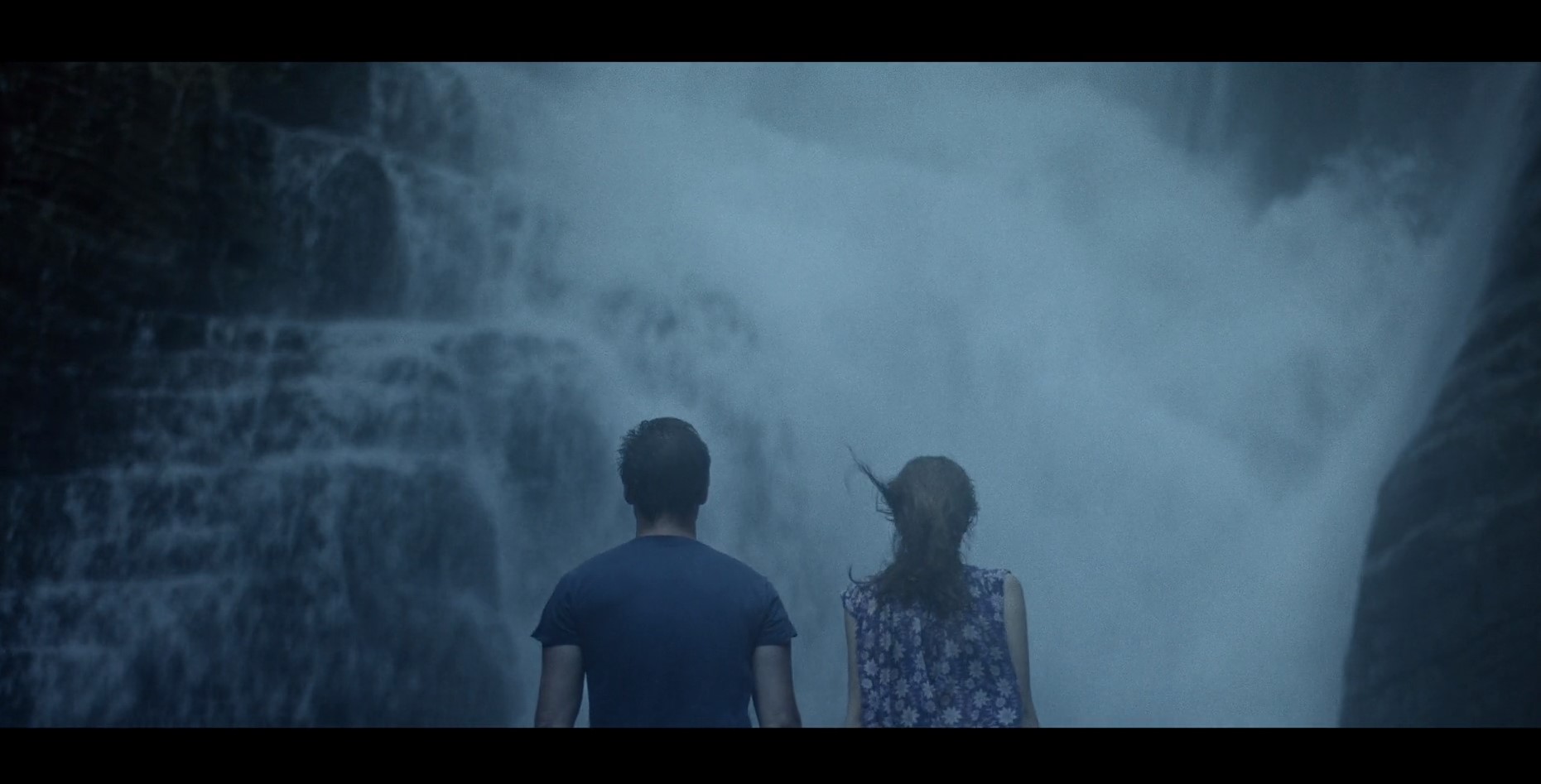
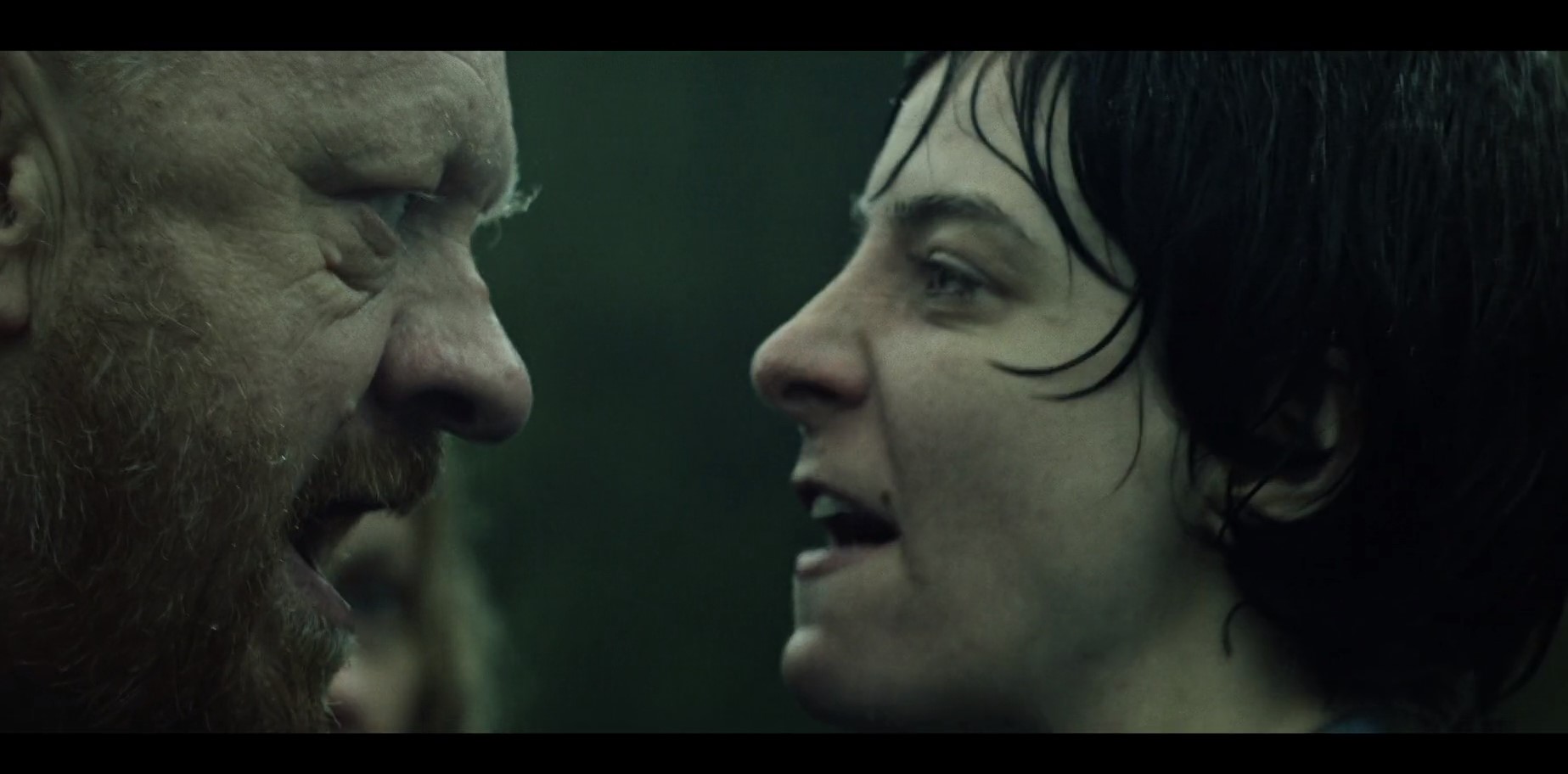
On the precipice of her loveless marriage ending, Miriam and her not-quite-yet estranged husband getaway to visit her sister, Greta, and husband, Dylan, at their quiet woodland and lakeside home, an area where Miriam and Greta fondly grew up together.  Also sharing a past together as high school friends, Miriam and Dylan enjoy each other’s company in a playful and quipping manner after a lifelong friendship, but after a night of drinking and an outpour of internalized emotions, Miriam slowly awakes to Dylan forcing his way inside her and is unable to stop him.  Confronting Dylan and Greta separately further strains the tense situation to the point that Miriam is made out to be the villain in her own sexual assault, sending Miriam to plot a thorough premediated revenge to not only avenge herself but also to save her sister still married to her attacker. 

Real hands-and-knees puked vomit splattering over a black tarp.  A blindfolded, naked man tied to a chair with a real erect penis saluting tall.  If you’ve never seen this Shudder exclusive 2020 released film and you’re reading this review opening fresh eyed, you might automatically presume Dusty Mancinelli and Madeleine Sims-Fewer’s “Violation” a work of pure vomit gore and BDSM pornography.   Let me quickly put your mind at ease by saying “Violation” is nothing of the sort, but these unmistakable aspects in the Canadian revenge drama are real and explicit as a deep-seeded personal choice for the writing and directing duo’s first feature length project.  Mancinelli and Sims-Fewer’s collaborated history goes back to 2017 as they together write, direct, and produce a handful of short films with a core base of dysfunctional sexual themes in “Slap Happy,” “Woman in Stall,” and “Chubby,” to name a few in their credits.  “Violation” continues the trend, providing cathartic discussion for the filmmakers’ tabooed motif at an attempt at bold realism.  “Violation” is self-produced by Sims-Fewer and Mancinelli under their production banner, the Toronto-based DM Films, in association with Telefilm Canada and The Talent Fund with financing from the executive producer line of independents, such as François Dagenais (“Ankle Biters”), and the husband-wife duo of David Hamilton and Deepa Mehta of Hamilton-Mehta Productions.

In the lead of Miriam is the writer, director, and producer herself, Madeleine Sims-Fewer, succumbing to a characterized funneling toward piteous rock bottom within her role who, from the get-go, is already in hot water with a dissatisfied husband about their trip to see Miriam’s sister. There’s rarely any happiness for Miriam throughout, even amongst the contentious heart-to-hearts with her own sister, and the little designated of joy to her is quickly squashed by the narrative’s crux and then that’s when Sims-Fewer has to about face to a deeper austere level than even before when those closest to Miriam push her away and become her worst enemies in a blink of an eye. Those mercurial enemies are played by Anna Maguire as Miriam’s fickle younger sister Greta, reteaming with her “Forgotten Man” costar Obi Abili as Miriam’s distant husband Caleb and rounding out the cast as Miriam’s alleged rapist and Greta’s husband Dylan is Jesse LaVercombe who also previously worked on the directors’ short films “Slap Happy” and “Chubby.”  Sims-Fewer and Lavercombe really deserve praise for their dedication and courage that circles back to the beginning of this review about real puke and real erection.  There’s vulnerability when totally exposed and these two actors, who have tremendous chemistry, shy very little away from the uncomfortable provocations in hard to swallow scenes of realism.  We also know where Greta stands in the whole scheme of things, but a big plot hole obtrudes with Obi Abili’s Caleb who unexplainably vanishes in the latter half of the two part narrative.  There’s an unsaid presumption that Caleb left Miriam as already rocky marriage kept spiraling down the toilet in the first act, but there was no resolution, leaving the character out in the wind and neglected from the what could have been an interesting interplay of Miriam’s obsessive plot.

“Violation” is not the typical rape-revenge thriller where the victim rises from the ashes like a phoenix and has an insurmountable, if not endless, amount of hate and determination for street justice to see their rapist or rapists six feet under.  “Violation’s” slow burn method leans toward a character study with Miriam.  Her compassionate human side commingles with her victimized treatment and anger as she’s constantly and consistently second guessing her actions or feeling the utmost, sick-to-her-stomach remorse for her actions that needed to be done in order to avenge herself and also protect her sister as noted in a parallel dream she tells Greta about Miriam sitting in the next room while her sister is unintentionally self-strangulating.  Yet, another side to this tale that could also explain Miriam’s hesitancy and, perhaps, guilt.  Sims-Fewer and Mancinelli are very explicit in Miriam’s unhappiness with her marriage and also her flirtatious wanting of Dylan, pent up by the lack of sex and joy in her marriage, and she also initiates a kiss with Dylan.  Combine those details with a night of drinking, Dylan’s firm stance, and the way the film is shot ambiguously, a pressure cooker moment builds between the characters and viewers whether what stated happened actually happened.  Now, I’m not arguing a case for rape culture or make excuses for rapists, but “Violation” tilts toward Miriam’s mental quality that has been compromised by a contentious marriage, life envy, and the preconceived notion that she’s not a good person.  Either way, what follows the inconspicuous moment is sharply horrible, a real unsettling exhibition of meaningful art. 

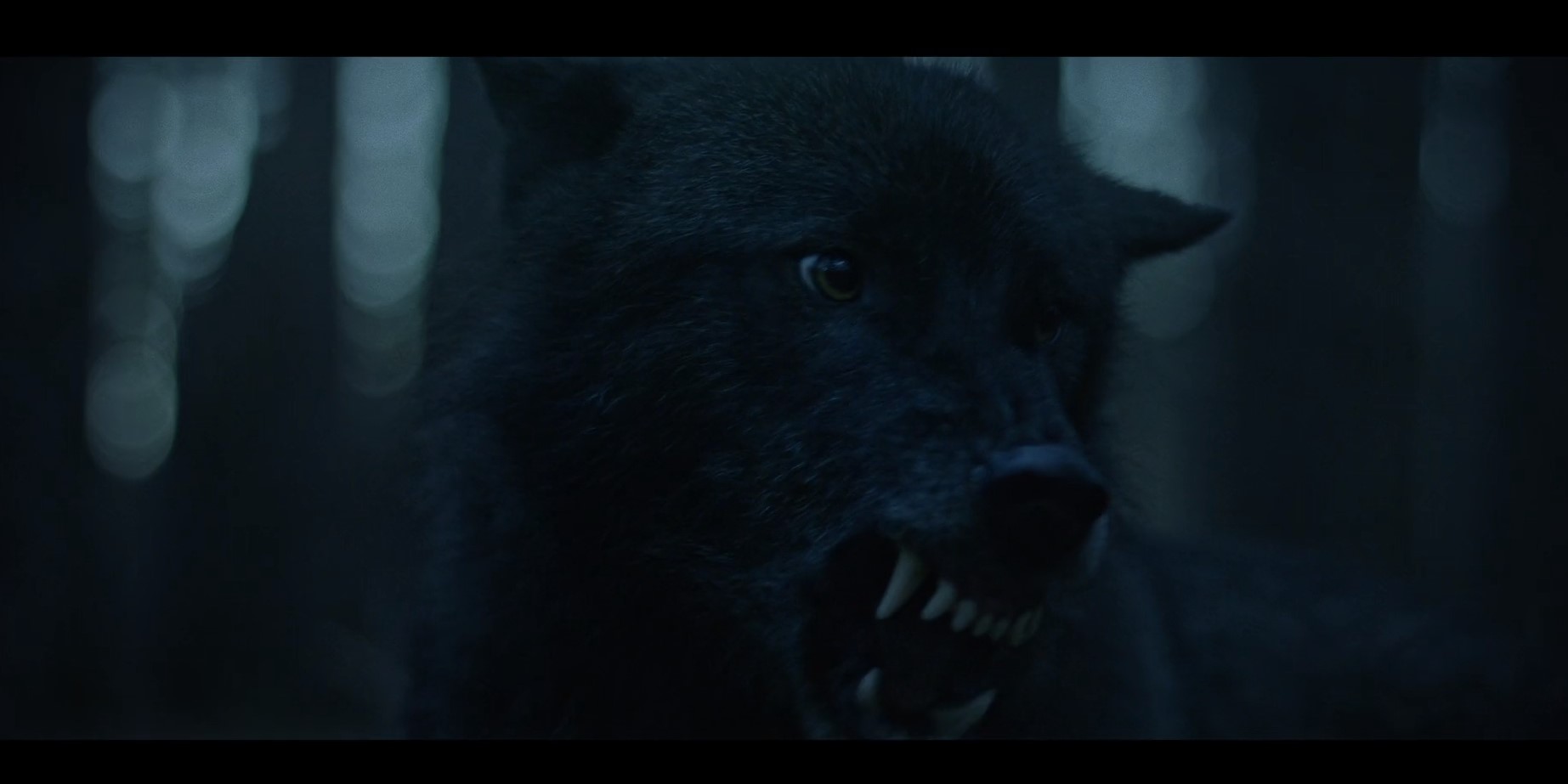
“Violation” is certifiably fresh and deservingly so with jarring scenes of gruesomeness, a topical theme of trivializing rape accusations, and compelling character study of one woman’s disharmonious existence in her small inner bubble.  Now, you can own it the Sims-Fewer and Mancinelli film on UK Blu-ray from Acorn Media International. The PAL encoded, region 2 Blu-ray presents the film in 1080p full high definition in a widescreen aspect ratio of 2:39:1. “Violation” embodies an engulfing nature domination of the screen through an Adam Crosby lens. No matter how big and important the moment may be in the story, Crosby’s entrancing us with the tiny embers with a close up of the camp fire or having the actors dwarfed by towering trees until the second act that compartmentalizes two antagonistic characters in the same room. The release shows no signs of deflating Crosby’s and the filmmakers’ semi-surreal, flora and fauna vision with a sleek digital recording teeming with a range of wide landscape shots, stark long shots, and super closeups. The English language Dolby Digital 5.1 surround sound captures as snap, crackle, and pop of the great outdoors; however, the dialogue, though quite clean and clearly audible, sounds a bit boxy at times. Special feature include two extras that are essentially one and the same taking up double the space on BD25 with a meet the filmmakers (Sims-Fewer and Mancinelli) talk very briefly about the genesis of the “Violation.” The second extra, the TIFF Intro, mirrors nearly world-for-world the first special feature. “Violation” has a runtime of 108 minutes and is rated 18 in the UK for strong violence, gore, sexual violence, sex references, and nudity. Viscerally intimate and ghastly, “Violation” is labeled the anti-rape revenge narrative with a close examination of trust and the unfortunate triviality of rape sure to churn stomachs and second guess the intentions of those close to you.

Own “Violation” on Blu-ray Home Video!