Headstrong EVIL Bedeviled by the Past and the Younger Generation. “Peacock” reviewed! (Indiepix Unlimited / Blu-ray)

“Peacock” on Indieflix Unlimited Blu-ray!

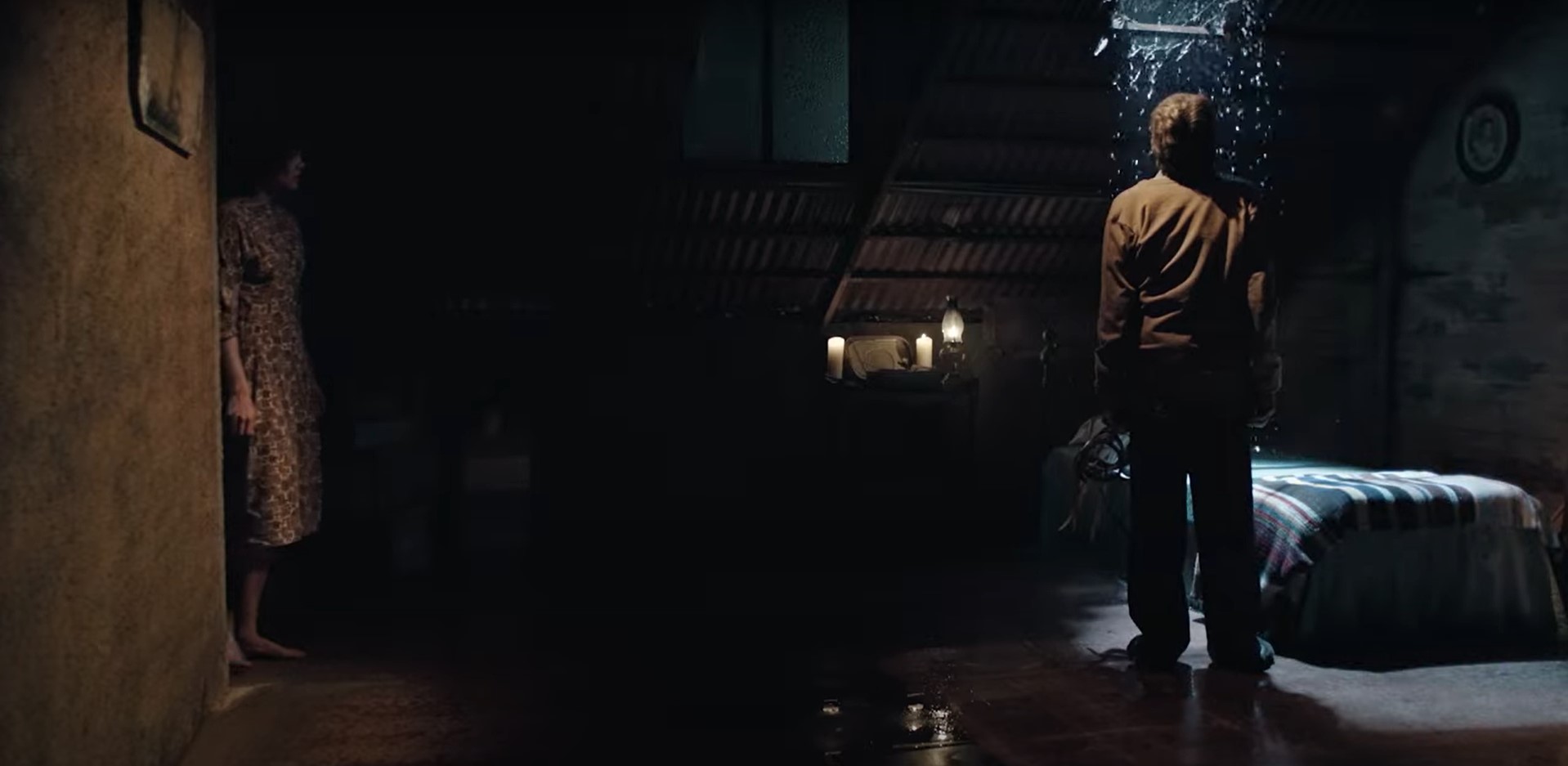
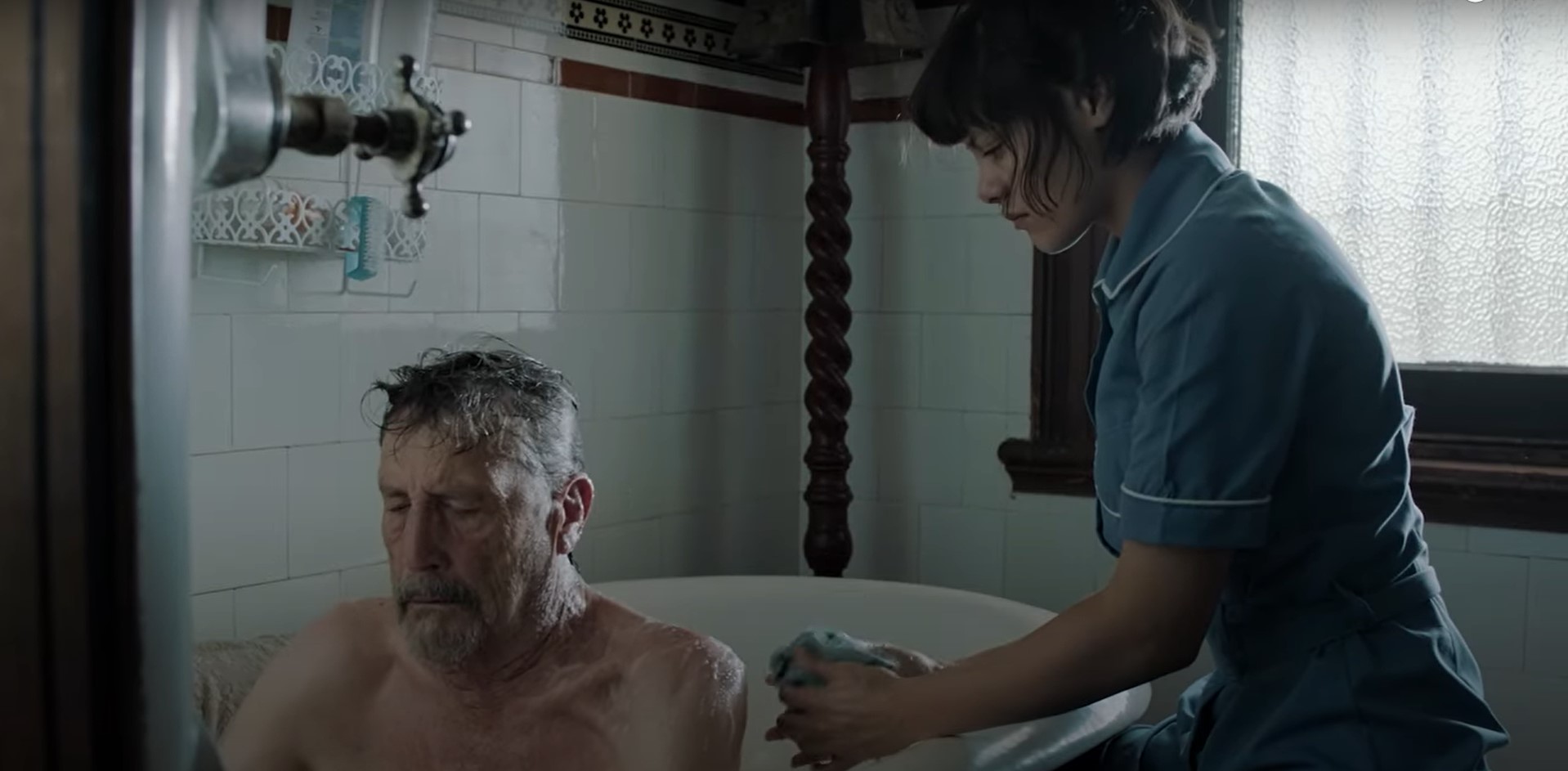
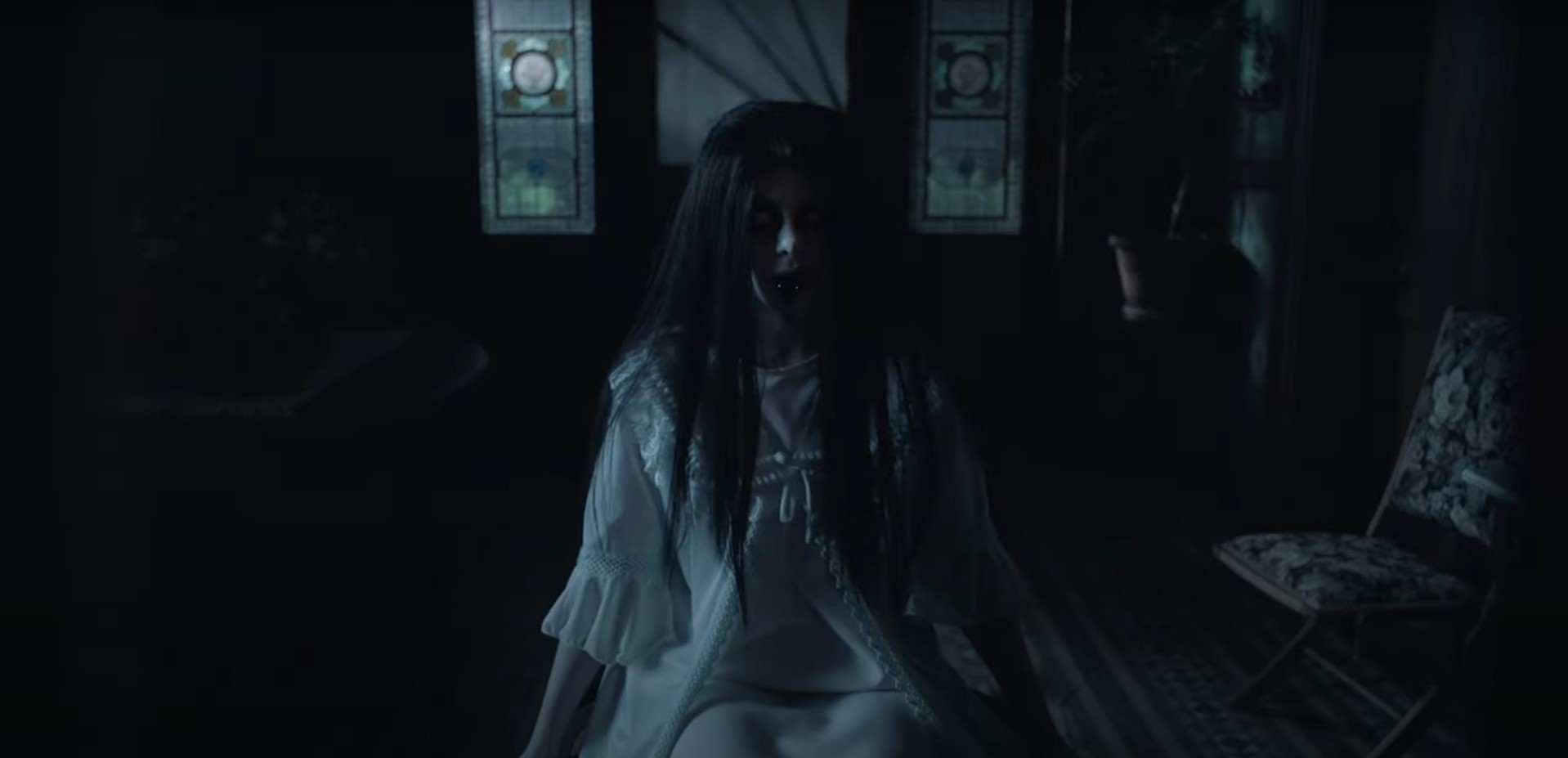
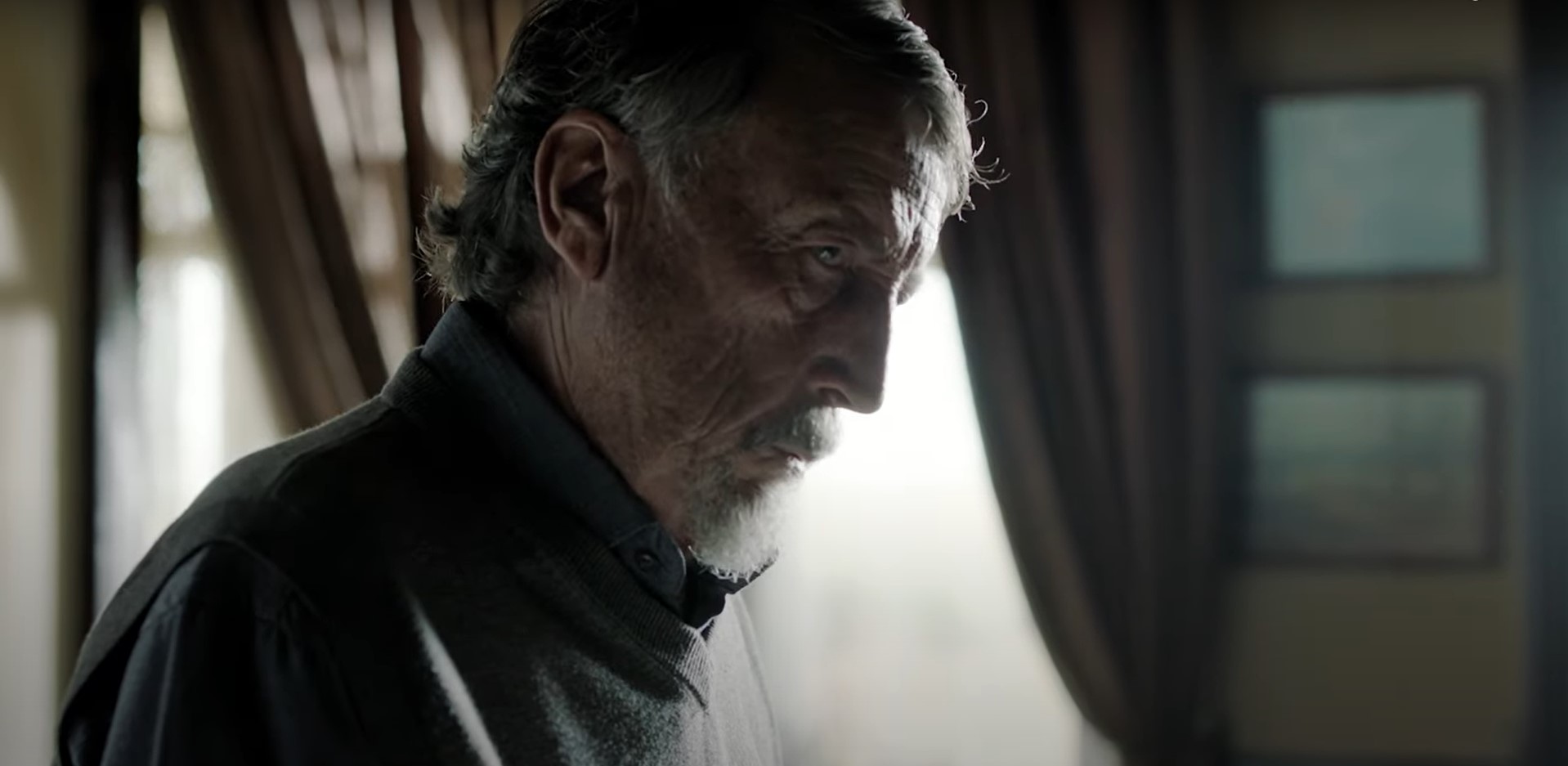
Unable to fit into The Foundation’s draconian conducts of an in-home professional caregiver, the organization decides to place Anna into the isolated home of Sarel Cilliers, a once prominent South African theologist aged into a feeble old man with prim and proper, religious convictions and living on the edge of a psychotic break.  Anna finds her hands are full with the demanding and stubborn Sarel and his almighty morality but his life’s work and past, strewn about his house as Sarel ceaselessly reopens boxes upon boxes of old files to study, draws in Anna as it strangely feels familiar to her as well as raising internal concerns about Sarel’s esteemed history.  The deeper she digs the more Anna falls into a psychosexual fixation that parallel and merge into Sarel’s own delusional state, soon the two share common afflictions of masked followers and surreal, terrifying imagery of a subjugated past that hasn’t loosened its traumatizing grip on them yet.

A psychological thriller that aims to suppress and shame youthful desire while simultaneously manifesting guilt as ghosts from an older generation’s sordid past at the behest of righteous expectations and a patriarchal society, “Peacock” is a strangely transfixing mental and sexual tug-a-war horror-thriller full of emblematic evocations and provocations from director Jaco Minaar.  Minaar’s debut 2022 feature film, under the native title of “Pou” from South Africa, is cowritten alongside David Cornwell in what has become the duo’s third collaborative project and is the first South African film to employ an intimacy coordinator for the strong sexual content scenes crucial to Anna’s storyline as well as perhaps a few bathing scenes with the older Sarel.  The Gothically-charged horror is a financial production of The Ergo Company with the organization’s Dumi Gumbi and Catharina Weinek, who produced “The Tokoloshe,” serving as co-producers alongside David Cornwell. Fever Dream Pictures, Monolith Film, and Indigenous Film Distribution are co-productions of the picture.

The principal pair of Anna and Sarel, played by South Africa Television actress, “Dam’s” Tarryn Wyngaard, and longtime actor Johan Botha, are representational characters in numerous ways.  Sarel is the established, iron-fisted patriarchy of yore having come to the end of his rope in life with his past transgressions, ones that represent heavily in the socio-political air of South Africa in decades ago, finally catching up to him in the form of a sort of indeterminable dementia.  Anna, on the other hand, is symbolic of youth, desire, and itching for liberty from a repressive system, such as The Foundation that houses young women, supposedly orphans, to be raised subservient and attentive but Anna’s regarded taboo lifestyle clashes with The Foundation’s, as well as the theologian Sarel’s, archaic belief system and so Anna then goes on this obstacle-laden journey of self-discovery that’s historically painful as well as excitingly new on the horizon as she meets Jean Basson (Ruan Wessels), son of Sarel’s house call doctor (Alida Theron), and whom both are virtually a mirror of Anna and Sarel on a lesser intense level.  Wyngaard and Botha earnestly stand firm as individualistic, idealistic characters butting heads to a culminating point of surreal transition of power.  Liza Van Deventer and Nicola Hanekom costar. 

“Peacock” isn’t a knock-your-socks off, popcorn thriller with edge of your seat terror and special effects nor does it claim to be.  Instead, “Peacock’s” fable tale is fashioned delicately out of South Africa’s rough transitioning between conflicting oppositions from, and set as the period in the film, of the 1980s dealing with Apartheid.  From Anna’s atypical of the times perspective, as an outcast young woman growing and maturing in an era in which the old, patriarchal ways of doing things are quickly dwindling, much like the deteriorating mind of Sarel, the young woman tussles externally and internally in trying to conform to the brittle status quo while that’s not subsiding without a fight, yet the desires inside of her are eager to express themselves in a sexual way.  The contrasting phasing out rigidity and the phasing in tolerance courses through a single conduit of uneasy, shared surrealism that frightening and confusing to them both but affects them differently; the ghastly images forces Anna to face her past while those same images torment Sarel like a type of Hell he has to relive over-and-over and that is what the house represents to Sarel, being caged in a purgatory state that parallels the actual peacock living encaged and screeching just outside of the house.  The peacock itself embodies Sarel’s daughter, an image kindred to that of Anne’s illicit lover at The Foundation, who he locked away in the attic for having an improper relationship with a young, black man, an archaic and unfounded taboo from South Afrikaners shamefully stubborn history of the racially segregating Apartheid akin to the historical racism of American culture.  In the end, it’s the overwhelming guilt that plagues us all in “Peacock’s” thematical version of Hell.

Streaming service Indiepix Unlimited is slowly, but surely, releasing their repertoire onto physical media venue.  Granted, these DVD and Blu-ray releases are not top-notch quality, being mostly encoded onto DVD-R and BD-R with very little special features to accompany, but still better suited for viewing than the inconsistent determinants of steaming. The AVC encoded, high-definition 1080p, 25 gigabyte BD-R has sufficient storage to render a decently detailed feature that suffers little-to-no compression issues, presented in a widescreen 1.78:1 aspect ratio. Graded on a darker, bluer scale, “Peacock” does often have color reduction aspects that either is part of the story’s period approach or is a reproachable side effect of the writable disc, losing a richness to the black levels and leaning slightly more on a higher contrast. Details, too, appear smoother to a lesser degree but there are enough texture and tactile elements, such as the cracked leather of dusty old books, Sarel’s haggard and loosely wrinkled skin, or Anna’s striking dark features, to become swirled into its morose mixture of metaphors and surreal horror cerebralism. The Afrikaans language LPCM stereo 2.0 has lossless appeal that fills in the dual channel output quite substantially and with equipoise. Finding depth in a psychological thriller can be a tad be tricky to isolate the terrorizing trepidation trimmings of what’s beleaguering the mind and that can subdue the intended effect on the viewers. Dialogue is strongly delivered in the foreground of all other audio layers with the optional English subtitles available. The English subtitles are of European English translation and are without grammatical error; however, the pacing is at a breakneck speed. Other than the film’s theatrical trailer, the region A encoded, not rated, 89-minute Indiepix Unlimited release does not contain any bonus content. The traditional Blu-ray Amaray houses a lifeless in a monochrome-purple colored print out of Anna and a peacock feather over her eye. Inside is an advert of Peacock with a QR code and a disc pressed with a plain white circular sticker with the title in a font close to American Horror Story.

Last Rites: Noted having inspiration from Francisco Goya’s Black Paintings, the soul-swallowing torment of “Peacock’s” sundering, secluding visuals plays into the deteriorating psyche of forced solitude and the iniquitous guilt that eats away at our being, like an inhabiting demon, recognized in redux of South African sins that sees a trial by fire with a turning in the country’s tide.

“Peacock” on Indieflix Unlimited Blu-ray!

Psychological and Psychotic EVIL Descend Upon a High School Boy! “Butcher, Baker, Nightmare Maker” reviewed! (Severin Films / 2-Disc 4K UHD and Blu-ray)

The 2-Disc UHD and Blu-ray Available for Pre-Order. Due to Release 5/28!

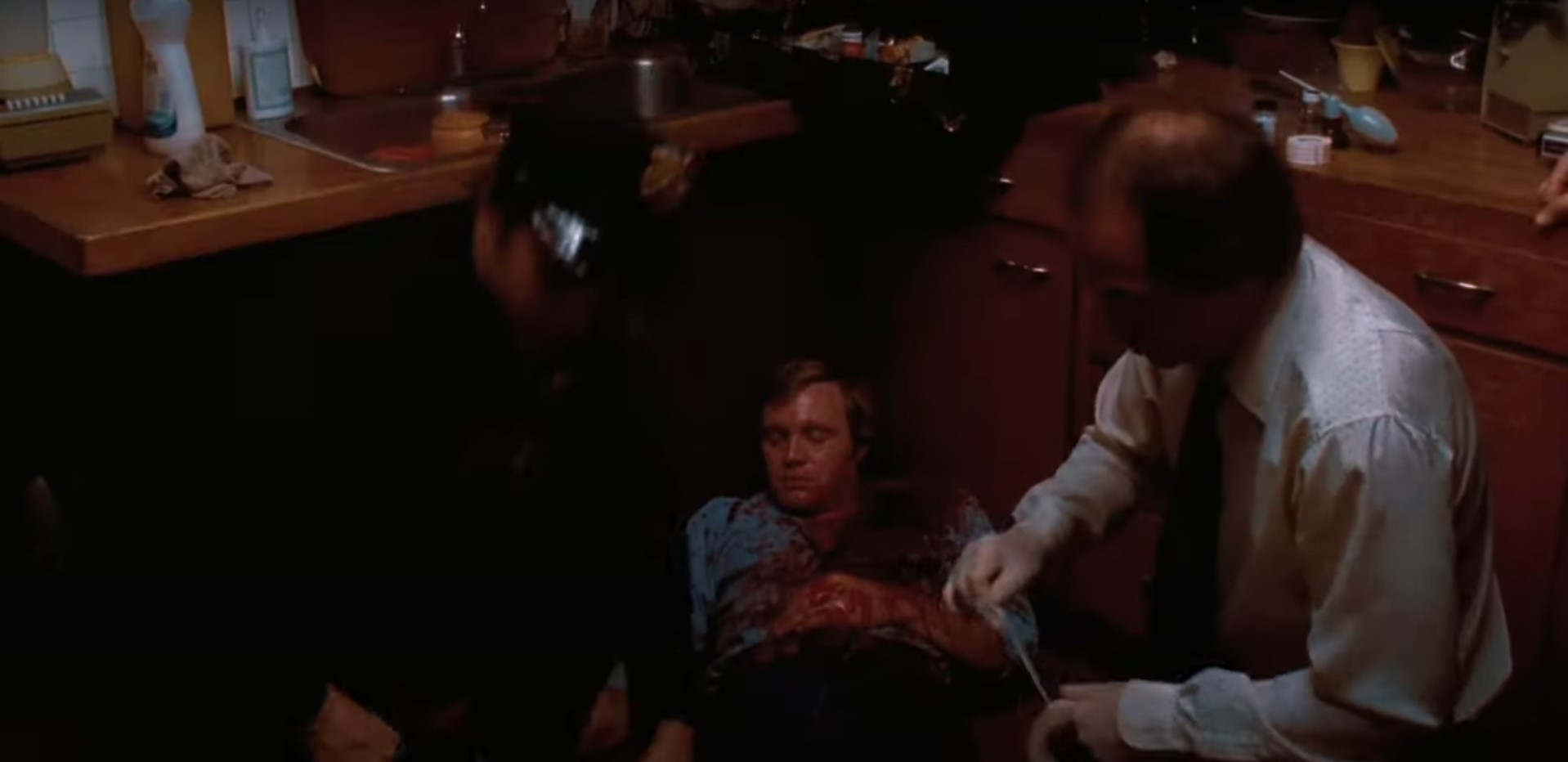
Orphaned Billy Lynch has raised by his Aunt Cheryl after his parents are tragically killed in a motor vehicle accident.  On the verge of his 17th birthday, Billy is ready to move on from his old life living under the overly caring Aunt to building a relationship with girlfriend Julia and possibly moving to Denver on a basketball scholarship, but the threatened Aunt Cheryl will do anything to keep Billy home, even if that means murder.  A brutal, stabbing incident of a local television repair man in their home leads to Detective Joe Carlson to suspect Billy as the main culprit and begins digging into the young man’s life that, coincidently, unearths the dead repair man had a homosexual relationship with Billy’s basketball coach.  Bigotry and intimidate course through Detective Carlson being as he prejudicially hounds and interrogatingly paints Billy as a gay, jealous lover without an ounce of hesitation.  Between his crazy Aunt and an intolerant cop, Billy’s life spirals dangerously out of his control. 

‘Butcher, Baker, Nightmare Maker,” also known as “Momma’s Boy,” “Night Warning,” or just “Nightmare Maker,” is the 1981 queer awareness and maturing suppression horror-thriller from “Bewitched” TV-series director William Asher.  Trying his hand at an edgier storyline with plenty of graphic violence and subversive themes, Asher helms the picture working off a script by a trio of debuting writers in Steven Breimer, Alan Jay Glueckman (“The Fear Inside”), and Boon Collins (“The Abducted”).  The American-made production brought considered taboo topics to the table when homosexuality was becoming more prominent in American culture in light of the AIDs epidemic and while the sexually transmitted disease has no part in this story, the derogatory fear of same-sex coupling is mercilessly present.  “Butcher, Baker, Nightmare Maker” is a Royal American Pictures production, distributed theatrically under Comworld Pictures, and is produced by screenwriter Steve Breimer and “Class of 1999” producer Eugene Mazzola.

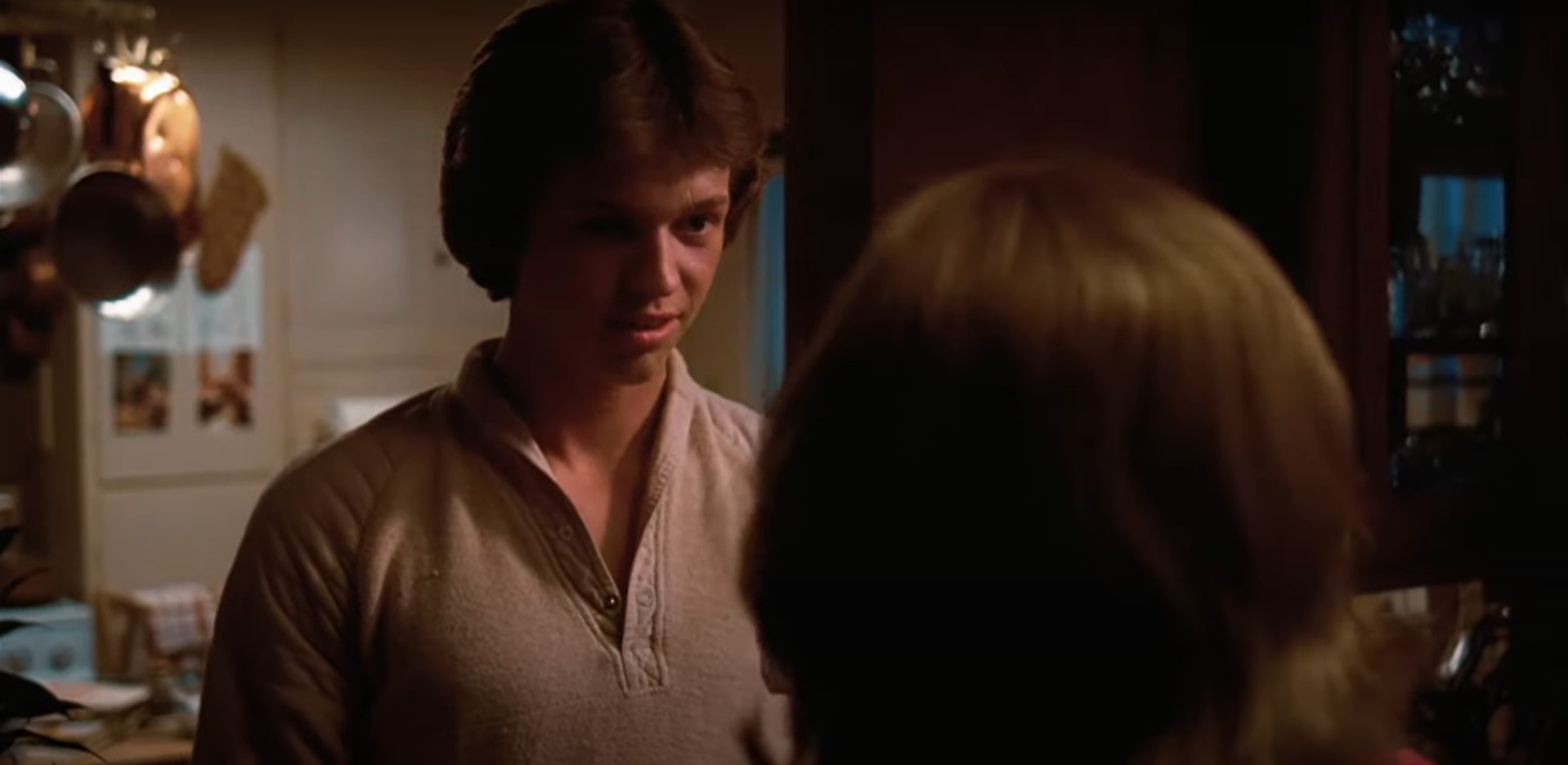
Hardly does any film ever made have the perfect cast.  “Butcher, Baker, Nightmare Maker” does not reside in that genus of imperfection.  Every performance is spot on and fitting for this early 80’s video nasty, each actor playing the singular part ingrained into their act that deciphering if their behavior is actually like that in real life can be tremendously difficult and a completely disorienting.  The story focuses on Jimmy McNichol’s 17-year-old high schooler Billy Lynch who, until recently, has been living moderately comfortable under his Aunt Cheryl’s roof.  That is until school sis nearly over and the prospect of college and girls sows the seeds of springing him from his childhood home.  Though the story is supposed to be centrically Billy Lynch, it’s the quirky and unusuality of Susan Tyrrell as the undefined obsessed Aunt Cheryl with a thick undertone of sexual tension toward her nephew that just makes McNichol and Tyrrell’s scenes enormously uncomfortable.  The late actress, who starred in Richard Elfman’s “Forbidden Zone” and would later have roles in “Flesh+Blood” and “From a Whisper to a Scream,” could charm audiences with perky provocativeness and scare into submission with the ability to pivot to a crazed madwoman.  And while we’re slightly turned on and also frightened by Tyrrell, we’re completely in disgust of “The Delta Force’s” Bo Svenson’s one-train-thought, homophobic detective strongarming high school teens, coaches, and even his sergeant (Britt Leach, “Weird Science”) into being cocksure of his own short-sighted homicide theory driven by hate for homosexuality.  Marcia Lewis (“The Ice Pirates”), Steve Eastin (“Killers of the Flower Moon”), Julia Duffy (“Camp X-Ray”), and before he was a big superstar, a young Bill Paxton (“Aliens,” “Predator 2”) bring up the supporting cast rear.

For an early 80s video nasty, “Butcher, Baker, Nightmare Maker” is without a doubt intense and provocative with timeless themes that nearly table the trenchant violence for corrosive mental issues, systematic homophobia, and pressures of maturity.  The two prong antagonistic sides bear down on Billy Lynch and the one principal who still technically a child and learning all the facets of adulthood has his own good being thwarted by conventional adult role models of family and law enforcement.  Director William Asher, through the script, inlays a pro-queer avenue where the gay basketball coach displays immensely more wit, sense, and compassion than that of Aunt Cheryl and Detective Carlson, awarding the coach with more likeability and favor to come out of this ugly business unscathed.  Asher’s very intent on defining the personalities and the actors deliver tenfold under a surly environment of not only the brusque characters but also Cheryl’s home that is a tomb for one of Aunt Cheryl’s past lovers and is becoming a tomb for Billy who will either bend to Aunt Cheryl’s sexually-toned obsessiveness or die a terrible a death.  “Butcher, Baker, Nightmare Maker” also predates the infamous “Final Destination 2” log truck scene with its own that’s equally hard hitting and macabre, the latter also being expressed thoroughly throughout the entire narrative with a morose overhang that’s simmering to explode. 

Arriving onto a 2-disc UHD and Blu-ray set, “Butcher, Bake, Nightmare” is Severin’s latest title to go ultra-high definition, first for the William Asher film, with an HVEC encoded, 2160p 4K resolution, BD100 and an AVC encoded, 1080p high definition, BD50 for the Blu-ray.  Presented in an anamorphic widescreen 1.85:1 aspect ratio, “Butcher, Baker, Nightmare Maker” favors a stark and naturally vibrant color scheme with low profile compression issues on a pristine transfer, scanned in 4K from the original camera negative.  I could not detect any compression artefacts with the dark spots retaining their inky cohesion and the details retain superior depth in a slightly more saturated contrast of a healthy-looking, grain-appropriate picture quality, even elevated more definitively with the extra pixels.  The English uncompressed PCM mom track has lossless appeal with some foremostly faint dialogue hissing and crackling that’s more of given with age rather than a flaw in the mix.  The mix also doesn’t establish depth all too well with one channel doing all the heavy lifting, but the layers are well-balanced in proportional volume that make the audio composition effective and scary.  English subtitles are available. Encoded special features include 6 hours of content. On the UHD in lies three audio commentaries: one with star Jimmy McNichol, one with cowriters Steve Breimer and Alan Jay Glueckman, moderated by Mondo Digital’s Nathaniel Thompson, and the last one with co-producer and unit production manager Eugene Mazzola. The theatrical trailer cabooses the UHD special features. All of the above are also on the Blu-ray special features with additional content that includes a new interview with Bo Svenson Extreme Prejudice, a new interview with director of photography Robbie Greenberg Point and Shoot, a new interview with editor Ted Nicolaou (“Don’t Let Her In”) Family Dynamics, archival cast and crew interviews with Susan Tyrrell, Jimmy McNichol, Steve Eastin, make-up artist Allan A. Apone and producer Steve Breimer, and a TV spot as the cherry on top of some sweet special features. However plentiful and well-curated the special features are, my favorite attribute of this Severin release is the exterior with a dual-sided cardboard slipcover that has new illustrated compositional art and tactile features. Underneath, a reversable cover art featuring the film’s one-sheet poster art with a more Severin Film’s retro constructed “Nightmare Maker” arrangement that’s more red-blood heated. Inside does not contain any insert goodies or booklets and a disc on either side of the interior featuring the slipcase and black UHD Amaray case cover art. Both formats are region free, have a runtime of 93 minutes, and are not rated.

Last Rites: Seriously messed up on so many levels, if being a teenage boy isn’t pressurized enough right before manhood, becoming an adult can be arrantly deadly in this superbly packaged shocker “Butcher, Baker, Nightmare Maker” now on 4K UHD for the first time ever on May 28th!

The 2-Disc UHD and Blu-ray Available for Pre-Order. Due to Release 5/28!

An EVIL Assassin Battle Royale! “Mean Guns” reviewed! (MVD Visual / Blu-ray)

“Mean Guns” on MVD Rewind Collection Blu-ray! Purchase Here!

A Crime syndicate mid-level enforcer named Vincent Moon invites professional hired killers and syndicate affiliates to a new, urban-centric prison constructed by the organization the day before grand opening.  The reason for this elaborate invitation is simple:  all those invited have betrayed the syndicate in one way or another and are brought into the locked down prison to battle royale to the death.  The rules of the competition clarify no one will leave the premises, unless being gunned down by a rooftop sniper is acceptable to them, and three contestants must survive the game to claim the prize, the prize being a three-way split of ten million in cash.  As guns, ammunition, and melee weapons are dumped onto the battle grounds, a scramble ensues, and factions are made with 6-hour clock to kill nearly everyone in sight to live and be rich or to be slaughtered by Vincent Moon.  However, there’s no honor amongst thieves and thugs and the rules bend in a rigged high-stakes game of kill-or-be-killed.

The late director Albert Pyun was an ambitious, fast-paced, and prolific director who dominated the late 1980s through much of the 1990s with eclectic, science-fiction action.  The “Cyborg” and “Nemesis” writer-director severed the line between reality and the alternate that brought science fiction to a more grounded realism, such as we see in the aforementioned films, mostly because Pyun was always short on funds and short on time to deliver a final, finished feature.  With his 1997 actioner “Mean Guns,” Pyun severed into another layer on the existential plane and took hold of different kind of alternative reality, one that is plagued by an all-powerful crime syndicate that has its insidious hands in everything, even in the personal and professional lives and secrets of its own employees and hired contracts.  Andrew Witham wrote the script that was produced by longtime Pyun collaborating producers Tom Karnowski (“The Sword and the Sorcerer,” “Cyborg”) and Gary Schmoeller (“Hong Kong 97,” “Omega Doom”), together the trio founded Filmwerks which became the production company under “Mean Guns.” 

Pre-“Law & Order: SVU,” which would define his career in the film and television industry, rapper Ice-T worked himself in from behind a mic to in front of a camera mostly beginning in the 1990s with “New Jack City,” an urban gangster film that matched his on stage musical presence and starred opposite Wesley Snipes (“Blade”), Chris Rock (“Jigsaw”), and Mario Van Peebles (“Jaws:  The Revenge”).  Ice-T found cult status in more pulpy thrillers with exploitation “Surviving the Game” as a homeless man hunted down by a group of rich sport hunters and playing a post-apocalypse beast in the graphic novel adapted “Tank Girl,” but his gangster persona had stuck with him, leaving him the legendary rapper seemingly encircled in the same kind of urban gangster films. This is the case with “Mean Guns” as he portrays a philosophical, upper-level syndicate criminal Vincent Moon spearheading a game of wetwork for the unscrupulous wetworkers associated with his organization.  Not the most prolifically dialogued or screen timed role, Ice-T does what he can to bring Vincent Moon into the fold of much more colorful characters.  “Highlander’s” Christopher Lambert receives co-top of the bill as a psychotic assassin looking to atone for a careless sin.  Lambert is wonderfully unhinged while calculating as he integrates his “Highlander” sword skills and maniacal grin into his character of Lou, who through flashbacks had accidently killed a child on one of his hits and retrieves his biological daughter for an abusive stepfather to start life anew.  More pragmatic is Lou’s rival Marcus, stoically portrayed by Albert Pyun regular Michael Hasley (“Dollman,” “Nemesis 2”).  Together, Lou and Marcus must team up, along with the coldhearted D. (Kimberly Warren, “Blast”) and syndicate accountant turned informant Cam (Deborah Van Valkenbugh, “The Warriors’), to survive against the fray of likeminded killers.  “Mean Guns” cast fills out with Tina Cote (“Nemesis 2”), Thom Mathews (“Return of the Living Dead”), Yuji Okumoto (“Robot Wars’), Jerry Rector (“Vampire’s Kiss”), James Wellington (“The Evil Inside Me”), and introducing Hunter Doughty.

Like many of Albert Pyun’s caffeinated action films, “Mean Guns” is the epitome of vehemently slick dipped in a 90’s glaze of an alternative, unchecked free-for-all of bad hairdos, trench coats, and guns.  Lots of guns in a pre-computer-generated muzzle flash with real recoil and really bad, but good, one-liners.  What’s more surprising about this Pyun is that, unlike his previously mentioned films, “Mean Guns” is virtually bloodless albeit the shoot’em up melee violently lays waste to nearly 100 bad guys.  Pyun integrated a liberal use of blood squibs in his other guns-blazing and contentious conflicts, but “Mean Guns” takes a step back to a less severe tile like “Unkind Guns” with a comically coated film pulled straight out of a cheesy graphic novel.   For example, a combatant, thinking they just scored the briefcase full of millions, finds their head aflame and their face covered in black powder loony toon style after the opened briefcase explodes offscreen.  These moments provide a reality check to the already outlandish, yet highly entertaining, every man for himself game of death made willingly subjectable by its limited principals and Pyun style action. 

Getting ready to kill for this new Blu-ray of Albert Pyun’s “Mean Guns.”  The MVDVisual release, a part of their MVD Rewind Collection, is presented in a 2.35:1 aspect ratio, AVC encoded onto a 1080p, high-definition BD50.  Pyun and director of photography George Mooradian, who collaborated on many of Pyun’s films, such as “Cyborg” and “Nemesis” as well as standalone projects with “Bats” and “K-911,” utilized a spherical lens with steep drop-offs around the edges of the frame, almost looks like everything around the left and right sides should be falling.  IMDB states anamorphic lens but judging from the complete focus of the background and the severe oval-like nature of the frame, I’m leaning toward a spherical lens. For vast landscapes where length is nearly limitless, a spherical lens would be ideal to unify depth and main focus but since confined to a prison interior, compact hallways are squeezed in beyond a reasonable limit and often side-stance characters are warped in frame.  Details are generally fine with the hi-def pixel count that translates skin tones naturally pleasing with a few moments of corrective coloring aside from the occasional red hot temperature flashbacks that bath everything in color-varied reversal exposure.  The transfer isn’t perfect either with a couple of noticeable damage blips on the 35mm print.  The uncompressed English LPCM 2.0 stereo is a mambo-ladened, bullet-whizzing, melee-skirmishing, and depth-exacting design that’s well balanced and layered.  Dialogue remains free of audible blights and courses prominent throughout.  Optional English and French subtitles are available.  Special features, including an Albert Pyun introduction that’s encoded into the Play Film as well as the bonus content and to which had to be shot well before his death judging by the appearance of his rather healthy person in the video, includes an audio commentary by the director, a new interview with producer Gary Schmoeller, a new interview with executive producer Paul Rosenblum, and a new interview with composter Anthony Riparetti..  The original theatrical trailer is also included. I’m always elated to see the MVD’s throwback package design and the 59th Rewind Collection release continues the theme with a cardboard slipcover in mock disrepair with a corner edged torn and exposing the corner of a VHS tape cassette. Not to forget to mention the designed rental stickers to heighten the effect. Underneath the slipcase is a clear Blu-ray Amaray case with reversible cover art, each side promoted with a scaled down poster art bordered and backgrounded with a similar coloring shade. Inside, the disc is smartly pressed with a VHS-façade while the insert side has a mini-folded poster of the primary cover art. The region free release comes rated R and has a runtime of 104 minutes, which when watching the feature one can see perhaps some cuts were made for timing. Perhaps, Pyun had a longer version and had to edit and cut down for time.

Last Rites: A romping mayhem, “Mean Guns” is ballistically ceaseless and entertaining, if not also the touchstone of 90’s cheesy action, and is presented well here with in the latest, and greatest, MVD Visual Rewind Collection Blu-ray.

“Mean Guns” on MVD Rewind Collection Blu-ray! Purchase Here!

Gaudy, Superfluous EVIL Sits in Your Living Room and Destroys Your Family. “The Coffee Table” reviewed! (Cinephobia Releasing / DVD)

“The Coffee Table” Would Look Good in Your Living Room! Purchase It Here Today!

Jesús and Maria are new parents with a beautiful baby boy.  Maria has been eager for a baby and sent through several medical treatment for the bundle of joy while Jesús continuous rides the fence about being a father.  When the baby arrives, the boy becomes a source of usually one-sided bickering and jabbing contention as Maria feels Jesús could be a better father to their newborn son.  When they move into a new apartment, they find themselves in a furniture store looking at a gaudy glass coffee table Maria can’t stand the sight of, but Jesús very much can’t live without.  While Maria steps out to shop for an upcoming luncheon with Jesús’s brother and young girlfriend, Jesús briefly stops assembling the table to take care of the baby until a tragic accident happens that reshapes everything and everyone Jesús cares about, and impels him to bottle in the tragedy, hiding it in extreme guilt from his wife and guests, as he struggles to find the right moment to relieve his soul. 

Marriage is hard.  Parenting is even harder.  Choosing a coffee table should be a delicious piece of decision-making cake but for director Caye Casas choosing living room décor can be deadly.  The “Killing God” director follow up his debut feature with the 2022 released domestic disturbing comedy-horror “La Mesita Del Comedor,” aka “The Coffee Table.”   Casas cowrites the film with Cristina Borobla, her first screenwriting credit but not her first collaborative effort working with the director as the vocational Art Director has been involved in Cases’s other works, such as “Killing God,” his 2017 short “RIP,” and amongst others.  Maria José Serra (“Amigo Invisible”) and Norbert Llaràs (“Killing God,” “The Perfect Witness”) put their producer café mugs onto “The Coffee Table” with the hailing from Spain production companies La Charito Films, Alhena Production, and Apocalipsis Producciones. 

Much of “The Coffee Table” is set inside the tiny, newly moved into apartment of Jesús and Maria who even though rag on each other’s opinions and one of them don’t necessarily favor being a parent, deep down the unlikely pair do have a strong love attraction that swims upstream against the repelling.  In the roles of Jesús and Maria are David Pareja, whose worked with Casas inner circle before with “Killing God,” and Estefanía de los Santos with an unforgettable, characteristic raspy voice that magnifies the role tenfold.  Both Pareja and de los Santos are comedically bred with a long list of hilarious Spanish features to prep them to see the gut-punching, black humor of what’s to come in “The Coffee Table.”  Frankly, there’s nothing negatively to report in Pareja and de los Santo’s flawless, funny, and unfortunate family dysfunctional performances surrounding their love-hate relationship and the knot of culpability and the bliss ignorance contrast that’s delineated between them.  Floating into the mix of repressiveness are side stories that become assimilated by the untold tragedy, such as the neighbor’s daughter (Gala Flores) with an intense belief Jesús loves her, the smarmy coffee table salesman (Eduardo Antuña, “Killing God”) who also have an interest in Jesús, and Jesús’s brother Carlos (Josep Maria Riera, “RIP”) and his barely 18-year-old girlfriend (Claudia Riera, “The Communion Girl”) being ribbed for their own odd couple relationship and giving a surprise announcement of their own. 

Though a comedy and a horror, I didn’t find “The Coffee Table” all that funny but more so quirky, outrageously bold, and shockingly hard-hitting instead.  Horror, definitely without a doubt, comes through but not in a typical to be scared or to exact fear way with any of the conventional themes to support its harrowing weight.  The horror that uncoils is every parent’s worst scenario, the underlying nightmare that grabs the soul and squeezes until every drop of anxiety is wrung out of our wet bag of bones and meat.  The incident itself is gnarly and unspeakable but the post-trauma slithers in a nasty case of guilty conscious, shame, and fear that can freeze someone to the spot to where they clam up, sweat profusely, stomach twisted, and have self-harming thoughts from the conjoined cause and effect of having to tell your partner the most terrible of news and see their composure, their affection flush away in a blink of an eye.  Casas able to string along the aftermath to extract a feature length film without it ever approaching critically forced or farfetched, adding on and expanding upon the luncheon or Jesús’s wiggling through painfully with excuses on why Maria should leave the baby sleeping peacefully in their room.  The passively aggressive sparring atmosphere quickly turns into colossal tension and hopelessness through the mechanism of dark black comedy.  As a parent myself, “The Coffee Table” evokes great sadness and mental strife of the situational possibility, the greatest horror of all time.    

The cruel film by Caye Casas arrives onto a Cinephobia Releasing DVD. The MPEG2 encoded, upscaled 720p, DVD5 comes in at being the eleventh release for the Philadelphia based, eclectic independent film distributor. And, boy, is it a doozy. For “The Coffee Table’s” image, not the two, artificially gilded naked women holding an oval shape, unbreakable pane of glass, the feature’s picture quality renders about as good as any single layer capacity unit can decode in a digital age with modest details, muted hues, hard lit, and a good amount of spectrum banding in the darker areas. Not to fret, however, as there’s plenty to discern with a film that isn’t reliant on details but more reliant on hitting you wear it hurts, heavyheartedly. The Spanish language Dolby Digital 5.1 uses a lossy compression that, again, suitable to the movie’s means of conveying a contortioned, ruthless story defining the very meaning of a no way-out, no-win situation. Dialogue really is key for this type of narrative to work and progress and does come through fine without an ounce of earshot hinderance. Also, not that type of film that provides a breadth of range or depth as much of the layers express in a very near arrangement, as expected in a concentrated setting of Jesús and Maria’s apartment home. English subtitles are optionally available, and they synch up and pace well with only one noticeable grammatical error. Not much in the way of special features as only Cinephobia Releasing trailers fill that spot and there is not mid or end credits scene. The 90-minute film’s DVD release comes not rated and has region 1 playback. Other regions are untested, and the back cover does not state the official region playback capacity.

Last Rites: Caye Casas and Cinephobia Releasing has the cajónes to not table this wonderfully bleak black comedy-horror from reaching audiences far and wide. “The Coffee Table” is a painful reminder of just how fragile life can be, much like a cheapy made piece of tawdry decor from China.

“The Coffee Table” Would Look Good in Your Living Room! Purchase It Here Today!

Everything is Bigger, and EVILLER, in Texas! “Deep in the Heart” reviewed! (Fun City Editions / Blu-ray)

“Deep in the Heart” on a Fun City Edition Blu-ray! Here for Purchase.

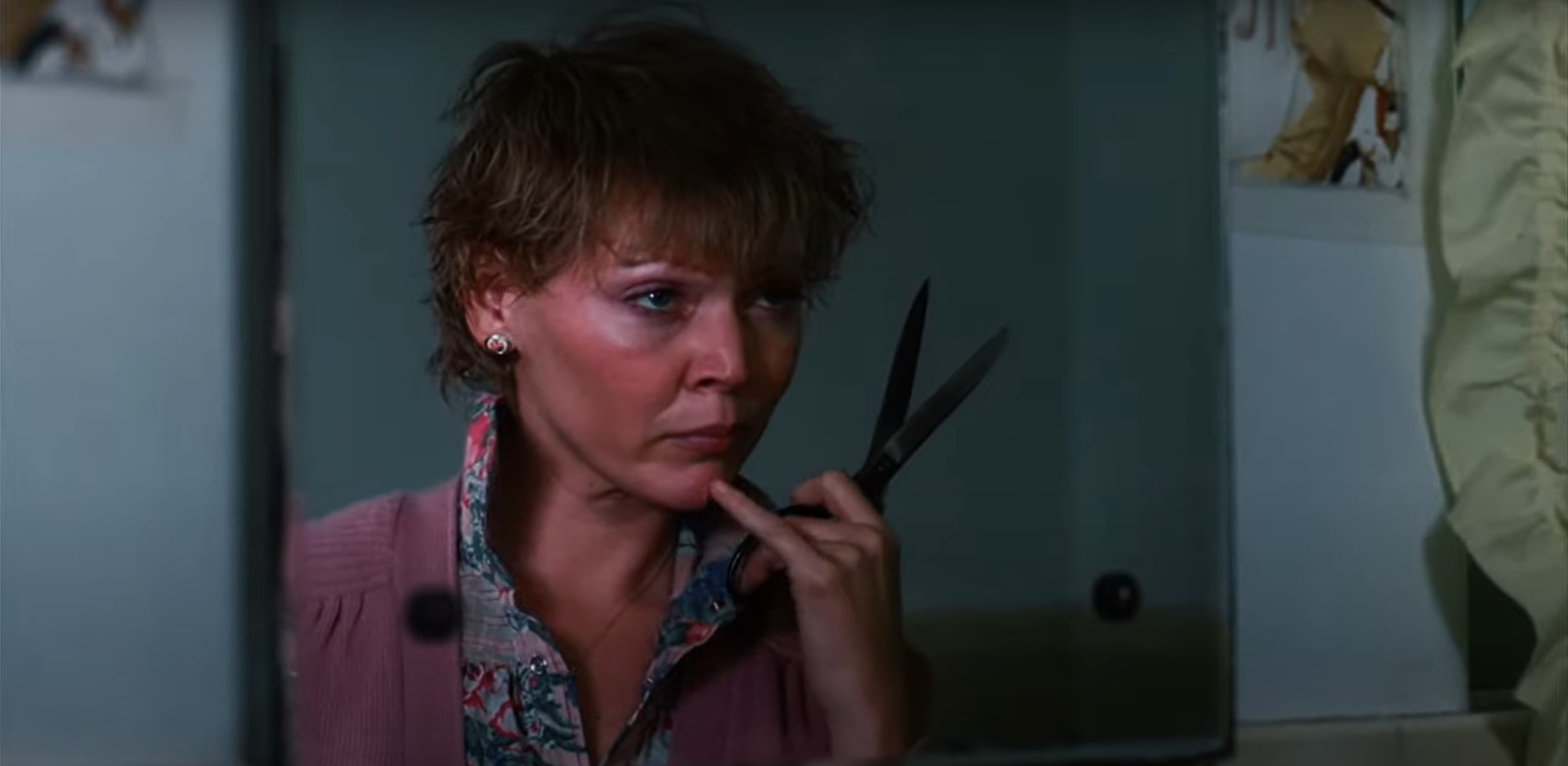
Boston born Catholic Kathleen was raised in a good home by Irish immigrant parents.  Having moved from the liberal Northeast America to Dallas, Texas, Kathleen finds employment as an American history teacher at a local high school.  She meets born-and-raised Texan, attorney, and gun enthusiast Larry Keeler at a colleague’s outdoor barbeque and the two casually see each other off and on with Kathleen not interested in something more serious with the charming and handsome, budding attorney, but Larry believes Kathleen’s too uptight to see how madly desirable she makes him and rapes her at gunpoint when he can longer steady his urges, proclaiming her sexual hangups and rigidness as faults against her immense drawing of sensuality during post-coital.  Reporting her attack to law enforcement and her Catholic priest for prosecution and spiritual relief, both agencies fail to side with Kathleen’s trauma based on the facts of the case and God’s ever-tolerant forgiveness toward everyone.  The anger seething inside impels her to chop off her long, blond hair, dress more matronly, and join a handgun gun club after Larry continues to casually insert himself into her life like nothing ever happened and down the barrel’s site, Kathleen plots her vengeance. 

If there was an ever a more culturally relevant and timely film today produced and released decades ago, encapsulating the worst parts of American history, “Deep in the Heart,” aka “Handgun,” is that very film.  Through the perspective of the expatriate filmmaker Tony Garrett, having been born and raised in a country without an intense gun culture, “The Prostitute” English writer-and-director entrenches his outsider take on America’s unique, and unhealthy, gun fascination around an equally powerful systematic rape culture that ignores the severity of the transgression and assigns blame to the victim and, in turn, has the attacker come out unscathed due to being an upright citizen and a pillar of the community amongst his, also male, peers.  Filmed entirely location in Dallas in 1981 but not released in 1983, Tony Garrett co-produces the film with American producer David Streit (“The Prowler”) under United Kingdom production companies EMI and Kestrel Films where American distributors were eager to bank off the sexy rape-and-revenge thrillers of “Ms. 45” or “The Last House on the Left” but received a more thought provoking and provocative thriller that analyzed more of a problematic inward of U.S. culture and global societal toxicity. 

A daunting and difficult role for any actress to play, Karen Young had captured the epitome of a formulaic victimized women in an injustice system for her first major feature-length role.  Young, who went on to have roles in “Jaws:  The Revenge,” “Daylight,” and “The Orphan Killer,” embodies the American dream of the young, educated woman, Kathleen, from humble beginnings living away from home and having a career as a high school teacher in Dallas, Texas.  Kathleen’s American dream is crushed by the methodical mentality of Larry Keeler, representing America’s grasping of the past of taking what you want, even if that means by way of force.  Keeler is played by born-and-raised Texan Clayton Day (“Osa”) with a fast-talking, full of himself reproach to a debut performance that involve rape at gunpoint and being fully nude with your equally green costar.  Garrett’s able to convert the two inexperienced actors into raw talent, extracting their singular qualities into a combined effort of a sordid cultural subtext and cat-and-mouse rape-and-revenge suspenser.  Kathleen’s transitional arc from the shy and innocent Catholic outsider to the hate-filled, pro-gun, self-serving vigilante proved to be a dazzling gem of range and moxie pulled from the rough depths of untapped talent and getting to that point is a journey expressed vividly and thoroughly to build up both characters’ constitutions without a ton of exposition or visual insight.  Keelers intentions never slip but we understand through his conversations with Kathleen he’s a gun advocate and collector, he’s a good-time, good ol’ boy party animal at a colleague’s bachelor party at the Foxy Boxy – a Women’s see-through T-shirt boxing competition, and he has overt charm pasted thick with insincerity with out on dates with the high school teacher from Boston.  “Deep in the Heart” is centrically designed around these two principals with an already established built around gun-toting, fast-and-loose, and blinders on male dominated environment inhabited by smaller, yet key roles from the denizens of Dallas.

“Deep in the Heart” is not the sexy, rapey, glorified femme fatale film every will think it is.  “Deep in the Heart” is what Tony Garrett understand and believe in from the interpretation of dark side, misguided American values and how those cultural thorns that prick into the side of the free world change the course of all that is good and pure in the foundational basis America is built upon.  Engrossingly tied to modern day hot topics, Garret had incredible foresight or, maybe, was just brazen enough to go against the grain being an foreign expat shocked by not only the legal system but by the backwards ideas and beliefs of everyday citizens in different regions of the country.  In not only the rape but the whole pre- and post-rape setup is surrounding Kathleen’s inquietude is noticeable and uncomfortable to watch.  Men and women alike should feel icky of the transpiring contexts of spirituality failure, justice system failure, and an overall human being failure that lets Kathleen suffer in silence without the hoopla of scandal and punishment.  Instead, Kathleen’s bottled anger works inward toward a radical, retribution fix, resurrecting her from downtrodden ashes like a phoenix carrying a six-shooting revolver poised to a point of no return in DIY selfcare. 

Fun City Editions understands the power from “Deep in the Heart” by showcasing a new, restored transfer for their Blu-ray release.  Restored in a 4K scan from the original 35mm camera negative, making its first Blu-ray appearance globally, “Deep in the Heart” is stored on an AVC encoded, 1080p high-definition, BD50 and presented in an anamorphic widescreen 1.85:1 aspect ratio.  Not a whisper of image infraction, “Deep in the Heart” has a gorgeously graded picture that sees hardly any signs of aging or wear and the Fun City Edition’s restoration keeps the elements in alignment with the feature’s period of a late 70’s to early 80’s harsh filmed layer.  Color hues are vibrant and bold without appearing washed, presenting near perfect textures on clothing, skin, and environment and darker scenes keep contours and some details present without being completely dense or lost in any compression banding and splotches.  A lossless English DTS-HD mono track is more than ample audio for a very tight knit thriller mostly for indoor acoustics.  Exteriors capture the and highlight the appropriate milieu ambience, managed well within the single layer monaural to keep dialogue front and center.  Dialogue does not go without some crackling and hissing but not enough to be a nuisance, just noticeable.  Mike Post’s soundtrack is eclectic between night club boogies and harrowing hangers.  English subtitles are optionally available.  Special features included are a newly recorded audio commentary by Erica Shuliz, co-host of the Texas-based Unsung Horrors podcast, and Irish filmmaker Chris O’Neill providing in-depth insight and analyst of Tony Garrett’s underappreciated film, a brief archive interview with directory Tony Garrett on his perspective route as an outsider looking at the celebration and de-celebration of guns in America, an image gallery, and the theatrical trailer.  Tactile elements and striking rigid slipcase art from graphic artist Tom Ralston makes this Fun City Edition highly desirable as the U.S. title “Deep in the Heart” graces one side and the U.K. title “Handgun” can be found on the back (or front depending on how you look at it).  Sheathed inside is a clear Blu-ray Amaray casing with reversible cover art of three different country posters from the U.S. (primary) and U.K. and Japan (on the inside).  Disc is pressed with more Ralston imagery while the opposite side insert is of a 10-page color booklet with a new essay from film critic and author, Alexandra Heller-Nicholas.  Rated R with a region A playback, “Deep in the Heart” has a runtime of 99 minutes. 

Last Rites:  “Deep in the Heart” is an important film.  For some, the rape-revenge thriller can be either be eye-opener and another reminder added to the long list that America is gun crazy and legally not perfect.  For others, those expecting the sleazy, sexy rape film followed by the subsequent gratuitous violence will quickly go limp by Tony Garrett’s call-it-as-he-sees-it narrative that, for an intensive purposes, coincides with the rest of the world’s perception. 

“Deep in the Heart” on a Fun City Edition Blu-ray! Here for Purchase.