EVIL Explains EVILThings! “Mansplained” reviewed! (SRS Cinema / DVD)

“Mainsplained” on DVD. Do You Need Me to Explain It To You?

Middle class professional Sara has just been mansplained how to be better at her job.  Numb by the experience, the humiliating moment eats at Sara’s sanity like a nagging drip of a leaky pipe.  In fact, drip sounds of a leaky sink invade her mental space as she nonchalantly places a towel and bucket under the constant dribble.  When her boyfriend Ryan comes home, his exasperation is triggered by Sara’s acute indifference and he breaks up with her, mansplaining in bullet points the reasons this relationship has failed.  Her blank stares send him off only to return later at the behest of his sister to make amends, but when he notices the leak and starts to mansplain and nitpick her solution, even though she called a plumber, the fed-up Sara stabs him in the eye and hides his body in the closet.  When the plumber arrives and begins mansplaining and making gross advances, she stabs him as well and hides his body in the closet.  Sara descends further into madness as the mansplaining and the dripping continue, and continue, and continue….

Mansplaining.  The newly conjoined word, that’s combines man and explaining is defined as a man condescendingly explaining a process or a subject they, themselves, know little about and assume the knowledge extent of the other person is less than their own, was officially added to the U.S. dictionary in March of 2018 during the height of the #MeToo movement.  Evan Jones, the man responsible for write and directing the substandard classics “Death Toilet” and its numerous killer commode sequels, is now behind “Mansplained,” a bareboned, indie psychological thriller self-described as Roman Polanski-esque and inspired from a story concept by SRS Cinema’s Ron Bonk who also produces the derogatory pejorative term and wokeness themed film alongside Jacobs’ microbudget production company Anhedenia Films.

One aspect of microbudget is a micro cast.  Not only is Evan Jacobs the writer, director, and producer, the filmmaker with 52 directorial projects under his belt since 1995 also dons four different characters mansplaining to Sara, played vacantly by Angelique Flores, to show masculinity similarity as well as to save a little mullah on the production bottom line.  Jacobs in multi-roles wouldn’t be so much of an issue if there putting in more variety of persona; instead, Jacobs just puts his own off-camera fundamentals into each role, rehashing the same guy, with the same inflections, with the same gestures, and with the same face and bald head.  Perhaps that carbon copy plays into the formula of a faceless man creeping into Sara’s one bedroom apartment to tell her how it is and how it should be.  I would like to think that’s how Evan Jacobs conveys this story but without any other real indicator that’s the vehicle we’re supposed to be taking a ride in, we’re still stuck at the curb waiting for our elucidation Uber to arrive.  As Sara, a woman internally cracking under ignorant male chauvinism, Flores is given no lines nor direction to do anything but to stay virtually silent with a 1000-yard stare.  Even when at a boiling spillage point where stabbing is the only way to mute mansplaining, there’s no fire in Flores’s eyes nor any searing-red anger people sometimes go blind to when up to their eyeballs in fury.  Sara stultifies about her apartment, looking out the window, looking the drip under the sink, meandering around the square footage, and this goes on for the allotted runtime.  “Mansplained” rounds out the cast with an experienced bunch typecasting themselves as various media talking heads, mostly men in newscasters, vloggers, etc., roles, with Clint Beaver (“Woods Witch”), Erica Dyer (“Macabre Mountain”), Brandon Farmer (“Amityville Apocalypse”), Francis Erdman (“Yule Log”), Paul Bradford (“Amityville Karen”), Rudy Ledbetter (“Night of the Tommyknockers”), and Jeffrey Wolf (“Motorboat”) with Lindy Hartsfield and Erin Hickman providing the telephone voice and physical presence of Michelle in a mixed up of associations with Sara.

To be honest, “Mansplained” is a slog which is more Polanski-lite than Polanski-esque.  The channeled madness Sara displays only nibbles the bait of being in the deluge of mansplaining by what is, essentially, the same person in her eyes and even the titular mansplaining comes off slightly feeble, never pushing the condescending boundaries of Sara’s limits and is more repetitive nonsense than patronizing prodding.  Without Sara reacting or trying to get a word in edge wise against Evan Jacob’s motor-mouthing salvo, a one-sided approach to a two-person dynamic renders the madness useless and impotent, especially when there are no other devices to support it.  Only in the very end does sanity crack open for us to peer into Sara’s disturb nature but even that moment of clarity has its legs cut out from under it, erasing the acrid accumulation of Sara’s stoically murderous, pent-up rage from the past hour in a quickly summed up way of an unexpected twist-like ending.  The periodic splice-ins of news reporters, vloggers, podcasters, and the like plant seeds of the philosophical sense around objective and subjective views, posing questions and raising awareness as if speaking to the audience watching the movie rather than to drive the characters in the story.  What Jacobs set out to accomplish was woman empowerment over condescending men in an enough-is-enough, kill-the-man way but what results is more the opposite with the heroine cracking under the bombardment of man’s sexist spew, succumbing to a catatonic and deranged state as she’s unable to handle the pressure. 

Produced by Ron Bonk, it comes to surprised that the home video rights would fall under Bonk’s SRS Cinema, a safe haven distributor for DIY indies.  The DVD is a MPEG2 encoded, standard definition, dual-layered DVD9, plenty of format space for adequate compression outcome as the bitrate maintains an average of 7.7Mbps.  Yet, the not as sharp quality stems from commercial grade video equipment that’s jittery, possible motion blur with the handheld and compounded by the slow-motion frame rate for stylistic effect and doesn’t produce finer details in the electronics’ finite capabilities.  Aside from some flashbacks and inner thoughts denoted by black and white imagery, “Mansplained” stays the natural color course without any strategic lighting to jazz up the appeal.  The English language Dolby Digital 2.0 mono has no complains inside a one location set with no vigorous action.   Overlaid telephone and podcast conversation audio, dripping/leak soundbites, and the brooding, discordant string soundtrack clearly come through with in-frame recording being very satisfactory, like ASMR satisfactory, in the minor, around-the-apartment hubbub as well as the dialogue albeit the audibly innate elbowroom echo.  There are no subtitles available.  Special features include a feature audio commentary with Evan Jacobs going into the genesis of the idea and his explanation for his methods and style choices, a 22-minute making-of featuring interviews with Evan Jacobs, Angelique Flores, and Lindy Hartsfield with crew including cinematographer Mike Hartsfield, “Mansplained” rehearsals that’s chiefly a PJ’ed Evan Jones acting alone in his residence, and the trailer.  The standard DVD Amaray case carries no ancillary material with the disc that has the same disc art as the DVD front cover, photoshopped with a maniacal Evan Jacob’s face grinning ear-to-ear between the opening of a chained lock door. The feature has a runtime of 74 minutes, comes not rated, and the SRS DVD has a region free playback.  Too much ambiguity on the table and not enough production value trumps the underlying expression as we actually need to be “Mansplained” to fully understand the endgame. 
“Mainsplained” on DVD. Do You Need Me to Explain It To You?

This 600 Horsepower Outboard Propeller Runs on EVIL! “Motorboat” reviewed! (SRS Cinema / DVD)

As Chief Brody Always Said, This Isn’t a Boat Accident!  “Motorboat” on DVD today!

Messiah Ward and his cult of followers once plagued the surrounding Lake Jude for years, conjuring black magic and death in order to appease their netherworld lord.  Ward’s evil is only matched by the goodness of a man of the cloth, but the pious risktaker is no ordinary priest but Messiah Ward’s very own brother, Father Thomas.  Taking matters into his own had to save the souls of his community, Father Thomas mercilessly guns down Messiah Ward and his acolytes, ending his reign of terror…or so he thought.  Two years later, a black and powerful phantom speedboat appears on the lake, killing those who dare enter its waters.  With the help of the local lake patrol officer Barney Rayl investigating the homicides, Father Thomas must serve as the wrath of God once again to stop his brotherly possessed motorboat from hacking up any more innocent swimmers and fishers with its deadly outboard propeller. 

I’ve seen my share of possessed combustible engine films with cars, trucks, and even a killer bulldozer.  Hell, I’ve even seen a rubber tire on a rampage.  Yet, I’ve never seen a killer boat movie until today and the Polonias are responsible for the slaughter on the seas with their latest indie schlocker, “Motorboat.”  The “Splatter Farm” and “Hellspawn” director Mark Polonia and his son Anthony team up for their fifth rudimentary, lowbrow lunge at hyper-micro budget horror, crowdfunded on Indiegogo for around $5,000, and shot in the fall of October ‘22 in and around Tioga county, such as one location being Hills Creek State Park Lake to be one of three locations in creating a larger lake setting.  “Motorboat” is created by Polonia Brothers Entertainment, executively produced by SRS Cinema’s Ron Bonk, through Indiegogo, and John Dagostino with Mark Polonia producing, and Elliott Monroe (“Evil Bong 666”) and Previn Wong (“Yule Log”) set as associate producers. 

Like many of the Polonia Brothers Entertainment, a cast of regulars return to indulge in the tightknit production family and to give their all in providing their best performances to make micro budgets like “Motorboat” come to filmic fruition.  In the roles of Priest and Harbor Patrolman are Tim Hatch (“Shark Encounters of the Third Kind”) and Jeff Kirkendall (“Sharkula”) who have once again found themselves working side-by-side on a Mark Polonia production.  Cemented more into exposition than action, Hatch and Kirkendall essentially get the job done with their extensive rapport and long history working together but as developing their characters, a Priest and a Harbor Patrolman could have well been a Lake Fisherman and  Pizza Delivery Man as the professions are laid waste to the script’s lesser defining ideals that are more clearly evident, such as a demon possessed motor boat offing people on and off shore.  Also, Hatch and Kirkendall, as well as much of “Motorboat’s” cast, aren’t very expressive, use little gesturing, and corner themselves with monotone deliveries, taking what should be shocking scenes or jump into actions with little reactionary energy and intensity.  That fairly sums up “Motoboat’s” cast as Messiah Ward is more like the 1958 Plymouth Fury in “Christine,” a motorized machine on a killing spree, with Michael Korotitsch briefly playing the character under a black or rubber mask during his corporeal scenes.  The remaining cast are essentially the racked up body count boat fodder with Polonia regulars Jamie Morgan (“House Shark”), Ken Van Sant (“Sharkenstein”), Dave Fife (“Doll Shark”), and Noyes J. Lawton (“Virus Shark”).

As you can obviously see by the cast’s previous film credits, which all involved Mark Polonia, the director has a healthy fascination with the predators of the ocean, augmenting and exploiting sharksploitation from a limitless thought-bubble of narrative concepts.  Surprisingly, “Motorboat” does not contain one single dorsal fin or rows of razor-sharp visual effects teeth.  Polonia may have deviated from sharksploitation but never got out of the water by keeping the tide still infused with blood.  Post-production blood effects, rain, and layered energy spirals are not the most skillfully composited integration but what Polonia always strives for is to make an entertaining film, to keep the viewers engaged, and could only hope that the his microbudget efforted effects, such as using a 1/16 scale RC boat as the Messiah Ward’s ship of slaughter, afforded him enough production value to eke by but how Mark Polonia, and I’m sure son Anthony also, very masterfully retains engagement for his microbudget movies is to not linger on a shot that can make the scene stale or monotonous.  Granted, you may roll your eyes on lower shelf quality, but you’ll still find yourself connected to the screen as cuts are made for different camera angles, such as over-the-shoulder, behind-the-back, master shots, closeups, mediums, there’s never a single take for a long period of time to avoid idle eyes and unstimulated neuron firings.  The story itself cruises along as combination of films like “The Devil’s Rain” and “The Car” leaving a fair amount of demonic or possessed destruction in its wake but can be trying at times piecing together the whole story behind Messiah Ward’s purpose and transition into either a speedboat or a demon driving a speedboat, an unclear specific of the antagonistic character, and this undercuts Father Thomas and Harbor Patrol Rayl endgame goal because we’re not exactly sure who or what they’re up against.  An innuendo term like “Motorboat” suggests lighter, more in a foreplay of intentions, but SRS Cinema and Mark Polonia are abreast in another way to turn the tide toward something far more terrifying on the waters!

The one thing you can always count on Ron Bonk and SRS Cinema to pull off are immaculately enticing cover arts to catch one’s eye and that is what we have here with “Motorboat” on DVD home video.  The 16×9 widescreen presented film is a MPEG-2 encoded DVD5 shot digitally with an overall clean finish. However, compressions issues do appear with minor jittery picture noise and minor banding with skin tones ungraded and appearing sometimes orange in the shot. Thrifty visual effects are you get what you pay for but doesn’t necessarily affect the watch if going in, understanding, and if a fan of the Mark Polonia fast and dirty chugalug of filmmaking. An English stereo 2.0 is wangled by the built-in camera mic that more than most the time doesn’t have too many issues with playback aside the varying and inconsistent dialogue levels despite being in the same scene as well as unable to filter an overwhelming lakeside ambiance. Post ADR was used to overlay a couple of scene dialogue tracks due to the crashing, wind-driven waves of lakeside conversing. As a whole, dialogue sums up pretty clear without serious hurdles. The two-channel speaker relays a punchy boat-toot audio byte that sounds like a Mac truck blaring its horn whenever Messiah Ward the “Motorboat” is cruising the waters and killing the people. There were no English subtitles available. Extras include an audio commentary track with director Mark Polonia who half the time soapboxes his trials and tribulations as well as champions micro-indie filmmaking while also diving shallowly into “Motorboat’s” background waters. The official trailer and other SRS trailers are also present. I’m always impressed with SRS Cinema front cover artwork as it’s very appealing, alluring, and is sometimes not truly accurate and for “Motorboat,” we have a half-submerged woman in distressed and reaching out for help in the foreground as a minacious boat barrel toward her from behind. Not insert inside and the DVD art is the same front cover image but cropped to just show the woman’s frightened, eyeshadow-streaked face. Region free with a rum-runner runtime of 75 minutes, SRS Cinema’s DVD comes unrated. “Motorboat” is pure Mark Polonia and if you’re expecting high-caliber horror, you’re going to need more than a life preserver to survive these chopping waters.

As Chief Brody Always Said, This Isn’t a Boat Accident!  “Motorboat” on DVD today!

When Trying to be Good, EVIL Will Always Pull You Back In! “Streets of Darkness” reviewed! (SRS Cinema / DVD)

Just Look at this “Streets of Darkness” Cover!  It’s a Must Own!  

After avenging the death of his friend and sister, Danny completed his prison stint and was released back into his Miami neighborhood to restart his life.  Looking to stay clean of violence, Danny doesn’t want to connect himself to any crime organization but when a cruel Cuban drug lord assaults his mother due to his father’s past transgressions, Danny’s seek for solitude drives him into the embracing arms of the Italian mafia who also has a grudge against their rival drug trader.  One hit leads to another and Danny finds himself back in the criminal world rising quickly to become one of the mafia’s profitable enforcers.  Danny has everything he’s ever wanted – money, respect, and the woman of his dreams – but when a pre-affiliation sexual tussle with one of the crime boss’s young vixens come to light, a division between the family turns the tide on Danny’s uncertain future when a target is placed on his back.

If you’re looking for that Miami Vice feel of a movie with hot locations, hot bods, and hot criminal action, look no further with “Streets of Darkness” having been rightly resurrected from video obscurity, lost to Father Time since the mid-1990s.  The 1995 crime thriller comes from director James Ingrassia who hasn’t cinematically published a movie since his double billed features of 1988 – a surfing themed sex comedy entitled “Hot Splash” and an island survival slasher in “Kiss of the Serpent.”  “Streets of Darkness,” paying titular tribute to and cashing in on perhaps the popular stage fighting game “Streets of Rage,” is also a direct sequel to “Just a Chance” of 1992, a semi-biographical story of Danny’s descent into the depths of criminal syndicates told anecdotally while in his incarceration  Both stories are the pen presentation of Creative Productions’ Vincent LaRusso, the creative wordsmith, producer, and star of both films trying to capitalize on the market’s desire for toned bodies and gang dramas with treachery and murder. 

Vincent LaRusso isn’t just the leading man of his own film, he’s also a workout enthusiast that helped his own cause in creating a chiseled mafioso who’s smooth with women and even smoother laying down criminal keystones to the way he runs operations.  Yet, LaRusso’s character Danny can often talk-the-talk but can’t seemingly walk-the-walk with his own principles as he quickly turns against his own rules of operations by joining the mafia with dollar signs in his eyes after repeating himself, at least three times, noting how he doesn’t want to be attached to anyone or anything.  Repeating himself also becomes a running motif, or maybe a running joke, as much of LaRusso’s script recycles a ton of aforementioned material.  You can even make “Streets of Darkness” a drinking game on how many times Danny, or any character in general, says, “you understand me?”  If you do make it a drinking game, the possibility of being drunk half-hour in is very possible.  You’ve been forewarned.  Commingle the script spiraling with LaRusso’s one note performance and what churns out only scratches the surface of potential in what could have been a lucrative gem of indie filmmaking.   Instead, what’s achieved is a lifeless centric character in the midst of decent supporting players, such as Armand Cassis as the ruthless Cuban Hector, Jerry Babij as a cuckold crime boss, and Christine Jackobi as the cuckolding and scorned Diabolique.  Speaking in regard to the latter’s veneer that LaRusso aims for, “Streets of Darkness” offers that sexy, supermodel, Andy Sidaris-type of female principals, including a Hawaiian Tropic contestant.  Monique Lis and Jennifer Cole (a Miss Hawaiian Tropic), along with Christine Jackobi, fit that busty and beautiful bill that solidifies that beach body and vice viscera.  “Streets of Darkness” fill out with Joseph Cappello, Peter Gaines, Stanley Miller, Frank Palanza, Gennaro Russilo, Louisette Geiss, Lou Rebino, Angelo Maldonado, and Patrick Berry.

LaRusso’s “Just a Chance” was a made for CTN, the Christian Television Network, to deliver a religious message of strength of endurance and overcoming the cause-and-effect in turning toward a life of violence and crime.  For the sequel, LaRusso wanted to embark on a more entertaining product for the public with edgier content, hence the naked women and graphic violence which most of the Christian community won’t understand, shy away, and definitely wouldn’t fund a financial base.  With a budget doubling “Just a Chance,” LaRusso is able to obtain through private funding a higher production value with areal cigarette boat footage in and around Miami and its waters, decent lighting in a broad and focal sense, camera movement work, variety of locations though many look like hotel rooms, and achieving the overall Miami mise-en-scene cinematography.  For a 90’s indie production, “Streets of Darkness” reaches that particular look of tropical turmoil and drug scene, the perfect beachy bodies, and the complex story of one man’s reluctant return to the savage, dark streets but the picture doesn’t take the elements to the next level beyond other Miami-based gang/cartel movies like “Scarface” or “Cocaine Cowboys” where there’s a continuous blanket of thick aired intensity and explosivity of big shootouts.  “Streets of Darkness” is more expositional and story driven, likely due to budget reasons, to integrate gangster Danny’s plight into our own understanding of this character’s vow to do the right thing but ultimately destines him in the opposite direction.  The editing starts off funky with a clunky fast forward scene that comes around later to then slowly but eventually, level out to a chin high in too deep path of no return from life of crime.

Due to some shady dealings with a corrupt distributor, the Beta SP master was lost but Ron Bonk and SRS Cinema was able to obtain the VHS master tapes for an Apple Hi-Def ProRes digital remastering of “Streets of Darkness” onto DVD.  What results is a beautifully slick and clean appearance of Vincent LaRusso’s vision, especially for a standard definition 480p, sourced almost impeccably from one of the best possible VHS format options, the Beta SP.  Though virtually wear free with no signs of VHS degradation issues, details are generally and expectedly soft presented in the letterbox 1.33:1 full frame but not overwhelming glossy smooth to the point of splotchy or granularly patchy.  Remastered coloring, along with the innate lighting, sell “Streets of Darkness’s” semigloss South Beach brushstroke and achieving LaRusso’s production value desire tenfold.  Audio options only include an English Dolby Digital 2.0 stereo mix has been augmented with additional score and soundtrack by Tim Ritter (“Truth or Dare?,” “Killing Spree”) and Toshiyuki Hiraoka (“Clownado,” “Cannibal Claus”).  From the commentary track, a few of original soundtracks had expired copyrights and so additional music was needed to rescore the film but, honestly, the additional pieces delved too much into Tim Ritter’s gore-and-shock territory with heavy low-frequency tones that rattle the eardrums and don’t necessarily scream Miami’s synth-beat rock or Latin flair.  I would have been interested to hear the original music and compare to the newly supplemented release.  However, dialogue protrudes into the forefront with lesser force than normal but still clean, clear, and prominent other than the heavy duty, reverberating bass notes.  There’s slight static feedback throughout but doesn’t hinder the audio senses.  The Brutal special features include a second film, the Vincent LaRusso’s “Just A Chance” along with video commentaries and interviews with both films featuring video discourse between LaRusso, Tim Ritter, and filmmaker Larry Joe Treadway and Ritter and LaRusso only on the audio commentaries.  The bonus content ends with theatrical trailers of both films.  While not chockablock with physical fixings, the SRS release has one of the more amazing cover arts sourced from the original poster elements of a shirtless and ripped Vincent LaRusso in between two model women for the front cover.  Immediately eye-fetching and intriguing, the image is accentuated by SRS’s mock retro designed DVD casing with a round ACTION and BE KIND REWIND stickers and an image bordering encompassment to make the appearance of a VHS cover.  Disc pressed art is the same image but cropped to focus on the three individuals on the front cover.  The not rated film has a runtime of 102 minutes and is region free.  “Streets of Darkness” is a win-win for SRS Cinema and Vincent LaRusso in its newly remastered form that revives the Miami mania even if it’s only for one more heat and beach encore.

Just Look at this “Streets of Darkness” Cover!  It’s a Must Own!  

Pandemic EVIL Is Just Not For Dry Land Only! “Virus Shark” reviewed! (SRS Cinema / DVD)


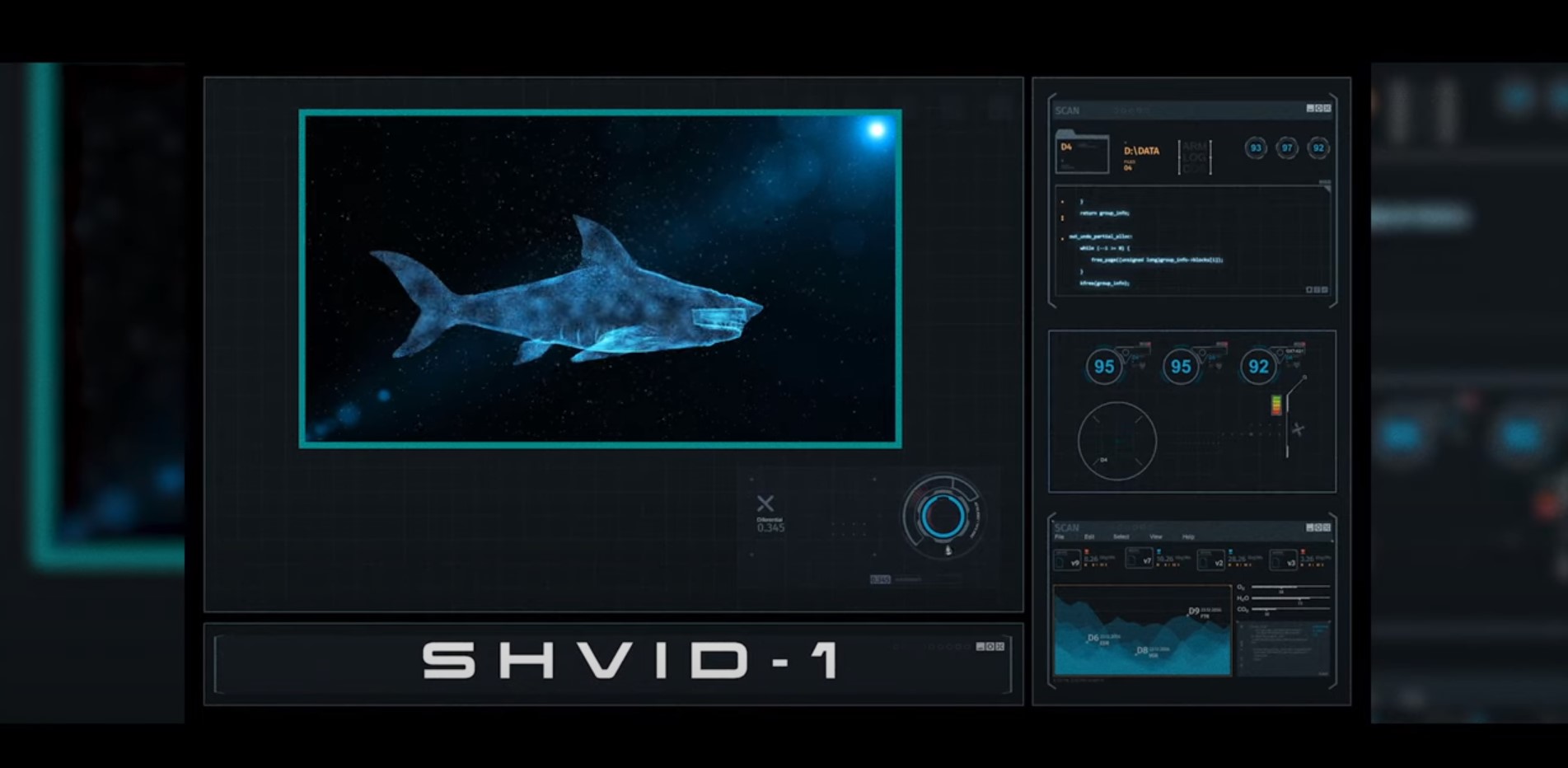
Deep at the bottom floor of the ocean is CYGNIS, a research laboratory retrofitted to be a race against the clock in finding a cure for a world devasting virus called SHVID-1.  Spread by infected oceanic sharks, a handful of shark attacks on unheeding beachgoers turns the world’s populace into mutated marauders and blood thirsty, zombified killers.  Running quickly out of time, the handful of scientists, a maintenance chief, and a security guard find themselves under pressure, literally, as the 30-year-old antiquated CYGNIS station is beginning to show signs of buckling under the ocean’s immense weight.  Factor in virus-mad sharks chomping at the station’s life sustaining systems and a betrayal by the project leader looking for cure glory in greed, a perfect storm brews 1000 leagues down overshadowing the severe global pandemic that has swallowed the world whole.  Survivors must surface topside with the cure before all hope comes crumbling down on top of them.

Okay!  I’m pretty sure director Mark Polonia parallels or exceeds my own unhealthy obsession of the sharksploitation genre with his own series of outrageous D-flicks dedicated to the gross profit of the monstrous shark rampage stigma seen in the Pennsylvania born filmmaker’s previous works in “Sharkenstein,” “Land Shark,” “Amityville Island,” “Shark Encounters of the Third Kind,” and the soon-to-be-released, the vampire and shark alliance, “Sharkula.”    Polonia’s latest, “Virus Shark,” is written by Aaron Drake and echoes the pro-Trump public ideology of willful ignorance in snubbing governmental official warnings about staying away from large crowds unmasked during the COVID-19 pandemic.  Polonia throws Megalodon-sized shade at partygoers and right wing conspiracists with SHVID-1, an obvious play on the real virus, and the sun and sand worshippers who venture into the shark infected and infested waters despite the recommended counsels to stay on shore.  Aside from the social commentary lampooning, the rest of “Virus Shark” is in shambles as a super low-end indie production from Polonia Bros. Entertainment and produced by SRS Cinema’s Ron Bonk. 

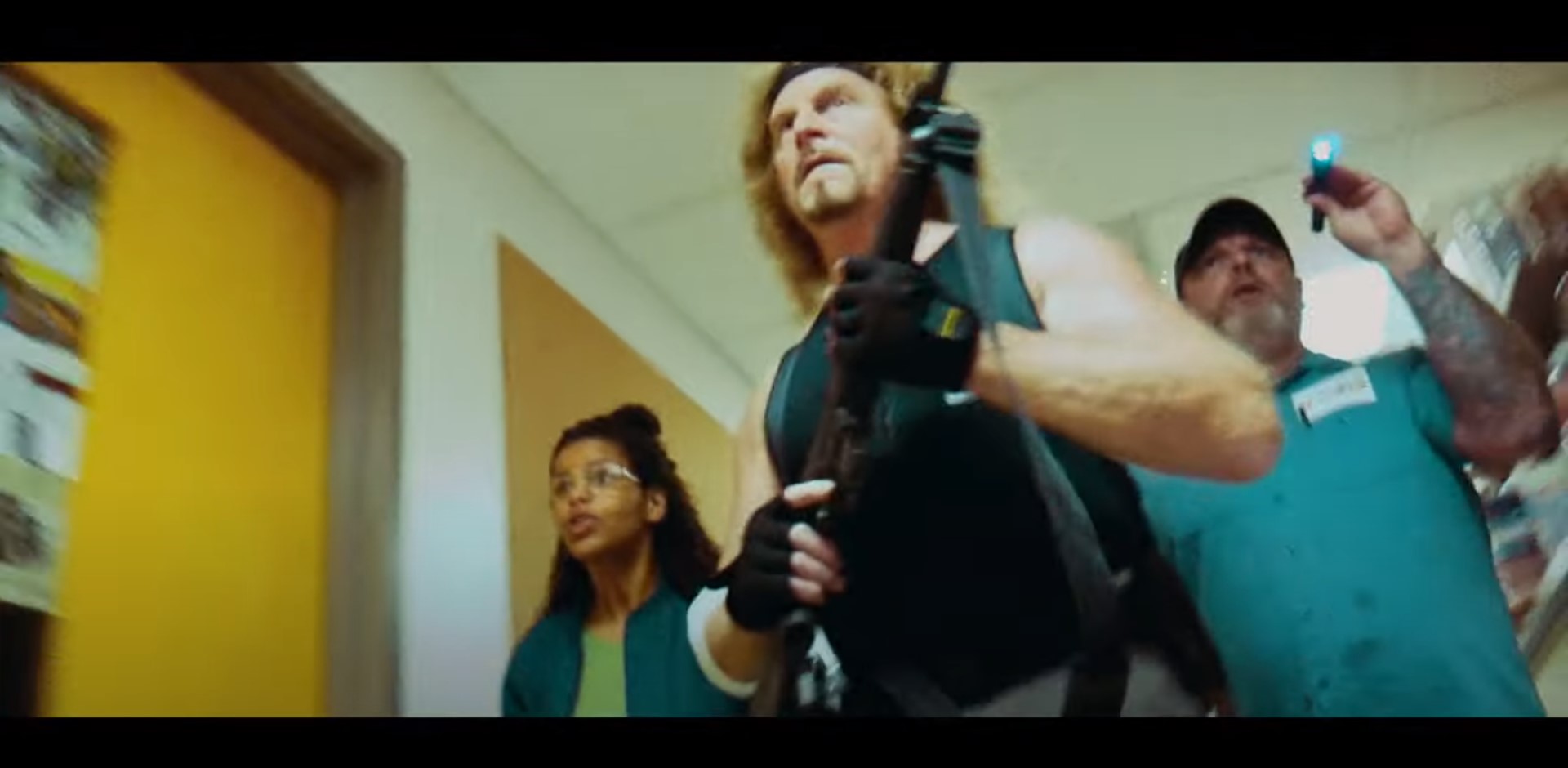
Served up as chum for contagious sharks are a troupe of regular independent staples beginning with lead actress Jamie Morgan entering her second bout with a killer shark after surviving another SRS Cinema gem, “House Shark.”  In the role of marine biologist Kristi Parks, Morgan is not free diving into the vivarium pens and wrangling or bareback riding the maneaters like “Deep Blue Sea’s” Thomas Jane; instead, the actress has a more meek stance as her limiting character transforms into a protective shield over mankind’s last known hope – a cure for the virus.  Fellow scientists Anne Satcher (Natalie Himmelberger, “Shark Encounters of the Third Kind”) and Gregory McLandon (Natalie’s real life husband, Titus Himmelberger, “Sharkenstein”) don the lab coats and spectacles to look the researcher part without actually seemingly doing anything of importance, or anything that makes sense anyway.  The team is rounded out with “Queen Crab” actors Steve Diasparra as the maintenance man Rickter D’Amato, an homage to Joe D’Amato who has helmed a trashy sharksploitaiton film himself with “Deep Blood” (read our recent coverage review here!), and the awesomely 80’s hairdo’d Ken Van Sant the dated commanded-cladded security guard and horn ball, Duke Larson.  Deliveries and any sense of conveyed emotions are a smidge above forced as if reading straight from a cue card.  The off camera stare has to be my favorite gaze into space moments, especially when an aggressive Great White beelines right toward them and the reactions are nothing more than a gaping mouth.  Van Sant wins top prize for at least giving a half-hearted attempt at empathy for a character completing a character arc.  “Virus Shark” fleshes out with Yolie Canales, Noyes J. Lawton, and Sarah Duterte who are also a part of the tight knit celluloid circle of deep-six cinema. 

Speaking of deep six, as in “DeepStar Six,” a semblance toward notable underwater horror films of the deep really do crest through “Virus Shark’s” stagnant flat surface.  Little bits of adulation toward “”DeepStar Six” with the jettisoned escape pod, “Deep Blue Sea” with the shark pool, and “Leviathan” with the topside communication sans Meg Foster sprinkle a blanket of welcoming derivativity amongst a cheaply endeavor.  When I say cheaply, I mean “Virus Shark” scrapes the bottom of the barrel with embarrassingly bad shark hand puppets, interior locations of the underwater sea lab are about as realistic as the innards of your run of the mill High School building, and every single gunshot is the same soundbite stuck on repeat, no matter the gun or the caliber.  I do admire the innovation at times.  An example I would pull would be the two miniaturized pincers matted on top of a live-action still frame used as hydraulic clamps to pickup the rather rigid shark figurine from the “pool.”  You can call it sloppy, but on a pea-sized budget, I call it thinking outside the box.  Much of the story felt underdressed, missing parts pivotal to the impelling actions that either progress cataclysmically or just drop off the face of “Virus Shark’s” malfunctioning sonar.  Under the table deals and sexual innuendos made between project head Dr. McLandon and topside liaison Shannon Muldoon are skimpy at best as well as Kristi Parks’ all for naught endgame to saving the world.  Everything seemed and felt pointless, senseless, and without merit that the “Feeders” and “Splatter Farm” director shouldn’t be totally judged by as we’ve seen much better on much lower budgets from Polonia who he and his late twin brother, John, have been around for decades making movies up until 2008 when John passed away.  Mark Polonia continues to carry the torch but the lack effort has seemingly been replaced with chugging out one scab film after the next to the tune of tone deaf gratification.

Wash your hands, wear your mask, and maintain a social distance of 6-feet from the television when swimming with the “Virus Shark,” that has beached itself onto DVD home video courtesy of SRS Cinema.  The unrated DVD is an AVC encoded single layer DVD-5 and presented in a widescreen, 1.85:1 aspect ratio.  The image quality appears relatively sharp without a hefty loss from compression, especially around the spectrum of low-cost effects that range from rigidly clean to absolutely warped and absurd, but what do you expect from a release that has the cameraman’s reflection visible in the shot and spells region with an extra I – reigion 0 – on the back cover?  Underwater sea lab shots filtered through an oceanic blue hue make due the illusion of a domed research station on the sea floor bed whereas the insides lack a production manager’s personal touch as much of the interior scenes look to be a school with an obvious swimming pool setting and many insipidly sterile hallways and rooms.  Extras on the 74 minute film include a commentary track and SRS trailers with no bonus scenes during or after the rehashed intro credits for the end credits.  The English language 2.0 mono track isn’t the peak of fidelity with the lossy audio compression and inadequate mic placement made apparent by the limited depth and range in  dialogue tracks.  The overlaid narrow foley remains on one level from start to finish finished by stock soundboard snippets.   As far as Sharksploitation goes, “Virus Shark” ranks near the bottom of the food chain.  Of course, there have been far worse killer shark films threshing in the genre pool, but the COVID parodied subaqueous actioner wades underneath the skills of Mark Polonia.

Get Infected by the “Virus Shark” on DVD Home Video!

EVIL is a Slice of Deep Dish Hell in “Creepy Tales of Pizza and Gore” reviewed! (Bayview Entertainment / Screener)


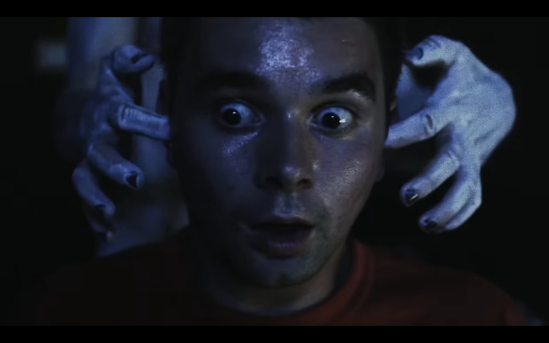
Pizza, that delicious concoction of bread, marinara, cheese, and your topping of choice kneaded and pieced together in a gooey circular of staple culinary awesomeness, has somehow found its way baked into an Italian-sans-meatball horror anthology that promises an equally saucy taste of crusted blood red gore. Five varied, harried tales of horror molded into a gruesome and terrifying VHS-style that will send chills down your spine as you swallow your first piping hot bite of pizza will either have you hungry for more or hurling out your pepperonis. These tales of macabre include the cursed audio tracks of a deadly screaming ghost, the grisly torture and murder in the name of Satan, the tragic and supernatural deaths of two ill-fated lovers, a wooded creature stalking stranded motorists, and a VHS tape that seeks revenge on its former, ungrateful owner.

Let’s take our time traveling machine back to 2014 where Italian filmmaker, Lorenzo Fassina, releases his second feature directorial film behind the horror-comedy, “Anamnesi Mutante,” transmitting by way of a five tale anthology humorously entitled “Creepy Tales of Pizza and Gore;” the titles of the shorts are “Screaming Ghost,” “Devil of the Night,” “Alone in the House,” “Wood,” and “Killer Tape.” Co-directed with producer Marco Giangiarelli, The Milan born Fassina’s background also includes being a director of a collection of short films and music videos for bands that include Italian metal bands Cripple Bastards and Viscera///, similar music scores the anthology. The eclectic tales that greatly homage horror of the 80’s that include rich in color film titles and poignant atmosphere audio mixes, each have a runtime average of approx. 10 minutes long, and offer a mixed macabre of subgenre goodness from technological horror to inanimate object horror besieged with an interlacing host, a faceless, demon-like presenter with much to say, much like the Crypt Keeper. My apologies in advance as the screener that was provided didn’t have subtitles so the host’s soliloquy goes mostly misunderstood, but by the way of editing and how the syntax is structured, one would assume the ghoulish emcee sets up the pizza eaters with the next short video nasty. “Creepy Tales of Pizza and Gore” is produced by Fassina’s indie company, DirtyTape.

Most of us in the States more than likely won’t find any familiar faces inside the confines of these five tales and, know what? That’s okay! Aside from our hell bound host, there’s not a lick of dialogue spoken, but the capability to connect with the characters and the capacity to understand the story without words is as transparent as crystal clear waters of the Venice canals. An assemble of facial and eye expressions and a well edited together script and structure by Fassina for each short provides a sustainable and a sufficient menacing mixed bag of mouthwatering horror. The largely novice cast has either worked on previous projects with Fassina before or are an unknown delight to us viewers and cast list includes Sara Antonicelli, Beatrice Cartoni, Jonathan Farlotta, Jacopo Grandi, Francesco Marra, Tommaso Meledina, Alessandro Melito, Riccardo Tiberi, and Bunny Roberts with a cherry on top topless scene for good measure.

I’m not a terribly big fan of anthologies. Yes, I enjoy “Creepshow 2,” like every other horror fanatic smuck, and I do revel in the grave zest of the low-budget spectrum, especially with compilations from directors of the “HI-8”, aka “Horror Independent 8,” that featured the bloodbath films of some 80s/90’s SOV prodigies in Ron Bonk, Donald Farmer, Tim Ritter, and Marcus Koch, but most anthologies find their unsuccessful way right toward the trash bin, condensed to third-rate releases with little-to-no marketing and hardly any surplus material in the special feature department. “Creepy Tales of Pizza and Gore” may be a foreign anthology barely making an insignificant speck in the cinema market, but certainly shouldn’t be overlooked as the derived golden age of an immensely beloved straight-to-VHS horror courses through the veins of Fassina’s reverencing anthology. The stories garnish b-reel content, but not necessarily effortless or incompetent in substance and range from serious, to tongue-in-cheek, and out right absurdity, with the latter stories being the weaker links. In all, it’s a fun and entertainment horror show from our Italian friends.

“Creepy Tales of Pizza and Gore is delivered fresh and blood warm onto DVD home video courtesy of the New Jersey based distributor, Bayview Entertainment. As aforementioned, Bayview Entertainment publicity provided a streaming screening link so the audio and video aspects will not be critique for this review, but the DVD specs include a single disc, Anamorphic widescreen presentation, with an unrated rating on an Italian language anthology that, supposedly, has English subtitles – my screener did not have subtitles. Bayview Entertainment’s DVD casing resembles entirely like a VHS-cassette with faux movie rental stickers stuck on the outer plastic. The packaging is a nice and warranted touch to a VHS-homaging anthology. There were no special features included with the screener or released in the press release. Chow down on night with “Creepy Tales of Pizza and Gore;” a validating horror anthology worthy of time and effort and reaffirming the faith in anthologies once again with wild, imaginative macabre ambitions without the stiffening efforts of pushy financiers calling behind-the-wheel shots.

“Creepy Tales of Pizza and Gore” won’t disappoint! Buy here on Amazon.com