Football, God, Family, and EVIL! “Him” reviewed! (Universal Pictures / Blu-ray)

“Him” Collector’s Edition Now Available from Universal Pictures!

Cameron Cade’s father has been firmly preparing his son to be a football GOAT since Cam was a young boy.  Inspired by the 8-time champion Isaiah White, star quarterback of the Saviors, Cam had trained and played through the years and ranks to be the game’s next promising rising superstar athlete.  When a mascot-dressed manic derails Cam with a head trauma-induced attack, Cam takes a step back from competing in the football showcase but receives hope when he receives an invitation from the Saviors to work with Isiah White at his isolated training camp deep in the desert.  Before long, a dream-come-true turns into a terrifying nightmare as the training sessions go deeper into something far more sinister and Isiah’s greatness may be contributed to unnatural forces bound by limited contracts.  How far and how much will Cam have to sacrifice to be the best football player ever and to live up to his idolized hero before the game and those who control it swallow his own soul. 

Jordan Peele, once skit comedian with Keegan-Michael Key in “Key and Peele” turned provocative social commentary director of such films as “Get Out” and “Us,” produces the next potshot at cultural critiquing with 2025 released “Him,” a football themed psychological horror that puts sacrifice for the game over family, intensifies the pressures of equating performance with success, and a misguidance from fatherhood/mentorship that intends on grooming a young person into superstardom.  “Him” is the sophomore feature length film for Justin Tipping who also cowrite the script along with Two-Up Productions cofounders Skip Bronkie and Zack Akers as the first major movie release for the company associated with Peele’s Monkeypaw Productions that not only produces his Peele’s own films but also invests into minority-driven projects, such as “The Candyman” remake, “Monkey Man” with Dev Patel, and Spike Lee’s the “BlacKKKlansman.” 

At top bill of “Him’s” roster is an established comedian, writer, and producer with an even more well-established and famous last name.  Marlon Wayans’s breakout project was the sketch comedy TV show “In Living Color” that also highlighted and rocketed the career of Jamie Fox and Jim Carrey but was also considered a family affair as Marlon’s siblings, Shawn, Kim, Keenan Ivory and Damon Wayans, cohosted with him the African-American centric comedy show.  In “Him,” Marlon plays the 8-time champion quarterback for a football team that is as venerated as his character Isiah White playing for the Saviors.  Wayans, known for his comedic role stints in favorites “Don’t Be a Menace to South Central While Drinking Your Juice in the Hood,” “Scary Movie,” and “White Chicks,” has a surface scratched darker side to his onscreen personas that leave him no stranger to a role like Isaiah White that’s dispassionate yet ferocious – his drug addiction role in  “A Requiem for a Dream” is one of those examples.  Opposite Wayans is the strong, muscular facial features underneath soft, piercing eyes of Tyriq Withers.  The then mid 20-year-old is in peak physical condition for his rising star quarterback Cameron Cade under the pressure cooker of family, agents, and a football league that expects greatness on every level.  Withers’ recent principal parts in perceptively pointless and under-the-radar remakes of classic cult films, “Don’t Tell Mom the Babysitter is Dead” and “I Know What You Did Last Summer,” didn’t elevate the Florida born actor into the spotlight, preparing him for an upcoming lead in a more visible original psychological horror themed around one of America’s favorite sports, but Withers meets the challenge with a promising performance for his promising character that makes “Him” standout above the rest and being his biggest role of his career catalogue.  Wayans and Withers battle out with testosterone trumping into a gray area of occultism that’s not so unlikely from the reality of professional sports.  The principal leads are supported by an eclectic supporting cast of eccentric oddities of the isolated training camp with Julia Fox (“Presence”) as Isiah White’s fast-and-loose, high-end wife Elise, standup comedian Jim Jefferies as White’s personal athletic physician Marco with baggage regrets, Tom Heidecker (“Us”) as Cade’s hype manager Tom, Indira G. Wilson (“The Perfect Host”) as Cam’s mother, and Richard Lippert (“Scare Us”) as the saviors behind-the-scenes owner. 

“Him” came and went from its theatrical run so fast it feels like only yesterday trailers were being played on commercial breaks and on online previews, denoting Justin Tipping’s movie offering not finding a significant audience for the anti-pro sports treatment of players message.  That’s what “Him” powerfully engrosses with is an anti-football message of dog-eat-dog cruelty that cannibalizes itself for what’s best of the sport and discard those who give the sport it all once their eliteness has been completely emaciated, as if the sport is a vampire and drains their athleticism through the carnivorous canines of fans, team, and ownership.  Tipping and his cowriters integrate religious and Roman motifs that relate the gridiron as Church or the blood of the GOAT coursing through another that offers divine playing sacrifice and supremacy while certain aspects of the film regard the football fields as coliseum with players being gladiators with even the finale reenacting scenes similar to that of “Gladiator.”  Along with those strong imageries, iconographies, and representations, Tipping’s linear telling of the story feeds off the phantasmagory and being on the edge of experimental that, in turn, puts into question Cameron Cade’s reality as everything he experiences from the ominous weirdness pulsating his path forward in football to the macabre training and cultish indoctrinations of Isiah White’s desert training camp don’t come about until Cam’s whacked over the head with a long handled and ornate hammer.  Then, the question becomes, is Cam in dead and a warped purgatory?  Is Cam hallucinating?  Or is Cam actually experiencing the darker side of a game he’s been bred to believe in and be the best at.  All of those existential and surreal components overload “Him’s” highbrow and social commentary horror that will fly over the audiences’ head like pre-game ceremony fighter jets. 

“Him” arrives onto a collector’s edition Blu-ray and digital combo set from Universal Pictures.  The AVC encoded, 1080p high-definition, film is stored on a BD50, ensuring room for a visually and audibly stimulating tryout of pigskin piety.  Infused darker tones of shadows, Brunswick greens, and plenty variations of brown from the football to the desert located training camp, there are a very few contrasting moments that embolden cinematographer Kira Kelly (“Skin in the Game”) to emerge out from the hefty draping shadows that obscure much of the compounding and confounding irrationality of the insular football fanaticisms.  Kelly utilizes an array of long to closeup shots from different scenes or even the same scene to throw off the balance and provide depth when needed for the moment.  In addition, the same moments can be implanted with a personal bubble of surrealism through Cameron’s perception of events, never leaving other characters to define the atmosphere or the behaviors that are inherently set by the principal lead character, who or who may not be suffering from an intense concussion untreated unintentionally by the internal turmoil of family politics.  Detailed textures and skin tones have organic qualities, and the X-ray vision has seamless segue with all its intensified bone crunching hits.   “Him” is presented in a widescreen 2.39:1 for an extra stretch of spherical sighted surroundings that work to enclose on Cameron the deeper he’s in with the mentor’s program as well as to fully embrace his destiny with obstinance in the grandest of finales.  The Blu-ray has encoded four audio option a with English Dolby Atmos, a Dolby Virtual Speaker 2.0, a Spanish Dolby Digital Plus 7.1, and a French Dolby Digital 7.1.  All options offer extended reach into the audio localization areas of the compressed, multiple channel formats, and even the DVS adds a little extra to throw sound inside a three-dimensional space which is important for “Him’s” haunting and bizarre oneiric structure.  The Atmos provides more depth and richer lagniappe effort where it comes with Cameron’s perceptive discords of racing arguments and whispering inceptions.  Dialogue is clean and clear throughout, and no issues imposed on The Haxan Cloak aka Bobby Krlic’s subtle descent of a score.  English, French, and Spanish subtitles are available.  Bonus contents include feature commentary with director Justin Tipping touching upon production areas and the cast to create his footprint as a movie artist, an alternate ending, a removed end credits scene, a handful of deleted scenes, two deconstruction of scenes on how they’re made, Becoming Them looks at Tyriq Withers and Marlon Wayans transformation into elite athletes, The Sport of Filmmaking featurette offers a behind-the-scenes look at production of “Him,” and the Hymns of a G.O.A.T. has composer Boby Krlic’s detailing the elements in creating his movie score for the film.  The collector’s edition also comes with a digital code insert to stream or download from anywhere on any device.  The physicality of the collector’s edition is more to the tune of a play fake that doesn’t allow the release to run with an overloaded package.  Instead, Universal laterally passes with a cardboard slipcover with an embossed title for some smooth font texture.  Instead, the standard VIVA case houses the same artwork as the slipcover without the raised lettering and the disc is translucently pressed with the title and film and format technical credits.  “Him” has a runtime of 97 minutes, region A encoded playback, and is rated R for strong bloody violence, language, sexual material, nudity, and some drug use.

Last Rites: If you’ve ever thought professional sport players were commodities before, “Him” brings the blitz of putting football above it all by bringing divine blood, sweat, and tears into a cult of sadists and stardom.

“Him” Collector’s Edition Now Available from Universal Pictures!

Midnight Showing of the Lost EVIL Tape Will Be the Last Thing You’ll Ever See! “Transmission” reveiwed! (Jinga Films, Danse Macabre, MVDVisual / DVD)

“Transmission” Transmitting to Your Television on DVD!

A Santa Mira elderly man sits in a dark room with a glowing television illuminating his silhouette.  As he channels surfs through the night, amongst what’s being broadcast over the airwaves is a bible-thumping televangelist, a children’s puppet show, an 80’s teen romance comedy, a live local news broadcast of a hostage situation and a documentary on the investigation of the disappearance of notorious cult horror film director Frank Tadross Roth pursued by his granddaughter Rachel and her boyfriend.  Going deeper into Ross’s disappearance through archived interviews with the director and crew, on set raw behind-the-scenes footage, and the examination of Ross’s quest for an obscurely treasured videotape by an occult group, the director’s pursuit of, and his eventual unearthing, of the tape become the push for his last and recently discovered film Transmission, thought to have been lost in a building fire after his suspected involvement of the film’s lead actress murder.  Going back and forth between the channel programs builds a sinister, terrible dread that will soon be revealed to terrorize all those glued to the set. 

Late night television has never been so bodingly evil!  Channel surfing transmits an anthological approach between mockumentary and found footage in this uniquely crafted scrolling of boob tube terror entitled “Transmission.”  The 2023 horror is from writer-director Michael Hurst, the English director behind a pair of franchise sequels in “House of the Dead 2” and “Pumpkinhead 4:  Blood Feud.”  His latest venture takes twist to a whole new level different from his repertoire of linear independent horror with backlot dark legend surrounding an occult obsessed horror filmmaker.  Hurst also produced the film, his first in over a decade since 2017 with Andy Hurst’s (“Are You Scared?,” “Wild Things: Foursome”), alongside other self-employed filmmakers with the How to Kill Your Roommates and Get Away with It” producing duo Robbie Dias and Pat Kusnadi.  New Blood Productions serves as the production studio.

“Transmission” traverses in guile under TV guide pretenses of local channels, channeling the horror through the back and forth of unsettling, televised channels that have a familiarity of broadcast shows – sponsor subsidized children shows, perfunctory local news, and black and white sitcoms – but there’s more than what meets the eye.  The film uses recognizable genre names to get the message across with “Sleepaway Camp’s” Felicia Rose in her most vanilla action news reporter role, “Scary Movie’s” Dave Sheridan as an over-the-top protective father caricature in a teen romance comedy, and “The Road Warrior’s” Vernon Wells at the center of the amassing occult suspense as the missing notorious horror director Frank Tadross Roth.  Over the years, Wells’ performance has tapered to a subtle crawl of expression as if the veteran actor is now just running through the motions of the everyday hired gig that’ll headline his name, unlike his former wide-eyed and eccentrically villainous roles in “Commando” and “Innerspace,” but “Transmission” suits his stern act portrayed in video flashback as an occult maniac and peculiar director gripped by the search of an arcane, dark sect’s perniciously videotape.   Spearheading the effort to track down the filmmaker is his granddaughter Rachel, played by Nicole Cinaglia (“Death House”) with an inexplicable character shifting of gears from curiosity and intrigue from the documentary to the frantic and fearful ramblings of a paranoid hostage taker in the new story stemmed by her findings surrounding her grandfather’s disappearance.  There’s potential gap there in the lack of development, or rather the lack of acknowledgement overall, with Rachel’s parents as it’s just a grandfather and granddaughter affair without the recognition of those in between.  There’s also a gap in Rachel’s attained information about the sect, the videotape, and her grandfather’s endgame as she seemingly has more knowledge about the insurmountable otherworld evil on the horizon but how she got there is a few clicks short to fully bridge.  Sadi Katz, Del Howison, Marcella Di Pasquale, Ben Kaplan, Hunter Johnson, Raymond Vinsik Williams, Jennifer Nangle, McKensie Lane, Jessica Cameron, Charles Chudabala, Michael Glenny, Christopher Bryan Gomez, Ruby Reynolds, Ben Stobber, Mark Schaefer, and Robin Hill fill out the channel surfin’ cast of characters.

“Transmission” has a neat story structure built upon components with the premise being a movie inside a documentary while amongst a flipping through the broadcast waves that coincide with another movie as well as television shows, podium preaching, puppet skits, etc., to which is then wrapped up inside and latched onto another movie, a metanarrative with a preamble setup.  The Roth directed Transmission, presented for the first time on Malvolia’s spooky late night show (an Elvira rip) is a space horror off-brand for the filmmaker that mirrors vaguely the reality outside the boob tube but told through the Rachel Roth investigative documentary that builds the timeline pieces while flipping back and forth between the late night movie and the documentary as well as the scroll through every other broadcastings of paralleling programming in what feels like an antiquated prelude to the cable guide button on a tube television with depicted content that resembles much like what programmed over-the-air decades ago down to the very staticky outlines of porn stars expertly doing their fleshy vocational craft in snowy pixelations.  The edited series of a varietal shows creates an erratic unsettlement with an atmosphere churning over the idiosyncrasy content of what’s eventually to spoil or come to chaos by Transmission’s, or rather ”Transmission’s,” twist ending and what a fairly good twist ending it is, even with the slightly ham-fisted acting, by pulling off misdirection as you think you know where the finale is heading but the forces of evil seep through with a backup plan. 

Jinga Films, Danse Macabre, and MVDVisual present “Transmission” onto a MPEG-2 encoded, upscaled 720p (but upconverted on my player but since this title is shot digitally the image appears fairly good to begin with), DVD5 and presented in a widescreen 1.78:1 aspect ratio.  As stated, imagine quality has a fair amount of detail and intended panache interference amongst a broad range of different aesthetic styles and gels through the varied televised broadcasts from static and grain filters to colorless sepia, to filming scenes on television screens, and to other mock-electrical afflictions inside a digitally shot story truck to intermittently snap normality and cause a rising fear of curiosity amongst the TV goers.  Throughout the picture, there were no noticeable true compression issues with the picture.  Some scenes felt slightly stretched by that I chalked that up to filmmaker style when rendering various programming for the narrative.  Though not listed which format is used, the player registers an English Dolby Digital 2.0 Stereo.  With imitating the perspective of someone watching television, audio tracks are distinguished with a flat concave that elevates the pitch but disperse through a single channel.  Emitting through a dual channel stereo, the audio can discern potently through, providing clarity.  When looking at the perspective, we’re either the old man watching the television or when inside the show itself watching from the fourth wall in and subsequently the strength and tone change often quite a bit, creating a rich depth when done correctly.  English subtitles are optionally available through the moving menu.  The DVD is essentially a feature release but there are other Jinga Film trailers that include, “Iconic,” “Tonight She Comes,” “The Protos Experiment,” and this film, “Transmission.”  The DVD comes in a standard single, push-lock, black DVD case with single-side cove art that I personally found gratifying when considering the film as it speaks to the abnormal and drawing glow of a brightly illuminated television in place of a head on top of the shoulders of an opened-armed cultist with a pleasingly red and black contrast.  The DVD is pressed with the same yet cropped image.  “Transmission” has a R rating (no singled-out rationales but there is some language and nudity), has a runtime of 74 minutes, and is region free for all players.

Last Rites: There are no mixed signals from “Transmission’s” gradual rise to impending cosmic doom with an exceptional Lovecraftian twist to nightcap this Michael Hurst channel-hopping and ominous occult production.

“Transmission” Transmitting to Your Television on DVD!

Cheez-Whiz and EVIL Go Together like Camping and Horror! “Black Holler” reviewed! (Wild Eye Releasing / Blu-ray)

“Black Holler” on Blu-ray Home Video from Wild Eye Releasing!  Available at MVDVisual and Amazon.com!

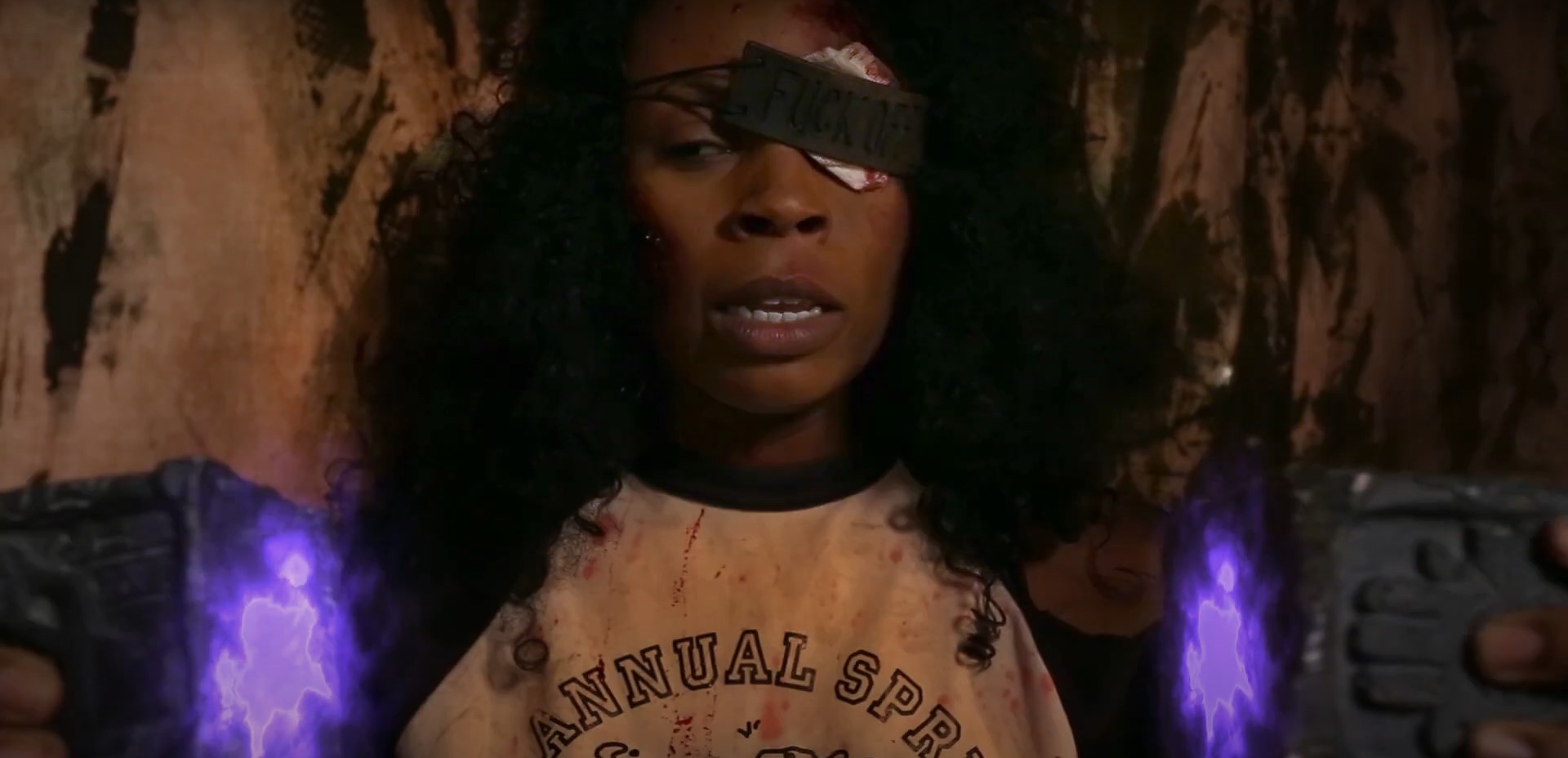
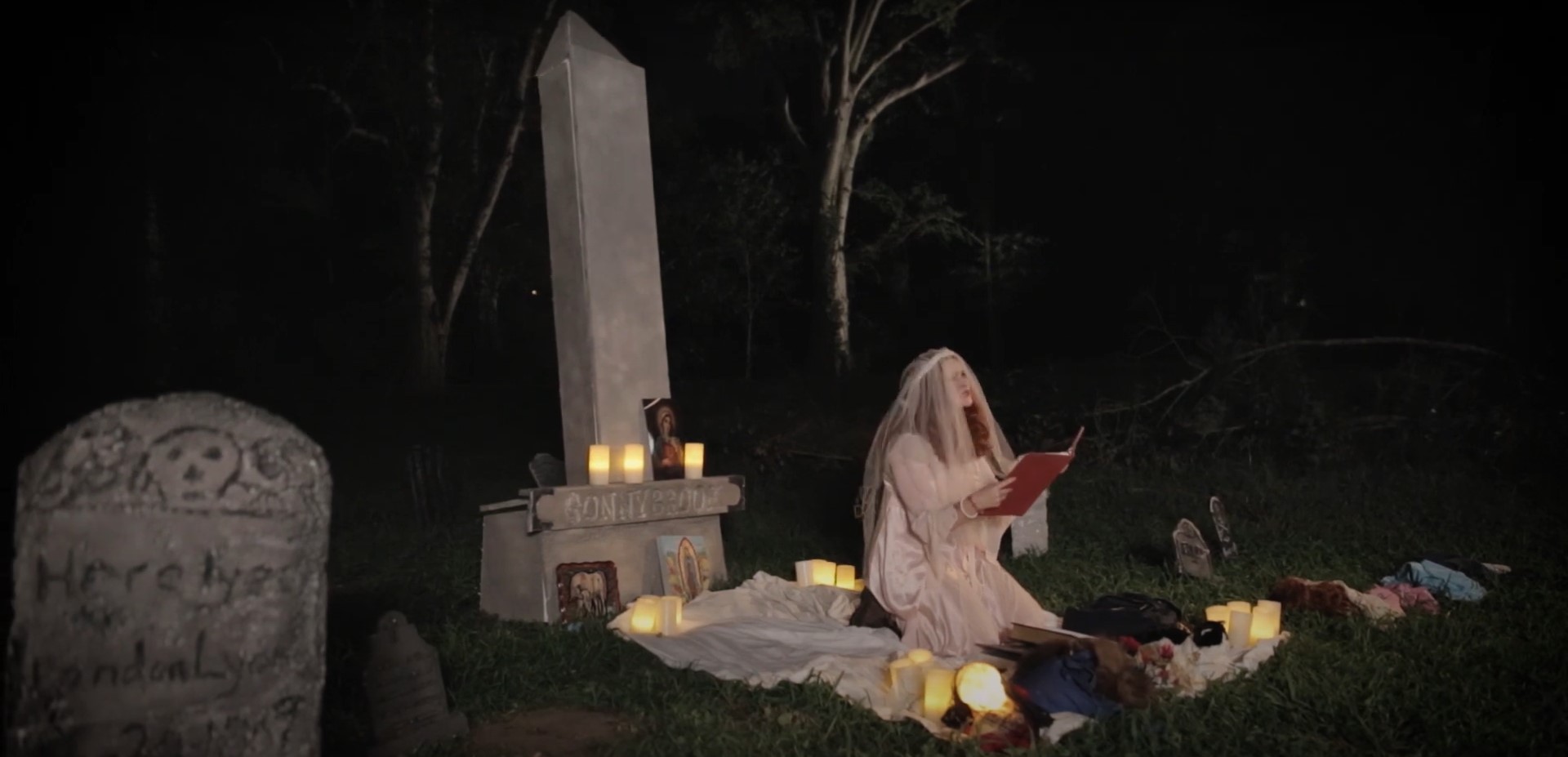
The Black Holler woods has a notorious reputation for being cursed by a lost ancient artifact that once broken into two would sic supernatural powers upon to anyone disturbing the grounds.  A class of half-witted community college Archepology students embark on a field trip to the very same Black Holler woods.  Among them is the rebellious yet grounded black belt Laquita Johnson forced to tagalong in order for a last ditch effort for an educational institution to accept a reformed her despite the refractory record.  As soon as the class steps foot into the woods, one-by-on they begin to disappear mysteriously as the area comes alive with the vengeful spirits of a long forgotten tribe that once inhabited the land.  Poor decisions, ultra-egos, and classic horror movie tropes amalgamate into a don’t go into the woods with white people scenario of the year 1989 proportions.

Let me set the scene for you:  Back in 2017, Jason Berg and his cast and crew set out to make and release a homage horror-comedy that wasn’t just bloody and supernatural but was also drenched in the broad quintessential tropes of 1980s horror film.  Berg directed and cowrote the U.S. film alongside Heidi Ervin and Rachel Ward Heggen on a modestly budgeted scale that relied mostly on slapstick wit rather than full blown genre makeup and effects but the comedic style also treads into the parody territory, reminiscent of the days of yore with “Airplane” or even the relatively more modern version, and related horror-themed, “Scary Movie” series, aiming to cast objectifying humor as well as generate other politically incorrect forms of laughter that many Hollywood studios and off-Hollywood indies are afraid to touch with a 50-foot pole today with the fear of being criticized, sued, or even worse, #cancelled.  “Black Holler” isn’t having none of that black listed nonsense in its Troma-transgressional fashion.  “Black Holler” is a crowdfunded, Kickstarter and Indiegogo campaign production with executive producers Jim and Phyllis Casebolt, Heidi Ervin, and Wesley Rutledge and is filmed in and around Nashville, Tennessee with sponsorship by the Nashville Film Festival and production credits under the banner of Grand Prize Studios.  

One thing to notice about the Tennessee-native Jason Berg’s obscure, campy, and modern-day slice and dice of satire is that “Black Holler” has a large, sprawling cast acting in different, diverse locations though ultimately winding up backdropped in the woods like most low-budget horror films do.  Numerous principal leads receive nearly equal screen time to follow individual storylines with predominately Tamiko Robinson Steele (if that isn’t a Blaxploitation name, I don’t know what is) being the empowered, karate-instructed, skateboarding, last minute addition, Laquita Johnson, to a predominately white class of vanilla misfits.  “The Dead Center” Steele rarely engages an interaction with fellow camping characters but eventually Laquita glues herself to the scrawny nerd Walter Love (TikTok influence Nicholas Hadden).  As Laquita and Walter work on Walter’s social awkwardness with a quick hip-throwing lesson, the other students, led by the overly pretentious assistant Professor Thompson in a wonderfully painful and zany performance by Jesse Perry (“Zombies vs Strippers”).  Perry’s know-it-all façade is complimented by his awkward hand gestures and ridiculous facial expressions to make Professor Thompson a full-bodied caricature.  Much of the cast are equally as lampooning the usually trope characters:  the stoners (Bruce Ervin and Betty Williams), the angsty goth (Sarah VanArsdal, “Chest”), the goody two-shoe (Heidi Ervin), the slutty hot girl (Rachel Ward Heggen), the over-sexing couple (C.J Stanley and Stacy Gazenski), and a self-serving and bullying handsome jock who is satirically played by numbers actors of all races and ages with the in-script context that shows and movies recast principal actors with other actors who look nothing like the original and that the general audiences won’t notice.  “Black Holler” rounds out the cast with Brad Edwards, Wesley Rutledge, Leah Helena Miller, Justin Terrants, Brian Russell, Miguel Otero, and Stayc Givhan as Laquita’s white, queer cousin and who outperforms with sass and confidence to the near point of stealing the entire movie. 

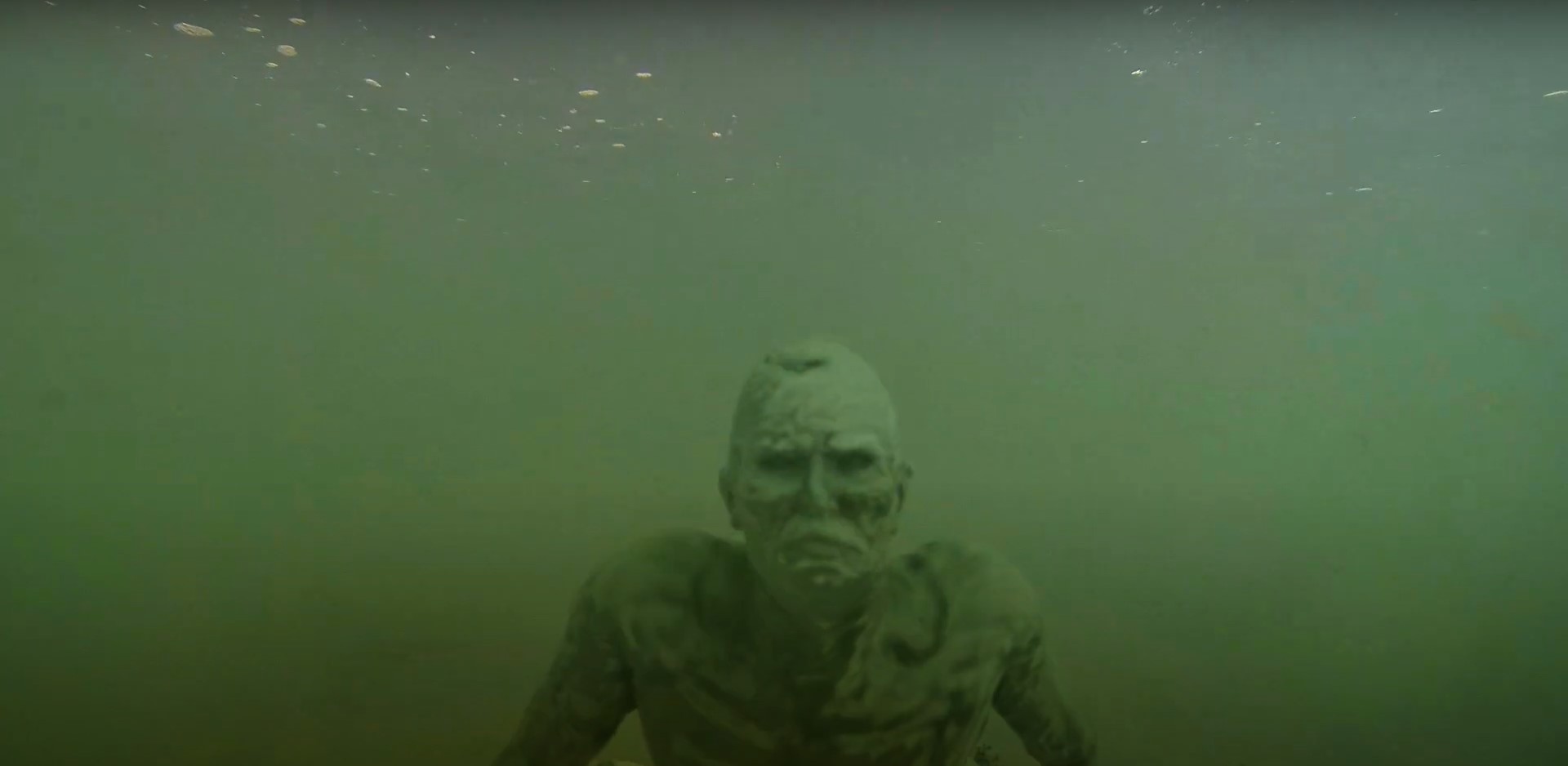
Director Jason Berg recreates the late 1980’s to early 1990’s milieu and very well I might add. “Black Holler” has the skater-grunge dress, early model cell phones that are the size of a football with an antenna, and crass, douchy attitudes that fit the period’s horror catalogue casting call. Not one to take itself seriously, at all, “Black Holler” just needs to be sat down with and watched for what Jason Berg intended his debut film to be – one big parody of paranormal patterns. Berg achieved the goal in depicting an outlandish ensemble of highly vain characters too entrenched in their own objectives of “Pet Semetary” resurrecting animal rituals, engaging in hot premarital sex, and smoking pot while swimming with sea-sludge covered dead. Aside from the little “Pet Semetary” nod that goes hand-in-hand with the sacred Indian ground, the film pulls in and ties together inspiration from other 80’s era classics like “Evil Dead” with the forest jetting out vines to snatch and grab as well as a compilation of every horror movie set on a camping ground with a nefariously spooky and anecdotally deadly past. Many of the gags and goofs land in a generic vane tapped too often to strike it rich but there are a few outliers, such as the seamless Brett bit that tackles trite truth with well devised humor or when Professor Thompson, in one of his many zany arbitrary acts, climbs a tree like a squirrel that does provide a good chuckle, but then there’s the whole systemic racism callout that flies over my head as, to my memory, wasn’t a big thing in the 80s or 90s. Perhaps, the concept plays into the whole token black trope that Laquita represents to the group, as in what the title alludes to in tribute and in theme.

“Black Holler” is receiving a re-release from Wild Eye Releasing but in a new special feature-laden Collector’s Edition!  Presented in a 1.78:1 aspect ratio on a AVC encoded, high definition, 1080p Blu-ray, “Black Holler” does have quality appeal despite various gradings and stylistic choices, such as color filtering to de-age into black and white. Compression appears stable with no noticeable ghosting, aliasing, blocking or banding.  Details and delineation are sharp enough for videophile nitpicking to be at a minimum.  Despite some use of a blue tint during a flashback, nighttime sequences convey just enough sparse lighting to not be overflooded and still maintain a sense of darkness in neutral contrast.  The English LPCM Stereo 2.0 audio tracks offers a crystal clear digitally recorded dialogue that’s free of obstruction and background noise.  If you watch the gag reel, the crew does a remarkable job holding action in place until the boom is free of all sorts of motors, planes, and other environmental sonances.  Depth works out mostly in the foreground amongst closeups and medium shots while range mostly revolves around quick whips of vines and the splatter of blood.  Special features include a director, cast, and crew commentary, deleted and extended scenes, a gag / blooper reel that consists mostly of the ambient noise holds, an alternate opening and ending scene, We Made Our Goal and Guns & Roses parody song tracks, a “Black Holler” Kickstarter promotional video as well as a faux promotional video with Professor Thompson as host and oozing with Archepology excitement, and Wild Eye Releasing trailers.  Collector’s Edition release is housed in a cardboard slipcover with what appears to be colored graphite art of some semblance of the colorful characters clumped together flaunting their idiosyncratic characteristics and personalities.  The clear Blu-ray case with snapper, which has become more and more common than a traditional blue hued snapper case, frames the original Wild Eye releasing cover art of Laquita holding up a machete in an ebony femme fatale pose.  Both slipcase and Blu-ray back covers have identical layout designs.  If you unlatch and open her up, the reversible cover art has a great group picture of the cast in character and there’s also a folded illustrated poster in the insert which you can see on the disc art without having to unfold the poster.  The unrated flick comes region free and has a runtime of 89 minutes.  “Black Holler” is a love it or hate it satirical salute to horror stereotypes forged from out of a screw loose admiration that can be, at times, too immature to find funny but the whole package functionally works as a comedy peppered with genre elements.

“Black Holler” on Blu-ray Home Video from Wild Eye Releasing!  Available at MVDVisual and Amazon.com!

EVIL is Undead…And Rides a Shark! “Sky Sharks” reviewed (Umbrella Entertainment / DVD)

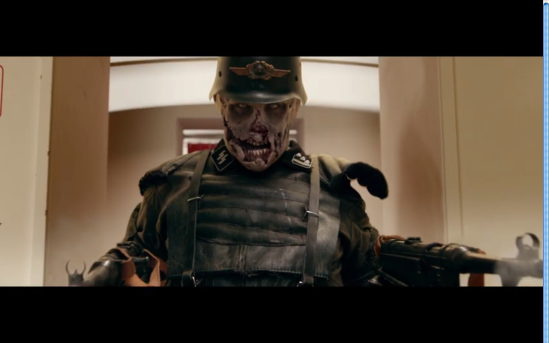
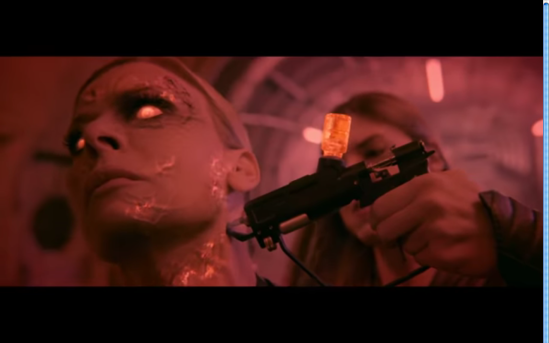
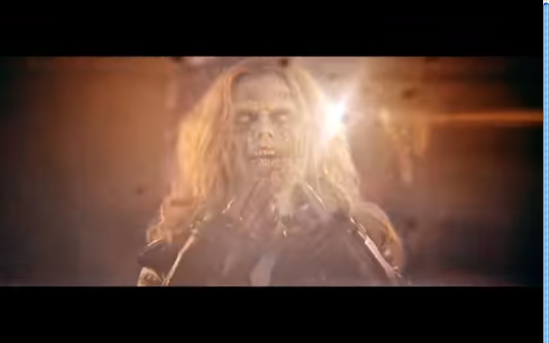
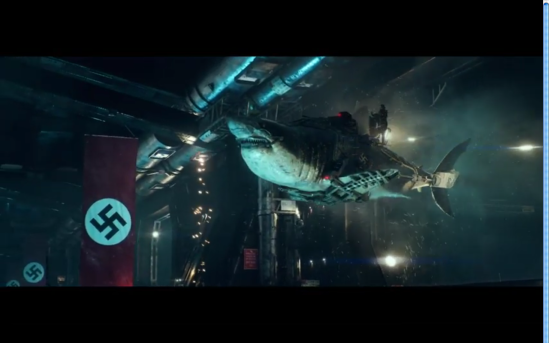
Former Nazi scientist Dr. Klaus Richter’s past has finally caught up with him after 70 years when a clandestine German laboratory, disguised as an aircraft-battleship hybrid, thaws from behind a globally warmed sheet of frozen ice and rock, releasing Dr. Richter’s regenerated legion of undead Nazi super-soldiers piloting genetically engineered flying battle sharks complete with guided missiles alongside their razor sharp jaws.  Loyal to the Third Reich, the sky sharks continue their master race patronage with a blitzkrieg in the skies, attacking commercial aircraft, boarding the cabins, and slaughtering every last person on board before crashing.   Now contractually working for the U.S. Government as the biggest name in technological advancement, Dr. Klaus, with the help of his two daughters, has a plan to nullify the sky sharks’ defenses to make them vulnerable to his latest newest experiment in warfare, Dead Flesh, under the guidance of his fellow covert government agency heads.

Apex predators of the waters are now apex predators of the skies in Marc Fehse’s ridiculous, frenzied, and utterly mad ultra-violent Nazi-exploitation, “Sky Sharks.” Soaring through the heavens soaking fluffy white clouds with blood, the Carsten Fehse and A.D. Morel co-written film took off virally in 2020 with the promise to the internet, especially horror fans, of zombified SS soldiers mounted standing on humungous Great White, Hammerhead, and Megalodon jet-propelled sharks. Fehse’s team delivered. “Sky Sharks” has not one single serious bone in all it’s cartilaginous gory-glory body in what’s Fehse’s second film behind the 1999, straight to video, “Mutation” involving the what-if factor of a surrealistically free reigning and sadistically unbridled Nazi force hellbent on winning World War II no matter how many lives needing to be sacrificed for the sake of the Führer’s dominion. The Germany-made production is a Fuse Box Films and Fantom Films.

“Sky Sharks” is studded with cult stars, but those studs pop out mostly after the carnage-laden opening scene of passengers on a commercial flight being ripped to shreds by undead super-soldiers hog-wild about killing. Robert LaSardo (“Strangeland”), Lynn Lowery (“Model Hunger”), Tony Todd (“Candyman”), Diana Prince (“The Last Drive-In with Joe Bob Briggs”), Mick Garris (director of “Critters 2”), Dave Sheridan (“Scary Movie”), Amanda Bearse (“Fright Night” ’85), Asami (“Gun Woman), Naomi Grossman (“American Horror Story” franchise), Lar Park-Lincoln (“Friday the 13th Part VII:  The New Blood”) and “Mortal Kombat’s Shang Tsung himself, Cary-Hiroyuki Tagawa, make an appearance in some minor way, shape, or form, but since “Sky Sharks” is a German production, much of the cast is geared toward German and Austrian actors with Thomas Morris spearheading the lead role of the inverted mad scientist, Dr. Klaus Richter, a centenarian mastermind behind the birth and, hopeful, destruction of his monstrous airborne jaws of death experiment.  The role itself isn’t very exciting that refrains Morris to be nothing more but a talking head who recounts his failed World War II and Vietnam resurrection serum to turn the tides of war.  While Dr. Richter has immense blood on his hands from a long and rich background, the present day Richter has lackluster appeal and Morris doesn’t provide much zest either.  More complexities reside in Richter’s two tech-savvy and kickass daughters, Diabla and Angelique.  Their signifying names alone provide some foreshadowing of events, but the close sisters are boots on the ground with their father being the eye in the sky; yet, Diabla and Angelique have been kept in the dark from their father’s horrid past that factors little into parting ways from being daughter’s little girls.  Blonde beauties Eva Haberman and Barbara Nedeljakova successful roles in Germany and the U.S. include “Hostel” and the sci-fi tele-series “Lexx,” but their blind obedience to the patriarch roles downscales any moments to shine individually as free thinking agents of good.  Any other character factored into “Sky Sharks’” whiplash narrative come and go without a single ounce meaningful impact becoming background noise for the fray. There’s not even a singular villain to speak of as a focal point to direct a challenger against forces of good.

As much as the concept excites me on an obscurely dysfunctional level, a real telling tale of who I am as a person, who also praises “Snakes on a Plane” as cult candy, “Sky Sharks” has atrocious issues with pacing and story quality.  The opening scene sets up what to expect of gore drenched Nazis yoking back on genetically mutated sharks, zipping through high altitude to acrobatically infiltrate commercial planes for complete and total annihilation of every passenger onboard.  Tickles me in all the right places.  Yet, the sky sharks’ unveiling background whizzes past right into death from above world apocalypse, skipping keynote details resolving the giant warship beached on the Antarctic ice.  Fehse decides to redirect our focus with a bunch of explicit violence and sex and while that’s all nice and good…really good…the misdirection can’t coverup the necessities needed for a good story even if the story is absolutely bonkers. The visual effects are not distinct from the ream of shark-sploitation films that have become popular over the last decade in a cheaper slaved effort to capitalize on the majestic beasts of the sea…who sometimes mistake a surfer for a sea lion. The flying sharks swim in a stiffly pattern and move inorganically through their uncharacteristic ecosystem as they rocket in a school of steampunk nightmares. Not all visuals fall short of satisfaction when they’re appropriately blended with practical effects. Under that hood of tangible horrors is “Iron Sky: The Coming Race’s” Martin Schäper and, the legendary, Tom Savini, who we haven’t seen special effects work from since 2012’s “Death from Above” (an also fitting title for killer sharks in the sky). Schäper and Savini bring it with blood. Each plane sequence, there’s two of them, exhibit different deaths with each one more outrageous than the next. My favorite is the inverted periscope through a guy’s cranium and having a looksie at the screaming, bloodied passengers. “Sky Sharks” is, literally, an over-the-top scream of slice’em and dice’em fun.

Cresting through the blue yonder and painting the sky blood red is the deadliest gang of shark riding Nazi’s to ever grace a cinema platform in “Sky Sharks,” coming to DVD in Australia, no stranger to large, deadly sharks, courtesy of Umbrella Entertainment in association with Raven Banner. The NTSC encoded, region 4, rated R release will present the film in a widescreen 2.35:1 aspect ratio. “Sky Sharks” is a turbulent wonderland of rustic computer generated visual effects with a Marco J. Riedl and Olaf Markmann cinematography, typifying a clashing style, of keeping actors tightly in focus to sell a futuristic fluorescent environment. A few scenes give a sense of layered paper mâché sitting in front a green screen as the forefront images seemingly pop out of their backdrops. The English and German Dolby Digital 5.1 surround mix falls victim to an overpowering score of a weak dialogue track that washes key pieces of exposition that might explain more as the scenes fleet away in the rushed paced 103 minute runtime. Aside from a brilliantly detailed DVD cover robust with a glowing eyed, half-decaying Nazi soldier as centerpiece amongst flying, weaponized sharks and Robert LaSardo and Lynn Lowry cameoing off to the left side with a half-naked female warrior on the right, the DVD has no bonus features included. After the credits, a fake commercial for “Sky Frogs,” starring that half-naked female warrior I just mentioned, is a satirical happy ending full of even worse, 80’s caliber, visual effects worlds and frogs. Though not at the top of the food chain being one of the grossly ostentatious and shoddily visual effects films ever, the mindless, search and destroy, crudeness of “Sky Sharks” chums our oceans of entertainment with some of the bloodiest fun we’ve seen in a long time from a Nazisploitation.

Own Umbrella Entertainment release of “Sky Sharks” on DVD! Click the poster!

Pass or Fail Weekend is Evil’s Playground. “Camp Twilight” reviewed! (DarkCoast / Digital Screener)

On the verge of failing and having to repeat a grade, six students are given the opportunity to spend one technology free weekend at Camp Twilight with their homeroom teacher, Ms. Bloom, and principal, Mr. Warner, as chaperones.    Planned with a series of outdoorsy, bonding activities, the weekend will serve to boost their grades to the cutoff line for graduating and, for some, maintaining their spot on the high school sports teams.  A local urban myth has haunted the camp’s reputation based off a grisly scene of murders a few years back, but the revamped park now serves as a community safe zone overseen by three dedicated, and also quirky, park rangers:  Art, Bob, and Chief Tom.  On a weekend where none of the students wanted to attend, forced by the threat of academic failure, an ominous figure revives the camp’s notorious past as one-by-one campers, teachers, and park rangers fall victim to a hooded killer’s impulse for blood.

Summer camps and masked serial killers are as synonymous as the vast ocean is with the dreadful thought of man-eating sharks.  “Friday the 13th, “Camp Blood,” and “Sleepaway Camp” have made a fortune and a franchise off the backs of the hapless summer campers, hacking and slashing away at the pre-martial sex crazed, the love struck wimps, and the overconfident jocks to build a flawless, ultimate killing machine series.  Will director Brandon Amelotte’s debut slasher, a horror-comedy entitled “Camp Twilight,” claim stake in the genre being the next persevering serial killer franchise?  For starters, the USA-made, indie feature releasing later this month has a leg up with “Sleepaway Camp” scream queen Felissa Rose headlining a cast that also includes a few other genre favorites as well as co-written the script with Amelotte.  Shot on the grounds of the palm tree lined Markham Park, “Camp Twilight” trades in mountain bike trails, disc golf, and it’s outdoor weapons range for machetes, lots of machetes, and is a product of Rick Finkelstein and Brandon Amelotte’s Florida based Entertainment Factory productions and, also Amelotte’s, Pelican Films.

As mentioned, genre icon Felissa Rose ditches the awkward teenage camper from the finale traumatizing “Sleepaway Camp” for a hyped-up, goody two shoes high school teacher in Ms. Bloom.  The top billed Rose brings the energetic know-how of her fully present, larger than life, broad range persona who audiences will never know exactly where her character stands until it’s lethally too late!  Rose is joined by more fresh faced, incredibly automaton co-stars in the roles of the six students and principal, played by the executive producer Barry Jay Minoff.  Minoff and Rose are supposed to be a couple concealing an affair, hiding their lustful courtship very poorly around the students, but both roles are completely under written, unexplored, and unfulfilling in the grand scheme of their pivotal plot point.  Little can be said differently about the students with a range of interrelationship intricacies that tried to be fleshed out as psychological terror triggers in lieu of their already conventional teenage sensitivity struggles.  There are other cult genre vets alongside Rose but in minor, more cameo-esque roles.  Linnea Quigley (“Return of the Living Dead”), Camille Keaton (“I Spit On Your Grave”), and Vernon Wells (“Innerspace”) add more or less star power to the fold, supplementing virtually nothing to the narrative but campy slasher fodder for fans to gobble up.  More impressively is Dave Sheridan bringing forth a version of “Scary Movie’s” loveable dimwitted cop, Doofus, with Ranger Bob, adding a great deal of the substantiated comedy toward “Camp Twilight’s” campy ebb and flow.  Cougar MacDowall, Thomas Haley, Hayleigh Hopkins, Harris Sebastian, Dondre Tuck, Brooklyn Haley, and Steven Chase, with “Truth or Dare’s” Jessica Cameron and Sport’s Illustrated model-turned-film producer, Tracy Lear, filling out the troupe lineup.

I wish I could say that “Camp Twilight” is a campsite of entertainment, a paradisal slasher of genius design, offering up a new breed of deranged psychopathy to the likes we’ve never seen.  Unfortunately, I couldn’t make heads or tails out of Brandon Amelotte’s derivative and tired trope-laden slasher rippled with loose and forgotten subplots and characters while at the same time being a heap of longwinded exposition that still way after viewing can’t fully explain the turbulent core of the story.  I hate to knock anything Felissa Rose touches, but I would be doing an injustice and a disservice if I tried to play up a slack script that starts off picturizing a campy horror-comedy but plays out the third act with critical revelations without a hint of funny bone material. The kills follow the trend of a lighthearted horror comedy, albeit the pelting of F-bombs, with “Camp Twilight’s” holdall of off screen deaths, barely scratching the surface with on screen kills rendered only by closeups, and not particularly bloody, intense, or nearly as menacing by a black hooded killer in jeans creeping up on prey in a well-lit campground with lots of room to run. The same company, Entertainment Factory, behind the horror icon drenched disappointment, “Death House,” should have been a clue into “Camp Twilight” critical success, but much like the “Death House,” both films are a totality of mess.

Not a fan of the outdoors? Hate bugs, snakes, and all things that go bump in the night? Does your fear of an unclear, inaccessible toilet seize you up? DarkCoast has you covered with their digital release of “Camp Twilight,” arriving onto digital platforms come November 1st, 2020 – Day of the Dead. The release platforms will include InDemand, DirecTV, FlixFling, Vudu & Fandango. The A/V qualities will not be reviewed due to the digital screener provided for this new film release, but I will say much of the soundtrack sounds stock file-ish (and there is no composer listed which would be a dead giveaway) and the Adam Beck cinematography is too well-lit, benumbing any kind of intense emotions that would correlate with the action. There were no bonus features included with the release nor were there any bonus scenes during or after the credits. “Camp Twilight” plays into it’s own title as a dim denticulated slasher that’s far too breathy and far less spirited and so the question stands, will “Camp Twilight” be the next slasher hit to spawn a lengthy, decade spanning franchise? The answer is no.