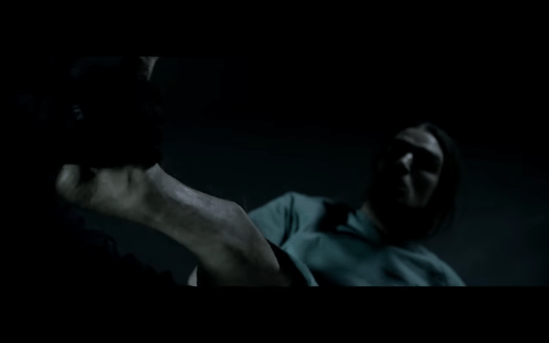
After a night of drinking that ends in breaking a bottle over the bar owner’s head, a struggling and internally conflicted rock band kicks out the cancerously unhinged and troublesome member before their rise to stardom. Unfortunately, all the talent went out door along with the excommunicated band member, forcing the band to impress with an extravagant music video shot on Universal’s iconic backlot, sponsored by their agent and the lead singer’s girlfriend’s music mogul father. Instead of intense pyrotechnics and scantily cladded female groupies dancing on their crotch, the band, their girlfriends, and the crew find themselves caught in the gloomy, labyrinth-like movie lot, housing spooky interior and exterior sets, unaware the lurking murderous manic taking them out one-by-one.
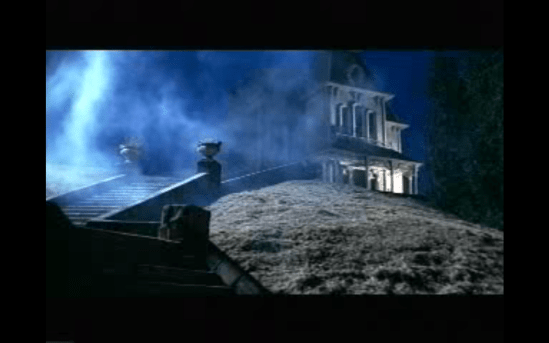
By far a polar opposite polished genre film than the sadistically raw brutal rape and murder extravaganza that was “Chaos,” writer and director David “The Demon” DeFalco dabbles in the early 2000’s revival of the slasher genre with his 2002 released feature “The Backlot Murders” in the wake of the widespread success of the “Scream” franchise. In much of the same way “Chaos” came to fruition derived from “Last House on the Left,” DeFalco, once again, finds inspiration in the form of cult horror director Wes Craven. However, DeFalco strays away from the meta-horror and trope-reversal techniques and replaces it with a satirical façade of the music industry where glam is more important than meaningful substance. The slasher-comedy carves up nods to Van Halen, Pearl Jam, Aerosmith, and even Elvis Presley with a horrendously skewed mask version the killer wears. “The Backlot Murders” were co-written by Paul Arensburg and Steven Jay Bernheim with the latter writer serving also as co-producer with DeFalco in association with Dominion Entertainment.
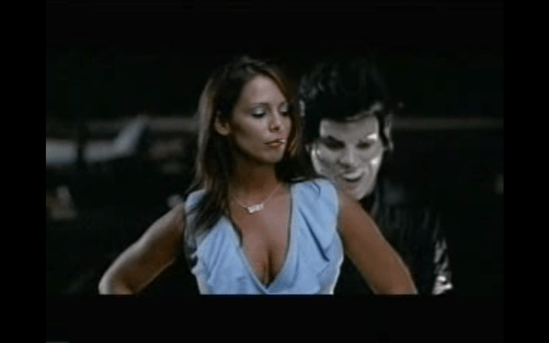
A contributing factor to “Scream’s” success was the diverse in career cast that clicked together as well as twisting archetypical roles into atypical whammy that veered audiences to the edge of their seats. “Scream” shocked audiences with the immediate death of a well-known actress right out of the gate, nabbed “Friends’” star Courteney Cox, “SLC Punk” and “Hackers” actor Matthew Lilliard, teen heartthrob Skeet Urlich, one of the Arquettes with David Arquette, and, perhaps, would have guaranteed Neve Campbell a slab of concrete for the Hollywood Walk of Fame along with an already cemented label as a scream queen and a final girl. The same eclecticism could be transfixed by “The Backlot Murders’” acquisitions but on a more obscure scale with a cast from all walks of life that includes the Roger Rabbit voice actor himself, Charles Fleischer, “Three’s Company” star Priscilla Barnes, 1997’s Playboy Playmate Carrie Stevens, and the late Corey Haim (“The Lost Boys”) as the band’s guitarist in a role that seemed below his fame stature. Most gaps are plugged with interesting characters treated with some backstory buildup that becomes more stagnant than footfall companions in order to get to know them better before their demise, but their persona conductors include Brian Gaskill (“The Bloody Indulgent”), Tom Hallick, Jaime Anstead, Dayton Knoll, Lisa Brucker, Ken Sagoes (“A Nightmare on Elm Street 3: Dream Warriors”), LoriDawn Messuri, Angela Little, and Tracy Dali.
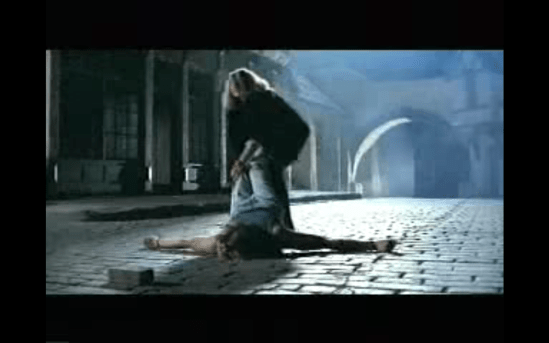
“The Backlot Murders” didn’t set out to revolutionize the slasher genre, but only relished in the after success and donned a more satire effort that purposefully retreated back into the conventional tropes to form an entertaining run of sex, drugs, and rock’n’roll gags, but the one thing missing, and it’s a doozy, is the actual killer presence in the film who is treated as an afterthought of slim importance and chucked into a insignificant plot twist that forces DeFalco’s hand to become a routine hack’n’slash lemming. One positive aspect of “The Backlot Murders” is the extremely high body count that produces a continuous stream of nixing off a slew of characters with their own death scenes inside the renowned confines of a Universal backlot backdrop that’s not only good-humored irony but also a sizeable effort by the Bernheim/DeFalco producing team. Yet, despite the high body count, the kills and gore felt sorely uninspired and underwhelming, rehashing into homage death scenes from “Friday the 13th” and “Scream” with a few forgettable approaches to call its own, until DeFalco breaks the damning goreless streak with a gruesome Columbian necktie effect that goes for the throat. I make “The Backlot Murders” seem unenjoyable and heartless when, in fact, the early 2000 slasher-comedy is immensely funny with a Charles Fleisher gold recorded, laugh track amongst the relentless mocking of the music industry from a far in this true to form slasher accessorized with a high body count kill dozer of a villain.
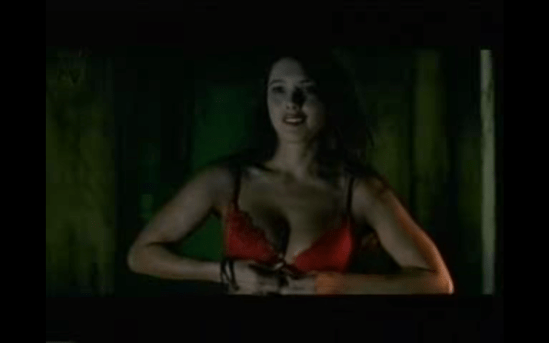
When things are quiet on set, “The Backlot Murders” evoke the slasher spirit on a new-to-Blu Blu-ray release in the U.S. from Dark Force Entertainment and Code Red with MVDVisual handling distribution. The 1080p, hi-def release is presented in an anamorphic widescreen from a brand new 4K scan of the original 35mm negative. The cool contextual colors render nicely amongst the shadowy gloom and foggy backdrop that’s reminiscent of a softly lit late 90’s and early 2000s slasher. The textures are sharper than the Razor Digital DVD release; the tactile feeling of asphalt when a bluish white glow hits the pavement or the gritty backlot sets vibrant with an ominous glow strike powerful chords of a lively presence from the transfer. There doesn’t seem to be any cropping, edge enhancing, or any other manipulation to the transfer present. The English mono track, which leans away from the LFE, has the opposite, lackluster appeal with a single channel blockade that doesn’t project the bands pyrotechnics, the screams of being chased, and settling for limitations on other wide range of girthy resounding audio. However, the dialogue is clear, unobstructed, and in the forefront. Bonus material includes a new audio commentary with director David DeFalco and Code Red’s Banana Man plus three new and very bizarre interviews with Carrie Stevens lingering from effects of the #MeToo movement to making home fudge, with Charles Fleisher and dissociative disorder or madman genius insight, and ending with a fairly regular interview with Brian Gaskill recollecting the film and his career through a tough industry standard. The Fleisher and Gaskill interviews end with a video op with The Demon himself, David DeFalco. “The Backlot Murders” had forefront potential of systemic slasher films of the time period, but pitter-patters for levity and a sweeping kill count that reconstructs the dread into death and comedy.
Tag Archives: Scream
To Be EVIL, You Must Capture EVIL! “Thir13en Ghosts” reviewed! (Blu-ray / Scream Factory)

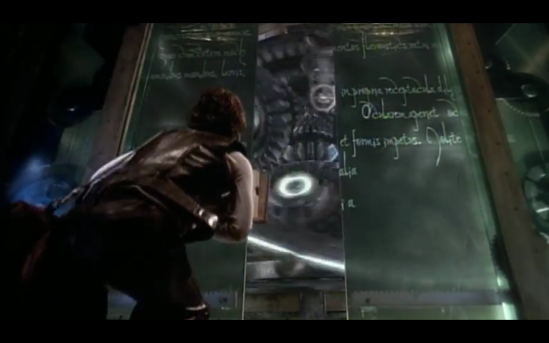
A maniacal and obsessed ghost hunter, Cyrus Kriticos, traps 12 tormented and violent spirits with the help of an avaricious, but anguished psychic, Dennis Rafkin, but when trapping the last ghost, the worst of the worst, a barbaric mass murder in life and in death named Juggernaut, Cyrus is killed in the process. His death leads to the inheritance of a one-of-a-kind house to his widowed nephew, Arthur, and his two children who are barely scraping by after the unexpected fiery death of their beloved wife and mother. When they enter what seemingly feels like a godsend house, immaculately structured entirely out of glass and metal, they find themselves trapped inside after tripping a series of mechanism that turn the isolated and elegant abode into a labyrinthic machine. Stuck inside with Arthur and his family are Dennis Rafkin and a ghost friendly liberator, Kalina Oretiza, who explain that the house is actually an evil machine with a goal of opening the eye to Hell and that the ghosts, imprisoned in the basement, are components that are being set free one-by-one in order to fulfill the ritual.

In the world of remakes, only a select few ever surpass the original. In fact, on rare occasions, do remakes actually replace the original due in part to being beyond respectful as well as masterful amongst critics and genre fans that have bestowed the reimagining an untouchable rendition to which no one can find anything wrong with it; this films include John Carpenter’s “The Thing,” David Cronenberg’s “The Fly,” and Chuck Russell’s “The Blob,” with Zack Synder’s “Dawn of the Dead” and Tom Savini’s “Night of the Living Dead” receiving well-deserved honorable mentions, because let’s face it, topping George Romero’s original work can be said to be blasphemous slander. What about those remakes in between? Those just above the pile of awfulness that generally makeup remakes? I consider Steve Beck’s “Thir13en Ghosts” to be one of this mid-level remake films that registers well with fans, but on the flips side of that coin, doesn’t ascend to total prominence over its predecessor. Written by longtime Full Moon Entertainment writer Neal Marshall Stevens (“Hideous!” and “The Killer Eye”) and Richard D’Ovidio (“The Call”), “Thir13en Ghosts” is a 2001 near-total rework of the 1960 William Castle directed and Robb White scripted “13 Ghosts” that used gimmicks like 3D specter glasses to draw audiences into the theater. “Thir13en Ghosts” was the second film after another William Castle remake, “House on Haunted Hill,” of the newly formed, William Castle nod-to, Dark Castle Entertainment, a division of Joel Silver’s Silver Productions formed by Silver, Robert Zemeckis (“Back to the Future”), and Gilbert Adler (“Bordello of Blood”) that honed initially on producing stylishly modern takes on classic gothic horror, such as “Ghost Ship,” the remake of “House of Wax,” and “Orphan.” What came out of this collaboration between Steve Beck and Dark Castle Entertainment is a complete dismantling of the wood paneling and lament flooring story for a modern marvel to emerge of unique terror that hasn’t been duplicated since.

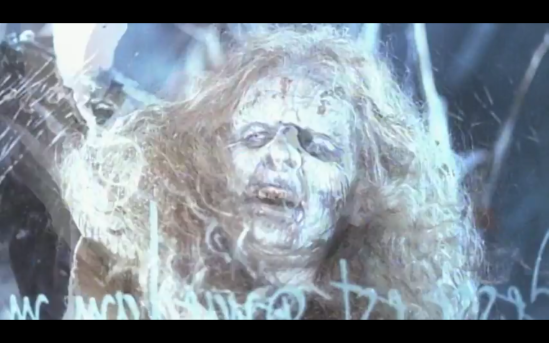
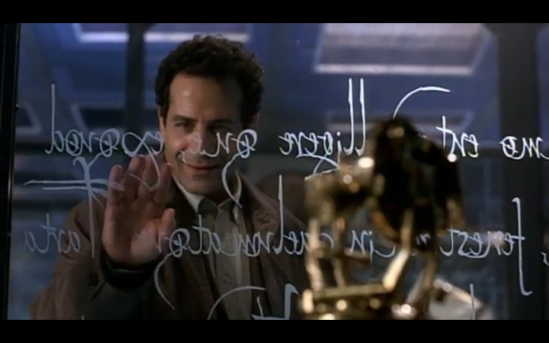
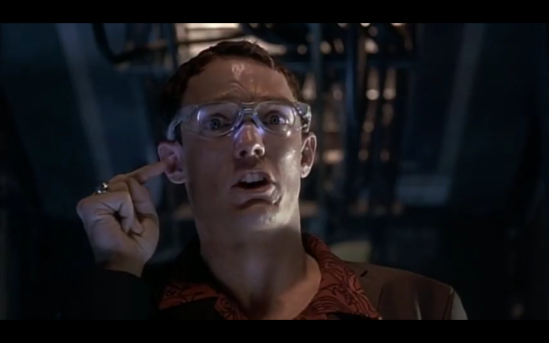
“Thir13en Ghosts” has an impressive, if not all-star, cast with diverse range of styles and experiences that it’s almost dumbfounding on how the filmmakers were able to contract some of these talents, including F. Murray Abraham, who has had an already eclectic credit list with “Amadeus,” “Surviving the Game,” and Mimic, and Tony Shalhoub who hand standout performances in “Addams Family Values,” “Men in Black,” and “Galaxy Quest.” Abraham and Shalhoub bring a sense of classical and methodological structure in a stark contrast between rationality and irrationality built upon an indifference of solitude and a sense of family. Then, there’s the comedic relief in the midst of danger, Matthew Lilliard (“Scream”) as the suffering psychic who uses his wit tongue to spur others and introducing hip-hop artist, Rah Digga, in one of her only motion picture performances to alleviate suspension with more tongue-and-cheek moments. Lilliard and Digga offer up two different comic styles while sustaining the underlying severity of being trapped inside an evil machine full of violent ghosts. Shannon Elizabeth, who we all know by now as the stunning “American Pie” girl, Nadia, or as I know her as the unfortunately raped and murder victim of a killer snowman in “Jack Frost,” plays Arthur Kriticos daughter, Kathy, who still a fresh faced newcomer to Hollywood despite being a hot commodity after her topless role in “American Pie.” The superb support roles don’t end there with notable roles from JR Bourne (“Ginger Snaps Back: The Beginning”), Matthew Harrison, Alec Roberts, John DeSantis, and EmBeth Davidtz, Sheila from “Army of Darkness,” as the ghost liberator.

It’s hard to believe that “Thir13en Ghosts” is nearly 20-years old. I still recall my 17 year old self sitting in for a theatrical showing, remembering the opening gargoyle growling as the Dark Castle Entertainment logo reveals itself during the opening title credits, and coming out of the maze-like, gory-ghost film having experienced something special, even if then I didn’t understand why, only to years later realize that I’ve never seen something like “Thir13en Ghosts” before in my life. How does a remake reinvent itself so much that it can separate itself from the original film while also beguile with fresh ideas and no take a slew of browbeating chirps from those who holdfast that the original is the one and only? Most remakes cheaply throw gore to the wind, adding buckets of blood in hopes to satisfy horror buffs, but what winds up happening is that we ultimately get bored, having experienced blood and guts from singular storied films. “Thir13n Ghosts’” premise isn’t the only worthwhile experience that deserves praise, but also the spectacular production design by Sean Hargraves that thrusts the glass house concept into new heights with the house actually becoming an interestingly steampunk character itself and the prosthetic effects from a team spearheaded by a trio of the best special makeup effects artists in horror today, such as Howard Berger, Robert Kurtzman, and Gregory Nicotero., turning ghoulish encounters to ghastly visions that convey truly a tormented soul in the 12 ghosts. Though the story itself isn’t perfect, flawed at times with static character development and a few plot holes involving the ghosts and sequences of events, “Thir13en Ghosts” remains a cult favorite gaslit by frightening imagery, a solid cast, and unforgetting production design that started 21st century horror off brazenly strong.

Collect all “Thir13en Ghosts” on the Collector’s Edition Blu-ray courtesy of Scream Factory sheathed in a cardboard slip cover and has a reverse artwork liner that has the original poster artwork and new vivid illustration by Joel Robinson. Presented in a 1080p, high definition widescreen, 1.85:1 aspect ratio, from the original 35mm negative, “Thir13en Ghosts” shares a consistent image and vibrancy layer with the DVD version with an enhanced color stability. No edge enhancement or cropping adjustments rendered or any other blemishes to speak of, but the softer details could have been sharpened to gave a hard edge around the non-spiritual energy. The English language DTS-HD Master Audio 5.1 boosts the already hefty soundtrack that’s full of explosions and ghostly swooshes and moaning hums, finished off with grand, orchestra soundtrack by John Frizzell It’s been said that audience had to excuse themselves from the film due in part to the overbearing noise coupled with the strobe-like imagery, but the overall audio and visuals are a combined one-two punch of sensory power that works well. The Scream Factory release has new interviews in the bonus material, including sit downs with actors Shannon Elizabeth, Matthew Harrison, and John DeSantis and producer Gilbert Adler. There’s also a audio commentary with director’s Steve Beck, production designer Sean Hargraves, and special effects artist Howard Berger. There’s also an in-depth look at the creation of the thirteen ghosts in a small featurette, their backstory profiles, and the theatrical trailer. However you want to call it, whether it’s “Thir13en Ghosts,” “Thirteen Ghosts, or “13 Ghosts,” this new century remake still holds up to today’s horror lot with spellbinding phantom pandemonium in a glass box!
“Thir13en Ghosts” on Blu-ray on Amazon.com
EVIL Doesn’t Stop Until the Director Yells “Cut” reviewed!

In 1985, director Hilary Jacobs sets her sights to finish her Australian low budget horror film, “Hot Blooded,” at all cost, but the ambitious cast and crew struggle to compete with riley personalities that slow down production. The film’s masked killer goes mad and gores with an indefinite stake into the film’s heart after mercilessly murdering Jacobs before being violently killed himself by the film’s vain star, American Vanessa Turnbill. Fourteen years have past and the “Hot Blooded” reels have been deemed cursed for whenever they’re viewed, someone dies, but a group of determined film students are keen on finishing Hilary Jacobs’ last directorial and even gain the original leading lady, Vanessa Turnbill, to return and finish her staggering performance. With the partial, unfinished reel screened by all cast and crew and filming begins shooting on the original set premises, the evil masked killer returns to finish each one off diligently before they’re able to finish the film.

With the late Wes Craven pumping new spirit into the a life support stricken slasher subgenre in 1996 with “Scream,” masked killers surged into proper restoration once more right before the turn of the century and Mushroom Pictures, the cinematic banner of one of Australia’s most notable indie music publisher, Mushroom Group, asserts their debut title into the stratosphere grazing genre that who’ve now initiated a creative footing into film production and distribution with a commemorating meta-slasher entitled “Cut.” Directed by Kimble Rendall (“Bait”) and penned by Dave warner, “Cut” dares to ride the newly rediscovered genre wave early in the wake of establishing predecessors that strived to formulate an un-formulaic counter measure against the slasher status quo, but “Cut” doubles down with Warner’s script that meshes subgenres, compounding the horror to uncharted territories where filmmakers do not dared trek sitting comfortably in their less is more recliner. “Cut” relates more to Wes Craven than most genre fans would like to admit but the similarities the two directors’ characters and killer are compelling to explore and compare. The filming is mostly shot in the Adelaide region of South Australia; the same region that produced recent horror such as 2017’s zombie post-apocalyptic “Cargo” starring Martin Freeman and the great white shark thriller “The Reef.”

Comprised mainly of an Australian cast, “Cut’s” headlining leading lady is an American “Sixteen Candles” sweetheart taking a leap into unfamiliar territory and I’m not talking about of the Outback kind. Molly Ringwald has only ever starred in one other horror film in her 40 year professional acting career and after the dismally reviewed 1997 cubicle-cutthroat thriller, “Office Killer,” the “Breakfast Club” star steps into a more complex role that involves her multi-tasking two persona performances of essentially the same character spanning a story lined fourteen years apart. As a true testament to “Cut’s” makeup and stylist department, Ringwald, who was about 30 years old at the time of filming, goes incognito as she’s barely recognizable as Chloe, a role within a role played by Vanessa Turnbill playing the teenage character in the scrapped “Hot Blooded” slasher. Though a far cry from a coming to age film, Ringwald pivots to a coming to terms with her character’s handling of prolonged fear from the fateful and deadly night the masked killer almost ended Vanessa’s life by strongly playing to the character’s overpowering sense of self worth and brash Hollywood attitude against the one thing she can’t control…her past. Vanessa is not alone in her quest for finishing a scarring afterthought as “Hot Blooded’s” newest director, student filmmaker Raffy Carruthers, picks up where Hilary Jacobs’ left off after being butchered and is determined to wrap Jacobs’ legacy short of being a hack director. As the other half of the two resilient female characters, Raffy is played by New Zealand actress Jessica Napier who channels her inner Sidney Prescott as a strong feminine survivor unnerved by the macabre that’s closing in around her brought upon a sadistic masked killer and braves sacrificing herself to thwart pure evil’s carnage. The rest of “Cut’s” cast disperses the right amount of character building performances by Sarah Knats, Stephen Curry (“Rogue”), Matthew Russell, Erika Walters, Cathy Adamek (“The Babadook”), Steve Greig, Sam Lewis, and pop singer Kylie Minogue (“Street Fighter”) whose had collaborative projects with Mushroom Group and also a role in a Kimble Rendall 11-minutel short, “Hayride to Hell.”

The meta approach “Cut” takes might detach itself from the plot of “Scream,” but in essence, the Kimble Rendall film is derivative work of Wes Craven who aimed to expose and exploit cliched tropes of the slasher flicks to upheave audiences wits on what they know about the genre and where the plot might eventually boil down to in a orthodox simmer of uncreative sensationalism. “Scream” smartly broke down plot structures, revealed character flaws, and even name dropped popular directors and films that became the very foundational basis of the Renaissance slasher era that went unchanged for years, decades perhaps. “Cut” also reasserts shout outs as references, along with Rendall’s creative knack of making every character swim in the pool of suspicion, to build up a catalytic twist no one would or could predict despite all the subtle clues, generally abundant in slashers, toward revealing the killer’s true identity and motivation. I wouldn’t be bold enough to say Rendall’s “Cut” deserves to be above or on the same level as “Scream,” because, frankly, it doesn’t, but “Cut” has a singular, unique identity with all of its own loaded modern day slasher traits such as a high kill count and an intriguing self-referential plot. Where “Cut” shakes at the knees a bit is how the practical effects were accomplished and the scores of cheesy late 90’s-to-early 2000 visual effects bared an ugly resembles of something that could have come straight out of the Super Mario Bros. film adaptation. A minority of the kills were decently crafted to bring a honorable character death, but there were many that succumb to a quick edit or stemmed from an off screen cut down that took away the breadth of impact and left more to be morbidly desired. Where “Cut” struggles shouldn’t be deemed ineligible for attention because of those reasons and, in fact, “Cut” sustains a high entertaining rating with immense value in the replay sector to catch thematical intimations and do a comparative analysis on Crave and Rendall’s films on how they experiment, treat, and respect the greats that were once lost to success over a long period mediocre financial and routine blundering.

Umbrella Entertainment and Beyond distribution debuts the Blu-ray release of the Mushroom Pictures and Kimble Rendall’s “Cut” with a full HD, 1080p 4K restoration from the original film’s 35mm interpos and presented in a widescreen, 1.85:1 aspect ratio. The 4K scan illuminates the hard, dark lighting used primarily for tone setting, granting an extremely gothic look without being inside the parameters of inherently gothic set design and the scanned transfer also revitalizes the snaps of color where appropriate while still leaving the natural grain from the 35mm filmstock. The English language dual channel DTS-HD Master Audio track has lossy quality because there is such contentious and explosive moments that warrant audio quality; however, the 2.0 track is sufficient to lay simple groundwork of depth, range, and clarity and the soundtrack, no matter how generic, elevates to a concentrated level with the killer on the hunt. Dialogue murkiness is no issue here with a clear path of discernible lines. Special features seem limited and antiquated for a 4K, Blu-ray debut release, but do include archived cast interviews with Molly Ringwald, Kyle Minogue, Jessica Napier, and Kimble Rendall, behind-the-scenes of some of the shots, a commentary with director Kimble Rendall and writer Dave Warner, storyboard and concept art gallery, “Hayride to Hell” short from Rendall that stars Minogue and Richard Roxburgh, and the theatrical trailer of the film. The back cover states a region B disc, but my player was set on A and prior press releases suggested a region free release so this particular gem should play in any region. If a die hard Wes Craven fan, place the 20-years-young “Cut” into your queue as a forward thinking slasher with brass balls and a marred killer with modified gardener sheers that provokes the genre still to this day.
Why settle for standard definition when “Cut” makes a 1080p debut onto Blu-ray!!! Click to buy it now!
EVIL Must Be Broken In Before Being Used. “The Wheel” reviewed!

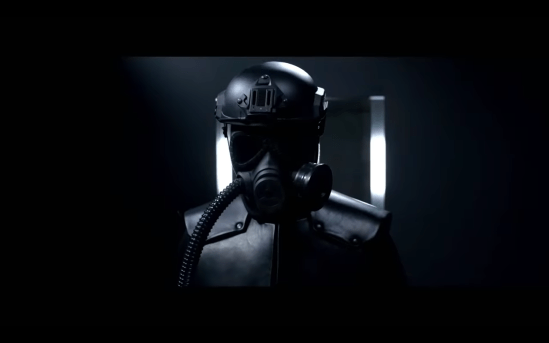
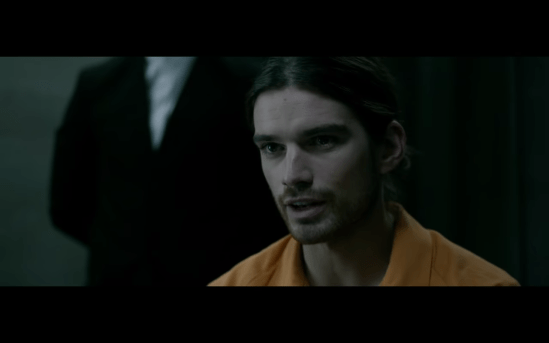
In the near future, paraplegic inmate Matthew Mills volunteers under pressure to join a Satoshi-Telefair Industries experimental treatment program that not only promises to reduce his sentence, but to also to regain mobility in his legs. With nothing more than the hope to return to his daughter, Mills is enticed by the agreement and gives himself to a shadow company who regularly contracts with the military, facilitating deep underground at an isolated site. Shortly after signing the release form, he awakes in a dark, steel cell known as The Wheel and is able to move his legs again, but the jubilation quickly subsides as armored men with batons visit his cell to beat and break his body in order for the nano technology, injected amongst his anatomy, to rebuild damaged tissue and make him stronger. The ordeal torments him, but to the researchers observing every detail of his recovery and behavior, Mills is just subject 2-1, another potential subject destined for the Future Soldier Initiative where the unethical testing must continue.

Shady shadow corporations, experimental nano-material rehabilitation and enhancement, and high level science fiction noir from writer James S. Abrams and director Dee McLachlan with 2019’s “The Wheel.” As if not already obvious from filmmaker’s nationalities, “The Wheel” is produced by and shot by Australian production companies SunJive Studios and Film Victoria, a state government agency that advocates funding and other filming assistances for shooting films in sectors of Victoria, Australia. “The Wheel’s” steely posture mirrors the frigid winter snow of Melbourne, Victoria’s covered forests that’s beautiful, yet deadly in the conventional beauty of nature. Yet, “The Wheel” delves into the meddling of what makes man and what also drives man as the story persists on the subject of redesigning the human body, but what that notion doesn’t take into account is what if the human body’s reactions doesn’t go as planed and a clapback ensues with all the synthetic re-wiring behind it? This is what Abrams and McLachlan intended to explore.

Australian actor Jackson Gallagher stars as Matthew Mills, a cripple with a purpose. The “Patrick” actor has been adrift from the darker roles since 2013 until up now with his main role in “The Wheel” that demanded a certain physicality that involved fight sequences with one, or two, or even three opponents and some ariel ropes work. The physically fit Gallagher not only survives the daunting workload, but hastily pulls Mills through his character’s tough transition from hopeful paraplegic to overly confident ultimate fighting weapon without an earnest core of struggle. The same can be said with Dr. Allison Turner played by Kendal Rae (“Out of the Shadows”). Turner’s a rogue researcher who had her practicing credentials revoked after the mistreatment of lab monkeys and was sought after by the Satoshi-Telefair for her detachment qualities, but her Turner’s character also didn’t quite arc properly and resembled a midway plateau from the moment Mills became her research subject. The only character that stayed the course was Dr. Emmett Snyder, a loyal Sataoshi-Telefair researcher to the bone. When he’s not suplexing or drop kicking in a championship wrestling match, David Arquette does dabble in acting. The “Scream” veteran actor fills in a rather unlikely antagonistic role, but the wild eye Arquette remains taut in his performance. “The Wheel” also costars Belinda McClory (“Matrix”). Christopher Kirby (“Daybreakers”), Victoria Liu, and Ben Still.

The spoke of the “The Wheel” rotates on a monotonic and frosty shoulder axle colored in gun metal and iced with dystopian immoralities. Every breathing element and inanimate objects is in a state of distant identity being bestowed labels in a combination of letters and numbers. The utilitarian wheel, an underground experiment facility that shifts rooms up and down and can be rotated to the other side, has no windows or any kind of necessary function other than to test subjects. Where “The Wheel” goes full “Equilibrium” by lacking emotional depth and substance without a coup d’état of the bleak authority, “The Wheel” also lacks vigor to break the blank uniformity and tries to speed through Mills patriarchal fluff to provide reason for his endurance and to provide reason for audiences to care. The epicenter theme to Mills motivation and escape is the thought of getting back to his daughter by any means necessary and was deemed fit to lay by the waist side to rely more on the hand-to-hand fighting like an overly glorified 70’s martial arts film.

Umbrella Entertainment distributes the sci-fi, action film, “The Wheel,” produced by SunJive Studios and Film Victoria onto a region free DVD home video. The clean digital picture in a widescreen, 2.35:1 aspect ratio, has a crisp demeanor that exact a bunch of natural lighting outside with a bit of a lower contrast inside dark “The Wheel” itself. What I found more appealing the anti-aliasing of the drone footage over the snowy covered Victoria forest, suggesting a higher bitrate compression that offers a seamless and smooth recording. The 5.1 English language Dolby audio is offered up with no whiff of an Australian accent in a lossless track that sounds good on the surround channels during action scenes. Dialogue is clear amongst the ample range and depth of ambient layers of researches watching and speaking through comms from inside a box watching another guy inside a box. Like other Umbrella releases, “The Wheel” has no special features nor a static menu. “The Wheel” has ice in the veins, but no warmth in it’s heart that seems vertically challenged on a horizontal slope of dystopian disorder.
Oscar Wilde’s Not-So-Evil…”The Canterville Ghost” review!

An ambitious physics professor Hiram Otis obtains a research grant that requires him to study in England, pulling his wife, daughter, and two young boys from their Indiana home into a strange new world. In an age of obsolete aristocracy, the Otis family is able to afford rent at the grand Canterville Hall, a legendary castle with an infamous tale of death and suspicion that also might have resulted in being an affordable estate for the American family. Legend records have it that the lord of the castle, Sir Simon de Canterville, had subsequently killed his wife due to his obsessions and became the victim of his wife’s family spiteful vengeance by being chained to a dungeon cell. For 400 years, Sir Simon remained in that cell and his ghost haunts Canterville Hall, but despite their beliefs in the supernatural, the physics professor and his wife can’t see the ghost and only their teenage daughter and two young boys are able to witness him roam the halls, haunting those who live within the castle walls.

Every once and awhile, we’ll thoroughly review a light-hearted fantasy, horror, or sci-fi film and since we’re hot off the heels of the review for Wes Craven’s “Summer of Fear,” the made-for-television train might as well keep chug-chug-chugging alone with the 1996 TV movie adaptation of the Oscar Wilde novella, “The Canterville Ghost.” Distributed by ABC, the Sydney Macartney (as Syd Macartney) directed and Robert Benedetti teleplay written installment tries to differentiate itself and standout amongst a plethora of adaptations that span across the globe, but the American Broadcast Company, a subsidiary of the great and powerful Disney, aimed to separate from the masses by adding star studded power and the result brought a rejuvenation to the ye old tale over two decades ago.

The big name headliner is none other than Captain Jean-Luc Picard himself, Patrick Stewart, two years after his 7-year stint on Star Trek: The Next Generation. Stewart, who co-produced the film, adds his theatrical flair and is absolutely brilliant shaping drama monologues into dense thickets that define Sir Simon de Canterville’s ghost, but there’s an issue; the problem doesn’t lie with Patrick Stewart, but with how Benedetti’s teleplay expos from the story as a continuous, if not slightly jumbled, stream of old English that just feels like rambling. To alleviate that strain is Stewart’s co-star Neve Campbell to add a softer, glassy-eyed touch to the story with a pinch of plain jane American girl insecurities, characterized in Wilde’s story as Virginia Otis. Perhaps in the beginning portion of the height of her career, Campbell finds herself between “Party of Five” and hitting scream queen status as Sydney Prescott in “Scream,” but the “Wild Things” actress wasn’t that sultry or that chased in “The Canterville Ghost” who only took upon an annoyed teenage girl persona, wishing her life was back in America up until the mysterious spirit of Sir Simon de Canterville allured a spark into her dull life. Alongside Stewart and Campbell, Daniel Betts, Ciarán Fitzgerald, Raymond Pickard, Cherie Lunghi, Donald Sinden, Joan Sims, and the late Edward Wiley, who died shortly before the film’s premiere, costar.

Going into “The Canterville Ghost” was nothing short of knowing nothing other than the fact the Patrick Stewart and Neve Campbell were in the lead roles of a Disney backed, family film and to be completely honest, Macartney’s vision completely underwhelms. Along with the verbose nature of the script-to-teleplay alterations, the magical supernatural portions are inarguably cheap, even for television. The simple superimposing of Sir Simon de Canterville offered no stimulation as the the two scenes just didn’t splice together well to seamlessly make the grade. Firecracker explosions and party store cobwebs dilute even thinner the already slim pickings of special effects that top when Virginia Otis crosses over into a dense fogged ghostly realm thats chopped, cropped, and edited with such disorganization, the entire scene feels more lost than Virginia trying to escape the other side back to the living.

Sydney Macartney’s “The Canterville Ghost” is presented for the first time ever on Blu-ray courtesy of the U.K. distributor Second Sight Films. The Blu-ray is presented in the Academy ratio of 1.33:1 with 1080p resolution on a MPEG-4 AVC BD 25. Second Sight’s release will have the best looking version of this film, if the quality is anything like the screener sent to me, with a strong color palette, minor digital noise, and rich in great detail; so detailed in fact that the blemishes on Neve Campbell and Daniel Betts can be seen. The English DTS-HD audio track is lively, but not entirely boastful with more thematic and dramatic elements. Dialogue track is clean and clear and the score by “Dead Heat” and “Tremors” composer Ernest Troost augments his fairy tale rendition into the mix. Bonus material includes new interviews with director Sydney Macartney and producer-writer Robert Benedetti. Second Sight’s presentation of Hallmark Entertainment’s “The Canterville Ghost” has strong Blu-ray technical potential, but despite the big names of that time period and a visually stimulating setting, the fantastic adventure through a cursed ghost’s melodrama and a bored young girl’s tenure of self discovery unfortunately didn’t rivet with excitement or wonder, losing steam with it’s important message that life is more than being in a bubble of stagnant disappointment and guilt.