EVIL Wants You Tour Your Own Personal Hell! “Trapped Ashes” reviewed! (4K UHD and Blu-ray / Deaf Crocodile)

4K and Blu-ray “Trapped Ashes” from Deaf Crocodile. Available Here!

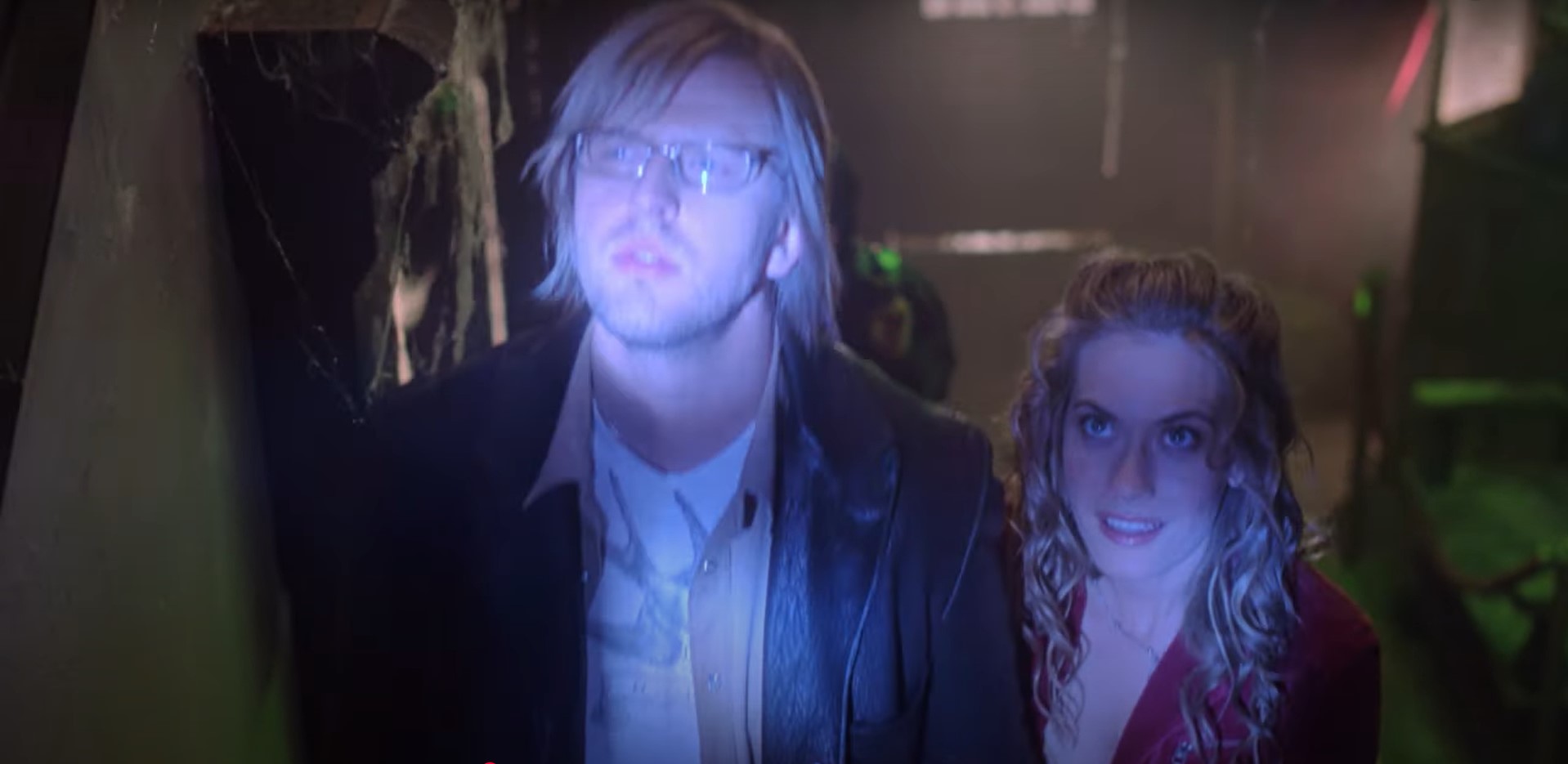
The VIP package for a historical studio backlot tour gives seven strangers a behind-the-scenes look at how movies were made and the background behind them.   When their cart pulls up to one of the more infamous movie houses for Desmond Hacker’s fright flick Hysteria, the tour group are eager to explore what’s typically off limits for normal, non-VIP tour attractions.  Once inside the backlot house, much of the Hacker’s funhouse tricks and odd designs are although covered in cobwebs are still very functionally practical as the group separates and goes room-by-room to peruse a movie house.  When they all gather in what looks to be the commune dining area, they find themselves unable to locate the way out no matter which unlocked door they choose, which circles them back.  The tour guide mentions Hacker’s movie had similar parallels and that the only way to free themselves would be to tell their own personal horror story.  With nowhere to go and nothing to lose, the stories begin their descent into terror. 
For someone who doesn’t go out of their way to watch horror anthologies, I’ve been on a kick lately with a decent string of short film compilation feature, starting with the latest entry from the popular “V/H/S” franchise, “V/H/S/Beyond.”  Next up takes us back to 2006 with “Trapped Ashes,” a campy horror anthology that not only brought together legendary genre directors, such as “Friday the 13th’s” Sean S. Cunningham, “Gremlins’s” Joe Dante, “The Matrix” visual effects arts John Gaeta, “Silent Night, Deadly Night 3:  Better Watch Out’s” Monte Hellman, and the late director of “Altered States,” Ken Russell, but also brings together aged, yet still legendary, familiar faced actors that have since past that short time between 2006 and 2025   Dennis Bartok wrote the anthology piece and is his brainchild, producing the film.

Those aforesaid actors have a combined nearly centuries (plural!) of experience with careers spanning an average of 50 years each.  Henry Gibson (“The ‘burbs”), John Saxon (“A Nightmare on Elm Street”), and Dick Miller (“Gremlins”) all together in one film.  Granted, Dick Miller’s cameo was so short that all three were only together for a brief scene but the trio alone should bring in genre fans to witness Henry Gibson in a persona he does best, a round faced under stark white hair and with puppy dog eyes that draws one closer to his innocence only to have the rug snatched right from under you when he turns sinisterly dark as the seemingly harmless tour guide.  Saxon also plays true to his conventional character archetype as a wise-cracking tough guy too cool for school; this time, he plays a screenwriter haunted by his own betrayal toward his best friend while being infatuated with a bewitching beautiful woman.  Unlike most horror anthologies, “Trapped Ashes’” individual tales contain mostly the same cast as the wraparound with Saxon, Jayce Bartok (“Founder’s Day”), Lara Harris (“The Dogfighters”), Rachel Veltri (“Pray for Morning”), Michèle-Barbara Pelletier (“Brainscan”), and Scott Lowell as the tour guests with personal hell to tell.  The heterogeneous group convey their supernatural-laced anecdotes that mingle inside the context of their being or life whether body image, marriage, friendships, and childhood, subjective intimacies that shape their excruciating experiences that, if audiences see them on screen for the first time, wouldn’t be clear how deeply burdened or troubled they are at first glance.  Once the story is told, moods and personalities shift, or perhaps seemingly normal habits are made clearer, and this is made possible by the eclectic bunch of actors to carve away their characters’ exterior shells to see who they really portray.  Ryo Ishibashi (“Audition”), Yoshinori Hiruma, Mina E. Mina (“Eastern Promises”), Winston Rekert (“Eternal Evil”), Ken Russell, Tahmoh Penikett (“Trick r’ Treat”), Tygh Runyan (“Disturbing Behavior”), Amelia Cooke (“Species III”), Luke Macfarlane, Deanna Milligan, and Matreya Fedor (“Slither”).
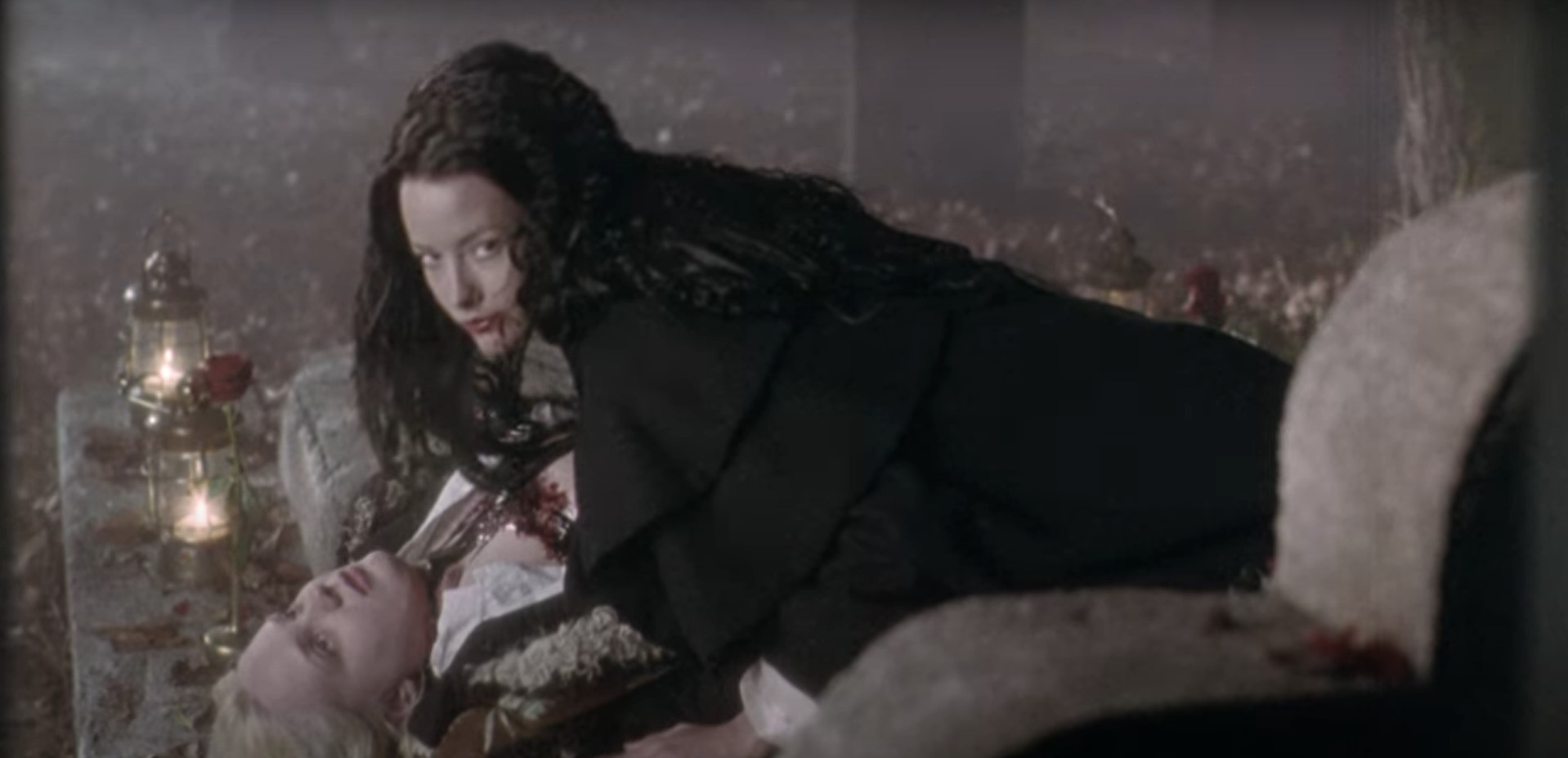
Riffling through the obvious camp “Trapped Ashes” touts very proudly, there are nuggets surrounding the unsavory themes.  Body dysphoria within “The Girl with Golden Breasts” is one of these topics, where an actress feels compelled to enhance her bosom for better, younger roles, and that speaks the relevance ill of the movie industry’s perverse tidings of late as actors and actresses continue to fill, inject, scar, and manipulate themselves into being their unnatural self to satisfy producers, execs, and audience likes and expectations when, in reality, hurts nothing but themselves.  Dissatisfaction marriage, or perhaps better labeled stagnant marriage, leads into invasive third party to sate long neglect passion and in this case, that third party is an ancient Japanese demon named Seishin (Japanese for Spirit) who lures the wife’s sexual appetite down to the pits of the netherworld.  From there, themes love triangles, obsession, cheating, and dysfunctional family structures formulate a pod of personal pate smeared with victimization, the victims being the storytellers stuck in the Desmond Hacker’s Hysteria backlot house.  “Trapped Ashes” isn’t about being victim, it’s more about playing the victim and those playing may not be victims of their own tales at all that adds a morsel of supernaturality to the recipe that changed the course of the idiosyncratic anecdotes that are close to their emotions and mental well-beings as well as proximally physically hazardous. 
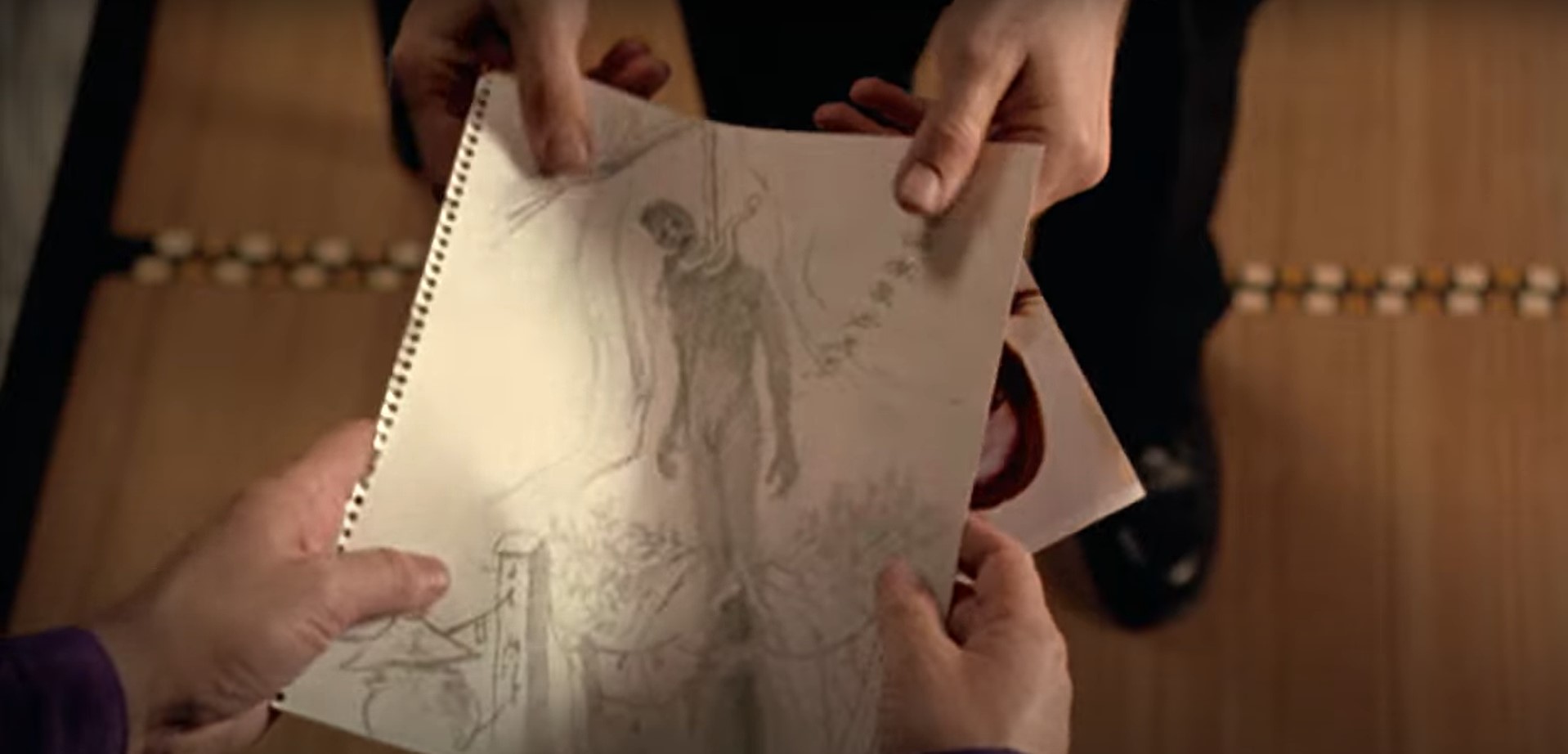
Our first time covering the Dennis Bartok and Craig Rogers founded Deaf Crocodile release and it doesn’t disappointment with a sleek new 2-Disc 4K UHD and Blu-ray of “Trapped Ashes,” scanned and restored in 4K for its Blu-ray debut.  Presented in a widescreen 1.85:1 aspect ratio, the Deaf Crocodile UHD is HVEC encoded, 2160p Dolby Vision, BD66 and the Blu-ray is AVC encoded, 1080p high definition, BD50.  For an early 2000 production, “Trapped Ashes” doesn’t have the digital veneer of early 2000s film besides some visual effects work of the image manipulation drooping effect.  The extra pixels of UHD really brighten and elevate the image to today’s standards to surface the most inconspicuous details lost in standard definition.  Color saturation and skin tones appear natural and organic with no signs of compression issues or imbedded problems with the digital equipment.  Depth has really opened up in areas like the funhouse illusions of the Hysteria house in the wraparound segment and or in “Twin” when reality of the situation is made clear to put the explanation in one single medium-to-medium closeup frame.  Blu-ray copy mimics a lot same UHD accolades with a less fine tune edge around the background.  The English DTS-HD 5.1 surround sound is the only audio option available on both formats.  More than ample, the lossless provides a deepening immersion the deeper you go into stories with balanced side and back channels complimented by an even-keeled LFE to register the bass near the front while whispery events hover around a surrounding backside, such as with Cunningham’s “Jibaku’s” drawing-in hallucination moment of a Japanese painting that instills reverberating echoes and Shepherd tones.  English SDH subtitles are available.  Bonus features include threw new interviews – Dennis Bartok moderates a feature-length, online platform interview with director John Gaeta, cast members Jayce Bartok, Scott Lowell, and Lisi Tribble, producers Yuki Yoshikawa and Yushifumi Hosoya, and cinematographer Zoran Popvic, a second feature-length interview with cast members Tahmoh Penikett and Tygh Runyan and production designer Robb Wilson King, and the last approx. 40-minute interview is with producers Mike Frislev of Nomadic Pictures.  Extras do not stop there with a director’s cut of Monte Hellman’s “Stanley’s Girlfriend,” the original full-length cut of Ken Russell’s “The Girl with the Golden Breasts,” and a 5-part making-of with cast and crew archive interviews, a new visual essay Hollywood Parasite:  Hysteria in Trapped Ashes by journalist and physical media expert Ryan Verrill and film professor Dr. Will Dodson.  This is the so-called standard release compared to its Deluxe Limited Edition companion release, but this release is also pretty deluxe physically.  There’s no limited O-slipcover but the unique, almost 70’s-eseque cover design is appealing yet simple with a reverse side depicting an image of the wrapround characters inside the Hysteria house dining room or commune area.  The UHD and Blu-ray overlap each other in their differentiated locking mechanism on the ride of the clear Amaray case while the left insert portion holds a Deaf Crocodile QR code for access of the transcribed bonus content.  This release has the rated R cut with a runtime of 104 minutes and is region encoded A playback only.

Last Rites: Anthologies can be the antithesis of horror – building and dropping tension, an innate broken narrative, different stylistic choices that disunify the entire film, etc., but if campy enough, if not taken too seriously, if cast John Saxon, Henry Gibson, and Dick Miller, “Trapped Ashes” can find a home in the genre and in our collections with a new and extra-loaded Deaf Crocodile 4K UHD and Blu-ray set.
4K and Blu-ray “Trapped Ashes” from Deaf Crocodile. Available Here!

Sheen and Estevez Take Out the EVIL Trash! “Men at Work” reviewed! (MVD / Blu-ray)

“Men at Work” Now Available on a MVD Visual Blu-ray at Amazon.com

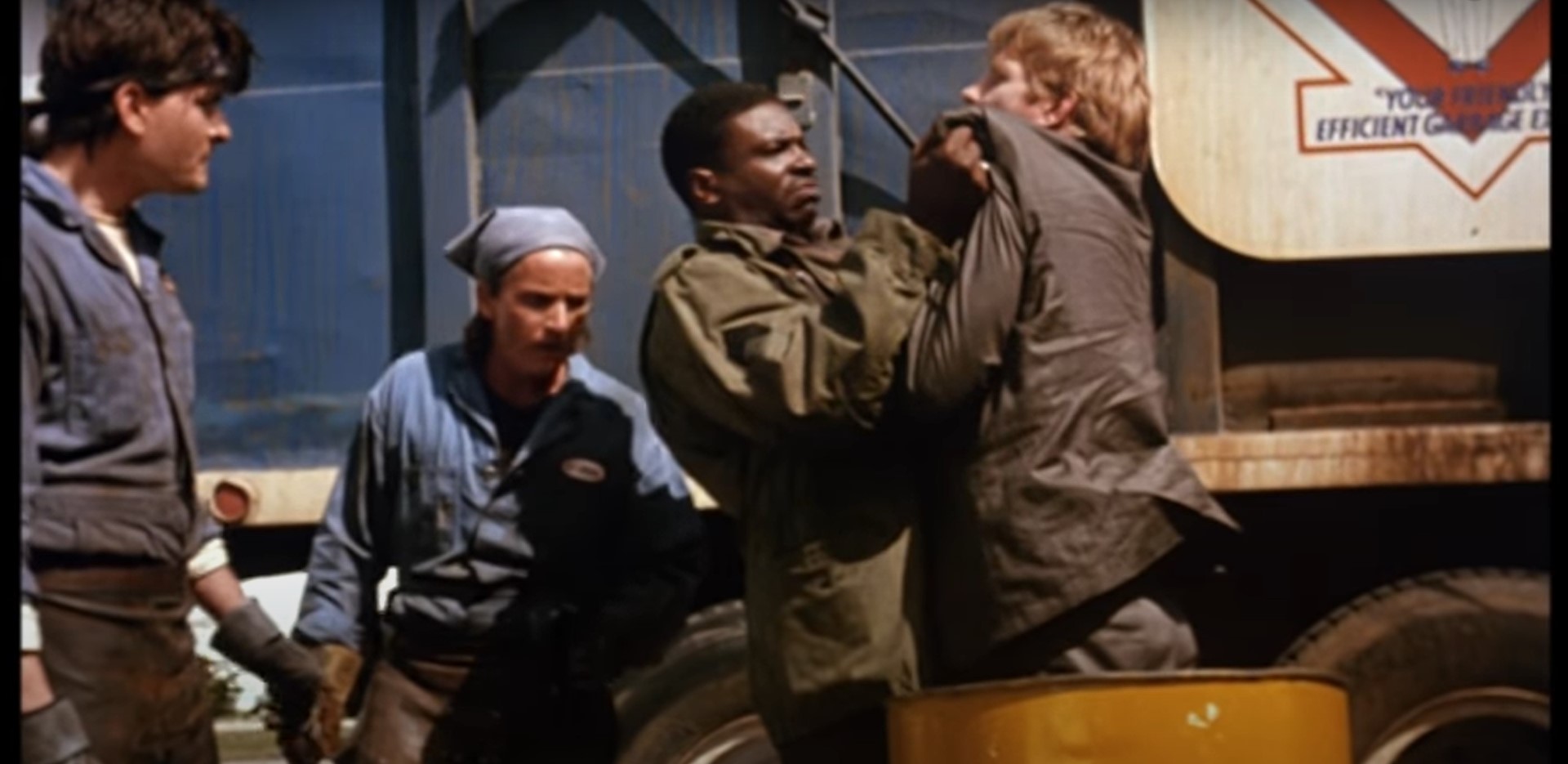
Garbagemen James and Carl are California dreamers, scoping out babes, riding the surf, and fantasizing about opening their own surf shop business one day.  Their day job goes against the grain of their live loose lifestyle, but when they discover a dead body in a trash can, the same dead body that was arguing with a beautiful woman in the building across the street and Carl shot in the butt with a pellet gun the night before, James and Carl no longer have the luxury of fun and games.  Their probational, ride along observer, a crazed combat veteran named Louis, doesn’t add to trash-slinging surfers’ comfort other than noting the strangulation marks around the neck, proving their innocence of a pellet gun murder.  The three men go into investigation mode and Carl infiltrates into the woman’s apartment for clues on what really happened but what they get themselves mixed into is manufacturer corruption on the highest level and now they’re in the crossfire and crosshairs of an off-shore, toxic waste dumping crime boss.

Seeing siblings on screen together has always been of great interest to myself because for an actor to grow up with another actor from adolescence, there’s some level of comfortability, trust, and likeminded, on the same wavelength, aptitude in the performance dynamic.  Brothers Charlie Sheen and Emilio Estévez certainly have a cozy dynamic as two laid-back garbagemen in the dark yet zany comedy, “Men at Work,” despite not sharing their Estévez surname.  Of course, this is a 1990 released film and things have changed between them and personally with themselves over the span of 30+ years, but the Emilio Estévez written-and-directed comedy is a snapshot of a relationship pairing that we didn’t see too often.  Sure, we received their performances in other genres, such as head-butting cowboys in the western-action “Young Guns” and as two sleazy pornographic film filmmakers divided by their own greed in the Jim and Artie Mitchell biographical picture, “Rated-X,” but we never again get a quirky, smorgasbord comedy that exhibits their distinct dry humor in one package.  Set on the beautiful shores of California, include Los Angeles, “Men at Work,” is a studio production from the Trans World Entertainment subsidiary label, Epic Productions, under Moshe Diamant (“Commando Squad,” “Ski Patrol”) and is produced by Cassian Elwes (“Mom and Dad,” “Knock Knock”) and Barbara Stordahl.

Safe to say that most audiences are familiar with the likes of Charlie Sheen and Emilo Estévez between their catalogue of rite of passage movies while growing up in the 1980s through the 1990s.  From “Major League” and “Maximum Overdrive” to “Hot Shots” and “Mighty Ducks,” the brothers captured comedy, action, horror, and feel-good films.  “Men at Work” is another one of those nostalgia recognized, yet slightly underrated, comedies that hasn’t necessarily aged well in regard to its comedy.  Sheen and Estévez are wonderfully poised with a pinch of mania performances surrounding a murder mystery, but the comedy has faded like washed out jeans as we’re numb to these types of comedic devices that have used and overused the last three decades.  Keith David, on the other hand, remains just as funny as the day of release as the Vietnam combat-shocked veteran, Louis, who has become James and Karl’s overseer after public complaints.  The “They Live” and “The Thing” actor costars alongside Charlie Sheen four years later after the release of Oliver Stone’s “Platoon,” which begs the question whether Estévez and Sheen are meddling with the cinematic universes just a tad, and David brings the intensity, high-energy, and overwhelming brutishness to “Men at Work’s” rather subdued, off-the-cuff antics of investigation work done by a pair of surfer dudes who have not witnessed the horrors of war.  The disturbing coolness of stride David’s character takes suits him as an angry vet with a penchant to go against authority.  The love interest in this narrative is played by the actress-turned-director Leslie Hope (“Doppelganger,” “Bruiser”) as a dead guy’s political campaign manager who just happened to be at the wrong place, wrong time accidently swapping the incriminating tape with her boss.  Did I mention the dead guy is a politician in bed with crime?  The “Weekend at Bernie’s” performance by Darrell Larson (“Android”) is one for the ages with Larson providing the slacked jaw, rigor mortis poses, and an overall deadpan dead guy.  “The Fly’s” John Getz is a suitable villain Maxwell Potterdam III, as if plucked straight from a comic book, to the quirky comedy despite being a bit hammy at times.  Potterdam’s bicker henchmen Mario (John Lavachielli) and Biff (Rufus funk musician Hawk Wolinski) are better suited to entertainment with distinct personalities that made their interactions dry and spot on funny. The cast fills out with Sy Richardson (“Repo Man”), Troy Evans (“Halloween 5: The Revenge of Michael Myers”), Geoffry Blake (“The Last Starfighter”), Cameron Dye (“Out of the Dark”), Dean Cameron (“Summer School”), and John Putch (“Jaws 3-D”) and Tommy Hinkley (“Silent Night, Deadly Night 4: Initiation”) as bike cops in a very compromising position.

“Men at Work” is one of those memorable films that teeters between the 80s and the 90s.  Mullets, denim-on-denim, large three-piece suits, and the breeziness of politically incorrect humor genetically makeup “Men at Work’s” guilty-pleasurable and amusing plot anticipatedly driven well by the two principal leads, Sheen and Estevez, who are thrusted into the wrong place at the wrong time scenario as unlikely, joshing heroes, but the stars’ arm-candied, supporting cast of character actors shape and hold together a better lasting picture as with Keith David’s unphased Vietnam veteran, bored with life as it seems during his contentious first impressions with James and Carl, to nudge the garbage-toting friends into action as if he’s spearheading a campaign back in the bush fighting the Vietcong or with the two bickering hit-men who do more damage than damage control with their opposing opinions and tough guy prides.  Estevez’s farce is directed modestly well without the visual cues or styles to assist but rather works in alignment with how Estevez shoots most of his directing gigs with perfectly framed scenes and precision panning that join the foreground, background, and characters together all in one harrowing moment, such as with the pallet gun prank that ends in the murder of the politician, and those kinds of scenes speak for themselves without having to be edited down.  The by-the-numbers pacing builds the story up until a culminating head from the two simple sanitation workers living out their mundane lives with mundane problems to the classic showdown of being outnumbered with Potterdam and his toxic waste dumping henchmen in hazard gear, and though by-the-numbers, the pacing is fairly comfortable and routine, practically natural, without ever feeling forced with the exception of Leslie Hope’s character uncharacteristically, or maybe we’re just not privy of her personal background, lends to her spur of the moment coquettish behavior with Charlie Sheen’s play-dumb, act-dumb surreptitious act in her apartment alone and then out for a late night drive to a beach with him, again alone.  Stranger danger doesn’t apply here in this moment when inviting an unknown into the personal space without the accompany of others to be a safety net and this interaction has a fabricated-feel in moving the story along.

MVD Visual releases “Men at Work” onto Blu-ray in accordance with the distributor’s retro-repository label, the Rewind Collection.  Coming in at 46 on the spine, “Men at Work” transfer is pulled straight from the MGM vault and presented with an AVC encoded, high definition, 1080p resolution in a widescreen 1.85:1 aspect ratio. The MGM transfer transposition into an hi-def BD format doesn’t reflect the full effect of a bigger, better resolution. Image details remains quite soft but the end image quality is definitely still a palatable experience with natural, stable color grading and a suitable sheen (not Charlie Sheen) of the California sun and the night lighting that is often snuffed out by stylistic grading or alternative lighting and tint sources for creative measures. The transfer master remains clear and free of damage and withering wear. The English language LPCM 2.0 stereo projects just that, a two-channel output with a lower bit, and while perhaps not a science-fiction blaster-thon picture, there’s plenty of range opportunity to warrant a hearty audio mix, but the, like the picture quality, the result is negligibly free from imperfections. Dialogue contains no hissing and is clean, clear, and free from any other issues. Optional English, French, and Spanish subtitles are available. Special features has only the theatrical trailer going for it while the physical release bears the bonus material with a reversible, illustrated cover art, a mini poster of the original poster art, and the clear Blu-ray snapper is sheathed in an O-card slipcase doctored up to be retro-stickered with video rental trappings. The PG-13 film has a runtime of 98 minutes and the release is region A locked. One of the first buddy comedies to come out of the early 90s, “Men at Work” has an audience relatable rapport with the film’s stars absorbed into struggling, yet free-spirited blue-collar roles that are unwittingly forced to take on the big, bad evil industry and though the film may have lost its comedy edge, “Men at Work” still manages to be a repeatable watched classic.

“Men at Work” Now Available on a MVD Visual Blu-ray at Amazon.com

All a Broken Family Needs to Mend is a Demented EVIL Backpacker! “Mind Games” reviewed! (MVD: Rewind Collection / Blu-ray)

***Note: the following screen caps are not from the MVD Blu-ray release.

On the surface, the Lunds are picturesque of everything that represents the perfect family. Under the surface, Rita and Dana Lund can barely skim the surface with their marriage dangerously ebb and flowing toward sharp, jagged rocks. In an effort to save their relationship, they take their preteen son on a RV camping trip along the coast line of California to try and rekindle their affection for one another. In one of their trip’s initial stops, a hitchhiker named Eric befriends Dana and the boy; they’re fondness for the charismatic and young Eric is so great that he’s invited to ride along with the family on their vacation. Rita’s suspicions of Eric are blinded by her immense loathing for Dana, suppressing Eric’s true maniacal, psychopathic behavior as he infiltrates the Lunds to conduct his only psychological behavior experiments by shifting the boy’s jovial persona, exploiting Rita’s sexual regression, and further alienate Dana from his family.

As if a fable that warns the dangers of picking up hitchhikers no matter how friendly and beautiful they appear to be, “Mind Games” dug into the psyche and had continued the trend of violently unstable roadside travelers that yearn to harm the hospitable, the compassionate, and just the plain old lonely. In Bob Yari’s first of two directorial efforts, the 1989 “Mind Games,” also once titled as “Easy Prey” is a thriller from the mind of screenwriter Kenneth Dorward and co-produced by screen actress turned financier Mary Apick, teaming up with Bob Yari after their work together on the sovereign nation standoff drama, “Checkpoint,” under the MTA/Persik Production Company banner. As the idyllic project for a low-budget thriller with a limited cast and barely any special effects required, “Mind Games” wound up being the first entry for the MTA/Persik affair that sought to stir conjugal strifes with outsider influence and how sometimes the grass is not always greener on the other side.

For an independent film with such a small, sharpened cast, well known actors from the 80’s step into the humblings of lesser grandeur, starting with Maxwell Caulfield. The young, promising star from the sequel to John Travolta’s “Grease” had his career nearly derailed with the critically panned big budget “Grease 2”, but luckily for horror genre fans, the English born actor channeled his talents toward such films as “Waxwork II” and “Sundown: The Vampire in Retreat.” Yet, “Mind Games” was essentially his second break into the film business that opened doors for the former titles and being the unhinged hitchhiker Eric couriered a necessary change from his stage performance to his ability to be warped-minded person looking through the eyes of a totally different and charmed individual. The role absolutely challenges the actor who, from analyzing his performance across the screen, finds breaking in the role more difficult than presumed. Edward Albert is a name you might not remember, but his face will strike some chords as “The Galaxy of Terror” actor steps into the self-deprecating husband role of Dana. Dana is just one of those individuals worth slapping across the face to wake them up and Albert amplifies his unintentional waning from his wife and child with such dismissal and disassociation, I, myself, found Dana’s lack of courage to be unsettling, but his rouse-less attribute fades slowly into man searching, if not clinging, for what’s left of his life. Caught between Eric’s snarky sensationalism and Dana’s lofty air is Dana’s angst wife, Rita, played by “Shadowzone’s” Shawn Weatherly. The blonde hair, blue eyed former Baywatch beach lifeguard sure knows how to be a wild card, an unknown friend or foe in this mental game of chess, as Rita staggers between hating to being extremely amicable with her husband, Dana. This is where Dana and Rita’s son, Kevin, fits in as the deciding factor pending the successfulness of Eric’s testing. Matt Norero didn’t have nearly the extensive career as his co-stars, but deliveries some great, if not zealous, scenes and cold-hearted glares that break up the sometimes monotonous tone of “Mind Games” would routinely find itself stuck.

To frankly put it, “Mind Games” bares the prosaic essence of a run of the mill thriller with a thin strip of riveting tension to cling onto. The film impresses comparably with a cheap suspense novels you’ll find multiple copies of collecting dust bunnies on Dollar Tree shelves where the paperwork backs lavished in a cheap bait title and cover art only provides a quarter of the entertainment value of its marketed worth. However, for a low budget production, Yari manages to pull off impressive aerial shots, eerie dim lit atmospherics of a fog machine heavy night scenes, and tack on flashes of so bad, it’s good meme worthy moments – i.e. the garbage day kill scene in “Silent Night, Deadly Night: Part 2” to reference what I mean. The score is conducted by “Night of the Comet” composer David Richard Campbell with an uncharacteristic upbeat and happy-go-lucky number weaving in and out of the film’s storyline, and coarsely out of place during the RV stop-a-long montage that proceeds after setting up Dana and Rita’s turbulent marriage and Eric’s understated malevolencies, but rather speaks to the overall spirit of the film that’s a rated-R labeled PG-13 thriller, hard on the language, but soft on the violence with more of an implied application of offscreen kills and virtually no blood from an anemic plotline.

Still, “Mind Games” can be considered a cauldron of cynicism and now that the release receives the royal treatment with a full HD, 1080p special collector’s edition Blu-ray from MVD’s Rewind Collection label spine #21. The retrograde cardboard slipcover harnesses a powering transfer that supplies vitality into the well-preserved 35mm source material and presents a 1.78:1 aspect ratio. Perhaps the best this transfer looks to date, a plush matte that’s pleasing and without the drab bleakness that typically coincides. Natural grain remains upon a softer side delineation that’s not heftily indistinct and, in fact, adds to the glow of the product’s decade. The English LPCM 2.0 stereo audio mix has inviting qualities, but taper more on the lossy side of the spectrum. The soundtrack is powerful, especially on “The Writing on the Wall” single by Raven Kane. Dialogue is clear and untarnished, the range is adequate, and the depth is sound. No audio or video hiccups or blights to note nor any dubious enhancements detected. Option English subtitles are available. Special features are aplenty including a new MVD exclusive, retrospective look at the Making of Mind Games that clocks in at 108 minutes of interviews with director Bob Yari, producer Mary Apick, and stars Maxwell Caulfield, Shawn Weatherly, and Matt Norero. Also included a featurette on the producing career of Bob Yari who helmed award winning films such as “Crash,” and concludes with the original theatrical trailer, a reversible sleeve with alternate art, and a collectible mini-poster in the insert slot. “Mind Games'” message to the world is never knowing how good you have something until nearly being ripped from your hands. Director Bob Yari finagles the point across with an unexceptional joyride, but a solid first film from an indie startup hungry enough to take a chance on a practical psychological thriller.

“Mind Games” looks gorgeous on Blu-ray! Check it out from MVD!

Evil Ousts Evil in “Christmas Blood” review!


On Christmas Eve for over a Decade until 2011, a psychopath dressed as Santa Clause hunts down people on his naughty list, people whom have, at one time or another, been incarcerated. Santa’s violent kill streak ends when detective Thomas Rasch tracks puts multiple bullets into Santa after the gruesome slaughter of three people. After 6 years of imprisonment, with no sign of improvement from his holiday hallucinations, Santa escapes to continue checking and crossing those unlucky souls off his naught list, leading him to Alta, a small, quiet village in the northern most part of Norway where one woman when unpunished on his list. Unbeknownst to Santa, the woman he intends to frightfully dispatch has committed suicide, leaving behind a daughter, Julia, to oversee her mother’s home. Struggling to cope with her the loss of her mother, Julia’s college friends from all over the world embark to comfort her on Julia’s first Christmas without her mother, but the gesture of goodwill only speaks to their impending doom with a serial killer Santa ready to reign in Christmas with red blood soaked, holiday fear.

“Christmas Blood, aka “Juleblod” in the original Norwegian lingo, is Reinert Kiil’s yuletide splattering spectacular. Kiil writes and directs a new horror-holiday classic of the Norwegian variety that turns the jolly, red nose, cookie-eating fat guy into an axe wielding maniac. “Silent Night, Deadly Night.” “Black Christmas.” “Jack Frost.” “Christmas Blood” joins the high ranking level of a niche genre, the X-Mas horror genre, which doesn’t see really the light of day in conventional theaters, but home video unsheathes the new life into films one may have never heard of such as Kiil’s “Juleblod” Yet, the overall body of work for Christmas films is very black and white. They’re either overly feel good films with a blanket of pure white joy and happiness or utterly insane and soaked with the crimson interior body fluid, unless you count Die Hard or Lethal Weapon as Christmas films than one can make a case. “Christmas Blood” is certainly in that far right polar opposite of extreme violence, but is solid and engrossing, chopping body parts away with trepidation and stringed up with multi-colored lights.

Ringing in the holiday screams are young victims typically associated with familiar slasher archetypes. The “Christmas Blood” prey, typically adorned by actresses due to their ability produce toe curling, are a pact of university school friends gathered together to rally around one who has recently lost her mother to suicide. Helen Eidsvag, Haddy Jallow, Yassmine Johansen, Karoline Stemre, Kylie Stephenson, and Marte Saeteren share the limelight as unsuspecting Christmas carnage-fodder and all of the actresses hail from Norway with the exception of Kylie Stephenson, who has odd interjecting into Norwegian conversations with her Australian English dialect. Written as great friends, but also depicted as the worst of enemies as various facets of animosity slithers between them, the actresses pull off of their ill-fated character quirks well: Eidsvag as the innocent and naïve Sanne, Jallow as the drug indulgent and secret keeping black sheep Kitika, Johansen does stern and uptight girlfriend well in Katja, Stemre as a favorably licentious mute Elisabeth, Stephenson is the fun-loving non-national in Annika, and Saeteren as the heartbroken Julia with loss of her mother. I’m not sure if “Christmas Blood” would be a socially acceptable film in the States and not because of the blood-spatter blasphemy of traditional holiday and Christianity values, but because of how the one and only black character is treated throughout the narrative in a predominately white movie. Kitika has no verbal filter, smokes weed despite her host’s severe objection, slept with and was going to sleep with again her friend’s boyfriend, is kicked out into the freezing cold along with said friend’s boyfriend by the rest of her white friends, and is eventually slaughtered and stuffed into Santa’s sack. The remaining cast includes Jørgen Langhelle, Stig Henrik Hoff, Sondre Krogtoft Larsen, and Andreas Nonaas.

“Christmas Blood” is a retro-grade horror film that very merrily feels like a product of the Golden Age of slasher-survival genre from the 1980’s with a powerful and unstoppable aggressive killer, a delectable high body count, and a significant calendar date to infamously memorialize the event, similar to Friday the 13th or Halloween dates that are have been synonymous to Jason Voorhees or Michael Myers. Generally speaking, Santa’s already this jolly mystical being worshipped by all and in “Christmas Blood,” that mysticism is really exploited, but as a frightful killer Santa who is seemingly able to be in two places at once and survive a barrage of bullets. Only a couple gripes linger that don’t necessarily derail Santa’s slay-ing of bitchy former co-eds, daft police offers, or any unfortunate person in his blizzard path of butchery. For one, the wordy title card sequence explaining the background of serial Santa’s 13-year killing spree is sorely out of place and slightly kills the buzz built up initially by the gruesome opening scene that sets the morbid tone. Secondly, on the technical side, the lighting is very dim lit. The coloring scheme from the decorative bulbs is festively great and there’s also a very low-tone neon red, blue, and yellow juxtaposed against a bleak, cold setting as if walking through Amsterdam’s Red Light district at night, but with less people, more snow, and no peep shows, but the overall lighting is thin-to-damn near black at times that, shamefully, shades some of the gore work into a silhouette something and your eyes attempt to define what is being seen, but can’t definitively consume the form. Luckily, numerous gory moments make the cut in the light that include exposed entrails and some sheer brutal force with an axe to the neck and to the vagina!.

Artsploitation Films present “Christmas Blood” onto DVD this December. Presented in a widescreen 2.35:1 aspect ratio, the details are a little lost in the dim lighting as mentioned before, but the image quality looks vibrant on colorful in the mise-en-scene lighting and there are no issues with artefacts. The Norwegian Dolby Digital 5.1 surround sound track is rather pristine like a bow-wrapped present under the tinseled tennenbaum, gifted with clarity, synchronization, and no distortion in any aspect. English subtitles are available and are synched well. However, Artsploitation’s release offers no bonus materials aside from a static menu, but this Reinert Kiil’s “Christmas Blood” snarls Merry Fucking Christmas by bastardizing the popular Scandinavian folkore of the genial Saint Nick into a fierce and frightening killing machine!

Evil Spanning Four Decades! “Dangerous Men” review!

output_acdWjK
Recently engaged lovers Daniel and Mina take a trip to visit Daniel’s brother. When they stop to take in one of California’s breathtaking beaches, two vicious bikers, looking for kicks, intrude on the lovebird’s romantic getaway, looking to rape Mina but ending up mercilessly murdering Daniel. Mina’s grief turns the distraught lover into a vengeful bitch, taking the lives of all salacious and beastly men who wish to exploit Mina’s virginal beauty. Meanwhile, Daniel’s brother, a praised police detective, personally takes on the case despite his Captain’s insistence of not getting to close due to his personal connection. The detective tracks down the drug dealer Black Pepper, the head of a notorious biker gang connected to the slaying of his brother, that results in an all out war!
vlcsnap-2016-05-01-19h51m41s138
“Dangerous Men” is an action film you hate to love, being so bad it’s good. The film was the non-aborted child of Iranian born, U.S. bound director John Rad, a pseudo name, who had a life-long vision from way back in 1979 to put an eternal awesomeness on the big silver screen and, in one way or another, completed that feat no matter how long the creative process. Only 26 years stood in between John Rad and his masterpiece “Dangerous Men” from being completed and theatrically released to the public, but, low and behold, “Dangerous Men” didn’t succeed into billions or even millions of box office dollars; instead, Rad’s film gained popularity in its notoriety, gaining almost instantly cult status through a niche group of garbage cinema aficionados. By the grace of the provocative arthouse film brew masters at Drafthouse Films and their continuous begging toward Rad’s daughter, “Dangerous Men” redefines the term guilty pleasure.
vlcsnap-2016-05-01-19h52m19s3
But what makes “Dangerous Men” so irresistibly appealing? Is it that fact that Iranian born Peter Palian from “Samurai Cop” fame is the most experienced crew member on John Rad’s amateurish, if not solo performing, team? To properly answer that conundrum-filled riddle, looking at what makes “Dangerous Men” so standardly terrible would ultimately lead to the answer. For one, a prominent lead character doesn’t exist in a plot that can’t focus due in part of the two decades the film was shot that resulted in the actors or actresses not being available or unwilling to complete Rad’s work. Various characters, like Mina (Melody Wiggins) or the cop brother (Dutch Van Delsem), come and go in their respective, decade housed plot paths and like one of Drafthouse Films’s bonus features makes light, the film ends on a still frame of characters who have had less than half an hour of screen time. Secondly, the amateur acting in exposition, the cut and dry editing, and the cartoonish foley, by the also writer-director John Rad, hones straight toward gut-punching you to explode into outrageous, painful laughter. “Dangerous Men” is a serious film that’s full of wacky action and some great moments of exploitation, especially scenes involving women knees, but when all the punching and exasperating is of the identical sound bite, like in a “Street Fighter” video game, taking Rad’s film seriously is hard to fathom. Thirdly, the longevity of filming created many production goofs that mistakenly implied the decade. From props, to haircuts, and to clothes, hints of years were obvious to the naked eye. Lastly, a title like “Dangerous Men” should end on an detonative high note; instead, falls just short of a chuckle and a “WTF.”
vlcsnap-2016-05-01-19h50m03s178
“Dangerous Men” snuggly finds a spot within the realm of other bad movies not to be missed. “Troll 2,” “Silent Night, Deadly NIght 2” with the infamous garbage day line, “Leonard Part 6,” and “Jaws: The Revenge” would gladly welcome “Dangerous Men” with open arms as a peer in preposterousness. With a little over a measly $2,300 in ticket sales on opening weekend from a film that probably cost John Rad thousands upon thousands of dollars to produce and a whole hell of a lot of time to construct, “Dangerous Men” is most likely an action-packed feature you’ve never, ever heard of before. One positive remark is the soundtrack, which is also composed by John Rad, was, in my humble opinion, swanky and, well, rad – a true testament to the era and the best effort for such bad film. Unfortunately, John Rad never saw his film blossom as he died soon after the release of his masterpiece, sometime mysteriously between 2005 and 2007.
vlcsnap-2016-05-01-19h52m32s133
Drafthouse Films, in association with MVDVisual distribution, courteously releases “Dangerous Men” on a sleek not rated two-disc, 1080p 1.85:1 widescreen Blu-ray and DVD set which has a region free presentation that still manages to hold in the cigarette burns and the faded coloring in a sort of time capsule from the 80’s and 90’s. The original print looks to have been kept in good condition for an easy upgradeable and cleanable transfer. The Dolby Digital mono stereo mix is fairly clean aside from some misaligned dialogue tracks with the video and the prevalence of background noise in certain scenes of poor record quality such as the Daniel and Mina restaurant scene. Drafthouse Films doesn’t discriminate amongst the quality of their releases when considering the bonus features. A 16 page booklet featuring documented full-length interviews with director John Rad, audio commentary featuring “Destroy All Movies” authors Zack Carlson and Bryan Connolly, “That’s So Rad,” an epigram stemmed from this film, is an original documentary about the film and its initial 2005 release, an interview with cinematographer Peter Palian, Rare footage of John Rad’s appearance on local access television, and the original theatrical trailer. Quite the laundry list of extras! “Dangerous Men” is so spectacularly unspeakable and trashy it shouldn’t go unseen for absolutely anything, not even for the birth of your first born child!