Digging Up the EVIL Disentombs the Past! “Exhuma” reviewed! (Well Go USA Entertainment / Blu-ray)

Open the Blu-ray Coffin on “Exhuma” Today!

A shaman and her assistant recruit a geomancer and a mortician to investigate the case of an American newborn boy’s distressing grave calling that has also haunted every patriarch member of the family for generations.  The large paying job sends them to remote forest where the unmarked grave of the boy’s great, great grandfather lies beneath the dirt.  For the geomancer, all signs point to not disturbing the grave but the father’s eagerness to cure his son’s troubles and the shaman’s persistence for a big payday goes against the wise geomancer’s better judgement.  All is seemingly well after exhuming and transferring the ancestral coffin to be cremated at a nearby hospital the next day until a greedy, hospital official pries open the sealed casket, releasing a long-awaited evil, and digging up out of the same burial ground another malevolent and mysterious ancient force that reaches far beyond the borders of Korea. 

Here as of late, ItsBlogginEvil.com’s last three reviews have taken readers on a genre-diverse tour of Asia, from Japan with Yu Nakamoto’s meta-slashers in “Ikenie Man” and “Harawata Man,” to Hong Kong with David Chung’s affrayed police actioner “Royal Warriors,” to conclude in South Korea with the supernatural horror in the realm of cultural superstitions of P’ungsu, or geomancy, in Jang Jae-hyun’s latest written-and-directed thriller “Exhuma.”  The 2024 film follows a string of religious related, supernatural themes Jae-hyun has put out in his prior two directed projects with “The Priests” and “Svaha:  The Sixth Finger,” and like “Ikenie Man,” “Harawata Man,” and “Royal Warriors,” a portion of Jae-hyun’s films are touched by Japanese culture.  “Exhuma” amounts to the same standard of crisscrossing the two cultures with dangerous results with “Exhuma” digging up a past better left alone.  Park Hyeong Jin and Kwon Ji Yong (“Ghost Mansion”) produce the spiritually turbulent story under Showbox Entertaiment and Pinetown Productions. 

“Exhuma” encircles four culturally inclined characters that entrench themselves into an unorthodox means of exhuming a disturbed essence for what is essentially an exorcism variant to alleviate living perturbation beyond the grave.  The superstition here revolves around the land temperament.  Geomancers find good sites to lay people to rest, ones that exert extrasensory, or grave call, troubles onto family members that place upon them a grief, anxious, and other mentally uneasy state, and it’s the “Exhuma’s” Geomancer who has story predominance, shared only with the young and beautiful shaman woman with tagalongs who resemble more of assistants than coequals.  In an age-old and cautionary tale of wisdom and inexperience, Choi Min-sik (“Oldboy”) and Kim Go-eun (“Monster”) play the respective roles of the reluctant and experienced Geomancer Kim Sang-deok and the naïve eager yet gifted shaman Lee Hwa-rim.  Receiving character voice over monologue introductions and becoming the ultimate deciding factors of this new job is worth the pay, they completely overshadow the Shaman apprentice (Lee Do-hyun,) and the mortician (Yoo Hae-jin) who works with the Geomancer.  Pivotal as these support characters are to the story, not only buffers for the evil that beleaguers them but also as latched on friends and family of the isolating weird and strange subculture to most but normalized in Korea, the shaman apprentice and mortician definitely take a back seat to the more prominent players to the point where they almost seem contributorily worthless to the task.  As a whole, the dynamic works because the shaman and geomancer alone would not be sufficient for diabolical misadventures of an exhumation gone wrong and supplement only when necessary to aid the fight against an ancient evil twice over.  The cast fills out with Hong Seo-jun, Jeon Jin-ki, Kim Jae-Cheol, and Lee Jong-goo.

The wafting back and forth between Korean and Japanese culture, the fraternization of beliefs and superstitions, tells “Exhuma” differently than most hilltop haunts and horrors.  Themes of a haunted past and inexplicable guilt riddle holes through family lineage, resulting rancorous ripples in the form of mental illness, and devised as a story vehicle device of supernatural subverting trauma from the sins of the father.  In America, Shamanism and Geomancy don’t exist, especially in the history, but for Korea and its people, the country is rich in transcendent ritual and mythology that shapes society, even in their cinematic culture as regularly do we see period films of feudal Korea.  History also dictates “Exhuma’s” need to be a representation of purging the long Japanese occupation of Korea for nearly three and half decades from 1910 to 1945.  The occupation was a disruption in Korean way of life with oppression and war machinations stitched into Korean’s fabric, hence the Korean plot of land being very spoiled with vileness in “Exhuma’s” tale of one historically troubled family’s course to remove that uneasiness that has plagued and followed them to America.  Yet, the past is rooted deep and Jang Jae-hyun’s understands the difficulty of eradicating a sullied ancestry by dichotomizing his darkly toned, folklore valued, and occult twisted story into two parts with sublayers as deep as the dirt surrounding the coffin, or rather, coffins with a formidable presence created and conjured by malicious Japanese Yōkai and represented in one of the most iconic Japanese figures as remnants of an Imperial Japan occupation.

Lying in wait underneath the high-definition terra firma is Well Go USA Entertainment’s “Exhuma” on an AVC encoded, 1080p resolution, BD25, presented in a widescreen 1.78:1 aspect ratio. Accompanied by no information on the video vehicle, IMDB.com lists Jang Jae-hyun and cinematographer Lee Mo-gae shoot with an Arri Alexa Mini which offers the ease of use of multiple lenses, and that shows here with a vast stretch to encompass the Korean mountains into the frame as well as keeping tight on characters while keeping in focus the immediate surroundings. Details are sharp under a flinty tone of saturated grays and blacks with spot pops and glows of in-scene lighting and under the capacity’s umbrella, finer textural elements suffuse through the darkness and into the fold. Audio options include the original Korean language DTS-HD 5.1 and an English dub DTS-HD 5.1. Crystal clear dialogue runs through parallel with the visual counterpart and is well timed and potent, touching the side and back channels with the eerie callings of the grave and its inhabited spirits running rampant free while harnessing focus on the character on scene to create a ranging discarnate of deep, ominous sounds that stalk and haunt the principals. English translation paces well and appears to be translated grammatically and is error free. Well Go USA Entertainment releases are feature focused and this one too containing only a making of featurette in the bonus content along with the trailer. The interior of the traditional Blu-ray Amaray comes with a disc pressing of the four principal characters peering into a dug grave. The exterior has a two-tone, subsoil profile forming a face out of a grave with the four principals on the topsoil and the same image also graces the cardboard O-slip that has a pseudo-lenticular sheen. Authored to have a region A playback, “Exhuma” runs just over two hours long at 135 minutes and is not rated.

Last Rites: The addition of learning authentic, practiced rituals benefits “Exhuma’s” folklore frights tenfold and with neat, grounded performances and a superb blend of visual and practical effects, this original, supernatural thriller raises the Korean movie industry up a notch on the global scale.

Open the Blu-ray Coffin on “Exhuma” Today!

Tribes at War makes for Eternal EVIL. “The Secret of Sinchanee” reviewed! (Vertical Entertainment / Digital Screener)


Watch “The Secret of Sinchanee” on Amazon Prime Video

Deerfield, Massachusetts – 1995 – a young boy becomes the sole survivor after a drifter senselessly massacres his mother and sister during the Christmas holiday while his father was out of town.  25 years later, Will Stark, that once little surviving boy now haunted by his past, bothers not live outside expectations and to be left alone to a life of normalcy, even working at the same industrial towing company his father once worked managed, but when the untimely death of mentally unstable father, who battled dissociative identity disorder and depression, among other psychological problems stemmed by the tragic loss of a wife and daughter, leaves Will inheriting his childhood home, the same home where the gruesome murders took place, Will’s life becomes anything but mundane with a house pulsating with malevolent paranormal energy connected to the sacred land it’s built on.  Searching for an ancient talisman, unyielding entities exploit Will to stop at nothing and kill anyone to get back what is theirs lost 25 years ago.

Shot on location around the snowy banks of Deerfield, Massachusetts comes the Steven Grayhm written and directed “The Secret of Sinchanee with a folkloric backstory set in New England about a feud between an invulnerable indigenous people versus malicious pagan settlers stretching over time into present day with an ancient artifact as the centerpiece to possession and murder.  The “House of Dust” and “Crash Site” actor steps into his first feature directorial and writing project with a story that crosses paths the hereditary burden of lineage bred mental issues with the tribalistic supernatural forces, opening with text origins of the longstanding rival feud between the selfless mysticism and disease immune Sinchanee people and the black magic disciples of Atlantow who seek to snuff out the Sinchanee bloodline.  The 2021 American made film is the first product of the Steven Grayhm and Nate Boyer co-founded, military veteran empowering Team House Studios and presented by Truth Entertainment. 

Not only does Steven Grayhm write and direct “The Secret of Sinchanee,” the Canadian actor also helms the lead as Will Stark, the town-talked recluse troubled by his grisly past.  Quiet and unphased by the strange nightmares and powerful visions inside his father’s house, Stark gradually becomes an entranced pawn and Grayhm poses a lifeless, wandering shell of a man honestly enough but on paper, Stark never questions the housebound oddities or even shed a lick of emotion when his dog, his only companion, vanishes.  Grayhm just kind of sleepwalks through the performance which I’m sure was his intended purpose since, you know, he wrote and directed the film.  In a parallel plane, detectives and marital exes, Carrie Donovan (Tamara Austin, “The Walking Dead”) and Drew Carter (Nate Boyer), embroil themselves into a Deerfield homicide case despite their past differences and their shared preteen daughter (Laila Lockhart Kraner).  Though not playing a footballer or someone in the armed forces, Carter steps into law enforcement as Boston PD and though Massachusetts is not a big state, I’m not sure a Boston detective would travel 120 miles outside of the city to continuing investigating a Boston murder in the rural sticks of Deerfield.  The entire dynamic between the local Donovan and the big city Carter plays to unresolved subversive tune of Carter taking advantage of the moment in order to rekindle the spark with his ex-wife or, perhaps, just be close to this daughter.  Obviously some personal tension between them but rarely does that tension surface to endorse strife as Donovan is carried away the homicide case, taking her investigation to an unlawful next level by trespassing onto Stark’s land and inside his house to be spooked by the spirits’ distorted reflection of herself.  Somewhere in the trio of leads lie a more meaningful connection that’s more muddled by individual character, side story offshoots, leaving what’s most important to the film scattered profoundly thin to meet the bar.  What also doesn’t bode well for Grayhm’s debut is the late introduction of a key Sinchanee descendent, Solomon Goodblood, played by Rudy Reyes who starred alongside our horror community gal pal, Diana Prince, in “Beach Massacre at Kill Devil Hills,” who intercedes for his fading bloodline as a shaman against Atlantow. 

Speaking of Atlantow, there is hardly a sense or a tangibility to the sect God plaguing the Stark family going on for decades now and that sides more with the mental instability theme of a family with a history of mental illness coinciding the allusions of one’s own internalized battle with trauma, insomnia, and past down disorders to manifest tragedy into a shared psychosis of Atlantow’s sinister and manipulative craft.  Perceived heinous actions, such as modern day scalping or wielding a tomahawk, can be seen as someone possessed with incoherent malintent because that traumatized person’s survival’s guilt warps them so.  Unfortunately, the story’s jumble beyond one aortic premise and spreads the whole concept thin without hardly touching upon the Sinchanee and Atlantow quarrel as noted in the opening text that laid out the intentions of a contentious war between good versus evil.  In the film’s reality, “The Secret of Sinchanee” is about two cops stumbling into Atlantow’s business in trying to find a sacred artifact.  We’re not even granted the reason why this talisman, a decently sized arrowhead, is terribly significant to the dark forces of Atlantow aside from vocal desperation in the object’s return to sacred ground.  Is “The Secret of Sinchanee” more aligned with themes of desecration of sacred land?  The meddling of a once proud culture now lost?  Not much clarity among the variety of circumstances happening inside Grayhm’s runtime lengthy debut picture other than the surface level possession and the cops’ investigation that motivates them into the paranormal situation.

Under the executive producer team of Joe Newcomb (“Dallas Buyers Club”) and Jose Martinez Jr, “The Secret of Sinchanee” is now available on Digital HD and On Demand this month of October, released by Vertical Entertainment.  With a runtime just shy of two hours, 115 minutes, the film will be available on all major cable and digital platforms, including Apple TV, Amazon Prime Video, Vudu, Comcast, Cox, and Spectrum, as well as playing in select theaters. Though an indie picture, production value pinnacles the budget, shot cleanly by Logan Fulton using an ARRI Alexa camera to capture the serene snow covered wooded landscapes of typical rural New England while succumbing to remain steady in the clean-cut darkness and warmer hues when things go bump in the night. Definitely not much camera movement, but the still shots, mostly medium to closeup, are framed properly without an any abnormality, providing just enough evidences to keep viewers on edge, while sprinkling in a Dutch angle or two to encourage anxiety where due. No special features included with this digital screener nor were any bonus scenes present during or after the credits. “The Secret of Sinchanee” remains private under a lock and key guise of mental illness and consigned to oblivion of parentage without breaking through those cognizant barriers to fully grasp a ancient tribal hatred that spills beyond normal time and space.

One Can’t Just Pray Away EVIL in “The Banishing” reviewed! (Shudder – Vertigo Releasing / Digital Screener)

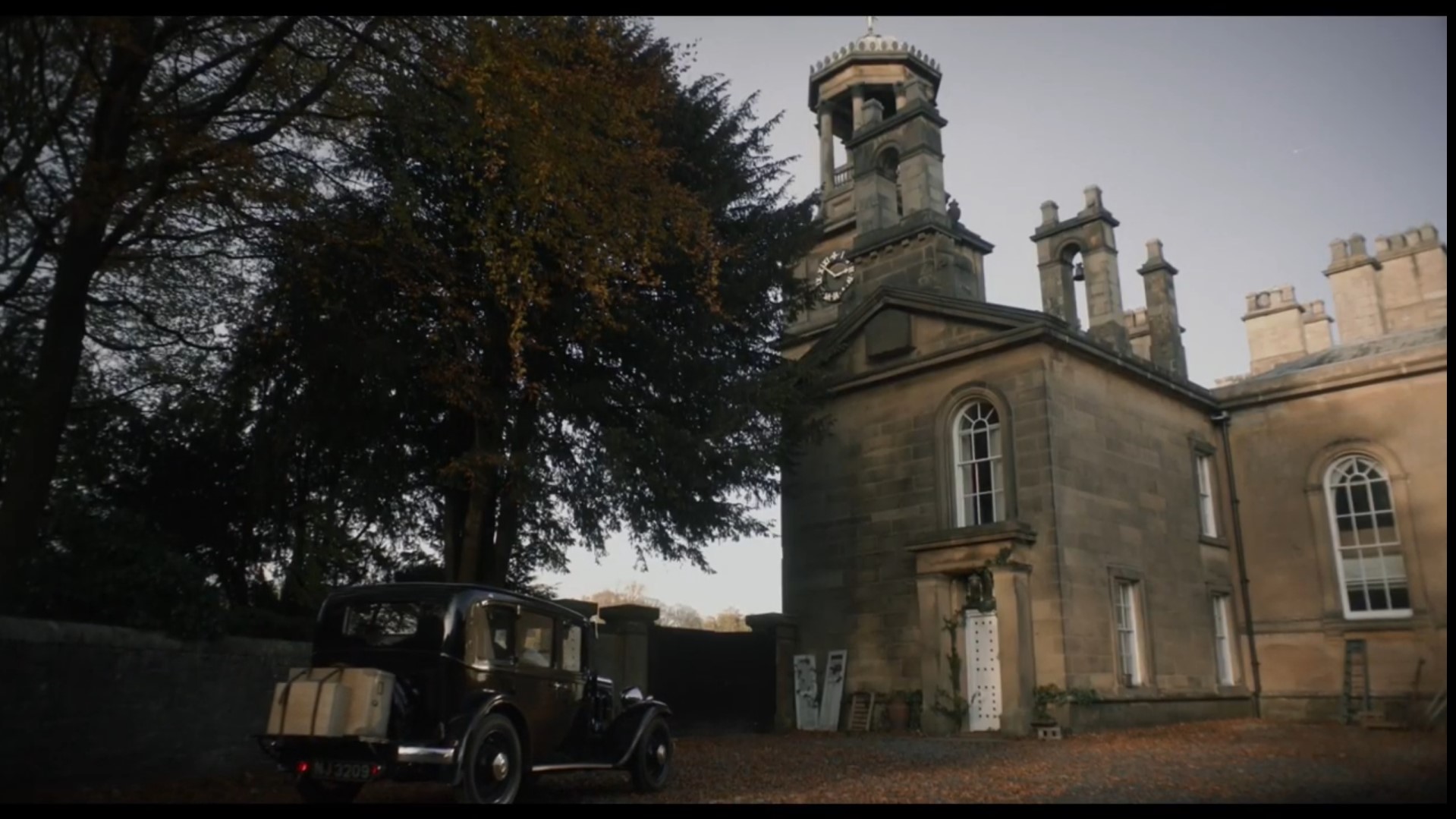
Set in a backdrop of Great Britain on the very brink of world war against Nazi Germany in the late 1930s, a small English community has nearly lost it’s entire faith in the Catholic church after the last priest suddenly and mysteriously died.  When a young vicar is offered a generous stipend, the village parish, and a large estate by the region bishop to restore a congregational foothold, he brings with him his new wife and stepchild to make the house their home, but the house has a dark history that might have played a role in the previous vicar’s death and a lone, eccentric occultist urges the family to vacate the premises immediately before the house swallows them into grave danger at the haunted hands of sadistic monks, ghastly visions, and a tormented soul roaming the corridors. 

If the prim-and-proper social class structure of Julian Fellows’ “Downton Abbey” collided with the volatile and tormented spirits of James Wan’s “The Conjuring,” then Christopher Smith’s pre-wartime staged haunted house feature, “The Banishing,” would be the outcome.  The period piece horror marks the latest installment into the genre from the Bristol, English-born Smith who made a name for himself with 2004 dark subway corridor heartstopper, “Creep,” and went on to make cult favorites amongst genre fans with the workplace violence satire, “Severance,” and the medieval bubonic plague film, “Black Death” starring Sean Bean and Eddie Redmayne.  “The Banishing,” a term used as the practice within the supernatural ambit of dark magic to ward off negative spirits, is a UK feature co-written between David Beton, Ray Bogdanovich, and Dean Lines.  Maya Amsellem and Sharon Harel-Cohen serve as producers under the London-based WestEnd Films production banner with “The Banishing” marking their fifth completed feature film product and with the nearly worldwide distribution rights landing with AMC Network’s popular horror streaming service, Shudder, in partnership with Vertigo Releasing in the UK.

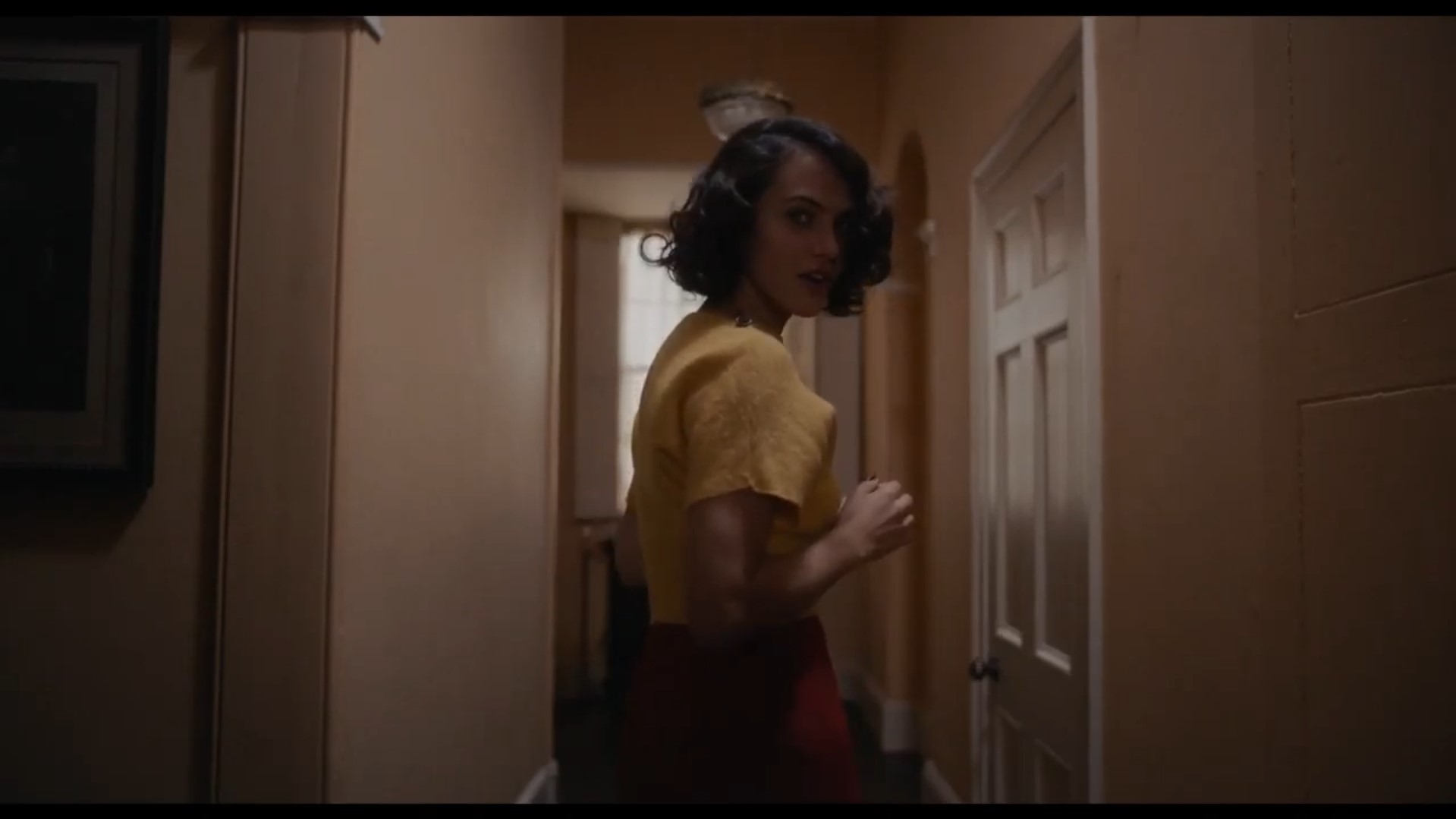
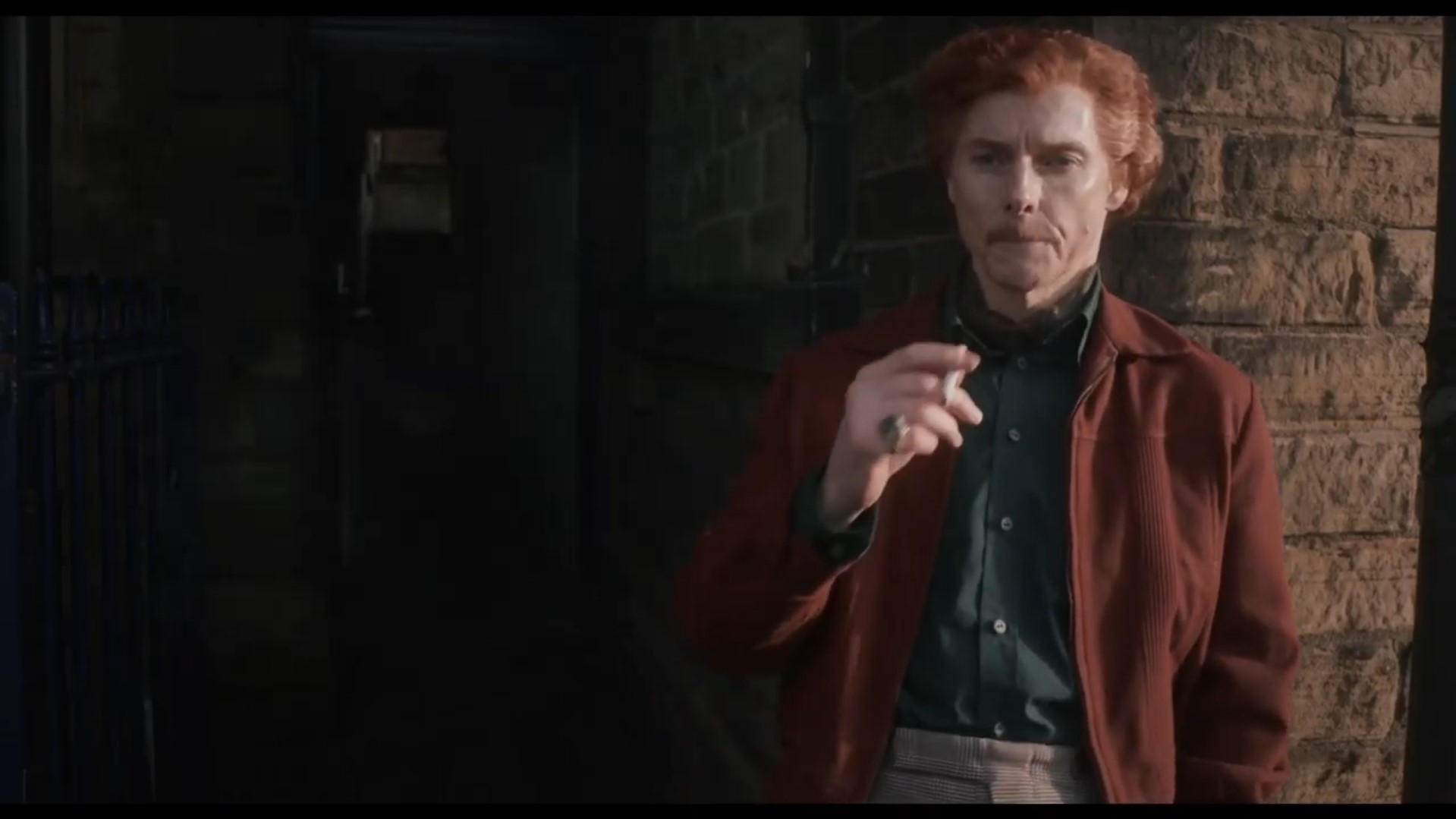
“The Banishing” revolves mainly around Marianne, the newly-wed vicar’s wife with a young girl along for the ride, played by Jessica Brown Findlay (“Downton Abbey,” “Victor Frankenstein”). Findlay endows Marianne with vitality as a woman who must meet the vicar’s standards of Godliness, but still be a strong mother to her child despite disreputable social standing. The priest Linus (Essex-born John Heffernan) lacks experience in the field of his cleric position, lending to question why the region bishop would appoint him to a muster a flock of faithful Christian followers during turbulent times. The husband and wife dynamic between Linus and Marianne is marred by dissonance backgrounds of a priest who doesn’t know to be with a woman and a woman who can’t escape her socially unflattering past. Heffernan and Findlay ignite as repellants of the same magnetic currents when the harder they try to extend their relationship, they push each other way, with Findlay giving a fervent performance. Speaking of performances, Sean Harris bares the most intriguing and rollicking local occultist. The “Mission Impossible: Fallout” actor parades around as Harry Price, a likable, straight-shooting outcast and a believer in the supernatural with extensive, and ghastly, historical knowledge on Linus and Marianne’s new home. As Price aims to extract the hapless from danger, he butts heads with a headstrong region bishop, a stern and solemn role secreted with distrust from John Lynch who has worked on a Christopher Smith film previously in “Black Death.” “The Terror” actor juxtaposes starkly against Harris as a character who dons a likeness to the clown prince of crime in costume than a dull agent man of the cloth…with secrets to uphold. “The Banishing” rounds out with a supporting cast in Adam Hugill, Jason Thorpe, Jean St. Clair, James Swanton, and Anya McKenna-Bruce as Marianne’s daughter, Adelaide.

Set convincingly in a quaint, 1930s English town, Christopher Smith transports the audience back in time to the predated anxious moments before World War II that would upheave turmoil across all across Europe, but though that fretted lingering of war is set as the backdrop for “The Banishing,” and is coiled around every man who served in the first Great War that brought up more than once, the root of the narrative ultimately becomes the house Linus and Marianne have come to call their home.  Haunted house films surmise the house as a built-in principal character because of either the way the architecture affects the mental or physical wellbeing of it’s flesh and bone counterparts or if the abode is actually possessed and set to harm the inhabitants in a personification of pure evil, as such with various films of this caliber (“House,” “The Haunting,” etc,). Yet, Linus and Marianne’s estate failed to become a part of the narrative limelight despite the immense grounds that compromised of a large greenhouse and a robust library complete with fireplace and the disconcerting labyrinth of a dungeon-esque basement full of barred enclosures and close quartered corridors.  Nearly every interior shot felt like a new section of the house hat kept extending upon, what would be assumed, a grand mansion that had a longer rap sheet by reputation in being a former religious torture chamber run by sadistic monks hellbent on whipping the sin out of the mentally tormented. Smith always had an eye for the unsettling visuals and sustains that feng shui by allowing time and space to be the inner horrors of a funhouse, but doesn’t evoke clean, unadulterated terror that continues to profusely bleed into the film’s climatic cause-and-effect unraveling. There is a lack of a transformative realization and a small hurtle of sedated possession to figure out that the main presence in the house, amongst the other more malevolent presences, wants something and the characters are spoon fed each and every morsel to get them up to speed. The final scene of the bishop meeting with the Nazi regime intended to leave the story open for supernatural possibilities, but felt like a more poignant and compelling crux leading into Nazi occultism, hinted by the eccentric resident occultist Sean Harris.

Morosely dramatic and haunting, “The Banishing” is an aggressive salvo of facing shame head-on, creeping into UK cinemas and digital platforms on March 26th courtesy of Shudder and Vertigo Releasing. Director of photography Sarah Cunningham has an remarkable ability to engulf the actors in the space of the shot, making them seem diminutive to the rooms that feel like a giant hand looming overhead, and with the bare, hard lighting, the cinematography is really where “The Banishing” shines as gothic cladding without a stodgy spot to speak visible. Cunningham adds all the hallmarks of a horror film with titled angles, brilliant reds, and tight shots on tense faces to garner a more anxiety that never actually pans out by the end. The organic electro duo TOYDRUM score the 97 minute film with a single note droning hums at various pitch levels that can really get inside your head. The “Prevenge” composers set up scenes with a ill-founded fears when nothing presently visible is intended to fright. There were no bonus scenes during or after the credits, but one scene to note is Sean Harris waltzing with an uncredited woman during the opening credits that seems out of place but speaks to the aberrated decorum of his character. “The Banishing” works tirelessly to discredit shame by confronting truth and while we’re being beat over the head by the message, the overlay of horror is lost despite some brilliant and engrossing performances from Findlay and Harris who usher us through to the imperfect conclusion.

An Evil Hog Demon Won’t Let You Escape this Island! “The Forlorned” review!


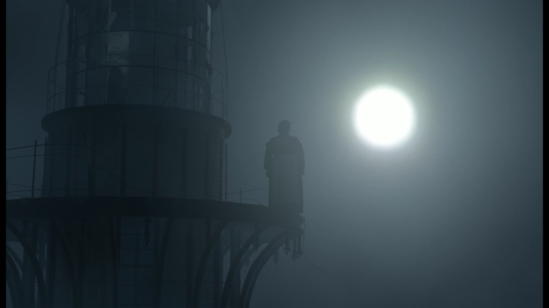
Just off the rough stormy shores of Nova Scotia is a remote island where American Tom Doherty becomes the newly hired lighthouse caretaker in search for good money. Already overwhelmingly cloaked with the lighthouse’s creepy adjacent housing and being forewarned by the island’s infamous legends, an isolated Tom experiences the abilities of dark force first hand and doesn’t know whether the forces are real or madness has swallowed him from the extreme isolation. As Tom continues the work, he discovers clues along the way that suggest the island holds a nefarious past involving murder, suicide, and cannibalism, but an old bible with a list of names is the key that has the potential to unlock all the island’s mysterious doors and can also be Tom’s unfortunate undoing if he maintains being the lighthouse caretaker.

Based off the Angela Townsend book with the same title, “The Forlorned” is the 2017 silver screen adaptation of Townsend’s mystery-thriller from “Dead Noon” director Andrew Wiest who has helmed a jolting, supernaturally visual and auditory accompaniment to Townsend’s literary work. To maintain authenticity, Townsend co-wrote a script alongside Wiest and Ryan Reed that’s riddle with an ill-omened story leading audiences down a path of insanity-ladened darkness. But what exactly is “The Forlorned?” Forlorn has two definitions: 1) pitifully sad and abandoned or lonely 2) unlikely to succeed; hopelessness. Either of the disparaging definitions, if not both, can be used to described “The Forlorned’s” eerily gloomy story that’s saturated in a motif of burdensome loneliness and relentlessly bashes the concept into our heads in a constant reminder that no one can ever escape the island even in postmortem. The character Tom is the very definition of the forlorned. Whether because of due diligence or a dark force, his role of caretaker is a permanent position allotted to him unwillingly by a sadistic, secret-keeping demon that seeks to swallow more unfortunate souls.

Colton Christensen inarguably shapes the role of Tom Doherty into his own with a solid solitary performance for more than half the film. Christensen also, for much of the last ten minutes of the story, had to systematically break away from his character in order to forge a combative persona to Tom and while Christensen does the job well for one character, shouldering a second didn’t suite the actor’s abilities despite a total embrace of character and a few jabs at his own humility. Wiest has worked with Christensen prior to “The Forlorned” and has seemed to continue the trend of using his own entourage of actors with the casting of Elizabeth Mouton (also from “Dead Noon”). Mouton’s character is briefly mentioned near the beginning as a little girl of a previous caretaker, but her adult version only makes the scene in the latter portion of the story to provide a better clarification and exposition into the demon’s background. Also serving exposition as story bookends and peppered through as emotional support is Cory Dangerfield’s “Murphy,” a sea-salty old bar owner who liaisons with the lighthouse committee and can make a mean clam chowder. Murphy hires Tom to do the restoration and caretaker work and while Murphy initiates Tom existence into the fold, Murphy, for the rest of the film, serves as slight comic relief and, in a bit of disappointment, an unfortunate waste of a character. I also wanted Benjamin Gray, Shawn Nottingham’s priest character, to be built upon and expanded more because the character is a key portion that, in the end, felt rushed with quick, messy brush strokes in order to finish painting the picture.

At first glance, Townsend, Wiest, and Reed’s script screens like a typical, if not slightly above par level, haunting where Tom encounters sportive spirits, ghastly visions, and a slew of ominous noises inside a time-honored lighthouse home, but then a twist is written into play, pitting Tom against a masterminding demon whose conquered many other bygone caretakers and whose the epicenter of all that is sinisterly wrong with the island. The demon, who has taken the form of a man hungry hog, lives only vicariously through the camera’s point of view, never bestowing an appearance upon to Tom or even the audience, but referenced numerous times by island locals and boisterously given hog attributes whenever the demon is near. The concept fascinates with this demon-hog thing kept stowed away deep inside the isle’s bedrock even if the dark entity never makes a materializing appearance, but where that aspect thrives in “The Forlorned,” a pancake thin backstory for the demon goes simply construed with a slapped together account of its languished two-century long past and wilts the demonic character wastefully down with backdropped uncertainly, powerlessness, and puzzlement that’s forlornly misfired. There’s no deal with the devil, no selling of the soul, no medieval rite that gives the demon-hog it’s power; it just turns into an evil spirit out of greed.

Andrew Wiest’s production company, Good Outlaw Studios, presents “The Forlorned” that found a distribution home in Midnight Releasing, the fine folks who released “Blood Punch” and “WTF!” “The Forlorned” is available on DVD and multiple VOD formats such as iTunes, Vimeo, Vudu, Xbox Video, and Google Play. Since a screener was used for this critique, a full review rundown of the technical specs will not be provided and no bonus materials were featured on the disc. Director Andrew Wiest and his cast and crew entourage are able bodied participants in assembling a good, entertaining, and sufficient indie mystery-thriller brought to fruition out of Angela Townsend’s story with the author’s pen ship assistance. With a little tweak here and there on the antagonistic demon-hog, “The Forlorned” might have necessarily escalated into a richly dark territory of a more volatile, blood thirsty spirit that’s scribed to have racked up body after body, century after century; however, the fleeting chronicle of how the demon-hog came to be a malevolent being leaves a bittersweet aftertaste on a premise that started out spooky and strong.

Available on DVD at Amazon.com!

Evil Hate Trumps Good Love! “The Hatred” review!


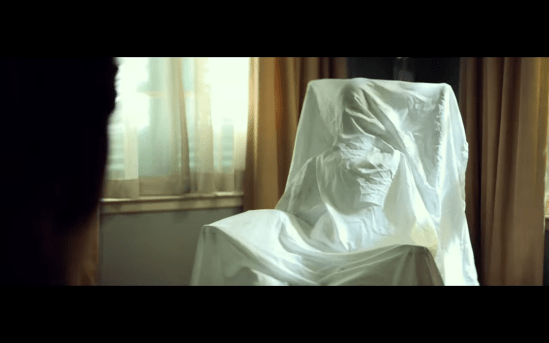
In 1968, former Nazi occult officer, Samuel Sears, runs a strict farm in rural America, restricting his only daughter Alice from the corruption of the outside world with an infinite workload, and Alice violently rebels against her tyrannical father, Samuel kills her with rage. Hidden deep in the dark basement of his plantation home, a powerful Nazi-occupied amulet, charged by fear and hate, feed on his rage and fear and curses him to do the unspeakable. In the present day, four college girlfriends retreat to a friend of the family’s recently purchased foreclosure farm house, the abandoned and forgotten Sears farm, for a relaxing weekend getaway, but after night of drinks and games, the amulet reignites an ominous and dark cloud, reviving long forgotten, evil spirits who search for an endless quantity of fear and hate and will stop at nothing to swallow the souls of each and everyone inside the Sears’ estate home.

“The Hatred” is the 2017 haunting thriller from writer-director and Brooklyn native Michael Kehoe and produced by long time “Halloween” franchise producer Malek Akkad. Kehoe tells the story in two parts with the first delving in the Sears family, getting a first hand look at the hardworking German mennonite character that is Samuel Sears whose a former war time Nazi that’s settled down and raised a family in America’s backcountry. From what can be gathered about Samuel Sears, the farmer protects his past identity and isn’t ashamed of yet, but rather proud of his accomplishments alongside the Führer. All of the attributes of a proud countryman come suddenly alive when he receives a mysterious package containing the amulet, a photo of him in full Nazi dress standing with Adolf Hitler, and a signed letter personally acknowledged by the Nazi leader himself offering him the amulet as a gift for his fine work during the War and that ultimately becomes his downfall, pitting him against his family. The second part of the film tells a more uncharismatic story of four young girls staying at the Sears farm in present day. One of the girls, Regan, just finished college and is about to start a new job and what’s her ideal getaway with her girlfriends? An old (haunted) farmhouse.

“Wishmaster” himself, Andrew Divoff, gives “The Hatred” much more life despite his joyless character Samuel by somehow giving the former Nazi, now American farmer personality traits that are haunting in an unforgettable performance during the first act. The same can not be said about the four girls – Regan (Sarah Davenport), Layan (Gabrielle Bourne), Samantha (Bayley Corman), and Betaine (Alisha Wainwright). There’s no comparison as Samuel is a superiorly written and finely performed character than those he stalks beyond the afterlife. The gaggle of women offer no substance in the face of adversity or just plain ole progression of their character. Numerous times does Regan’s sick grandmother have scenes and Regan passively forgets about her poor grandmother’s health or Samantha’s uncanny interesting in history that really goes no further than the random facts that she spews. Regan and Betaine seem to have this close knit relationship, yet it founders and is suddenly cut short when all hell breaks loose. There are no personal connections established, offering little-to-no worth to their lives when Samuel comes calling for their souls, and leaves “The Hatred” in the take-it or leave-it column in the second and third act. Darby Walker, Nina Siemaszko, and Shae Smolik complete the cast.

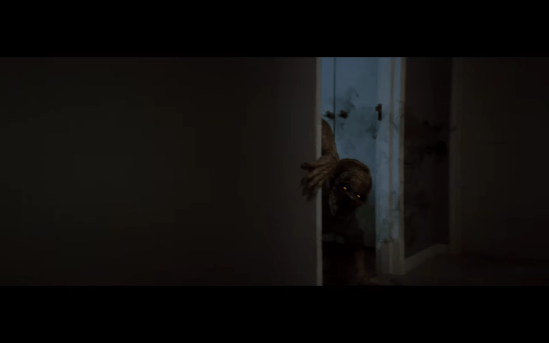
Kehoe does display intense, nail-biting visuals with the materialized embodiment of fear and hate as well as sly editing with a scene involving Shae Smolik’s Irene, a little girl whose friends with Regan, who asks Regan to check under her bed, for supposed shadowy figure. When Regan pulls back the skirt to look, she sees another Irene putting a finger to her mouth, hushing Regan, and saying, “that’s not me,” as she points upward toward Regan’s impending doom. The heart-stopping moment will tear eyes away from the screen in anticipation of what Regan will see atop of Irene’s bed. However, that’s the sad truth in the extent of Kehoe’s story; a story riddled with plot holes and underdeveloped subtexts in which one in particular pertains to the aforementioned subplot of Regan’s ill stricken grandmother that goes undercooked when attempted to connect with the supernatural portal that of the Sears farm home. Characters disappear to never be seen again, character motivations go unexplained, and backstories are like a hazy dream and the entire ensemble is a mismatched, muddled mess in a premise that should have continued with the motif of the Nazi infiltration into America and less about scaring the wit out of witless girls with the creepiness of an alternate dimension seeping out of an unholy amulet.

The Lionsgate Films’ “The Hatred” is presented by Anchor Bay Entertainment on Blu-ray and UltraViolet home video in a 2.40:1 aspect ratio from an encoded AVC 1080p transfer that’s sleek and well lit, especially capture Samuel’s earthly and grim nature. The overall atmosphere doesn’t particular hone in a horror palette design, but offers realistic ventures into brightly lit areas of dark scenes. Details are fine in more of the natural aspects of the film whereas the CGI goes soft at times, but still very well detailed. The English language Dolby TrueHD 5.1 keeps Kehoe’s film buoyant with a leveled mix through and through with clear fidelity and good, if not great, surround sound output. Instilled with conventional horror schemes, burdened with design flaws, and unfocused in it’s inability to pin down an narrative identity, Malek Akkad and Michael Kehoe’s spook house feature “The Hatred” requires much tender loving care to uplift this unkempt cliche horror into a coherent thriller.

“The Hatred” on Blu-ray+UltraViolet!