The Key to EVIL is to Kill Each Other For It! “A Hyena in the Safe” reviewed! (Celluloid Dreams / Blu-ray)

“A Hyena in the Safe” is on Black Friday sale! Get It at Amazon.com

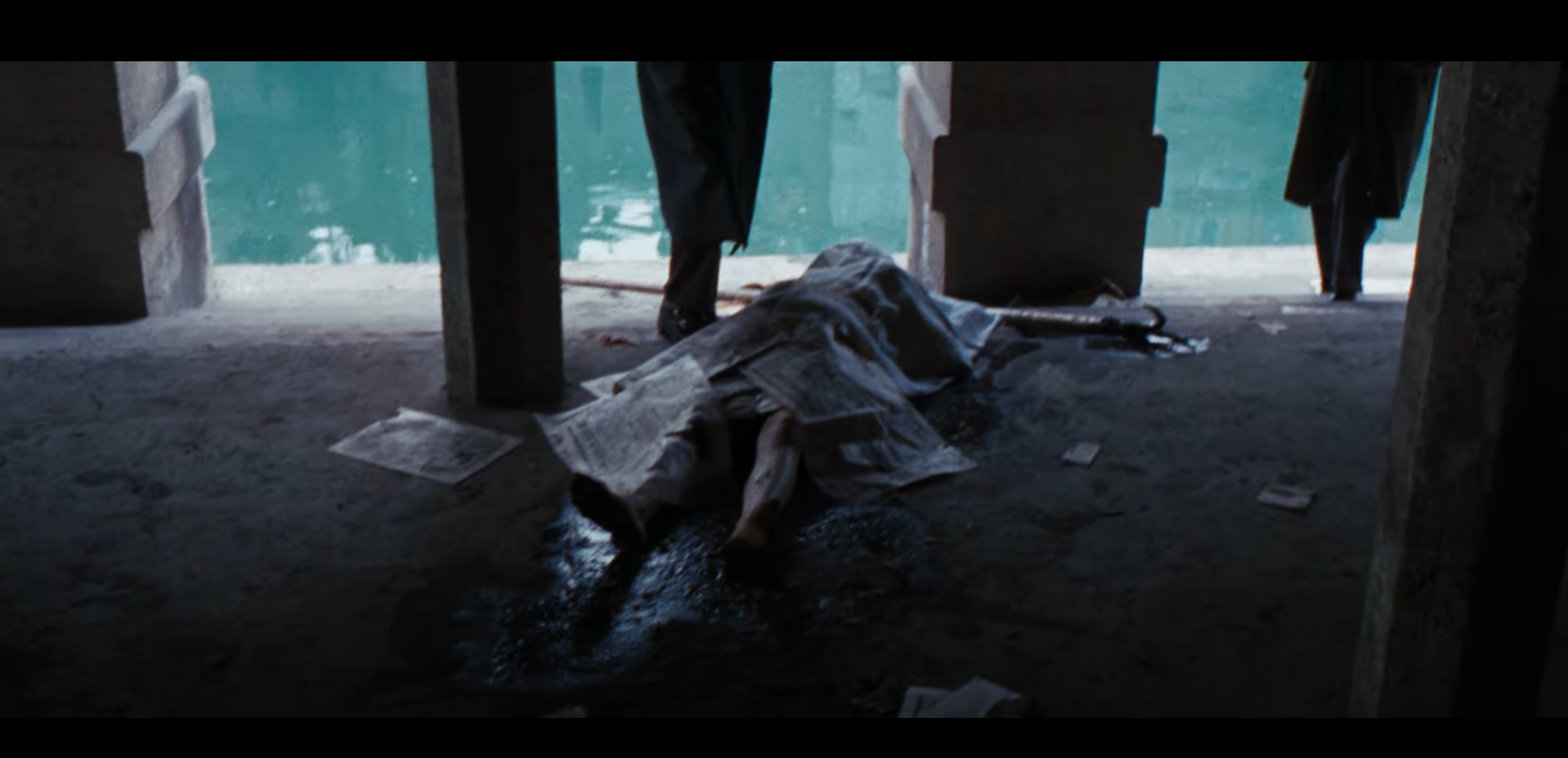
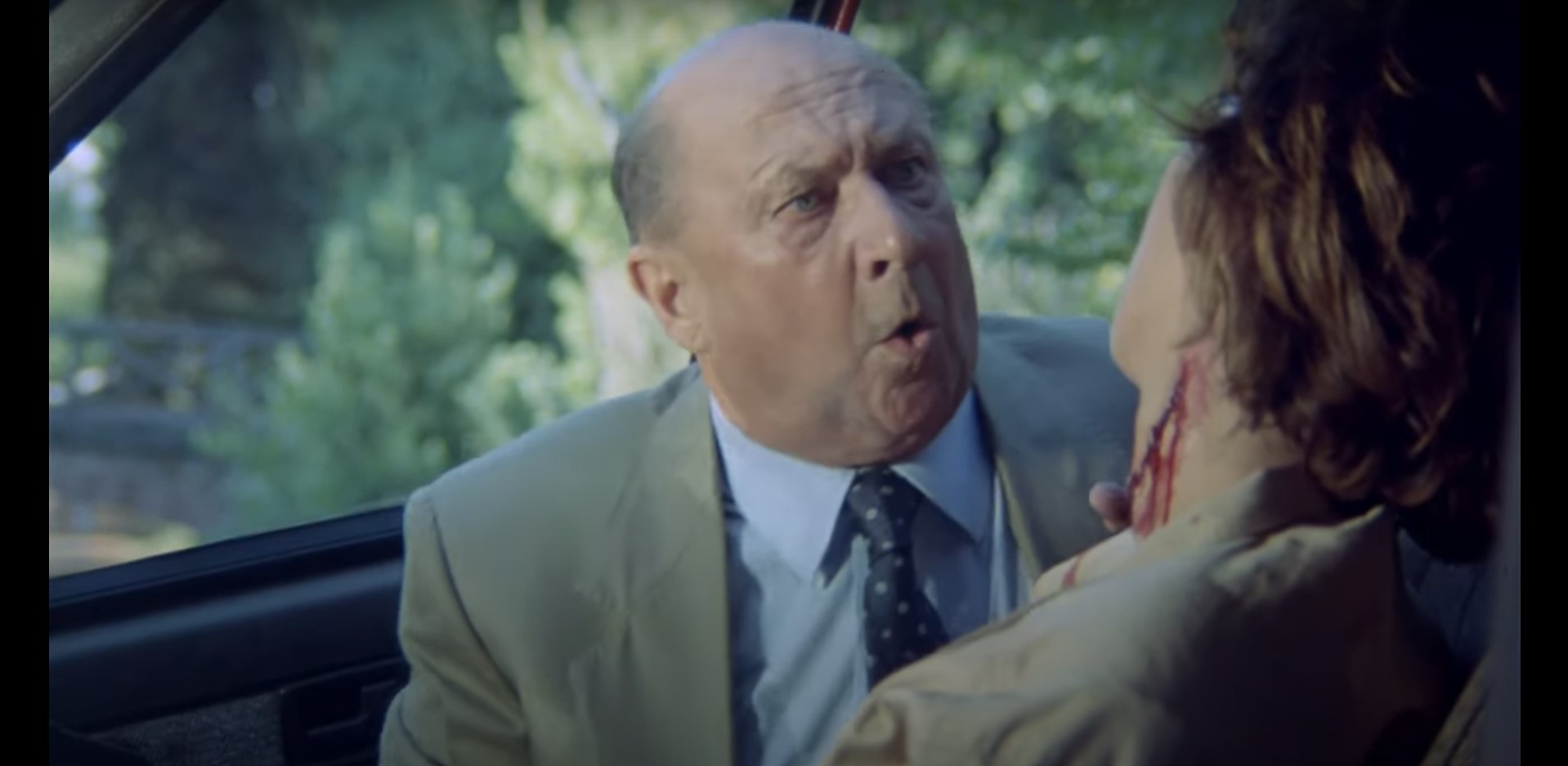
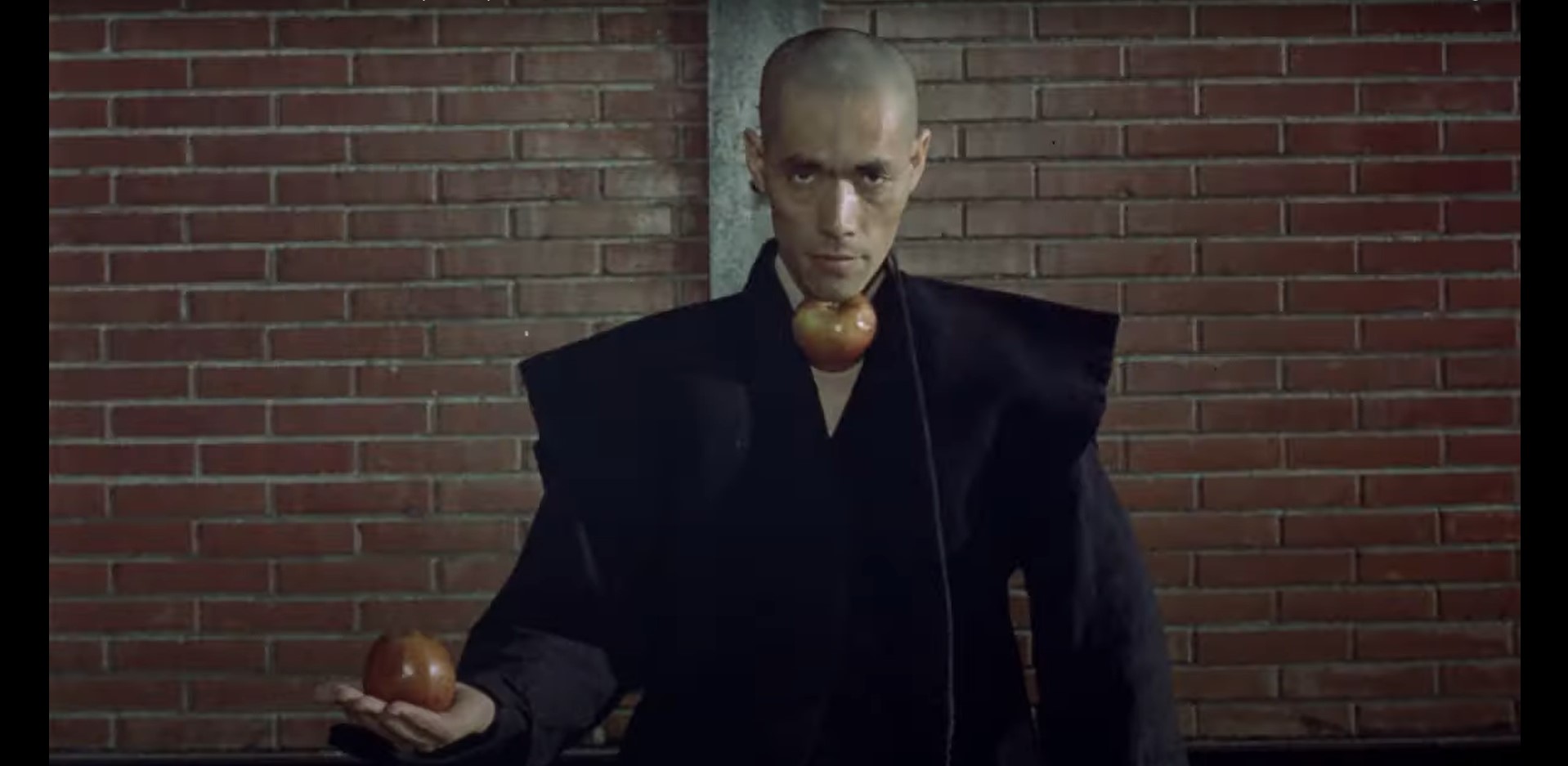
Eleven months after a jewelry safe heist at the Bank of Amsterdam, a group of specialized international thieves from all over Europe reunite at an Italian mansion estate during a city carnival celebrate used as a distracting facade for their gathering.  Each have a key that form a coalescence to open the safe to ensure not one of them will swindle the others and make off with the jewels worth millions.  Their ringleader Boris, who’s now deceased, hid the safe in his mansion with this wife Anna overseeing his plan and portion of their lifted prize.  When one of the keys end up missing, a series of deceptions and murders begin a feisty vying for the each of the keys.  One-by-one, the criminals fall for inconspicuous laid deadly traps and engage in murderous rendezvous until there’s only one left standing as the old saying goes, there is no honor amongst thieves.

Italy director Cesare Canevari, notable for his contribution to the exploitation subgenre with “A Man for Emmanuelle,” “The Nude Princess,” and the notoriously renowned “The Gestapo’s Last Orgy,” wrote-and-direct a post-caper, bordering giallo in 1968 titled “Una iena in cassaforte,” aka “A Hyena in the Safe.”  Coming in on the incline toward giallo’s height of success, Canevari’s whodunit has less the conventional murder mystery elements but does have arouse that lack of trust amongst the principal characters, a high body count, a vaguely mysterious killer, and definitely a highly stylization of camera angles and visuals that’s correlates with the time period and give this giallo less of a terror firming shape and more of a “Clue” like profile.  Canevari cowrites the script with Alberto Penna and is a production of Fering SRL based in Milano, Italy where the film was shot.
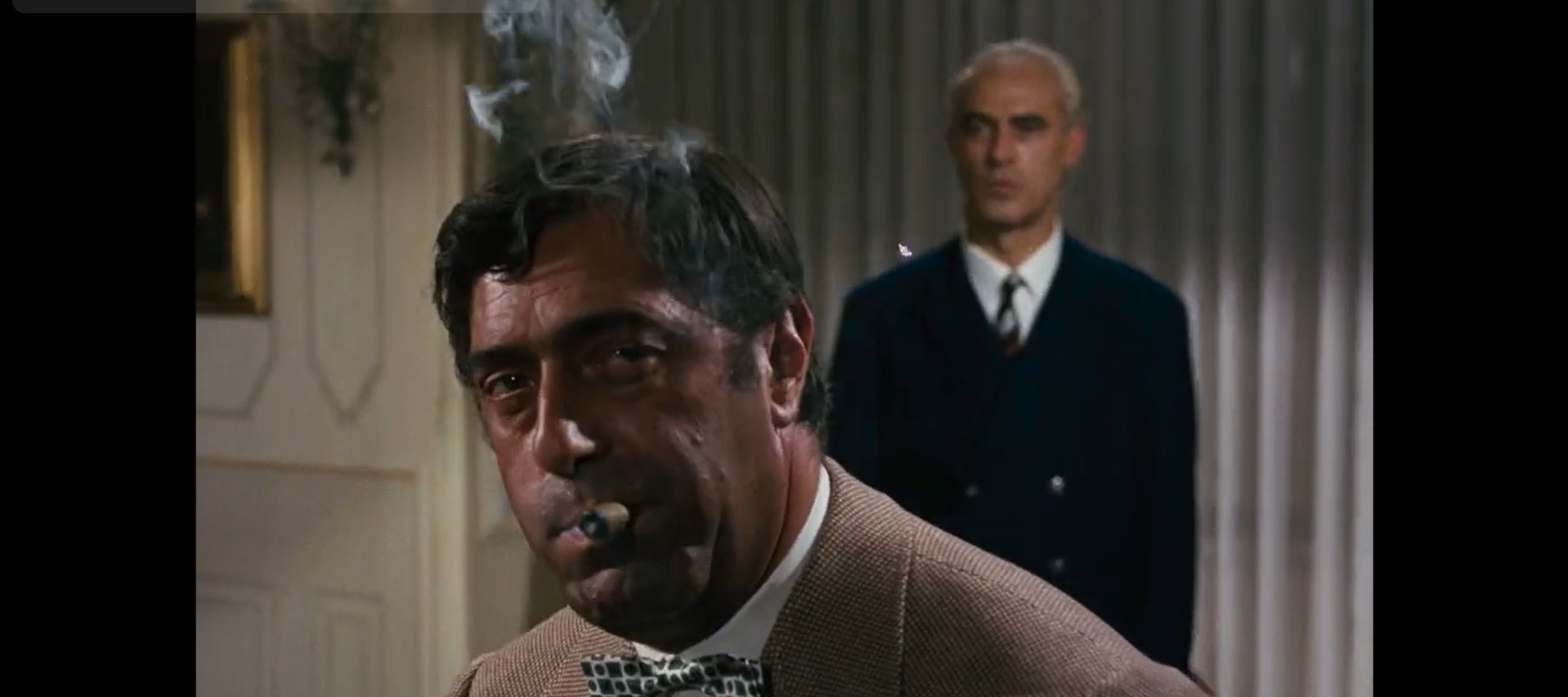
“A Hyena in the Safe” is carried by an eclectic, ensemble cast of international actors and actresses playing the roles that are not of their respective nationalities.  Going around the horn first with the keyholding thieves begins with Stan O’Gadwin’s Klaus, the German, Ben Salvador’s Juan, the Spaniard, Karina Kar’s Karina, the Tangerine and the only non-European of the group, opera singer Dimitri Nabokov’s Steve, The Englishman, and “The Slasher … Is a Sex Maniac!’s” Sandro Pizzchero’s Albert, the Frenchman.  The aforementioned cast primarily reduces to Italian and German actors in a virtually performance only role to exact and exude their character personality types in with Salvador, who gives Juan a thinking man’s confidence within a patient self and has a way of seducing women to extract information, or with Klaus, who’s aggressive pressing as an authoritarian German leans toward pursuit efficiency, or Steve, who’s quietly plotting multiple reserved schemes to deploy later.  Those not a part of the heist crew from the Bank of Amsterdam is Anna, the criminal mastermind’s wife portrayed by Maria Luisa Geisberger, and she, too, is a keyholder but only because the attractive femme fatale takes over the helm with the storage of the jewel vault and implants her own brand of deception after announcing her husband’s demise from an illness.  Jeanine (Cristina Gaioni) and Callaghan (Otto Tinard) are the last two who round out the ensemble in their corresponding roles of Albert’s blonde bombshell girlfriend who’s folded into the scheme at the chagrin of the others, and boy does she take a humiliating beating when Albert comes up short on his key, and the jewel appraiser who watches all the backstabbing unfold from the sidelines and counts down the bodies with the metaphorical removal of their party favor baggies, ones that would have been used to split the jewels between them upon opening the safe.
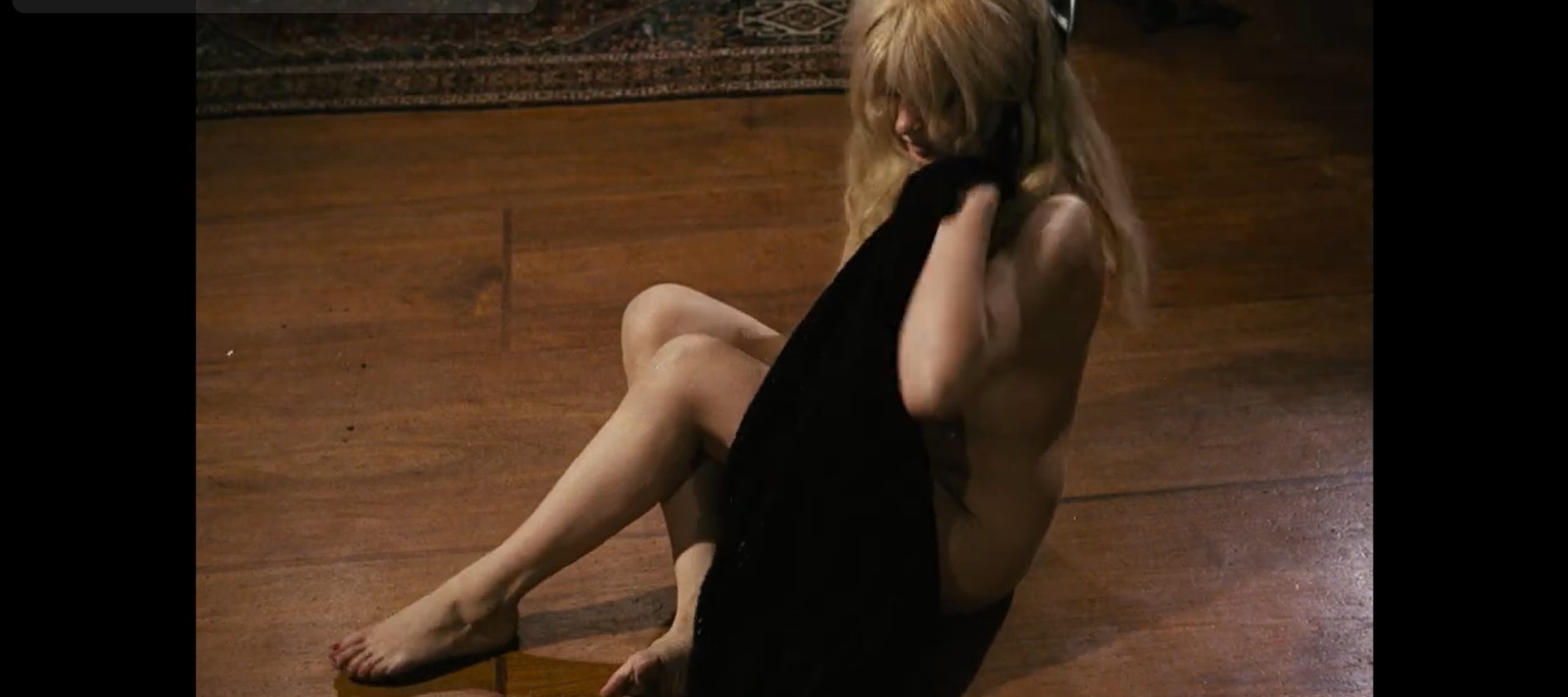
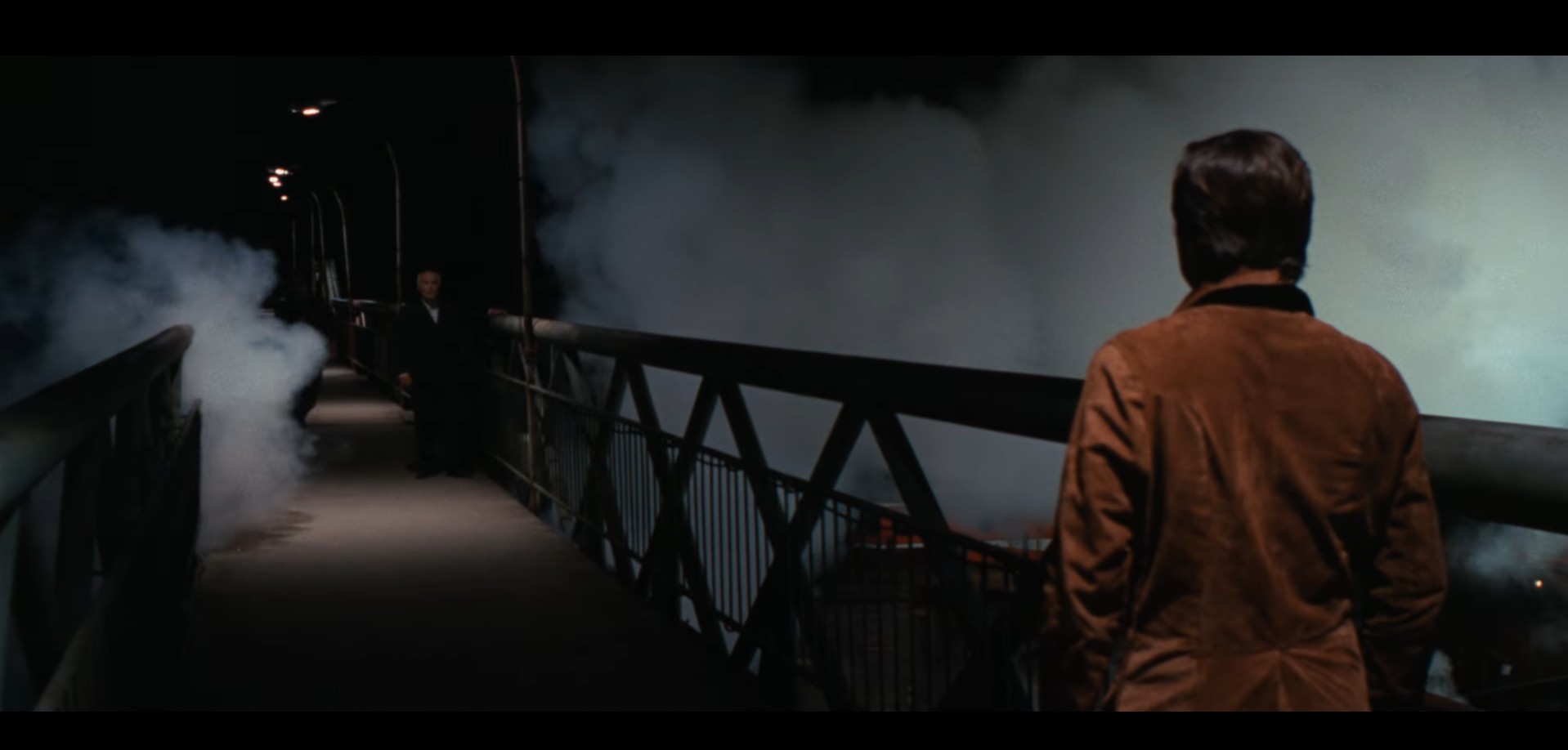
What’s interesting about “A Hyena in the Safe” is the beginning of the story plotted at the act of reassembling the team and only provide expositional context to a heist well after it’s been done, eleven months ago in fact.  All the characters are fresh and unknown to the audiences, we don’t know their personalities, their skills, their habits, or their attitudes toward one another, and all that dynamical odds and ends has processed, forcing those new to the film to watch, listen, and learn their way through the personality types and the situation at hand.  The tension is quickly laid out amongst the already side-eying and suspicious group of sophisticated thieves that react no differently from the lower class of thief with same cutthroat intent.  Keeping up with Canevari’s edited pacing and unconventional angle shots that squeeze out the tension with taut framing on expression-filled cutting of eyes and fear-induced faces, the mounting intriguing factors wet story hungry appetites with playful catering of the imagery that also consists of fixed and tracking shots.  Considering the film’s more conservative decade, Canevari builds tasteful implied sexual acts between conniving characters and is only explicitly, in physical means, when the scene calls for it, leaving gratuitousness begging to be let in.   One aspect with the pacing that hurts the enticingly heightening pressure cooker between the first act’s slow trot through choppy seas of character dynamics to elucidate taciturn behaviors and backdoor alliances and the last act’s spit firing and cutdown of those who are left standing, there is seemingly no middle act to funnel the trepidation and mystery from one end to the other in an abrupt ease into a quickly diminishing situation that goes from murder mystery to battle royale with switchblade umbrellas, electrifying door handles, and an indoor garage that can turn into an asphyxiating fish tank in a matter of minutes.  There’s an early James Bond campiness to the story’s temperament that can’t be ignored while be positively and simultaneously interesting.

Celluloid Dream’s third release title today “A Hyena in the Safe” arrives onto a new high-definition Blu-ray for the first time that’s AVC encoded onto a BD50 and presented in 1080p and in its televised pillar boxed full screen 1.33:1 aspect ratio.  The restoration of the original, likely, 35mm film stock was done by Rome’s Cinelab Services from the original camera negative, which also included the color grading.  The resulting transfer is peak restoration quality with a fresh coat of brilliant paint, a clear coating of texture producing details, and a virtually flawless image within the spherical lens picture.  Perhaps slightly on the orange side, skin tones come through a variety of shades to match the nationalities of the criminal enterprising collective.  Juan’s dinner jacket evokes tweed textures while Jeanine’s high, golden hair style never loses individual strands in the near all-bright-and-golden wash.  The original Italian mono mix was secured from the optical sound negatives attached to the filmstrip.  The mix had processed the Italian ADR in post and attached to synch to the celluloid, creating a near perfect pace and synchronicity with the conversational action though the lips doesn’t exactly match the actual words being spoken.  Speaking of dialogue, for a mono track the nice and robust with clarity from an untarnished negative albeit it’s lack of depth and not from the true source, and that goes for ambience as well.  English closed captioning is available.  Special features pack the encoding with a commentary track by Celluloid Dreams found and film critic Guido Henkel, interview featurette 7 Guests for a Massacre with Cesare Canevari (misspelled Canevaro on the back cover), Albert actor Sandro Pizzochero, Nini Della Misericordia, journalist/critic Adriana Morlacchi, and journalist/critic Diego Pisati discussing the film’s influence and pizzas from cast, crew, and critic perspective, a video essay by Andy Marshall-Roberts Schrodinger’s Diamonds:  The Duplicitous Mystery of Hyena in the Safe, a location featurette of the shooting setting The Mysteries of Villa Toeplitz, an image gallery, and the theatrical trailer.  The two-faced cover art, same art of dead bodies falling out of a safe, is set with the primary English language on the cover with the Italian language title cover on the reverse side.  The cover art on the encasing O-slip with a character composition design of a shadow-induced, high-contrast illustration by graphic artist Thu-Lieu Pham of Covertopia.com has slip art similarities with same art on both sides but with the title in either in English or Italian.  In the insert is advert for Celluloid Dream’s previous two releases – “The Case of the Bloody Iris” and “Short Night of Glass Dolls” and its upcoming fourth release “The Black Belly of the Tarantula” while the reverse side gives credits and acknowledgement in regard to the film restoration.  “A Hyena in the Safe” comes not rated, clocks in at 92 minutes, and is region locked for A, North America.

Last Rites: “A Hyena in the Safe” is a no laughs, all bite giallo caper once obscured from the public view now brought to the forefront of our attentions with a new Blu-ray release worth backstabbing for!

“A Hyena in the Safe” is on Black Friday sale! Get It at Amazon.com

Trapped Inside His Own Body While EVIL Buries Him Alive! “Short Night of Glass Dolls” reviewed! (Celluloid Dreams / 4-Disc 4K UHD and Blu-ray)

Collector’s Run to Grab Celluloid Dreams’ “Short Night of Glass Dolls” on 4K UHD and Blu-ray!

Gregory Moore’s body is found motionless and wide-eyed in a Prague Plaza and is confirmed deceased by local doctors, but Moore is actually alive, paralyzed and trapped inside with only his inner voice able to cry for help.  As his mind races about how to communicate with those around him, Moore must recall the previous days events to see how he ended up this way.  Days before, the American journalist, currently stationed in Prague and soon to be relocated in another European country once his assignment comes to term, is visited by his beautiful girlfriend Mira and they attend an affluent party hosted by socialite Valinski.  Soon after, Mira disappears from his apartment late a night, leaving all her belongings behind in his apartment and as the police begin to suspect Moore as primary suspect, the journalist uses his trade to discover a powerfully mysterious and sexually depraved organization, known as Klub99, may be behind her disappearance.

Aldo Lado’s written-and-directed murder mystery goes by many Italian and English names:  “Short Night of Glass Dolls,” “La Corta Notte Delle Bambole di Vetro,” “Malastrana,” “La Corta notte delle Farfalle,” “The Short Night of the Butterflies,” and, finally, “Paralyzed.”  Doesn’t matter what you call it, “Short Night of Glass Dolls” needs very little title nomenclature as Lado, a dark sided and rich yarn spinner of Italian cult cinema with credits like “Who Saw Her Die?” and “Last Stop on the Night Train,” debuts his 1971 tale of mystery with precision and style that speaks global themes of affluent power for the sake of retaining that power as well as their youth.  The Italian production is a cross-country affair being filmed in not only Italy but also in Croatia, Slovenia, and Prague and is a production of Doria Cinematografica, Jadran Films, and Dieter Geissler Filmproduktion with Enzo Doria (“Beyond the Door,” “Tentacles”) and Dieter Geissler (“Kill! Kill! Kill! Kill!,” “The NeverEnding Story”) as producers.

“Short Night of Glass Dolls’” American protagonist was actually not played by an American but by French actor Jean Sorel with a handsome stached face, bronze swagger, and whose taste of giallo carried into the Lado film after acting in “The Sweet Body of Deborah” and Lucio Fulci’s “A Lizard in Woman’s Skin.”  It’s not surprising or even uncommon for a 1970s through the 1980s Italian production to cast non-native Italians to star and perform as Italy sought foreign talent to be highly marketable abroad and “Short Night of Glass Dolls” is bursting with international talent from America, Yugoslavia, and Sweden to perform alongside Italians.  The only American in the film is the petite and lovely Barbara Bach whose career was mostly a decade and half of Italian films, including “The Great Alligator,” “The Humanoid,” and “Black Belly of the Tarantula.”  Bach’s short stint as Moore’s girlfriend, Mira, is the epitome of innocence and cherished love, an quality lost by Moore because of his work blindness and his philandering with colleague Jessica, “Salon Kitty’s” Ingrid Thulin entrenched into Jessica’s passion for Moore but also keeping a stark low-profile on her looks against Mira with Thulin’s naturally blond hair contained in a colorful headwrap for most of the film.  The love triangle is downplayed from the early revealing signs that Moore may be playing both sides but from the moment Mira vanishes, Moore and Jessica, along with fellow journalist Jacque (Mario Adorf,  “What Have You Done To Your Daughters?”) become a single unit of vocation to find Mira and they bitterness drains from Jessica to just despair by the shocking finale when all the cards laid upon the table.  Lado neatly keeps a tight lid on Klub99’s patrons with only the assures of Valinski as the organization’s ringleader of undisclosed purpose.  José Quaglio (“The Eroticist”) dons well as the oligarchal head keeping a low profile that emerges out like sordid serpentine of perversion and wickedness.  Daniele Dublino, Fabijan Sovagovic, Relja Basic, Piero Vida, and Semka Sokolovic-Bertok are the Croatian and Italian support actors that fill out the cast. 

Aldo Lado’s debut film pins him as a productional prodigy with a naturally gifted cinematic eye and a phenomenal storyteller.  “Short Night of Glass Dolls” sallies forth in an untraditional, nonlinear narrative through the perceptive procession of a paralyzed man’s thoughts and recollections.  That man being journalist Gregory Moore who audiences are first introduced lying motionless in the bushes of the plaza morning and, from the start, Moore is at the mercy of bystanders, medical professionals, and friends who mostly believe he’s dead but, on the inside, is in his thought’s echo chamber screaming for help.  Every frame captures the act and emotion, amplified even more so when Jean Sorel is absolutely still, eyes open, and withstanding forces upon, such as chest compressions, to which he doesn’t even flinch.  Lado finds beauty in the macabre imagery when dead women are laid out nude, splayed with an arrangement of flowers or juxtaposed wet against a dry paved ground.   Lado also doesn’t cater to a fixed position and, instead, tracks the characters with smooth movements, coalescing at times a back-and-forth or side-to-side to get lengthier, more dialogue and dynamically enriched, scenes with director of photography, Giuseppe Russolini (“Firestarter”), achieving a naturally dissemination of lighting and color.  “Short Night of Glass Dolls” is not a film without flaws as Moore’s investigation takes the easy pickings route as if briefly glancing over the reported missing, naked women list is an automatic ladder to the winner’s circle for unearthing mostly everything of an deprave inner circle of the powerful rich and so Aldo cheats a little to give his story’s theme of flightless butterflies some much needed wings.

Following up on their definitive, carefully curated, stunning release of Giuliano Carnimeo’s 1972 giallo “The Case of the Bloody Iris,” Celluloid Dreams doesn’t pump the breaks delivering their latest “Short Night of Glass Dolls” with an all-encompassing, 4-disc collector’s edition set that includes 4K UHD and Blu-ray. Scanned and restored in 4K from the original camera negative, the UHD is an HVEC encoded BD100 with 2160-pixel resolution and the Blu-ray is AVC encoded BD50 with 1080-pixel resolution. It goes without saying that both transfers are impeccable in their damage and blight free form for those who might have owned or once owned the cropped, VHS-sourced release under one of its many titles, “Paralyzed.” The grading blends a natural, dynamic pop with peppered psychedelic trips down the dark rabbit hole with Klubb99 is open for business and the color is diffused with balanced, natural saturation, adapting to lighting of all varieties. UHD offers a richer depth of focus with the increased pixel Dolby Vision seizing better delimitation around objects, but that doesn’t mean the Blu-ray doesn’t do the same, the UHD just enhances it by a quarter approximate percentage, while still keeping healthy, transpicuous grain. Two fidelity-true 1.0 DTS-HD offers mostly a dialogue entrenched mix that, audibly, has an imbalance against a rather omitted ambience and that’s not the release’s doing but rather a lack of Foley work amongst an ADR English or Italian track. Ambience hits where it counts but there are times when establishing shots or slow pans of Prague go nearly into a coma state, letting the dialogue and the renowned Ennio Morricone’s piano, triangle, and melodic vocal score take flight through the course of the mystery. English subtitles are available for the Italian language track. Disc one and two not only contain the feature but also contain identical extras with writer-director Aldo Lado & and Freak-O-Rama’s Frederico Caddeo feature-running commentary, a second parallel commentary track with Celluloid Dream’s founder Guido Henkel, an assortment of trailers labeled as grindhouse, Italian, English, and the Catalepsis, with an isolated score that pedestals Ennio Morricone’s score. Disc three delves into the Italian-language, English-subtitled feature documentaries and featurettes with a 2015 archived interview The Nights of Malastrana, clocking in over 100 minutes, that have isolated discussions with Aldo Lado and actor Jean Sorel, All About Aldo is another archived interview with the director circa 2018, The Quest for Money is an interview with producer Enzo Doria, To Italy and Back touches base with producer Dieter Geissler’s perspective and historical context, The Most Beautiful Voice in the World interviews Italian singer Edda Dell’Orso’s haunting vocalizations on Morricone’s score, Cuts Like a Knife speaks to editor Mario Morra, the Flying Maciste Brothers’ video essay The Man on the Bridge: Philosophy, Perception and Imprisonment in Aldo Lado’s ‘Short Night of Glass Dolls,’ the alternate title Malastrana’s German export credits, and an image gallery. Finally, disc four brings the encoded special features home with not one, but two alternate cuts of the film, a 35mm Grindhouse version and the cropped Paralyzed VHS version. If you thought the encoded special features weren’t hefty enough, Celluloid Dream’s physical presence is certainly imposing with a rigid slip box with newly designed cover compositional cover art on back and front, a massive 64-page color picture and poster booklet features a retrospective essay from Andy Marshall-Roberts as well as reprinted column and magazine reviews from the film’s initial release, and, of course, the thick Amaray case, which is surprising in the traditional Blu-ray blue rather than the 4K UHD black. The cover art is an original rendition that brings all theme elements of giallo into the illustrated fold in circling chaos of catalepsy with the reverse side displaying the same image but titled in Italian. Inside, an advert for “The Case of the Blood Iris” and their upcoming third title “La Tarantola dal Ventre Nero” is inserted. The 4K is region free while the Blu-ray is hard coded region A. The unrated main feature has a runtime of 97 minutes.

Last Rites: Celluloid Dreams pursues excellence and strikes twice achieving it with a heart-and-soul poured release that by far has blown all other limited-edition copies, collector sets, definitive releases out of the water and “Short Night of Glass Dolls” deserves every bit of the attention.

Collector’s Run to Grab Celluloid Dreams’ “Short Night of Glass Dolls” on 4K UHD and Blu-ray!

If the Tenants Keep on Dying, Better Get Out of that EVIL High-Rise! “The Case of the Bloody Iris” reviewed! (Celluloid Dreams / 2-Disc Blu-ray and 4K UHD Set)

Own Your 4K and Blu-ray copy of “The Case of the Bloody Iris” today!

A pair of beautiful women are heinously murdered in a respectable high-rise apartment building.  As the case remains unsolved, a real estate architect, Andrea Antinon, is looking for models to market his new property, happening upon models Jennifer Langsburgy and Marilyn Ricci during his photographer friend’s photoshoot, and entices them by offering a sublet of the now vacant apartment in the building where one of the girls was murdered.  Jennifer, who finds herself slowly falling for the Andrea, is stalked by her polyamorous sect past and the group’s leader, her ex-husband, Adam who refuses to let her go and while he proves himself dangerous, attempting to kill Andrea after one of his dates with Jennifer, Adam is found dead in her new apartment.  The suspect pool grows as police are continuing to be baffled by an elusive killer remaining at large and set their sights on Andrea with his brief connections in two of the three victims.  Evidence against Andrea swells as those around Jennifer wind up dead and she’s next on the kill list. 

“The Case of the Bloody Iris,” the Iris represented as the delicately beautiful flower that symbolized the bound between Jennifer and her deranged, sex cult ex-husband Adam, is the 1972 giallo thriller from the prolific spaghetti western, Italian director Giuliano Carnimeo (from the previous “Sartana” series and would later helm “The Exterminators of the Year 3000″) and prolific giallo screenwriter Ernesto Gastaldi (“Your Vice is a Locked Room and Only I Have the Key,” “Torso,”) shot in the city of Genoa doubling as Milan.  Full of eccentric suspects, taboo desires, and handsome principals, “The Cast of the Bloody Iris” is a very attractive, violent, and superbly shot whodunit.  Under the original native title of “Perché quelle strane gocce di sangue sul corpo di Jennifer?” aka “What Are Those Strange Drops of Blood on the Body of Jennifer?” Galassia Films serves as the production company with Luciano Martino (“The Strange Vice of Mrs. Wardh”) having produced the giallo. 

The story floats back-and-forth between a pair of co-headlining stars, one of them being the retrospective cult and sex icon actress Edwige Fenech in one of her earlier performances, and who has starred in “Strip Nude for Your Killer” and “The Strange Vice of Mrs. Wardh.  Co-star George Hamilton also stars in that latter giallo, reteaming the handsome-faced “The Case of the Scorpion’s Tail” actor born in Uruguay, and whose birth name is Jorge Hill Acosta y Lara, with Fenech in their respective roles of model Jennifer and architect Andrea intertwined into what is a romantic tale of love at first sight that becomes mangled by a crazed killer on a murder spree and they’re at the heart of the matter.  If revisiting Giuliano Carnimeo, comedies and watching some of his interviews, you can see why he folds in subtle comedic elements that doesn’t allow “The Case of the Bloody Iris,” or a good chunk of his credits, to be a totally engaged, heart-racing murder mystery; those comedic elements come in the form of bumbling police, a too dead-set on commissioner (Giampiero Albertini, “Commandos”) and his more ungainly assistant (Franco Agostini, “The Sex Machine”), who are always one step behind and in the wrong direction.  The juxtaposition may be too evident yet it’s also welcoming, breaking up the forbidding business with a little levity, and creates a backend sense of assurance knowing police, just like today, can be human and clueless on serious natured instances.  The suspect pool and other salient supporting principals include Paola Quattrini as Jennifer’s roommate Marilyn (no doubt based loosely on Marilyn Monroe), Ben Carra as Jennifer’s sex cultist ex-husband, Jorge Rigaud as the professional violinist neighbor, Annabella Incontrera as the professor’s lesbian daughter, Oreste Lionello as a sleazy photographer, Carla Brait as a nightclub’s dominating femme, and Maria Tedeschi as the unfriendly neighbor.

Even though giallos did not appeal to him nor did they really become a staple of his oeuvre, director Giuliano Carmineo had a different perspective than most and that closely aligns with masterclass filmmakers like Dario Argento.  Carmineo and cinematographer, who’ve collaborated previously on a pair of Sartana westerns, had purpose in their odd and first person camera shots and movements, such as laying the camera down and sideways as characters perform routine events before being attacked or looking up and doing a 360-degree turn as if scanning a stairway, that coincided with the usual first person perspective of the conventionally masked and gloved killer wielding a deadly blade.  The technique engages the viewer, as in a sort of tell that something is about to happen or is amiss in a scene to create breath holding, heightened anxiety, but the multi-faceted narrative itself doesn’t need assistant in keeping viewers glued to the edge of their seats with the eclectic mix of sultry and taboo eroticism, lampooning the authority figures, designed seamless red herrings, unique characters, a variety in murder, and an elaborate, mysterious complexity that’s downright deviant. 

If you’re a distributor looking to shoot your shot on your first release, new boutique physical media label, Celluloid Dreams, hit the bullseye with a 2-disc 4K UHD and Standard Blu-ray release of “The Cast of the Bloody Iris” on a HVEC encoded, 2160p resolution, 100 gigabyte 4K UHD and on an AVC encoded, 1080p, 50 gigabyte Blu-ray, scanned and restored brand new in 4K on a pin-registered Arriscan from the film’s original 2-perf Techniscope camera negative, and presented in the original widescreen aspect ratio of 2.35:1.  Coloring grading and restoration is noted on the interior insert being entirely completed by Celluloid Dreams Studios to remove all the celluloid and age imperfections and stimulate a vivid, vibrant picture quality and, by the giallo-Gods, this has to be one of the more flawless image presentations I’ve seen on 4K and Blu-ray in a very long time, or ever!  Meticulous precision techniques reveal a straight from-farm-to-table quality, organic for its era with a balanced, natural grain and color saturation.   Details have delineated trim and higher contrast leveling where appropriate for darker scenes, such as an unilluminated bedroom or a basement boiler room, that retains the rich inkiness of the negative space.  No signs of compression issues in the negative spaces as well and no signs of unnecessary enhancing.  Two, lossless audio options are available for selection:  an Italian 1.0 DTS-HD and an English 1.0 DTS-HD.  Both remastered tracks from the optical sound negative provided full fidelity through the single channel.  Concise and crisp dialogue renders through in full, robust effect with ample detail in the ambience and depth to create a dynamic space.  No hissing, crackling, or popping in the ADR dialogue or ambient tracks and swanky tuned by Bruno Nicolai’s multi-instrumental base, drum, sintir-like guitar, and more score.  English subtitles are available on the Italian track.  With the larger capacity on the UHD, both formats are able to handle the included three featurettes with star George Hilton, principal actress Paola Quattrini, and director and writer, Guliano Carnimeo and Ernesto Gastaldi in Italian language.  Also included is a new commentary track from film critic and Celluloid Dreams co-founder Guido Henkel, an outtake reel that extend out certain scenes, photo gallery, the original Italian Opening Credits that beginning of the feature, and Italian and English theatrical trailers. Inside a dual-sided cardboard slipcover with both the feature’s baptized titles and illustrated cover art representation of Edwige Fenech, the black 4K UHD Amaray case possesses a second and more fleshy-erotic illustration of Fenech. The same art and arrangement are on the reverse side but with the Italian title. Each disc is housed on either side of the interior snapped firmly on a press-lock on with a release acknowledgements and an advert for their next physical feature, “La Tarantola Dal Ventre Nero” aka “Black Belly of the Tarantula.” The region A playback release has a runtime of 94 and is not rated.

Last Rites: Showing such diligence in the restoration efforts, Celluloid Dreams is the new kid on the block, the promising young boutique label with the Midas touch, with a killer first presentation in “The Case of the Bloody Iris.” We can’t wait to see more!

Own Your 4K and Blu-ray copy of “The Case of the Bloody Iris” today!