Tonight’s Next Guest is EVIL! “Late Night with the Devil!” reviewed! (Second Sight Films / Limited-Edition 4K UHD and Standard Blu-ray)

Check Out the Package on Second Sight’s Latest Limited Edition – “Late Night with the Devil!

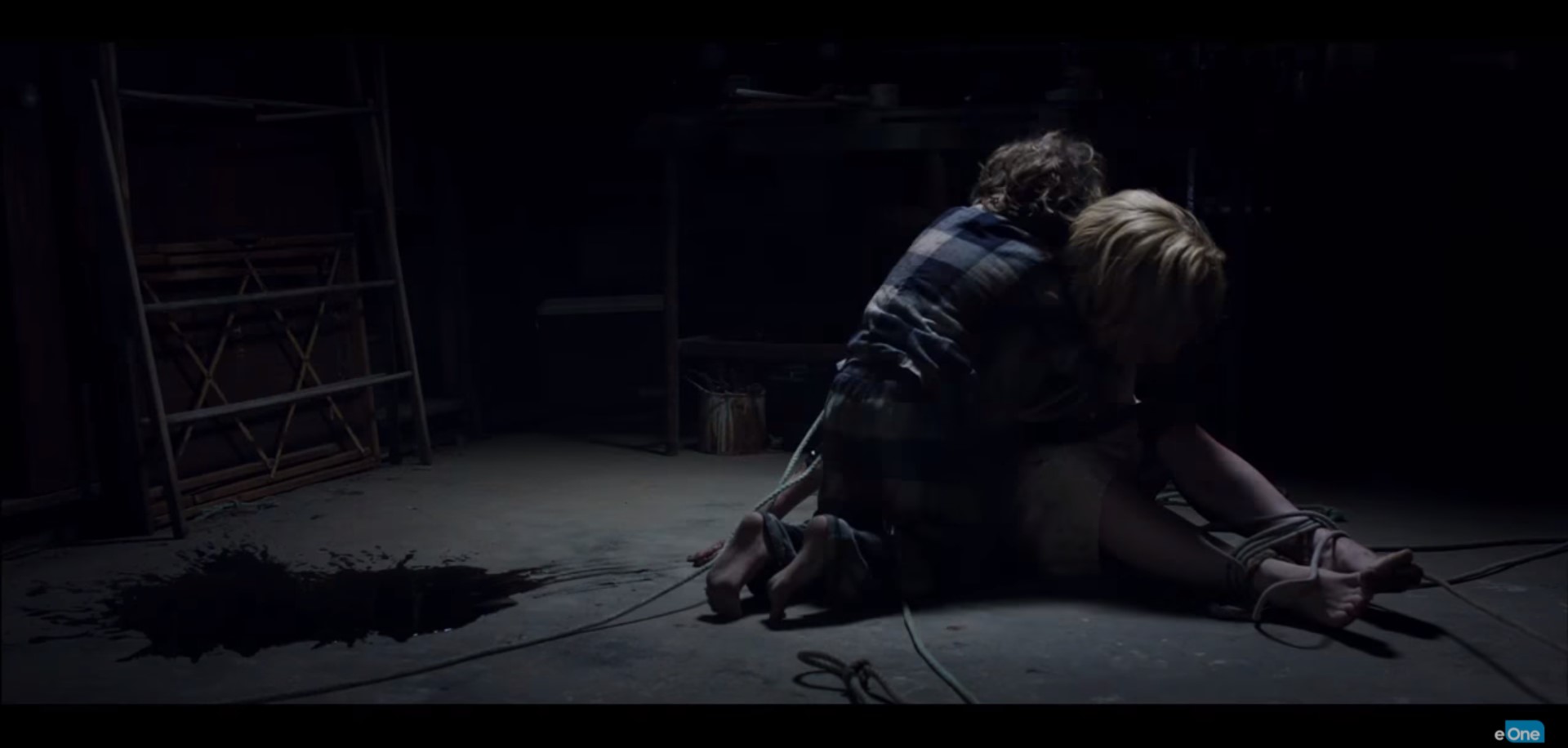
In the golden age of late-night television shows, Jack Delroy was one of the hottest late-night comedians and talk show hosts of the early 1970s, only to be beaten out by inches by rival talk show host Johnny Carson every year.  By 1977, Delroy’s viewers and popularity on his show Night Owls was slipping after multiple failed attempts to revive the show’s viewership figures and to hit the number one spot for syndicated station UBL during sweeps week year after year.  That years Halloween episode, during the sweeps week, would promise to be one to be remembered when Delroy brings a medium, a magician-turned-magician promulgator, a paranormal psychologist, and her adopted subject, a young girl who was the last known survival of a Satanic cult.  While the lineup entertains the live audience and those viewers at home throughout the night as well as being excellent for the ratings game, Halloween thins the layer between the real world and the supernatural world and an awry demon summoning goes horribly wrong, caught on the station’s camera, and with Jack Delroy and his guests caught in the middle.

If you’ve never had the pleasure of seeing “100 Bloody Acres,” the 2012, underrated Australian comedy-horror has a fine entertaining balance of black humor, gore, and suspense.  The directors behind the little-known venture, brothers Cameron and Colin Cairnes, may not have moved the needle with their debut feature in Australia, nor globally for that matter, but their latest, a 1970s, found footage, period piece surrounding demonic catastrophe on live television entitled “Late Night with the Devil,” carries with it significance and growth, personally and globally.  Having also written the script, the Cairnes recreate a time period when television use to capture grotesque and jarring images to shock the masses in full, unbridled color through the whimsical lens of a late-night television show.  In a production company opening that seemingly would never end, “Late Night with the Devil” is a conglomerate effort from IFC Films, Shudder, Image Nation Abu Dhabi, Spooky Pictures, Good Fiend Films, AGC Studios, VicScreen, and Future Pictures and produced by Adam White, Steven Schneider (“Trap”), John Mulloy (“Killing Ground”), Mat Govoni, Derek Dauchy (“Watcher”), and Roy Lee (“Barbarian”).

In order for “Late Night with the Devil” to work, the Carines brothers needed a principal lead to understand what it means to be a charismatic and funny host of 1970s late night television.  They found niche trait in “The Last Voyage of the Demeter” and James Gunn’s “Suicide Squad’s” David Dastmalchian who is an adamant man of horror himself from genre scripts, articles, and comic books to being a horror themed host himself as Dr. Fearless hosted by Dark Horse comics.  Dastmalchian plays a different sort of host for the film, a quick-wit, neat as a pin, and handsome Jack Delroy who has lofty goals of elevating his show to the number one spot in the domestic market.  Early success drives Delroy who will do anything to outscore late night king Johnny Carson but when his wife (Georgina Haig, “Road Train”) falls ill and dies early, the ratings battle slows for Delory’s show until his return to try and revive glory with kitschy content.  Halloween 1977, sweeps weeks, proves to be a chance for Delroy and his manager (Josh Quong Tart, “Little Monsters”) to spice things up with phantasmagoric guests in Christou (Fayssal Bazzi), an arrogant former magician turned cynic (Ian Bliss, “The Matrix Reloaded”), and a paranormal psychologist (Laura Gordon, “Saw V”) and her adopted subject Lilly, the debut feature-length film of Ingrid Torelli.  Aside from Chicago-born Dastmalchian, the rest of the Australian production is casted natively and do an impeccable vocal mimicry of an American accent while stunning and convincing in their respective roles, especially for Torelli whose piercing blue eyes, rounded check line, and gently raspy voice gives her an uneasy accompaniment to her off-putting innocence that works to the story’s advantage.  The cast rounds out with key principal Rhys Auteri playing Jack Delroy’s quirky sidekick host Gus McConnell whose story progression trajectory borders the voice of reason ironically enough and without McConnell and Auteri’s spot-on depiction of host announcer and comedic adjutant, there wouldn’t be steady fidelity for those who grew up on late night TV.

Late night TV essence is beautifully captured with mock production set of a 70s television studio, acquired era garbs, costumes, and accessories, and performances that provide a real flavor for programming of that time, and I would know as I would obsessively glue my attention to Johnny Carson reruns at a young age in the 1980s to early 90s.  The Cairnes and director of photography Matthew Temple deploy a studio reproduction of a three-way camera system to unfold the carnage; yet the forementioned behind-the-scenes moments in between live-air tapings feels forced, unnecessary, and artificial to the story with a lack of explanation to who and why these in-betweens are being done.  The black-and-white scenes vary in cameraperson positions from behind the coffee and snack table, behind fake floral, or just right in their face that steals from the live-tape realism.  What then ensues when the demonic light beams from one of the guest’s split open head does redirect attention to the psychokinesis death and destruction and this removes those behind-the-scenes fabrications with a replaced personal, interdimensional Hell for Delroy, shot in a more conventional style outside the confines of found footage under omnipotent means.  Cameron and Colin’s part-documentary, part-found footage, and part-conventional efforts prologue the story with an out, one that sets up connections to link violence on a single character lightning rod with maximum collateral damage, and that lead up of information almost seems trivial but works to the advantage on not only the character’s background but also generates a real spark of juicy, full-circle, nearly imperceptible greed that comes with a cost. 

Second Sight Films knows a good movie when they see one and quickly snatches up the rights to release “Late Night with the Devil” on a limited-edition, dual-format collector’s set.  The UK distributor’s 4K UHD and Standard Blu-ray combo box comes with an HVEC encoded, HDR with Dolby Vision 2160p, BD66  and an AVC encoded, 1080p high-definition, BD50, both formats decoding at a refresh rate around 24 frames per second and presented in the three aspect ratios to reproduce 70’s era television ratios with a 1.33:1 and European ratio 1.66:1 as well as seldomly switching to a 2.39:1 widescreen for more down the rabbit hole sequences.  Much like the variety of aspect ratios, an intentional ebb and flow design between color and black-and-white draws demarcating lines from the colorful live tapings to the monochromic backstage footage after the live cameras stop broadcasting.  To help lift the period piece, three-way studio cameras film within a broadcast simulated fuzzy aberration, interlacing or analog abnormalities, and color reduction used to flatten out the vibrancy some, just enough to be perceptible, until the transcendental camera takes hold and the color because richer, glossier in a moment of unclear clarity.  Textures are often lost in the fuzziness but emerge better out of the backstage footage and the eye-in-the-sky scenes.  The lossless English language DTS-HD Master Audio 5.1 adds an eclectic charge to the mostly grounded television broadcast, rooted by a single set nearly most of the duration.  In frame band elements and instrumentation adds that upbeat and jazzier score denoting late night introductions and commercial breaks.  Vocals are often muffled when viewing the show on a screen and in depth but becomes more robust and clearer when switched to camera angle; this goes hand-in-hand with the dialogue which is clear and acute when needed.  The demonic presence can come off as artificial but still manages to work within the construct.  The range is impressive for a single setting that sees audience’s reactions and loop tracks, the hustle and bustle of backstage when off air, spontaneous combustion, sickening wrangling of bodies, and, naturally of course, a blazing beam of light.  English subtitles are optionally available for the hearing impaired.  With Second Sight’s limited-edition contents, you know you’re getting your money’s worth in exclusives.  Both formats include bonus features, which is surprising considering the UHD takes up a lot of space.  These features include a new audio commentary by film critics Alexandra Heller-Nicholas and Josh Nelson, a new interview with The Cairnes brothers Bringing Their ‘A’ Game, an interview with actor Ian Bliss Mind if I Smoke?, an interview with actress Ingrid Torelli We’re Gonna Make a Horror Movie, an interview with actor Rhys Auteri Extremely Lucky, a video essay entitled Cult Hits by Second Sight content creating regular Zoë “Zobo With A Shotgun” Rose Smith, behind-the-scenes, the making-of the Night Owls brassy band music, the SXSW 2023 Q&A panel with star David Dastmalchian and directors Colin and Cameron Cairnes.  Limited-edition contents come with a rigid, black slipcase of minimalistic but effective artistic work of Jack Delroy and the devil’s pitchfork complete with pentagram on the backside.  Inside the slipcase is a tall, media jewel case to hold both discs on each side, each represented with a story character in front of black backdrop.  A 120-page color book provides new essays by Kat Hughes, James Rose, Rebecca Sayce, Graham Skipper, Juliann Stipids, and Emma Westwood, plus storyboards, costume designs, and a behind-the-scenes gallery.  Lastly, there are six 5 ½’ by 7” character collector cards.  Second Sight’s Blu-ray release is hard encoded region B playback only but the 4K is region free with both formats clocking in with a runtime of 93 minutes and are UK certified 15 for strong horror, violence, gore, and language.

Last Rites: Once again, Second Sight Films clearly has their eyes on the prize and contributes to dishing out the best possible transfers and exclusives when considering physical media. Their latest, “Late Night with the Devil,” is no longer the host but the hosted with a tricked out limited-edition set best watched from under the sheets late at night and thoroughly enjoyed within its special features after the film credits roll.

Check Out the Package on Second Sight’s Latest Limited Edition – “Late Night with the Devil!

The Itsy-Bitsy EVIL Crawled Down Your Throat and Ate Your Insides! “Sting” reviewed! (Well Go USA Entertainment / Blu-ray)

“Sting” Is Available for Pre-Order for a Blu-ray July 30th Release!

A rebellious, preteen girl wading through the stepfather muck of new family dynamics befriends a small spider she discovers while snooping around a neighbor’s room in her apartment building.  The unique, small spider can mimic her every vocal sound, quickly captivating the girl’s interest as she seeks solace from her upended life, and the spider is constantly hungry being sequestered to a jar as the girl’s newfound pet.  The more she feeds the spider she’s named Sting the bigger it grows in a short period of time.  During the night, Sting unconfines itself and roams the airducts, immobilizing apartment residing animals and people alike with a potent paralyzing bite, to then web-encase them in the ducts and feast upon her captured prizes while still alive.  When Sting threatens the girl’s family, she must put her angsty squabbles and feelings aside and take the fight to her once beloved pet that has now become a giant, flesh-eating, arachnid.

There hasn’t been this much fun in a giant spider movie since “Eight Legged Freaks!”  “Sting” is a 2024, Australian creature feature from “Wyrmwood” franchise director Kiah Roache-Turner who pours portions of his own experiences in life into the script, metamorphosing “Sting” from being not only just a monstrous amount of arachnophobia but also a personally purging of multitude of fears rolled up into one web-slinging scary movie.  The story is set inside a slum apartment building in New York City at the centric mercy of a Northeastern blizzard; however, “Sting” is actually shot on a production stage in Sydney, in the New South Wales province of Australia, that has taken on the doubling duty for The Big apple.  “Sting” is a coproduction between Align Films, Pictures in Paradise, and See Pictures with “Wyrmwood:  Road of the Dead’s” Michael Potin, Jaimie Hilton, and “Daybreakers’” Chris Brown producing.

The cast is comprised of mostly Australian actors modulating their voices to the American accent and doing a rather impeccable job at it with only a slight slip of a slower drawl.  The principal nuclear family opens in the middle of new dad throes, the building’s handyman Ethan (Ryan Corr, “Wolf Creek 2”) struggling to not only meet the demands on his slumlord boss / stern aunt by marriage named Gunter (Robyn Nevin, “The Matrix Reloaded”) but also navigate a path toward a better, more-to-his-liking job while also reaching through and connecting with his defiant stepdaughter Charlotte (Alyla Browne, “Furiosa:  A Mad Max Saga”).  Sting, the spider, runs through the apartment tenants that include a depressed and alcoholic widower (Silvia Colloca, “Van Helsing”), a monotone marine biology grad student (Danny Kim), and even a spirited exterminator (the only American in the film in Jermaine Fowler, “The Blackening”) who holsters a nail gun for NYC protection as well as vermin gas bombs on his utility belt.  All-in-all, diversity is rich if not slightly stereotyped, but Roache-Turner does a really good job at telling their backstories through the camera shots and without the need for much expositional dialogue, such as the unsaid death of the widower’s family but enough visuals and grief expressions do formulate what happened.  Components of backstory life heighten the tension, or even share awkward moments, collectively between neighbors and family members that lead to presumptions and to, eventually, an explosion of distrust and anger that makes the perfect screener to blind them what’s really creepily-crawlingly around.  Noni Hazlehurst and Penelope Mitchell (“Hellboy” ’19) conclude the casting as immigrant mother with Alzheimer’s and her first-generation daughter married to Ethan and trying to also navigate a precarious life out from under her slumlord aunt’s grasp.

“Sting” is one of those movies that reminds horror fans why the genre is great and beloved.  Titular spider named after the “Lord of the Ring’s” sword that injured Shelob, the giant spider, in “Return of the King” and a definitive “Alien” inspired film, complete with a viciously blood-thirsty extraterrestrial bug that suspends prey with webbing and a badass female heroine, “Sting” masters the giant spider effect by mostly using practical means.  That’s right, a giant spider puppet, manned by eight puppeteers, checks most of the computer-imagery at the door and enters with confidence from master of effects Sir Richard Taylor and his team from Wētā Workshop, who has help build effects for the recent “Mortal Kombat,” Ti West’s “MaXXXine” films, and has had a helping hand in the MCU.  Skulking on ceilings, stealthily silking down, locomoting with smooth, natural movements as the spider, approximately the size of large black Labrador, has manipulated properties to lurk and hunt to visually feed the need and scare the phobia right into your once comforted being.  The story’s struggling family and honesty-is-the-best-policy themes ground “Sting’s” rabid arachnida with relatable turmoils, especially from a parenting and child point of views and anyone who has had children or parents, like the majority of us do, will understand preteen problems.  Ultimately, Sting represents childish hidden secrets, something they can control of their own volition, and a rebellious cause that’s ironically not good for them, turns uncontrollable, and is an obvious problem, akin to doing drugs for an extended period.  Sting might not be a line of cocaine or a hypodermic needled filled with narcotic poison, but space spider does have toxicity that courses a paralyzing agent conveyed by a single bite. 

Spiders are the demonized sharks of the land and continue to string webs of fear inside audiences.  Well Go USA Entertainment Blu-ray of “Sting” proves spiders still secrete a damn good monster movie that’s one part “Aliens” and one part “Charlotte’s Web” with an AVC encoded, 1080p high-definition, BD25 release presented in a 1.85:1 aspect ratio.  For a Well GO USA product, “Sting” is one of their better compressed discs that I’ve seen, retaining unexpurgated blacks and fling out glistening, texture palpable details throughout, and there were a plenty of black and low-lit areas to what afflicts most of the label’s releases, a potentially image sidelining obstacle. Coloring is a tad soft but moderately sound when juxtaposed against an enormously, slick gun-metal toned spider. The English DTS-HD 5.1 Master Audio surround sound mix renders with strength, a solid, multi-channel testing sound design when the spider creates a clatter in the airducts for back, side, and front localization. Depth appropriate is fine as well as a wide range of audio action onomatopoeia. No issues or obstacles obstructing the clean and clear dialogue, layered in the forefront and level weaved into the action where needed. English subtitles, as well as English SDH and French subtitles, are optionally available. Typically, we do not usually receive in-depth special features from Well Go USA due in part of his long history with Eastern films where bonus content seems nearly nonexistent. For “Sting,” there’s a substantial behind-the-scenes featurette taking a long look on the Roache-Turner’s concept and inspiration, the Creation of the Monster sizes up how the special effects were completed by Sir Richard Taylor’s company, interviews with the cast and crew on making the film, and the theatrical trailer. Encased inside a conventional Blu-ray Amaray, Sting has, in my opinion, a very effective, genuinely creepy poster of a spider walking across the floor next to a body, graded in a blue hue and working deep with the shadow angle for potency. Well Go USA surprises again with the fun disc pressed art of a toon-ish illustration that doesn’t seemingly fit the rest of the package marketing but becomes clear from the storyline. An advert for the company’s other newer releases, “The Flying Swordsman,” “Your Lucky Day,” and “A Creature Was Stirring,” is adjacently tucked in. “Sting” has a well-paced 91-minute runtime, is region A encoded for playback, and is rated R for violent content, bloody images, and language.

Last Rites: No doubt about it. “Sting” is fang-tastic! A modern spidersploitation film that flexes hard, built upon the strong backs of some great pop culture and science-fiction horror moments as an endearing tribute.

“Sting” Is Available for Pre-Order for a Blu-ray July 30th Release!

Once You Let EVIL In, EVIL Will Never Let Go. “The Babadook” reviewed! (Second Sight Films / Blu-ray Screener)


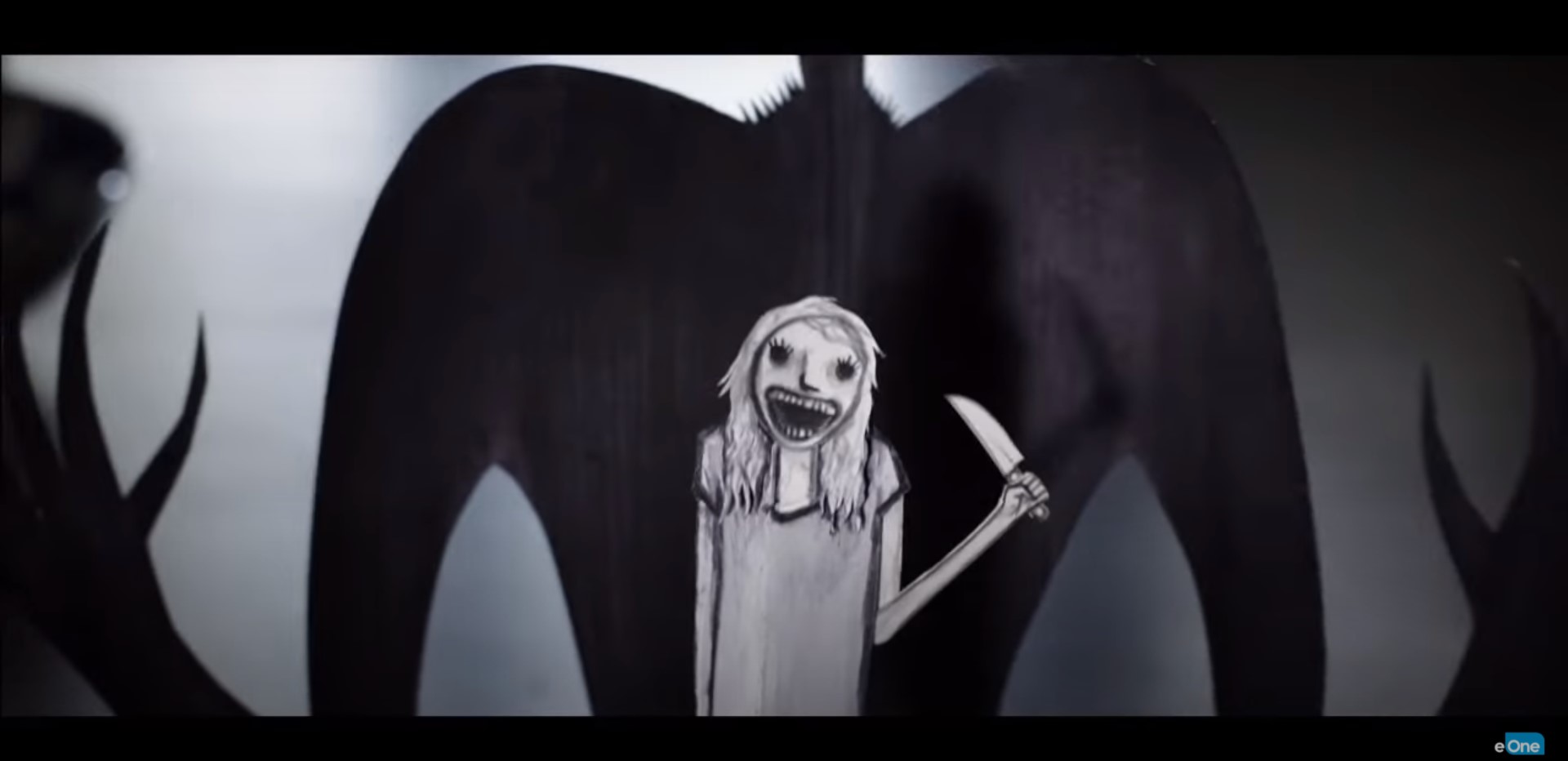
Stage set six years after a car accident involving the death of her husband, single mother Amelia and her difficult six-year-old son, Samuel, struggle to find a harmonious balance in their mother-son relationship.  Samuel’s outbursts and aggressive behaviors deflate the boy’s sometimes sweet nature that has oppressed Amelia into her wits end, alienating her from connecting with other people, even her own sister.  For days Amelia can’t sleep as the stress mounds and Samuel’s erratic temperament continues to worsen, especially when Samuel discovers a mysterious book from the shelf entitled Mister Babadook.  A book he can’t shake from his mind.  The frightening book, filled with graphic imagery and popups, tells of an ominous, dark figure eager to be let into their lives and when the Babadook presence lurks from the pages to reality, hiding in the darkest corners of their home and leeching on the strained anxiety and fear, Amelia and Samuel must rely on each other to wade out the Babadook’s horrible wretchedness only to realize that the way to stop from succumbing to the Babadook’s wrath is to face it head on. 

I can not believe that nearly 7 years has gone by and I have not once sat with a viewing of Jennifer Kent’s “The Babadook.”  Well, luckily for me, genre UK curator and distributor Second Sight Films is releasing the golden egg of limited edition 4K UHD/Bluray sets and was able to snag a screener for review!  The Australian film is an emotionally complex and enormously identifiable thriller that demonizes the post-death states of those dealing with loss and struggling to live on tasked with what’s typically a two person responsibility of mutual support and care.  Kent, who wrote and directed the film, expands upon her original 2005 short entitled “Monster,” by keeping the wrenching core that close in tighter and tighter on the mother and son while upping the visual and audio stylistic elements to make an immersive sympathetic undergo and not just an empathetic one.  “The Babadook” is a production of a conglomerate of companies, including Screen Australia, Causeway Films, Smoking Gun Productions, The South Australian Film Corporation, and Entertainment One and is produced by “Cargo’s” Kristina Ceyton and Jeff Harrison along with “The 13th House’s” Kristian Moliere.

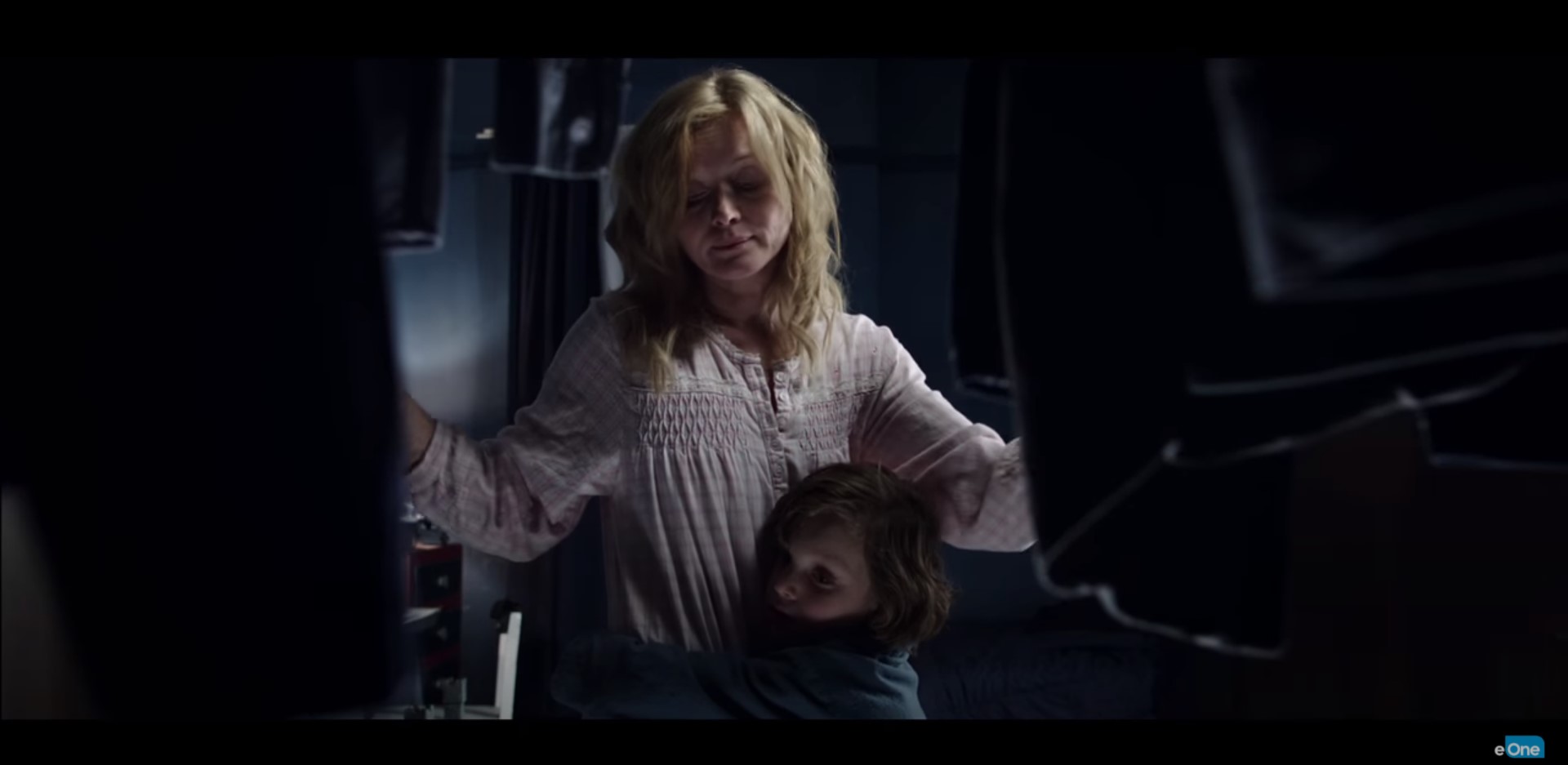
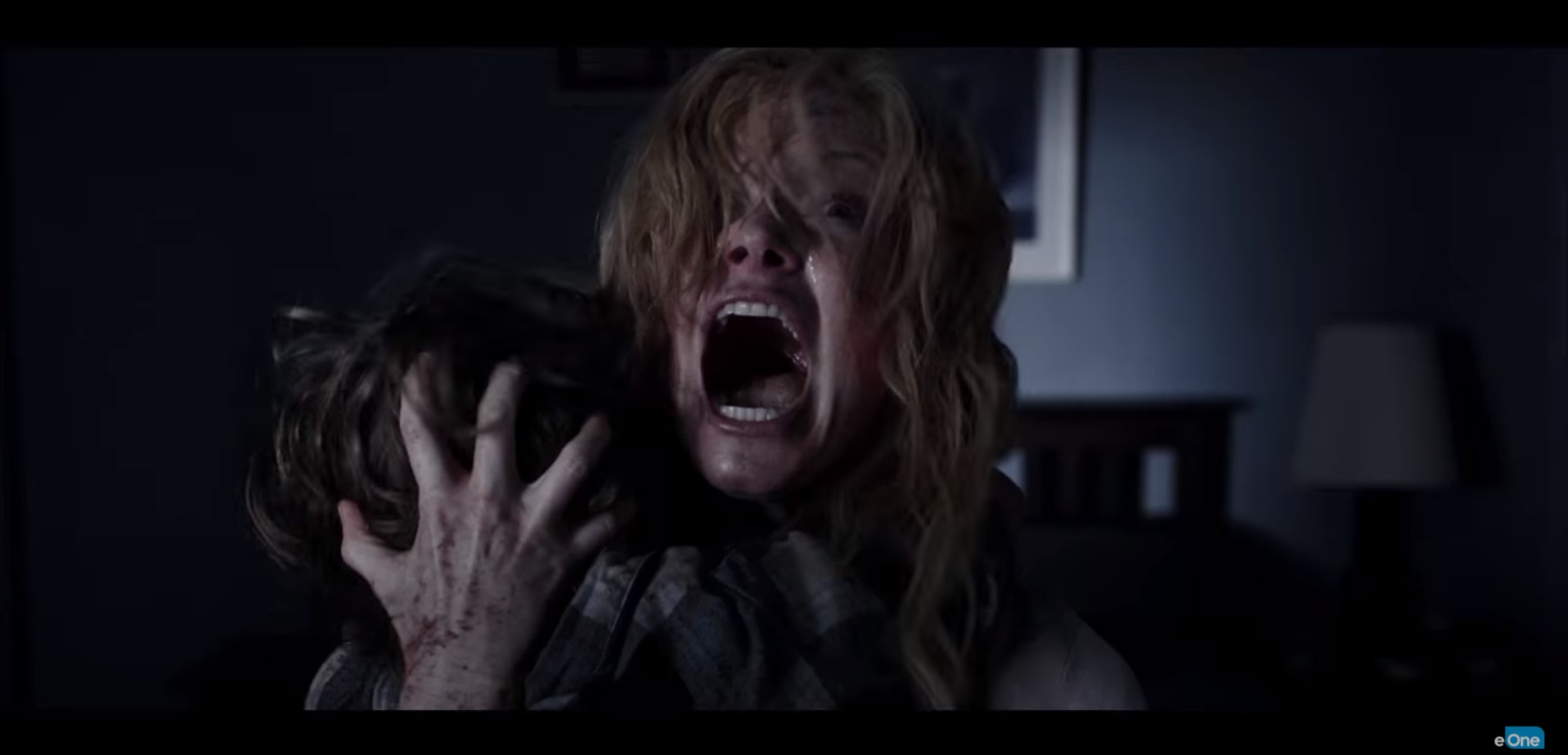
Tackling these performances of a suppressed grief-stricken mother on the edge of snapping and a young boy growing up without a father and innocently oblivious to his own autistic like behavioral issues come with layers upon layers of character depth and, in my firm opinion, Essie Davis and Noah Wiseman crush the roles with a heartbreaking dynamic.   “The Matrix Reloaded” and “Revolutions” star Davis has a tangible wearied performance of a single parent with no one to turn to for help as your unconditional love for her troubled son runs on fumes, dangerously low without an outlet for support, encouragement, or relief.  Samuel has more familiarity in the genre as a relatively new trope, an autistic child that becomes intertwined with a wicked presence that has popped up more recent films, such as Jacob Chase’s “Come Play” and Greg McLean’s “The Darkness,”  as researches learn more about autism and society has been able to authenticate the condition over the years.  The debut feature performance from young Noah Wiseman can get under-your-skin being a restless busy body, a screeching backseat thrasher, and a poke and prod child in constant need of attention, but Noah is able to switch right into a sweet natured young boy with lots of wonderment and love for his mother.  Noah’s inventive, creative, and has a knack for self-preservation when dealing with a looming evil hungry for his fearful submission but because Noah is different from other children, he’s society labeled “disadvantage” is actually advantage, a tool for survival, that keeps him fixated on what’s important.  Focally attuned to just Amelia and Samuel in the story, the film barely registers the supporting cast that rounds out with Hayley McElhinney, Daniel Henshall, Barbara West, and Tim Purcell as the obscured Babadook.

Right from the opening scene, director Jennifer Kent instills a visually stylish premise geared to layer Amelia’s troubled mindset with an etherealized environment nightmare of her husband’s tragic death followed with the reality-grounding energy drain of raising single-handedly a difficult child and the rest of Amelia’s social bubble imploding without a sense of compassion.  From Samuel’s school to her own sister, Amelia is bombarded with delineation of Samuel’s behavior, riddling her psyche with shot after shot of disparaging remarks compounded upon a lingering pain that goes all the way back to her husband’s death nearly seven years ago and to which she subconsciously assigns Samuel blame.  Culminating to a head on Samuel’s birthday, the exact same date of her husband’s death, is a flood of weary and breakdown overtaking Amelia’s last bit of hope for her child and for herself.  This manifests an internalized darkness protruding out into the exterior in the form of Mister Babadook, the embodiment of grief pent up and let loose, feeding off Amelia’s exhaustion and malevolently possessing her being to want to do the worst possible thing overly stressed and repressed parents can do – take out their pain on their children.  Kent masterfully crafts symbolizing grief as an atypical presence of our normal selves.  The sheer amount of dimly lit negative space for the Babadook lying in waiting goes not to waste as when you think something is there, perhaps the Babadook, nothing actually materializes from the ominous shadows, but, in the realm of the story’s reality, that sensation of feeling a presence in the room with you is beyond a tauten tangibility and Kent, playing with that construct, adds stomach knotting audible cues, a guttural discordance, that narrow the eyes, pull the covers over the head, and have you wait with bated breath.

Let the “The Babadook” in with Second Sight Films’ 3-disc limited edition dual formatted, region free 4K UHD and region B Blu-ray, release arriving in the UK on June 21st.  The 4K presentation, an upscaled 2160p, is mastered by the original post production facility and presented in a 10-bit HDR10.  Both 4K and Blu-ray have an aspect ratio of 2.35:1 widescreen.  Audio options include the an English language DTS-HD master audio 5.1 and an English LPCM 2.0, complete with perplexing creature roaring soundbites from the original Resident Evil game on PlayStation.  Since only a screener disc was provided for this review, I am unable to comment on the exact quality of the release’s audio and video outputs; however, the rigid slipcase, with artwork from Peter Diamond, sheaths an abundance of special features, including a new audio commentary by Alexandra Heller-Nicholas and Josh Nelson, “This is My House!” – an interview with lead actress Essie Davis working with the cast and crew as well as her impressions of the story, “The Sister:  Interview with Hayley McElhinney” who talks about her character’s uncompassionate sibling role, and interviews with producers Kristina Ceyton and Kristian Moliere, editor Simon Njoo, production designer Alex Homes, composer Jud Kurzel, and book illustrator of Mister Babadook Alexander Juhasz.  The release also comes with Jennifer Kent’s inspirational short film, “Monster,” the making-off “”They Call Him Mister Babadook,” featurette about production design and set location in “There’s No Place Like Home:  Creating the House,” special effects talk about the sole stabbing scene, segment on stunt work, “Illustrating Evil: Creating the Book” that was illustrated by Alexander Juhasz, and a 150-page hardback book with brand new essays, an achieved interview with the director, concept illustrations, and behind the scenes photos  and collectors’ art cards that were not included with the screener.   Broodingly topical and harrowingly acted with perfection, “The Babadook” is the epithet for silent deadly threats, squirrelled and suppressed away by innate survival instincts only to be a subsonic explosion when the unstable psyche’s flashing point is sparked.