Not a Plague of Rats Could Stop EVIL’s Obsession. “Nosferatu” reviewed! (Universal Films / Extended Cut Blu-ray)

Experience “Nosferatu” in 4K UHD or Blu-ray. Purchase Here!

Wisborg, Germany, 1838 – Thomas Hutter is a promising real estate apprentice appointed travel six weeks to the Carpathian Alps to settle on Wisborg real estate for the reclusive and mysterious Count Orlok.  Thomas Hutter is also a newlywed, married to the lovely Ellen Hutter whom together Thomas plans to solidify their proper social status with the wealth of this trip away from his wife despite her pleas for him to stay.  Upon meeting Count Orlok in his dark castle, Thomas is overcome by his host’s undying evil presence that confines him to the grounds while Orlok psychically holds spellbound Ellen’s mind to a fretful state.  When Thomas escapes, he makes it back home at the same time Orlok arrives by ship that brings a plague of rats to the city of Wiseborg as well as a nasty blood-loss disease affecting population.  As Thomas warns of Orlok’s intentions, discredited Prof. Albin Eberhart von Franz knowledge of the occult sees through the rat-plague and into the dark heart that has cast its shadow over the city and into Ellen Hutter’s soul.   

The acclaimed folkloric horror director of “The Witch” and “The Lighthouse” sinks his teeth into one of the most renowned classical villains of our time, a vampire known to most as Dracula and revised, at times, up to the Robert Eggers take on the timeless “Nosferatu” tale.  Eggers’s 2024 adaptation of Bram Stoker’s novel and the 1922 F.W. Murnau silent picture, “Nosferatu:  A Symphony of Horror,” written by Henrik Galeen, is also penned by the director, revamped to tell both classic narratives in a way that is his own and that’s reflective of his slow burn gothic dread style.  “Nosferatu” is a Focus Features presentation from the productions of Birch Hill Road Entertainment and Studio 8 as well as produced by Eggers alongside the industry esteemed Chris Columbus (“Home Alone,” “Harry Potter”) and daughter Eleanor Columbus under their Maiden Voyage Pictures co-founded company.

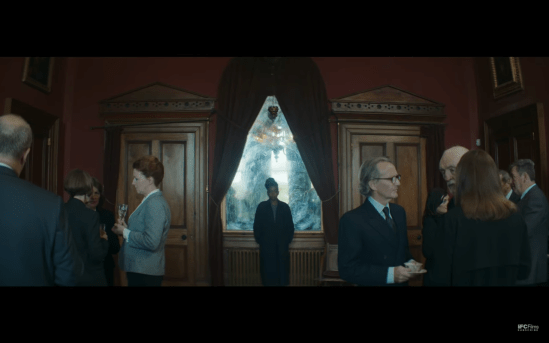
Stepping into the tall, slender, blood slurping role of the titular character, under a full-body prosthetic suit of what is essentially a rotting corpse with a wicked mustache, is Bill Skarsgård, the actor who is quickly rising to the top of heavy makeup and effects characters while making the star-studded Skarsgård name synonymous with horror in his breakout film playing the maniacal demon-clown Pennywise in the film remake adaptation of Stephen King’s “It.”  Skarsgård’s baby face is completely enveloped in the ancient Transylvania nobleman Count Orlok with a high-bridge nose, protruding and high cheekbones, a vertically elongated face, and a sparse hair straggling through presumably a latex mock of decaying skin.  Skarsgård also modulates his vocal chords to reach deep, resonating levels that gives Count Orlok an additional tier of terror.  Undoubtedly, Count Orlok is an omnipotent, powerfully entrenched presence brought to existence by Skarsgård and accentuated and elevated even further by Lily-Rose Depp in Orlok’s obsessive muse of Ellen Hutter.  Through choreographed body manipulation and control, the daughter of Johnny Depp has since put the gum-chewing, wise-cracking, convenient story clerk “Yoga Hosers” role behind to redefine herself as an austere period and physical role actress willing to go the extra mile for the story.  Nicholas Hoult (“Warm Bodies,” “Mad Max:  Fury Road”) updates his Dracula film resume with another after having just come off the heels of playing the titular character in “Renfield” to Nicholas Cage’s grotesquely campy version of the Prince of Darkness, but there’s nothing intentionally campy about this Stoker story nor his role as Thomas Hutter with first-hand experience of Count Orlok’s monstrous dysphoric plague in what would be, too, another physical, yet less so, role for Hoult as a concerned husband fighting for his wife.  Speaking of roles, or films, that come around again for certain actors, Willem Dafoe passes the torch of Count Orlok from his Max Schreck performance in “Shadow of a Vampire” and takes on the elder Professor von Franz, a once esteemed learned man of science and knowledge now a discredited scientific explorer of the occult brought in to see to Ellen Hutter’s feverish nightmares and hallucinations.  Dafoe’s just as spasmodic and expressive as ever to be a part of those knowledgeable opposition of the vampyr realm, giving prominence to the character Dafoe has bordering as a mad genius of sorts with eccentric behavior that never allows to be compassionate or otherwise emotionally driven, like a true scientist.  Principal cast rounds out with Aaron Taylor-Johnson (“Kickass”), Ralph Ineson (“The Witch”), Emma Corrin (“Deadpool & Wolverine”), and Simon McBurney (“The Conjuring 2”).

As much as Eggers wanted to make “Nosferatu” a scary film while staying to the themes of obsession and Stoker and Munrau’s core elements, the film only manages to scare up a couple of true moments of hold-your-breath terror with panning shots and swelling scores that composition a seat jumping jolt.  Like most of Egger’s previous work, a continuous course of dread, which the filmmaker produces well in droves, meanderingly streams through the narrative that slowly builds with each closing in step Count Orlok takes toward obtaining Ellen Hutter’s willing submission to him.  Between the 1922 and 2024, both films play the love-triangle card of a married couple’s happiness being compromised by a tall and dark outsider entrancing, enthralling the wife, diverting her loyalty by any means possible.  In this case, those means are to blackmail her by holding the city hostage to plague of rats and draining her of the loved ones surrounding her.  However, the genesis of Orlok’s obsession is built upon brittle sticks with a prologue that hamstrings a powerful, psychic ability unwittingly used by Ellen Hutter to awaken the ancient evil.  The whole origin of events feels threadlike and happenstance, perhaps to instill more mysterioso of the antediluvian universe on a smaller scale obsession story.   Aesthetically, “Nosferatu” follows the Robert Eggers’ cinematography trend of blacks, grays, and a reduction to dull of primary colors for a gloomy period piece of cold weathered melancholy and bleakness under the continuous collaboration camerawork eye of Jarin Blaschke, marking their fourth feature together that implements inventive, complicated shots to sell practicality as fantasy in an early 19th century European context.  Blaschke’s aesthetic style would not have worked without the makeup and prosthetics for Count Orlok as a decrepit evil nobleman juxtaposed against the period costuming and elevated higher by the massive set designs of creating the Wisborg city as well as all of the other sets built to scale on acres of movie lot land. 

Robert Eggers and “Nosferatu” is the match made in dark heaven to give that classical rebirth the kick in the Dracula cape it desperately needed for Universal.  The at-home, Blu-ray release brings the darkness into living room television sets and other media players with an AVC encoded, 1080p high-definition, BD50.  Eggers is also so fine and particular on detail, such as with all the production value listed above and the retro design company opening credits, “Nosferatu” is also presented in a European widescreen 1.66:1 aspect ratio used in antiquated times of the 60s to early 90s in Europe, to which this story is fictionally set.  The Universal Films release houses both the theatrical version and extended cut at their respective runtimes of 132 minutes and 136 minutes, which is pretty incredible being both versions compressed onto one disc and, in the same breadth, had me concerned for artefacts in what’s surely a beautifully dark and tenebrous veneered Egger feature.  However, low and behold, no signs of posterization or banding to speak of with a saturated void to keep the shadows menacing rather than murky or milky.  The overall grading is quite dark with a deep bluish hue that enriches the time piece as well as the gothic tones.  The unnatural density of color saturation leaves natural skin tones to sake of reality, but the details do emerge here and there when shadow play, mostly around the presence of Count Orlok, is abridged for quotidian life without the encroaching dread of supernatural omnipotence.  Both formats are encoded with lossy audio mixes, a quite of a bit of them actually, with an English Dolby Atmos, Spanish Dolby Digital Plus 7.1, a French Dolby Digital Plus 7.1, and, lastly, an English Dolby Virtual Speaker (DVS) 2.0.  The Dolby Atmos is tuned for a 7.1 configuration, emitting immersive and resonating sound to which “Nosferatu” laps up in luxury.  The most notable aspect of the entire design goes, without question, to Skarsgård voice modulation for Count Orlock, a deep, guttural, European-accented assertion of all-encompassing faculty highlighted in every scene when, even more so when Orlock is not physically in frame.  I like to think Robert Eggers is the Wes Anderson of horror when it comes to dialogue and entourage of ensemble casts and with dialogue range and depth that’s dynamic to flow with the ever-presence of physical change or to swell or diminish a moment.  Dialogue is also stable, clear, and without dodgy interference, the spatial environment diffuses and disperses nicely through side, back, and even upper channels in Atmos and, the illusion provided, in DVS, and LFE finds a proper level without overwhelming cataclysmic plagues, fever dreams, or Orlok’s dreadful lust.  Opted subtitles are available in English SDH, Spanish, and French.  Bonus content includes a feature length parallel commentary with writer-director Robert Eggers, a lengthy behind-the-scenes featurette with interviews from cast and crew, and deleted scenes that can be seen in the extended cut.  The Blu-ray, plus digital code, release comes with white-black and grayscale in between cardboard O-slip with the same Lily-Depp Rose’s face being caressed by Orlok’s sharp-nailed and decrepit hand image also as the cover art on the Amaray case.  Inside, you’ll find the digital code stage right while the disc is pressed like most of all of Universal’s home video Blu’s with a near translucent quality to them.  Theatrical cut is rated R for bloody/violent content, graphic nudity and some sexual content and the extended cut comes not rated.  Though not listed anywhere on the cover or disc, the Blu-ray is encoded with region A playback only.

Last Rites: Robert Eggers shoots his shot working his dream story under a major Hollywood studio providing him with a major Hollywood sized budget. “Nosferatu” is every bit of Eggers, carved out and etched to the gothic and folkloric perfection that has quickly skyrocketed his brief career and the eclectic cast stuns in their own right with otherworldly and creepy performances that revives ole’ Count Orlok back to from the celluloid dead.

Experience “Nosferatu” in 4K UHD or Blu-ray. Purchase Here!

A Troubled Family’s EVIL Dynamic. “Kindred” reviewed! (IFC Midnight / Digital Screener)

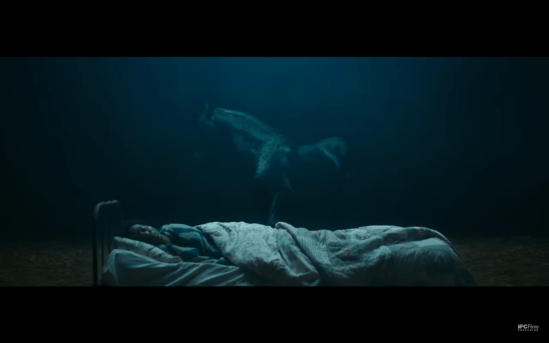
When Ben and Charlotte declare a decision to move from the English countryside to Australia, Ben’s ardent mother, Margaret, refuses to let her son move away from his family and responsibility in overseeing the massive manor property that’s been in his family for generations.  Despite friction between mother and son, even after the unsuspected announcement of Charlotte with child, the young couple are eager to start their new lives abroad.  An accident causes the sudden death of Ben that takes a psychological toll on Charlotte.  Margaret, and Ben’s aim-to-please brother-in-law, abruptly move Charlotte into the grand manor home as she floats through grief, but their overwhelming generosity turns into obsession with her every move, corralling her to do what’s best for the unborn child with undue stress based off her own family’s mental history.  As Charlotte resists more against the family’s insistence she stay, the stronger their grip on her tightens. 

Sometimes, meeting your partner’s family can be uncomfortably standoffish.  In Joe Marcantonio’s psychological thriller “Kindred,” reticent of personal gain and admission of truth becomes a thick, abrasive wall of tension that crimps the fringes of family relations and mental instability.  The writer-director’s debut feature film hailing from the United Kingdom, releasing this November 6th, tampers with the control over one’s own body through the traumatized perception of a pregnant woman with predispositions on having children in the first place and on her dead boyfriend’s unusual family, coursing with unsettling mental and emotional warfare that’s already tipped in one side’s favor.  The 101 minute, English-made thriller is a co-production of Reiver Pictures and Serotonin Films in association with the makers of “Pride, Prejudice, and Zombies,” Phil Hunt and Tom Harberd of Head Gear Films and Compton and Elliot Ross of UK based Kreo Films.

The players in this tumbling mix of disturbing cat and mouse antics are more or less confined to a skewed variation of an immediate family though none of characters are exactly blood relatives.  Neither Charlotte, Margaret, or Thomas share an smidgen of the same DNA, but have become entangled, in one way or another, into Margaret’s hampering incubator that shelter’s their distinct and varied, sometimes uncooperative, personalities.  Margaret is beholden to memory to her late son, Ben, and exposing Margaret’s egotistic manipulations so wonderfully subtle and true is Fiona Shaw of the “Harry Potter” saga in a role that isn’t so dissimilar to the blunt nastiness of her Aunt Petunia character, but renders a more fierce, enshrouding malice that’s less caricature.  The Irish born Shaw and “DunKirk’s” Jack Lowdon dance a beguiling routine of mother and son as Lowdon plays Margaret’s step-son, Thomas.  Thomas tends to Margaret’s every snippy whim, being a charming and gleaming host, and an overall nice guy, but deep in the recesses of our minds we know something is just not right with Thomas’s polished veneer that soon will explode with true intentions out of dormancy.  Yet, things might not be okay with our seeming heroine either in Charlotte.  Charlotte is very weary of Margaret and Thomas who indirectly, through her eyes, hold hostage the mother-to-be from fleeing the family now that the connection is broken with Ben’s death.  In her debut principle feature film performance, Tamara Lawrance’s Charlotte scribbles outside the lines that smudges the contours of perception reality, adding a complexity component to her character that may or may not being suffering from parental depression commingled with external stress that treats Charlotte like a child in herself.  Chloe Pirrie, Anton Lesser (“Game of Thrones”), and Edward Holcroft (“Vampire Academy”) round out “Kindred’s” strong supporting cast.

Marcantonio’s “Kindred” splits the focal point of isolating tension, dividing the source into two distinct paths from the point of a view of the self-protective besieged.  In one hand, the pregnant and mentally vulnerable Charlotte experiences apprehension of being forcibly, and manipulatively, instructed by Margaret and Thomas to do what’s best for the baby…Ben’s baby.  Having never seen eye-to-eye or felt comfortable around Ben’s instable mother and peculiar brother-in-law, Charlotte has no Ben as a buffer against their coarse personas, overpowering her as a tag-team of self-interest, but most of everything Charlotte experiences is filtered by past judgements about them.  Alternatively, Margaret, Thomas, and even her boyfriend Ben, note directly to Charlotte her mother’s history with postpartum depression.  The undercurrent theory that it produces brings an under the table perception of how audiences will then try to solve Charlotte’s predicamental puzzle.  On the surface level, Charlotte is being held captive and drugged by her late boyfriend’s estranged family; obscurely, Charlotte’s terror is manifested by a loathed family lineage of mental illness and when your observations goes in one direction per the mind’s pre-wired setup, but all the evidence points to the contradiction, audiences will begin to empathize more closely to the harrowing experiences, through childlike control, of an unstable mind on the brink of a break.  Marcantionio very clearly makes things unclear of an in-between reality that challenges not only audiences, but also Charlotte, on what’s real and not real of the mind’s emphasis.  However, not everything is teed up perfectly as some of the abstract visuals, i.e. Charlotte’s dreams of ravens and horses, fall more into the rigors of psychological concepts that become lost in the affect of either pathway toward what could be considered a Schrodinger’s Cat finale as Charlotte, stuck inside a manor house that’s symbolically a box, could be both sane and insane.


Family can be a finicky thing and “Kindred” is a fastidious look at the instability of family and mental illness which can be, in filmmaker Joe Marcantonio’s eye, interchangeable.  Setting up shop before families get together for the impending holiday season, IFC Midnight will release “Kindred” in select theaters, on digital platforms, and on VOD November 6th.  In regards to the look of the film, director of photography, Carlos Catalan, hones in on a series of medium to medium-closeup shots while grasping very little toward widescreen shots, especially being shot mostly in a grand manor house in Scotland.  When Catalan has symmetrical framing, the allusion is gesturing grand with loneliness, but the cinematographer rarely has the frame centered, often creating an unnerving amount of space in the depth when juxtaposed with an uncentered character in the closeup all the while in natural light to not feign cynicism through use of color or filter. The only time filters are used are in the purple hued airy dream sequences with the raven and horses that become a metaphorical motif of Charlotte’s embattled dreams. The score is composed by a UK collaboration of multi-instrumental composers in Natalie Holt and Jack Halama. Holt’s harsh violin chords with Halama’s drama-fueling classical style produced hints of Mark Korven’s “The Witch” in similar tones, but explode with targeted dissensions that spur equally emotional dissensions amongst the characters. There were no bonus features included with the digital screener nor were there any bonus scenes during or after the credits. “Kindred” is relationally disjointing, disturbingly psychological, and textbook taut with tension as one of the best familiar thrillers to come out of the United Kingdom in the last quarter of the year.

Shady Organizations Flush Out EVIL in “The Witch: Subversion” reviewed! (Well Go USA Entertainment / Blu-ray)


High school teenager Ko Ja-yoon lives with her adopted parents on a struggling cow farm. Ja-yoon‘s amnesia struggles with recollecting her past, she’s plagued with severe headaches, and suffers to retain any strength in her body. When her best friend persuades her to enter a popular singing contest, Ja-yoon’s nationally televisions performance triggers a covert agency to seek her out, dispatching Korean-American hitmen with supernatural abilities and local hit squad agents to track her down to either capture her alive or kill her. As the devious factions close in on her, placing her family in great danger, her past begins to unravel, revealing a troubling truth regarding who she really is and what she’s capable of effectuating.

Not to be confused as a sequel to Robert Eggers’ critically acclaimed, Americana gothic folklore tale “The Witch” from 2016, Park Hoon-jung’s “The Witch: Part 1 – The Subversion” diverges itself as the tenebrous action-mystery of a two-part film series from South Korea. Entitled “Manyeo” in the native Korean tongue, “The Witch” refers to a moniker bestowed upon the agency acquired children provided with genetically enhanced brains to open up their full, existential potential of God-like violence shrouded in the murky shadows and cutthroat conspiracies. “I Saw The Devil” writer Park also pens the script for his produced 2018 film that resupplies the darkness of a detective noir into another fantasy thriller furnished with a bloody veneer of a R-rated superhero movie. Gold Moon Film and A Peppermint and Company co-produce the Warner Bros. Pictures distributed picture.

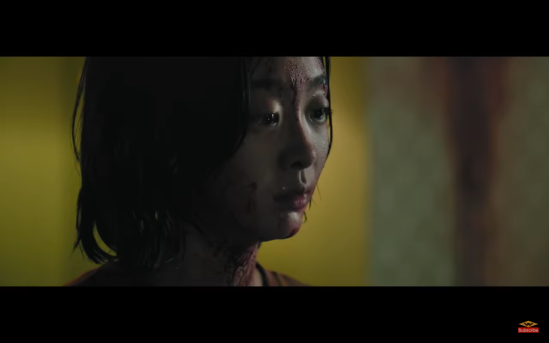
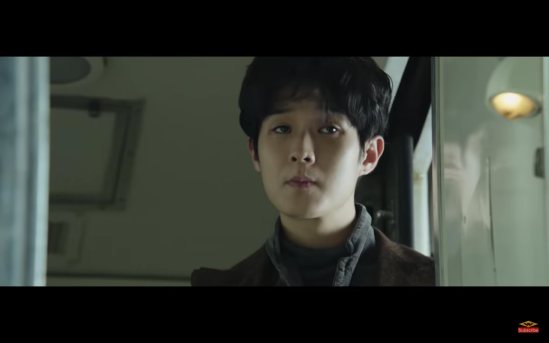
Starring as the titular character, Koo Ja-yoon as The Witch, is South Korean actress Kim Da-mi making her introductory debut that’s considerably demanding for the early 20’s actress to tackle with little-to-none prior experience in “Avengers” level action, but that’s where the subversion sets in when Kim undermines with a body frail tool performance, throwing pity bait to sucker in the bigger fish, and then opening her ranges to play on the opposite side of the spectrum in a slim, but killer, authoritative absolute suit. Ja-yoon’s American counterparts are equally as intriguing with Korean-Canadian actor, Choi Woo-shik (“Train to Busan”) leading the pack of vicious and powerful mercenaries. Choi’s monstrous 2019 lineup of award-winning (“Parasite”) and action-packed (“The Divine Fury“) films set “The Witch” up for inherent success in a now powerful and versatile recognized Korean film market. Upstaging has a strong aurora inside Korean filmmaking as every scene invokes an intense stare, an action of grandeur, and dialogue – every actor has lots and lots of dialogue – and so, bold performances stand out from the remaining cast list who includes Jo Min-soo (“The Cursed“) as the prideful genetics doctor, K-pop’s 2Eyes band member Daeun as the cut from the same cloth American-Korean super villain, Go Min-se as Ja-yoon’s bestie, and Park Hee-soon as the curious Mr. Choi with a vendetta against all who are enhanced.

“The Witch: Part 1 – Subversion” is over two hours of grand chess and superhuman stratagem culminating at a writ large do-or-die finale. Even with a 125 minute runtime, Park Hoon-jung has to inertly cram a whole lot of story into a seemingly abundance and bountiful timeframe. As the staggering conspicuous tension builds and characters evolve into an elucidated light, scenes start stepping into confounding placement that bedevil slightly the storyline. If you’re able to piecemeal together the puzzle and able to follow casually, Park is able to eventually reel captivation back from surmountable follies of structure with flashbacks and, in this case, a generous amount of exposition to get viewers on track once again. The prodigious action rivals the Marvel movies of today with complimenting cannonade and psychokinesis while ushering in a heroine tapped from same vein as “Hannah” or “Lucy” into the Korean moving pictures.

Warner Bros Pictures and Well Go USA Entertainment entertain us with GMO action in “The Witch: Part 1 – Subversion” on a single format Blu-ray home video release presented in a widescreen, 16:9 aspect ratio, on a region A, BD25 disc. What I really like about Well Go USA releases are the consistencies of arrangements. The brightly lit, natural landscapes are vivid, floaty, and serene as if all of life is an idyllic safe haven for visual leisure. The black, almost gun metal black, of the nighttime segments render a more sinister and unfavorable approach to arms and danger likely ahead. Some posterization occurs during these moments, but little-to-no ill effect to the scenes themselves. Some of the chunkiness to the visual effects stem from combative action of the genetically altered, fighting against the slower normals with their high caliber, fully-automatic rifles and, also, against themselves, but these battles are interspersed to not violate audiences corneas to beyond the max extent of the natural law. The Korean language DTS-HD Master Audio mix offers a wide range of varied leveled action, from the mundane ambience of rural and urban life to the precision of activity during the more upbeat commotion of fight sequences and gunplay in tighter quarters. Dialogue placement renders nicely and is prominent while the option English subtitles captures beautifully with well synced and timed captioning. Bonus features three trailers which are two international trailers and one U.S. trailer. If Part 2 is anything like “Subversion,” the game of deceit will continue to unfold surprises one after another and beguile with the mysteries surrounding “The Witch’s” genetically invasive backstory that’s inherently pervading throughout, leaving an agape of wonderment, intrigue, and thrills.

Currently on Sale! Buy “The Witch: Part 1 – Subversion” on Blu-ray!

When Alone, EVIL Will Be Your Company. “The Wind” reviewed!


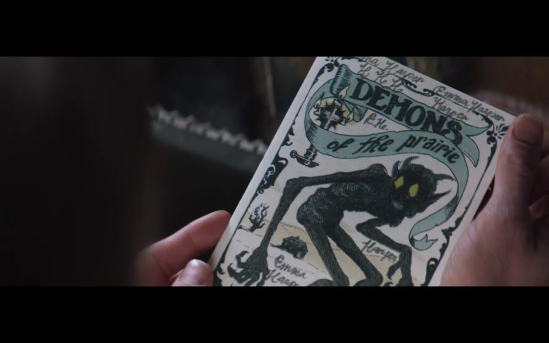
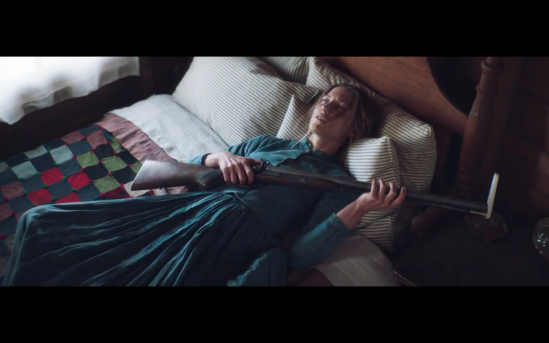
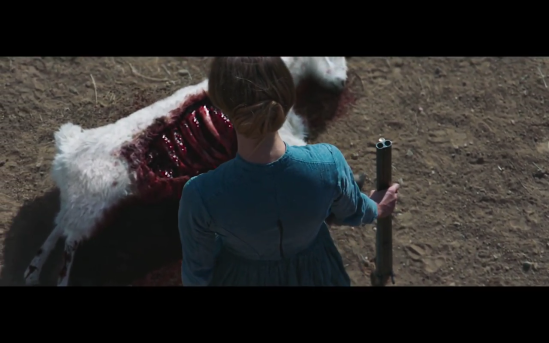
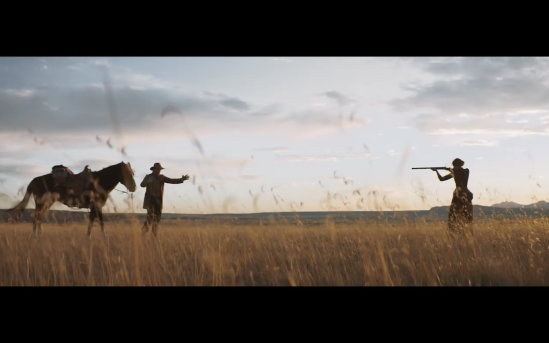
Living at the edge of the 19th century frontier, husband and wife, Isaac and Lizzy, live in complete seclusion as far as the eye can see until another couple, Gideon and Emma, settle a mile away in a nearby cabin. Unused to the punishing conditions the frontier might yield, the St. Louis bred Gideon and Emma find living without the comforts of urban life challenging and rely on Isaac and Lizzy’s strength and experience for survival. However, the frontier’s harsh reality produces a malevolent presence that flows through the prairie, stalking and toying with the settlers, only revealing itself to Lizzy while the others act if nothing is going on or just acting strange. The sudden and violent death of Emma and her unborn child send Gideon and Isaac on a two-day ride to nearby town, leaving Lizzy to face the isolated terror alone with only a double barrel shotgun that never leaves her side, but in her strife, Lizzy learns more about her newfound neighbors and even unearths some troubling truth about her husband that even further segregates Lizzy from the rest of reality.

If there wasn’t one more single thing to demonize, director Emma Tammi conjures up “The Wind” to mystify the western frontier. As Tammi’s debut directorial, penned by short film screenwriter Teresa Sutherland, the supernatural film’s dubbing could be a rendering of a long lost Stephen King working title, but all corny jokes aside, “The Wind” really could from the inner quailing of Stephen King’s horror show mindset. The film’s produced by Adam Hendricks and Greg Gilreath under their U.S. label, Divide/Conquer, and released in 2018. The same company that delivered the horror anthology sequel “V/H/S: Viral,” Isa Mezzei’s sleeper thriller “CAM,” and the upcoming, second remake of “Black Christmas” with Imogen Poots and Cary Elwes. With a premise dropped right into the fear of the unknown itself and with some powerful production support, “The Wind” should have soared as an unvarnished spook show come hell or high noon, but the jury is hung waiting on the executioners ultimate verdict regarding Tammi’s freshman film.

Five actors make up all the cast of “The Wind,” beginning with the solemn opening night scene with frontier men, Isaac Macklin (Ashley Zukerman of “Fear the Walking Dead”) and Gideon Harper (Dylan McTee of “Midnighters”), waiting patiently outside a cabin door until Isaac’s wife, Lizzy (Caitlin Gerard of “Insidious: The Last Key”) walks out, supposed baby in hand, and covered in blood. The subtle, yet chilling scene sets the movie from the get-go, sparking already a mystery at hand and coveting most of the focused cast. The two characters unannounced at the beginning, swim in and out of flashbacks and toward the progression of Lizzy’s embattlement with “The Wind.” That’s not to say that these characters are any less favorable to the story as “Slender Man’s” Julia Goldani Telles shepherds a vivid description of subtle lust and extreme instability that rocks a strong and self-reliant Lizzy living priorly a stale reality. There’s also the introduction of a wandering and warm pastor that leads to chilling reveal questioning any kind second guesses there might be about Lizzy. All thanks to veteran television actor, Miles Anderson.

“The Wind’s” non-linear narrative teases two courses, one working forward and the other backwards to a catalytic moment that becomes motivational for majority of characters in the prior days and the beginning of the end for one in particular. Though the latter centralizes around Lizzy’s flashbacks and encounters with the evil spectral wind, her descent into madness conjures more violently through the discovery; it’s as if her current state of mind has been stirred, whirled, whipped, tumbled, and agitated from the past that keeps lurking forward into her mind’s eye. Tammi pristinely conveys a subtle message of undertones from the past and present that chip away at Lizzy’s forsaken reality, leaving those around her delicately exposed to her untreated alarms to the nighttime wind of a menacing nature. Teresa Sutherland’s script to story is illuminate tenfold by the wealth in production that recreates the rustic cabins and the callously formed hardships of the western frontier and if you combine that with the talents of cast, “The Wind” will undoubtedly blow you away.

Umbrella Entertainment delivers Emma Tammi’s “The Wind” into the Australian DVD home video market and presented in the original aspect ratio, a widescreen 2.35:1, that develops a hearty American untrodden landscape for the devil to dance in the wind. Cinematographer Lyn Moncrief’s coloring is a bit warm and bland to establish a western movie feel and really had notes of a Robert Eggers (“The Witch”) style in filmmaking with slow churn long shots and a minimalistic mise-en-scene, especially for a similar pseudo-period piece. Eggers invocation solidified itself more so in the Ben Lovett’s crass and cacophony of an instrumental score that adds more to the creepiness factor while remaining relatively framed in the time era. The Umbrella Entertainment’s release goes right into the feature without a static menu so there are no bonus features to dive into. “The Wind” might feel like an unfinished piece of cinematic literature, but remains still a damn fine thriller that seeps ice cold chills into the bones and ponders the effects of loneliness and trauma that’s nearly puts this film into the woman versus nature category, a premise that will be hopefully concluded by a upcoming book adaptation.

A Plethura of Evil! “It Lives” review!


In the year 2024, the world’s superpowers are on the edge of nuclear warfare as Earth’s resources are dwindling at a rapid pace. A halt in knife edge conflict and the construction of temporary peace, known as the RAND Treaty, allowed nations to build underground, sustainable bunkers for a restarter population. Plethura 04, one of these bunkers, is being monitored, maintained, and prepped by Roy, an labeled “undertaker” scientist, whose setting the stage for a group of survivors known as Priority One, but when the sudden fallout alarm blares, Plethura is locked down early, trapping Roy alone in a cavernous and cold bunker alone with the exception of an A.I. program that Roy named Arthur. As time passes, Roy sanity comes into question; so much so, that Roy believes that Plethura might just be a drill simulation. Also, is there really something in the bunker with him? Is Arthur trying to confuse him? Questions, isolation, and terror seep into Roy’s mind, perhaps, or perhaps not, manifesting a lurking presence.

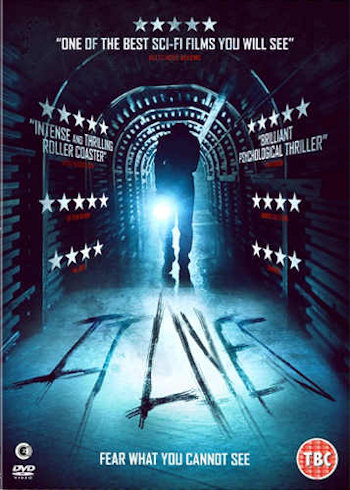
“Its Alive,” also known as “Twenty Twenty-Four” is the intense psychological thriller from the United Kingdom. Written and directed by first timer Richard Mundy, “It Lives” is helmed in the same vein as “Buried” with a solo performer in an isolation crisis. Produced by Ripsaw Pictures and Entity Film Company, the feature has some production power behind it that makes the indie film seem to have a fluffier value than its actual worth and garnishes a cherished and chilling atmospheric cinematography by Nick Barker. A real sense of a cold cleanroom can be just as frightening as a filthy slaughterhouse and the Mundy-Barker team hone in on that very concept, performing a bariatric surgery on the heaviness and the plentiful of the up top, outside world and reducing it to a few corridors, a couple of living chambers, and beast-like belly of a generator room. The filmmakers fabricate isolation and the perception of isolation well with a tremendous set up of the scenario: the preparation and the sudden, unexpected calamity of a nuclear fallout.

Actor Andrew Kinsler has the toughest job in the world, acting without feeding off the energy and the lines of other fellow actors. Kinsler goes at the role alone as Roy, a scientist prepping Plethura 04 for the arrival of Priority One survivors and knowing that he will die when he trades spaces with the group as he has to go topside. That’s notion, of having to sacrifice yourself for strangers, is a deep concept. Its easier to sacrifice oneself for the sake of those you love and care for, but complete strangers is pure mental mayhem, especially when all the work of getting the bunker ready was done by Roy. Kinsler keeps up the part of coping with his mortality, accepting it, and then being crushed by it when the world ends at the blink of an eye. Questioning everything as he immerses deeper into isolation, Kinsler relies more on the artificial intelligence to be a companion, despite seemingly being annoyed by the very lack its thirst for human complexities.

Many popcorn viewers don’t care for an open book ending films where the personal interpretation opens up a vast range of theories. “It Lives” is one of those films. Most certainly a disturbing psychological thriller, the story perpetually has Roy second guessing every anomaly that spooks him, even to the extend of thinking a computer program has infiltrated his subconscious with trickery and confusion tactics. Then, the ending smacks you right in the face and then smacks you again with a three finale questions: Was it a dream? Was it madness? Or was it all real? Christopher Nolan similarly put the fate of “Inception’s” Cobb into the hands of audiences when he spins a toy top to see if he was still in inception or if he was in reality. If continuously in motion, that would signify Cobb’s in a fantasy world, but Cobb’s spin is cut short with a cut to black, begging the answer of whether his happy ending was true or a inceptive pipe dream. Roy’s scenario is a lot darker and, if not, deeper that’s challenged by an internal struggle of self-preservation. Has Roy become a fixture of the cleanroom aspect? Has he become a cold figment of accepting his fate and has suppressed his emotion about it to the boiling point that his subconscious is fighting for his own survival? “It Lives” is an exceptionally juicy psychological film worth exploring.

Second Sight presents “It Lives” onto DVD home video this July 30th! Since the screener was a DVD-R, a full assessment of the audio and video aspects will not be covered. There were also no bonus material on the disc. What I can say is that Harry Kirby’s score is the utmost jarring; reminds me of Mark Korven’s unsettling and unique unmelodious score in “The Witch.” As part sci-fi and part horror, the surface level narrative is sheer terror and fear. Below surface, the wicked and frightful stir an embattling vortex of arguments in the grossest of grotesque forms, aka a complete mind destabilization. “It Lives” has indie roots that spread wide and fierce, shredding through temporal lobes like soft butter and delivering one hell of a terrifying psychological horror.