Dinner Parties and the Special Guest is EVIL. “Climate of the Hunter” reviewed! (Dark Star Pictures / Blu-ray)

MIckey Reece’s “Climate of the Hunter” Now Available on Amazon.com

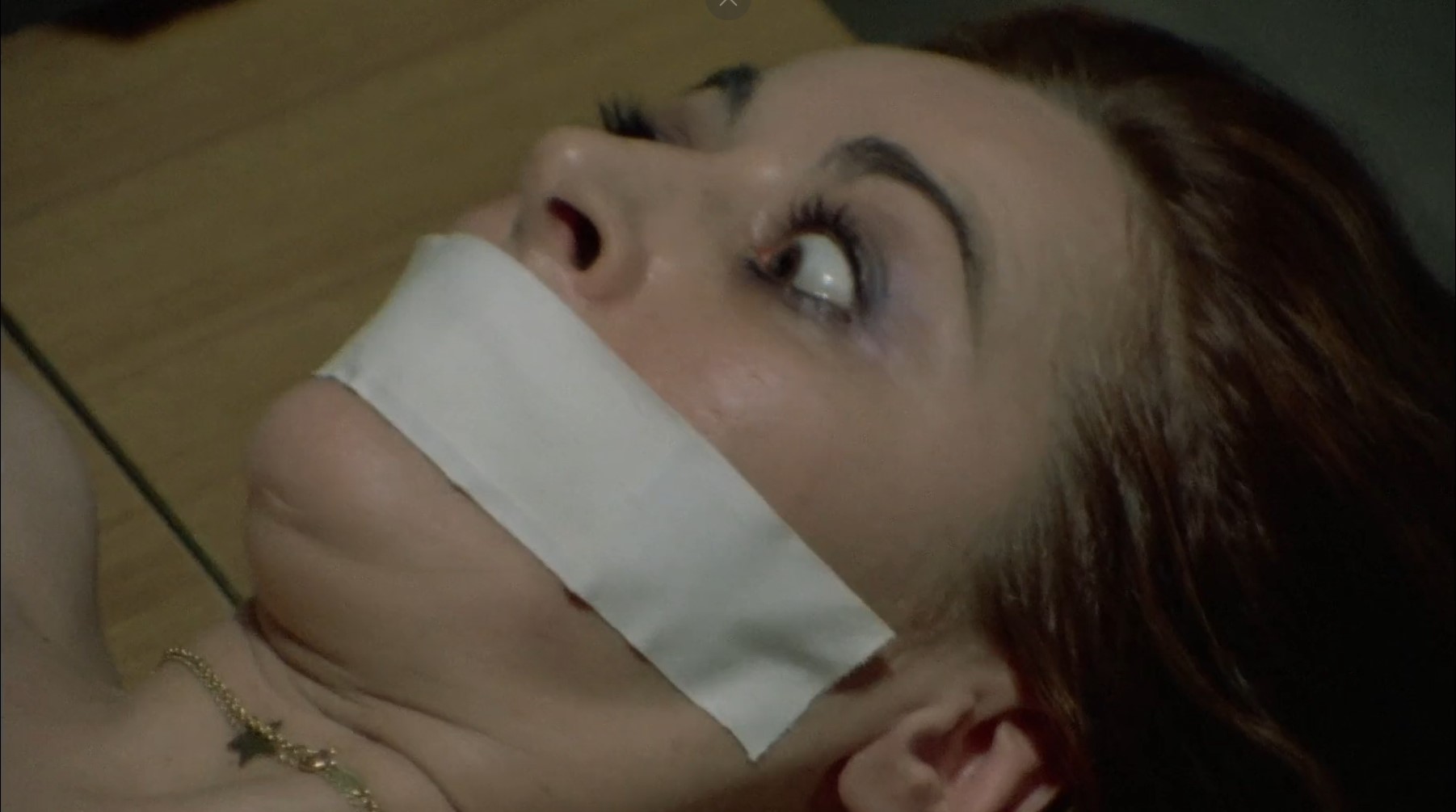
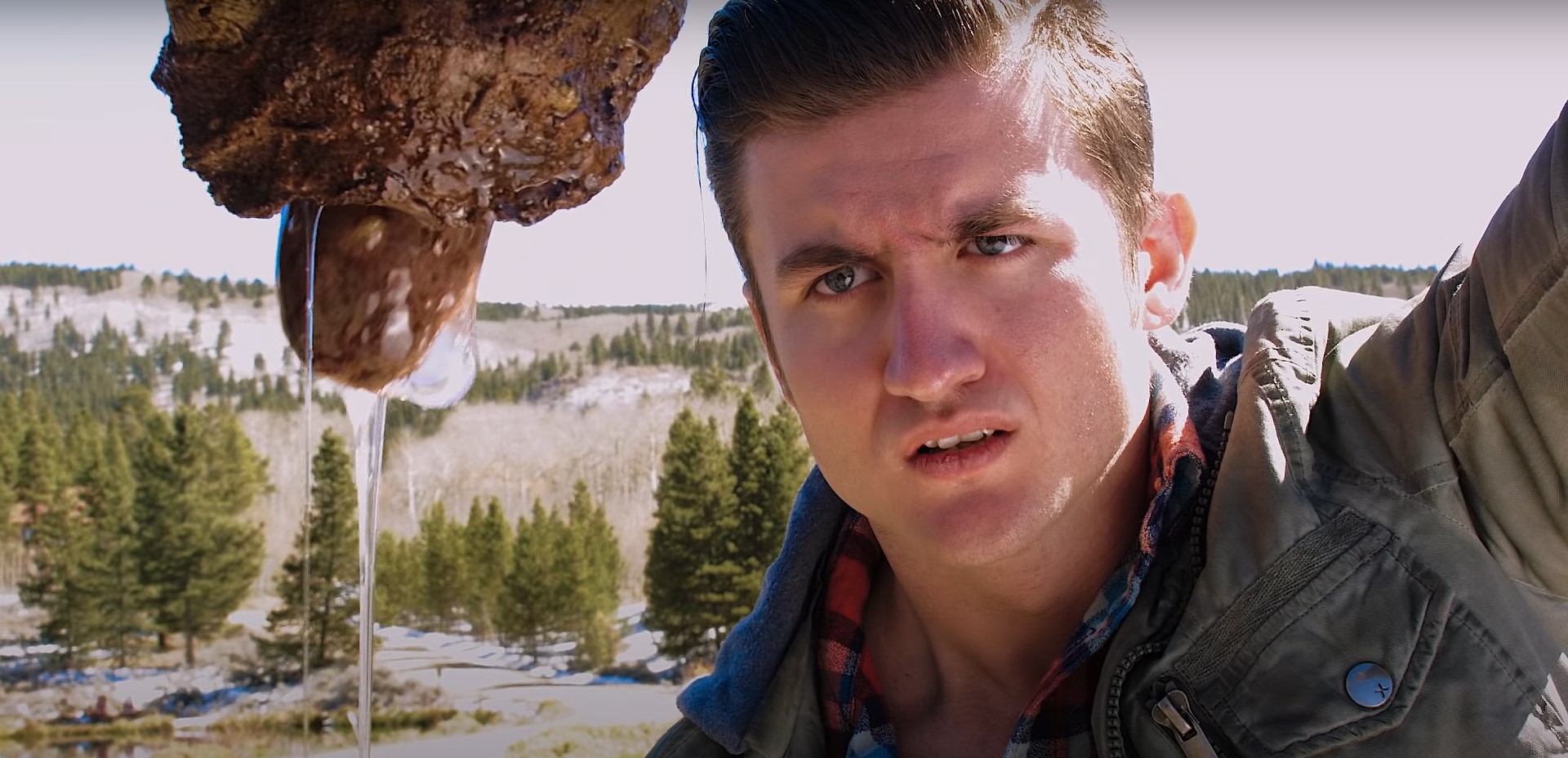
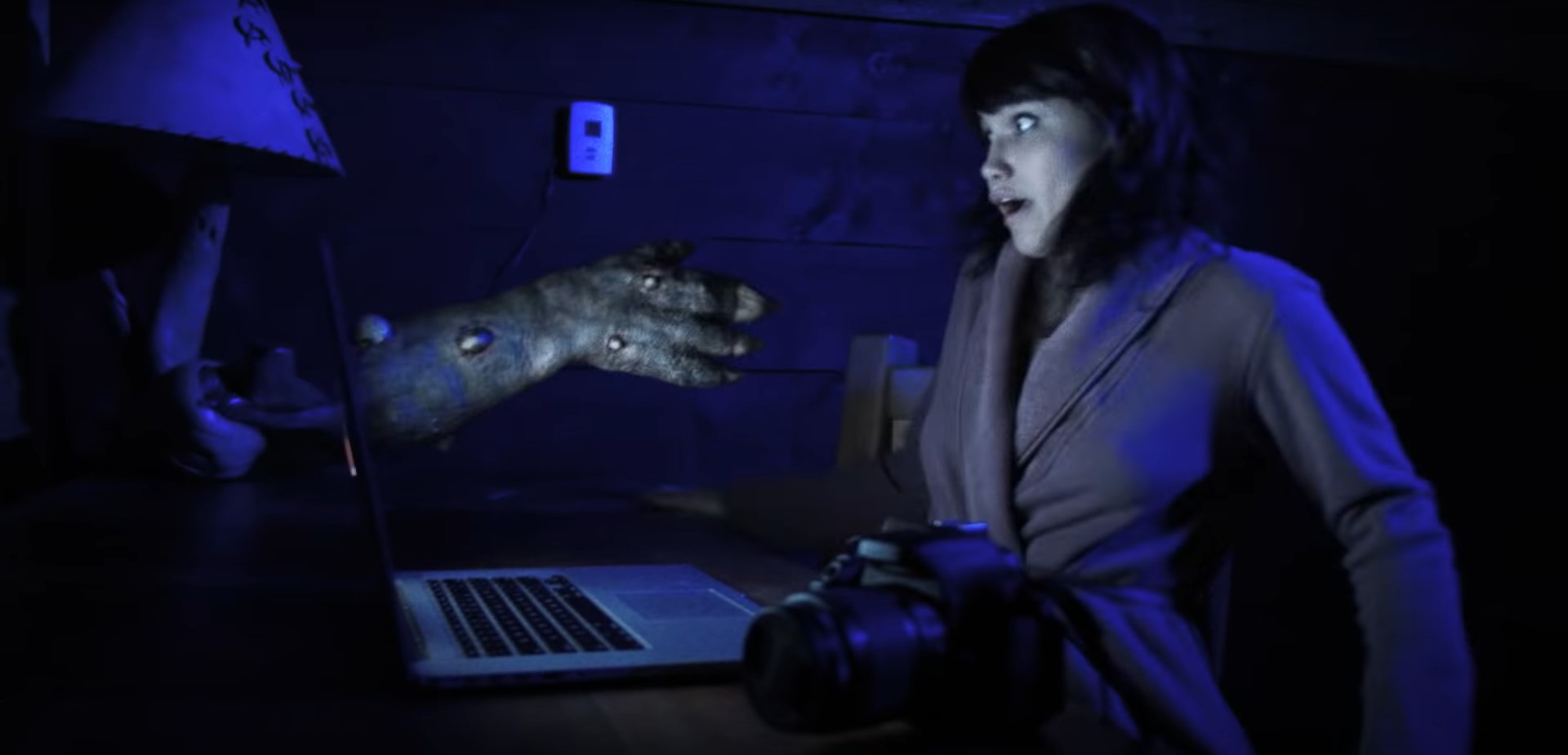
Sisters Alma and Elizabeth meetup at their childhood cabin for a quick getaway.  Their individual neurosis induces the incessant minor league friction between them but never causing any real strain until an old friend, returning from abroad, arrives at his neighboring cabin alone.  With his wife suddenly committed to a mental institute, the well cultured and practically single Wesley finds himself in the company of the desirous Alma and Elizabeth every night for dinner as they vie for his attention and affection.  When Alma crosses paths with Wesley’s strange and curious vibes, they compound upon her baseline suspicion of Wesley possibly being a vampire.  Elizabeth finds herself the victor of Wesley’s adoring warmth, leaving Alma to ramp up her scrutiny into their longtime acquaintance before her sister falls victim to his deadly charm.

Arthouse meets grindhouse in this Mickey Reece written and directed mystery thriller “Climate of the Hunter.”  Co-written alongside frequent collaborating screenwriter John Selvidge, the 2019 take on subtle vampiric ambiguity is punctured, tapped, and drained from the same blood rich veins as Robert Bierman’s “Vampire’s Kiss,” starring Nicholas Cage, and George Romero’s “Martin,” but instead of a protagonist believing in the transference into a bloodsucking creature of the night, “Climate of the Hunter” steps back furthering by approaching with a more elusive and Lynchian-like 3rd party perspective as the story focuses prominently the sisters’ thoughts and actions while Wesley does what Wesley does without self-doubt or obvious distinction.  Shot during the winter months of the diffusely populated woodland area of Welling, Oklahoma, “Climate of the Hunter” is the sole released presentation of Mikey Bill Films and the more seasoned VisionChaos Productions (“The Field Guide to Evil”) under executive producers Uwe R. Feuersenger and Sasha Drews in collaboration with production companies of Adam Hendricks and Greg Gilreath’s Divide/Conquer and Jacob Snovel’s Perm Machine Productions.

Diving into his best performance as an enigmatic rake with unpronounced intentions is “Minari” actor Ben Hall, who recently costarred as a crises of faith priest in Mickey Reece’s latest release, the comedy-horror drama, “Agnes.”   As the sophisticated wordsmith neighbor, Wesley commands every ounce of oxygen all in thanks to Hall’s elegant pacing of Wesley’s uttered mannerisms and inflections.  Hall is joined by fellow “Agnes” costar Mary Buss as the pining Elizabeth.  Elizabeth practically resents Alma’s seemingly historical persistent hold over Wesley’s affections and Buss bitterness, whether because of Wesley or because of Alma’s uncharacteristic behavior as of late, oozes into the stagnant folds of their relationship.  If you haven’t figured it out by now, “Climate of the Hunter” has an Oklahoma-centric and Mickey Reece’s staple go-to cast, which brings us to the other sister Alma played by Ginger Gilmartin who fits into that aforementioned niche category.  Alma is running from something that goes essentially unsaid that leads her to hide out in the family cabin and Gilmartin, as best as she can, shepherd’s that motivation without the better part of context.  Alma’s also dresses like a crazy cat lady, except she owns a dog, and so reading Alma’s state can be taxing to nail down in an arthouse film where nailing down anything in arthouse cinema is inherently taxing in itself.  The small cast rounds out intermittently with smaller roles that build upon Wesley’s vague nature beginning with a local friend to the sisters named BJ Beavers (producer Jacob Ryan Snovel).  Witnessing Wesley’s strange behavior but oblivious from his own strangeness, BJ becomes a confidant and a collaborator with Alma in revealing Wesley as a vampire.  Sheridan McMichael grows resentful toward his father as Wesley’s spiteful son Percy, Danielle Evon Ploeger seeks incompliancy from her mother Alma as her daughter Rose, and, in the more curious role, is Laurie Cummings (“It Lives Inside,” “Army of Frankensteins”) as Wesley mentally incapacitated wife who somehow manages to lose her wheelchair as it drops from the sky.  You’ll know what I’m talking about when you see it!

Having watched “Agnes” before diving into “Climate of the Hunter,” I mentally prepared myself for a breathy, long-winded, talking head film.   That readied mindset 100% gave me more clarity into Mickey Reece’s shadow narrative.  “Climate of the Hunter” is an uncharacteristic slow burn for the idiosyncratic grindhouse veneer.  With a 4:3 aspect ratio and a color reduction into a warm hue palette that glows, Reece insists on a design that usually offers loads of cheap thrills in action, sleaze, and gore, but the director’s story is toned down, subtle, and very much ear candy as opposed to a rush of visual adrenaline.  Instead, lucrative character building fizzes with tension as elements of the past and present unravel who’s who and what’s what before the climatic finale that suggests nothing was what it seemed to be.  Though prepped for profound exposition, the dialogue can still be boggling with a composition of Wesley’s personal anecdotes and philosophical quips and quotes.  As stated, Ben Hall is amazingly poised in this film, the unflinching star, rolling easily with Wesley’s gift of gab, persuasive magnetism, and maintaining an oblivious eye to an undercurrent of potential classical madness in Alma.  Between her recreational use of drugs and an ugly divorce, Alma has retreated into herself as well as her isolating cabin and when the spotlight isn’t on her, is her perception of Wesley really fantastical or is there actually something broken within her.  Reece explores a related theme of loneliness around the table with each principle character and how differently being lonely is digested and secreted through the pores of desperation.  Once aspect of Reece’s film that will puzzle viewers, and did puzzle me, is the narrated introduction of the food whenever there is a tabled conversation.  Since there already Portuguese titled chapters segmenting the story, a bit of a harp back to Wesley’s travels abroad, announcing what the character are dinning on seemed virtually unnecessary other than the idea that food brings people together in which it then fits the narrative of loneliness. 

“Climate of the Hunter” is quintessential Mickey Reece melodrama tinged with droplets of horror and subtle dark comedy.  Dark Star Pictures releases the film onto region free, dual layer Blu-ray home video in full 1080p High Definition.  Reece and director of photography Samuel Calvin aim for a vintage but not superannuated look for “Climate of the Hunter,” in which follows suit with the story set circa 1970s, with a 4:3 image on a pillarbox 16X9 display, relying also heavily on a softer lens to produce a dreamlike and luminescent effect but not overdoing it.    The release comes with two audio options – an English language 5.1 DTS-HD Master Audio and, if one wants to fully immerse themselves in the era, a stereo 2.0.  Dialogue is crisp and clean as it is refined as expected. Levels are balanced, range and depth are acceptable, but with this sort of wordy production, switching between the 5.1 and the 2.0 only discern subtle differences. Optional English SDH subtitles are available. The not rated, 82-minute-long film has special features that include another full-length Mickey Reece entitled “Strike, Dear Mistress, and Cure His Heart” as well as a short film “Belle Ile,” deleted scenes, production designer Kaitlyn Shelby’s preparations of the food presented in the film Recipes from the Kitchen of Alma Summers, and production stills and behind-the-scenes gallery. “Climate of the Hunter” deserves at least a once over and, in my opinion, a second viewing to become fully submersed in Mickey Reece’s dialogue rich and nebulous style.

MIckey Reece’s “Climate of the Hunter” Now Available on Amazon.com

Being Dismissed is EVIL That’s Hard to Choke Down. “Swallow” reviewed! (Second Sight Films / BD-R Screener)

Newly pregnant housewife, Hunter, putters around the house while her workaholic husband enjoys the fruits of success and friendship with colleagues.  When she’s not cleaning the house or preparing a meal for herself, Hunter stares into the oblivion of her isolating environment.  The country girl who really had nothing to her name has fortunately found an opportunity to never be worried about financial insecurities and with every material thing a person could want in their right at her fingertips.  All Hunter has to sacrifice is her control.  Feeling lonely, powerless, and trapped, Hunter discovers swallowing inedible, dangerous objects gives her great joy and something she can control.  As she goes deeper into this obsession and her perfect world begins to crumble, she’s confronted with reexamining her dark past that stems her unusual eating habit.

Sometimes it’s our strange quirks, our self-destruction behaviors, and our subconscious need to be noticed, or in control, or out of the pockets of others that can deliver horrid outcomes that, ironically enough, can be also our incognito liberator.  As such displayed in Carlo Mirabella-Davis’ written and directed introductory feature film, a blend of family melodrama and interior body horror, with “Swallow.”  The 2019 released psychological thriller is difficult to digest, literally, as the protagonist struggles coping with external control issues in a seemingly perfect life, a life that has never quite felt like her own, while also encouraging an alarming new physiological appetite for what is known in the eating disorder circles as Pica.  Set in upstate New York, shot around the idyllic Hudson Valley area, “Swallow” is produced by the award-winning “Nomadland’s” Mollye Asher and “Black Box’s” Mynette Louie, who have a long history in investing into bold and interesting emotional depth tales, and is a production of the France based companies, Charades and Logical Pictures.

Undertaking the daunting task of Pica emulating is Haley Bennett.  “The Haunting of Molly Hartley” and “Hardcore Henry” actress tethers a line to the core basis of her character Hunter who has to gradually chip away portions of her blank exterior of a person subconsciously suffering from similar symptoms of Stockholm Syndrome.  Hunter very much believes in the social saturation of wifely duties at an attempt to please her bread-winning husband Ritchie (Austin Stowell, “Colossal”), constantly gathering reassurances and happiness from him.  I also like the play on words with the husband name Ritchie that speaks to his haughty behavior.  Bennett, in great detail, captures Hunter’s disfigured, uncertain happiness and wholehearted attempts to join the ranks of a proud housewife, an area mirrored by silent authority from her mother-in-law Katherine (Elizabeth Marvel, “All the Little Things We Kill”).  As soon as Hunter swallows that very first foreign object, Bennett derives true delight from the bizarre action.  From then on, blistering is away is being a slave to Ritchie’s wealthy ties as that little object, that spherical inkling of hope, gets the marble rolling down the gullet of taking back what’s hers, her life.  Bennett and Stowell finesse their characters’ relationship with a teetertotter of genuine sympathy and ingenuine gratification in what’s a blurry line of compassion or a total fake façade for the allusion of appearances.  The weakest character, for me, is Luay, the Syrian expat who fled the turmoil of homeland war and has become something of a caretaker to Hunter.  Played by Laith Nakli, Luay’s sympathy for Hunter runs deeper than her psychological disorder, and Nakli can dish out awkward, slow burn compassion with the best of them, but that connection between Luay and Hunter misses the timely mark with a blank and acute switching of allegiances gone unspoken and with inaction.  Luna Lauren Velez (“Dexter”), David Rasche (“Cobra”), Babak Tafti, Nichole Kang (“Ten Minutes to Midnight”), Zabryna Guevara, and “American Horror Story’s” Denis O’Hare rounds out the cast.

Hunter’s fixation can be compared to the likes of any other vice and soul-swallowing addiction – gambling , drugs, sex – but the very fact that it’s Pica, and on a certain level of the OCD spectrum, makes Mirabella-Davis’ script somewhat of a curious oddity as the filmmaker builds a story around a dysfunctional family and one’s own personal grasp on destiny.  Though set in modern times, “Swallow” very much has a 1950s-1960s vibe with the dynamic of the working husband and the wife stays home to spruce up the house; there’s even a particular scene of Hunter vacuuming in a 50’s-ish tea length swing dress.  Despite the story’s curious and odd nature and the stuck in time antiquated gender inequality veneer, Mirabella-Davis utilizes these aspects to shape and shed light on the more diabolical of inner detriments with Hunter’s lack of confidence and autonomy stemmed from a difficult to swallow past and a financially affluent relationship that actually disallows personal freedom.  “Swallow” is oppressive in ways as Ritchie and his family and friends attempt to squeeze every ounce of value out of Hunter with value being the unborn child amongst other things.   The psychology of “Swallow” melds past and present together to form Hunter’s dangerous method of taking over the reigns of a life she never steered and Mirabella-Davis crafts an exquisite niche thriller to encourage us to gobble up.

Second Sight Films, a label known for it’s substantial and lavish re-releases, snacks on another high profile film with their profound limited edition Blu-ray of Carlo Mirabella-Davis’ “Swallow.” The single disc, PAL encoded, region B BD-25 is presented in the original aspect ratio of a widescreen 2.39:1 aspect ratio. Since a BD-R was provided for review purposes, I am unable to comment on the true characteristics and qualities of the audio and video, but do note Katelin Arizmendi’s stunning cinematography that’s full of palpable texture to every minute piece of inedible edibles Hunter puts down her throat and the gorgeous long shots of Hunter being engulfed by the depth with the isolating forest setting that looks to be lurking in the background. The limited edition release hit shelves this past Tuesday, the 22nd, and has a ton of features to check out, including a new audio commentary by director Mirabella-Davis and producers Moilye Asher and Mynette Louie, A Personal Story exclusive interview with the director that’s seriously in-depth and passionate about his work on “Swallow,” Something Bubbling Underneath exclusive interview with producer Moilye Asher, The Process exclusive interview with editor Joe Murphy, Metal and Glass exclusive interview with composer Nathan Halpern, Alexandra Heller-Nicholas’s take on “Swallow” A Room of One’s Own, Mirabella-Davis’ short film “Knife Party,” and a rigid slipcase with new artwork by Haley Turnbull along with a soft cover booklet with an introduction by the director and containing essays by Anne Billson, Jordan Crucchiola, and Ella Kemp. Lastly, at the tail of the special features are 6 beautiful collectors’ art cards. “Swallow” is rated UK 18 and runs for 94 minutes. Bennett wins the prize for making “Swallow” a throat-clearing success and bravo to Mirabella-Davis for being brave enough with an unusual story set around an uncommon eating disorder and directing the hell out of it.

Limited Edition Blu-ray from Second Sight Films Available at Amazon.com

There’s EVIL in the Saying, No Other Choice. “Violation” reviewed! (Acorn Media International / Blu-ray)


On the precipice of her loveless marriage ending, Miriam and her not-quite-yet estranged husband getaway to visit her sister, Greta, and husband, Dylan, at their quiet woodland and lakeside home, an area where Miriam and Greta fondly grew up together.  Also sharing a past together as high school friends, Miriam and Dylan enjoy each other’s company in a playful and quipping manner after a lifelong friendship, but after a night of drinking and an outpour of internalized emotions, Miriam slowly awakes to Dylan forcing his way inside her and is unable to stop him.  Confronting Dylan and Greta separately further strains the tense situation to the point that Miriam is made out to be the villain in her own sexual assault, sending Miriam to plot a thorough premediated revenge to not only avenge herself but also to save her sister still married to her attacker. 

Real hands-and-knees puked vomit splattering over a black tarp.  A blindfolded, naked man tied to a chair with a real erect penis saluting tall.  If you’ve never seen this Shudder exclusive 2020 released film and you’re reading this review opening fresh eyed, you might automatically presume Dusty Mancinelli and Madeleine Sims-Fewer’s “Violation” a work of pure vomit gore and BDSM pornography.   Let me quickly put your mind at ease by saying “Violation” is nothing of the sort, but these unmistakable aspects in the Canadian revenge drama are real and explicit as a deep-seeded personal choice for the writing and directing duo’s first feature length project.  Mancinelli and Sims-Fewer’s collaborated history goes back to 2017 as they together write, direct, and produce a handful of short films with a core base of dysfunctional sexual themes in “Slap Happy,” “Woman in Stall,” and “Chubby,” to name a few in their credits.  “Violation” continues the trend, providing cathartic discussion for the filmmakers’ tabooed motif at an attempt at bold realism.  “Violation” is self-produced by Sims-Fewer and Mancinelli under their production banner, the Toronto-based DM Films, in association with Telefilm Canada and The Talent Fund with financing from the executive producer line of independents, such as François Dagenais (“Ankle Biters”), and the husband-wife duo of David Hamilton and Deepa Mehta of Hamilton-Mehta Productions.

In the lead of Miriam is the writer, director, and producer herself, Madeleine Sims-Fewer, succumbing to a characterized funneling toward piteous rock bottom within her role who, from the get-go, is already in hot water with a dissatisfied husband about their trip to see Miriam’s sister. There’s rarely any happiness for Miriam throughout, even amongst the contentious heart-to-hearts with her own sister, and the little designated of joy to her is quickly squashed by the narrative’s crux and then that’s when Sims-Fewer has to about face to a deeper austere level than even before when those closest to Miriam push her away and become her worst enemies in a blink of an eye. Those mercurial enemies are played by Anna Maguire as Miriam’s fickle younger sister Greta, reteaming with her “Forgotten Man” costar Obi Abili as Miriam’s distant husband Caleb and rounding out the cast as Miriam’s alleged rapist and Greta’s husband Dylan is Jesse LaVercombe who also previously worked on the directors’ short films “Slap Happy” and “Chubby.”  Sims-Fewer and Lavercombe really deserve praise for their dedication and courage that circles back to the beginning of this review about real puke and real erection.  There’s vulnerability when totally exposed and these two actors, who have tremendous chemistry, shy very little away from the uncomfortable provocations in hard to swallow scenes of realism.  We also know where Greta stands in the whole scheme of things, but a big plot hole obtrudes with Obi Abili’s Caleb who unexplainably vanishes in the latter half of the two part narrative.  There’s an unsaid presumption that Caleb left Miriam as already rocky marriage kept spiraling down the toilet in the first act, but there was no resolution, leaving the character out in the wind and neglected from the what could have been an interesting interplay of Miriam’s obsessive plot.

“Violation” is not the typical rape-revenge thriller where the victim rises from the ashes like a phoenix and has an insurmountable, if not endless, amount of hate and determination for street justice to see their rapist or rapists six feet under.  “Violation’s” slow burn method leans toward a character study with Miriam.  Her compassionate human side commingles with her victimized treatment and anger as she’s constantly and consistently second guessing her actions or feeling the utmost, sick-to-her-stomach remorse for her actions that needed to be done in order to avenge herself and also protect her sister as noted in a parallel dream she tells Greta about Miriam sitting in the next room while her sister is unintentionally self-strangulating.  Yet, another side to this tale that could also explain Miriam’s hesitancy and, perhaps, guilt.  Sims-Fewer and Mancinelli are very explicit in Miriam’s unhappiness with her marriage and also her flirtatious wanting of Dylan, pent up by the lack of sex and joy in her marriage, and she also initiates a kiss with Dylan.  Combine those details with a night of drinking, Dylan’s firm stance, and the way the film is shot ambiguously, a pressure cooker moment builds between the characters and viewers whether what stated happened actually happened.  Now, I’m not arguing a case for rape culture or make excuses for rapists, but “Violation” tilts toward Miriam’s mental quality that has been compromised by a contentious marriage, life envy, and the preconceived notion that she’s not a good person.  Either way, what follows the inconspicuous moment is sharply horrible, a real unsettling exhibition of meaningful art. 

“Violation” is certifiably fresh and deservingly so with jarring scenes of gruesomeness, a topical theme of trivializing rape accusations, and compelling character study of one woman’s disharmonious existence in her small inner bubble.  Now, you can own it the Sims-Fewer and Mancinelli film on UK Blu-ray from Acorn Media International. The PAL encoded, region 2 Blu-ray presents the film in 1080p full high definition in a widescreen aspect ratio of 2:39:1. “Violation” embodies an engulfing nature domination of the screen through an Adam Crosby lens. No matter how big and important the moment may be in the story, Crosby’s entrancing us with the tiny embers with a close up of the camp fire or having the actors dwarfed by towering trees until the second act that compartmentalizes two antagonistic characters in the same room. The release shows no signs of deflating Crosby’s and the filmmakers’ semi-surreal, flora and fauna vision with a sleek digital recording teeming with a range of wide landscape shots, stark long shots, and super closeups. The English language Dolby Digital 5.1 surround sound captures as snap, crackle, and pop of the great outdoors; however, the dialogue, though quite clean and clearly audible, sounds a bit boxy at times. Special feature include two extras that are essentially one and the same taking up double the space on BD25 with a meet the filmmakers (Sims-Fewer and Mancinelli) talk very briefly about the genesis of the “Violation.” The second extra, the TIFF Intro, mirrors nearly world-for-world the first special feature. “Violation” has a runtime of 108 minutes and is rated 18 in the UK for strong violence, gore, sexual violence, sex references, and nudity. Viscerally intimate and ghastly, “Violation” is labeled the anti-rape revenge narrative with a close examination of trust and the unfortunate triviality of rape sure to churn stomachs and second guess the intentions of those close to you.

Own “Violation” on Blu-ray Home Video!

Dan Stevens. The New Face of EVIL? Freakin’ Love It! “The Guest” reviewed! (Second Sight Films / BD-R Screener)

Recently hospital discharged combat soldier David Collins visits a fallen brother in arms’ family, The Petersons, to convey their son’s last moments of love for his family.  Taken immediately in by the grieving mother, David stays for a few nights at the Peterson home, quickly befriending the family of four with his military “yes ma’am” charm and good looks.  When a string of accidental and homicide related deaths begin to flare up in what’s typically a quiet rural town, eldest daughter, Anna, suspicions turn to David.  As Anna digs deeper into David’s past, nothing can stop the elite special forces soldier from taking steps to protect his identity and his mission, even if that means turning the Petersons’ hometown into a deadly warzone. 

One part action, one part slasher – Adam Wingard’s “The Guest” is a hot take on the infiltrator horror subgenre.  The “Pop Skull” and “You’re Next” director, who went on to helm the epic clash of the two biggest creatures in all of creature feature history with this year’s “Godzilla vs. Kong,” directed “The Guest” to challenge the slasher narrative with an atypical, slightly campy, American indie thriller with an unanticipated and surprising twist that’s more than just your run-of-the-mill snapped war-traumatized soldier gone shell-shocked rogue.  The script reteams “Dead Birds’” writer Simon Barrett with Wingard for their eighth collaboration that pits all the story’s action into the rural confines of an unnamed small town in America while the actual shooting location takes place in New Mexico.  “The Guest” is a production of the UK based HanWay Films, which also oversaw the production of Wingard’s “You’re Next,” and Snoot Entertainment of the zomedy “Little Monsters” from the producing management team of Keith and Jess Wu Calder.

To put things simply, Dan Stevens is scary good.  The “Downtown Abbey” star plays the titular troublemaker and, now, I will never look at Matthew Crowley the same way again.  Stevens trades out the proper aristocracy of British English with a slight American English Southern draw, a heavily used trope portrayed with U.S. troops in cinema, but Stevens does more than just talk-the-talk.  The Surrey born actor who once played the Beast in Disney’s live-action version of “Beauty and the Beast” plays a different kind of monster that’s akin to a wolf in sheep’s clothing with David, adorning his physically fit character with a clandestine depth in his ambiguous background and sociopathic tendencies that makes him very much a mysterious maniac much in the same fashion as iconic slasher villains.  Trying to stop David’s undermining reign of controlled carnage is Anna Peterson, played by Maika Monroe (“It Follows,” “Independence Day:  Resurgence”).  Ana’s a levelheaded, yet rebellious, teenager adverse to being told what to do to much of her parents chagrin from dating a pot dealer to her objection in David’s stay with them.  Monre puts angsty effort behind Anna Peterson’s eyes, but the character herself is rather flimsy willing to put her trust in an unsponsored secret organization agent, “John Wick” films’ Lance Reddick, and his request to get into his car urgently without hesitation, but has a difficult time swallowing at her own pace her dead brother’s fellow soldier even with the stamp of whole heartily approval from her parents and little brother and photographic evidence of her brother’s relationship with David.  Yet, Barrett’s openly oblivious characters play into the slasher/thriller campiness of accepting everything at face value without ever an inkling of doubt.  Perfect examples of this would be 3/4th of the Peterson family: the mother (Sheila Kelley, “A Passion to Kill”) trust him with handling routine tasks like picking up her son from school or laundry, the father (the great supporting actor Leland Orser, “Alien:  Resurrection,” “The Bone Collector”) trusts him with personal secrets, and even the school outcast brother (Brendan Meyer, “The Color of Space”) desperately believes David is his friend.  Tabatha Shaun, Joel David Moore, Ethan Embry, Chase Williamson, and Steven Brown co-star.

Pulling loads of admiration and inspiration from the “Halloween” franchise, “The Guest” not only rocks as an action thriller but also mimicking a retrograded slasher in a subgenre slapped with a label I like to call the infiltrator subgenre.  David Collins is no mindless, walking and not talking, killing machine like The Shape, but instead gains trust, backdoors problems, and has the quick confident moves to see the job through with hand-to-hand combat and other more visceral merciless methods.  Barrett and Wingard purposefully leave much to the imagination with David’s past, turning what would usually outcome as frustrating ambiguity for an essential character to more of an enigmatic antagonist allure similar to the way we don’t have a clear-cut motivation why Michael Myers or Jason Voorhees shish kabob horny teens without a second thought.  Sure, there are sequels that try to enlighten reasons, such as being pure evil, but abstract is not concrete.  Same with “The Guest” with a control spoon feeding of just enough backstory to wet one’s thirst for more on David’s ruthless sociopathic behavior.  David’s also a very likeable with the impression that his good deeds done in violence speaks to a justice-driven character, but what’s brilliant about David, and enhanced profoundly by Dan Stevens, is that when he does kill someone in cold blood for this first time, the impact is tremendously unreal because it’s unexpected and off brand from the Barrett and Wingard’s buildup of him being a standup and do-what’s-right soldier.

Second Sight Films invites you to be their guest for their limited edition 4K Ultra Hi-Defintionand Blu-ray of Adam Wingard’s “The Guest” that hit retail shelves this month on October 25th.  The stunning makeover of this cult favorite, limited to 5,000 copies, offers a brand new color grading for both formats supervised by Wingard with 4K UHD presented in Dolby Vision HDR.  Since a BDR was provided, commenting on the exact audio and video quality of the release isn’t possible, but rest assured, knowing the care and attention Second Sight Films put into their releases, “The Guest” will surely not overstay it’s welcome in the image and audio department.  The film has runtime at 100 minutes and a UK 15 certification; however, there is much more to this 3-disc release that includes the film’s 80’s inspired soundtrack on a compact disc.  Special features include new Adam Wingard and Simon Barrett commentary plus an archive commentary track from the two filmmakers, a new interview with actor Dan Stevens The Uninvited Guest, a new interview with actress Maika Monroe A Perfect Stranger, a new interview with Wingard and Barett By Invitation Only, a new interview with producers Keith and Jessica Wu Calder Producing the Guest, a new interview with director of photography Robby Baumgartner Light and Fog, a new interview with production designer Tom Hammock Lightning Strikes, a new interview with composer Steve Moore The Sounds of The Guest, and deleted and alternate including an outtake gag with optional director commentary.  With this limited release comes a rigid slipcase with new artwork by Adam Stothard, 160-page booklet with new essays by script to screen storyboards and extracts, behind the scenes photos, Wingard’s soundtrack notes, and new essays about the film, and, lastly, 6 collector’s art cards. In a time when modern horror desperately needs a solid sequel, “The Guest” is a good candidate with it’s captivating villain with so much story still left to tell. Hopefully, Second Sight Films’ irrefutable powerhouse release will ignite step-taking action amongst the rumors.

Grab it fast!  Liminted Edition “The Guest” on 4K UHD and Blu-ray Now at Amazon.com!

Reap the EVILS You Sow. “Wired Shut” reviewed! (101 Films / DVD)

The failings of a once famed novelist, Reed Rodney, have come calling after a horrific car accident leaves Reed with reconstructive surgery and his mouth wired shut.  Stuck in remote mountain home, sipping pain meds through a straw and hitting terrible writer’s block after the critically trashed last novel, fortune and distinction never seemed so lonely until his estranged daughter, Emmy, shows up at his front door, looking to spend some time with him before going to school abroad.  Their hoary embattled relationship, built on alcoholism, lies, and abuse, urges Reed for a change of heart, willing to reconnect with Emmy by any way necessary, even if that means being a punching bag for her bottled up emotional outpourings.  When an unexpected intruder exposes a callous secret and lives are at stake, Reed and Emmy must rely on each other to survive a twisted prowler’s sadistic games. 

“Wired Shut” is the teeth-clenching, family quarrelling, sociopathic surviving inaugural full-length feature from Vancouver born director Alexander Sharp.  The home-invasion thriller too hails from Vancouver, Canada with an old-fashion tale of an inside job story co-written by Sharp and the director’s steady collaborator Peter Malone Elliott in which the project is also the first full-length script for the two writers.  “Wired Shut” houses a single location with a small cast but indulges varying levels of crazy and a good amount of bloodshed initially pie-eyed by the immense build up of downtrodden characters.  Singed family relations, the ebb and flow of trust, and the untangling of an ugly knot to retether a stronger bond becomes the parallel of reconnecting in this GoFundMe crowdfunded film under Lakehouse Productions and Alexander Sharp’s Sharpy Films presented by Motion Picture Exchange or MPX.

In a role where you have to keep your trap shut at all times because you’re playing a former self-centered rake who crashed his Lamborghini and had to have your mouth wired shut, Blake Stadel (“Rise of the Damned”) has one of the easiest parts in all of move making history.  Thank about it.  Zero lines of dialogue, you’re feigning an ego that is as shattered as your character’s jaw, and you write or type if you have to communicate.  Now, I’m not belittling Stadel’s once famous novelist, Reed Rodney, as the actor has to absorb the pity, the verbal abuse, and the overall confinement resulted by his injury as a sort of surrender to unfortunate happenstance.  Reed’s moment of life-altering clarity came pre-introduction when crashing the Lambo that left him vulnerable and alone, two bad, pre-depression dispositions of mind and being.  Across the table stews the stark opposite with Reed’s daughter Emmy, played by Alexander Sharp’s sister, Natalie Sharp (“Baby Monitor Murders”).  Pent up with anger and seething with intent, Emmy is executed with these qualities with perfection by Sharp.  However, Emmy extinguishes her fiery eyed hate too quickly in the fate upturning twist that creates a dubious bubble around her and not in a good way.  Emmy’s defining moment of clarity is weakly pawned off just for her and her dad to have a slither of reconnection in a breakneck transition without any struggle or sacrifice to change her mind.  Her blurry change of heart quickly becomes moot by Behtash Fazlaili’s (“The Evil In Us”) unhinged performance as Emmy’s delinquent boyfriend, Preston.  Preston eclipses the entire father and daughter dynamic with a clichéd villain by monologuing and squandering wasted opportunities to end it all and getaway scot-free.  Fazlaili’s performance also doesn’t inspire terror or much of anything at all except for frustration with the cavalier, walk-on act that’s supposedly a mentally broken man fallen to and reshaped by life’s hard knocks.  What’s on screen is Joker-esque mush relating little backstory that drives him to scheme and to be completely off his rocker whereas, in contrast, we know what motivates Emmy and we know what motivates Reed.

The slow burn of “Wired Shut’s” first two acts attempts to humanize Reed as a dejected and alone with Emmy sparking life into an object he can now be fixated on to mend his meaningless, post-accident existence, but Emmy, herself, lugs her own daddy-issue baggage giving way for the two to buttheads in exacting their feelings upon one another.  Sharp fishes for sympathy but keeps loose with expressing Reed and Emmy’s contentious relationship; a relationship that truly never existed with an alcoholic Reed’s persona no grata behavior around Emmy’s mother and her that extends his jet setting lifestyle with the next mistress.  Though loose, you can see both stand and the foreseeable twist coming because of it in an unsurprising turn of events.  What is surprising is Preston’s sudden Jekyll and Hyde as if Reed’s salivated score is Sharp’s theme that for the love of money is the root of all evil.  The theme is peddled and not exactly discerned in Fazlaili’s character who’s more concerned with the cat and mouse game of unbelievable hilarity.  Part of the absurdity has to do with Reed’s three story house with a built-in elevator and if you’ve ever ridden an in-home elevator, the cramped, smaller versions of a regular Otis are slow as Hell dripping with molasses.  Yet, somehow, Reed and Emmy happen to beat Preston down a meager two stories with the push of a button while Preston stops to take an injury breather at the third story landing.  Getting in the elevator should have been easy pickings when exiting, but in entertainment for some, keeping the audience attentive is pinnacle even if that means sacrificing the story for cheap thrills by stretching the realism just a little bit.

“Wired Shut” will leave you speechless with a pedestrian anticlimax after watching the DVD. Distributed by the United Kingdom’s 101 Films, the region 2, PAL encoded, 91 minute thriller is presented in an anamorphic widescreen, 2.39:1 aspect ratio on a DVD5 and thoroughly soaked in a sea of tenebrous blue tint as the first, many firsts for these filmmakers, feature length cinematography for Martin Taube. Crystalized sleek and fresh with a modern, straight-edge finish, Taube main objective centers around personal space and to detox comfort with the strain and psychopathy, using close ups and up or down angling to exact an uneasy position during strenuous moments. The continuous tinting from start to finish could have been done without as it chokes the story in nearly an unviewable consumption. The English language Dolby Digital Stereo AC3, 5.1 surround sound mix, is a LFE sound cannon with a bass-heavy rattling industrial soundtrack by Oswald Dehnert and Rayshaun Thompson. The soundtrack’s sonorous tone crackles at the format’s compression, leaving granulated pops when the volume levels peak, which is really surprising for today’s digital and format spec cautious handling. Dialogue levels render nice and clear and the sound design’s not bad either with a complex range of soundbites inside a single setting, especially when Reed pops the wires when forcing open his mouth. The DVD is bare bones with special feature and the DVD cover itself is poorly misleading with a hooded figuring, standing backlit in the woods, with a large blade in hand. There is no such slasher figure in the movie. “Wired Shut” is not a slasher. I repeat. Not a slasher. “Wired Shut” is rated 15 for strong threat (gun pointing, knife to the throat), injury detail (stabbing, slicing, and surgical fastening coming undone), and language (Yes, foul language is present). As far as home invasion films go, “Wired Shut” says nothing new about the subgenre, but offers an intriguing ingredient of incapability and the strength to push through to the other side with the if there’s a will, there’s a way mentality underneath intruder chaos.