Evocation of EVIL in “The Girl In the Crawlspace” reviewed! (ITN Distribution / DVD)


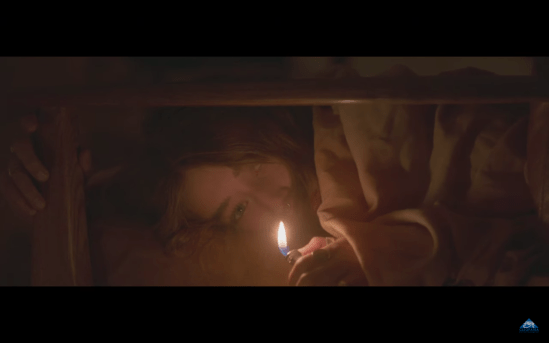
Jill escapes from the grip of a kidnapping-serial killer who kept her confined in a crawlspace under the house. Her courage brings lethal justice to the captor when the local marshal shoots and kills him upon confrontation. Jill struggles to reintegrate back into her local community in the aftermath, sleeping unconfined in the outdoors and withdrawing herself for social interaction, including from her weekly role playing game with friends. When Kristen moves back into her hometown from college, she aims to set up her therapy practice to assist families impacted by the serial killer as well as Jill by special request from the marshal, but Kristen’s rocky relationship with her substance abusive, off-Hollywood screenwriting husband on the mend drags out Jill’s much needed treatment. With Jill and Kristen preoccupied, they’re oblivious to the concealed threat that plots the next terrorizing exploit of kidnapping and tormenting young, beautiful women.

From under the grubby wooden floorboards to the strategic folding table of a role playing game, “The Girl in the Crawlspace” is the Midwest direct-to-video suspense thriller that tackles post-traumatic stress and marital strife while submersed in a looming trail left by a notorious mass murderer, written and helmed by first time director John Oak Dalton. Dalton, who has penned several low-budget grindhouse titles over the last decade and half, including titles such as “Among Us,” “Sex Machine,” and “Jurassic Prey,” returns once again to the genre with the repercussions of Podunk psychopath upon small town America, filmed in Indiana and release in 2018 hitting the ground running with film festival circuits. Indie filmmaker Henrique Couto, schlock horror director of “Scarewaves” and “Marty Jenkins and the Vampire Bitches,” signs on as producer, stepping back from his usual productional duties, and letting an occasional collaborator Dalton to completely engulf himself as the omnipotent auteur. Midwest Film Ventures serves as the production company, shot in Farmland, Indiana.

Erin R. Ryan has continuously sustained a low level hover on the indie horror radar after taking her in Dustin Mill’s “Bath Salt Zombies,” based on the Miami incident based on a naked man eating someone’s face induced by being high on bath salts, and the gooey-gory body horror, “Skinless,” that’s also a Mills production. Ryan expands her portfolio outside physical horror with Jill, a traumatized recluse derived from her abduction and torture, as a subdued component that’s contrary to previous roles, but Ryan capitalizes the opportunity of a scared kitten, recoiling from public gatherings, and slowly and silently emerging back into society while recalling chilling moments as the story progresses. However, there’s difficult pinpointing the head lead as the protagonist roles are shared between Ryan and depicted married couple, a pair of more Henrique Couto casted actors, in Joni Durian and John Bradley Hambrick as Kristen and her husband, John. Between the three, chemistry clicks better than cooking meth in a chemist’s unsanctioned laboratory and offer ample contention without the attending killer’s presence hanging over the whole town’s head. Rounding out the remaining cast is Chelsi Kern (“Scarecrow Count”), Joe Kidd (“Ouija Room”), Jeff Kirkendall (“Sharkenstein”), Clifford Lowe (“Scarecrow County”), and re-introducing Tom Cherry as the good old boy town officer, Marshal Woody.

With a title like “The Girl in the Crawlspace,” I would be remiss if I didn’t say there were some expectations of bodily torture, psychological terror, and teeth-clinching tension when sitting down to watch. The hype was high considering the post-after-post amount of positivity for “The Girl in the Crawlspace” on my Twitter feed. The catchy name and optimistic comments provided real temptation, but Dalton steers in another direction, the what follows in the state of everlasting shock and the reliving of moments seared into your psyche. The direction wasn’t as expected, but that’s necessary a bad thing. “The Girl in the Crawlspace” is exposition heavy with considerable amount of movie referencing peppered with some current event topics, such as the brief mentioning of killing of migrant children, throughout and continuously wanders off point, strolling more into Kristen and John’s crumbling marriage. Jill, the supposed centerpiece of the story, feels more like an afterthought, despite being the “girl” in “The Girl in the Crawlspace.” The cantankerous marriage supposedly jeopardizes those personally involved in Jill’s well-being as John exploits Jill’s idiosyncratic experiences from being a captive by turning them into inspirational junk food for his fading screenwriting career, but the catalyst incident doesn’t stick, becoming more of a weak opening for a more pronounced return of Jill’s haunting past.

From ITN Distribution and Mill Creek Entertainment, “The Girl in the Crawlspace” lands onto a not rated DVD home video release. The single layer DVD is presented in a full frame widescreen of an 1.78:1 aspect ratio. In a framing sense, Henrique Couto’s cinematography distinctly places small town in a spectrum view that highlights the soybean fields and farms, the rustic brick infrastructures, and the simplicities of a relaxed, old-fashioned town, using some drone shots to expose the green belt greenery. For an indie feature, the agreeable bitrate has a frank, clear image despite some consistent overexposure that softens details, especially on faces in the outside scenes. The Dolby Digital stereo 2.0 mix has also agreeable dual channel output. Some of the dialogue scenes suffer through an echo, but for the majority, the lines have clarity and unobstructed by ambient layers or the soundtrack. The depth discloses some distant ambiguities, such as in a train shot that’s not rendered in the background as it should, but the amount of range is palatable. English SHD subtitles are available. The only bonus features available on the release are the theatrical trailer and an commentary with producer Henrique Couto and director John Oak Dalton regarding their history together and going through the shot techniques as well as touching upon the actors. The road to recovery is paved in nightmares, psychological terror, and Midwest psychopaths in “The Girl in the Crawlspace,” but pitches away from the principal concern that turns second fiddle to one struggling screenwriter’s difficult assimilation into rural life while simultaneously rethreading a floundering livelihood and a tattered marriage.

Own “The Girl in the Crawlspace” on DVD

All a Broken Family Needs to Mend is a Demented EVIL Backpacker! “Mind Games” reviewed! (MVD: Rewind Collection / Blu-ray)

***Note: the following screen caps are not from the MVD Blu-ray release.

On the surface, the Lunds are picturesque of everything that represents the perfect family. Under the surface, Rita and Dana Lund can barely skim the surface with their marriage dangerously ebb and flowing toward sharp, jagged rocks. In an effort to save their relationship, they take their preteen son on a RV camping trip along the coast line of California to try and rekindle their affection for one another. In one of their trip’s initial stops, a hitchhiker named Eric befriends Dana and the boy; they’re fondness for the charismatic and young Eric is so great that he’s invited to ride along with the family on their vacation. Rita’s suspicions of Eric are blinded by her immense loathing for Dana, suppressing Eric’s true maniacal, psychopathic behavior as he infiltrates the Lunds to conduct his only psychological behavior experiments by shifting the boy’s jovial persona, exploiting Rita’s sexual regression, and further alienate Dana from his family.

As if a fable that warns the dangers of picking up hitchhikers no matter how friendly and beautiful they appear to be, “Mind Games” dug into the psyche and had continued the trend of violently unstable roadside travelers that yearn to harm the hospitable, the compassionate, and just the plain old lonely. In Bob Yari’s first of two directorial efforts, the 1989 “Mind Games,” also once titled as “Easy Prey” is a thriller from the mind of screenwriter Kenneth Dorward and co-produced by screen actress turned financier Mary Apick, teaming up with Bob Yari after their work together on the sovereign nation standoff drama, “Checkpoint,” under the MTA/Persik Production Company banner. As the idyllic project for a low-budget thriller with a limited cast and barely any special effects required, “Mind Games” wound up being the first entry for the MTA/Persik affair that sought to stir conjugal strifes with outsider influence and how sometimes the grass is not always greener on the other side.

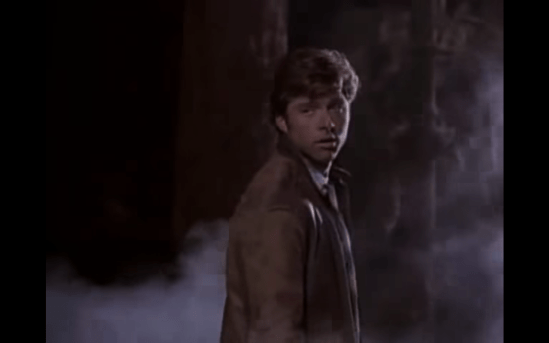
For an independent film with such a small, sharpened cast, well known actors from the 80’s step into the humblings of lesser grandeur, starting with Maxwell Caulfield. The young, promising star from the sequel to John Travolta’s “Grease” had his career nearly derailed with the critically panned big budget “Grease 2”, but luckily for horror genre fans, the English born actor channeled his talents toward such films as “Waxwork II” and “Sundown: The Vampire in Retreat.” Yet, “Mind Games” was essentially his second break into the film business that opened doors for the former titles and being the unhinged hitchhiker Eric couriered a necessary change from his stage performance to his ability to be warped-minded person looking through the eyes of a totally different and charmed individual. The role absolutely challenges the actor who, from analyzing his performance across the screen, finds breaking in the role more difficult than presumed. Edward Albert is a name you might not remember, but his face will strike some chords as “The Galaxy of Terror” actor steps into the self-deprecating husband role of Dana. Dana is just one of those individuals worth slapping across the face to wake them up and Albert amplifies his unintentional waning from his wife and child with such dismissal and disassociation, I, myself, found Dana’s lack of courage to be unsettling, but his rouse-less attribute fades slowly into man searching, if not clinging, for what’s left of his life. Caught between Eric’s snarky sensationalism and Dana’s lofty air is Dana’s angst wife, Rita, played by “Shadowzone’s” Shawn Weatherly. The blonde hair, blue eyed former Baywatch beach lifeguard sure knows how to be a wild card, an unknown friend or foe in this mental game of chess, as Rita staggers between hating to being extremely amicable with her husband, Dana. This is where Dana and Rita’s son, Kevin, fits in as the deciding factor pending the successfulness of Eric’s testing. Matt Norero didn’t have nearly the extensive career as his co-stars, but deliveries some great, if not zealous, scenes and cold-hearted glares that break up the sometimes monotonous tone of “Mind Games” would routinely find itself stuck.

To frankly put it, “Mind Games” bares the prosaic essence of a run of the mill thriller with a thin strip of riveting tension to cling onto. The film impresses comparably with a cheap suspense novels you’ll find multiple copies of collecting dust bunnies on Dollar Tree shelves where the paperwork backs lavished in a cheap bait title and cover art only provides a quarter of the entertainment value of its marketed worth. However, for a low budget production, Yari manages to pull off impressive aerial shots, eerie dim lit atmospherics of a fog machine heavy night scenes, and tack on flashes of so bad, it’s good meme worthy moments – i.e. the garbage day kill scene in “Silent Night, Deadly Night: Part 2” to reference what I mean. The score is conducted by “Night of the Comet” composer David Richard Campbell with an uncharacteristic upbeat and happy-go-lucky number weaving in and out of the film’s storyline, and coarsely out of place during the RV stop-a-long montage that proceeds after setting up Dana and Rita’s turbulent marriage and Eric’s understated malevolencies, but rather speaks to the overall spirit of the film that’s a rated-R labeled PG-13 thriller, hard on the language, but soft on the violence with more of an implied application of offscreen kills and virtually no blood from an anemic plotline.

Still, “Mind Games” can be considered a cauldron of cynicism and now that the release receives the royal treatment with a full HD, 1080p special collector’s edition Blu-ray from MVD’s Rewind Collection label spine #21. The retrograde cardboard slipcover harnesses a powering transfer that supplies vitality into the well-preserved 35mm source material and presents a 1.78:1 aspect ratio. Perhaps the best this transfer looks to date, a plush matte that’s pleasing and without the drab bleakness that typically coincides. Natural grain remains upon a softer side delineation that’s not heftily indistinct and, in fact, adds to the glow of the product’s decade. The English LPCM 2.0 stereo audio mix has inviting qualities, but taper more on the lossy side of the spectrum. The soundtrack is powerful, especially on “The Writing on the Wall” single by Raven Kane. Dialogue is clear and untarnished, the range is adequate, and the depth is sound. No audio or video hiccups or blights to note nor any dubious enhancements detected. Option English subtitles are available. Special features are aplenty including a new MVD exclusive, retrospective look at the Making of Mind Games that clocks in at 108 minutes of interviews with director Bob Yari, producer Mary Apick, and stars Maxwell Caulfield, Shawn Weatherly, and Matt Norero. Also included a featurette on the producing career of Bob Yari who helmed award winning films such as “Crash,” and concludes with the original theatrical trailer, a reversible sleeve with alternate art, and a collectible mini-poster in the insert slot. “Mind Games'” message to the world is never knowing how good you have something until nearly being ripped from your hands. Director Bob Yari finagles the point across with an unexceptional joyride, but a solid first film from an indie startup hungry enough to take a chance on a practical psychological thriller.

“Mind Games” looks gorgeous on Blu-ray! Check it out from MVD!

When Evil Calls, Don’t Pick Up! “Close Calls” reviewed!


Spoiled brat Morgan MacKenzie indulges in the good life under the roof of her wealthy father; perhaps, the party girl indulges a little too much when her father catches her and her boyfriend in a sexual act by the backyard pool. Her continuos snarking, cantankerous attitude, and sexual delights force her father to ground her before going out on a date night. With a box full of miscellaneous hard drugs and a house all to herself, her sole responsibility is to supply her deteriorating grandmother imperative medication, but when obscene phone calls place Morgan on edge, paranoia rocks Morgan’s lucid tate of mind through occurrences with her horny, drug pushing boyfriend, a vile and deranged grandma, and a stranger at the doorstep on a rainy night that instigates nebulous effects, rendering her trapped, scared, and questioning everything about life as she knows it.

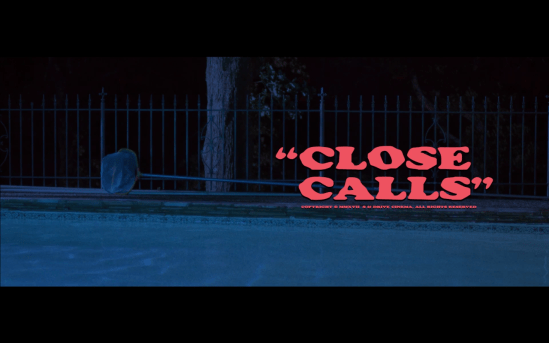
A visually colorful feast of mind-warping fear is Richard Stringham’s psychological horror-thriller, “Close Calls.” The 2017 feature that bares a undeniable resemblance to the 1970’s Italian giallo films with stark, dreamlike color lighting keenly favors an admiring homage of a bygone genre. Writer-director Richard Stringham, contributing product of “10/31” and it’s sequel, shepherds the film through S and Drive Cinema on a production that’s near entirely shot on one set location and in a handful of built sets to purposefully thrust an empathetic viewer trapped alongside, hip-to-hip, the snooty,scared, and smack-tripping Morgan and the script, which has been a work in progress for some time prior to release, finally saw completion when, supposedly, Stringham was tripping on drugs himself – that backstory alone should ensue a viewership.

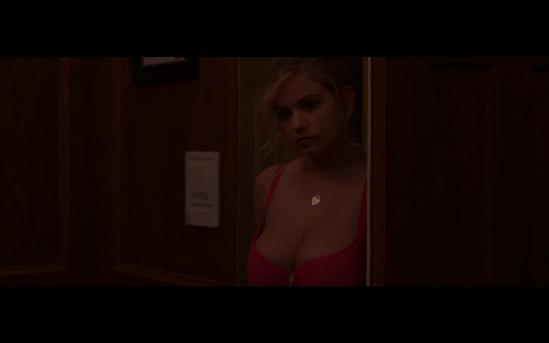
“Close Calls” introduces horror fans to Jordan Phipps as Morgan MacKenzie, the tortured receptor of the obscene calls and whose nerves are buckling under a bombardment of uppers, downers, and many, many hallucinogens. To really stomp hard on the fact that “Close Calls” is indeed a horror film and to add upon the slight separation of the normal circumstances, the unearthly busty Phipps performs in her underwear and bare feet through the entire film and its comically written against the character to undress Morgan in not a literal sense, but works toward a natural teen prerogative that Phipps courageously pulls off dutifully. Because of the very fact that “Close Calls” is the actress’s debut feature told in her character’s entire point of view, I expect Phipps to be on the casting radar as an array of talent and as one who can go unscathed in the daunting course of leading lady. Morgan has exchanges with a couple of interesting characters to note from “10/31’s” Greg Fallon as Barry Cone, a colleague of Morgan’s father with sexual deviancies and callous intentions, and “The Phone in the Attic’s” Janis Duley portraying Morgan’s mentally unstable grandmother with takes dumps in the closet. Fallon and Duley hone in on their respective roles with uninhibited momentum that viciously contributes to Morgan’s spiraling home alone situation and creepily loom a visceral presence under a disturbing guise. Carmen Patterson (“The Boo”), Kristof Waltermire, and Landen Matt round out the cast.

On a parallel plane with the losing one’s mind from a heavy dose of drugs, trauma, and spoiled entitlement, the psycho-sexual narrative of “Close Calls” shouldn’t be ignored and is fringed with totalitarian perversion. The extremely saturated provocative and mainly lewd discourse calls an uneasiness to the moral senses that undercuts the congenial desires for Morgan. Like aforesaid, Morgan struts in her underwear thoroughly through the story and Stringham elaborately showcases her assets with some fine tuned camera work and angles, but Morgan’s drug use topples her sexual stability, leaving her vulnerable against predators that also include her douchy boyfriend, but it’s co-star Greg Fallon that takes the sexual deviance to misogynistic heights as a blunt force object with a high-level stalker obsession toward Morgan. Fallon exacts a persona that’s explained to have watched Morgan from afar in the shadows and schemed plots to infiltrate her by any means necessary, even if that means killing her when he’s done. As Barry Cone, Fallon manufactures to perfection a middle aged man’s grimy malaise toward young teen women and Cone is so vile that he can even starkly contrast Morgan in a better light despite her explicable flaws.

S and Drive Cinema production of Richard Stringham’s “Close Calls” dials up onto DVD home video from Scream Team Releasing presenting the film in a widescreen, 16:9 aspect ratio, full of colorfully vibrant lighting familiar to the old Italian thriller while sustaining a complimentary cinematography with a flat vintage definition image. The stimulating combinational pops of color and lighting were the collaborative efforts of the director of photography Graig Wynn and the late colorist, Omar Godinez (“I Spit On Your Grave” remake), who died of heart failure before the film was finished. The English language PCM DTS-HD Master Audio mix has little to fear with a robust, slasheresque-score by “The Barn’s” Rocky Gray, but the dialogue track can be soft at times where the score overpowers and nearly drowns out the actors. There are also gag-like foley effects, such as when Morgan rubs cocaine onto her gums and the squeegee sound effect sounds more like something out of a Leslie Nielsen parody. With the exception of a static menu, only a single DVD bonus feature included with an audio commentary by writer, director, and produce, Richard Stringham. Loaded with psycho-sexual themes and psychedelic-contorting deconstructs, “Close Calls” is not only a 128 minutes of rabid affections for Jordan Phipps, but also a trip down the uninviting rabbit hole of collusion, murder, and an endless supply of suspense.

Purchase “Close Calls” on DVD! Click the DVD cover!

A Child’s Toy Masks a Hidden EVIL! “Kaleidoscope” reviewed!


Just released from prison after 15 years and living alone in a high capacity apartment building, Carl is anxious to finally go onto a date after a long time of solitude. Mild-mannered and quiet, he manages to strike up a date with an uncultivated young woman named Abby who takes a strange, if not alluring, interest in Carl’s humble lifestyle, but when his estranged mother, Aileen, arrives back into his life, Carl’s seemingly perfect date comes crashing down into millions of pieces and old feelings of hate and urges for substance return to a warping fold. The lust and youthfulness he feels for Abby is replaced with fear and anger as reality bends on the verge of breaking as the past and present collide to an unfathomable finale.

The first thought that pops up about director Rupert Jones’ 2016 film, “Kaleidoscope,” is to instantly relate this film to the Dutch sex wave film, Wim Verstappen’s “Blue Movie,” because of a major structural similarity that’s important to both films, is essentially an inanimate character, and is a looming presence despite the “Blue Movie” being an erotic film and “Kaleidoscope” a suspenseful psychological thriller. Both movies feature a monolithic motel-esque apartment building complex in which both house the feature character, a former inmate, and the complex becomes part of the story where as Michael in “Blue Movie” runs his pornographic business and Carl interacts with the building as an obstacle to hurdle or a contributing factor to his problem. “Kaleidoscope” marks Rupert Jones’ sophomore feature directorial and his debut as the credited writer that lightly placed notes of hinting at a Roman Polanski picture.

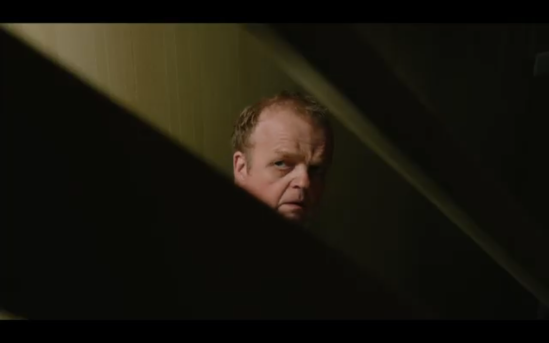
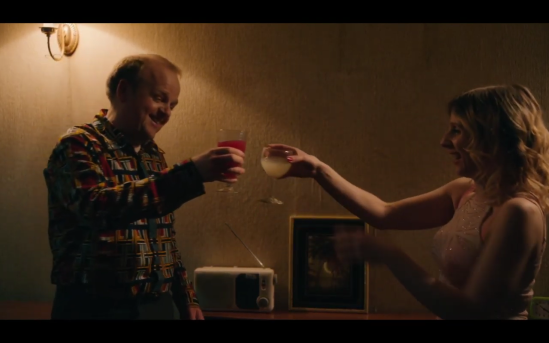
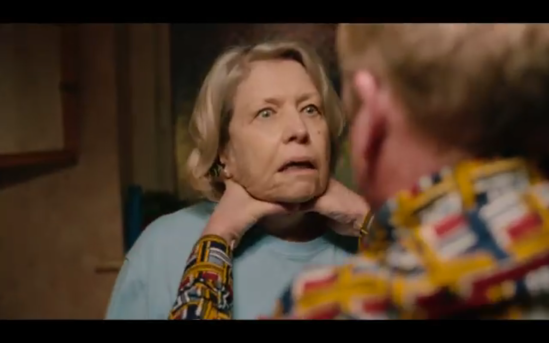
Toby Jones is sorely an underrated actor. The versatile supporting English actor has been underused since non-fictional performance of Truman Capote in “Infamous” that was crudely undermined by the late Seymour Hoffman’s titular role in “Capote” of nearly the same year more than a decade ago. However, Jones maintains a presence both in Hollywood and the indie circuit with the latter honing in on a film about a man with severe mother issues and Jones nails a browbeaten and tortured soul performance perfectly. The mother issues come courtesy of “Hot Fuzz’s” Anne Reid as a intrusive and sickly, yet superior matriarch to Carl’s whimpering passiveness. Reid’s somehow manages to pull off being manipulative and sweet in one single persona and bespoke the relationship between mother and son with the mixing water and oil. In the middle of Carl and his mother’s love-hate dynamic is a third person of an unequivocally different persona, making a trifecta of clashing personalties. Abby, played by Sinead Matthews (“A Serial Killer’s Guide to Life”), brings a little jovial pleasantry to a dark cerebral tale. Rounding out the cast is Karl Johnson, Joseph Kloska, and Cecilia Noble.

So how does a child’s toy factor into Carl’s descent into madness? The cylinder device creates optical illusions, usually in a colorful spectrum and mirroring pattern that refract when spun in a circular motion and looking at a light source to illuminate the effect. The experience is fantastical and Carl, browbeaten by not only the criminal system, but also by his family, uses it as a means of escape, an allegorical path of avoiding darkness in his life and a way to advert the melancholy that is his existence. Even his date with Abby is a gloomily skewed as she has ulterior motives to further push Carl to a metaphorical breaking point. Yet, he’s at peace with his assumed childhood toy in the handful of scenes he’s using it which recalls the image of his father; a joyful moment that’s ironically the sore point of most of his tribulations. The Kaleidoscope could also symbolize seamless duality as Carl has difficult establishing what’s real and grasping the hardline of time. Rupert Jones subverts linear and conventional storytelling magnificently to not only put Carl in a twisted world, but also throwing the viewer into chaos along with him.

Sparky Pictures and IFC Midnight presents Rupert Jones’ psychological asphyxiation thriller and Stigma Films production of “Kaleidoscope” onto UK region 2, PAL DVD home video. The DVD image is presented in a widescreen, 1.78:1 aspect ratio, on a DVD9 and the digital quality, like always, is a unfathomable well of picturesque with crisply defined shades of black combined with some variant lighting techniques to tell Carl’s current mood. “Kaleidoscope” touches more on the natural skin and coloring, but does use some dry yellow tinting and some visual effects to embark on the once penitentiary patron’s mental break journey. The English language Dolby Digital 5.1 surround sound audio mix has multi-channel sensitivity utilizing all channels to jar the senses even more and to, seemingly, weaponize Mike Prestwood Smith’s chaotic score to take the state even further. Dialogue has supremacy and clarity. Bonus features includes a standard array of extras in the cast and crew commentary, trailer, photo gallery, and storyboards. “Kaleidoscope,” like in the toy’s changing patterns, shatters hope only to rejoin it back together to then shatters it again in Rupert Jones’ heated and confrontational tale of mirthless character and taxing parental abuse affecting one soul’s chances of normalcy and redemption into society even in the face of societal kickbacks.

Sanities Dissolve in a Concoction of EVIL! “Ladyworld” reviewed!


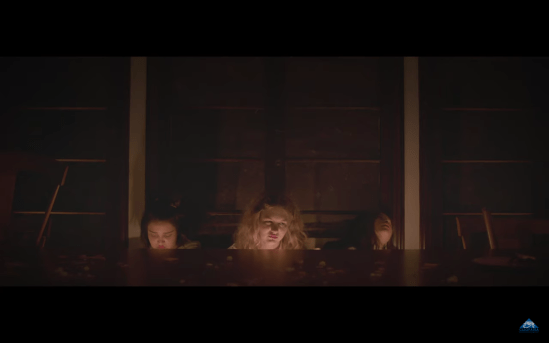
When a catastrophic ecological event traps eight teenage girls celebrating a birthday inside a house, they find themselves at the mercy of limited resources and with no adult supervision. With every window and door inescapably blocked, being trapped isn’t the only obstacle that looms over their adolescent minds when factions begin to form between sane and insanity as their cache of already scarce food and water quickly dwindle. Before her eventual disappearance, the birthday girl spoke of seeing a man attacking her right before the destructive shaking that left them befuddled. The remaining girls quickly line their thoughts in various ways from either spiraling out of control and embarking on a psyche control measure to deal with the haunting information or accepting the information and use it as a fear inducer for power. One-by-one, fears are exploited and minds are broken down to their most hostile and primal qualities that rapidly become an epidemic to those still in the realm of reality.

To preface director Amanda Kramer’s “Ladyworld,” there’s little background exposition or visual representation to really set the stage of psychological deterioration. The 2018 thriller can be said to be a modern, all-female take on the William Golding 1954 novel, “Lord of the Flies.” Produced by Pfaff and Pfaff Productions as well as A Love and Death production film, “Ladyworld” is essentially female centric and comes close to being true to form to its title in front and behind the camera with the debut feature directorial from Amanda Kramer. The script was also co-penned by Kramer and Benjamin Shearn. “Ladyworld” is credited as a festival circuit novelty with institutions such as the TIFF New Wave, BFI London, and Fantastic Fest, but “Ladyworld” is also novel in another way as in a doppelganger representation of Amanda Kramer herself as a filmmaker who sincerely believes in art house expressionism.

While all the actresses involved, portraying eight teenage girls, are spectacular in their own rite or as a pack, one particular actress stands out above the rest in name alone and more recently because of her debut in a popular science-fiction-horror Netflix series set in the 1980’s. Yup, “Stranger Things’” Maya Hawke, daughter of Ethan Hawke and Uma Thurman, has a co-starring role that elicits the use of her usually charmingly raspy voice into a gasp of unnerving bellows amongst her colorfully expressive mental deprivations. Yet, Hawke’s role, though equally headlined, seems more supportive against musician and television actress Ariela Barer and “Quija: Origin of Evil” actress Annalise Basso as the two teenage girls that consistently butt heads to jockey for leadership. The tension created between Barer and Basso is plumed unanticipated friction and is about as wild as any unpredictable scenario can muster. The last prominent character, the introduced unstable Dolly, has familiar parallels Ryan Simpkins’ Fangoria Chainsaw Award nominated performance in the also predominated all-female film, “Anguish,” from 2015. Simpkins trades in supernatural crazy for disastrous crazy as a teenage girl with a penchant for adding ten years her junior. Together, alternate and combative personalities fluctuate the proceedings, marking “Ladywold” unpredictable from not only Amanda Kramer’s broad-minded expression stance but also in solitary performances manage to flow as one. Rounding out the cast is Odessa Adlon, Tatsumi Romano, and Zora Casebere.

“Ladyworld” is an interesting experimental film and, unfortunately in this opinion, that’s about as far as this film might top in a market filled with visual pops, depth performances, and something new and shiny at every angle and turn. “Ladyworld” comes off a bit monotone to the preceptors in a flat line of congealed, unwavering tension from start to finish, despite coming to a head. Structurally, Kramer frames their environmental entrapment with just enough to make their plight more feasible without having to visually showcase it; the assumption, in one interpretation, is a Californian earthquake that resulted in a landslide that blocks all the windows and doors with hundreds, if not thousands, of pounds of pressure against the opening. Though this is only one interpretation of events, Kramer is very good at cascading the effect into being much more dire by reminding us that no sires can be heard, cell service has ceased, and all hope is lost within the limited space their held. That kind of compelling of the unknown and cerebral warping uncertainty is quite alluring, but that gripping element is not found equally invasive throughout.

MVDVisual and Cleopatra Entertainment has positive womenism vibes with Amanda Kramer’s “Ladyworld” being released onto DVD home video. The 94 minute presentation is in a widescreen, 16:9 aspect ratio format that leans conveying more to a bland and flat coloring scheme. Essentially faded, no pops of primary hues are implemented as if to devoid all hope from a helplessness scenario. Details are a bit fuzzy too resulting from an aliasing issue or jaggies around the outer edges of things. Usually with Cleopatra Entertainment releases, lossy audio tracks have been rearing their ugly heads which would cause many questions marks with reviewers familiar with Cleopatra Entertainment as its a sublabel to Cleopatra Records – a Los Angeles-based independent record label, but with “Ladyworld,” the English dual channel audio tracks is rather robust with accompanying range and depth. However, the Callie Ryan experimental acapella instrumental can be nails on a chalk board that, again, sets a gloomy tone that consistently punches you in every perceivable sensory organ. Bonus features are slim, including an image slideshow and the theatrical and teaser trailer. “Ladyworld” has niche appeal, but Amanda Kramer and crew really put themselves out into the cinema-verse with style and performance to ultimately deliver a surreal and frightening tapestry of the unhinged and underdeveloped teenage psyche.

Own Amanda Kramers all female casted “Ladyworld!”