EVIL’s Path to being a Psychopath. “The Beast to Die” reviewed! (Radiance Films / Limited Edition Blu-ray)

“The Beast to Die” on Limited Edition Blu-ray from Radiance Films!

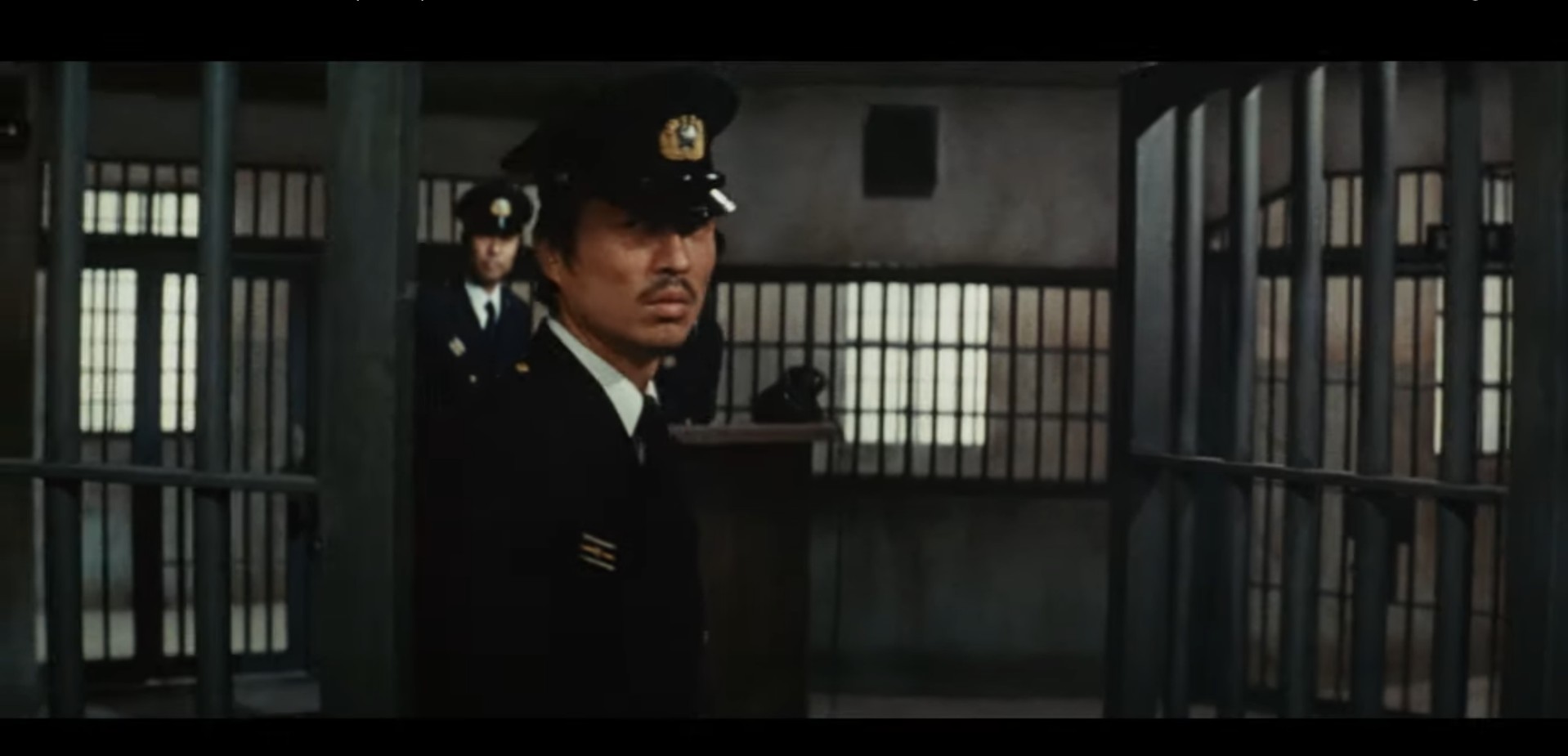
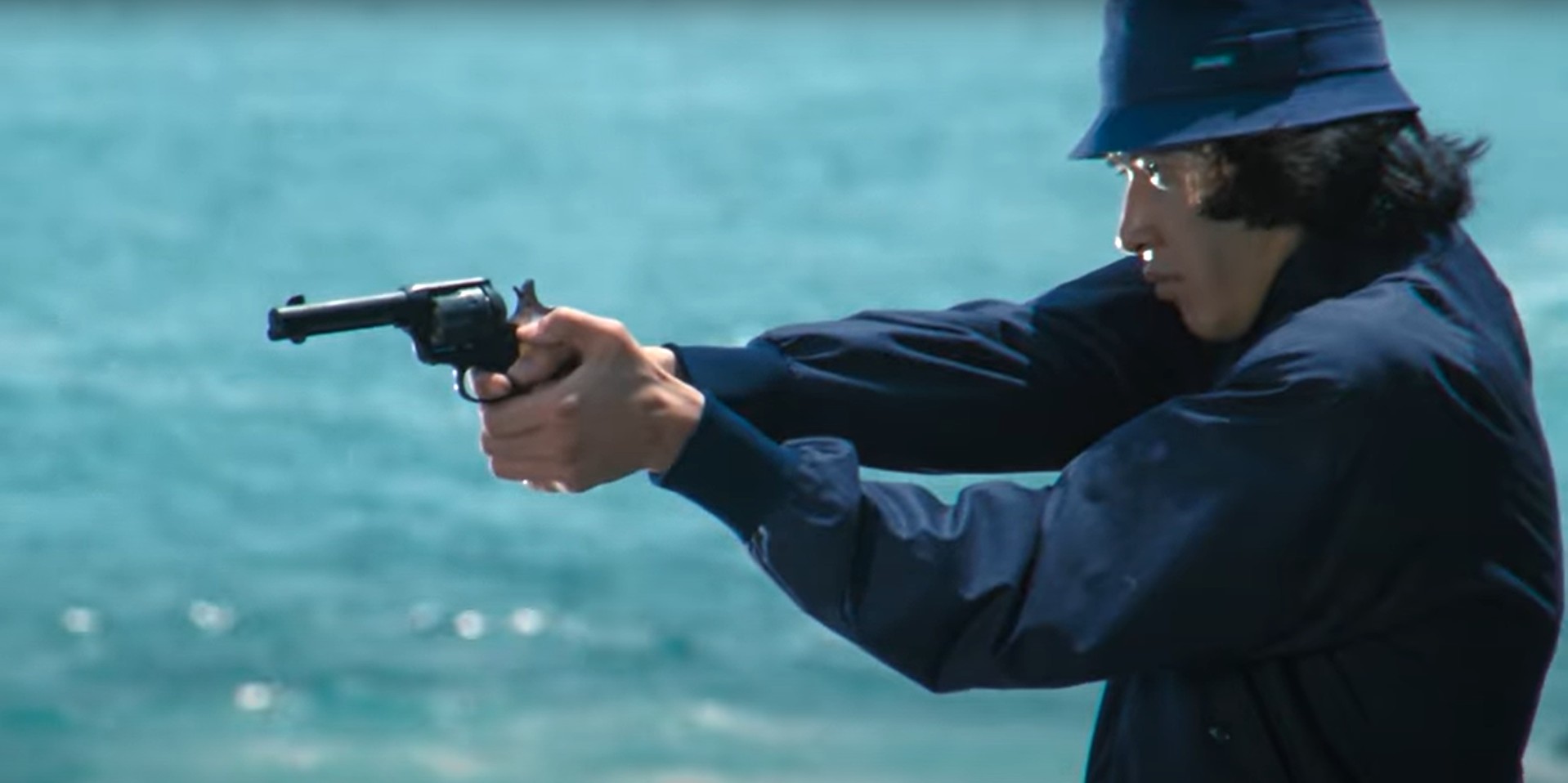
Former war journalist, Kunihiko Date, stabs a veteran police investigator to death.  He then uses the detective’s revolver and guns down three, after hours casino employees in cold blood and steals the day’s earnings.  Date’s seemingly random acts of violence and theft from a respected war journalist and photographer are not just random acts but part of a methodical plan for an upcoming heist of a bank in Tokyo’s Nihonbashi district.  Casing the bank’s security, personnel, and layout, Date’s perfect plan has one hitch; Because of the bank’s size and bustling busines, he’ll need a little help.  By chance, he comes across Tetsuo Sanada at an annual school alumni dinner with his closest friends who have a violent run-in with Sanada as their antagonistic waiter.  Seeing the same potential disregard for life and disdain for existence conventions, Date approaches Sanada and mentors him under a nihilistic wing.  Now with a plan and an accomplice, Date’s violent holdup can move forward but to what end is the length of his sociopathic carnage. 

“The Beast to Die,” aka “野獣死すべし, Yajū shisubeshi,” is the intense and violent noir-thriller from Japan, directed by “Dead Angle’s” Tôru Murakawa and a script by Shoichi Maruyama (“The Triple Cross”).  The 1980 released feature would be Murakawa and Maruyama’s second feature length production together behind 1979’s “The Execution Game,” the second film of a trilogy known as “the Japanese Game Trilogy is a visceral yakuza tale of a kidnapped hitman unable to escape the criminal underworld. “The Beast to Die” is a step away from the Japanese gangster film; instead, focuses on the interpretation of war trauma, the cynical views of precious life, and has subtle presences of U.S. big brothering, asexual themes, and coarse, unforgiving violence at the highest level of sophisticated society.  Adapted from the Haruhiko Ôyabu novel of the same name, the written origin mirrors the vehemency of visual art with the film produced by Haruki Kadokawa (“Virus”) and “The Resurrection of the Golden Wolf’s” Mitsuru Kurosawa and Tatsurô Shigaki under the Toei Company and Kadokawa Haruki Jimusho.

Undoubtedly one of the best sociopathic performances of our lifetime, “Horror of the Wolf” and the Japanese Game trilogy’s Yûsaku Matsuda is a cool, awkward, and, if not, plotting cucumber amongst the masses of jovial and hustling Tokyo denizens.  There’s a serenity about Matsuda’s Kunihiko Date that’s unparalleled, represented by blank stares, a patient demeanor, and precise movements that come in stark contrast in the film opener where Date takes down four people in one night in a show of murderous inexperienced bravado.  Even in the thick of combative survivalism, there’s only objective goal in his sweat infused brow and focused eyes while others gesture and make an invitational show of his attack or of their pleas for mercy.  Date becoming lost in classical music is a formidable way of grounding himself, not only from the high of excitement and thrills of killing, but also a way to retain sanity in the notes, an aspect he quickly unravels from when not exposed to classic music for an extended period.   Oppositely, Tetsu Sanada is full of pent-up anger as if he’s constantly hitting his head on the wall aiming to break free of the surroundings that confine his wild tiger attitude, yet Takashi Kaga (“Isle of the Evil Spirits”) maintains a personal struggle lock on the full emergence of Sanada as Kunihiko’s equal.  This dichotomy between the anger and tranquility of two sociopaths is immensely palpable that leads to a purposeful instability in a number of areas – hesitation and certainly, the sweat-inducing fear and the cooled fearless, and, eventually, the relationship’s ultimate internal destruction.  Thrown into the Kunihiko and Sanada tango is a potential love interest in the puppy-eyed Asami Kobayashi (“Sixteen Years Old:  Nymphets’ Room”) and her shared classical music and tenderness connection with Kunihiko and a happenstance Detective, played with casual approach by Toshie Negishi (“The Rapacious Jailbreaker”), being in Kunihiko’s consciously aloof presence as a pressuring force that suspects something between something off with Kunihiko and the murder of his detective colleague. 

“The Beast to Die” explores various themes around the indirect damage of post-war trauma and living and feeling like an outsider of the what’s consider the normal societal collective, but there’s another avenue to look down when consider Murakawa’s villainous protagonists.  Kunikhiko Date may have been scarred by war, but his mind always had an inkling for bloodthirst, sated through the images of a photographic lens that captured the horrors of global conflict from military losses to the collateral damage.  Upon his return to Japan, Date had lost the exciting sensation of death that has exceled his rationality beyond being Godlike, able to take life without conscious due reproach.   Sanada, in a way, is similar in his radical viewpoints but Date finds him more talk than action, held behind the line he has yet to cross unlike Date’s journalistic meatgrinder and his self-drive to kill the detective and casino workers.  As far as vices go, neither men have an appetite for sex:  Kunikhiko  watches a sex worker masturbate with little interest and his connect with Reiko doesn’t go beyond the gazes into each other’s eyes and Sanada’s fortunate relationship with his girlfriend provides him with well-off opportunity in money, business, and romance but because she dapples in rendezvous with a U.S. sailor, Sanada finds himself engrossed with spite.  Both men become essentially sexually impotent with seeing red, in anger and in blood, replacing that primal need or ravenous appetite.  The last scene between the two men becomes a crucial turning point in their cruel comradery as the forceful sex act with an unconscious woman sends the other unravelling their partnership for good.  “The Beast to Die” is a cynically cold narrative without regard for human life in the traumatizing belief one can surpass the omnipotent Gods by ending the existence of others.
A compelling dark thriller relatable to contemporary trauma feeding mentally warped violence, “The Beast to Die” arrives onto a limited-edition Blu-ray from Radiance Films.  The UK label produces a Kadakawa Coprporation-created digital 4K restoration transfer from the original and pristine 35mm print.  AVC encoded onto a BD50 and presented with 1080p high-definition resolution in a 1.85:1 widescreen aspect ratio, this Stateside edition is the picture of health with a rich palate that’s stark with contrast.  Skin tones and textures, as well as fabrics, emerge into perspicuousness without missing or dropping a beat.  Negative spaces and shadows enshroud appropriate with the keyed lit dim levels.  The grain is pleasant, stable, and natural and there are no real issues with the print itself, withstanding the test of time.  The uncompressed Japanese PCM 2.0 Stere track offers a reasonably ample sound design and fidelity with post-production dialogue, foley, and ambience recordings that creates some mismatch and distancing space between the action and atmosphere audio and the character diegetic dialogue.  There are no rough patches to mention within the audio recordings, producing more than fine discernible quality to the technical threshold.  Japanese to English translator Hayley Scanlon provides newly translated English subtitles that are spotless in the Blu-ray’s world premiere with English subtitles.  Limited to 3000 units, Radiance offers exclusive special features, including new interviews with director Toru Murakawa, screenwriter Shoichi Maruyama, and a film critique and analysis from novelist and screenwriter Jordan Harper.  The newly commissioned artwork by TimeTomorrow revamps with a new look and layout on the classic, original poster art as the primary Amaray front cover with a reversible side housing an alternate rendition.  There are new and archival essays and archival in the limited edition booklet with 27-pages of color stills, a Tom Mes Yusaku Matsude:  Lost Rebel essay from 2004 showcasing the art and films of the lead actor, a new Tatsuo Masuto essay Shadow of the Beast, cast and crew acknowledgements, and transfer notes and Blu-ray release acknowledgements.  Encoded with a region A/B lock, Radiance Films release has a runtime of 119 minutes and is not rated.

Last Rites: Radiance Films’s limited edition run of “The Beast to Die” is immaculate in every aspect – filmically, technically, packaging – and is an important piece of Japanese culture and cinematic criterion.

“The Beast to Die” on Limited Edition Blu-ray from Radiance Films!

20-Years or More Incarcerated is No Match for Tenacious EVIL! “The Rapacious Jailbreaker” reviewed! (Radiance / Limited Edition Blu-ray)

Break From Your Cage With This New LE Blu-ray of “The Rapacious Jailbreaker”

Masayuki Ueda is nabbed after murdering a drug dealer’s girlfriend during a botched meeting.  Ueda faces a 20-year prison sentence for his crime but after being processed, nothing can change his mind nor his determination to escape.  Willing to sacrifice blood for freedom, Ueda escapes and visits his lover in Kobe for a quick conjugal stop and money only to be caught again when he returns, tacking on additional years to his sentence.  His next escape plan joins forces with two other inmates and, again, his route to freedom is cut short when a brothel visit, while laying low in his sister’s village, turns into a violent brawl with another patron and the authorities round him up in the aftermath, adding more years to his sentence.  While incarcerated, Ueda must kill rival gang bosses who threaten him.  By now, Ueda’s sentence is up to 40-years, and not to be defeated by the prospect of a long term sentence, Ueda has one more desperate attempt for freedom, putting his life on the line.

“The Rapacious Jailbreaker,” aka “Escaped Murderer from Hiroshima Prison” or “脱獄広島殺人囚,”is the crime black comedy from one of the Toei Company’s aggressively eclectic and paced directors Sadao Nakajima (“The Kyoto Connection,” “Female Ninja Magic”).  The prolific yakuza and exploitation filmmaker takes the Tatsuo Nogami (“Father of the Kamikaze”) script, centered on an incessant career criminal hellbent on not spending his days in prison, and runs with it, fashioning the smidgen stitchwork of a nonfictional individual into the post-War World II, American occupation of Japan and adds inner teetering and play-by-play thought narration and the always welcoming gallows humor amongst the exploits of a stubborn felon.  Gorô Kusakabe (“Hell,” “The Red Silk Gambler”) produces the production, which is part of an unofficial Sadao Nakajima trilogy along with “Shimane Prison Riot” and “The Man Who Shot the Don.

Hiroki Matsukata, a prolific yakuza actor from the 1960s to the 1980s with such credits as “Survivor of the Massacre,” “Dangerous Trade in Kobe,” and “Battles Without Honor and Chivalry,” breaks intermittently through the gang wars and boss-laden wall of tattooed violence and varying levels of respect that’s inked the individualized stories’ skin with “The Rapacious Jailbreaker” as the titular lead character under the character’s God-given name of Masayuki Ueda, a tenacious criminal personality type with yakuza-like transgressions of drug peddling and black market trade.  However, Ueda is not a criminal without honor, even if he’s a little rough around the edges, as his loyalties lie with those who are loyal to him: a fellow partner in crime he didn’t rat out, his suffering wife (Yōko Koizumi ), his sister Kazuko (Naoko Ohtani, “Apartment 1303”), and also those who help him escape, such as  Tatsuo Umemiya’s (“Spoils of the Night”) brazen law challenger Yuji.  Yuji and Ueda match well in traits, both eager to test and take risks going against a rather lax authority grain.  Aside from the opening montage of prison routines depicting minor torture from the guards, you don’t get the sense the prison guards have much domination or enough aggressiveness to match the kind of zeal the inmates have to either run a sneaky scheme or take them on toe-to-toe to get what they want, as we see with Yuji’s disgracing efforts against the warden in order to obtain rights that are quickly dismantled by the warden’s reneging, but at the cost of his humiliation.  Matsukata never wavers or deviates from Ueda’s singular drive, layering intensity overtop his thin film of civility with every additional time added to his sentence that eventually goes beyond four decades, but you can see it not only in Ueda’s resolute eyes but in Matsukata’s as well that nothing will stop him from escaping.  The film fills out with Hiroshi Nawa, Gorô Ibuki, Tatsuo Endô, Shigeru Kôyama, Hideo Murota, Harumi Sone, and Akira Shioji in various rolls of yakuza, fellow inmates, and those crossing Ueda’s path in the outside world.

Staying on the theme of Ueda’s loyalty, which is incredibly beyond reproach given his heinous crimes, there’s something to be said for his commitment to be free as a bird but also to the people who do right by him, no matter the circumstances. His wife pledges endless loyalty despite his flaws and felonies, his estranged sister welcomes him with food and shelter, and his opening criminal accomplice provides him a weapon before thanking him for not ratting when Ueda was apprehended by police. There’s an underlining code of respect and duty intertwining the utter most wicked and those blood relations in the field of collateral damage. Ueda’s responsibility for his actions never wanes, never deflects, and never becomes a weight of guilt as the only object, or maybe even obsession perhaps, on his mind is to escape prison and make quick, easy money. His loyalty does come at a fault when his trust reaches into the weeds, especially amongst those he’s already collided head-vs-head against, such as the former head of the black market beef butchers who turns on Ueda for false promises, but it’s in that one and only instance that everything becomes clear, much more to the audience than perhaps Ueda himself, is that in order to remain just out of arms’ length of the law, he must walk his path alone as depicted at the finale moments. The post-World War II American occupation time period has an interest facade to “The Rapacious Jailbreaker’s” context. In fact, the American presence is rarely present at all with Ueda feeling the squeeze mostly in-house within the Japanese penal system with the Americans only rearing their heads in obstacle of his escape attempts in a negative light: Ueda’s standoff against Japanese officers, who won’t shoot him surrounded by a crowd in fear and respect of bystanders, comes to a quick surrender when the Americans, who are perceived to shoot on sight no matter the circumstances arrive on the scene or when his fellow escapee tries attempts to befriend American forces in a military truck only to be runover and killed without remorse or even a slow down. These seemingly insignificant instances spoke volumes against the American occupation as a non-character in Ueda’s tale of total resistance that, one that either represents the American cold passive care of the Japanese under their rule or switch the ironfisted from Japan to America to favor a more lenient system of control.

Radiance Films’ transatlantic “The Rapacious Jailbreaker” lands in the U.S. for the first time on any format, and first on this particular format globally, with a new limited-edition, AVC encoded, 1080p high definition, 50-gigabyte Blu-ray. The dual layer allows for steady color timing and pristine picture quality image that’s leans into its attractively grained 35mm stock and presented in its original widescreen aspect ratio 2.35:1. The original print, transferred into HD from the Toei Company, is nearly faultless with only minor instances of vertical scratching around the theater scene in an otherwise near clean and clear element print. Nakajima’s lower contrast allows for softer coloring and the touch points on Radiance’s treatment showcase a more relaxed but harsh grayish blue with surrounding aspects from the prison’s hoary cement floors and walls to the prison’s steely cell bars and the prisoner’s blue attire. The uncompressed Japanese language PCM mono track offers clearcut dialogue and ambient markers with a clarity on both fronts that render an intelligible layered track without any compromising issue. Kenjirô Hirose (“The Last Dinosaur”) brings a 70’s cop-and-crime swanky score with undertones of traditional Japanese Hyōshigi, the striking of sticks to create that brief and stark crack sound. New translated English subtitles are available, pacing well and are error-free. Encoded special features include a visual essay by film critic Tom Mes and an audio commentary by yakuza film expert and Sadao Nakajima historian, Nathan Stuart. Radiance’s limited-edition set comes in a clear Amaray case with a reversible cover with original and new artwork, the latter commissioned by layout designer Filippo Di Battista (primary). Also included is an obi stirp with the release’s contents, technical specs, and film plot. Limited to 3000 copies, the release comes with a 23-page black and white booklet with stills, an essay Escape as Vocation by Earl Jackson, and a 1974 review by Masaharu. The 97 minute feature comes region A-B locked and unrated from the UK label.

Last Rites: “The Rapacious Jailbreaker” is hardboiled tough as nails while being a series of comedic follies that make this tenaciously titled story of one man’s pursuit of freedom a breakout hit.

Break From Your Cage With This New LE Blu-ray of “The Rapacious Jailbreaker”

The Empire of EVIL Reduced to Prostitution, Corruption, and a Wasteland. “Gate of Flesh” reviewed! (88 Films / Blu-ray)

88 Films’ “Gate of Flesh” Now Available in the U.S.!

The American occupation of Japan post-World War II was the result of not only the Iwo Jima atomic bomb but also the relentless destruction of carpet-bombing Tokyo.  Left in near ruins and swarming with the presence of American soldiers, the Japanese people have disseminated into gangs and territories for financial gains and power.  For Kanto Komasa, she and her gang of highly motivated women prostitute themselves for sex-starved American soldiers to accure money for Paradise, the future name of their bomb-ruined, leftover-skeletal building structure revamped into an elegant dance hall where they run the show.  When a rival male gang threatens their business, another all-woman gang challenges them, an inducted outsider betrays them, and a bloodied stranger is found inside their bombed out homebase, all with the Americans military police continuously rounding up prostitutes nightly, Komasa and her gang must walk the paved road through Hell to scratch and claw toward Paradise, even if that means going against their set principles.

Since the end of the World War II Pacific campaign, Japanese novelist Taijirô Tamura’s “Gate of Flesh” has been filmically adapted a handful of times just after the war in 1947.  In 1948, directors Masahir Makino and Ozaki Masafusa first adapted the novel, followed by the Seijun Suzuki version in 1964 and Shōgorō Nishimura’s adaptation in 1977.  In this review, Hideo Gosha’s “Gate of Flesh,” also known as “Carmen 1945,” moves from samurai period actioners, such as “Sword of the Beast,” “Three Outlaw Samurai,” and “Samurai Wolf,” and into a yakuza era of storytelling that came on strong in the 1980s.  “Gate of Flesh” is no different with plenty of yakuza tropes without actually affirming the term in the dialogue.  Gosha’s tale provides more glamour, style, and substance, especially around themes of inner turmoil under outsider control and the divine praise for an enemy-built weapon of destruction, from a screenplay by prolific writer Kazuo Kasahara of “Hiroshima Death Machine” and “Yakuza Graveyard.”  The Toei Company production is produced by Shigeru Okada (“Inferno of Torture”).

“Gate of Flesh” has the interweaving stories of an ensemble with the various faceted chess piece pawns aimed to promote themselves, by cutthroat and sordid means, to a higher degree of social status and wealth improvement like queens and kings within a crummy economical and degraded societal Tokyo commune of prostitution, gambling, and survival.  There are also a few other pieces stealthier knighted behind enemy lines with more noble goals in mind.  While different storylines unfold and merge, Kanto Komasa becomes the generally sensed centerpiece, played by Rino Katase of previously directed Gosha films, “Yakuza Ladies” and “Tokyo Bordello.”  Her preparedness to take on the “Gate of Flesh” role as the female-led gang leader promising Paradise has been success before of her previous performances in Gosha’s films that contain similar traits but Katase delivers a powerhouse, immensely conflicted, act as Komasa’s hopes and dreams to dig herself out of poverty and into high-class are thwarted by deceptive ranks, a haunting past, and, of course, the more present occupation troubles of inner city gang-on-gang wardom, battling advances, negotiates, and the potential for mediation between fellow gang leaders Yoshio Hakamada (Jinpachi Nezu, “Ran”), who wants her building that’ll be lucrative in the future, and Rakucho no Osumi (Yūko Natori, “Stranger”).  Of course, there’s more to bereft Komasa’s mind with the sudden wounded appearance and peculiarity familiarity of stranger Shintaro Ibuki (Tsunehiko Watase, “The Rapacious Jailbreaker”) who has protective parallelism with the 2-ton bomb that also acts as a rival gang repellant and an explosive safety net for Komasa.  Secondary characters provide a layered depth to Hideo Gosha’s charismatic and gender-battling narrative with Miyuki Kanō, Yūko Natori, Senri Yamazaki, Shinsuke Ashida, Naomi Hase, Chie Matsuoka, and Yoshimi Ashikawa.

Surreal like a dystopian science-fiction and wasteland thriller, “Gate of Flesh” has that otherworldly, alternate reality appeal accentuated by Hideo Gosha’s colorfully grim realism that doesn’t convey truth or fact.  In fact, “Gate of Flesh” is very much rooted in reality, truth, and fact in regard to U.S. occupation of Japan after the country’s surrender between 1945 and 1952.  This drops a non-fictionalized period as “Gate of Flesh’s” backlot, corroded by the illicit prostitution that spread to satisfy and bank off allied forces.  Gosha’s film is a game of wits amongst crooks and connivers while the developing sympathy envelopes around the seemingly tough of nails Kanto Kamase with a violin-pining and sympathetic backstory colliding with the injured Colt Shin aka Shintaro Ibuki.  Ibuki himself has history, or perhaps even beef history, with the iron rule of Hakamada, but through thick and thin, Ibuki’s clearly maneuvering the chess board around protecting Kamase for clued in reasons only to be precisely unveiled near the end.  The American presence doesn’t even feel weighty, reduced to hooker johns, voiceless military police, and a one uncouthly boisterous and unpleasant Sergeant to become the poster boy from Japan’s perspective of the occupational paradigm. Other than that, the U.S. forces are background noise, a sidestepped component of a much bigger, domestic ordeal amongst the Japanese people but are still the cause of so much heartache, gangsterism, and civil war.  Sex is also a huge theme as strictly a monetary activity rather than a joyful expression of romance and liberating relief from oppression, which there is none from U.S. forces.  Kazuo Kasahara’s script skirts around the inkling of affection between two people as much of everything else is for ostentatious and desperation means in a time when there was not much else to hold onto in Tokyo after suffering defeat, aside from ruined property, cash for hope, and tattoos to honor the past. 

88 Films proudly presents “Gate of Flesh” from their UK catalogue to their quickly growing US list of titles.  The AVC encoded, 1080p high-definition, BD50 is the first home video release for the rest of the world outside of Japan with a limited-edition release, presented in the original aspect ratio of 1.85:1 widescreen.  Hideo Gosha’s style brilliance flourishes with this impeccably detailed and graded release that pedestals a rich and sustaining color palette.  The stabilization of color extends to the details as textures pop from the screen, especially in Kamase’s gang where each one has a distinct color flair and different pattern design to have them stand out amongst each other in a story that’s greatly character-individualized aware and often tangents into side characters to be worked into the parent plot.  No compression issues to note, day and night transitions have equal clarity and depth, and the Gosha and Yuko Morita’s aesthetic brings the stylistic aspects to the forefront without taking away from the schemes of skin tones and milieu details in the set design of a tumbledown Tokyo.  The Japanese LPCM 2.0 Mono mix diffuses perfectly into the single channel fold and aligns well with the picture, casting synchronous UK English optional subtitles that only had a single misspelling that I had caught.  “Gate of Flesh” has plenty of range and depth captured precisely on this 88 Films release that doesn’t show signs of audio layer wear or any compression issues.  The summiting explosion capitalizes the full potential of the mix with a story grand exit designed to be immersive as possible in its limited capacity through an assistant of visual means.  The special features include an audio commentary by film critics and analysts Amber T and Jasper Sharp, critic Earl Jackson provides an introduction on the many adaptations of Taijiro Tamura’s “Gate of Flesh” with timelines, history, and his own preference accompanied by stills, posters, and video clips, an exclusive interview with tattoo artist Seiji Mouri Flesh & Blood Tattoos who doesn’t view the Gosha’s work as a yakuza-spiced, and rounds out the content with a still gallery and a pair of trailers.  The limited-edition and numbered set, that includes an Obi strip over top a commissioned illustrative composition covert art by Ilan Sheady and housed in a clear Scanova case, contains a 23-page booklet with color photos and posters and essay notes by Robin Gatto and Irene González-López.  The cover art has a reversible side with the original Japanese poster.  Only playable in region A and B, the not rated 88 Films disc comes not rated and with a 119 runtime.

Last Rites: “Gate of Flesh” bears the weight of Taijiro Tamura’s prostitution-laden tale of survival, revenge, and hope with Hideo Gosha’s cinematic eye that captures the beauty and indomitability in the badlands of the occupied proud.

88 Films’ “Gate of Flesh” Now Available in the U.S.!

Pinksploitation EVIL is Transgressional Passion! “Love and Crime” reviewed! (88 Films / Limited Edition Blu-ray)

Limited Edition and Numbered Blu-ray / DVD Set Available at Amazon!

The dead body of a young woman arrives at pathology for post-mortem autopsy.  A victim of a heinous crime, the bare corpse already informs the head pathologist of sexual activity before, or after, death because of the fresh semen that’s inside her.  As he toils over her to open the chest, separate the ribs, and get a good look inside to see how and why she perished, the pathologist remains in disbelief that the semen inside her, inside his lifeless wife before him on the cold medical table and under the bright lights, is not his own.  Digging deeper into how someone could kill his beloved wife, the researcher in him hits the books, selecting and scouring through records of similar cases of murderers and rapists from over the years.  Each one under different circumstances concludes in a sentence that reflects the person they have become.  Inside the mind of a killer is a long hard look at ourselves in how far we go for treasure, love, and to quench our insanity. 

“Love and Crime,” or officially known under the Japanese title as “Meiji Taishô Shôwa: Ryôki onna hanzai-shi” aka “Showa Era:  History of Bizarre Female Crimes,” is the Japanese anthology from 1969 that pictorializes true crime narratives of mostly women transgressors, as the title suggests.  Yet, the Teruo Ishii helmed anthology is not entirely female perpetrator centric as the anthology jumps ship briefly to explore crimes against female victims for a crossover, comparative distinction.  Ishii, who played his hand in producing late 1960s sexploitation and violence by directing films in Toei Company’s pinku series that showcased the two subcategories, such as “Orgies of Edo,” “Shogun’s Joy of Torture,” “Inferno of Torture, and among many other titles with similar salaciousness, was thrust into “Love and Crime’s” consolidating short film escapade with a wraparound monologuing narrative that was just as intriguing as the sordid stories themselves.  Shigenu Okada produces “Love and Crime” as well as many of the films aforementioned.

Yoshida Teruo kicks off the wraparound with a mater-of-fact narration running through the head of Murase, the anatomist examining his dead wife’s corpse (Ritsuko Nakamura), in what would be the grisliest part of the anthology, especially when that chest snaps during separation.  Having worked with Ishii previously with “Abashiri Bangaichi,” a crime thriller about a reminiscing criminal aimed to reform himself, Teruo only worked a short stint with the Toei Company but his time spent on such films like “Crime and Love” discerns a piece of the dramatic devotion that would be otherwise missing in these purely exploitative films.  As Marase puts nose to book, he unearths and internally narrates the start of his true crime story journey research, beginning with the cut-throating scheme of the Toyokaku Inn case.  Chiyo (Aoi Mitsuko, “Melancholy Flesh Business:  Sensuous Zone”) and Kosuke (Kenjire Ishiyama, “Kwaiden”) own and run the humble Toyokaku Inn but when Chiyo seeks to changes businesses and cut ties with her philandering husband Kusuke, a treacherous and murderous plot against her is formed between Kusuke, spearheaded by assistant manager Kinue Munekata (Rika Fujie, “Outlaw:  Heartless”), and executed by maintenance man Shibuya (Takashi Fujiki, “Shin Godzlilla”).  From there, the film transitions to other female intertwined crime tales of Sada Abe, a woman who would kill her lover because of love and insistence during alternative sex, the case of Kunihiko Kodaire, a serial rapist and murderer spilling tricks of his trade to authorities, and the last known female murderer executed by katana beheading, Takahashi Oden, for poisoning her husband.  Each performance plays into the intricate patterns described by their true life counterparts with either a chilling contentment in taking a life or hurdling the obstacles inward to do the unpleasantries of what is asked of them  Circumstantial opportunities and conniving plots bury bodies six-feet under in a multifacted range of expression, greed, lust, and all the other deadly sins that plague mortals right to the very end.  “Crime and Love” fill out the pinksploitation anthology with Yukie Kagawa (“Female Prisoner Scorpion:  Jailhouse 41”), Eiji Wakasug (“Inferno of Torture”), Tomoo Koike, Tatsumi Hijikata (“Orgies of Edo”), Yumi Teruko (“Horrors of Malformed Men”), and a special appearance by the actual, reclusive, convicted murderer Abe Sada herself, shot from a distance while being interviewed by Yoshida Teruo.

As anthologies go, especially one rare as true-life crime and love, or in this case sexploitation,” “Love and Crime” has an unsystematic design when it comes to the stories and how they relate to the wraparound narrative.  For starters, not all the bizarre crimes are female centric.  The story of Kodaire revolves about a male serial rapist and murderer divulging his collected anecdotes to investigating confessors and are depicted in monochromatic flashback, the same as his present yarn telling scenes.  Though the case involves multiple women victims, Kodaire greatly stands out amongst the compilation of crimes for the very fact he is a man in an anthology literally entitled History of “Bizarre Female Crimes.”  Was the case of Kordaire a gap filler? Perhaps the uniquity of Japanese serial killers is so low and rare in their culture and history that this particular short story had enough estrogenic blood spilled it avoided the short list cut.  Each story’s relationship toward the wraparound is also thin as neither story suggests a same or remotely similar pattern to death of Maruse’s wife in what is more of a random-generator selection of stories read and worked through for better understanding of the killer female psyche rather than what makes the male killer tick to hit-and-run his wife.

“Love and Crime” is 88 Films’ answer to opening the door of the wonderfully violent and sexually charged world of pinksploitation.  A limited edition and numbered dual-format, AVC encoded, 1080p, 50-gigabye Blu-ray and standard definition, MPEG encoded, dual-layered DVD, set presents the 1969 film in the original aspect ratio of 2.35:1.  With various stylistic color grading outfits, such as grayscale image for the Kadaire case story or the last case of Takahashi Oden that’s starkly cold rooted in blue and green.  There’s not a lot of mention of what kind of work went into restoration but the print has kept in excellent condition with age or damage wear kept to a minimum with nominal vertical scratching and dust speckling.  Colors appear to be handled with true reproduction of the dyed processing, rich and bold leaves no room of ambiguity of image or object representation.  Skin tones appear natural that do flirt a lighter shade of orange at times, textures are coarse and greatly apparent, even in the black-and-white story, and there’s tremendous environment or background distinction that creates an organic depth between character and their setting rather than them being crushed into an all-in-one image.  The encoded audio is the original Japanese language LPCM mono 2.0 that captures the soothing project whir during post ADR.  Dialogue retains prominence with a clean enough clarity albeit some negligible hissing sporadic throughout.  Ambience is not as enlivened within what’s mostly an isolated dialogue mix but is there to complement to composition when necessary, such as the blustery snowfall during the execution that sets a tumultuous tone of desperation and severity.  The improved English subtitles are timely synched and error-free.  Special features include an audio commentary by the 88 Film’s Japanarchy release fire starter and Midnight Eye’s co-editor Jasper Sharp and Fangoria staff writer Amber T., a brand-new film introduction and conversation by film critic and journalist Mark Schilling, a still gallery, and trailer. The Obi-striped 88 Films packaging has a very familiar feel to what Radiance Films, another boutique UK label, is doing with their Blu-ray releases nowadays and “Love and Crime” could be confused for a Radiance resemblance, but clear UK Amary has a gorgeous, commissioned, newly designed artwork from Ilan Sheady that brings all the sordid shades of this anthology to life. The cover art is also reviersible with the original Japanese one-sheet. Inside, the Blu-ray and DVD overlap in a dual-disc lock system on the right while the left stashes 15-page black-and-white-and-colored pictured adorned essay by Nathan Stuart prologued with cast, crew, and release acknowledgments and bounded by the same Sheady artwork without the Obi strip obstruction. 88 Films release comes both in region A and B playback, is not rated, and has a runtime of 92-minutes.

Last Rites: “Love and Crime” will be a love-it or hate-it anthology of early pink violence and sexual discordance because of its broad stroke theme but the 88 Films’ limited edition, Japanarchy debut is an exciting and eager look toward the future of the label’s dive into Japan’s exploitational cinema.

Limited Edition and Numbered Blu-ray / DVD Set Available at Amazon!

A Gang’s EVIL Ransom Elicits the Wrath of “Zero Woman: Red Handcuffs” reviewed! (Neon Eagle Video / Blu-ray)

“Zero Woman: Red Handcuffs” is Number One on Our Must Have Lists!

When undercover officer Rei lets her overwhelming emotions kill a suspect on an assignment, her displeased colleagues lock her into a cell, unable to decide her fate with fear of public outcry of police brutality that would blemish the department and force leadership regsinations.  When a prime minister candidate’s daughter is kidnapped by a ruthless gang of rapists and murderers and brought to a cathouse for sale, the brothel madam believes the young woman is better exploited by issuing a large ransom for her safe return.  Unwilling to face public scandal, the politician and a rigid yet loyal investigator of the clandestine Zero Division rig up a covert plan to eliminate every person involved with the kidnapping by offering a murderous deal to Rei in exchange for her freedom.  Rei’s able to infiltrate the gang’s inner circle only to see the plan devolve into chaos and blood between the gang and corrupt authorities.   

Japan doesn’t make films like “Zero Woman:  Red Handcuffs” anymore!  The violent Toei company pinkusploitation production, released in 1974, played a major role in unifying the sexual appetites of Japan’s pink pornos with the rough-and-tumble violence of exploitation action films.  The rising of Nikkatsu Roman Pornos forced the hand of the Toei Company to expand their portfolio, creating such as combinational conquest over salivating grindhouse cinema patrons that the radical subgenre deserved a new sublet coinage labeled pinky violence.  Toei company man Yukio Noda, a staple yakuza filmmaker for the company, helms the visuals translated from a script penned by “Female Prisoner #701:  Scorpion” writers Fumio Kônami and Hirô Matsuda.  Loosely based off the manga written by Tooru Shinohara (who also penned the manga of “Female Prison Scorpion series”), “Zero Woman: Red Handcuffs” stitches its own blood soaked and sexually provocative clothing that would later continue “Zero Woman’s” adventures throughout the years with more films.

Cladded in a chic long red coat, black boats strapped up just below the knee, and wielding an extra-long connector chain pair of red handcuffs, Rei is the anti-heroine of our manga fantasies.  Miki Sugimoto works deep into that fantasy vision as Rei, Division Zero’s lady cop who will do anything and everything, clothed or undressed, to get the job done, even with extreme prejudice.  A frequent delinquent girl portrayer for Toei Company’s gritty bad girl gang pink pictures (try saying that five times fast), Sugimoto’s filmography include the “Girl Boss” series, “Terrifying Girls’ High School:  Women’s Violent Classroom, and “Criminal Woman:  Killing Melody,” and so Sugimoto already had established this foundational layer for Rei as a fortitude of badassery and now tacking on another layer of a moral high ground, justified only by seeing her word through to the end.  Rei is up against a gang of five – four street thugs led by the recent prison released Nagumo (Eiji Go,” The Executioner”) and one lesbian brothel madam (Yôko Mihara, “Sex & Fury”) – as she agrees to a back-against-the-wall deal and slyly subverts the gang by helping Nagumo during a faux ransom sting operation.  Along with Sugimoto’s stoicism, the Toei porn actress retains her promiscuous allure, one where she doesn’t have to do anything to be seductive but just be herself, working not only toward the favor of her character, who continuously is taken advantage of sexually without shame, but also keeping the integrity of the Toei élan for Japanese sleaze.  “Harakiri’s” Tetsurô “Tiger” Tanba resides to the general’s overlooking hill as the prime minister candidate who sends his battlefield colonel in Hideo Murota (“Rape and Death of a Housewife”) to be the Zero Woman’s handler.  Their scheme quickly devolves as their plan evolve when the operation goes slower than expected and the gang’s leader Nagumo begins feel the pressure of paranoia and starts to unhinge, especially around his ruffian acolytes played by Seiji Endô, Rokkô Toura, Iwao Dan, Kôji Fujiyama, and Ichirô Araki as Saburo the mysteriously quiet, aviator-waring knifeman who in himself is an interesting character.  Cast fills in with the Japanese speaking Westerner Ralph Jesser in a wild opening sequence that results in a gunshot to the groin!  

Like most pinky films, “Zero Woman:  Red Handcuff’s” incorporates an X-rated sexual violence but unlike most pinky films, the pinky violence subgenre omits the softer side of sensuality, creating more of a nihilistic viewpoint toward sex of taking what you want, when you want it, and aggressively at that.  Yukio Noda picture contains hostile lesbianism, gang rape, and pressurized perversions that take control thematically in pinky violence.  The corrosive context that has a guilty pleasure pull in most patriarchal dominated cultures and fleapit cinemagoers goes hand-in-hand with the over-the-top violence conjoined at the hip of cause-and-effect.  Usually, the narrative goes an ugly rape equals hard-fought revenge; in Noda’s film, the cause is the kidnapping, and subsequent deflowering of a power politician’s little girl leas to the Zero Woman effect of silencing with corporal punishment that circumvents the law.  Stylish like a spaghetti western and brutally violent, “Zero Woman:  Red Handcuffs” is a meanspirited, out-for-blood, femme fatale engendered on the verge of the pinkusploitation genesis.

Neon Eagle Video, a collaborative boutique label effort between Cauldron Films and Mondo Macabro’s Jared Auner, releases “Zero Woman: Red Handcuffs” onto a new Blu-ray, restored in 4K from the 35mm print. The transfer is AVC encoded, 1080p high-definition, onto a BD50 and shown in the widescreen aspect ratio of 2.35:1. A relatively clean 50-year-old print hardly displays any age wear, if any at all. Scarcely marred by blue vertical emulsion scratches in only a single scene, the print retains and is stored with care to diffuse the range of color and to effectuate as much detail as possible in textures and skin while without taking away from Noda’s underbelly surrealism. The lower contrast infuses a pulpy layer to create softer shadows, but contouring manages to stick an outline thanks to key Rembrandt lighting precision, akin to Hammer Horror with a splash of Kensington gore. The uncompressed Japanese DTS-HD MA 2.0 mono peaks with the best possible optical audio. While not much in the way of depth creation, there’s plenty of range in the Foley, even if it’s artificially abstract and illogical compared to shotgun microphone captured audio. The ADR synch is one of the best inlaid post-recordings with visuals that renders hardly any feedback or unnatural noises on the audio layer. English subtitles are burned into the only available Japanese language picture on the release. Special features include a feature length audio commentary by author and producer for Vinegar Syndrome Samm Deighan, Sex + Violence = Pink Violence TokyoScope author Patrick Macias analyzes “Zero Woman: Red Handcuffs,” and an image gallery. Graphic designer Justin Coffee produces a new, rich-in-red, and taletelling composite illustration of what kind of film to expect on the front cover art of the clear Amaray Blu-ray. The reverse cover houses another illustration, one pulled from the feature’s original poster line. The BD is pressed with more Coffee fiery and red-laced artwork. This particular copy reviewed is not the limited edition set with accompanying slipcover and neither copy contains insert material. The region A playback release comes unrated and has a runtime of 88 minutes.

Last Rites: “Zero Woman: Red Handcuffs” is a fine introductory film into the world of Pinky Violence, a starting line for those perverse-thirsty for the unification of sex and violence in Japanese cinema. Neon Eagle Video delivers excellences with their restored print, second to none in its picture and audio quality that will provide a sterling experience.

“Zero Woman: Red Handcuffs” is Number One on Our Must Have Lists!