Superpowers Can Be Just as EVIL as They are Good. “The Unhealer” reviewed! (Scream Factory / Blu-ray)

“The Unhealer” on Blu-ray home video from Scream Factory!

An old graverobber unearths the supernatural powers of an ancient Native American burial ground that gives him the ability to heal as well as to be resilient against injury with self-restoring powers.  When exploiting the local residents of his newfound “Godly” gift, a botched healing of a bullied teenage Kelly with severe pica disorder transfers the powers to him, curing his disorders and restoring his health while also leaving the old graverobber to die.  With a new lease on life, Kelly pursues his dreams, standing up to his relentless tormenters, and even finding the courage to ask out a girl, but when the powers prove to be addiction beyond control and the bullies never let up on their aggression on him, Kelly uses his newfound gifts to exact a deadly course of revenge. 
“Pet Sematary” meets “Christine” – a Stephen King-esque bully-revenge, supernatural thriller “The Unhealer” from the Argentinean born director Martin Guigui.  The music video and feature film director returns to American horror nearly a decade later after helming the 2011 “Beneath the Darkness,” starring Dennis Quaid, with a thrilling teen angsty script penned by first time screenwriters Kevin E. Moore and J. Shawn Harris that recalls a narrative very familiar to the late 80’s to early 90’s with oppressive high school bullying by the jocks and the turning point revenge by the receiving end pipsqueak.  Originally scripted under the title “Pica Boy,” “The Unhealer” reveals the dangers of severe polarities between one disorder to the next with the humbling fragilities trapped inside one’s own psychological disorder to the over-confidence of feeling invincible due to physical anomalies that result in no pain being suffered, losing one’s empathetic reasoning.  “The Unhealer” is produced by writer J. Shawn Harris and his sibling actress, “Night of the Demons 2” and “Night of the Scarecrow’s” Cristi Harris along with star Natasha Henstridge and “Why?” filmmakers Corbin Timbrook and Galen Walker with Horror Business Films and 7 Ideas serving as production companies.
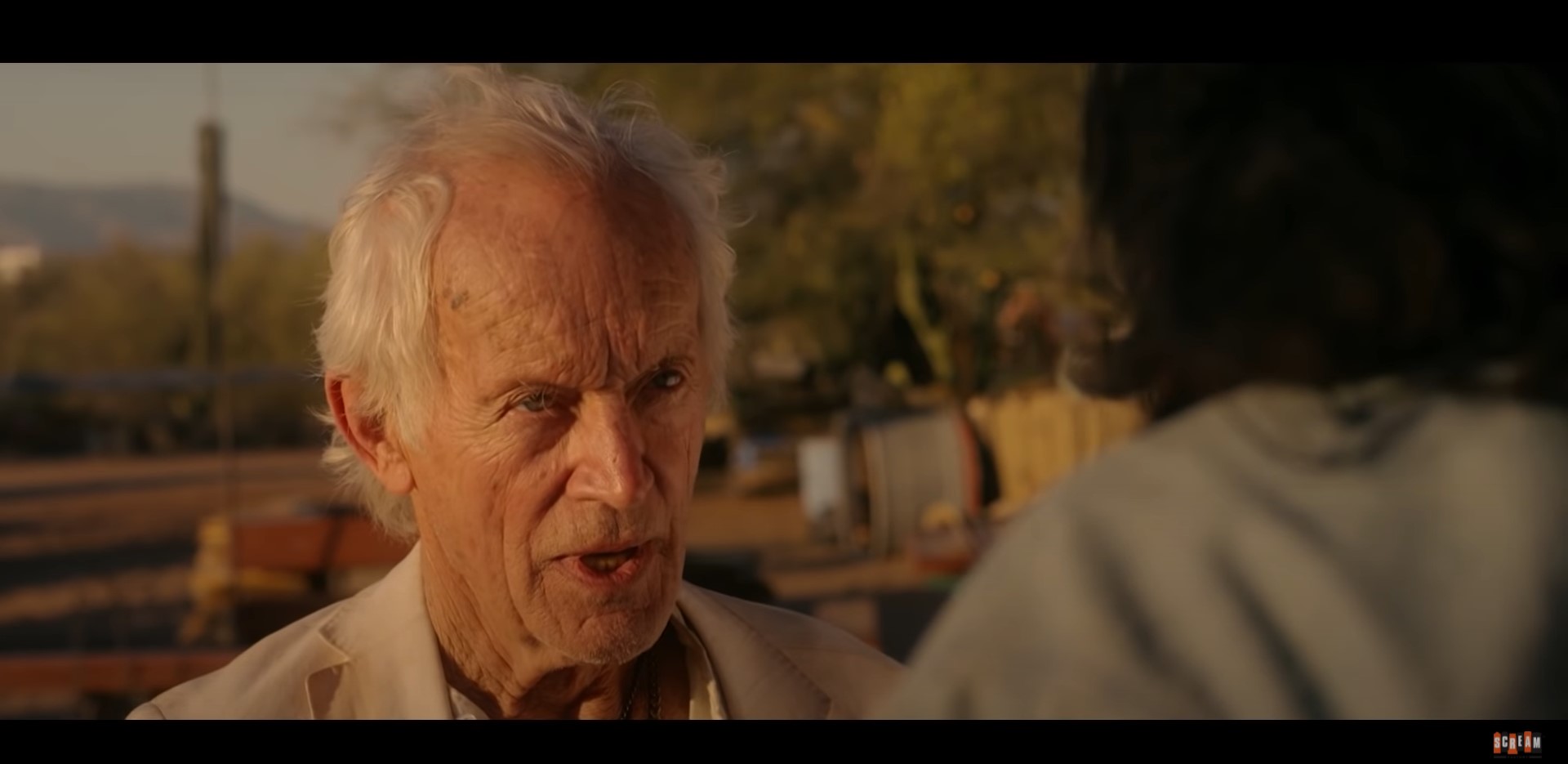
Headlined with three big and recognizable names inside the genre circles and out, the film stars Lance Henriksen (“Pumpkinhead,” “Aliens”), Natasha Henstridge (“Species,” “Ghost of Mars”) and Adam Beach (“Windtalkers,” “New Mutants”) playing variable degrees in their roles important to “The Unhealer’s” story progression and each performance never overlaps prominent personalities that can sometimes stall out and unbalance a production.   Henriksen plays a long in the tooth snakeoil salesman named Pflueger who exploits the locals with his newfound healing powers and when he’s hired by Kelly’s desperate mother, Natasha Henstridge, the scene becomes a passing of the torch as Pflueger unintentionally transfers his powers to Kelly (Elijah Nelson, “Chain of Death”) that magically heals him of his longtime psychological Pica disorder. Not so much a youthful soul anymore, Henriksen has tall tell signs of showing his age, but the 81-year-old New York City born actor can still sear memorable performances into our psyche with a wisecracking charlatan conman in Pflueger, dressed from head to toe in a shabby white suit and tossing up awkward hand gestures when deriding burial ground protecting Shaman Red Elk, played by long time serial supporting man Branscombe Richmond (“Commando,” “Hard to Kill”). More awkward in his reaction to receiving an unexplainable supernatural gift is Elijah Nelson who goes from deaths door to want to join the Navy Seals in a matter of minutes after the Pflueger plot point passes. The writing doesn’t exactly assist in Kelly’s transition with an acceptance of power without an inkling of trying to comprehend is as Kelly tries to hurt himself and tries to encourage being pounded by bullies as if he already fully understands the immense reality of his abilities. Even his mother, who under the understanding that she has tried everything possible scientific medicine man has to offer to cure her only child, is instantly okay with Kelly’s rushing into the unknown. A nearly unrecognizable Natasha Henstridge from her “Species” franchise days after a thyroid autoimmune disease diagnosis doesn’t stop the late 40’s blond beauty from being just that – a beauty – in an overly protective mother role desired by the local single men from the house visiting doctor to the Adam Beach’s Native American Sheriff Adler. Beach becomes the absent father figure for Kelly and a person who has a foot in both the Native American spiritual world and in the Anglo-Saxon realities and melodramatics. Beach proceeds as the main lead of the third act, following Henriksen and Henstridge to keep a constant, recognizable presence throughout and providing his own stamp as the voice of reason whereas the first two culminated extreme biases toward Kelly. Kayla Carlson, Angeline Appel, Gavin Casalegno, David Gridley, Mike Gray, Thomas Archer, Will Ropp, and one my new personal favorite actors in Chris Browning (“Agnes”) fills out the remaining cast.

Very early on initial reactions toward “The Unhealer” were poor mainly because of the luridly unflattering dialogue and perplexing transitions between scenes that don’t exactly hit the mark matching up character intentions, but the more I watched, the more an optimistic sensation started to arise in me. Starting small in the recesses of my cerebral film database then growing until metastasizing fully into my mind and, eventually, into my nostalgic-detecting ticker is “The Unhealer’s” robust recollection toward how fun bully-revenge-thrillers from two to three decades ago can be with a carbon copy simulation ingrained with a novel narrative surrounding Midwest Native American mysticisms carrying with it that age old “Spiderman” insinuation that with great power, comes great responsibility, but in “The Unhealer’s case, as the tagline suggests, comes great pain. Screenwriters Moore and Harris burden Kelly with a King Midas touch that no matter how hard the character tries to contain his nearly invincible power, outside forces influences and unforeseen happenstances steer Kelly toward self-destructing disaster. Between a group of buffed up and obnoxious high school jocks as unyielding tormenters, Kelly pushed into a self-protecting corner despite a generous passive attitude, especially being run over with car at one point, and the unpredictable and limitless avenues built as substory awry to make “The Unhealer” a joyful hidden gem, the Martin Guigui film on the outside appears to be a cheap, indistinguishable, B-movie, but if you dig deeper, dig until you unearth a medicine man’s ancient dusty bones, and you’ll discover deep seeded veneration, a gripping story, and dark magic carnage.

“The Unhealer” will undoubtedly fly under many viewers’ radars but is a must watch from (Shout!) Scream Factory’s distribution label in a cooperation release with VMI Worldwide (“Orphan Killer”). The full HD, 1080p Blu-ray of the 2020 production is an encoded region A release with unrated certification and a runtime of 93 minutes, presented in a widescreen 2.35:1 aspect ratio. Generally nothing to swing image quality from one spectrum to the next with a RED Weapon Dragon digital shot. Already decent at compression, the RED camera provides a crisp demarcating image in the forefront and capture the textures in a literal closeup with focus precision. “The Unhealer’s” lighting and set dresses cater less to the supernatural phantasmagoria with Massimo Zeri’s realistic Arizona landscapes and suburbia venues that don’t excite the camera with its cold truth realism rather than the mise-en-scene tropes of horror atmospherics. The English DTS-HD Master Audio 5.1 also has zip to complain about with high resolution quality with a surprising ample range of effects. Dialogue is prominent and clear as well. English SDH subtitles are an available option. Special features include one-sided individual cast/character behind-the scenes interviews which is basically cut and edited footage of the actors describing their characters in footnote fashion. The gag reel is a better feature that takes the same interview format, intertwines it with music, and lines up the gags with an instrumental soundtrack in one seamless show of goofs and hijinks throughout production. Deleted scenes and extended/alternate scenes, surrounding mostly around Kelly and Dominique’s coy love interest, cap the features. At first glance of the final package, “The Unhealer” looks totally like a rip off inside and out of the cardboard slipcover with a “Star Wars'” lightsaber color scheme and a character illustrated design underneath the title dressed in “Stranger Things” font, but don’t let parroting cover fool you as “The Unhealer’s” dark journey from being the bullied to the bully is an unabated and inescapable catch-22.

“The Unhealer” on Blu-ray home video from Scream Factory!

If EVIL Wanted Your Soul, Would You Choose An Eternal Damnation with the Promise of Having Everything You Ever Wanted, or Would You Simply Decline to Live What’s Left of Your Meager Existence? “Val” reviewed! (Epic Pictures / Blu-ray)

“Val” is now available on Blu-ray and Prime Video! Check it out on Amazon.com

When Fin, a criminal on the run after a misfortunate mishap of possibly having killed his boss, breaks into a high-end prostitute’s mansion home in an attempt to escape police pursuit, he finds himself struggling to stay in control when the wound on his head causes him dizziness, vomiting, and a thin thread of consciousness.  His whore hostage helps him evade police capture, conceals her dead client he inadvertently kills, and also dresses up his wounds after he passes out.  Confused by her benevolence, Fin attempts to regain control of his authority over the sexually elegant and smooth talking dressed woman, but as the night progresses and strange, unexplainable occurrences warp his reality, he quickly learns his hostage is more just a simple high class working girl and her house is her domain of deviltry. 

Not to be confused with the extraordinary life of actor Val Kilmer documentary of the same name also released in 2021, “Val” is the that other 2021 released film, an independent horror-comedy from writer-director Aaron Fradkin and co-written with writing partner and fiancé (or maybe wife now at this point), Victoria Fratz.  While one “Val” may be more of a commercial success than the other, Fradkin and Fratz’s “Val” still has equal parts charisma and style with solid performances in a “Bedazzled” like tale where a down on his luck Joe Schmo meets a sultry Netherworld deal maker dangling his very soul delicately in the balance of his existence  Shot in a supposed haunted, Gothically styled mansion located in Ojai, California, “Val” is produced by Jonathan Carkeek, Paul Kim, Jeremy Meyer, Kevin McDevitt, and Caitlin O’Connor with Victoria Fratz serving as executive producer under the couple’s Fradkin and Fratz production banner, Social House Films. 

The titular character Val is short for Valefor, the grand Duke of Hell with a penchant for collecting human souls to adorn as treasure, at least to the trolls scribing world wide web, underworld mythology. A trickster, a showboat, and a psychic-vampire, Valefor is characteristically mirrored to the milli-fiber of wickedness by actress Misha Reeves who’s able to adapt her demonic namesake for a new lease on celluloid life. However, one aspect of Valefor is quite different. Val’s appearance is anything but a monstrosity; instead, Reeves radiates beautiful as a pinup girl complete with stark colored makeup and professionally styled hair in victory rolls and soft curls for a throwback 1940’s impression in a complete about face of Valefor’s traditional animalistic Lion or Donkey head look. There’s also the fact that the cinematic Val bares no wings, no tail, no fur, and no scales as usually illustrated – again, by the dark forces of the internet’s most untanned. Reeves offers up, again, the pinup-esque sex symbol with high thigh stockings, garter, and all the vibrant trimmings that would turn heads and howl catcalls. Reeves is utterly wonderful riding the spectrum of Val’s multi-faceted manipulative personality to the point where feeling bad for Fin (Zachery Mooren, “Darkness Reigns”) becomes awkwardly odd since Fin is the wanted criminal here. Even though Mooren eventually sold the part of a wannabe tough guy, the actor looks more unsure of his performance than his most of the time scantily cladded costar, even with Mooren has dress down into just a kimono as well in a few tension-breaking scenes that didn’t really break the toned stride. Reeves and Mooren start up with ease, picking up where the pair of actors left off in Fradkin and Fratz’s 2018 “Electric Love,” joined by another fellow costar in Erik Griffin as a powerful mob boss with a kink for acting like a dog in one of Val’s masochistic whims. Along the line, other pivotal players associated with Fin and Val come into the mix, including John Kapelos (“The Shape of Water”), Sufe Bradshaw (“Star Trek”), Kyle Howard (“Robo Warriors”), and co-writer Victoria Fratz as Fin’s scheming girlfriend.

The idea of the playful, humanoid demon has always been more of an interesting concept for me personally because speaking frankly between man and demon, the two can be interchangeable.  Demons can con, pervert, steal, and kill under the will of their lordship and master or as a mere rogue still in servitude of doing evil bidding.  Man can accomplish very much the same malevolent behaviors and when you have a demon masquerading among mortals, what’s the difference?  Can one tell the difference? “Val” falls along the fringes of that same category except we’re not talking about any ordinary smooth talker with a devilish smile in human skin.  No.  We’re talking about the immense staying power of Misha Reeves’ slipping into something a little bit more comfortable and still be a force to be reckoned with as the blithefully frisky and seductive Val undercutting her prey’s sanity and soul.  Reeves carries the story up to the end as the titular character, but “Val” does downplay the question of Fin’s choice.  There’s a lack direct peril when the third act came down to brass tax and Fin had to make a decision. Fin was persuaded without a nail-biting ultimatum, a countdown, or a severe threat to him or someone he cares about and the motivation for the hapless lawbreaker to pave his own fate didn’t exact a sense of urgency. In fact, Val offers an unlimited number of perks with little risk and, I believe, we had to assume Fin was smart enough, a common motif throughout the film was Fin is this big, handsome chump, to understand giving up his soul would damn him for eternity. Though visually stimulating with a climax resembling The Last Supper with demons, the damned, and Fin all sitting at a table garnished with severed heads and an inferno hue, the culmination drops hard like a rock squashing that eager element of anticipation.

A bathing beauty of its genre, “Val” contends as a witty Mephistophelian comedy-horror. The demonic good time can now be enjoyed on a region free Blu-ray release from Dread Central’s home video label, Epic Pictures, distributed by MVD Visual. The not rated, 81-minute film is presented a widescreen 1.78:1 aspect ratio with not really much to negatively critique on the image quality that’s quite sharp from the compression of a BD50. Keelan Carothers’ hard lit and red-hot neon glow of warm red-light district-like colors inarguably defines the distinct worlds of Fin and Val while flashbacks denote a slightly softer color reduction as a third environment. There’s good camera work here between in camera foreground and background focusing as well as delectable key lighting on certain medium-closeup shots that pact a punch. The English language 5.1 Dolby Digital audio track has dialogue clarity palpable enough for Misha Reeves’ sharp tongue and quirky humor. Ambient track slips a little in the depth and can blur character spatial relations but there’s plenty of range for a story that’s pretty much sole-centric. Mike Tran, Eric Mitchen and Robot Disco Puma provide the eclectic, synth-rock soundtrack that overwhelms with a booming LFE that leads to a bit crackling distortion during the decimation of decibels of maximum speaker output if not lowered, which then affects the dialogue. Options subtitles include an English SDH and Spanish. Special features include a making of Val featurette narrated by the filmmaking due Aaron Fradkin and Victoria Fratz, two of the pair’s short films – “The Ballerina” and “Happy Birthday,” and a Q&A from Popcorn Frights. Well, here we are at the end of the review and the question still stands of what path would you choose? Personally, I’d go with the sexy, quick-witted, Duke of Hell for a good time, the soul be damned, and you should go with “Val” too for it’s all well-made, well-acted, and well-told story.

“Val” is now available on Blu-ray and Prime Video! Check it out on Amazon.com

Reap the EVILS You Sow. “Wired Shut” reviewed! (101 Films / DVD)

The failings of a once famed novelist, Reed Rodney, have come calling after a horrific car accident leaves Reed with reconstructive surgery and his mouth wired shut.  Stuck in remote mountain home, sipping pain meds through a straw and hitting terrible writer’s block after the critically trashed last novel, fortune and distinction never seemed so lonely until his estranged daughter, Emmy, shows up at his front door, looking to spend some time with him before going to school abroad.  Their hoary embattled relationship, built on alcoholism, lies, and abuse, urges Reed for a change of heart, willing to reconnect with Emmy by any way necessary, even if that means being a punching bag for her bottled up emotional outpourings.  When an unexpected intruder exposes a callous secret and lives are at stake, Reed and Emmy must rely on each other to survive a twisted prowler’s sadistic games. 

“Wired Shut” is the teeth-clenching, family quarrelling, sociopathic surviving inaugural full-length feature from Vancouver born director Alexander Sharp.  The home-invasion thriller too hails from Vancouver, Canada with an old-fashion tale of an inside job story co-written by Sharp and the director’s steady collaborator Peter Malone Elliott in which the project is also the first full-length script for the two writers.  “Wired Shut” houses a single location with a small cast but indulges varying levels of crazy and a good amount of bloodshed initially pie-eyed by the immense build up of downtrodden characters.  Singed family relations, the ebb and flow of trust, and the untangling of an ugly knot to retether a stronger bond becomes the parallel of reconnecting in this GoFundMe crowdfunded film under Lakehouse Productions and Alexander Sharp’s Sharpy Films presented by Motion Picture Exchange or MPX.

In a role where you have to keep your trap shut at all times because you’re playing a former self-centered rake who crashed his Lamborghini and had to have your mouth wired shut, Blake Stadel (“Rise of the Damned”) has one of the easiest parts in all of move making history.  Thank about it.  Zero lines of dialogue, you’re feigning an ego that is as shattered as your character’s jaw, and you write or type if you have to communicate.  Now, I’m not belittling Stadel’s once famous novelist, Reed Rodney, as the actor has to absorb the pity, the verbal abuse, and the overall confinement resulted by his injury as a sort of surrender to unfortunate happenstance.  Reed’s moment of life-altering clarity came pre-introduction when crashing the Lambo that left him vulnerable and alone, two bad, pre-depression dispositions of mind and being.  Across the table stews the stark opposite with Reed’s daughter Emmy, played by Alexander Sharp’s sister, Natalie Sharp (“Baby Monitor Murders”).  Pent up with anger and seething with intent, Emmy is executed with these qualities with perfection by Sharp.  However, Emmy extinguishes her fiery eyed hate too quickly in the fate upturning twist that creates a dubious bubble around her and not in a good way.  Emmy’s defining moment of clarity is weakly pawned off just for her and her dad to have a slither of reconnection in a breakneck transition without any struggle or sacrifice to change her mind.  Her blurry change of heart quickly becomes moot by Behtash Fazlaili’s (“The Evil In Us”) unhinged performance as Emmy’s delinquent boyfriend, Preston.  Preston eclipses the entire father and daughter dynamic with a clichéd villain by monologuing and squandering wasted opportunities to end it all and getaway scot-free.  Fazlaili’s performance also doesn’t inspire terror or much of anything at all except for frustration with the cavalier, walk-on act that’s supposedly a mentally broken man fallen to and reshaped by life’s hard knocks.  What’s on screen is Joker-esque mush relating little backstory that drives him to scheme and to be completely off his rocker whereas, in contrast, we know what motivates Emmy and we know what motivates Reed.

The slow burn of “Wired Shut’s” first two acts attempts to humanize Reed as a dejected and alone with Emmy sparking life into an object he can now be fixated on to mend his meaningless, post-accident existence, but Emmy, herself, lugs her own daddy-issue baggage giving way for the two to buttheads in exacting their feelings upon one another.  Sharp fishes for sympathy but keeps loose with expressing Reed and Emmy’s contentious relationship; a relationship that truly never existed with an alcoholic Reed’s persona no grata behavior around Emmy’s mother and her that extends his jet setting lifestyle with the next mistress.  Though loose, you can see both stand and the foreseeable twist coming because of it in an unsurprising turn of events.  What is surprising is Preston’s sudden Jekyll and Hyde as if Reed’s salivated score is Sharp’s theme that for the love of money is the root of all evil.  The theme is peddled and not exactly discerned in Fazlaili’s character who’s more concerned with the cat and mouse game of unbelievable hilarity.  Part of the absurdity has to do with Reed’s three story house with a built-in elevator and if you’ve ever ridden an in-home elevator, the cramped, smaller versions of a regular Otis are slow as Hell dripping with molasses.  Yet, somehow, Reed and Emmy happen to beat Preston down a meager two stories with the push of a button while Preston stops to take an injury breather at the third story landing.  Getting in the elevator should have been easy pickings when exiting, but in entertainment for some, keeping the audience attentive is pinnacle even if that means sacrificing the story for cheap thrills by stretching the realism just a little bit.

“Wired Shut” will leave you speechless with a pedestrian anticlimax after watching the DVD. Distributed by the United Kingdom’s 101 Films, the region 2, PAL encoded, 91 minute thriller is presented in an anamorphic widescreen, 2.39:1 aspect ratio on a DVD5 and thoroughly soaked in a sea of tenebrous blue tint as the first, many firsts for these filmmakers, feature length cinematography for Martin Taube. Crystalized sleek and fresh with a modern, straight-edge finish, Taube main objective centers around personal space and to detox comfort with the strain and psychopathy, using close ups and up or down angling to exact an uneasy position during strenuous moments. The continuous tinting from start to finish could have been done without as it chokes the story in nearly an unviewable consumption. The English language Dolby Digital Stereo AC3, 5.1 surround sound mix, is a LFE sound cannon with a bass-heavy rattling industrial soundtrack by Oswald Dehnert and Rayshaun Thompson. The soundtrack’s sonorous tone crackles at the format’s compression, leaving granulated pops when the volume levels peak, which is really surprising for today’s digital and format spec cautious handling. Dialogue levels render nice and clear and the sound design’s not bad either with a complex range of soundbites inside a single setting, especially when Reed pops the wires when forcing open his mouth. The DVD is bare bones with special feature and the DVD cover itself is poorly misleading with a hooded figuring, standing backlit in the woods, with a large blade in hand. There is no such slasher figure in the movie. “Wired Shut” is not a slasher. I repeat. Not a slasher. “Wired Shut” is rated 15 for strong threat (gun pointing, knife to the throat), injury detail (stabbing, slicing, and surgical fastening coming undone), and language (Yes, foul language is present). As far as home invasion films go, “Wired Shut” says nothing new about the subgenre, but offers an intriguing ingredient of incapability and the strength to push through to the other side with the if there’s a will, there’s a way mentality underneath intruder chaos.

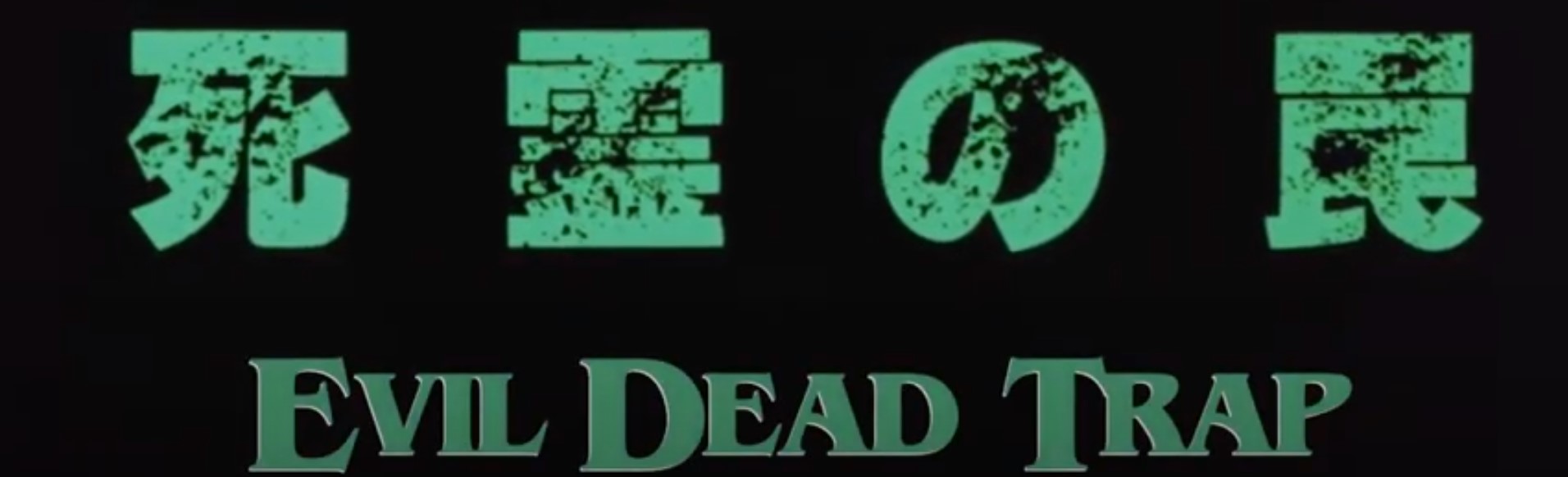
No Sam Raimi. No Bruce Campbell. Just the EVIL! “Evil Dead Trap” reviewed (Unearthed Films / Blu-ray)


Nami, a Japanese late night show host, is seeing her ratings dipping.  Though not in danger of losing her all-female produced show, Nami decides take her team on an investigation of a mysterious snuff tape that was mailed to her specifically.  Left for her is a bread crumb trail of directions to an abandoned military base, Nami and her crew explore the campus’s rundown structure, searching for evidence, a body, a story that they can televise.  Ignoring the dangerous presence around them, they dig deeper into the dilapidating labyrinth where they horrifying discover something waiting for them laid out in a cruel plan of deadly traps with a maniac pulling at all the strings. 

Bred out of a pedigree of pinkusploitations and a nation’s crisis of identity after the Second Great War, “Evil Dead Trap” is a greatly symbolized Japanese machination tale helmed by pink film director Toshiharu Ikeda (“Sex Hunter,” “Angel Guts:  Red Porno”) and penned by an equally historical pink film screenwriter and “Angel Guts” manga series creator Takashi Ishii (“Girl and the Wooden Horse Torture,” “Angel Guts” series).  Also known under its original Japanese title, “Shiryô no wana,” as well as, and my personal favorite, “Tokyo Snuff,” in Spain, “Evil Dead Trap’s” smorgasbord of rape, torture, and gory death naturally shocked viewers upon release and continues to do so as one of J-Horror’s branched out films that segued out from the brutal and depraved pink film inspired context into the new longstanding ghost genre we’ve seen over the last few decades with “Ringu” (“The Ring”) or “Ju-on” (“The Grudge”).  The production company Joy Pack Films, behind the 1980’s obscure Japan films, such as Genji Nakamura’s “Go For Broke” and Banmel Takahashi’s “Wolf,” houses the “Evil Dead Trap” from executive producer Tadao Masumizu.

If you recognize a couple cast members, or maybe just their naked bodies, then there’s something depraved about you!  With all kidding aside, but no seriously, if Rei (Hitomi Kobayashi) or Kondo (Masahiko Abe) look familiar, then you my friend are pink film aficionados as Kobayashi has starred in “Hard Petting” and “Young Girl Story” and Abe was in these pink film hits the “Pink Curtain” trilogy and “Female College Dorm Vs Nursing School Dormitory.”  If these faces didn’t touch you in any kind of sensual way, no worries, leading lady Miyuki Ono brings the star power.  The “Black Rain’s” Ono plays Nami, a go-getter television host/personality with her sights set on ramping up her late night show’s ratings, but also sucked into the posted snuff film’s darkest allure that’s personally calling her into to a precarious story lead.   Nami could also be a homage to one of screenwriter Takashi Ishii’s manga-inspired pink films entitled “Angel Guts: Nami” and the title might not be the only aspect paid honor to with that particular Nami written with a journalistic vocation drawn into and obsessed with a serial rapist’s attacks, making a striking parallel between the two stories that are nearly a decade apart. Eriko Nakagawa and Aya Katsurgagi fill out Nami’s investigating team as Rei and Mako. As a whole, the characters lack personality; Rei and Kondo tickle with relationship woes that are snuffed out before fruition, Rie’s timid innocence barely peaks through, and Nami and Mako’s thicker bond compared to the rest of the team is squashed to smithereens way before being suckled into note worthy tragedy. This late night show team has been reduced to slasher fodder and, honestly, I’m okay with that as we’re only here for the deadly traps. Noboru Mitani, Shinsuke Shimada, and Yûji Honma, as the mystery man looking for his brother, complete “Evil Dead Traps” casting.

“Evil Dead Trap” boasts a melting pot of inspirations, a mishmash of genres, and spins a nation’s split identity variation crowned in aberration. Diversely colorful neon-hazy lighting complimented by a Goblin-esque synth-rock soundtrack from Tomohiko Kira (“Shadow of the Wraith”), Toshiharu Ikeda shadows early Dario Argento inside and outside the popularity of the Italian giallo genre as the “Evil Dead Trap” murder-mystery horrors resemble more of a westernized slasher with a killer concealed behind a mask stalking a fringed, neglected compound in a conspicuous outfit. While the killer dons no hockey mask or snug in a mechanic’s jumpsuit, an equally domicile, yet more calculated, antagonist taunts more brains than brawns, especially with the severity of traps that seemingly float from out of nowhere. The fun is chiefly in the imagination of how the trap designs operate in the void of physics of a slasher fodder film so wipe clean the Jigsaw and the “Saw” films from your mind completely and relax to enjoy the outlandish kill scenes. Some of the kills are imperialistically inspired by Imperial Japan, that is, to blend the wartime nation’s atrocities with how the proud country wants to distance itself from that old-fashion, war-criminal, stoically perverse superstratum layer, but that’s were “Evil Dead Trap” pulls for most of the juicy parts as well as supplementing with Argento lighting, some, believe it or not, “Evil Dead” elements of that menacing presence bulldozing through the spiritual world, and an divergent climatic finale stuck to the narrative body that’s akin to pulling off the head of a doll and replacing it with T-Rex head’s. The uniformity quells under the pressure of how to end Nami’s and her attacker’s coda with pageantry weirdness that’s typical status quo Japanese cinema. Lots of symbolism, little modest explanation.

Get caught in “Evil Dead Trap” now back in print and on Blu-ray courtesy of Unearthed Films, distributed by MVD Visual, as part of the extreme label’s Unearthed Classics spine #5. The Blu-ray is presented in a matted 1.66:1 aspect ratio, a format rarely used in the States but widely used in other countries. Reverting to the 1.66:1 from Synapse’s 1.85:1 crop, Unearthed Films showcases more of the European feel, heightening that colorful vibrancy of the Argento-like schemes. Image quality has peaked on this transfer with natural grain with the 35mm stock, but details are not granularly sharp in an innate flaw of the time’s equipment and lighting. Shinichi Wakasa’s unobscured practical effects heed to the details and don’t necessary suffer the wrath of miniscule soft picture qualities when you’re impaling someone or birthing a slimy evil twin…you’ll see. Add in Ikeda’s wide range of shooting techniques, you’d think you’re watching Hitchcock or Raimi and the focus really lands there with the differently camera movements and techniques. The Japanese language single channel PCM audio fastens against that robust, vigorous quality to make “Evil Dead Trap’s” diverse range and depth that much more audibly striking, but there’s a good amount of silver lining in there being no damage albeit discernable, but not intrusive static to the audio files, dialogue is unobstructed and prominent, and the stellar synth-rock soundtrack nostalgically takes you back to when you first watched “Suspiria” or “Dawn of the Dead.” English subtitles are available but display with a few second delay which can be cumbersome if trying to keep up. Special features includes three commentaries that include director Toshiharu Ikeda and special effects supervisor Shinichi Wakasa, filmmaker Kurando Mitsutake (“Gun Woman”), and James Mudge of easternKicks. Plus, a Trappings of the Dead: Reflecting on the Japanese Cult Classic retrospect analysis from a Japanese film expert, Storyboards, Behind the scenes stills, promotional artwork, trailers, and a cardboard slipcover with phenomenal artwork. Highly recommend this atypical Japanese slasher, “Evil Dead Trap,” now on Blu-ray home video!

Own “Evil Dead Trap” on Blu-ray!

The EVILs of Slasherman! “Random Acts of Violence” reviewed! (Acorn Media / Blu-ray)

Comic book writer Todd has hit a writer’s block wall on the last issue of his one-shot, popular and extremely graphic series Slasherman based off the gruesome string of I-90 murders of the late 1980s where the killer murdered and mutilated his victims without ever being caught.  Looking for inspiration to conclude his life’s work, Todd, his girlfriend, investing publisher, and assistant head out on a road trip from Toronto to America, specially through the small town of McBain where the murders took place, but when recent mutilated bodies resemble the grisly deaths inside the colorful pages of his comics, the semi-fictional Slasherman story becomes full blown reality that places him and his friends in a maniacal killer’s path whose flipping through the pages of Todd’s murder-glorifying comic for inspiration of his own. 

Like many opinionated reviews before mine, I never imagined Jay Baruchel directing a horror movie.  The long time comedic actor with solid relationships working with other high profile comedians, such as Seth Rogen, Jonah Hill, and Danny McBride in some of the best notable comedies on the side of the century, has stepped into the shadows and professing his admiration for the genre we all love – horror. Baruchel cowrites and directs his first horror film, the big screen adaptation of Justin Gray and Jimmy Palmiotti’s “Random Acts of Violence” graphic novel. Fellow collaborator on the “Goon” movies, Jesse Chabot, branches out with Baruchel on the script and the two Canadian filmmakers yield an intense meta-gore picture focusing toward themes of lopsided public perspective and the glorifying of violence on other less physical mediums. Published in 2010 under Image Comics, the Gray and Palmiotti publication supplied a wealth of visceral material that unfolded faithfully in Baruchel’s Shudder distributed film as a stylish comicbook-esque narrative under the Toronto based Elevation Pictures, Wicked Big, and Manis Film production in association with Kickstart Comics and JoBro Productions. Palmiotti and Gray also serve as executive producers.


Struggling in the search for his perfect ending to Slasherman, Todd immerses himself in a cerebral fixation that envelops him more so then he would like to think.  Todd’s played by social activist and “Cabin in the Woods” actor Jesse Williams whose character is thrust into essentially making a choice, entertain his profession that earns blood money off the backbones of the I-90’s victims or subside his eagerness to finish his graphic novel and be team victim alongside his girlfriend Kathy (“The Faculty” and 2006’s “The Texas Chainsaw Massacre: The Beginning’s” Jordana Brewster) researching a novel that gives the slain victims a voice over their killer.  Brewster hasn’t changed one bit in a role that resembles a mature version of her “The Faculty” Delilah Profitt character complete with glasses and a thirst for reporting.  As a couple, Williams and Brewster hit little on their unconditional love  that’s apparent in the film’s final scenes.  Aside from their opening segment in their Toronto flat, their road trip is filled with Kathy berates Todd at times or Todd never seeming interested in Kathy or her work that’s seen counteractive to his own.  Affection is thin between them and I’m wondering if that’s more of the script writing than a flaw on Williams and Brewster who are credibility solid in their roles.  Same can be said about Jay Baruchel’s Ezra, the indie publisher sponsoring Slasherman, as the writer-director plays little to a publisher’s position of pushing the sales and marketing envolope and appears more to just be a tagalong friend with moments of quietly hawking.  Without much competition surrounding him, Slasherman is the most interesting character of the bunch from prolific stuntman, Simon Northwood.  With a 1000 yard stare that’s more menacing inducing than stemmed by trauma, Northwood brings the graphic novel character to all his glory as an aspiring artist in a contemporary parallelism to Todd who both see one another as their muse.  Northwood’s Slasherman is silently frightening, even more scary when he has to psych himself up to kill, and brings the physical stature of an unstoppable slasher genre maniac.  No one is safe from the merciless Slasherman, including those rounding out the cast in Niamh Wilson (“Saw III”), Clark Backo, Eric Osborne (“Pyewacket”), Nia Roam (“Polar”), Aviva Mongillo, and Isaiah Rockcliffe.   

The hyper violence lands more with a firm hand making good on film title.  Baruchel doesn’t hold much, if anything, back when rectifying violence as the monolithic theme while hitting a few thought-provoking notes involving the public’s perspective on the infamous legacy of serial killers and the tragic, forgotten memory toward their victims.  Somewhere in the gutting-clutter is a message of meta-existentialism tearing between that thin line of a person’s cause and effect actions.  Without the I-90 killer, Todd would not been stimulated into creating the deeply grim anti-heroic antics of Slasherman and, visa-versa, Slasherman would not have returned, coming out from retirement, if it wasn’t for Todd’s life’s work and lack of series conclusion for the Slasherman character speaking to Slasherman’s sanguinary artistic side.  One aspect stiffly hard to place your finger on is Todd’s connection with the town of McBain.  Other than a brief voice over exchange with Ezra, who mentions Mcbain is Todd’s hometown area, not much more of that pivotal connective tissue seizes grounding Todd, but the graphic novelist experiences a multitude of images streaming through his far off gazes, thoughts, and dreams. A boy, the boy’s mother who we know to be one of Slasherman’s victims because of Kathy’s research book, and the collateral damage of some great magnitude of violence surrounding them carry little weight to Todd’s psyche when struggling to piece his visions and these people’s bloodshed moment together and one reasonable theory that might explain that disconnect on our part is partially racially motivated, a detail indicative of gross assumption but a detail that can easily deceive you if you’re not knowledgeable enough about the cast you’re watching. My two cents is not randomized at all on Jay Baruchel’s “Random Acts of Violence” as it’s a brazenly deep and vicious first attempt horror in his own manic words from the glossy, leafy pages of the same titular graphic novel to the tellies of terror now on home media release.

Classified 18 for strong bloody violence and gore, “Random Acts of Violence” hits Blu-ray media shelves courtesy of Acorn Media International. The region 2, PAL encoded single disc BD25 has a runtime of 81 minutes and is presented in a slightly cropped widescreen 2.38:1 aspect ratio. A diverse hue palette of neon extricates Baruchel’s off-brand, real-time comic layout, creating a gritty, yet vibrant world all his own in a near window-blinds noir fashion. The tinkering of tints reaches almost Italian giallo levels without playing much with lighting and fog, relying heavily on the different neon vibrancy as if a colorist was right there pigmenting each scene as it played out. The English language Dolby Digital 5.1 surround sound discerns very well across the board with robust dialogue that even with Williams’ slight lisp, every single word can be hung on. I didn’t think there was a ton of opportunity for depth and range as much of the action is in staged front side of the camera, but for what little there was, those areas saw solid, identifiable outputs. Bonus features include a zoom interview with a very animated Jay Baruchel providing the in depth inner works of the conception of his film while sporting a retro Montreal Expos ballcap, a showreel-esque promo entitled More Than Just A Scary Movie offers brief opinions, thoughts, and highlights on the film edited from longer, on-set interviews, and a look inside how to make an action scene. An on-your-toes, gut-wrenching slasher with a juicy slice of meta proves Jay Baruchel can wander into any genre and come out on top, but “Random Acts of Violence” has kinks to straighten out in this young director’s sophomore feature.