HELLelujah! God Does Not Deliver Us From EVIL! “We Still Say Grace” reviewed! (101 Films / Digital Screener)


A family living in deliberate solitude looks to God to provide them with everything they need to sustain.  Harold’s two teenage daughters have never experienced beyond the 14 acres of land their father and mother own, but the youngest, Maggie, can’t help but think of the wonders outside her father’s god-fearing, draconian sheltering.   When three teenage boys travelling to California suddenly break down on Harold’s remote land, an eager Maggie can’t wait to taste a mere glimpse of their perception of the outside world.  Being a good Christian man, Harold welcomes the hapless travelers into his home and convinces them to follow the rules and stay the night, but the boys’ seemingly happenstance car troubles is manipulated into an unavoidable sign of God’s will, or at least so in Harold’s eyes, and he decides to carry out a predetermined family suicide pact for him and his family to be welcomed into the gates of Heaven.

The one think learned, or maybe had shed more light on, out of this pandemic is the unstable relationship people have with God.  Religious extremist have weaponized the Powerful and Almighty against every day people like you and myself with contentious, hate-filled vocabulary such as damnation, burning, hell, etc., for those who do not seek his glory the way asininely seek it.  “We Still Say Grace” epitomizes that very lifestyle of devout fanaticism that has also been highlighted with buffoonery as the very same people who verbally condemn others usually don’t walk-the-walk but only talk-the-talk or are a charlatan involved in a more sinister plan.  “The Lodge’s” Brad Helmink and John Rauschelbach write and direct the film that has become their second feature horror film produced by the filmmakers under their Brothers Shamus Pictures, Mark Sonoda of Dauntless Studios, Room in the Sky Films, and Lexicon Entertainment. 

Now, I’m not a religious man or spread the word of the divine in my reviews, but God love Bruce Davison as the “Dahmer” and “X-Men” actor is a silver fox crazy man of God living rurally with his wife and two teenage daughters.  Davison relentlessly rallies Harold’s madness and is having a good old time performing as a man with a hidden agenda.  Harold is an intriguing character with little-to-no information about the character’s background or reasoning for being unreasonable, but that doesn’t seem to faze the legendary actor who had cut his teeth into horror 50 years ago as the original rat-speaking avenger, “Willard,” as Davion trots down a path of deceitful radicalism and manipulative exploitation.  Those he unscrupulously cons with pious smoke and mirrors are his own family in wife Betty (Arianne Zucker, “Days of Our Lives” daytime soap opera), Sarah (Rita Volk), and Maggie (Holly Taylor, FX’s “The Americans”).  As a viewer who is currently, at this very moment, chin deep in catching up on FX’s Cold War espionage thriller series of Soviet spies living as ordinary Americans in Washington, D.C. as they carry out missions in the name of Communism, I found difficult in separating Holly Taylor from her the 2018 series that ended its successful run in 2018 when she was a teenager.  Taylor’s roll in “We Still Say Grace” typecast the actress as another teen though having filmed the movie as a young adult woman, but the lighting is different and I don’t mean in a literal illuminating sense.  Taylor steps out from “The Americans’” 80’s setting and into, what I presume, is the 1990’s based off some wardrobe choices, car models, and the time frames that fit into those constructs and while she still has this inkling of suspicion that her parents are up to something, a parallel that has carried over, there hasn’t been this much ill-fitting reverence of a man hellbent on belting those he breaks bread with on a daily basis.  There is hesitancy and fear in Taylor eyes and that’s breaks up her from a reoccurring teenager role.  When the three teens (Dallas Hart, Frankie Wolf, and Xavier J. Watson) show up at the front door, that’s when things go, more than usual for Maggie, terribly awry. 

Aside from Bruce Davison, the other performances muster little faith in their roles with overplayed tropes, especially the stranded teens who could be plucked out as the Three Stooges of horror they’re so easily identifiable across the genre.  The premise itself isn’t exactly novel of a Bible thumping person teaching and preaching self-sacrifice, aka suicide, as a way to transcend beyond the heathens of this Earth but marketable and attainable as a small independent production with a California desert location, minor but effective special effects, and a handful of actors where much of the money is spent on talent.  “We Still Say Grace” is structurally very loose with character development and plot points, leaking continues dribbles of minor shifts that never patch themselves up on the backend.  For example, Harold’s not the black and white evangelical nut he seems to be but that is where his arc pauses and doesn’t backtrack into reasoning.   Helmink and Rauschelbach do better on the scene setups and interiors that make Harold uncomfortably fearsome and hostile in any context as he sometimes looms in the shadows of his farm chic house or toys with people, even his own family, like rats in a maze as he guides them along to their doom.

Premiering for the first time in the UK courtesy of 101 Films, “We Still Say Grace’s” penitent themed horror-thriller releases digitally this month of May.  As for the imagery presentation, and take this with a grain of salt with any digitally released film, the nearly 94 minute runtime seems to be filmed with a sun derived dust and light haze that I would compare the appearance more akin to trying to look through the bottom of a hard water stained glass.  Under the cinematography of Douglas Quill, the haziness plays into the rustic and dusty atmospherics that give age to the story and Quill frames Harold as a dominant and isolated figure, especially amongst the holy trinity ablaze in human flesh, as if he was the sole antagonist against the world.  The moment for shattered lives remains intent on the very edge of our corneas with the holy hell of “We Still Say Grace’s” patience brittle villain ready to gaslight and sacrifice anyone resisting against the grain of God’s good graces. 
One Hundred and Twenty-Nine Men, Two Ships, and One EVIL Beast Trapped Together in Icebound. “The Terror” reviewed! (Blu-ray / Acorn Media International)


Departed from English ports in 1845, two exploration sailing ships, HMS Erebus and HMS Terror, sought to chart a northwest passage through Artic waters above North America.  Bound for King William Island with over 120 men between the two vessels, the traversers found themselves icebound as the Winter months froze the arctic waters completely and solidifying their positions within one large ice mass.  Their story doesn’t end there as months pass, even through the summer, and winter’s firm grip shows no sign of rising above zero degrees, sweating the brow of the few experience Arctic officers.  To top off their troubles, a vicious polar bear, or some kind of supernatural beast connected to Innuit people, hunts down and ravages a few unfortunate Royal Navy seamen.  Low of provisions and spirits, a combination of infinite winter madness and trembling fear weigh heavy on the seafaring fellows frozen in an icy cold Hell. 

Straight from the ill-fated expedition in British maritime history, the mystery surrounding Captain Franklin and his crew’s death and disappearance in the Arctic is given the hypothetical explanation and supernatural treatment in season one of the AMC series “The Terror.”  However, the tale is more relative to the adapted novel of the same name written by American author Dan Simmons who specialized in science fiction and horror.  Adding elements of a monstrous presence stalking them in the shadows of a bleak tundra, Simmons’ historical fiction turned television series blurs the lines of non-fiction and fiction with chilling atmospherics and the indelicacies of human nature when necessities for survival are pushed to the extreme and are in short supply.  “The Terror” is backed by a strong executive producer team in Ridley Scott (“Alien”) and notable historical television producer David W. Zucker (“Mercy Street,” “The Man in the High Castle”) with writers Max Borenstein (“Godzilla vs. Kong”) and Andres Fischer-Centeno (“Under the Dome”) penning the screenplays with Tim Mielants, Edward Berger, and Sergio Mimica-Gezzan directing a total combined 10-episodes under the Scott Free Productions and Entertainment 360 flag. 

The AMC television thriller scores an amazing cast of seasoned English and Irish actors refined in their skills of becoming a part of the history their work reflects.  Chiefly surrounding the top three principle commanding officers, “The Cook, the Thief, His Wife & Her Lover’s” Ciarán Hinds as Captain Sir John Franklin, “Underworld: Blood Wars’” Tobias Menzies as Commander James Fitzjames, and with a foremost focus on “Resident Evil:  Apocalypse’s” Jared Harris as Captain Francis Crozier, an unique dynamic courses through the speckled personalities of each commander in the face of duty for Queen and country and in the certain finality to their crisis from the God-fearing Franklin, to the command prodigy Fitzjames, to the more sage practicality of Crozier.  Each also have their own flaws that inadvertently put a blight on the already ill-fated mission of charting a passage through the frigid bleakness of the Arctic ice and how they interact with a doubt inching motley crew of novice and experience sailors, especially between the stark contrast of fellow principle characters in the amiable Harry Goodsir (Paul Ready), whose personality is reflected by his name, in confliction with the more menacingly conniving shipmate Cornelius Hickey (Adam Nagaitis).  Both Ready and Nagaitis perfect their roles in convincing the audience on how we should feel about moral compass as they become the nerve center that drives the tale of continual darkness.  Praiseworthy performances definitely go to the entire cast, that also includes Nuuk native and Greenlandic band frontwoman, Nive Nielsen as well as Ian Hart, Alistair Petrie, Trystan Gravelle, Tom Weston-Jones, and Richard Riddell, pinpointing and bringing to life the mid-19th century Royal Navy speak, look, and mannerisms that adapt over the length and breadth of “The Terror’s” forlorn themes of two ship’s crew stranded in what could be said is a strange and alien terrain that evokes madness and fear in the longer you reside. 

The information surfaced about Franklin’s lost expedition with the discovery of possible cannibalism evidence discerned in the early 90’s and, more recently, the found wreckage of both the HMS Erebus and HMS Terror within the past decade add insurmountable coils of surreal realism around the true tragedy of both ships when embellished supernatural elements of an Inuit spirit animal stalking, hunting, and ravaging the crew.  Simmons novel and the series go hand-and-hand story wise but pull visually inspiration from Sir Edwin Landseer’s painting entitled “Man Proposes, God Disposes” where one polar bears tear at what’s left of a ship’s mast and another swallows what looks like human ribcage remains in a surely more a powerful image that’s aligned with the series in the offering an outcome of when it comes to man versus nature, nature will unduly win on it’s own frozen turf. AMC and Ridley Scott undoubtedly knew how to showcase a character driven story where over the time relations build and deteriorate between crew, officers, and a mingle of both and in that stretch of time, the passing of time itself has seemingly stood still as the nights become longer, routines are made, and the ships are stuck on the ice like a warm tongue pressed against a frozen metal pole, but, in the 10 episode series, the story stretches over a nearly two year period and the production is able to connect together next scenes to the previous ones without having to address each and every moment or exposition enough information to avoid the explanatory segue. This method of filmmaking always leave a smidgen of unknown, leaving viewers like us on tenterhooks and in an agitated state that we’ll never fully understand or fulfill that missing part of the mysterious portions and lapses in time. The unfortunate real life story itself casts an alluring wonder and I would even go as far as maritime excitement even if stemmed out of tragedy; that’s how “The Terror,” affixed to the rising ice in an infinite frozen sea of stalagmites, dresses every episode with a less is more garb. “The Terror” endures for a long time in the mind set to replay the desperation and the poignancy of the character’s madness, fear, cold, hunger, and the rest of their godawful bad luck.

A story relished with new fright and unsullied violence with every repeat viewing is now available on a two-disc, region 2 Blu-ray from Acorn Media International. The 10-episode series is presented in a widescreen, 16:9 aspect ratio, on two PAL encoded discs with a total runtime of 453 minutes. The image pails in comparison to the perilous subject matter with a more softer, hazier picture than the harsh, snowy environment setting. Yet, I find that the subpar high definition not to be a complete distraction as much of story plays out in the dark or in the thick of flurries meant to obscure the eyes from seeing reality before biting your head off. Two different audio options are available on the release – a DTS surround sound 5.1 and a Dolby Digital PCM Stereo 2.0. Both tracks have high audio discernible marks as a well-balanced whole with the dialogue cleanly present, the ambient noise, especially the continuous wood creaking on the ships being squeezed by the ice, finely tongued for ever musket shot and snowy foley, and a respectfully insidious soundtrack that makes the body’s blood curl. Option English subtitles are available. I do think the bonus features are a little on the cheap side with only AMC’s behind-the-scenes commercial break segments making the cut on this release, complete with the AMC logo in tow, but the special features include Ridley Scott on “The Terror,” a look at the characters, the boat and visual effects, and concluding with an inside look at each episode featurettes. By the end of the last episode of “The Terror,” you won’t feel chipper, you won’t feel happiness for a long time; yet, you’ll want more and wished season 2 continued the story, but after an impressionable gnarly grand finale, “The Terror” season one is one of the best televised horror shows to come out in a very, very long time.

One Can’t Just Pray Away EVIL in “The Banishing” reviewed! (Shudder – Vertigo Releasing / Digital Screener)

Set in a backdrop of Great Britain on the very brink of world war against Nazi Germany in the late 1930s, a small English community has nearly lost it’s entire faith in the Catholic church after the last priest suddenly and mysteriously died.  When a young vicar is offered a generous stipend, the village parish, and a large estate by the region bishop to restore a congregational foothold, he brings with him his new wife and stepchild to make the house their home, but the house has a dark history that might have played a role in the previous vicar’s death and a lone, eccentric occultist urges the family to vacate the premises immediately before the house swallows them into grave danger at the haunted hands of sadistic monks, ghastly visions, and a tormented soul roaming the corridors. 

If the prim-and-proper social class structure of Julian Fellows’ “Downton Abbey” collided with the volatile and tormented spirits of James Wan’s “The Conjuring,” then Christopher Smith’s pre-wartime staged haunted house feature, “The Banishing,” would be the outcome.  The period piece horror marks the latest installment into the genre from the Bristol, English-born Smith who made a name for himself with 2004 dark subway corridor heartstopper, “Creep,” and went on to make cult favorites amongst genre fans with the workplace violence satire, “Severance,” and the medieval bubonic plague film, “Black Death” starring Sean Bean and Eddie Redmayne.  “The Banishing,” a term used as the practice within the supernatural ambit of dark magic to ward off negative spirits, is a UK feature co-written between David Beton, Ray Bogdanovich, and Dean Lines.  Maya Amsellem and Sharon Harel-Cohen serve as producers under the London-based WestEnd Films production banner with “The Banishing” marking their fifth completed feature film product and with the nearly worldwide distribution rights landing with AMC Network’s popular horror streaming service, Shudder, in partnership with Vertigo Releasing in the UK.

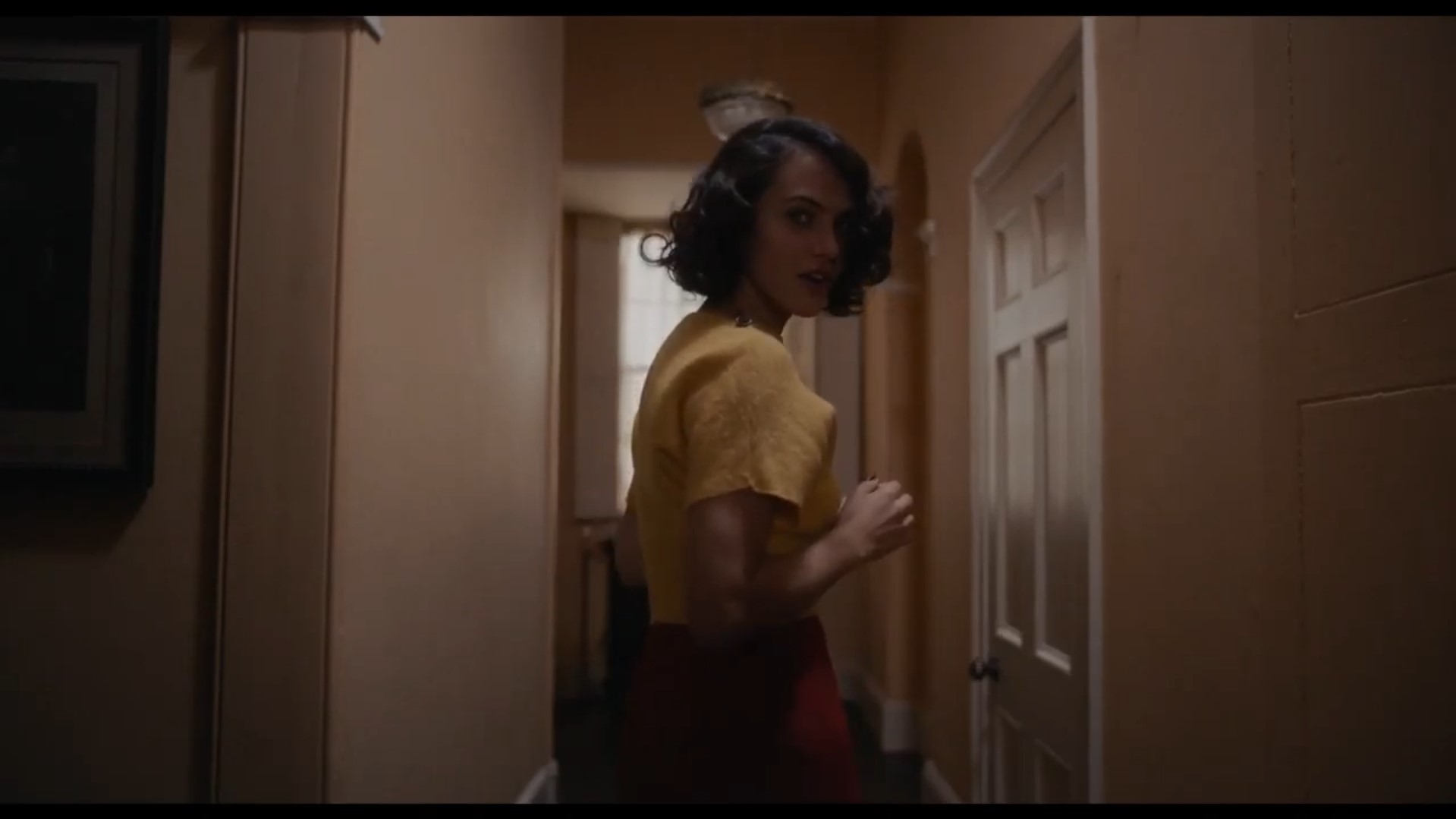
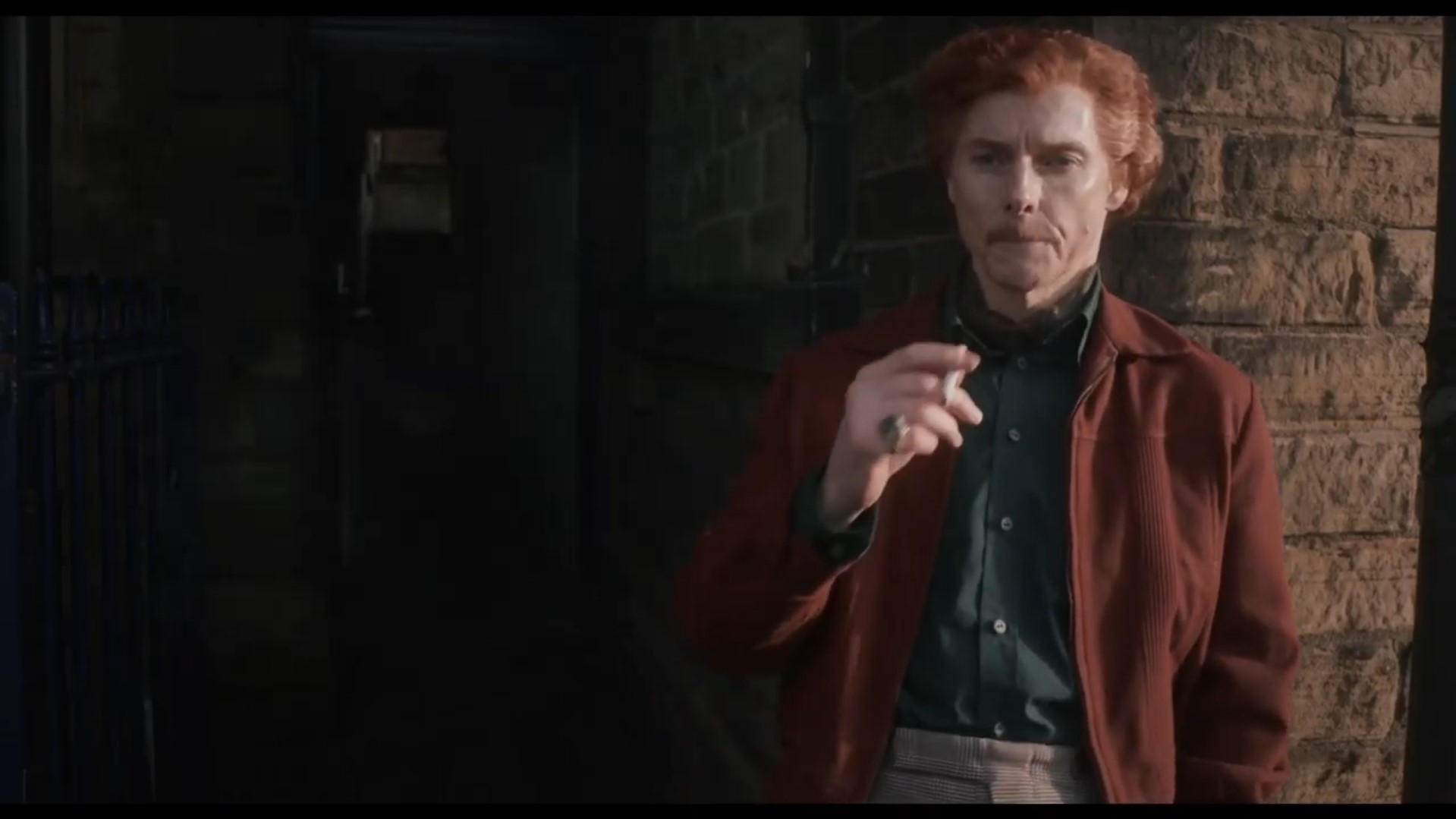
“The Banishing” revolves mainly around Marianne, the newly-wed vicar’s wife with a young girl along for the ride, played by Jessica Brown Findlay (“Downton Abbey,” “Victor Frankenstein”). Findlay endows Marianne with vitality as a woman who must meet the vicar’s standards of Godliness, but still be a strong mother to her child despite disreputable social standing. The priest Linus (Essex-born John Heffernan) lacks experience in the field of his cleric position, lending to question why the region bishop would appoint him to a muster a flock of faithful Christian followers during turbulent times. The husband and wife dynamic between Linus and Marianne is marred by dissonance backgrounds of a priest who doesn’t know to be with a woman and a woman who can’t escape her socially unflattering past. Heffernan and Findlay ignite as repellants of the same magnetic currents when the harder they try to extend their relationship, they push each other way, with Findlay giving a fervent performance. Speaking of performances, Sean Harris bares the most intriguing and rollicking local occultist. The “Mission Impossible: Fallout” actor parades around as Harry Price, a likable, straight-shooting outcast and a believer in the supernatural with extensive, and ghastly, historical knowledge on Linus and Marianne’s new home. As Price aims to extract the hapless from danger, he butts heads with a headstrong region bishop, a stern and solemn role secreted with distrust from John Lynch who has worked on a Christopher Smith film previously in “Black Death.” “The Terror” actor juxtaposes starkly against Harris as a character who dons a likeness to the clown prince of crime in costume than a dull agent man of the cloth…with secrets to uphold. “The Banishing” rounds out with a supporting cast in Adam Hugill, Jason Thorpe, Jean St. Clair, James Swanton, and Anya McKenna-Bruce as Marianne’s daughter, Adelaide.

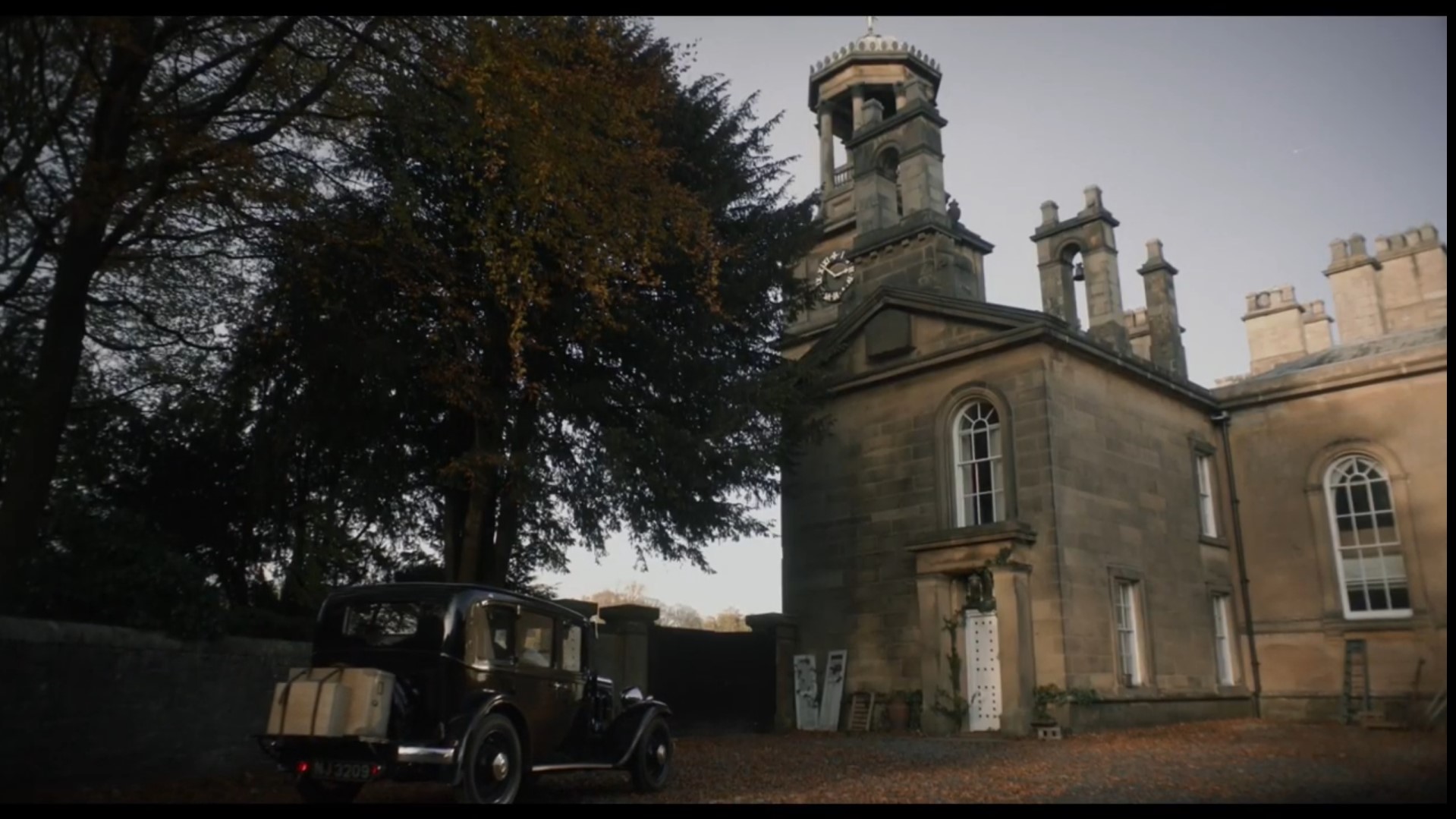
Set convincingly in a quaint, 1930s English town, Christopher Smith transports the audience back in time to the predated anxious moments before World War II that would upheave turmoil across all across Europe, but though that fretted lingering of war is set as the backdrop for “The Banishing,” and is coiled around every man who served in the first Great War that brought up more than once, the root of the narrative ultimately becomes the house Linus and Marianne have come to call their home.  Haunted house films surmise the house as a built-in principal character because of either the way the architecture affects the mental or physical wellbeing of it’s flesh and bone counterparts or if the abode is actually possessed and set to harm the inhabitants in a personification of pure evil, as such with various films of this caliber (“House,” “The Haunting,” etc,). Yet, Linus and Marianne’s estate failed to become a part of the narrative limelight despite the immense grounds that compromised of a large greenhouse and a robust library complete with fireplace and the disconcerting labyrinth of a dungeon-esque basement full of barred enclosures and close quartered corridors.  Nearly every interior shot felt like a new section of the house hat kept extending upon, what would be assumed, a grand mansion that had a longer rap sheet by reputation in being a former religious torture chamber run by sadistic monks hellbent on whipping the sin out of the mentally tormented. Smith always had an eye for the unsettling visuals and sustains that feng shui by allowing time and space to be the inner horrors of a funhouse, but doesn’t evoke clean, unadulterated terror that continues to profusely bleed into the film’s climatic cause-and-effect unraveling. There is a lack of a transformative realization and a small hurtle of sedated possession to figure out that the main presence in the house, amongst the other more malevolent presences, wants something and the characters are spoon fed each and every morsel to get them up to speed. The final scene of the bishop meeting with the Nazi regime intended to leave the story open for supernatural possibilities, but felt like a more poignant and compelling crux leading into Nazi occultism, hinted by the eccentric resident occultist Sean Harris.

Morosely dramatic and haunting, “The Banishing” is an aggressive salvo of facing shame head-on, creeping into UK cinemas and digital platforms on March 26th courtesy of Shudder and Vertigo Releasing. Director of photography Sarah Cunningham has an remarkable ability to engulf the actors in the space of the shot, making them seem diminutive to the rooms that feel like a giant hand looming overhead, and with the bare, hard lighting, the cinematography is really where “The Banishing” shines as gothic cladding without a stodgy spot to speak visible. Cunningham adds all the hallmarks of a horror film with titled angles, brilliant reds, and tight shots on tense faces to garner a more anxiety that never actually pans out by the end. The organic electro duo TOYDRUM score the 97 minute film with a single note droning hums at various pitch levels that can really get inside your head. The “Prevenge” composers set up scenes with a ill-founded fears when nothing presently visible is intended to fright. There were no bonus scenes during or after the credits, but one scene to note is Sean Harris waltzing with an uncredited woman during the opening credits that seems out of place but speaks to the aberrated decorum of his character. “The Banishing” works tirelessly to discredit shame by confronting truth and while we’re being beat over the head by the message, the overlay of horror is lost despite some brilliant and engrossing performances from Findlay and Harris who usher us through to the imperfect conclusion.

EVIL is in the Waiting Room. “Host” reviewed! (Second Sight Films / Blu-ray Screener)

Six friends, locked down due to COVID-19 quarantine restrictions, hold a séance with a medium over a video chat platform.  With some skeptical of the astral plane practice and connivingly mock the ritual without aware of the consequences, they unwittingly call forth a false spirit under the guise of their seemingly harmless mockery.  In short, a malevolent demon crosses over their spiritual internet connection plane, attaching itself to their domicile surroundings.  Unable to break the connection to the spirit world, surviving a night that was supposed to shoulder quarantine boredom with excitement and booze has beleaguered the friends with a night of undisclosed deadly terror.

When online game night during quarantine life goes horribly wrong in Rob Savage’s “Host.”  The UK bred survival tech-horror is the sophomore feature length film from Savage who co-wrote the cast sundered script with Gemma Hurley and Jed Shepherd, who has previously collaborated with Savage on the director’s short films, “Salt” and “Dawn of the Deaf.”  “Host” plays into being a film of the moment, shot entirely over the pandemic lockdown with unconventional production direction conducted through video chat platforms with each actor pent-up performing in their own personal abode and being subjected to wear multiple crew hats to avoid spreading COVID-19 from face-to-face interactions.  Despite the severe limited enforced by the threat of infection and the local governmental mandates, the film received hefty financial backing from horror’s most prolific streaming service Shudder after director Rob Savage pulls off a video chat prank with colleagues and friends of him checking out a mysterious sound in his antic and seamlessly interlacing a jump scare clip from Jaume Balagueró and Paco Plaza’s “REC” that scared the bejesus out of the unsuspecting participants to his prank.  “Host” is a production of Shadowhouse Films. 

“Host” stars five real life friends, aspiring actresses in the London area looking for work that has become frighteningly scarce in the pandemic’s wake, and they’re joined by a sixth, the outlier male to join the virtual hangout session.  To add authenticity to the circumstances, each actress has their parent-given (or stage-made?) names incorporated into the film, heightening the illusion of a friend being ripped apart by a demonic entity, especially if a sly Rob Savage redacts much of the script to keep his actors in the dark in certain scenes to garner real reactions.  Haley Bishop, who has worked previously with Savage on “Dawn of the Dead,” spearheads the nighttime gathering for a little séance fun, to stave boredom with her closest friends, with prearranged invitations to Jemma Moore (“Doom:  Annihiliation”), Emma Louise Webb, Radina Drandova, Caroline Ward, and Edward Linard, who is the only one of the six not to use his actual name and goes by Teddy.  Each character provides a slight unique viewpoint that integrates into the story nicely, such as Jemme’s jokester and cavalier attitude, Caroline’s bracing for the supernatural consequences, Radina’s distracted relationship troubles, and Teddy’s wild and carefree persona.  “Host” rounds out with minor co-stars enveloped into the séance chaos, including Alan Emrys, Patrick Ward, Jinny Lofthouse, and “Double Date’s” James Swanton as the malevolent spirit.

Cyber and social media horror has no leverage to be groundbreaking horror anymore as a handful of these subgenre jaunts slip into our visual feeds every year in the last decade and “Host,” on the surface, might perpetuate the long line of outputted tech horror in an overcrowded market.  However, “Host” has a beauty about it that doesn’t reach into capitalistic territories like the ill-conceived “Corona Zombies” from Full Moon or the Michael Bay-produced “Songbird” about sustaining love in the time of dystopian pandemic and, instead, redefines how tech horror not only uses innovated methods in creating movies during lockdown but how the knuckle white and teeth chattering terror is perceived in the reinvention of the ominous presence that has found its way through the fiber optic cables and into our cyber lives not in the context of a social media obsessed society but in a quarantine-forced one that brings a whole unique set of isolation fears and complications.  While the characters try to form a much desired human interaction the best way that they can through internet video chats, they’re also connected by the spiritual circle that has engulfed the apart, but together, connection, sparking a palpable atmosphere of mass fear together.  Audiences will be pulled into this fear being visually privy to Haley desktop screen, that’s not quite tipping into the found footage field, as she helms control of the video chat that quickly spirals into a Zoom-screen of death as one-by-one each friend succumbs to the unwittily summoned demon.  Rob Savage has reformed the tech horror genre much like George Romero had revamped the zombie on not so much a social commentary level, but vitalizing new life into it, making “Host” a game-changer in horror. 

While I wasn’t lucky enough to review Second Sight Film’s Limited Edition Blu-ray Boxset of Rob Savage’s “Host,” dropping today, February 22nd in the United Kingdom, housed in a rigid slipcase with illustrated artwork from Thomas Walker with an original story outline booklet, new essays from Ella Kemp and Rich Johnson, and 6 collectible art cards inside, I was graciously provided a BD-R that included the film as well as the bonus content.  The region B, PAL encoded, just under an hour runtime film, clocking at 57 minutes, is nearly shot entirely on Zoom that melds in the position of negative space inside tightly confined camera optics and plays right into the hands of dark spots that the optics can’t entirely define, leaving the space void in a blanket of inky black.  From video to audio, the sound design meshes the natural auditory blights that would conventionally spoil audio tracks for the sound department, but Savage and Calum Sample found the mic static or the distorted or near cancelation of sound during a high pitched screams added elements of grounded fear rooted by technology to where people can relate to when having their own video chat technical difficulties during meetings or such while also playing into the theme with funny face filters, augmented backgrounds, and the bells and whistles of the platform. Second Sight’s slew of special features for this limited edition boxset includes exclusive commentaries with director Rob Savage, producer Douglas Cox, and the cast, cast interviews about their individual takes on the film, a behind-the-scenes feature, Rob Savage’s group prank video that sowed the seed for the film, the same prank done on a single individual, Kate, Rob Savage’s short films – “Dawn of the Deaf” and “Salt,” the actual Séance held by the cast, crew, and a real life medium, a British Film Institute Q&A with the director, Gemma Hurley, Jed Shepherd, Douglas Cox, Haley Bishop, Brenna Rangott, and Caroline Ward, and an evolution of horror interview with cast and crew. The best horror movie of 2020 now has the best release of 2021 from Second Sight Films; “Host” logons to be the heart clutching video call from hell.

Own “Host” on Limited Edition Blu-ray Boxset from Second Sight Films by clicking the poster!

On Valentine’s Day, Were You Struck by EVIL’s Arrow? “Cupid” reviewed! (High Flier Films / Digital Screener)

In one interpretation of the legend involving the god of love, Cupid is betrayed by his mother, Venus, the Roman goddess of beauty, when she poisons Cupid’s consort, Psyche, over conceited jealously with the tainted tip of his own arrows of love and desire.  Enraged, Cupid denounces love and if he can’t have love, no one will love as he sells his soul to Death in the underworld and becomes a demon of execution summoned by those who abuse love.  When the incessant bullies as Faye’s school push her too far, Faye evokes Death through a black magic ritual and contracts with the master of the netherworld that all those in her high school shall never know love.  Death summons the scorned Cupid to do the ghastly bidding that places not only Faye’s tormentors in Cupid’s destructive path, but also her friends, her teachers, and herself.    

Post-Valentine’s Day horror movies always seem appropriate as if love itself is fleeting, elusive, and nothing but trouble and elicits a bit of cathartic relief for unfortunate souls unable to find love come February 14th.  Nothing screams more about anti-love than Scott Jeffery’s arrow-through-the-heart and twisted Roman mythology story, “Cupid,” that festers from a lower fork in the road possibility of the god of love and desire aggrieved to become malevolent and spiteful in a cheeky, campy rampage.  Jeffery isn’t afraid to take on the challenge of transforming Cupid into a heart-stopping death-dealer as the film’s writer-director who has credential history of being a serial B-horror movie filmmaker with a resume of titles stemmed from myth, legend, and tall tales having produced and written the Frau Perchta inspired “Mother Krampus,” the Gorgon fueled, “Medusa:  Queen of the Serpents,” and producing that little dental-snatching hag known as the “Tooth Fairy.”  Jeffery aims to demonize the match-maker in the UK production from his Proportion Productions alongside co-producer and CEO, Rebecca Matthews.

The heart of the story begins with Georgina Jane (“Pet Graveyard”) as the hopeless romantic schoolgirl, Faye, reading from a book of black magic spells to bewitch the high school’s hunky male teacher, Duncan Jones, played by Michael Owusu in his introductory feature film performance.  Though Owusu is a handsome devil that plays authentically into his role, Faye’s character surpasses shallow and gullible traits as she’s desperate enough to try enchants for an older man to fall for her teenage body and soul and naïve enough to think that her charm passage actually worked enough to warrant sending scandalous pictures of herself over the phone to whom she believes to be Mr. Jones when in actuality is a Faye browbeating clique led by the insufferable rebellious student Elise, a role callously perfect for “Pagan Warrior’s” Sarah T. Cohen.  Jane tries to squeeze out as much as she can as the victim of Elisa’s volley of vile bullying tactics but also somehow cope the receiving end of embarrassment of kissing a shocked Mr. Duncan and as the two instances clash in a heap of dump on Faye day during Valentine’s, Faye retreats back to her fantasy safe haven as she tries to summon Death in vengeance.  This time, the incantation works and in flies with two large white wings and Roman sandals is Bao Tieu caked in some pretty atrocious facial makeup with a horizonal cleft nose, exposed teeth in a skull’s bare smile, and some serious baggage under the eyes.  I’m assuming Tieu’s short stature and small frame makes him suitable to portray the Cupid look often depicted as a child or as a slender, nearly feminine man in mythology art, but in “Cupid,” as the harbinger of death, the overall package feels less menacing and more absurd appropriate for the B-horror mockup as the dialogue-less winged villain hunts down rather easy prey using a campy assortment of atypical, Valentine’s Day weapons like heart shaped cookie cutters, a bouquet of roses, and mushy, sharp-edged greeting cards alongside Cupid’s go-to bow and arrows.  “Cupid” rounds out the cast with a majority of Scott Jeffrey entourage actors who’ve been in many of his produced films, such as Abi Casson Thompson (“The Candy Witch”), Ali Barouti, Georgie Banks (“The Mermaid’s Curse’), Kelly Juvilee (“ClownDoll”), Jake Watkins (“Toothfairy 2”), Adrian Bouchet (“HellKat”), and Nichola Wright (“Witches of Amityville Academy”).

Valentine’s Day holiday has seen a fair share of engendered horror films. While “Cupid’s” heart doesn’t beat to the same lovestruck drum as George Mihalka’s “My Bloody Valentine” or Jamie Blanks “Valentine” that scoff at romance by killing every love sick person in the room, Jeffrey’s take on Valentine’s Day stays on the slasher subgenre path, but takes a tongue-and-cheek route despite the earnest performances. I mean, really, who gets ninja starred in the back with Valentine greet cards or have their skin sliced out with heart-shaped cookie cutters? Jeffrey’s killer concepts have immense heart, no pun intended. Where “Cupid” begins to stray lies in the left out important details and the fast-and-loose character development that leaves a rancid taste of an expired box of chocolate in your mouth. For instance, Faye, a high school girl of maybe 16 or 17-years old, has what seems to be an archaic artifact of ancient black spells in her possession for reasons we don’t know how she obtained. Do we then conclude that Faye obsessively meddles casually with the black arts? Or did she visit Ray Stantz’s Occult Book store in NYC? There’s also a rich backstory, if not tale-telling, in Faye and Elise’s contention for each other involving a relationship scandal between Faye’s mom and Elise’s dad that’s only scratched at the surface and never really brought to light, but would have greatly help in explaining Elise’s wickedness toward Faye, who briefly blames her mother’s aggressive libido for all her high school problems. In what is, in all serious, an allegory for bullying spun high school mass murder, “Cupid” heavily ousts the outlier as a person lost in the fray of struggling to cope and turns to evil to solve their problems by taking out everyone in an instant. The only thing different is Jeffrey doesn’t arm Faye with a rifle; instead, he weaponizes her impulsive desires in the form of a demonized Cupid. Another character who doesn’t flesh out is Duncan Jones who drops out of medical school in order evade debt for the rest of his life; instead, he’s a substitute teacher with feelings for a colleague and his biggest prospect is chaperoning the Valentine’s Day dance. Instead of nurturing Jones’ arc from the beginning of the film, his medical background is only brought in later to serve as the needle in the arm for all the blood junkies out there as “Cupid” gets gory with a hacksaw scene that comes out of left field compared to the rest of the movie. “Cupid’s” story wilts like 6-day old roses starting to smell like rot, but is still thorn sharp as a campy, fun slasher braided with classical mythology and mass shooting undercurrents.

Valentine’s Day has come and gone, but you won’t be able to get away from “Cupid” that easily as the Scott Jeffrey written-and-directed holiday slasher soars in onto DVD from Uncork’d Entertainment and High Fliers Films in the United Kingdom. The PAL encoded DVD has a runtime of 84 minutes. There were no details provided on the DVD specs and since the screener provided was a digital screener, no critique will be made on the A/V aspects other than director of photography Ben Collins’s cinematography that deploys a better way to experience “Cupid” with perforated soft glows of vibrant tints in the most weirdest of places, like the school bathrooms, during tense supernatural expectations or when Cupid is on the prowl, giving more interest toward the scenes that might seem more run of the mill ordinarily. There were no bonus materials with this release nor were there any bonus scenes during or after the credits. Abuse love and love will abuse you right back tenfold in this death-summoning, tale-twisting holiday themed horror “Cupid.”