EVIL is Undead…And Rides a Shark! “Sky Sharks” reviewed (Umbrella Entertainment / DVD)

Former Nazi scientist Dr. Klaus Richter’s past has finally caught up with him after 70 years when a clandestine German laboratory, disguised as an aircraft-battleship hybrid, thaws from behind a globally warmed sheet of frozen ice and rock, releasing Dr. Richter’s regenerated legion of undead Nazi super-soldiers piloting genetically engineered flying battle sharks complete with guided missiles alongside their razor sharp jaws.  Loyal to the Third Reich, the sky sharks continue their master race patronage with a blitzkrieg in the skies, attacking commercial aircraft, boarding the cabins, and slaughtering every last person on board before crashing.   Now contractually working for the U.S. Government as the biggest name in technological advancement, Dr. Klaus, with the help of his two daughters, has a plan to nullify the sky sharks’ defenses to make them vulnerable to his latest newest experiment in warfare, Dead Flesh, under the guidance of his fellow covert government agency heads.
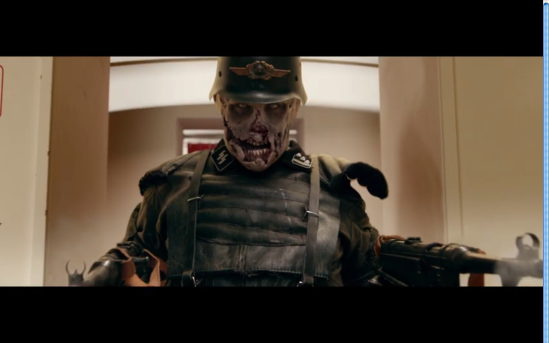
Apex predators of the waters are now apex predators of the skies in Marc Fehse’s ridiculous, frenzied, and utterly mad ultra-violent Nazi-exploitation, “Sky Sharks.” Soaring through the heavens soaking fluffy white clouds with blood, the Carsten Fehse and A.D. Morel co-written film took off virally in 2020 with the promise to the internet, especially horror fans, of zombified SS soldiers mounted standing on humungous Great White, Hammerhead, and Megalodon jet-propelled sharks. Fehse’s team delivered. “Sky Sharks” has not one single serious bone in all it’s cartilaginous gory-glory body in what’s Fehse’s second film behind the 1999, straight to video, “Mutation” involving the what-if factor of a surrealistically free reigning and sadistically unbridled Nazi force hellbent on winning World War II no matter how many lives needing to be sacrificed for the sake of the Führer’s dominion. The Germany-made production is a Fuse Box Films and Fantom Films.
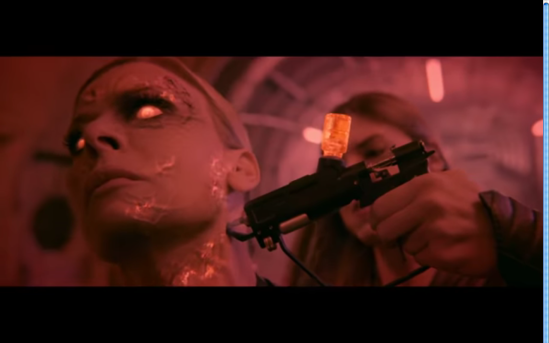
“Sky Sharks” is studded with cult stars, but those studs pop out mostly after the carnage-laden opening scene of passengers on a commercial flight being ripped to shreds by undead super-soldiers hog-wild about killing. Robert LaSardo (“Strangeland”), Lynn Lowery (“Model Hunger”), Tony Todd (“Candyman”), Diana Prince (“The Last Drive-In with Joe Bob Briggs”), Mick Garris (director of “Critters 2”), Dave Sheridan (“Scary Movie”), Amanda Bearse (“Fright Night” ’85), Asami (“Gun Woman), Naomi Grossman (“American Horror Story” franchise), Lar Park-Lincoln (“Friday the 13th Part VII:  The New Blood”) and “Mortal Kombat’s Shang Tsung himself, Cary-Hiroyuki Tagawa, make an appearance in some minor way, shape, or form, but since “Sky Sharks” is a German production, much of the cast is geared toward German and Austrian actors with Thomas Morris spearheading the lead role of the inverted mad scientist, Dr. Klaus Richter, a centenarian mastermind behind the birth and, hopeful, destruction of his monstrous airborne jaws of death experiment.  The role itself isn’t very exciting that refrains Morris to be nothing more but a talking head who recounts his failed World War II and Vietnam resurrection serum to turn the tides of war.  While Dr. Richter has immense blood on his hands from a long and rich background, the present day Richter has lackluster appeal and Morris doesn’t provide much zest either.  More complexities reside in Richter’s two tech-savvy and kickass daughters, Diabla and Angelique.  Their signifying names alone provide some foreshadowing of events, but the close sisters are boots on the ground with their father being the eye in the sky; yet, Diabla and Angelique have been kept in the dark from their father’s horrid past that factors little into parting ways from being daughter’s little girls.  Blonde beauties Eva Haberman and Barbara Nedeljakova successful roles in Germany and the U.S. include “Hostel” and the sci-fi tele-series “Lexx,” but their blind obedience to the patriarch roles downscales any moments to shine individually as free thinking agents of good.  Any other character factored into “Sky Sharks’” whiplash narrative come and go without a single ounce meaningful impact becoming background noise for the fray. There’s not even a singular villain to speak of as a focal point to direct a challenger against forces of good.
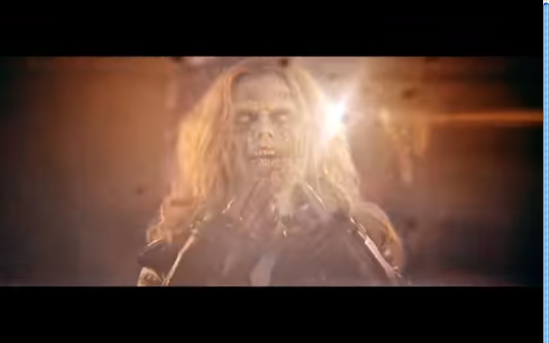
As much as the concept excites me on an obscurely dysfunctional level, a real telling tale of who I am as a person, who also praises “Snakes on a Plane” as cult candy, “Sky Sharks” has atrocious issues with pacing and story quality.  The opening scene sets up what to expect of gore drenched Nazis yoking back on genetically mutated sharks, zipping through high altitude to acrobatically infiltrate commercial planes for complete and total annihilation of every passenger onboard.  Tickles me in all the right places.  Yet, the sky sharks’ unveiling background whizzes past right into death from above world apocalypse, skipping keynote details resolving the giant warship beached on the Antarctic ice.  Fehse decides to redirect our focus with a bunch of explicit violence and sex and while that’s all nice and good…really good…the misdirection can’t coverup the necessities needed for a good story even if the story is absolutely bonkers. The visual effects are not distinct from the ream of shark-sploitation films that have become popular over the last decade in a cheaper slaved effort to capitalize on the majestic beasts of the sea…who sometimes mistake a surfer for a sea lion. The flying sharks swim in a stiffly pattern and move inorganically through their uncharacteristic ecosystem as they rocket in a school of steampunk nightmares. Not all visuals fall short of satisfaction when they’re appropriately blended with practical effects. Under that hood of tangible horrors is “Iron Sky: The Coming Race’s” Martin Schäper and, the legendary, Tom Savini, who we haven’t seen special effects work from since 2012’s “Death from Above” (an also fitting title for killer sharks in the sky). Schäper and Savini bring it with blood. Each plane sequence, there’s two of them, exhibit different deaths with each one more outrageous than the next. My favorite is the inverted periscope through a guy’s cranium and having a looksie at the screaming, bloodied passengers. “Sky Sharks” is, literally, an over-the-top scream of slice’em and dice’em fun.
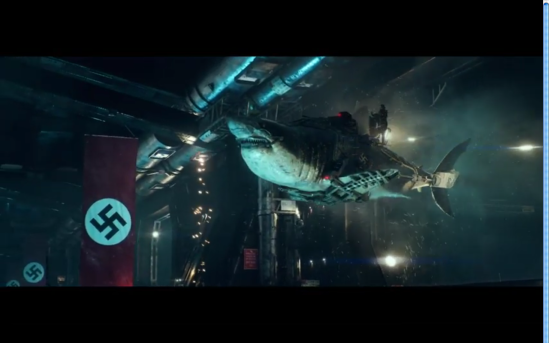
Cresting through the blue yonder and painting the sky blood red is the deadliest gang of shark riding Nazi’s to ever grace a cinema platform in “Sky Sharks,” coming to DVD in Australia, no stranger to large, deadly sharks, courtesy of Umbrella Entertainment in association with Raven Banner. The NTSC encoded, region 4, rated R release will present the film in a widescreen 2.35:1 aspect ratio. “Sky Sharks” is a turbulent wonderland of rustic computer generated visual effects with a Marco J. Riedl and Olaf Markmann cinematography, typifying a clashing style, of keeping actors tightly in focus to sell a futuristic fluorescent environment. A few scenes give a sense of layered paper mâché sitting in front a green screen as the forefront images seemingly pop out of their backdrops. The English and German Dolby Digital 5.1 surround mix falls victim to an overpowering score of a weak dialogue track that washes key pieces of exposition that might explain more as the scenes fleet away in the rushed paced 103 minute runtime. Aside from a brilliantly detailed DVD cover robust with a glowing eyed, half-decaying Nazi soldier as centerpiece amongst flying, weaponized sharks and Robert LaSardo and Lynn Lowry cameoing off to the left side with a half-naked female warrior on the right, the DVD has no bonus features included. After the credits, a fake commercial for “Sky Frogs,” starring that half-naked female warrior I just mentioned, is a satirical happy ending full of even worse, 80’s caliber, visual effects worlds and frogs. Though not at the top of the food chain being one of the grossly ostentatious and shoddily visual effects films ever, the mindless, search and destroy, crudeness of “Sky Sharks” chums our oceans of entertainment with some of the bloodiest fun we’ve seen in a long time from a Nazisploitation.

Own Umbrella Entertainment release of “Sky Sharks” on DVD! Click the poster!

The Dying Baltic Traditions Live in the Ashes of EVIL. “Cult Girls” (Umbrella Entertainment / DVD)

The pagan Cult, the Golden Path, remains nearly all that is left of the ancient practice as Lithuania becomes one of the last countries to be converted to Christianity in the late 14th century.  Led by an archaic, yet powerful, goddess named Ragana, the Golden Path promises to flourish once again with the power of death, reincarnation, and control through sordid misdeeds.  When Dalia and her two young sisters become prepped for a ritual of an important role in the cult, potentially leading them down the path of sex and sacrifice, a traitorous follower helps the sisters attempt to escape their emmeshing fate as the police raid the Golden Path compound ensuing a firefight that leads to the death Ragana and Dalia’s getaway, but her sisters are kidnapped and held captive by the remaining cult members.  Years later and riddled with guilt, Dalia must know what happened to her sisters and she tracks down a death metal cultist, Moloch, who seemingly has a connection to Golden Path, with the help of Samoth, a black metal fanatic, but Moloch forestry hermit lifestyle cuts off Dalia and Samoth from the rest of the world and the convicted arsonist against all things Christianity may have more up his sleeve than what meets the eye.

With a title that sounds like an all-girl goth band from the grunge era of the 1990’s, or maybe even more so from the “Scooby Doo” franchise (Hex Girls anyone?), “Cult Girls” summons the actuality of being an acute quasi-historical and dark fantasy thriller hailing from the Ozploitation capital of the world, Australia.  “Cult girls” is the second, non-documentary film from “The Matrix’ inspired “Narcosys” director, Mark Bakaitis, who directed, wrote, and edited his the multi-location sophomore film that has on location scenes from not only in Australia, but also in Lithuania, at the notable Hill of Crosses landmark, and in the indiscernible urban locations of Germany.  Bakaitis serves as producer alongside executive producer Douglas Kaplan of the diverse arts platform production company, All Edge Entertainment, based in Santa Monica, California. 

The Australian production casts an American to star as Ragana, the brood matriarch destined to rejuvenate Golden Path’s permanence, with “V’s” very own Jane Badler.  Badler brings an international presence to the feature and isn’t a stranger to films from the down under.  With the actress’s soul-seducing cutting eyes and demonic empress allure, the New York born Badler exacts Ragana’s clutching strength as an underground Pagan seeking unlimited decadent power.  However, Badler is overshadowed by the timorousness of Dalia whose polar opposite presence is granted a more favorable chunk of screen time.  Finnish born Saara Lamberg plays the humbled Dalia, living her life out of a covenant while searching out the cult that once almost stitched her into the sew of sleazy affairs to unearth the whereabouts of her younger sisters.  Dalia’s a bit of a dull principle with no substantiated efforts in finding her siblings and it isn’t until Samoth stalks her one night, recognizing the Golden Path’s symbol tattooed on her wrist and offering his manhunt services to find the expelled Moloch, an exaggerated black metal anti-Christianity anarchist in a saturating performance by Albert Goikhman.  In the middle, masked brutes, half naked women, and, fallen by the waist side, Dalia’s sisters in standalone plot point narratives that, as far as story structure goes, does nothing to motivate the narrative other than be an ostentatious aesthetic of locations and debauchery.  “Cult Girls” rounds out the cast with Tony Markulin (“MurderDrome”), Algias Karazija, Dean Kirkright, a handful of Bakaitis’s family, and Simay Argento, a distant relative to Dario Argeno playing a Cult Auntie in the film.

“Cult Girls” borders being avant-garde of an unfiltered auteur’s will in a mesh of artistic polishes and prose dialogue, but the film slides into being more of an 83 minute music video over staying it’s welcome and drudges through a repetitive stylistic cycle to an almost nearly unwatchable extent.  Yet, “Cult Girls” somehow manages to retain attention despite the chewy acting and it’s ambling story that hits a dam wall of uncertainly of where the script should head. Bakaitis shoulders the story for modern Gothicism tapped with half naked occultist, sometimes bathing in blood, and a plague of nightmare imagery that director of photography Trent Schneider tunes into well with noir vitality despite being the cinematographer’s debut feature film, but through the shiny exterior of a handful of solid mise-en-scene work, “Cult Girls” numbs the impact of the soul corrupting Pagan syndicate, that may or may not be shrouded with supernatural foundations, and the anti-Christian propaganda with half-baked violence from geriatric men, masked with Dia de los Muertos style masks, able to be kingpins of an untouchable prostitution ring façade for their occult sacrifices in broad public without a bat of an eyelash.  Granted, prostitution is likely legal in Germany and Lithuania so authorities might turn a blind eye, but brothels are a convenient opportunity for police investigations. “Cult Girls” treasures the fact of Lithuania’s languishing heritage without being overly filmic heresy by blending in shaded sleaze and death, but there lies no story in Dalia’s unenthusiastic search for her sisters in a much more preacherly themed death metal horror that confuses cult with religion.


Apocalyptic reincarnations and traditional folklores collide in Mark Bakaitis’s “Cult Girls” on DVD now from Umbrella Entertainment. The Australian release is a single layer DVD with region 4, PAL encoded format, presented in a widescreen 2.40:1 aspect ratio. Trent Schneider’s keen eye captures a grim fairytale surface of black magic masochism and, at the same time, breathtaking in the pure nature scenes, but the imagery is mostly in devoid of richer color that lingers around a bluish-gray monochrome tone and struggles with hazy details, especially around facial features, that smoothly fuzz over. The English, German, and Lithuanian Dolby Digital 5.1 surround sound mix battens down with shiplap genres of traditional Lithuania folk and modern metal from composing sound designer Erin McKimm, implementing the traditional songs of Lithuania sung by the Melbourne-Lithuania community singers, The Lost Clogs. Industrial action fills in every nook and cranny of the remaining score with decent range and depth of ambiance. While the dialogue is prominent and clear, there are spelling errors and tiny text issues with the English subtitles when the narrative lands in Germany and Lithuania. The DVD’s bonus features includes audio commentary, making of featurettes with cast and crew interviews, Bakaitis’s short film, “Mercy Kill” that serves one of the founding themes for “Cult Girls,” and music videos directed by Mark Bakaitis. For an Australian film, “Cult Girls” will feel more worldly, unlike anything else that comes out of Australia, and have partisan propaganda against Christianity, but in the end, the insidious Pagan evil, on the precipice of resurrecting, wearies on, like a tireless sermon of doom.

EVIL Can Never Replace Love in “After Midnight” reviewed! (Umbrella Entertainment / DVD)


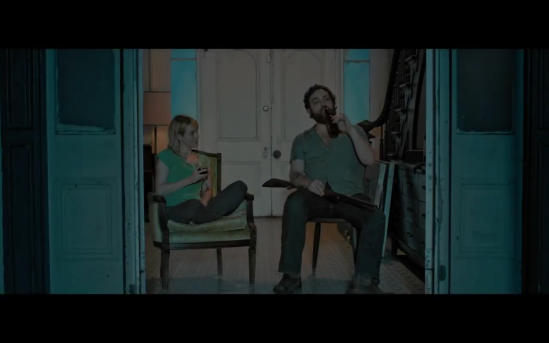
Well known country boy Hank has everything he could ever need in the small, rural Florida town: having an establish family lineage, being the owner of a local bar hotspot, and obtaining the love of the beautiful Abby. Their gleaming happiness suddenly goes dim when Abby abruptly takes off, leaving a note with little information of her whereabouts or her plans. Fraught in her absence, Hank drinks himself into a stupor most nights of romantic nostalgia while also fending off his rustic home from a beast out of the surrounding woods that continuously scratches at his front door nightly. Hank’s friends believe he’s suffering a mild mental break as night-after-night, the snarling beast evades Hank every effort to capture and kill it.

“After Midnight” is a sheering melodious and delicately programed romance-horror from “The Battery” writer-director Jeremy Gardner allotting co-directorial duties again with continuous collaboration beside Christian Stella. As Gardner’s third film in the director’s chair, second inside the realm of horror, “After Midnight” brandishes more a sappy love story that sings the tune of a love lost warrior where the relationship woes lie within the deepest, darkest corners of himself rather than being a frontline horror sprinkled lightly with dusted coating of amorous renewal. “After Midnight” is a topsy-turvy monster movie not for an insouciant genre fan who rather skim the surface for blood on the topsoil than dig feverously for the originating root. If you’re also a fan of the mysteriously acclaimed, H.P. Lovecraft-inspired “The Endless,” the filmmakers behind that film – David Lawson, Aaron Moorhead, and Justin Benson – produce “After Midnight” under their Rustic Films label in association with Vested Interest, Cranked Up Films, and Kavya Films, casting that querying memento clinging like a foreboding, nagging scratch needing to be itched.

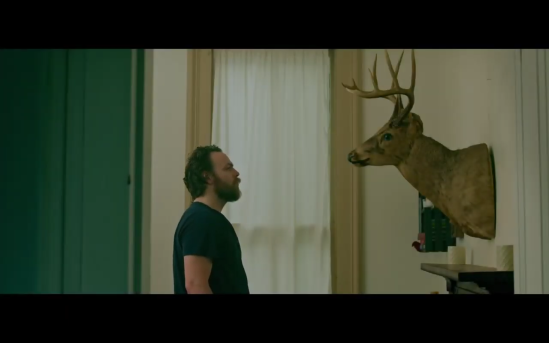
Not only is Gardner the director, he also stars as Hank, enduring the multi-hat involvement in his films in thematic fashion from his previous films, spearheading the roles in “The Battery” and “Tex Montana Will Survive!,” and Gardner has also branched out beyond his work, having roles in the visceral Joe Begos’ films “Bliss” and “The Mind’s Eye.” Gardner sports his common wear of a U-shaped V-neck t-shirt and bushy beard overtop his large frame and wields a sharp tongue, whiplashing small witticisms as he charms his serenading rustic charisma upon Brea Grant as Abby. The “Dead Night” actress enacts every man’s inherent fear of being lost without their better half when Abby hightails from Hank’s steadfast stance on life. Grant provides a flood of emotional drought through a series of Hanks’ melancholy, good times flashbacks that provide backstory fuel to Hanks’ quickly withering grounded state. Gardner and Grant’s chemistry eerily dons the routine life span of young love and weary complacency without so much showing the beat work argumentative discussions and differences of a diminishing relationship; their natural banter never derails even amongst a bedeviling beast with nightly visitations on a drained Hanks’ doorstep. “After Midnight” fleshes out with a cast of superb supporting roles with nearly Henry Zebrowski (“Cut Shoot Kill”) stealing the show as a half-wit yokel, Justin Benson (“The Endless”), Ashley Song, Nicola Masciotra, Taylor Zaudtke, and creature performer Keith Arbuthnot as the man in the monster suit.

Speaking of the monster suit, the unknown origin creature is very Guillermo del Toro-esque with a quasi-rubbery look, but still renders terribly real with the puppetry facial expressions and Keith Arbuthnot contorting his body to exuberate natural movements. However, don’t look to be thrilled by a ferocious beast as the constant the source of contention. It’s more of an afterthought, a pleasant afterthought, filling Hank’s Abby void or is it? It’s a question you’ll be contemplating when the credits role when a monkey wrench finale disrupts your premediated blue print scheme of a reason for the creature’s existence. Romance and melancholy cross paths in an overwhelming heap of love sickness, guilt, disappointment, and jealousy in a well thought out, smart dialogued version of a self-growth narrative.

There always seems to a malevolent monster behind the scenes, perpetrating the demise of a flourishing relationship exemplified by a beautifully wicked allegory in “After Midnight” distributed onto DVD home video by Umbrella Entertainment. The transfer is presented in the original widescreen, 2.35:1 aspect ratio, on a region 4, 83 minute runtime disc. The presentation is virtually flawless with palatable natural coloring, gleaming southern-sweat coated, natural looking skin tones, and overall details with Hank, and Hank’s house, looking specifically grimy and unkempt. Greenery is of a brown lush backdropped inside what could be anywhere small town America. The English language 5.1 Dolby Digital surround sound audio renders a nice range and depth with the monster’s muffled scratching and growling outside the door, the shotgun blasts are powerfully exalting, and the dialogue clearly couriers through all relationship qualms and Hanks droll dialogue. As of many Umbrella Entertainment standard feature releases, there are no bonus features nor a static menu. “After Midnight” is a contagious love story for not it’s mushy, heartfelt, weepie doting into the tears of self-pity, but for that lingering presence of sinister cynicism the monster epitomizes, a stark terror scratching every night under the skin until the unbearable hole in our hearts is finally sated by love’s return.

“After Midnight” available on DVD at Amazon

The EVILs of Drugs, Addiction, and Art in “Bliss” reviewed!


Dezzy Donahue, a struggling Los Angeles artist, lives life ferociously with hard drugs and heavy drinking despite the cautionary advice of her quasi-boyfriend, Clive. Her current masterpiece falls behind on schedule and she hits a formidable creative block that results in being fired by her managing agent and with cash quickly dwindling, Dezzy’s losing the battle for inspiration that turns to an increasing narcotic intake surging through her system where any and all substances are fair game to explore. When she snorts a line of Diablo, a blissful, out of body experience drug, she finds herself in a rapturous three way with friend Courtney and her on-off side piece Ronnie that leave her with a post-high, post-sex altering inner body inexperience of opening the flood gates on her creativity to draw again as well as pang her with an insatiable need for a fix when no longer riding the high. Soon, Dezzy discovers the Diablo might not have been the drug that lit the fire inside her when a strong craving for blood becomes an inescapable addiction and a means to finally finish her greatest triumph work of art.

An audio/visual besieging rabbit hole shiplapped with braided beleaguering addiction and vampiric pathology in the stimulating aggressive, Joe Begos written and directed visceral horror, “Bliss,” set in the sordid Los Angeles metal scene. The “Almost Human” and “The Mind’s Eye” filmmaker hypnotizes on a stroboscope wave with his latest take on the vampire mythos with a drug-fueled, warmongering hell on a canvas tale of sex, drugs, and diabolical fiend cravings. Produced by Channel 83 Film, as are all of Bego’s works, “Bliss” is the director’s next notch up on the crazy, unrestrained belt that’s already garnished and weaponized with razor wire and three-inch cone spikes and while the story itself isn’t fashioned for originality, the way Joe Bego’s exfoliates the overripe garbage of rehashed formulaic filmmaking from the excessively strained eyeballs, sheepish with mawkish and dull stories, will be a new design to treasure as cult status.

Where’s “Bliss’s” 2019 nomination for best actress in a lead role!? Dora Madison seizes the performance of Dezzy Donahue by storm inside a role of careless abandonment that coils into viperous mode and lashes out with a deadly strike of unconventional fangs. Madison embraces the exotic Joe Begos route covered in blood, paranoia, and a sleazy shade of florescent neon and runs a willingness to express his mesmerizing vision with body cam harnesses. “Bliss” quickly establishes a hard-hitting tenor and Madison, whose credits include “The Loft,” “Night of the Babysitter,” and in the next upcoming Begos release, “VFW,” exacts a fortified layer of extreme sovereign, a do-what-I-want policy with a zero complaint department attitude, while stowing away what little hope and compassion Dezzy has in the forgotten corners of her plainspoken mind until the moment is too late to turn back. The story solely follows Dezzy’s perception of events as she encounters and reencounters characters before and after needing a junkie’s fix, an exaggerated play on an abusers volatile relationships. The cast affixed to roles of Dezzy’s vexing fix are Tru Collins, Rhys Wakefield (“The Purge”), Jeremy Gardner (“The Mind’s Eye”), Graham Skipper (“Carnage Park”), Chris McKenna (“King of the Ants”), Rachel Avery, Abraham Benrubi (“Wristcutters: A Love Story”), and that lovable “Cheers” regular, George Wendt.

At this point in the review, an overabundance of praise for Joe Begos’ “Bliss” has been logged by this reviewer, who is obviously a fan of the film, but more can be unquestionably explored. From previous reviews and comments I’ve come across regarding “Bliss,” a minority have displayed a disdain for the indistinct theme of drug withdraws and vampirism that resembles Abel Ferrera’s 1995 film “The Addiction,” but instead of being set in shadowy alleys of New York’s urban jungle, Bego’s relocates to the wayward esse of L.A. life. Perhaps Begos was inspired by Ferrera’s undiluted struggle and violence that makes “Bliss” a clone to “The Addiction’s” chief thread, but the film’s are artistically polar opposites. “The Addiction’s” black and white photography and slow-burn air tunes more into the story of the Shakespearian tragedy variety, especially when Christopher Walken provides lengthy life stance and coping monologues to establish his eternal dominance over Lili Taylor. “Bliss” proclaims a stimulus trip from the very beginning with a favorable thrashing metal soundtrack and an psychedelic filmic presence that comes with an opening epileptic warning. Both films compliment the figurative comparison for a fix in their own poetic ways and would make a fantastic double feature release or double bill midnight movie.

If this writeup has a jonesing affect, “Bliss” is cut and lined ready for blipping on an Umbrella Entertainment DVD home video presented by Dark Sky Films. The Channel 83 Films production is presented in a widescreen, 2.35:1 aspect ratio, being shot with a ARRI/ZEISS Super Speed Lenses, as credited on IMDB, that would explain the sharp image and stark contrasts on the colors. The visual perception of the seemingly humming-on-your-eyeballs neon lighting barely lets you experience the film in natural lightening during night scenes and only in the daytime that resembles the little normalcy left of Dezzy’s life, fade away with natural light the more she succumbs to blood cravings. “Bliss” feels and acts out like a 90’s film, slightly grainy for grindhouse seduction by way of shooting of actual film stock (35mm!), and forgoes the bubbly shine of perfection, coinciding damningly with Dezzy’s inner circle of sleaze, grime, and gore. The English language Dolby Digital 5.1 surround sound has a lot of kick and energy with a prevailing metal and punk/post-punk soundtrack feature Doomriders, Deth Crux, and Electric Wizard just to name drop a few. Dialogue is clean with an appropriate depth in the midsts of hard partying and live bands. Range is a little harder to discern since the soundtrack really is overpowering and dialogue sops up the remaining amount of audio track space, but when opted, the ripping of flesh and breaking of bones doesn’t disappoint. No subtitles are offered. Like many of Umbrella Entertainment’s standard releases, the single sided, singer layer DVD has no static menu or special features to offer other than the 80 minute runtime feature. “Bliss” is one coked-out, blood hungry hell of a vampire tangent from the norm that rectifies the optic and audible sanctuary for shock brilliancy to flesh out the Machiavellian in all of us.

[https://www.youtube.com/watch?v=5KdXU-n7qSg]

You want it, You need it, You desire it! Own “Bliss” today!

EVIL Doesn’t Stop Until the Director Yells “Cut” reviewed!


In 1985, director Hilary Jacobs sets her sights to finish her Australian low budget horror film, “Hot Blooded,” at all cost, but the ambitious cast and crew struggle to compete with riley personalities that slow down production. The film’s masked killer goes mad and gores with an indefinite stake into the film’s heart after mercilessly murdering Jacobs before being violently killed himself by the film’s vain star, American Vanessa Turnbill. Fourteen years have past and the “Hot Blooded” reels have been deemed cursed for whenever they’re viewed, someone dies, but a group of determined film students are keen on finishing Hilary Jacobs’ last directorial and even gain the original leading lady, Vanessa Turnbill, to return and finish her staggering performance. With the partial, unfinished reel screened by all cast and crew and filming begins shooting on the original set premises, the evil masked killer returns to finish each one off diligently before they’re able to finish the film.

With the late Wes Craven pumping new spirit into the a life support stricken slasher subgenre in 1996 with “Scream,” masked killers surged into proper restoration once more right before the turn of the century and Mushroom Pictures, the cinematic banner of one of Australia’s most notable indie music publisher, Mushroom Group, asserts their debut title into the stratosphere grazing genre that who’ve now initiated a creative footing into film production and distribution with a commemorating meta-slasher entitled “Cut.” Directed by Kimble Rendall (“Bait”) and penned by Dave warner, “Cut” dares to ride the newly rediscovered genre wave early in the wake of establishing predecessors that strived to formulate an un-formulaic counter measure against the slasher status quo, but “Cut” doubles down with Warner’s script that meshes subgenres, compounding the horror to uncharted territories where filmmakers do not dared trek sitting comfortably in their less is more recliner. “Cut” relates more to Wes Craven than most genre fans would like to admit but the similarities the two directors’ characters and killer are compelling to explore and compare. The filming is mostly shot in the Adelaide region of South Australia; the same region that produced recent horror such as 2017’s zombie post-apocalyptic “Cargo” starring Martin Freeman and the great white shark thriller “The Reef.”

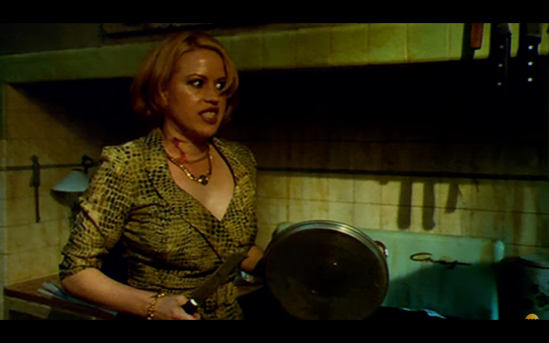
Comprised mainly of an Australian cast, “Cut’s” headlining leading lady is an American “Sixteen Candles” sweetheart taking a leap into unfamiliar territory and I’m not talking about of the Outback kind. Molly Ringwald has only ever starred in one other horror film in her 40 year professional acting career and after the dismally reviewed 1997 cubicle-cutthroat thriller, “Office Killer,” the “Breakfast Club” star steps into a more complex role that involves her multi-tasking two persona performances of essentially the same character spanning a story lined fourteen years apart. As a true testament to “Cut’s” makeup and stylist department, Ringwald, who was about 30 years old at the time of filming, goes incognito as she’s barely recognizable as Chloe, a role within a role played by Vanessa Turnbill playing the teenage character in the scrapped “Hot Blooded” slasher. Though a far cry from a coming to age film, Ringwald pivots to a coming to terms with her character’s handling of prolonged fear from the fateful and deadly night the masked killer almost ended Vanessa’s life by strongly playing to the character’s overpowering sense of self worth and brash Hollywood attitude against the one thing she can’t control…her past. Vanessa is not alone in her quest for finishing a scarring afterthought as “Hot Blooded’s” newest director, student filmmaker Raffy Carruthers, picks up where Hilary Jacobs’ left off after being butchered and is determined to wrap Jacobs’ legacy short of being a hack director. As the other half of the two resilient female characters, Raffy is played by New Zealand actress Jessica Napier who channels her inner Sidney Prescott as a strong feminine survivor unnerved by the macabre that’s closing in around her brought upon a sadistic masked killer and braves sacrificing herself to thwart pure evil’s carnage. The rest of “Cut’s” cast disperses the right amount of character building performances by Sarah Knats, Stephen Curry (“Rogue”), Matthew Russell, Erika Walters, Cathy Adamek (“The Babadook”), Steve Greig, Sam Lewis, and pop singer Kylie Minogue (“Street Fighter”) whose had collaborative projects with Mushroom Group and also a role in a Kimble Rendall 11-minutel short, “Hayride to Hell.”

The meta approach “Cut” takes might detach itself from the plot of “Scream,” but in essence, the Kimble Rendall film is derivative work of Wes Craven who aimed to expose and exploit cliched tropes of the slasher flicks to upheave audiences wits on what they know about the genre and where the plot might eventually boil down to in a orthodox simmer of uncreative sensationalism. “Scream” smartly broke down plot structures, revealed character flaws, and even name dropped popular directors and films that became the very foundational basis of the Renaissance slasher era that went unchanged for years, decades perhaps. “Cut” also reasserts shout outs as references, along with Rendall’s creative knack of making every character swim in the pool of suspicion, to build up a catalytic twist no one would or could predict despite all the subtle clues, generally abundant in slashers, toward revealing the killer’s true identity and motivation. I wouldn’t be bold enough to say Rendall’s “Cut” deserves to be above or on the same level as “Scream,” because, frankly, it doesn’t, but “Cut” has a singular, unique identity with all of its own loaded modern day slasher traits such as a high kill count and an intriguing self-referential plot. Where “Cut” shakes at the knees a bit is how the practical effects were accomplished and the scores of cheesy late 90’s-to-early 2000 visual effects bared an ugly resembles of something that could have come straight out of the Super Mario Bros. film adaptation. A minority of the kills were decently crafted to bring a honorable character death, but there were many that succumb to a quick edit or stemmed from an off screen cut down that took away the breadth of impact and left more to be morbidly desired. Where “Cut” struggles shouldn’t be deemed ineligible for attention because of those reasons and, in fact, “Cut” sustains a high entertaining rating with immense value in the replay sector to catch thematical intimations and do a comparative analysis on Crave and Rendall’s films on how they experiment, treat, and respect the greats that were once lost to success over a long period mediocre financial and routine blundering.

Umbrella Entertainment and Beyond distribution debuts the Blu-ray release of the Mushroom Pictures and Kimble Rendall’s “Cut” with a full HD, 1080p 4K restoration from the original film’s 35mm interpos and presented in a widescreen, 1.85:1 aspect ratio. The 4K scan illuminates the hard, dark lighting used primarily for tone setting, granting an extremely gothic look without being inside the parameters of inherently gothic set design and the scanned transfer also revitalizes the snaps of color where appropriate while still leaving the natural grain from the 35mm filmstock. The English language dual channel DTS-HD Master Audio track has lossy quality because there is such contentious and explosive moments that warrant audio quality; however, the 2.0 track is sufficient to lay simple groundwork of depth, range, and clarity and the soundtrack, no matter how generic, elevates to a concentrated level with the killer on the hunt. Dialogue murkiness is no issue here with a clear path of discernible lines. Special features seem limited and antiquated for a 4K, Blu-ray debut release, but do include archived cast interviews with Molly Ringwald, Kyle Minogue, Jessica Napier, and Kimble Rendall, behind-the-scenes of some of the shots, a commentary with director Kimble Rendall and writer Dave Warner, storyboard and concept art gallery, “Hayride to Hell” short from Rendall that stars Minogue and Richard Roxburgh, and the theatrical trailer of the film. The back cover states a region B disc, but my player was set on A and prior press releases suggested a region free release so this particular gem should play in any region. If a die hard Wes Craven fan, place the 20-years-young “Cut” into your queue as a forward thinking slasher with brass balls and a marred killer with modified gardener sheers that provokes the genre still to this day.

Why settle for standard definition when “Cut” makes a 1080p debut onto Blu-ray!!! Click to buy it now!