Cicadas’ EVIL Song Will Test Your Sanity! “The Sound of Summer” reviewed! (Unearthed Films / Blu-ray)

If You Can’t Take The Heat, Watch “The Sound of Summer” instead!  

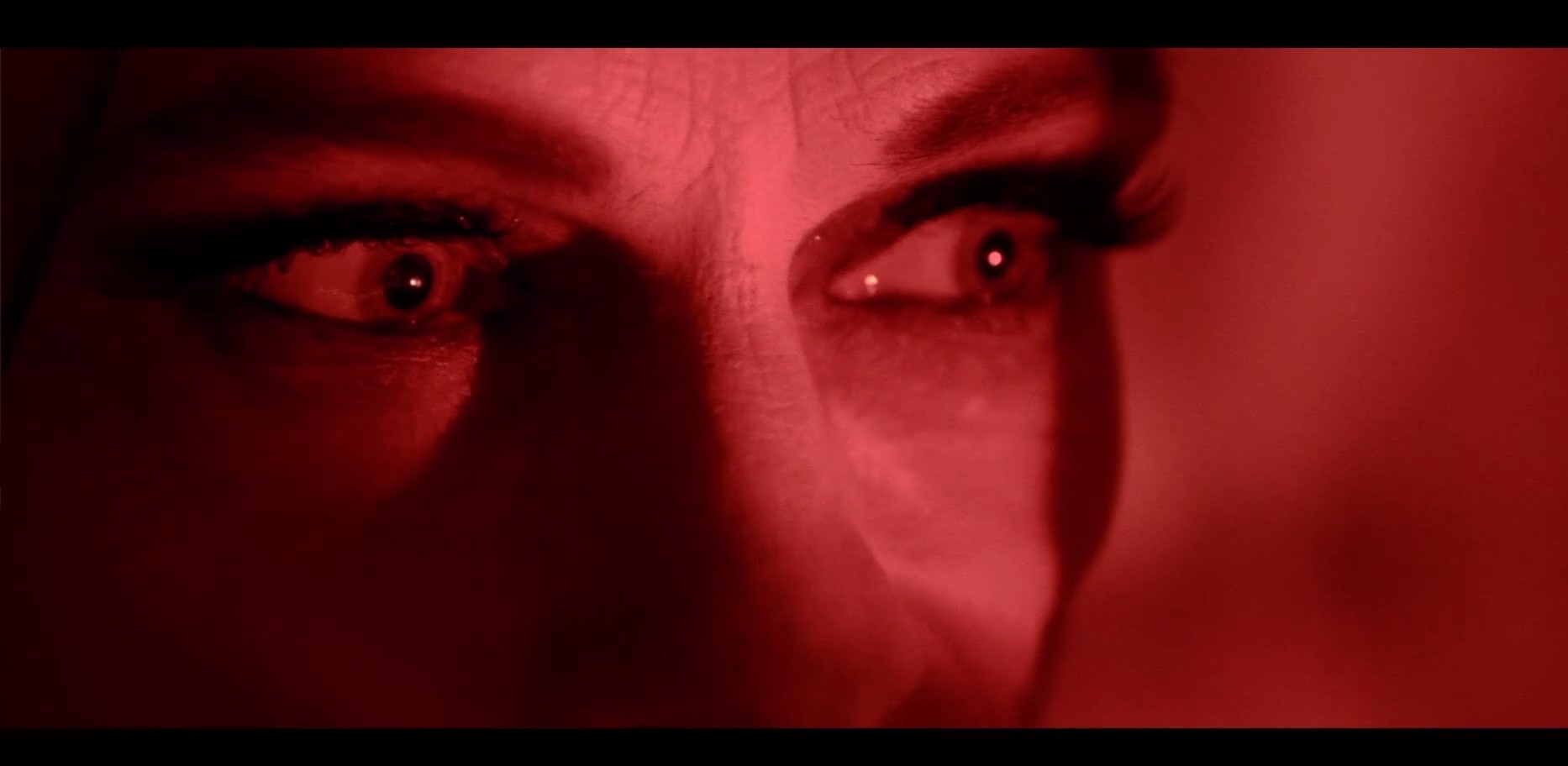
A coffee shop employee is over the Summer’s relentless heat.  She’s also over Summer’s Cicada call of vibrational chorusing when the winged insects glide their tymbals across their abdomens to attract the season’s female sex.  In working one shift, a strange local man patrons her shop, bringing in his Cicada nets and enclosures, feeding his snared insects right in the middle of his hot coffee break.  Revolted by who she dubs The Cicada Man, and by cicadas themselves, insidious nightmare dreams and an intense itching sensation drives the girl into scratching and terrified fit.  The obsession to scratch the itch wears out spots on her skin to the point of creating open wounds to excavate the bugs she believes have burrowed their way into her body because a dream of The Cicada Man planting them inside her.  Reality begins to crumble  and delusions set in as her and The Cicada man have unfinished business that begin a downward spiral of Summertime insanity. 

The Summer season isn’t for everybody.  The oppressive heat, the swarming insects, the uncomfortable stickiness of sweat-inducing humidity, and the very essence of an overwhelming nature that can be engulfing toward a devolved transfiguration.  That’s the premise behind the 2022 Japanese extreme shock and gore horror “The Sound of Summer,” the first feature length film by a United Kingdom-born writer-director known only as Guy (aka Guy Fragments) who has lived and worked in Japanese since 2016.  Influenced prolifically by Japanese underground filmmaker Shozin Fukui (“Rubber’s Love,” “964 Pinocchio”), Guy follows Fukui’s extreme experimental horror with his own tastes and experiences built into the framework of what becomes an antithetical liking to the widely popular season that usually provides outdoor fun and sun.  In “The Sound of Summer,” the sun is the enemy and the cicadas are the siren song humming foot soldiers that infest the mind.  The body horror is a production of the director’s indie production company Sculpting Fragments, the same company used to produce the Guy’s shorts, “The Rope Maiden” and “Difficulty Breathing.”

“The Sound of Summer” runs a cast of nameless characters and at the center of the cicada madness, we’re individually tailgating one of the two women who work at the coffee shop.   Kaori Hoshino enacts the young woman’s displeasure for the Summer with constant vocal grouchiness of the heat and her visible disgust and detest of the surrounding cacophonous cicada chirping.  Hoshino works lathering loathsome into the character’s routine as a single working woman, living alone, with a daily schedule.  There’s never ostentatious gesticulation that overplays her hot hating hand.  Intermittent with seemingly mundane tasks provides a more down to earth and normal person, juxtaposed greatly with more contrast in the later extremely disturbed version of herself.  Her delusional disorder stalks her in the physical form of The Cicada Man, a rather odd, older man involved in what she considers to be childish bug-catching activities, and his presence, or maybe just the image of him, invades her mental space coinciding with everything else she dislikes about the Summertime.  The Cicada Man becomes the epitome of everything she finds repulsive yet every element of his being and the Summer sink underneath her skin, in a literal figurative combination.  In the metamorphizing macabre role of The Cicada Man is Shinya Hankawa who also has a tangent sub-story of feeding his precious insects, as well as himself, blood from the sickle opened young women he has hidden away in a derelict building.  This expresses The Cicada Man as morosely deranged but the narrative has up until now been latched onto the young woman from the coffee shop, which begs the question, is this how the young woman perceives The Cicada Man, even as far as labeling him with a slasher-esque moniker to further demonize him into being a part of a culmination toward her worst nightmare?  “The Sound of Summer’s” cast comprises of Kiyomi Kametani, Shiori Kawai, Kuromi Kirishima, Keita Kusaka, and Yuina Nagai.

Like renowned painters Edvard Munch or Vincent van Gogh, a madness quality lies within every stroke of Guy’s ‘The Sound of Summer.”  Guy pulls inspiration from his own experiences of a moderately pleasant English Summer being eradicated by the same season in Japan and it’s Hellish temperatures become a reconfiguration of the psyche when the once comfortable becomes oppressed by the uncomfortable surroundings of sensory overload.  A cultural physical representation of the season in Japan is the cicada, like the recognizable and sought after Cherry Blossoms of the insect world.  Guy uses the spellbinding cicada song with a fear-inducing frequency that vessels in psychological harm or delusional parasitosis with a visual goad of an enigmatic old man having them as pets that mixes the brain’s signals into a freefall into madness.  Yet, the audience is never outrightly explained what’s happening to the young coffee shop barista as a limited number of The Cicada Man’s spliced in scenes chauffeur in a more supernatural and macabre side separate from the woman’s narrative preponderance.  Are we supposed to be inside the barista’s disordered brain that’s going mad or is The Cicada Man offshoot sub-narrative an inside look at his bizarre insect consumed little world that slowly seeps under the Barista’s skin?   “The Sound of Summer” might be open for one’s own personal interpretation, but it’s clear in message as an anti-Summer film, an anti-bug film, and an anti-sane film with a prosthetic effects edge and a hyper-sensitive gore impact that’ll leave you scratching the most insignificant itch – just in case.

Ring in the approaching Summer season with “The Sound of Summer” on Blu-ray from extreme horror label Unearthed Films.  The AVC encoded single layer BD25 presents the film in a 1080p, high-definition resolution with a widescreen 1.78:1 aspect ratio.  Image quality is relatively stable throughout with spot areas of compression concern, such as splotching, around the darker, grittier scenes inside The Cicada Man’s rundown squat.  Details maintain their sharpness as we receive some gooey bits and pieces of unidentifiable flesh and muscular tissue.  Plus, the prosthetic applications display a coarse texture comes through the decoding well, despite a jumpy Mbps.  Guy’s approach to the cinematography takes a steady devolutionary downfall from the brightly lit and sterile to the darkly embracing and infested as if the two contrasting elements are linked by the psychological supporting wall between safety and danger, easily to crumble under natural pressures with the simple prod of gentle persuasion.  The Japanese language PCM 2.0 track distributes a fine dual channel mix that favors the sound design with cicada chorusing and the constant scratching and open wound tissue removal churning out an audible force of discord.  Dialogue is the other suitable track that’s remains clear, clean and in the forefront of the action, soundtrack, and robust sound design.  No signs of hissing, popping, or strength with the digital recording.  The optional English subtitles synch well with error free translation.  Extras include a behind-the-scenes that’s more of a blooper reel of the cast and crew making faces and messing around during principal photography, the Tokyo live-stream premiere after screening interview with director Guy and cyberpunk horror director Shozin Fukui, the Japanese premier with director and cast, and the film’s trailer.  Front cover is a grainy look at The Cicada Man in full metamorphic bloom slipped into a traditional Blu-ray snapper case with a disc art pressed with the illustrative, flesh-wounded flesh of the young victim.  The Unearthed Films release is not rated, has gore-friendly pacing at 75 minutes, and is locked with region A coding.  Special effects by “Versus’s” Susumu Nakatani and an original soundtrack by the Singaporean electronic-experimenter, Microchip Terror, “The Sound of Summer” buzzes with body horror boudoir in Guy’s directorial feature length extremity. 

If You Can’t Take The Heat, Watch “The Sound of Summer” instead!  

To Do EVIL, You Must Pay EVIL a Ton of Euro. “La Petit Mort 2: Nasty Tapes” reviewed! (Unearthed Films / Blu-ray)

Step Back into La Maison de “La Petit Mort” for a Sequel that’s Hard to Stomach!  

La Maison de la Petit Mort’s doors remain open under new management, continuing to serve the dark web public interest with a wide variety of snuff services.  For the right price, a fantasy-driven in-person torture show can be arranged for your liking, and one can be an commanding observer or one can get their hands dirty in participatory play where anything goes and pleasures are on-demand.  The German snuff house expands their reach to a global level with live webcam shows that can be directed by the high price paying patron and the leather-cladded vixen staff carry out their illicit instructions exactly.  A robust menu of dark pleasures, displayed on a new showreel of select gruesome services, are available at the simple transfer of a money wire or cash in hand for the depraved to make their fantasies a reality.

In 2009, German born director Marcel Walz helmed a linear, three-act narrative of tourists laid over in the big city winding up at patronizing a dark and dingy dive bar, La Maison de la Petit Mort, only to be abducted as inventoried stock for the rich to exploit in a slew of murder perversions.  Five years later in 2014, Walz returns for a sequel, “La Petit Mort 2:  Nasty Tapes,” with reprising principal actress Annika Strauss co-writing the film alongside Walz as well as stepping back into the sadistic black platform shoes of Dominique, one of the two lovely ladies with a lecherous and violent vocation.  The direct sequel that follows a day-in-a-life of the snuff house’s employees making an advert showreel does not follow suit in the way the first film was structured.  Instead of a linear, chronological narrative, “Nasty Tapes” evolves into an anthology of different kill archetypes for the marketing video. Walz’s Matador Films serves the production oversight with Harald Schmalz (“Collar”) coproducing the anthological torture porn feature.

“La Petit Mort 2: Nasty Tapes” doesn’t seen a whole lot of return on the original cast.  The tourists were all mangled, mutilated, and murdered, the original Monique bit the dust in an escape attempt, and the first Maman rode off into the sunset rich with blood money.  Instead, and among other things, “Nasty Tapes” folds a new treatment of terror with the same old eggs and flour by reinventing itself into an anthology type, introducing a new, blonde Monique (Yvonne Wölke, “Bad End”) into the batter, and disclosing the new owner of the freaky, fetish club, a feminine man by the name Monsieur Matheo Maxime (Mika Metz, “The Curse of Doctor Wolffenstein”).  Annika Strauss is the only original cast member to reprise her original role of Dominique, the brunette to Monique’s blonde and who showed slight inkling of hesitation before being summoned to torture and murder.  Strauss doesn’t buck the character trend as Dominque still displays disgust on her face when slicing a man’s facial features in a Picasso style portrait.  Yet, Dominique remains loyal to the Monsieur and to the La Maison de la Petit Mort by committing the atrocities without question, unlike the regular administrative bookkeeping and housecleaning she regularly remains vocal in opposition in what’s a slither of dark humor contrast between her gruesome work compared to mundane work.  Unlike Cyanide Savior singer Manoush, who was a very convincing merciless club owner Maman, Mike Metz plays a very different, more layered proprietor portrayed as someone who sees the work as a paycheck to fund his deepest desire – to be a beautiful woman just like his wife Jade Maxime (Micaela Schäfer, “Sky Sharks”).  That’s about the gist of complexity the sequel has to offer with much of the thinly laid foundation is bricked up by a compilation of back-to-back kill scenarios that involve some extreme genre directors as special guests, such as Uwe Boll (“House of the Dead”), Dustin Mills (“Bath Salt Zombies”), Mike Mendez (“Big Ass Spider!”), and the late Ryan Nicholson (“Gutterballs”), taking part in the clandestine, underground activities in-person or on the web.  The film fills out the cast with victims and victimizers in Armin Barwich (“The Terror Stalkers”), Bea La Bea, Babriela Wirbel (“Plastic”), Nichol Neukirch, Marc Rohnstock (“Necronos”), Thomas Pill (“Moor-Monster!”), Kai Plaumann, Markus Hettich (“No Reason”) and the twins, Barbara and Patrizia Zuchowski.

When going into a German gore film, such as “La Petit Mort 2:  Nasty Tapes,” you have to go into It having an affinity for, or at least an understanding of, complete shameless representation of torture and killing of another human being for the simple and pure joy of the act.  In other words, you have to be somewhat sick in the head.  For me, personally, the sickness is rooted out of admiration for special effects and how the F/X artist(s) can create a realistic depiction of an unofficial autopsied anatomy. Filmmaker Ryan Nicholson, who passed away in 2019 of brain cancer, not only had a role in the Marcel Walz sequel, but was also the special effects artist, following in the footsteps of one of the notable German underground special effects artists, Olaf Ittenbach (“Premutos:  The Fallen Angel”) who had done the graphic gags on the first film with head turning results.  Nicholson, with a credit list that has a foot in independent productions and more mainstream, Hollywood productions, such as “Final Destination” and the remake of “Blair Witch” from 2016, doesn’t disappoint and keeps the blood, guts, and stringy sinew seamless in a gruesome pageantry of death that rivals and continues Olaf’s original stamp.  Beyond the glossy surface of a blood glaze, “Nasty Tapes” is nothing more than a kill-after-kill anthology with no concrete premise for either of the individual slaughter vignettes.  Title cards setup the kill moments with basic victim descriptors, such as married status, age, and how much their life has been paid for, but doesn’t humanize them in the least, creating zero compassion for the unsuspecting abductee fated for something far worse than death.  Instead, Walz flips the script with more background on the clients with ipre-and-post interviews of their most intimate time at La Petit Mort.  This structure can be monotonous as there’s nothing else to look forward to or to absorb empathetically as a viewer in an anthology that simply glorifies the leisure time of an undisturbed murder.  

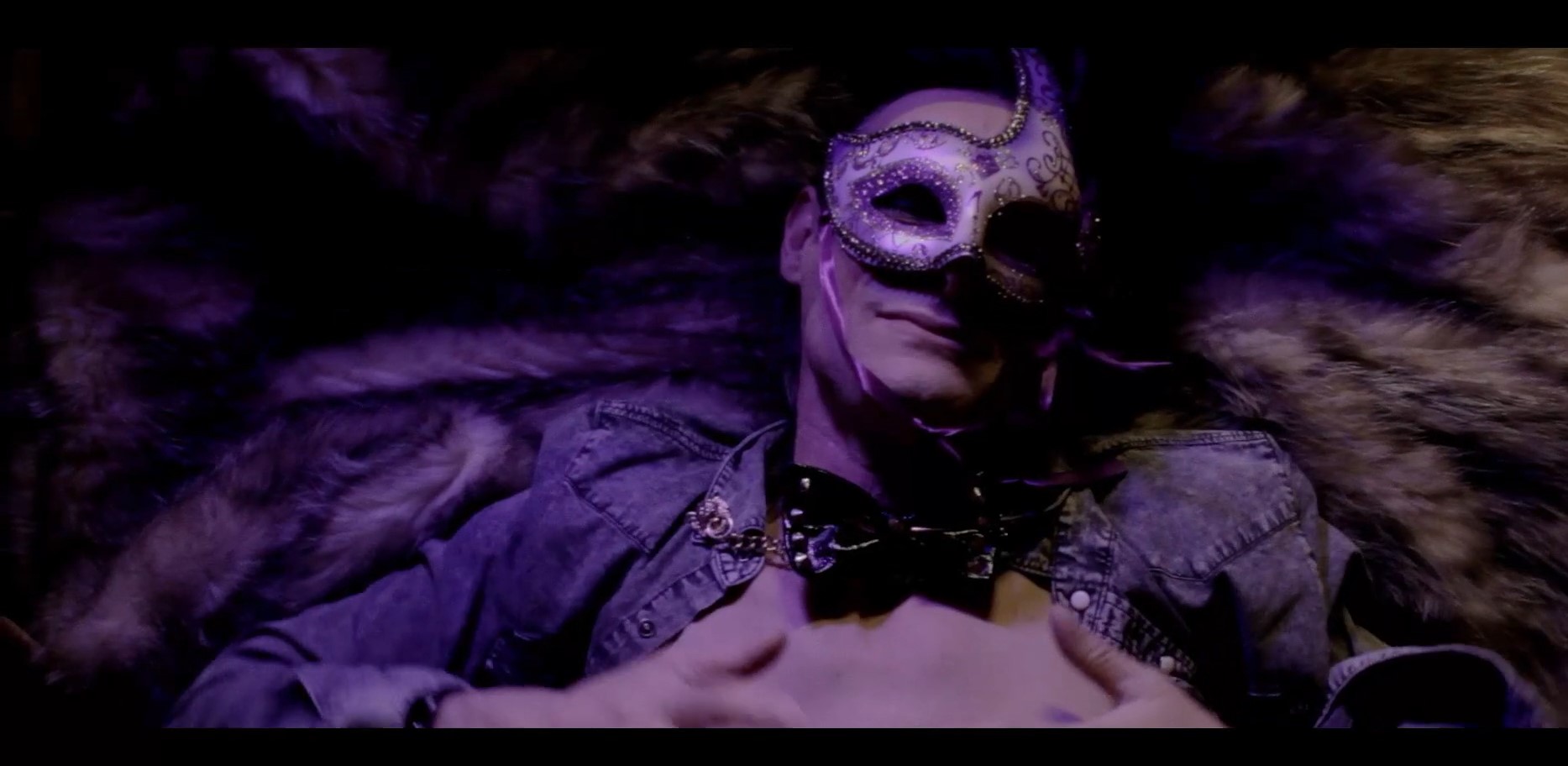
As a nail-pulling, nose-cutting, drill-holing, lip-stitching, dick-scissoring, gut-stabbing anthology, “La Petit Mort 2: Nasty Tapes” is a gory, good time and is even better now in high-definition with a 1080p Blu-ray release from Unearthed Films The AVC encoded BD25 looks as good as can expected for a shaky cam, hectically edited, and filthy dark German gore film presented in a 2.35:1 widescreen aspect ratio.  Details are oleaginous wet with blood and tissue that incongruently with the Roland Freitag’s gloomy yet suppressed cinematography and Kai E. Bogatzki discordance and chaotic editing technique that is supposed to elicit extreme shock but consequently results in a loss of the intended grisliness.  Unearthed Films‘ release exhibits no issues with compression, but the hues and tones appear to fuse in the near eliminate of some contours where there should be some.  The German-English DTS-HD 5.1 mix can be score heavy, especially a hard and energized Tekkno title credits from composer Klaus Pfreundner that’s distinctive German, but “Nasty Tapes” has profound focus on its core selling point – torture.  The very few scenes of intercut dialogue shots spliced into the client’s sociopathic session are well understood and do have prominence over the score, as well as the ambient milieu of screams and the integrated flesh destroying Foley, despite the cam-esque quality of the pseudo-testimonials.  The burned-in English subtitles under the German Language only are synced well without error and with consistently good pacing.  Disc extras include a behind-the-scenes making of cut out from the main camera, an alternate torture scene, a behind-the-scenes still gallery, a short advert of a naked woman strung up by her arms and being stapled with signs, and Unearthed Films trailers.  The Blu-ray physical features don’t stray to far from normal Unearthed Films releases with a standard Blu-ray snapper case with grisly cover art of a marred victim’s plucked out eye and a Jade Maxime holding a bone saw and wearing ripped fishnet stockings and black lingerie.  The pressed disc art has the rehashes the back cover image of Monsieur Maxime wearing a venetian mask.  The Blu-ray comes unrated, region A locked, and has a manageably sufficing runtime of 83 minutes to not overkill the overkilling.  Transparent in its surreptitious atrocities, “La Petit Mort II: Nasty Tapes” subsists as Marcel Walz charnel house of horrors with a new revamped anthology approach to razzmatazz special effects wetwork without any due remorse. 

Step Back into La Maison de “La Petit Mort” for a Sequel that’s Hard to Stomach!  

EVIL Strikes with Thousands of Disastrous, Deadly Fangs! “Calamity of Snakes” reviewed! (Unearthed Films / Blu-ray)

Save the Date!  “Calamity of Snakes” Slithers onto Blu-ray and DVD!  Available at Amazon!

A greedy, time-is-money land developer pushes his project manager and structural architect to complete his condo building earlier than scheduled, even if that means to cut corners.  While digging to lay the structure’s foundation, a massive pit of deadly snakes is unearthed.  With no times to waste, the land developer orders the mass killing of the snakes by the crew and even takes matters into his own hand using a backhoe as a weapon against the wishes of more sensible architect.  Those who are karma-included and God-fearing believe the mass murder of the snakes will result in retribution with fears being validated when workers fall victim to random snake attacks.  Shrugging it off as superstition mumbo-jumbo, the land developer finishes marvelous residential condo and fills the units in record numbers.  His success becomes the tenant’s death trap who can’t escape the swarming thousands of deadly slithery serpents infesting every nook and cranny and climbing toward his penthouse, seeking revenge against the snakebit developer’s cruelty and greed. 

Warning.  If you have a severely crippling phobia of snakes, then do not press play on “Calamity of Snakes” or you’ll be crying in the fetal position for hours afterwards with imaginational visions of venomous serpents dangling around your neck and arms, clinging to your punctured flesh with their sharp, tapered fangs. Trust me.  I know from experience after having watched the William Chang Kee (Chi Chang) creature feature and going into the viperous vengeance film with my own form of sweat-inducing ophidiophobia, an extreme fear of snakes.  Kee’s 1982 production comes with a bit of notoriety that may put the film in hot water with Peta or other animal rights organization, it also may be a silver lining for those petrified by the carnivorous reptilians that lurk underfoot, but don’t worry, from Unearthed Films news board, the home entertainment distribution company pledges to donate a percentage of the “Calamity of Snakes’” sale profits to the Save the Snakes, an organization that aims to converse and repopulate all species of snake around the world.  Penned by Kee with cowriters Kang-Nien Li (“The Lady Avenger”) and Kuo Jung Tsai (“Crouching Tiger, Hidden Drago”), The Chinese film made in Taiwan, “Calamity of Snakes” wriggles to-and-fro between different genre elements with pieces of horror, martial arts, and comedy packed so tightly together that making diamond shaped heads and rattling tails difficult to define the kind of film Kee intended to convey, but what came to fruition fabulously depicts the can-do attitudes of developing a preposterous idea into something insane, terrifying, and effectuated with countless real snakes.  Chi He Film Company and the Hong-Kong based Kee Woo Film Co. serve as the production companies with Tsai-Ching Wang producing and Golden Sun Films (“Dr. Lamb”) distributing.

Despite the animal cruelty, which undoubtedly can’t be ignored, you have to give credit to the Chinese for their willingness to do just about anything in order to get the shot.  If that means two of the actors’ role violently around on a floor covered with live snakes, screaming their heads off, then they certainly have more cojones than I ever will.  From a recent interview I watched with Michelle Yeoh, the “Everything Everywhere All At Once” Academy Award winning actress describe the Chinese film industry of the 1980s to be stunt demanding and really did lack the strict safety standards when compared to the U.S.  “Calamity of Snakes” appears to be no different with the easily handling of cobras and an overall serpent magnitude that can’t be denied. Yun-Peng Hsiang stars as the young, U.S.-studied architect with a sensible and rational head on top of his shoulders, overcome with the feeling that his dealings with the unscrupulous land developer (Yuen Kao) and the two passive aggressively buttheads throughout the narrative that eventually lends to the developer getting what he wants by way of money, power, and backdoor dealings that denotes an allegory of affluence being blind to the perceptible cause-and-effect dangers ahead while the studiously educated are left ignored, exploited for their talents. “Calamity of Snakes” cast rounds out with Lui Cheung, Ying Lee, Tung-Min Huang, Ying Lee, Pei-Ying Lo, and Ping-Ou Wei as the land developer’s chucklehead assistant.

“Calamity of Snakes'” hardest part to digest is the disgusting display of snake homicide. In what becomes a grouping of three scenarios that are just scene after scene of killing snakes by the hacks of machetes, the release of mongoose going right for the head of the snake, and in a blaze of flame throwing fire, cruelty is terribly too integrated into the pericardium encased heart of Kee’s ecohorror and makes the snake outdoor market delicatessen scene that dispatches a cobra for use of consumption that much more palatable despite the graphic skinning, organ removal, and blood draining for a special drink cocktail that can supposedly cure what ails you. Down the hatch! After the ginormous scenes of genocide, rooting for the snakes to bite back against the unbridled cruelty of humans to come crashing down in a heap of revenge-seeking serpents is a sight of satisfactory glory. Kee, also known for his cheap but fast-paced martial arts films, creates a loose hierarchy amongst the ophidians by fabricating a boa constrictor that can kung-fu with the best human snake whisperer. The showdown scene takes flight with the constrictor whipping through the air using its large, serpentine tail as a formidable blunt object and its body to innately crush the life out of foes. In contrasts, the chop-socky, though wonderfully fast-paced and choreographed, is a bit out of place with a flying, unrealistic boa against the real slithering slitherers creeping along the floors and walls, decorating the rooms with slick, shiny scales that encircle terror around frantic condominium residents and the boss-level land developer who unsheathes a katana in another scene of snake cleaving in slow motion.

The day of the snake is here and now, on a high definition 1080p, AVC encoded, Special Edition Blu-ray from Unearthed Films as part of the boutique distributor’s Unearthed Classics sublabel and slotted at number 12 on the spine. The primary feature is presented in a widescreen 2.35:1 aspect ratio with a genuine digitized effort toward the best possible 2K scan rendition of the photograph film source print. There’s not a ton of wear, tear, or much of anything regarding damage aside from a few vertical scratches. Delineation is consistent with delivering characters and snakes transposed clearly, but often you might see the boa constrictor scenes share a softer exposure because of that accelerated camera work with the martial arts. Color reproduction does maintain a certain image fidelity, but the grading comes off placid, never giving the snake, or snakes, a chance to gleam a venomous glare with those eyelid-less and verticalized wide-angle seeing eyes. The original elements offer little to work with, but the Unearthed Films’ release is still top-notch work in delivering the best possible picture. The Mandarin, Cantonese, and English dub PCM mono 1.0 provide the typical options available when released in Taiwan decades ago; In fact, they’re all scratch tracks but I went with the Mandarin track that synchs not too adversely to viewing pleasure. With the mono, dub track, depth is done before it can even get started but “Calamity of Snakes” has immense range that conveys the whooshing actions of living things flying through the air during fight sequences, flamethrowers singe the very audible air, and the Foley keeps up to any and all actions with a more than satisfactory overlay track. Dialogue being the important aspect of anything film is fine here being in the forefront and clean albeit some moderate background crackling-static throughout. English subtitles are available and discern no issues with pacing or with spelling slips but there is a sense of something lost in translation as the dynamic discourse seesaws in an irregular way that feels forced and unnatural. Unearthed Films doesn’t just deliver one version of the film, the company offers two more edits for equality. If you’re not one for animal cruelty, a cruelty free version is available that omits the snake snuff. Also, the theatrical edit is a censored version, but Unearthed Films does include the 4:3 uncut, unrestored versions that adds back in prolonged sex acts and one very brief nudity scene. A From Shaw to Snake: The Venom And Violence of Early Chinese Language Horror Cinema brings back some key far East scholars, such as Calum Waddel, and new academic faces with Dr. Lin Feng, to discuss the background limbotic tug-a-war of Taiwan between the democratic island and mainland China that also morphs into the rising of Shaw Brothers’ films in the mid-20 century to eventually Golden Sun’s competitive rise, and subsequently the Shaw Brothers’ as well, into the kitschy crowd favorites of the horror genre. Reptilian Recollections: Lin Kuang-Yung In Conversation With Chui-Yi Chung converses in an interview with Lin Kuang-Yung recalling moments from production involving the countless number of snakes and the safety assurances with the cast and crew, despite some being bit a few times. The special features round out with a commentary track with Nathan Hamilton and Brad Slaton, alternate opening and ending credits, and a still gallery. The physical portions of the release come with a traditional Blu-ray snapper case inside a cardboard o-slip with the original Thai poster art by illustrator Kham, provided by the M. Wright Collection. The same poster art is used for the disc art as well. Inside the snapper case lies no insert or reverse cover art. The region A locked Blu-ray clocks the feature presentation in at 96 minutes and is not rated. “Calamity of Snakes’ is the original “Snakes on a Plane” of the 1980’s, a coiling revenge plotted by nature with potent venom and disturbing imagery that deserves to be a classic in its own right soon to once again see the light of day on DVD and Blu-ray come April 25 from Unearthed Films.

Save the Date!  “Calamity of Snakes” Slithers onto Blu-ray and DVD!  Available at Amazon!

Time Travelling Tourists Just Want to See the Spectacle of EVIL! “The Grand Tour” reviewed! (Unearthed Films / Blu-ray)

Unearthed Films Stopped a Disaster by Going Back in Time and Re-releasing “The Grand Tour” now on Blu-ray!

Widowed contractor Ben Wilson and his daughter, Hillary, are a many 2×4 and paint bucket deep into a renovation of a dilapidated inn on the outskirts of town. Haunted by his wife’s death violent death and reminded of it by an angry father-in-law, Ben tries his best to be the best father to Hillary that a single dad can be despite his urge to drink and forget about the horrors of that fateful day. Unexpected and eccentric guests arrive at his doorstep demanding to pay handsomely to stay at his unfinished inn, regardless of the condition, and eager to be present for the secret spectacle to come that makes his inn more desirable than all the amenities of the hotel in town. The guests’ odd behavior, strange belongings, and secret talk lead Ben to believe these so-called tourists are not from his time and that the spectacle their awaiting for is tragedy in the making.

For an extreme film label such as Unearthed Films, Jeff Daniels is not necessarily a headlined name I would see on the cover art. Nor, and more surprisingly so in this instance, would I ever have thought that a PG-13 rated film would be in the same assemblage of titles as “Slaughter Vomit Dolls,” “Philosophy of a Knife,” and “Christmas Cruelty.” Yet, here we are today, the year 2023, over two decades of extreme horror distribution, and David Twohy’s “The Grand Tour” has been released. The 1992 time-traveling clock-racer, that also went by other titles such as “The Grand Tour: A Disaster in Time” or “Timescape,” is written for filmic treatment by the “Riddick” franchise director, adapted from the novella “Vintage Season” by the husband and wife writing team, Henry Kuttner and C.L. Moore. “The Grand Tour” is a production of Channel Communications and Drury Lane Productions, the companies behind Brian Thompson starring “Nightwish” which became also another Unearthed Films’ vault release and is produced John A. O’Connor (“Steel Justice”) and Robert Warner (“The Return of Swamp Thing”).

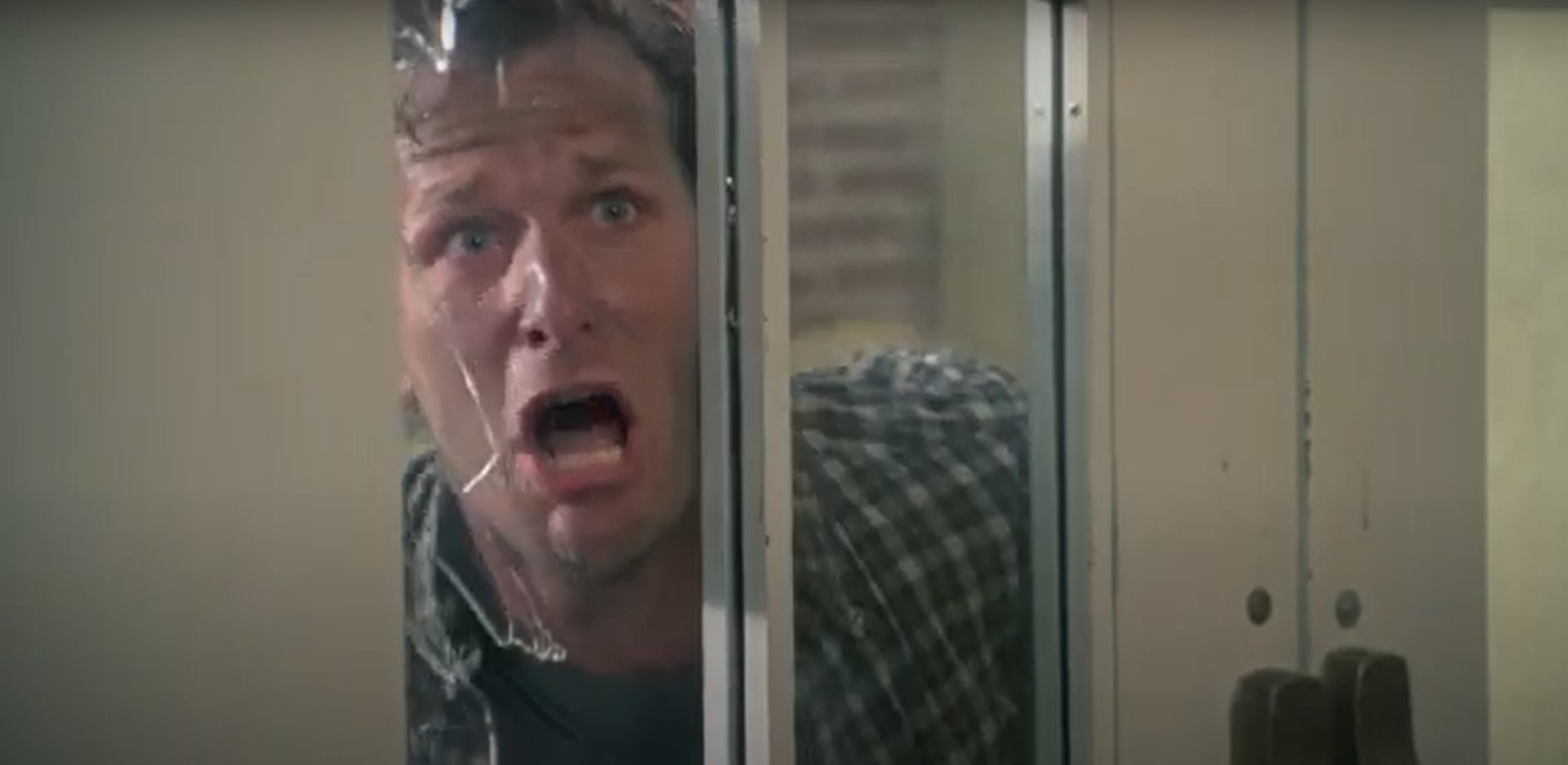
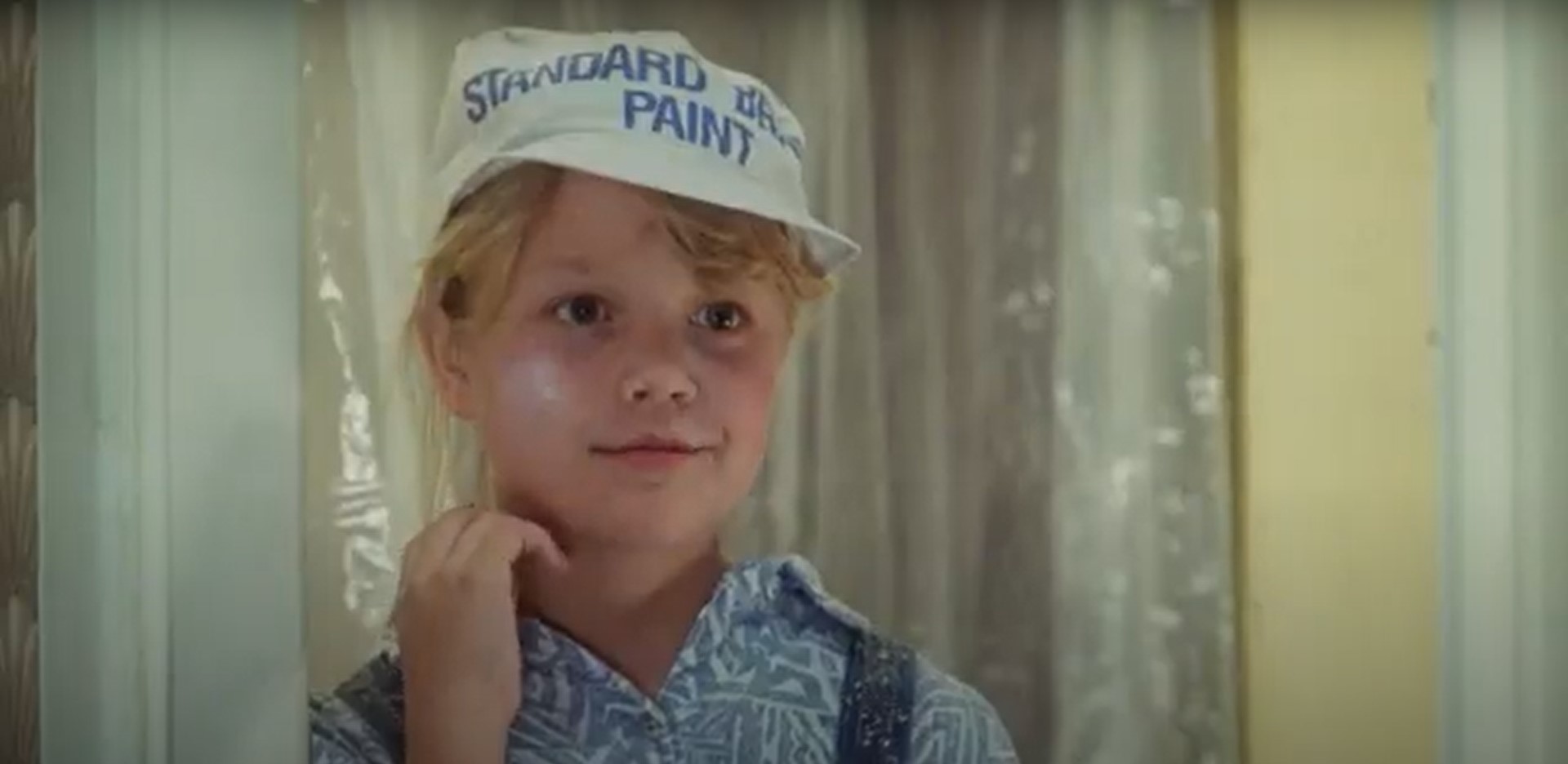
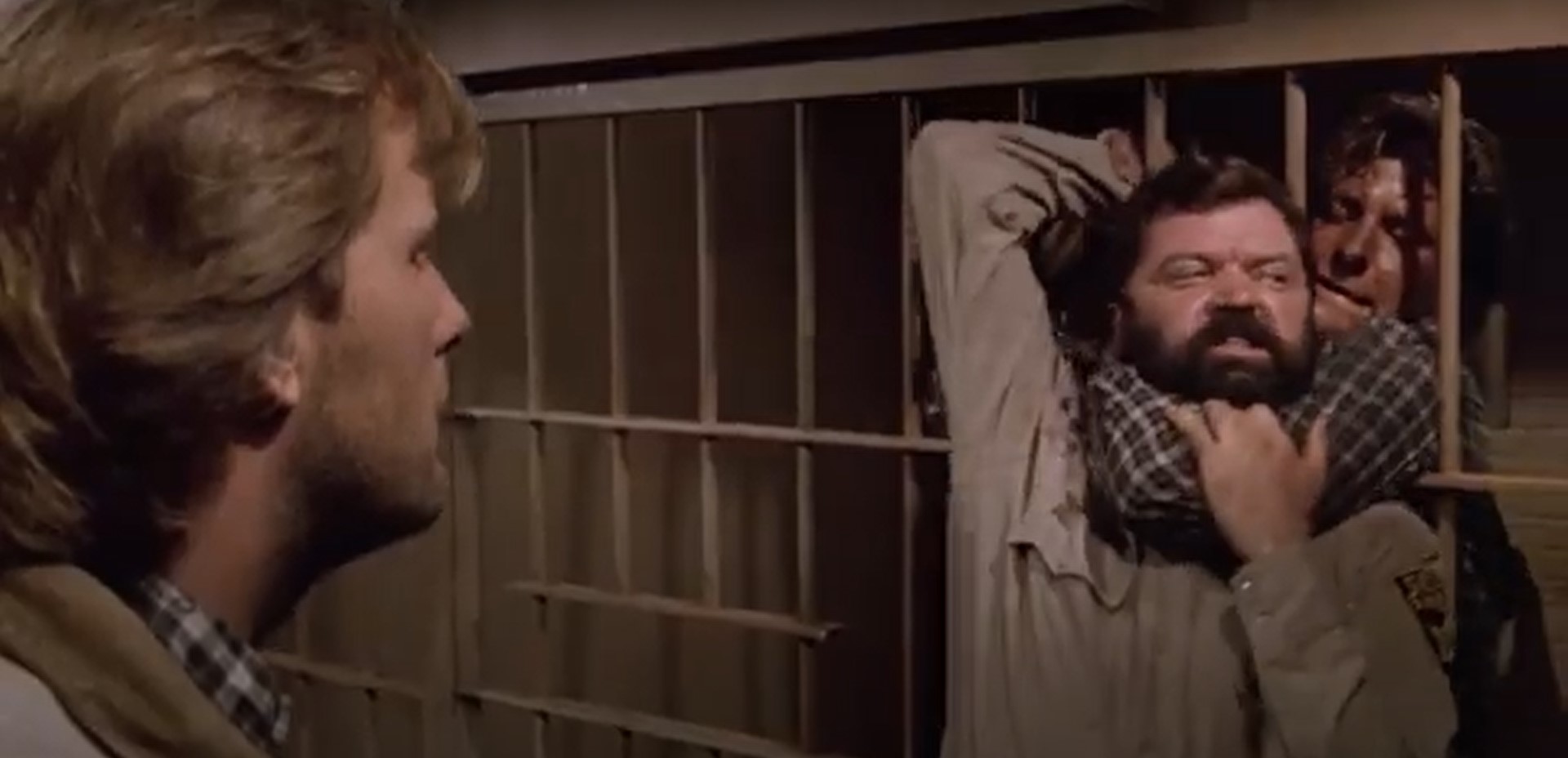
“The Grand Tour” stars the aforementioned Jeff Daniels who at this point was coming off the phobic-inducing success of the itsy-bitsy film called “Arachnophobia.” Daniels brings the same family man charisma, sarcastic wit, and unnerved intensity to the widowed construction contractor Ben Wilson. The character of Ben Wilson is unbuttoned from the beginning with only nightmares of an accident involving a horse drawn sleigh and verbal tit-for-tats with his bristly former father-in-law concluding the death of his wife only a short time ago. Wilson’s marked as a drunk and a shirker though barely do we see only a slither of the former; instead, Wilson’s rather astute, loving, and fearless in his time of time designed duress. Perhaps, Wilson’s arc has already been puzzled together and Twohy only mirrors into his once shameful soul to showcase how much he’s learned and how far he’s come to be more than just an abashed single dad and though Wilson is unbuttoned from the beginning of the story, Daniels buttons up the role with nothing less of perfection. Wilson’s daughter Hillary is played by pre-“Jurassic Park” screamer Ariana Richards who solidified her round-eyed concerned, over-the-shoulder look first in “The Grand Tour.” Hillary becomes the crux torn between the loving father that Wilson’s portrayed to be and an overreaching grandfather, who’s also the town judge (George Murdock, “The Death Squad”), holding a longstanding and personal grudge with his daughter’s ambivalent death. The youngster is also the reason Wilson is willing to risk the perfect future to save an ill-fated past. “The Grand Tour” enlists a versed lot of talent to round out the cast with Marilyn Lightstone (“Heavy Metal”) as the voluble tour guide, David Wells (“Society”) as a tourist with a conscious, and Jim Hayne (“Sleepwalkers”) as a down-to-Earth bus driver caught in the middle just like Wilson. There’s also Nicholas Guest (“Dollman”), Time Winters (“Skinner”), and Anna Neill.

Temporal manipulating or time-travelling films will undoubtedly always have faults as time is a finicky thing, some films accomplish time loops better than others, but I personally feel that as long as the narrative is entertaining enough and the time theory isn’t ludicrously idiotic, all can be forgiven or overlooked on the stretched fabric of time and place concept that can have easily spotted loopholes.  “The Grand Tour” is one of those divertingly pleasurable narratives with calamity hanging in the balance, a central do-or-die performance, and theme that hits at the core of a numb human perspective when seemingly life is nothing less than perfect.  The script bypasses the whole negating physics of the narratives time-travelling and butterfly effect piece with Daniel’s character verbally damning the hypothetical’s inaccuracies in a fit of life- and time-saving panic to not hang up on the details and keep the story churning.  Twohy never offers too much too early when the intrusively eccentric inn guests appear without concern for their surroundings but are increasingly curious about minor, trivial things that when compared to the small town residents, people would take such things for granted, yet their curiosity isn’t exactly appreciation for the humbler things as it’s more of a naively morbid reflection on how who these well-dressed and fit-as-a-fiddle travelers call “bygoners” lived and died.  Historical catastrophes have become looking glass sideshows for the bored or how the event is termed as a spectacle is if the disaster is an extravagance performance for others to reap the benefit from its grim amusement.  Twohy pulls off the massive feat of catastrophe without the use of computer-generated imagery that we see heavily in his later films to create galactic worlds and creatures.  There’s composite motion paint work and diorama miniatures to create the illusion of a small town in turmoil that works just as well, if not better.  The whole “Grand Tour” package sells the sleight of hand devastation but also the intrinsic emotion and passion that follows it, or in this rewind the clock case, before it as well. 

Though I’m wigged out by the tame release from Unearthed Films, I’m still glad the out of print and sci-fi jarring “The Grand Tour” has booked an excursion back to the physical media outer rim!  A brand-new AVC encoded Blu-ray, released as the 11th cult classic under the Unearthed Classics sublabel, shepherds a new in-print North American option.  Sold as a Hi-Def release with 1080p, there’s honestly nothing that can be really done or to improve upon a Betamax 350 resolution by 480 pixels in a stretched 1.85:1 aspect ratio.  Certainly better video and audio quality compared to VHS, and likely the best quality “The Grand Tour” will ever be in to-date, the release remains a deficient for detail with blurry, soft-glowing traits.  The Blu-ray’s bitrate is also erratic, dipping as low as upper DVD, 8-11 Mbps, to shooting up as high as lower 20s which tells me the storage capacity of the BD25 likely isn’t enough to properly decode the film and, in certain frames, compression artifacts show with smooth surface, color blurring that eliminates sharper edges amongst other issues, such as faint banding and blocking nothing to really warrant discouragement. The English PCM 2.0 stereo mix is commensurable with the original Betamax audio recording and though soft around the audible gills, the dialogue, ambient, and soundtrack mixes satisfy the need but in case you need an English SDH option, the Unearthed Films’ Blu-ray has you covered with a well-synched and timed error-free translation. The special edition bonus features include the “Timescape” title sequence, production stills, various posters and one-sheet artworks, a new Lost in Time: Cannes promo discussion with Ed McNichol who worked on the pre-production Cannes promotional trailer with Jeff Daniels but isn’t available in the special features here, and Unearthed Classics trailers. The physical aspects of the release include a cardboard o-slip with a front image reminiscent of outside region 1 DVD covers of Jeff Daniels running between two periods in time. The slipcover sheaths a clear Blu-ray case with latch, the inserted cover art is the same slipcover but is reversible with a mockup of the Canadian released DVD cover. The disc print image echos the reversible cover art image. “The Grand Tour” is Blu-ray has a region A playback, clocks in at 99 minutes, and the film is rated PG-13. An obscure Jeff Daniels film lost in time, unable to reach back into the past for a new, refreshed release, is paradoxically meta in its own right but luckily for us, Unearthed Films has our best interests in mind while keeping the blood and guts at bay for only for a single, solitary stitch in time.

Unearthed Films Stopped a Disaster by Going Back in Time and Re-releasing “The Grand Tour” now on Blu-ray!

EVIL is Released When the Rent is Due! “The Dead Girl in Apartment 03” reviewed! (Wild Eye Releasing / Blu-ray)

Get Spooked by “The Dead Girl in Apartment 03” on Blu-ray!  Purchase at Amazon.com!

Massachusetts native Laurel has been living in New York City for a few months with a roommate she barely knows or sees because of their opposite work schedules.  When Laura discovers her roommate’s dead body in their shared apartment, the living space no longer feels comfortable, and the uneasiness keeps her awake long after the police and coroners remove the body that has left them baffled with a cause of death.  The mystery of her roommate’s demise, the agony splayed on the corpse’s face, and knowing her lifeless body has been undiscovered for at least a couple of days just next door to her room leaves Laura shuddered to the point of reaching out to her ex-boyfriend to hear a friendly, comforting voice, but bizarre and supernatural occurrences slip Laura in a state of panic and fright with a presence that has suddenly haunted her urban home and with the unearthing of her roommate’s black magic paraphernalia and a demonic symbol under her bed, Laura just uncovered a hidden nightmare that would have been a life saver if listed in the roommate wanted newspaper ad.

Atmospherically creepy and part of the reason I don’t like having roommates, “The Dead Girl in Apartment 03” is the little known, highly effective supernatural haunt horror from writer-director Kurtis Spieler.  Spieler has crossed our paths previously with the 2013 released lowkey thriller under the guise of a werewolf with “Sheep Skin” distributed by Unearthed Films and the review came out on top with a positive write up that noted the film as “a fresh suspenseful spin on lycanthrope mythos.”  Since then, the American filmmaker has re-directed and completed the 1984, John Liu unfinished cult and martial arts actioner, “New York Ninja,” for a Vinegar Syndrome exclusive release and has also preceded his dead girl paranormal enigma model with “The Devil’s Well” that has a similar plot but with a found footage medium.  Spieler’s latest venture provides the opportunity to work again with a couple of actors from “Sheep Skin” under the banner of Invasive Image with the director co-producing alongside longtime collaborator and Invasive Image co-founder, Nicholas Papazoglou, and one of the film’s principal leads and “The Sadist” screenwriter, Frank Wihbey. 

“The Dead Girl in Apartment 03” is one of those indie films that snags and headlines a genre icon to thrust the title into the spiraling coil of a massively oversaturated low-budget horror pool in the hopes that the film sticks to the now desensitized fans who have been burned too many times too often by radioactive junk.  The tactic is not always necessarily nefarious or a fool’s paradise to lure in fans into a schlock storm of insipid independent media as “The Dead Girl in Apartment 03” proves that though the original “Friday the 13th” actress and scream queen, Adrienne King, might be the top billed, the actress is definitely not the star and the film still manages to provoke a keen spine-tingler with a lesser known and younger cast dipping their toes into the what King has already lapped twice, if not three times, over for decades.  King’s name becomes the proverbial foot in the door for new, upcoming talent for audiences to be exposed to, such as with Laura Dooling playing as, well, the spookily chipped away, panic-induced Laura.  Dooling immerses us into her character’s complete physical cutoff from friends and family as a woman stewing in an uncomfortable sixth sense that surrounds the disturbing faculties of her roommate’s death.  Dooling nails the superb chiller despite the one-sided act with no other cast to react off of for the majority of the runtime, paralleling her character’s isolation with her own to root out goosebumps unaccompanied.  King and Frank Wihbey head up the detective detail as the around-the-block Detective Richards and the fresh understudy Detective Miller.  The older woman, younger man character dynamic rides a similar trajectory to their professional colleague one and I’m not talking about cougars, if that is where your mind take you.  Though she certainly can be a cougar if she wanted to, King is more of a mentor on camera than she is off camera, playing the seasoned detective who warns the ambitious Miller not to get involved with active case women.  Wihbey’s a suitable fit as the double-edged sword eager rookie to King’s cooler, calmer approach to bestow path-treaded wisdom for a reason.  One of the highlighted performances stems from “Sheep Skin” actor Michael Shantaz, a tall and intimidating presence that sizes up Dooling’s terror tenfold from the very first scenes of the deceased’s dazed boyfriend Derrick crossing the threshold into Laura’s apartment.  Subdued and stony-faced, Shantaz adds to the tangible terror in contrast to the paranormal one at hand, yet both are ostensibly woven from the same thread.  Fellow “Sheep Skin” actor Bryan Manley Davis along with Jasmine Peck and Jennie Osterman (“Dickshark”) fill out the cast.

I’m always intrigue, or maybe just easily entertained, by titles that goad into viewership for the simple fact of fulfilling title-spurred questions with answers.  The title “The Dead Girl in Apartment 03” elicits many unexplained uncertainties that become an itch you can’t scratch until the end credits fade to black.  I want to know who is the Dead Girl?  Why is she dead?  What’s terribly important about the specified Apartment 03?  Do the Dead Girl and Apartment 03 correlate more significantly somehow in the story?  All these internal queries, prompted by a non-generic, puzzling title, are just cascading through the mind in a deluge of I-gotta-knows and for the most part, the team behind the quaint thriller does rub the itch to a smoothed over satisfaction while also working the edits, the angles, the sound design, and the lighting toward a decent scary movie.  What’s fascinating about the story is the exploration of the immediate after when Laura is left shivering in shock, solitude, and a sense of grim thought knowing she’s been living with a corpse for the last 48 hours.   She hits all the stages of a post-traumatic situation by reaching out to family and friends, diving into comforts like making tea or taking a shower, and even finding ways to keep busy and remove the macabre image from her mind by cleaning up the crime scene herself.  That portion of etching into Laura’s psyche distracts her in an ironic, detrimental way because as she attempting to self-soothe by any means possible, she oblivious to the grotesque presence coming and going and in-and-out of the negative space with its body jerking as it glares at Laura with blood running down it’s shirt.  Laura is also not cognizant of the things that go bump in the night as they barely make a blip on her radar or trigger her into a deeper stage of fright until it’s too late.  The climatic ending stretches the story further into love hexes and demonic contracts that perk up the ears in interest as the story gets into the nitty-gritty of details of what’s happening and why but doesn’t quite reach the finish line of resolve with a deflated conclusion that supposed to leave you shocked when it really just leaves you. 

Not your typical bottom-of-the-barrel budgeted or gore-drenched debauchery Wild Eye Release, “The Dead Girl in Apartment 03” looks and feels like a big-budget ghost film with all the muscle-seizing suspense.  The bold independent home video distributor delivers the Kurtis Spieler picture onto a Blu-ray collector’s edition, which, again, is atypical for the label.  The AVC encoded, high-definition, 1080p Blu-ray is presented in a 2.35:1 widescreen aspect ratio.  Spieler has defined himself as a master of the negative space and, fortunately, there’s no lossy image from a deficient compression, leaving a crisp view of the lurking, crooked dead entity soon to fill the void or not as the director tends to position the camera for an uncertain possibility.  Details are relatively good within a muted color scheme and many of scenes are dark lit, bordering on a neutral to high contrast with a palpable delineation, with only the dead girl’s room projecting a stony mustard illumination and spotted moments of candle and hand torch lighting.  Other scenes, more so involving Detective Richards and Miller, dip into the cop-noir with gel and back lighting that looks vivid and mysterious on screen.  The surprisingly backwards tech of the English language LPCM stereo relies heavily on dialogue than ambient jolts of jumps scare sounds though there are a few, effective examples about and is balanced well with the dialogue that is a little on the mumbling side but comprehensible and free of obstruction, interference, sound design, or otherwise. The dual channel stereo works and is adequate for the size of the picture that doesn’t require a multi-channel audio format as there are no explosions, whirring bullets, or a large cast to create depth range.  Soundtrack composed by Connecticut based, VHS-inspired synthwave artist, Brian Burdzy – aka Satanic Panic ’81, delivers a low and lively and often deadened (pun intended) but rhythmic sound reminiscence of John Carpenter scores that gives Spieler’s film a very “Halloween” vibe. Aforesaid, Wild Eye Releasing doesn’t accompany a ton of special feature material with their releases unless on their Visual Vengeance sister label but the seemingly new special edition line, in conjunction with a regular standard release, bears more supplementals for the storage.  An audio commentary with filmmaker Kurtis Spieler , a behind-the-scenes featurette featuring cast and crew retrospective interviews of their time on the film, Spieler’s 2011 short western thriller “No Remorse for Bloodshed” (though mistitled on the back cover as “No Remorse Bloodshed,” Take 3S Video – a montage of actress Laura Dooling humorously pretending to be clipped by the marker clapper on third takes, an image gallery, and Wild Eye Releasing trailers of “Smoke and Mirrors,” “Wicked Ones,” and “The Bloody Man.”  The physical aspects of the release include a clear Blu-ray latch snapper with a macabre illustration of the titular dead girl holding a knife on the front cover, as you’ll see in the image below for the trailer.  The cover art is reversible with a still image of Laura Dooling in one of the more thrilling scenes on the reverse side.  Inside the snapper insert is a folded mini poster of the SE’s O-case slipcover with another illustration of two more characters in a 70s inspired retro design.  The region free, unrated film clocks in with a 72-minute runtime – an easy, breezy thriller with punch.  “The Dead Girl in Apartment 03” is a perfect selection for a Halloween night movie. An eerie apparitional residuum that’s character-driven, tense, and thoroughly carried by the small cast.

Get Spooked by “The Dead Girl in Apartment 03” on Blu-ray!  Purchase at Amazon.com!